THE SUN & THE SKIN
1
2
3
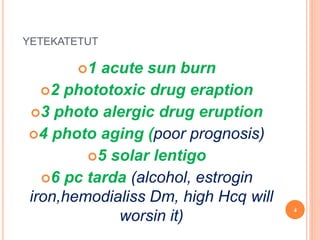
YETEKATETUT
4
1 acute sun burn
2 phototoxic drug eraption
3 photo alergic drug eruption
4 photo aging (poor prognosis)
5 solar lentigo
6 pc tarda (alcohol, estrogin
iron,hemodialiss Dm, high Hcq will
worsin it)
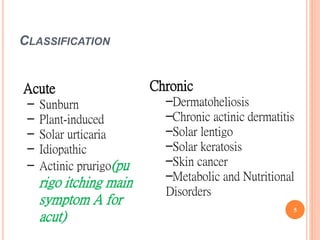
CLASSIFICATION
Acute
– Sunburn
– Plant-induced
– Solar urticaria
– Idiopathic
– Actinic prurigo(pu
rigo itching main
symptom A for
acut)
Chronic
–Dermatoheliosis
–Chronic actinic dermatitis
–Solar lentigo
–Solar keratosis
–Skin cancer
–Metabolic and Nutritional
Disorders
5
ACUTE SUN BURN
Acute, delayed, and transient
inflammatory(since dermatits)
response of the skin following
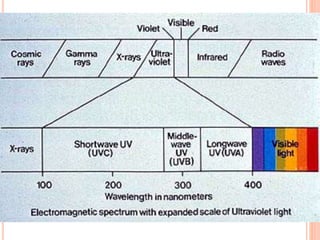
exposure to ultraviolet radiation
Caused by UVB
Damage to DNA with excision of
pyrimidine diamers is the initiating
event
6
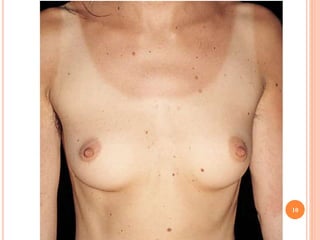
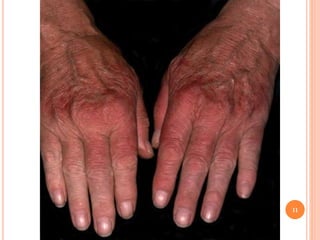
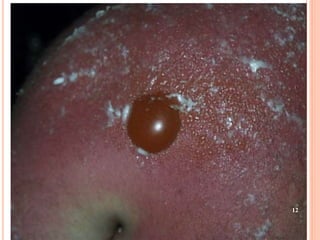
ACUTE SUN BURN
Pruritus may be severe even in
mild sunburn; pain and
tenderness with severe sunburn.
Constitutional symptoms may
occur
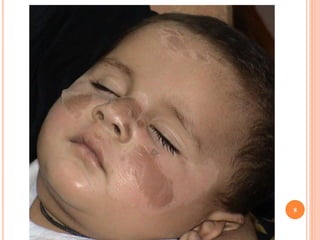
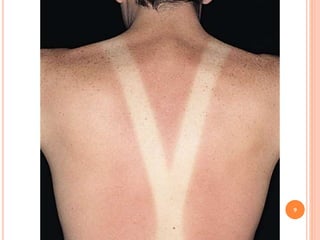
Confluent erythema, edema,
vesicles, and bullae confined
strictly to areas of exposure
7
8
9
10
11
12
ACUTE SUN BURN
Cool wet dressings, topical
corticosteroids, NSAIDs like
indocid or Acetylsalcylic acid or
in severe cases short course oral
prednisolone 20 to 40 mg is used
Usually heals with out scaring
13
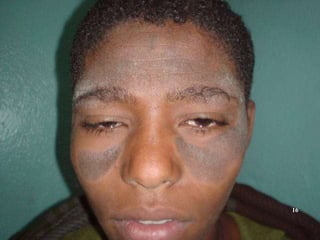
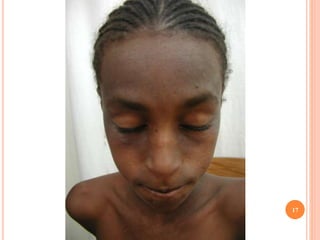
PHOTOTOXIC DRUG ERUPTION
An exaggerated sunburn response
(erythema, edema, vesicles, etc.)
secondary to drugs
Amiodarone, thiazides, coal tar ,
doxycycline are some of the known
drugs (cat and dog in syphil also)
The damage is due to UVA
14
PHOTOTOXIC DRUG ERUPTION
Three clinical patterns
 immediate erythema and urticaria,
 delayed sunburn-type pattern (sun
burn like to remeber)
 delayed melanin
hyperpigmentation
Treatment is the same as sun burn
Sun burn wosend by drug intake
malet new 15
16
17
18
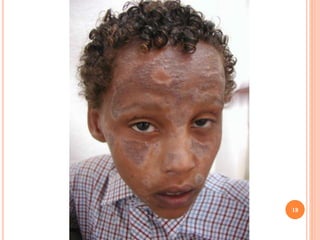
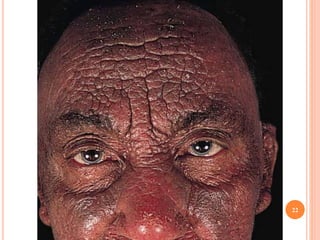
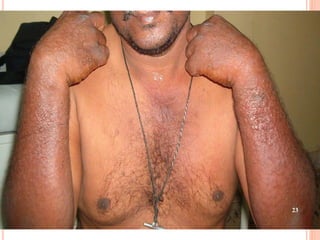
PHOTOALLERGIC DRUG
ERUPTION(THIS ARE SULFA
DRUG)
Occurs in small percentage of
individuals previously sensitized
with the drug , and they have
established memory cells.
Halogenated salicylanilides,
phenothiazines, sulfonamides with
UVA (ssp)are some of the causes
19
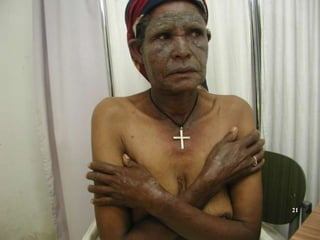
PHOTOALLERGIC DRUG
ERUPTION
Resemble allergic contact
eczematous dermatitis and
pruritis is universal
Photopatch testing with the
suspected drug
20
21
22
23
PHOTOALLERGIC DRUG
ERUPTION
Avoid all possible causes
Immunosupression with
azathipurine plus
glucocorticoids or oral
cyclosporine may be required.
24
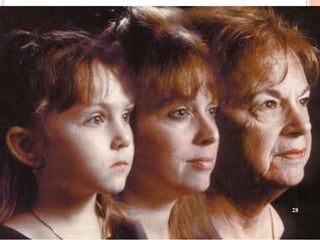
DERMATOHELIOSIS (PHOTOAGING)
A syndrome of polymorphic
response of various components
of the skin
Cumulative effect of chronic sun
exposure – UVA, UVB, VL, IR
More severe in fair skin individuals
presenting after 40 years of age.
25
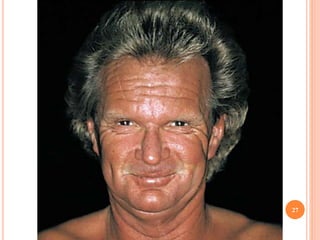
DERMATOHELIOSIS
Patient appears as wrinkled,
wizened, leathery,
“prematurely aged.
Other signs of chronic
photodamage may be
observed
26
27
28
DERMATOHELIOSIS
Tretinoin,
5Fluorouracil(acne
melasma yakmal) and
sun screens may help.
Generally has poor
prognosis 29
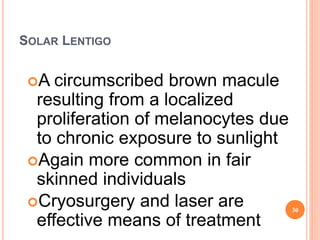
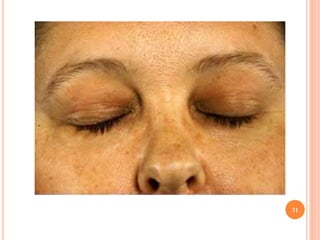
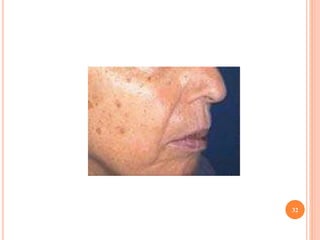
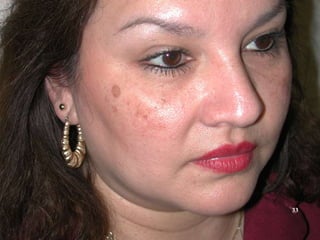
SOLAR LENTIGO
A circumscribed brown macule
resulting from a localized
proliferation of melanocytes due
to chronic exposure to sunlight
Again more common in fair
skinned individuals
Cryosurgery and laser are
effective means of treatment
30
31
32
33
34
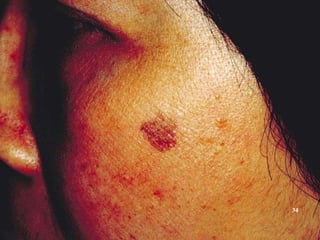
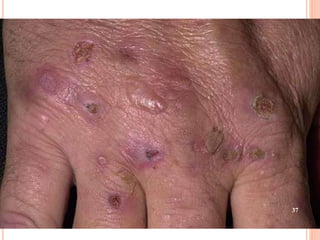
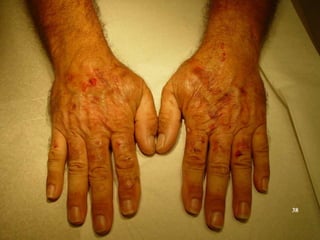
PORPHYRIA CUTANEA TARDA
A photo aggravating metabolic
disorder that presents as “fragile
skin” of the exposed areas and at
times tense bullae
UROGEN decarboxylase
deficiency
35
PORPHYRIA CUTANEA TARDA
Aggravated by alcohol,
estrogens, iron,
polychlorinated
hydrocarbons, high dose
chloroquine, diabetes
mellitus and hemodialysis
36
37
38
PORPHYRIA CUTANEA TARDA
Avoid ethanol
Phlebotomy
Low dose chloroquine
39

18photodermatitis.ppt

  • 1.
    THE SUN &THE SKIN 1
  • 2.
  • 3.
  • 4.
    YETEKATETUT 4 1 acute sunburn 2 phototoxic drug eraption 3 photo alergic drug eruption 4 photo aging (poor prognosis) 5 solar lentigo 6 pc tarda (alcohol, estrogin iron,hemodialiss Dm, high Hcq will worsin it)
  • 5.
    CLASSIFICATION Acute – Sunburn – Plant-induced –Solar urticaria – Idiopathic – Actinic prurigo(pu rigo itching main symptom A for acut) Chronic –Dermatoheliosis –Chronic actinic dermatitis –Solar lentigo –Solar keratosis –Skin cancer –Metabolic and Nutritional Disorders 5
  • 6.
    ACUTE SUN BURN Acute,delayed, and transient inflammatory(since dermatits) response of the skin following exposure to ultraviolet radiation Caused by UVB Damage to DNA with excision of pyrimidine diamers is the initiating event 6
  • 7.
    ACUTE SUN BURN Pruritusmay be severe even in mild sunburn; pain and tenderness with severe sunburn. Constitutional symptoms may occur Confluent erythema, edema, vesicles, and bullae confined strictly to areas of exposure 7
  • 8.
  • 9.
  • 10.
  • 11.
  • 12.
  • 13.
    ACUTE SUN BURN Coolwet dressings, topical corticosteroids, NSAIDs like indocid or Acetylsalcylic acid or in severe cases short course oral prednisolone 20 to 40 mg is used Usually heals with out scaring 13
  • 14.
    PHOTOTOXIC DRUG ERUPTION Anexaggerated sunburn response (erythema, edema, vesicles, etc.) secondary to drugs Amiodarone, thiazides, coal tar , doxycycline are some of the known drugs (cat and dog in syphil also) The damage is due to UVA 14
  • 15.
    PHOTOTOXIC DRUG ERUPTION Threeclinical patterns  immediate erythema and urticaria,  delayed sunburn-type pattern (sun burn like to remeber)  delayed melanin hyperpigmentation Treatment is the same as sun burn Sun burn wosend by drug intake malet new 15
  • 16.
  • 17.
  • 18.
  • 19.
    PHOTOALLERGIC DRUG ERUPTION(THIS ARESULFA DRUG) Occurs in small percentage of individuals previously sensitized with the drug , and they have established memory cells. Halogenated salicylanilides, phenothiazines, sulfonamides with UVA (ssp)are some of the causes 19
  • 20.
    PHOTOALLERGIC DRUG ERUPTION Resemble allergiccontact eczematous dermatitis and pruritis is universal Photopatch testing with the suspected drug 20
  • 21.
  • 22.
  • 23.
  • 24.
    PHOTOALLERGIC DRUG ERUPTION Avoid allpossible causes Immunosupression with azathipurine plus glucocorticoids or oral cyclosporine may be required. 24
  • 25.
    DERMATOHELIOSIS (PHOTOAGING) A syndromeof polymorphic response of various components of the skin Cumulative effect of chronic sun exposure – UVA, UVB, VL, IR More severe in fair skin individuals presenting after 40 years of age. 25
  • 26.
    DERMATOHELIOSIS Patient appears aswrinkled, wizened, leathery, “prematurely aged. Other signs of chronic photodamage may be observed 26
  • 27.
  • 28.
  • 29.
    DERMATOHELIOSIS Tretinoin, 5Fluorouracil(acne melasma yakmal) and sunscreens may help. Generally has poor prognosis 29
  • 30.
    SOLAR LENTIGO A circumscribedbrown macule resulting from a localized proliferation of melanocytes due to chronic exposure to sunlight Again more common in fair skinned individuals Cryosurgery and laser are effective means of treatment 30
  • 31.
  • 32.
  • 33.
  • 34.
  • 35.
    PORPHYRIA CUTANEA TARDA Aphoto aggravating metabolic disorder that presents as “fragile skin” of the exposed areas and at times tense bullae UROGEN decarboxylase deficiency 35
  • 36.
    PORPHYRIA CUTANEA TARDA Aggravatedby alcohol, estrogens, iron, polychlorinated hydrocarbons, high dose chloroquine, diabetes mellitus and hemodialysis 36
  • 37.
  • 38.
  • 39.
    PORPHYRIA CUTANEA TARDA Avoidethanol Phlebotomy Low dose chloroquine 39