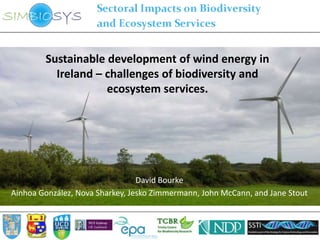
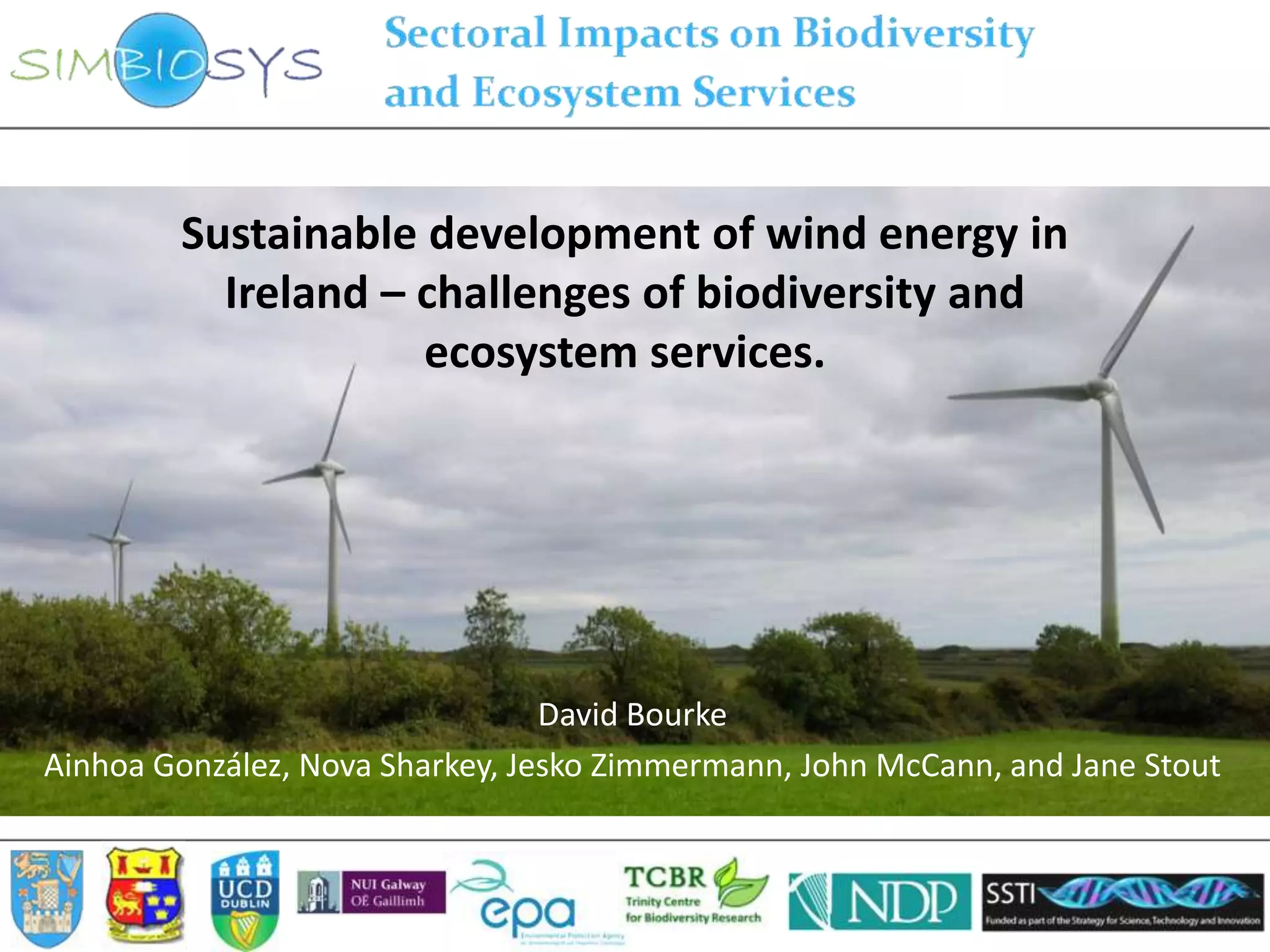
Sustainable development of wind energy in
          Ireland – challenges of biodiversity and
                    ecosystem services.


                                 David Bourke
Ainhoa González, Nova Sharkey, Jesko Zimmermann, John McCann, and Jane Stout
Outline

• Energy policy
• Impacts on biodiversity
   – National/international literature
   – Spatial analyses
• Key gaps/research questions
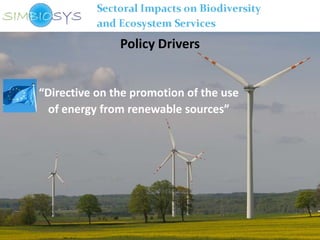
Policy Drivers


“Directive on the promotion of the use
  of energy from renewable sources”
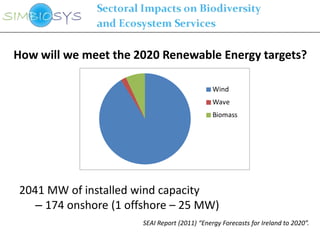
How will we meet the 2020 Renewable Energy targets?

                                              Wind
                                              Wave
                                              Biomass


2041 MW of installed wind capacity
   – 174 onshore (1 offshore – 25 MW)
                      SEAI Report (2011) “Energy Forecasts for Ireland to 2020”.
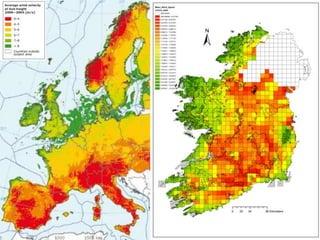
(EEA, 2009)
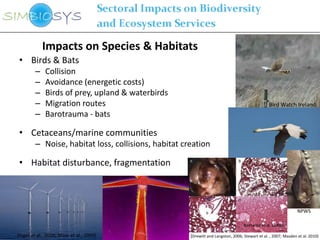
Impacts on Species & Habitats
 • Birds & Bats
        –    Collision
        –    Avoidance (energetic costs)
        –    Birds of prey, upland & waterbirds
        –    Migration routes                                                                   Bird Watch Ireland
        –    Barotrauma - bats

 • Cetaceans/marine communities
        – Noise, habitat loss, collisions, habitat creation

 • Habitat disturbance, fragmentation


                                                                                                                NPWS

                                                                                  Baerwald et al. (2008)

(Inger et al., 2009; Maar et al., 2009)              (Drewitt and Langston, 2006; Stewart et al. , 2007; Masden et al. 2010)
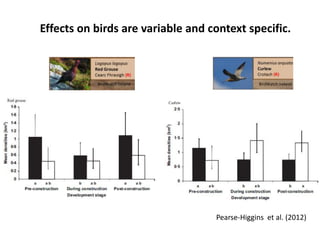
Effects on birds are variable and context specific.


           BirdWatch Ireland                    BirdWatch Ireland


                                   Pearse-Higgins et al. (2012)
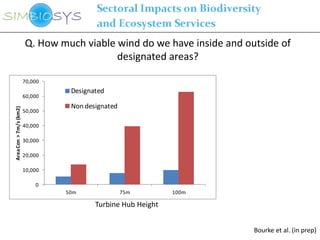
Q. How much viable wind do we have inside and outside of
                                           designated areas?

                        70,000
                                  Designated
                        60,000
                                  Non designated
Area Con > 7m/s (km2)


                        50,000

                        40,000

                        30,000

                        20,000

                        10,000

                            0
                                 50m               75m        100m

                                         Turbine Hub Height


                                                                        Bourke et al. (in prep)
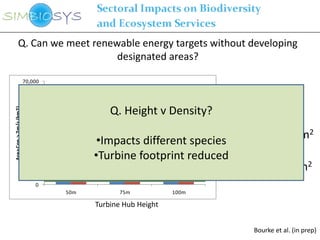
Q. Can we meet renewable energy targets without developing
                             designated areas?

                        70,000
                                  Designated
                        60,000
                                  Non designated                      ~4000 MW
                                               Q. Height v Density?
Area Con > 7m/s (km2)


                        50,000

                        40,000

                        30,000           •Impacts different species 5 – 10 MW/km2
                        20,000          •Turbine footprint reduced
                        10,000                                       400 to 800km2
                            0
                                 50m               75m        100m

                                         Turbine Hub Height


                                                                        Bourke et al. (in prep)
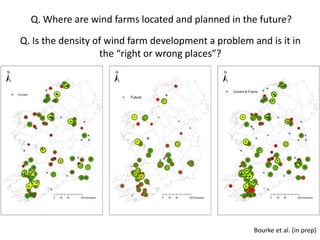
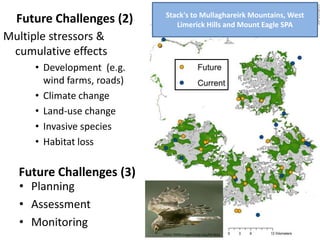
Q. Where are wind farms located and planned in the future?
Q. Is the density of wind farm development a problem and is it in
                   the “right or wrong places”?


                                                      Bourke et al. (in prep)
Future Challenges (1)
•   Adequate evidence to provide sound advise
•   More publishing of data
•   Inaccessible grey literature/internal reports
•   Many gaps in our knowledge
     – Fundamental ecological understanding
     – Impacts on species?
     – Impacts on habitats?
Stack's to Mullaghareirk Mountains, West
  Future Challenges (2)          Limerick Hills and Mount Eagle SPA
Multiple stressors &
 cumulative effects
      • Development (e.g.
        wind farms, roads)
      • Climate change
      • Land-use change
      • Invasive species
      • Habitat loss

  Future Challenges (3)
   • Planning
   • Assessment
   • Monitoring
                             Photo: RSPB Images/Andy Hay/PA Wire
Key areas for future research
• Bird/bat sensitivity maps
• Population-level impacts
• Species specific studies
• Identification of migration routes/corridors and
  stepping stones of bats in Ireland
• Cumulative effects
• Preliminary research into impacts on marine
  species and habitats
bourkedo@tcd.ie


              Thanks to
        Ms Soledad Colombe
Sustainable Energy Authority of Ireland
          BirdWatch Ireland
                EirGrid

Special thanks to the SIMBIOSYS Team
       and the EPA for funding.


                                            Bird Watch Ireland

Sustainable development of wind energy in Ireland - challenges of biodiversity and ecosystem services - David Bourke

  • 1.
    Sustainable development ofwind energy in Ireland – challenges of biodiversity and ecosystem services. David Bourke Ainhoa González, Nova Sharkey, Jesko Zimmermann, John McCann, and Jane Stout
  • 2.
    Outline • Energy policy •Impacts on biodiversity – National/international literature – Spatial analyses • Key gaps/research questions
  • 3.
    Policy Drivers “Directive onthe promotion of the use of energy from renewable sources”
  • 4.
    How will wemeet the 2020 Renewable Energy targets? Wind Wave Biomass 2041 MW of installed wind capacity – 174 onshore (1 offshore – 25 MW) SEAI Report (2011) “Energy Forecasts for Ireland to 2020”.
  • 5.
  • 6.
    Impacts on Species& Habitats • Birds & Bats – Collision – Avoidance (energetic costs) – Birds of prey, upland & waterbirds – Migration routes Bird Watch Ireland – Barotrauma - bats • Cetaceans/marine communities – Noise, habitat loss, collisions, habitat creation • Habitat disturbance, fragmentation NPWS Baerwald et al. (2008) (Inger et al., 2009; Maar et al., 2009) (Drewitt and Langston, 2006; Stewart et al. , 2007; Masden et al. 2010)
  • 7.
    Effects on birdsare variable and context specific. BirdWatch Ireland BirdWatch Ireland Pearse-Higgins et al. (2012)
  • 8.
    Q. How muchviable wind do we have inside and outside of designated areas? 70,000 Designated 60,000 Non designated Area Con > 7m/s (km2) 50,000 40,000 30,000 20,000 10,000 0 50m 75m 100m Turbine Hub Height Bourke et al. (in prep)
  • 9.
    Q. Can wemeet renewable energy targets without developing designated areas? 70,000 Designated 60,000 Non designated ~4000 MW Q. Height v Density? Area Con > 7m/s (km2) 50,000 40,000 30,000 •Impacts different species 5 – 10 MW/km2 20,000 •Turbine footprint reduced 10,000 400 to 800km2 0 50m 75m 100m Turbine Hub Height Bourke et al. (in prep)
  • 10.
    Q. Where arewind farms located and planned in the future? Q. Is the density of wind farm development a problem and is it in the “right or wrong places”? Bourke et al. (in prep)
  • 11.
    Future Challenges (1) • Adequate evidence to provide sound advise • More publishing of data • Inaccessible grey literature/internal reports • Many gaps in our knowledge – Fundamental ecological understanding – Impacts on species? – Impacts on habitats?
  • 12.
    Stack's to MullaghareirkMountains, West Future Challenges (2) Limerick Hills and Mount Eagle SPA Multiple stressors & cumulative effects • Development (e.g. wind farms, roads) • Climate change • Land-use change • Invasive species • Habitat loss Future Challenges (3) • Planning • Assessment • Monitoring Photo: RSPB Images/Andy Hay/PA Wire
  • 13.
    Key areas forfuture research • Bird/bat sensitivity maps • Population-level impacts • Species specific studies • Identification of migration routes/corridors and stepping stones of bats in Ireland • Cumulative effects • Preliminary research into impacts on marine species and habitats
  • 14.
    bourkedo@tcd.ie Thanks to Ms Soledad Colombe Sustainable Energy Authority of Ireland BirdWatch Ireland EirGrid Special thanks to the SIMBIOSYS Team and the EPA for funding. Bird Watch Ireland