Radar signal
processing
Presented by :
S.Usharani
19RH1A04L9
Contents
● Introduction
● What is a radar?
● Images of radar
● Types of radar
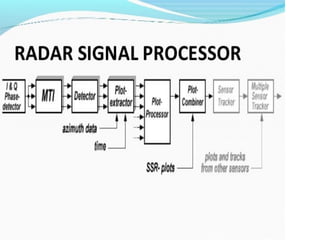
● What does a radar signal processor do?
● Radar signal processor
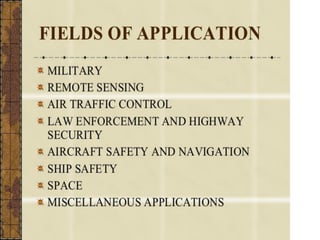
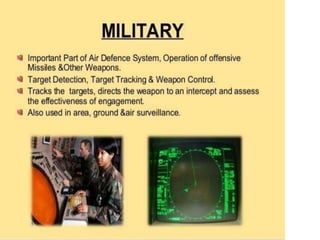
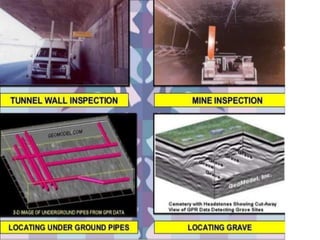
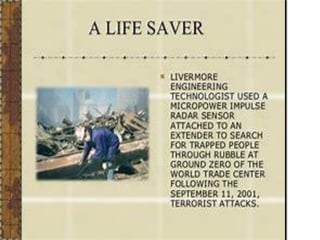
● Fields of applications
● Advantages and disadvantages
● Conclusion
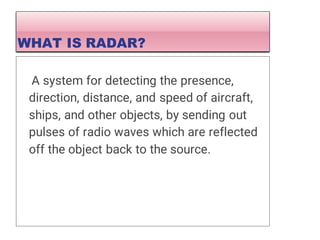
A system for detecting the presence,
direction, distance, and speed of aircraft,
ships, and other objects, by sending out
pulses of radio waves which are reflected
off the object back to the source.
WHAT IS RADAR?
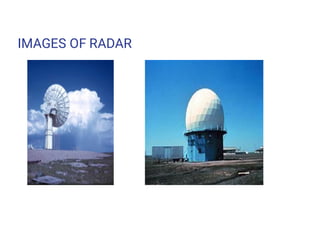
IMAGES OF RADAR
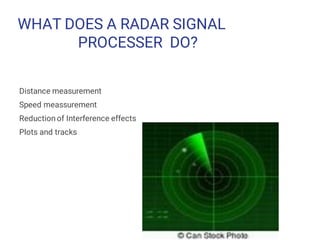
WHAT DOES A RADAR SIGNAL
PROCESSER DO?
Distance measurement
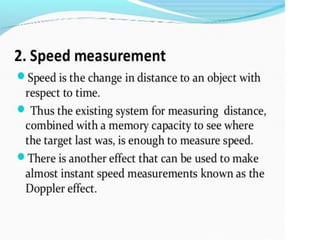
Speed meassurement
Reduction of Interference effects
Plots and tracks
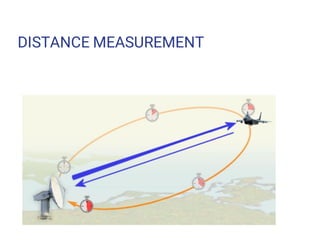
Distance measurement
Transmit time
Frequency modulation
As a part of distance measurement it measures the round trip time
for the radar to meet the target.
d=0.5(c*t)
c=speed of wave
t=time
DISTANCE MEASUREMENT
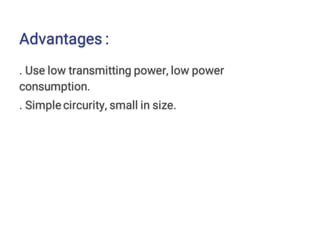
Advantages :
. Use low transmitting power, low power
consumption.
. Simple circurity, small in size.
Disadvantages :
. Several targets at a given bearing tend to
cause confusion.
. Range discription can be achieved only by
introducing very costly complex security.
. It is not capable for indicating the range of
target an can show only its velocity.
Conclusion :
. Radar signal processing is highly related with
time-frequency analysis.
. Time-frequency analysis is a powerful
technique in processing radra signal.
. A pre-modulaterwaveform in transformer and
corresponding analysis in receiver generate
arbitrary radar function.
. Other radar application:respiratory rate, size of
object…..etc.
1567084176507_1567009886044_Radar signal processing.pdf

1567084176507_1567009886044_Radar signal processing.pdf

  • 1.
    Radar signal processing Presented by: S.Usharani 19RH1A04L9
  • 2.
    Contents ● Introduction ● Whatis a radar? ● Images of radar ● Types of radar ● What does a radar signal processor do? ● Radar signal processor ● Fields of applications ● Advantages and disadvantages ● Conclusion
  • 3.
    A system fordetecting the presence, direction, distance, and speed of aircraft, ships, and other objects, by sending out pulses of radio waves which are reflected off the object back to the source. WHAT IS RADAR?
  • 4.
  • 6.
    WHAT DOES ARADAR SIGNAL PROCESSER DO? Distance measurement Speed meassurement Reduction of Interference effects Plots and tracks
  • 7.
    Distance measurement Transmit time Frequencymodulation As a part of distance measurement it measures the round trip time for the radar to meet the target. d=0.5(c*t) c=speed of wave t=time
  • 8.
  • 15.
    Advantages : . Uselow transmitting power, low power consumption. . Simple circurity, small in size.
  • 16.
    Disadvantages : . Severaltargets at a given bearing tend to cause confusion. . Range discription can be achieved only by introducing very costly complex security. . It is not capable for indicating the range of target an can show only its velocity.
  • 17.
    Conclusion : . Radarsignal processing is highly related with time-frequency analysis. . Time-frequency analysis is a powerful technique in processing radra signal. . A pre-modulaterwaveform in transformer and corresponding analysis in receiver generate arbitrary radar function. . Other radar application:respiratory rate, size of object…..etc.