Making the Deal,
Then Making the Deal Work!
J. Paul Oxer, PE
Managing Director – McDaniell, Hunter & Prince, Inc.
Post-Acquisition Integration,
The Value of Empathic Leadership,
And the Real Goals of M&A
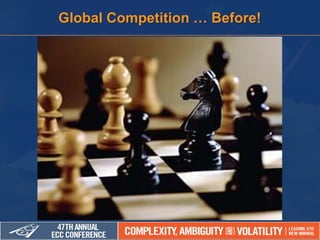
Global Competition … Before!
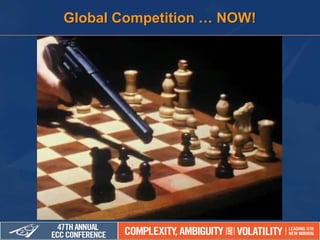
Global Competition … NOW!
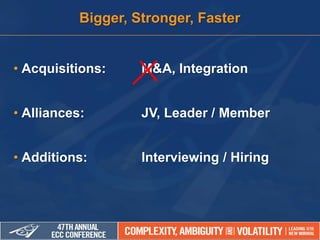
• Acquisitions: M&A, Integration
• Alliances: JV, Leader / Member
• Additions: Interviewing / Hiring
Bigger, Stronger, Faster
How do Leaders make their mark?
Creating Teams and betting on People!
What is a Leader’s most powerful quality?
Empathy!
Better information,
Better responses,
Better relationships,
Better performance,
… A competitive advantage!
“And empathic listening gets you what?”
• More Customers for your Services
• More Services for your Customers
• Added Capacity and Capability
• Expansion into new Territory
• Increased Cost Efficiencies
• Defense, Duress, Distress
Why Acquisitions?
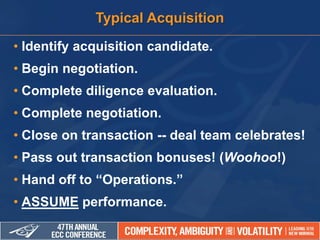
• Identify acquisition candidate.
• Begin negotiation.
• Complete diligence evaluation.
• Complete negotiation.
• Close on transaction -- deal team celebrates!
• Pass out transaction bonuses! (Woohoo!)
• Hand off to “Operations.”
• ASSUME performance.
Typical Acquisition
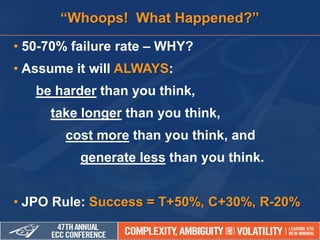
• 50-70% failure rate – WHY?
• Assume it will ALWAYS:
be harder than you think,
take longer than you think,
cost more than you think, and
generate less than you think.
• JPO Rule: Success = T+50%, C+30%, R-20%
“Whoops! What Happened?”
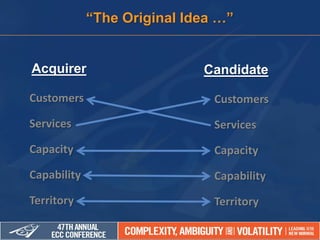
Acquirer
Customers
Services
Capacity
Capability
Territory
“The Original Idea …”
Candidate
Customers
Services
Capacity
Capability
Territory
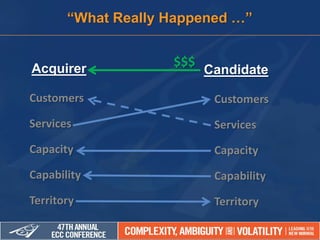
Acquirer
Customers
Services
Capacity
Capability
Territory
“What Really Happened …”
Candidate
Customers
Services
Capacity
Capability
Territory
$$$
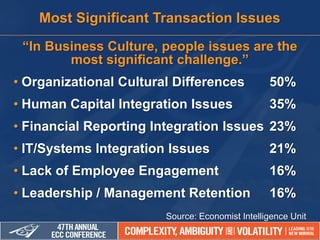
“In Business Culture, people issues are the
most significant challenge.”
• Organizational Cultural Differences 50%
• Human Capital Integration Issues 35%
• Financial Reporting Integration Issues 23%
• IT/Systems Integration Issues 21%
• Lack of Employee Engagement 16%
• Leadership / Management Retention 16%
Source: Economist Intelligence Unit
Most Significant Transaction Issues
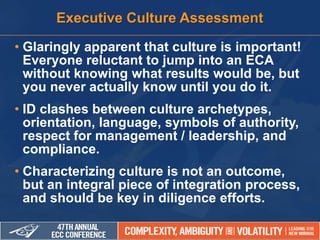
• Glaringly apparent that culture is important!
Everyone reluctant to jump into an ECA
without knowing what results would be, but
you never actually know until you do it.
• ID clashes between culture archetypes,
orientation, language, symbols of authority,
respect for management / leadership, and
compliance.
• Characterizing culture is not an outcome,
but an integral piece of integration process,
and should be key in diligence efforts.
Executive Culture Assessment
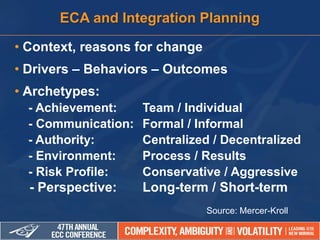
• Context, reasons for change
• Drivers – Behaviors – Outcomes
• Archetypes:
- Achievement: Team / Individual
- Communication: Formal / Informal
- Authority: Centralized / Decentralized
- Environment: Process / Results
- Risk Profile: Conservative / Aggressive
- Perspective: Long-term / Short-term
Source: Mercer-Kroll
ECA and Integration Planning
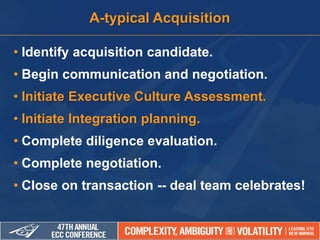
• Identify acquisition candidate.
• Begin communication and negotiation.
• Initiate Executive Culture Assessment.
• Initiate Integration planning.
• Complete diligence evaluation.
• Complete negotiation.
• Close on transaction -- deal team celebrates!
A-typical Acquisition
• Pass out transaction bonuses … ~!
• Implement Integration Plan.
• Hand off TRANSITION to “Operations.”
• Assume ASSURE performance!
A-typical Acquisition
• Functional:
- Focuses on cost-efficiency, “back-office” synergies
- IT, HR, Legal, Procurement, Treasury, Tax, HSE
• Strategic:
- Focuses on value, business expansion, “upside”
- New markets, regions, sectors, customers
• Compliance:
- Sarbanes-Oxley, SEC, FCPA, other regulatory
Functional vs. Strategic
1. Integration isn’t a step; it’s a process.
2. Integration management is a full-time job.
3. Communication is critical.
4. Faster is better, even when it’s not perfect.
5. Success requires attention to culture.
Five Simple Rules
• Power and authority are better exercised
and received when those being directed feel
they have been heard.
• “People with power behave with the same
insensitivity and impulsivity as someone
with frontal lobe brain damage, making them
prone to act abusively and lose the esteem
of their peers.”– Dr. Dacher Keltner,
U/California-Berkeley
Empathy and Authority
• The more successful you become, the more
important it is to remain empathic.
• You can manage by mandate, but you can
only lead by example.
• The higher you rise in your career, the more
fundamental the fundamentals become.
“What does this mean for YOU?”
• Culture is addressed early on.
• Best people are selected to lead combined
entity.
• Integration focuses on value.
• Leaders communicate extensively.
• Measures of success are established and
tracked.
• Integration plans are in place before deal is
closed.
Top 10: Reasons Why Integrations Succeed
• Approach is tailored to the deal’s strategic
rationale.
• Management is in place before deal is
announced.
• Majority of employees are focused on base
business.
• Speed is valued above perfection.
Source: Bain & Company
• Appoint a strong executive to clearly lead the
integration process.
• Compress change duration by taking bold
strokes early.
• Provide real incentives to reach targets.
• Set out credible milestones and maintain
pressure for progress.
• Move quickly regarding personnel changes.
• Build robust plan detailing integration activity.
Top 10: Integration Best Practices
• Emphasize transfer of critical capabilities to
capture value.
• Ensure senior management involvement in
integration activities.
• Adopt best practices in key functions from
either company.
• Get task forces with people from both
companies interacting soon.
Source: Booz, Allen & Hamilton
For every $1 spent on SAFETY, $3-6 is saved.
Those who discount SAFETY simply haven’t
paid the price for NOT doing it … YET!
SAFETY is a culture. Do it for:
• Conformance – your customer asked you.
• Compliance – your regulatory obligation.
• Convenience – it’s easier than recovering
your reputation when you don’t!
• Contribution – it adds to your bottom line!
Some Notes on SAFETY
Thank you!
• The following slides were not presented in
San Antonio, but add to the topic.
• Questions and comments are welcome:
OFC: 832-532-7852
jpoxer@mcdhp.com
http://www.mcdhp.com
• Integration is a process, not a phase.
• Integration management is a distinct
business function.
• Decision delays re: career-affecting aspects
immediately drain value.
• Meld functions and culture by addressing
new opportunities together.
Source: GE Capital / Harvard Business Review
Lessons Learned
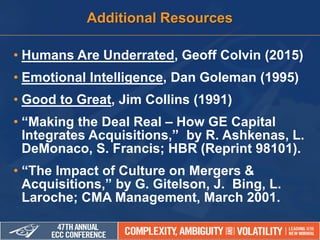
• Humans Are Underrated, Geoff Colvin (2015)
• Emotional Intelligence, Dan Goleman (1995)
• Good to Great, Jim Collins (1991)
• “Making the Deal Real – How GE Capital
Integrates Acquisitions,” by R. Ashkenas, L.
DeMonaco, S. Francis; HBR (Reprint 98101).
• “The Impact of Culture on Mergers &
Acquisitions,” by G. Gitelson, J. Bing, L.
Laroche; CMA Management, March 2001.
Additional Resources
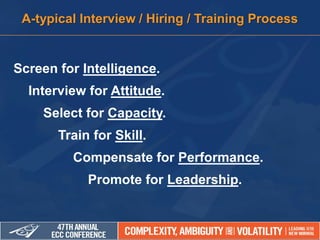
Screen for Intelligence.
Interview for Attitude.
Select for Capacity.
Train for Skill.
Compensate for Performance.
Promote for Leadership.
A-typical Interview / Hiring / Training Process
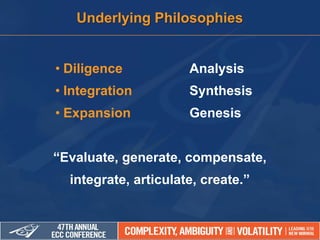
• Diligence Analysis
• Integration Synthesis
• Expansion Genesis
“Evaluate, generate, compensate,
integrate, articulate, create.”
Underlying Philosophies
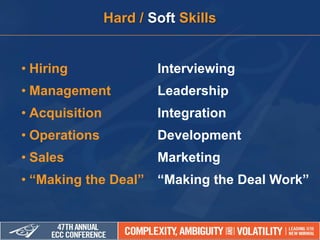
• Hiring Interviewing
• Management Leadership
• Acquisition Integration
• Operations Development
• Sales Marketing
• “Making the Deal” “Making the Deal Work”
Hard / Soft Skills

150909 ECC Mtg. JPO Prsntn Formatted Final

  • 2.
    Making the Deal, ThenMaking the Deal Work! J. Paul Oxer, PE Managing Director – McDaniell, Hunter & Prince, Inc.
  • 3.
    Post-Acquisition Integration, The Valueof Empathic Leadership, And the Real Goals of M&A
  • 4.
  • 5.
  • 6.
    • Acquisitions: M&A,Integration • Alliances: JV, Leader / Member • Additions: Interviewing / Hiring Bigger, Stronger, Faster
  • 7.
    How do Leadersmake their mark? Creating Teams and betting on People! What is a Leader’s most powerful quality? Empathy!
  • 8.
    Better information, Better responses, Betterrelationships, Better performance, … A competitive advantage! “And empathic listening gets you what?”
  • 9.
    • More Customersfor your Services • More Services for your Customers • Added Capacity and Capability • Expansion into new Territory • Increased Cost Efficiencies • Defense, Duress, Distress Why Acquisitions?
  • 10.
    • Identify acquisitioncandidate. • Begin negotiation. • Complete diligence evaluation. • Complete negotiation. • Close on transaction -- deal team celebrates! • Pass out transaction bonuses! (Woohoo!) • Hand off to “Operations.” • ASSUME performance. Typical Acquisition
  • 11.
    • 50-70% failurerate – WHY? • Assume it will ALWAYS: be harder than you think, take longer than you think, cost more than you think, and generate less than you think. • JPO Rule: Success = T+50%, C+30%, R-20% “Whoops! What Happened?”
  • 12.
    Acquirer Customers Services Capacity Capability Territory “The Original Idea…” Candidate Customers Services Capacity Capability Territory
  • 13.
    Acquirer Customers Services Capacity Capability Territory “What Really Happened…” Candidate Customers Services Capacity Capability Territory $$$
  • 14.
    “In Business Culture,people issues are the most significant challenge.” • Organizational Cultural Differences 50% • Human Capital Integration Issues 35% • Financial Reporting Integration Issues 23% • IT/Systems Integration Issues 21% • Lack of Employee Engagement 16% • Leadership / Management Retention 16% Source: Economist Intelligence Unit Most Significant Transaction Issues
  • 15.
    • Glaringly apparentthat culture is important! Everyone reluctant to jump into an ECA without knowing what results would be, but you never actually know until you do it. • ID clashes between culture archetypes, orientation, language, symbols of authority, respect for management / leadership, and compliance. • Characterizing culture is not an outcome, but an integral piece of integration process, and should be key in diligence efforts. Executive Culture Assessment
  • 16.
    • Context, reasonsfor change • Drivers – Behaviors – Outcomes • Archetypes: - Achievement: Team / Individual - Communication: Formal / Informal - Authority: Centralized / Decentralized - Environment: Process / Results - Risk Profile: Conservative / Aggressive - Perspective: Long-term / Short-term Source: Mercer-Kroll ECA and Integration Planning
  • 17.
    • Identify acquisitioncandidate. • Begin communication and negotiation. • Initiate Executive Culture Assessment. • Initiate Integration planning. • Complete diligence evaluation. • Complete negotiation. • Close on transaction -- deal team celebrates! A-typical Acquisition
  • 18.
    • Pass outtransaction bonuses … ~! • Implement Integration Plan. • Hand off TRANSITION to “Operations.” • Assume ASSURE performance! A-typical Acquisition
  • 19.
    • Functional: - Focuseson cost-efficiency, “back-office” synergies - IT, HR, Legal, Procurement, Treasury, Tax, HSE • Strategic: - Focuses on value, business expansion, “upside” - New markets, regions, sectors, customers • Compliance: - Sarbanes-Oxley, SEC, FCPA, other regulatory Functional vs. Strategic
  • 20.
    1. Integration isn’ta step; it’s a process. 2. Integration management is a full-time job. 3. Communication is critical. 4. Faster is better, even when it’s not perfect. 5. Success requires attention to culture. Five Simple Rules
  • 21.
    • Power andauthority are better exercised and received when those being directed feel they have been heard. • “People with power behave with the same insensitivity and impulsivity as someone with frontal lobe brain damage, making them prone to act abusively and lose the esteem of their peers.”– Dr. Dacher Keltner, U/California-Berkeley Empathy and Authority
  • 22.
    • The moresuccessful you become, the more important it is to remain empathic. • You can manage by mandate, but you can only lead by example. • The higher you rise in your career, the more fundamental the fundamentals become. “What does this mean for YOU?”
  • 23.
    • Culture isaddressed early on. • Best people are selected to lead combined entity. • Integration focuses on value. • Leaders communicate extensively. • Measures of success are established and tracked. • Integration plans are in place before deal is closed. Top 10: Reasons Why Integrations Succeed
  • 24.
    • Approach istailored to the deal’s strategic rationale. • Management is in place before deal is announced. • Majority of employees are focused on base business. • Speed is valued above perfection. Source: Bain & Company
  • 25.
    • Appoint astrong executive to clearly lead the integration process. • Compress change duration by taking bold strokes early. • Provide real incentives to reach targets. • Set out credible milestones and maintain pressure for progress. • Move quickly regarding personnel changes. • Build robust plan detailing integration activity. Top 10: Integration Best Practices
  • 26.
    • Emphasize transferof critical capabilities to capture value. • Ensure senior management involvement in integration activities. • Adopt best practices in key functions from either company. • Get task forces with people from both companies interacting soon. Source: Booz, Allen & Hamilton
  • 27.
    For every $1spent on SAFETY, $3-6 is saved. Those who discount SAFETY simply haven’t paid the price for NOT doing it … YET! SAFETY is a culture. Do it for: • Conformance – your customer asked you. • Compliance – your regulatory obligation. • Convenience – it’s easier than recovering your reputation when you don’t! • Contribution – it adds to your bottom line! Some Notes on SAFETY
  • 28.
  • 30.
    • The followingslides were not presented in San Antonio, but add to the topic. • Questions and comments are welcome: OFC: 832-532-7852 jpoxer@mcdhp.com http://www.mcdhp.com
  • 31.
    • Integration isa process, not a phase. • Integration management is a distinct business function. • Decision delays re: career-affecting aspects immediately drain value. • Meld functions and culture by addressing new opportunities together. Source: GE Capital / Harvard Business Review Lessons Learned
  • 32.
    • Humans AreUnderrated, Geoff Colvin (2015) • Emotional Intelligence, Dan Goleman (1995) • Good to Great, Jim Collins (1991) • “Making the Deal Real – How GE Capital Integrates Acquisitions,” by R. Ashkenas, L. DeMonaco, S. Francis; HBR (Reprint 98101). • “The Impact of Culture on Mergers & Acquisitions,” by G. Gitelson, J. Bing, L. Laroche; CMA Management, March 2001. Additional Resources
  • 33.
    Screen for Intelligence. Interviewfor Attitude. Select for Capacity. Train for Skill. Compensate for Performance. Promote for Leadership. A-typical Interview / Hiring / Training Process
  • 34.
    • Diligence Analysis •Integration Synthesis • Expansion Genesis “Evaluate, generate, compensate, integrate, articulate, create.” Underlying Philosophies
  • 35.
    • Hiring Interviewing •Management Leadership • Acquisition Integration • Operations Development • Sales Marketing • “Making the Deal” “Making the Deal Work” Hard / Soft Skills