Acute diarrhea in children
Dr. Hanan R. Abood
References:
• Nelson Textbook of Pediatrics , 21 edition .
• Nelson essentials Textbook of Pediatrics , 7th edition.
• Illustrated textbook of pediatrics.5th edition
Acute diarrhea
•Learning Objectives:
• What is acute diarrhea?
•Why the children may get acute diarrhea?
•Clinical scenario of common infectious
causes of acute diarrhea
•What are the Complications may
associated with acute diarrhea?.
•How can we Prevent acute diarrhea?.
Diarrhea
•Def. : Diarrhea is best defined as excessive loss of
fluid and electrolytes in the stool(frequent loss of
loose stool).
•Or defined as an increase in stool frequency to
twice the usual number per day in infants and
three or more loose or watery stools per day in
older children.
•Diarrheal diseases are one of the leading causes of
morbidity and mortality in children world wide.
Causes of acute diarrhea:-
• Gastroenteritis.
•Viral.
•Bacterial.
•Parasitic.
• Systemic infection.
• Antibiotic associated.
• Others: food poisoning,
Risk factors for gastroenteritis
1. Environmental contamination.
2. lack of exclusive or predominant breast-feeding.
3. Malnutrition increases several fold the risk of diarrhea
and associated mortality, the risks are higher with
vitamin A deficiency, and Zinc deficiency
4. Ingestion of raw or undercooked food, improper food
handling.
5. Additional risks include young age, immune deficiency
and measles,Others: like blood group O, vitamin A
deficiency in Vibrio cholerae O1 and O139
5
Viral-gastroenteritis:
•Rotavirus:-is the most frequent cause of diarrhea
during winter months.
•Rout: Fecally contaminated foods. Ready-to-eat foods
touched by infected food workers , fomites. Aerosol
transmission of rotavirus may be possible.
•Primary infection causes moderate to sever diseases,
while re-infection in adolescent usually produce mild
illness. The pt have vomiting which may last for 3-4
days with diarrhea which usually persist for 7-10 days.
•Nearly all infants and children worldwide were
infected by 2 yr of age before vaccine introduction
Case 1
•You are evaluating 11 months
old bottled feed infant presented
with repeated vomiting that
started 1days ago associated with
high grade fever which is more
during the night and passage of
frequent loose stool, Today he
refuses feeding, and had passed
frequent watery diarrhea, he
seems pale, sleepy, and feverish.
• What is your next step to identify the cause?
8
• What is your next step to identify the cause?
•General stool examination.
9
•What is most likely underlying
diagnosis?
•How can you identify the causative
agent?
10
•The diagnosis is confirmed by ELISAs, which offer
>90% specificity and sensitivity, are available for
detection of group A rotavirus and enteric
adenovirus in stool samples
Treatment:
•The pt need rehydration which may require
admission for I.V. fluid.
•Oral zinc in some form for 10–14 days during and
after diarrhea (10 mg/day for infants <6 mo of age
and 20 mg/day for those >6 mo)
Bacterial gastro-enteritis
•Many bacterial entero-pathogens may produce
diarrhea, the infection usually acquired by feco-
oral route
•E. coli.
•Salmonella.
•Shigella.
•Campylobacter jejuni.
•Yersinia enterocolitica.
•Vibrio cholerae.
•All bacterial enteritis share the same:
•Rout: feco-oral, contaminated food and drink
•Diagnosis: General stool examination `GSE`
• Stool culture.
•Treatment: Rehydration.
• Oral zinc
• Antibiotic ?!
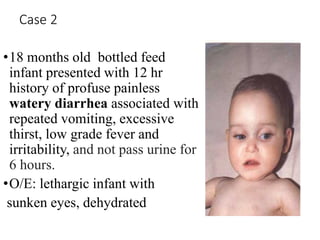
Case 2
•18 months old bottled feed
infant presented with 12 hr
history of profuse painless
watery diarrhea associated with
repeated vomiting, excessive
thirst, low grade fever and
irritability, and not pass urine for
6 hours.
•O/E: lethargic infant with
sunken eyes, dehydrated
•How can you identify the causative agent to confirm
your diagnosis?
•How will you manage him?
15
•How can you identify the causative agent to confirm
your diagnosis?
•What is most likely underlying diagnosis?
•How will you manage him?
16
Parasitic gastroenteritis:
1.Entameba histolytica
2.Giardia lamblia
3.Cryptospordium spp.
4.Blastocystis hominis
•Rout: feco-oral, contaminated food and drink
•Diagnosis : GSE , 3 samples may needed.
•Detection of E. histolytica antigens in stool.,
Examination of duodenal aspirate & ELISA for
giardia
Case 3
•1 year old bottled fed infant presented to you
with 2 days history of high grade fever with
frequent bowel motion that mix with blood
and mucus, he got excessive crying, colic,
and repeated vomiting .
•O/E: he seems toxic, ill looking, feverish and
dehydrated with soft tender abdomen.
• What is most likely underlying diagnosis,?
• How can you identify the causative agent to
confirm your diagnosis?
• what are the common complication that he might
develop?
20
Complications of acute diarrhea:
1.Dehydration, pre-renal renal failure, shock,
acidosis
2.Electrolytes disturbance:
3.Disseminated infections .
4.Hypoglycemia.
5.Secondary dissaccharidase deficiency
6.Convulsion:
7. Extraintestinal Manifestations of Enteric
Infections:
Prevention of diarrhea:
1. Promotion Of Exclusive Breast-Feeding.
2. Improved Complementary Feeding Practices .
3. Vaccination .
4. Improved water and sanitary facilities and
promotion of personal hygiene.
5. Improved management of diarrhea
•Thank you

14.Acute diarrhea.pdf

  • 1.
    Acute diarrhea inchildren Dr. Hanan R. Abood References: • Nelson Textbook of Pediatrics , 21 edition . • Nelson essentials Textbook of Pediatrics , 7th edition. • Illustrated textbook of pediatrics.5th edition
  • 2.
    Acute diarrhea •Learning Objectives: •What is acute diarrhea? •Why the children may get acute diarrhea? •Clinical scenario of common infectious causes of acute diarrhea •What are the Complications may associated with acute diarrhea?. •How can we Prevent acute diarrhea?.
  • 3.
    Diarrhea •Def. : Diarrheais best defined as excessive loss of fluid and electrolytes in the stool(frequent loss of loose stool). •Or defined as an increase in stool frequency to twice the usual number per day in infants and three or more loose or watery stools per day in older children. •Diarrheal diseases are one of the leading causes of morbidity and mortality in children world wide.
  • 4.
    Causes of acutediarrhea:- • Gastroenteritis. •Viral. •Bacterial. •Parasitic. • Systemic infection. • Antibiotic associated. • Others: food poisoning,
  • 5.
    Risk factors forgastroenteritis 1. Environmental contamination. 2. lack of exclusive or predominant breast-feeding. 3. Malnutrition increases several fold the risk of diarrhea and associated mortality, the risks are higher with vitamin A deficiency, and Zinc deficiency 4. Ingestion of raw or undercooked food, improper food handling. 5. Additional risks include young age, immune deficiency and measles,Others: like blood group O, vitamin A deficiency in Vibrio cholerae O1 and O139 5
  • 6.
    Viral-gastroenteritis: •Rotavirus:-is the mostfrequent cause of diarrhea during winter months. •Rout: Fecally contaminated foods. Ready-to-eat foods touched by infected food workers , fomites. Aerosol transmission of rotavirus may be possible. •Primary infection causes moderate to sever diseases, while re-infection in adolescent usually produce mild illness. The pt have vomiting which may last for 3-4 days with diarrhea which usually persist for 7-10 days. •Nearly all infants and children worldwide were infected by 2 yr of age before vaccine introduction
  • 7.
    Case 1 •You areevaluating 11 months old bottled feed infant presented with repeated vomiting that started 1days ago associated with high grade fever which is more during the night and passage of frequent loose stool, Today he refuses feeding, and had passed frequent watery diarrhea, he seems pale, sleepy, and feverish.
  • 8.
    • What isyour next step to identify the cause? 8
  • 9.
    • What isyour next step to identify the cause? •General stool examination. 9
  • 10.
    •What is mostlikely underlying diagnosis? •How can you identify the causative agent? 10
  • 11.
    •The diagnosis isconfirmed by ELISAs, which offer >90% specificity and sensitivity, are available for detection of group A rotavirus and enteric adenovirus in stool samples Treatment: •The pt need rehydration which may require admission for I.V. fluid. •Oral zinc in some form for 10–14 days during and after diarrhea (10 mg/day for infants <6 mo of age and 20 mg/day for those >6 mo)
  • 12.
    Bacterial gastro-enteritis •Many bacterialentero-pathogens may produce diarrhea, the infection usually acquired by feco- oral route •E. coli. •Salmonella. •Shigella. •Campylobacter jejuni. •Yersinia enterocolitica. •Vibrio cholerae.
  • 13.
    •All bacterial enteritisshare the same: •Rout: feco-oral, contaminated food and drink •Diagnosis: General stool examination `GSE` • Stool culture. •Treatment: Rehydration. • Oral zinc • Antibiotic ?!
  • 14.
    Case 2 •18 monthsold bottled feed infant presented with 12 hr history of profuse painless watery diarrhea associated with repeated vomiting, excessive thirst, low grade fever and irritability, and not pass urine for 6 hours. •O/E: lethargic infant with sunken eyes, dehydrated
  • 15.
    •How can youidentify the causative agent to confirm your diagnosis? •How will you manage him? 15
  • 16.
    •How can youidentify the causative agent to confirm your diagnosis? •What is most likely underlying diagnosis? •How will you manage him? 16
  • 17.
    Parasitic gastroenteritis: 1.Entameba histolytica 2.Giardialamblia 3.Cryptospordium spp. 4.Blastocystis hominis •Rout: feco-oral, contaminated food and drink •Diagnosis : GSE , 3 samples may needed. •Detection of E. histolytica antigens in stool., Examination of duodenal aspirate & ELISA for giardia
  • 18.
    Case 3 •1 yearold bottled fed infant presented to you with 2 days history of high grade fever with frequent bowel motion that mix with blood and mucus, he got excessive crying, colic, and repeated vomiting . •O/E: he seems toxic, ill looking, feverish and dehydrated with soft tender abdomen.
  • 20.
    • What ismost likely underlying diagnosis,? • How can you identify the causative agent to confirm your diagnosis? • what are the common complication that he might develop? 20
  • 21.
    Complications of acutediarrhea: 1.Dehydration, pre-renal renal failure, shock, acidosis 2.Electrolytes disturbance: 3.Disseminated infections . 4.Hypoglycemia. 5.Secondary dissaccharidase deficiency 6.Convulsion: 7. Extraintestinal Manifestations of Enteric Infections:
  • 22.
    Prevention of diarrhea: 1.Promotion Of Exclusive Breast-Feeding. 2. Improved Complementary Feeding Practices . 3. Vaccination . 4. Improved water and sanitary facilities and promotion of personal hygiene. 5. Improved management of diarrhea
  • 23.