Minerals and trace
elements
Mr. Hussein Hassan Mohamud
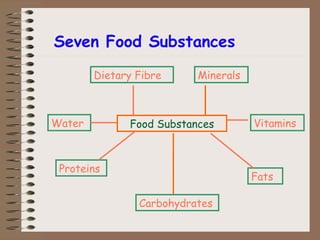
Seven Food Substances
Food Substances
Carbohydrates
Proteins
Water
Dietary Fibre Minerals
Vitamins
Fats
Minerals
Approximately 50 chemical elements are
identified
Important for Growth, Development , regulation
of vital functions
Major : calcium, Phosphorous, Sodium,
Potassium, Magnesium
Minor: Required less than a few milligram per
day. Ex. Iron, Iodine, Fluorine, Zinc, Copper,
Cobalt, Chromium, Manganese, Molybdenum,
Selenium, Nickel, Tin, Silicon, Vanadium
Trace elements
 A naturally occurring, homogeneous, inorganic
substance required in humans in amounts less
than 100 mg/day
Excess amounts are important to health
Iron
Adult human body contains 3-4 Gm
60-70% is present in Blood and rest in storage form.
Each Gm of Hb contains 3.34mg of Iron.
Requirement :
1 mg per day for Male
2.5 mg for Females
3.5 mg for Females in Physiological stress
conditions
Functions of iron
Iron is a part of all cells and has many different
functions
Hb Carries oxygen to the tissues
Brain development along with Folic acid
Myoglobin Facilitates oxygen use and storage in
muscles
An integral part of enzyme reactions in various tissues
( Cyotchromes, Catalases, etc)
Regulation of body temperature
Catecholamine metabolism
Susceptibility to infection
Iron loss
In adults – 1 mg per day
Menstruating women – 2 mg per day
Hemorrhages are common causes
Stored in Liver, Spleen, Bone marrow,
Kidneys
Iron Deficiency
Occurs in 3 stages:
First Stage: Decreased storage
without any other detectable
abnormalities
Second Stage: stores are exhausted,
serum Ferritin level decreases.
Third Stage: Decrease in Hemoglobin
Iron
Signs of iron deficiency anemia include:
Fatigue
Headache
Cardiovascular stress
Poor tolerance to heavy blood loss
Evaluation of iron status
1. Hemoglobin Concentration: relative index
of iron deficiency. ( early Anemia if Hb is
10-11g% & marked anemia Hb is < 10g
%).
2. Serum Iron concentration: useful index
( Normal 0.8 to 1.8mg /L)
3. Serum Ferritin level: Gold standard &
sensitive tool for evaluation and reflects the
size of the iron status ( < 10Micrgms/L)
4. Serum Transferrin Saturation: 16% - 30%
Iodine
Essential Micronutrient
Body normally has 20-30 mg of iodine and more than
75% is in the thyroid gland,
rest is in the mammary gland, gastric mucosa, and blood
it’s only function is related to thyroid Hormone
Required for synthesis of thyroid hormone
 Thyroxin (T4) – 4 atoms of iodine per molecule
 Triiodothyronine (T3) – 3 atoms of iodine per molecule
Requirement per day is 150 micrograms
Iodine
Food Sources – 90% intake
Foods of origin (sea-foods), processed foods,
iodized salt
Fresh Water – small & Variable
Small amounts in Milk, meat, Vegetables, Cereals
etc.
Iodine - Absorption and Excretion
Iodine is absorbed in the form of iodide
occurs both as free and protein-bound iodine in
circulation
iodine is stored in the thyroid where it is used for
the synthesis of T3 and T4
hormone is degraded in target cells and in the
liver and the iodine is conserved if needed
excretion is primarily via urine
small amounts from bile are excreted in the feces
Iodine - deficiency
 Goitre—enlargement of the thyroid gland, goiters are more
prevalent in women and with increased age
 deficiency may be absolute—in areas of deficiency,
 or relative—adolescence, pregnancy, lactation
 Iodine deficiency is the world’s most prevalent cause of brain
damage
 Serious iodine deficiency during pregnancy may result in
stillbirths, abortions and cretinism
 the less visible, more pervasive form of iron & iodine
deficiency that lowers intellectual performance at home and
school may have far greater global and economic impact
Fluorine
It is found in combined forms
96% of fluorides in the body found in bone and teeth.
An essential for normal mineralisation of bones and
formation of dental enamel
Source:
Drinking water : Fluorine in the drinking water is
0.5 mg per ltr. Excess of fl > 3mg causes flourosis.
Foods: Sea fish, cheese, Tea
It is a two edged sword ( deficiency or excess)
Zinc
 Adult body contains 1.4 to 2.3 gms of Zinc
 Plasma level- 96Microgm per 100 ml ( adults), 89
Microgram per 100 ml (children)
 Functions are;
 Active role in metabolism of glucose and proteins
 Synthesis of insulin by pancreas
 Immunity functions
Food sources :
 meat, milk, fish
 Plant sources have low bioavailability
Zinc
One of the ten biggest factors contributing to
diseases related to nutrition in developing countries
 Zinc interventions could reduce child deaths
globally by 63%
 South East Asia and Sub-Saharan Africa highest
risk of zinc deficiency:
 Inadequate intake – 1/3 of the population
 40% of pre-school children
Zinc used as a (part of) curative intervention for
severe malnutrition and diarrhea
Zinc deficiency
 Growth failure
Sexual infantility in adolescents, loss of taste, delayed
wound healing, decrease in immuno synthesis.
Spontaneous abortions, stillbirths, congenital
malformations.
LBW, Intra Uterine deaths, premature labour.
Daily Requirement
is 15mg for men
 12 mg for women, 10mg for children

14 Min & trace elements for clinical chemistry .ppt

  • 1.
    Minerals and trace elements Mr.Hussein Hassan Mohamud
  • 2.
    Seven Food Substances FoodSubstances Carbohydrates Proteins Water Dietary Fibre Minerals Vitamins Fats
  • 3.
    Minerals Approximately 50 chemicalelements are identified Important for Growth, Development , regulation of vital functions Major : calcium, Phosphorous, Sodium, Potassium, Magnesium Minor: Required less than a few milligram per day. Ex. Iron, Iodine, Fluorine, Zinc, Copper, Cobalt, Chromium, Manganese, Molybdenum, Selenium, Nickel, Tin, Silicon, Vanadium
  • 4.
    Trace elements  Anaturally occurring, homogeneous, inorganic substance required in humans in amounts less than 100 mg/day Excess amounts are important to health
  • 5.
    Iron Adult human bodycontains 3-4 Gm 60-70% is present in Blood and rest in storage form. Each Gm of Hb contains 3.34mg of Iron. Requirement : 1 mg per day for Male 2.5 mg for Females 3.5 mg for Females in Physiological stress conditions
  • 6.
    Functions of iron Ironis a part of all cells and has many different functions Hb Carries oxygen to the tissues Brain development along with Folic acid Myoglobin Facilitates oxygen use and storage in muscles An integral part of enzyme reactions in various tissues ( Cyotchromes, Catalases, etc) Regulation of body temperature Catecholamine metabolism Susceptibility to infection
  • 7.
    Iron loss In adults– 1 mg per day Menstruating women – 2 mg per day Hemorrhages are common causes Stored in Liver, Spleen, Bone marrow, Kidneys
  • 8.
    Iron Deficiency Occurs in3 stages: First Stage: Decreased storage without any other detectable abnormalities Second Stage: stores are exhausted, serum Ferritin level decreases. Third Stage: Decrease in Hemoglobin
  • 9.
    Iron Signs of irondeficiency anemia include: Fatigue Headache Cardiovascular stress Poor tolerance to heavy blood loss
  • 10.
    Evaluation of ironstatus 1. Hemoglobin Concentration: relative index of iron deficiency. ( early Anemia if Hb is 10-11g% & marked anemia Hb is < 10g %). 2. Serum Iron concentration: useful index ( Normal 0.8 to 1.8mg /L) 3. Serum Ferritin level: Gold standard & sensitive tool for evaluation and reflects the size of the iron status ( < 10Micrgms/L) 4. Serum Transferrin Saturation: 16% - 30%
  • 11.
    Iodine Essential Micronutrient Body normallyhas 20-30 mg of iodine and more than 75% is in the thyroid gland, rest is in the mammary gland, gastric mucosa, and blood it’s only function is related to thyroid Hormone Required for synthesis of thyroid hormone  Thyroxin (T4) – 4 atoms of iodine per molecule  Triiodothyronine (T3) – 3 atoms of iodine per molecule Requirement per day is 150 micrograms
  • 12.
    Iodine Food Sources –90% intake Foods of origin (sea-foods), processed foods, iodized salt Fresh Water – small & Variable Small amounts in Milk, meat, Vegetables, Cereals etc.
  • 13.
    Iodine - Absorptionand Excretion Iodine is absorbed in the form of iodide occurs both as free and protein-bound iodine in circulation iodine is stored in the thyroid where it is used for the synthesis of T3 and T4 hormone is degraded in target cells and in the liver and the iodine is conserved if needed excretion is primarily via urine small amounts from bile are excreted in the feces
  • 14.
    Iodine - deficiency Goitre—enlargement of the thyroid gland, goiters are more prevalent in women and with increased age  deficiency may be absolute—in areas of deficiency,  or relative—adolescence, pregnancy, lactation  Iodine deficiency is the world’s most prevalent cause of brain damage  Serious iodine deficiency during pregnancy may result in stillbirths, abortions and cretinism  the less visible, more pervasive form of iron & iodine deficiency that lowers intellectual performance at home and school may have far greater global and economic impact
  • 15.
    Fluorine It is foundin combined forms 96% of fluorides in the body found in bone and teeth. An essential for normal mineralisation of bones and formation of dental enamel Source: Drinking water : Fluorine in the drinking water is 0.5 mg per ltr. Excess of fl > 3mg causes flourosis. Foods: Sea fish, cheese, Tea It is a two edged sword ( deficiency or excess)
  • 16.
    Zinc  Adult bodycontains 1.4 to 2.3 gms of Zinc  Plasma level- 96Microgm per 100 ml ( adults), 89 Microgram per 100 ml (children)  Functions are;  Active role in metabolism of glucose and proteins  Synthesis of insulin by pancreas  Immunity functions Food sources :  meat, milk, fish  Plant sources have low bioavailability
  • 17.
    Zinc One of theten biggest factors contributing to diseases related to nutrition in developing countries  Zinc interventions could reduce child deaths globally by 63%  South East Asia and Sub-Saharan Africa highest risk of zinc deficiency:  Inadequate intake – 1/3 of the population  40% of pre-school children Zinc used as a (part of) curative intervention for severe malnutrition and diarrhea
  • 18.
    Zinc deficiency  Growthfailure Sexual infantility in adolescents, loss of taste, delayed wound healing, decrease in immuno synthesis. Spontaneous abortions, stillbirths, congenital malformations. LBW, Intra Uterine deaths, premature labour. Daily Requirement is 15mg for men  12 mg for women, 10mg for children