• The nature of analytical chemistry.
•]
• Qualitative and quantitative analysis.
• Sensitivity of analysis.
• Solution.
• Electrolytes.
• Solubility rules.
CHAPTER 1 BOOK OF
ANALYTICAL CHEMISTRY-
ANALYTICAL CHEMISTRY
Lecture 1 contents
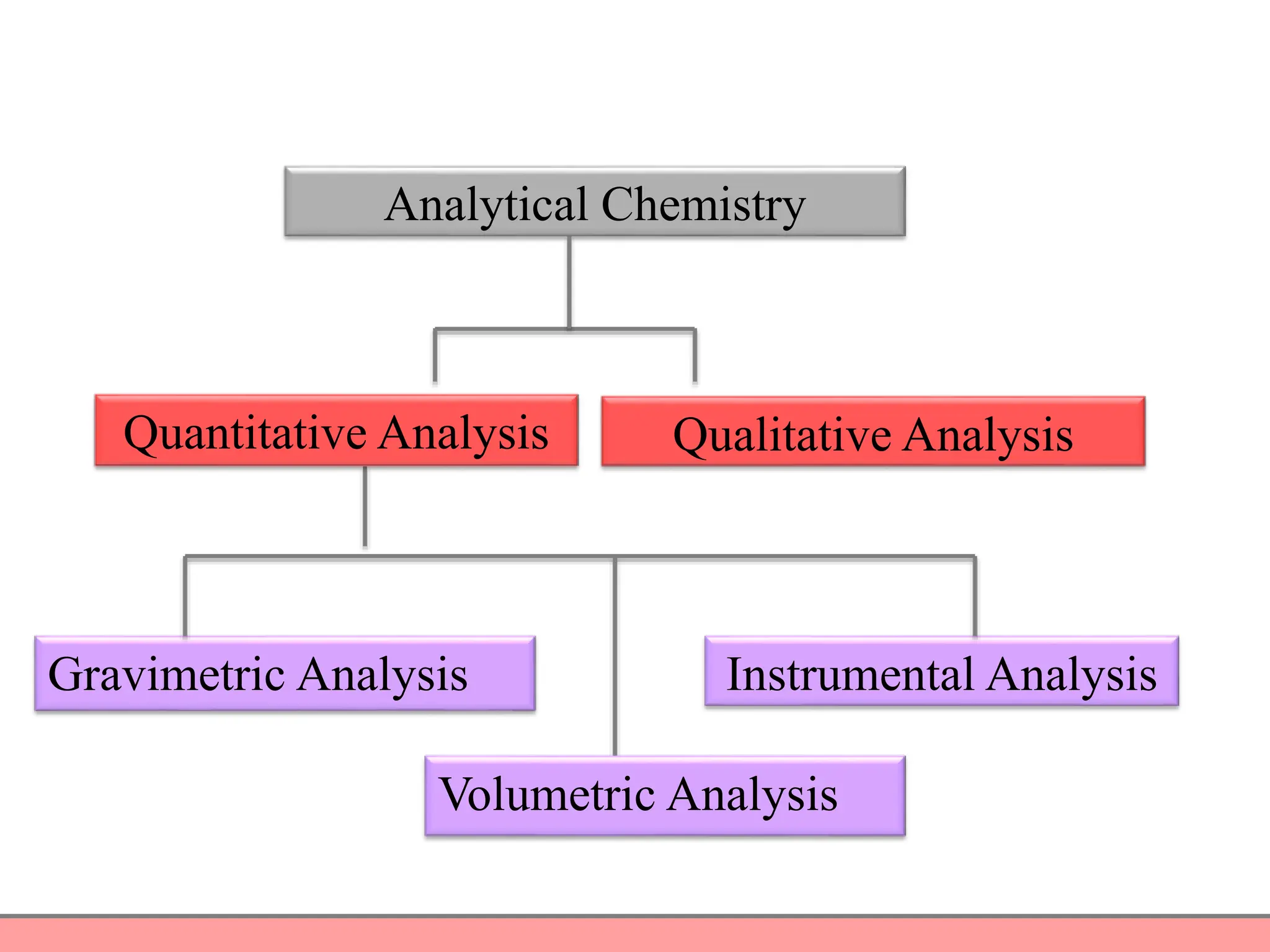
Analytical Chemistry
Gravimetric Analysis Instrumental Analysis
Qualitative Analysis
Quantitative Analysis
Volumetric Analysis
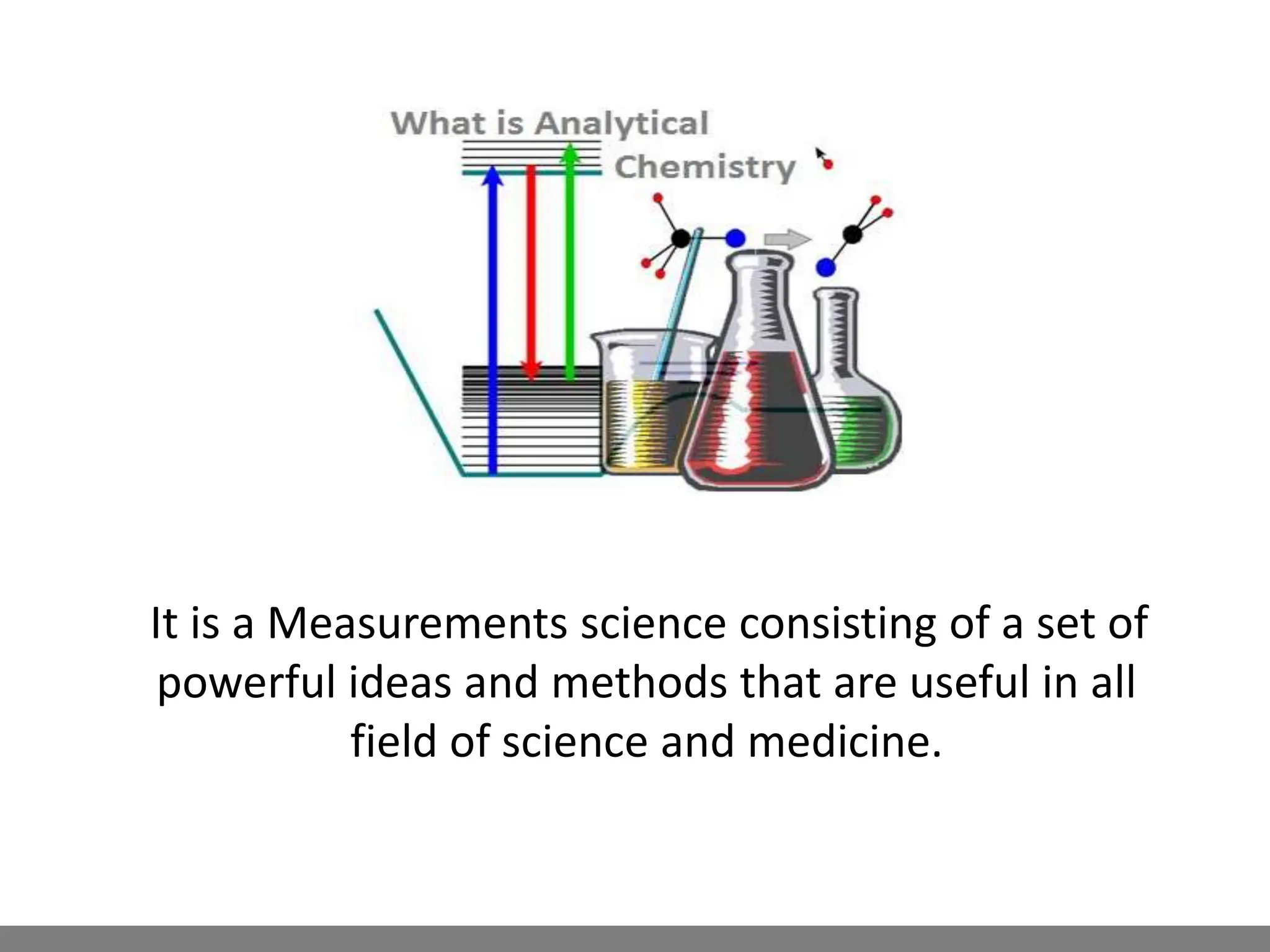
It is a Measurements science consisting of a set of
powerful ideas and methods that are useful in all
field of science and medicine.
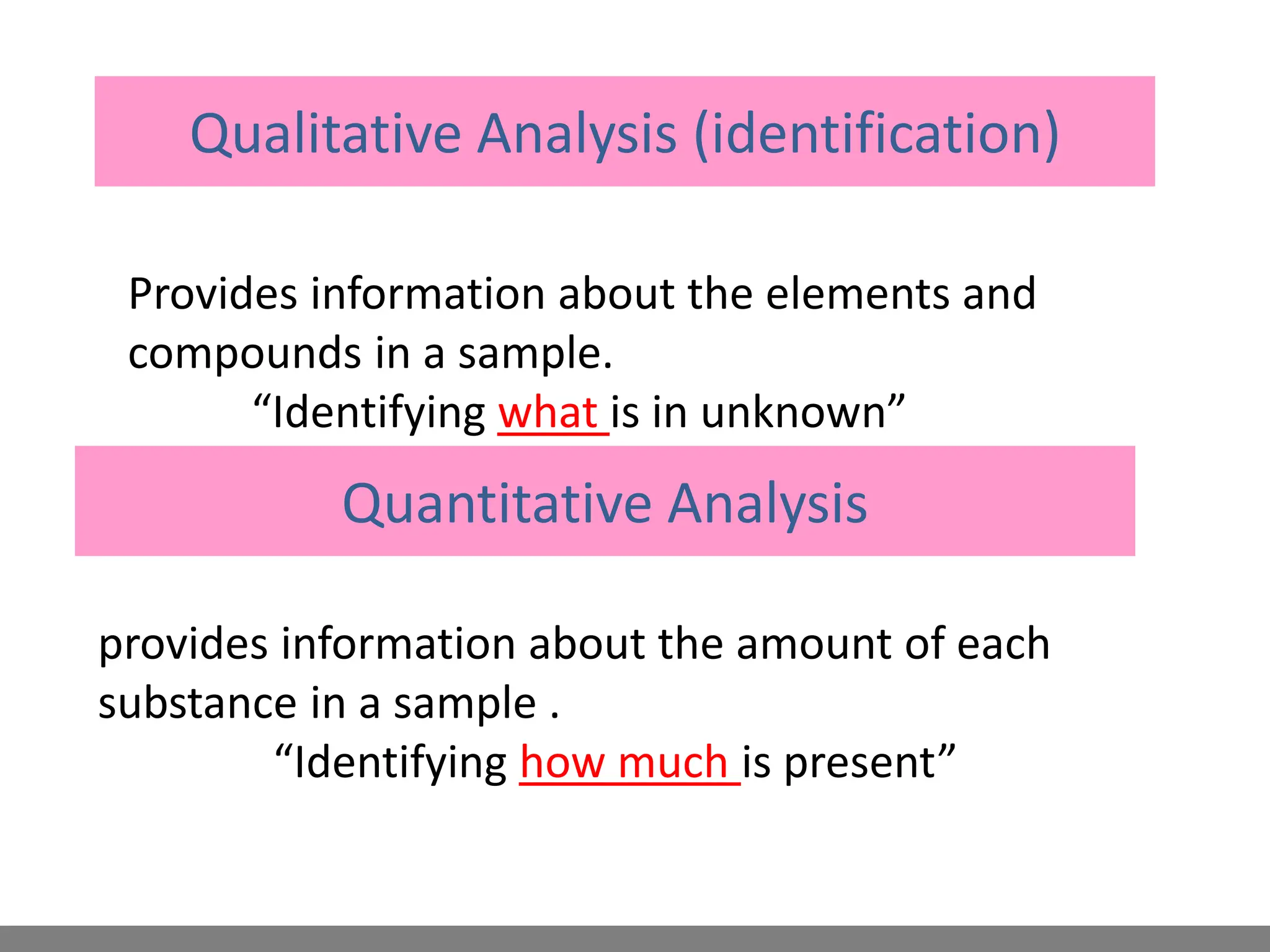
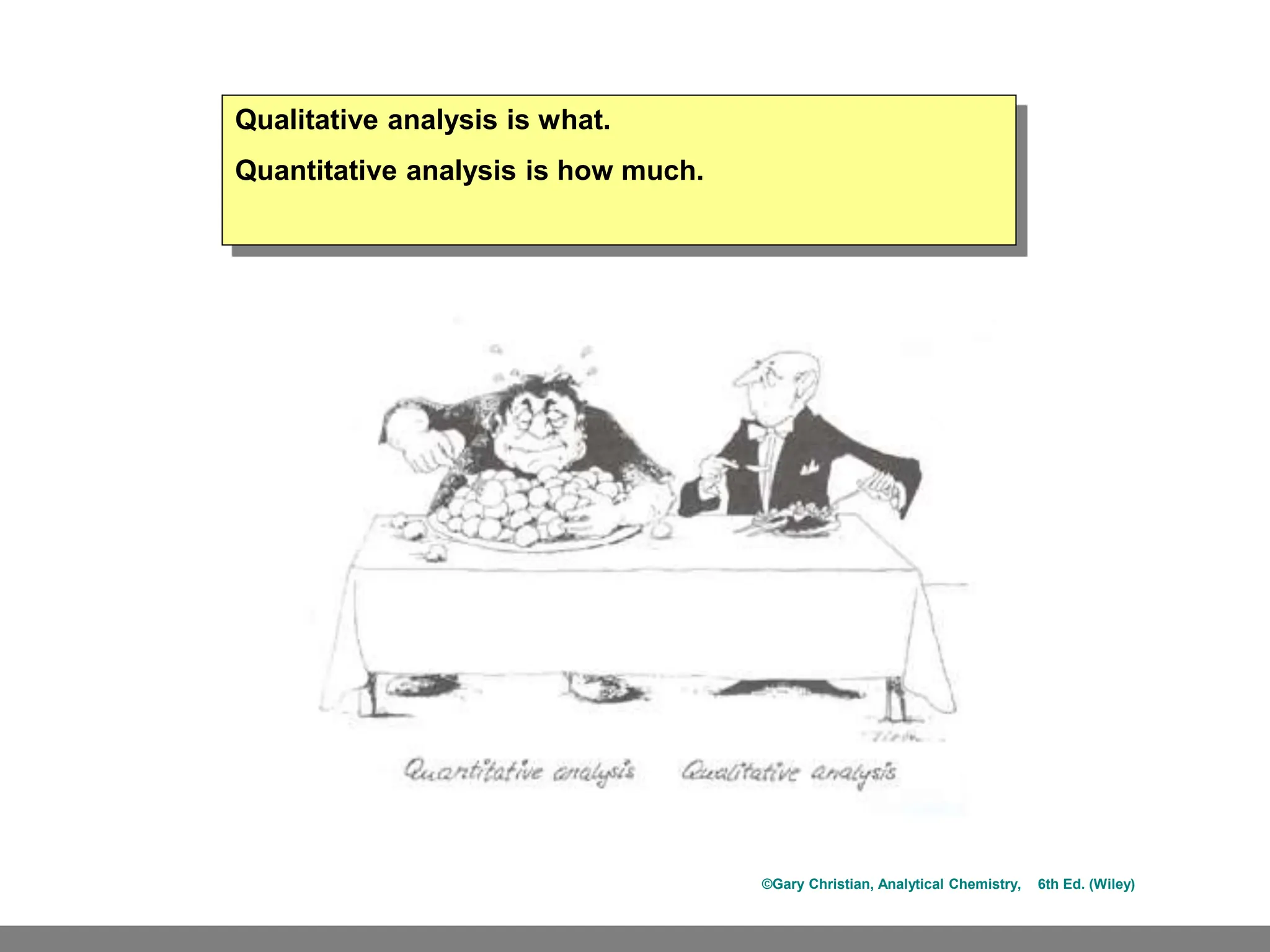
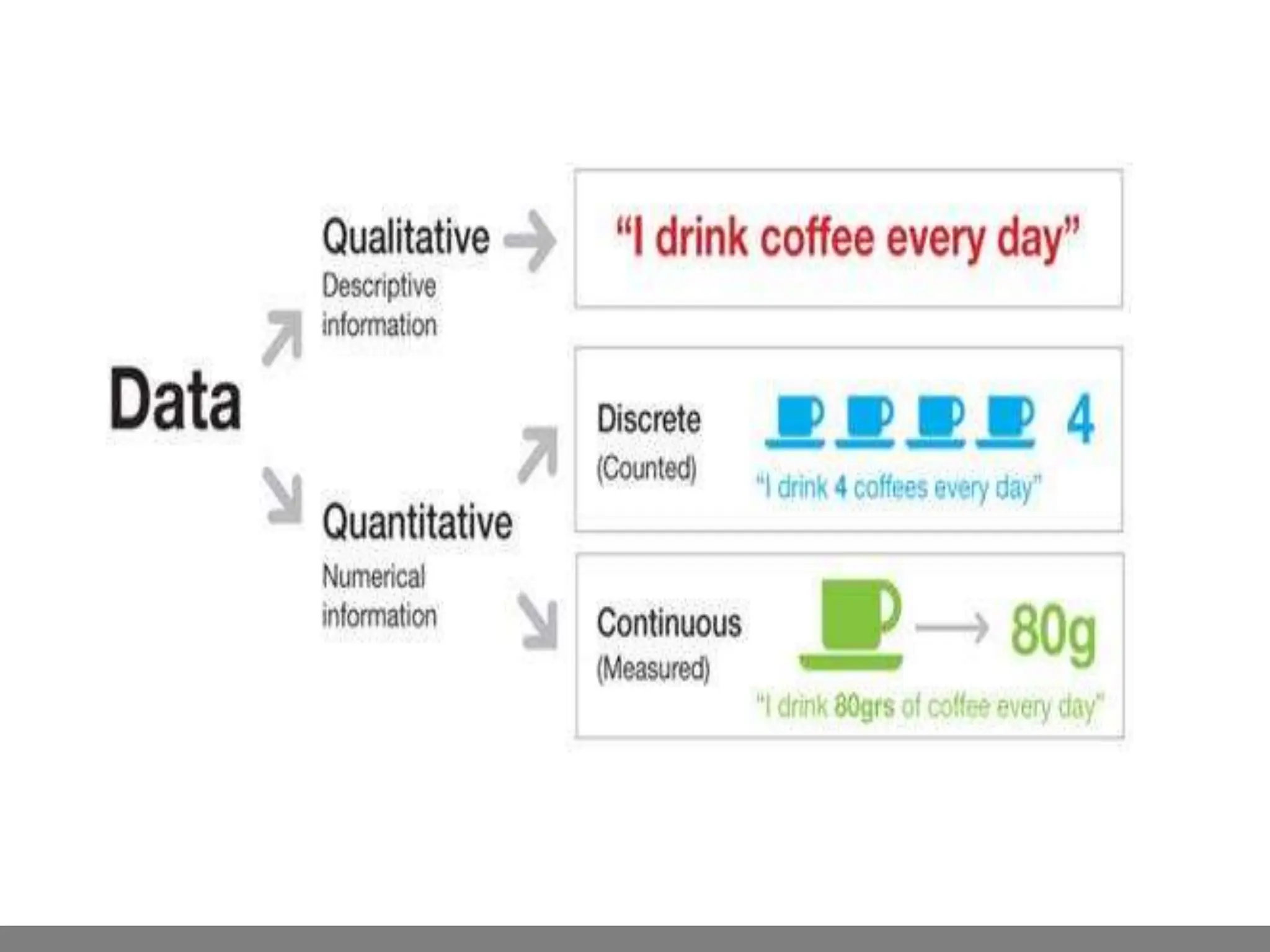
Qualitative Analysis (identification)
Provides information about the elements and
compounds in a sample.
“Identifying what is in unknown”
Quantitative Analysis
provides information about the amount of each
substance in a sample .
“Identifying how much is present”
©Gary Christian, Analytical Chemistry, 6th Ed. (Wiley)
Qualitative analysis is what.
Quantitative analysis is how much.
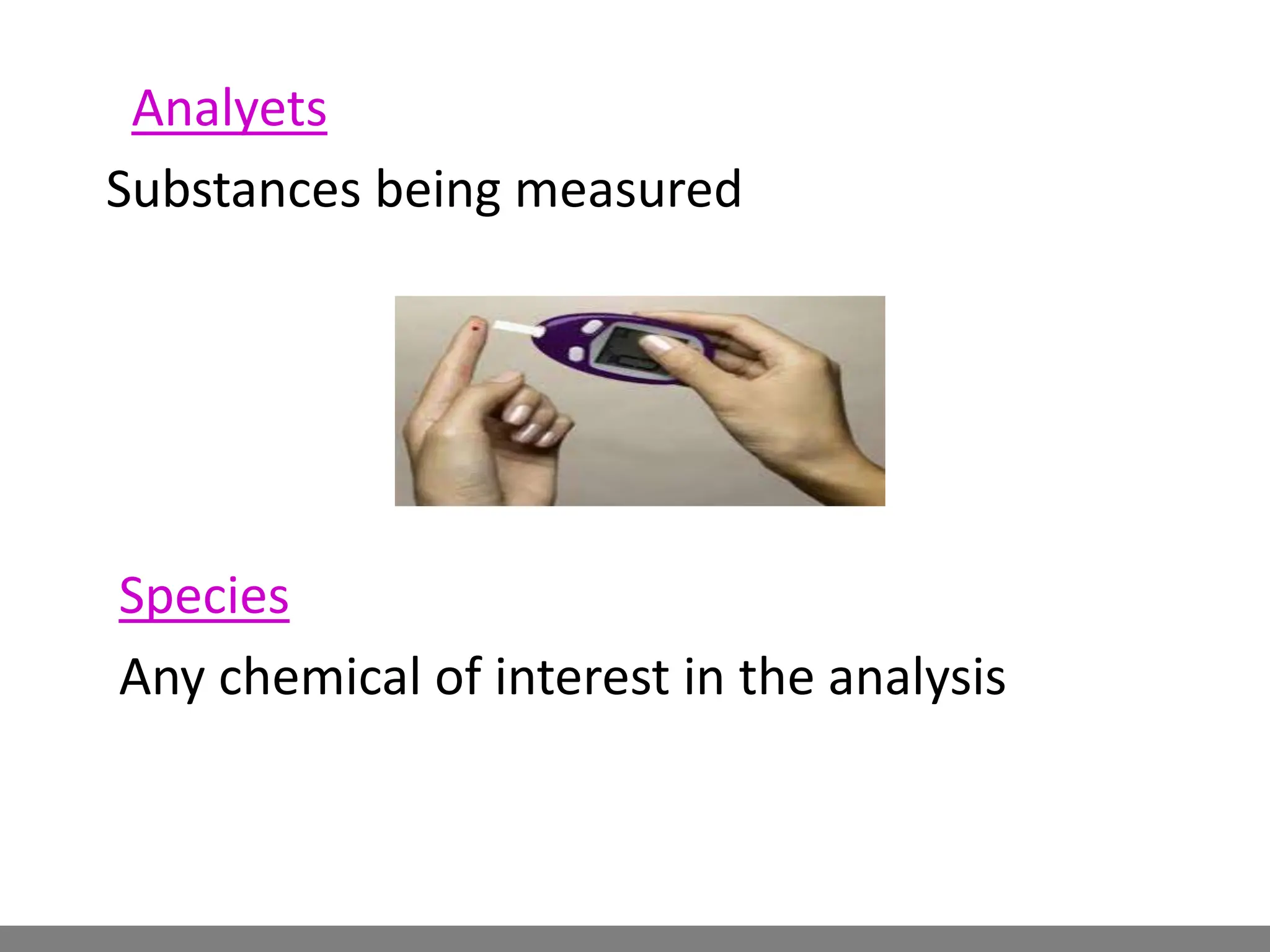
Analyets
Substances being measured
Species
Any chemical of interest in the analysis
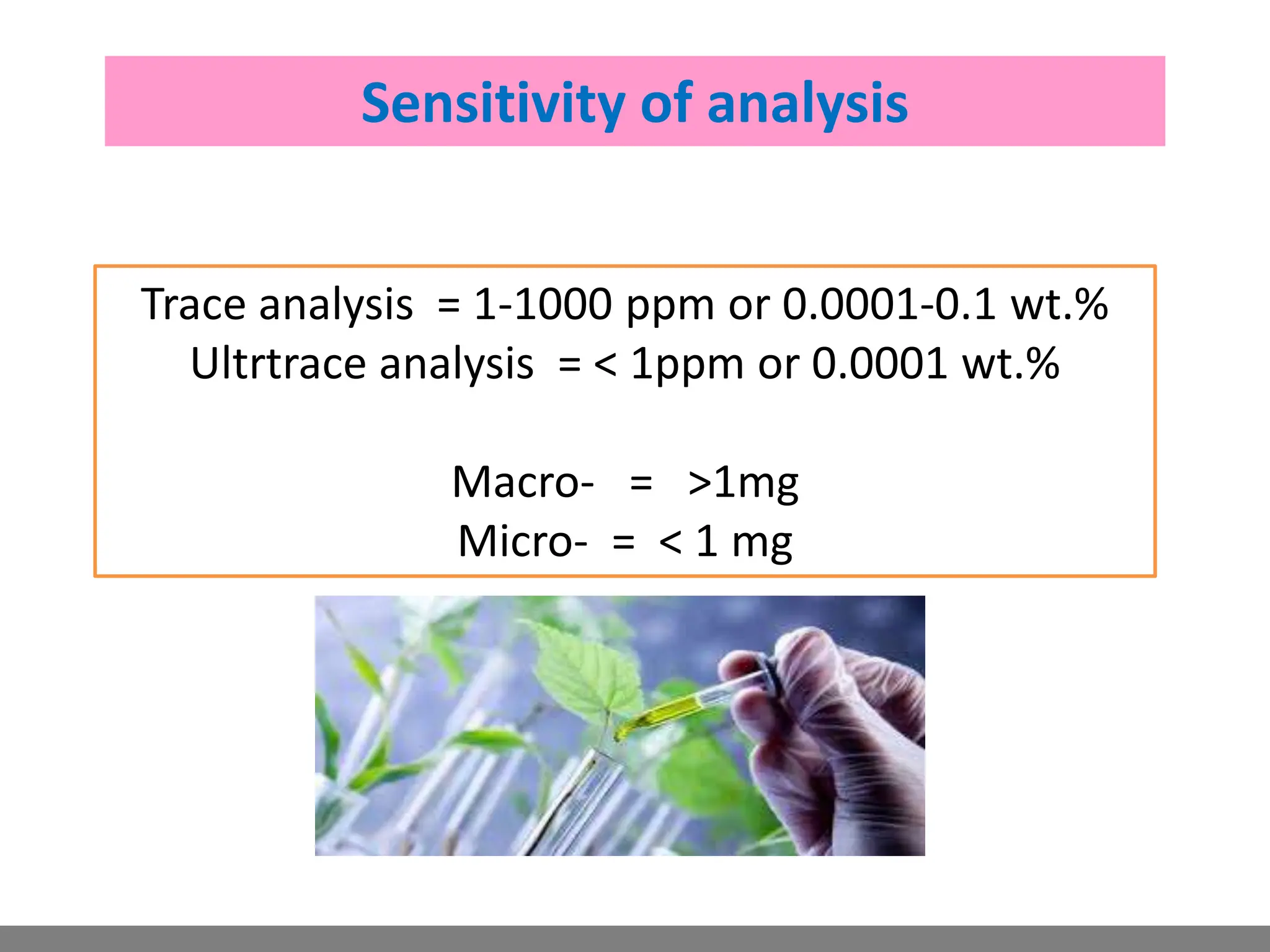
Sensitivity of analysis
Trace analysis = 1-1000 ppm or 0.0001-0.1 wt.%
Ultrtrace analysis = < 1ppm or 0.0001 wt.%
Macro- = >1mg
Micro- = < 1 mg
Analytical chemistry plays a vital role in the development
of science.
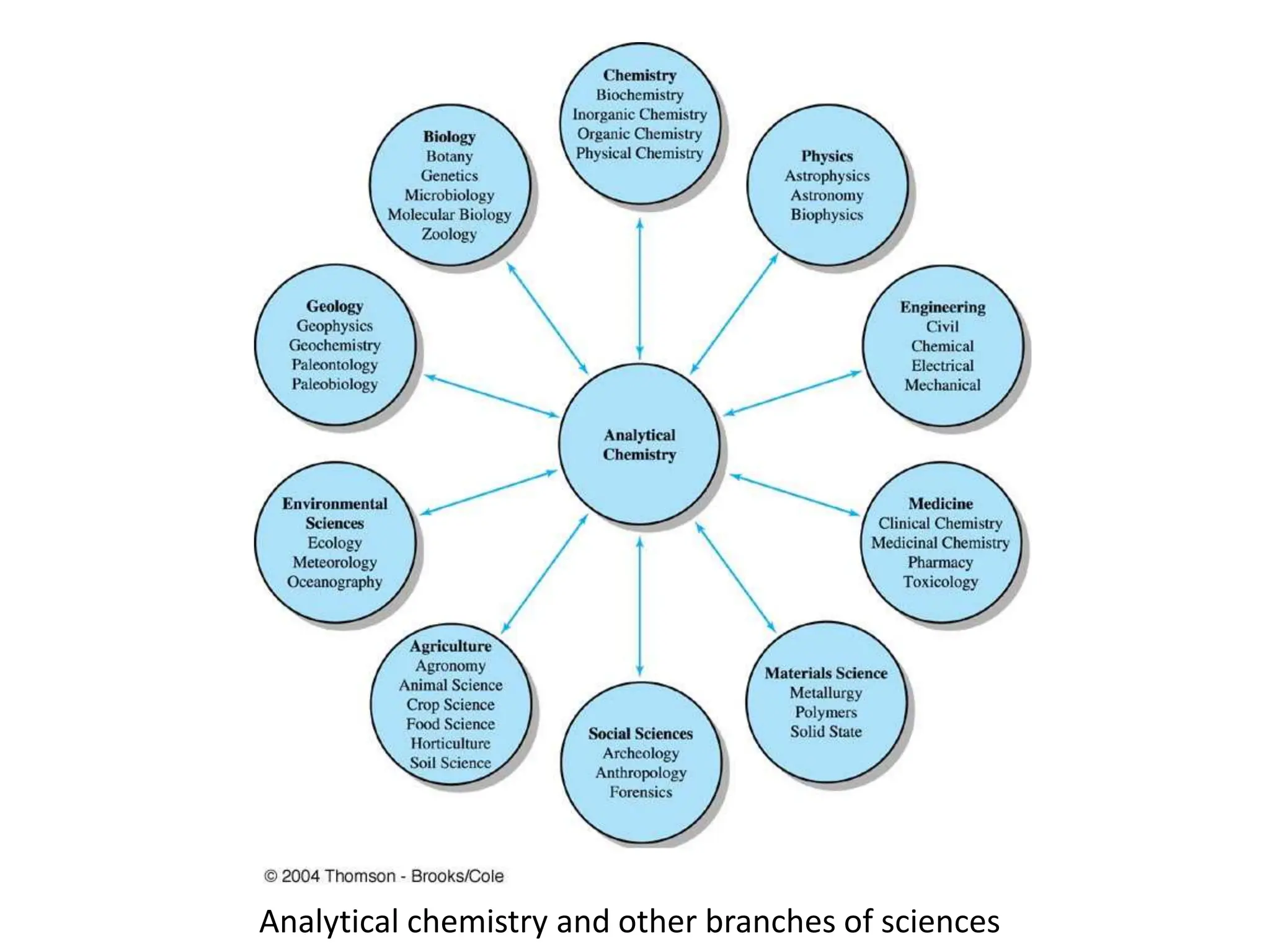
Plays a vital role in many research areas in chemistry,
biochemistry, biology, geology, physics and the other
sciences.
All branches of chemistry draw on the ideas and
techniques of analytical chemistry.
The Role of Analytical Chemistry
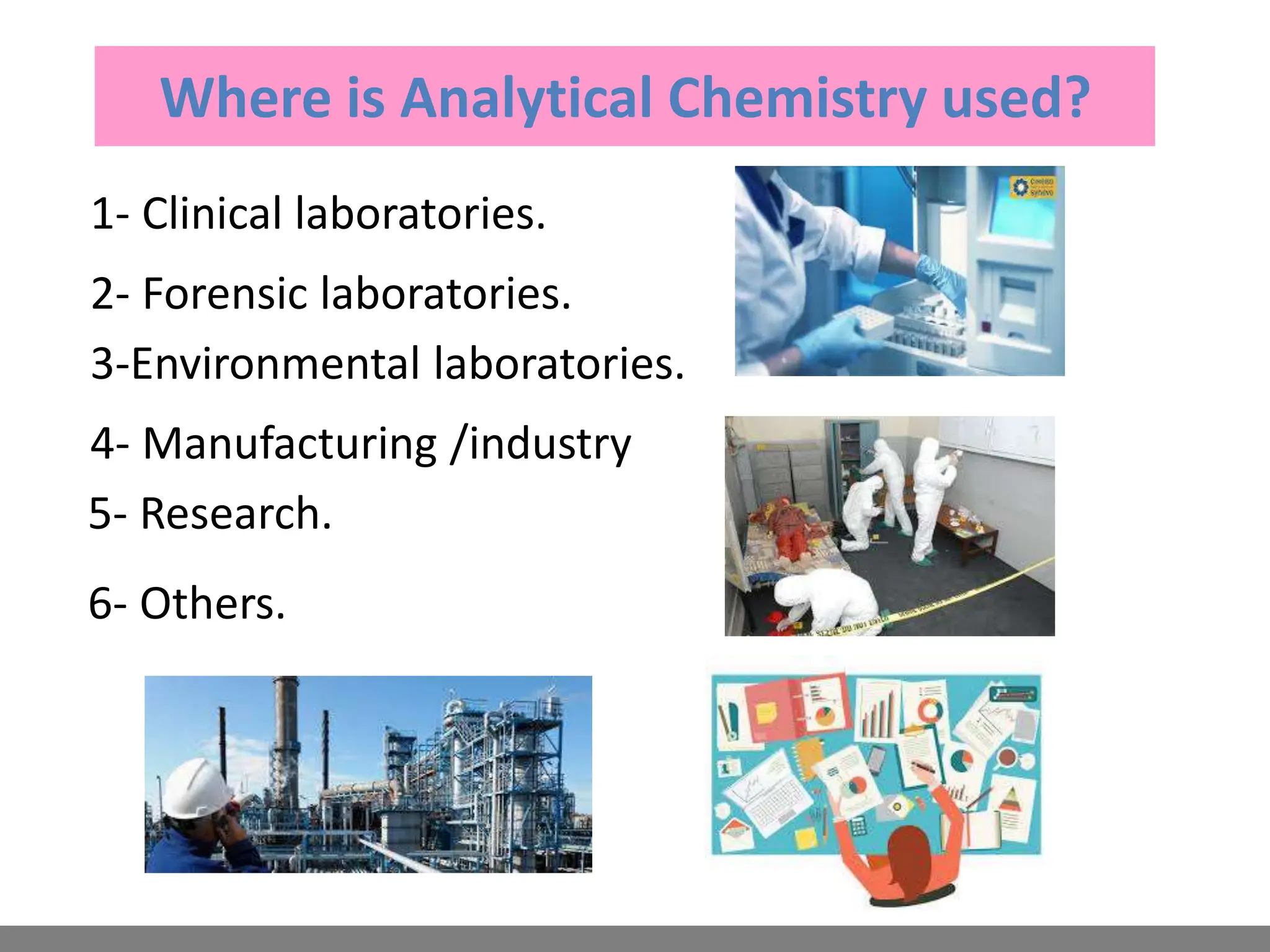
Where is Analytical Chemistry used?
1- Clinical laboratories.
2- Forensic laboratories.
3-Environmental laboratories.
4- Manufacturing /industry
5- Research.
6- Others.
Analytical chemistry and other branches of sciences
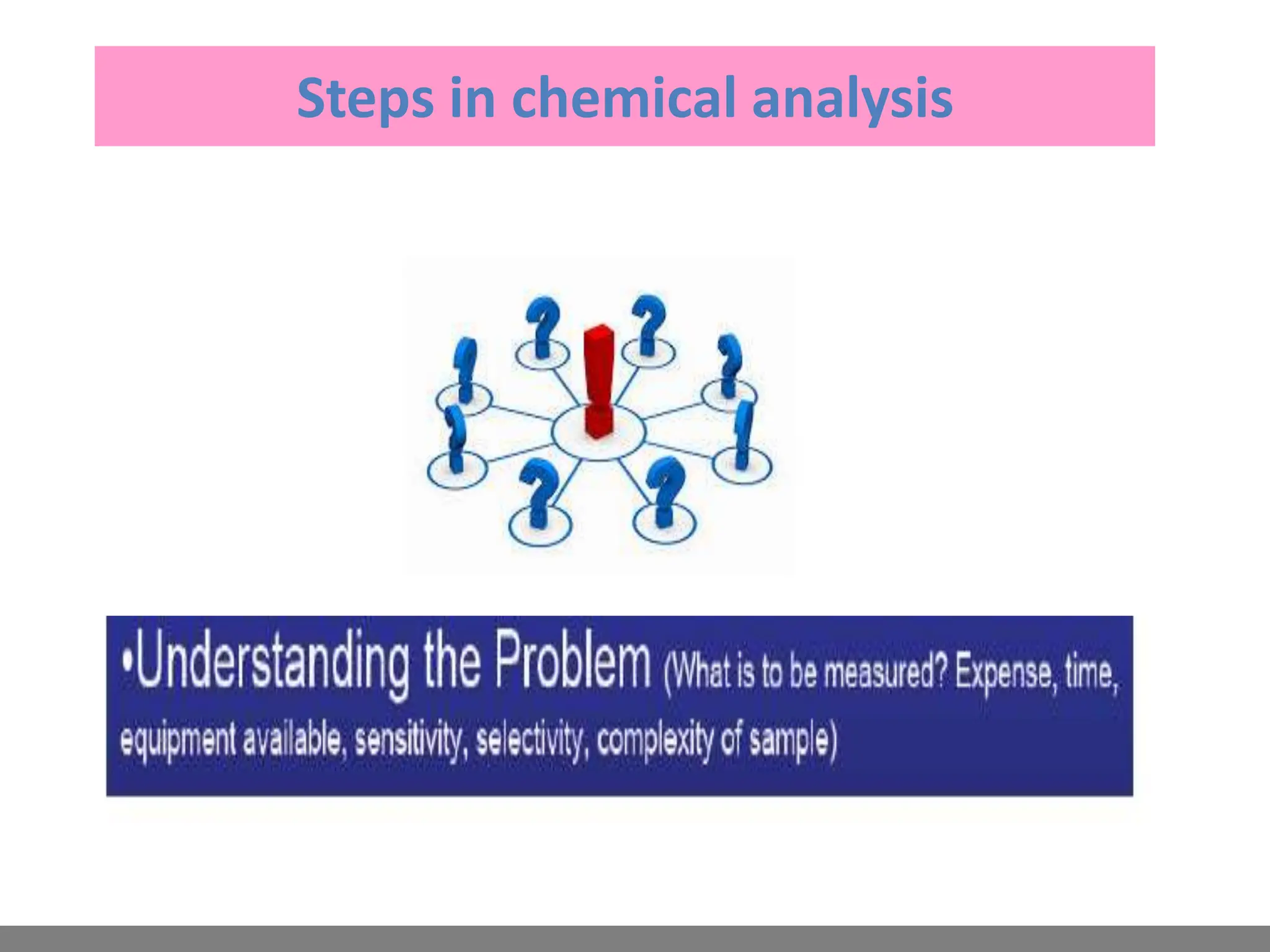
Steps in chemical analysis
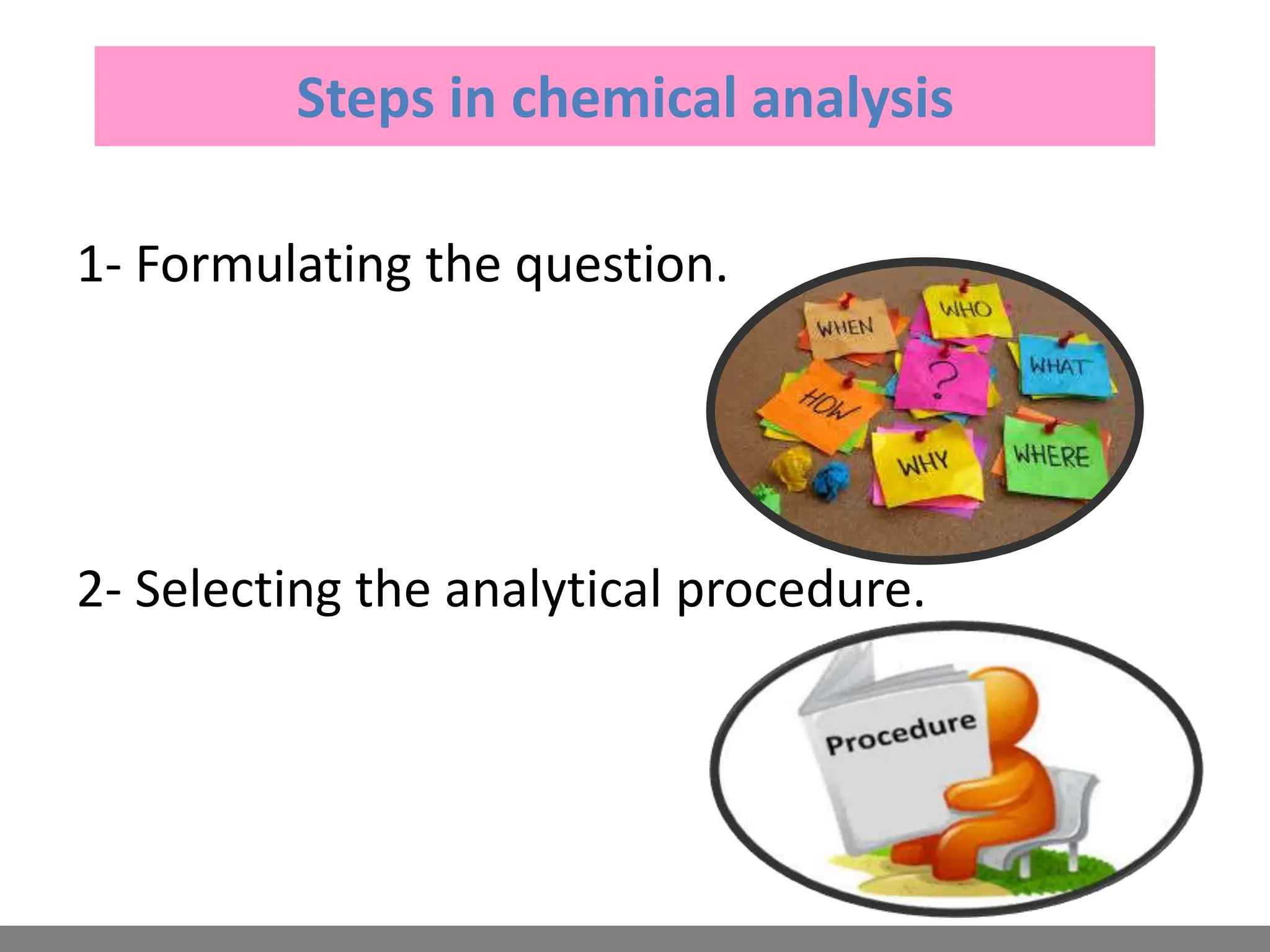
1- Formulating the question.
2- Selecting the analytical procedure.
Steps in chemical analysis
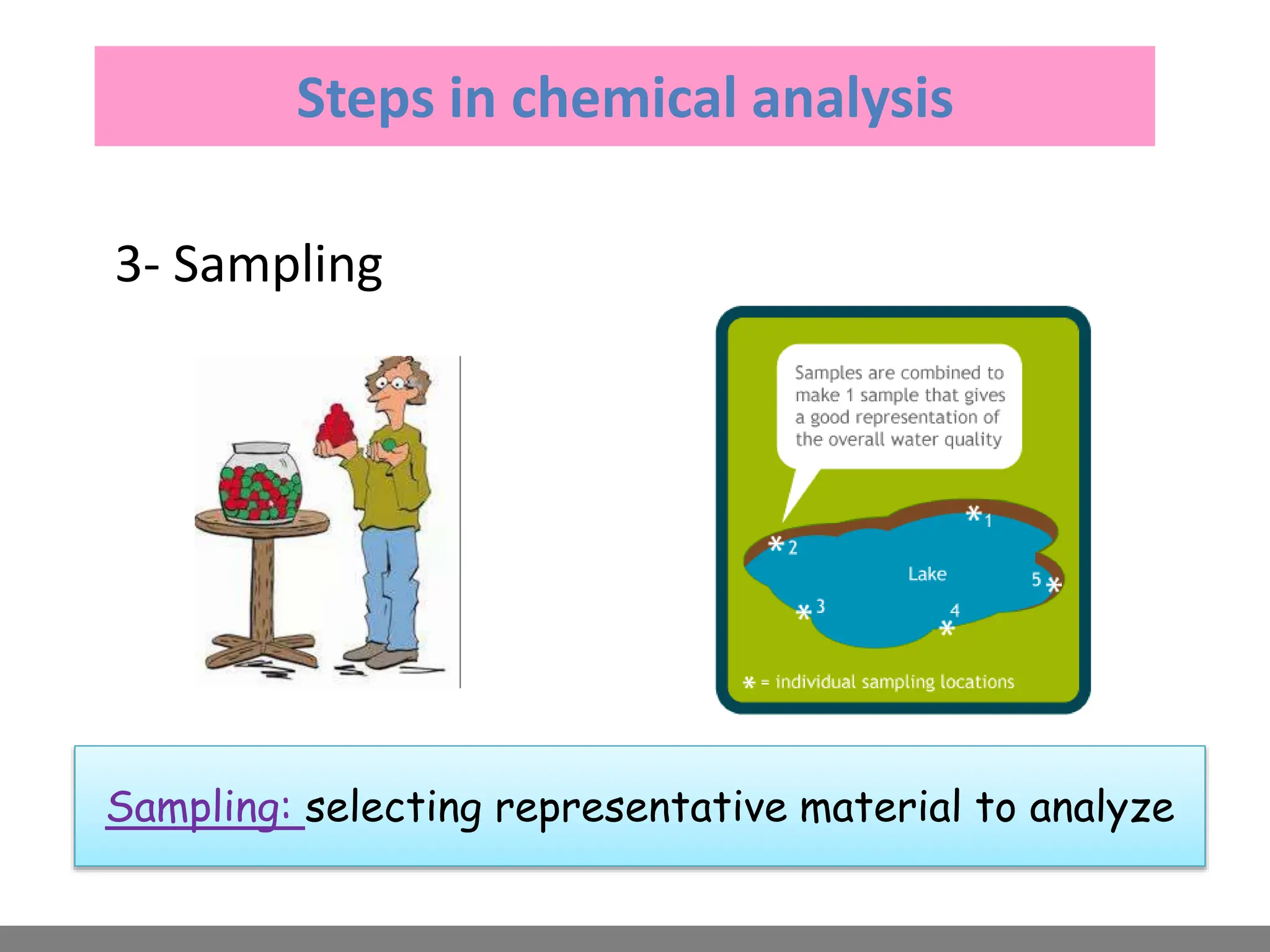
3- Sampling
Steps in chemical analysis
Sampling: selecting representative material to analyze
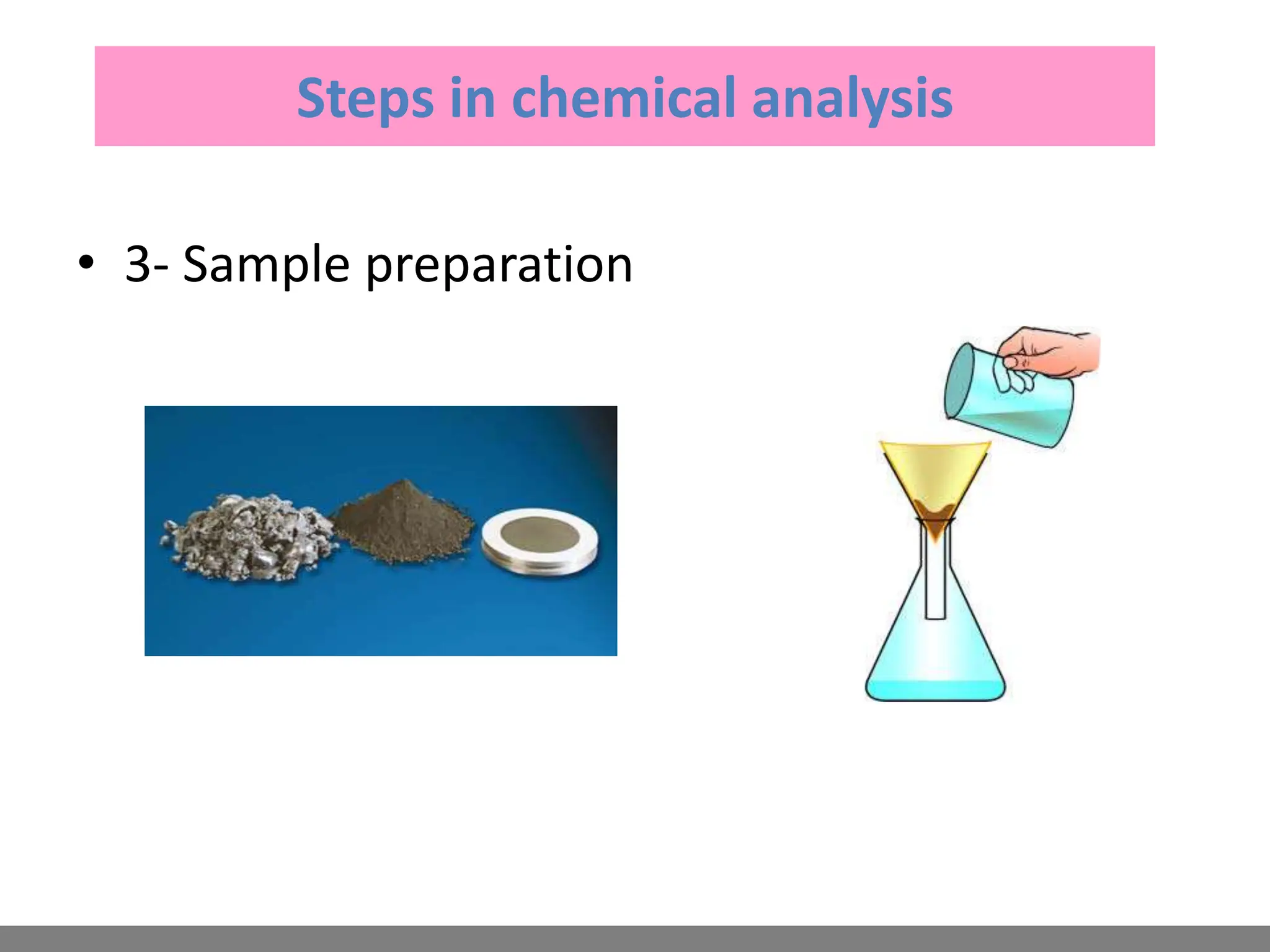
• 3- Sample preparation
Steps in chemical analysis
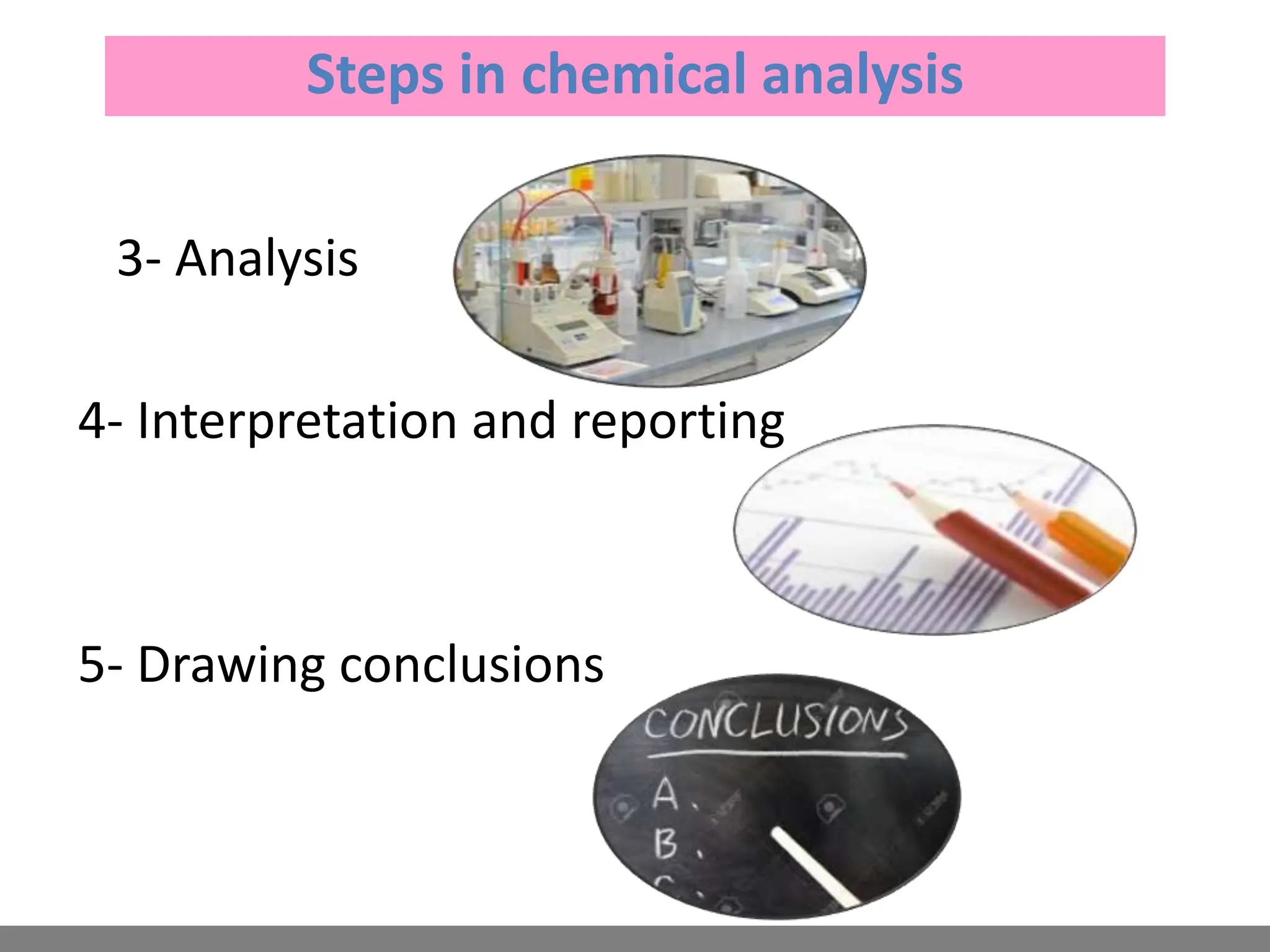
3- Analysis
4- Interpretation and reporting
5- Drawing conclusions
Steps in chemical analysis
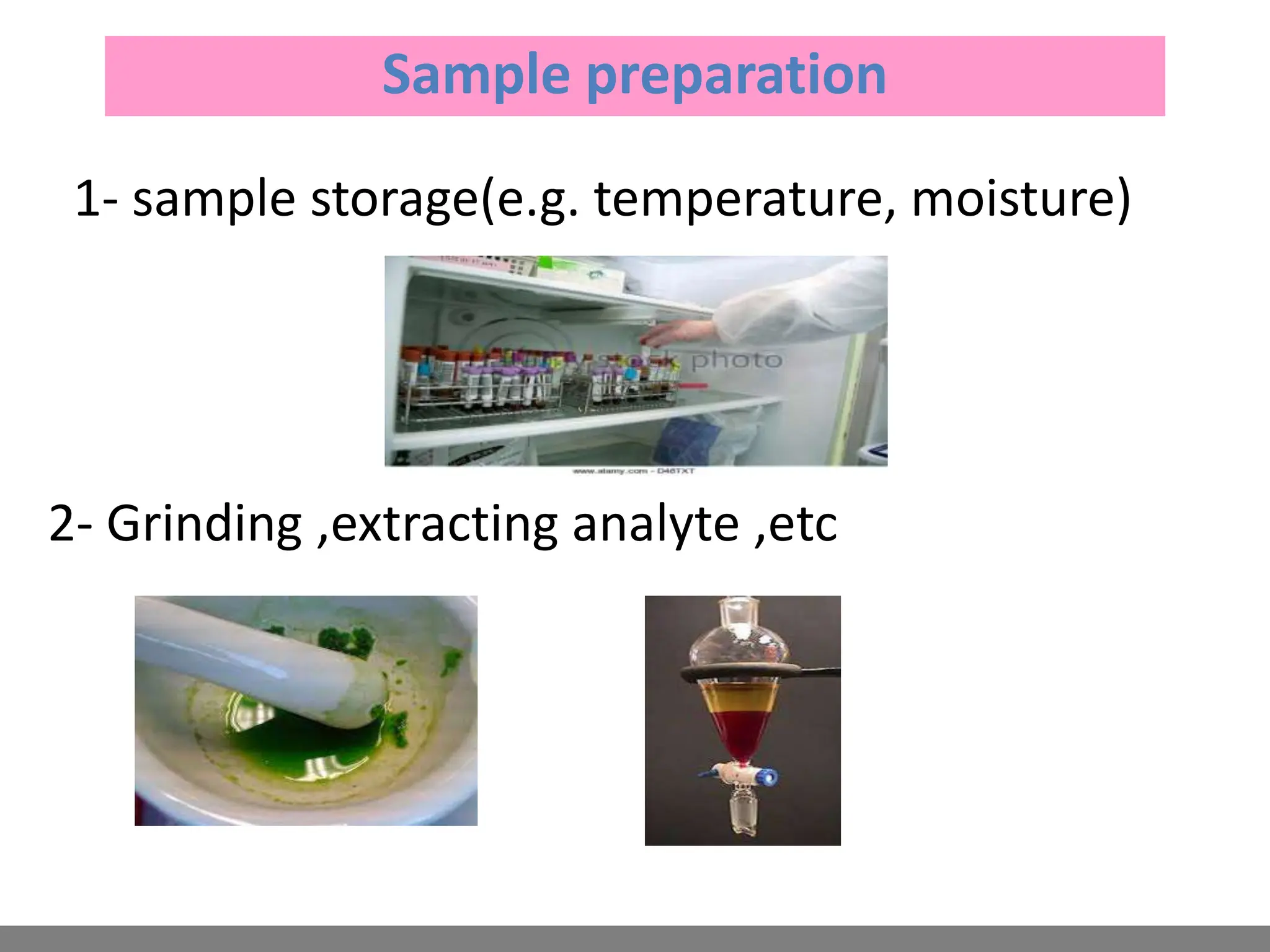
1- sample storage(e.g. temperature, moisture)
2- Grinding ,extracting analyte ,etc
Sample preparation
3- Dissolving sample, dispersing analyte)
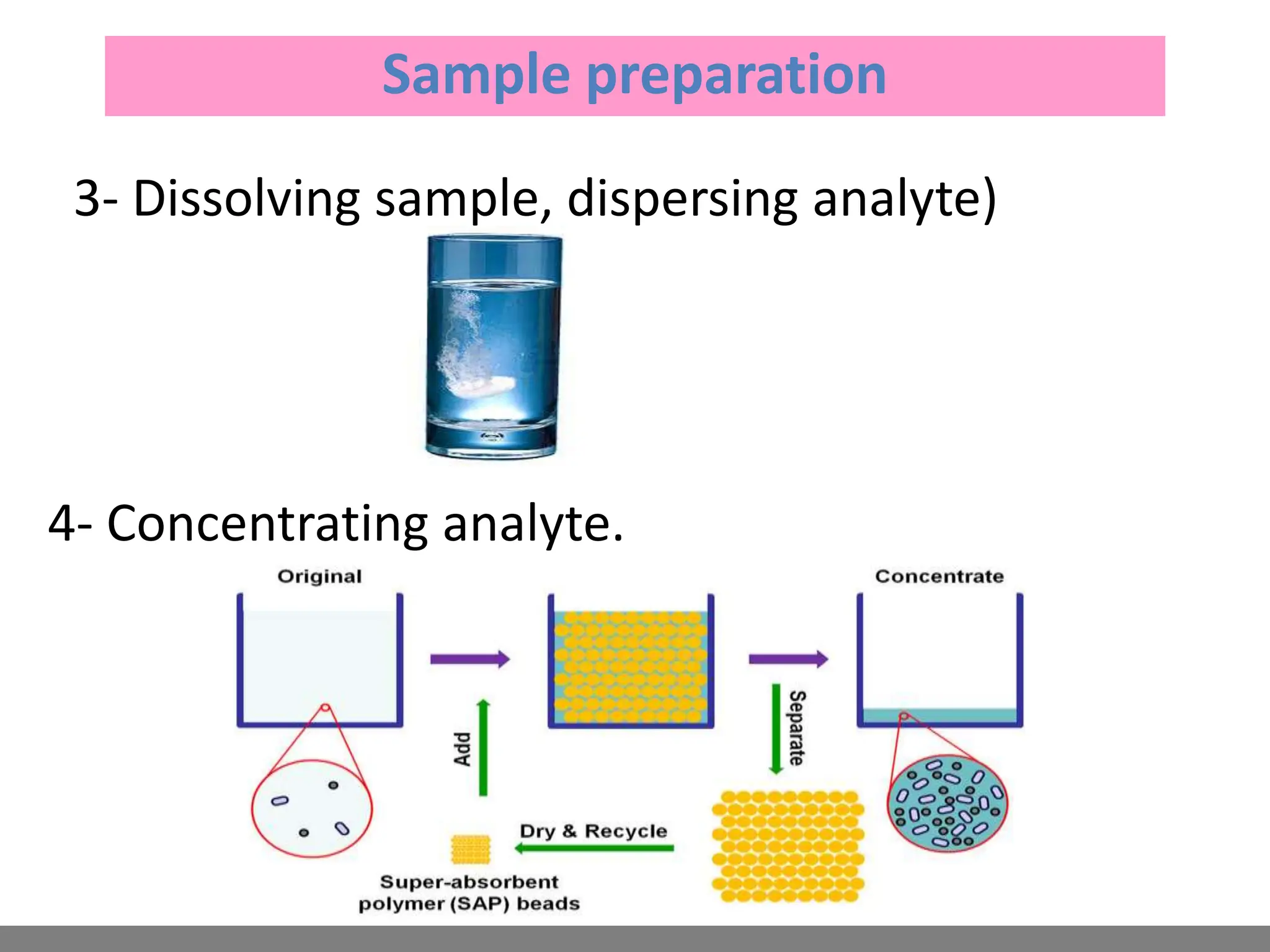
4- Concentrating analyte.
Sample preparation
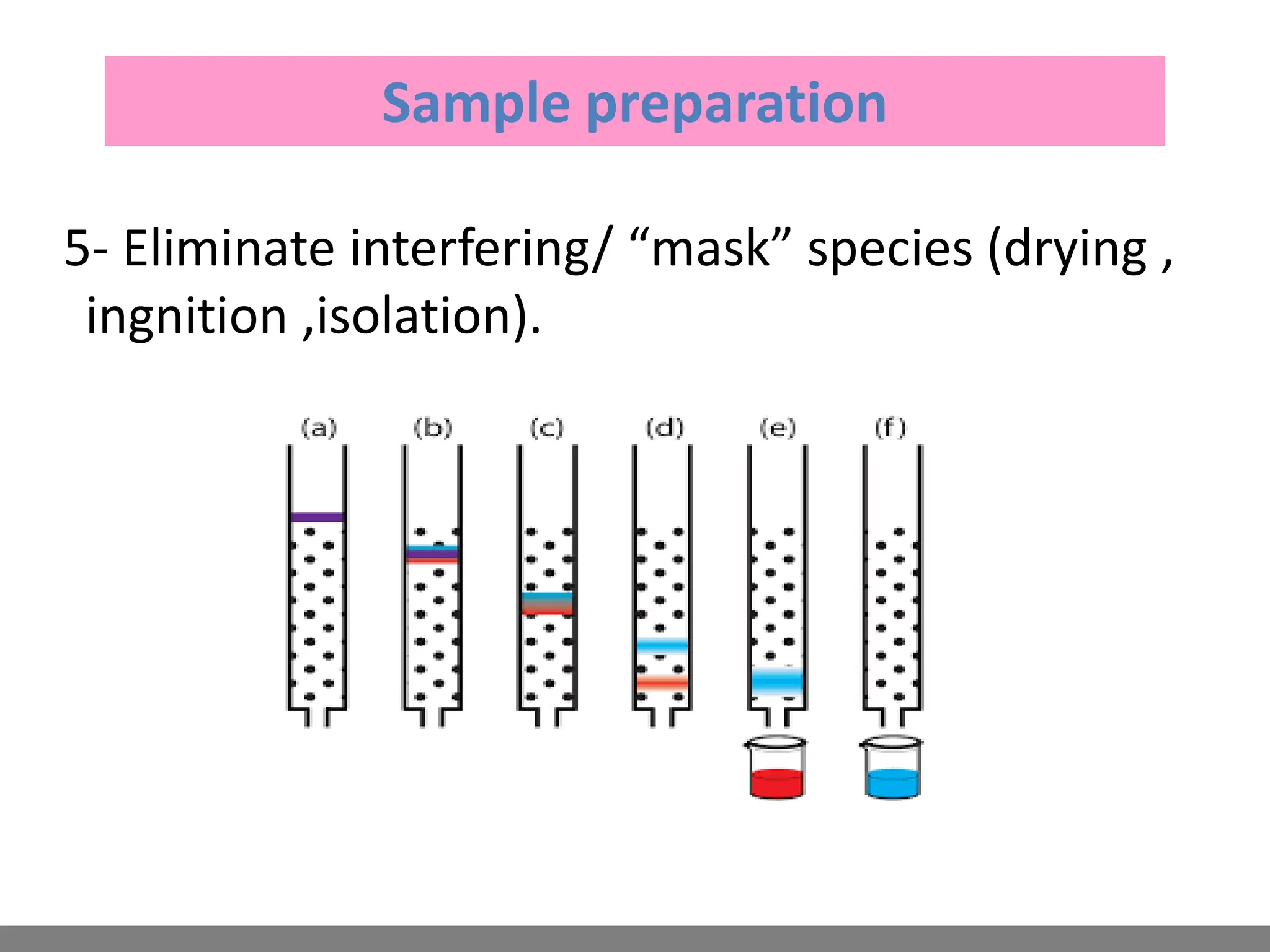
5- Eliminate interfering/ “mask” species (drying ,
ingnition ,isolation).
Sample preparation
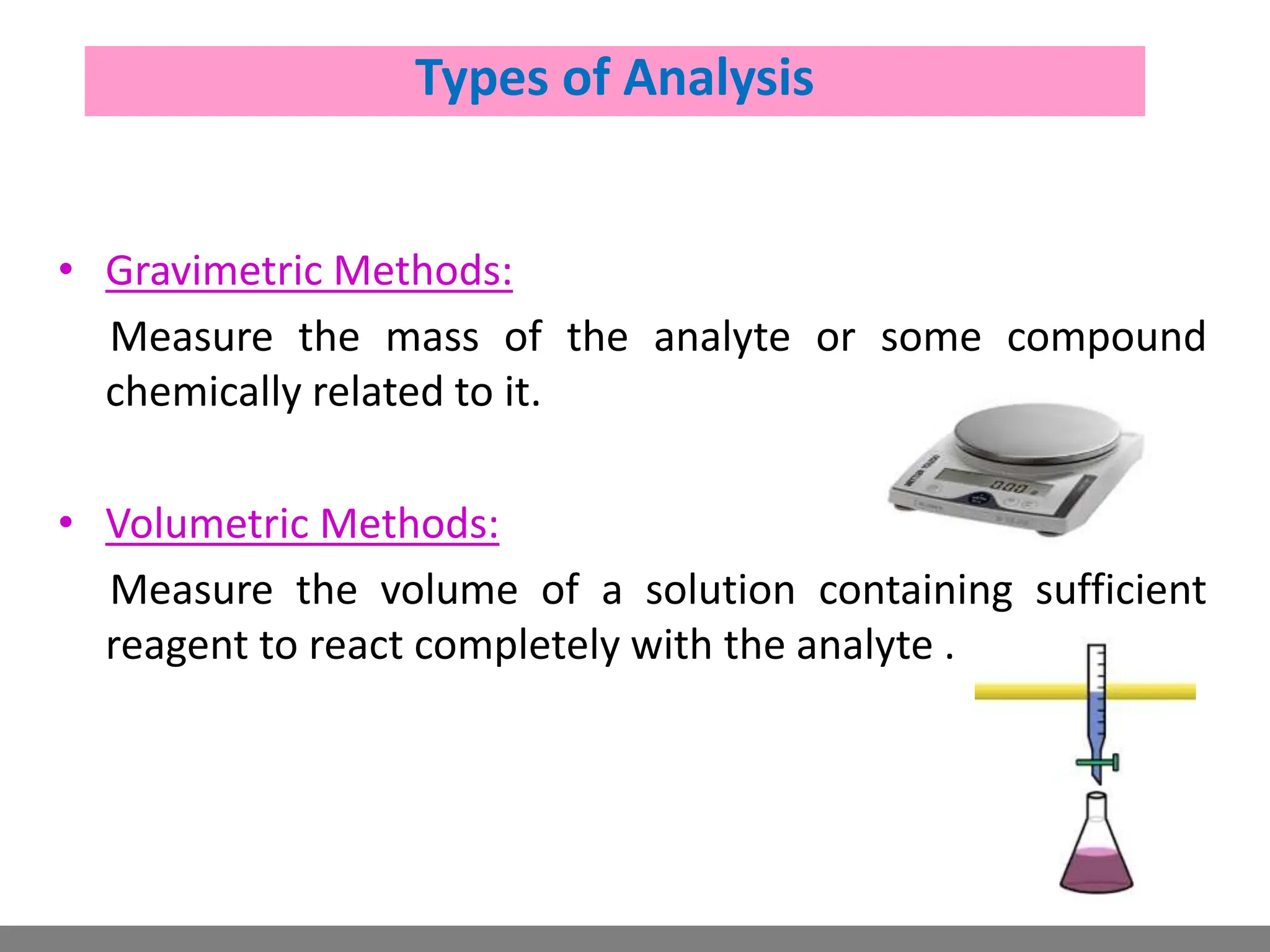
• Gravimetric Methods:
Measure the mass of the analyte or some compound
chemically related to it.
• Volumetric Methods:
Measure the volume of a solution containing sufficient
reagent to react completely with the analyte .
Types of Analysis
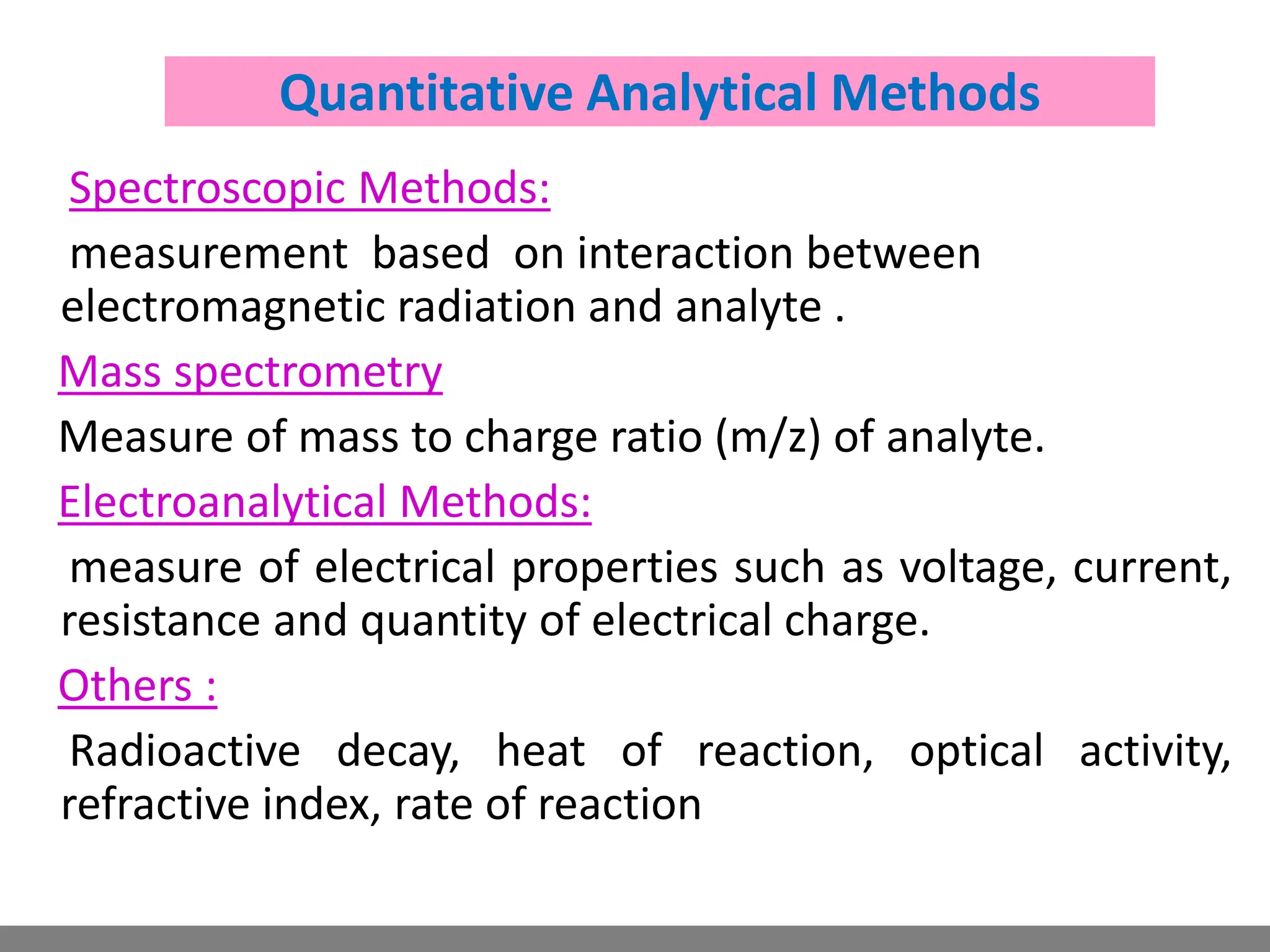
Spectroscopic Methods:
measurement based on interaction between
electromagnetic radiation and analyte .
Mass spectrometry
Measure of mass to charge ratio (m/z) of analyte.
Electroanalytical Methods:
measure of electrical properties such as voltage, current,
resistance and quantity of electrical charge.
Others :
Radioactive decay, heat of reaction, optical activity,
refractive index, rate of reaction
Quantitative Analytical Methods
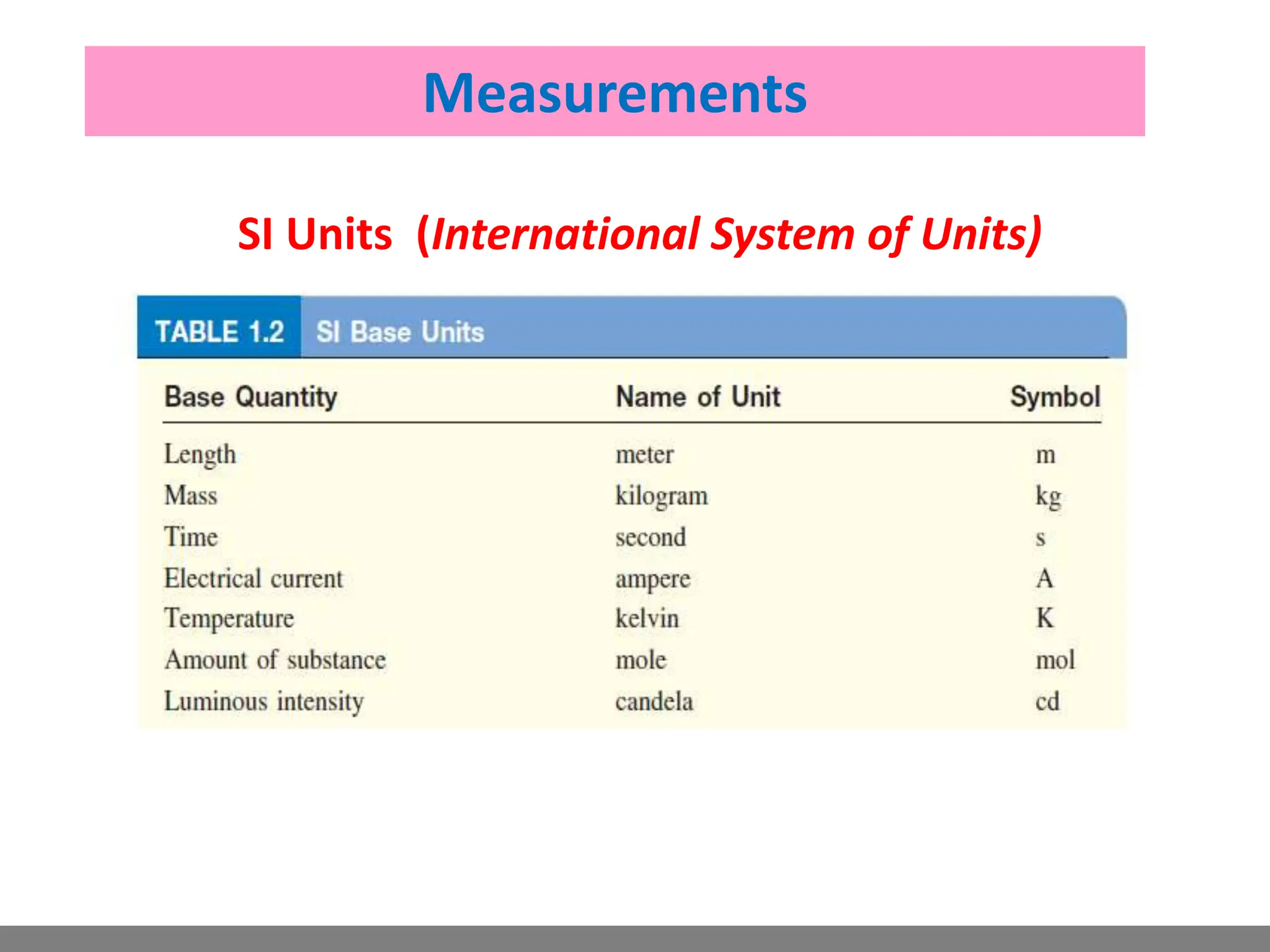
SI Units (International System of Units)
Measurements
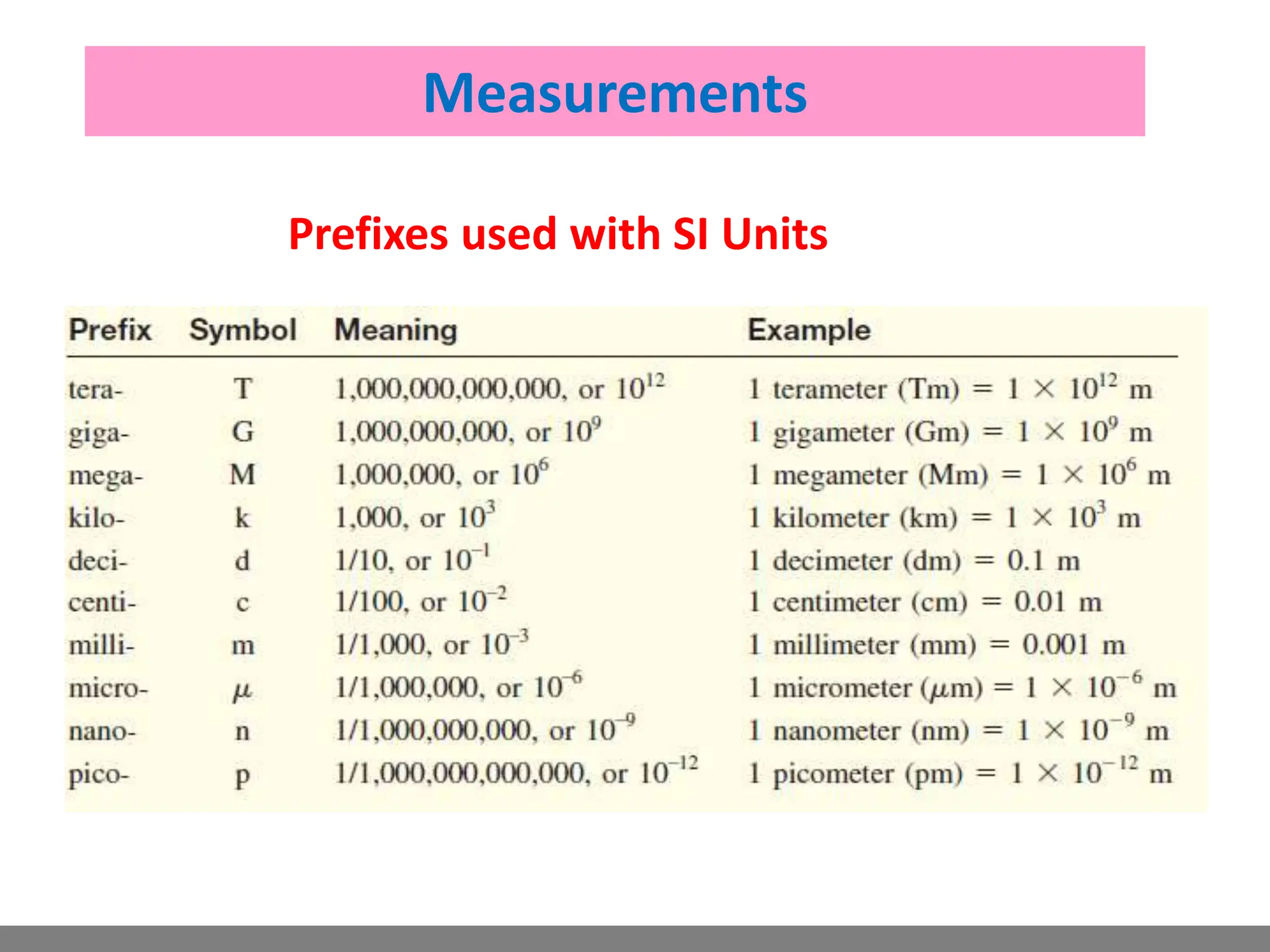
Measurements
Prefixes used with SI Units
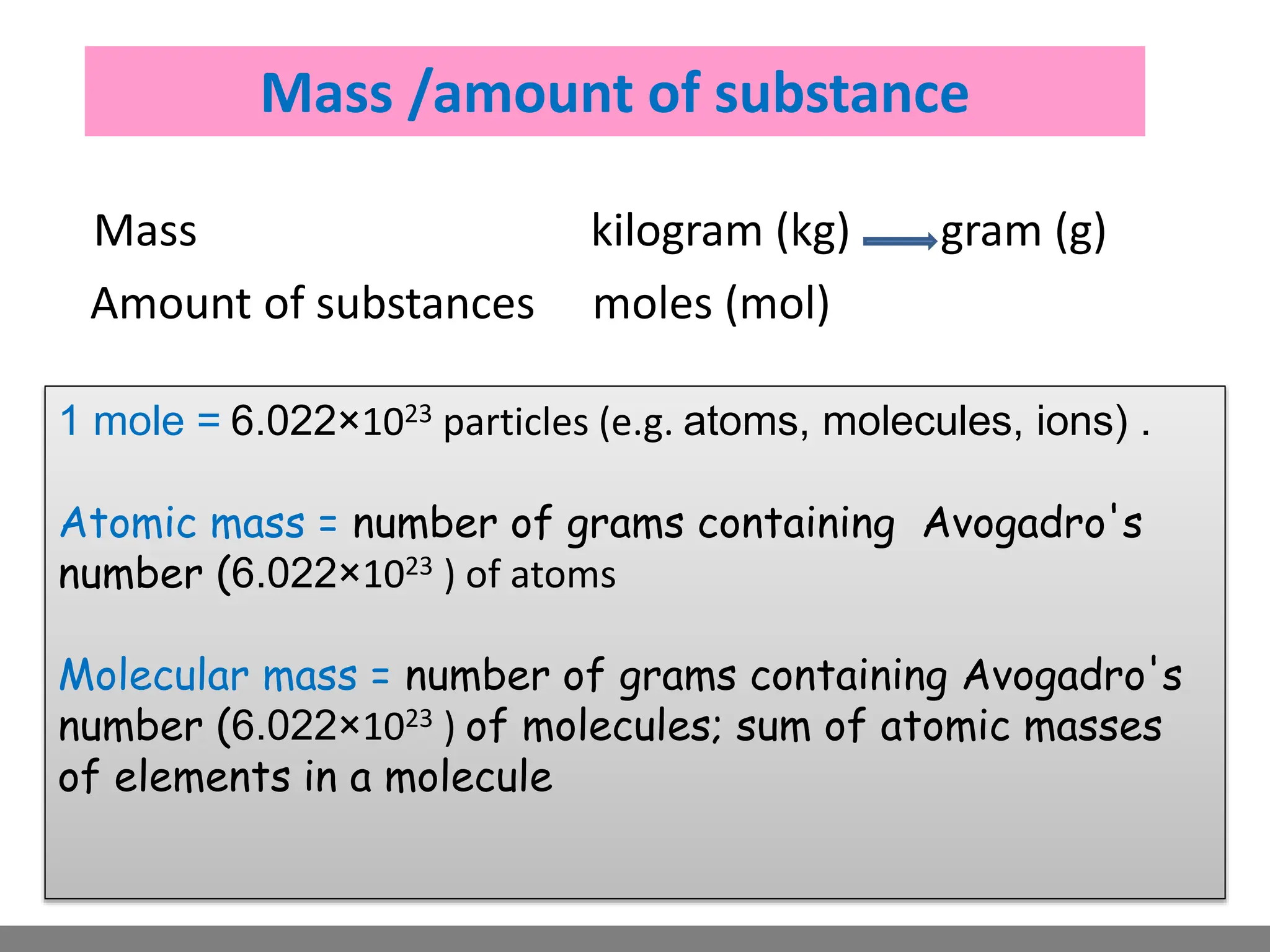
Mass /amount of substance
Mass kilogram (kg) gram (g)
Amount of substances moles (mol)
1 mole = 6.022×10²³ particles (e.g. atoms, molecules, ions) .
Atomic mass = number of grams containing Avogadro's
number (6.022×10²³ ) of atoms
Molecular mass = number of grams containing Avogadro's
number (6.022×10²³ ) of molecules; sum of atomic masses
of elements in a molecule
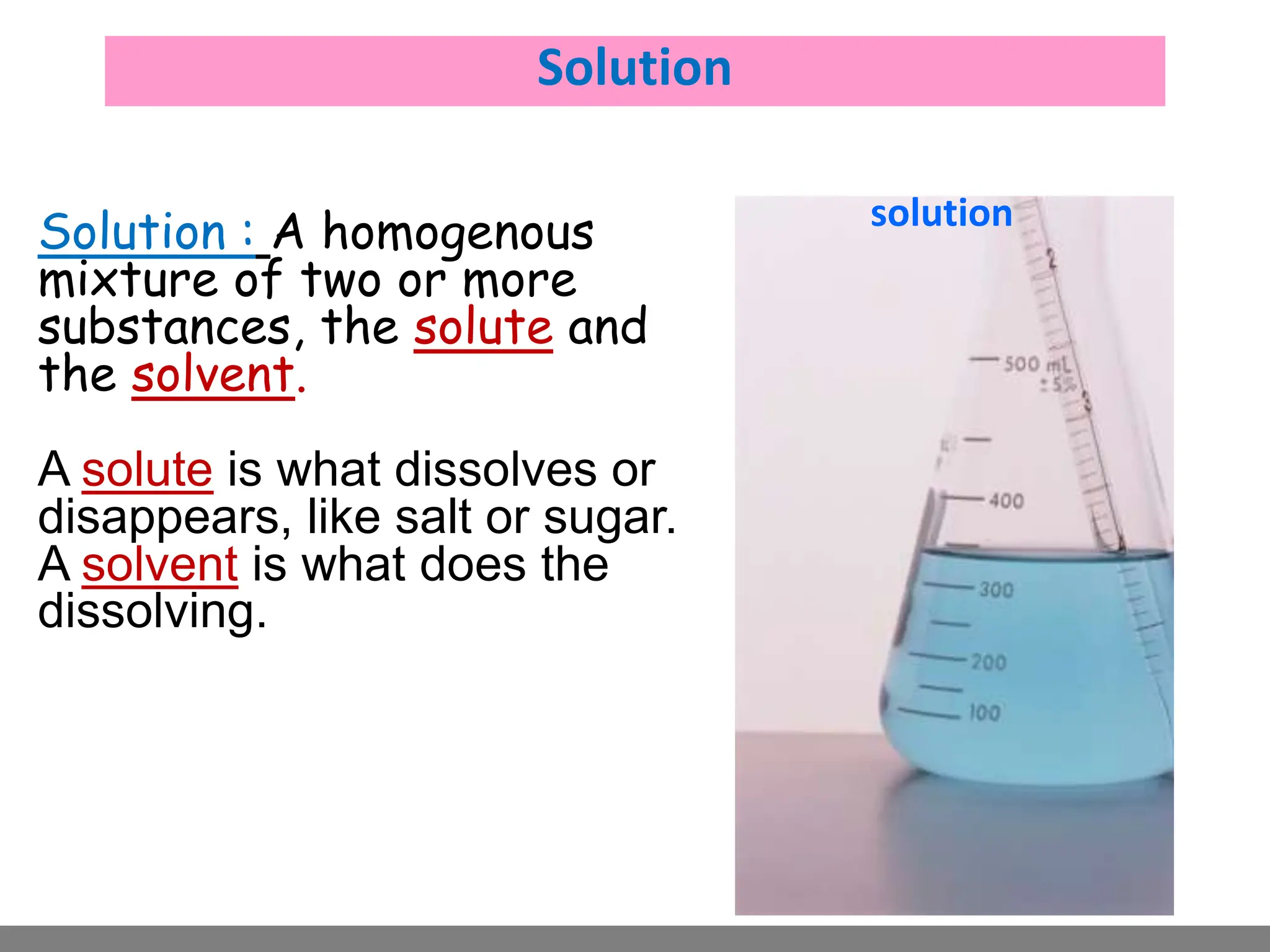
solvent
solute
solution
Solution
Solution : A homogenous
mixture of two or more
substances, the solute and
the solvent.
A solute is what dissolves or
disappears, like salt or sugar.
A solvent is what does the
dissolving.
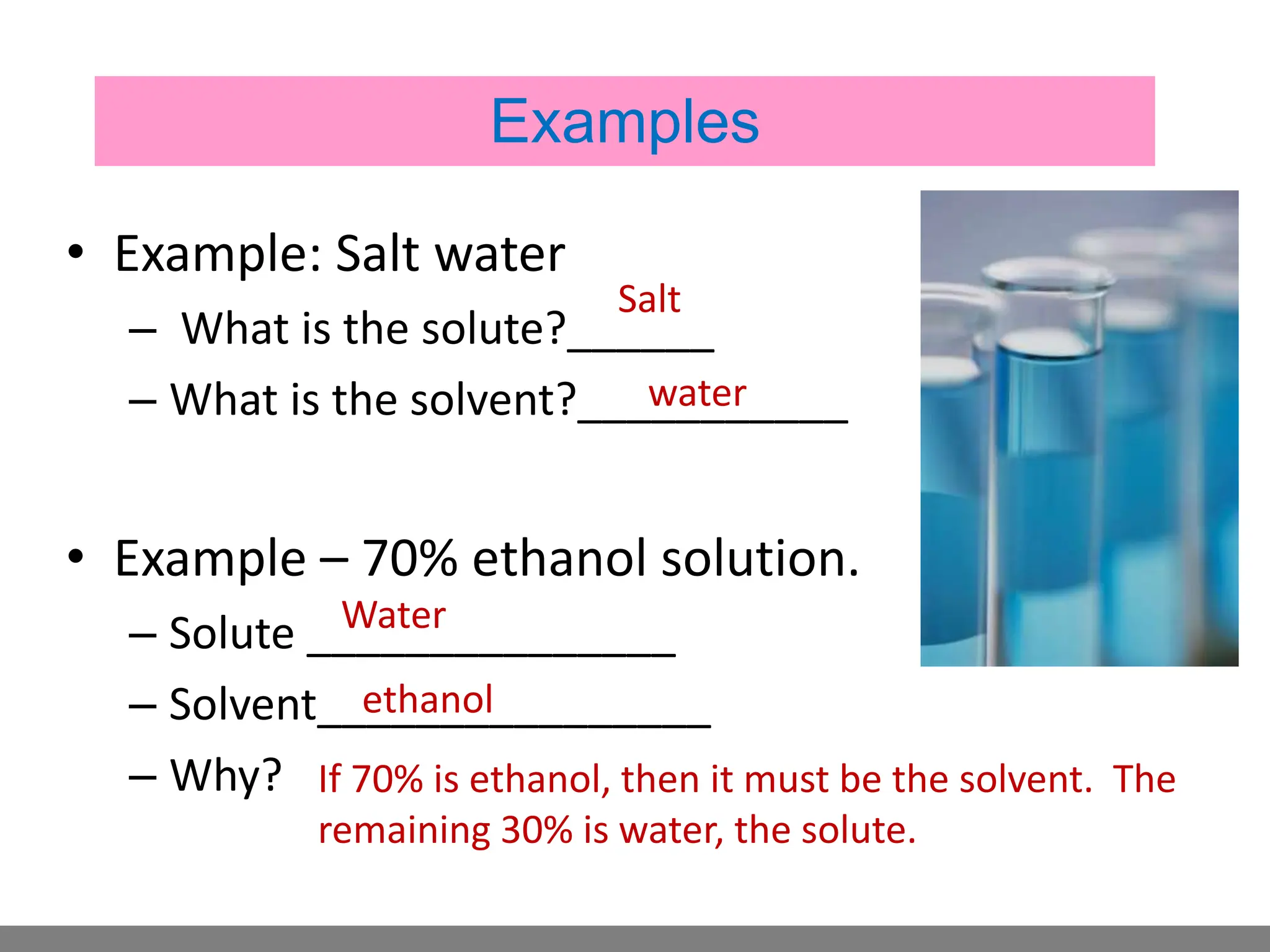
• Example: Salt water
– What is the solute?______
– What is the solvent?___________
• Example – 70% ethanol solution.
– Solute _______________
– Solvent________________
– Why?
Salt
water
Water
ethanol
If 70% is ethanol, then it must be the solvent. The
remaining 30% is water, the solute.
Examples
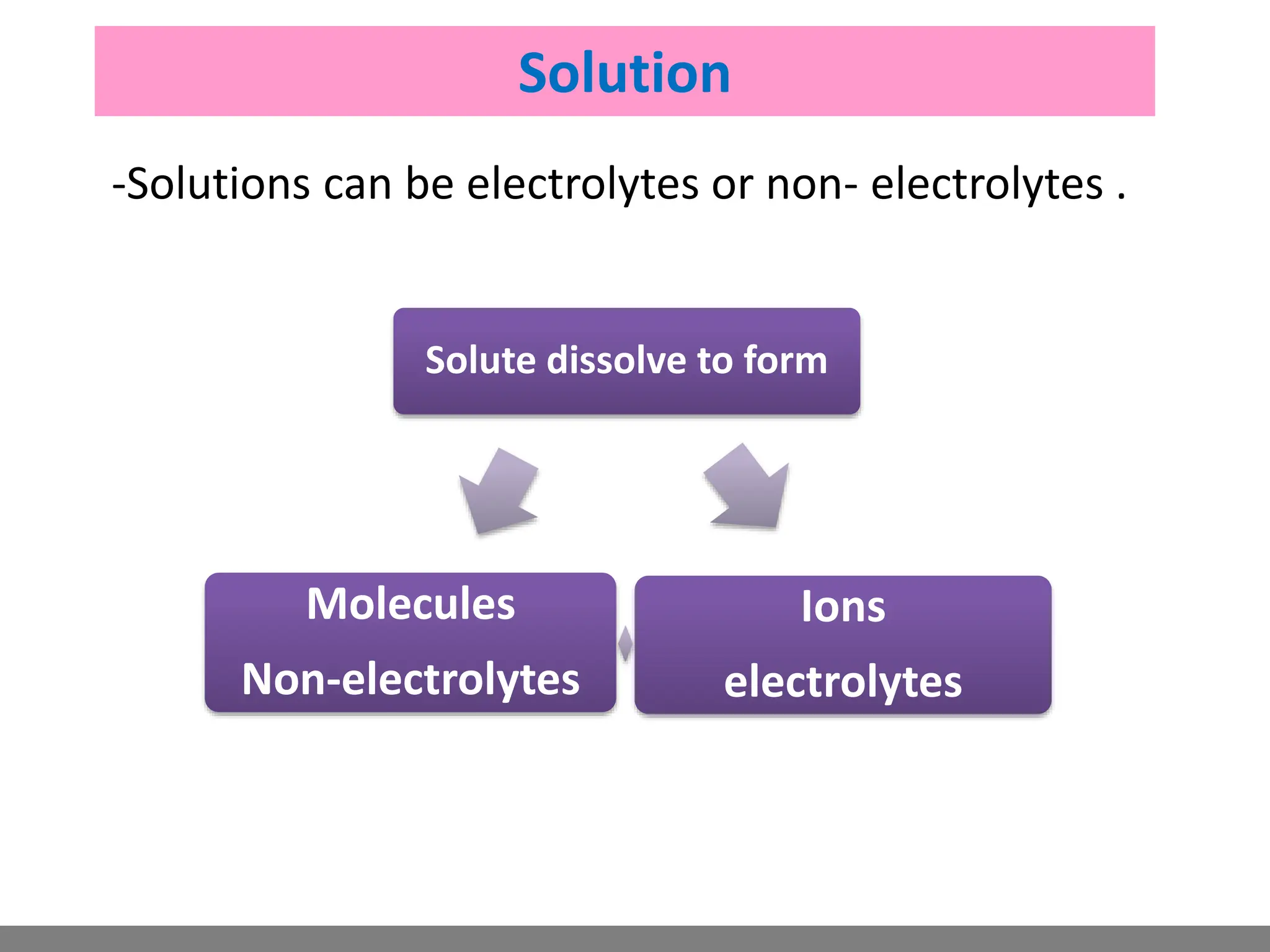
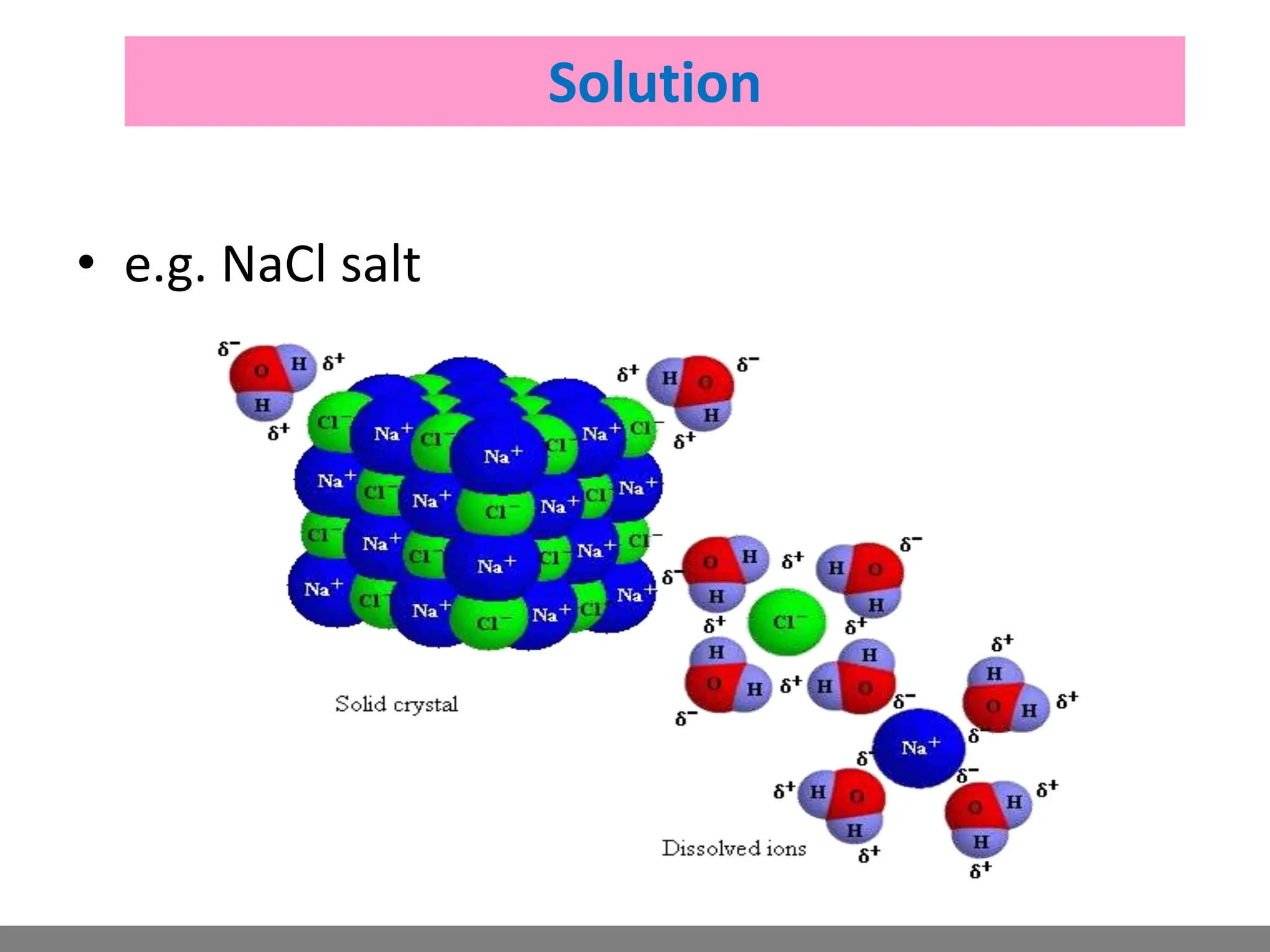
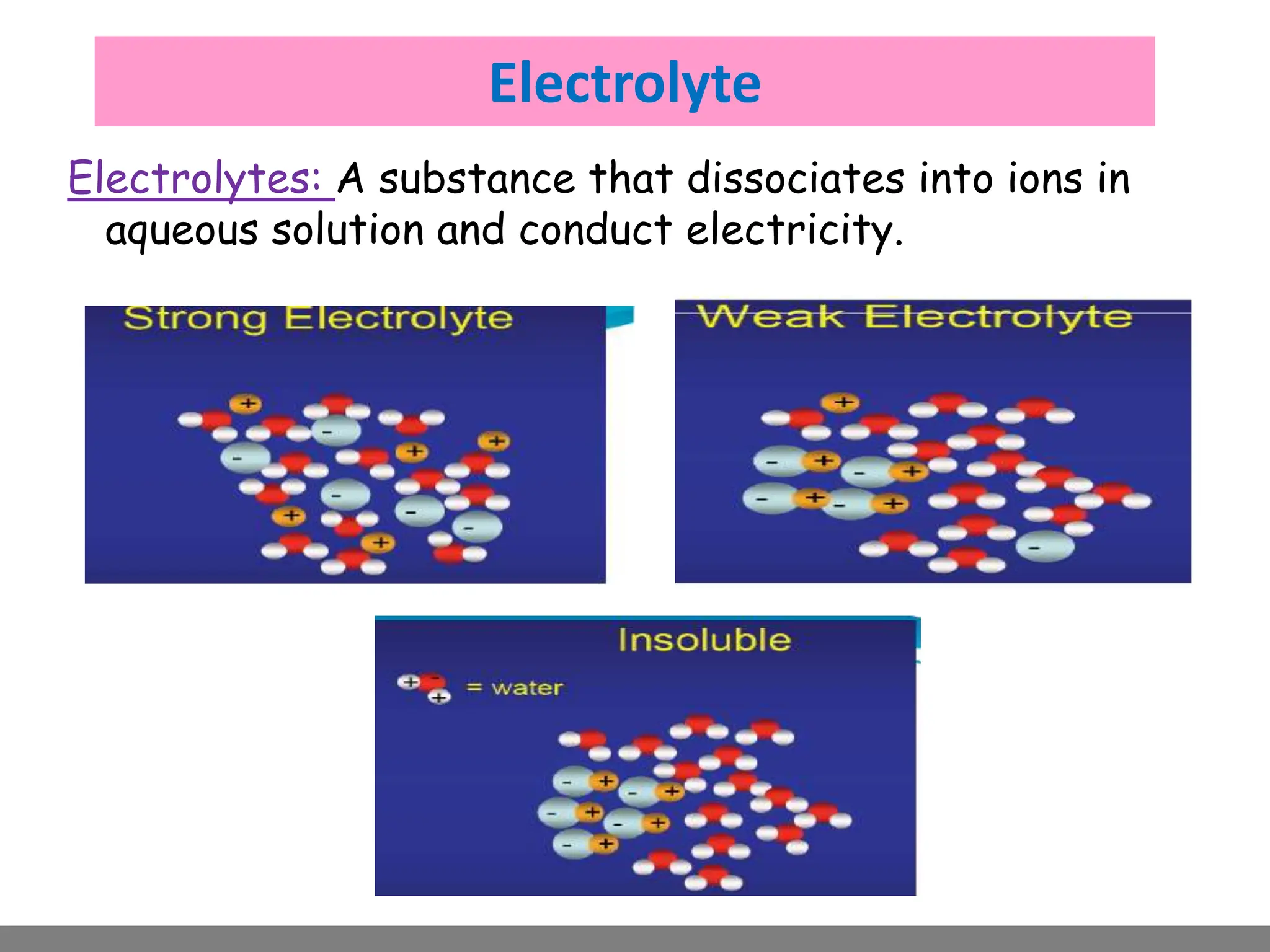
-Solutions can be electrolytes or non- electrolytes .
Solution
Solute dissolve to form
Ions
electrolytes
Molecules
Non-electrolytes
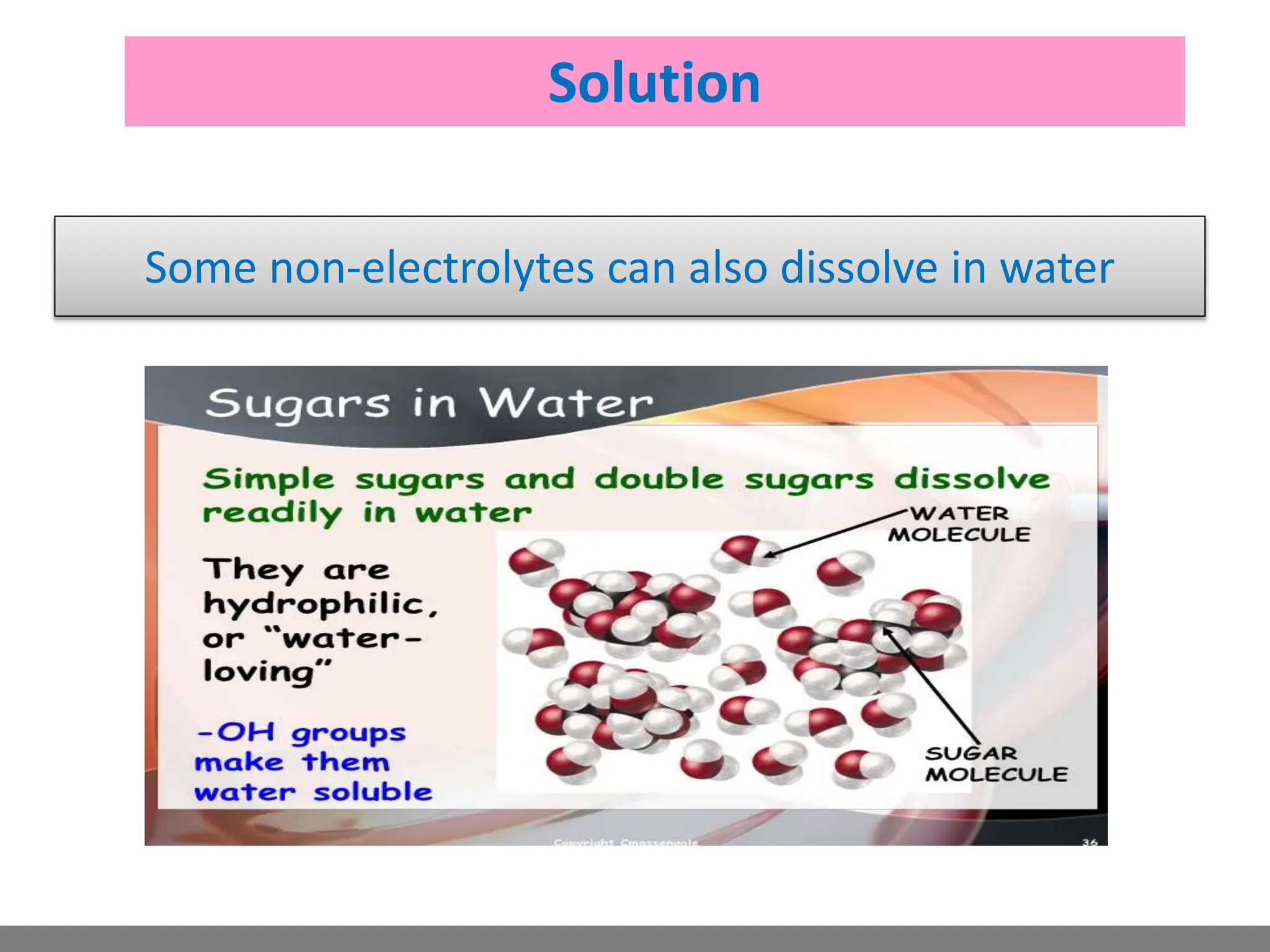
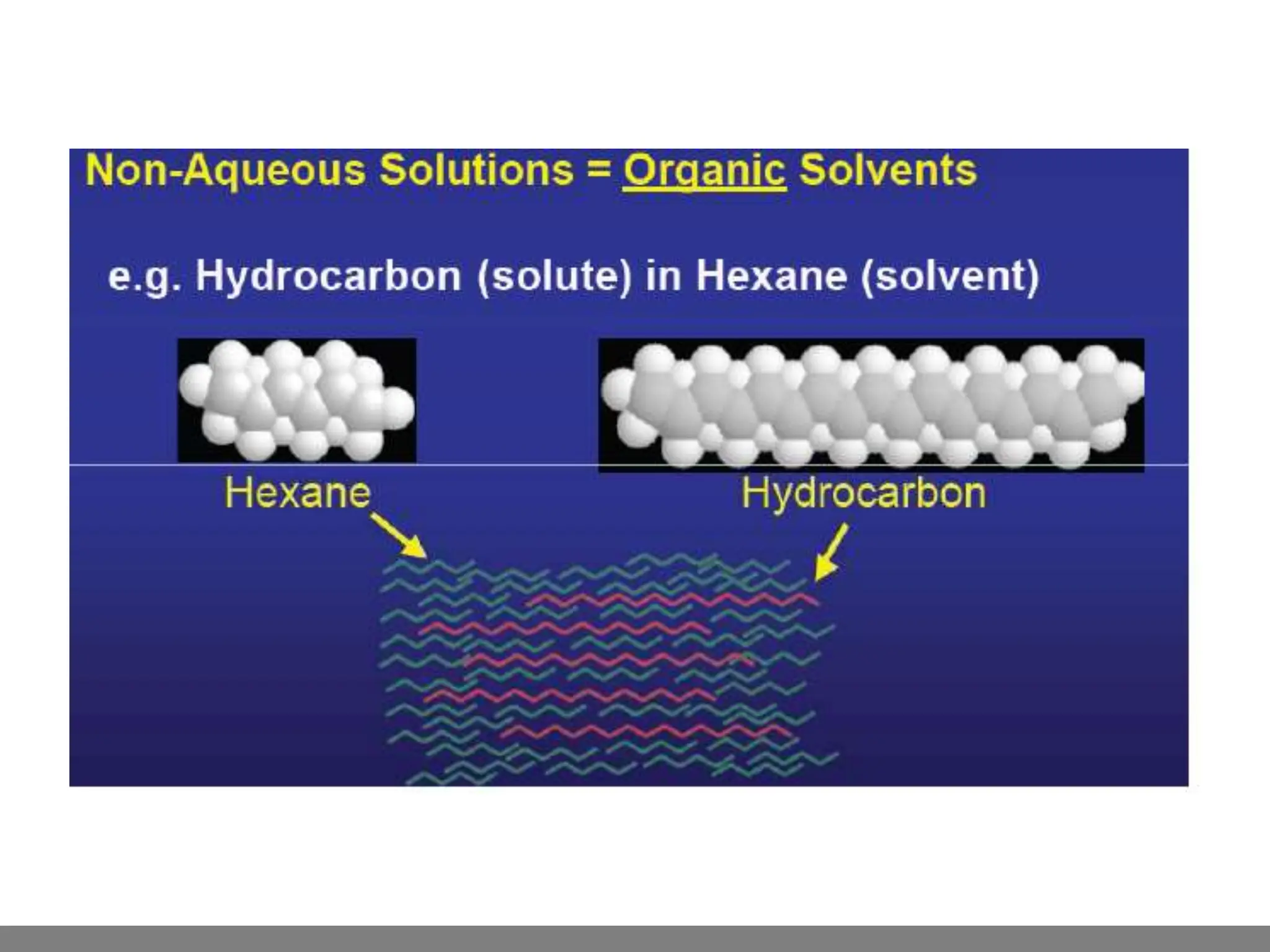
Some non-electrolytes can also dissolve in water
Solution
Solution
• e.g. NaCl salt
Electrolyte
Electrolytes: A substance that dissociates into ions in
aqueous solution and conduct electricity.
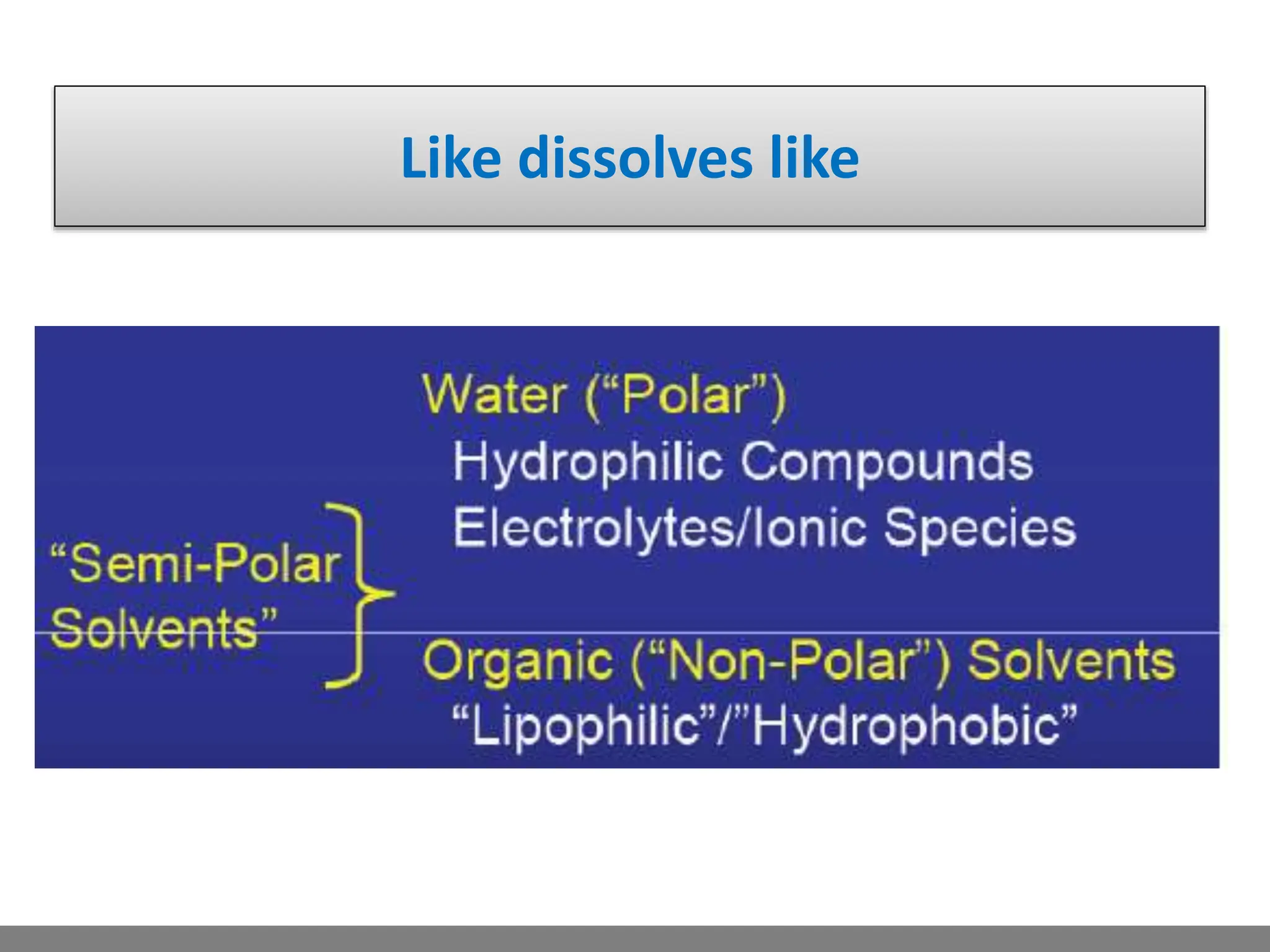
Like dissolves like
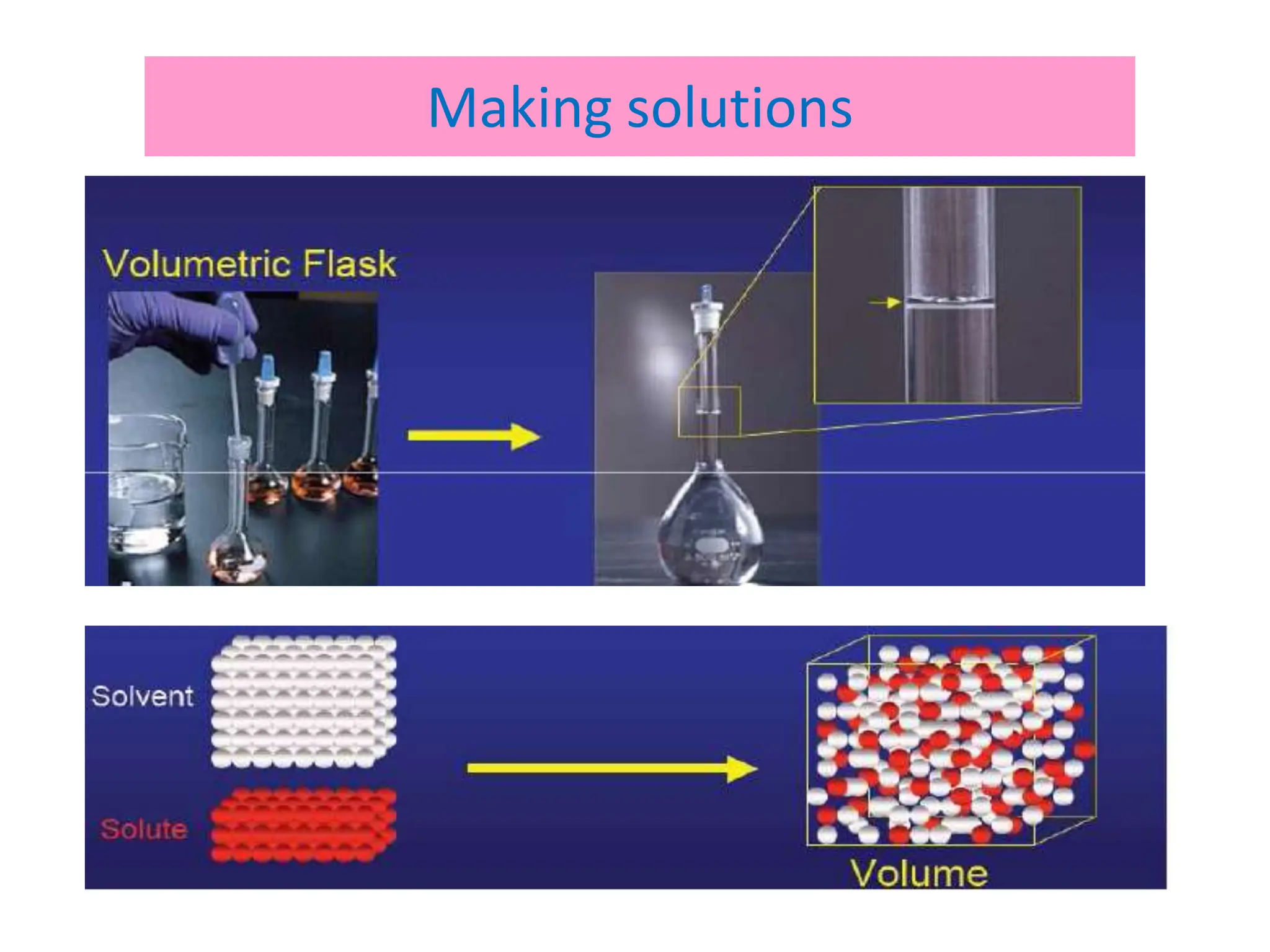
Making solutions

123123INTRODUCTIONTOANALYTICALCHEMISTRY.ppt

  • 1.
    • The natureof analytical chemistry. •] • Qualitative and quantitative analysis. • Sensitivity of analysis. • Solution. • Electrolytes. • Solubility rules. CHAPTER 1 BOOK OF ANALYTICAL CHEMISTRY- ANALYTICAL CHEMISTRY Lecture 1 contents
  • 2.
    Analytical Chemistry Gravimetric AnalysisInstrumental Analysis Qualitative Analysis Quantitative Analysis Volumetric Analysis
  • 3.
    It is aMeasurements science consisting of a set of powerful ideas and methods that are useful in all field of science and medicine.
  • 5.
    Qualitative Analysis (identification) Providesinformation about the elements and compounds in a sample. “Identifying what is in unknown” Quantitative Analysis provides information about the amount of each substance in a sample . “Identifying how much is present”
  • 6.
    ©Gary Christian, AnalyticalChemistry, 6th Ed. (Wiley) Qualitative analysis is what. Quantitative analysis is how much.
  • 8.
    Analyets Substances being measured Species Anychemical of interest in the analysis
  • 9.
    Sensitivity of analysis Traceanalysis = 1-1000 ppm or 0.0001-0.1 wt.% Ultrtrace analysis = < 1ppm or 0.0001 wt.% Macro- = >1mg Micro- = < 1 mg
  • 10.
    Analytical chemistry playsa vital role in the development of science. Plays a vital role in many research areas in chemistry, biochemistry, biology, geology, physics and the other sciences. All branches of chemistry draw on the ideas and techniques of analytical chemistry. The Role of Analytical Chemistry
  • 11.
    Where is AnalyticalChemistry used? 1- Clinical laboratories. 2- Forensic laboratories. 3-Environmental laboratories. 4- Manufacturing /industry 5- Research. 6- Others.
  • 12.
    Analytical chemistry andother branches of sciences
  • 13.
  • 14.
    1- Formulating thequestion. 2- Selecting the analytical procedure. Steps in chemical analysis
  • 15.
    3- Sampling Steps inchemical analysis Sampling: selecting representative material to analyze
  • 16.
    • 3- Samplepreparation Steps in chemical analysis
  • 17.
    3- Analysis 4- Interpretationand reporting 5- Drawing conclusions Steps in chemical analysis
  • 18.
    1- sample storage(e.g.temperature, moisture) 2- Grinding ,extracting analyte ,etc Sample preparation
  • 19.
    3- Dissolving sample,dispersing analyte) 4- Concentrating analyte. Sample preparation
  • 20.
    5- Eliminate interfering/“mask” species (drying , ingnition ,isolation). Sample preparation
  • 21.
    • Gravimetric Methods: Measurethe mass of the analyte or some compound chemically related to it. • Volumetric Methods: Measure the volume of a solution containing sufficient reagent to react completely with the analyte . Types of Analysis
  • 22.
    Spectroscopic Methods: measurement basedon interaction between electromagnetic radiation and analyte . Mass spectrometry Measure of mass to charge ratio (m/z) of analyte. Electroanalytical Methods: measure of electrical properties such as voltage, current, resistance and quantity of electrical charge. Others : Radioactive decay, heat of reaction, optical activity, refractive index, rate of reaction Quantitative Analytical Methods
  • 23.
    SI Units (InternationalSystem of Units) Measurements
  • 24.
  • 25.
    Mass /amount ofsubstance Mass kilogram (kg) gram (g) Amount of substances moles (mol) 1 mole = 6.022×10²³ particles (e.g. atoms, molecules, ions) . Atomic mass = number of grams containing Avogadro's number (6.022×10²³ ) of atoms Molecular mass = number of grams containing Avogadro's number (6.022×10²³ ) of molecules; sum of atomic masses of elements in a molecule
  • 26.
    solvent solute solution Solution Solution : Ahomogenous mixture of two or more substances, the solute and the solvent. A solute is what dissolves or disappears, like salt or sugar. A solvent is what does the dissolving.
  • 27.
    • Example: Saltwater – What is the solute?______ – What is the solvent?___________ • Example – 70% ethanol solution. – Solute _______________ – Solvent________________ – Why? Salt water Water ethanol If 70% is ethanol, then it must be the solvent. The remaining 30% is water, the solute. Examples
  • 28.
    -Solutions can beelectrolytes or non- electrolytes . Solution Solute dissolve to form Ions electrolytes Molecules Non-electrolytes
  • 29.
    Some non-electrolytes canalso dissolve in water Solution
  • 30.
  • 31.
    Electrolyte Electrolytes: A substancethat dissociates into ions in aqueous solution and conduct electricity.
  • 33.
  • 34.