Lecture 1
Introduction to Analytical chemistry ,definition,
scope ,classification and Gravimetric analysis
By
M.SC.Elham Faisal
Analytical chemistry
Ministry of higher education and scientific research
AL-Mustaqbal University college
Department of medical physics
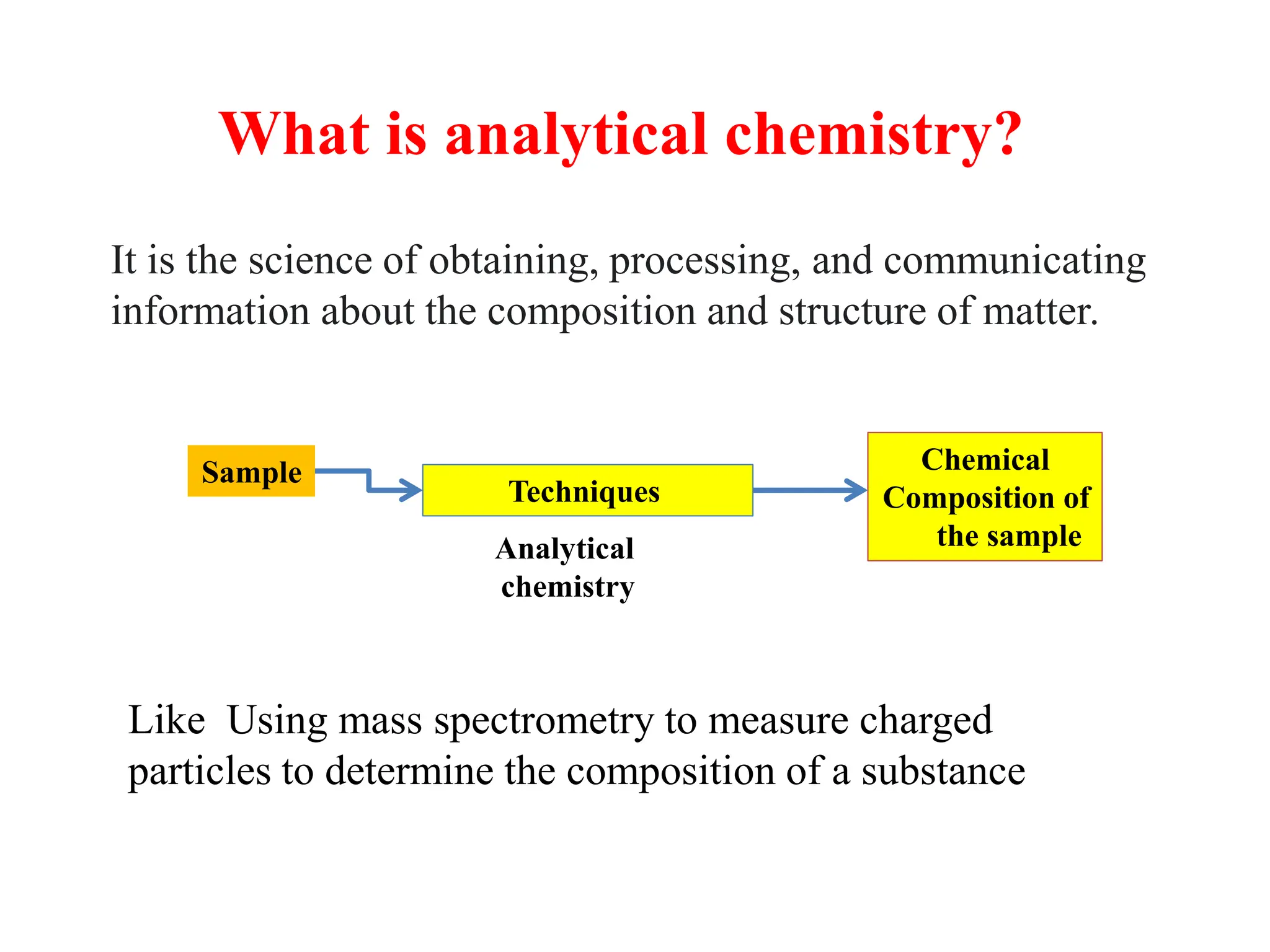
It is the science of obtaining, processing, and communicating
information about the composition and structure of matter.
What is analytical chemistry?
Like Using mass spectrometry to measure charged
particles to determine the composition of a substance
Analytical
chemistry
Sample Chemical
Composition of
the sample
Techniques
In analytical chemistry, we often determine the
amount of chemical species from mass
measurements.
For such measurements, kilograms (kg), grams (g),
milligrams (mg), or micrograms (ug) are used.
Volumes of liquids are measured in units of liters
(L), milliliters (mL), or microliters (uL).
The units of volume is liter and it is defined as
exactly 10 m³.
The milliliter is defined as 10- m², 1 cm³ or 10² dL.
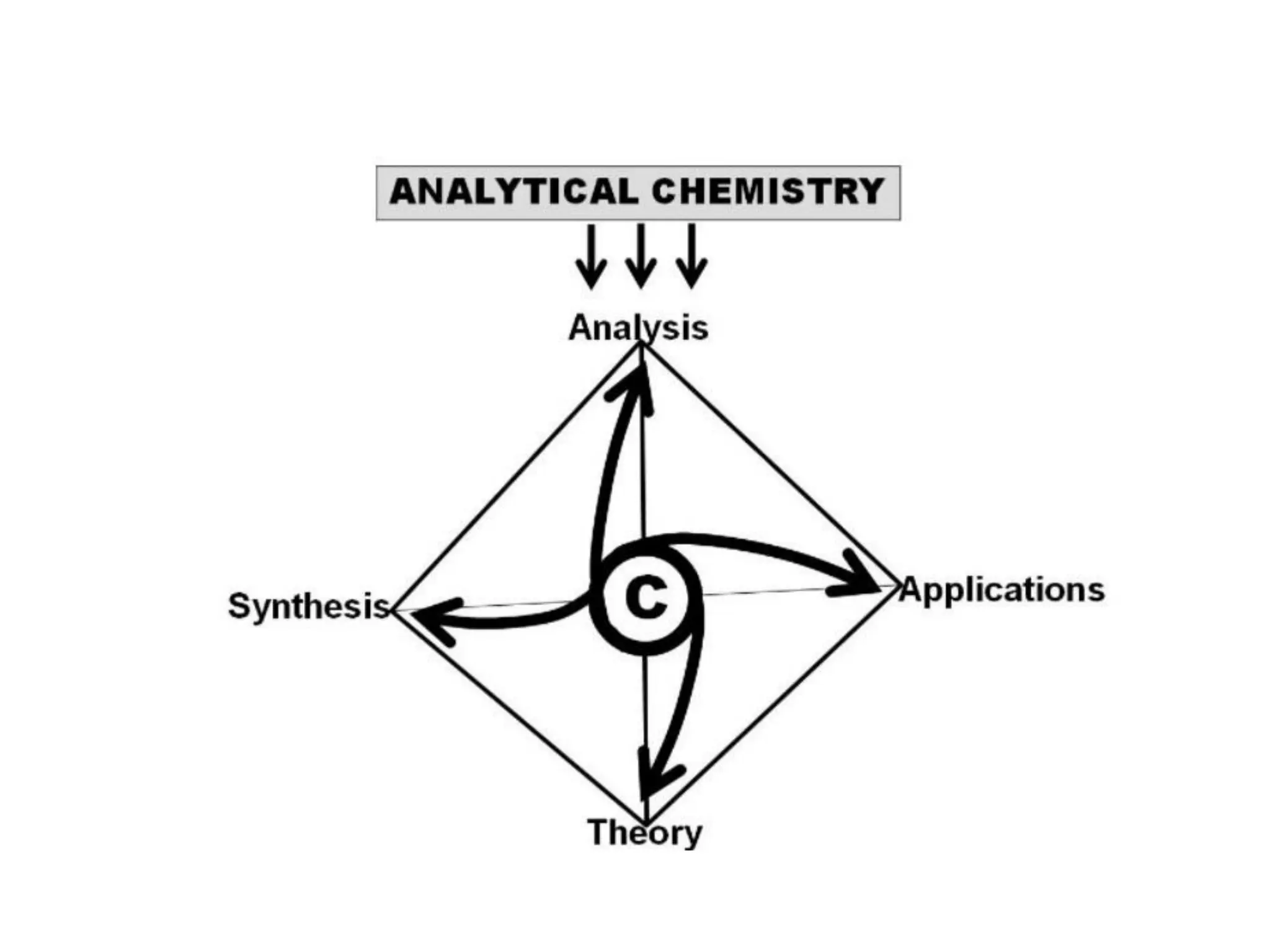
Analytical chemistry plays an enormous role in
our society, such as in drug manufacturing,
process control in industry, environmental
monitoring, medical diagnostics, food
production, and forensic surveys.
It is also of great importance in different
research areas
What is the scope of analytical chemistry?
Steps in analytical analysis
1. Define the problem
This means that the analyst should know what is
the information required ,the type and amount
of sample, the precision and accuracy of the
result , the analytical method which can be used
to achieve these results, etc.
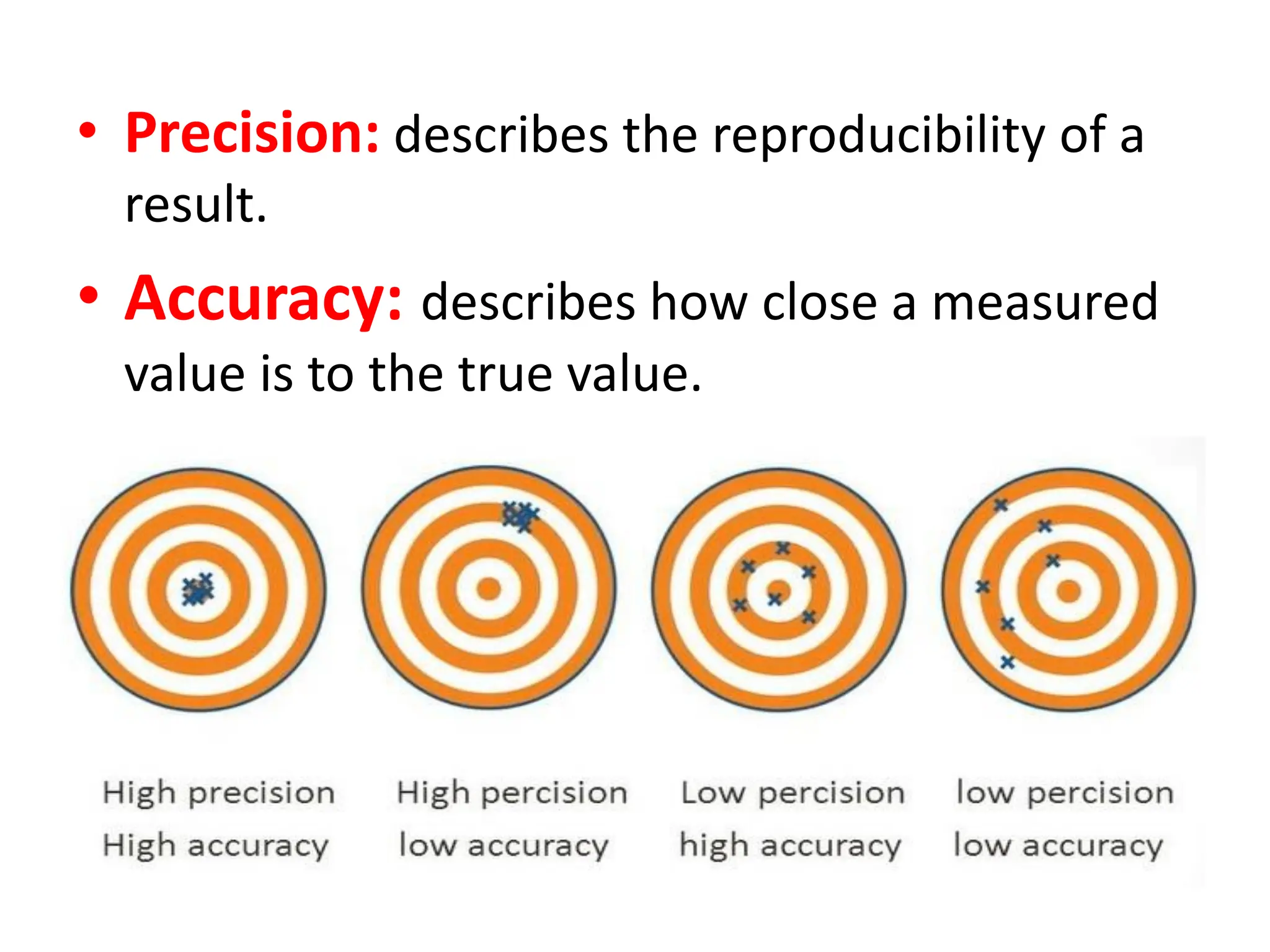
• Precision: describes the reproducibility of a
result.
• Accuracy: describes how close a measured
value is to the true value.
2. Obtain a representative sample:
A chemical analysis is usually performed on only
a small portion of the materiel to be
characterized. This portion need to have the
same characteristics of the whole sample in
order to obtain the actual results.
3. Sample preparation:
Most analytical methods requires a liquid form of
the sample rather than solid form. Therefore,
samples need to be dissolved quantitatively and
may also be diluted to the concentration range of
the method if they are present in a high
concentration.
4.Chemical separation:
The sample may contains solutes which interfere
with the determination of the analyte. If this is
the case, the analyte should be separated from
the sample matrix by an acceptable procedure
5. Perform the measurement:
This implies conducting the analytical procedure
and collecting the required data.
6. calculation:
The final step in the analytical process is to
perform the calculation and report the result in
an acceptable manner.
• Qualitative analysis (identification) : used to
yield information about identity of species or
functional groups of given sample (an analyte
can be identified)
Analytical chemistry can be divided
into two main types:
• Quantitative analysis(how much is
present):provides numerical information of
analyte (quantitate the exact amount or
concentration)
Comparison between
quantitative and qualitative
analysis
?
Quantitative analysis can be divided into:
Gravimetric methods (measurement in mass): the mass of
the analyte or some compound chemically related to it is
determined.
 Volumetric methods(measurement in volume) : the volume
of a solution containing sufficient reagent to react
completely with the analyte is measured.
 Electroanalytical methods: electrical properties such as
potential, current ,resistance, and quantity of electrical
charge are measured.
 Spectroscopic methods: the interaction between
electromagnetic radiation and analyte atoms or molecules or
the emission of radiation by analytes is explored.
Gravimetric analysis
Methods used in analytical chemistry for the quantitative
determination of an analyte (the ion being analyzed) based on its
mass. The principle of this type of analysis is that once an ion's
mass has been determined as a unique compound, that known
measurement can then be used to determine the same analyte's
mass in a mixture, as long as the relative quantities of the other
constituents are known.
The four main types of this method of analysis are precipitation,
volatilization, electro-analytical and miscellaneous physical
method. The methods involve changing the phase of the analyte
to separate it in its pure form from the original mixture and are
quantitative measurements.
MUCLecture_2022_4164784quantitative .pdf

MUCLecture_2022_4164784quantitative .pdf

  • 1.
    Lecture 1 Introduction toAnalytical chemistry ,definition, scope ,classification and Gravimetric analysis By M.SC.Elham Faisal Analytical chemistry Ministry of higher education and scientific research AL-Mustaqbal University college Department of medical physics
  • 2.
    It is thescience of obtaining, processing, and communicating information about the composition and structure of matter. What is analytical chemistry? Like Using mass spectrometry to measure charged particles to determine the composition of a substance Analytical chemistry Sample Chemical Composition of the sample Techniques
  • 4.
    In analytical chemistry,we often determine the amount of chemical species from mass measurements. For such measurements, kilograms (kg), grams (g), milligrams (mg), or micrograms (ug) are used. Volumes of liquids are measured in units of liters (L), milliliters (mL), or microliters (uL). The units of volume is liter and it is defined as exactly 10 m³. The milliliter is defined as 10- m², 1 cm³ or 10² dL.
  • 5.
    Analytical chemistry playsan enormous role in our society, such as in drug manufacturing, process control in industry, environmental monitoring, medical diagnostics, food production, and forensic surveys. It is also of great importance in different research areas What is the scope of analytical chemistry?
  • 6.
    Steps in analyticalanalysis 1. Define the problem This means that the analyst should know what is the information required ,the type and amount of sample, the precision and accuracy of the result , the analytical method which can be used to achieve these results, etc.
  • 7.
    • Precision: describesthe reproducibility of a result. • Accuracy: describes how close a measured value is to the true value.
  • 8.
    2. Obtain arepresentative sample: A chemical analysis is usually performed on only a small portion of the materiel to be characterized. This portion need to have the same characteristics of the whole sample in order to obtain the actual results.
  • 9.
    3. Sample preparation: Mostanalytical methods requires a liquid form of the sample rather than solid form. Therefore, samples need to be dissolved quantitatively and may also be diluted to the concentration range of the method if they are present in a high concentration. 4.Chemical separation: The sample may contains solutes which interfere with the determination of the analyte. If this is the case, the analyte should be separated from the sample matrix by an acceptable procedure
  • 10.
    5. Perform themeasurement: This implies conducting the analytical procedure and collecting the required data. 6. calculation: The final step in the analytical process is to perform the calculation and report the result in an acceptable manner.
  • 11.
    • Qualitative analysis(identification) : used to yield information about identity of species or functional groups of given sample (an analyte can be identified) Analytical chemistry can be divided into two main types: • Quantitative analysis(how much is present):provides numerical information of analyte (quantitate the exact amount or concentration)
  • 12.
  • 13.
    Quantitative analysis canbe divided into: Gravimetric methods (measurement in mass): the mass of the analyte or some compound chemically related to it is determined.  Volumetric methods(measurement in volume) : the volume of a solution containing sufficient reagent to react completely with the analyte is measured.  Electroanalytical methods: electrical properties such as potential, current ,resistance, and quantity of electrical charge are measured.  Spectroscopic methods: the interaction between electromagnetic radiation and analyte atoms or molecules or the emission of radiation by analytes is explored.
  • 14.
    Gravimetric analysis Methods usedin analytical chemistry for the quantitative determination of an analyte (the ion being analyzed) based on its mass. The principle of this type of analysis is that once an ion's mass has been determined as a unique compound, that known measurement can then be used to determine the same analyte's mass in a mixture, as long as the relative quantities of the other constituents are known. The four main types of this method of analysis are precipitation, volatilization, electro-analytical and miscellaneous physical method. The methods involve changing the phase of the analyte to separate it in its pure form from the original mixture and are quantitative measurements.