OECD Workshop on Entrepreneurial Ecosystems
and High Growth Entrepreneurship

The challenge of public/private (‘hybrid’)
Venture Capital programs
within the Entrepreneurial Ecosystem
Professor Gordon Murray OBE
University of Exeter, UK
The Hague 7th Nov. 2013

University of Exeter Business School
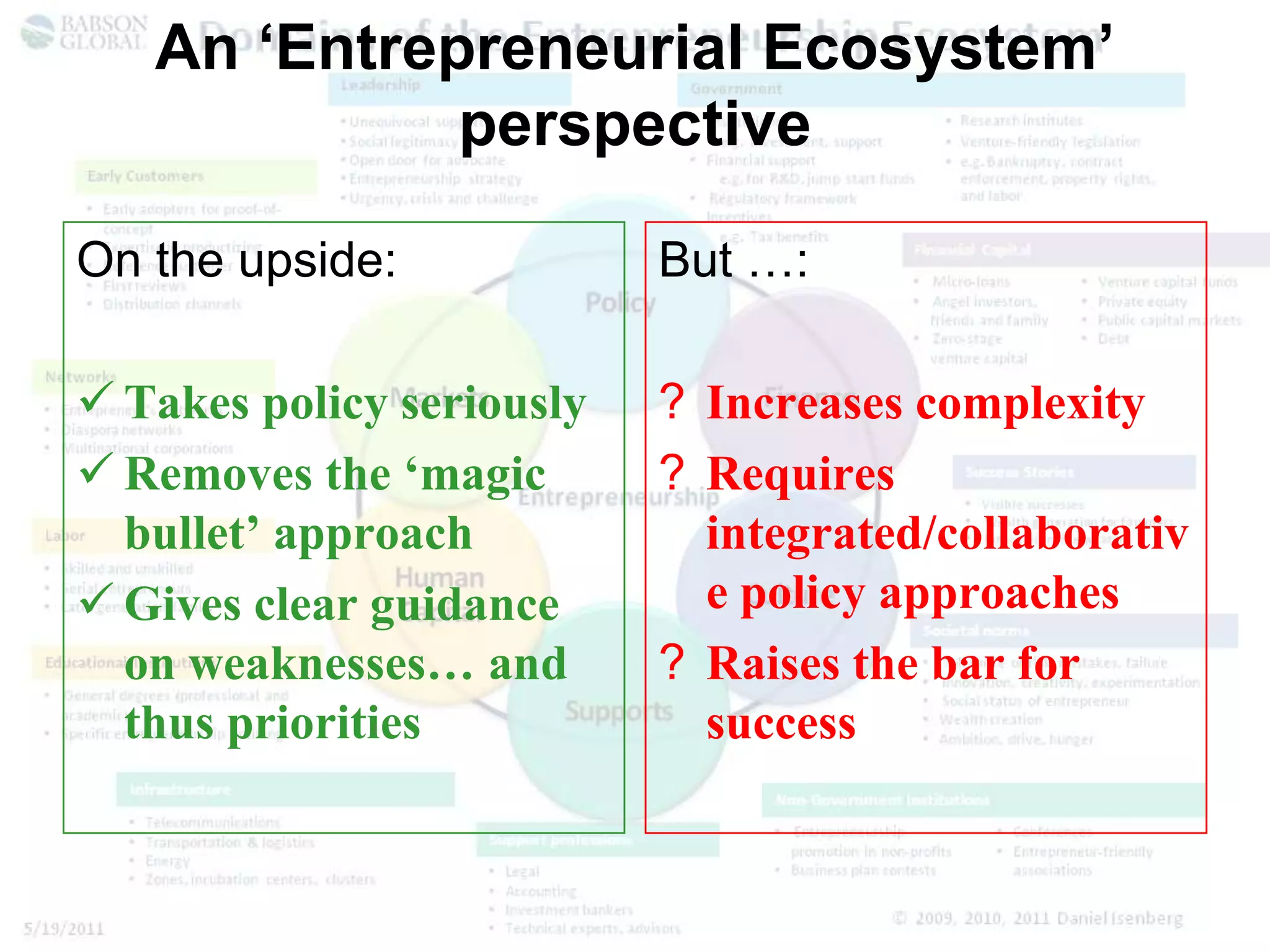
An ‘Entrepreneurial Ecosystem’
perspective
On the upside:

But …:

 Takes policy seriously
 Removes the ‘magic
bullet’ approach
 Gives clear guidance
on weaknesses… and
thus priorities

? Increases complexity
? Requires
integrated/collaborativ
e policy approaches
? Raises the bar for
success
The Government’s Policy Armoury
(in creating entrepreneurial eco-systems) includes:
• Grants
• Debt
• Loan guarantees
• Equity
• Tax incentives
• Legal incentives
• Information/advice/support
• Regulation (red tape removal)
• Education
• Culture
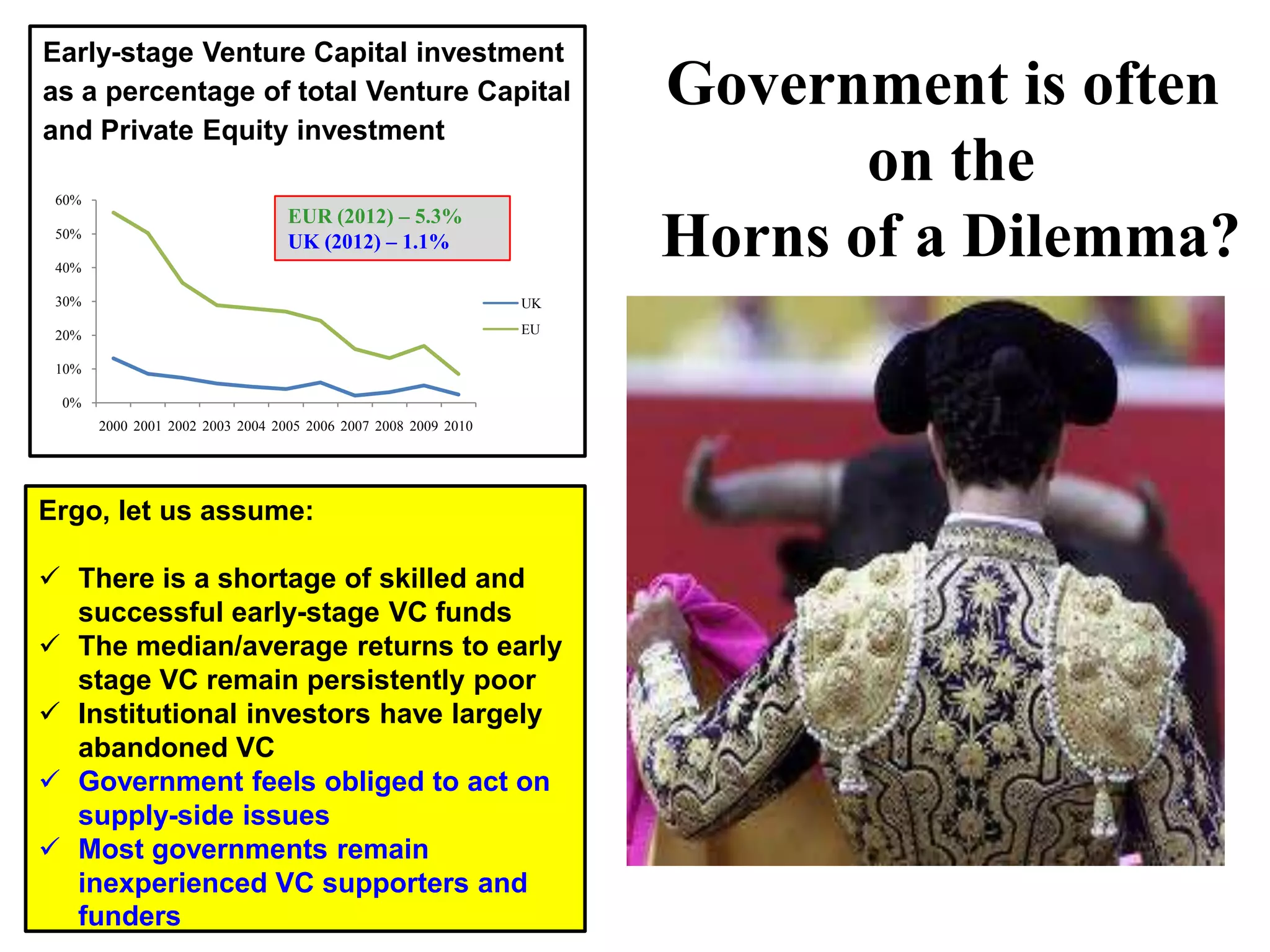
Early-stage Venture Capital investment
as a percentage of total Venture Capital
and Private Equity investment
60%
50%

EUR (2012) – 5.3%
UK (2012) – 1.1%

40%
30%

UK

20%

EU

10%
0%
2000 2001 2002 2003 2004 2005 2006 2007 2008 2009 2010

Ergo, let us assume:
 There is a shortage of skilled and
successful early-stage VC funds
 The median/average returns to early
stage VC remain persistently poor
 Institutional investors have largely
abandoned VC
 Government feels obliged to act on
supply-side issues
 Most governments remain
inexperienced VC supporters and
funders

Government is often
on the
Horns of a Dilemma?
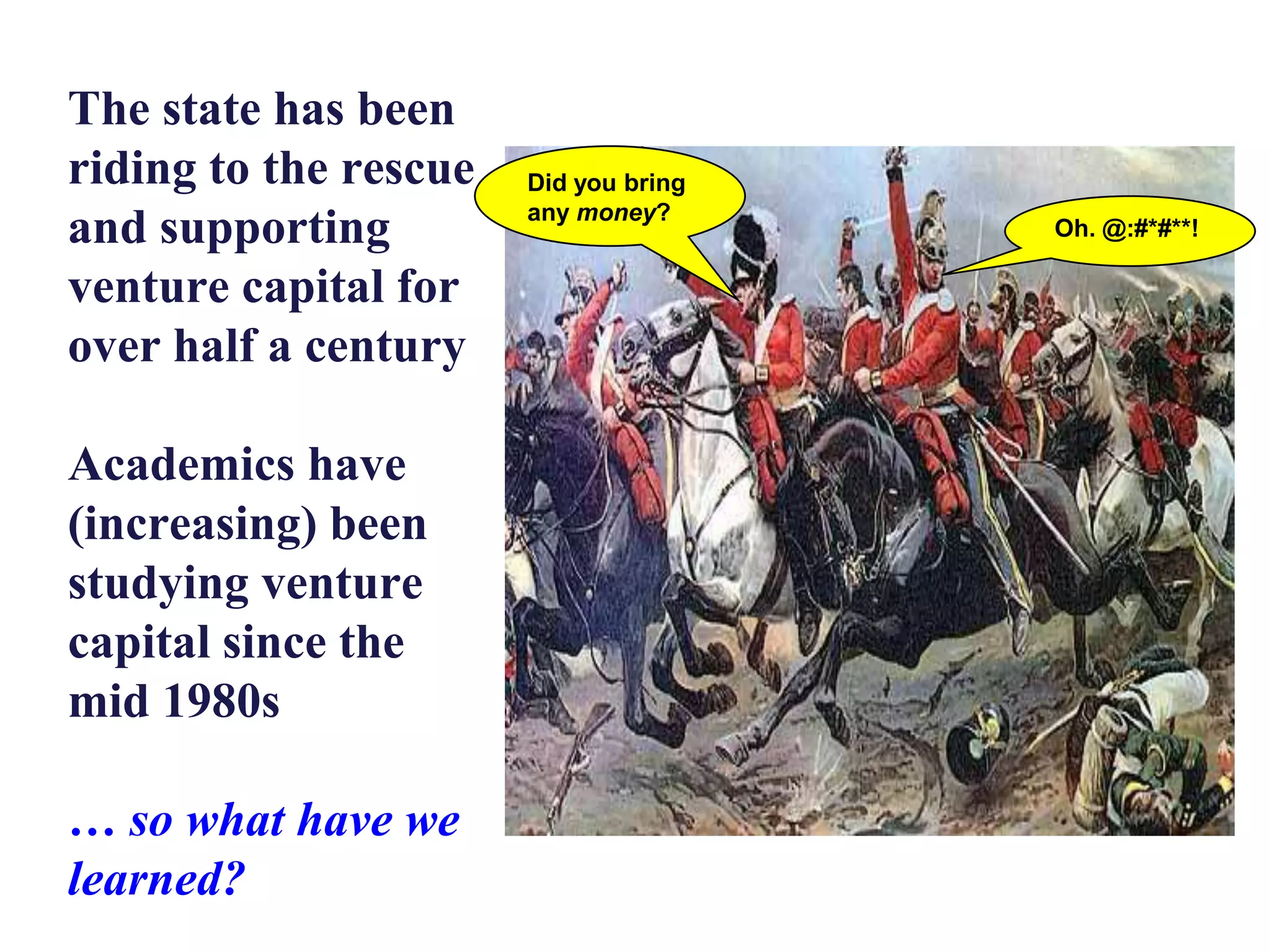
The state has been
riding to the rescue
and supporting
venture capital for
over half a century
Academics have
(increasing) been
studying venture
capital since the
mid 1980s
… so what have we
learned?

Did you bring
any money?

Oh. @:#*#**!
10 Observations from the VC
Research/Policy front-line
1. Is ‘the learning government’ an
oxymoron … or merely moronic?
Government needs to
build up its own
knowledge resources in
order to design effective
VC policy programmes
and to be able to
negotiate with authority
with the VC industry in
setting realistic
performance and
incentive structures
2. Yes. Good early-stage investment
managers do NOT grow on trees
Human Capital, i.e. sourcing
experienced and successful
investment management to the
new programme is likely to be at
least as large a constraint as
securing initial funding for the new
fund/programme
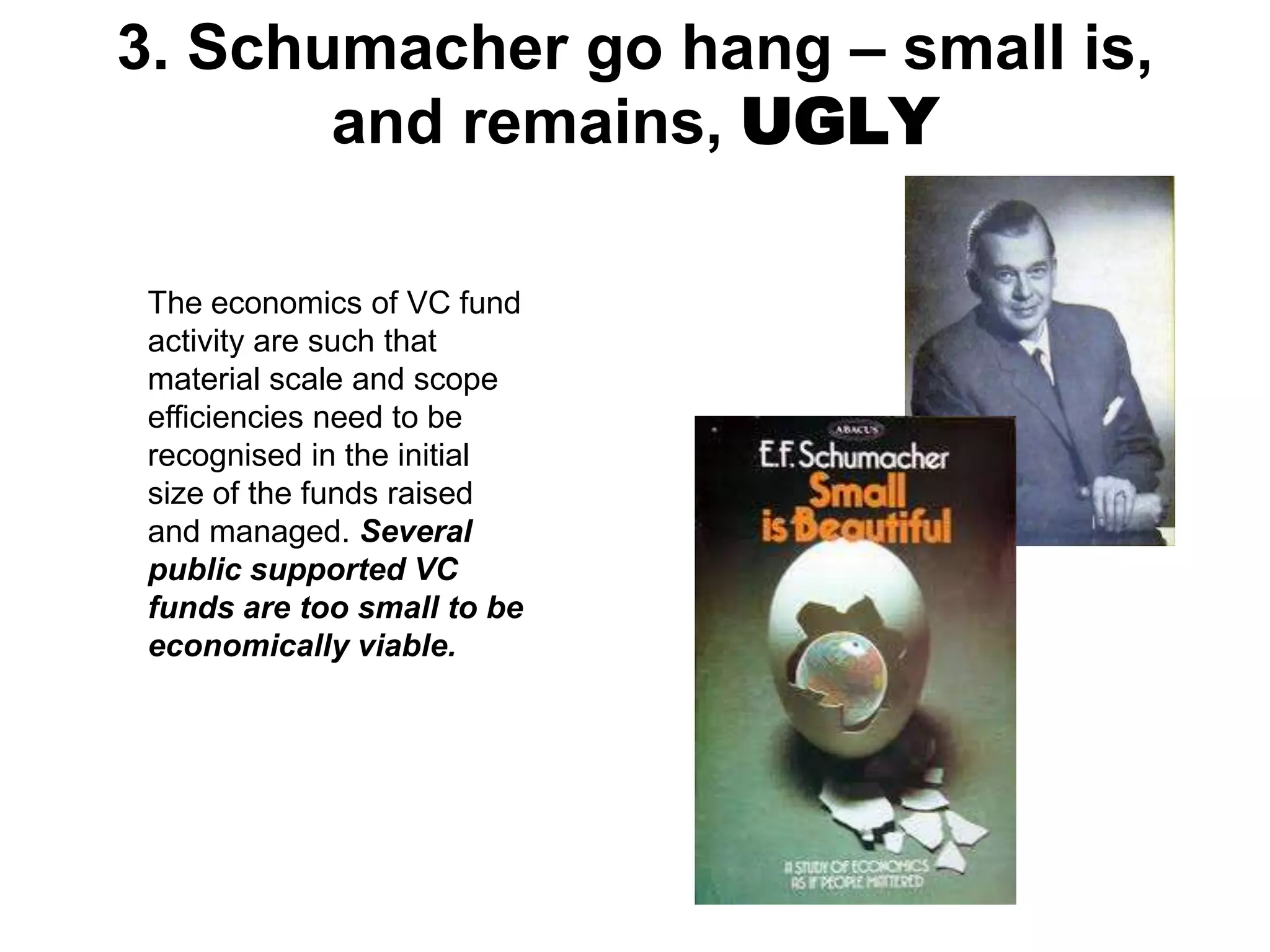
3. Schumacher go hang – small is,
and remains, UGLY
The economics of VC fund
activity are such that
material scale and scope
efficiencies need to be
recognised in the initial
size of the funds raised
and managed. Several
public supported VC
funds are too small to be
economically viable.
4. Learning by doing

There is a substantial
‘experience curve’ effect
in VC investing. It is
unreasonable to expect
that a new VC fund managed by new GPs - will
beat the ‘industry odds’ of
a very modest IRR
performance.
5. Private investors (LPs) will need
(public) encouragement to participate

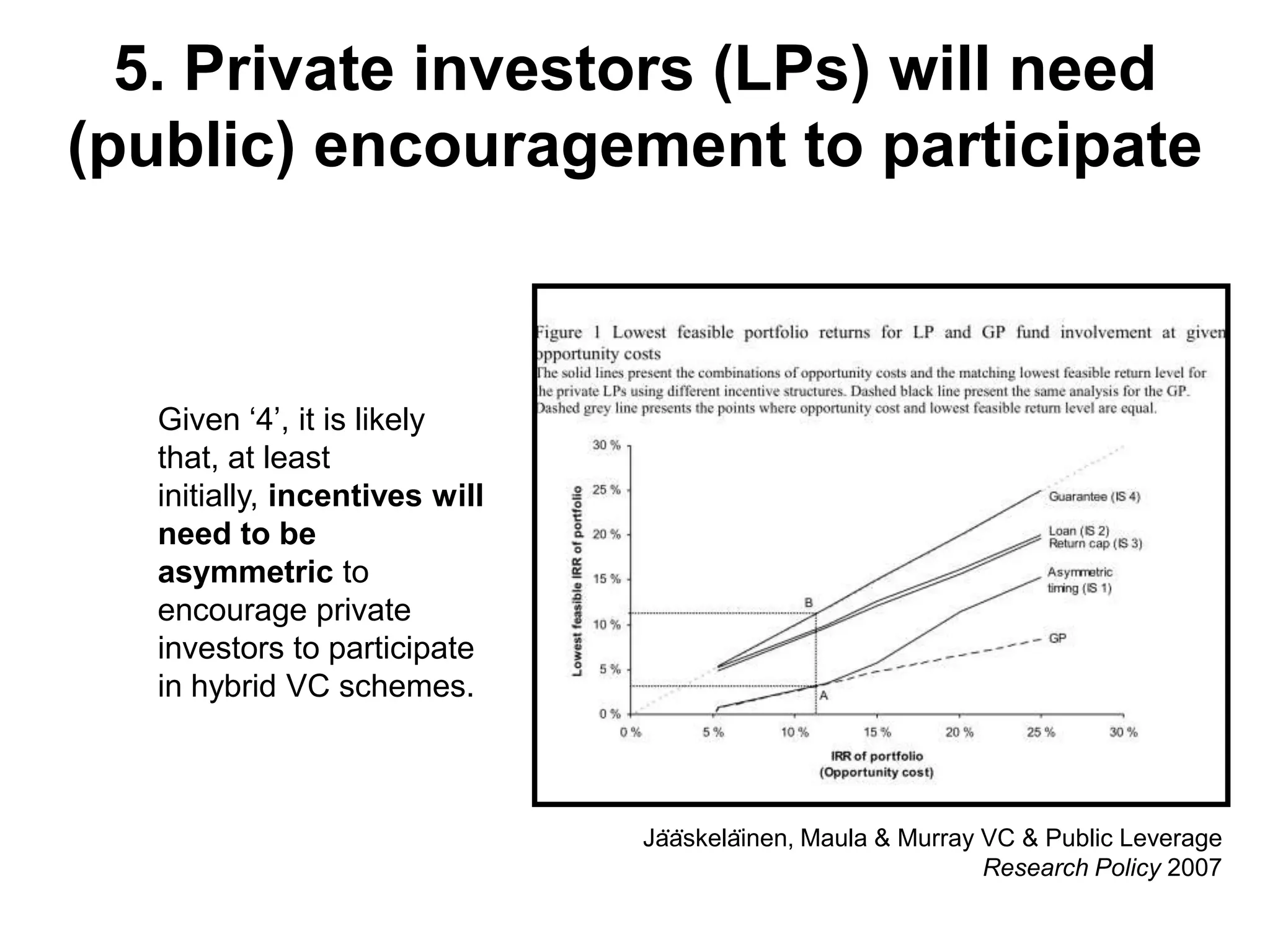
Given ‘4’, it is likely
that, at least
initially, incentives will
need to be
asymmetric to
encourage private
investors to participate
in hybrid VC schemes.

Jääskeläinen, Maula & Murray VC & Public Leverage
Research Policy 2007
6. Spillovers are just that … ‘spilt’,
i.e. the interests of public and
private investors are not aligned.
Given a government’s public
objectives, a modestly
performing hybrid VC fund
can still provide sufficient
Gross Value Added and other
‘externalities’ to justify its
continuance in cost-benefit
terms. The critical issue is
maintaining the support of
private investors (Limited
Partners).
7. Difficult to ‘crowd out’ when
no-one turns up to the party.

There is little evidence that
public early-stage VC
programmes ‘crowd out’
private investors given the
continuingly poor performance
of ‘classic’ VC investments
across the developed world
and the industry ‘shift’ form
early-stage investments.
8. No, Minister this will NOT help
your re-election
i.e. successful VC is a ‘long game’
Public VC programmes need to
consider investments over
several rounds of finance (i.e.
successive funds) in order not
to be vulnerable to the
serendipity of economic cycles
or insufficient learning.
Accordingly, support for
venture capital needs to be a
cross party policy decision
that is measured in decades
rather than the life of a single
government (3-5 years).
9. You can have a VC policy OR a
regional policy but …
DO NOT CONFUSE THEM
Public VC programmes
cannot be used to address
social or regional
inequities as a noncommercial investment
activity and expect to
remain credible to
commercial and private
co-investors.
10.‘Field of Dreams’ versus ‘In your Dreams’
i.e. did anyone mention DEAL-FLOW?

Quality deal flow is a nonnegotiable requirement of
venture capital activity given
that it is premised on the
realisation of rare event of
exceptional returns from a
minority of portfolio
businesses.

The Fairchild Eight
in summary:

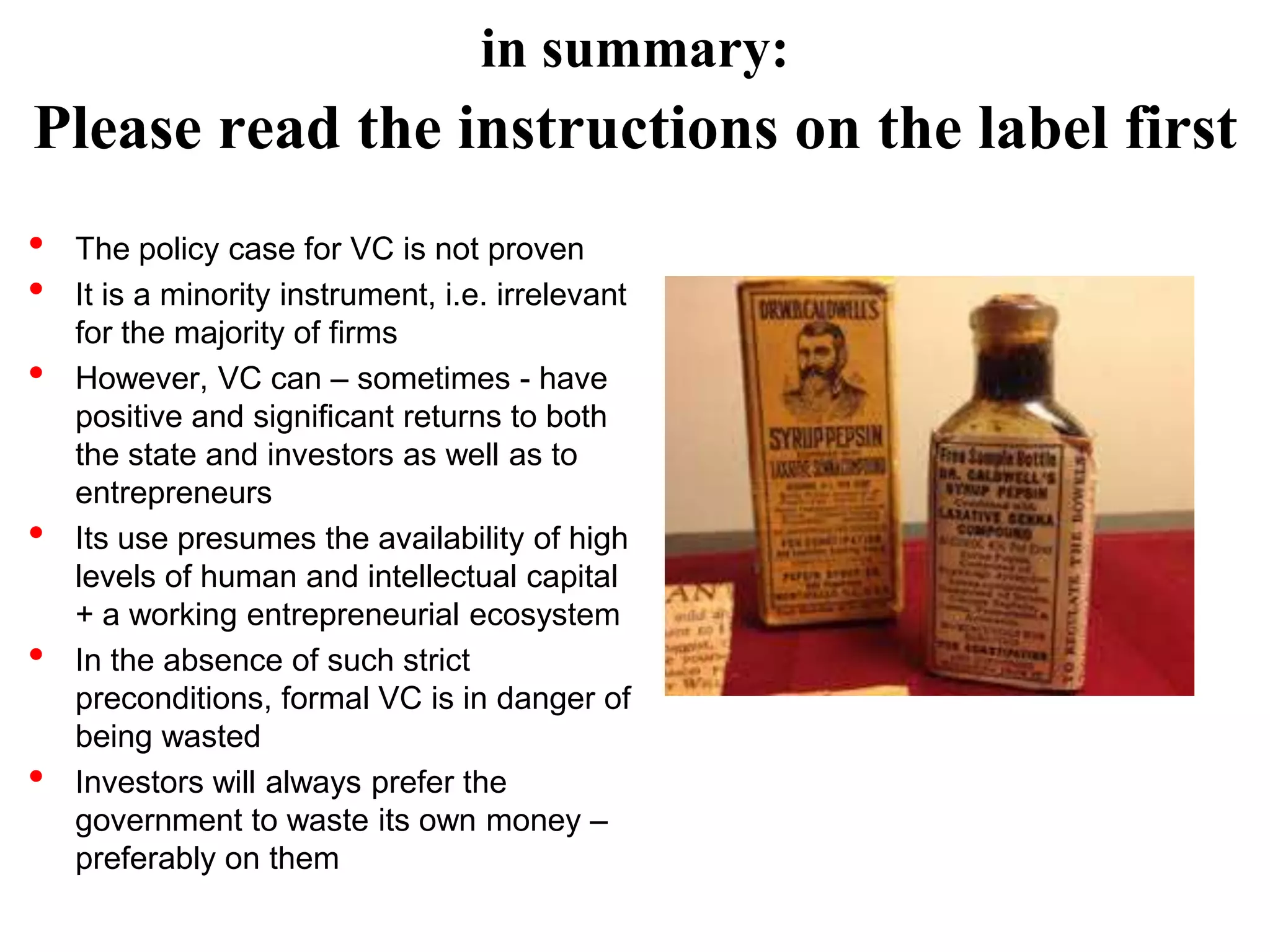
Please read the instructions on the label first
•
•
•

•
•
•

The policy case for VC is not proven
It is a minority instrument, i.e. irrelevant
for the majority of firms
However, VC can – sometimes - have
positive and significant returns to both
the state and investors as well as to
entrepreneurs
Its use presumes the availability of high
levels of human and intellectual capital
+ a working entrepreneurial ecosystem
In the absence of such strict
preconditions, formal VC is in danger of
being wasted
Investors will always prefer the
government to waste its own money –
preferably on them

10.b. murray govt as risk capital provider rev

  • 1.
    OECD Workshop onEntrepreneurial Ecosystems and High Growth Entrepreneurship The challenge of public/private (‘hybrid’) Venture Capital programs within the Entrepreneurial Ecosystem Professor Gordon Murray OBE University of Exeter, UK The Hague 7th Nov. 2013 University of Exeter Business School
  • 2.
    An ‘Entrepreneurial Ecosystem’ perspective Onthe upside: But …:  Takes policy seriously  Removes the ‘magic bullet’ approach  Gives clear guidance on weaknesses… and thus priorities ? Increases complexity ? Requires integrated/collaborativ e policy approaches ? Raises the bar for success
  • 3.
    The Government’s PolicyArmoury (in creating entrepreneurial eco-systems) includes: • Grants • Debt • Loan guarantees • Equity • Tax incentives • Legal incentives • Information/advice/support • Regulation (red tape removal) • Education • Culture
  • 4.
    Early-stage Venture Capitalinvestment as a percentage of total Venture Capital and Private Equity investment 60% 50% EUR (2012) – 5.3% UK (2012) – 1.1% 40% 30% UK 20% EU 10% 0% 2000 2001 2002 2003 2004 2005 2006 2007 2008 2009 2010 Ergo, let us assume:  There is a shortage of skilled and successful early-stage VC funds  The median/average returns to early stage VC remain persistently poor  Institutional investors have largely abandoned VC  Government feels obliged to act on supply-side issues  Most governments remain inexperienced VC supporters and funders Government is often on the Horns of a Dilemma?
  • 5.
    The state hasbeen riding to the rescue and supporting venture capital for over half a century Academics have (increasing) been studying venture capital since the mid 1980s … so what have we learned? Did you bring any money? Oh. @:#*#**!
  • 6.
    10 Observations fromthe VC Research/Policy front-line
  • 7.
    1. Is ‘thelearning government’ an oxymoron … or merely moronic? Government needs to build up its own knowledge resources in order to design effective VC policy programmes and to be able to negotiate with authority with the VC industry in setting realistic performance and incentive structures
  • 8.
    2. Yes. Goodearly-stage investment managers do NOT grow on trees Human Capital, i.e. sourcing experienced and successful investment management to the new programme is likely to be at least as large a constraint as securing initial funding for the new fund/programme
  • 9.
    3. Schumacher gohang – small is, and remains, UGLY The economics of VC fund activity are such that material scale and scope efficiencies need to be recognised in the initial size of the funds raised and managed. Several public supported VC funds are too small to be economically viable.
  • 10.
    4. Learning bydoing There is a substantial ‘experience curve’ effect in VC investing. It is unreasonable to expect that a new VC fund managed by new GPs - will beat the ‘industry odds’ of a very modest IRR performance.
  • 11.
    5. Private investors(LPs) will need (public) encouragement to participate Given ‘4’, it is likely that, at least initially, incentives will need to be asymmetric to encourage private investors to participate in hybrid VC schemes. Jääskeläinen, Maula & Murray VC & Public Leverage Research Policy 2007
  • 12.
    6. Spillovers arejust that … ‘spilt’, i.e. the interests of public and private investors are not aligned. Given a government’s public objectives, a modestly performing hybrid VC fund can still provide sufficient Gross Value Added and other ‘externalities’ to justify its continuance in cost-benefit terms. The critical issue is maintaining the support of private investors (Limited Partners).
  • 13.
    7. Difficult to‘crowd out’ when no-one turns up to the party. There is little evidence that public early-stage VC programmes ‘crowd out’ private investors given the continuingly poor performance of ‘classic’ VC investments across the developed world and the industry ‘shift’ form early-stage investments.
  • 14.
    8. No, Ministerthis will NOT help your re-election i.e. successful VC is a ‘long game’ Public VC programmes need to consider investments over several rounds of finance (i.e. successive funds) in order not to be vulnerable to the serendipity of economic cycles or insufficient learning. Accordingly, support for venture capital needs to be a cross party policy decision that is measured in decades rather than the life of a single government (3-5 years).
  • 15.
    9. You canhave a VC policy OR a regional policy but … DO NOT CONFUSE THEM Public VC programmes cannot be used to address social or regional inequities as a noncommercial investment activity and expect to remain credible to commercial and private co-investors.
  • 16.
    10.‘Field of Dreams’versus ‘In your Dreams’ i.e. did anyone mention DEAL-FLOW? Quality deal flow is a nonnegotiable requirement of venture capital activity given that it is premised on the realisation of rare event of exceptional returns from a minority of portfolio businesses. The Fairchild Eight
  • 17.
    in summary: Please readthe instructions on the label first • • • • • • The policy case for VC is not proven It is a minority instrument, i.e. irrelevant for the majority of firms However, VC can – sometimes - have positive and significant returns to both the state and investors as well as to entrepreneurs Its use presumes the availability of high levels of human and intellectual capital + a working entrepreneurial ecosystem In the absence of such strict preconditions, formal VC is in danger of being wasted Investors will always prefer the government to waste its own money – preferably on them