10 tips for leading a team 
By PJ STEVENS Published 30th Aug 2013 
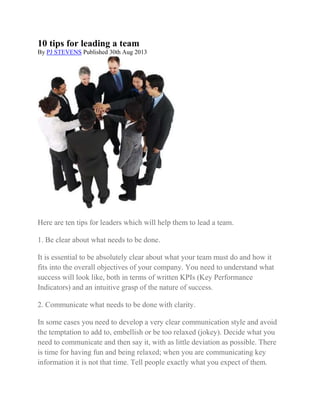
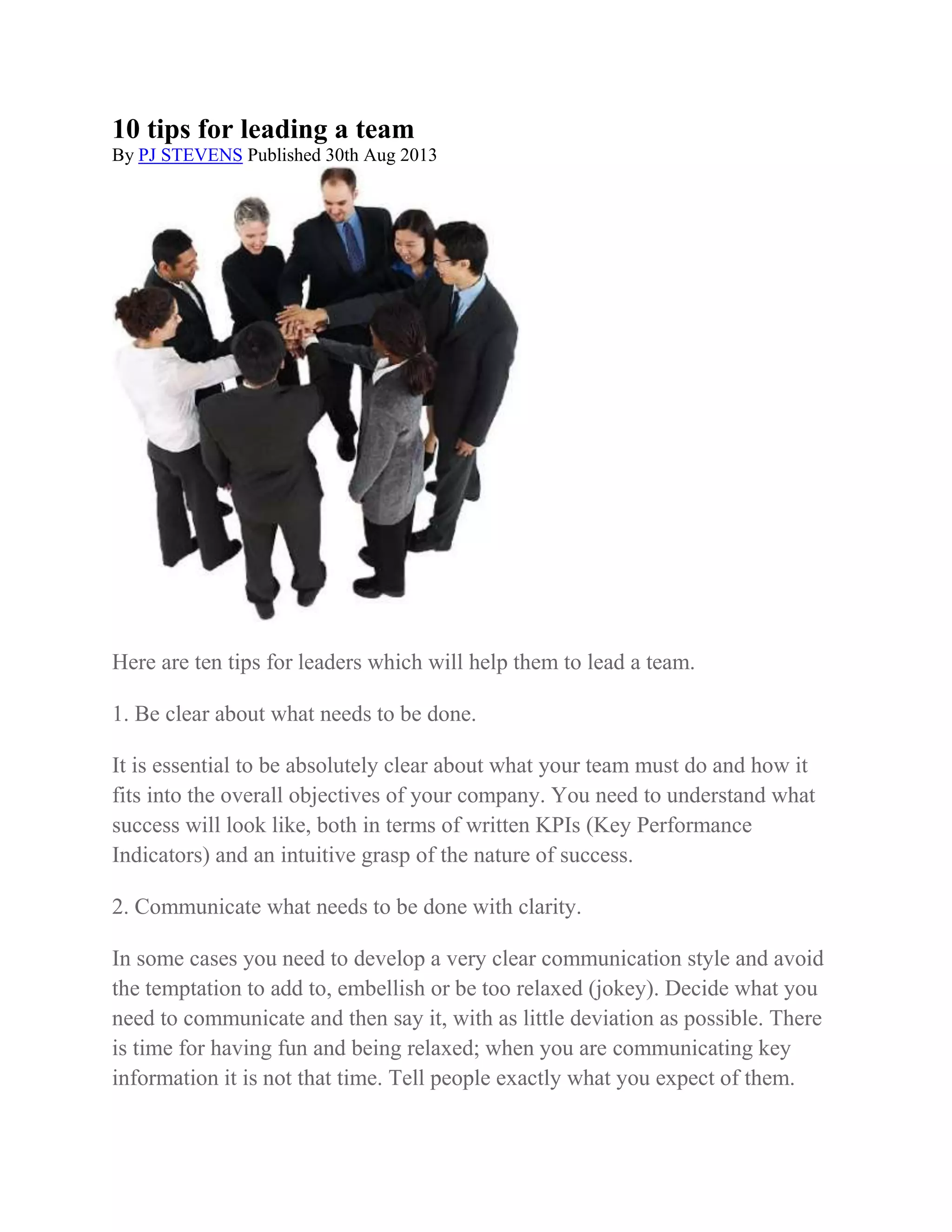
Here are ten tips for leaders which will help them to lead a team. 
1. Be clear about what needs to be done. 
It is essential to be absolutely clear about what your team must do and how it 
fits into the overall objectives of your company. You need to understand what 
success will look like, both in terms of written KPIs (Key Performance 
Indicators) and an intuitive grasp of the nature of success. 
2. Communicate what needs to be done with clarity. 
In some cases you need to develop a very clear communication style and avoid 
the temptation to add to, embellish or be too relaxed (jokey). Decide what you 
need to communicate and then say it, with as little deviation as possible. There 
is time for having fun and being relaxed; when you are communicating key 
information it is not that time. Tell people exactly what you expect of them.
3. Passionately believe in your vision. 
Passion is overused in business and there are many who don't like to see the 
word. However, when you have decided on your objectives people want to see 
commitment and consistency and not someone who is wavering and doubtful. 
4. Build a team that shares your vision. 
Pick the right people for the tasks which are key to the goal. Communicate 
openly and effectively with those people. Allow for sufficient time to meet and 
discuss progress, blocks and whether team members are happy. Regularly 
remind people of the mission and what each team member needs to achieve to 
be successful. 
5. Listen to your team members and respect their skills. 
Listen to what your team members say and keep an open mind about what is 
important. If you have done well in choosing your people to match the tasks you 
will have a team of experts. Many of them will know more about their specific 
area than you do, so respect their skills and expertise. It takes a lot of confidence 
to accept someone as more knowledgeable about something than you are, but it 
earns a lot of respect. 
6. Keep everyone informed and motivated. 
One of the greatest demotivators is the sense that your work is not achieving 
anything meaningful. Make sure you have good measurement and feedback in 
place so you can tell your team that they are doing a good job and that you are 
on target to achieve your goals, or that you all need to up the game if that isn't 
the case. It's easier to motivate people when things are going well, but it's when 
things are going less well that teams need motivation the most. Always let your 
team know that you believe in them. 
7. Work harder than anyone else.
Everyone looks to their leaders to set the example. If you are late in and only 
care about getting home early you will create a culture within your team in 
which those of a similar ilk will emulate you and those who prefer to work 
harder start to lose respect for the culture. The team leader has to set the 
example that they expect others to follow. 
8. Keep your problems to yourself. 
Some work related problems need to be shared because the team may need to 
work together to solve them. However, generally speaking, you should keep 
your problems to yourself as much as possible, particularly personal problems. 
A leader's role is to help their team members through their problems. This is 
why it is often said that it's lonely at the top. If you're particularly needy then 
leadership may not be for you. 
9. Don't be afraid to be ruthless. 
Sometimes a leader needs to be ruthless for the good of everyone. If a team 
member has gone off track they need to be put back on track without delay. If 
someone has become destructive then it is a very dangerous situation. 
Destructive people can be highly motivated and engaging and if you have them 
in the team they can contaminate other team members. If you have this situation 
you may need to be ruthless and to do it quickly. 
10. Celebrate success. 
Successful teams celebrate regularly. It is motivating and keeps the energy 
levels high. In some cases a leader will have to be creative in order to find 
something to celebrate about and it's important not to be trite. However, failure 
can spiral into a situation where the team is demotivated and starts to lose every 
game that they play. A celebration can be like a ladder, taking the team up to a 
more motivated place where the luck seems to change. 
Leadership is not easy and it is not for everyone. You have to work at it 
consistently and with clear focus.
10 tips for leading a team

10 tips for leading a team

  • 1.
    10 tips forleading a team By PJ STEVENS Published 30th Aug 2013 Here are ten tips for leaders which will help them to lead a team. 1. Be clear about what needs to be done. It is essential to be absolutely clear about what your team must do and how it fits into the overall objectives of your company. You need to understand what success will look like, both in terms of written KPIs (Key Performance Indicators) and an intuitive grasp of the nature of success. 2. Communicate what needs to be done with clarity. In some cases you need to develop a very clear communication style and avoid the temptation to add to, embellish or be too relaxed (jokey). Decide what you need to communicate and then say it, with as little deviation as possible. There is time for having fun and being relaxed; when you are communicating key information it is not that time. Tell people exactly what you expect of them.
  • 2.
    3. Passionately believein your vision. Passion is overused in business and there are many who don't like to see the word. However, when you have decided on your objectives people want to see commitment and consistency and not someone who is wavering and doubtful. 4. Build a team that shares your vision. Pick the right people for the tasks which are key to the goal. Communicate openly and effectively with those people. Allow for sufficient time to meet and discuss progress, blocks and whether team members are happy. Regularly remind people of the mission and what each team member needs to achieve to be successful. 5. Listen to your team members and respect their skills. Listen to what your team members say and keep an open mind about what is important. If you have done well in choosing your people to match the tasks you will have a team of experts. Many of them will know more about their specific area than you do, so respect their skills and expertise. It takes a lot of confidence to accept someone as more knowledgeable about something than you are, but it earns a lot of respect. 6. Keep everyone informed and motivated. One of the greatest demotivators is the sense that your work is not achieving anything meaningful. Make sure you have good measurement and feedback in place so you can tell your team that they are doing a good job and that you are on target to achieve your goals, or that you all need to up the game if that isn't the case. It's easier to motivate people when things are going well, but it's when things are going less well that teams need motivation the most. Always let your team know that you believe in them. 7. Work harder than anyone else.
  • 3.
    Everyone looks totheir leaders to set the example. If you are late in and only care about getting home early you will create a culture within your team in which those of a similar ilk will emulate you and those who prefer to work harder start to lose respect for the culture. The team leader has to set the example that they expect others to follow. 8. Keep your problems to yourself. Some work related problems need to be shared because the team may need to work together to solve them. However, generally speaking, you should keep your problems to yourself as much as possible, particularly personal problems. A leader's role is to help their team members through their problems. This is why it is often said that it's lonely at the top. If you're particularly needy then leadership may not be for you. 9. Don't be afraid to be ruthless. Sometimes a leader needs to be ruthless for the good of everyone. If a team member has gone off track they need to be put back on track without delay. If someone has become destructive then it is a very dangerous situation. Destructive people can be highly motivated and engaging and if you have them in the team they can contaminate other team members. If you have this situation you may need to be ruthless and to do it quickly. 10. Celebrate success. Successful teams celebrate regularly. It is motivating and keeps the energy levels high. In some cases a leader will have to be creative in order to find something to celebrate about and it's important not to be trite. However, failure can spiral into a situation where the team is demotivated and starts to lose every game that they play. A celebration can be like a ladder, taking the team up to a more motivated place where the luck seems to change. Leadership is not easy and it is not for everyone. You have to work at it consistently and with clear focus.