Surgical Anatomy of the
Retroperitoneal & Pelvic
Extraperitoneal Space
Dr. Shahbaz Hanif, MS
Peking University International Hospital,
Beijing, China.
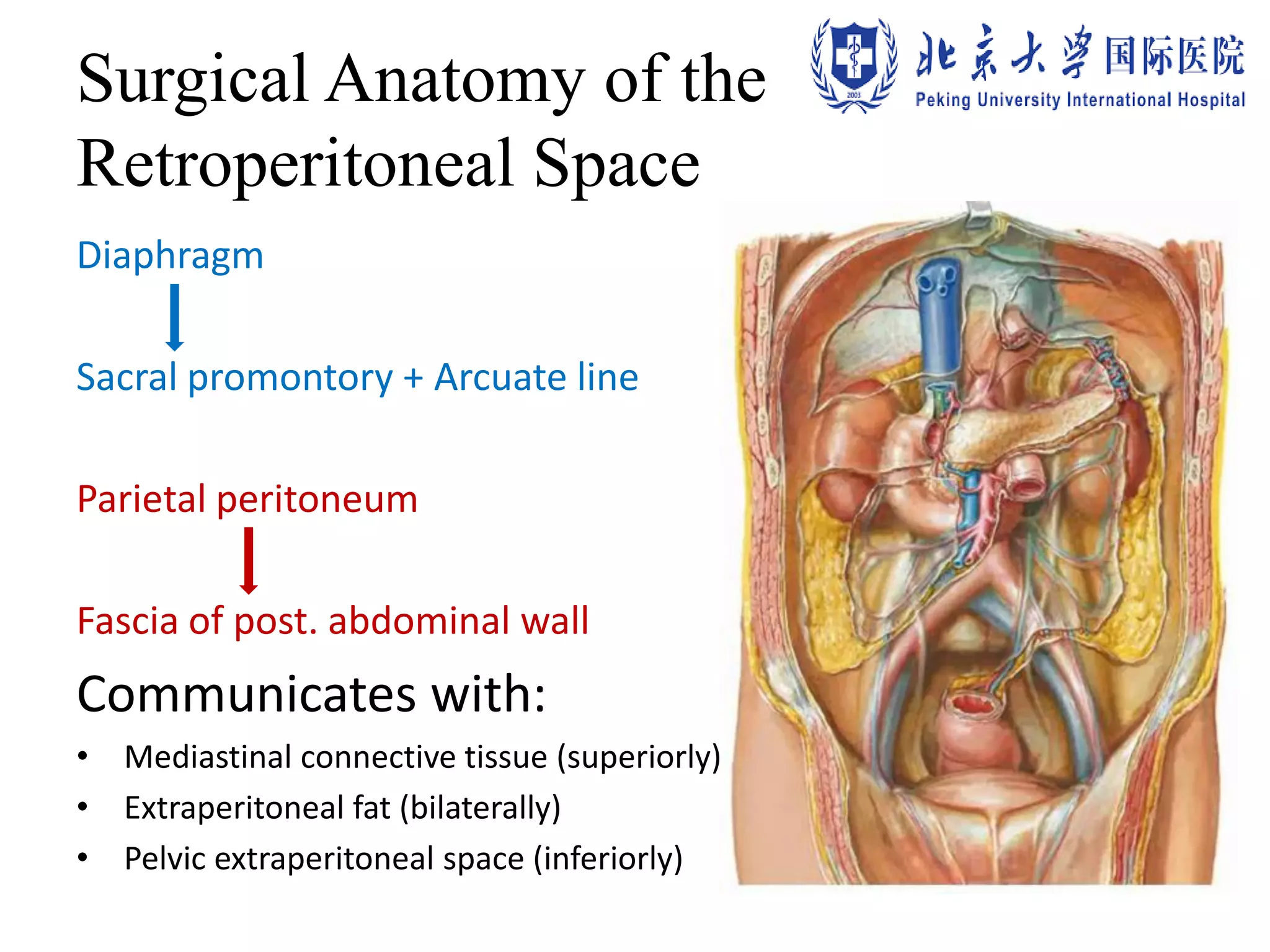
Surgical Anatomy of the
Retroperitoneal Space
Diaphragm
Sacral promontory + Arcuate line
Parietal peritoneum
Fascia of post. abdominal wall
Communicates with:
• Mediastinal connective tissue (superiorly)
• Extraperitoneal fat (bilaterally)
• Pelvic extraperitoneal space (inferiorly)
Continue…
The retroperitoneal space can be divided into:
1. Left lumbar region (left flank)
2. Right lumbar region (right flank)
3. Pre-vertebral region
4. Left iliac fossa (LIF)
5. Right iliac fossa (RIF)
Continue…
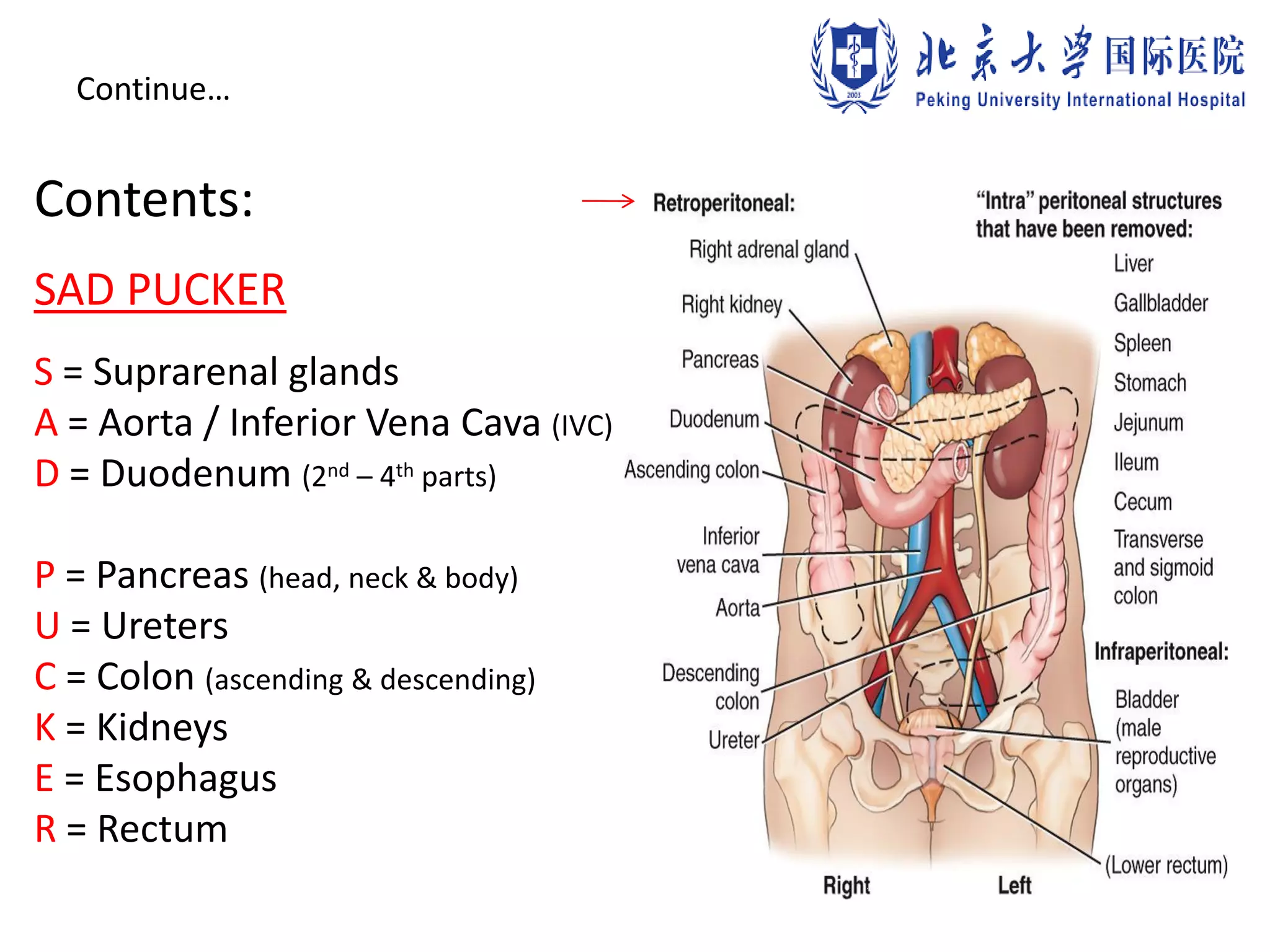
Contents:
SAD PUCKER
S = Suprarenal glands
A = Aorta / Inferior Vena Cava (IVC)
D = Duodenum (2nd – 4th parts)
P = Pancreas (head, neck & body)
U = Ureters
C = Colon (ascending & descending)
K = Kidneys
E = Esophagus
R = Rectum
Kidney
Left kidney (T11 - L2)
Right kidney (T12 - L3)
Structures at the renal hilus:
Front to backward:
Renal vein, Artery & Pelvis
Above to downward:
Renal artery, Vein & Pelvis
• Kidneys move with respiratory movements of the diaphragm within the range
of no more than 1 vertebra (Rohen et al. 1998)
Capsules of the Kidneys
3-layers:
• Renal fascia
• Adipose capsule
• Fibrous capsule
• Each kidney weighs about 120-150 g.
Or
Adipose
tissue
Renal Vasculature
• Renal artery
 Abd. Aorta, (L1-L2 intervertebral disks)
 Rt. Renal artery is normally longer.
 Average diameter = 0.77 cm
 Accessory renal arteries are common.
Close attention should be paid, when a
resection of kidney is required.
Continue…
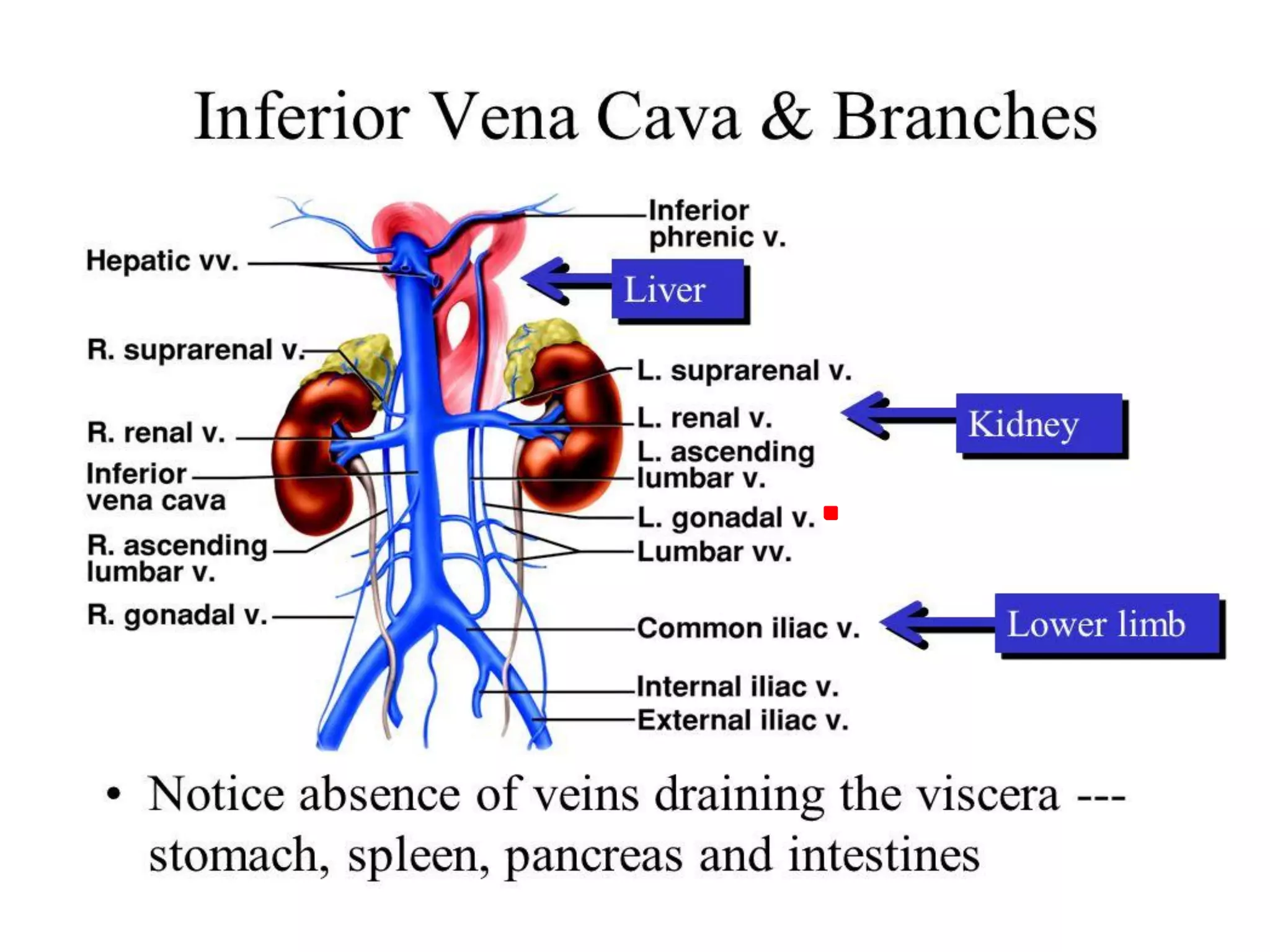
• Renal vein
 Left renal vein is normally 2 or even more than 3 times longer.
 It houses blood from left kidney, left suprarenal gland, and testicles
(ovaries)
• Lymphatic vessels & Nerves
 Testicular varicose veins (constriction of Lt. renal V. by enlarged RP lymph
nodes)
Suprarenal (Adrenal) Gland
• Location
• Shape
 Right (pyramidal)
 Lest (half moon)
• Size
 Length=5cm, Width=3cm,
Thickness=0.5-1cm, Weight=5-7g
• Tumors
 Retroperitoneal tumors
 Neural tumors
 pheochoromocytomas
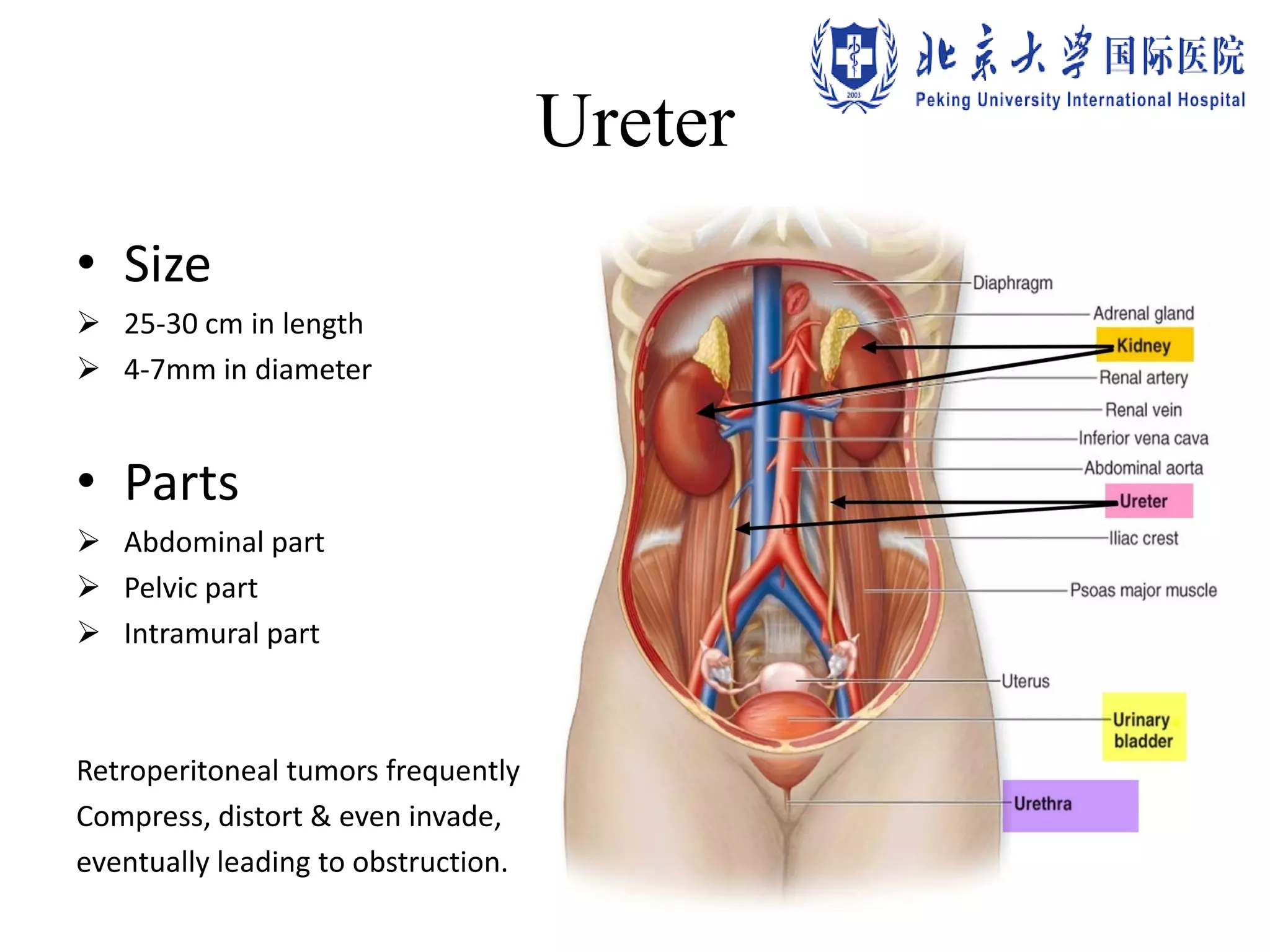
Ureter
• Size
 25-30 cm in length
 4-7mm in diameter
• Parts
 Abdominal part
 Pelvic part
 Intramural part
Retroperitoneal tumors frequently
Compress, distort & even invade,
eventually leading to obstruction.
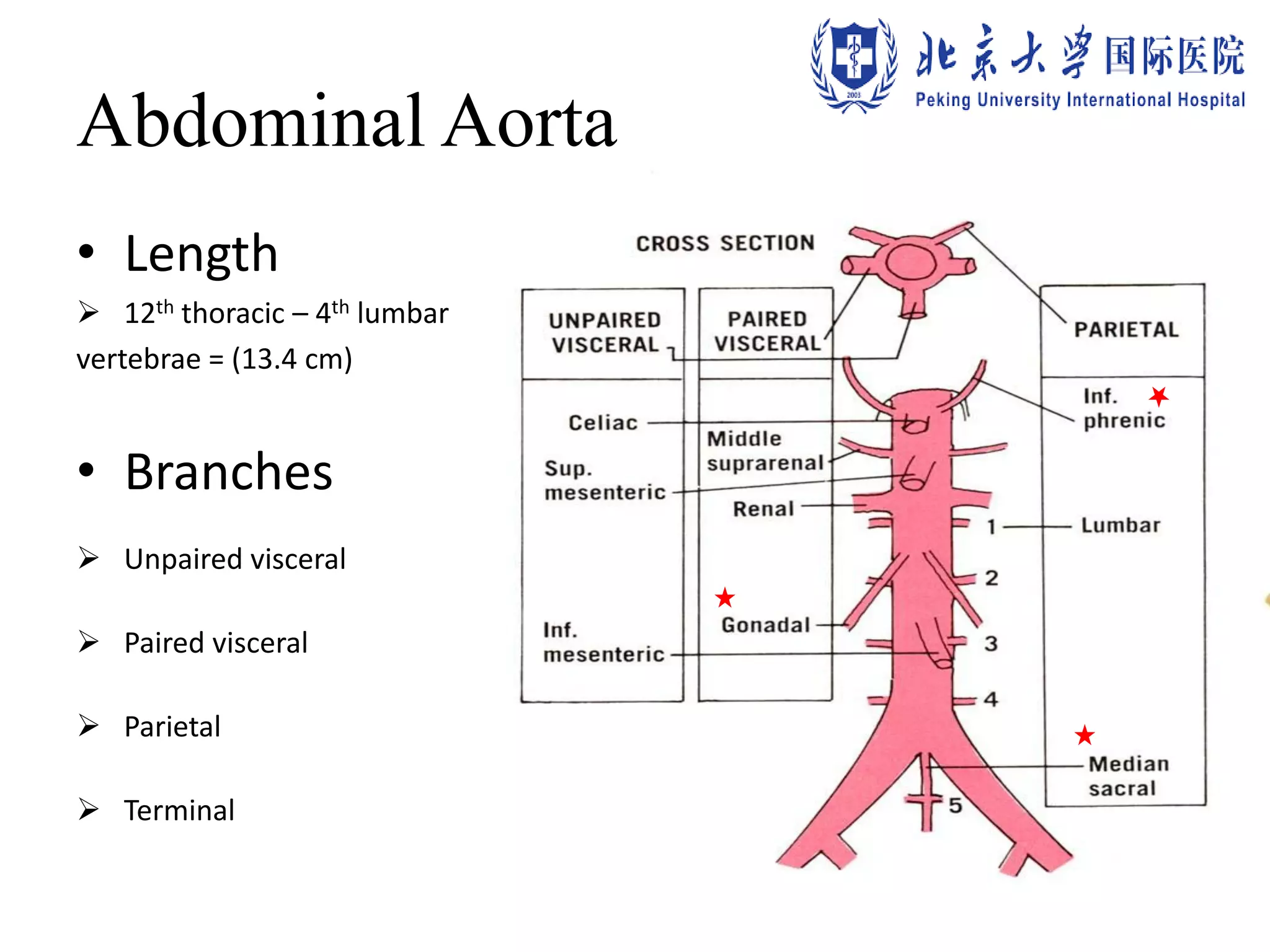
Abdominal Aorta
• Length
 12th thoracic – 4th lumbar
vertebrae = (13.4 cm)
• Branches
 Unpaired visceral
 Paired visceral
 Parietal
 Terminal
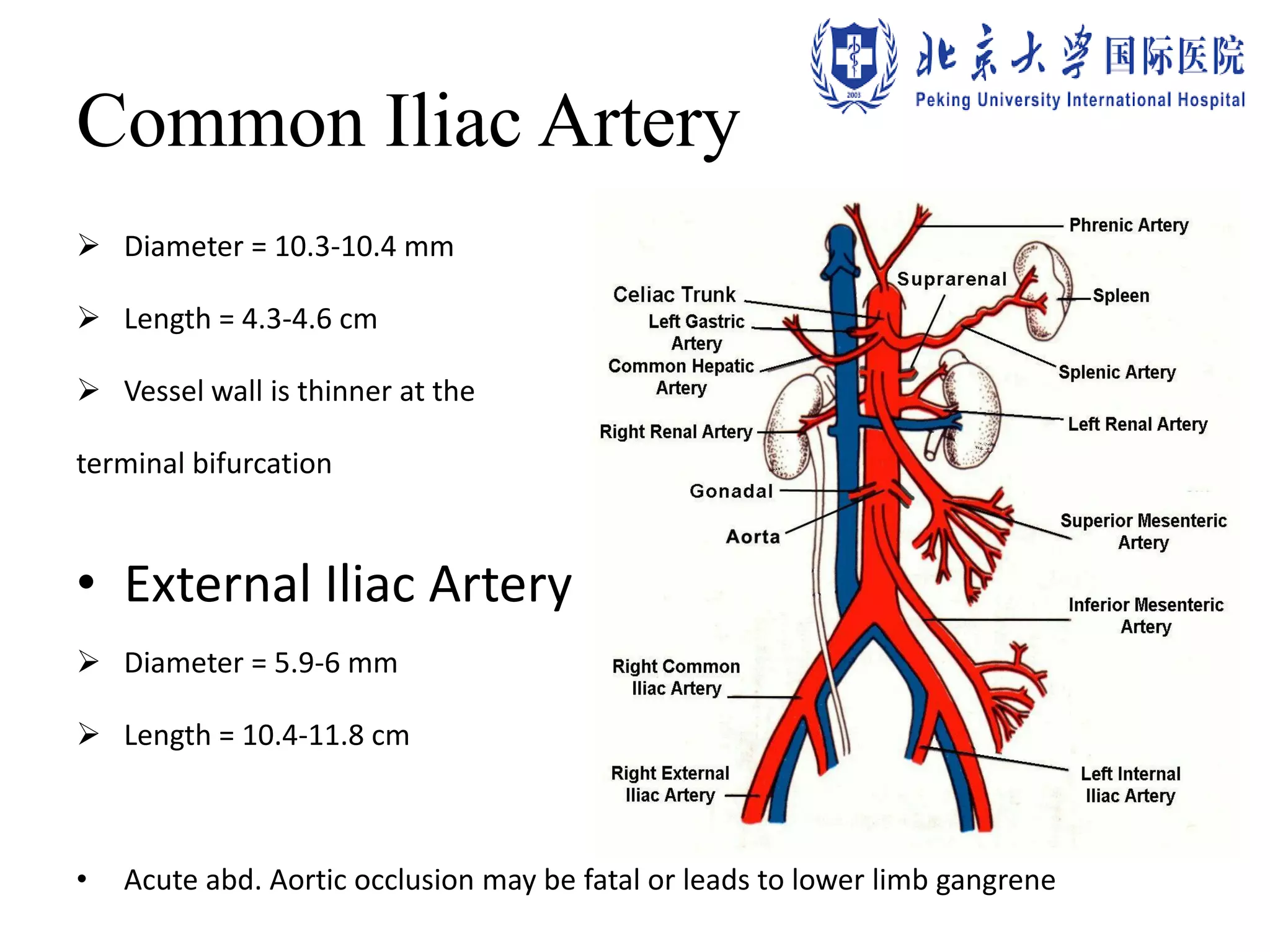
Common Iliac Artery
 Diameter = 10.3-10.4 mm
 Length = 4.3-4.6 cm
 Vessel wall is thinner at the
terminal bifurcation
• External Iliac Artery
 Diameter = 5.9-6 mm
 Length = 10.4-11.8 cm
• Acute abd. Aortic occlusion may be fatal or leads to lower limb gangrene
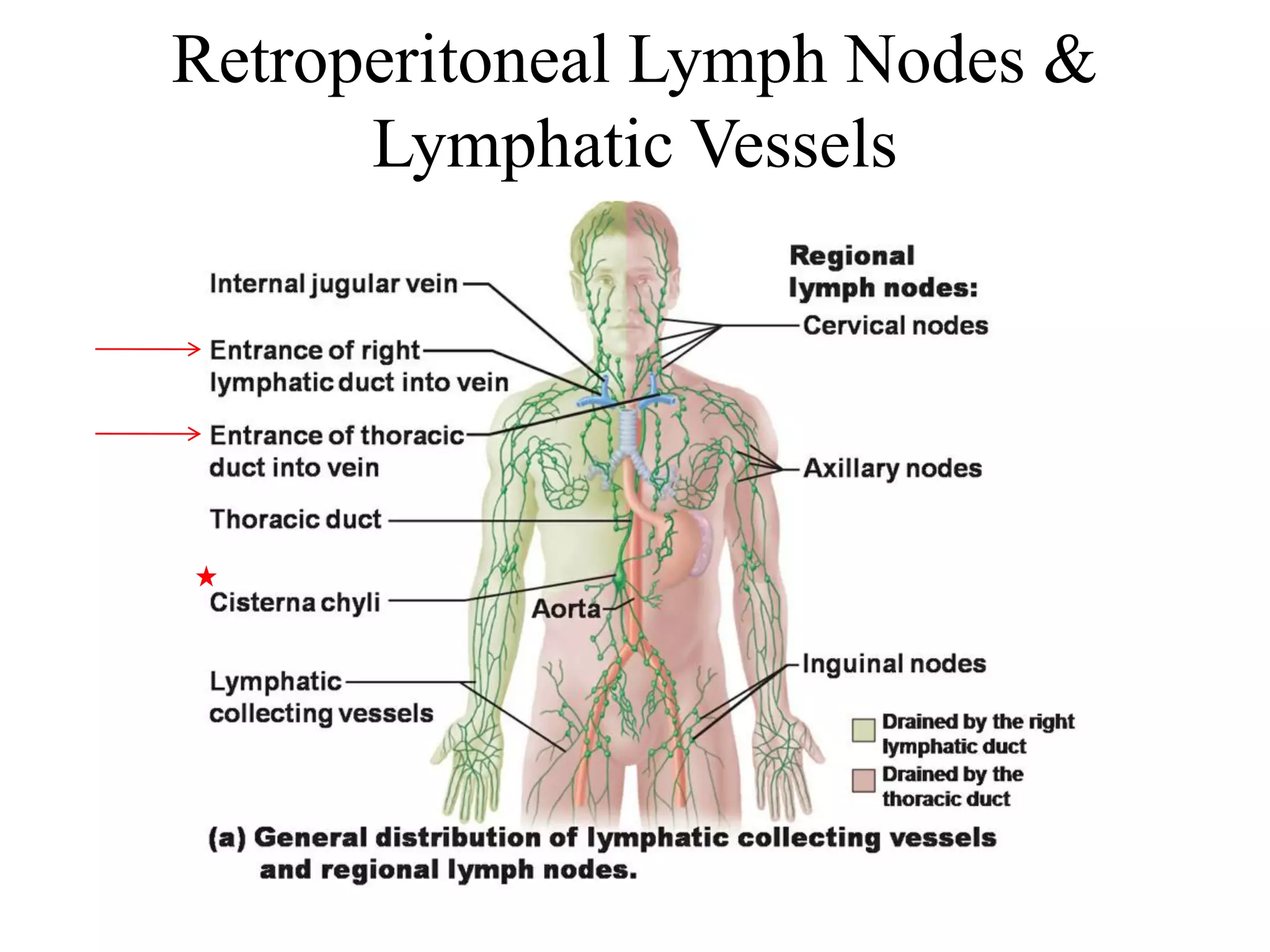
Retroperitoneal Lymph Nodes &
Lymphatic Vessels
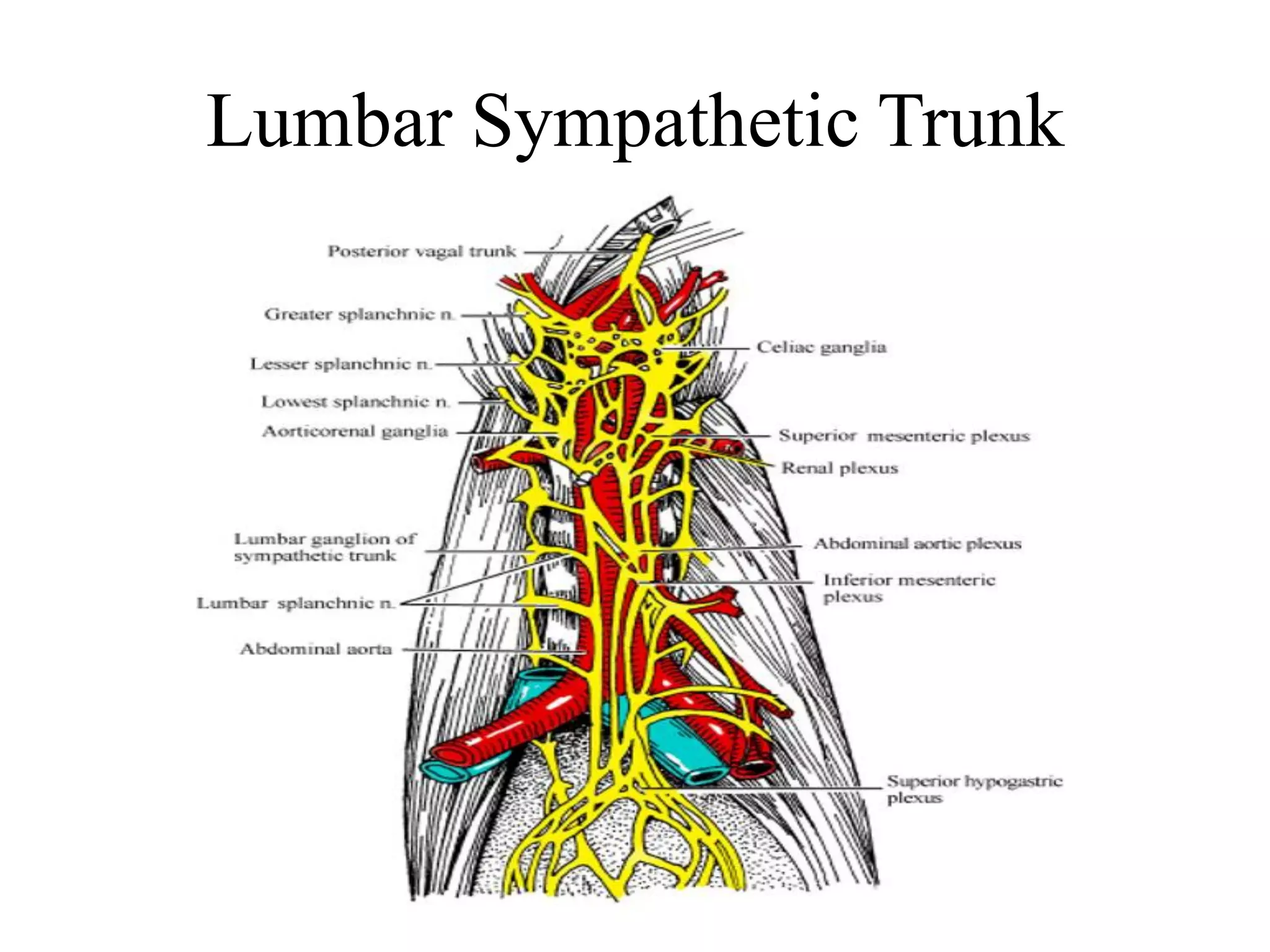
Lumbar Sympathetic Trunk
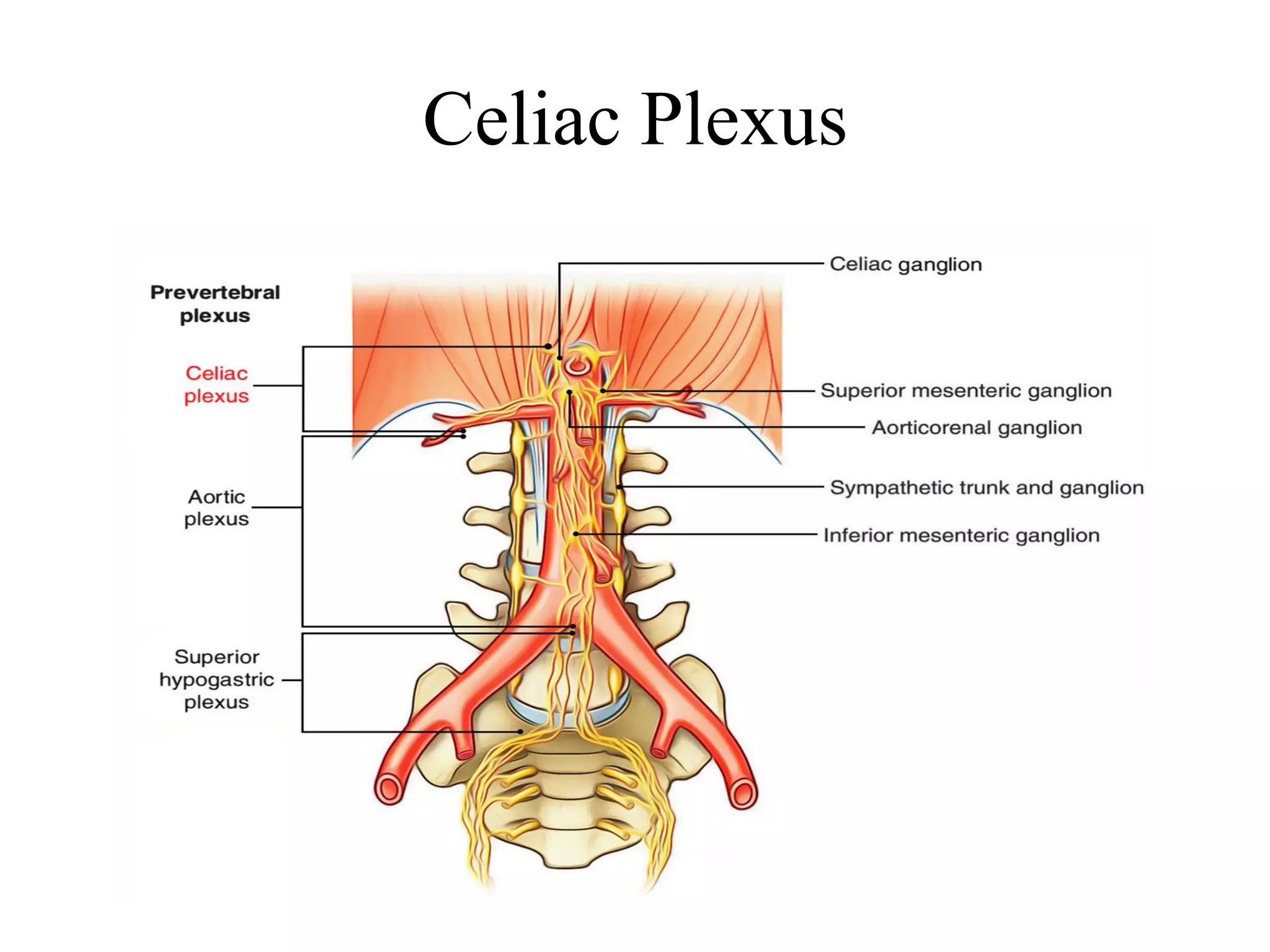
Celiac Plexus
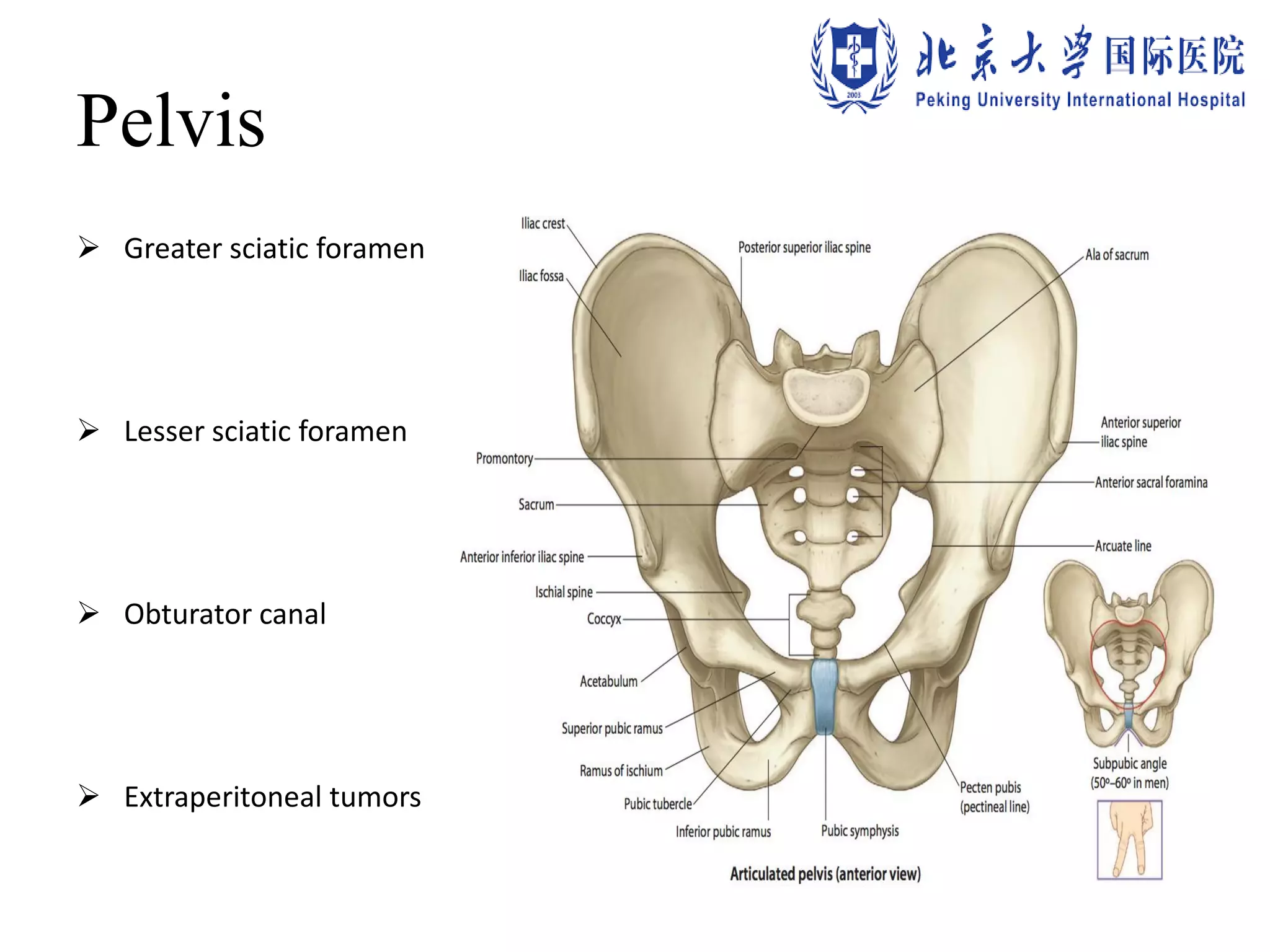
Pelvis
 Greater sciatic foramen
 Lesser sciatic foramen
 Obturator canal
 Extraperitoneal tumors
Muscles of Pelvis Wall & Diaphragm
Pelvic Wall Muscles:
 Internal Obturator Muscle
 Piriformis Muscle
Pelvic Diaphragm Muscles
 Levator Ani Muscle
• Puboprostatic
(Pubic vaginal muscle)
• Puborectalis
• Pubococcygeus
• Iliococcygeus
 Coccygeal Muscle
Rectum & Anal Canal
Bladder
Pelvic Blood vessels, Lymph nodes &
Nerves
Cross Section of Extra-peritoneal
Pelvis
References
 Cheng-Hua Luo, Retroperitoneal Tumors (Clinical Management), Springer
(2018). https://doi.org/10.1007/978-94-024-1167-6
 For better understanding of retroperitonal
and pelvic anatomy, pictures, illustrations or
images are downloaded from Google.
 For further information regarding
Retroperitoneal Tumors, you can contact me
at: dr.shahbazhanif@foxmail.com;
dr.shahbazhanif@qqmail.com
1- Surgical Anatomy of the Retroperitoneal & Pelvic Extraperitoneal Space

1- Surgical Anatomy of the Retroperitoneal & Pelvic Extraperitoneal Space

  • 1.
    Surgical Anatomy ofthe Retroperitoneal & Pelvic Extraperitoneal Space Dr. Shahbaz Hanif, MS Peking University International Hospital, Beijing, China.
  • 2.
    Surgical Anatomy ofthe Retroperitoneal Space Diaphragm Sacral promontory + Arcuate line Parietal peritoneum Fascia of post. abdominal wall Communicates with: • Mediastinal connective tissue (superiorly) • Extraperitoneal fat (bilaterally) • Pelvic extraperitoneal space (inferiorly)
  • 3.
    Continue… The retroperitoneal spacecan be divided into: 1. Left lumbar region (left flank) 2. Right lumbar region (right flank) 3. Pre-vertebral region 4. Left iliac fossa (LIF) 5. Right iliac fossa (RIF)
  • 4.
    Continue… Contents: SAD PUCKER S =Suprarenal glands A = Aorta / Inferior Vena Cava (IVC) D = Duodenum (2nd – 4th parts) P = Pancreas (head, neck & body) U = Ureters C = Colon (ascending & descending) K = Kidneys E = Esophagus R = Rectum
  • 5.
    Kidney Left kidney (T11- L2) Right kidney (T12 - L3) Structures at the renal hilus: Front to backward: Renal vein, Artery & Pelvis Above to downward: Renal artery, Vein & Pelvis • Kidneys move with respiratory movements of the diaphragm within the range of no more than 1 vertebra (Rohen et al. 1998)
  • 6.
    Capsules of theKidneys 3-layers: • Renal fascia • Adipose capsule • Fibrous capsule • Each kidney weighs about 120-150 g.
  • 7.
  • 8.
    Renal Vasculature • Renalartery  Abd. Aorta, (L1-L2 intervertebral disks)  Rt. Renal artery is normally longer.  Average diameter = 0.77 cm  Accessory renal arteries are common. Close attention should be paid, when a resection of kidney is required.
  • 9.
    Continue… • Renal vein Left renal vein is normally 2 or even more than 3 times longer.  It houses blood from left kidney, left suprarenal gland, and testicles (ovaries) • Lymphatic vessels & Nerves  Testicular varicose veins (constriction of Lt. renal V. by enlarged RP lymph nodes)
  • 10.
    Suprarenal (Adrenal) Gland •Location • Shape  Right (pyramidal)  Lest (half moon) • Size  Length=5cm, Width=3cm, Thickness=0.5-1cm, Weight=5-7g • Tumors  Retroperitoneal tumors  Neural tumors  pheochoromocytomas
  • 11.
    Ureter • Size  25-30cm in length  4-7mm in diameter • Parts  Abdominal part  Pelvic part  Intramural part Retroperitoneal tumors frequently Compress, distort & even invade, eventually leading to obstruction.
  • 12.
    Abdominal Aorta • Length 12th thoracic – 4th lumbar vertebrae = (13.4 cm) • Branches  Unpaired visceral  Paired visceral  Parietal  Terminal
  • 13.
    Common Iliac Artery Diameter = 10.3-10.4 mm  Length = 4.3-4.6 cm  Vessel wall is thinner at the terminal bifurcation • External Iliac Artery  Diameter = 5.9-6 mm  Length = 10.4-11.8 cm • Acute abd. Aortic occlusion may be fatal or leads to lower limb gangrene
  • 15.
    Retroperitoneal Lymph Nodes& Lymphatic Vessels
  • 16.
  • 17.
  • 18.
    Pelvis  Greater sciaticforamen  Lesser sciatic foramen  Obturator canal  Extraperitoneal tumors
  • 19.
    Muscles of PelvisWall & Diaphragm Pelvic Wall Muscles:  Internal Obturator Muscle  Piriformis Muscle Pelvic Diaphragm Muscles  Levator Ani Muscle • Puboprostatic (Pubic vaginal muscle) • Puborectalis • Pubococcygeus • Iliococcygeus  Coccygeal Muscle
  • 20.
  • 21.
  • 22.
    Pelvic Blood vessels,Lymph nodes & Nerves
  • 24.
    Cross Section ofExtra-peritoneal Pelvis
  • 25.
    References  Cheng-Hua Luo,Retroperitoneal Tumors (Clinical Management), Springer (2018). https://doi.org/10.1007/978-94-024-1167-6  For better understanding of retroperitonal and pelvic anatomy, pictures, illustrations or images are downloaded from Google.  For further information regarding Retroperitoneal Tumors, you can contact me at: dr.shahbazhanif@foxmail.com; dr.shahbazhanif@qqmail.com