Networking between Academia, Public
  Research Institutes and Industry
       ---Korean Experiences


         Prof. Se-Jung Oh
         President, Institute for Basic Science (Current)
         President, National Research Foundation of Korea (Previous)
         Professor of Physics, Seoul National University, Republic of Korea
Miracle of Korean Economy
    GNI per capita of Korea
         • Year 1953: $ 67/ yr
             was one of the poorest countries in the world
         • Year 2006: $ 18,372 & Year 2010: $ 20,753
                         [ GNI per capita (1953 ~ 2008), nominal US $ ]
20,000

18,000
                                                                            Asian Currency Crisis
16,000

14,000

12,000

10,000

 8,000

 6,000

 4,000

 2,000

    0


                                                        Source : The Bank of Korea, http://ecos.bok.or.kr
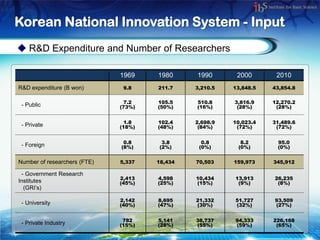
Korean National Innovation System - Input
 R&D Expenditure and Number of Researchers

                              1969    1980     1990       2000       2010
R&D expenditure (B won)        9.8    211.7    3,210.5   13,848.5   43,854.8

                                7.2   105.5    510.8     3,816.9    12,270.2
 - Public                     (73%)   (50%)    (16%)      (28%)      (28%)


                                1.8   102.4    2,698.9   10,023.4   31,489.6
 - Private                    (18%)   (48%)     (84%)     (72%)      (72%)


                               0.8     3.8       0.8       8.2       95.0
 - Foreign                    (8%)    (2%)      (0%)      (0%)       (0%)


Number of researchers (FTE)   5,337   18,434   70,503    159,973    345,912

 - Government Research
                              2,413   4,598    10,434    13,913     26,235
Institutes                    (45%)   (25%)    (15%)      (9%)       (8%)
  (GRI’s)

                              2,142   8,695    21,332    51,727     93,509
 - University                 (40%)   (47%)    (30%)     (32%)      (27%)


                               782    5,141    38,737    94,333     226,168
 - Private Industry           (15%)   (28%)    (55%)     (59%)       (65%)
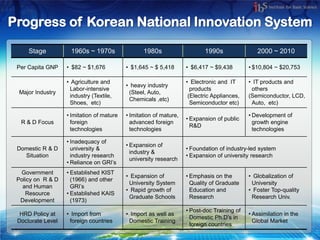
Progress of Korean National Innovation System

     Stage          1960s ~ 1970s                 1980s                    1990s                2000 ~ 2010

 Per Capita GNP    • $82 ~ $1,676          • $1,645 ~ $ 5,418       • $6,417 ~ $9,438        • $10,804 ~ $20,753

                   • Agriculture and                                • Electronic and IT      • IT products and
                                           • heavy industry
                    Labor-intensive                                   products                others
 Major Industry                             (Steel, Auto,
                    industry (Textile,                               (Electric Appliances,   (Semiconductor, LCD,
                                            Chemicals ,etc)
                    Shoes, etc)                                       Semiconductor etc)      Auto, etc)

                   • Imitation of mature   • Imitation of mature,                            • Development of
                                                                    • Expansion of public
  R & D Focus        foreign                 advanced foreign                                  growth engine
                                                                      R&D
                     technologies            technologies                                      technologies

                   • Inadequacy of
                                           • Expansion of
 Domestic R & D      university &                                   • Foundation of industry-led system
                                             industry &
   Situation         industry research                              • Expansion of university research
                                             university research
                   • Reliance on GRI’s
  Government       • Established KIST
                                           • Expansion of           • Emphasis on the        • Globalization of
 Policy on R & D     (1966) and other
                                            University System         Quality of Graduate     University
   and Human         GRI’s
                                           • Rapid growth of          Education and          • Foster Top-quality
    Resource       • Established KAIS
                                            Graduate Schools          Research                Research Univ.
  Development        (1973)
                                                                    • Post-doc Training of
  HRD Policy at    • Import from           • Import as well as                               • Assimilation in the
                                                                      Domestic Ph.D’s in
 Doctorate Level    foreign countries       Domestic Training                                  Global Market
                                                                      foreign countries
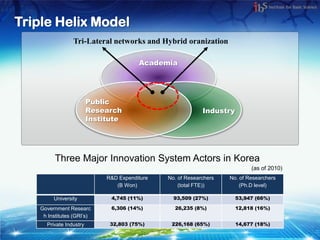
Triple Helix Model
                 Tri-Lateral networks and Hybrid oranization

                                         Academia


                         Public
                         Research                            Industry
                         Institute


          Three Major Innovation System Actors in Korea
                                                                             (as of 2010)
                              R&D Expenditure   No. of Researchers   No. of Researchers
                                 (B Won)            (total FTE))         (Ph.D level)

         University            4,745 (11%)        93,509 (27%)          53,947 (66%)

    Government Researc         6,306 (14%)        26,235 (8%)           12,818 (16%)
     h Institutes (GRI’s)
      Private Industry         32,803 (75%)      226,168 (65%)          14,677 (18%)
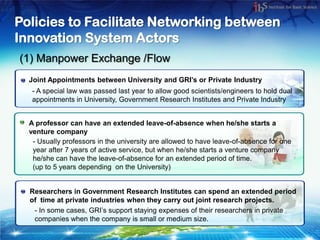
Policies to Facilitate Networking between
Innovation System Actors
(1) Manpower Exchange /Flow
  Joint Appointments between University and GRI’s or Private Industry
   - A special law was passed last year to allow good scientists/engineers to hold dual
   appointments in University, Government Research Institutes and Private Industry


  A professor can have an extended leave-of-absence when he/she starts a
  venture company
   - Usually professors in the university are allowed to have leave-of-absence for one
   year after 7 years of active service, but when he/she starts a venture company
   he/she can have the leave-of-absence for an extended period of time.
   (up to 5 years depending on the University)


  Researchers in Government Research Institutes can spend an extended period
  of time at private industries when they carry out joint research projects.
   - In some cases, GRI’s support staying expenses of their researchers in private
   companies when the company is small or medium size.
(2) Encourage Joint Research Activities between
University
   and Private Industry
 Some government research projects, especially on applied topics, require
 participation of private industry even when the Principal Investigator belongs to
 University or Government Research Institutes.
  - The participating industry can share the government project budget during the joint
  research. However, when the company makes a profit later on by applying the
  results of this joint project, they are required to pay back their research expenditure.


 Special tax incentive is given to the industry when they carry out the joint
 research project with university
   - Up to 50% of research expenditure can be deducted from the tax of the company
(3) Trust Building between University,
   Government Research Institutes and Industry

 A special council is established to discuss matters of mutual interest between
 university, government research institutes and private industry
  - Representatives of university, public research institutes, and private industry meet
  regularly along with government officials to discuss matters of mutual interest.


TLO’s (Technology Licensing Offices) are established in universities to facilitate
diffusion of university-invented technology to private industry
  - Government supports the establishment and operating budget of university TLO’s

Prof. Se-Jung Oh — Networking between Academia, Public Research Institutes and Industry - Korean Experiences

  • 1.
    Networking between Academia,Public Research Institutes and Industry ---Korean Experiences Prof. Se-Jung Oh President, Institute for Basic Science (Current) President, National Research Foundation of Korea (Previous) Professor of Physics, Seoul National University, Republic of Korea
  • 2.
    Miracle of KoreanEconomy  GNI per capita of Korea • Year 1953: $ 67/ yr  was one of the poorest countries in the world • Year 2006: $ 18,372 & Year 2010: $ 20,753 [ GNI per capita (1953 ~ 2008), nominal US $ ] 20,000 18,000 Asian Currency Crisis 16,000 14,000 12,000 10,000 8,000 6,000 4,000 2,000 0 Source : The Bank of Korea, http://ecos.bok.or.kr
  • 3.
    Korean National InnovationSystem - Input  R&D Expenditure and Number of Researchers 1969 1980 1990 2000 2010 R&D expenditure (B won) 9.8 211.7 3,210.5 13,848.5 43,854.8 7.2 105.5 510.8 3,816.9 12,270.2 - Public (73%) (50%) (16%) (28%) (28%) 1.8 102.4 2,698.9 10,023.4 31,489.6 - Private (18%) (48%) (84%) (72%) (72%) 0.8 3.8 0.8 8.2 95.0 - Foreign (8%) (2%) (0%) (0%) (0%) Number of researchers (FTE) 5,337 18,434 70,503 159,973 345,912 - Government Research 2,413 4,598 10,434 13,913 26,235 Institutes (45%) (25%) (15%) (9%) (8%) (GRI’s) 2,142 8,695 21,332 51,727 93,509 - University (40%) (47%) (30%) (32%) (27%) 782 5,141 38,737 94,333 226,168 - Private Industry (15%) (28%) (55%) (59%) (65%)
  • 4.
    Progress of KoreanNational Innovation System Stage 1960s ~ 1970s 1980s 1990s 2000 ~ 2010 Per Capita GNP • $82 ~ $1,676 • $1,645 ~ $ 5,418 • $6,417 ~ $9,438 • $10,804 ~ $20,753 • Agriculture and • Electronic and IT • IT products and • heavy industry Labor-intensive products others Major Industry (Steel, Auto, industry (Textile, (Electric Appliances, (Semiconductor, LCD, Chemicals ,etc) Shoes, etc) Semiconductor etc) Auto, etc) • Imitation of mature • Imitation of mature, • Development of • Expansion of public R & D Focus foreign advanced foreign growth engine R&D technologies technologies technologies • Inadequacy of • Expansion of Domestic R & D university & • Foundation of industry-led system industry & Situation industry research • Expansion of university research university research • Reliance on GRI’s Government • Established KIST • Expansion of • Emphasis on the • Globalization of Policy on R & D (1966) and other University System Quality of Graduate University and Human GRI’s • Rapid growth of Education and • Foster Top-quality Resource • Established KAIS Graduate Schools Research Research Univ. Development (1973) • Post-doc Training of HRD Policy at • Import from • Import as well as • Assimilation in the Domestic Ph.D’s in Doctorate Level foreign countries Domestic Training Global Market foreign countries
  • 5.
    Triple Helix Model Tri-Lateral networks and Hybrid oranization Academia Public Research Industry Institute Three Major Innovation System Actors in Korea (as of 2010) R&D Expenditure No. of Researchers No. of Researchers (B Won) (total FTE)) (Ph.D level) University 4,745 (11%) 93,509 (27%) 53,947 (66%) Government Researc 6,306 (14%) 26,235 (8%) 12,818 (16%) h Institutes (GRI’s) Private Industry 32,803 (75%) 226,168 (65%) 14,677 (18%)
  • 6.
    Policies to FacilitateNetworking between Innovation System Actors (1) Manpower Exchange /Flow Joint Appointments between University and GRI’s or Private Industry - A special law was passed last year to allow good scientists/engineers to hold dual appointments in University, Government Research Institutes and Private Industry A professor can have an extended leave-of-absence when he/she starts a venture company - Usually professors in the university are allowed to have leave-of-absence for one year after 7 years of active service, but when he/she starts a venture company he/she can have the leave-of-absence for an extended period of time. (up to 5 years depending on the University) Researchers in Government Research Institutes can spend an extended period of time at private industries when they carry out joint research projects. - In some cases, GRI’s support staying expenses of their researchers in private companies when the company is small or medium size.
  • 7.
    (2) Encourage JointResearch Activities between University and Private Industry Some government research projects, especially on applied topics, require participation of private industry even when the Principal Investigator belongs to University or Government Research Institutes. - The participating industry can share the government project budget during the joint research. However, when the company makes a profit later on by applying the results of this joint project, they are required to pay back their research expenditure. Special tax incentive is given to the industry when they carry out the joint research project with university - Up to 50% of research expenditure can be deducted from the tax of the company
  • 8.
    (3) Trust Buildingbetween University, Government Research Institutes and Industry A special council is established to discuss matters of mutual interest between university, government research institutes and private industry - Representatives of university, public research institutes, and private industry meet regularly along with government officials to discuss matters of mutual interest. TLO’s (Technology Licensing Offices) are established in universities to facilitate diffusion of university-invented technology to private industry - Government supports the establishment and operating budget of university TLO’s