Numerical methods
(MATH-352)
Introduction
Dr. Hina Dutt
hina.dutt@seecs.edu.pk
SEECS-NUST
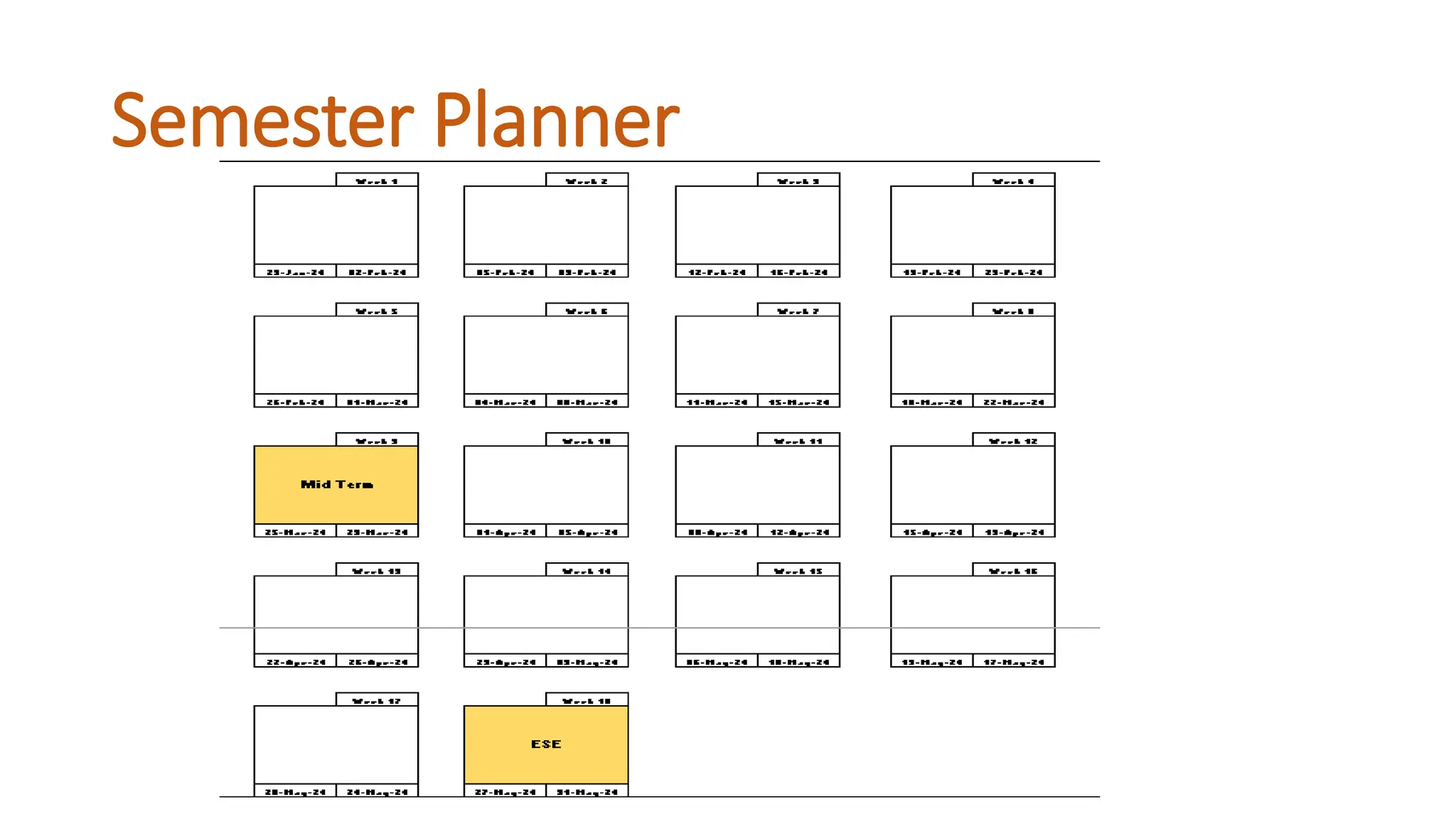
Semester Planner
Course Logistics
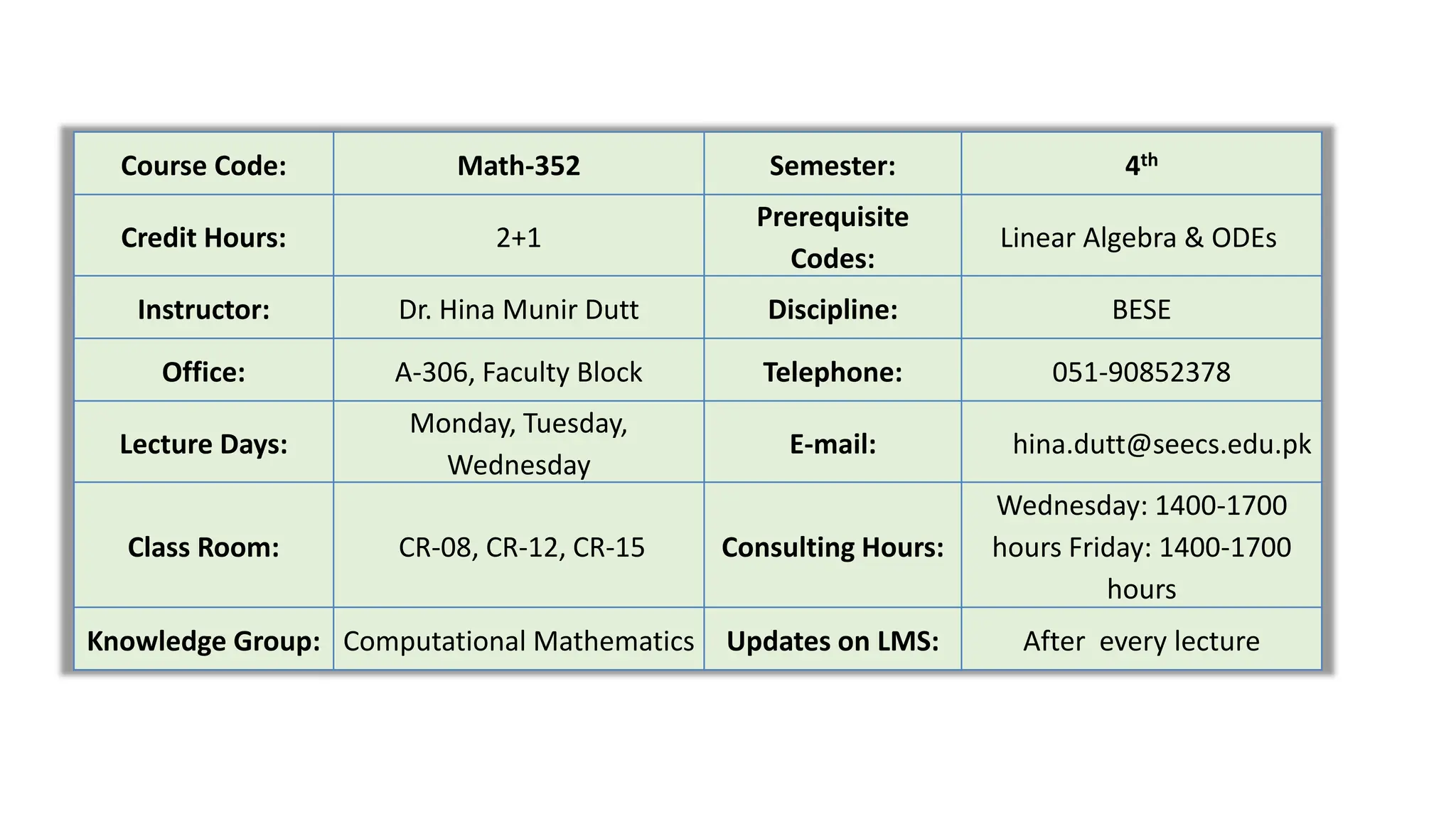
Course Code: Math-352 Semester: 4th
Credit Hours: 2+1
Prerequisite
Codes:
Linear Algebra & ODEs
Instructor: Dr. Hina Munir Dutt Discipline: BESE
Office: A-306, Faculty Block Telephone: 051-90852378
Lecture Days:
Monday, Tuesday,
Wednesday
E-mail: hina.dutt@seecs.edu.pk
Class Room: CR-08, CR-12, CR-15 Consulting Hours:
Wednesday: 1400-1700
hours Friday: 1400-1700
hours
Knowledge Group: Computational Mathematics Updates on LMS: After every lecture
Course Description
The course includes the study of numerical
techniques to solve nonlinear problem. The
numerical data is examined using different type of
interpolations. The concept of curve fitting is also
introduced in this subject. Numerical techniques are
also discussed to solve nonlinear ordinary
differential equations.
Course Objectives
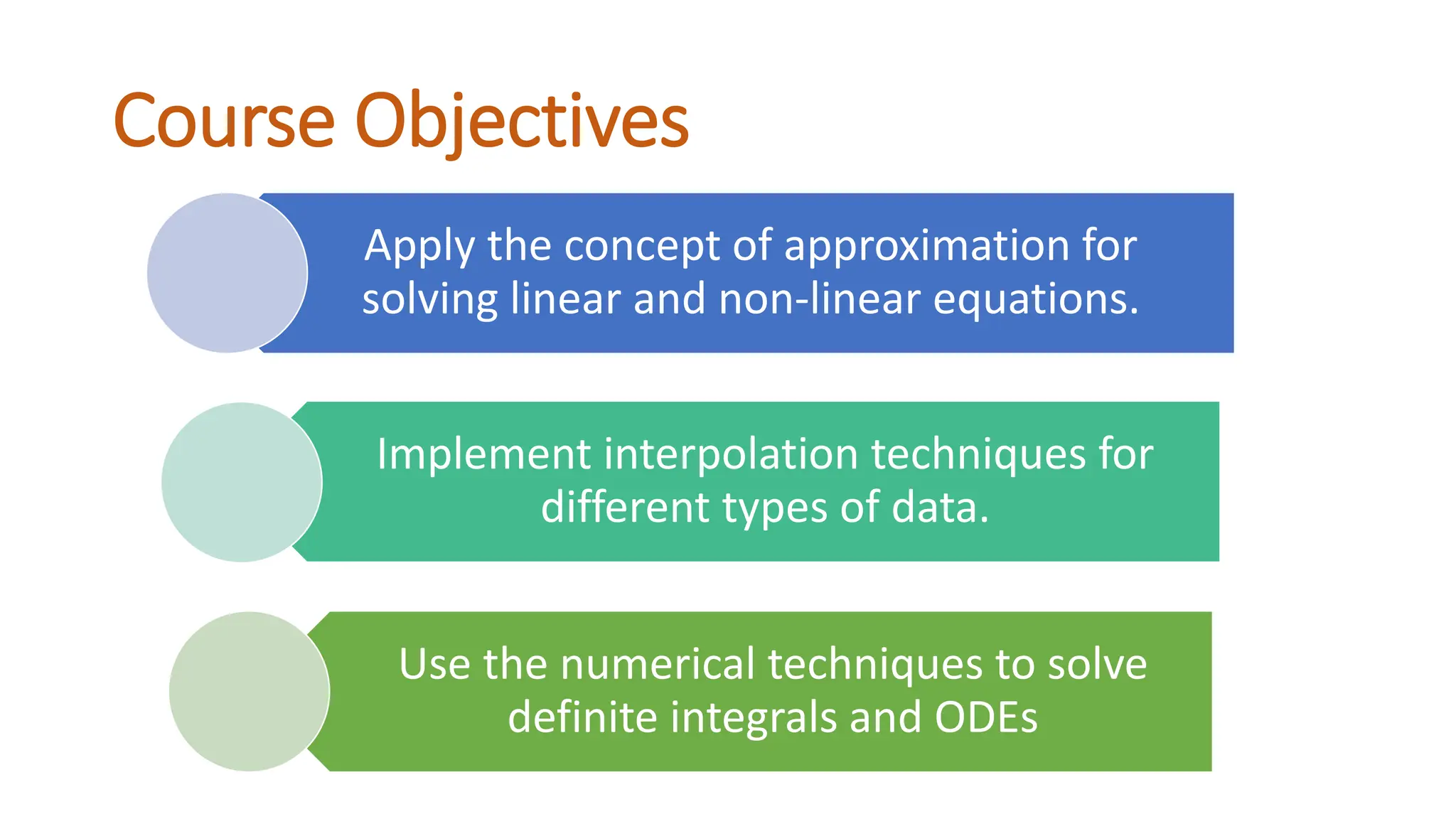
Apply the concept of approximation for
solving linear and non-linear equations.
Implement interpolation techniques for
different types of data.
Use the numerical techniques to solve
definite integrals and ODEs
Course Learning Outcomes
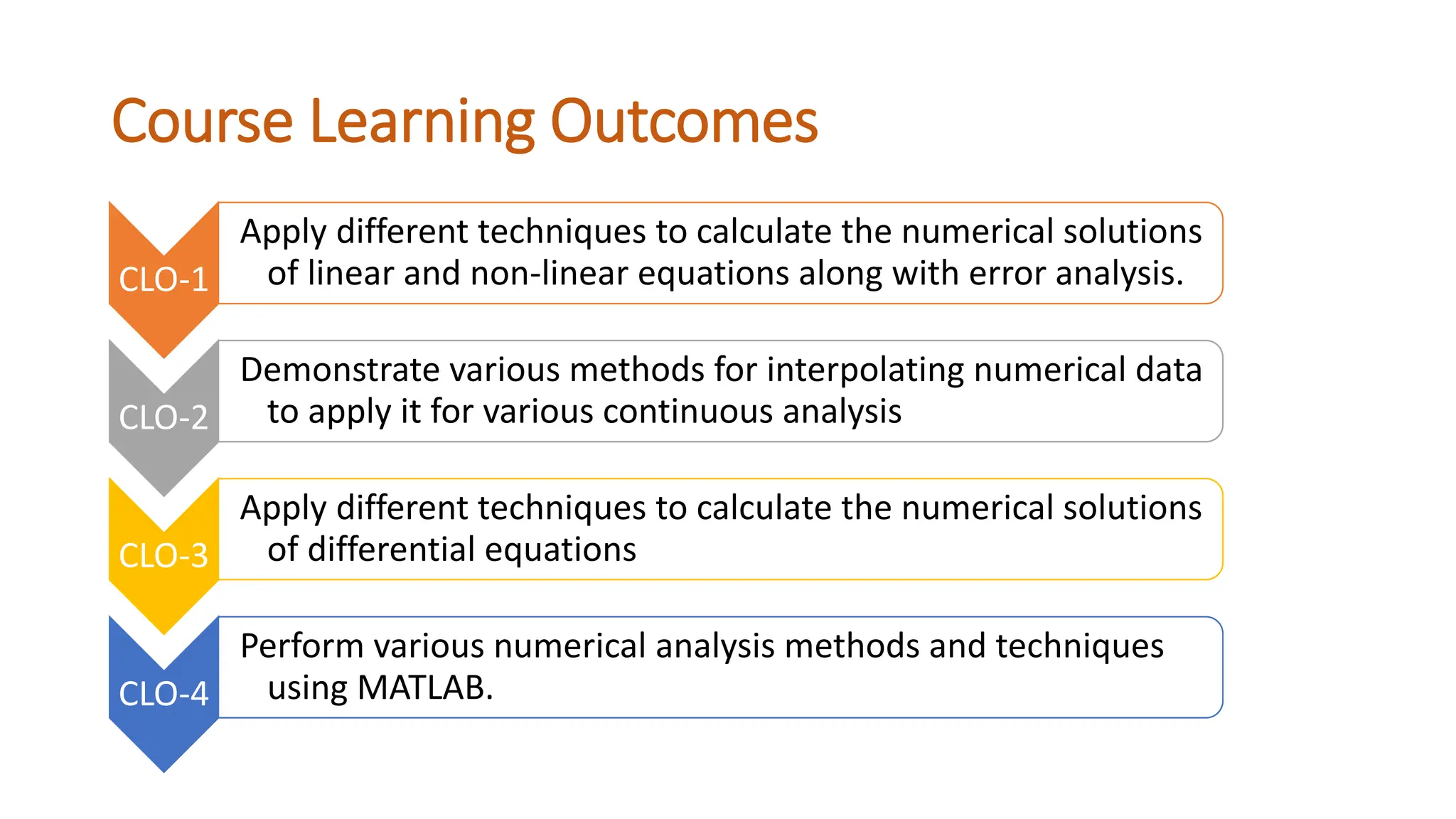
CLO-1
Apply different techniques to calculate the numerical solutions
of linear and non-linear equations along with error analysis.
CLO-2
Demonstrate various methods for interpolating numerical data
to apply it for various continuous analysis
CLO-3
Apply different techniques to calculate the numerical solutions
of differential equations
CLO-4
Perform various numerical analysis methods and techniques
using MATLAB.
Program Learning Outcomes
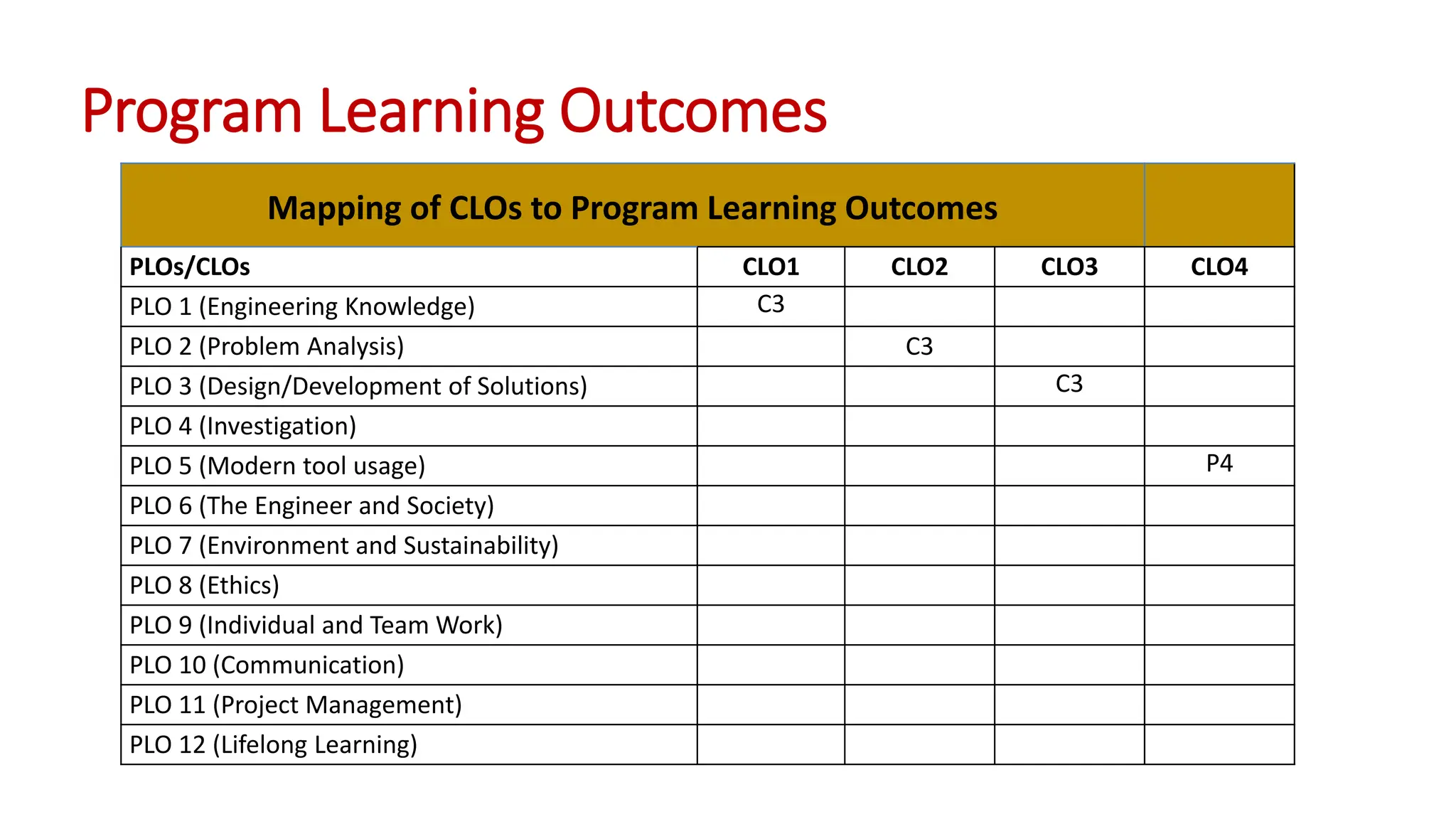
Mapping of CLOs to Program Learning Outcomes
PLOs/CLOs CLO1 CLO2 CLO3 CLO4
PLO 1 (Engineering Knowledge) C3
PLO 2 (Problem Analysis) C3
PLO 3 (Design/Development of Solutions) C3
PLO 4 (Investigation)
PLO 5 (Modern tool usage) P4
PLO 6 (The Engineer and Society)
PLO 7 (Environment and Sustainability)
PLO 8 (Ethics)
PLO 9 (Individual and Team Work)
PLO 10 (Communication)
PLO 11 (Project Management)
PLO 12 (Lifelong Learning)
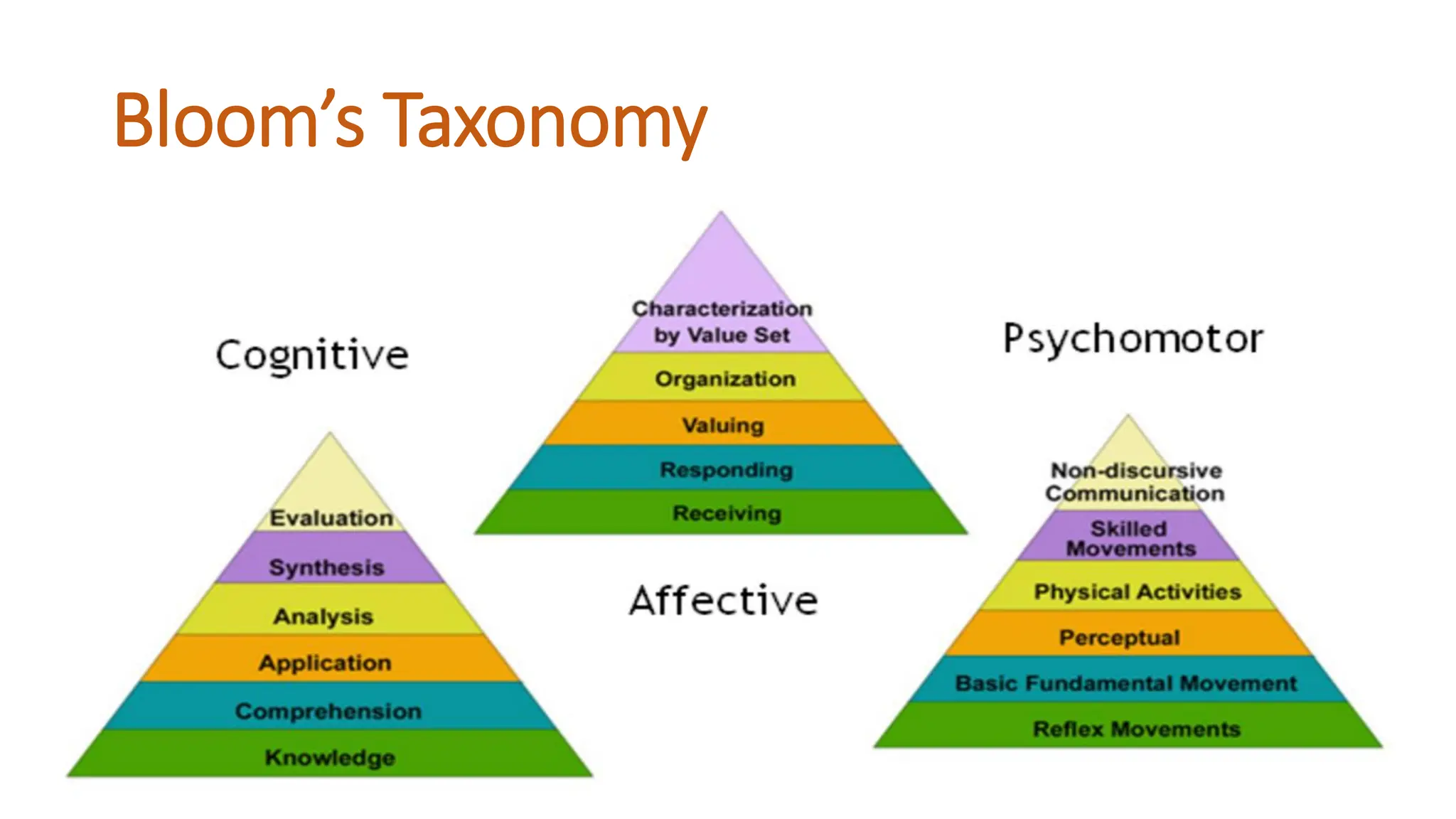
Bloom’s Taxonomy
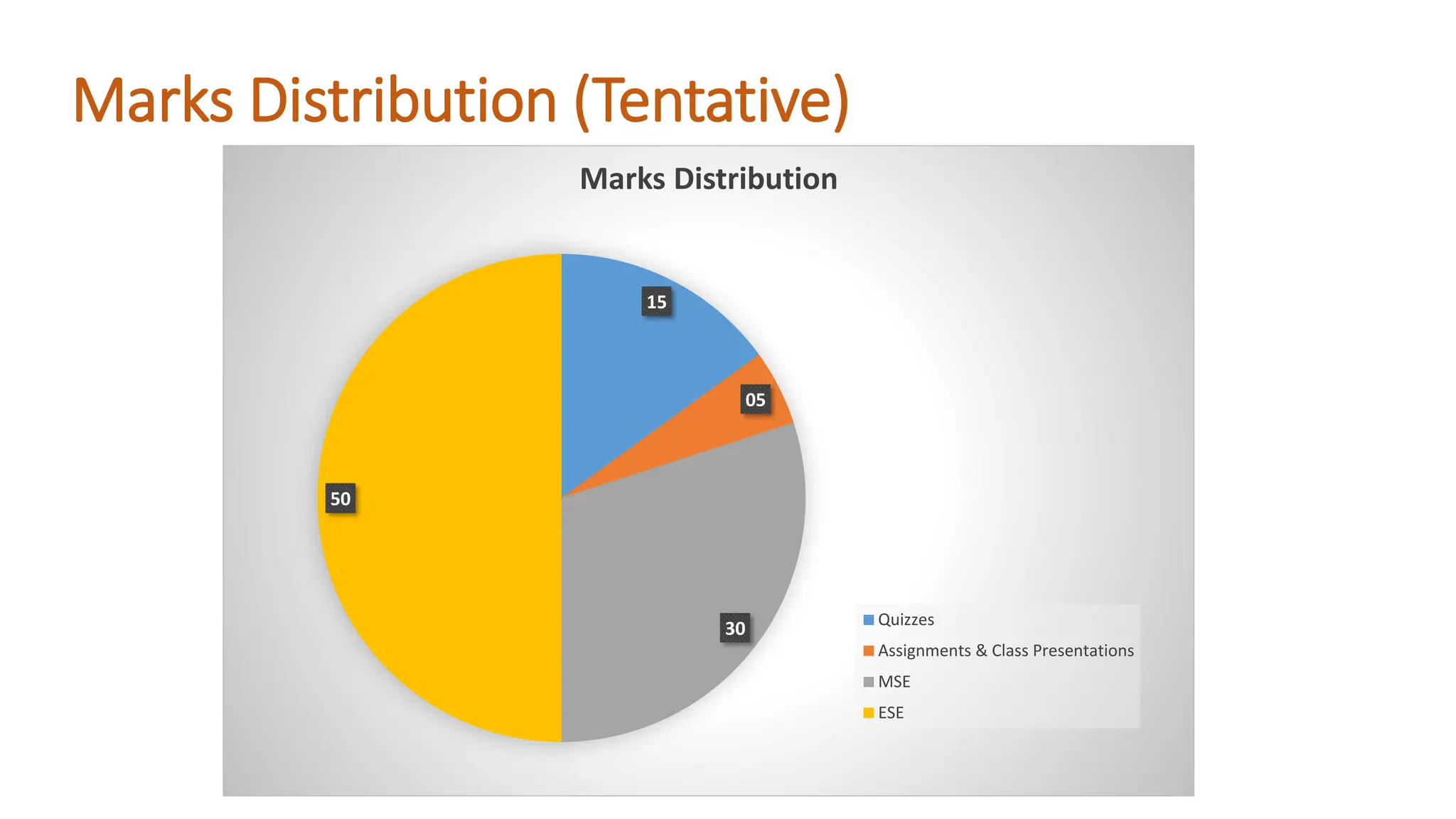
Marks Distribution (Tentative)
15
05
30
50
Marks Distribution
Quizzes
Assignments & Class Presentations
MSE
ESE
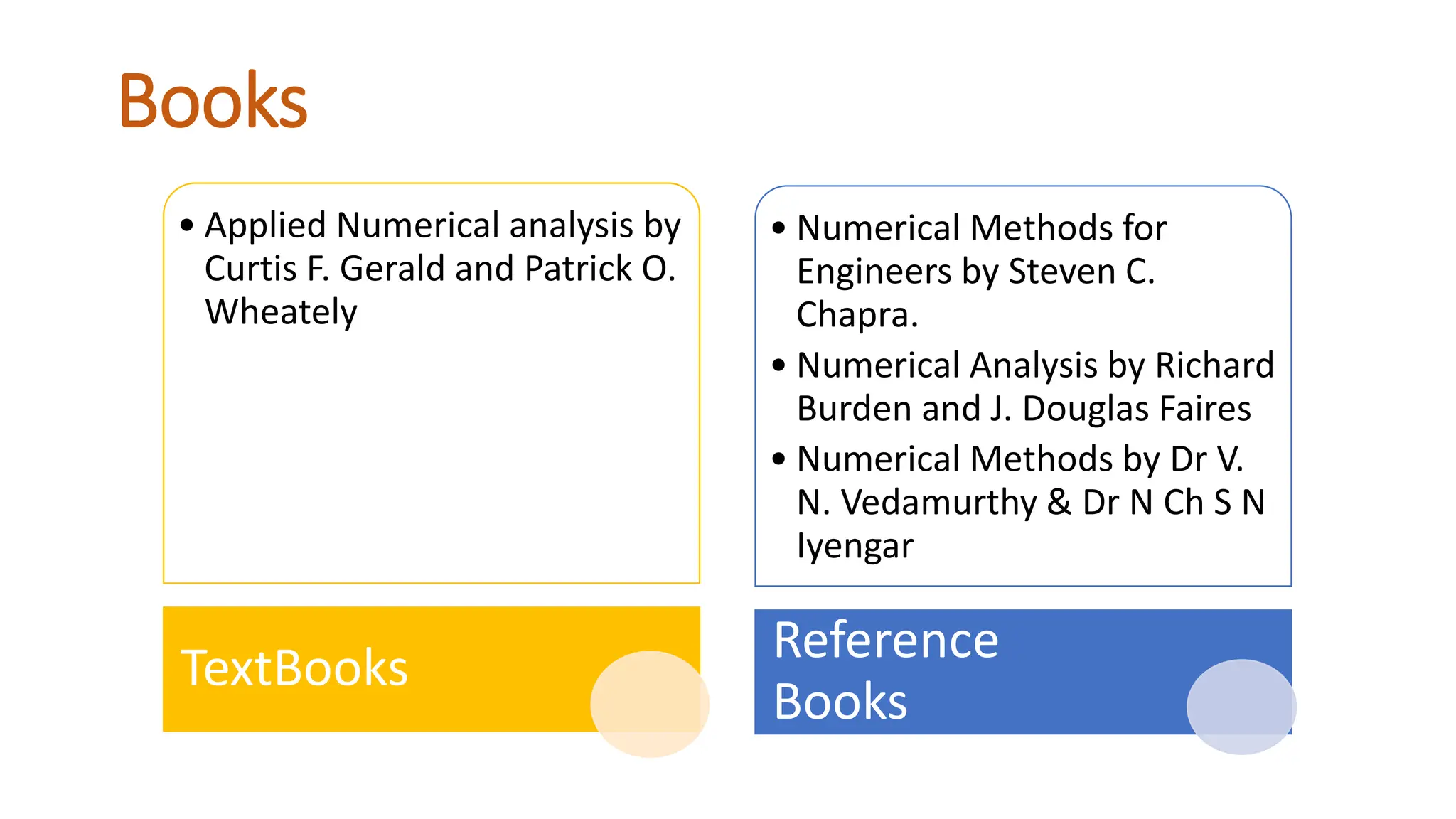
Books
• Applied Numerical analysis by
Curtis F. Gerald and Patrick O.
Wheately
TextBooks
• Numerical Methods for
Engineers by Steven C.
Chapra.
• Numerical Analysis by Richard
Burden and J. Douglas Faires
• Numerical Methods by Dr V.
N. Vedamurthy & Dr N Ch S N
Iyengar
Reference
Books
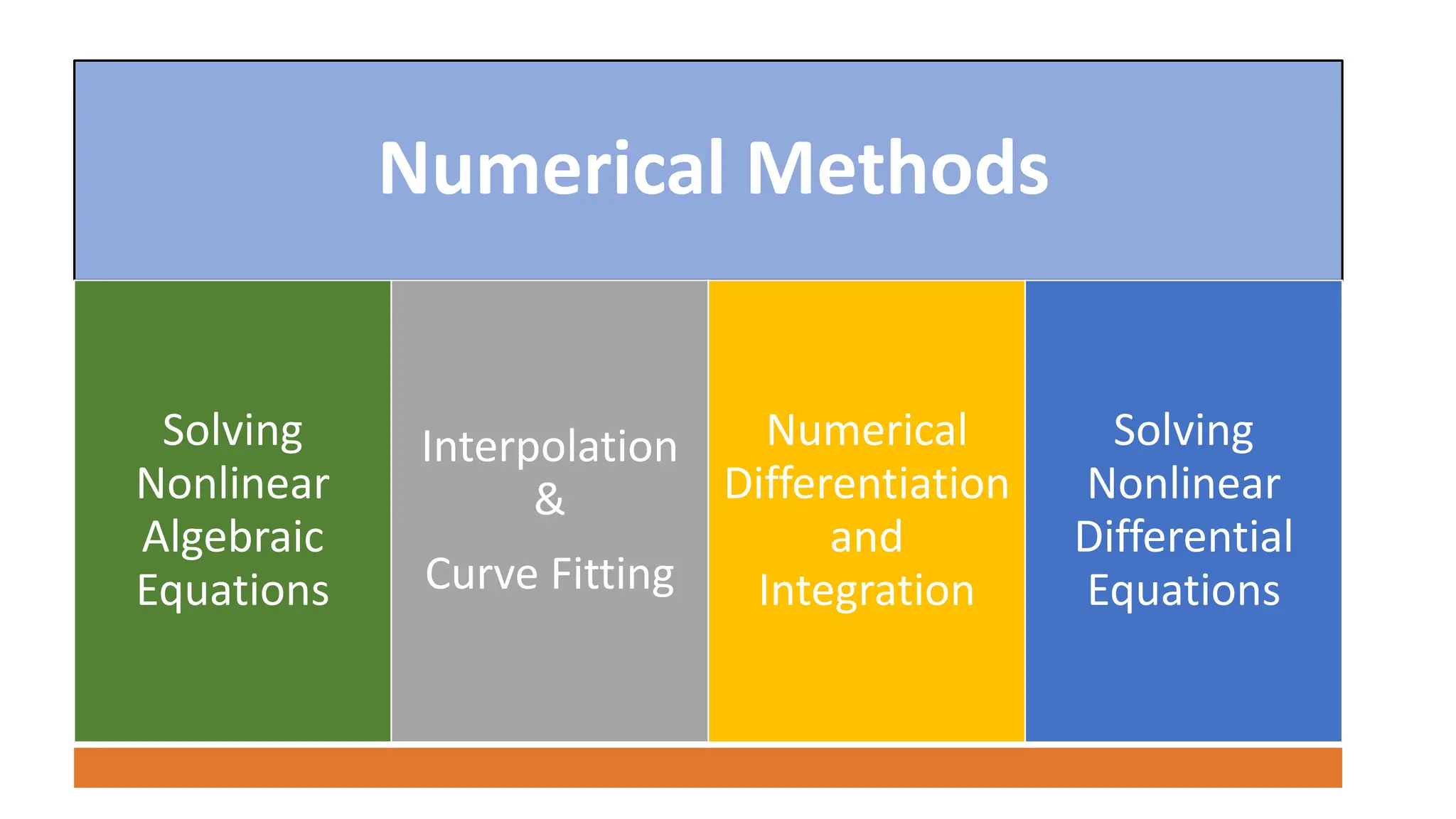
Numerical Methods
Solving
Nonlinear
Algebraic
Equations
Interpolation
&
Curve Fitting
Numerical
Differentiation
and
Integration
Solving
Nonlinear
Differential
Equations
What are
Numerical Methods
Numerical Methods
Numerical methods are techniques by which
mathematical problems are formulated so that they can
be solved with arithmetic operations.
Because digital computers excel at performing such
operations, numerical methods are sometimes referred
to as computer mathematics.
Why Numerical
Methods
Solving Complex Equations
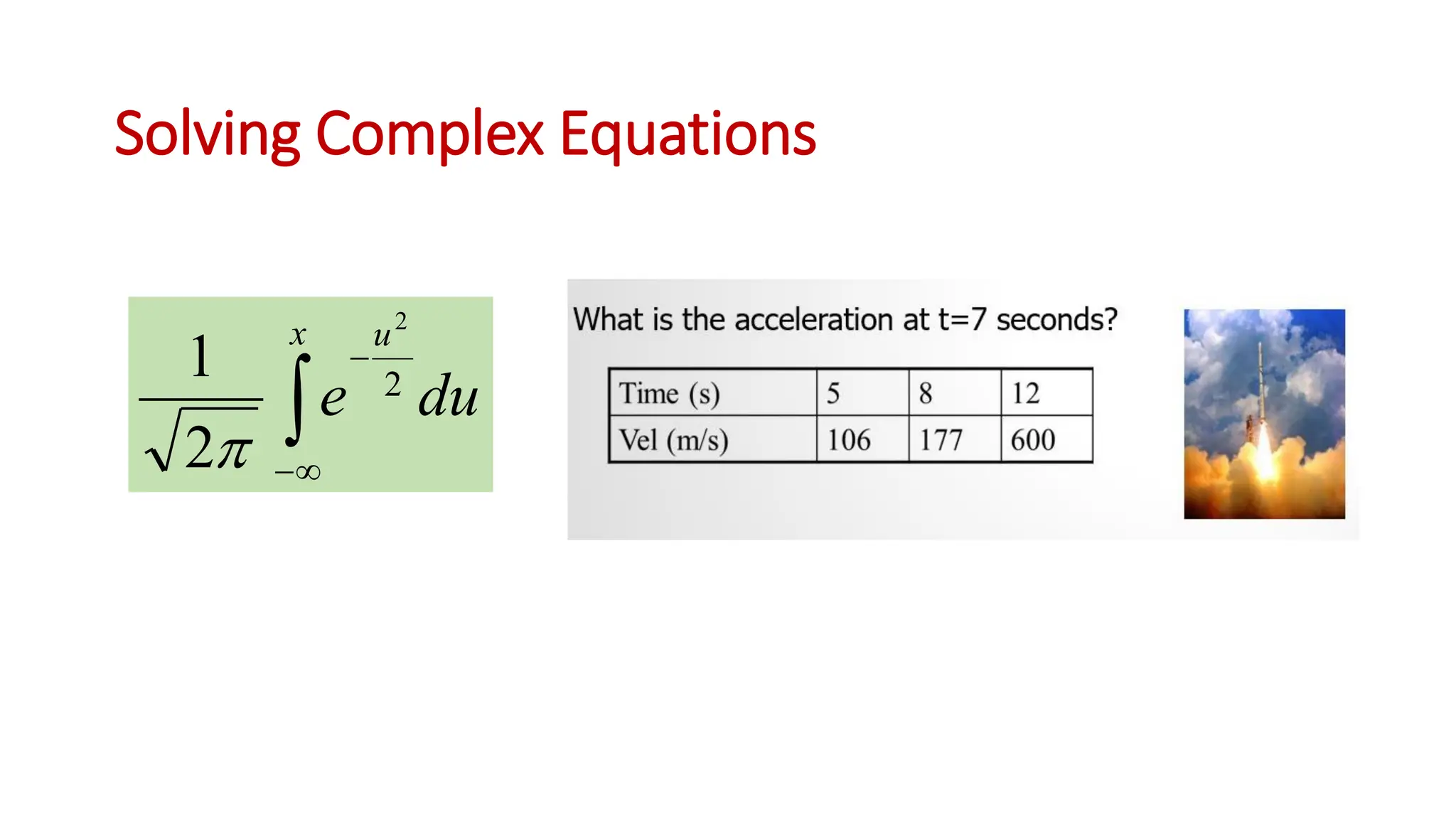
• Many mathematical problems cannot be solved analytically
or have no closed-form solutions. Numerical methods
provide techniques to approximate solutions for such
problems.
• Numerical Methods allow us to solve complex equations,
differential equations, optimization problems, and systems of
equations, which are common in physics, engineering,
economics, and other disciplines.
Solving Complex Equations
du
e
x u

−
−
2
2
2
1

Handling Large-Scale Computations
• Numerical methods enable the efficient handling of large-
scale computations and extensive data sets. They provide
algorithms that can process and analyze vast amounts of
data, making it possible to solve problems that would be
impractical or impossible to tackle manually.
Simulating Real-World Phenomena
• Numerical methods play a crucial role in simulating and
modeling real-world phenomena. They allow scientists and
engineers to study physical systems, predict behavior, and
understand complex interactions. Applications range from
weather forecasting and fluid dynamics to structural analysis
and electrical circuit simulations.
Designing own Computer Programs
• You often use commercially available prepackaged computer
programs that involve numerical methods. The intelligent use
of these programs is often predicated on knowledge of the
basic theory underlying these methods.
• Many problems cannot be approached using canned
programs. If you are conversant with numerical methods and
are adept at computer programming, you can design your
own programs to solve problems.

1. Introduction(NM_numerical_methods.pdf

  • 1.
    Numerical methods (MATH-352) Introduction Dr. HinaDutt hina.dutt@seecs.edu.pk SEECS-NUST
  • 2.
  • 3.
  • 4.
    Course Code: Math-352Semester: 4th Credit Hours: 2+1 Prerequisite Codes: Linear Algebra & ODEs Instructor: Dr. Hina Munir Dutt Discipline: BESE Office: A-306, Faculty Block Telephone: 051-90852378 Lecture Days: Monday, Tuesday, Wednesday E-mail: hina.dutt@seecs.edu.pk Class Room: CR-08, CR-12, CR-15 Consulting Hours: Wednesday: 1400-1700 hours Friday: 1400-1700 hours Knowledge Group: Computational Mathematics Updates on LMS: After every lecture
  • 5.
    Course Description The courseincludes the study of numerical techniques to solve nonlinear problem. The numerical data is examined using different type of interpolations. The concept of curve fitting is also introduced in this subject. Numerical techniques are also discussed to solve nonlinear ordinary differential equations.
  • 6.
    Course Objectives Apply theconcept of approximation for solving linear and non-linear equations. Implement interpolation techniques for different types of data. Use the numerical techniques to solve definite integrals and ODEs
  • 7.
    Course Learning Outcomes CLO-1 Applydifferent techniques to calculate the numerical solutions of linear and non-linear equations along with error analysis. CLO-2 Demonstrate various methods for interpolating numerical data to apply it for various continuous analysis CLO-3 Apply different techniques to calculate the numerical solutions of differential equations CLO-4 Perform various numerical analysis methods and techniques using MATLAB.
  • 8.
    Program Learning Outcomes Mappingof CLOs to Program Learning Outcomes PLOs/CLOs CLO1 CLO2 CLO3 CLO4 PLO 1 (Engineering Knowledge) C3 PLO 2 (Problem Analysis) C3 PLO 3 (Design/Development of Solutions) C3 PLO 4 (Investigation) PLO 5 (Modern tool usage) P4 PLO 6 (The Engineer and Society) PLO 7 (Environment and Sustainability) PLO 8 (Ethics) PLO 9 (Individual and Team Work) PLO 10 (Communication) PLO 11 (Project Management) PLO 12 (Lifelong Learning)
  • 9.
  • 10.
    Marks Distribution (Tentative) 15 05 30 50 MarksDistribution Quizzes Assignments & Class Presentations MSE ESE
  • 11.
    Books • Applied Numericalanalysis by Curtis F. Gerald and Patrick O. Wheately TextBooks • Numerical Methods for Engineers by Steven C. Chapra. • Numerical Analysis by Richard Burden and J. Douglas Faires • Numerical Methods by Dr V. N. Vedamurthy & Dr N Ch S N Iyengar Reference Books
  • 12.
  • 13.
  • 14.
    Numerical Methods Numerical methodsare techniques by which mathematical problems are formulated so that they can be solved with arithmetic operations. Because digital computers excel at performing such operations, numerical methods are sometimes referred to as computer mathematics.
  • 15.
  • 16.
    Solving Complex Equations •Many mathematical problems cannot be solved analytically or have no closed-form solutions. Numerical methods provide techniques to approximate solutions for such problems. • Numerical Methods allow us to solve complex equations, differential equations, optimization problems, and systems of equations, which are common in physics, engineering, economics, and other disciplines.
  • 17.
    Solving Complex Equations du e xu  − − 2 2 2 1 
  • 18.
    Handling Large-Scale Computations •Numerical methods enable the efficient handling of large- scale computations and extensive data sets. They provide algorithms that can process and analyze vast amounts of data, making it possible to solve problems that would be impractical or impossible to tackle manually.
  • 19.
    Simulating Real-World Phenomena •Numerical methods play a crucial role in simulating and modeling real-world phenomena. They allow scientists and engineers to study physical systems, predict behavior, and understand complex interactions. Applications range from weather forecasting and fluid dynamics to structural analysis and electrical circuit simulations.
  • 20.
    Designing own ComputerPrograms • You often use commercially available prepackaged computer programs that involve numerical methods. The intelligent use of these programs is often predicated on knowledge of the basic theory underlying these methods. • Many problems cannot be approached using canned programs. If you are conversant with numerical methods and are adept at computer programming, you can design your own programs to solve problems.