1.1 INTRODUCTION TOBUILDING MATERIALS
Mr. DAKSHESH S. GURAV
ME (STRUCTURES)
ASST. PROF.
DEPARTMENT OF CIVIL ENGINEERING
DATTA MEGHE COLLEGE OF ENGINEERING, AIROLI Reference Books:
Building Materials & Construction(Saurabh Kumar Soni)
2.
Classification of materials
A.Rocks , Soils, Stones, Aggregates
B. Clay, Lime, Mortar
C. Cement, Concrete
D.Timber and Timber Products
E. Miscellaneous Materials: Metals, Glass Plastic, Gypsum, Gypsum
Plaster (POP), Bitumen or Asphalt, Asbestos and Adhesives
3.
Types of Rocks
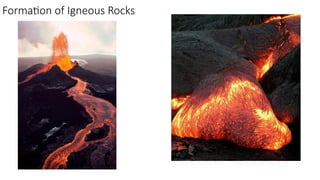
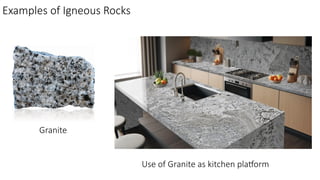
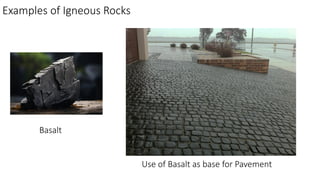
1.Igneous Rocks: Formed from the solidification of molten matter called
magma in surface of the earth or above it. (Examples: Granite, Basalt,
Diorite, Obsidian, Pumice, Pegmatite)
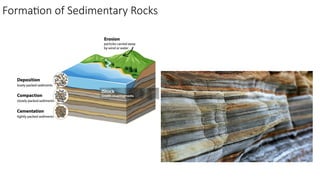
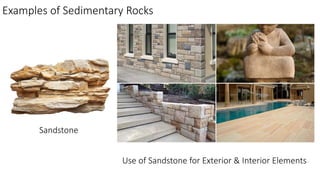
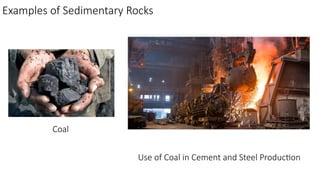
2. Sedimentary Rocks: Formed from accumulation of weathered deposits of
igneous rocks due to action of natural forces such as wind and water
(Examples: Sandstone, Limestone, Coal, Shale, Rock salt, Quartz)
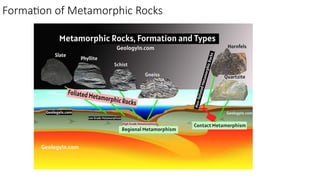
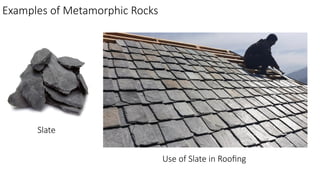
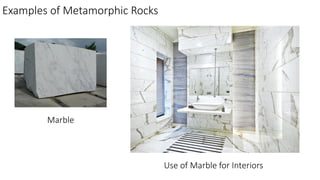
3. Metamorphic Rocks: Formed by changes in physical or chemical properties
of igneous or sedimentary rocks by the action of intense pressure or heat
(Examples: Slate, Schist, Gneiss, Marble, Anthracite)
Stone:
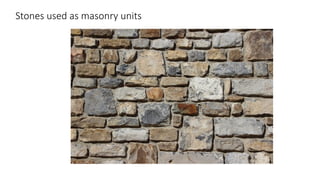
Stones are smaller size rocks finished or processed for use in construction
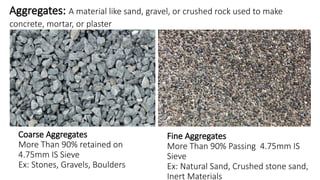
Aggregates: A materiallike sand, gravel, or crushed rock used to make
concrete, mortar, or plaster
Coarse Aggregates
More Than 90% retained on
4.75mm IS Sieve
Ex: Stones, Gravels, Boulders
Fine Aggregates
More Than 90% Passing 4.75mm IS
Sieve
Ex: Natural Sand, Crushed stone sand,
Inert Materials
21.
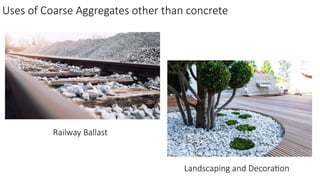
Uses of CoarseAggregates other than concrete
Landscaping and Decoration
Railway Ballast
22.
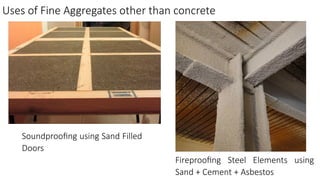
Uses of FineAggregates other than concrete
Fireproofing Steel Elements using
Sand + Cement + Asbestos
Soundproofing using Sand Filled
Doors
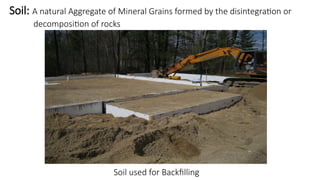
Soil used forBackfilling
Soil: A natural Aggregate of Mineral Grains formed by the disintegration or
decomposition of rocks
25.
Clay: Microscopic andsub-microscopic particles of size less than 0.002mm
derived from chemical decomposition and disintegration of Igneous rocks
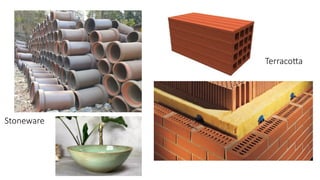
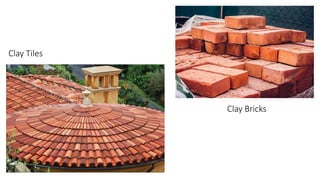
Clay Products: Clay when moulded in desired shapes, then dried, then burned
gives various products in building industry
Examples:
Stoneware, Terracotta, Earthenware, Tiles (Common tiles, Encaustic Tiles, Patent
Tiles), Bricks (Clay bricks, heavy duty bricks, Common Burnt Clay bricks, Hollow
Bricks, Perforated bricks, Fire Bricks/refractory bricks, Soda Lime Bricks
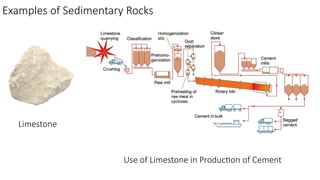
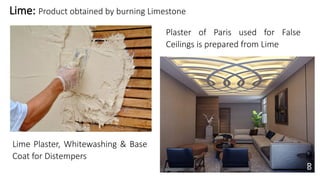
Lime: Product obtainedby burning Limestone
Lime Plaster, Whitewashing & Base
Coat for Distempers
Plaster of Paris used for False
Ceilings is prepared from Lime
29.
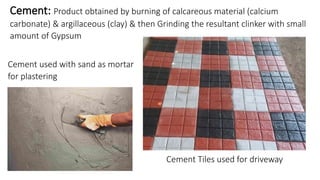
Cement: Product obtainedby burning of calcareous material (calcium
carbonate) & argillaceous (clay) & then Grinding the resultant clinker with small
amount of Gypsum
Cement used with sand as mortar
for plastering
Cement Tiles used for driveway
30.
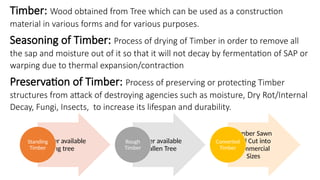
Timber: Wood obtainedfrom Tree which can be used as a construction
material in various forms and for various purposes.
Timber available
in living tree
Standing
Timber
Timber available
in fallen Tree
Rough
Timber
Timber Sawn
and Cut into
commercial
Sizes
Converted
Timber
Seasoning of Timber: Process of drying of Timber in order to remove all
the sap and moisture out of it so that it will not decay by fermentation of SAP or
warping due to thermal expansion/contraction
Preservation of Timber: Process of preserving or protecting Timber
structures from attack of destroying agencies such as moisture, Dry Rot/Internal
Decay, Fungi, Insects, to increase its lifespan and durability.
31.
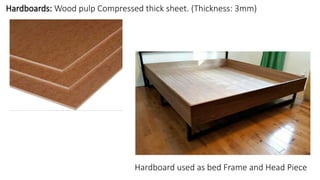
Hardboards: Wood pulpCompressed thick sheet. (Thickness: 3mm)
Hardboard used as bed Frame and Head Piece
32.
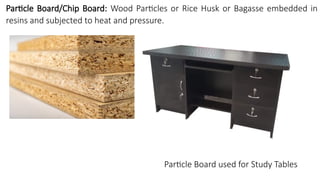
Particle Board/Chip Board:Wood Particles or Rice Husk or Bagasse embedded in
resins and subjected to heat and pressure.
Particle Board used for Study Tables
33.
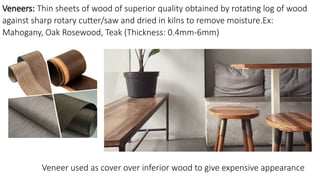
Veneers: Thin sheetsof wood of superior quality obtained by rotating log of wood
against sharp rotary cutter/saw and dried in kilns to remove moisture.Ex:
Mahogany, Oak Rosewood, Teak (Thickness: 0.4mm-6mm)
Veneer used as cover over inferior wood to give expensive appearance
34.
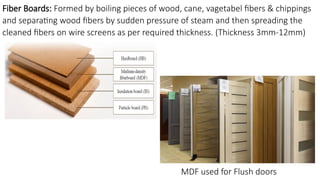
Fiber Boards: Formedby boiling pieces of wood, cane, vagetabel fibers & chippings
and separating wood fibers by sudden pressure of steam and then spreading the
cleaned fibers on wire screens as per required thickness. (Thickness 3mm-12mm)
MDF used for Flush doors
35.
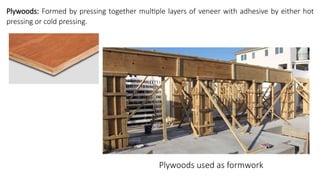
Plywoods: Formed bypressing together multiple layers of veneer with adhesive by either hot
pressing or cold pressing.
Plywoods used as formwork
36.
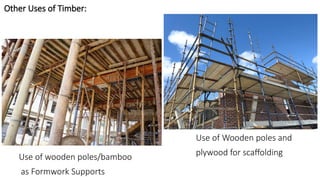
Other Uses ofTimber:
Use of wooden poles/bamboo
as Formwork Supports
Use of Wooden poles and
plywood for scaffolding
37.
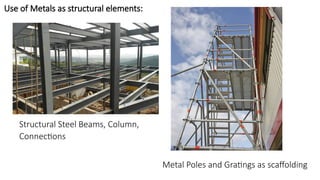
Use of Metalsas structural elements:
Structural Steel Beams, Column,
Connections
Metal Poles and Gratings as scaffolding
38.
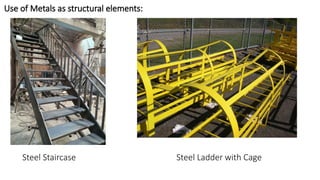
Use of Metalsas structural elements:
Steel Staircase Steel Ladder with Cage
39.
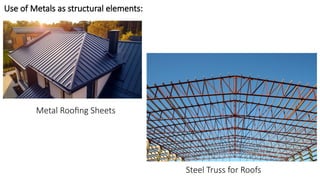
Use of Metalsas structural elements:
Metal Roofing Sheets
Steel Truss for Roofs
40.
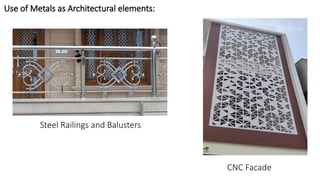
Use of Metalsas Architectural elements:
Steel Railings and Balusters
CNC Facade
41.
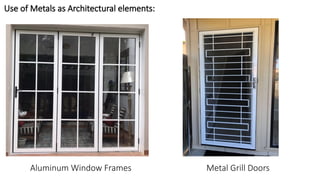
Use of Metalsas Architectural elements:
Aluminum Window Frames Metal Grill Doors
42.
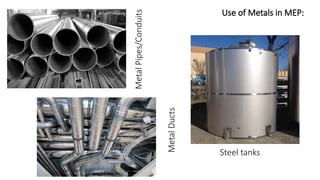
Use of Metalsin MEP:
Metal
Pipes/Conduits
Steel tanks
Metal
Ducts
43.
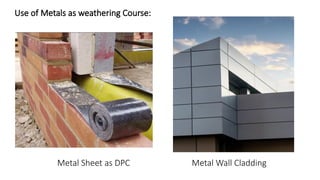
Use of Metalsas weathering Course:
Metal Sheet as DPC Metal Wall Cladding
44.
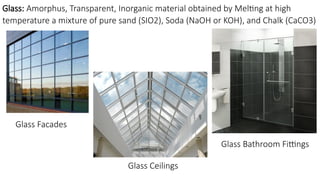
Glass: Amorphus, Transparent,Inorganic material obtained by Melting at high
temperature a mixture of pure sand (SIO2), Soda (NaOH or KOH), and Chalk (CaCO3)
Glass Facades
Glass Ceilings
Glass Bathroom Fittings
45.
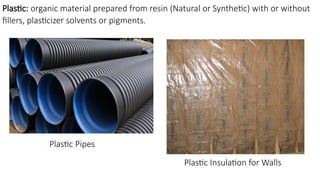
Plastic: organic materialprepared from resin (Natural or Synthetic) with or without
fillers, plasticizer solvents or pigments.
Plastic Pipes
Plastic Insulation for Walls
46.
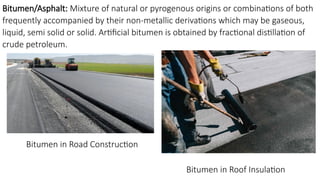
Bitumen/Asphalt: Mixture ofnatural or pyrogenous origins or combinations of both
frequently accompanied by their non-metallic derivations which may be gaseous,
liquid, semi solid or solid. Artificial bitumen is obtained by fractional distillation of
crude petroleum.
Bitumen in Road Construction
Bitumen in Roof Insulation
47.
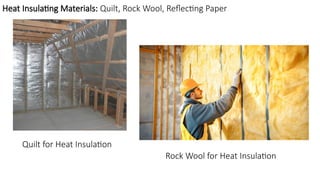
Heat Insulating Materials:Quilt, Rock Wool, Reflecting Paper
Quilt for Heat Insulation
Rock Wool for Heat Insulation
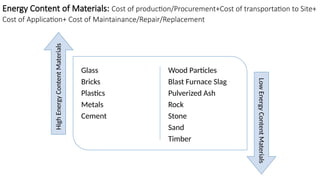
Energy Content ofMaterials: Cost of production/Procurement+Cost of transportation to Site+
Cost of Application+ Cost of Maintainance/Repair/Replacement
Glass
Bricks
Plastics
Metals
Cement
Wood Particles
Blast Furnace Slag
Pulverized Ash
Rock
Stone
Sand
Timber
High
Energy
Content
Materials
Low
Energy
Content
Materials
50.
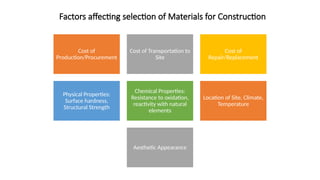
Factors affecting selectionof Materials for Construction
Cost of
Production/Procurement
Cost of Transportation to
Site
Cost of
Repair/Replacement
Physical Properties:
Surface hardness,
Structural Strength
Chemical Properties:
Resistance to oxidation,
reactivity with natural
elements
Location of Site, Climate,
Temperature
Aesthetic Appearance