LIBRARY AS PLACE Instructor: Alex Cohen Diana Edmonds   [email_address] CILIP Workshop JAN. 2009
This Workshop Is Brought to You By CILIP The Chartered Institute of Library and Information Professionals is the leading professional body for librarians, information specialists and knowledge managers.  CILIP forms a community of around 36,000 people engaged in library and information work, of whom approximately 21,000 are CILIP members and about 15,000 are regular customers of CILIP Enterprises.
Introductions Aaron Cohen Associates, LTD - Library Consultants Alex Cohen, MLS   Diana Edmonds, MBE Over the last 40 years, Aaron Cohen Associates has worked on numerous library projects including: New York Public Library, NY Boston Public Library, MA Columbus Public Library, GA Chicago Public Library, IL Atlanta-Fulton Public Library System, GA University of Illinois University of California Stanford University  Our international work includes: The National Library of Singapore, completed in 2004; The National Library of Greece NATO King Abdullah University of Science and Industry Library, Saudi Arabia.
And You? Introduction to Attendees
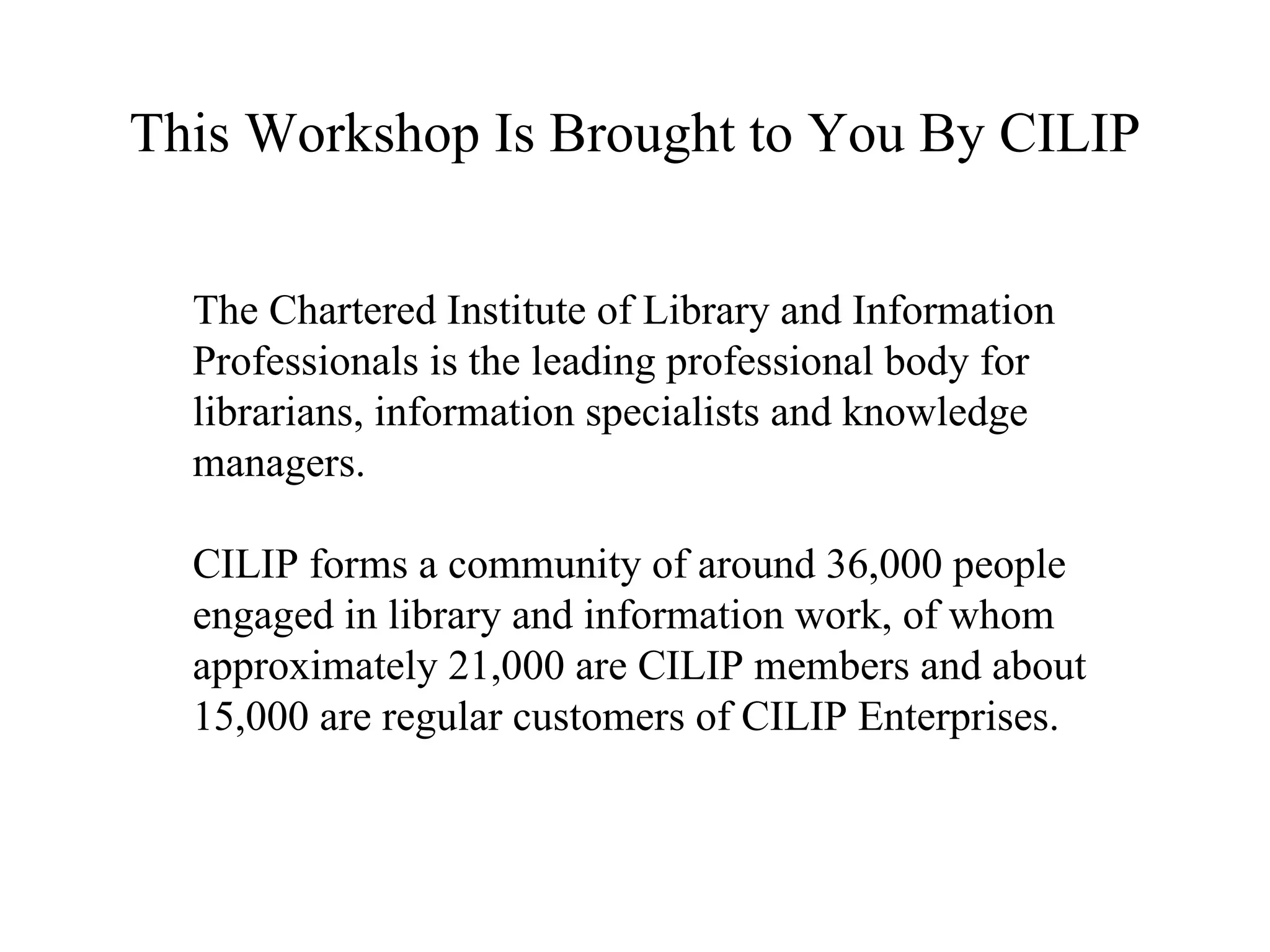
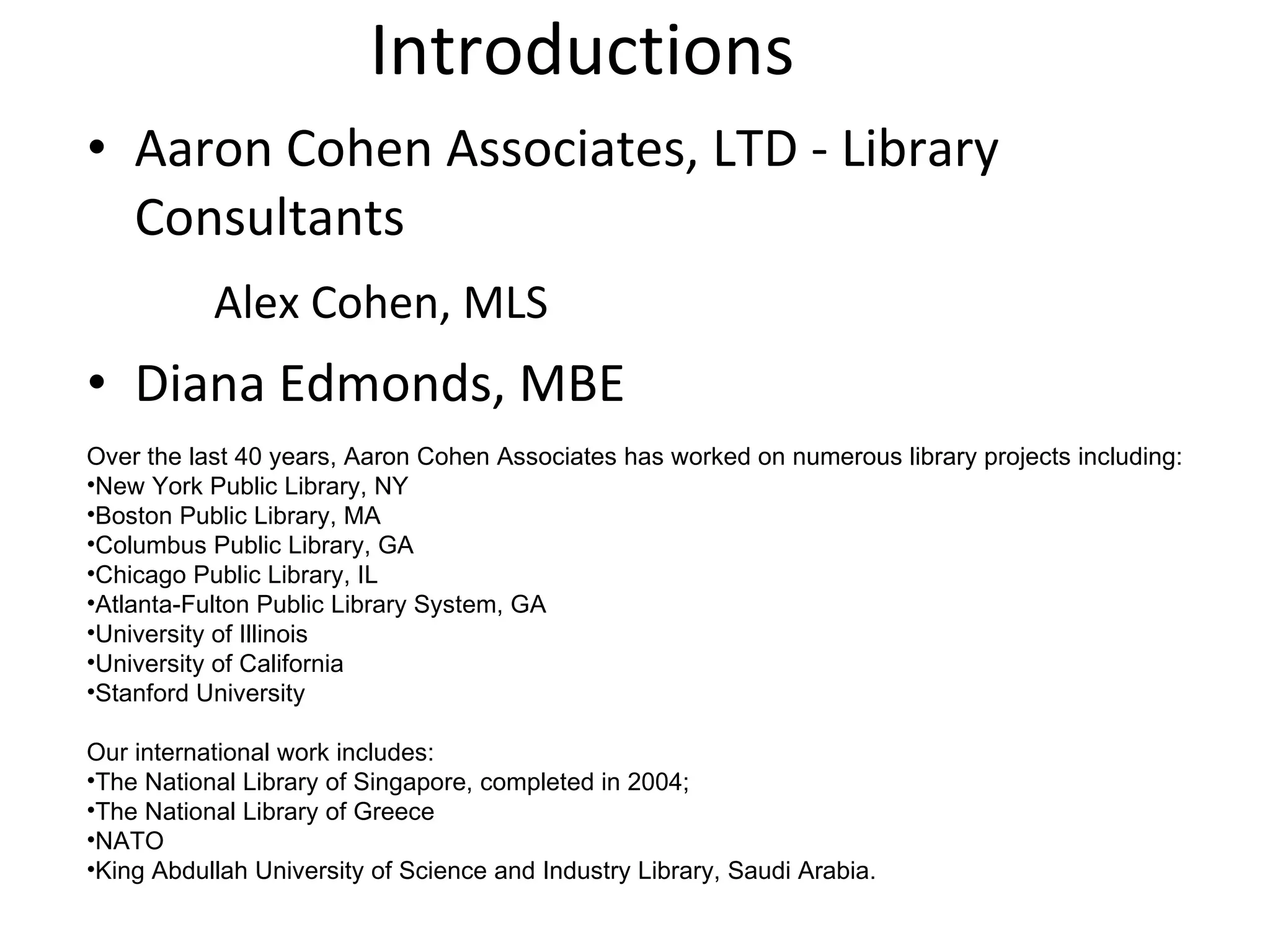
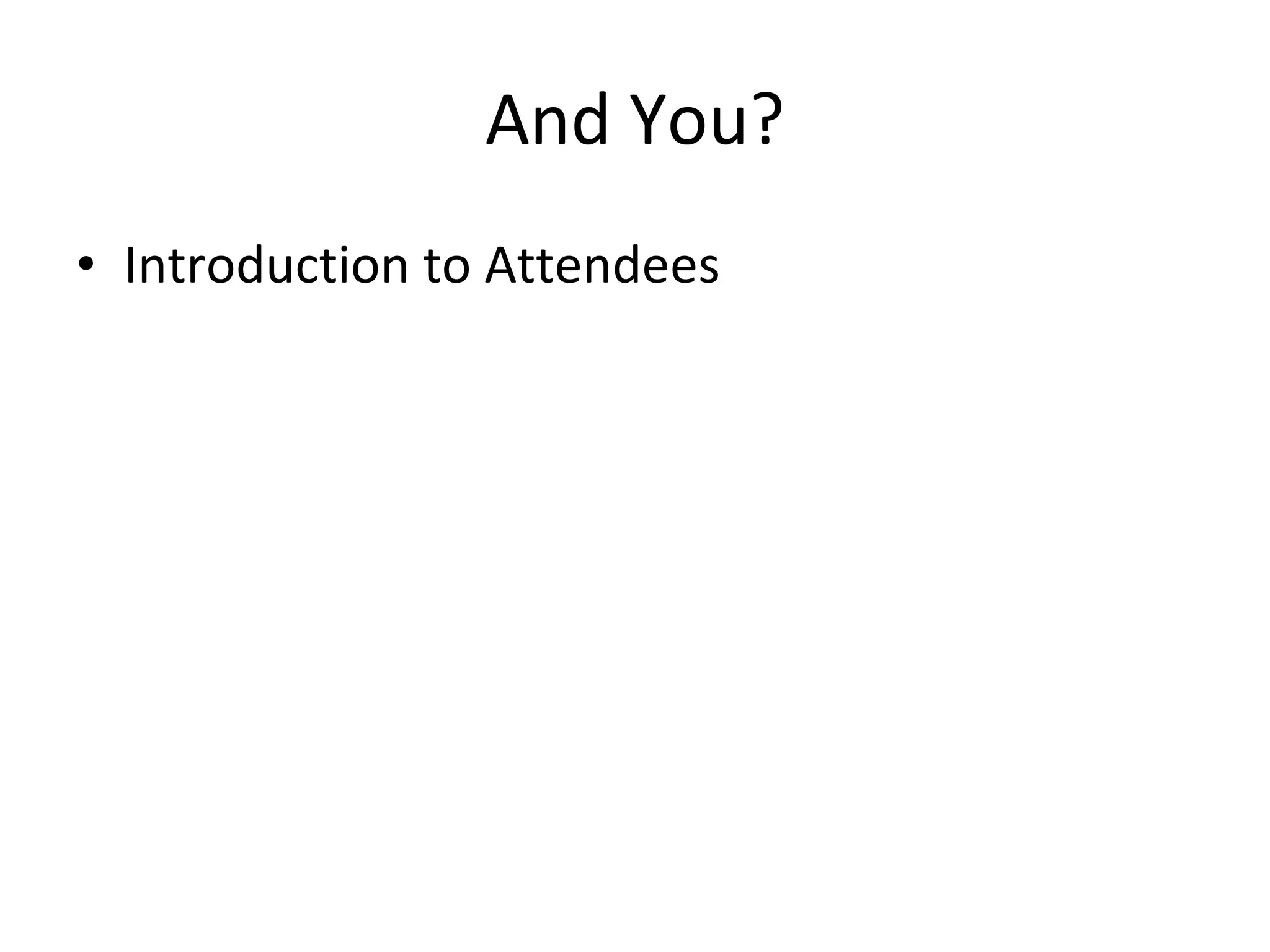
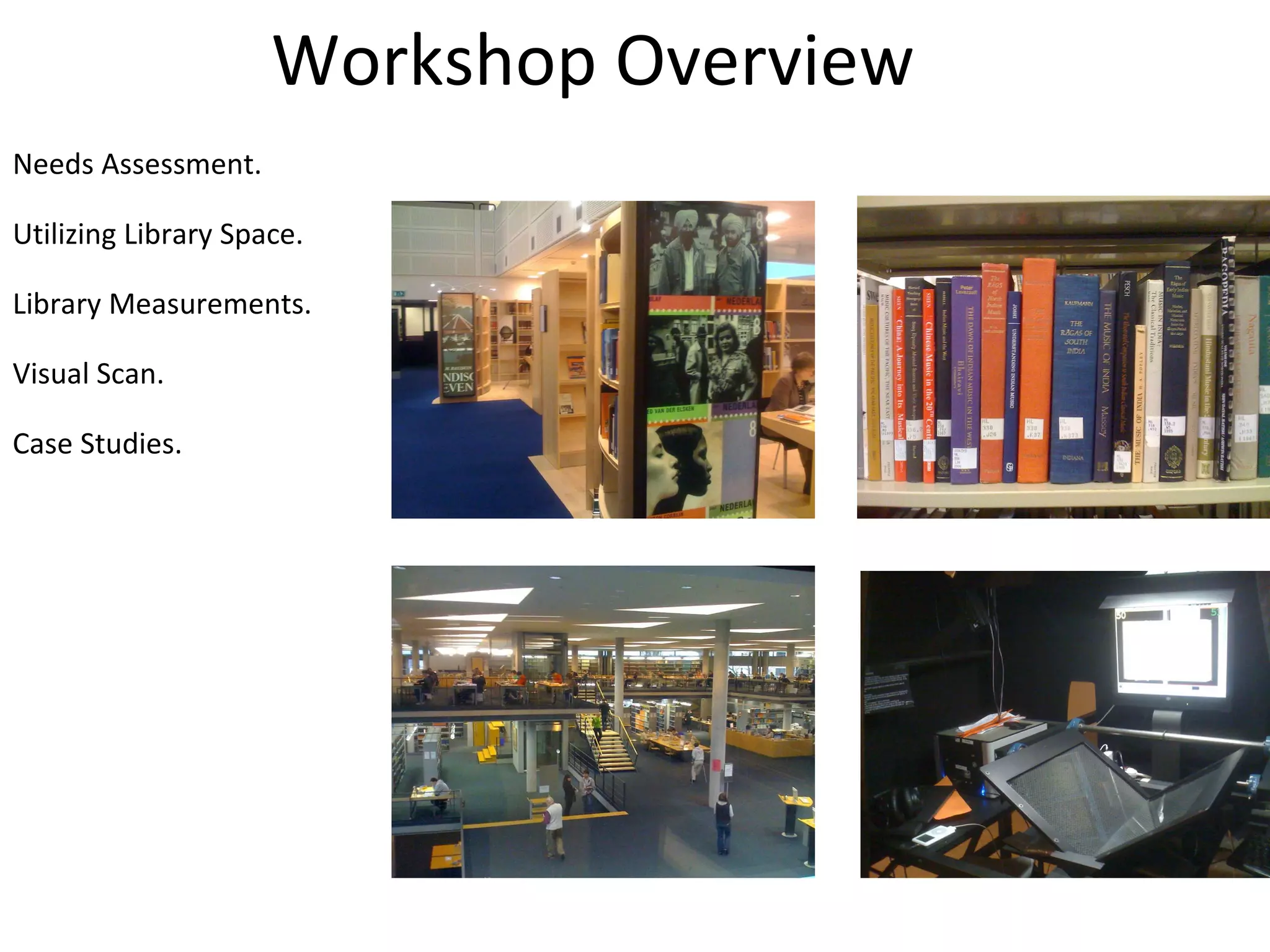
Workshop Overview Needs Assessment. Utilizing Library Space. Library Measurements. Visual Scan. Case Studies.
Needs Assessment
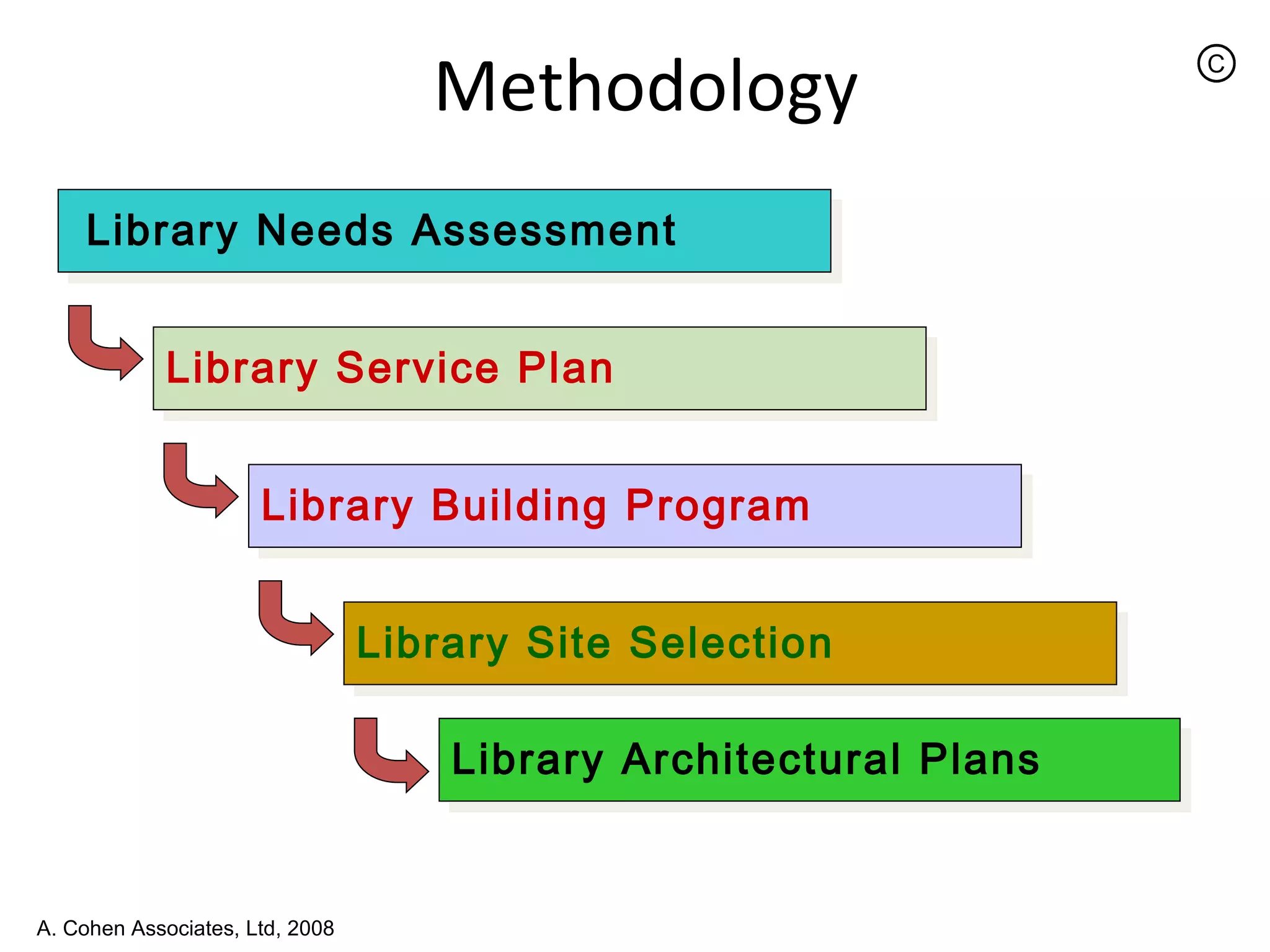
Library Needs Assessment Library Service Plan Library Building Program Library Site Selection Library Architectural Plans A. Cohen Associates, Ltd, 2008 Methodology
And in UK Public Libraries Modernisation Review
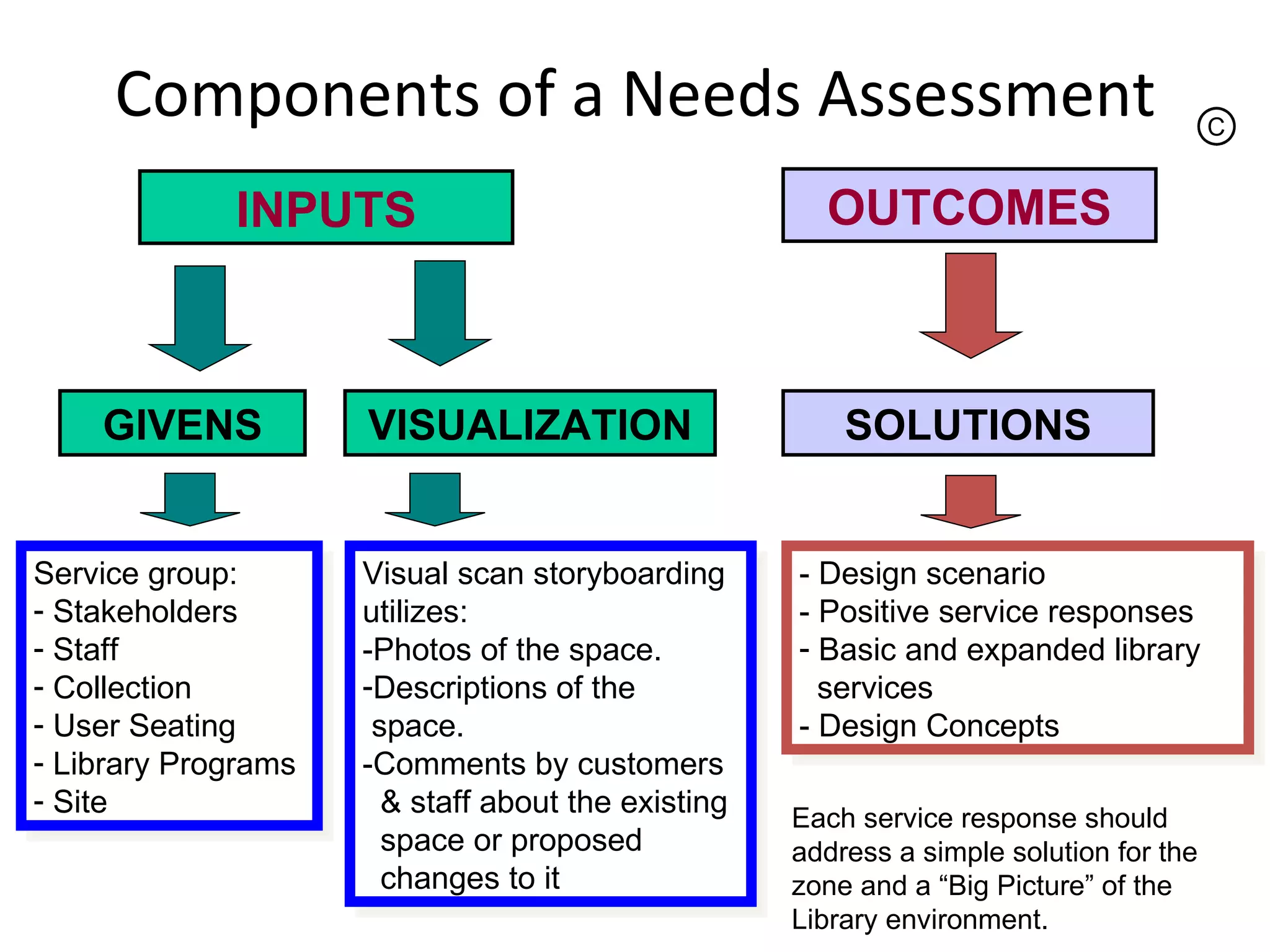
Components of a Needs Assessment INPUTS OUTCOMES GIVENS VISUALIZATION SOLUTIONS Service group: Stakeholders Staff Collection User Seating Library Programs Site Visual scan storyboarding utilizes: -Photos of the space. Descriptions of the space. -Comments by customers & staff about the existing space or proposed changes to it - Design scenario - Positive service responses Basic and expanded library  services  - Design Concepts  Each service response should address a simple solution for the zone and a “Big Picture” of the Library environment.
What is the Value of Library Space? A new study released by the  Friends of the San Francisco PL  (SFPL) suggests that SFPL generates $3.34 in benefits for every $1 spent on its operations and services, if the more optimistic valuations of basic library services are used.  By Norman Oder -- Library Journal, 3/1/2008   2005 South Carolina study on the impact of public libraries found the total direct and indirect return on investment for every $1 expended on the state’s public libraries by SC state and local governments is $4.48—almost 350%. In Florida, For every $6,448 US spent on public libraries from public funding sources in Florida, one job is created.  For every dollar of public support spent on public libraries in Florida, gross regional product increases by $9.08 US. For every dollar of public support spent on public libraries in Florida, income (wages) increases by $12.66 US. http:// sfpl.org/news/pdf/benefit_study_report.pdf http://www.libraryjournal.com/article/CA6533050.html
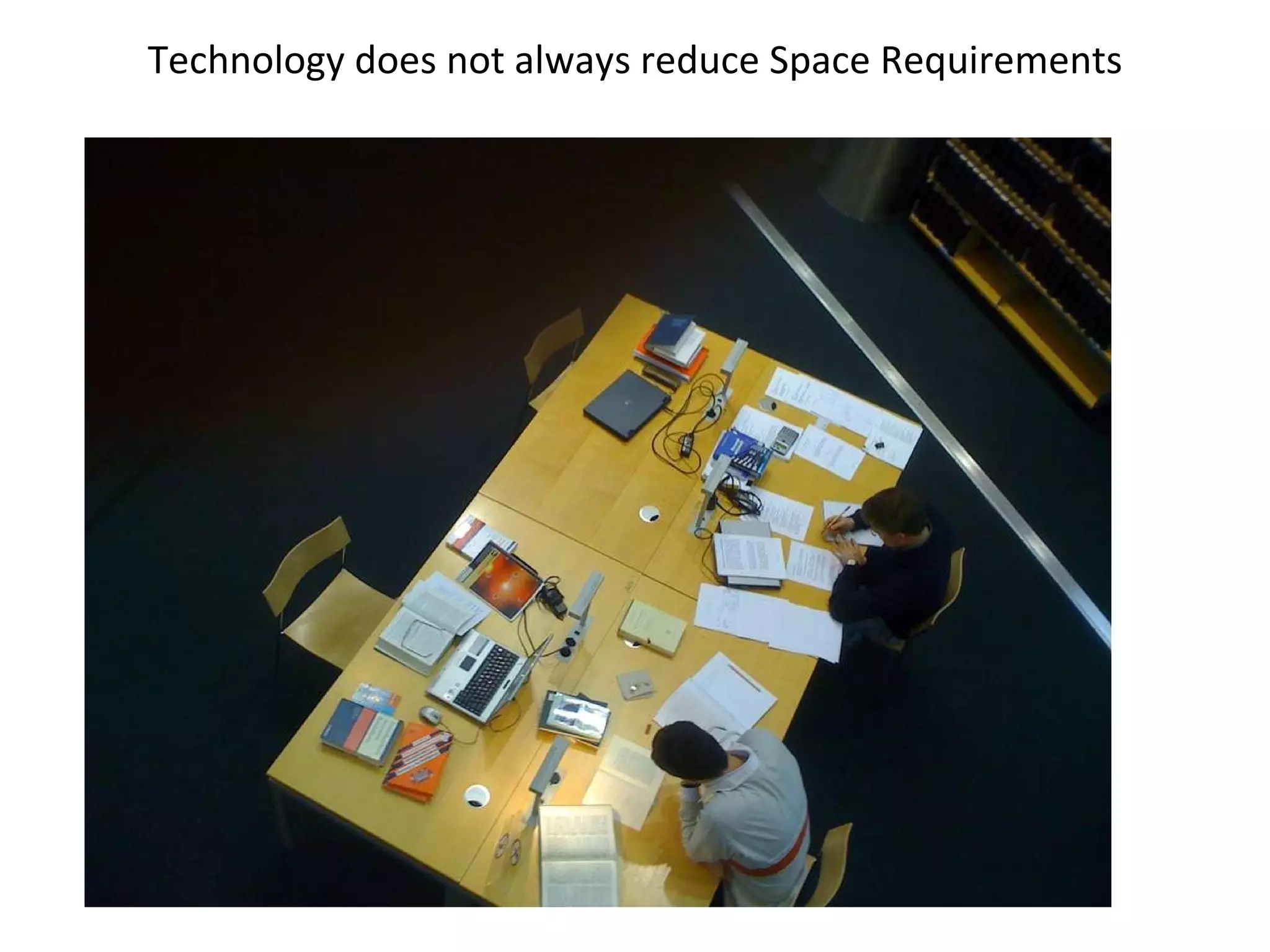
Technology does not always reduce Space Requirements
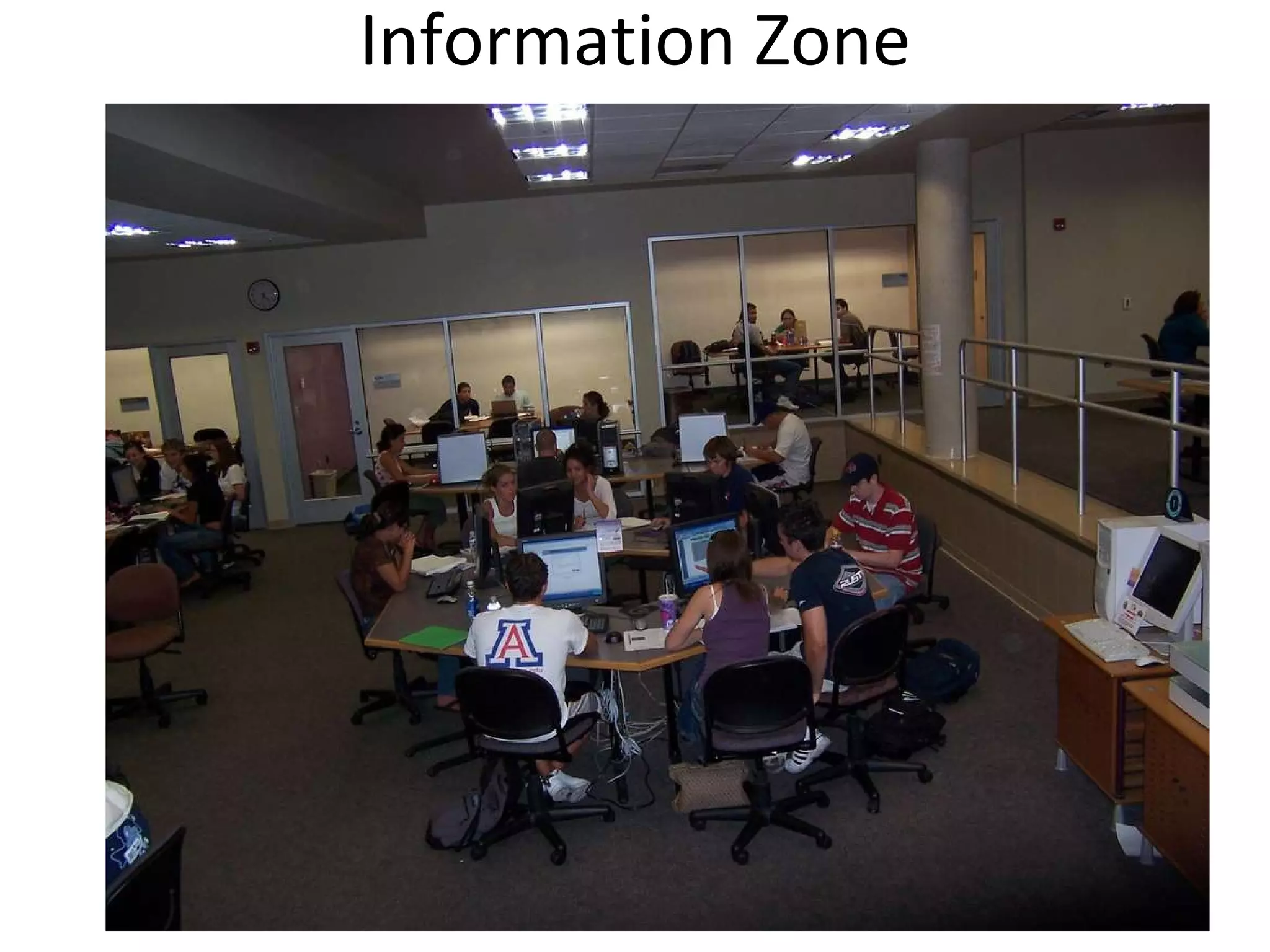
Information Zone
Aaron Cohen Associates LTD January 2008 Library is a “Place” and a “Set of Services”
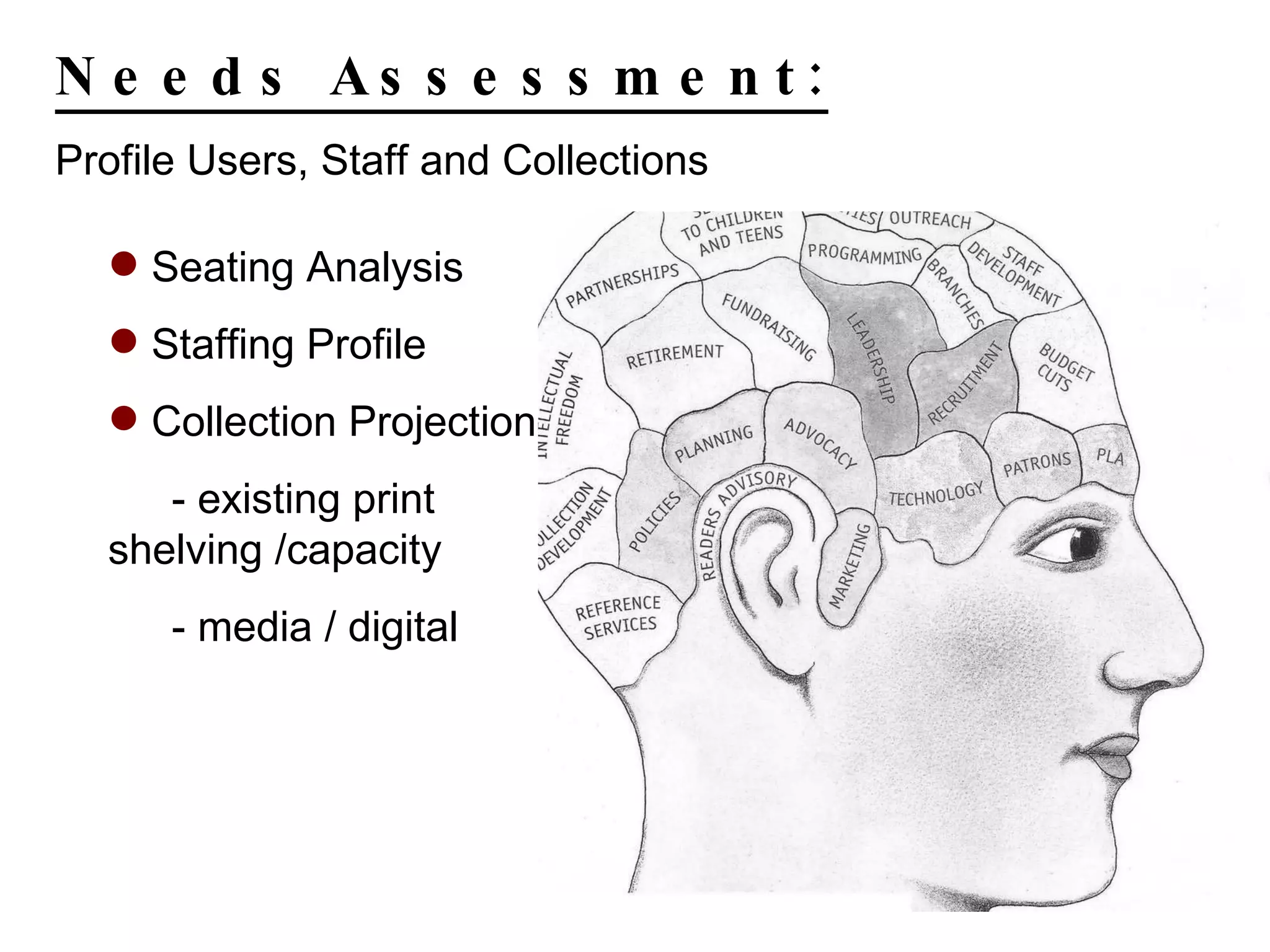
Needs Assessment: Profile Users, Staff and Collections Seating Analysis Staffing Profile Collection Projections  - existing print  shelving /capacity - media / digital
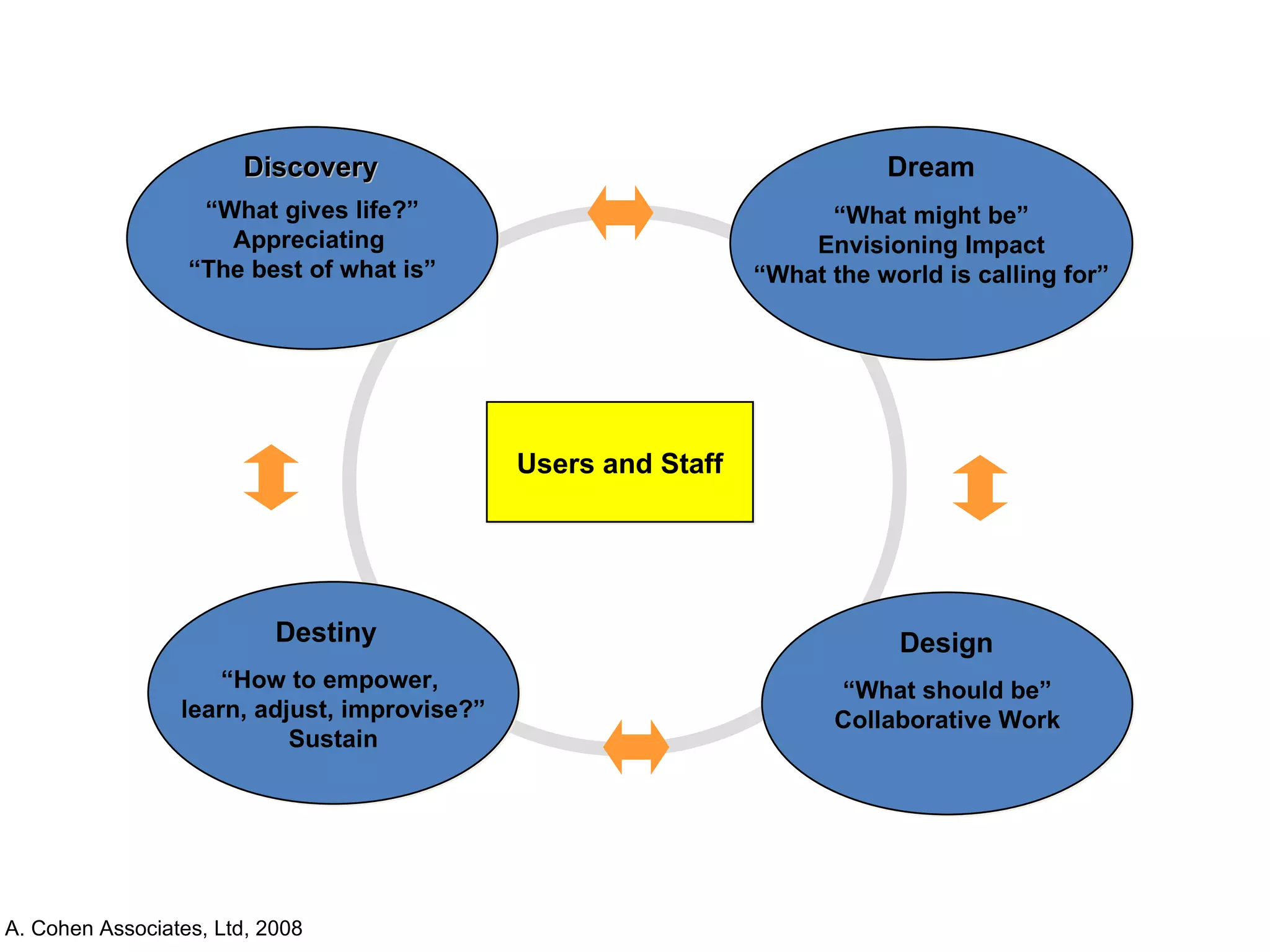
Users and Staff “ What gives life?” Appreciating  “ The best of what is” “ What might be” Envisioning Impact “ What the world is calling for” “ What should be” Collaborative Work “ How to empower,  learn, adjust, improvise?” Sustain Discovery Dream Destiny Design A. Cohen Associates, Ltd, 2008
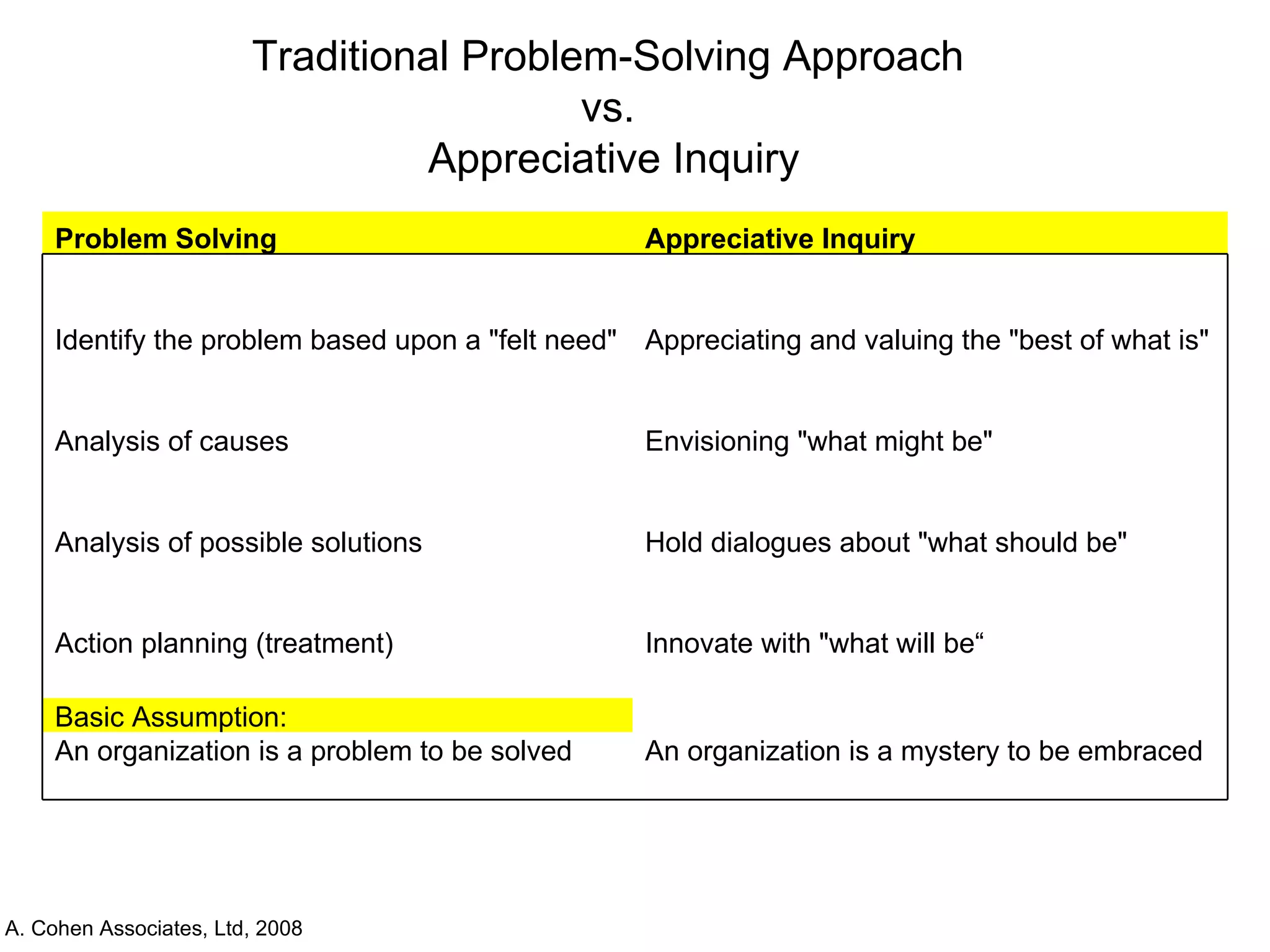
Traditional Problem-Solving Approach  vs.  Appreciative Inquiry A. Cohen Associates, Ltd, 2008 Problem Solving Appreciative Inquiry Identify the problem based upon a "felt need" Appreciating and valuing the "best of what is" Analysis of causes Envisioning "what might be" Analysis of possible solutions Hold dialogues about "what should be" Action planning (treatment) Innovate with "what will be“      Basic Assumption:   An organization is a problem to be solved An organization is a mystery to be embraced
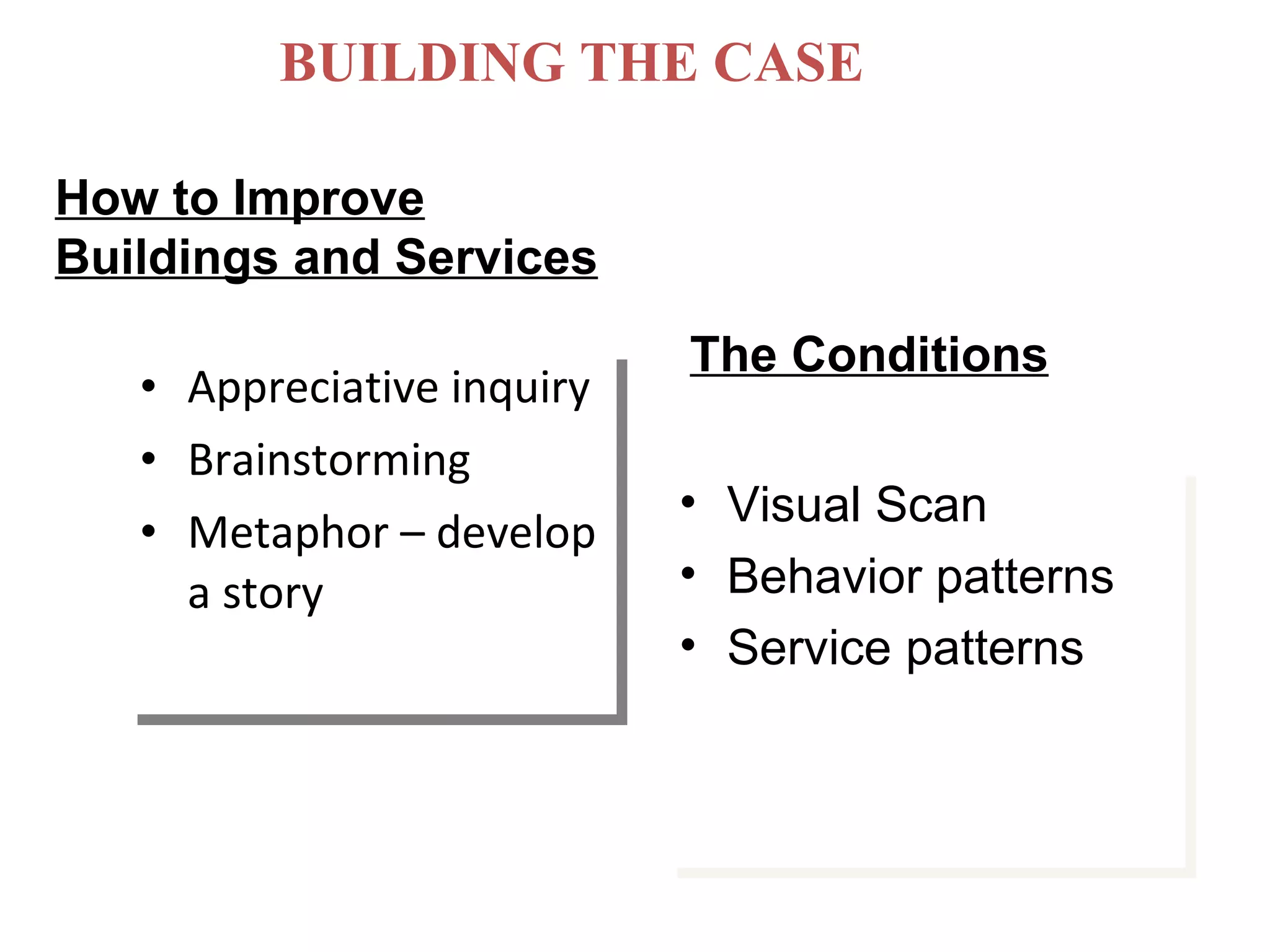
Appreciative inquiry Brainstorming Metaphor – develop a story How to Improve Buildings and Services  The Conditions Visual Scan Behavior patterns Service patterns BUILDING THE CASE
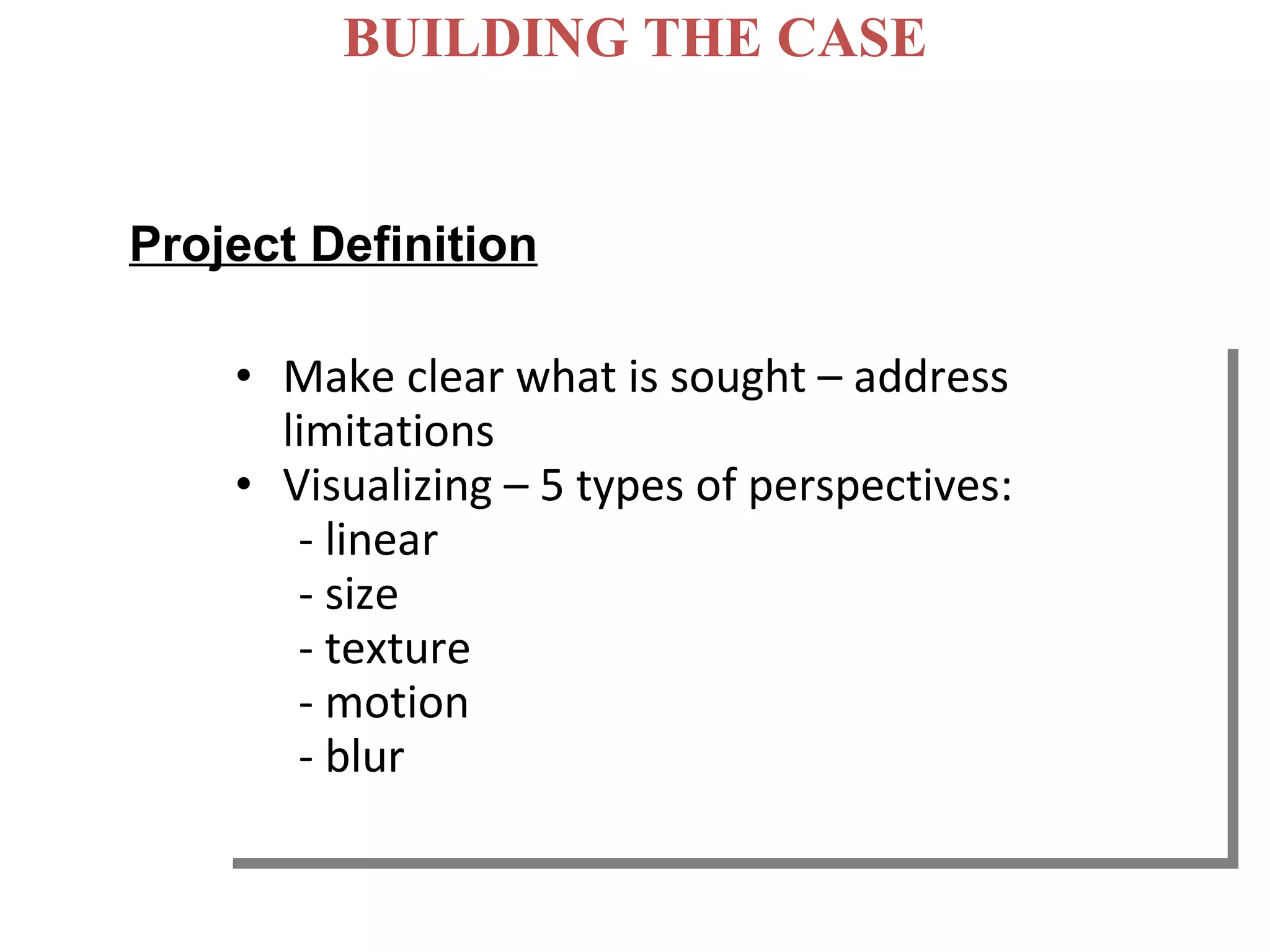
BUILDING THE CASE Make clear what is sought – address limitations Visualizing – 5 types of perspectives: - linear - size - texture - motion - blur Project Definition
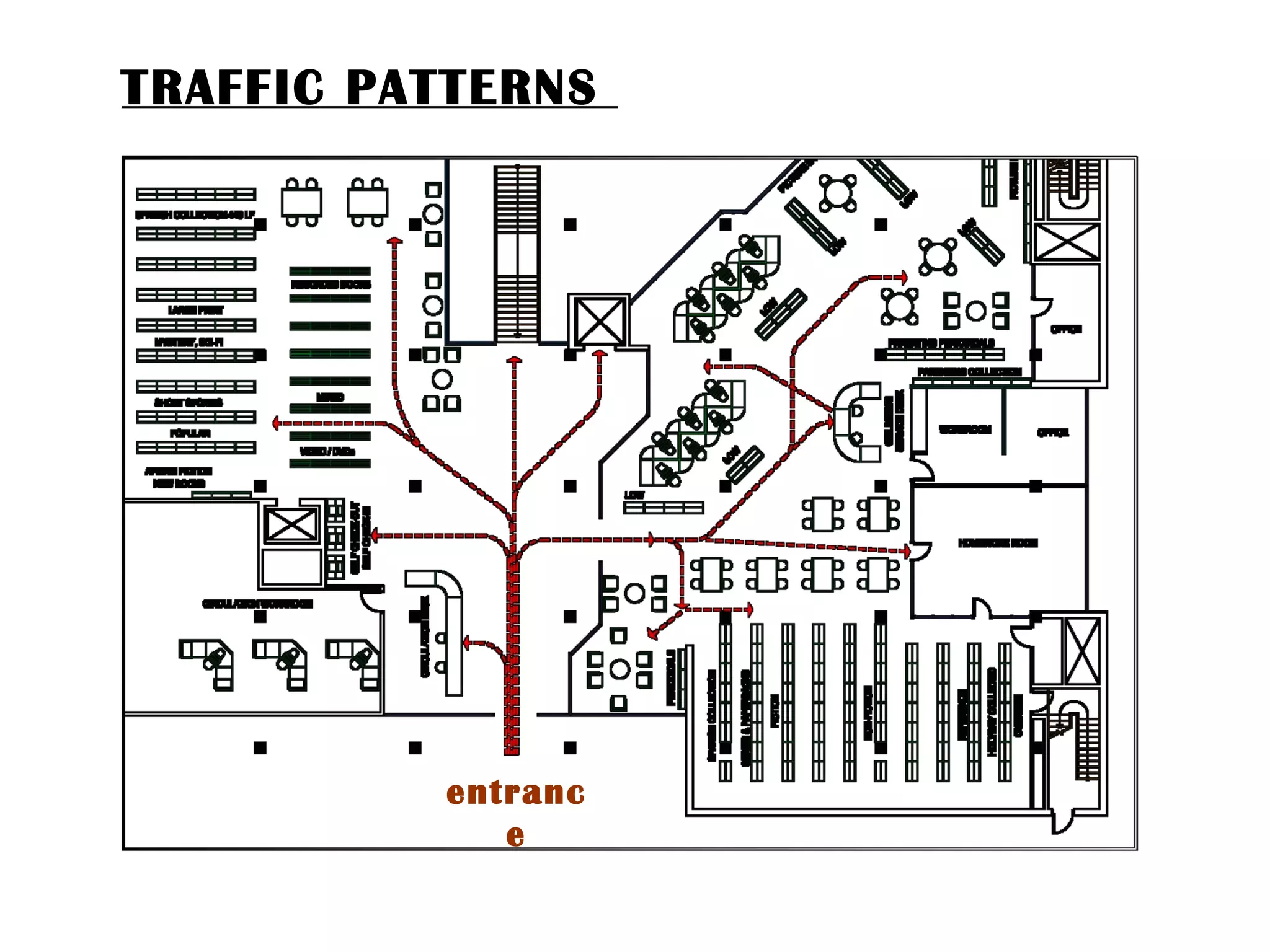
TRAFFIC PATTERNS  entrance
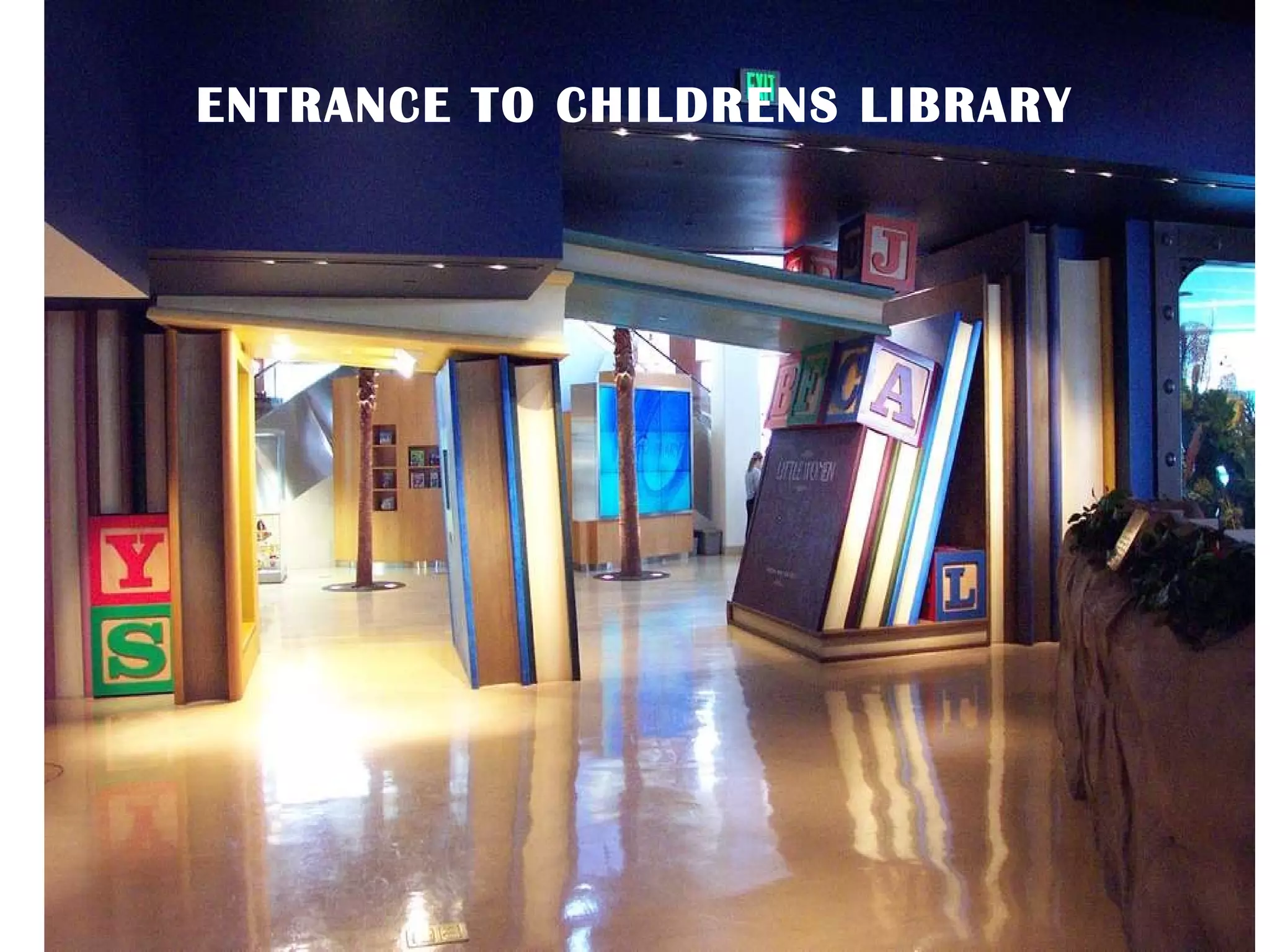
ENTRANCE TO CHILDRENS LIBRARY
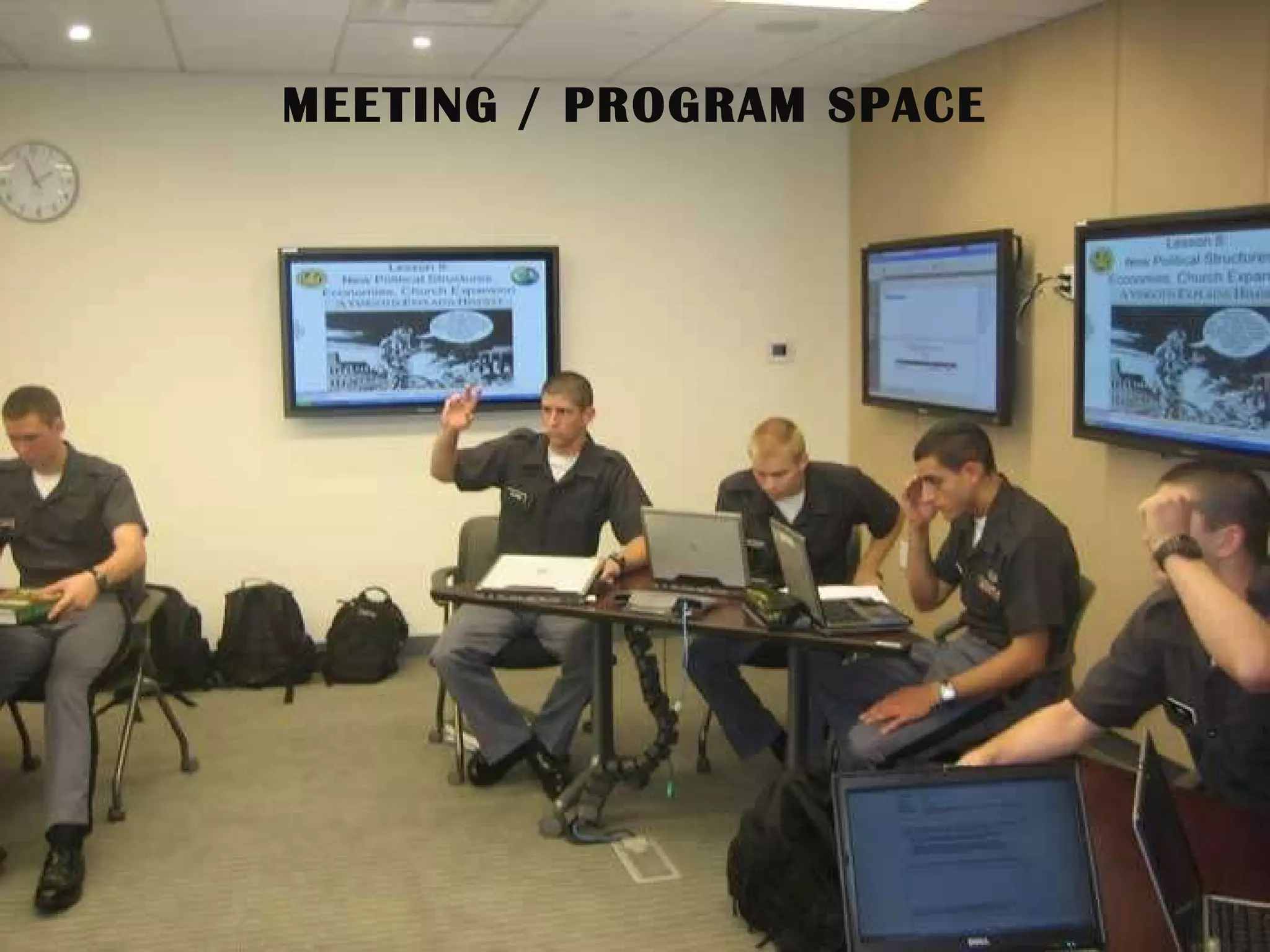
MEETING / PROGRAM SPACE
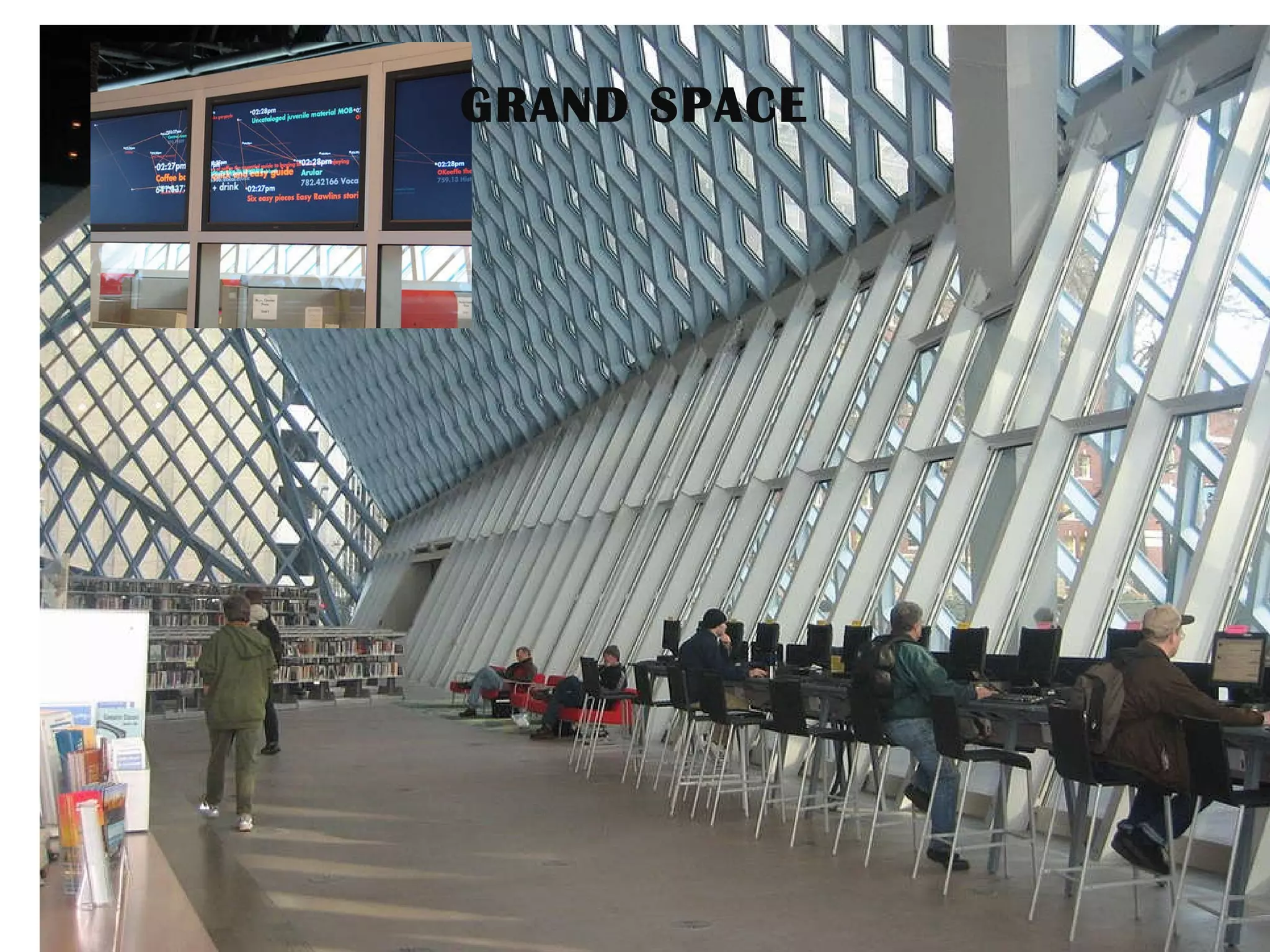
GRAND SPACE
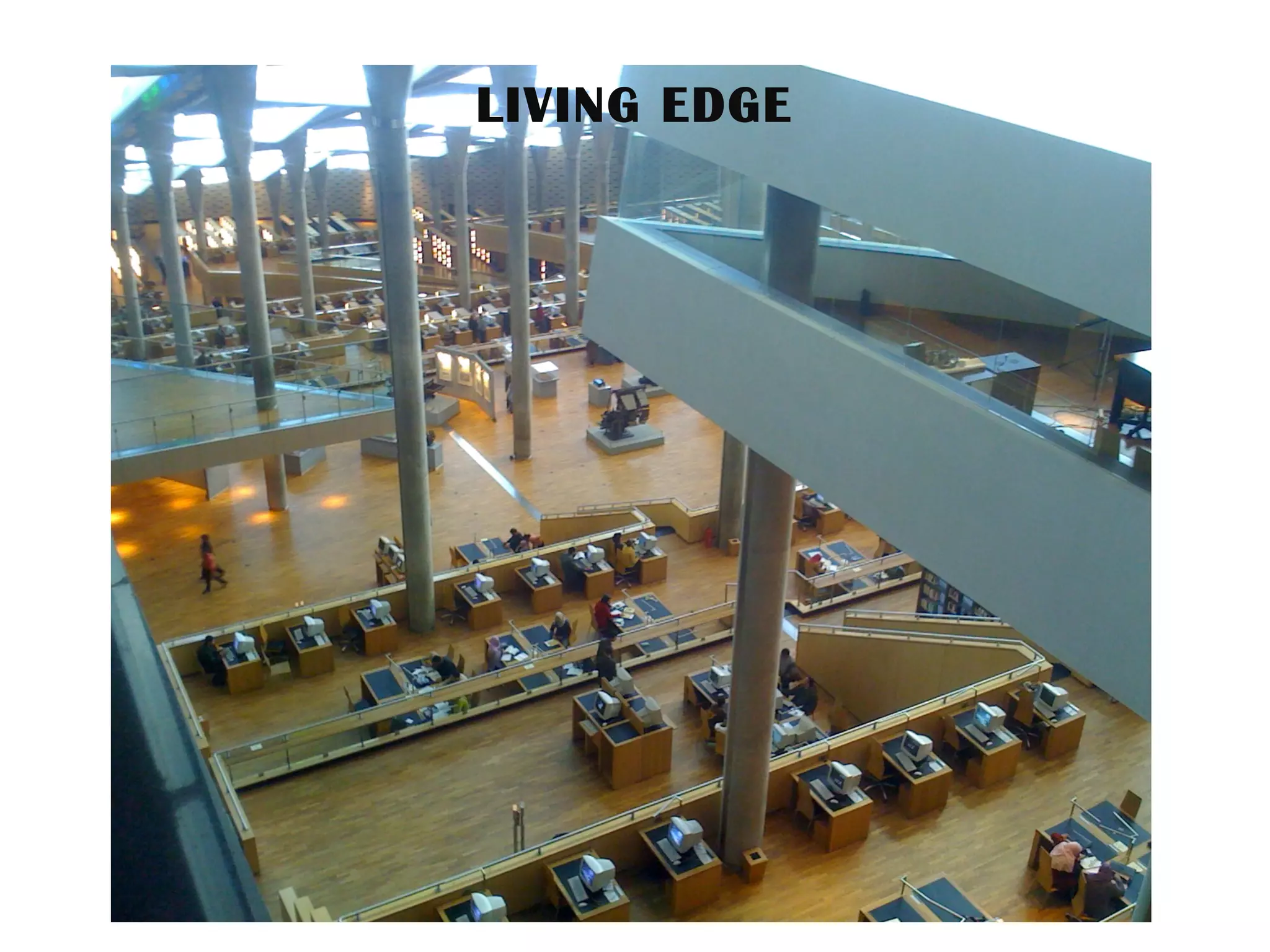
LIVING EDGE
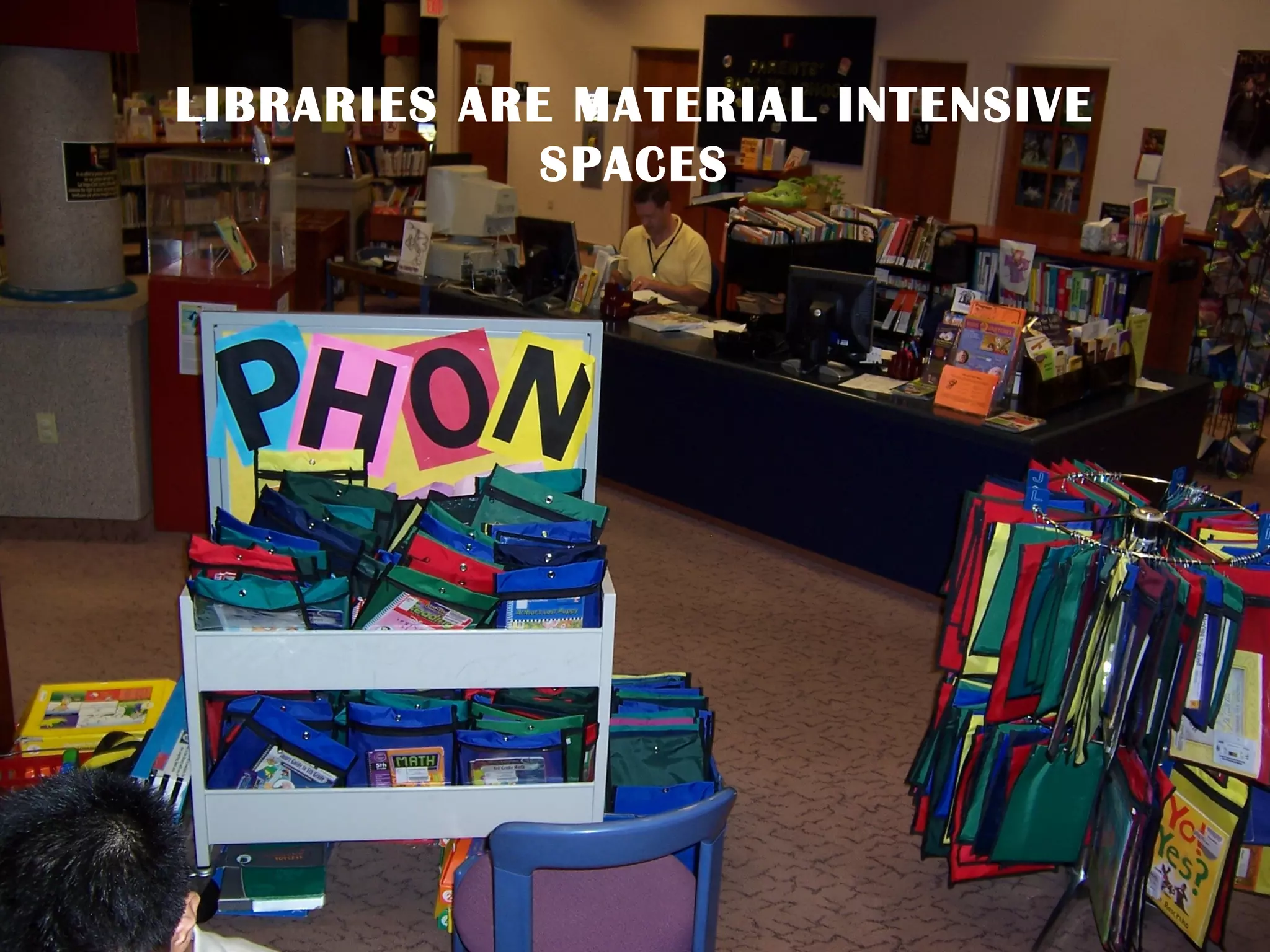
LIBRARIES ARE MATERIAL INTENSIVE SPACES
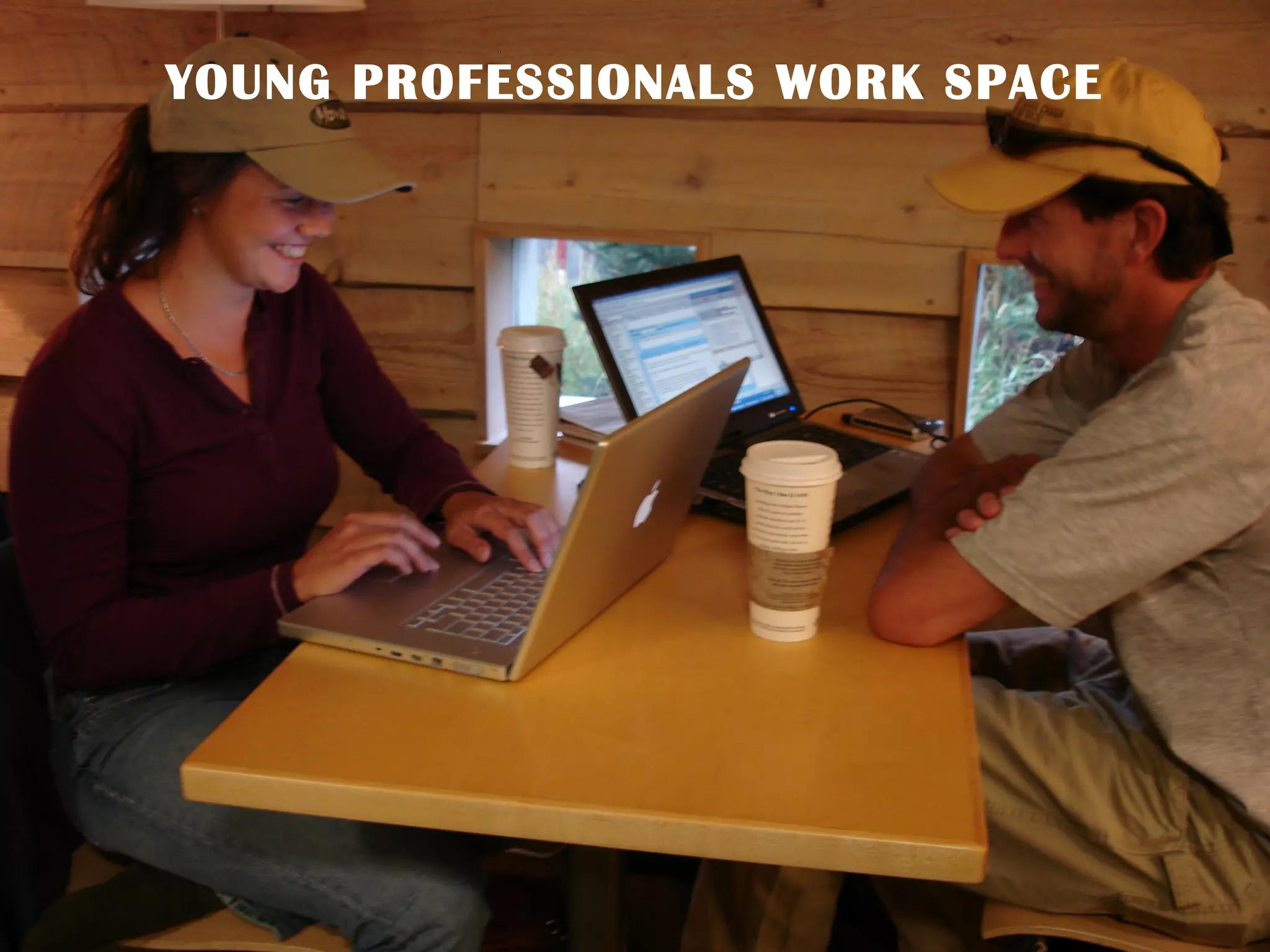
YOUNG PROFESSIONALS WORK SPACE
Measurements
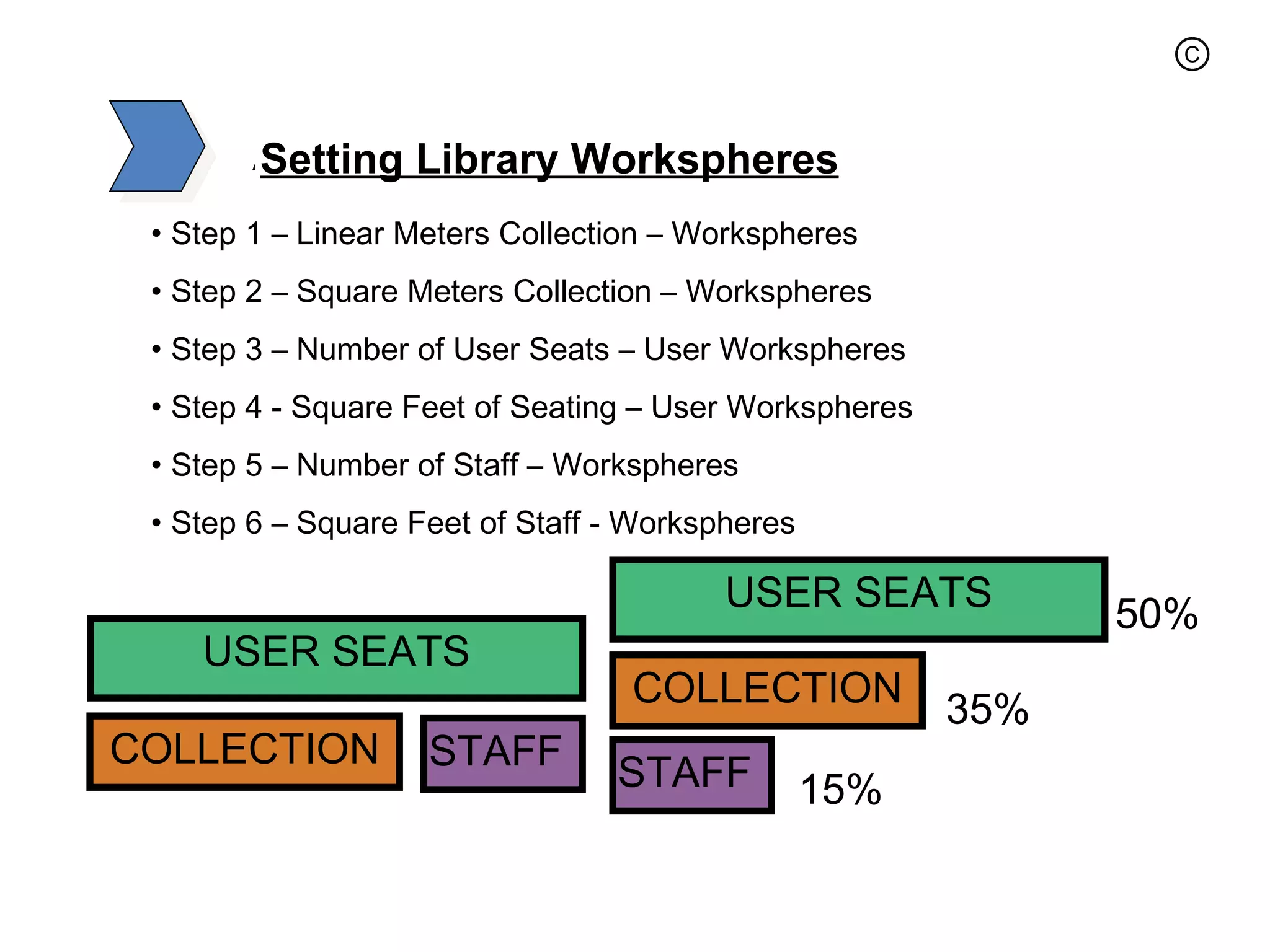
ADAPTIVE CHALLENGE Setting Library Workspheres USER SEATS STAFF 50% 35% COLLECTION 15% USER SEATS COLLECTION STAFF Step 1 – Linear Meters Collection – Workspheres Step 2 – Square Meters Collection – Workspheres Step 3 – Number of User Seats – User Workspheres Step 4 - Square Feet of Seating – User Workspheres Step 5 – Number of Staff – Workspheres Step 6 – Square Feet of Staff - Workspheres
 
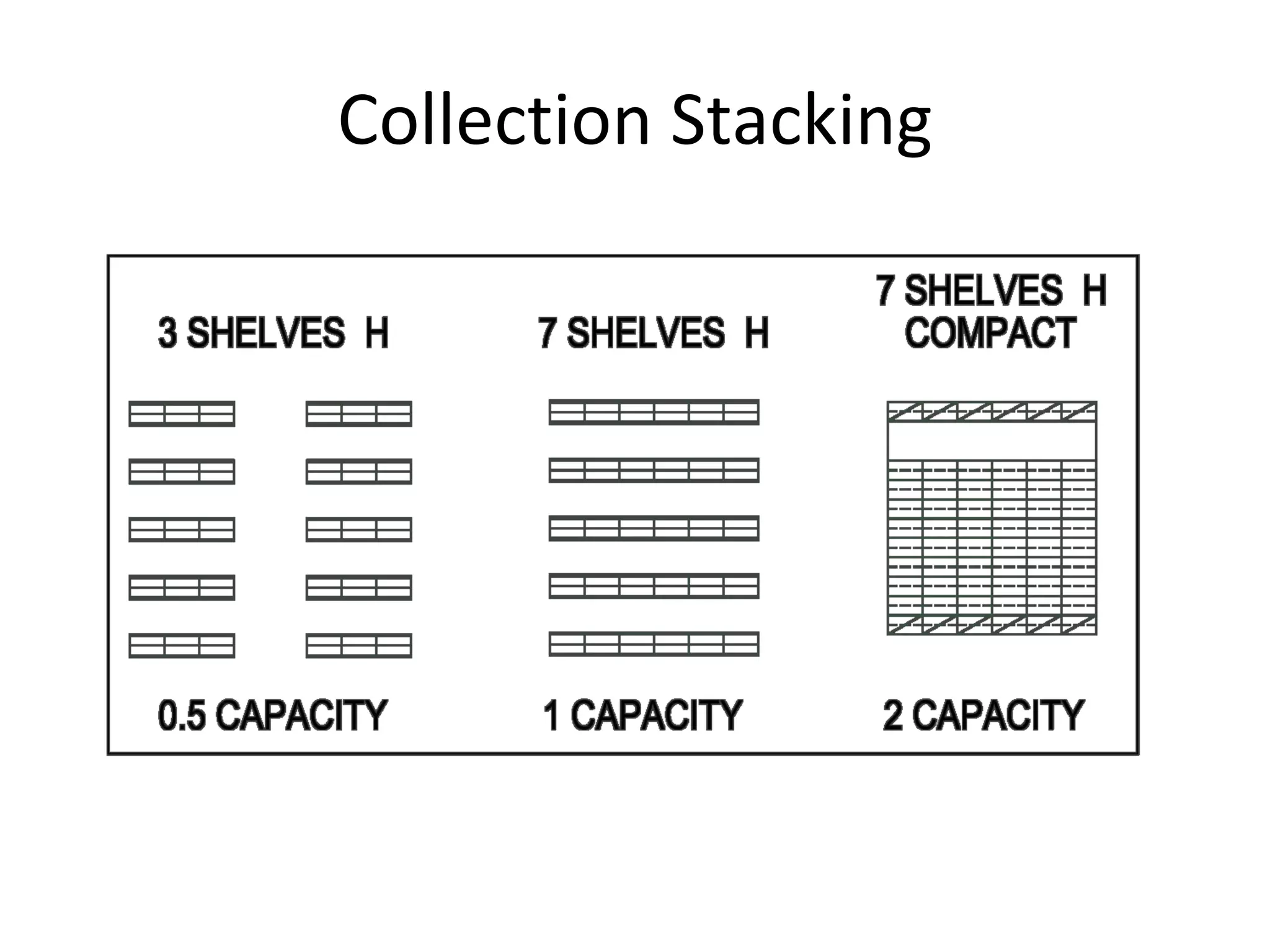
Collection Stacking
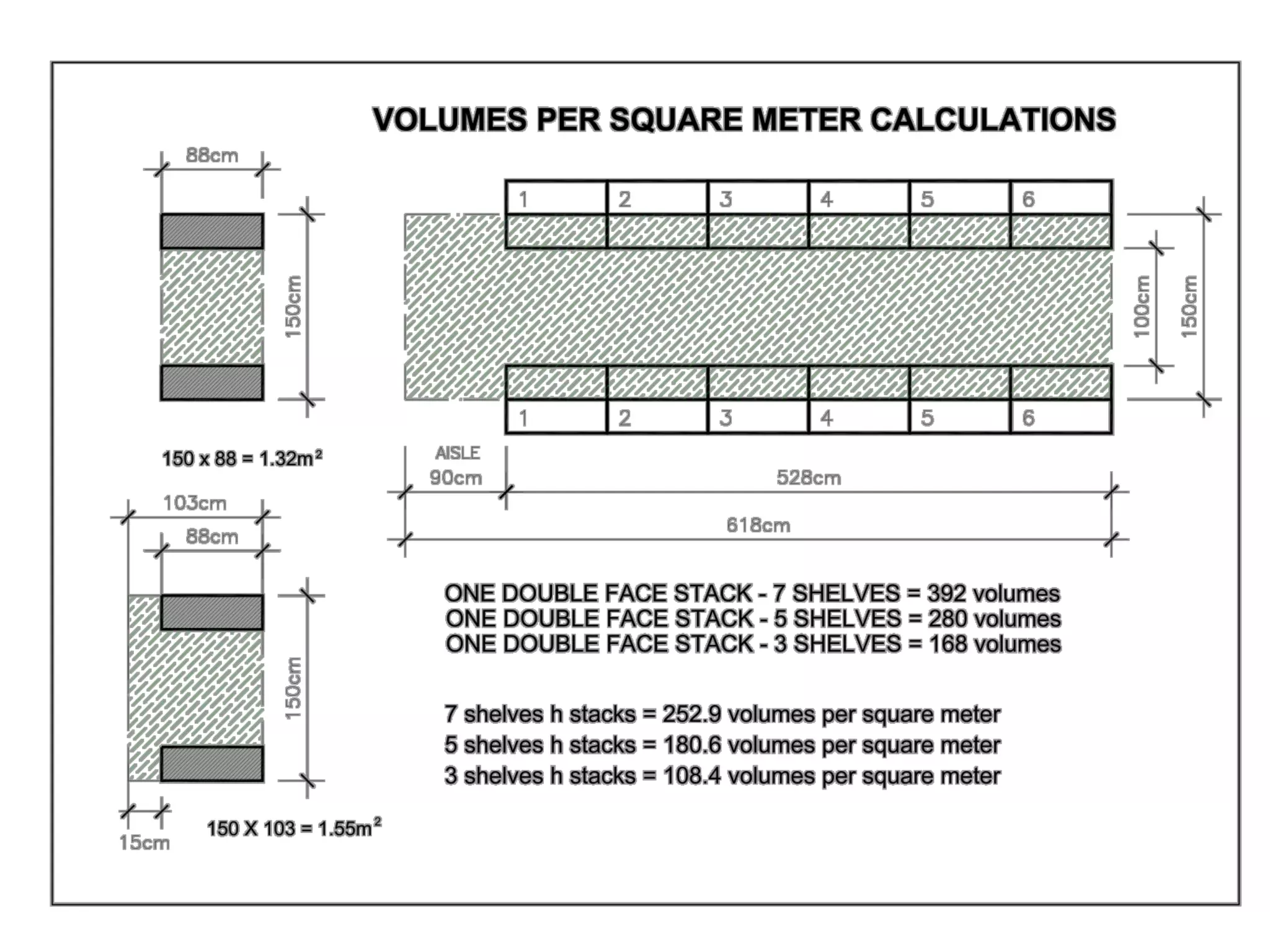
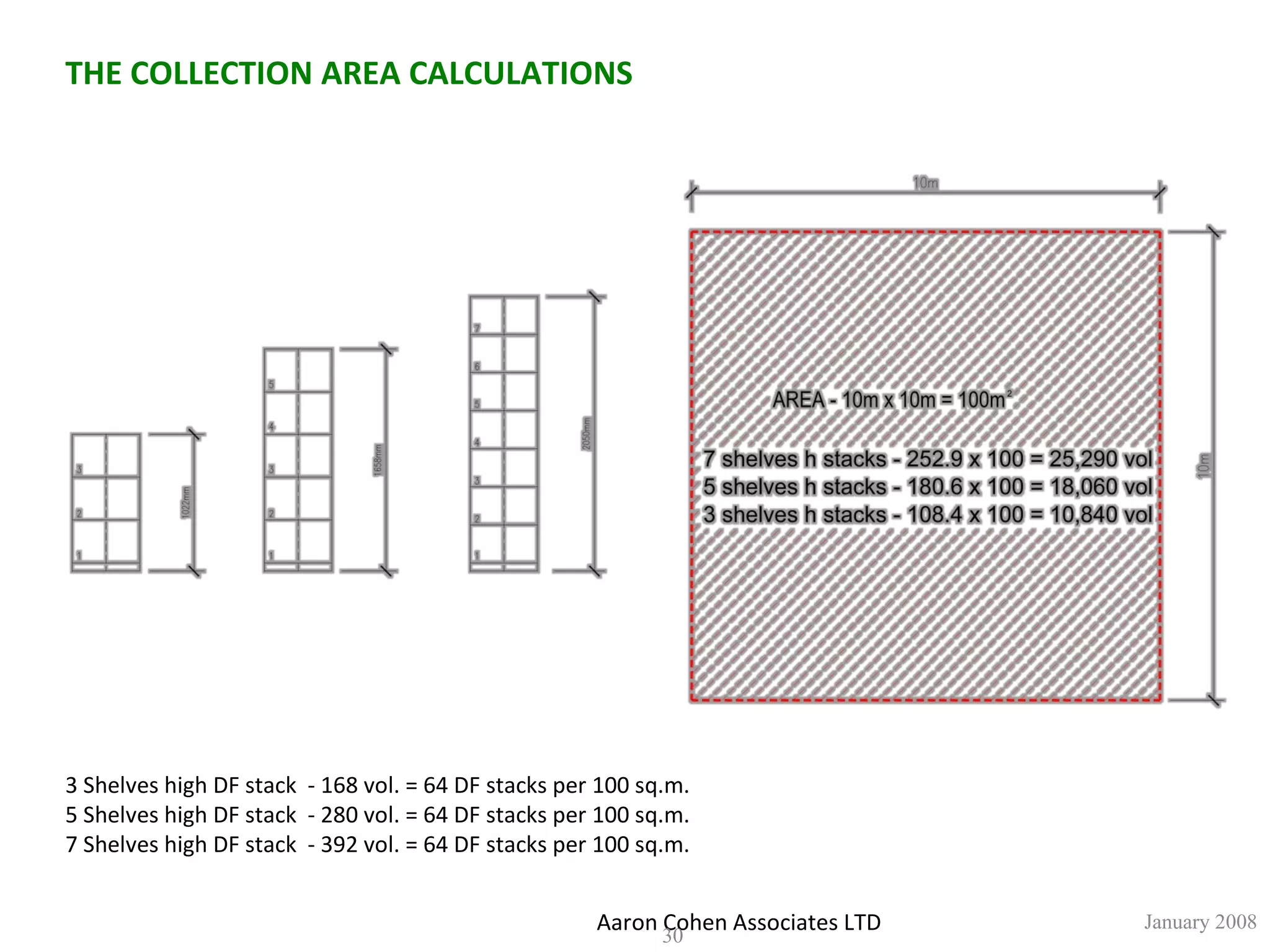
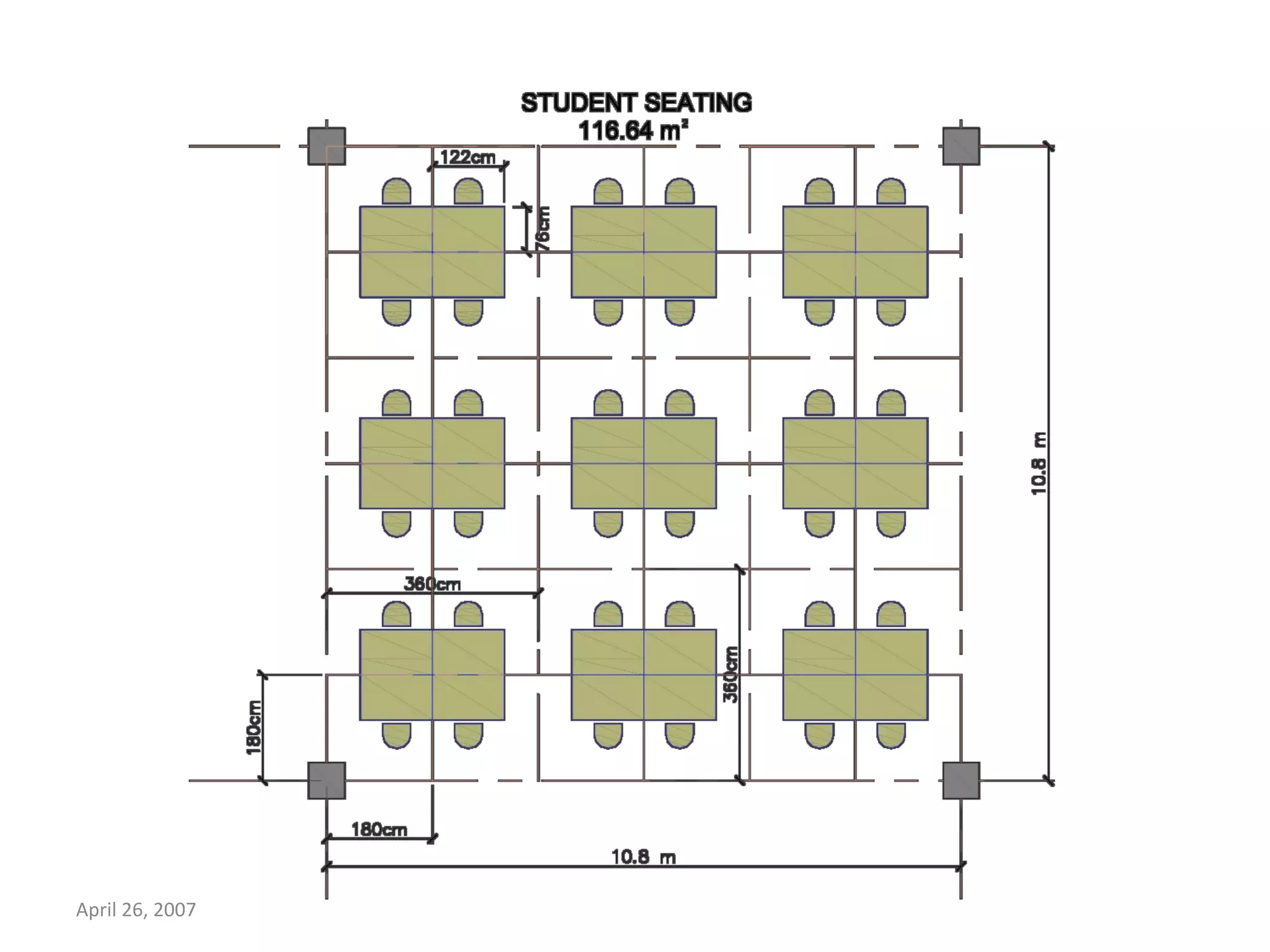
Aaron Cohen Associates LTD January 2008 THE COLLECTION AREA CALCULATIONS 3 Shelves high DF stack  - 168 vol. = 64 DF stacks per 100 sq.m. 5 Shelves high DF stack  - 280 vol. = 64 DF stacks per 100 sq.m. 7 Shelves high DF stack  - 392 vol. = 64 DF stacks per 100 sq.m.
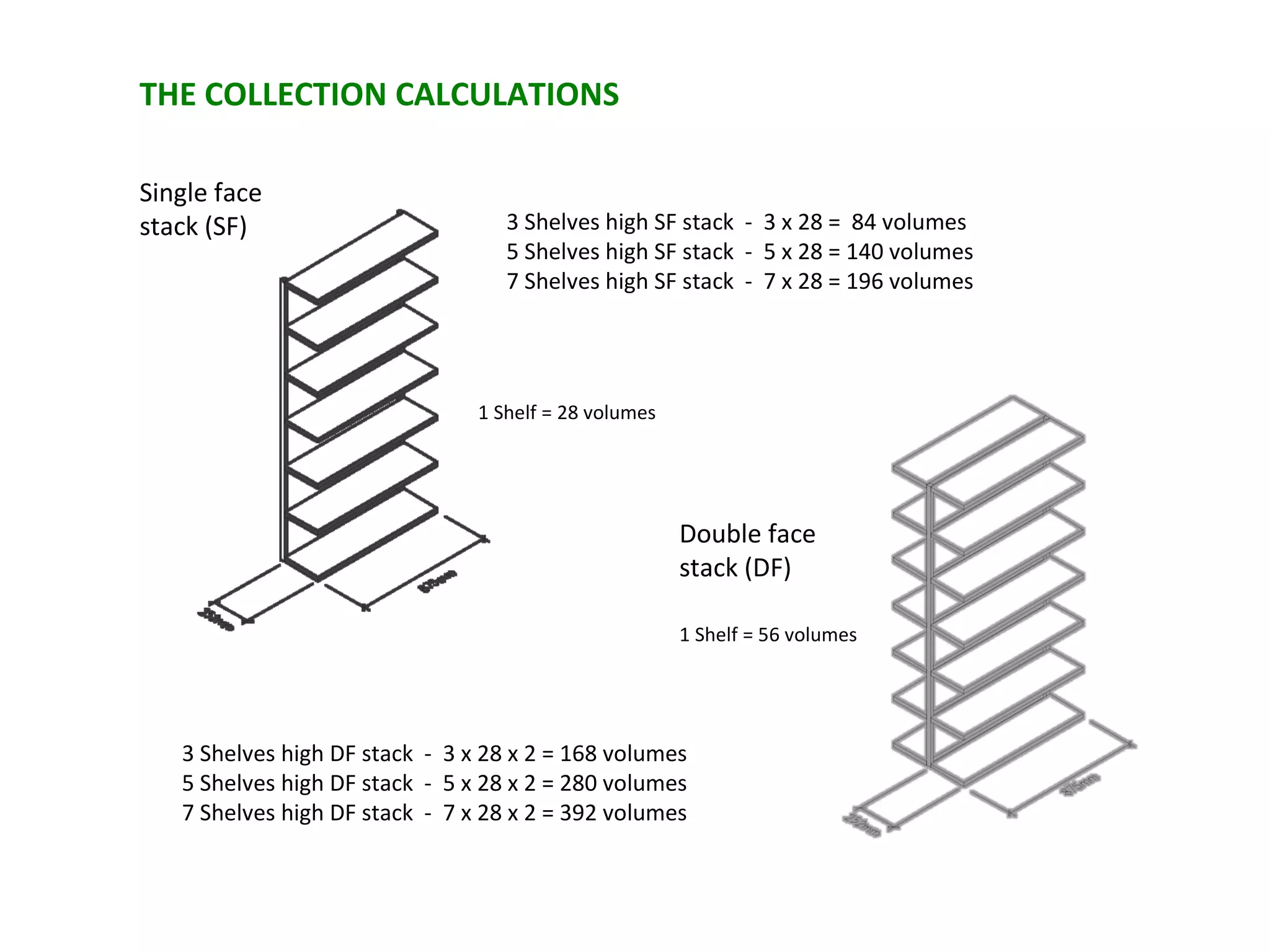
THE COLLECTION CALCULATIONS Single face stack (SF) 1 Shelf = 28 volumes 1 Shelf = 56 volumes Double face stack (DF) 3 Shelves high SF stack  -  3 x 28 =  84 volumes 5 Shelves high SF stack  -  5 x 28 = 140 volumes 7 Shelves high SF stack  -  7 x 28 = 196 volumes 3 Shelves high DF stack  -  3 x 28 x 2 = 168 volumes 5 Shelves high DF stack  -  5 x 28 x 2 = 280 volumes 7 Shelves high DF stack  -  7 x 28 x 2 = 392 volumes
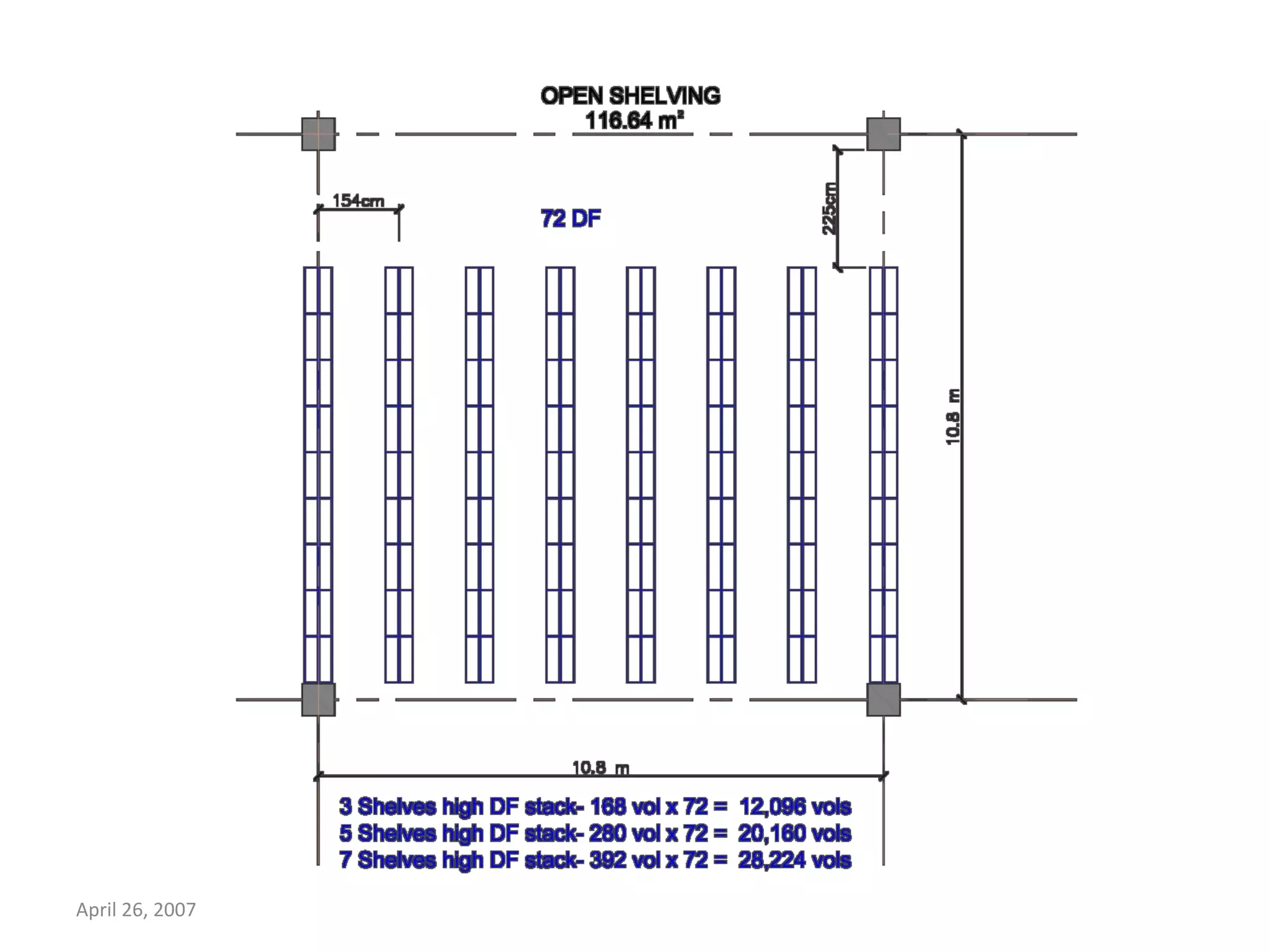
April 26, 2007
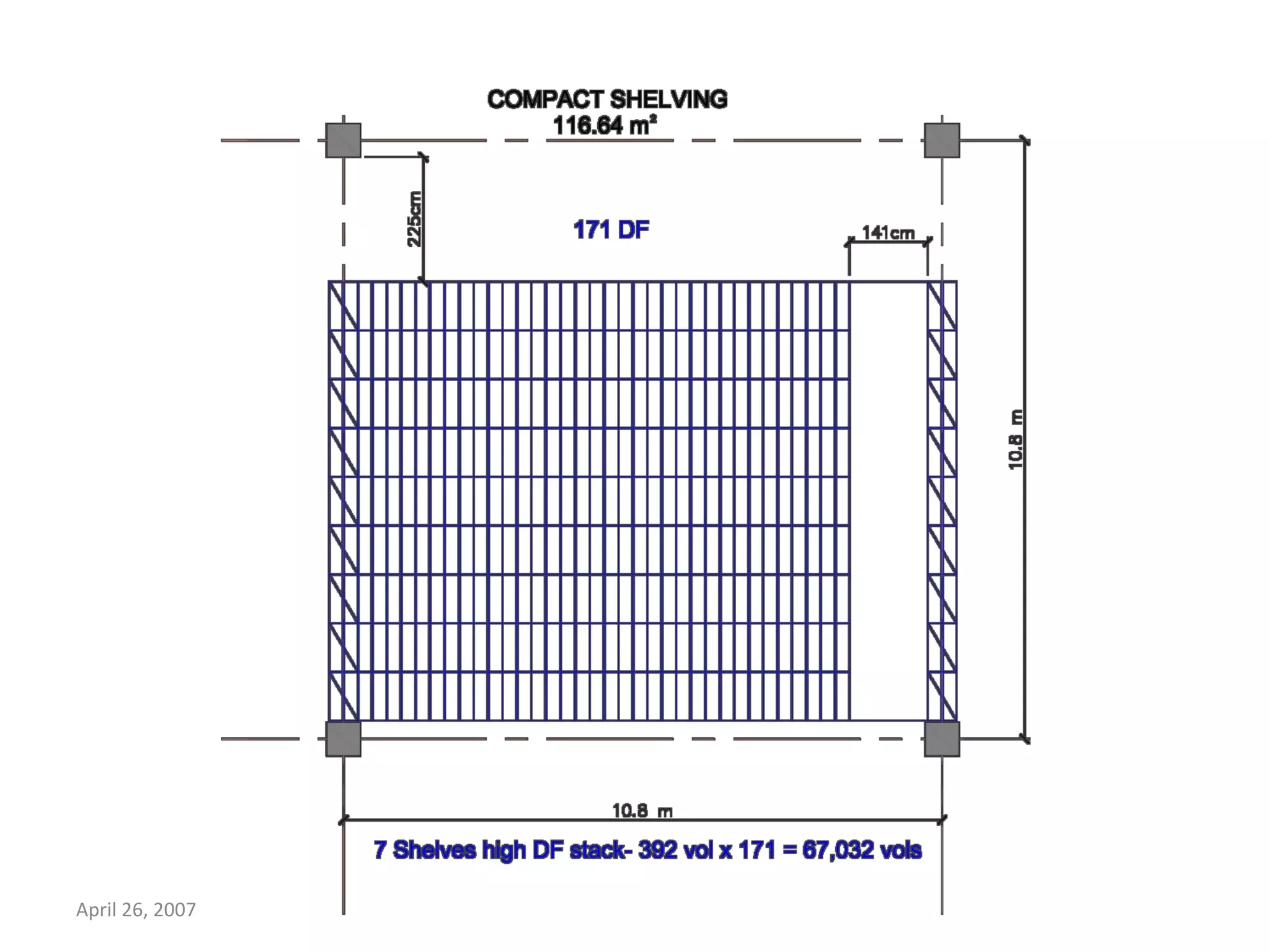
April 26, 2007
April 26, 2007
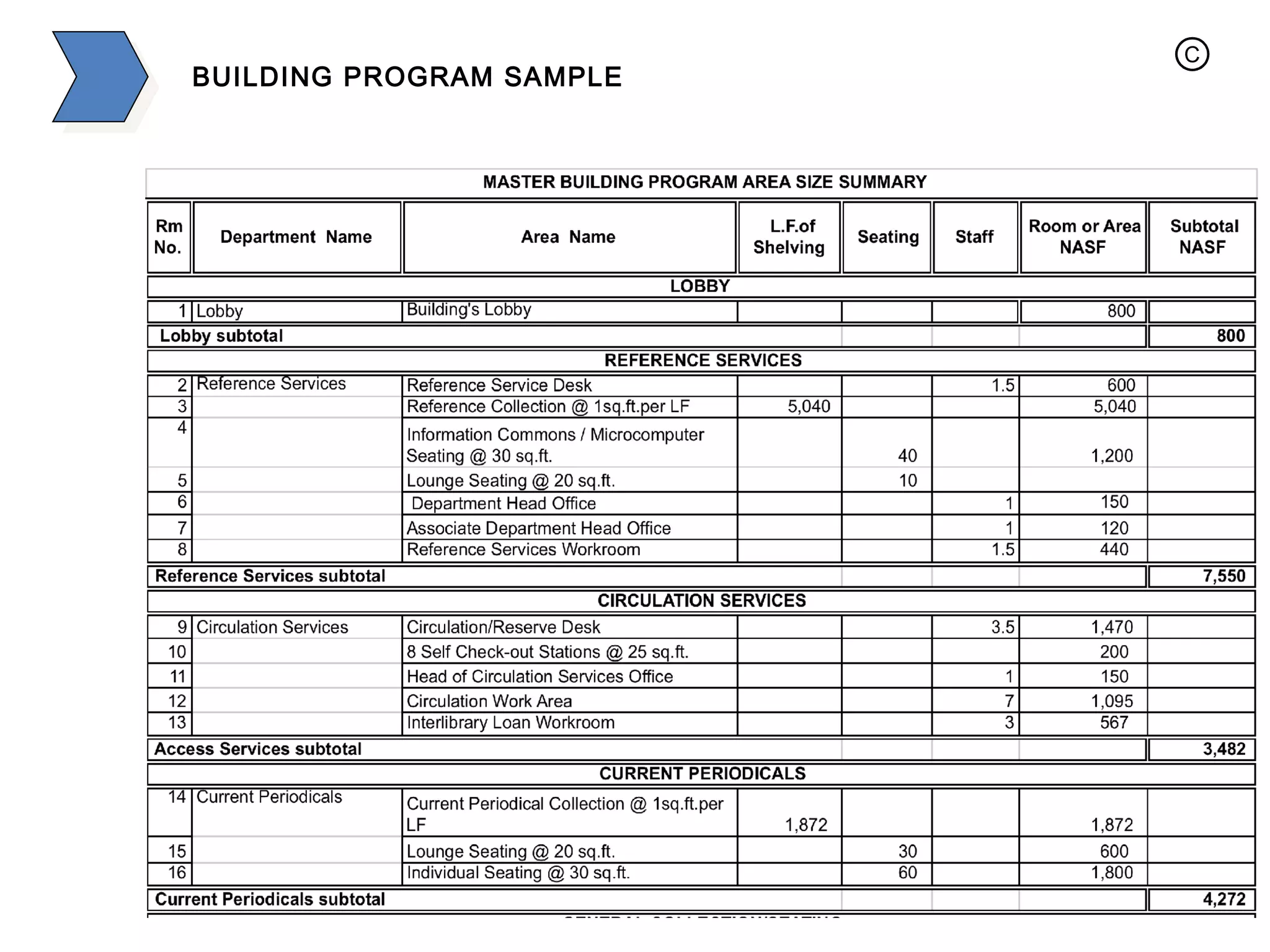
BUILDING PROGRAM SAMPLE
Question & Answer Session “What questions do you have?”
Exercise #1   Define Service Measurements for a Library Facilities Plan
Questions for the Group Do you need to reorganize your Library Space?  Have you always wanted / needed  / wondered what planning measurements to use?  Do you need help with reorganization of your library space?  Would you like to be able to develop a plan for your library?

090107 section 1 1050109

  • 1.
    LIBRARY AS PLACEInstructor: Alex Cohen Diana Edmonds [email_address] CILIP Workshop JAN. 2009
  • 2.
    This Workshop IsBrought to You By CILIP The Chartered Institute of Library and Information Professionals is the leading professional body for librarians, information specialists and knowledge managers. CILIP forms a community of around 36,000 people engaged in library and information work, of whom approximately 21,000 are CILIP members and about 15,000 are regular customers of CILIP Enterprises.
  • 3.
    Introductions Aaron CohenAssociates, LTD - Library Consultants Alex Cohen, MLS Diana Edmonds, MBE Over the last 40 years, Aaron Cohen Associates has worked on numerous library projects including: New York Public Library, NY Boston Public Library, MA Columbus Public Library, GA Chicago Public Library, IL Atlanta-Fulton Public Library System, GA University of Illinois University of California Stanford University Our international work includes: The National Library of Singapore, completed in 2004; The National Library of Greece NATO King Abdullah University of Science and Industry Library, Saudi Arabia.
  • 4.
  • 5.
    Workshop Overview NeedsAssessment. Utilizing Library Space. Library Measurements. Visual Scan. Case Studies.
  • 6.
  • 7.
    Library Needs AssessmentLibrary Service Plan Library Building Program Library Site Selection Library Architectural Plans A. Cohen Associates, Ltd, 2008 Methodology
  • 8.
    And in UKPublic Libraries Modernisation Review
  • 9.
    Components of aNeeds Assessment INPUTS OUTCOMES GIVENS VISUALIZATION SOLUTIONS Service group: Stakeholders Staff Collection User Seating Library Programs Site Visual scan storyboarding utilizes: -Photos of the space. Descriptions of the space. -Comments by customers & staff about the existing space or proposed changes to it - Design scenario - Positive service responses Basic and expanded library services - Design Concepts Each service response should address a simple solution for the zone and a “Big Picture” of the Library environment.
  • 10.
    What is theValue of Library Space? A new study released by the Friends of the San Francisco PL (SFPL) suggests that SFPL generates $3.34 in benefits for every $1 spent on its operations and services, if the more optimistic valuations of basic library services are used. By Norman Oder -- Library Journal, 3/1/2008 2005 South Carolina study on the impact of public libraries found the total direct and indirect return on investment for every $1 expended on the state’s public libraries by SC state and local governments is $4.48—almost 350%. In Florida, For every $6,448 US spent on public libraries from public funding sources in Florida, one job is created. For every dollar of public support spent on public libraries in Florida, gross regional product increases by $9.08 US. For every dollar of public support spent on public libraries in Florida, income (wages) increases by $12.66 US. http:// sfpl.org/news/pdf/benefit_study_report.pdf http://www.libraryjournal.com/article/CA6533050.html
  • 11.
    Technology does notalways reduce Space Requirements
  • 12.
  • 13.
    Aaron Cohen AssociatesLTD January 2008 Library is a “Place” and a “Set of Services”
  • 14.
    Needs Assessment: ProfileUsers, Staff and Collections Seating Analysis Staffing Profile Collection Projections - existing print shelving /capacity - media / digital
  • 15.
    Users and Staff“ What gives life?” Appreciating “ The best of what is” “ What might be” Envisioning Impact “ What the world is calling for” “ What should be” Collaborative Work “ How to empower, learn, adjust, improvise?” Sustain Discovery Dream Destiny Design A. Cohen Associates, Ltd, 2008
  • 16.
    Traditional Problem-Solving Approach vs. Appreciative Inquiry A. Cohen Associates, Ltd, 2008 Problem Solving Appreciative Inquiry Identify the problem based upon a "felt need" Appreciating and valuing the "best of what is" Analysis of causes Envisioning "what might be" Analysis of possible solutions Hold dialogues about "what should be" Action planning (treatment) Innovate with "what will be“     Basic Assumption:   An organization is a problem to be solved An organization is a mystery to be embraced
  • 17.
    Appreciative inquiry BrainstormingMetaphor – develop a story How to Improve Buildings and Services The Conditions Visual Scan Behavior patterns Service patterns BUILDING THE CASE
  • 18.
    BUILDING THE CASEMake clear what is sought – address limitations Visualizing – 5 types of perspectives: - linear - size - texture - motion - blur Project Definition
  • 19.
  • 20.
  • 21.
  • 22.
  • 23.
  • 24.
    LIBRARIES ARE MATERIALINTENSIVE SPACES
  • 25.
  • 26.
  • 27.
    ADAPTIVE CHALLENGE SettingLibrary Workspheres USER SEATS STAFF 50% 35% COLLECTION 15% USER SEATS COLLECTION STAFF Step 1 – Linear Meters Collection – Workspheres Step 2 – Square Meters Collection – Workspheres Step 3 – Number of User Seats – User Workspheres Step 4 - Square Feet of Seating – User Workspheres Step 5 – Number of Staff – Workspheres Step 6 – Square Feet of Staff - Workspheres
  • 28.
  • 29.
  • 30.
    Aaron Cohen AssociatesLTD January 2008 THE COLLECTION AREA CALCULATIONS 3 Shelves high DF stack - 168 vol. = 64 DF stacks per 100 sq.m. 5 Shelves high DF stack - 280 vol. = 64 DF stacks per 100 sq.m. 7 Shelves high DF stack - 392 vol. = 64 DF stacks per 100 sq.m.
  • 31.
    THE COLLECTION CALCULATIONSSingle face stack (SF) 1 Shelf = 28 volumes 1 Shelf = 56 volumes Double face stack (DF) 3 Shelves high SF stack - 3 x 28 = 84 volumes 5 Shelves high SF stack - 5 x 28 = 140 volumes 7 Shelves high SF stack - 7 x 28 = 196 volumes 3 Shelves high DF stack - 3 x 28 x 2 = 168 volumes 5 Shelves high DF stack - 5 x 28 x 2 = 280 volumes 7 Shelves high DF stack - 7 x 28 x 2 = 392 volumes
  • 32.
  • 33.
  • 34.
  • 35.
  • 36.
    Question & AnswerSession “What questions do you have?”
  • 37.
    Exercise #1 Define Service Measurements for a Library Facilities Plan
  • 38.
    Questions for theGroup Do you need to reorganize your Library Space? Have you always wanted / needed / wondered what planning measurements to use? Do you need help with reorganization of your library space? Would you like to be able to develop a plan for your library?

Editor's Notes

  • #2 Instructors – Please change the graphics and PowerPoint background to make sense with your topic. Also, feel free to use this space for instructor notes, so I have an idea what you’re planning to DO or say while each slide is displayed.
  • #3 Please include this slide
  • #4 Please include this slide and don’t forget to introduce yourself!
  • #6 Please include a workshop overview slide
  • #37 Another example
  • #38 Please include a slide like this for each exercise with the numberof the exercise and exercise name. Feel free to add a graphic or sound appropriate to the exercise (humor is fine)
  • #39 Please include this slide when you plan to ask a question to the whole group – helps them focus