The search for the optimal digital structure


                     Toon Diependaele
                     6th of June 2006
Introduction


   Can anybody hear me
    –   A view on the current marketing field

   The new reality
    –   Quick and simple answers

   How do we respond
    –   The change management

   The view on a possible organization
Can anybody hear me ?
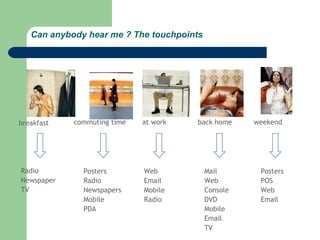
Can anybody hear me ? The touchpoints


breakfast   commuting time   at work   back home     weekend


Radio         Posters        Web           Mail       Posters
Newspaper     Radio          Email         Web        POS
TV            Newspapers     Mobile        Console    Web
              Mobile         Radio         DVD        Email
              PDA                          Mobile
                                           Email
                                           TV
Can anybody hear me ? The consumption


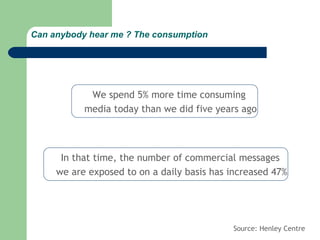
            We spend 5% more time consuming
           media today than we did five years ago


      In that time, the number of commercial messages
     we are exposed to on a daily basis has increased 47%


                                            Source: Henley Centre
Can anybody hear me: the brand perception


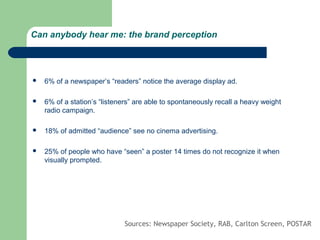
   6% of a newspaper’s “readers” notice the average display ad.

   6% of a station’s “listeners” are able to spontaneously recall a heavy weight
    radio campaign.

   18% of admitted “audience” see no cinema advertising.

   25% of people who have “seen” a poster 14 times do not recognize it when
    visually prompted.


                              Sources: Newspaper Society, RAB, Carlton Screen, POSTAR
Can anybody hear me: Life after the 30 sec spot.


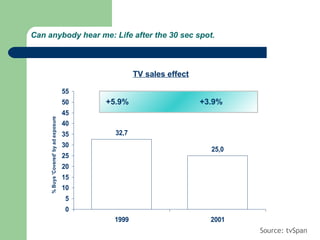
                                                     TV sales effect

                                       55
                                       50   +5.9%                      +3.9%
                                       45
     % Buys 'Covered' by ad exposure


                                       40
                                       35     32,7
                                       30
                                                                         25,0
                                       25
                                       20
                                       15
                                       10
                                       5
                                       0
                                             1999                        2001
                                                                                Source: tvSpan
Can anybody hear me: the internet


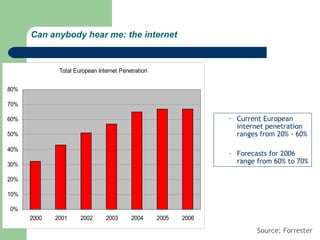
              Total European Internet Penetration


80%

70%

60%                                                               – Current European
                                                                    internet penetration
50%                                                                 ranges from 20% - 60%

40%
                                                                  – Forecasts for 2006
30%                                                                 range from 60% to 70%

20%

10%

0%
      2000   2001     2002      2003      2004      2005   2006

                                                                          Source: Forrester
The new reality
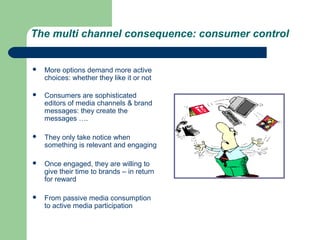
The multi channel consequence: consumer control


   More options demand more active
    choices: whether they like it or not

   Consumers are sophisticated
    editors of media channels & brand
    messages: they create the
    messages ….

   They only take notice when
    something is relevant and engaging

   Once engaged, they are willing to
    give their time to brands – in return
    for reward

   From passive media consumption
    to active media participation
Multi-channel consumers & multi-channel consumption


    People aren’t just consuming media across multiple
    channels…they’re doing business

   From one way to many to many pro-active communication
Need for speed


   Speed:
      –    users will not wait more than 30 seconds for a web site to load.


   Loyalty
      –    almost 90 percent of users will simply move to a rival site if their
           original destination is unavailable or not clear.


 David Neal, IT Week 28 Apr 2006
Technology is a must


   Recent past: technology for technology's sake

   Today:
     –   Users' expectations are high
     –   Need for enriching sites with technology that makes them easier to
         use, more attractive and [easier to] syndicate

   75% of online campaigns are hit by site failures2 (Scivisum)


 Phil Muncaster, IT Week 11 May 2006
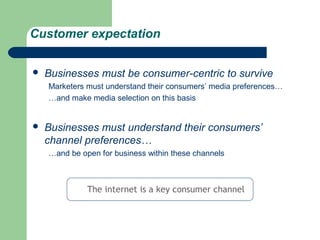
Customer expectation

   Businesses must be consumer-centric to survive
    Marketers must understand their consumers’ media preferences…
    …and make media selection on this basis


   Businesses must understand their consumers’
    channel preferences…
    …and be open for business within these channels


              The internet is a key consumer channel
The current answer
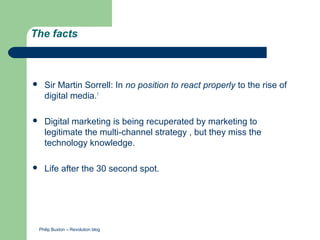
The facts


   Sir Martin Sorrell: In no position to react properly to the rise of
    digital media.1

   Digital marketing is being recuperated by marketing to
    legitimate the multi-channel strategy , but they miss the
    technology knowledge.

   Life after the 30 second spot.


 Philip Buxton – Revolution blog
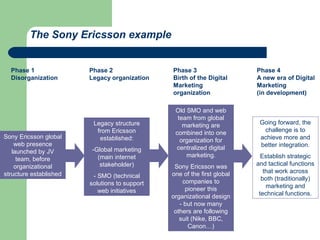
The Sony Ericsson example


  Phase 1               Phase 2                Phase 3                   Phase 4
  Disorganization       Legacy organization    Birth of the Digital      A new era of Digital
                                               Marketing                 Marketing
                                               organization              (in development)

                                                Old SMO and web
                                                 team from global
                         Legacy structure          marketing are          Going forward, the
                          from Ericsson         combined into one          challenge is to
Sony Ericsson global       established:                                   achieve more and
                                                  organization for
    web presence                                                          better integration.
                        -Global marketing       centralized digital
   launched by JV
                          (main internet            marketing.             Establish strategic
     team, before
    organizational         stakeholder)         Sony Ericsson was        and tactical functions
structure established                          one of the first global      that work across
                         - SMO (technical                                  both (traditionally)
                        solutions to support       companies to
                                                    pioneer this             marketing and
                           web initiatives                                technical functions.
                                               organizational design
                                                  - but now many
                                                others are following
                                                  suit (Nike, BBC,
                                                     Canon…)
                                                                               Differentiation
A structure for success
Structure for Digital excellence


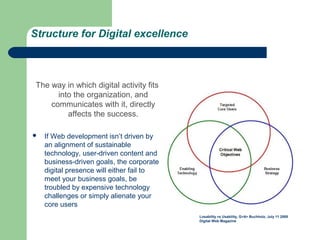
 The way in which digital activity fits
       into the organization, and
     communicates with it, directly
          affects the success.

   If Web development isn’t driven by
    an alignment of sustainable
    technology, user-driven content and
    business-driven goals, the corporate
    digital presence will either fail to
    meet your business goals, be
    troubled by expensive technology
    challenges or simply alienate your
    core users
                                           Losability vs Usability, G>A> Buchholz, July 11 2005
                                           Digital Web Magazine
Basic principles


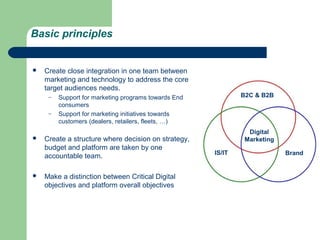
   Create close integration in one team between
    marketing and technology to address the core
    target audiences needs.
     –   Support for marketing programs towards End           B2C & B2B
         consumers
     –   Support for marketing initiatives towards
         customers (dealers, retailers, fleets, …)
                                                                Digital
   Create a structure where decision on strategy,             Marketing
    budget and platform are taken by one
                                                      IS/IT                Brand
    accountable team.

   Make a distinction between Critical Digital
    objectives and platform overall objectives
Key roles and responsibilities


   Steering committee
     –   The overall corporate strategy for Digital covering Platform and Marketing
         for Internet and Extranet is defined and signed off by the “Steering
         Committee”.

   IS/IT
     –   Owns the platform
     –   Manage the platform suppliers and vendors

   Marketing
     –   Owns the overall brand strategy

   Digital marketing
     –   Develop and create and owns the Digital Marketing strategy
     –   Interface in project development towards brands.
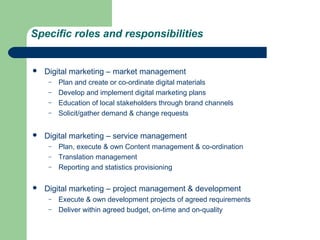
Specific roles and responsibilities


   Digital marketing – market management
     –   Plan and create or co-ordinate digital materials
     –   Develop and implement digital marketing plans
     –   Education of local stakeholders through brand channels
     –   Solicit/gather demand & change requests


   Digital marketing – service management
     –   Plan, execute & own Content management & co-ordination
     –   Translation management
     –   Reporting and statistics provisioning

   Digital marketing – project management & development
     –   Execute & own development projects of agreed requirements
     –   Deliver within agreed budget, on-time and on-quality

0606 organizing for digital excellence

  • 1.
    The search forthe optimal digital structure Toon Diependaele 6th of June 2006
  • 2.
    Introduction  Can anybody hear me – A view on the current marketing field  The new reality – Quick and simple answers  How do we respond – The change management  The view on a possible organization
  • 3.
  • 4.
    Can anybody hearme ? The touchpoints breakfast commuting time at work back home weekend Radio Posters Web Mail Posters Newspaper Radio Email Web POS TV Newspapers Mobile Console Web Mobile Radio DVD Email PDA Mobile Email TV
  • 5.
    Can anybody hearme ? The consumption We spend 5% more time consuming media today than we did five years ago In that time, the number of commercial messages we are exposed to on a daily basis has increased 47% Source: Henley Centre
  • 6.
    Can anybody hearme: the brand perception  6% of a newspaper’s “readers” notice the average display ad.  6% of a station’s “listeners” are able to spontaneously recall a heavy weight radio campaign.  18% of admitted “audience” see no cinema advertising.  25% of people who have “seen” a poster 14 times do not recognize it when visually prompted. Sources: Newspaper Society, RAB, Carlton Screen, POSTAR
  • 7.
    Can anybody hearme: Life after the 30 sec spot. TV sales effect 55 50 +5.9% +3.9% 45 % Buys 'Covered' by ad exposure 40 35 32,7 30 25,0 25 20 15 10 5 0 1999 2001 Source: tvSpan
  • 8.
    Can anybody hearme: the internet Total European Internet Penetration 80% 70% 60% – Current European internet penetration 50% ranges from 20% - 60% 40% – Forecasts for 2006 30% range from 60% to 70% 20% 10% 0% 2000 2001 2002 2003 2004 2005 2006 Source: Forrester
  • 9.
  • 10.
    The multi channelconsequence: consumer control  More options demand more active choices: whether they like it or not  Consumers are sophisticated editors of media channels & brand messages: they create the messages ….  They only take notice when something is relevant and engaging  Once engaged, they are willing to give their time to brands – in return for reward  From passive media consumption to active media participation
  • 11.
    Multi-channel consumers &multi-channel consumption  People aren’t just consuming media across multiple channels…they’re doing business  From one way to many to many pro-active communication
  • 12.
    Need for speed  Speed: – users will not wait more than 30 seconds for a web site to load.  Loyalty – almost 90 percent of users will simply move to a rival site if their original destination is unavailable or not clear. David Neal, IT Week 28 Apr 2006
  • 13.
    Technology is amust  Recent past: technology for technology's sake  Today: – Users' expectations are high – Need for enriching sites with technology that makes them easier to use, more attractive and [easier to] syndicate  75% of online campaigns are hit by site failures2 (Scivisum) Phil Muncaster, IT Week 11 May 2006
  • 14.
    Customer expectation  Businesses must be consumer-centric to survive Marketers must understand their consumers’ media preferences… …and make media selection on this basis  Businesses must understand their consumers’ channel preferences… …and be open for business within these channels The internet is a key consumer channel
  • 15.
  • 16.
    The facts  Sir Martin Sorrell: In no position to react properly to the rise of digital media.1  Digital marketing is being recuperated by marketing to legitimate the multi-channel strategy , but they miss the technology knowledge.  Life after the 30 second spot. Philip Buxton – Revolution blog
  • 17.
    The Sony Ericssonexample Phase 1 Phase 2 Phase 3 Phase 4 Disorganization Legacy organization Birth of the Digital A new era of Digital Marketing Marketing organization (in development) Old SMO and web team from global Legacy structure marketing are Going forward, the from Ericsson combined into one challenge is to Sony Ericsson global established: achieve more and organization for web presence better integration. -Global marketing centralized digital launched by JV (main internet marketing. Establish strategic team, before organizational stakeholder) Sony Ericsson was and tactical functions structure established one of the first global that work across - SMO (technical both (traditionally) solutions to support companies to pioneer this marketing and web initiatives technical functions. organizational design - but now many others are following suit (Nike, BBC, Canon…) Differentiation
  • 18.
  • 19.
    Structure for Digitalexcellence The way in which digital activity fits into the organization, and communicates with it, directly affects the success.  If Web development isn’t driven by an alignment of sustainable technology, user-driven content and business-driven goals, the corporate digital presence will either fail to meet your business goals, be troubled by expensive technology challenges or simply alienate your core users Losability vs Usability, G>A> Buchholz, July 11 2005 Digital Web Magazine
  • 20.
    Basic principles  Create close integration in one team between marketing and technology to address the core target audiences needs. – Support for marketing programs towards End B2C & B2B consumers – Support for marketing initiatives towards customers (dealers, retailers, fleets, …) Digital  Create a structure where decision on strategy, Marketing budget and platform are taken by one IS/IT Brand accountable team.  Make a distinction between Critical Digital objectives and platform overall objectives
  • 21.
    Key roles andresponsibilities  Steering committee – The overall corporate strategy for Digital covering Platform and Marketing for Internet and Extranet is defined and signed off by the “Steering Committee”.  IS/IT – Owns the platform – Manage the platform suppliers and vendors  Marketing – Owns the overall brand strategy  Digital marketing – Develop and create and owns the Digital Marketing strategy – Interface in project development towards brands.
  • 22.
    Specific roles andresponsibilities  Digital marketing – market management – Plan and create or co-ordinate digital materials – Develop and implement digital marketing plans – Education of local stakeholders through brand channels – Solicit/gather demand & change requests  Digital marketing – service management – Plan, execute & own Content management & co-ordination – Translation management – Reporting and statistics provisioning  Digital marketing – project management & development – Execute & own development projects of agreed requirements – Deliver within agreed budget, on-time and on-quality