1
Pricing Shares
A. Caggia, M. Armanini
Financial Investments & Pricing
2015/2016
2
Stocks(Shares)
 Stocks or shares represent the participation of an
individual in the activities of a company in the role of
share-holder, involving some «risk capital».
 Nominal value
 Book value
 Market value
 The cash flow generated by the assets of a company
pay debt obligations and tax first and the remaining goes
to equity.
 Residual Claim characteristic.
Ordinary Shares
 Ordinary shares are the most commonly traded shares,
and they give you a vote in company matters.
 They earn a dividend as long as the company is earning
money, and this dividend directly corresponds to the
profit made by the company. High profits mean high
dividends for you.
 Ordinary shares have no special rights or restrictions.
Whilst they have the highest risk, they also have the
potential to bring the biggest financial gains.
3
Preferred Shares
 In direct contrast to common shares, these shares are
given preference when it comes to dividend payments.
 More importantly, if a company goes bankrupt, these
shares are paid back before common shares.
 The shareholders of preference shares, however, do not
enjoy normal voting rights.
 Dividends of preference shares have a fixed rate, and
therefore provide more security, but this means that if
the profits of the business increase, the value of
preference shares remains the same. Low risk but only
moderate returns.
4
Share valuation (I)
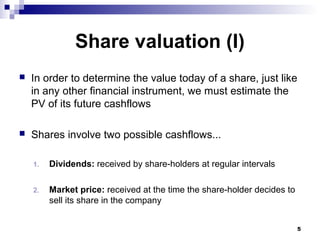
 In order to determine the value today of a share, just like
in any other financial instrument, we must estimate the
PV of its future cashflows
 Shares involve two possible cashflows...
1. Dividends: received by share-holders at regular intervals
2. Market price: received at the time the share-holder decides to
sell its share in the company
5
Share valuation (II)
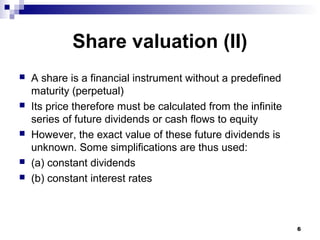
 A share is a financial instrument without a predefined
maturity (perpetual)
 Its price therefore must be calculated from the infinite
series of future dividends or cash flows to equity
 However, the exact value of these future dividends is
unknown. Some simplifications are thus used:
 (a) constant dividends
 (b) constant interest rates
6
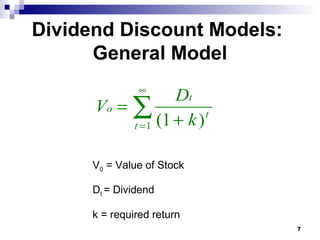
Dividend Discount Models:
General Model
7
V0 = Value of Stock
Dt = Dividend
k = required return
V
D
k
o
t
t
t
=
+=
∞
∑( )11
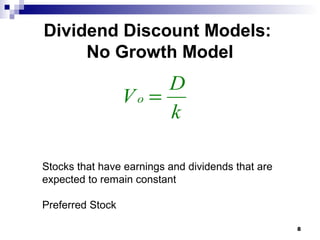
Dividend Discount Models:
No Growth Model
8
Stocks that have earnings and dividends that are
expected to remain constant
Preferred Stock
V
D
k
o =
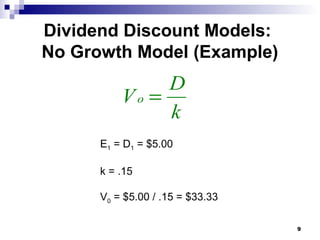
Dividend Discount Models:
No Growth Model (Example)
9
E1 = D1 = $5.00
k = .15
V0 = $5.00 / .15 = $33.33
V
D
k
o =
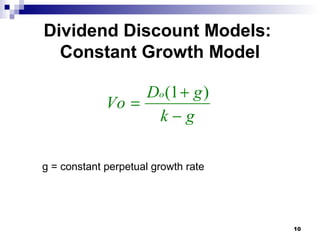
Dividend Discount Models:
Constant Growth Model
10
g = constant perpetual growth rate
Vo
D g
k g
o
=
+
−
( )1
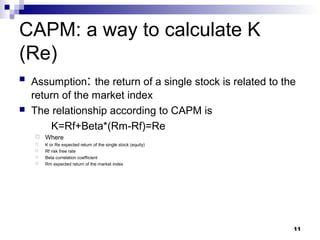
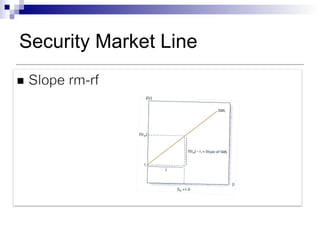
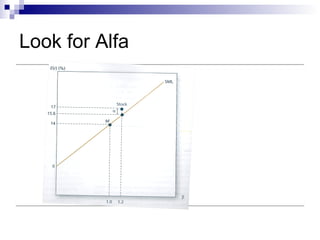
CAPM: a way to calculate K
(Re)
 Assumption: the return of a single stock is related to the
return of the market index
 The relationship according to CAPM is
K=Rf+Beta*(Rm-Rf)=Re
 Where
 K or Re expected return of the single stock (equity)
 Rf risk free rate
 Beta correlation coefficient
 Rm expected return of the market index
11
Security Market LineSecurity Market Line
Look for AlfaLook for Alfa
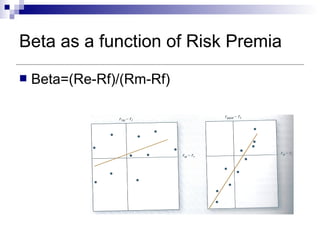
Beta as a function of Risk PremiaBeta as a function of Risk Premia
 Beta=(Re-Rf)/(Rm-Rf)
Share Valuation (III)
 The value of the equity of a company could be calculated as
the difference between the total value of the company and
its debt.
 This methodology implies an estimate of the future cash
flows generated by the business of the company
 This cash flows are then discounted at weighted average
cost of capital
 The value of the debt is then subctracted and the resulting
number represent the value of equity
 This methodology is considered the most accurate and
needs a deep understanding of the company in order to
model its business
15
Stockmarkets
16
Stockmarkets
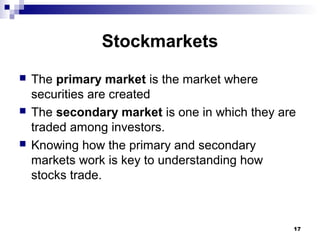
 The primary market is the market where
securities are created
 The secondary market is one in which they are
traded among investors.
 Knowing how the primary and secondary
markets work is key to understanding how
stocks trade.
17
Primary market
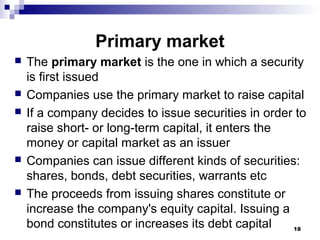
 The primary market is the one in which a security
is first issued
 Companies use the primary market to raise capital
 If a company decides to issue securities in order to
raise short- or long-term capital, it enters the
money or capital market as an issuer
 Companies can issue different kinds of securities:
shares, bonds, debt securities, warrants etc
 The proceeds from issuing shares constitute or
increase the company's equity capital. Issuing a
bond constitutes or increases its debt capital 18
Primary market
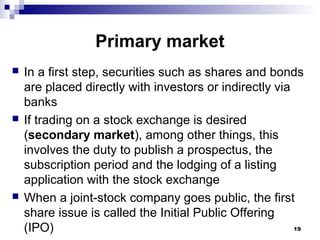
 In a first step, securities such as shares and bonds
are placed directly with investors or indirectly via
banks
 If trading on a stock exchange is desired
(secondary market), among other things, this
involves the duty to publish a prospectus, the
subscription period and the lodging of a listing
application with the stock exchange
 When a joint-stock company goes public, the first
share issue is called the Initial Public Offering
(IPO) 19
Secondary market
 The secondary market is the market in which
securities are traded on the stock market
 In the secondary market, companies are not in
search of capital
 You as an investor deal with other buyers and
sellers of securities
 This is where actual stock-exchange trading
takes place. All traded securities are public and
available to everyone.
20
Secondary market
 In order for a security to be traded on the
Exchange, the company has to successfully
complete the issuing process and meet various
requirements set out in the Listing Rules
 In order to remain listed, issuers have to carry
out certain duties such as publication of price-
sensitive data. This is why news about listed
companies is published in the media on an
almost daily basis
21
Secondary market
 The national exchanges are secondary markets
and includes the New York Stock Exchange
(NYSE), Nasdaq and all major exchanges
around the world
 A market where investors purchase securities or
assets from other investors, rather than from
issuing companies themselves
 If you go to buy IBM stock, you are dealing only
with another investor who owns shares in IBM.
IBM (the company) is in no way involved with the
transaction 22
Auction vs Dealer Markets
 The secondary market can be further broken down
into two specialized categories:
Auction Market and Dealer Market
 The difference between these two market systems
lies in what is displayed in the market in terms of
orders and bid and ask prices
 The Auction Market is an “Order Driven” market
and displays all of the bids and asks
 The Dealer Market is a “Quote Driven” market
and focuses only on the bids and asks of market
makers and other designated parties 23
Quote Driven Market
 Participants are joined through electronic networks
 The dealers hold an inventory of the security in which they
“make a market”
 The dealers then stand ready to buy or sell with market
participants
 These dealers earn profits through the spread between the
prices at which they buy and sell securities
 Nasdaq is a dealer market: here the dealers (market makers)
provide firm bid and ask prices at which they are willing to
buy and sell a security
 The theory is that competition between dealers will provide
the best possible price for investors 24
Order Driven Market
 In the auction market, all individuals and institutions that
want to trade securities announce the prices at which they
are willing to buy and sell
 These are referred to as bid and ask prices
 An efficient market should prevail by bringing together all
parties and having them publicly declare their prices
 The best price of a good need not be sought out because
the convergence of buyers and sellers will cause mutually-
agreeable prices to emerge
 The biggest advantage is its transparency: it clearly shows
all of the market orders and what price people are willing to
buy at or sell for
 NYSE is an auction market 25
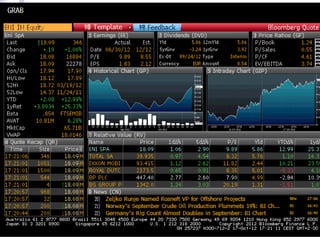
Market Order Book
 An order book is the list of orders (manual or
electronic) that a trading venue (in particular stock
exchanges) uses to record the interest of buyers and
sellers in a particular financial instrument
 A matching engine uses the book to determine which
orders can be fulfilled i.e. what trades can be made
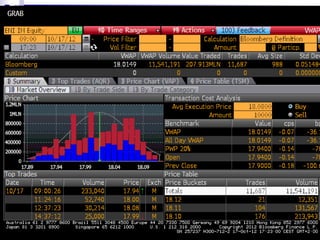
 Market orders:
At market
Limit order (create the order book)
Stop loss / Take profit order
Vwap order … 26
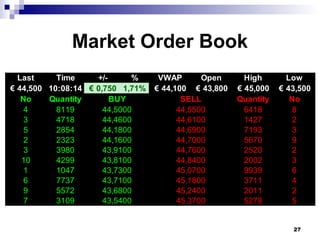
Market Order Book
27
Last Time +/- % VWAP Open High Low
44,500€ 10:08:14 0,750€ 1,71% 44,100€ 43,800€ 45,000€ 43,500€
No Quantity Quantity No
4 8119 6418 8
3 4718 1427 2
5 2854 7193 3
2 2323 5670 9
3 3980 2520 2
10 4299 2002 3
1 1047 9939 6
6 7737 3711 4
9 5572 2011 2
7 3109 5278 5
43,9100
44,1600
44,1800
44,4600
44,5000
44,7600
44,8400
45,0700
45,1800
45,2400
45,3700
43,8100
43,7300
43,7100
43,6800
43,5400
SELL
44,5500
44,6100
44,6900
44,7000
BUY
28
29
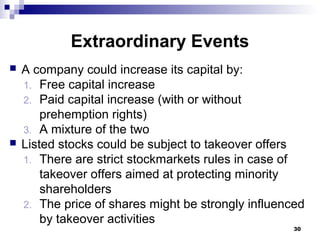
Extraordinary Events
 A company could increase its capital by:
1. Free capital increase
2. Paid capital increase (with or without
prehemption rights)
3. A mixture of the two
 Listed stocks could be subject to takeover offers
1. There are strict stockmarkets rules in case of
takeover offers aimed at protecting minority
shareholders
2. The price of shares might be strongly influenced
by takeover activities
30
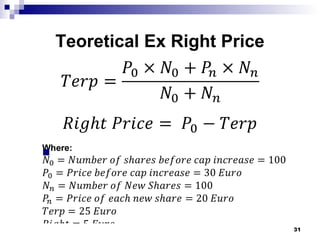
Teoretical Ex Right Price
31

05.pricing shares

  • 1.
    1 Pricing Shares A. Caggia,M. Armanini Financial Investments & Pricing 2015/2016
  • 2.
    2 Stocks(Shares)  Stocks orshares represent the participation of an individual in the activities of a company in the role of share-holder, involving some «risk capital».  Nominal value  Book value  Market value  The cash flow generated by the assets of a company pay debt obligations and tax first and the remaining goes to equity.  Residual Claim characteristic.
  • 3.
    Ordinary Shares  Ordinaryshares are the most commonly traded shares, and they give you a vote in company matters.  They earn a dividend as long as the company is earning money, and this dividend directly corresponds to the profit made by the company. High profits mean high dividends for you.  Ordinary shares have no special rights or restrictions. Whilst they have the highest risk, they also have the potential to bring the biggest financial gains. 3
  • 4.
    Preferred Shares  Indirect contrast to common shares, these shares are given preference when it comes to dividend payments.  More importantly, if a company goes bankrupt, these shares are paid back before common shares.  The shareholders of preference shares, however, do not enjoy normal voting rights.  Dividends of preference shares have a fixed rate, and therefore provide more security, but this means that if the profits of the business increase, the value of preference shares remains the same. Low risk but only moderate returns. 4
  • 5.
    Share valuation (I) In order to determine the value today of a share, just like in any other financial instrument, we must estimate the PV of its future cashflows  Shares involve two possible cashflows... 1. Dividends: received by share-holders at regular intervals 2. Market price: received at the time the share-holder decides to sell its share in the company 5
  • 6.
    Share valuation (II) A share is a financial instrument without a predefined maturity (perpetual)  Its price therefore must be calculated from the infinite series of future dividends or cash flows to equity  However, the exact value of these future dividends is unknown. Some simplifications are thus used:  (a) constant dividends  (b) constant interest rates 6
  • 7.
    Dividend Discount Models: GeneralModel 7 V0 = Value of Stock Dt = Dividend k = required return V D k o t t t = += ∞ ∑( )11
  • 8.
    Dividend Discount Models: NoGrowth Model 8 Stocks that have earnings and dividends that are expected to remain constant Preferred Stock V D k o =
  • 9.
    Dividend Discount Models: NoGrowth Model (Example) 9 E1 = D1 = $5.00 k = .15 V0 = $5.00 / .15 = $33.33 V D k o =
  • 10.
    Dividend Discount Models: ConstantGrowth Model 10 g = constant perpetual growth rate Vo D g k g o = + − ( )1
  • 11.
    CAPM: a wayto calculate K (Re)  Assumption: the return of a single stock is related to the return of the market index  The relationship according to CAPM is K=Rf+Beta*(Rm-Rf)=Re  Where  K or Re expected return of the single stock (equity)  Rf risk free rate  Beta correlation coefficient  Rm expected return of the market index 11
  • 12.
  • 13.
  • 14.
    Beta as afunction of Risk PremiaBeta as a function of Risk Premia  Beta=(Re-Rf)/(Rm-Rf)
  • 15.
    Share Valuation (III) The value of the equity of a company could be calculated as the difference between the total value of the company and its debt.  This methodology implies an estimate of the future cash flows generated by the business of the company  This cash flows are then discounted at weighted average cost of capital  The value of the debt is then subctracted and the resulting number represent the value of equity  This methodology is considered the most accurate and needs a deep understanding of the company in order to model its business 15
  • 16.
  • 17.
    Stockmarkets  The primarymarket is the market where securities are created  The secondary market is one in which they are traded among investors.  Knowing how the primary and secondary markets work is key to understanding how stocks trade. 17
  • 18.
    Primary market  Theprimary market is the one in which a security is first issued  Companies use the primary market to raise capital  If a company decides to issue securities in order to raise short- or long-term capital, it enters the money or capital market as an issuer  Companies can issue different kinds of securities: shares, bonds, debt securities, warrants etc  The proceeds from issuing shares constitute or increase the company's equity capital. Issuing a bond constitutes or increases its debt capital 18
  • 19.
    Primary market  Ina first step, securities such as shares and bonds are placed directly with investors or indirectly via banks  If trading on a stock exchange is desired (secondary market), among other things, this involves the duty to publish a prospectus, the subscription period and the lodging of a listing application with the stock exchange  When a joint-stock company goes public, the first share issue is called the Initial Public Offering (IPO) 19
  • 20.
    Secondary market  Thesecondary market is the market in which securities are traded on the stock market  In the secondary market, companies are not in search of capital  You as an investor deal with other buyers and sellers of securities  This is where actual stock-exchange trading takes place. All traded securities are public and available to everyone. 20
  • 21.
    Secondary market  Inorder for a security to be traded on the Exchange, the company has to successfully complete the issuing process and meet various requirements set out in the Listing Rules  In order to remain listed, issuers have to carry out certain duties such as publication of price- sensitive data. This is why news about listed companies is published in the media on an almost daily basis 21
  • 22.
    Secondary market  Thenational exchanges are secondary markets and includes the New York Stock Exchange (NYSE), Nasdaq and all major exchanges around the world  A market where investors purchase securities or assets from other investors, rather than from issuing companies themselves  If you go to buy IBM stock, you are dealing only with another investor who owns shares in IBM. IBM (the company) is in no way involved with the transaction 22
  • 23.
    Auction vs DealerMarkets  The secondary market can be further broken down into two specialized categories: Auction Market and Dealer Market  The difference between these two market systems lies in what is displayed in the market in terms of orders and bid and ask prices  The Auction Market is an “Order Driven” market and displays all of the bids and asks  The Dealer Market is a “Quote Driven” market and focuses only on the bids and asks of market makers and other designated parties 23
  • 24.
    Quote Driven Market Participants are joined through electronic networks  The dealers hold an inventory of the security in which they “make a market”  The dealers then stand ready to buy or sell with market participants  These dealers earn profits through the spread between the prices at which they buy and sell securities  Nasdaq is a dealer market: here the dealers (market makers) provide firm bid and ask prices at which they are willing to buy and sell a security  The theory is that competition between dealers will provide the best possible price for investors 24
  • 25.
    Order Driven Market In the auction market, all individuals and institutions that want to trade securities announce the prices at which they are willing to buy and sell  These are referred to as bid and ask prices  An efficient market should prevail by bringing together all parties and having them publicly declare their prices  The best price of a good need not be sought out because the convergence of buyers and sellers will cause mutually- agreeable prices to emerge  The biggest advantage is its transparency: it clearly shows all of the market orders and what price people are willing to buy at or sell for  NYSE is an auction market 25
  • 26.
    Market Order Book An order book is the list of orders (manual or electronic) that a trading venue (in particular stock exchanges) uses to record the interest of buyers and sellers in a particular financial instrument  A matching engine uses the book to determine which orders can be fulfilled i.e. what trades can be made  Market orders: At market Limit order (create the order book) Stop loss / Take profit order Vwap order … 26
  • 27.
    Market Order Book 27 LastTime +/- % VWAP Open High Low 44,500€ 10:08:14 0,750€ 1,71% 44,100€ 43,800€ 45,000€ 43,500€ No Quantity Quantity No 4 8119 6418 8 3 4718 1427 2 5 2854 7193 3 2 2323 5670 9 3 3980 2520 2 10 4299 2002 3 1 1047 9939 6 6 7737 3711 4 9 5572 2011 2 7 3109 5278 5 43,9100 44,1600 44,1800 44,4600 44,5000 44,7600 44,8400 45,0700 45,1800 45,2400 45,3700 43,8100 43,7300 43,7100 43,6800 43,5400 SELL 44,5500 44,6100 44,6900 44,7000 BUY
  • 28.
  • 29.
  • 30.
    Extraordinary Events  Acompany could increase its capital by: 1. Free capital increase 2. Paid capital increase (with or without prehemption rights) 3. A mixture of the two  Listed stocks could be subject to takeover offers 1. There are strict stockmarkets rules in case of takeover offers aimed at protecting minority shareholders 2. The price of shares might be strongly influenced by takeover activities 30
  • 31.