·¤æðÇU Ù´.
Code No. 58/3
SET-3
ÚUæðÜ Ù´.
Roll No.
· ·ë¤ÂØæ Áæ¡¿ ·¤ÚU Üð´ ç·¤ §â ÂýàÙ-˜æ ×ð´ ×éçÎýÌ ÂëcÆU 12 ãñ´Ð
· ÂýàÙ-˜æ ×ð´ ÎæçãÙð ãæÍ ·¤è ¥æðÚU çΰ »° ·¤æðÇU ِÕÚU ·¤æð ÀUæ˜æ ©žæÚU-ÂéçSÌ·¤æ ·ð¤ ×é¹-ÂëcÆU ÂÚU çܹð´Ð
· ·ë¤ÂØæ Áæ¡¿ ·¤ÚU Üð´ ç·¤ §â ÂýàÙ-˜æ ×ð´ 30 ÂýàÙ ãñ´Ð
· ·ë¤ÂØæ ÂýàÙ ·¤æ ©žæÚU çÜ¹Ùæ àæéM¤ ·¤ÚUÙð âð ÂãÜð, ÂýàÙ ·¤æ ·ý¤×æ´·¤ ¥ßàØ çܹð´Ð
· §â ÂýàÙ-Â˜æ ·¤æð ÂɸÙð ·ð¤ çܰ 15 ç×ÙÅU ·¤æ âר çÎØæ »Øæ ãñÐ ÂýàÙ-Â˜æ ·¤æ çßÌÚU‡æ Âêßæüq ×ð´
10.15 ÕÁð ç·¤Øæ Áæ°ð»æÐ 10.15 ÕÁð âð 10.30 ÕÁð Ì·¤ ÀUæ˜æ ·ð¤ßÜ ÂýàÙ-Â˜æ ·¤æð Âɸð´»ð ¥æñÚU §â
¥ßçÏ ·ð¤ ÎæñÚUæÙ ßð ©žæÚ-ÂéçSÌ·¤æ ÂÚU ·¤æð§ü ©žæÚU Ùãè´ çܹð´»ðÐ
· Please check that this question paper contains 12 printed pages.
· Code number given on the right hand side of the question paper should be written
on the title page of the answer-book by the candidate.
· Please check that this question paper contains 30 questions.
· Please write down the Serial Number of the question before attempting
it.
· 15 minute time has been allotted to read this question paper. The question paper
will be distributed at 10.15 a.m. From 10.15 a.m. to 10.30 a.m., the students will
read the question paper only and will not write any answer on the answer-book
during this period.
¥ÍüàææS˜æ
ECONOMICS
çÙÏæüçÚUÌ âר Ñ 3 ƒæ‡ÅðU ¥çÏ·¤Ì× ¥´·¤ Ñ 100
Time allowed : 3 hours Maximum Marks : 100
Series ONS
158/3 P.T.O.
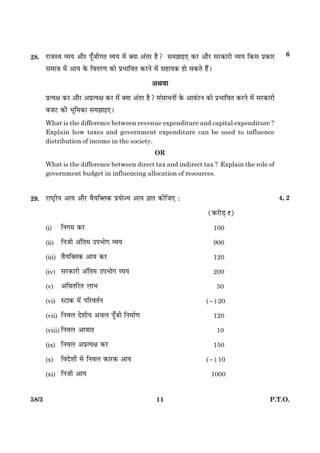
ÂÚUèÿææÍèü ·¤æðÇU ·¤æð ©žæÚU-ÂéçSÌ·¤æ ·ð¤ ×é¹-ÂëcÆU
ÂÚU ¥ßàØ çܹð´Ð
Candidates must write the Code on the
title page of the answer-book.
258/3
âæ×æ‹Ø çÙÎðüàæ Ñ
(i) ÎæðÙæð´ ¹‡ÇUæð´ ·ð¤ âÖè ÂýàÙ ¥çÙßæØü ãñ´Ð
(ii) ÂýˆØð·¤ ÂýàÙ ·ð¤ âæ×Ùð ©Ù·ð¤ ¥´·¤ Îàææü° »Øð ãñ´Ð
(iii) ÂýàÙ â´Øæ 1 - 5 ¥æñÚU 16 - 20 ¥çÌ Üƒæé ©žæÚUèØ ÂýàÙ ãñ´, ÂýˆØð·¤ ÂýàÙ 1 ¥´·¤ ·¤æ ãñÐ âÖè ÂýàÙæð´ ·ð¤
©žæÚU °·¤ ßæ€Ø ×ð´ ÎðÙæ ãñÐ
(iv) ÂýàÙ â´Øæ 6 - 8 ¥æñÚU 21 - 23 ܃æé ©žæÚUèØ ÂýàÙ ãñ´, ÂýˆØð·¤ ÂýàÙ 3 ¥´·¤ ·¤æ ãñÐ âÖè ÂýàÙæð´ ·ð¤ ©žæÚU
âæ×æ‹ØÌÑ 60 àæŽÎæð´ âð ¥çÏ·¤ Ù ãæð´Ð
(v) ÂýàÙ â´Øæ 9 - 11 ¥æñÚU 24 - 26 Øã Öè ܃æé ©žæÚUèØ ÂýàÙ ãñ´, ÂýˆØð·¤ ÂýàÙ ·ð¤ 4 ¥´·¤ ãñ´Ð âÖè ÂýàÙæð´
·ð¤ ©žæÚU âæ×æ‹ØÌÑ 70 àæŽÎæð´ âð ¥çÏ·¤ Ù ãæð´Ð
(vi) ÂýàÙ â´Øæ 12 - 15 ¥æñÚU 27 - 30 Îèƒæü ©žæÚUèØ ÂýàÙ ãñ´, ÂýˆØð·¤ ÂýàÙ ·ð¤ 6 ¥´·¤ ãñ´Ð âÖè ÂýàÙæð´ ·ð¤ ©žæÚU
âæ×æ‹ØÌÑ 100 àæŽÎæð´ âð ¥çÏ·¤ Ù ãæð´Ð
(vii) ©ÂÚUæð€Ì ÂýàÙæð´ ·ð¤ ©žæÚU â´çÿæŒÌ °ß´ âãè ãæðÙð ¿æçã° ÌÍæ ØÍæâ´Öß çÙÎðüàææÙéâæÚU àæŽÎ âè׿ ·ð¤ ÖèÌÚU ©žæÚU
çÎØæ ÁæÙæ ¿æçã°Ð
Instructions :
(i) All questions in both sections are compulsory.
(ii) Marks for questions are indicated against each question.
(iii) Question No. 1 - 5 and 16 - 20 are very short answer questions carrying 1 mark each.
They are required to be answered in one sentence.
(iv) Question No. 6 - 8 and 21 - 23 are short answer questions carrying 3 marks each.
Answers to them should not normally exceed 60 words each.
(v) Question No. 9 - 11 and 24 - 26 are also short answer questions carrying 4 marks
each. Answers to them should not normally exceed 70 words each.
(vi) Question No. 12 - 15 and 27 - 30 are long answer questions carrying 6 marks each.
Answers to them should not normally exceed 100 words each.
(vii) Answers should be brief and to the point and the above word limit be adhered to as
far as possible.
358/3 P.T.O.
¹‡ÇU - ¥
SECTION - A
1. çßÖðÎè ©ˆÂæÎ §â·¤è °·¤ çßàæðáÌæ ãñ Ñ 1
(âãè çß·¤Ë ¿éçÙ°) Ñ
(a) ·ð¤ßÜ °·¤æçÏ·¤æçÚU·¤ ÂýçÌØæðç»Ìæ ·¤è
(b) ·ð¤ßÜ ¥ËÂæçÏ·¤æÚU ·¤è
(c) °·¤æçÏ·¤æçÚU·¤ ÂýçÌØæðç»Ìæ ¥æñÚU ¥ËÂæçÏ·¤æÚU ÎæðÙæð´ ·¤è
(d) °·¤æçÏ·¤æÚU ·¤è
Differentiated products is a characteristic of :
(Choose the correct alternative) :
(a) Monopolistic competition only
(b) Oligopoly only
(c) Both monopolistic competition and oligopoly
(d) Monopoly
2. §â ÕæÁæÚU ×ð´ °·¤ Ȥ×ü ·¤æ ׿¡» ß·ý¤ Âê‡æüÌØæ Üæð¿ÎæÚU ãæðÌæ ãñ Ñ 1
(âãè çß·¤Ë ¿éçÙ°) Ñ
(a) Âê‡æü ÂýçÌØæðç»Ìæ
(b) °·¤æçÏ·¤æÚU
(c) °·¤æçÏ·¤æçÚU·¤ ÂýçÌØæðç»Ìæ
(d) ¥ËÂæçÏ·¤æÚU
Demand curve of a firm is perfectly elastic under :
(Choose the correct alternative)
(a) Perfect competition
(b) Monopoly
(c) Monopolistic competition
(d) Oligopoly
458/3
3. Áñâð-Áñâð ©ˆÂæÎÙ ×ð´ ßëçh ·¤è ÁæÌè ãñ ·é¤Ü Üæ»Ì ¥æñÚU ·é¤Ü ÂçÚUßÌèü Üæ»Ì ·ð¤ Õè¿ ¥´ÌÚU ·¤æð €Øæ
ãæðÌæ ãñ?
What happens to the difference between Total Cost and Total Variable Cost as
output is increased ?
4. °·¤ Ȥ×ü °·¤ ÃæSÌé ·¤è ç·¤ÌÙè Öè ׿˜ææ Îè »Øè ·¤è×Ì ÂÚU Õð¿ â·¤Ìè ãñРȤ×ü ·¤è âè׿´Ì âÂýæçŒˆæ
(¥æ»×) Ñ
(âãè çß·¤Ë ¿éçÙ°) Ñ
(a) ¥æñâÌ âÂýæçŒˆæ âð ¥çÏ·¤ ãæð»è
(b) ¥æñâÌ âÂýæçŒˆæ âð ·¤× ãæð»è
(c) ¥æñâÌ âÂýæçŒˆæ ·ð¤ â×æÙ ãæð»è
(d) àæê‹Ø ãæð»è
A firm is able to sell any quantity of a good at a given price. The firm’s marginal
revenue will be :
(Choose the correct alternative) :
(a) Greater than Average Revenue
(b) Less than Average Revenue
(c) Equal to Average Revenue
(d) Zero
5. ÂêçÌü ß·ý¤ ×ð´ Òç¹â·¤æßÓ ·¤Õ ¥æÌæ ãñ?
When does ‘shift’ in supply curve take place ?
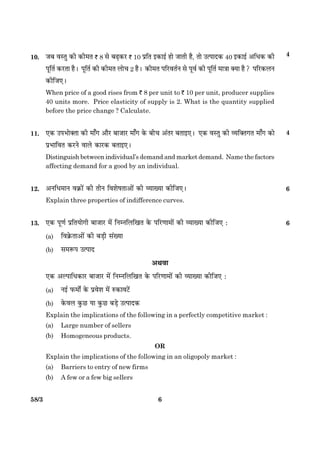
6. ßSÌé ·¤è ·¤è×Ì ×ð´ 10 ÂýçÌàæÌ ßëçh ·¤æ ©â·¤è ׿¡» ÂÚU €Øæ ÂýÖæß ãæð»æ ØçÎ ×æ¡» ·¤è ·¤è×Ì Üæð¿
(a) àæê‹Ø, (b) 21, (c) 22 ãæðÐ
What will be the effect of 10 percent rise in price of a good on its demand if price
elasticity of demand is (a) Zero, (b) 21, (c) 22.
1
1
1
3
558/3 P.T.O.
7. ‹ØêÙÌ× ·¤è×Ì âè׿ âð €Øæ ¥çÖÂýæØ ãñ? §â·ð¤ ÂçÚU‡ææ× â×Ûææ§°Ð 3
¥Íßæ
ØçÎ ßÌü×æÙ ÕæÁæÚU ·¤è×Ì â´ÌéÜÙ ·¤è×Ì âð ¥çÏ·¤ ãæð, Ìæð §â·ð¤ ·¤æÚU‡æ ÂǸÙð ßæÜð ÂýÖæßæð´ ·¤è
oë´¹Üæ â×Ûææ§°Ð
What is minimum price ceiling ? Explain its implications.
OR
If the prevailing market price is above the equilibrium price, explain its chain
of effects.
8. °·¤ ©ÂÖæð€ˆææ ·ð¤ßÜ Îæð ßSÌ饿ð´ X ÌÍæU Y ·¤æ ©ÂÖæð» ·¤ÚUÌæ ãñÐ X ¥æñÚU Y ÂýˆØð·¤ ·¤è âè׿´Ì
©ÂØæðç»Ìæ 3 ãñÐ X ¥æñÚU Y ·¤è ·¤è×Ì ·ý¤×àæÑ ` 2 ¥æñÚU ` 1 ãñÐ €Øæ ©ÂÖæð€ˆææ â´ÌéÜÙ ×ð´ ãñ? ©â·¤è
¥æ»ð ·¤è ÂýçÌç·ý¤Øæ €Øæ ãæð»è? ·¤æÚU‡æ ÎèçÁ°Ð
A consumer consumes only two goods X and Y. The marginal utilities of X and
of Y is 3. Prices of X and Y are ` 2 and ` 1 respectively. Is consumer in
equilibrium ? What will be further reaction of the consumer ? Give reasons.
9. ¥¿Ü Üæ»Ì ·¤è ÂçÚUÖæáæ ÎèçÁ°Ð °·¤ ©ÎæãÚU‡æ ÎèçÁ°Ð ·¤æÚU‡æ ÕÌæÌð ãé° â×Ûææ§° ç·¤
Áñâð-Áñâð ©ˆÂæÎÙ ×ð´ ßëçh ·¤è ÁæÌè ãñ ¥æñâÌ ¥¿Ü Üæ»Ì ·¤æ ÃØßãæÚU €Øæ ÚUãÌæ ãñ?
¥Íßæ
âè׿´Ì ©ˆÂæÎ ·¤è ÂçÚUÖæáæ ÎèçÁ°Ð ÁÕ ·ð¤ßÜ °·¤ ¥æ»Ì ×ð´ ßëçh ·¤è ÁæØ ¥æñÚU ¥‹Ø ¥æ»Ìæð´
·¤æð çSÍÚU ÚU¹æ ÁæØ Ìæð âè׿´Ì ©ˆÂæÎ ·¤æ ÃØßãæÚU ÕÌæ§°Ð
Define fixed cost. Give an example. Explain with reason the behaviour of
Average Fixed Cost as output is increased.
OR
Define marginal product. State the behaviour of marginal product when only
one input is increased and other inputs are held constant.
4
3
658/3
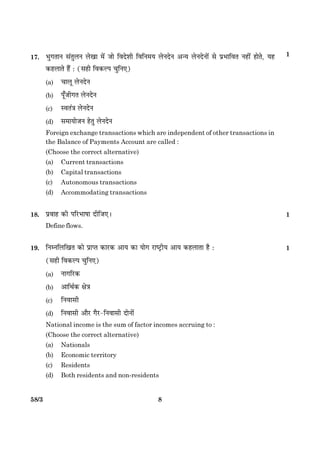
10. ÁÕ ßSÌé ·¤è ·¤è×Ì ` 8 âð Õɸ·¤ÚU ` 10 ÂýçÌ §·¤æ§ü ãæð ÁæÌè ãñ, Ìæð ©ˆÂæÎ·¤ 40 §·¤æ§ü ¥çÏ·¤ ·¤è
ÂêçÌü ·¤ÚUÌæ ãñÐ ÂêçÌü ·¤è ·¤è×Ì Üæð¿ 2 ãñÐ ·¤è×Ì ÂçÚUßÌüÙ âð Âêßü ·¤è ÂêçÌü ׿˜ææ €Øæ ãñ? ÂçÚU·¤ÜÙ
·¤èçÁ°Ð
When price of a good rises from ` 8 per unit to ` 10 per unit, producer supplies
40 units more. Price elasticity of supply is 2. What is the quantity supplied
before the price change ? Calculate.
11. °·¤ ©ÂÖæð€ˆææ ·¤è ׿¡» ¥æñÚU ÕæÁæÚU ׿¡» ·ð¤ Õè¿ ¥´ÌÚU ÕÌæ§°Ð °·¤ ßSÌé ·¤è ÃØç€Ì»Ì ׿¡» ·¤æð
ÂýÖæçßÌ ·¤ÚUÙð ßæÜð ·¤æÚU·¤ ÕÌæ§°Ð
Distinguish between individual’s demand and market demand. Name the factors
affecting demand for a good by an individual.
12. ¥ÙçÏ×æÙ ß·ý¤æð´ ·¤è ÌèÙ çßàæðáÌæ¥æð´ ·¤è ÃØæØæ ·¤èçÁ°Ð 6
Explain three properties of indifference curves.
13. °·¤ Âê‡æü ÂýçÌØæð»è ÕæÁæÚU ×ð´ çِÙçÜç¹Ì ·ð¤ ÂçÚU‡ææ×æð´ ·¤è ÃØæØæ ·¤èçÁ° Ñ 6
(a) çß·ýð¤Ìæ¥æð´ ·¤è ÕǸè â´Øæ
(b) â×M¤Â ©ˆÂæÎ
¥Íßæ
°·¤ ¥ËÂæçÏ·¤æÚU ÕæÁæÚU ×ð´ çِÙçÜç¹Ì ·ð¤ ÂçÚU‡ææ×æð´ ·¤è ÃØæØæ ·¤èçÁ° Ñ
(a) Ù§ü È¤×æðZ ·ð¤ Âýßðàæ ×ð´ L¤·¤æßÅð´U
(b) ·ð¤ßÜ ·é¤ÀU Øæ ·é¤ÀU ÕÇ¸ð ©ˆÂæÎ·¤
Explain the implications of the following in a perfectly competitive market :
(a) Large number of sellers
(b) Homogeneous products.
OR
Explain the implications of the following in an oligopoly market :
(a) Barriers to entry of new firms
(b) A few or a few big sellers
4
4
758/3 P.T.O.
14. °·¤ ¥ÍüÃØßSÍæ ×ð´ ·ð¤‹ÎýèØ â×SØæ°¡ €Øæð´ ÂñÎæ ãæðÌè ãñ´? ÒÒç·¤â·ð¤ çܰ ©ˆÂæÎÙ ç·¤Øæ ÁæØÓÓ
·ð¤‹ÎýèØ â×SØæ â×Ûææ§°Ð
Why do central problems of an economy arise ? Explain the central problem of
“for whom to produce” ?
15. (a) ßSÌé X ·¤è ¥ÂÙè ·¤è×Ì ç»ÚUÙð ¥æñÚU (b) ßSÌé X ÂÚU ·¤ÚU ·¤è ÎÚU ÕɸÙð ·¤æ ÂêçÌü ß·ý¤ ÂÚU ÂǸÙð
߿ܿ ÂýÖæß â×Ûææ§°Ð ÚðU¹æç¿˜ææð´ ·¤æ ÂýØæð» ·¤èçÁ°Ð
Examine the effect of (a) fall in the own price of good X and (b) rise in tax rate on
good X on the supply curve. Use diagrams.
ÎëçcÅUãèÙ ÂÚUèÿææçÍüØæð´ ·ð¤ çܰ ÂýàÙ â´Øæ 15 ·ð¤ SÍæÙ ÂÚUÐ
(a) ßSÌé X ·¤è ¥ÂÙè ·¤è×Ì ç»ÚUÙð ¥æñÚU (b) ßSÌé X ÂÚU ·¤ÚU ·¤è ÎÚU ÕɸæÙð ·¤æ ÂêçÌü ÂÚU ÂýÖæß
â×Ûææ§°Ð ÌæçÜ·¤æ ·¤æ ÂýØæð» ·¤èçÁ°Ð
For blind candidates in lieu of Q. No 15.
Examine the effect of (a) fall in the own price of good X and (b) rise in tax rate on
good X on supply of a good. Use schedule.
¹‡ÇU - Õ
SECTION - B
16. ÂýæÍç×·¤ ƒææÅUæ §â·ð¤ â×æÙ ãæðÌæ ãñ Ñ 1
(âãè çß·¤Ë ¿éçÙ°)
(a) «¤‡æ
(b) ŽØæÁ Öé»ÌæÙ
(c) «¤‡æ ƒæÅUæ ŽØæÁ Öé»ÌæÙ
(d) «¤‡æ ¥æñÚU ŽØæÁ Öé»ÌæÙ ÎæðÙæð´
Primary deficit equals :
(Choose the correct alternative)
(a) Borrowings
(b) Interest payments
(c) Borrowings less interest payments
(d) Borrowings and interest payments both
6
6
858/3
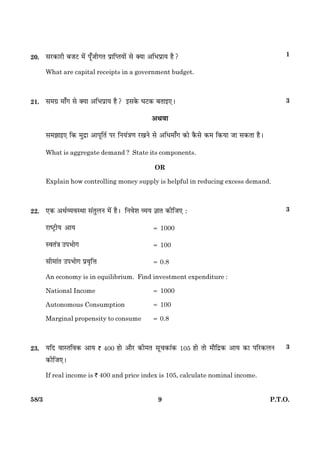
17. Öé»ÌæÙ â´ÌéÜÙ Üð¹æ ×ð´ Áæð çßÎðàæè çßçÙר ÜðÙÎðÙ ¥‹Ø ÜðÙÎðÙæð´ âð ÂýÖæçßÌ Ùãè´ ãæðÌð, Øã
·¤ãÜæÌð ãñ´ Ñ (âãè çß·¤Ë ¿éçÙ°)
(a) ¿æÜê ÜðÙÎðÙ
(b) Âê¡Áè»Ì ÜðÙÎðÙ
(c) SßÌ´˜æ ÜðÙÎðÙ
(d) â×æØæðÁÙ ãðÌé ÜðÙÎðÙ
Foreign exchange transactions which are independent of other transactions in
the Balance of Payments Account are called :
(Choose the correct alternative)
(a) Current transactions
(b) Capital transactions
(c) Autonomous transactions
(d) Accommodating transactions
18. Âýßæã ·¤è ÂçÚUÖæáæ ÎèçÁ°Ð 1
Define flows.
19. çِÙçÜç¹Ì ·¤æð ÂýæŒˆæ ·¤æÚU·¤ ¥æØ ·¤æ Øæð» ÚUæcÅþUèØ ¥æØ ·¤ãÜæÌæ ãñ Ñ 1
(âãè çß·¤Ë ¿éçÙ°)
(a) Ùæ»çÚU·¤
(b) ¥æçÍü·¤ ÿæð˜æ
(c) çÙßæâè
(d) çÙßæâè ¥æñÚU »ñÚU-çÙßæâè ÎæðÙæð´
National income is the sum of factor incomes accruing to :
(Choose the correct alternative)
(a) Nationals
(b) Economic territory
(c) Residents
(d) Both residents and non-residents
1
958/3 P.T.O.
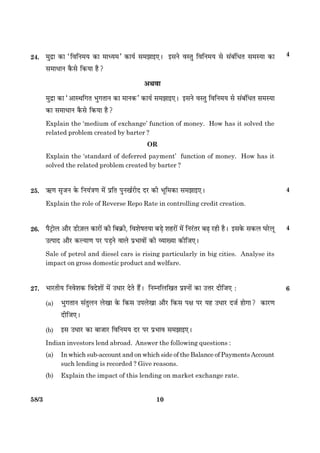
20. âÚU·¤æÚUè ÕÁÅU ×ð´ Âê¡Áè»Ì ÂýæçŒˆæØæð´ âð €Øæ ¥çÖÂýæØ ãñ?
What are capital receipts in a government budget.
21. â×»ý ׿¡» âð €Øæ ¥çÖÂýæØ ãñ? §â·ð¤ ƒæÅU·¤ ÕÌæ§°Ð
¥Íßæ
â×Ûææ§° ç·¤ ×éÎýæ ¥æÂêçÌü ÂÚU çÙØ´˜æ‡æ ÚU¹Ùð âð ¥çÏ׿¡» ·¤æð ·ñ¤âð ·¤× ç·¤Øæ Áæ â·¤Ìæ ãñÐ
What is aggregate demand ? State its components.
OR
Explain how controlling money supply is helpful in reducing excess demand.
22. °·¤ ¥ÍüÃØßSÍæ â´ÌéÜÙ ×ð´ ãñÐ çÙßðàæ ÃØØ ™ææÌ ·¤èçÁ° Ñ
ÚUæcÅþUèØ ¥æØ 5 1000
SßÌ´˜æ ©ÂÖæð» 5 100
âè׿´Ì ©ÂÖæð» Âýßëçžæ 5 0.8
An economy is in equilibrium. Find investment expenditure :
National Income 5 1000
Autonomous Consumption 5 100
Marginal propensity to consume 5 0.8
23. ØçÎ ßæSÌçß·¤ ¥æØ ` 400 ãæð ¥æñÚU ·¤è×Ì âê¿·¤æ´·¤ 105 ãæð Ìæð ׿ñçÎý·¤ ¥æØ ·¤æ ÂçÚU·¤ÜÙ
·¤èçÁ°Ð
If real income is ` 400 and price index is 105, calculate nominal income.
1
3
3
3
1058/3
24. ×éÎýæ ·¤æ ÒçßçÙר ·¤æ ׿Ш×Ó ·¤æØü â×Ûææ§°Ð §âÙð ßSÌé çßçÙר âð â´Õ´çÏÌ â×SØæ ·¤æ
â×æÏæÙ ·ñ¤âð ç·¤Øæ ãñ?
¥Íßæ
×éÎýæ ·¤æ Ò¥æSÍç»Ì Öé»ÌæÙ ·¤æ ×æÙ·¤Ó ·¤æØü â×Ûææ§°Ð §âÙð ßSÌé çßçÙר âð â´Õ´çÏÌ â×SØæ
·¤æ â×æÏæÙ ·ñ¤âð ç·¤Øæ ãñ?
Explain the ‘medium of exchange’ function of money. How has it solved the
related problem created by barter ?
OR
Explain the ‘standard of deferred payment’ function of money. How has it
solved the related problem created by barter ?
25. «¤‡æ âëÁÙ ·ð¤ çÙØ´˜æ‡æ ×ð´ ÂýçÌ ÂéÙ¹üÚUèÎ ÎÚU ·¤è Öêç×·¤æ â×Ûææ§°Ð
Explain the role of Reverse Repo Rate in controlling credit creation.
26. ÂñÅþUæðÜ ¥æñÚU ÇUè$ÁÜ ·¤æÚUæð´ ·¤è çÕ·ý¤è, çßàæðáÌØæ ÕǸð àæãÚUæð´ ×ð´ çÙÚ´UÌÚU Õɸ ÚUãè ãñÐ §â·ð¤ â·¤Ü ƒæÚðUÜê
©ˆÂæÎ ¥æñÚU ·¤ËØæ‡æ ÂÚU ÂǸÙð ßæÜð ÂýÖæßæð´ ·¤è ÃØæØæ ·¤èçÁ°Ð
Sale of petrol and diesel cars is rising particularly in big cities. Analyse its
impact on gross domestic product and welfare.
27. ÖæÚUÌèØ çÙßðàæ·¤ çßÎðàææð´ ×ð´ ©ÏæÚU ÎðÌð ãñ´Ð çِÙçÜç¹Ì ÂýàÙæð´ ·¤æ ©žæÚU ÎèçÁ° Ñ 6
(a) Öé»ÌæÙ â´ÌéÜÙ Üð¹æ ·ð¤ 緤⠩ÂÜð¹æ ¥æñÚU ç·¤â Âÿæ ÂÚU Øã ©ÏæÚU ÎÁü ãæð»æ? ·¤æÚU‡æ
ÎèçÁ°Ð
(b) §â ©ÏæÚU ·¤æ ÕæÁæÚU çßçÙר ÎÚU ÂÚU ÂýÖæß â×Ûææ§°Ð
Indian investors lend abroad. Answer the following questions :
(a) In which sub-account and on which side of the Balance of Payments Account
such lending is recorded ? Give reasons.
(b) Explain the impact of this lending on market exchange rate.
4
4
4
1158/3 P.T.O.
28. ÚUæÁSß ÃØØ ¥æñÚU Âê¡Áè»Ì ÃØØ ×ð´ €Øæ ¥´ÌÚU ãñ? Sæ×Ûææ§° ·¤ÚU ¥æñÚU âÚU·¤æÚUè ÃØØ ç·¤â Âý·¤æÚU
â׿Á ×ð´ ¥æØ ·ð¤ çßÌÚU‡æ ·¤æð ÂýÖæçßÌ ·¤ÚUÙð ×ð´ âãæØ·¤ ãæð â·¤Ìð ãñ´Ð
¥Íßæ
ÂýˆØÿæ ·¤ÚU ¥æñÚU ¥ÂýˆØÿæ ·¤ÚU ×ð´ €Øæ ¥´ÌÚU ãñ? â´âæÏÙæð´ ·ð¤ ¥æß´ÅUÙ ·¤æð ÂýÖæçßÌ ·¤ÚUÙð ×ð´ âÚU·¤æÚUè
ÕÁÅU ·¤è Öêç×·¤æ â×Ûææ§°Ð
What is the difference between revenue expenditure and capital expenditure ?
Explain how taxes and government expenditure can be used to influence
distribution of income in the society.
OR
What is the difference between direct tax and indirect tax ? Explain the role of
government budget in influencing allocation of resources.
29. ÚUæcÅþUèØ ¥æØ ¥æñÚU ßñØç€ˆæ·¤ ÂýØæð’Ø ¥æØ ™ææÌ ·¤èçÁ° Ñ
(·¤ÚUæðǸ `)
(i) çÙ»× ·¤ÚU 100
(ii) çÙÁè ¥´çÌ× ©ÂÖæð» ÃØØ 900
(iii) ßñØç€ˆæ·¤ ¥æØ ·¤ÚU 120
(iv) âÚU·¤æÚUè ¥´çÌ× ©ÂÖæð» ÃØØ 200
(v) ¥çßÌçÚUÌ ÜæÖ 50
(vi) SÅUæ·¤ ×ð´ ÂçÚUßÌüÙ (2) 20
(vii) çÙßÜ ÎðàæèØ ¥¿Ü Âê¡Áè çÙ׿ü‡æ 120
(viii) çÙßÜ ¥æØæÌ 10
(ix) çÙßÜ ¥ÂýˆØÿæ ·¤ÚU 150
(x) çßÎðàææð´ âð çÙßÜ ·¤æÚU·¤ ¥æØ (2) 10
(xi) çÙÁè ¥æØ 1000
4, 2
6
1258/3
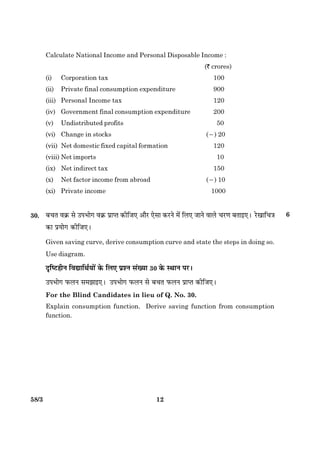
Calculate National Income and Personal Disposable Income :
(` crores)
(i) Corporation tax 100
(ii) Private final consumption expenditure 900
(iii) Personal Income tax 120
(iv) Government final consumption expenditure 200
(v) Undistributed profits 50
(vi) Change in stocks (2) 20
(vii) Net domestic fixed capital formation 120
(viii) Net imports 10
(ix) Net indirect tax 150
(x) Net factor income from abroad (2) 10
(xi) Private income 1000
30. Õ¿Ì ß·ý¤ âð ©ÂÖæð» ß·ý¤ ÂýæŒˆæ ·¤èçÁ° ¥æñÚU °ðâæ ·¤ÚUÙð ×ð´ çܰ ÁæÙð ßæÜð ¿ÚU‡æ ÕÌæ§°Ð ÚðU¹æç¿˜æ
·¤æ ÂýØæð» ·¤èçÁ°Ð
Given saving curve, derive consumption curve and state the steps in doing so.
Use diagram.
ÎëçcÅUãèÙ çßlæçÍüØæð´ ·ð¤ çܰ ÂýàÙ â´Øæ 30 ·ð¤ SÍæÙ ÂÚUÐ
©ÂÖæð» ȤÜÙ â×Ûææ§°Ð ©ÂÖæð» ȤÜÙ âð Õ¿Ì È¤ÜÙ ÂýæŒˆæ ·¤èçÁ°Ð
For the Blind Candidates in lieu of Q. No. 30.
Explain consumption function. Derive saving function from consumption
function.
6

058 set 3 economics

  • 1.
    ·¤æðÇU Ù´. Code No.58/3 SET-3 ÚUæðÜ Ù´. Roll No. · ·ë¤ÂØæ Áæ¡¿ ·¤ÚU Üð´ ç·¤ §â ÂýàÙ-˜æ ×ð´ ×éçÎýÌ ÂëcÆU 12 ãñ´Ð · ÂýàÙ-˜æ ×ð´ ÎæçãÙð ãæÍ ·¤è ¥æðÚU çΰ »° ·¤æðÇU ِÕÚU ·¤æð ÀUæ˜æ ©žæÚU-ÂéçSÌ·¤æ ·ð¤ ×é¹-ÂëcÆU ÂÚU çܹð´Ð · ·ë¤ÂØæ Áæ¡¿ ·¤ÚU Üð´ ç·¤ §â ÂýàÙ-˜æ ×ð´ 30 ÂýàÙ ãñ´Ð · ·ë¤ÂØæ ÂýàÙ ·¤æ ©žæÚU çÜ¹Ùæ àæéM¤ ·¤ÚUÙð âð ÂãÜð, ÂýàÙ ·¤æ ·ý¤×æ´·¤ ¥ßàØ çܹð´Ð · §â ÂýàÙ-Â˜æ ·¤æð ÂɸÙð ·ð¤ çܰ 15 ç×ÙÅU ·¤æ âר çÎØæ »Øæ ãñÐ ÂýàÙ-Â˜æ ·¤æ çßÌÚU‡æ Âêßæüq ×ð´ 10.15 ÕÁð ç·¤Øæ Áæ°ð»æÐ 10.15 ÕÁð âð 10.30 ÕÁð Ì·¤ ÀUæ˜æ ·ð¤ßÜ ÂýàÙ-Â˜æ ·¤æð Âɸð´»ð ¥æñÚU §â ¥ßçÏ ·ð¤ ÎæñÚUæÙ ßð ©žæÚ-ÂéçSÌ·¤æ ÂÚU ·¤æð§ü ©žæÚU Ùãè´ çܹð´»ðÐ · Please check that this question paper contains 12 printed pages. · Code number given on the right hand side of the question paper should be written on the title page of the answer-book by the candidate. · Please check that this question paper contains 30 questions. · Please write down the Serial Number of the question before attempting it. · 15 minute time has been allotted to read this question paper. The question paper will be distributed at 10.15 a.m. From 10.15 a.m. to 10.30 a.m., the students will read the question paper only and will not write any answer on the answer-book during this period. ¥ÍüàææS˜æ ECONOMICS çÙÏæüçÚUÌ âר Ñ 3 ƒæ‡ÅðU ¥çÏ·¤Ì× ¥´·¤ Ñ 100 Time allowed : 3 hours Maximum Marks : 100 Series ONS 158/3 P.T.O. ÂÚUèÿææÍèü ·¤æðÇU ·¤æð ©žæÚU-ÂéçSÌ·¤æ ·ð¤ ×é¹-ÂëcÆU ÂÚU ¥ßàØ çܹð´Ð Candidates must write the Code on the title page of the answer-book.
  • 2.
    258/3 âæ×æ‹Ø çÙÎðüàæ Ñ (i)ÎæðÙæð´ ¹‡ÇUæð´ ·ð¤ âÖè ÂýàÙ ¥çÙßæØü ãñ´Ð (ii) ÂýˆØð·¤ ÂýàÙ ·ð¤ âæ×Ùð ©Ù·ð¤ ¥´·¤ Îàææü° »Øð ãñ´Ð (iii) ÂýàÙ â´Øæ 1 - 5 ¥æñÚU 16 - 20 ¥çÌ Üƒæé ©žæÚUèØ ÂýàÙ ãñ´, ÂýˆØð·¤ ÂýàÙ 1 ¥´·¤ ·¤æ ãñÐ âÖè ÂýàÙæð´ ·ð¤ ©žæÚU °·¤ ßæ€Ø ×ð´ ÎðÙæ ãñÐ (iv) ÂýàÙ â´Øæ 6 - 8 ¥æñÚU 21 - 23 ܃æé ©žæÚUèØ ÂýàÙ ãñ´, ÂýˆØð·¤ ÂýàÙ 3 ¥´·¤ ·¤æ ãñÐ âÖè ÂýàÙæð´ ·ð¤ ©žæÚU âæ×æ‹ØÌÑ 60 àæŽÎæð´ âð ¥çÏ·¤ Ù ãæð´Ð (v) ÂýàÙ â´Øæ 9 - 11 ¥æñÚU 24 - 26 Øã Öè ܃æé ©žæÚUèØ ÂýàÙ ãñ´, ÂýˆØð·¤ ÂýàÙ ·ð¤ 4 ¥´·¤ ãñ´Ð âÖè ÂýàÙæð´ ·ð¤ ©žæÚU âæ×æ‹ØÌÑ 70 àæŽÎæð´ âð ¥çÏ·¤ Ù ãæð´Ð (vi) ÂýàÙ â´Øæ 12 - 15 ¥æñÚU 27 - 30 Îèƒæü ©žæÚUèØ ÂýàÙ ãñ´, ÂýˆØð·¤ ÂýàÙ ·ð¤ 6 ¥´·¤ ãñ´Ð âÖè ÂýàÙæð´ ·ð¤ ©žæÚU âæ×æ‹ØÌÑ 100 àæŽÎæð´ âð ¥çÏ·¤ Ù ãæð´Ð (vii) ©ÂÚUæð€Ì ÂýàÙæð´ ·ð¤ ©žæÚU â´çÿæŒÌ °ß´ âãè ãæðÙð ¿æçã° ÌÍæ ØÍæâ´Öß çÙÎðüàææÙéâæÚU àæŽÎ âè׿ ·ð¤ ÖèÌÚU ©žæÚU çÎØæ ÁæÙæ ¿æçã°Ð Instructions : (i) All questions in both sections are compulsory. (ii) Marks for questions are indicated against each question. (iii) Question No. 1 - 5 and 16 - 20 are very short answer questions carrying 1 mark each. They are required to be answered in one sentence. (iv) Question No. 6 - 8 and 21 - 23 are short answer questions carrying 3 marks each. Answers to them should not normally exceed 60 words each. (v) Question No. 9 - 11 and 24 - 26 are also short answer questions carrying 4 marks each. Answers to them should not normally exceed 70 words each. (vi) Question No. 12 - 15 and 27 - 30 are long answer questions carrying 6 marks each. Answers to them should not normally exceed 100 words each. (vii) Answers should be brief and to the point and the above word limit be adhered to as far as possible.
  • 3.
    358/3 P.T.O. ¹‡ÇU -¥ SECTION - A 1. çßÖðÎè ©ˆÂæÎ §â·¤è °·¤ çßàæðáÌæ ãñ Ñ 1 (âãè çß·¤Ë ¿éçÙ°) Ñ (a) ·ð¤ßÜ °·¤æçÏ·¤æçÚU·¤ ÂýçÌØæðç»Ìæ ·¤è (b) ·ð¤ßÜ ¥ËÂæçÏ·¤æÚU ·¤è (c) °·¤æçÏ·¤æçÚU·¤ ÂýçÌØæðç»Ìæ ¥æñÚU ¥ËÂæçÏ·¤æÚU ÎæðÙæð´ ·¤è (d) °·¤æçÏ·¤æÚU ·¤è Differentiated products is a characteristic of : (Choose the correct alternative) : (a) Monopolistic competition only (b) Oligopoly only (c) Both monopolistic competition and oligopoly (d) Monopoly 2. §â ÕæÁæÚU ×ð´ °·¤ Ȥ×ü ·¤æ ׿¡» ß·ý¤ Âê‡æüÌØæ Üæð¿ÎæÚU ãæðÌæ ãñ Ñ 1 (âãè çß·¤Ë ¿éçÙ°) Ñ (a) Âê‡æü ÂýçÌØæðç»Ìæ (b) °·¤æçÏ·¤æÚU (c) °·¤æçÏ·¤æçÚU·¤ ÂýçÌØæðç»Ìæ (d) ¥ËÂæçÏ·¤æÚU Demand curve of a firm is perfectly elastic under : (Choose the correct alternative) (a) Perfect competition (b) Monopoly (c) Monopolistic competition (d) Oligopoly
  • 4.
    458/3 3. Áñâð-Áñâð ©ˆÂæÎÙ×ð´ ßëçh ·¤è ÁæÌè ãñ ·é¤Ü Üæ»Ì ¥æñÚU ·é¤Ü ÂçÚUßÌèü Üæ»Ì ·ð¤ Õè¿ ¥´ÌÚU ·¤æð €Øæ ãæðÌæ ãñ? What happens to the difference between Total Cost and Total Variable Cost as output is increased ? 4. °·¤ Ȥ×ü °·¤ ÃæSÌé ·¤è ç·¤ÌÙè Öè ׿˜ææ Îè »Øè ·¤è×Ì ÂÚU Õð¿ â·¤Ìè ãñРȤ×ü ·¤è âè׿´Ì âÂýæçŒˆæ (¥æ»×) Ñ (âãè çß·¤Ë ¿éçÙ°) Ñ (a) ¥æñâÌ âÂýæçŒˆæ âð ¥çÏ·¤ ãæð»è (b) ¥æñâÌ âÂýæçŒˆæ âð ·¤× ãæð»è (c) ¥æñâÌ âÂýæçŒˆæ ·ð¤ â×æÙ ãæð»è (d) àæê‹Ø ãæð»è A firm is able to sell any quantity of a good at a given price. The firm’s marginal revenue will be : (Choose the correct alternative) : (a) Greater than Average Revenue (b) Less than Average Revenue (c) Equal to Average Revenue (d) Zero 5. ÂêçÌü ß·ý¤ ×ð´ Òç¹â·¤æßÓ ·¤Õ ¥æÌæ ãñ? When does ‘shift’ in supply curve take place ? 6. ßSÌé ·¤è ·¤è×Ì ×ð´ 10 ÂýçÌàæÌ ßëçh ·¤æ ©â·¤è ׿¡» ÂÚU €Øæ ÂýÖæß ãæð»æ ØçÎ ×æ¡» ·¤è ·¤è×Ì Üæð¿ (a) àæê‹Ø, (b) 21, (c) 22 ãæðÐ What will be the effect of 10 percent rise in price of a good on its demand if price elasticity of demand is (a) Zero, (b) 21, (c) 22. 1 1 1 3
  • 5.
    558/3 P.T.O. 7. ‹ØêÙÌ×·¤è×Ì âè׿ âð €Øæ ¥çÖÂýæØ ãñ? §â·ð¤ ÂçÚU‡ææ× â×Ûææ§°Ð 3 ¥Íßæ ØçÎ ßÌü×æÙ ÕæÁæÚU ·¤è×Ì â´ÌéÜÙ ·¤è×Ì âð ¥çÏ·¤ ãæð, Ìæð §â·ð¤ ·¤æÚU‡æ ÂǸÙð ßæÜð ÂýÖæßæð´ ·¤è oë´¹Üæ â×Ûææ§°Ð What is minimum price ceiling ? Explain its implications. OR If the prevailing market price is above the equilibrium price, explain its chain of effects. 8. °·¤ ©ÂÖæð€ˆææ ·ð¤ßÜ Îæð ßSÌ饿ð´ X ÌÍæU Y ·¤æ ©ÂÖæð» ·¤ÚUÌæ ãñÐ X ¥æñÚU Y ÂýˆØð·¤ ·¤è âè׿´Ì ©ÂØæðç»Ìæ 3 ãñÐ X ¥æñÚU Y ·¤è ·¤è×Ì ·ý¤×àæÑ ` 2 ¥æñÚU ` 1 ãñÐ €Øæ ©ÂÖæð€ˆææ â´ÌéÜÙ ×ð´ ãñ? ©â·¤è ¥æ»ð ·¤è ÂýçÌç·ý¤Øæ €Øæ ãæð»è? ·¤æÚU‡æ ÎèçÁ°Ð A consumer consumes only two goods X and Y. The marginal utilities of X and of Y is 3. Prices of X and Y are ` 2 and ` 1 respectively. Is consumer in equilibrium ? What will be further reaction of the consumer ? Give reasons. 9. ¥¿Ü Üæ»Ì ·¤è ÂçÚUÖæáæ ÎèçÁ°Ð °·¤ ©ÎæãÚU‡æ ÎèçÁ°Ð ·¤æÚU‡æ ÕÌæÌð ãé° â×Ûææ§° ç·¤ Áñâð-Áñâð ©ˆÂæÎÙ ×ð´ ßëçh ·¤è ÁæÌè ãñ ¥æñâÌ ¥¿Ü Üæ»Ì ·¤æ ÃØßãæÚU €Øæ ÚUãÌæ ãñ? ¥Íßæ âè׿´Ì ©ˆÂæÎ ·¤è ÂçÚUÖæáæ ÎèçÁ°Ð ÁÕ ·ð¤ßÜ °·¤ ¥æ»Ì ×ð´ ßëçh ·¤è ÁæØ ¥æñÚU ¥‹Ø ¥æ»Ìæð´ ·¤æð çSÍÚU ÚU¹æ ÁæØ Ìæð âè׿´Ì ©ˆÂæÎ ·¤æ ÃØßãæÚU ÕÌæ§°Ð Define fixed cost. Give an example. Explain with reason the behaviour of Average Fixed Cost as output is increased. OR Define marginal product. State the behaviour of marginal product when only one input is increased and other inputs are held constant. 4 3
  • 6.
    658/3 10. ÁÕ ßSÌé·¤è ·¤è×Ì ` 8 âð Õɸ·¤ÚU ` 10 ÂýçÌ §·¤æ§ü ãæð ÁæÌè ãñ, Ìæð ©ˆÂæÎ·¤ 40 §·¤æ§ü ¥çÏ·¤ ·¤è ÂêçÌü ·¤ÚUÌæ ãñÐ ÂêçÌü ·¤è ·¤è×Ì Üæð¿ 2 ãñÐ ·¤è×Ì ÂçÚUßÌüÙ âð Âêßü ·¤è ÂêçÌü ׿˜ææ €Øæ ãñ? ÂçÚU·¤ÜÙ ·¤èçÁ°Ð When price of a good rises from ` 8 per unit to ` 10 per unit, producer supplies 40 units more. Price elasticity of supply is 2. What is the quantity supplied before the price change ? Calculate. 11. °·¤ ©ÂÖæð€ˆææ ·¤è ׿¡» ¥æñÚU ÕæÁæÚU ׿¡» ·ð¤ Õè¿ ¥´ÌÚU ÕÌæ§°Ð °·¤ ßSÌé ·¤è ÃØç€Ì»Ì ׿¡» ·¤æð ÂýÖæçßÌ ·¤ÚUÙð ßæÜð ·¤æÚU·¤ ÕÌæ§°Ð Distinguish between individual’s demand and market demand. Name the factors affecting demand for a good by an individual. 12. ¥ÙçÏ×æÙ ß·ý¤æð´ ·¤è ÌèÙ çßàæðáÌæ¥æð´ ·¤è ÃØæØæ ·¤èçÁ°Ð 6 Explain three properties of indifference curves. 13. °·¤ Âê‡æü ÂýçÌØæð»è ÕæÁæÚU ×ð´ çِÙçÜç¹Ì ·ð¤ ÂçÚU‡ææ×æð´ ·¤è ÃØæØæ ·¤èçÁ° Ñ 6 (a) çß·ýð¤Ìæ¥æð´ ·¤è ÕǸè â´Øæ (b) â×M¤Â ©ˆÂæÎ ¥Íßæ °·¤ ¥ËÂæçÏ·¤æÚU ÕæÁæÚU ×ð´ çِÙçÜç¹Ì ·ð¤ ÂçÚU‡ææ×æð´ ·¤è ÃØæØæ ·¤èçÁ° Ñ (a) Ù§ü È¤×æðZ ·ð¤ Âýßðàæ ×ð´ L¤·¤æßÅð´U (b) ·ð¤ßÜ ·é¤ÀU Øæ ·é¤ÀU ÕÇ¸ð ©ˆÂæÎ·¤ Explain the implications of the following in a perfectly competitive market : (a) Large number of sellers (b) Homogeneous products. OR Explain the implications of the following in an oligopoly market : (a) Barriers to entry of new firms (b) A few or a few big sellers 4 4
  • 7.
    758/3 P.T.O. 14. °·¤¥ÍüÃØßSÍæ ×ð´ ·ð¤‹ÎýèØ â×SØæ°¡ €Øæð´ ÂñÎæ ãæðÌè ãñ´? ÒÒç·¤â·ð¤ çܰ ©ˆÂæÎÙ ç·¤Øæ ÁæØÓÓ ·ð¤‹ÎýèØ â×SØæ â×Ûææ§°Ð Why do central problems of an economy arise ? Explain the central problem of “for whom to produce” ? 15. (a) ßSÌé X ·¤è ¥ÂÙè ·¤è×Ì ç»ÚUÙð ¥æñÚU (b) ßSÌé X ÂÚU ·¤ÚU ·¤è ÎÚU ÕɸÙð ·¤æ ÂêçÌü ß·ý¤ ÂÚU ÂǸÙð ߿ܿ ÂýÖæß â×Ûææ§°Ð ÚðU¹æç¿˜ææð´ ·¤æ ÂýØæð» ·¤èçÁ°Ð Examine the effect of (a) fall in the own price of good X and (b) rise in tax rate on good X on the supply curve. Use diagrams. ÎëçcÅUãèÙ ÂÚUèÿææçÍüØæð´ ·ð¤ çܰ ÂýàÙ â´Øæ 15 ·ð¤ SÍæÙ ÂÚUÐ (a) ßSÌé X ·¤è ¥ÂÙè ·¤è×Ì ç»ÚUÙð ¥æñÚU (b) ßSÌé X ÂÚU ·¤ÚU ·¤è ÎÚU ÕɸæÙð ·¤æ ÂêçÌü ÂÚU ÂýÖæß â×Ûææ§°Ð ÌæçÜ·¤æ ·¤æ ÂýØæð» ·¤èçÁ°Ð For blind candidates in lieu of Q. No 15. Examine the effect of (a) fall in the own price of good X and (b) rise in tax rate on good X on supply of a good. Use schedule. ¹‡ÇU - Õ SECTION - B 16. ÂýæÍç×·¤ ƒææÅUæ §â·ð¤ â×æÙ ãæðÌæ ãñ Ñ 1 (âãè çß·¤Ë ¿éçÙ°) (a) «¤‡æ (b) ŽØæÁ Öé»ÌæÙ (c) «¤‡æ ƒæÅUæ ŽØæÁ Öé»ÌæÙ (d) «¤‡æ ¥æñÚU ŽØæÁ Öé»ÌæÙ ÎæðÙæð´ Primary deficit equals : (Choose the correct alternative) (a) Borrowings (b) Interest payments (c) Borrowings less interest payments (d) Borrowings and interest payments both 6 6
  • 8.
    858/3 17. Öé»ÌæÙ â´ÌéÜÙÜð¹æ ×ð´ Áæð çßÎðàæè çßçÙר ÜðÙÎðÙ ¥‹Ø ÜðÙÎðÙæð´ âð ÂýÖæçßÌ Ùãè´ ãæðÌð, Øã ·¤ãÜæÌð ãñ´ Ñ (âãè çß·¤Ë ¿éçÙ°) (a) ¿æÜê ÜðÙÎðÙ (b) Âê¡Áè»Ì ÜðÙÎðÙ (c) SßÌ´˜æ ÜðÙÎðÙ (d) â×æØæðÁÙ ãðÌé ÜðÙÎðÙ Foreign exchange transactions which are independent of other transactions in the Balance of Payments Account are called : (Choose the correct alternative) (a) Current transactions (b) Capital transactions (c) Autonomous transactions (d) Accommodating transactions 18. Âýßæã ·¤è ÂçÚUÖæáæ ÎèçÁ°Ð 1 Define flows. 19. çِÙçÜç¹Ì ·¤æð ÂýæŒˆæ ·¤æÚU·¤ ¥æØ ·¤æ Øæð» ÚUæcÅþUèØ ¥æØ ·¤ãÜæÌæ ãñ Ñ 1 (âãè çß·¤Ë ¿éçÙ°) (a) Ùæ»çÚU·¤ (b) ¥æçÍü·¤ ÿæð˜æ (c) çÙßæâè (d) çÙßæâè ¥æñÚU »ñÚU-çÙßæâè ÎæðÙæð´ National income is the sum of factor incomes accruing to : (Choose the correct alternative) (a) Nationals (b) Economic territory (c) Residents (d) Both residents and non-residents 1
  • 9.
    958/3 P.T.O. 20. âÚU·¤æÚUèÕÁÅU ×ð´ Âê¡Áè»Ì ÂýæçŒˆæØæð´ âð €Øæ ¥çÖÂýæØ ãñ? What are capital receipts in a government budget. 21. â×»ý ׿¡» âð €Øæ ¥çÖÂýæØ ãñ? §â·ð¤ ƒæÅU·¤ ÕÌæ§°Ð ¥Íßæ â×Ûææ§° ç·¤ ×éÎýæ ¥æÂêçÌü ÂÚU çÙØ´˜æ‡æ ÚU¹Ùð âð ¥çÏ׿¡» ·¤æð ·ñ¤âð ·¤× ç·¤Øæ Áæ â·¤Ìæ ãñÐ What is aggregate demand ? State its components. OR Explain how controlling money supply is helpful in reducing excess demand. 22. °·¤ ¥ÍüÃØßSÍæ â´ÌéÜÙ ×ð´ ãñÐ çÙßðàæ ÃØØ ™ææÌ ·¤èçÁ° Ñ ÚUæcÅþUèØ ¥æØ 5 1000 SßÌ´˜æ ©ÂÖæð» 5 100 âè׿´Ì ©ÂÖæð» Âýßëçžæ 5 0.8 An economy is in equilibrium. Find investment expenditure : National Income 5 1000 Autonomous Consumption 5 100 Marginal propensity to consume 5 0.8 23. ØçÎ ßæSÌçß·¤ ¥æØ ` 400 ãæð ¥æñÚU ·¤è×Ì âê¿·¤æ´·¤ 105 ãæð Ìæð ׿ñçÎý·¤ ¥æØ ·¤æ ÂçÚU·¤ÜÙ ·¤èçÁ°Ð If real income is ` 400 and price index is 105, calculate nominal income. 1 3 3 3
  • 10.
    1058/3 24. ×éÎýæ ·¤æÒçßçÙר ·¤æ ׿Ш×Ó ·¤æØü â×Ûææ§°Ð §âÙð ßSÌé çßçÙר âð â´Õ´çÏÌ â×SØæ ·¤æ â×æÏæÙ ·ñ¤âð ç·¤Øæ ãñ? ¥Íßæ ×éÎýæ ·¤æ Ò¥æSÍç»Ì Öé»ÌæÙ ·¤æ ×æÙ·¤Ó ·¤æØü â×Ûææ§°Ð §âÙð ßSÌé çßçÙר âð â´Õ´çÏÌ â×SØæ ·¤æ â×æÏæÙ ·ñ¤âð ç·¤Øæ ãñ? Explain the ‘medium of exchange’ function of money. How has it solved the related problem created by barter ? OR Explain the ‘standard of deferred payment’ function of money. How has it solved the related problem created by barter ? 25. «¤‡æ âëÁÙ ·ð¤ çÙØ´˜æ‡æ ×ð´ ÂýçÌ ÂéÙ¹üÚUèÎ ÎÚU ·¤è Öêç×·¤æ â×Ûææ§°Ð Explain the role of Reverse Repo Rate in controlling credit creation. 26. ÂñÅþUæðÜ ¥æñÚU ÇUè$ÁÜ ·¤æÚUæð´ ·¤è çÕ·ý¤è, çßàæðáÌØæ ÕǸð àæãÚUæð´ ×ð´ çÙÚ´UÌÚU Õɸ ÚUãè ãñÐ §â·ð¤ â·¤Ü ƒæÚðUÜê ©ˆÂæÎ ¥æñÚU ·¤ËØæ‡æ ÂÚU ÂǸÙð ßæÜð ÂýÖæßæð´ ·¤è ÃØæØæ ·¤èçÁ°Ð Sale of petrol and diesel cars is rising particularly in big cities. Analyse its impact on gross domestic product and welfare. 27. ÖæÚUÌèØ çÙßðàæ·¤ çßÎðàææð´ ×ð´ ©ÏæÚU ÎðÌð ãñ´Ð çِÙçÜç¹Ì ÂýàÙæð´ ·¤æ ©žæÚU ÎèçÁ° Ñ 6 (a) Öé»ÌæÙ â´ÌéÜÙ Üð¹æ ·ð¤ 緤⠩ÂÜð¹æ ¥æñÚU ç·¤â Âÿæ ÂÚU Øã ©ÏæÚU ÎÁü ãæð»æ? ·¤æÚU‡æ ÎèçÁ°Ð (b) §â ©ÏæÚU ·¤æ ÕæÁæÚU çßçÙר ÎÚU ÂÚU ÂýÖæß â×Ûææ§°Ð Indian investors lend abroad. Answer the following questions : (a) In which sub-account and on which side of the Balance of Payments Account such lending is recorded ? Give reasons. (b) Explain the impact of this lending on market exchange rate. 4 4 4
  • 11.
    1158/3 P.T.O. 28. ÚUæÁSßÃØØ ¥æñÚU Âê¡Áè»Ì ÃØØ ×ð´ €Øæ ¥´ÌÚU ãñ? Sæ×Ûææ§° ·¤ÚU ¥æñÚU âÚU·¤æÚUè ÃØØ ç·¤â Âý·¤æÚU â׿Á ×ð´ ¥æØ ·ð¤ çßÌÚU‡æ ·¤æð ÂýÖæçßÌ ·¤ÚUÙð ×ð´ âãæØ·¤ ãæð â·¤Ìð ãñ´Ð ¥Íßæ ÂýˆØÿæ ·¤ÚU ¥æñÚU ¥ÂýˆØÿæ ·¤ÚU ×ð´ €Øæ ¥´ÌÚU ãñ? â´âæÏÙæð´ ·ð¤ ¥æß´ÅUÙ ·¤æð ÂýÖæçßÌ ·¤ÚUÙð ×ð´ âÚU·¤æÚUè ÕÁÅU ·¤è Öêç×·¤æ â×Ûææ§°Ð What is the difference between revenue expenditure and capital expenditure ? Explain how taxes and government expenditure can be used to influence distribution of income in the society. OR What is the difference between direct tax and indirect tax ? Explain the role of government budget in influencing allocation of resources. 29. ÚUæcÅþUèØ ¥æØ ¥æñÚU ßñØç€ˆæ·¤ ÂýØæð’Ø ¥æØ ™ææÌ ·¤èçÁ° Ñ (·¤ÚUæðǸ `) (i) çÙ»× ·¤ÚU 100 (ii) çÙÁè ¥´çÌ× ©ÂÖæð» ÃØØ 900 (iii) ßñØç€ˆæ·¤ ¥æØ ·¤ÚU 120 (iv) âÚU·¤æÚUè ¥´çÌ× ©ÂÖæð» ÃØØ 200 (v) ¥çßÌçÚUÌ ÜæÖ 50 (vi) SÅUæ·¤ ×ð´ ÂçÚUßÌüÙ (2) 20 (vii) çÙßÜ ÎðàæèØ ¥¿Ü Âê¡Áè çÙ׿ü‡æ 120 (viii) çÙßÜ ¥æØæÌ 10 (ix) çÙßÜ ¥ÂýˆØÿæ ·¤ÚU 150 (x) çßÎðàææð´ âð çÙßÜ ·¤æÚU·¤ ¥æØ (2) 10 (xi) çÙÁè ¥æØ 1000 4, 2 6
  • 12.
    1258/3 Calculate National Incomeand Personal Disposable Income : (` crores) (i) Corporation tax 100 (ii) Private final consumption expenditure 900 (iii) Personal Income tax 120 (iv) Government final consumption expenditure 200 (v) Undistributed profits 50 (vi) Change in stocks (2) 20 (vii) Net domestic fixed capital formation 120 (viii) Net imports 10 (ix) Net indirect tax 150 (x) Net factor income from abroad (2) 10 (xi) Private income 1000 30. Õ¿Ì ß·ý¤ âð ©ÂÖæð» ß·ý¤ ÂýæŒˆæ ·¤èçÁ° ¥æñÚU °ðâæ ·¤ÚUÙð ×ð´ çܰ ÁæÙð ßæÜð ¿ÚU‡æ ÕÌæ§°Ð ÚðU¹æç¿˜æ ·¤æ ÂýØæð» ·¤èçÁ°Ð Given saving curve, derive consumption curve and state the steps in doing so. Use diagram. ÎëçcÅUãèÙ çßlæçÍüØæð´ ·ð¤ çܰ ÂýàÙ â´Øæ 30 ·ð¤ SÍæÙ ÂÚUÐ ©ÂÖæð» ȤÜÙ â×Ûææ§°Ð ©ÂÖæð» ȤÜÙ âð Õ¿Ì È¤ÜÙ ÂýæŒˆæ ·¤èçÁ°Ð For the Blind Candidates in lieu of Q. No. 30. Explain consumption function. Derive saving function from consumption function. 6