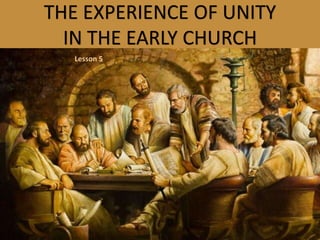
THE EXPERIENCE OF UNITY
IN THE EARLY CHURCH
Lesson 5
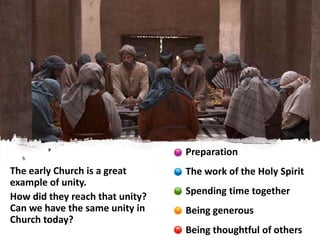
The early Church is a great
example of unity.
How did they reach that unity?
Can we have the same unity in
Church today?
Preparation
The work of the Holy Spirit
Spending time together
Being generous
Being thoughtful of others
He would remind
them of what Jesus
had taught
(John 14:26)
He would reveal
new truths
(John 16:13)
He would help them
to testify all over
the world (Acts 1:8)
“These all continued with one accord in prayer and
supplication, with the women and Mary the mother of
Jesus, and with His brothers.” (Acts 1:14)
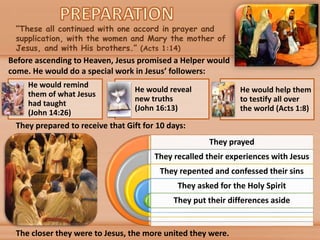
Before ascending to Heaven, Jesus promised a Helper would
come. He would do a special work in Jesus’ followers:
They prepared to receive that Gift for 10 days:
They prayed
They recalled their experiences with Jesus
They repented and confessed their sins
They asked for the Holy Spirit
They put their differences aside
The closer they were to Jesus, the more united they were.
THE WORK OF THE HOLY SPIRIT
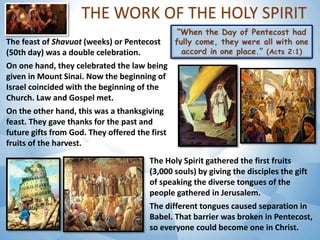
The feast of Shavuot (weeks) or Pentecost
(50th day) was a double celebration.
On one hand, they celebrated the law being
given in Mount Sinai. Now the beginning of
Israel coincided with the beginning of the
Church. Law and Gospel met.
On the other hand, this was a thanksgiving
feast. They gave thanks for the past and
future gifts from God. They offered the first
fruits of the harvest.
The Holy Spirit gathered the first fruits
(3,000 souls) by giving the disciples the gift
of speaking the diverse tongues of the
people gathered in Jerusalem.
The different tongues caused separation in
Babel. That barrier was broken in Pentecost,
so everyone could become one in Christ.
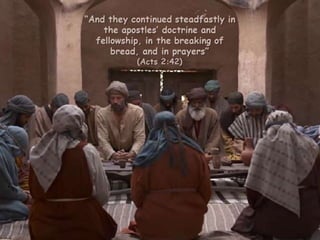
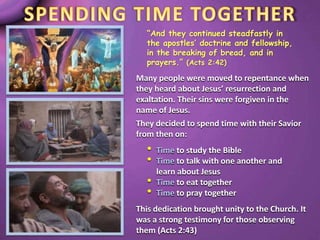
“And they continued steadfastly in
the apostles’ doctrine and fellowship,
in the breaking of bread, and in
prayers.” (Acts 2:42)
Many people were moved to repentance when
they heard about Jesus’ resurrection and
exaltation. Their sins were forgiven in the
name of Jesus.
They decided to spend time with their Savior
from then on:
• Time to study the Bible
• Time to talk with one another and
learn about Jesus
• Time to eat together
• Time to pray together
This dedication brought unity to the Church. It
was a strong testimony for those observing
them (Acts 2:43)
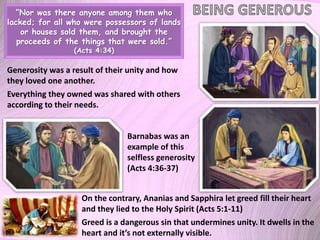
“Nor was there anyone among them who
lacked; for all who were possessors of lands
or houses sold them, and brought the
proceeds of the things that were sold.”
(Acts 4:34)
Generosity was a result of their unity and how
they loved one another.
Everything they owned was shared with others
according to their needs.
Barnabas was an
example of this
selfless generosity
(Acts 4:36-37)
On the contrary, Ananias and Sapphira let greed fill their heart
and they lied to the Holy Spirit (Acts 5:1-11)
Greed is a dangerous sin that undermines unity. It dwells in the
heart and it’s not externally visible.
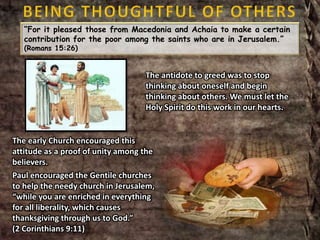
The early Church encouraged this
attitude as a proof of unity among the
believers.
Paul encouraged the Gentile churches
to help the needy church in Jerusalem,
“while you are enriched in everything
for all liberality, which causes
thanksgiving through us to God.”
(2 Corinthians 9:11)
“For it pleased those from Macedonia and Achaia to make a certain
contribution for the poor among the saints who are in Jerusalem.”
(Romans 15:26)
The antidote to greed was to stop
thinking about oneself and begin
thinking about others. We must let the
Holy Spirit do this work in our hearts.
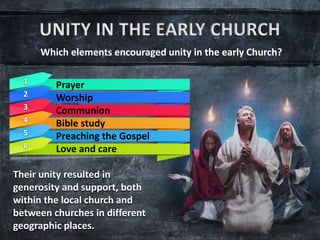
UNITY IN THE EARLY CHURCH
Which elements encouraged unity in the early Church?
Prayer
Worship
Communion
Bible study
Preaching the Gospel
Love and care
1
2
3
4
5
6
Their unity resulted in
generosity and support, both
within the local church and
between churches in different
geographic places.
“After the descent of the Holy Spirit
the disciples went forth to proclaim a
risen Saviour, their one desire the
salvation of souls. They rejoiced in the
sweetness of the communion with
saints. They were tender, thoughtful,
self-denying, willing to make any
sacrifice for the truth’s sake. In their
daily association with one another
they revealed the love that Christ had
commanded them to reveal. By
unselfish words and deeds they strove
to kindle this love in other hearts.”
E.G.W. (Testimonies for the Church, vol. 8, cp. 38, p. 241)
“This testimony in regard to the establishment
of the Christian church is given us not only as
an important portion of sacred history but
also as a lesson. All who profess the name of
Christ should be waiting, watching, and
praying with one heart. All differences should
be put away, and unity and tender love one for
another pervade the whole. Then our prayers
may go up together to our heavenly Father
with strong, earnest faith. Then we may wait
with patience and hope the fulfillment of the
promise.”
E.G.W. (The Story of Redemption, cp. 32, p. 246)
We invite you to
download and study
each one of the 13
lessons about this
serie
THIS SERVICE IS FREE
AND YOU CAN USE IT
Slideshare.net/chucho1943

05 unity early church

  • 1.
    THE EXPERIENCE OFUNITY IN THE EARLY CHURCH Lesson 5
  • 3.
    The early Churchis a great example of unity. How did they reach that unity? Can we have the same unity in Church today? Preparation The work of the Holy Spirit Spending time together Being generous Being thoughtful of others
  • 4.
    He would remind themof what Jesus had taught (John 14:26) He would reveal new truths (John 16:13) He would help them to testify all over the world (Acts 1:8) “These all continued with one accord in prayer and supplication, with the women and Mary the mother of Jesus, and with His brothers.” (Acts 1:14) Before ascending to Heaven, Jesus promised a Helper would come. He would do a special work in Jesus’ followers: They prepared to receive that Gift for 10 days: They prayed They recalled their experiences with Jesus They repented and confessed their sins They asked for the Holy Spirit They put their differences aside The closer they were to Jesus, the more united they were.
  • 5.
    THE WORK OFTHE HOLY SPIRIT The feast of Shavuot (weeks) or Pentecost (50th day) was a double celebration. On one hand, they celebrated the law being given in Mount Sinai. Now the beginning of Israel coincided with the beginning of the Church. Law and Gospel met. On the other hand, this was a thanksgiving feast. They gave thanks for the past and future gifts from God. They offered the first fruits of the harvest. The Holy Spirit gathered the first fruits (3,000 souls) by giving the disciples the gift of speaking the diverse tongues of the people gathered in Jerusalem. The different tongues caused separation in Babel. That barrier was broken in Pentecost, so everyone could become one in Christ.
  • 6.
    “And they continuedsteadfastly in the apostles’ doctrine and fellowship, in the breaking of bread, and in prayers.” (Acts 2:42) Many people were moved to repentance when they heard about Jesus’ resurrection and exaltation. Their sins were forgiven in the name of Jesus. They decided to spend time with their Savior from then on: • Time to study the Bible • Time to talk with one another and learn about Jesus • Time to eat together • Time to pray together This dedication brought unity to the Church. It was a strong testimony for those observing them (Acts 2:43)
  • 7.
    “Nor was thereanyone among them who lacked; for all who were possessors of lands or houses sold them, and brought the proceeds of the things that were sold.” (Acts 4:34) Generosity was a result of their unity and how they loved one another. Everything they owned was shared with others according to their needs. Barnabas was an example of this selfless generosity (Acts 4:36-37) On the contrary, Ananias and Sapphira let greed fill their heart and they lied to the Holy Spirit (Acts 5:1-11) Greed is a dangerous sin that undermines unity. It dwells in the heart and it’s not externally visible.
  • 8.
    The early Churchencouraged this attitude as a proof of unity among the believers. Paul encouraged the Gentile churches to help the needy church in Jerusalem, “while you are enriched in everything for all liberality, which causes thanksgiving through us to God.” (2 Corinthians 9:11) “For it pleased those from Macedonia and Achaia to make a certain contribution for the poor among the saints who are in Jerusalem.” (Romans 15:26) The antidote to greed was to stop thinking about oneself and begin thinking about others. We must let the Holy Spirit do this work in our hearts.
  • 9.
    UNITY IN THEEARLY CHURCH Which elements encouraged unity in the early Church? Prayer Worship Communion Bible study Preaching the Gospel Love and care 1 2 3 4 5 6 Their unity resulted in generosity and support, both within the local church and between churches in different geographic places.
  • 10.
    “After the descentof the Holy Spirit the disciples went forth to proclaim a risen Saviour, their one desire the salvation of souls. They rejoiced in the sweetness of the communion with saints. They were tender, thoughtful, self-denying, willing to make any sacrifice for the truth’s sake. In their daily association with one another they revealed the love that Christ had commanded them to reveal. By unselfish words and deeds they strove to kindle this love in other hearts.” E.G.W. (Testimonies for the Church, vol. 8, cp. 38, p. 241)
  • 11.
    “This testimony inregard to the establishment of the Christian church is given us not only as an important portion of sacred history but also as a lesson. All who profess the name of Christ should be waiting, watching, and praying with one heart. All differences should be put away, and unity and tender love one for another pervade the whole. Then our prayers may go up together to our heavenly Father with strong, earnest faith. Then we may wait with patience and hope the fulfillment of the promise.” E.G.W. (The Story of Redemption, cp. 32, p. 246)
  • 12.
    We invite youto download and study each one of the 13 lessons about this serie THIS SERVICE IS FREE AND YOU CAN USE IT Slideshare.net/chucho1943