ACL Principle
V1.1
Objectives
Understand the basic function of ACL
Know when and how to use ACL
Contents
ACL conception and function
ACL types
ACL working principle
ACL rule
FDDI
172.16.0.0
172.17.0.0
Token
Ring
Internet
Why Use Access Lists?
Manage IP traffic as network access grows
Filter packets as they pass through the router
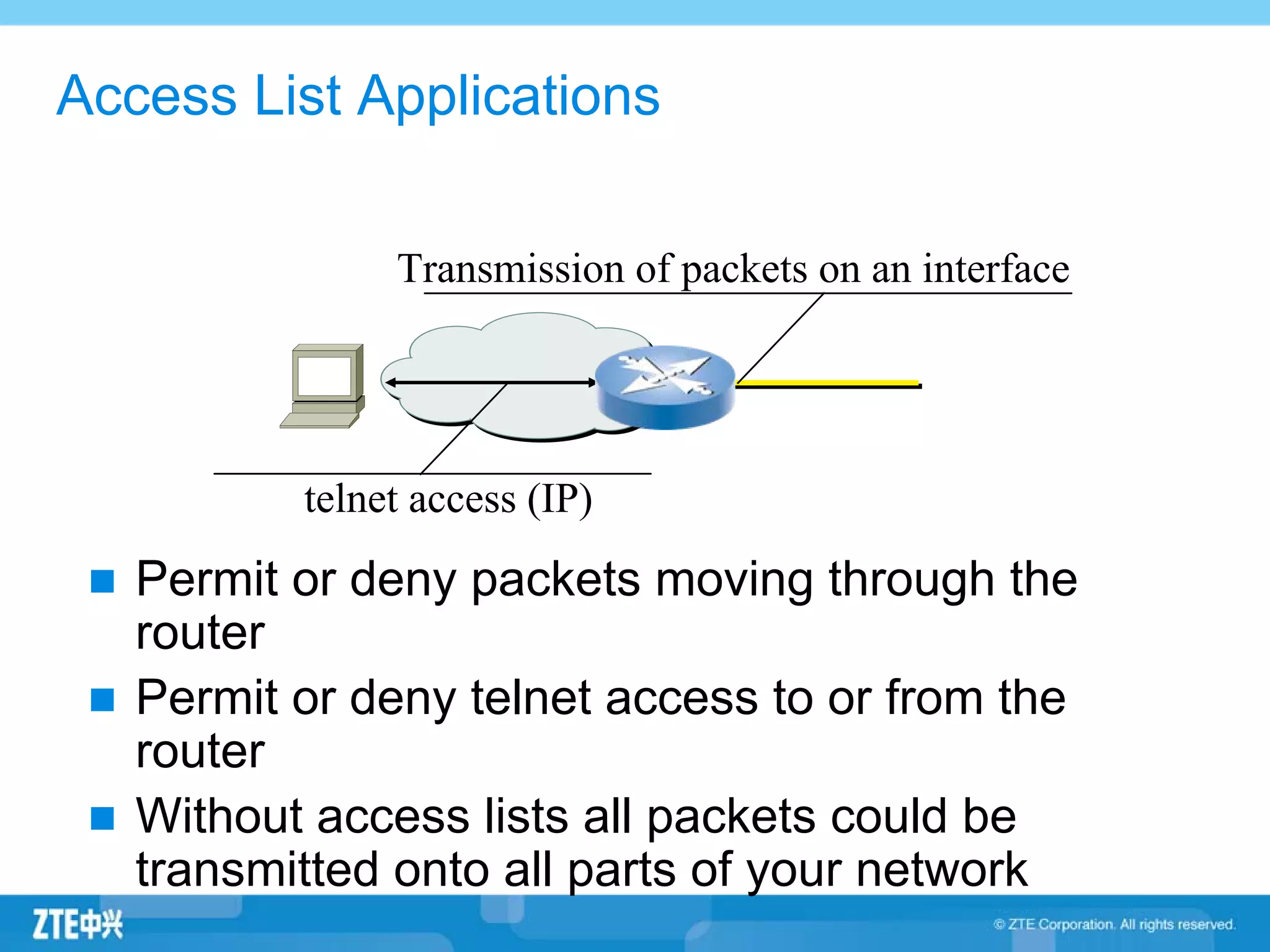
Access List Applications
Permit or deny packets moving through the
router
Permit or deny telnet access to or from the
router
Without access lists all packets could be
transmitted onto all parts of your network
telnet access (IP)
Transmission of packets on an interface
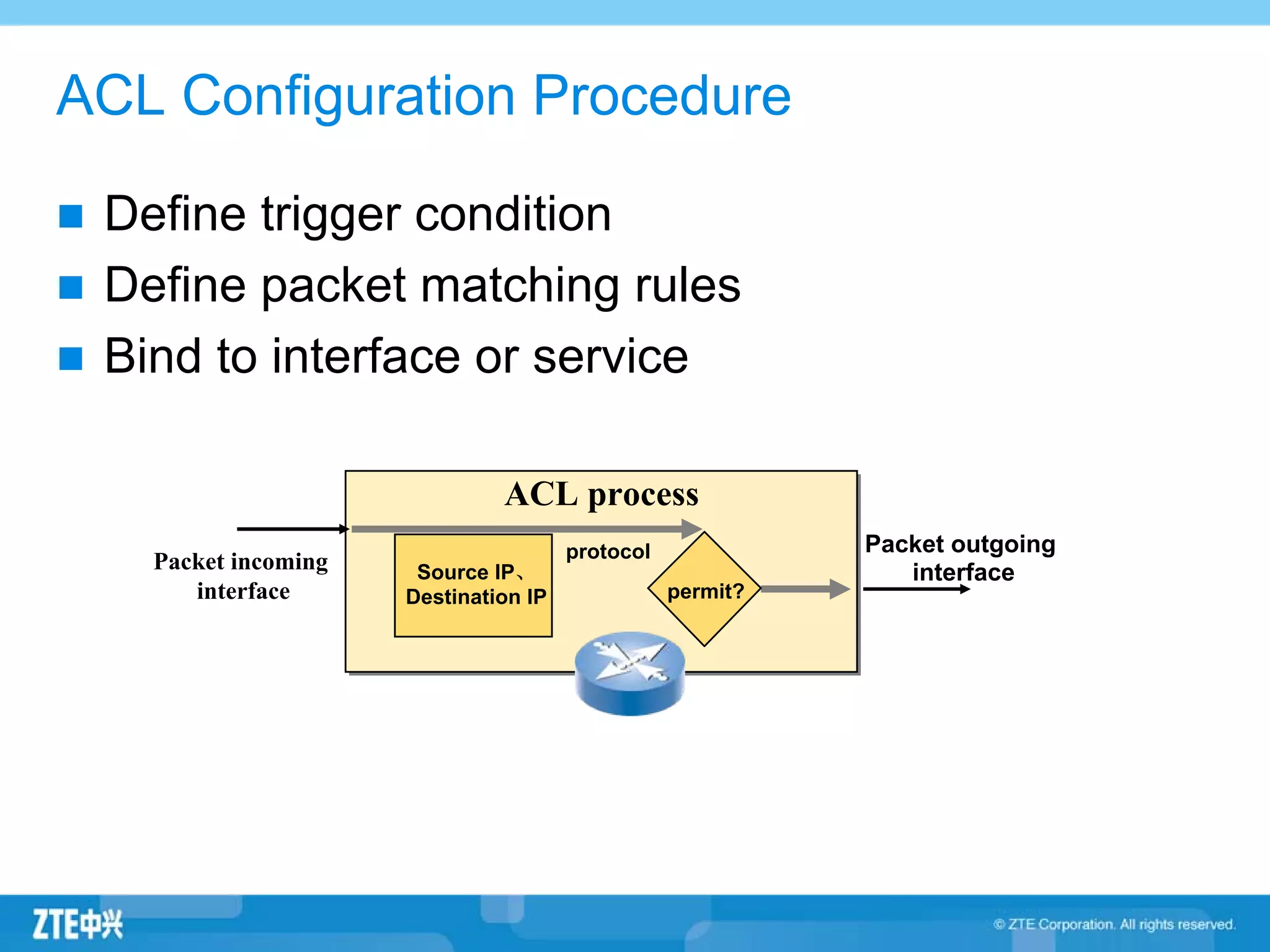
ACL Configuration Procedure
Define trigger condition
Define packet matching rules
Bind to interface or service
Packet outgoing
interfacePacket incoming
interface
ACL process
permit?
Source IP、
Destination IP
protocol
Contents
ACL conception and function
ACL types
ACL working principle
ACL rule
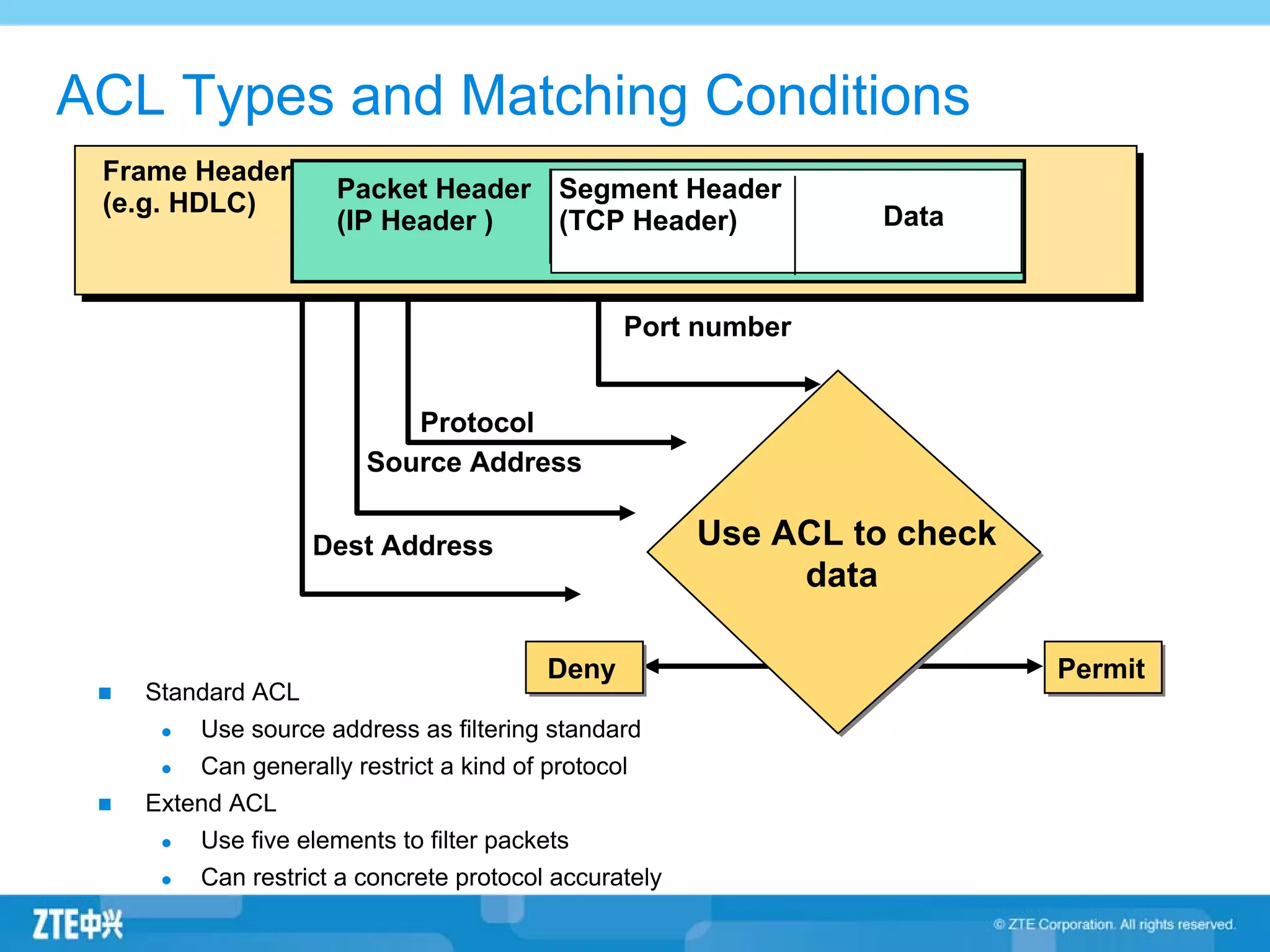
Dest Address
Source Address
Protocol
Port number
Segment Header
(TCP Header) Data
Packet Header
(IP Header )
Frame Header
(e.g. HDLC)
Use ACL to check
data
Deny Permit
ACL Types and Matching Conditions
Standard ACL
Use source address as filtering standard
Can generally restrict a kind of protocol
Extend ACL
Use five elements to filter packets
Can restrict a concrete protocol accurately
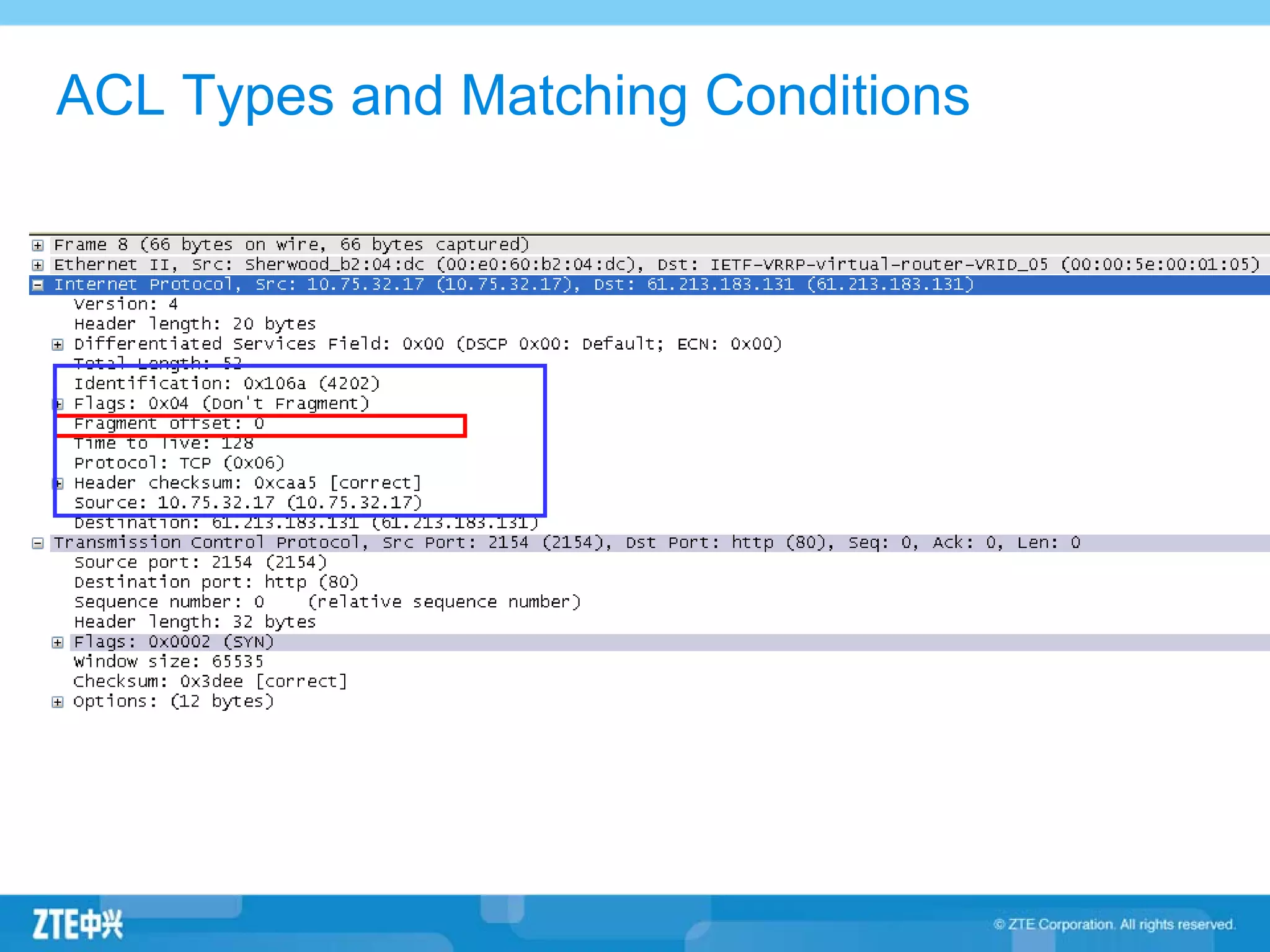
ACL Types and Matching Conditions
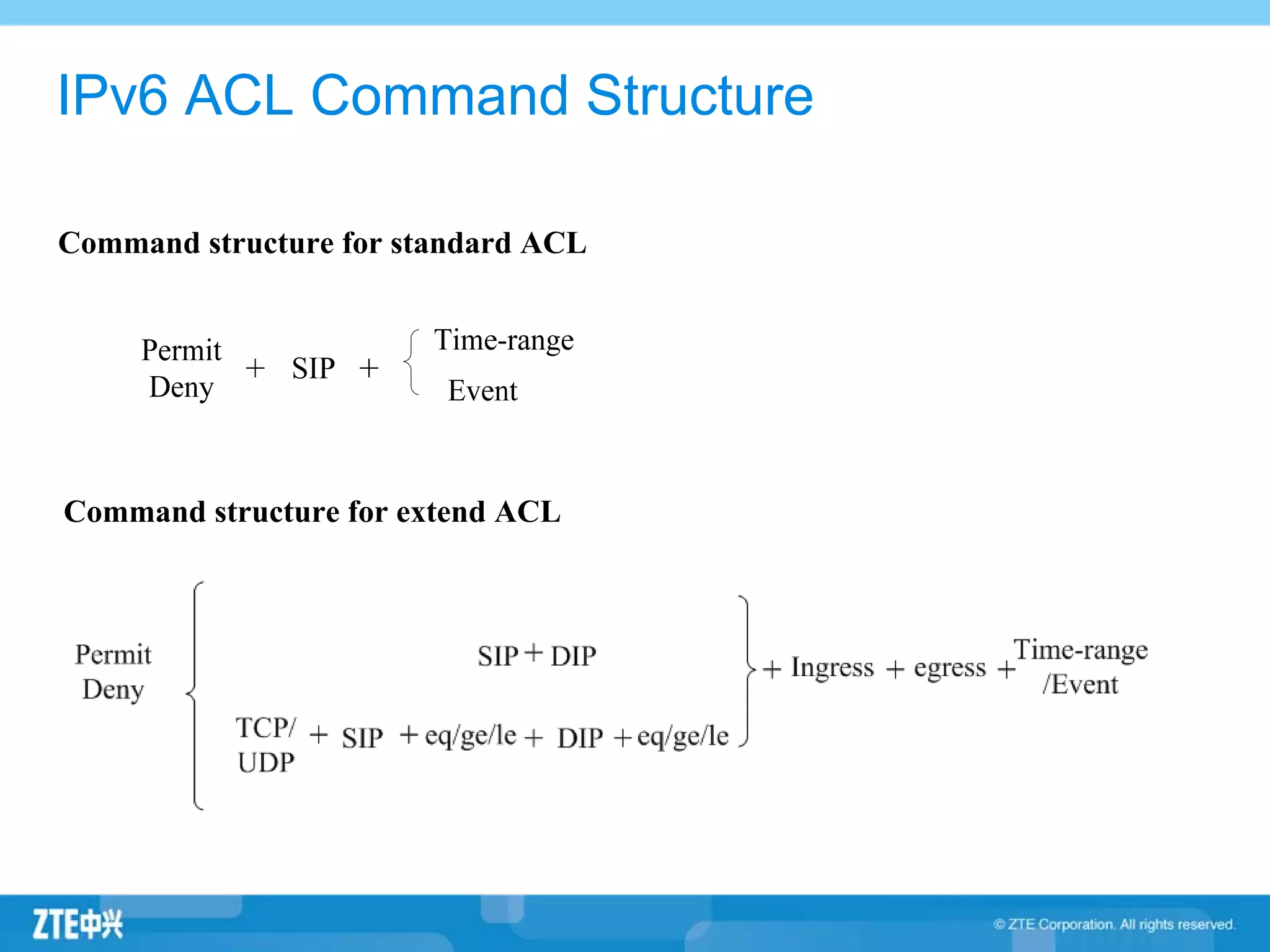
IPv6 ACL Command Structure
Command structure for standard ACL
Command structure for extend ACL
Contents
ACL conception and function
ACL types
ACL working principle
ACL rule
Inbound
Interface
Packets
N
Y
Packet Discard Bucket
Choose
Interface
NAccess
List
?
Routing
Table
Entry
?
Y
Outbound
Interface
Packets
S0
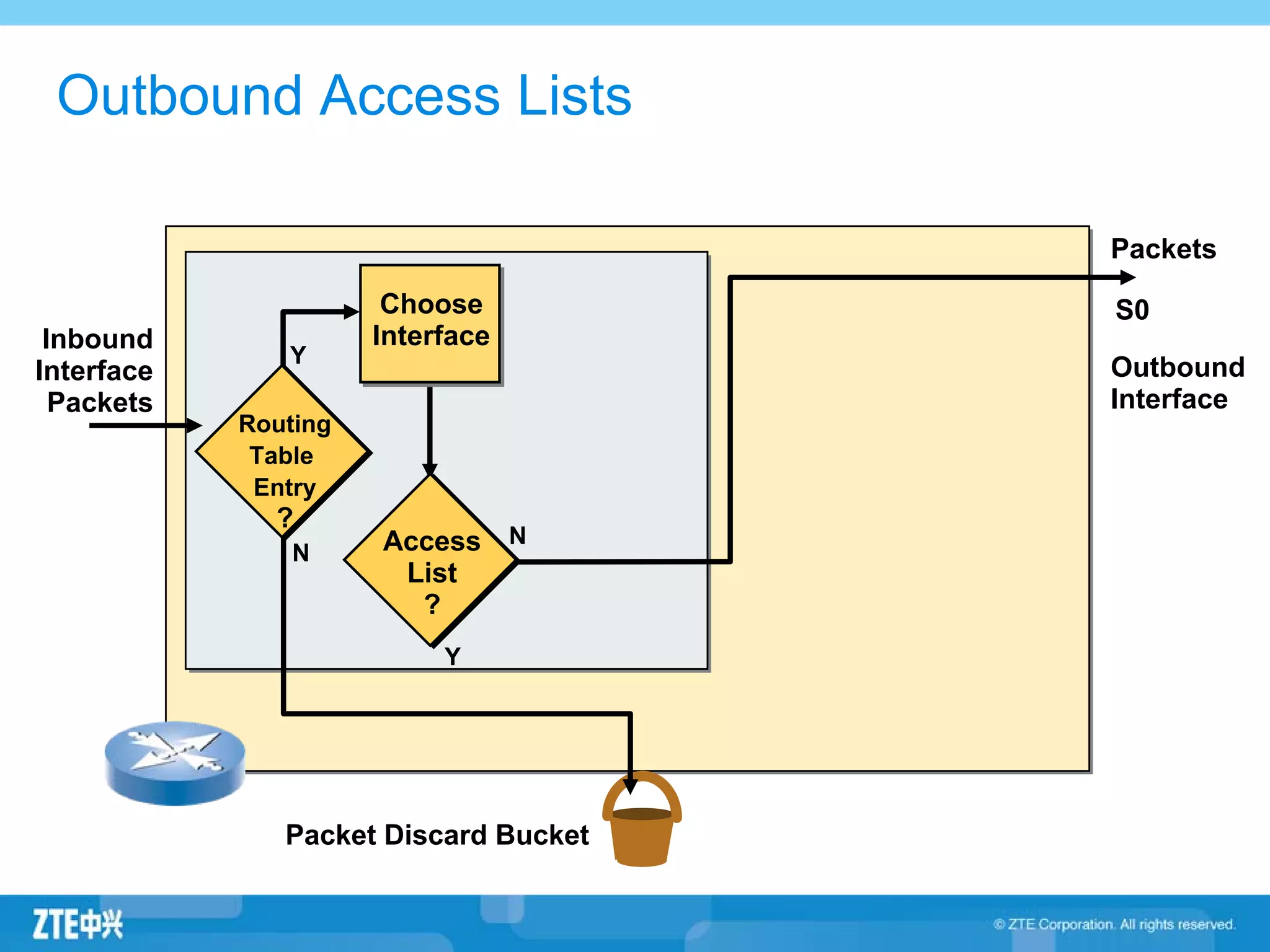
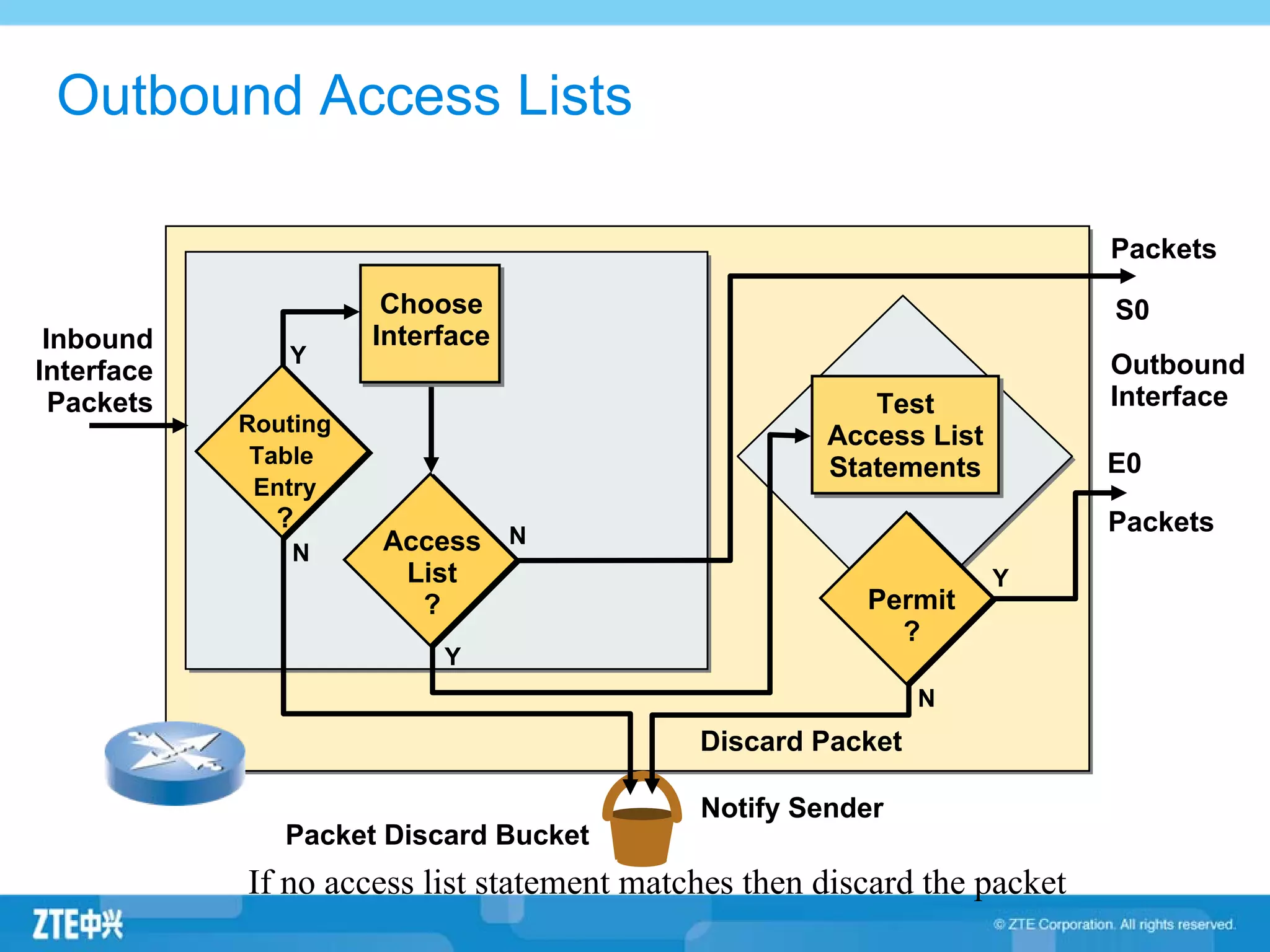
Outbound Access Lists
Outbound
Interface
Packets
N
Y
Packet Discard Bucket
Choose
Interface
Routing
Table
Entry
?
N
Packets
Test
Access List
Statements
Permit
?
Y
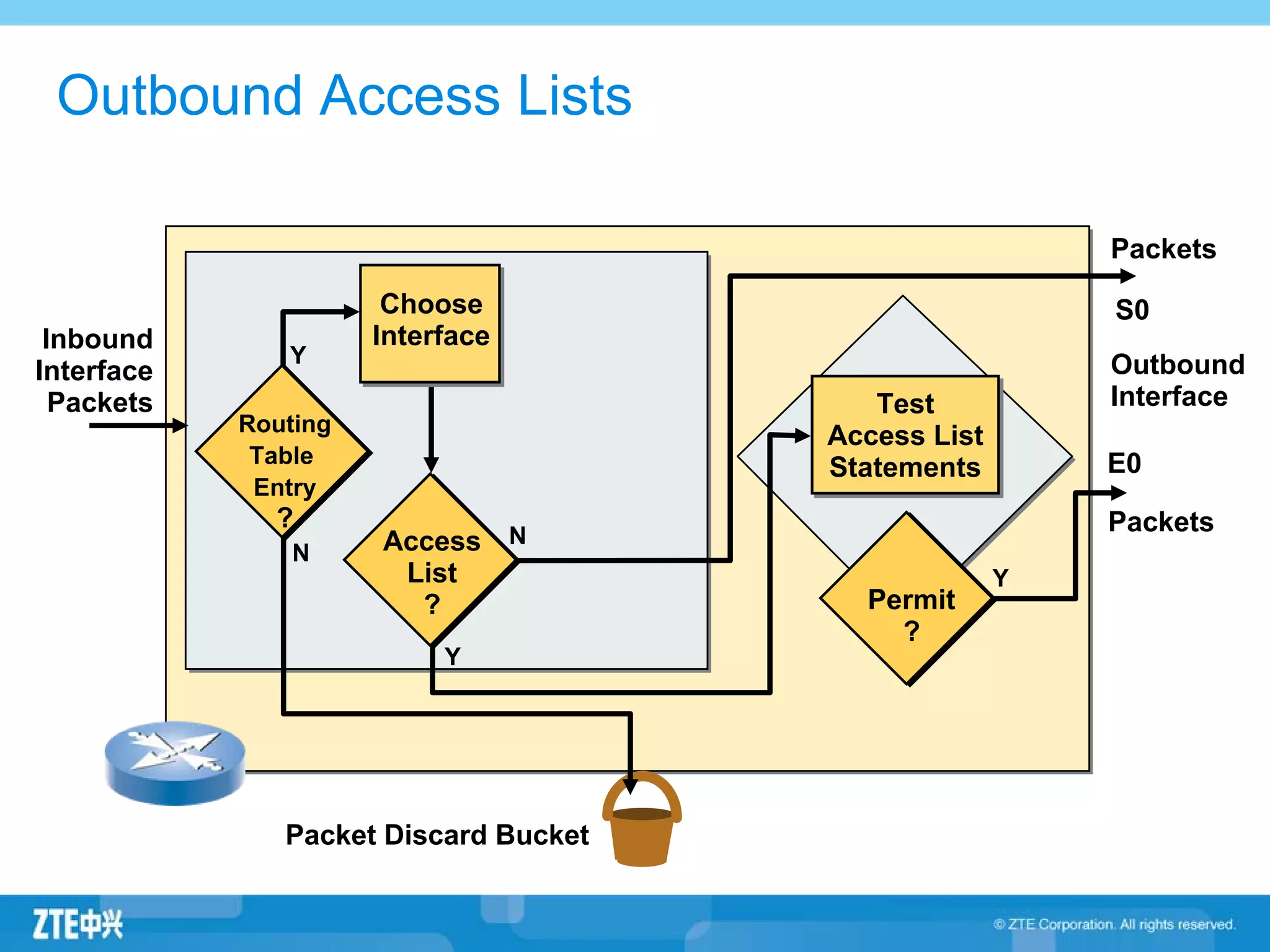
Outbound Access Lists
Access
List
?
Y
S0
E0
Inbound
Interface
Packets
Notify Sender
Outbound Access Lists
If no access list statement matches then discard the packet
N
Y
Packet Discard Bucket
Choose
Interface
Routing
Table
Entry
?
N
Y
Test
Access List
Statements
Permit
?
Y
Access
List
?
Discard Packet
N
Outbound
Interface
Packets
Packets
S0
E0
Inbound
Interface
Packets
Contents
ACL conception and function
ACL types
ACL working principle
ACL rule
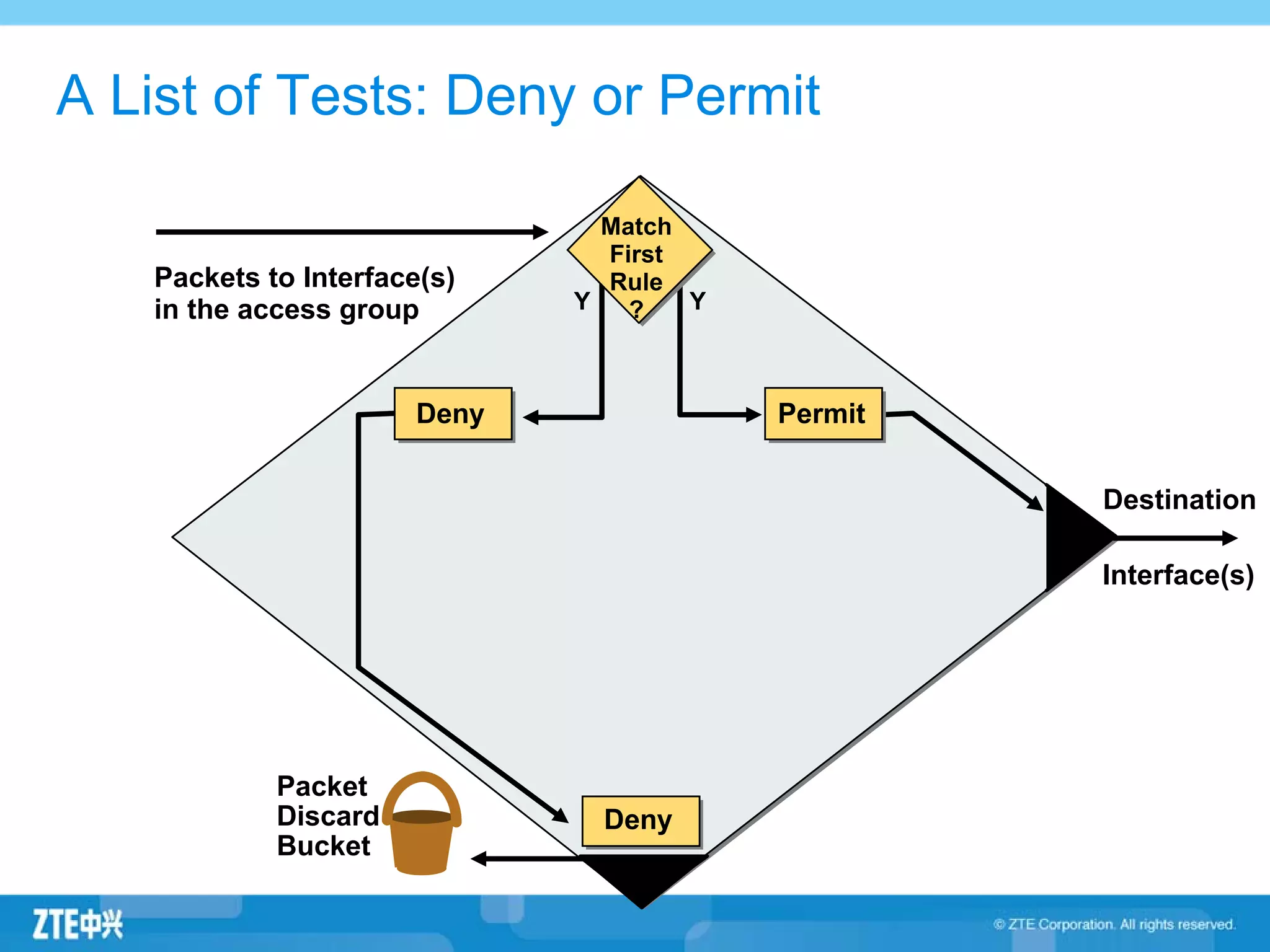
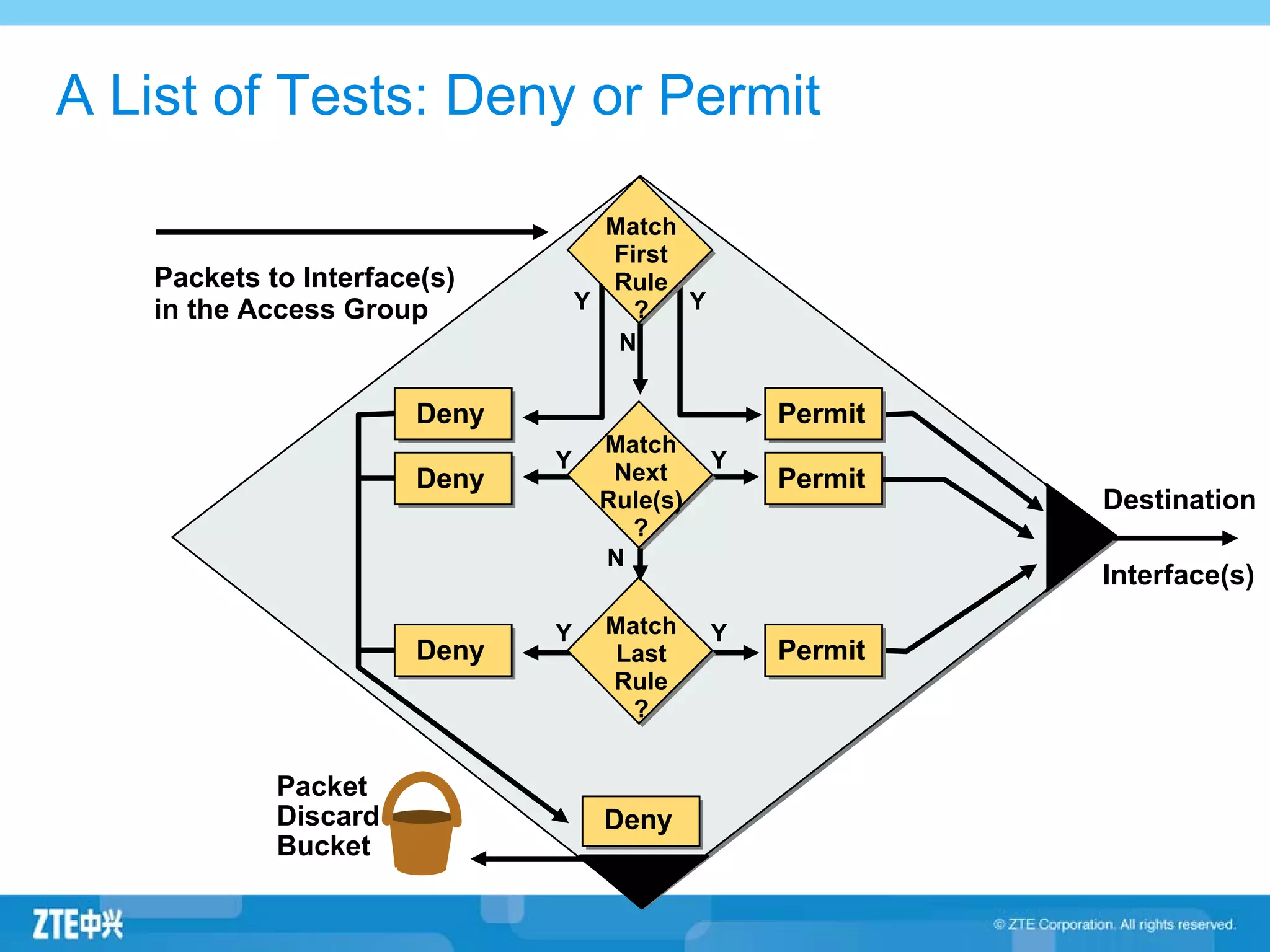
A List of Tests: Deny or Permit
Packets to Interface(s)
in the access group
Packet
Discard
Bucket
Y
Interface(s)
Destination
Deny
Deny
Y
Match
First
Rule
?
Permit
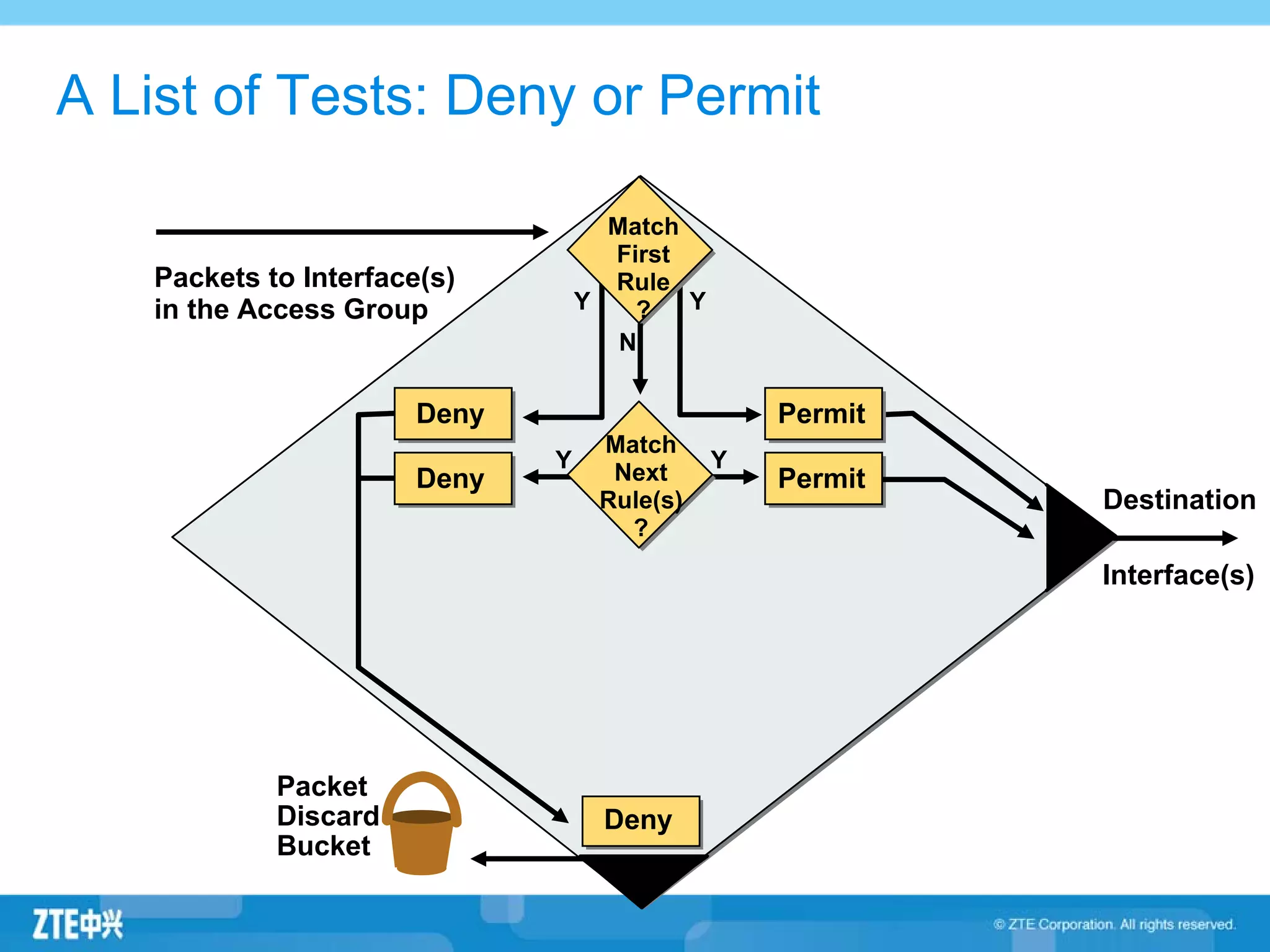
A List of Tests: Deny or Permit
Packets to Interface(s)
in the Access Group
Packet
Discard
Bucket
Y
Interface(s)
Destination
Deny
Deny
Y
Match
First
Rule
?
Permit
N
Deny Permit
Match
Next
Rule(s)
?
YY
A List of Tests: Deny or Permit
Packets to Interface(s)
in the Access Group
Packet
Discard
Bucket
Y
Interface(s)
Destination
Deny
Deny
Y
Match
First
Rule
?
Permit
N
Deny Permit
Match
Next
Rule(s)
?
Deny
Match
Last
Rule
?
YY
N
YY
Permit
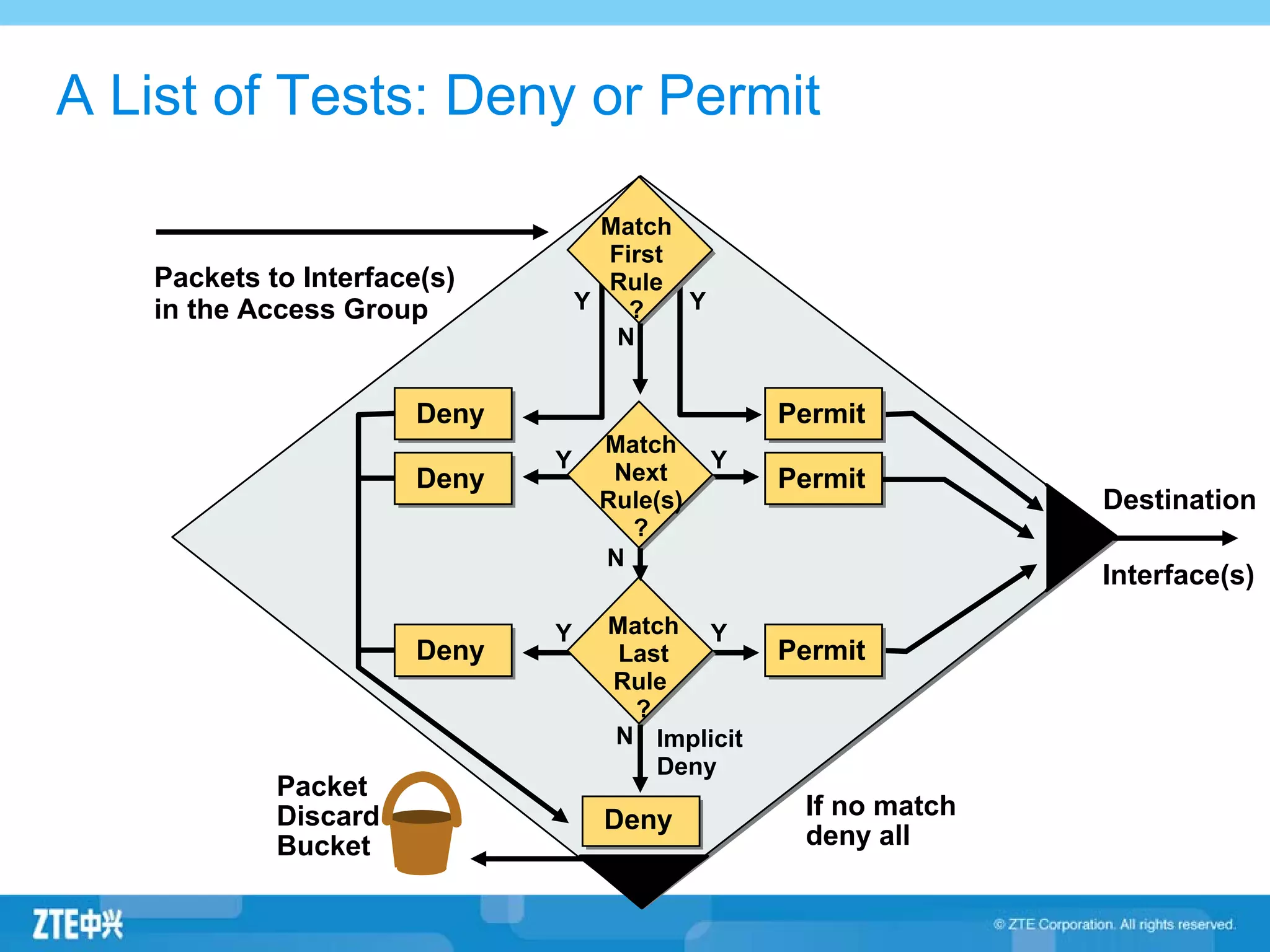
A List of Tests: Deny or Permit
Packets to Interface(s)
in the Access Group
Packet
Discard
Bucket
Y
Interface(s)
Destination
Deny
Y
Match
First
Rule
?
Permit
N
Deny Permit
Match
Next
Rule(s)
?
Deny
Match
Last
Rule
?
YY
N
YY
Permit
Implicit
Deny
If no match
deny all
Deny
N
ACL Rule Conclusion
Q:How to arrange
the sequence of rules
when configuring
ACL
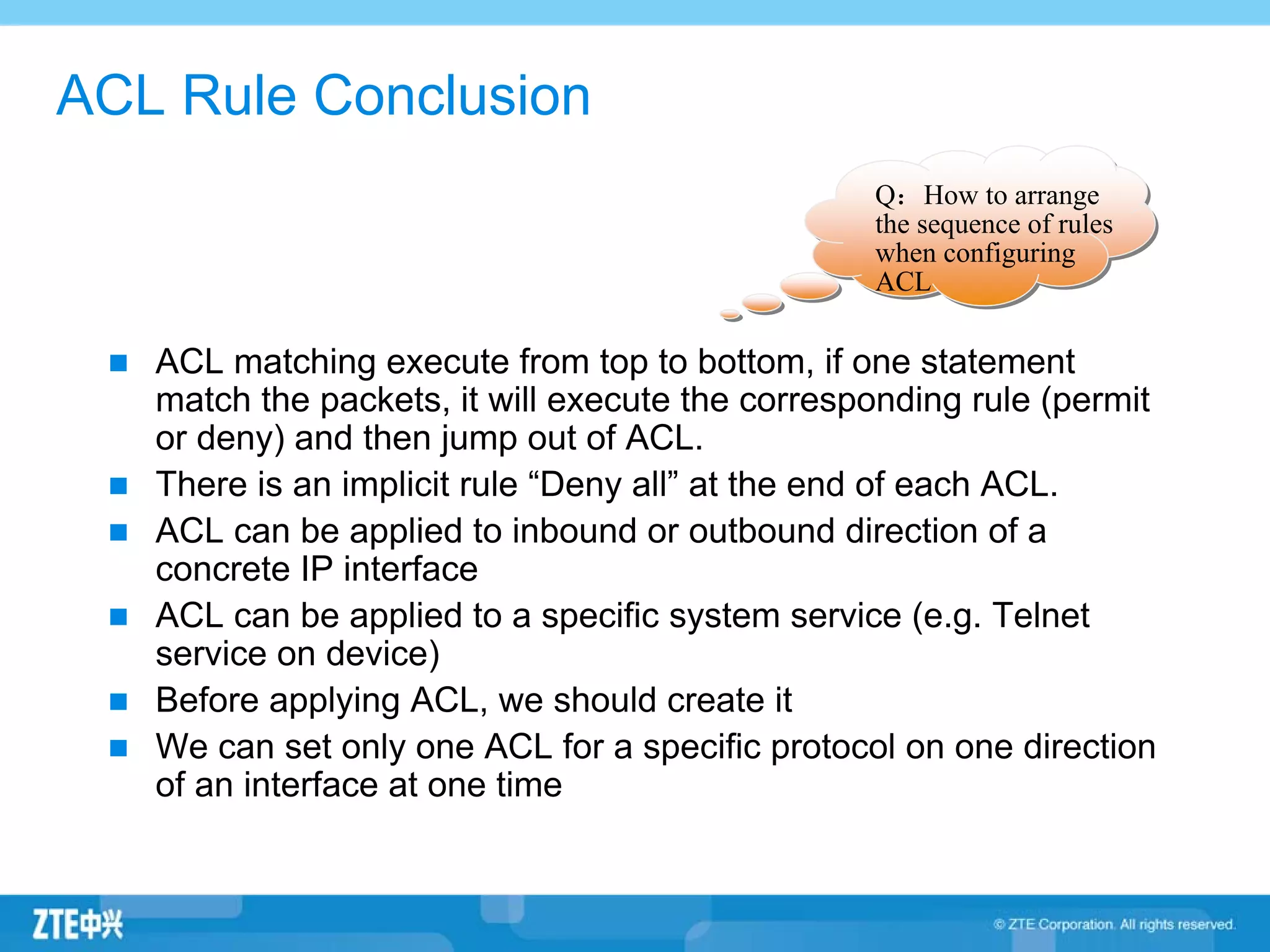
ACL matching execute from top to bottom, if one statement
match the packets, it will execute the corresponding rule (permit
or deny) and then jump out of ACL.
There is an implicit rule “Deny all” at the end of each ACL.
ACL can be applied to inbound or outbound direction of a
concrete IP interface
ACL can be applied to a specific system service (e.g. Telnet
service on device)
Before applying ACL, we should create it
We can set only one ACL for a specific protocol on one direction
of an interface at one time
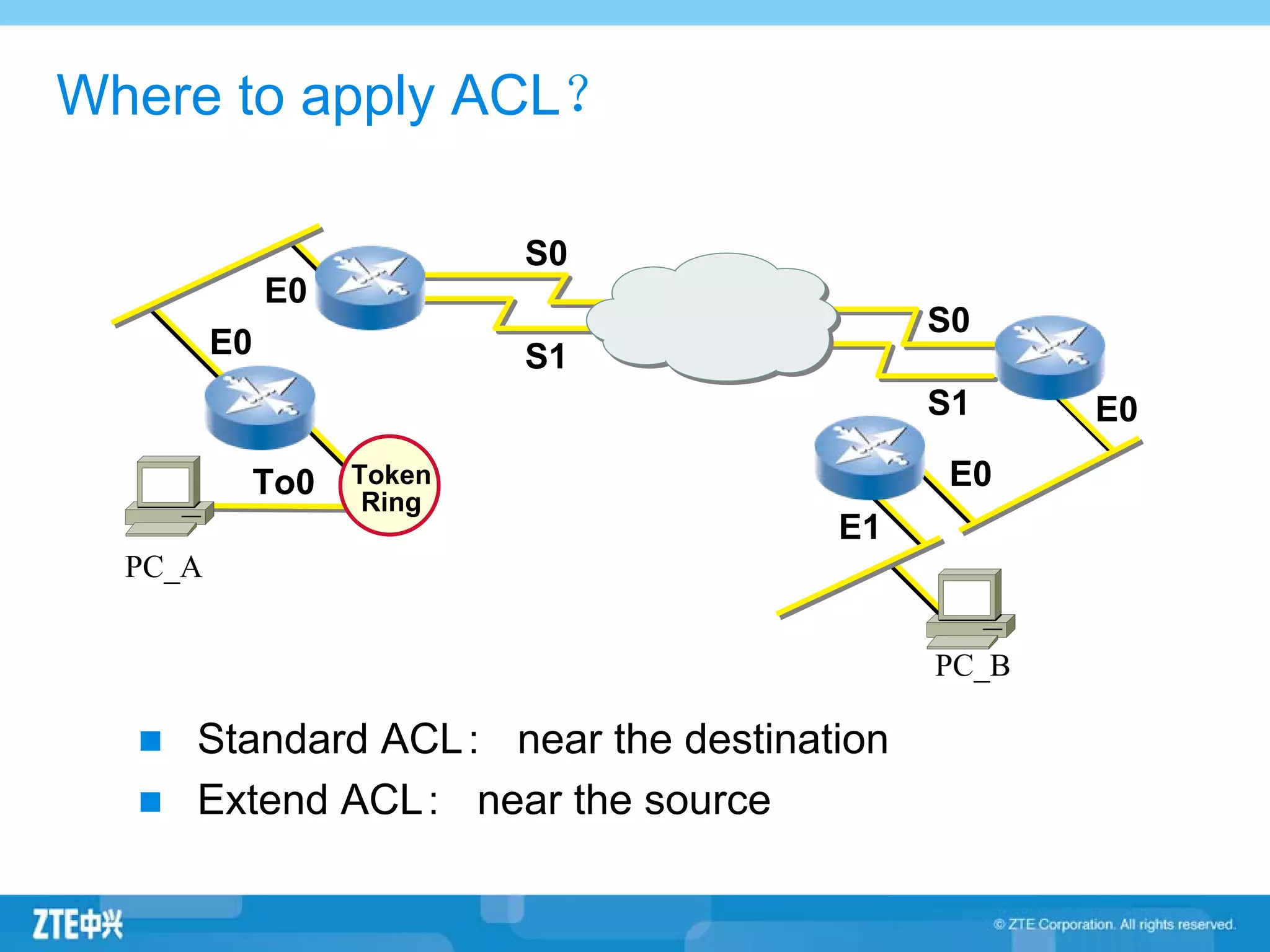
Where to apply ACL?
Standard ACL: near the destination
Extend ACL: near the source
E0
E0
E1
S0
To0
S1
S0
S1
E0
E0Token
Ring
BB
AA
DD
PC_A
PC_B
Content Review
ACL conception and usage
ACL working principle
ACL types
ACL rule
Questions
Where to place standard ACL in the network?
Where to place extend ACL?
What will be done to the packet if there are no
matches in the ACL?
How to arrange the sequence of rules when
configuring ACL?
What will happen if a data packet pass an
interface that no ACL is defined?
04 zxr10 bc-en-acl principle and configuration (acl principle)-1-ppt-201105 24

04 zxr10 bc-en-acl principle and configuration (acl principle)-1-ppt-201105 24

  • 1.
  • 2.
    Objectives Understand the basicfunction of ACL Know when and how to use ACL
  • 3.
    Contents ACL conception andfunction ACL types ACL working principle ACL rule
  • 4.
    FDDI 172.16.0.0 172.17.0.0 Token Ring Internet Why Use AccessLists? Manage IP traffic as network access grows Filter packets as they pass through the router
  • 5.
    Access List Applications Permitor deny packets moving through the router Permit or deny telnet access to or from the router Without access lists all packets could be transmitted onto all parts of your network telnet access (IP) Transmission of packets on an interface
  • 6.
    ACL Configuration Procedure Definetrigger condition Define packet matching rules Bind to interface or service Packet outgoing interfacePacket incoming interface ACL process permit? Source IP、 Destination IP protocol
  • 7.
    Contents ACL conception andfunction ACL types ACL working principle ACL rule
  • 8.
    Dest Address Source Address Protocol Portnumber Segment Header (TCP Header) Data Packet Header (IP Header ) Frame Header (e.g. HDLC) Use ACL to check data Deny Permit ACL Types and Matching Conditions Standard ACL Use source address as filtering standard Can generally restrict a kind of protocol Extend ACL Use five elements to filter packets Can restrict a concrete protocol accurately
  • 9.
    ACL Types andMatching Conditions
  • 10.
    IPv6 ACL CommandStructure Command structure for standard ACL Command structure for extend ACL
  • 11.
    Contents ACL conception andfunction ACL types ACL working principle ACL rule
  • 12.
  • 13.
    Outbound Interface Packets N Y Packet Discard Bucket Choose Interface Routing Table Entry ? N Packets Test AccessList Statements Permit ? Y Outbound Access Lists Access List ? Y S0 E0 Inbound Interface Packets
  • 14.
    Notify Sender Outbound AccessLists If no access list statement matches then discard the packet N Y Packet Discard Bucket Choose Interface Routing Table Entry ? N Y Test Access List Statements Permit ? Y Access List ? Discard Packet N Outbound Interface Packets Packets S0 E0 Inbound Interface Packets
  • 15.
    Contents ACL conception andfunction ACL types ACL working principle ACL rule
  • 16.
    A List ofTests: Deny or Permit Packets to Interface(s) in the access group Packet Discard Bucket Y Interface(s) Destination Deny Deny Y Match First Rule ? Permit
  • 17.
    A List ofTests: Deny or Permit Packets to Interface(s) in the Access Group Packet Discard Bucket Y Interface(s) Destination Deny Deny Y Match First Rule ? Permit N Deny Permit Match Next Rule(s) ? YY
  • 18.
    A List ofTests: Deny or Permit Packets to Interface(s) in the Access Group Packet Discard Bucket Y Interface(s) Destination Deny Deny Y Match First Rule ? Permit N Deny Permit Match Next Rule(s) ? Deny Match Last Rule ? YY N YY Permit
  • 19.
    A List ofTests: Deny or Permit Packets to Interface(s) in the Access Group Packet Discard Bucket Y Interface(s) Destination Deny Y Match First Rule ? Permit N Deny Permit Match Next Rule(s) ? Deny Match Last Rule ? YY N YY Permit Implicit Deny If no match deny all Deny N
  • 20.
    ACL Rule Conclusion Q:Howto arrange the sequence of rules when configuring ACL ACL matching execute from top to bottom, if one statement match the packets, it will execute the corresponding rule (permit or deny) and then jump out of ACL. There is an implicit rule “Deny all” at the end of each ACL. ACL can be applied to inbound or outbound direction of a concrete IP interface ACL can be applied to a specific system service (e.g. Telnet service on device) Before applying ACL, we should create it We can set only one ACL for a specific protocol on one direction of an interface at one time
  • 21.
    Where to applyACL? Standard ACL: near the destination Extend ACL: near the source E0 E0 E1 S0 To0 S1 S0 S1 E0 E0Token Ring BB AA DD PC_A PC_B
  • 22.
    Content Review ACL conceptionand usage ACL working principle ACL types ACL rule
  • 23.
    Questions Where to placestandard ACL in the network? Where to place extend ACL? What will be done to the packet if there are no matches in the ACL? How to arrange the sequence of rules when configuring ACL? What will happen if a data packet pass an interface that no ACL is defined?