


Mass Tourism
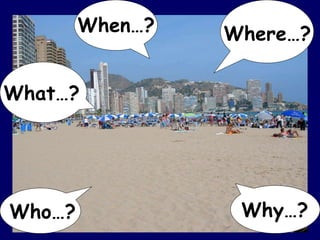
When…? Where…? 
What…? 
Who…? Why…?
Mass Tourism 
CHARACTERISTICS 
• Large scale/area and large numbers of tourists 
• Great concentrations of hotels and other tourist facilities 
• Major/dominant contributor to local economy 
DEVELOPMENT 
• ‘Costas’ of Spain in 1960s – e.g. Benidorm, Costa Blanca; 
Torremolinos, Costa del Sol 
• Wholesale change from sparsely populated fishing villages 
to side-by-side apartment blocks and hotels, bars, clubs 
and restaurants catering solely for tourists
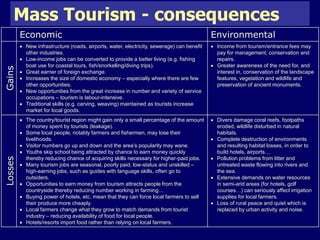
Mass Tourism - consequences 
Card-sorting exercise: 
Sort into: 
Gains & Losses: 
Economic & Environmental
Mass Tourism - consequences 
Economic Environmental 
Gains 
 New infrastructure (roads, airports, water, electricity, sewerage) can benefit 
other industries. 
 Low-income jobs can be converted to provide a better living (e.g. fishing 
boat use for coastal tours, fish/snorkelling/diving trips). 
 Great earner of foreign exchange. 
 Increases the size of domestic economy – especially where there are few 
other opportunities. 
 New opportunities from the great increase in number and variety of service 
occupations – tourism is labour-intensive. 
 Traditional skills (e.g. carving, weaving) maintained as tourists increase 
market for local goods. 
 Income from tourism/entrance fees may 
pay for management, conservation and 
repairs. 
 Greater awareness of the need for, and 
interest in, conservation of the landscape 
features, vegetation and wildlife and 
preservation of ancient monuments. 
Losses 
 The country/tourist region might gain only a small percentage of the amount 
of money spent by tourists (leakage). 
 Some local people, notably farmers and fishermen, may lose their 
livelihoods. 
 Visitor numbers go up and down and the area’s popularity may wane. 
 Youths skip school being attracted by chance to earn money quickly 
thereby reducing chance of acquiring skills necessary for higher-paid jobs. 
 Many tourism jobs are seasonal, poorly paid, low-status and unskilled – 
high-earning jobs, such as guides with language skills, often go to 
outsiders. 
 Opportunities to earn money from tourism attracts people from the 
countryside thereby reducing number working in farming… 
 Buying power of hotels, etc. mean that they can force local farmers to sell 
their produce more cheaply. 
 Local farmers change what they grow to match demands from tourist 
industry – reducing availability of food for local people. 
 Hotels/resorts import food rather than relying on local farmers. 
 Divers damage coral reefs, footpaths 
eroded, wildlife disturbed in natural 
habitats. 
 Complete destruction of environments 
and resulting habitat losses, in order to 
build hotels, airports… 
 Pollution problems from litter and 
untreated waste flowing into rivers and 
the sea. 
 Extensive demands on water resources 
in semi-arid areas (for hotels, golf 
courses…) can seriously affect irrigation 
supplies for local farmers. 
 Loss of rural peace and quiet which is 
replaced by urban activity and noise.
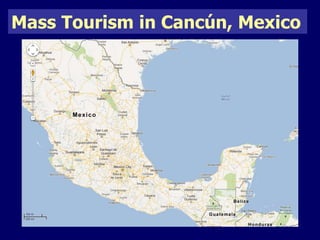
Mass Tourism in Cancún, Mexico
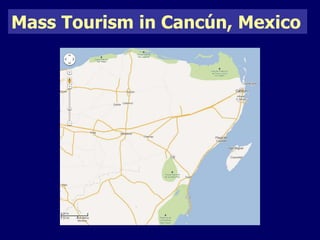
Mass Tourism in Cancún, Mexico 
Use the handout to complete these tasks: 
1. Describe the location of Cancún and the Yucatán Peninsula. 
2. Briefly describe the development of tourism here – try to relate this to the 
Butler Model. 
3. What attracts tourists to this location? Include at least two physical factors 
and two human factors – and be specific 
4. Construct a table to identify positive and negative economic, social and 
environmental impacts of tourism in this area. 
5. Describe how tourism is being managed to reduce the impacts and to keep 
the industry sustainable.
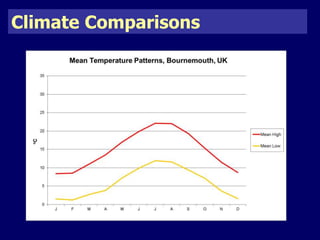
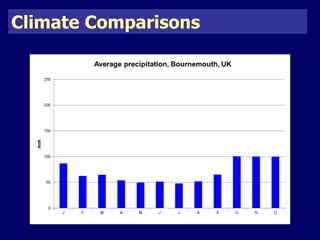
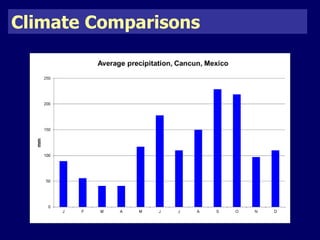
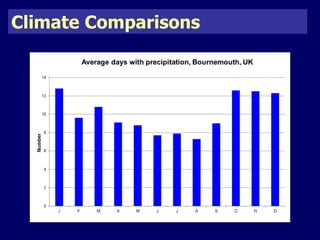
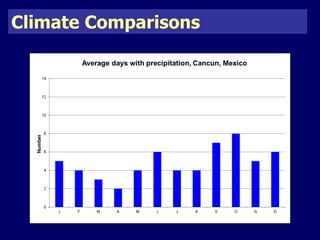
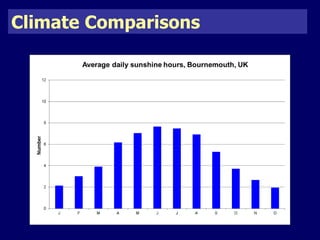
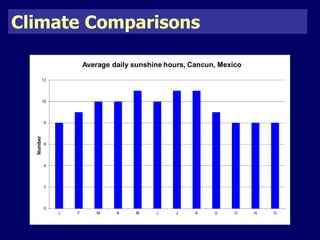
Climate Comparisons
Climate Comparisons
Climate Comparisons
Climate Comparisons
Climate Comparisons
Climate Comparisons
Climate Comparisons
Climate Comparisons
Mass Tourism in Cancún, Mexico 
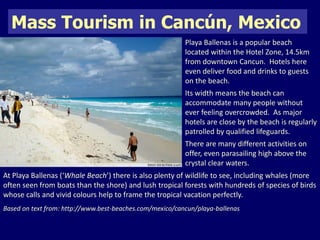
Playa Ballenas is a popular beach 
located within the Hotel Zone, 14.5km 
from downtown Cancun. Hotels here 
even deliver food and drinks to guests 
on the beach. 
Its width means the beach can 
accommodate many people without 
ever feeling overcrowded. As major 
hotels are close by the beach is regularly 
patrolled by qualified lifeguards. 
There are many different activities on 
offer, even parasailing high above the 
crystal clear waters. 
At Playa Ballenas (‘Whale Beach’) there is also plenty of wildlife to see, including whales (more 
often seen from boats than the shore) and lush tropical forests with hundreds of species of birds 
whose calls and vivid colours help to frame the tropical vacation perfectly. 
Based on text from: http://www.best-beaches.com/mexico/cancun/playa-ballenas
Human factors 
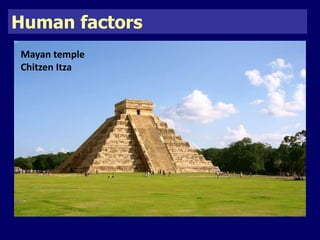
Mayan temple 
Chitzen Itza
Human factors 
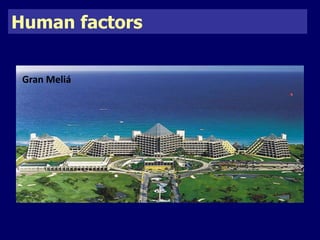
Gran Meliá
Human factors 
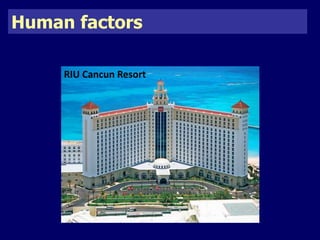
RIU Cancun Resort
Tourism in Cancun: Success 
or disaster?
Are your case studies good 
enough for level 3?
Where am I describing? 
People are attracted to FSBohauayarm hMibeilele ,S Bthheeeaik cDhho,, mEQgiunyepicetanns lRaenpdu, bAluicstralia 
because it has a warm 
dry climate and big sandy beaches. There are many high-quality hotels and the sea is 
very clear so it’s good for swimming. Not only this but there are plenty of activities on 
offer, such as scuba-diving and snorkelling.
Where am I describing? 
People are attracted to Cancun, Mexico by the warm tropical seas which are crystal 
clear as well as to the world’s second largest coral reef. The beaches, such as Playa 
Ballenas, are sandy and wide so that they never seem crowded. The climate makes 
this an ideal place for a winter holiday for people living in North America and Western 
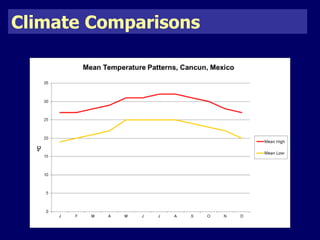
Europe as temperatures rarely fall below 25°C and there can be up to 8 hours of 
sunshine a day even in December. The ancient Mayan temples (e.g. at Chitzen Itza) are 
also a big cultural attraction.
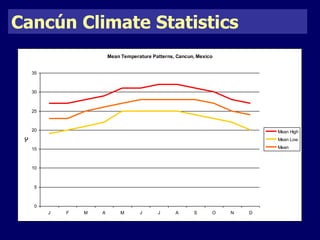
Cancún Climate Statistics 
Mean Temperature Patterns, Cancun, Mexico 
35 
30 
25 
20 
15 
10 
5 
0 
J F M A M J J A S O N D 
oC 
Mean High 
Mean Low 
Mean

03 mass tourism

  • 1.
  • 3.
  • 4.
    Mass Tourism CHARACTERISTICS • Large scale/area and large numbers of tourists • Great concentrations of hotels and other tourist facilities • Major/dominant contributor to local economy DEVELOPMENT • ‘Costas’ of Spain in 1960s – e.g. Benidorm, Costa Blanca; Torremolinos, Costa del Sol • Wholesale change from sparsely populated fishing villages to side-by-side apartment blocks and hotels, bars, clubs and restaurants catering solely for tourists
  • 5.
    Mass Tourism -consequences Card-sorting exercise: Sort into: Gains & Losses: Economic & Environmental
  • 6.
    Mass Tourism -consequences Economic Environmental Gains  New infrastructure (roads, airports, water, electricity, sewerage) can benefit other industries.  Low-income jobs can be converted to provide a better living (e.g. fishing boat use for coastal tours, fish/snorkelling/diving trips).  Great earner of foreign exchange.  Increases the size of domestic economy – especially where there are few other opportunities.  New opportunities from the great increase in number and variety of service occupations – tourism is labour-intensive.  Traditional skills (e.g. carving, weaving) maintained as tourists increase market for local goods.  Income from tourism/entrance fees may pay for management, conservation and repairs.  Greater awareness of the need for, and interest in, conservation of the landscape features, vegetation and wildlife and preservation of ancient monuments. Losses  The country/tourist region might gain only a small percentage of the amount of money spent by tourists (leakage).  Some local people, notably farmers and fishermen, may lose their livelihoods.  Visitor numbers go up and down and the area’s popularity may wane.  Youths skip school being attracted by chance to earn money quickly thereby reducing chance of acquiring skills necessary for higher-paid jobs.  Many tourism jobs are seasonal, poorly paid, low-status and unskilled – high-earning jobs, such as guides with language skills, often go to outsiders.  Opportunities to earn money from tourism attracts people from the countryside thereby reducing number working in farming…  Buying power of hotels, etc. mean that they can force local farmers to sell their produce more cheaply.  Local farmers change what they grow to match demands from tourist industry – reducing availability of food for local people.  Hotels/resorts import food rather than relying on local farmers.  Divers damage coral reefs, footpaths eroded, wildlife disturbed in natural habitats.  Complete destruction of environments and resulting habitat losses, in order to build hotels, airports…  Pollution problems from litter and untreated waste flowing into rivers and the sea.  Extensive demands on water resources in semi-arid areas (for hotels, golf courses…) can seriously affect irrigation supplies for local farmers.  Loss of rural peace and quiet which is replaced by urban activity and noise.
  • 7.
    Mass Tourism inCancún, Mexico
  • 8.
    Mass Tourism inCancún, Mexico
  • 9.
    Mass Tourism inCancún, Mexico Use the handout to complete these tasks: 1. Describe the location of Cancún and the Yucatán Peninsula. 2. Briefly describe the development of tourism here – try to relate this to the Butler Model. 3. What attracts tourists to this location? Include at least two physical factors and two human factors – and be specific 4. Construct a table to identify positive and negative economic, social and environmental impacts of tourism in this area. 5. Describe how tourism is being managed to reduce the impacts and to keep the industry sustainable.
  • 10.
  • 11.
  • 12.
  • 13.
  • 14.
  • 15.
  • 16.
  • 17.
  • 18.
    Mass Tourism inCancún, Mexico Playa Ballenas is a popular beach located within the Hotel Zone, 14.5km from downtown Cancun. Hotels here even deliver food and drinks to guests on the beach. Its width means the beach can accommodate many people without ever feeling overcrowded. As major hotels are close by the beach is regularly patrolled by qualified lifeguards. There are many different activities on offer, even parasailing high above the crystal clear waters. At Playa Ballenas (‘Whale Beach’) there is also plenty of wildlife to see, including whales (more often seen from boats than the shore) and lush tropical forests with hundreds of species of birds whose calls and vivid colours help to frame the tropical vacation perfectly. Based on text from: http://www.best-beaches.com/mexico/cancun/playa-ballenas
  • 19.
    Human factors Mayantemple Chitzen Itza
  • 20.
  • 21.
    Human factors RIUCancun Resort
  • 22.
    Tourism in Cancun:Success or disaster?
  • 23.
    Are your casestudies good enough for level 3?
  • 24.
    Where am Idescribing? People are attracted to FSBohauayarm hMibeilele ,S Bthheeeaik cDhho,, mEQgiunyepicetanns lRaenpdu, bAluicstralia because it has a warm dry climate and big sandy beaches. There are many high-quality hotels and the sea is very clear so it’s good for swimming. Not only this but there are plenty of activities on offer, such as scuba-diving and snorkelling.
  • 25.
    Where am Idescribing? People are attracted to Cancun, Mexico by the warm tropical seas which are crystal clear as well as to the world’s second largest coral reef. The beaches, such as Playa Ballenas, are sandy and wide so that they never seem crowded. The climate makes this an ideal place for a winter holiday for people living in North America and Western Europe as temperatures rarely fall below 25°C and there can be up to 8 hours of sunshine a day even in December. The ancient Mayan temples (e.g. at Chitzen Itza) are also a big cultural attraction.
  • 26.
    Cancún Climate Statistics Mean Temperature Patterns, Cancun, Mexico 35 30 25 20 15 10 5 0 J F M A M J J A S O N D oC Mean High Mean Low Mean