London, 24th May 1819 –
Osborne House (Isle of Wight), 22nd January 1901
Victoria I
Queen of England and Ireland
Empress of India
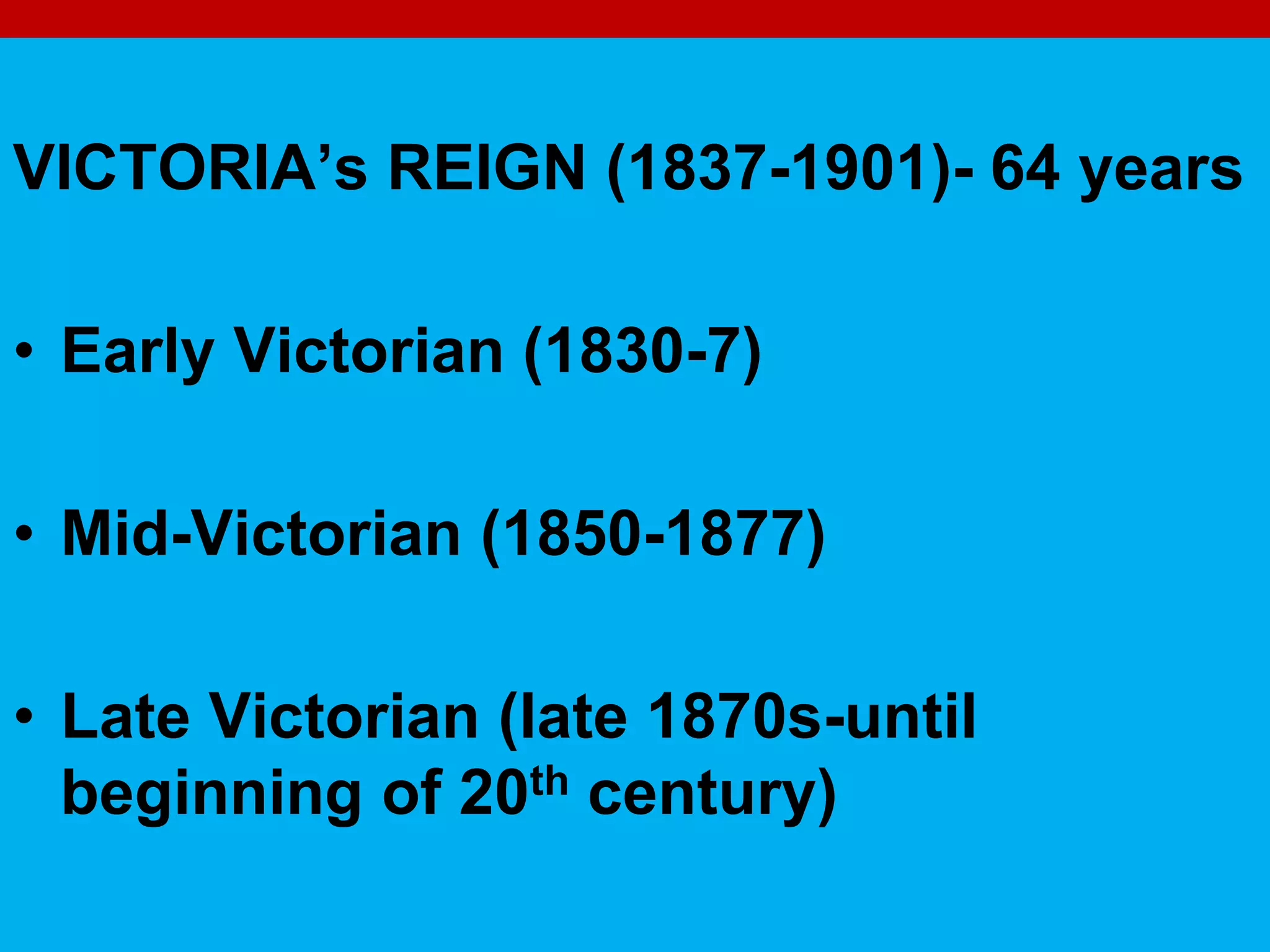
VICTORIA’s REIGN (1837-1901)- 64 years
• Early Victorian (1830-7)
• Mid-Victorian (1850-1877)
• Late Victorian (late 1870s-until
beginning of 20th century)
After Victorian period:
“Edwardian literature”
Reign of Edward VII (1901-1910)
“Georgian Literature”
George V’s reign (1910-1936)
Victorian period: Optimistic one?
-Monarchy as national symbol
- England’s prosperity:
- Imperial expansion
- Rapid industrialization (1800-1850)
- Increase of population
- Technological advances
- Changes in industry (cotton industry)
- Advances in coal and iron industries
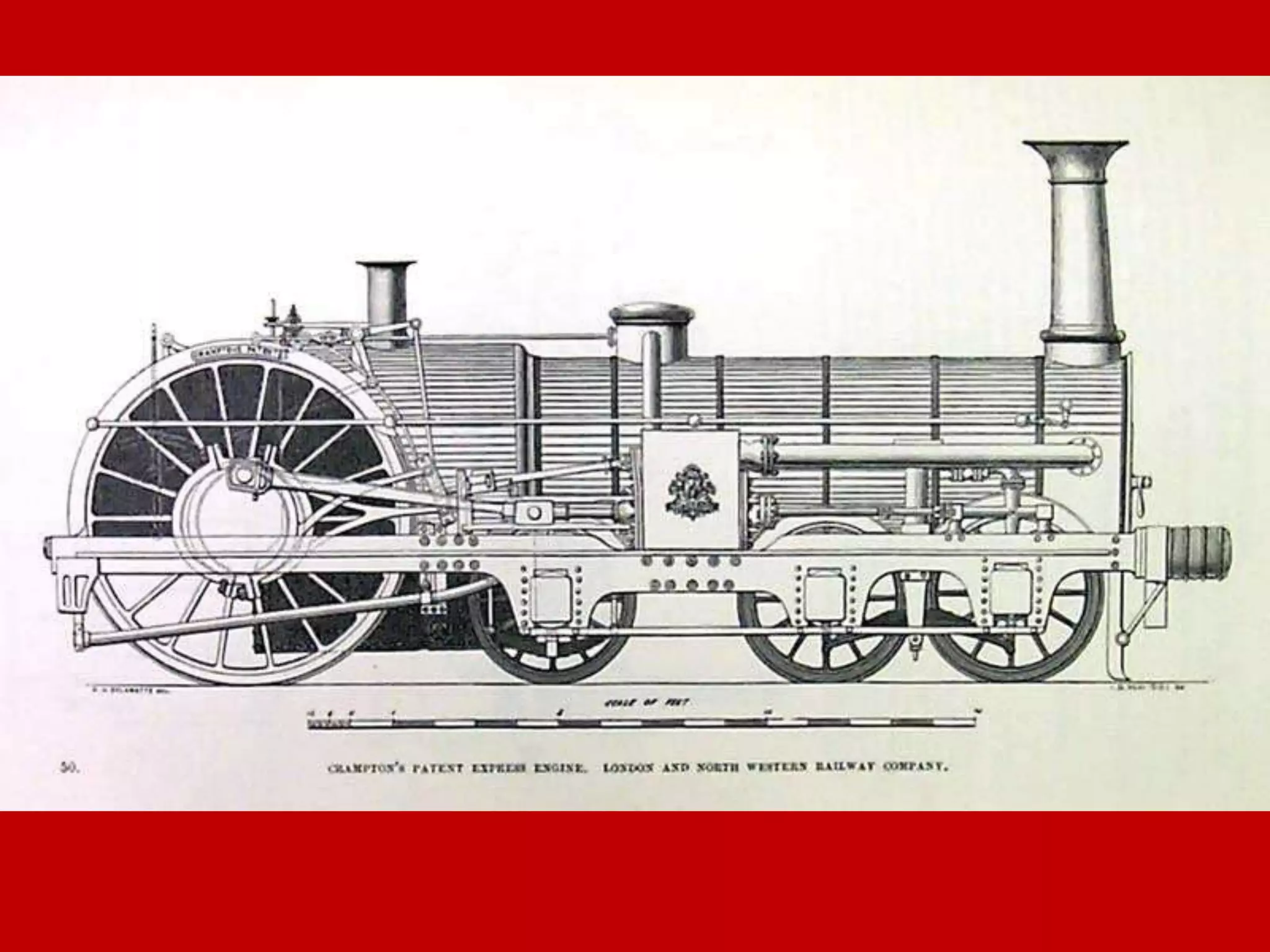
- Boom in railroad constructions
- Many discoveries and inventions
NEW INVENTIONS:
Daguerrotype (1839)
Telephone (1876)
Phonograph (1877)
Record (1896)
Wireless radio (1896)
Cinema shows (1896)
AND SOCIETY’S CAPACITY
TO ASSIMILATE AND MAKE
USE OF THEM IN A
RELATIVELY SHORT PERIOD
OF TIME
THOMAS A. EDISON
(1847- 1931)
Phonographe
Lamps
Crystal Palace, Londres
Joseph Paxton (1803-1865)
Machinery Section at the Great Exhibition of 1851
Steam-Powered Tractor and Agricultural Machinery
Gothic-style Metal Stove
The old Brighton Pier
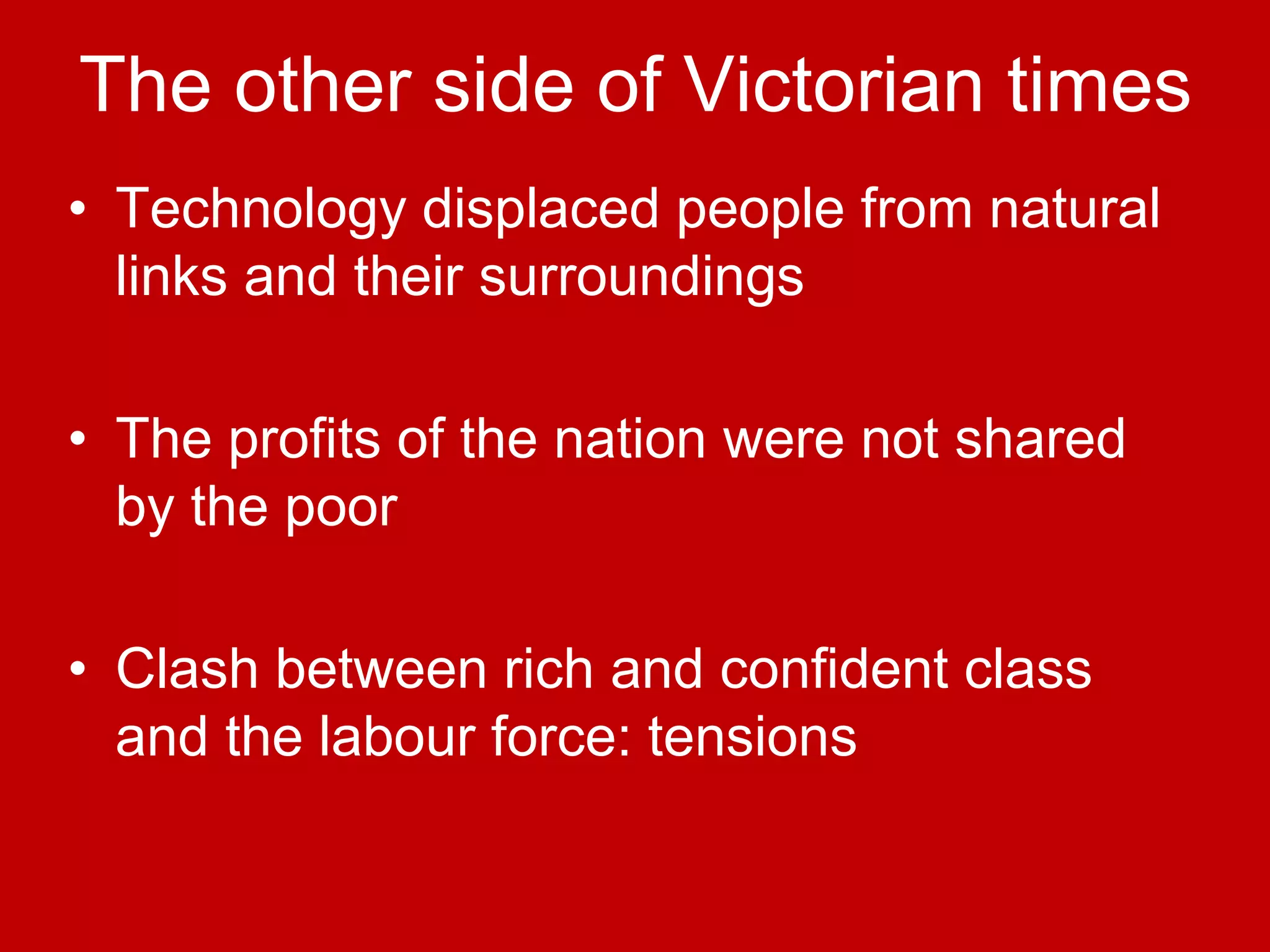
The other side of Victorian times
• Technology displaced people from natural
links and their surroundings
• The profits of the nation were not shared
by the poor
• Clash between rich and confident class
and the labour force: tensions
Tensions and changes
• Economic distress of working classes:
– Destruction of machinery (Luddites)
– Destruction of farm property
– Unions organized (1840: rise of Chartism)
• Middle class achieved political and
economic aims:
– Parliament was reformed
DISRAELI
GLADSTONE
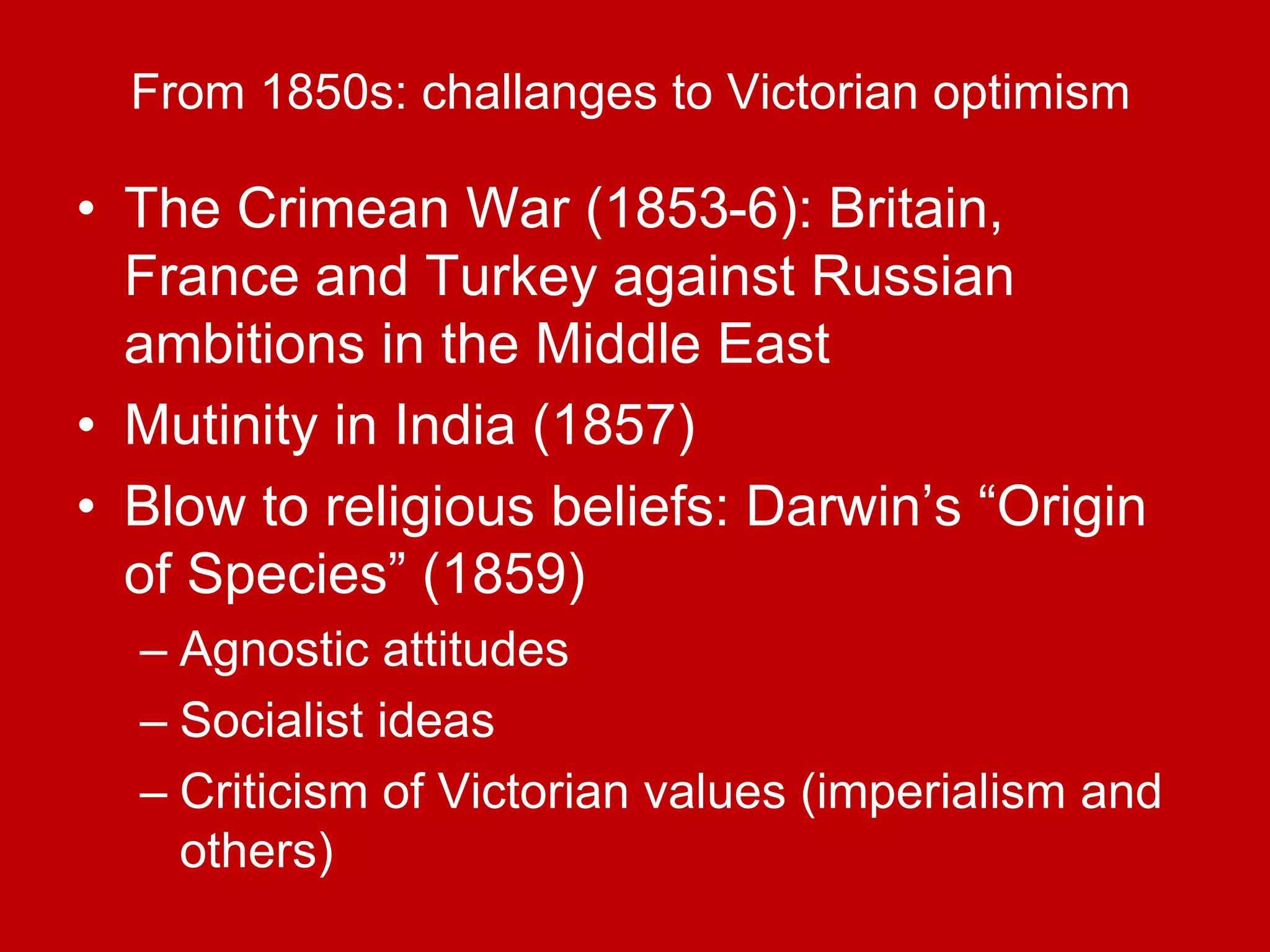
From 1850s: challanges to Victorian optimism
• The Crimean War (1853-6): Britain,
France and Turkey against Russian
ambitions in the Middle East
• Mutinity in India (1857)
• Blow to religious beliefs: Darwin’s “Origin
of Species” (1859)
– Agnostic attitudes
– Socialist ideas
– Criticism of Victorian values (imperialism and
others)
Charles Robert Darwin
(1809-1882)
Beagle’s Trip
Rudyard Kipling
(1865 – 1936)

01. Victorian and anti-victorians (Context).ppt

  • 1.
    London, 24th May1819 – Osborne House (Isle of Wight), 22nd January 1901 Victoria I Queen of England and Ireland Empress of India
  • 2.
    VICTORIA’s REIGN (1837-1901)-64 years • Early Victorian (1830-7) • Mid-Victorian (1850-1877) • Late Victorian (late 1870s-until beginning of 20th century)
  • 3.
    After Victorian period: “Edwardianliterature” Reign of Edward VII (1901-1910) “Georgian Literature” George V’s reign (1910-1936)
  • 4.
    Victorian period: Optimisticone? -Monarchy as national symbol - England’s prosperity: - Imperial expansion - Rapid industrialization (1800-1850) - Increase of population - Technological advances - Changes in industry (cotton industry) - Advances in coal and iron industries - Boom in railroad constructions - Many discoveries and inventions
  • 5.
    NEW INVENTIONS: Daguerrotype (1839) Telephone(1876) Phonograph (1877) Record (1896) Wireless radio (1896) Cinema shows (1896) AND SOCIETY’S CAPACITY TO ASSIMILATE AND MAKE USE OF THEM IN A RELATIVELY SHORT PERIOD OF TIME
  • 6.
    THOMAS A. EDISON (1847-1931) Phonographe Lamps
  • 7.
  • 9.
    Machinery Section atthe Great Exhibition of 1851
  • 10.
    Steam-Powered Tractor andAgricultural Machinery
  • 12.
  • 13.
  • 14.
    The other sideof Victorian times • Technology displaced people from natural links and their surroundings • The profits of the nation were not shared by the poor • Clash between rich and confident class and the labour force: tensions
  • 15.
    Tensions and changes •Economic distress of working classes: – Destruction of machinery (Luddites) – Destruction of farm property – Unions organized (1840: rise of Chartism) • Middle class achieved political and economic aims: – Parliament was reformed
  • 16.
  • 17.
    From 1850s: challangesto Victorian optimism • The Crimean War (1853-6): Britain, France and Turkey against Russian ambitions in the Middle East • Mutinity in India (1857) • Blow to religious beliefs: Darwin’s “Origin of Species” (1859) – Agnostic attitudes – Socialist ideas – Criticism of Victorian values (imperialism and others)
  • 18.
  • 19.