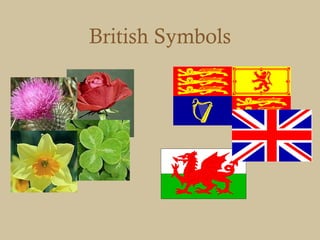
British Symbols
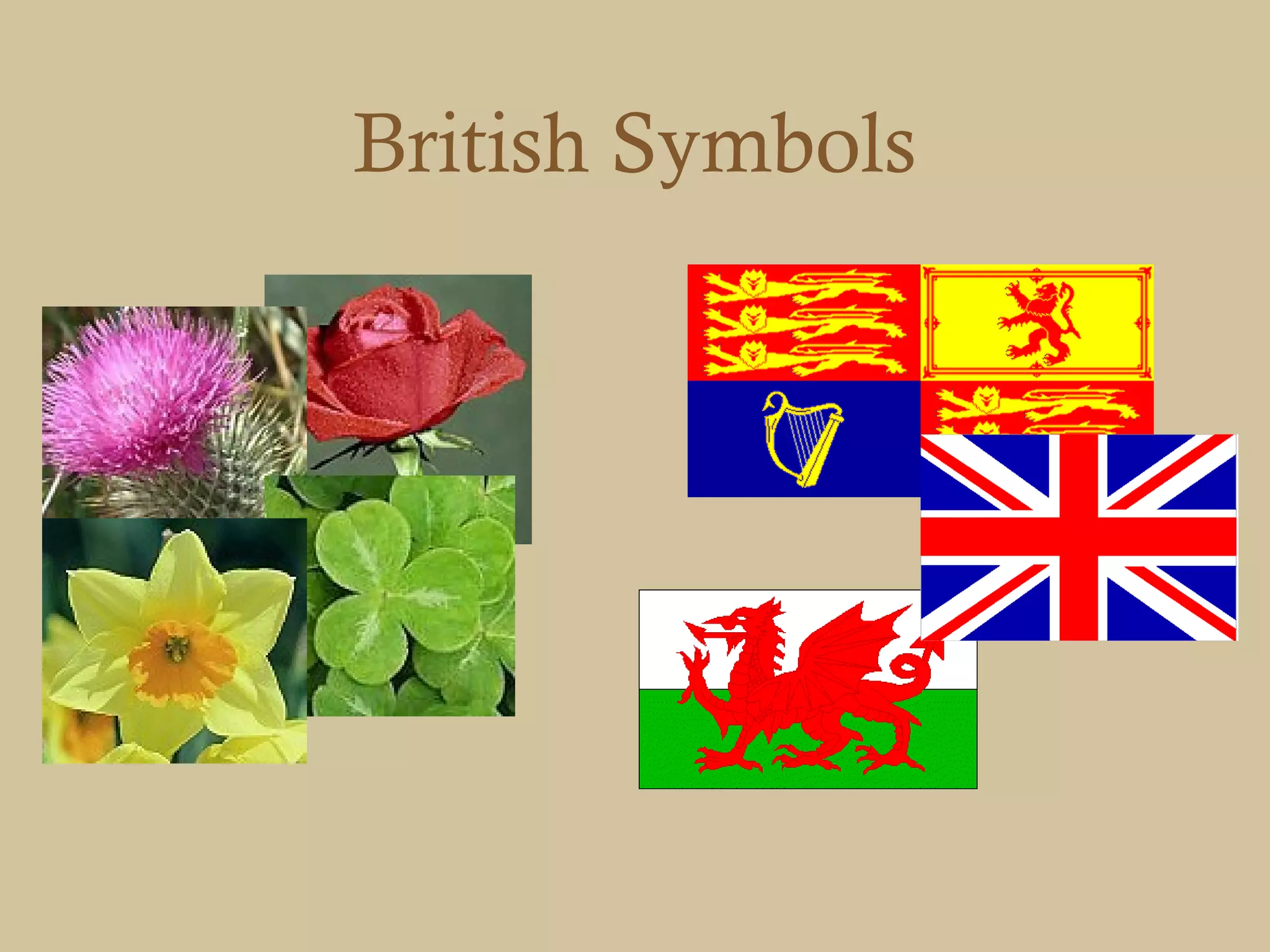
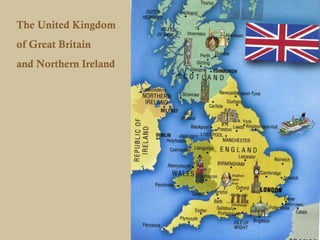
The United Kingdom
of Great Britain
and Northern Ireland
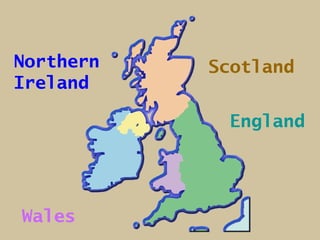
Northern   Scotland
Ireland

            England


Wales
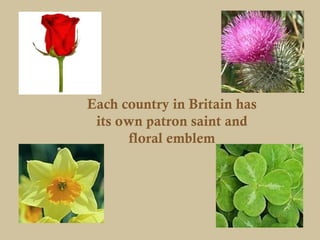
Each country in Britain has
 its own patron saint and
      floral emblem
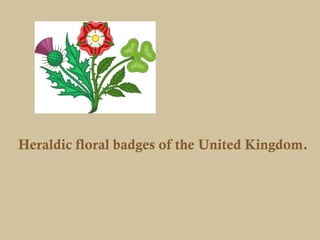
Heraldic floral badges of the United Kingdom.
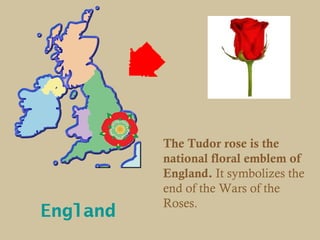
The Tudor rose is the
          national floral emblem of
          England. It symbolizes the
          end of the Wars of the
          Roses.
England
Scotland


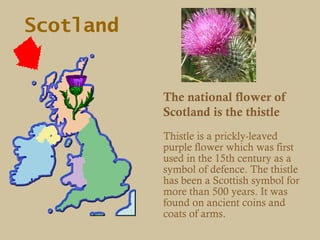
           The national flower of
           Scotland is the thistle
           Thistle is a prickly-leaved
           purple flower which was first
           used in the 15th century as a
           symbol of defence. The thistle
           has been a Scottish symbol for
           more than 500 years. It was
           found on ancient coins and
           coats of arms.
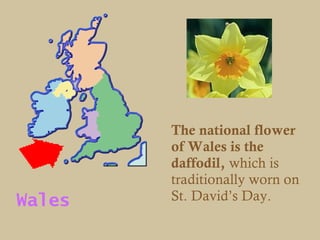
The national flower
        of Wales is the
        daffodil, which is
        traditionally worn on
Wales   St. David’s Day.
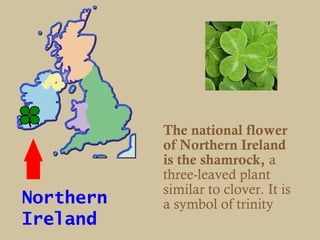
The national flower
           of Northern Ireland
           is the shamrock, a
           three-leaved plant
           similar to clover. It is
Northern   a symbol of trinity
Ireland
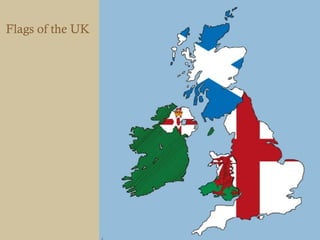
Flags of the UK
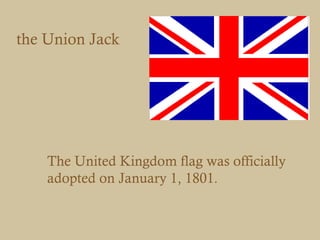
the Union Jack


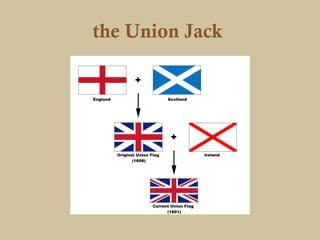
    The United Kingdom flag was officially
    adopted on January 1, 1801.
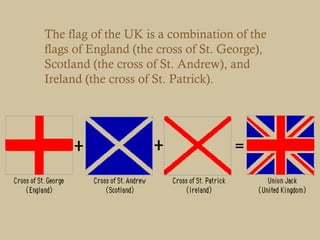
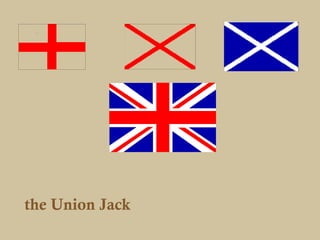
The flag of the UK is a combination of the
flags of England (the cross of St. George),
Scotland (the cross of St. Andrew), and
Ireland (the cross of St. Patrick).
the Union Jack
the Union Jack
The flag of Scotland -
St Andrew’s Cross


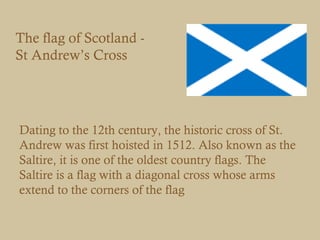
Dating to the 12th century, the historic cross of St.
Andrew was first hoisted in 1512. Also known as the
Saltire, it is one of the oldest country flags. The
Saltire is a flag with a diagonal cross whose arms
extend to the corners of the flag
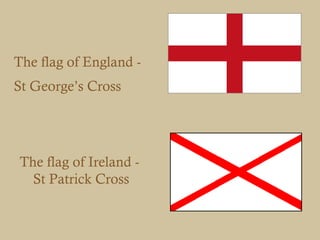
The flag of England -
St George’s Cross


The flag of Ireland -
  St Patrick Cross
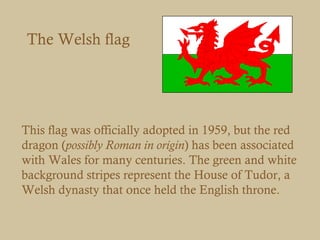
The Welsh flag


This flag was officially adopted in 1959, but the red
dragon (possibly Roman in origin) has been associated
with Wales for many centuries. The green and white
background stripes represent the House of Tudor, a
Welsh dynasty that once held the English throne.
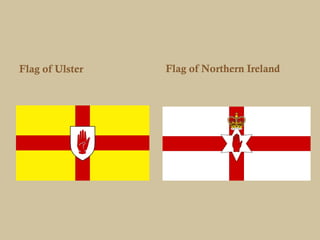
Flag of Ulster   Flag of Northern Ireland
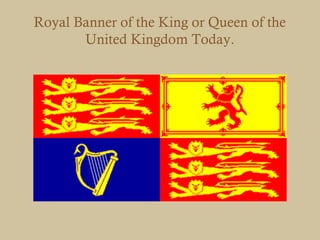
Royal Banner of the King or Queen of the
       United Kingdom Today.
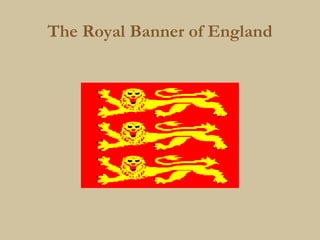
The Royal Banner of England
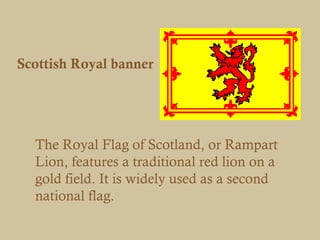
Scottish Royal banner


  The Royal Flag of Scotland, or Rampart
  Lion, features a traditional red lion on a
  gold field. It is widely used as a second
  national flag.
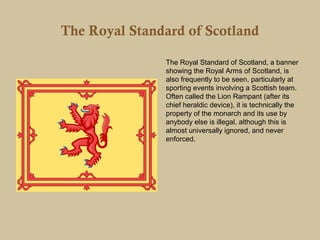
The Royal Standard of Scotland

               The Royal Standard of Scotland, a banner
               showing the Royal Arms of Scotland, is
               also frequently to be seen, particularly at
               sporting events involving a Scottish team.
               Often called the Lion Rampant (after its
               chief heraldic device), it is technically the
               property of the monarch and its use by
               anybody else is illegal, although this is
               almost universally ignored, and never
               enforced.
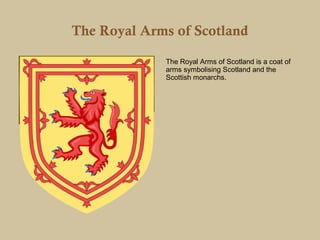
The Royal Arms of Scotland

             The Royal Arms of Scotland is a coat of
             arms symbolising Scotland and the
             Scottish monarchs.
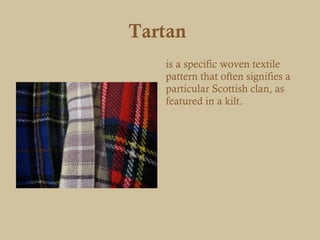
Tartan
   is a specific woven textile
   pattern that often signifies a
   particular Scottish clan, as
   featured in a kilt.
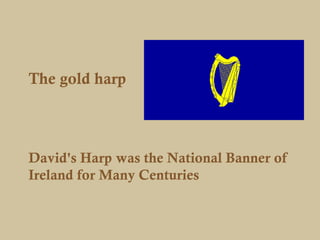
The gold harp


David's Harp was the National Banner of
Ireland for Many Centuries
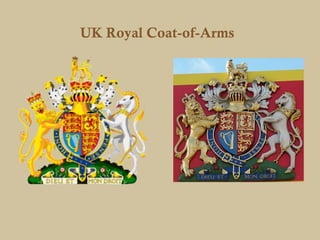
UK Royal Coat-of-Arms
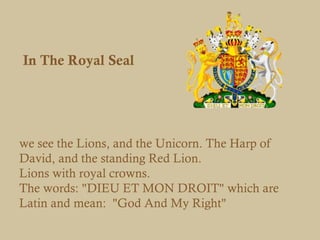
In The Royal Seal


we see the Lions, and the Unicorn. The Harp of
David, and the standing Red Lion. 
Lions with royal crowns.
The words: "DIEU ET MON DROIT" which are
Latin and mean:  "God And My Right"
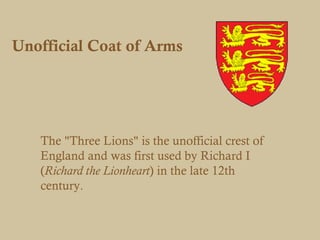
Unofficial Coat of Arms


   The "Three Lions" is the unofficial crest of
   England and was first used by Richard I
   (Richard the Lionheart) in the late 12th
   century.
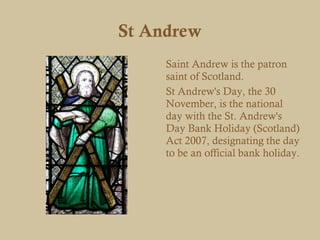
St Andrew
     Saint Andrew is the patron
     saint of Scotland.
     St Andrew's Day, the 30
     November, is the national
     day with the St. Andrew's
     Day Bank Holiday (Scotland)
     Act 2007, designating the day
     to be an official bank holiday.
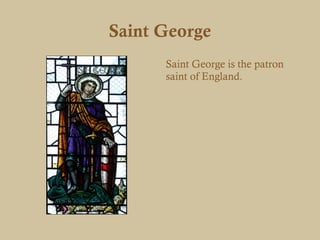
Saint George
      Saint George is the patron
      saint of England.
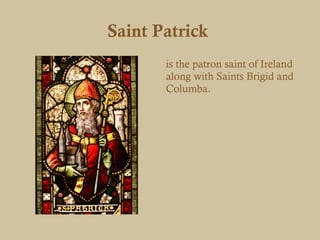
Saint Patrick
       is the patron saint of Ireland
       along with Saints Brigid and
       Columba.
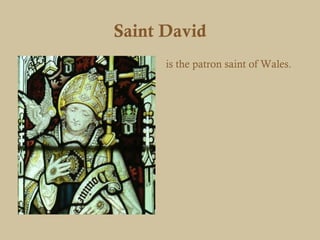
Saint David
      is the patron saint of Wales.
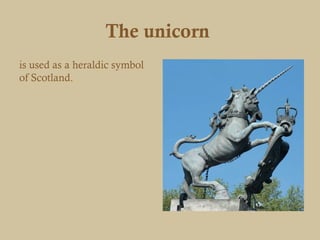
The unicorn
is used as a heraldic symbol
of Scotland.
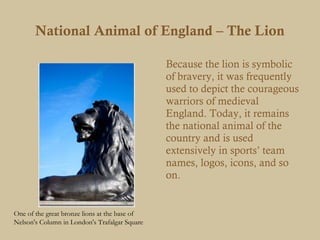
National Animal of England – The Lion

                                               Because the lion is symbolic
                                               of bravery, it was frequently
                                               used to depict the courageous
                                               warriors of medieval
                                               England. Today, it remains
                                               the national animal of the
                                               country and is used
                                               extensively in sports’ team
                                               names, logos, icons, and so
                                               on.


One of the great bronze lions at the base of
Nelson's Column in London's Trafalgar Square
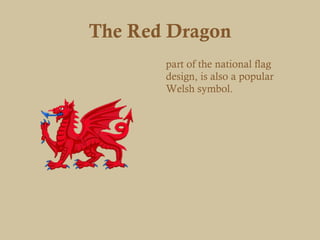
The Red Dragon
       part of the national flag
       design, is also a popular
       Welsh symbol.

British symbols

  • 1.
  • 2.
    The United Kingdom ofGreat Britain and Northern Ireland
  • 3.
    Northern Scotland Ireland England Wales
  • 4.
    Each country inBritain has its own patron saint and floral emblem
  • 5.
    Heraldic floral badgesof the United Kingdom.
  • 6.
    The Tudor roseis the national floral emblem of England. It symbolizes the end of the Wars of the Roses. England
  • 7.
    Scotland The national flower of Scotland is the thistle Thistle is a prickly-leaved purple flower which was first used in the 15th century as a symbol of defence. The thistle has been a Scottish symbol for more than 500 years. It was found on ancient coins and coats of arms.
  • 8.
    The national flower of Wales is the daffodil, which is traditionally worn on Wales St. David’s Day.
  • 9.
    The national flower of Northern Ireland is the shamrock, a three-leaved plant similar to clover. It is Northern a symbol of trinity Ireland
  • 10.
  • 11.
    the Union Jack The United Kingdom flag was officially adopted on January 1, 1801.
  • 12.
    The flag ofthe UK is a combination of the flags of England (the cross of St. George), Scotland (the cross of St. Andrew), and Ireland (the cross of St. Patrick).
  • 13.
  • 14.
  • 15.
    The flag ofScotland - St Andrew’s Cross Dating to the 12th century, the historic cross of St. Andrew was first hoisted in 1512. Also known as the Saltire, it is one of the oldest country flags. The Saltire is a flag with a diagonal cross whose arms extend to the corners of the flag
  • 16.
    The flag ofEngland - St George’s Cross The flag of Ireland - St Patrick Cross
  • 17.
    The Welsh flag Thisflag was officially adopted in 1959, but the red dragon (possibly Roman in origin) has been associated with Wales for many centuries. The green and white background stripes represent the House of Tudor, a Welsh dynasty that once held the English throne.
  • 18.
    Flag of Ulster Flag of Northern Ireland
  • 19.
    Royal Banner ofthe King or Queen of the United Kingdom Today.
  • 20.
    The Royal Bannerof England
  • 21.
    Scottish Royal banner The Royal Flag of Scotland, or Rampart Lion, features a traditional red lion on a gold field. It is widely used as a second national flag.
  • 22.
    The Royal Standardof Scotland The Royal Standard of Scotland, a banner showing the Royal Arms of Scotland, is also frequently to be seen, particularly at sporting events involving a Scottish team. Often called the Lion Rampant (after its chief heraldic device), it is technically the property of the monarch and its use by anybody else is illegal, although this is almost universally ignored, and never enforced.
  • 23.
    The Royal Armsof Scotland The Royal Arms of Scotland is a coat of arms symbolising Scotland and the Scottish monarchs.
  • 24.
    Tartan is a specific woven textile pattern that often signifies a particular Scottish clan, as featured in a kilt.
  • 25.
    The gold harp David'sHarp was the National Banner of Ireland for Many Centuries
  • 26.
  • 27.
    In The RoyalSeal we see the Lions, and the Unicorn. The Harp of David, and the standing Red Lion.  Lions with royal crowns. The words: "DIEU ET MON DROIT" which are Latin and mean:  "God And My Right"
  • 28.
    Unofficial Coat ofArms The "Three Lions" is the unofficial crest of England and was first used by Richard I (Richard the Lionheart) in the late 12th century.
  • 29.
    St Andrew Saint Andrew is the patron saint of Scotland. St Andrew's Day, the 30 November, is the national day with the St. Andrew's Day Bank Holiday (Scotland) Act 2007, designating the day to be an official bank holiday.
  • 30.
    Saint George Saint George is the patron saint of England.
  • 31.
    Saint Patrick is the patron saint of Ireland along with Saints Brigid and Columba.
  • 32.
    Saint David is the patron saint of Wales.
  • 33.
    The unicorn is usedas a heraldic symbol of Scotland.
  • 34.
    National Animal ofEngland – The Lion Because the lion is symbolic of bravery, it was frequently used to depict the courageous warriors of medieval England. Today, it remains the national animal of the country and is used extensively in sports’ team names, logos, icons, and so on. One of the great bronze lions at the base of Nelson's Column in London's Trafalgar Square
  • 35.
    The Red Dragon part of the national flag design, is also a popular Welsh symbol.