Downloaded 17 times

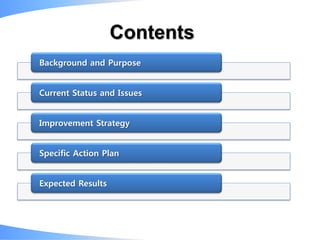
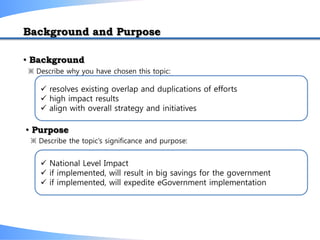
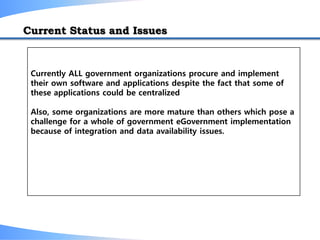
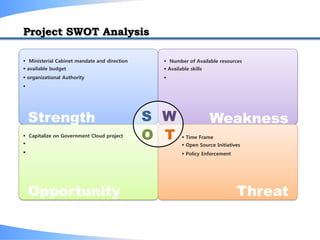
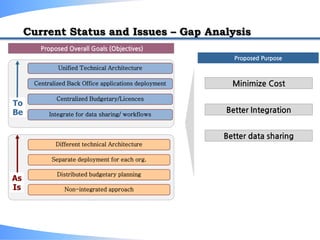
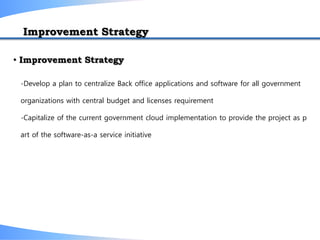

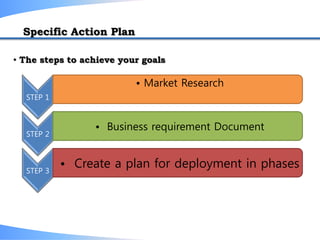
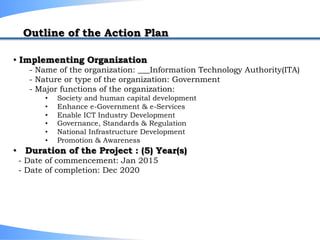
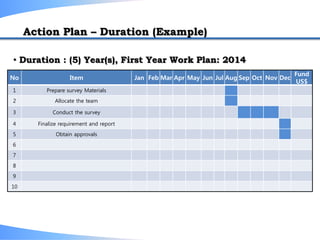
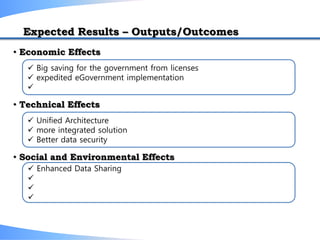
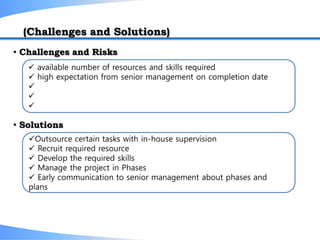

This document proposes a plan to centralize back office software applications for all Omani government organizations. Currently, each organization procures and implements its own software, despite opportunities for centralization. The plan would conduct a market study to identify priority applications, develop business requirements, and phase implementation over 5 years. Centralizing applications could save costs on licenses, expedite eGovernment, and integrate data sharing between organizations. Challenges include ensuring adequate resources and managing expectations, but solutions involve outsourcing tasks, recruiting resources, developing skills, and communicating the phased approach.


![[e-Government Program Action Plan : Guatemala City]](https://cdn.slidesharecdn.com/ss_thumbnails/03guatemalaactionplan-140728023606-phpapp02-thumbnail.jpg?width=640&height=640&fit=bounds)


![[Urban management policy training] ulaanbaatar city presentation](https://cdn.slidesharecdn.com/ss_thumbnails/urbanmanagementpolicytrainingulaanbaatarcitypresentation-160717120021-thumbnail.jpg?width=640&height=640&fit=bounds)
![[Urban management policy training] tegucigalpa city presentation](https://cdn.slidesharecdn.com/ss_thumbnails/urbanmanagementpolicytrainingtegucigalpacitypresentation-160717115701-thumbnail.jpg?width=640&height=640&fit=bounds)
![[Urban management policy training] macala city presentation](https://cdn.slidesharecdn.com/ss_thumbnails/urbanmanagementpolicytrainingmacalacitypresentation-160717115450-thumbnail.jpg?width=640&height=640&fit=bounds)
![[Urban management policy training] hanoi city presentation 2](https://cdn.slidesharecdn.com/ss_thumbnails/urbanmanagementpolicytraininghanoicitypresentation2-160717115311-thumbnail.jpg?width=640&height=640&fit=bounds)
![[Urban management policy training] hanoi city presentation](https://cdn.slidesharecdn.com/ss_thumbnails/urbanmanagementpolicytraininghanoicitypresentation-160717114925-thumbnail.jpg?width=640&height=640&fit=bounds)
![[Urban management policy training] Water Planning and Construction in Guangzhou](https://cdn.slidesharecdn.com/ss_thumbnails/urbanmanagementpolicytrainingguangzhoucitypresentation2-160717114604-thumbnail.jpg?width=640&height=640&fit=bounds)
![[Urban management policy training] guangzhou city presentation](https://cdn.slidesharecdn.com/ss_thumbnails/urbanmanagementpolicytrainingguangzhoucitypresentation-160717114316-thumbnail.jpg?width=640&height=640&fit=bounds)
![[Urban management policy training] beijing city presentation](https://cdn.slidesharecdn.com/ss_thumbnails/urbanmanagementpolicytrainingbeijingcitypresentation-160717090252-thumbnail.jpg?width=640&height=640&fit=bounds)
![[Urban management policy training] bangkok city presentation](https://cdn.slidesharecdn.com/ss_thumbnails/urbanmanagementpolicytrainingbangkokcitypresentation-160717090001-thumbnail.jpg?width=640&height=640&fit=bounds)
![[Urban management policy training] ambato city presentation](https://cdn.slidesharecdn.com/ss_thumbnails/urbanmanagementpolicytrainingambatocitypresentation-160717085029-thumbnail.jpg?width=640&height=640&fit=bounds)
![[E government policy training] shiraz city presentation](https://cdn.slidesharecdn.com/ss_thumbnails/e-governmentpolicytrainingshirazcitypresentation-160717080841-thumbnail.jpg?width=640&height=640&fit=bounds)
![[E government policy training] shanghai city presentation](https://cdn.slidesharecdn.com/ss_thumbnails/e-governmentpolicytrainingshanghaicitypresentation-160717080702-thumbnail.jpg?width=640&height=640&fit=bounds)
![[E government policy training] quito city presentation](https://cdn.slidesharecdn.com/ss_thumbnails/e-governmentpolicytrainingquitocitypresentation-160717080607-thumbnail.jpg?width=640&height=640&fit=bounds)
![[E government policy training] medellin city presentation](https://cdn.slidesharecdn.com/ss_thumbnails/e-governmentpolicytrainingmedellincitypresentation-160717080358-thumbnail.jpg?width=640&height=640&fit=bounds)
![[E government policy training] taipei city presentation](https://cdn.slidesharecdn.com/ss_thumbnails/e-governmentpolicytrainingtaipeicitypresentation-160717051309-thumbnail.jpg?width=640&height=640&fit=bounds)
![[E government policy training] jakarta city presentation](https://cdn.slidesharecdn.com/ss_thumbnails/e-governmentpolicytrainingjakartacitypresentation-160717051246-thumbnail.jpg?width=640&height=640&fit=bounds)
![[E government policy training] hanoi city presentation](https://cdn.slidesharecdn.com/ss_thumbnails/e-governmentpolicytraininghanoicitypresentation-160717045733-thumbnail.jpg?width=640&height=640&fit=bounds)
![[E government policy training] guangzhou city presentation](https://cdn.slidesharecdn.com/ss_thumbnails/e-governmentpolicytrainingguangzhoucitypresentation-160717045410-thumbnail.jpg?width=640&height=640&fit=bounds)
![[Seoul e government] seoul map geospatial information platform](https://cdn.slidesharecdn.com/ss_thumbnails/seoule-governmentseoulmapgeospatialinformationplatform-160613232015-thumbnail.jpg?width=640&height=640&fit=bounds)
![[Urban transportation policy program]action plan guzangzhou](https://cdn.slidesharecdn.com/ss_thumbnails/urbantransportationpolicyprogramactionplanguzangzhou-160407030814-thumbnail.jpg?width=640&height=640&fit=bounds)


