Download to read offline



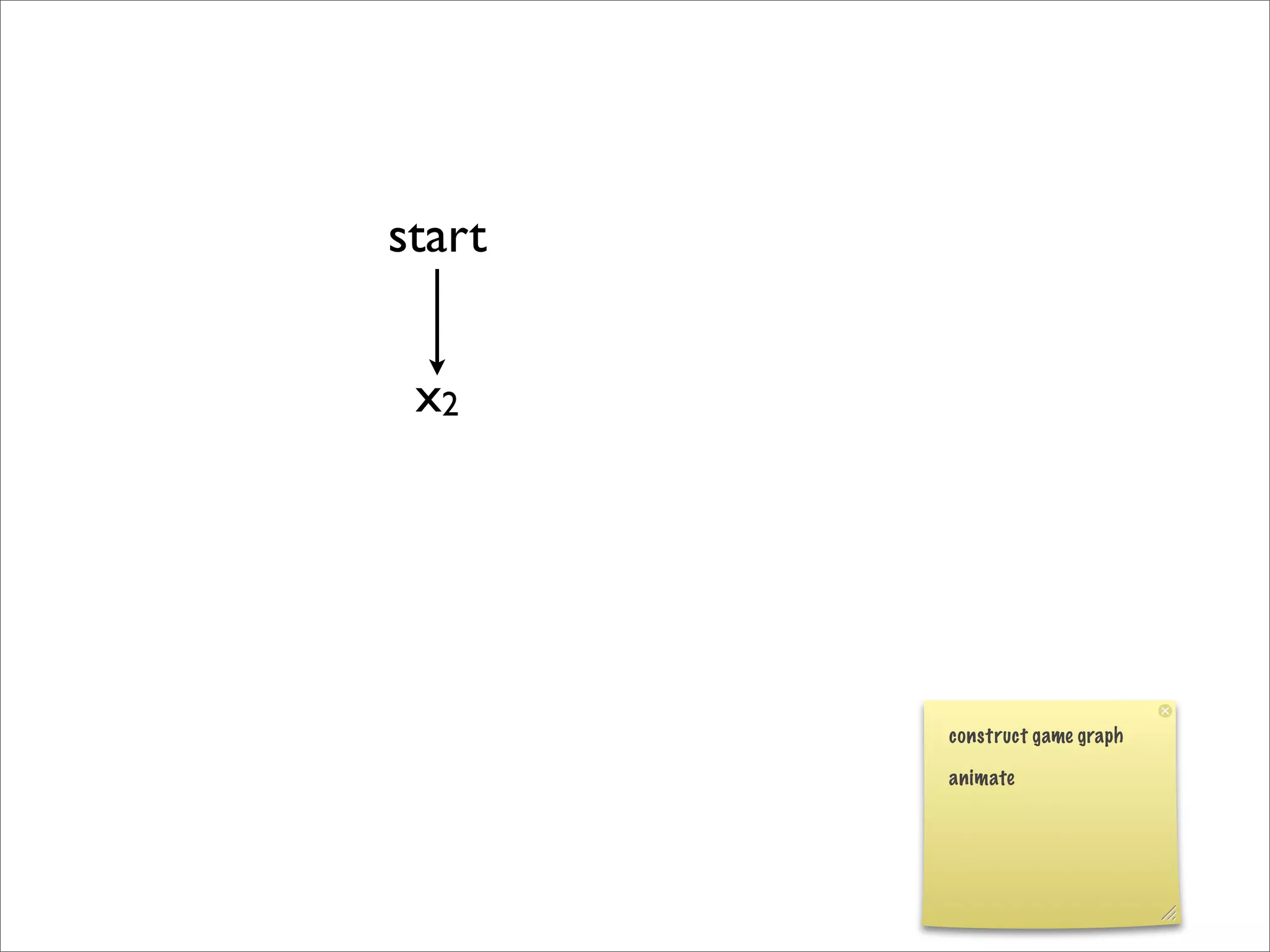


![x1
x2
(a) f(x[1:n]) = x[1:n] < x[n:1]╓
╙
╓
╙](https://image.slidesharecdn.com/0s-and-1s-1234220264181255-2/75/Boolean-Games-36-2048.jpg)
![x1
x2
xx
(a) f(x[1:n]) = x[1:n] < x[n:1]╓
╙
╓
╙](https://image.slidesharecdn.com/0s-and-1s-1234220264181255-2/75/Boolean-Games-37-2048.jpg)
![x1
x2
xx
x0
x1
(a) f(x[1:n]) = x[1:n] < x[n:1]╓
╙
╓
╙](https://image.slidesharecdn.com/0s-and-1s-1234220264181255-2/75/Boolean-Games-38-2048.jpg)
![x1
x2
xx
x0
x1
00
10
01
11
(a) f(x[1:n]) = x[1:n] < x[n:1]╓
╙
╓
╙](https://image.slidesharecdn.com/0s-and-1s-1234220264181255-2/75/Boolean-Games-39-2048.jpg)
![x1
x2
xx
x0
x1
0
0
0
1
(a) f(x[1:n]) = x[1:n] < x[n:1]╓
╙
╓
╙](https://image.slidesharecdn.com/0s-and-1s-1234220264181255-2/75/Boolean-Games-40-2048.jpg)
![x1
x2
xx
x1
0
0
0
1
0
(a) f(x[1:n]) = x[1:n] < x[n:1]╓
╙
╓
╙](https://image.slidesharecdn.com/0s-and-1s-1234220264181255-2/75/Boolean-Games-41-2048.jpg)
![n (a)
2 0 wins
3 0 wins
4 first wins
5 second wins
6 second wins
7 1 loses if first
8 draw
9 draw
(a) f(x[1:n]) = x[1:n] < x[n:1]╓
╙
╓
╙](https://image.slidesharecdn.com/0s-and-1s-1234220264181255-2/75/Boolean-Games-43-2048.jpg)
![n (b)
2 second wins
3 first wins
4 first wins
5 draw
6 second wins
7 second wins
8 draw
9 draw
(b) f(x[1:n]) = xi⊕i](https://image.slidesharecdn.com/0s-and-1s-1234220264181255-2/75/Boolean-Games-44-2048.jpg)
![n (c)
2 1 wins
3 first wins
4 first wins
5 draw
6 1 loses if first
7 1 loses if first
8 draw
9 draw
(c) f(x[1:n]) = x[1:n] contains
no two consecutive 1’s
╓
╙ ╓
╙](https://image.slidesharecdn.com/0s-and-1s-1234220264181255-2/75/Boolean-Games-45-2048.jpg)
![n (d)
2 second wins
3 first wins
4 first wins
5 1 loses if first
6 1 loses if first
7 1 loses if first
8 1 loses if first
9 1 loses if first
(d) f(x[1:n]) = (x[1:n])2 is prime╓
╙
╓
╙](https://image.slidesharecdn.com/0s-and-1s-1234220264181255-2/75/Boolean-Games-46-2048.jpg)


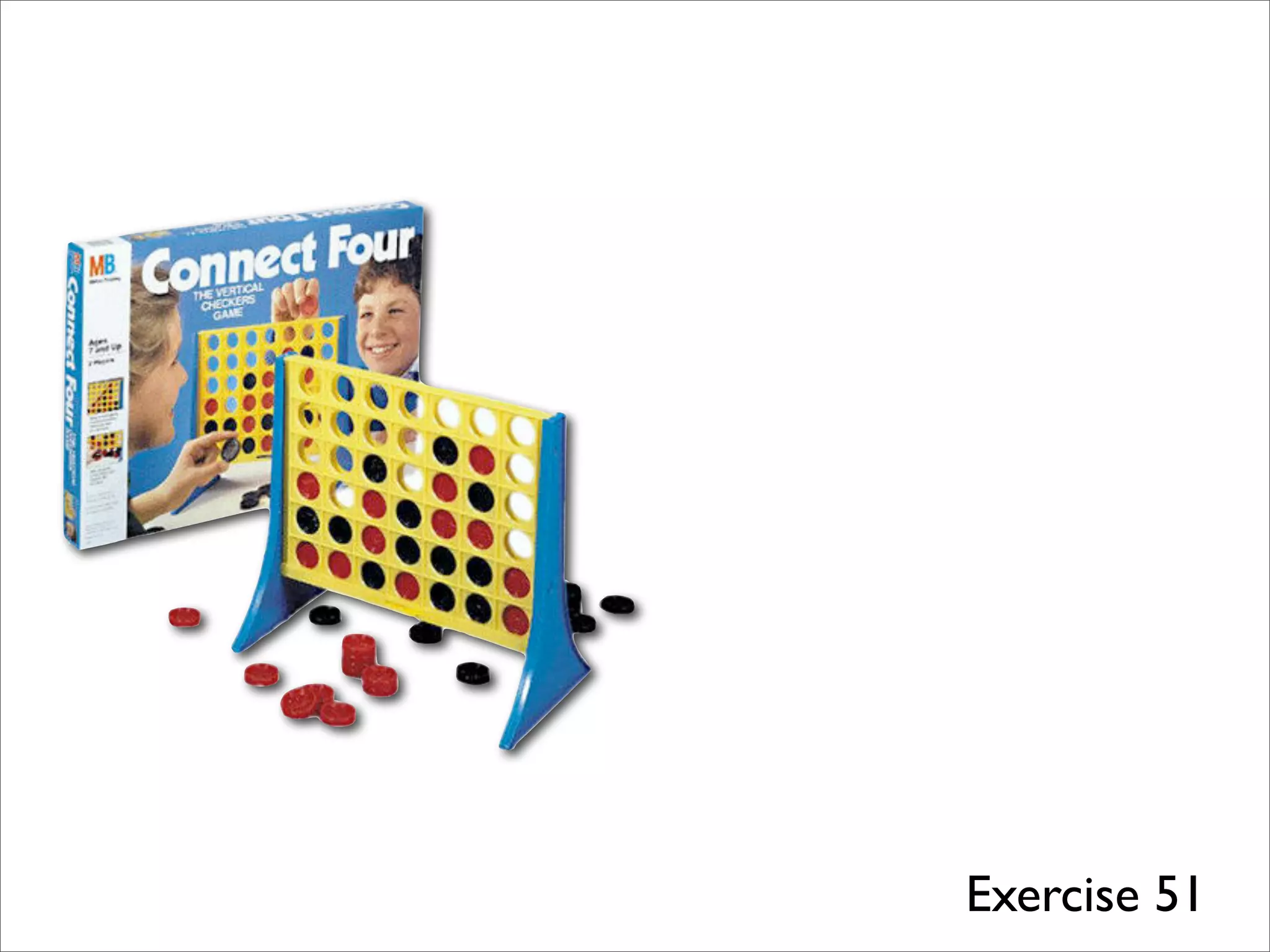
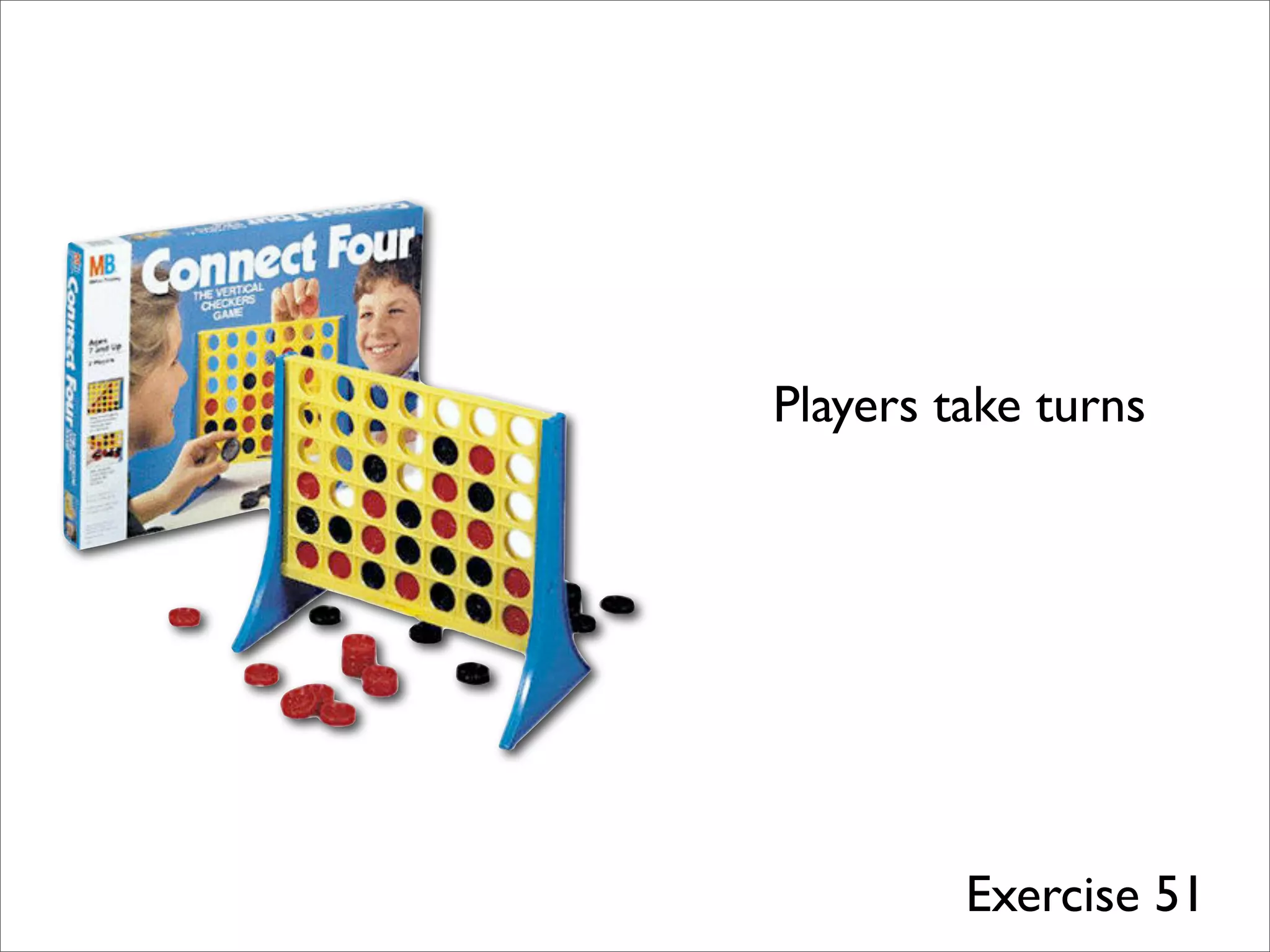
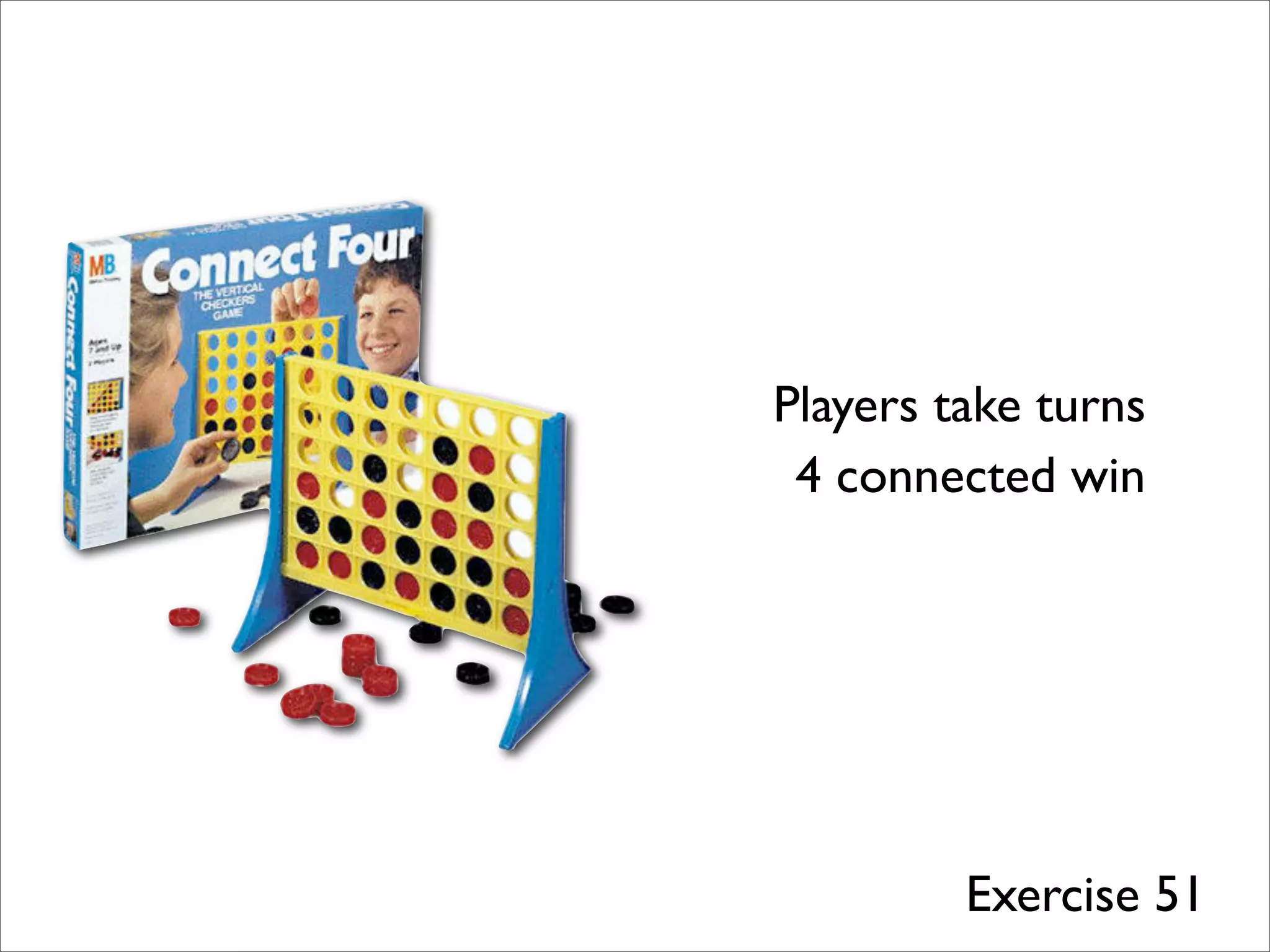
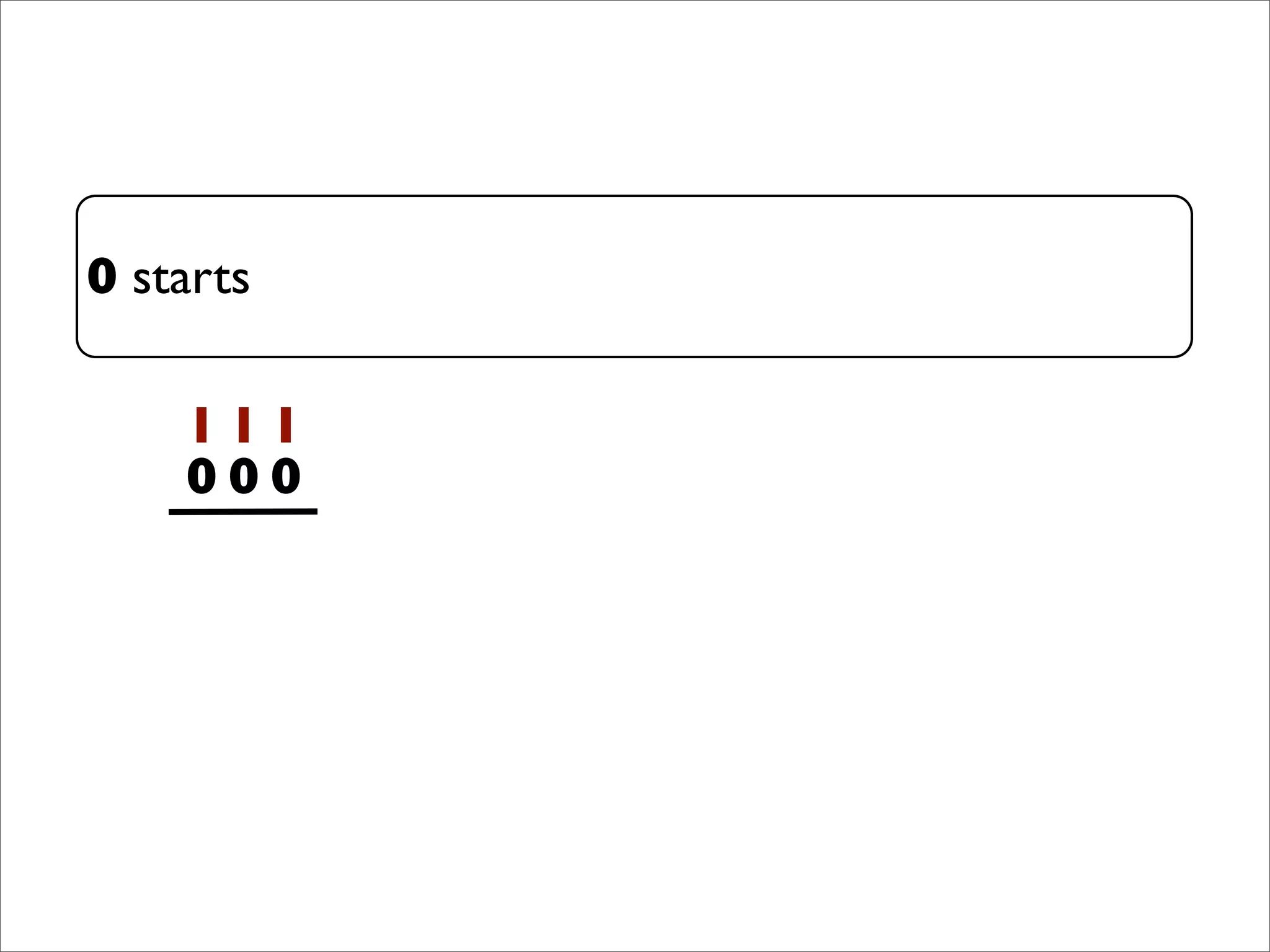
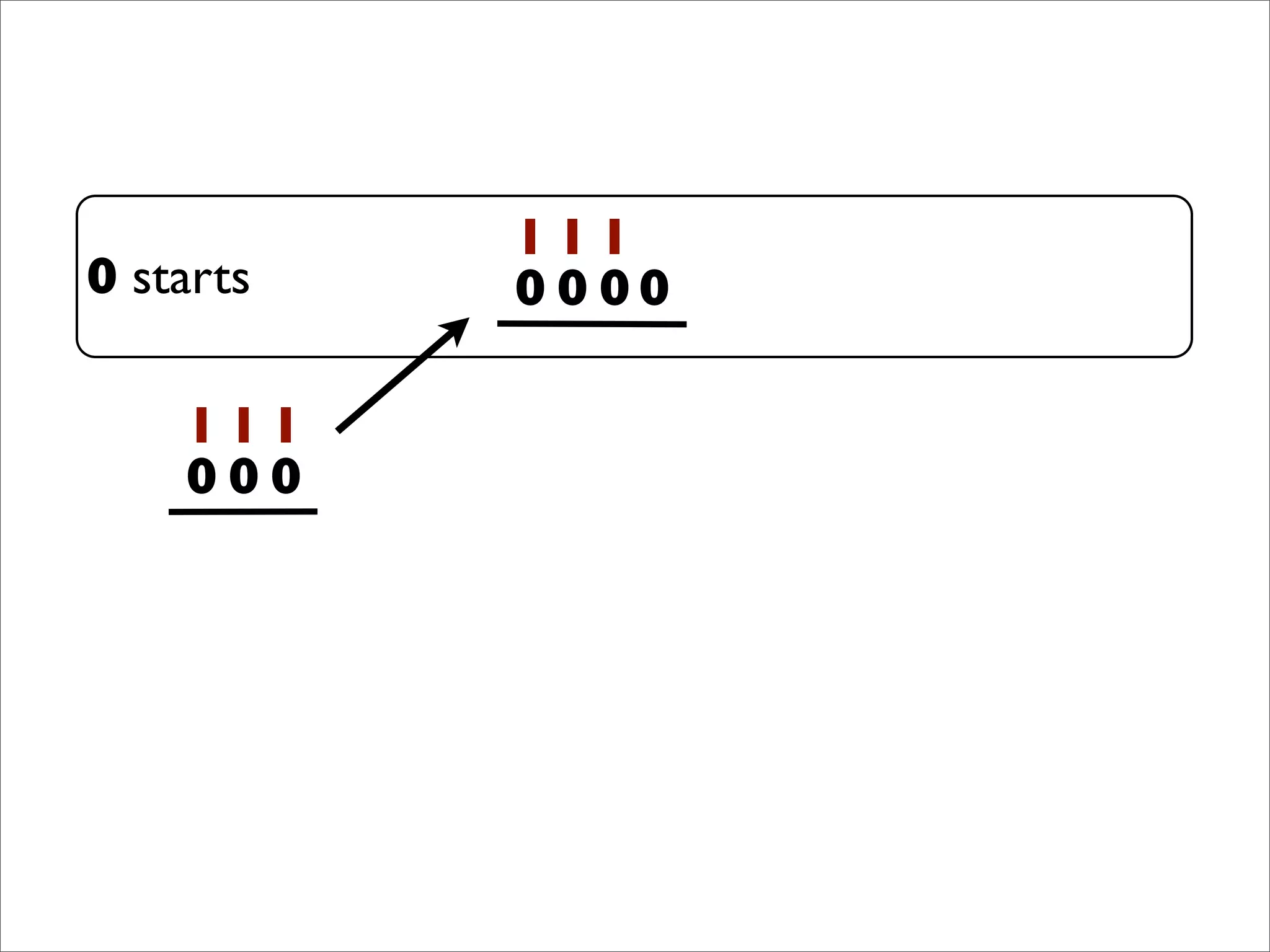
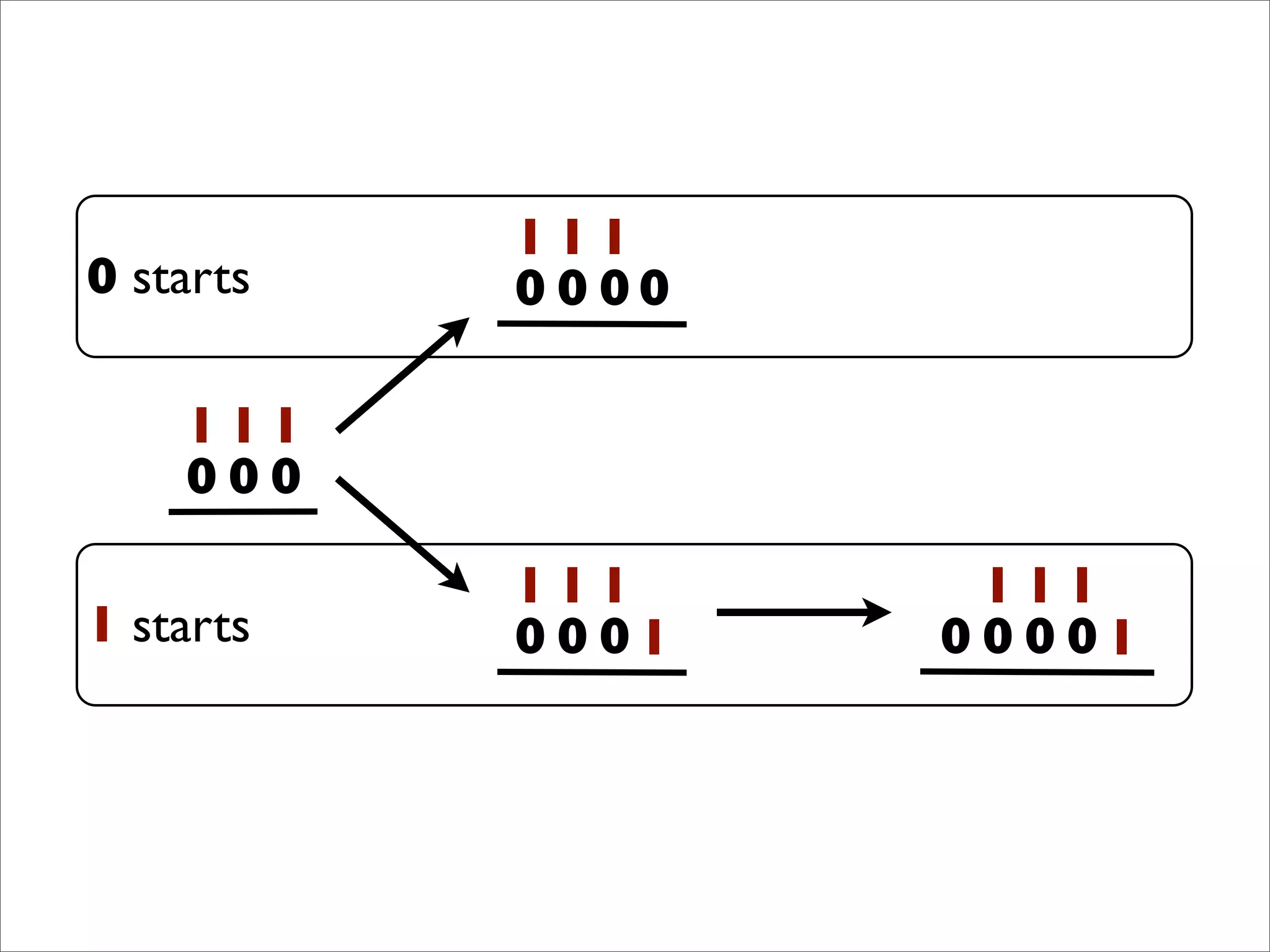
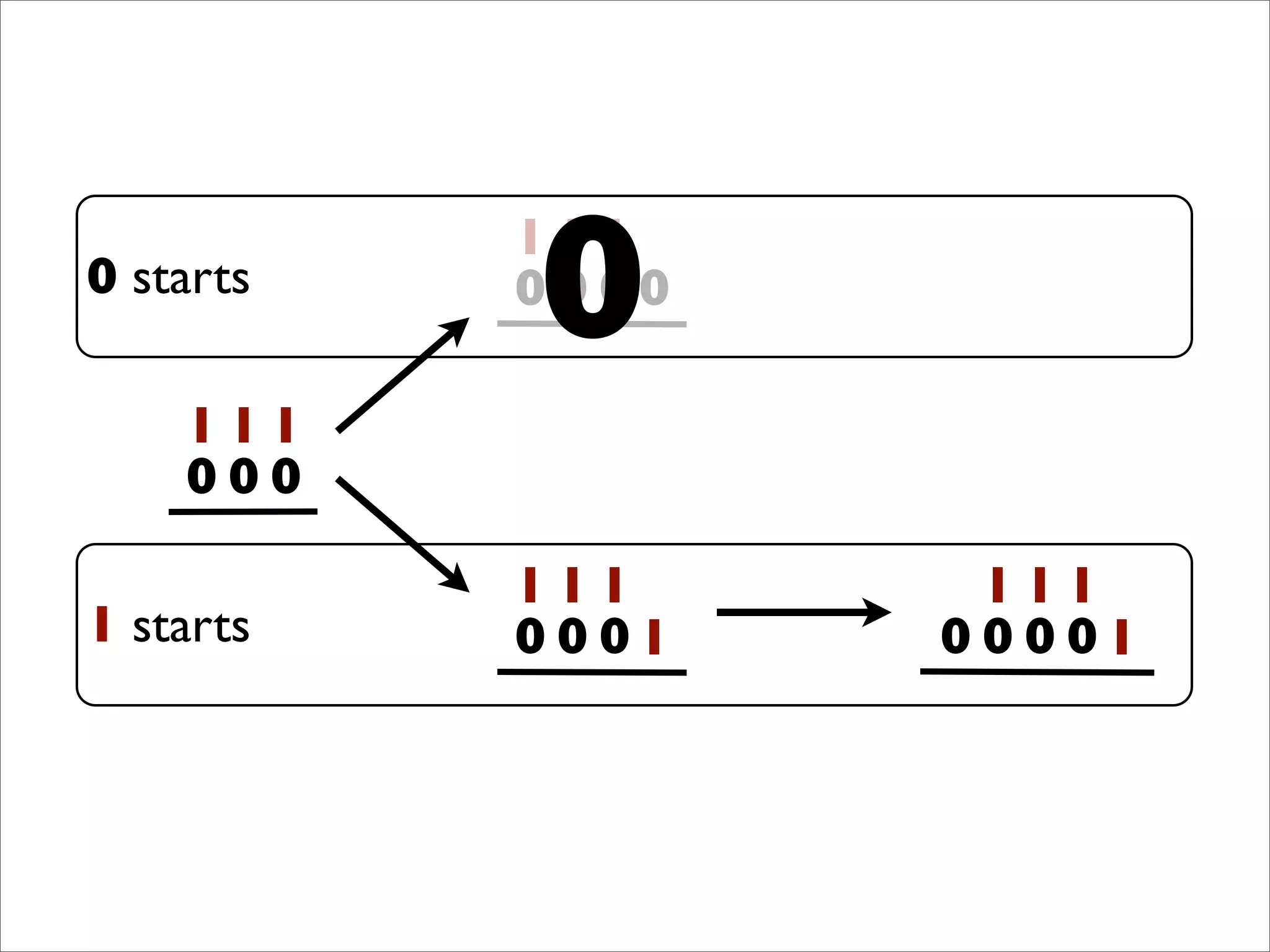
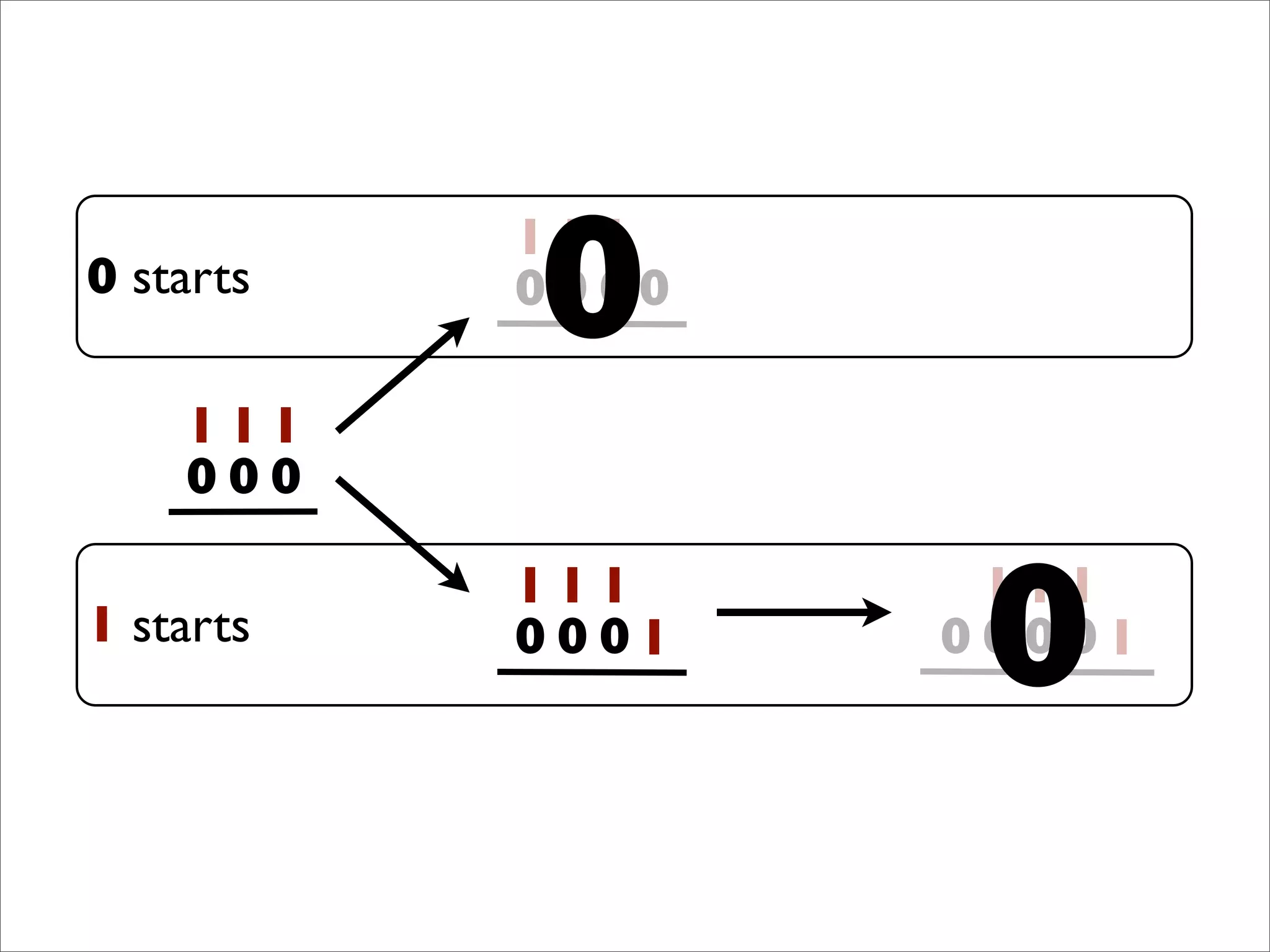
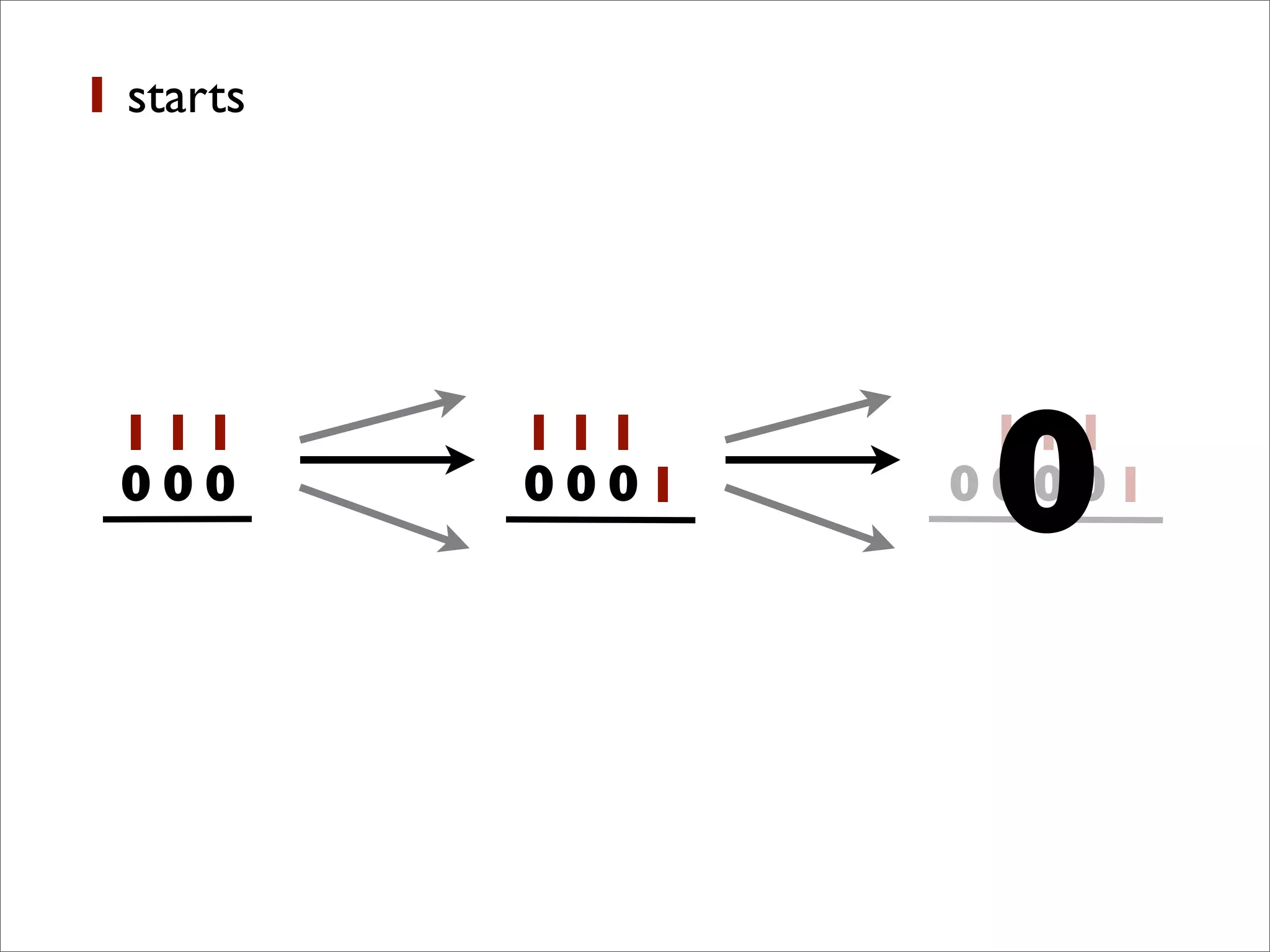
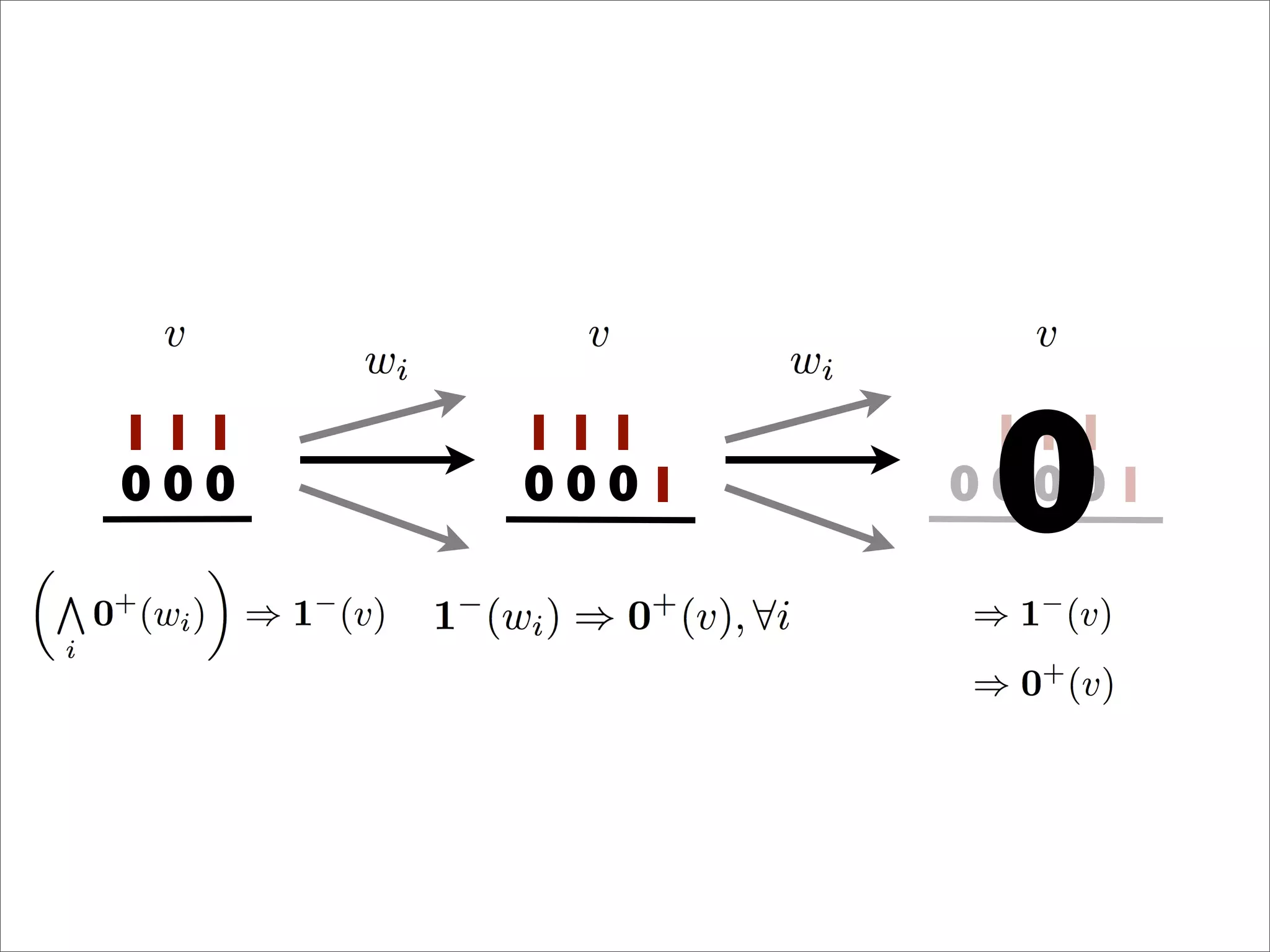
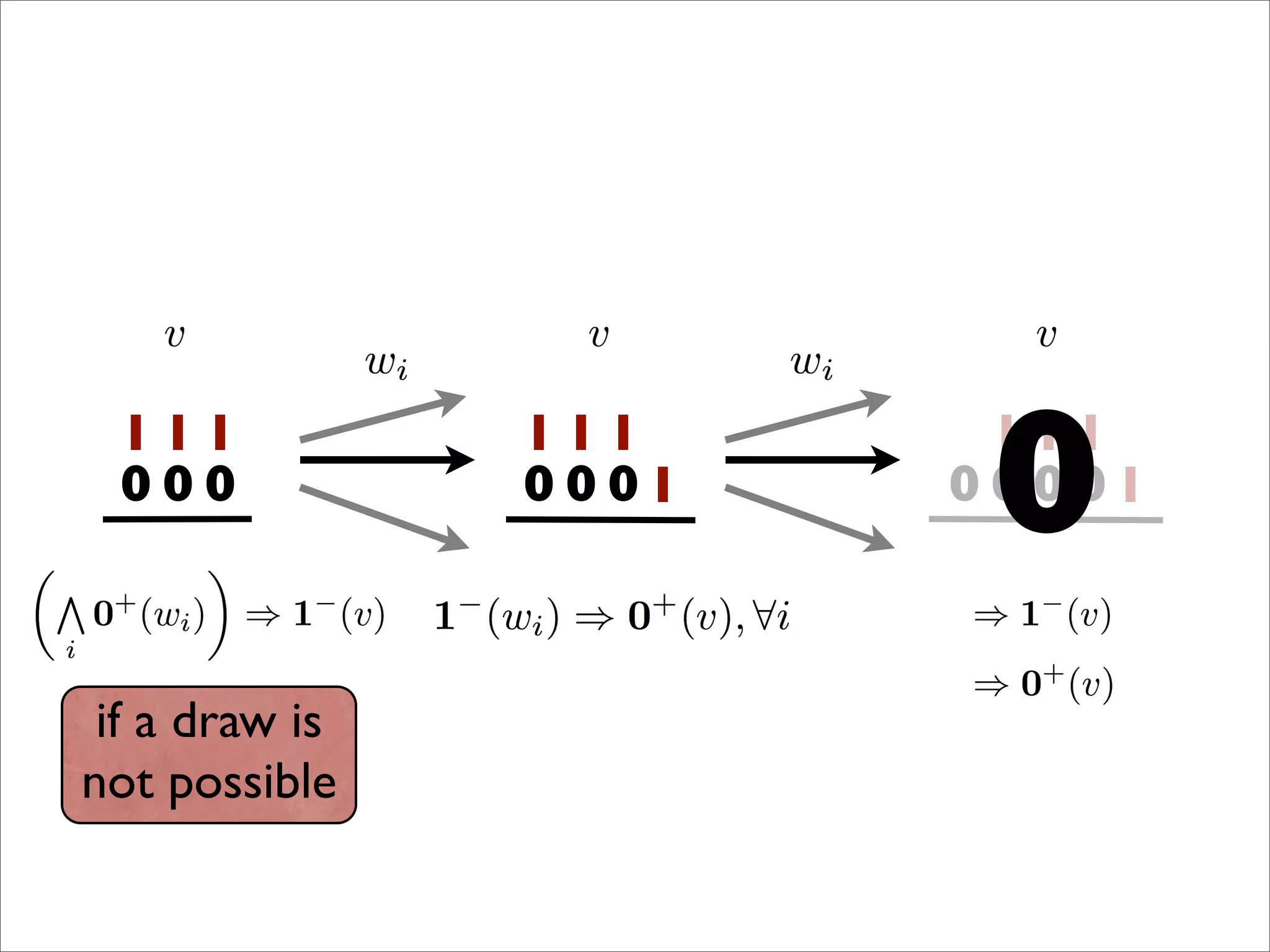
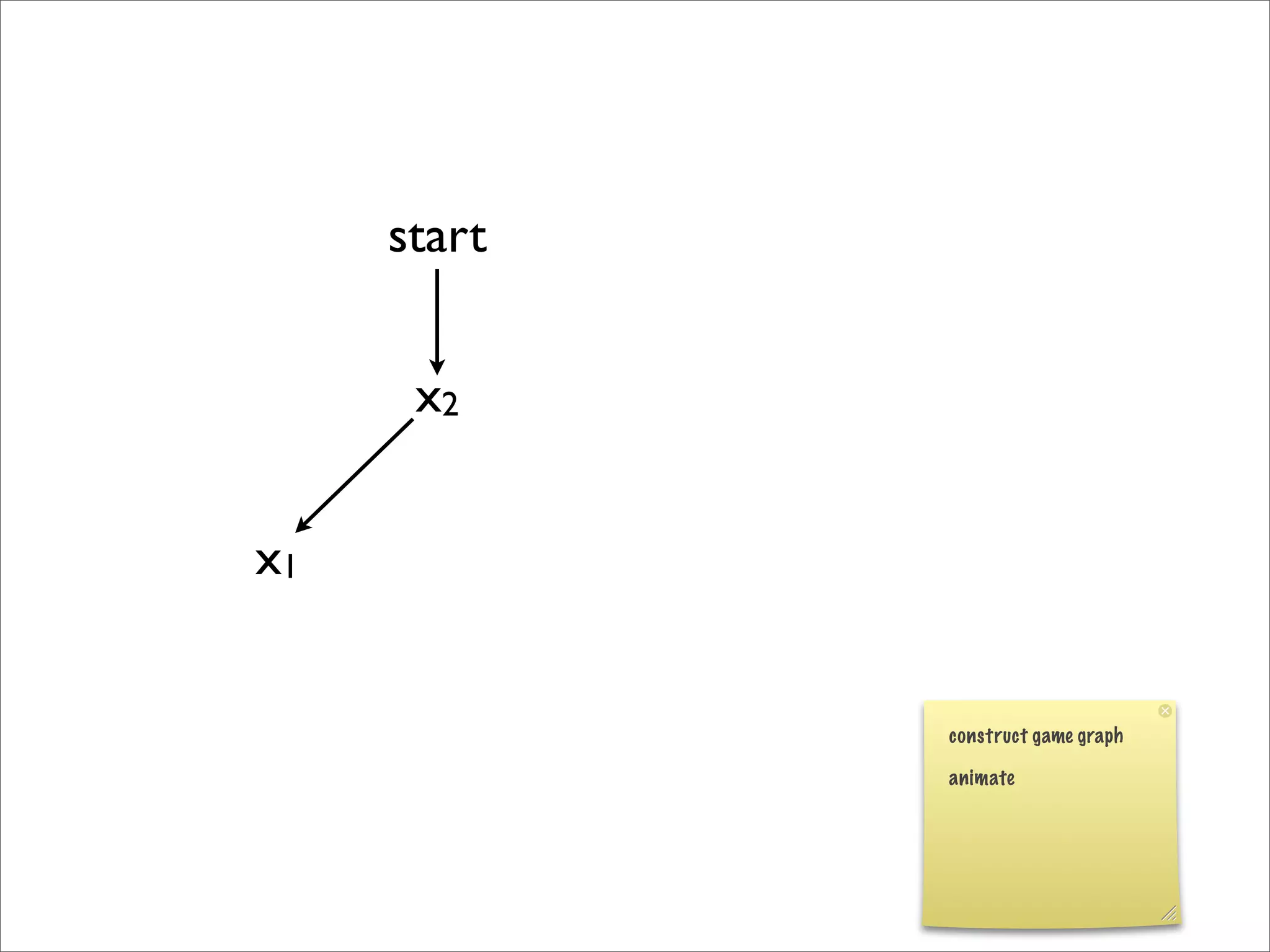
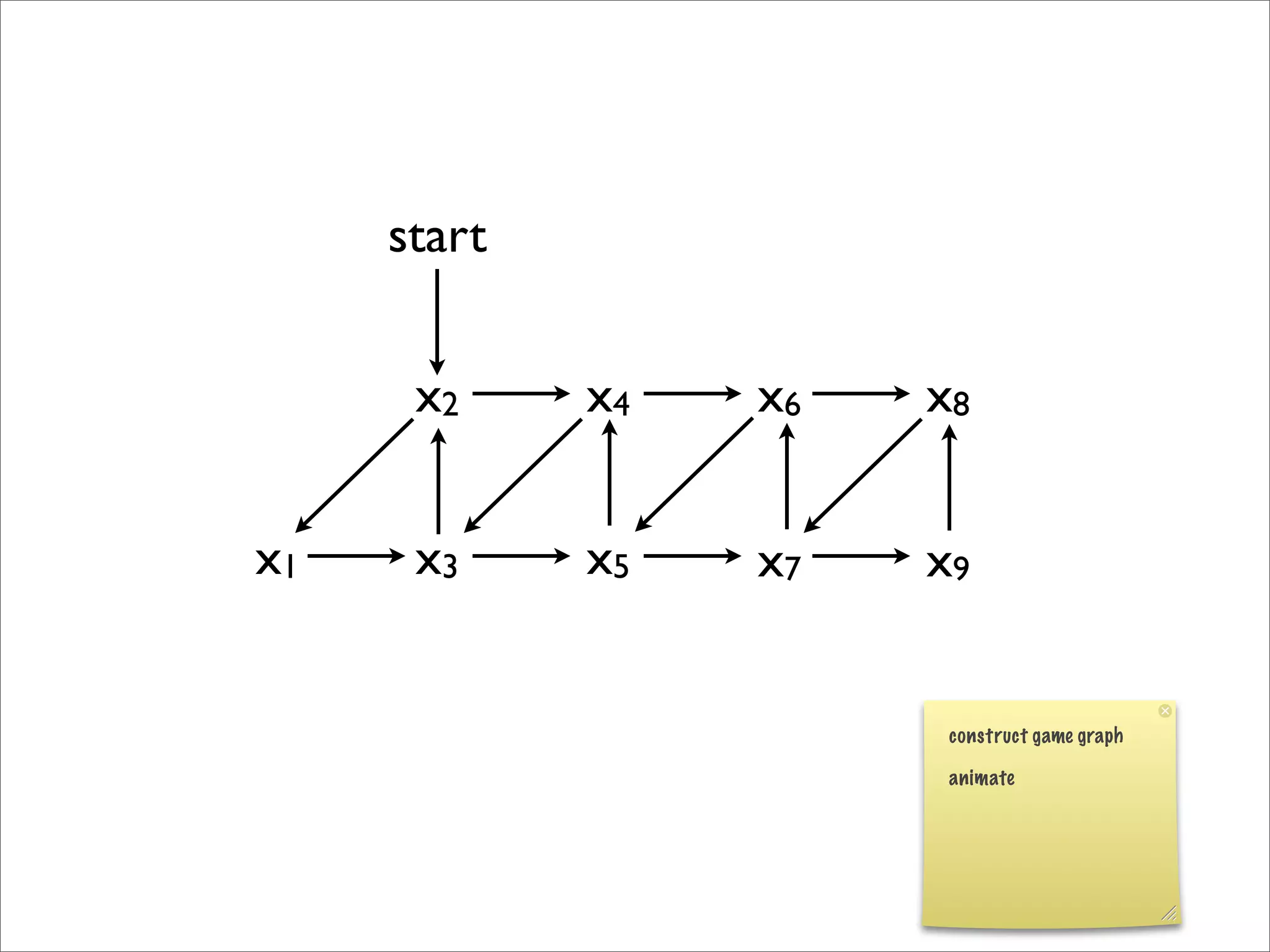
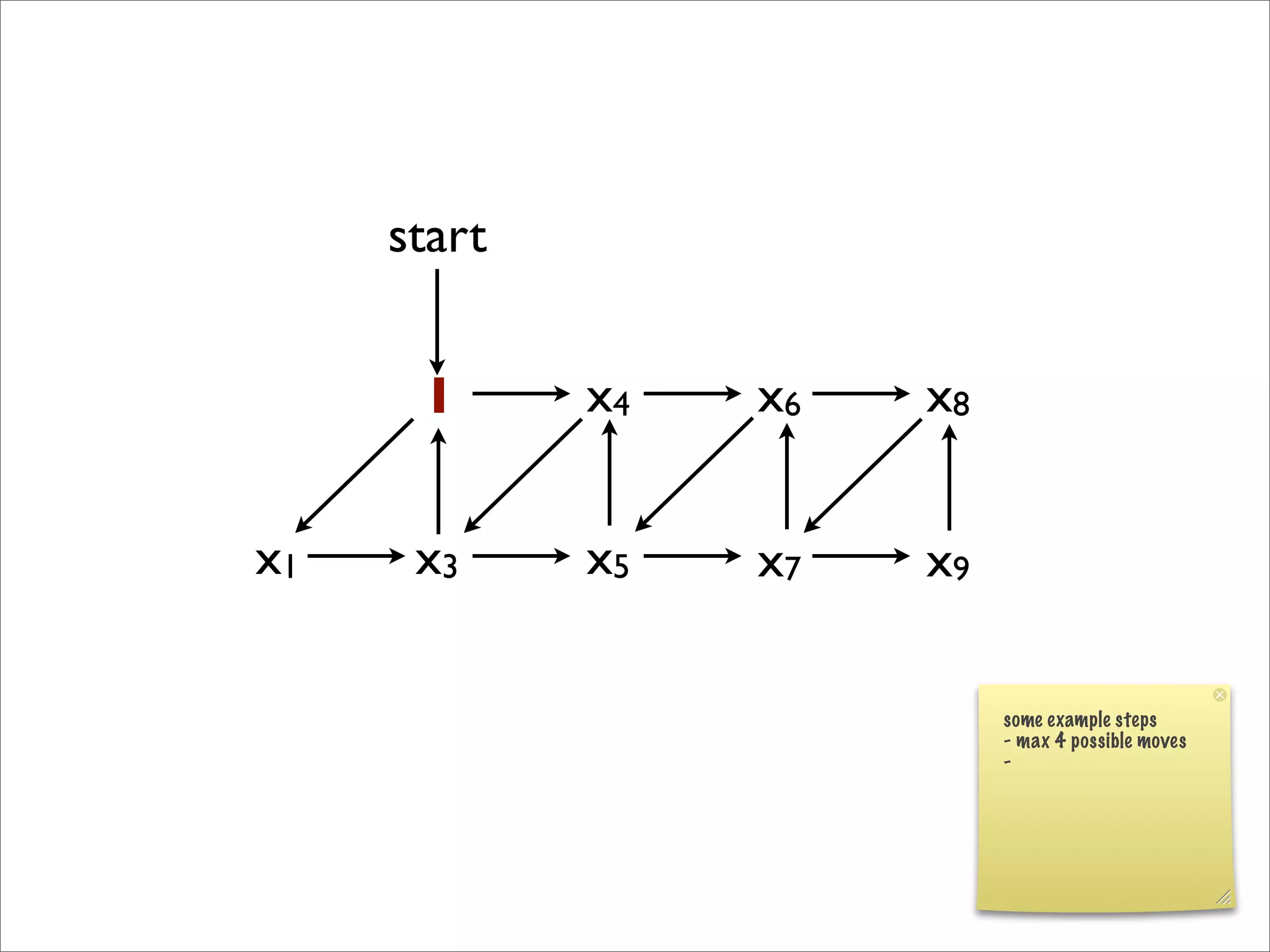
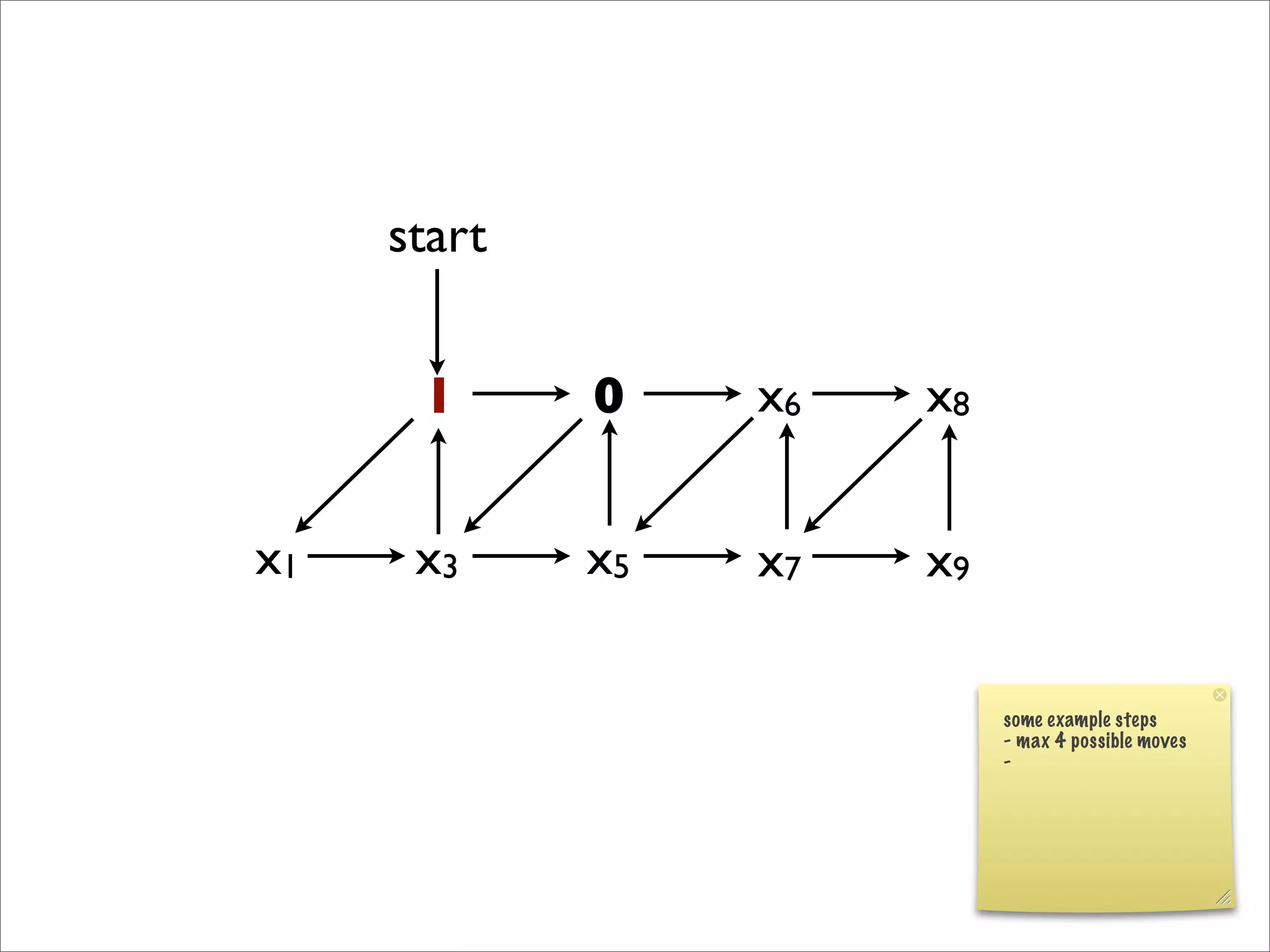
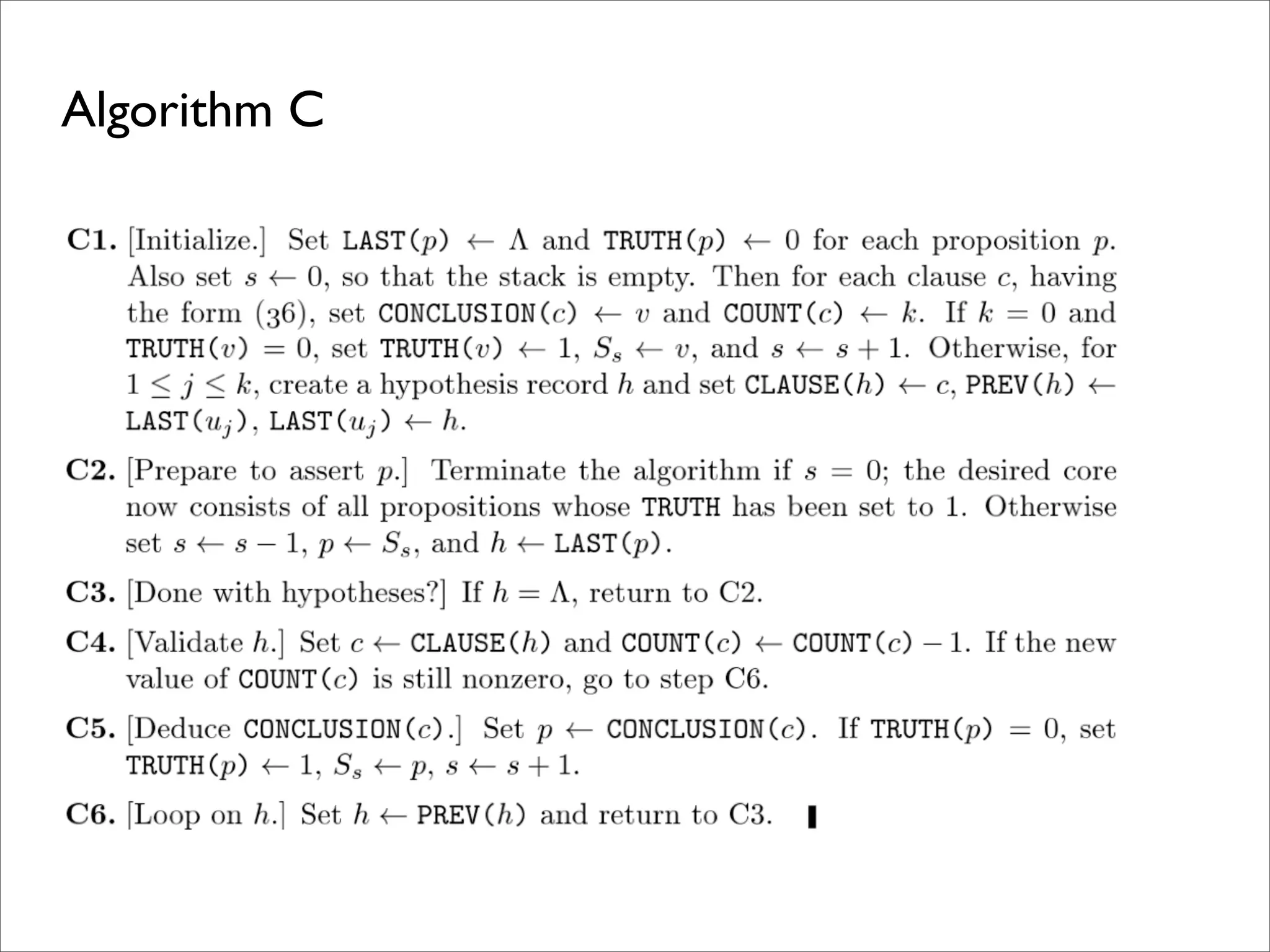
- The document describes Boolean games, which are turn-based, one-on-one games between two players. - Players take turns selecting values (0 or 1) that are added to the game board. The first player to get four values in a connected row wins. - The document discusses generalizing Boolean games and constructing a graph representation of games. It also provides examples of different Boolean functions that define the rules and outcomes of games with varying numbers of positions.


