Disability 
and 
Ability
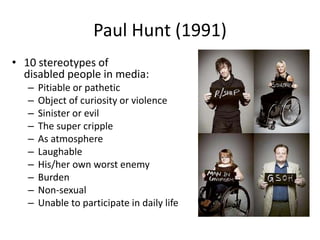
Paul Hunt (1991) 
• 10 stereotypes of 
disabled people in media: 
– Pitiable or pathetic 
– Object of curiosity or violence 
– Sinister or evil 
– The super cripple 
– As atmosphere 
– Laughable 
– His/her own worst enemy 
– Burden 
– Non-sexual 
– Unable to participate in daily life
Paul Hunt (1991) 
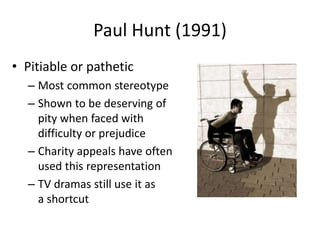
• Pitiable or pathetic 
– Most common stereotype 
– Shown to be deserving of 
pity when faced with 
difficulty or prejudice 
– Charity appeals have often 
used this representation 
– TV dramas still use it as 
a shortcut
Paul Hunt (1991) 
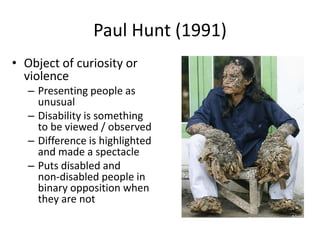
• Object of curiosity or 
violence 
– Presenting people as 
unusual 
– Disability is something 
to be viewed / observed 
– Difference is highlighted 
and made a spectacle 
– Puts disabled and 
non-disabled people in 
binary opposition when 
they are not
Paul Hunt (1991) 
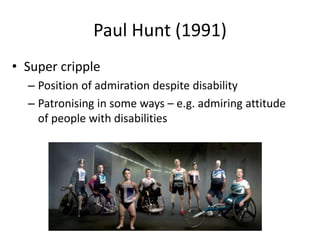
• Super cripple 
– Position of admiration despite disability 
– Patronising in some ways – e.g. admiring attitude 
of people with disabilities
Paul Hunt (1991) 
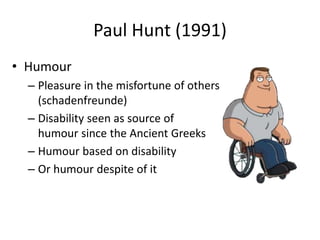
• Humour 
– Pleasure in the misfortune of others 
(schadenfreunde) 
– Disability seen as source of 
humour since the Ancient Greeks 
– Humour based on disability 
– Or humour despite of it
Paul Hunt (1991) 
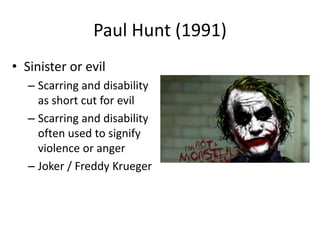
• Sinister or evil 
– Scarring and disability 
as short cut for evil 
– Scarring and disability 
often used to signify 
violence or anger 
– Joker / Freddy Krueger

Paul hunt disability

  • 1.
  • 2.
    Paul Hunt (1991) • 10 stereotypes of disabled people in media: – Pitiable or pathetic – Object of curiosity or violence – Sinister or evil – The super cripple – As atmosphere – Laughable – His/her own worst enemy – Burden – Non-sexual – Unable to participate in daily life
  • 3.
    Paul Hunt (1991) • Pitiable or pathetic – Most common stereotype – Shown to be deserving of pity when faced with difficulty or prejudice – Charity appeals have often used this representation – TV dramas still use it as a shortcut
  • 4.
    Paul Hunt (1991) • Object of curiosity or violence – Presenting people as unusual – Disability is something to be viewed / observed – Difference is highlighted and made a spectacle – Puts disabled and non-disabled people in binary opposition when they are not
  • 5.
    Paul Hunt (1991) • Super cripple – Position of admiration despite disability – Patronising in some ways – e.g. admiring attitude of people with disabilities
  • 6.
    Paul Hunt (1991) • Humour – Pleasure in the misfortune of others (schadenfreunde) – Disability seen as source of humour since the Ancient Greeks – Humour based on disability – Or humour despite of it
  • 7.
    Paul Hunt (1991) • Sinister or evil – Scarring and disability as short cut for evil – Scarring and disability often used to signify violence or anger – Joker / Freddy Krueger