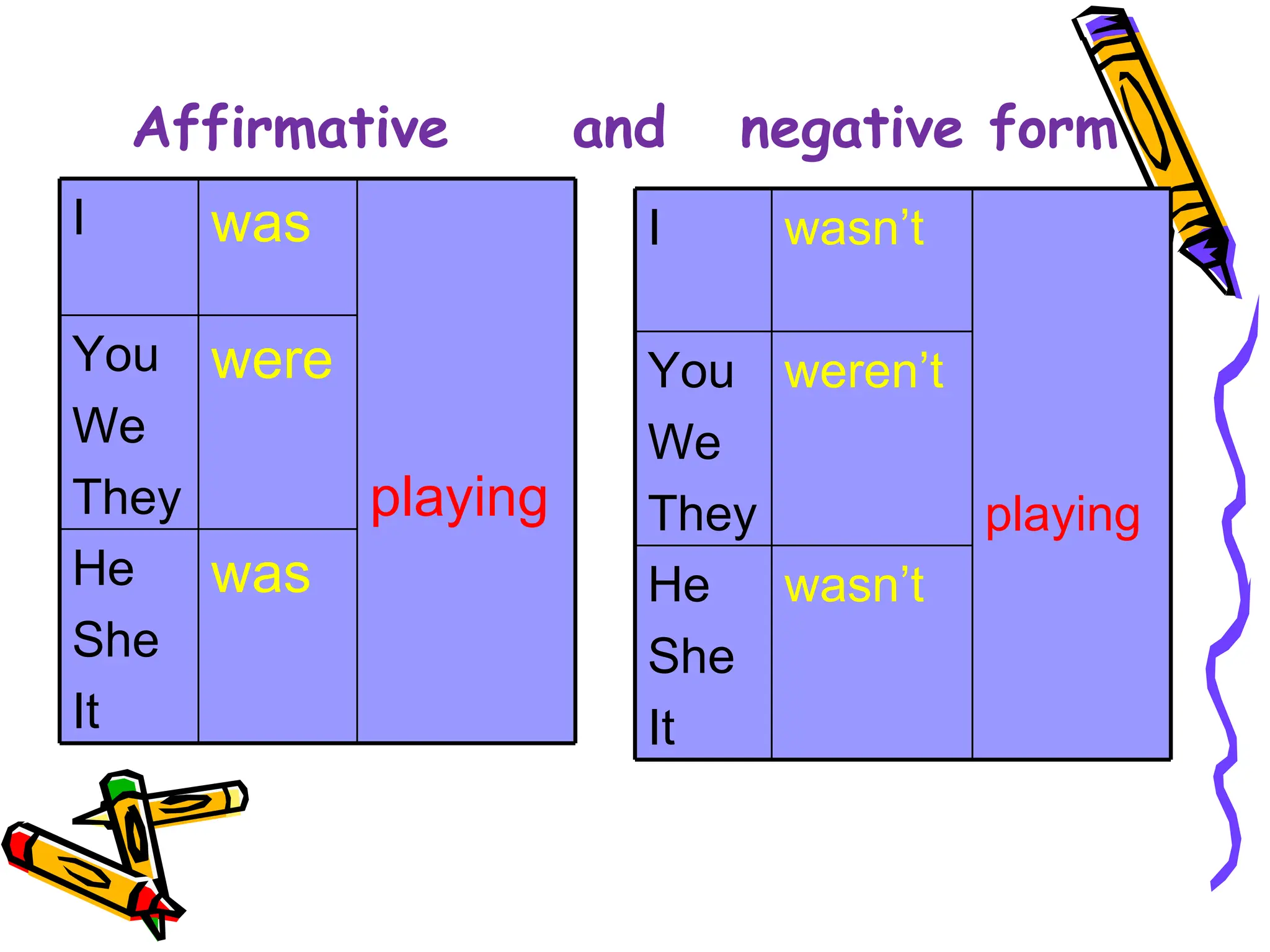
Affirmative and negative form I was playing You We They were He She It was I wasn’t playing You We They weren’t He She It wasn’t
3.
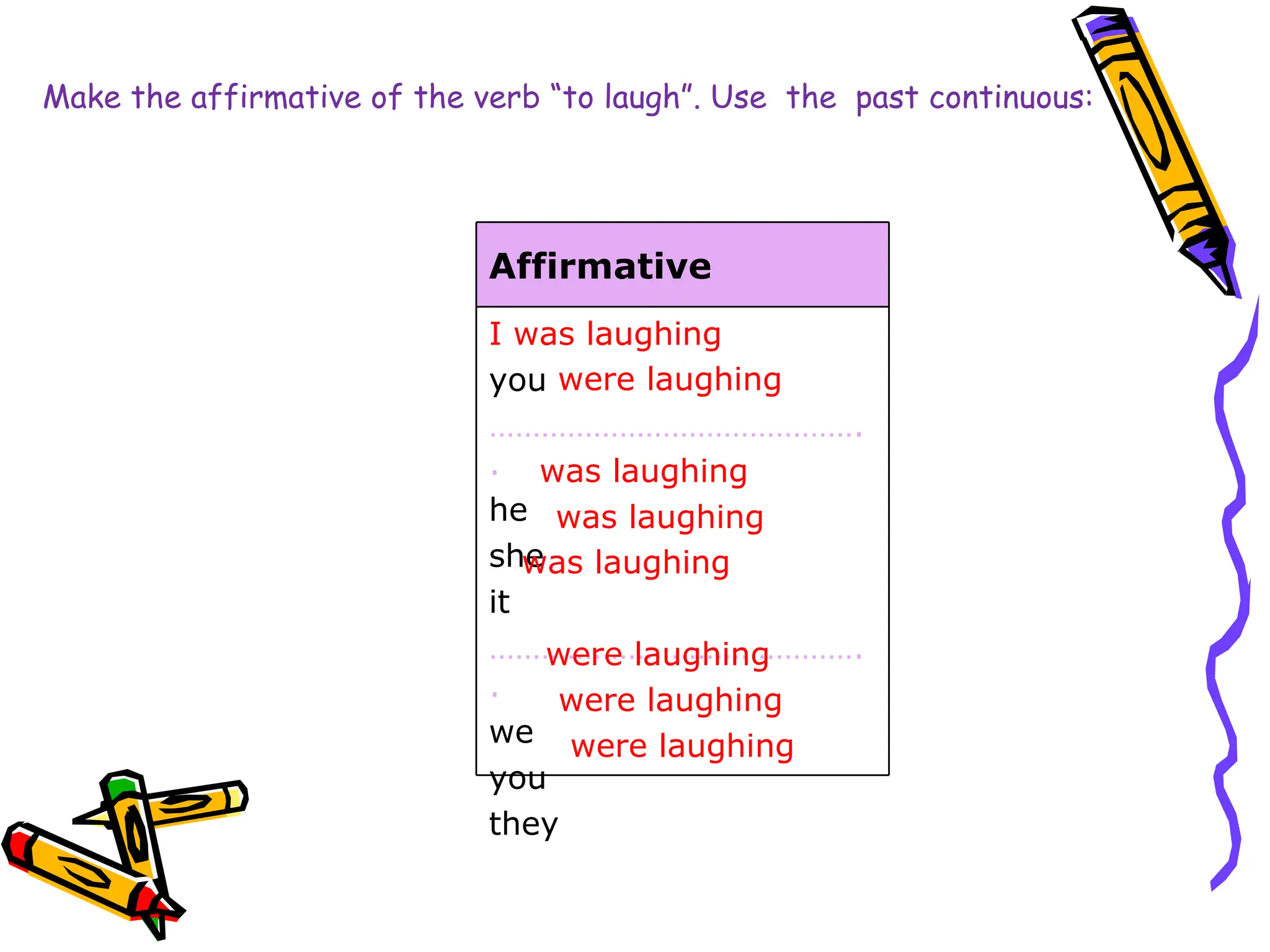
was laughing waslaughing were laughing was laughing was laughing were laughing were laughing were laughing Make the affirmative of the verb “to laugh”. Use the past continuous: Affirmative I you …………………………………… .. he she it …………………………………… .. we you they
4.
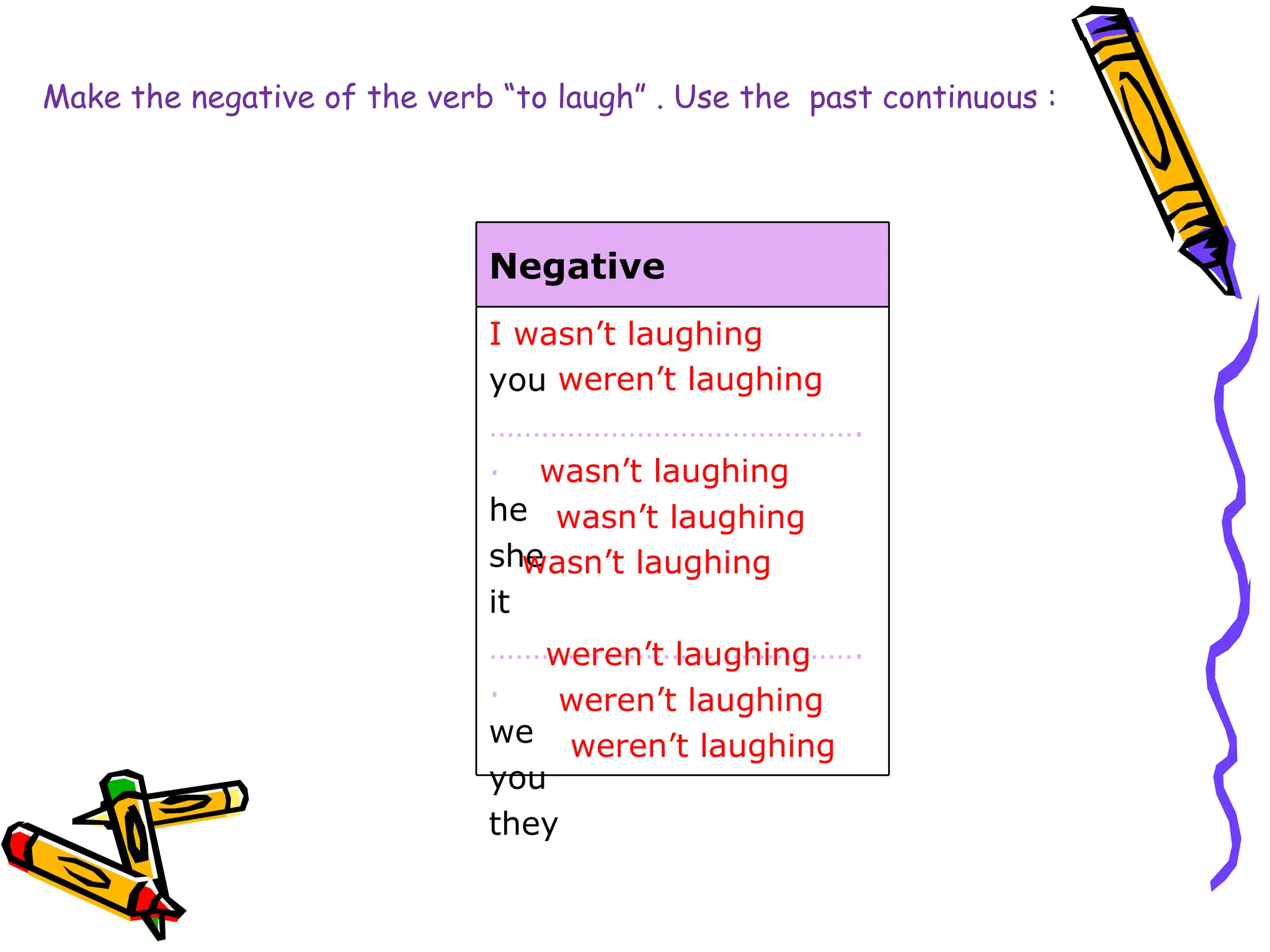
wasn’t laughing wasn’tlaughing weren’t laughing wasn’t laughing wasn’t laughing weren’t laughing weren’t laughing weren’t laughing Make the negative of the verb “to laugh” . Use the past continuous : Negative I you …………………………………… .. he she it …………………………………… .. we you they
5.
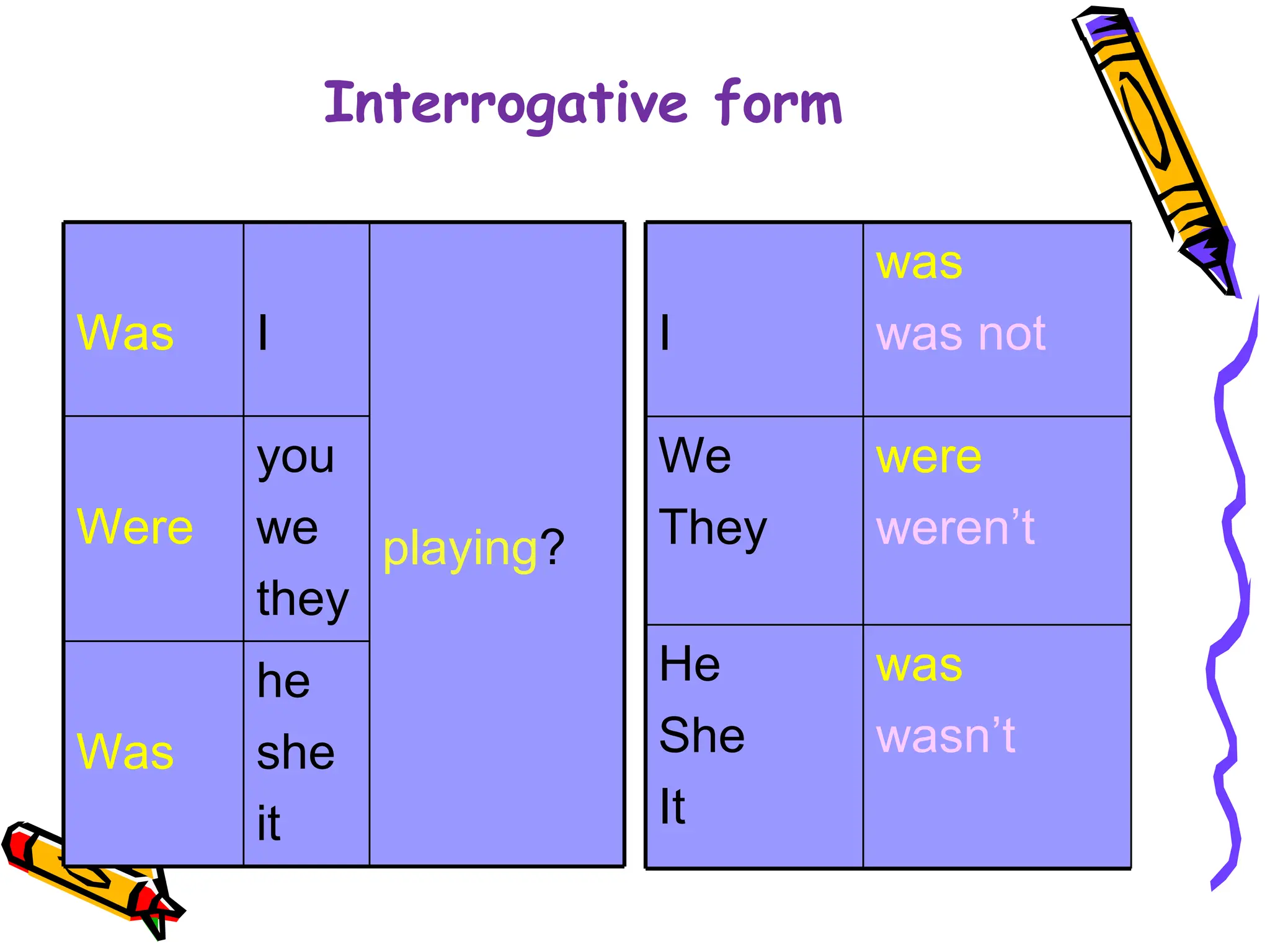
Interrogative form WasI playing ? Were you we they Was he she it I was was not We They were weren’t He She It was wasn’t
6.
I wasn’t I was she was she wasn’t we were we weren’t Make questions in the past continuous and then answer them. Use the verb “to laugh”: Interrogative Short answers Was I laughing … ? Were you laughing … ? ………………………………………… Was he laughing … ? Was she laughing … ? Was it laughing … ? ………………………………………… Were we laughing … ? Were you laughing … ? Were they laughing … ? Yes, I was . / No, I wasn’t . ………………………………………… Yes, she was . / No, she wasn’t . ………………………………………… Yes, we were . / No, we weren’t . Was laughing Were laughing laughing Was Was laughing Was laughing Were laughing Were laughing Were laughing
7.
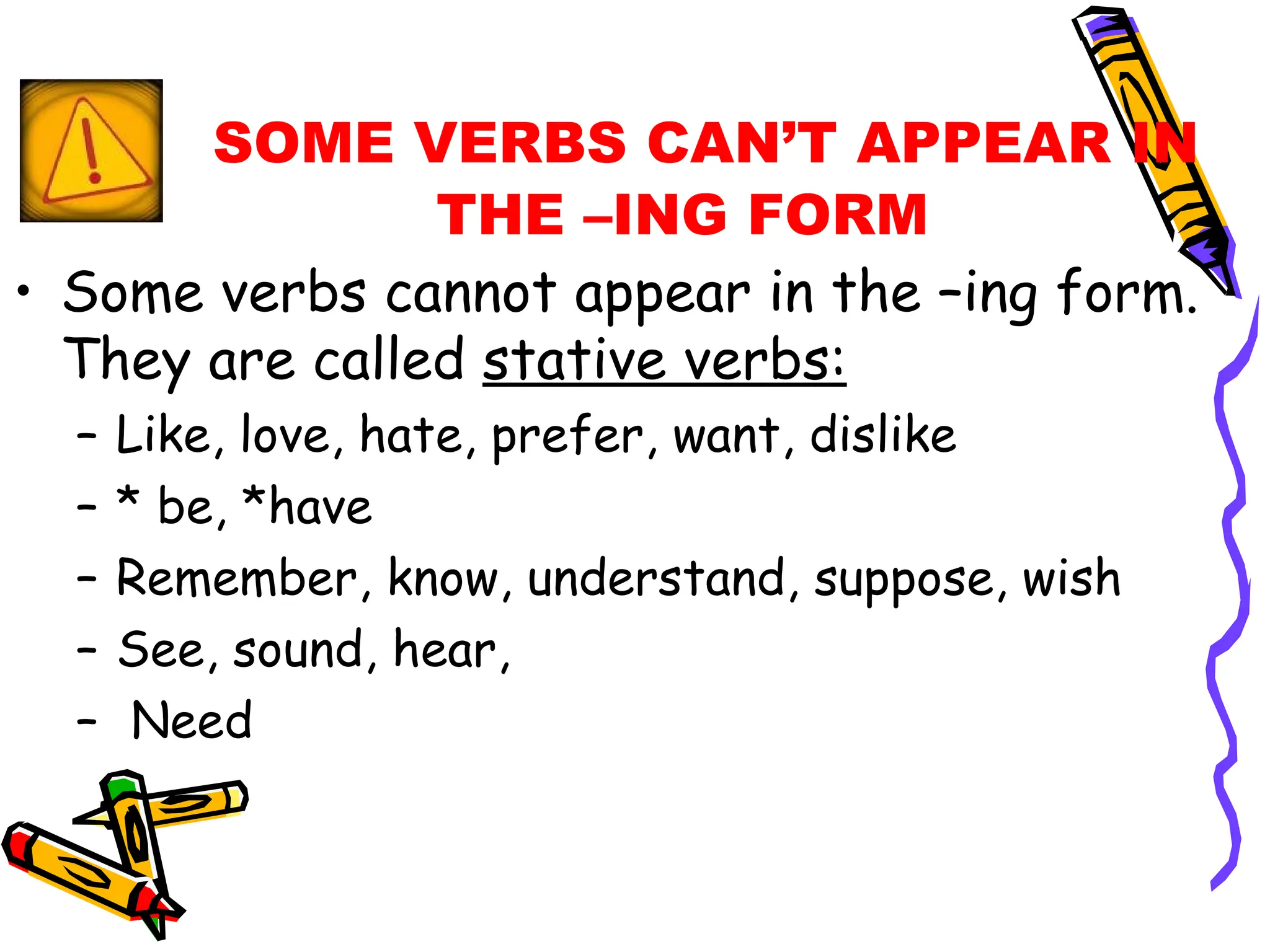
SOME VERBS CAN’TAPPEAR IN THE –ING FORM Some verbs cannot appear in the –ing form. They are called stative verbs: Like, love, hate, prefer, want, dislike * be, *have Remember, know, understand, suppose, wish See, sound, hear, Need
8.
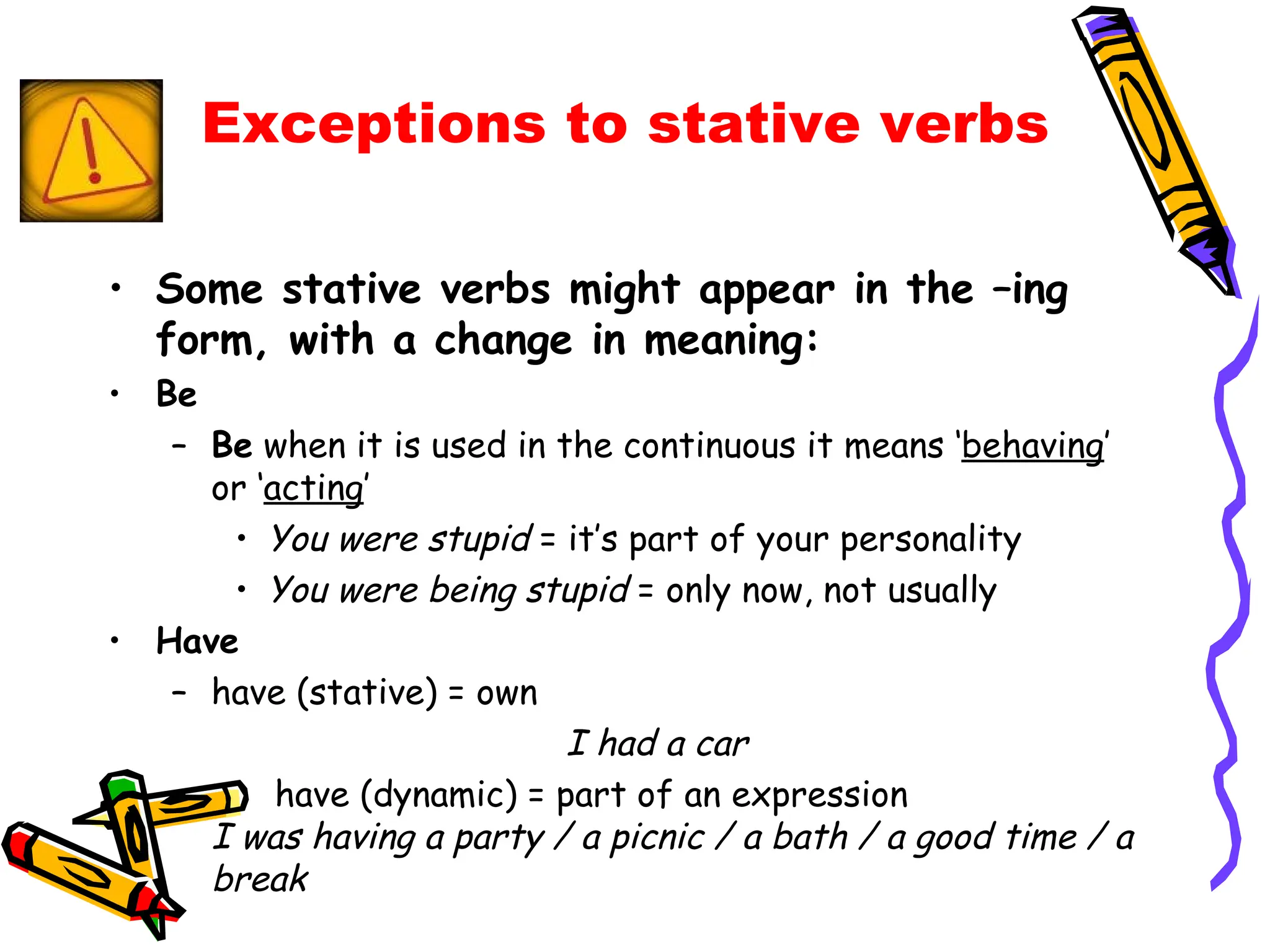
Some stative verbsmight appear in the –ing form, with a change in meaning: Be Be when it is used in the continuous it means ‘ behaving ’ or ‘ acting ’ You were stupid = it’s part of your personality You were being stupid = only now, not usually Have have (stative) = own I had a car have (dynamic) = part of an expression I was having a party / a picnic / a bath / a good time / a break Exceptions to stative verbs
9.
VERB + ing (spelling rules) To listen + ing = listening To writ e + ing = writing To die + ing (-ie y) = d y ing BUT: To study + ing = stud y ing To play + ing = pla y ing 4. To pu t + ing = pu tt ing [CVC ] 5. To trave l + ing = trave ll ing


![VERB + ing (spelling rules) To listen + ing = listening To writ e + ing = writing To die + ing (-ie y) = d y ing BUT: To study + ing = stud y ing To play + ing = pla y ing 4. To pu t + ing = pu tt ing [CVC ] 5. To trave l + ing = trave ll ing](https://image.slidesharecdn.com/cdocumentsandsettingsadministradorescritoriocursosesopptgrammarpastpastcontinuous-100227093210-phpapp01/75/Past-Continuous-9-2048.jpg)


![Past continuous-tense2[1]](https://cdn.slidesharecdn.com/ss_thumbnails/past-continuous-tense21-131106130337-phpapp02-thumbnail.jpg?width=640&height=640&fit=bounds)


