
CYBER SECURITY FOR
NON-TECHNICAL EXECUTIVE
WHO IS OUT THERE AND HOW DO THEY GET MY STUFF?
LEARNING OBJECTIVES
•WHO OUT THERE WANTS MY DATA?
•HOW DO THE BAD GUYS GET MY INFO?
•TOOLS AND PROTECTIONS
•ACTIONS YOU CAN TAKE TO PROTECT YOURSELF.
Type of Action
• Interception of data
• Interference with data
reception
• Illegal access
• Data destruction
• Spying
• Sabotage
• Service denial
• Identity theft
Type of Perpetrator
• Hackers
• Cyber criminals
• Cyber warriors
• Cyber terrorist
Type of Target
• Individuals
• Companies
• Public institutions
• State bodies
• Critical infrastructure
Who out there wants my data?
How do the bad guys get my information?
1
2
3
4
5
6
7
8
9
10
Phishing
Trojans, Botnets, Wiper Attacks
Distributed Denial of Service (DDoS)
Ransomware
Man in the Middle (MITM)
Spyware/Malware
Theft of Money
Data Manipulation and Destruction
Intellectual Property Theft
Rogue or Unpatched Software
What does the organization value most?
• Customer records
• Personal information
• Financial records
• Business plans
• New business ideas
• Marketing plans
• Intellectual properties
• Product design
• Patent applications
• Employee records
What kind of attack would be the most damaging to the organization?
• from theft of money, information, disruption to
businessFinancial loss
• damage to reputation, damage to other
companies you rely on to do businessBusiness loss
• getting your affected systems up and running
Costs
• time notifying the relevant authorities and
institutions of the incidentInvestment loss
Actions you can take to protect yourself
1
2
3
4
5
Start with a cyber security baseline
All organizations face risks, no matter
the size
Training and review of Risk (KnowBe4)
Think about situations in which you could
be compromised
Understand what you care about, and why
6
7
8
9
Balance cyber risks against other types
of risk
Learn from security solutions used by
other organizations
Keep an eye out for cyber security myths
Be aware of the strengths and weaknesses
of risk management techniques
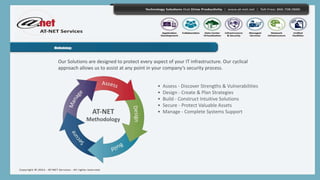
Methodology
Our Solutions are designed to protect every aspect of your IT infrastructure. Our cyclical
approach allows us to assist at any point in your company’s security process.
• Assess - Discover Strengths & Vulnerabilities
• Design - Create & Plan Strategies
• Build - Construct Intuitive Solutions
• Secure - Protect Valuable Assets
• Manage - Complete Systems Support
Locations:
Corporate Charlotte Office
3401 Vardell Lane, Suite D
Charlotte, NC 28217
Phone: 704.831.2500
Email: sales@at-net.net
Atlanta, GA Office
Phone: 866.275.4734
Charleston, SC Office
Phone: 843.576.3773
Columbia, SC Office
Phone: 803.929.5372
Greenville, SC Office
Phone: 864.679.0006
Knoxville, TN Office
Phone: 866.708.0886
Washington, DC Office
Phone: 877.734.4364
Questions & Answers
Thank you for your time today.

Webinar cybersecurity presentation-6-2018 (final)

  • 1.
    CYBER SECURITY FOR NON-TECHNICALEXECUTIVE WHO IS OUT THERE AND HOW DO THEY GET MY STUFF?
  • 2.
    LEARNING OBJECTIVES •WHO OUTTHERE WANTS MY DATA? •HOW DO THE BAD GUYS GET MY INFO? •TOOLS AND PROTECTIONS •ACTIONS YOU CAN TAKE TO PROTECT YOURSELF.
  • 3.
    Type of Action •Interception of data • Interference with data reception • Illegal access • Data destruction • Spying • Sabotage • Service denial • Identity theft Type of Perpetrator • Hackers • Cyber criminals • Cyber warriors • Cyber terrorist Type of Target • Individuals • Companies • Public institutions • State bodies • Critical infrastructure Who out there wants my data?
  • 4.
    How do thebad guys get my information? 1 2 3 4 5 6 7 8 9 10 Phishing Trojans, Botnets, Wiper Attacks Distributed Denial of Service (DDoS) Ransomware Man in the Middle (MITM) Spyware/Malware Theft of Money Data Manipulation and Destruction Intellectual Property Theft Rogue or Unpatched Software
  • 5.
    What does theorganization value most? • Customer records • Personal information • Financial records • Business plans • New business ideas • Marketing plans • Intellectual properties • Product design • Patent applications • Employee records
  • 6.
    What kind ofattack would be the most damaging to the organization? • from theft of money, information, disruption to businessFinancial loss • damage to reputation, damage to other companies you rely on to do businessBusiness loss • getting your affected systems up and running Costs • time notifying the relevant authorities and institutions of the incidentInvestment loss
  • 7.
    Actions you cantake to protect yourself 1 2 3 4 5 Start with a cyber security baseline All organizations face risks, no matter the size Training and review of Risk (KnowBe4) Think about situations in which you could be compromised Understand what you care about, and why 6 7 8 9 Balance cyber risks against other types of risk Learn from security solutions used by other organizations Keep an eye out for cyber security myths Be aware of the strengths and weaknesses of risk management techniques
  • 8.
    Methodology Our Solutions aredesigned to protect every aspect of your IT infrastructure. Our cyclical approach allows us to assist at any point in your company’s security process. • Assess - Discover Strengths & Vulnerabilities • Design - Create & Plan Strategies • Build - Construct Intuitive Solutions • Secure - Protect Valuable Assets • Manage - Complete Systems Support
  • 9.
    Locations: Corporate Charlotte Office 3401Vardell Lane, Suite D Charlotte, NC 28217 Phone: 704.831.2500 Email: sales@at-net.net Atlanta, GA Office Phone: 866.275.4734 Charleston, SC Office Phone: 843.576.3773 Columbia, SC Office Phone: 803.929.5372 Greenville, SC Office Phone: 864.679.0006 Knoxville, TN Office Phone: 866.708.0886 Washington, DC Office Phone: 877.734.4364
  • 10.
    Questions & Answers Thankyou for your time today.

Editor's Notes

  • #5 https://www.secureworks.com/blog/cyber-threat-basics
  • #6 https://www.business.gov.au/info/run/cyber-security
  • #7 https://www.business.gov.au/info/run/cyber-security
  • #8 https://www.ncsc.gov.uk/guidance/get-basics-right-risk-management-principles-cyber-security