Project Management Framework
What Do You Mean ‘Framework’?
   I am sure you have heard some of the following terms:
        PMI, Agile, Prince2, TenStep, Waterfall, SDLC

   While different, they all share the concept of a Framework
      A step-by-step, organized approach to project management
      Each has been developed over time, best practices

        All are repeatable ‘shells’ of a project approach (details/processes differ)

   The following is the definition of ‘Framework ’
      a skeletal structure designed to support or enclose something.
      a frame or structure composed of parts fitted and joined together.
Why Bother With A Framework?
   It provides a set of scalable best practices for your PMs

   Enables standardized project delivery across functions
      Reduces wasted cycles needed to analyze, decide, and train
      Corporate understanding, business unit/initiative enhanced
      Sets expectations & builds trust throughout your organization


   A standard approach allows for streamlined continuous improvement
      Best practices maximize resource utilization & increases odds of success
      Lessons learned from individual projects can enhance overall approach
            Documents, templates, & tools are easily propogated & adopted across the organization
Project Management Framework Phases
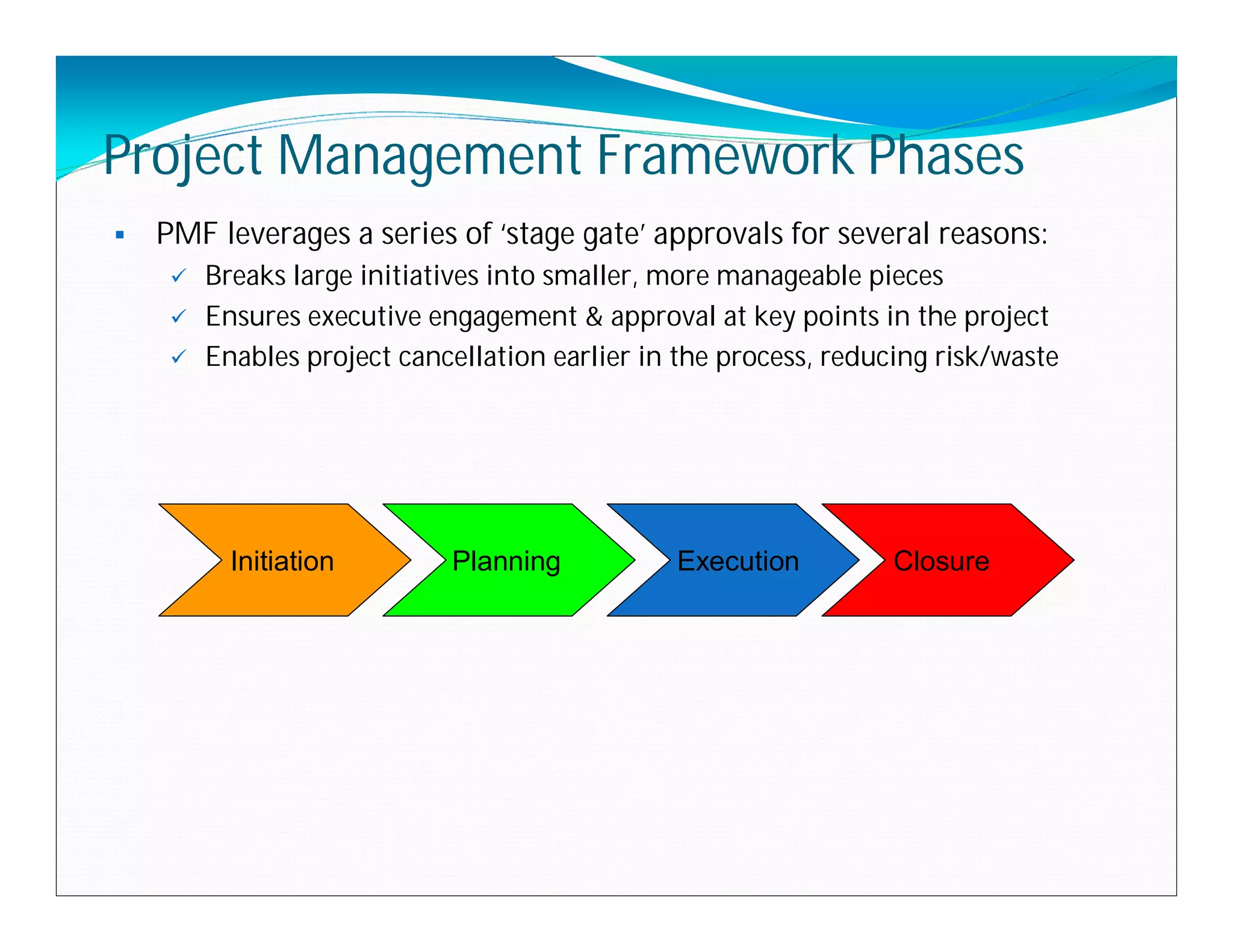
   PMF leverages a series of ‘stage gate’ approvals for several reasons:
        Breaks large initiatives into smaller, more manageable pieces
        Ensures executive engagement & approval at key points in the project
        Enables project cancellation earlier in the process, reducing risk/waste


           Initiation        Planning           Execution          Closure
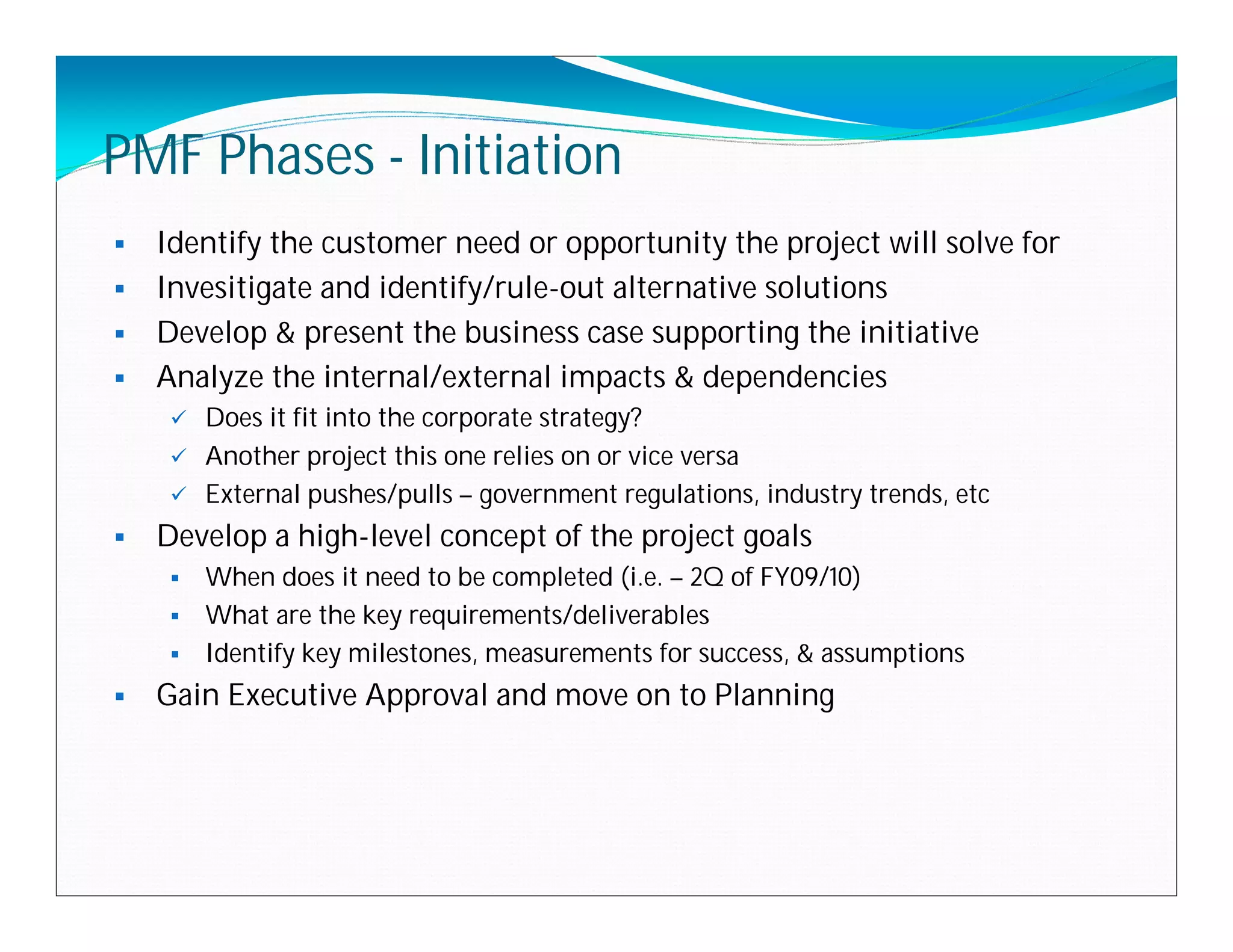
PMF Phases - Initiation
 Identify the customer need or opportunity the project will solve for
 Invesitigate and identify/rule-out alternative solutions
 Develop & present the business case supporting the initiative
 Analyze the internal/external impacts & dependencies
      Does it fit into the corporate strategy?
      Another project this one relies on or vice versa
      External pushes/pulls – government regulations, industry trends, etc
   Develop a high-level concept of the project goals
      When does it need to be completed (i.e. – 2Q of FY09/10)
      What are the key requirements/deliverables
      Identify key milestones, measurements for success, & assumptions

   Gain Executive Approval and move on to Planning
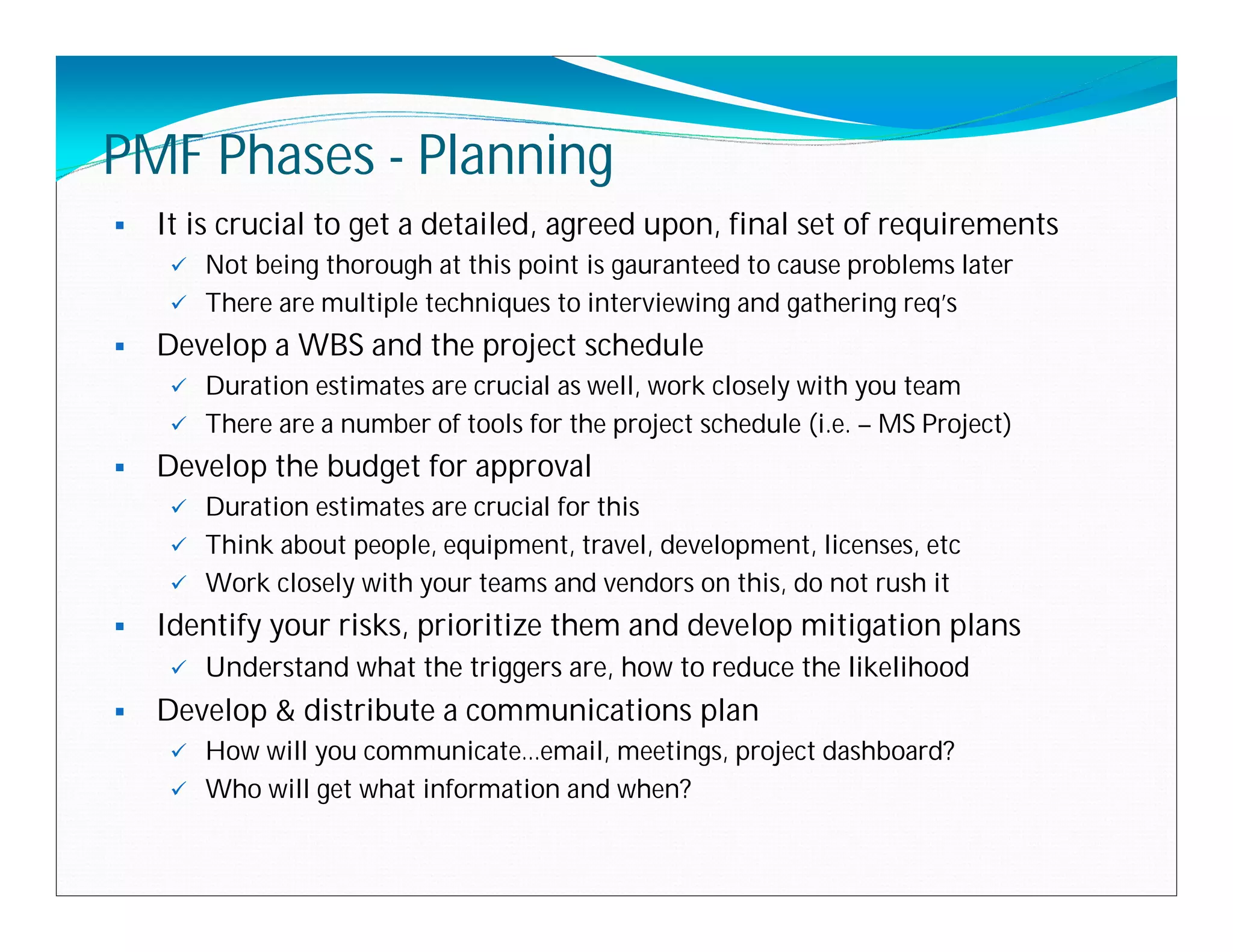
PMF Phases - Planning
   It is crucial to get a detailed, agreed upon, final set of requirements
      Not being thorough at this point is gauranteed to cause problems later
      There are multiple techniques to interviewing and gathering req’s

   Develop a WBS and the project schedule
      Duration estimates are crucial as well, work closely with you team
      There are a number of tools for the project schedule (i.e. – MS Project)

   Develop the budget for approval
      Duration estimates are crucial for this
      Think about people, equipment, travel, development, licenses, etc
      Work closely with your teams and vendors on this, do not rush it

   Identify your risks, prioritize them and develop mitigation plans
        Understand what the triggers are, how to reduce the likelihood
   Develop & distribute a communications plan
      How will you communicate…email, meetings, project dashboard?
      Who will get what information and when?
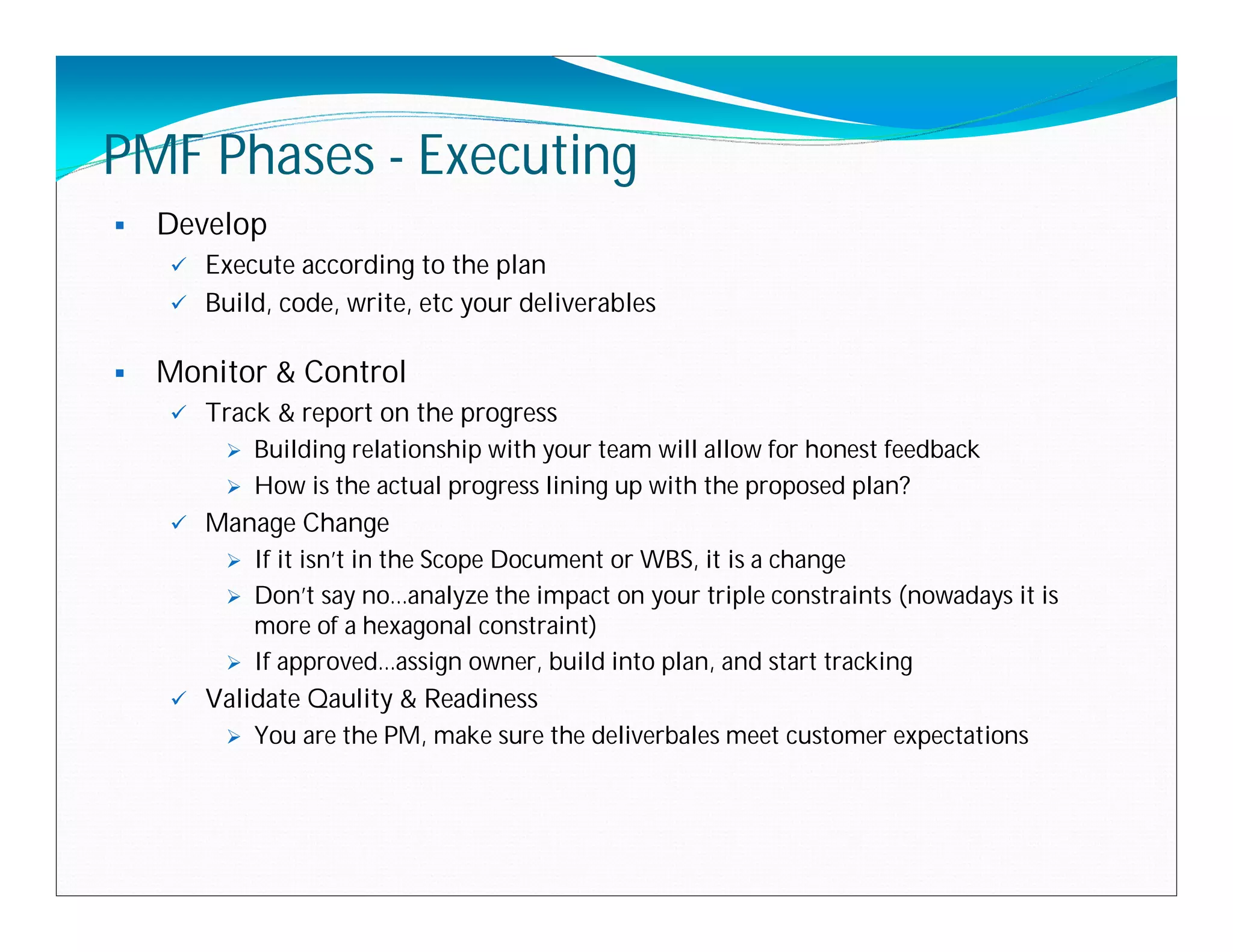
PMF Phases - Executing
   Develop
     Execute according to the plan
     Build, code, write, etc your deliverables


   Monitor & Control
       Track & report on the progress
          Building relationship with your team will allow for honest feedback
          How is the actual progress lining up with the proposed plan?
       Manage Change
          If it isn’t in the Scope Document or WBS, it is a change
          Don’t say no…analyze the impact on your triple constraints (nowadays it is
           more of a hexagonal constraint)
          If approved…assign owner, build into plan, and start tracking
       Validate Qaulity & Readiness
            You are the PM, make sure the deliverbales meet customer expectations
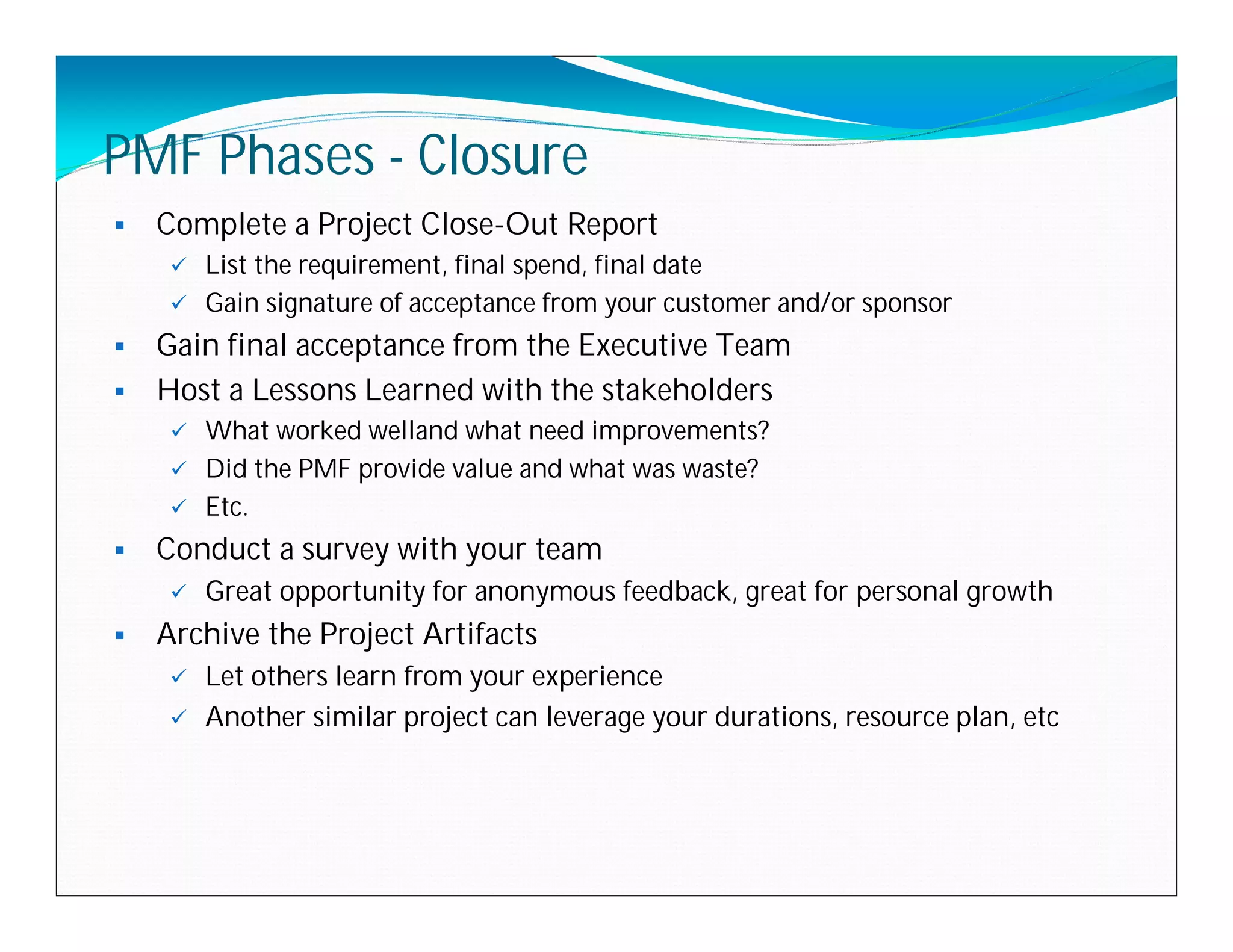
PMF Phases - Closure
   Complete a Project Close-Out Report
      List the requirement, final spend, final date
      Gain signature of acceptance from your customer and/or sponsor

 Gain final acceptance from the Executive Team
 Host a Lessons Learned with the stakeholders
      What worked welland what need improvements?
      Did the PMF provide value and what was waste?
      Etc.

   Conduct a survey with your team
        Great opportunity for anonymous feedback, great for personal growth
   Archive the Project Artifacts
        Let others learn from your experience
        Another similar project can leverage your durations, resource plan, etc
Thank You Danke Grazi Takk ありがとう děkuji
Merci 謝謝 Obrigado Dakujem Dank Gracias Sağol


http://kellycrew.wordpress.com/   http://www.linkedin.com/in/rkelly1


  http://twitter.com/rkelly976          rkelly976@yahoo.com

Project Management Framework

  • 1.
  • 2.
    What Do YouMean ‘Framework’?  I am sure you have heard some of the following terms:  PMI, Agile, Prince2, TenStep, Waterfall, SDLC  While different, they all share the concept of a Framework  A step-by-step, organized approach to project management  Each has been developed over time, best practices  All are repeatable ‘shells’ of a project approach (details/processes differ)  The following is the definition of ‘Framework ’  a skeletal structure designed to support or enclose something.  a frame or structure composed of parts fitted and joined together.
  • 3.
    Why Bother WithA Framework?  It provides a set of scalable best practices for your PMs  Enables standardized project delivery across functions  Reduces wasted cycles needed to analyze, decide, and train  Corporate understanding, business unit/initiative enhanced  Sets expectations & builds trust throughout your organization  A standard approach allows for streamlined continuous improvement  Best practices maximize resource utilization & increases odds of success  Lessons learned from individual projects can enhance overall approach  Documents, templates, & tools are easily propogated & adopted across the organization
  • 4.
    Project Management FrameworkPhases  PMF leverages a series of ‘stage gate’ approvals for several reasons:  Breaks large initiatives into smaller, more manageable pieces  Ensures executive engagement & approval at key points in the project  Enables project cancellation earlier in the process, reducing risk/waste Initiation Planning Execution Closure
  • 5.
    PMF Phases -Initiation  Identify the customer need or opportunity the project will solve for  Invesitigate and identify/rule-out alternative solutions  Develop & present the business case supporting the initiative  Analyze the internal/external impacts & dependencies  Does it fit into the corporate strategy?  Another project this one relies on or vice versa  External pushes/pulls – government regulations, industry trends, etc  Develop a high-level concept of the project goals  When does it need to be completed (i.e. – 2Q of FY09/10)  What are the key requirements/deliverables  Identify key milestones, measurements for success, & assumptions  Gain Executive Approval and move on to Planning
  • 6.
    PMF Phases -Planning  It is crucial to get a detailed, agreed upon, final set of requirements  Not being thorough at this point is gauranteed to cause problems later  There are multiple techniques to interviewing and gathering req’s  Develop a WBS and the project schedule  Duration estimates are crucial as well, work closely with you team  There are a number of tools for the project schedule (i.e. – MS Project)  Develop the budget for approval  Duration estimates are crucial for this  Think about people, equipment, travel, development, licenses, etc  Work closely with your teams and vendors on this, do not rush it  Identify your risks, prioritize them and develop mitigation plans  Understand what the triggers are, how to reduce the likelihood  Develop & distribute a communications plan  How will you communicate…email, meetings, project dashboard?  Who will get what information and when?
  • 7.
    PMF Phases -Executing  Develop  Execute according to the plan  Build, code, write, etc your deliverables  Monitor & Control  Track & report on the progress  Building relationship with your team will allow for honest feedback  How is the actual progress lining up with the proposed plan?  Manage Change  If it isn’t in the Scope Document or WBS, it is a change  Don’t say no…analyze the impact on your triple constraints (nowadays it is more of a hexagonal constraint)  If approved…assign owner, build into plan, and start tracking  Validate Qaulity & Readiness  You are the PM, make sure the deliverbales meet customer expectations
  • 8.
    PMF Phases -Closure  Complete a Project Close-Out Report  List the requirement, final spend, final date  Gain signature of acceptance from your customer and/or sponsor  Gain final acceptance from the Executive Team  Host a Lessons Learned with the stakeholders  What worked welland what need improvements?  Did the PMF provide value and what was waste?  Etc.  Conduct a survey with your team  Great opportunity for anonymous feedback, great for personal growth  Archive the Project Artifacts  Let others learn from your experience  Another similar project can leverage your durations, resource plan, etc
  • 9.
    Thank You DankeGrazi Takk ありがとう děkuji Merci 謝謝 Obrigado Dakujem Dank Gracias Sağol http://kellycrew.wordpress.com/ http://www.linkedin.com/in/rkelly1 http://twitter.com/rkelly976 rkelly976@yahoo.com