A Poison Tree
William Blake
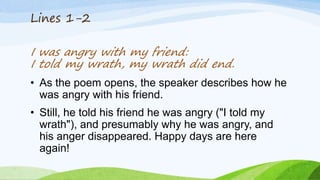
Lines 1-2
I was angry with my friend:
I told my wrath, my wrath did end.
• As the poem opens, the speaker describes how he
was angry with his friend.
• Still, he told his friend he was angry ("I told my
wrath"), and presumably why he was angry, and
his anger disappeared. Happy days are here
again!
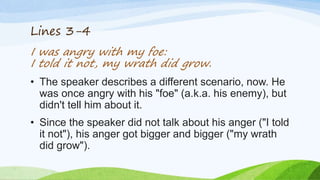
Lines 3-4
I was angry with my foe:
I told it not, my wrath did grow.
• The speaker describes a different scenario, now. He
was once angry with his "foe" (a.k.a. his enemy), but
didn't tell him about it.
• Since the speaker did not talk about his anger ("I told
it not"), his anger got bigger and bigger ("my wrath
did grow").
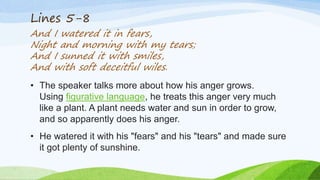
Lines 5-8
And I watered it in fears,
Night and morning with my tears;
And I sunned it with smiles,
And with soft deceitful wiles.
• The speaker talks more about how his anger grows.
Using figurative language, he treats this anger very much
like a plant. A plant needs water and sun in order to grow,
and so apparently does his anger.
• He watered it with his "fears" and his "tears" and made sure
it got plenty of sunshine.
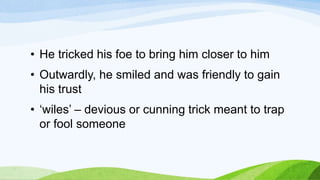
• He tricked his foe to bring him closer to him
• Outwardly, he smiled and was friendly to gain
his trust
• ‘wiles’ – devious or cunning trick meant to trap
or fool someone
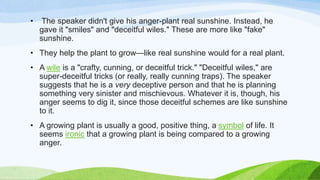
• The speaker didn't give his anger-plant real sunshine. Instead, he
gave it "smiles" and "deceitful wiles." These are more like "fake"
sunshine.
• They help the plant to grow—like real sunshine would for a real plant.
• A wile is a "crafty, cunning, or deceitful trick." "Deceitful wiles," are
super-deceitful tricks (or really, really cunning traps). The speaker
suggests that he is a very deceptive person and that he is planning
something very sinister and mischievous. Whatever it is, though, his
anger seems to dig it, since those deceitful schemes are like sunshine
to it.
• A growing plant is usually a good, positive thing, a symbol of life. It
seems ironic that a growing plant is being compared to a growing
anger.
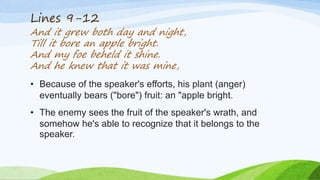
Lines 9-12
And it grew both day and night,
Till it bore an apple bright.
And my foe beheld it shine.
And he knew that it was mine,
• Because of the speaker's efforts, his plant (anger)
eventually bears ("bore") fruit: an "apple bright.
• The enemy sees the fruit of the speaker's wrath, and
somehow he's able to recognize that it belongs to the
speaker.
Lines 13-16
And into my garden stole
When the night had veiled the pole;
In the morning glad I see
My foe outstretched beneath the tree.
• Apparently, at some point in the dark night, the enemy eats
the apple, which ends up killing him.
• He was happy that his foe was lying dead under the poison
tree
Figurative Meaning of the Poem
• Man is corrupted by evil feelings of anger, hatred
and malice.
• If we can conquer these evil passions, we will be
happy
• Do not nourish anger and hatred against friends
and foes
Figurative Meaning of the Poem
• In friendship, when we have a misunderstanding,
we should be not let our anger grow. We should talk
about our ill feelings and discuss why the
misunderstanding happened.
• Forgive and forget – peace of mind
Figurative Meaning of the Poem
• If we bottle up our anger, it grows into a ‘Poison
Tree’.
• Harmful to us and those around us
• The persona’s wrath kills his enemy just as he
desires.
• But death only affects his foe physically. It does not
affect spiritually
Figurative Meaning of the Poem
• The persona will be forever filled with guilt for
harbouring evil thoughts and committing the
murderous act in his own garden
• When a person is nourished with evil thoughts and
feelings from young, he will grow up to be violent
and full of misdemeanours. (minor wrongdoing)
Symbolism
• A growing plant is a symbol of life
• The persona’s growing anger is
compared to a growing plant.
Symbolism
• Night is associated with evil
• In this poem, the act of stealing is
committed at night when the persona’s
foe steals his apple in his garden
SPM Practices:
1. What is the poem mainly about?
___________________________________
2. How did the persona feed his anger?
List 2 ways.
_________________________________________
SPM Practices
3. How did the persona feel when he saw his
enemy lying on the ground? State the evidence
_______________________________________________
4. And it grew both day and night
What grew day and night and what exactly
did it become? What does this tell you about
the persona?
5. What is the difference between anger and
wrath?
____________________________________________________
6. What do you think was the persona’s frame
of mind when he watered his anger in fears?
_______________________________________________________
7. The persona had allowed the anger to
fester and grow within himself. If a friend
is in such a situation, how would you
advise him or her? Provide 2 suggestions:
Advice 1 : _______________________
Advice 2 : ________________________

A poison tree

  • 1.
  • 2.
    Lines 1-2 I wasangry with my friend: I told my wrath, my wrath did end. • As the poem opens, the speaker describes how he was angry with his friend. • Still, he told his friend he was angry ("I told my wrath"), and presumably why he was angry, and his anger disappeared. Happy days are here again!
  • 3.
    Lines 3-4 I wasangry with my foe: I told it not, my wrath did grow. • The speaker describes a different scenario, now. He was once angry with his "foe" (a.k.a. his enemy), but didn't tell him about it. • Since the speaker did not talk about his anger ("I told it not"), his anger got bigger and bigger ("my wrath did grow").
  • 4.
    Lines 5-8 And Iwatered it in fears, Night and morning with my tears; And I sunned it with smiles, And with soft deceitful wiles. • The speaker talks more about how his anger grows. Using figurative language, he treats this anger very much like a plant. A plant needs water and sun in order to grow, and so apparently does his anger. • He watered it with his "fears" and his "tears" and made sure it got plenty of sunshine.
  • 5.
    • He trickedhis foe to bring him closer to him • Outwardly, he smiled and was friendly to gain his trust • ‘wiles’ – devious or cunning trick meant to trap or fool someone
  • 6.
    • The speakerdidn't give his anger-plant real sunshine. Instead, he gave it "smiles" and "deceitful wiles." These are more like "fake" sunshine. • They help the plant to grow—like real sunshine would for a real plant. • A wile is a "crafty, cunning, or deceitful trick." "Deceitful wiles," are super-deceitful tricks (or really, really cunning traps). The speaker suggests that he is a very deceptive person and that he is planning something very sinister and mischievous. Whatever it is, though, his anger seems to dig it, since those deceitful schemes are like sunshine to it. • A growing plant is usually a good, positive thing, a symbol of life. It seems ironic that a growing plant is being compared to a growing anger.
  • 7.
    Lines 9-12 And itgrew both day and night, Till it bore an apple bright. And my foe beheld it shine. And he knew that it was mine, • Because of the speaker's efforts, his plant (anger) eventually bears ("bore") fruit: an "apple bright. • The enemy sees the fruit of the speaker's wrath, and somehow he's able to recognize that it belongs to the speaker.
  • 8.
    Lines 13-16 And intomy garden stole When the night had veiled the pole; In the morning glad I see My foe outstretched beneath the tree. • Apparently, at some point in the dark night, the enemy eats the apple, which ends up killing him. • He was happy that his foe was lying dead under the poison tree
  • 9.
    Figurative Meaning ofthe Poem • Man is corrupted by evil feelings of anger, hatred and malice. • If we can conquer these evil passions, we will be happy • Do not nourish anger and hatred against friends and foes
  • 10.
    Figurative Meaning ofthe Poem • In friendship, when we have a misunderstanding, we should be not let our anger grow. We should talk about our ill feelings and discuss why the misunderstanding happened. • Forgive and forget – peace of mind
  • 11.
    Figurative Meaning ofthe Poem • If we bottle up our anger, it grows into a ‘Poison Tree’. • Harmful to us and those around us • The persona’s wrath kills his enemy just as he desires. • But death only affects his foe physically. It does not affect spiritually
  • 12.
    Figurative Meaning ofthe Poem • The persona will be forever filled with guilt for harbouring evil thoughts and committing the murderous act in his own garden • When a person is nourished with evil thoughts and feelings from young, he will grow up to be violent and full of misdemeanours. (minor wrongdoing)
  • 13.
    Symbolism • A growingplant is a symbol of life • The persona’s growing anger is compared to a growing plant.
  • 14.
    Symbolism • Night isassociated with evil • In this poem, the act of stealing is committed at night when the persona’s foe steals his apple in his garden
  • 15.
    SPM Practices: 1. Whatis the poem mainly about? ___________________________________ 2. How did the persona feed his anger? List 2 ways. _________________________________________
  • 16.
    SPM Practices 3. Howdid the persona feel when he saw his enemy lying on the ground? State the evidence _______________________________________________ 4. And it grew both day and night What grew day and night and what exactly did it become? What does this tell you about the persona?
  • 17.
    5. What isthe difference between anger and wrath? ____________________________________________________ 6. What do you think was the persona’s frame of mind when he watered his anger in fears? _______________________________________________________
  • 18.
    7. The personahad allowed the anger to fester and grow within himself. If a friend is in such a situation, how would you advise him or her? Provide 2 suggestions: Advice 1 : _______________________ Advice 2 : ________________________