RESIDENTIAL AND COMMUNITY BEST
MANAGEMENT PRACTICES
CAPTURING THE RAIN: GI OPTIONS FOR HOA COMMON AREAS
JUNE 8, 2020
DAVID WOOD
CHESAPEAKE STORMWATER NETWORK
WOOD.CSN@OUTLOOK.COM
2
http://chesapeakestormwater.net/join/
Webcasts
Monthly Newsletter
Fact Sheets and Resources
Best Urban BMP in the Bay Awards
Trainings and Workshops
It’s Free!
Outline
 Starting Small: Stewardship Practices for Communities and
Homeowners
 Rain Gardens
 Turf Management
 Tree Plantings
 Conservation Landscapes
 Thinking Big: Improving Large Stormwater Ponds
 A Suburban Watershed Ethic
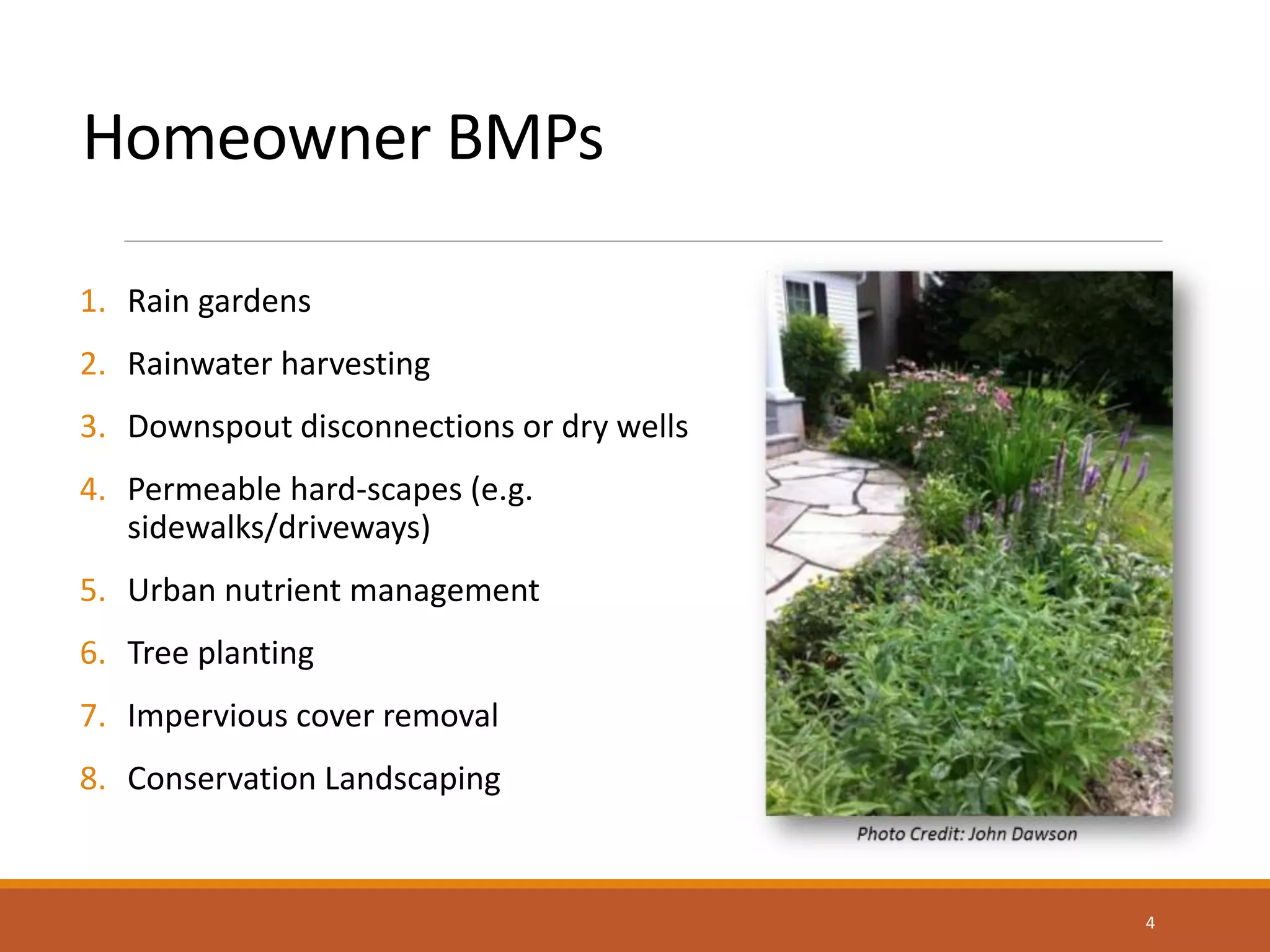
Homeowner BMPs
1. Rain gardens
2. Rainwater harvesting
3. Downspout disconnections or dry wells
4. Permeable hard-scapes (e.g.
sidewalks/driveways)
5. Urban nutrient management
6. Tree planting
7. Impervious cover removal
8. Conservation Landscaping
4
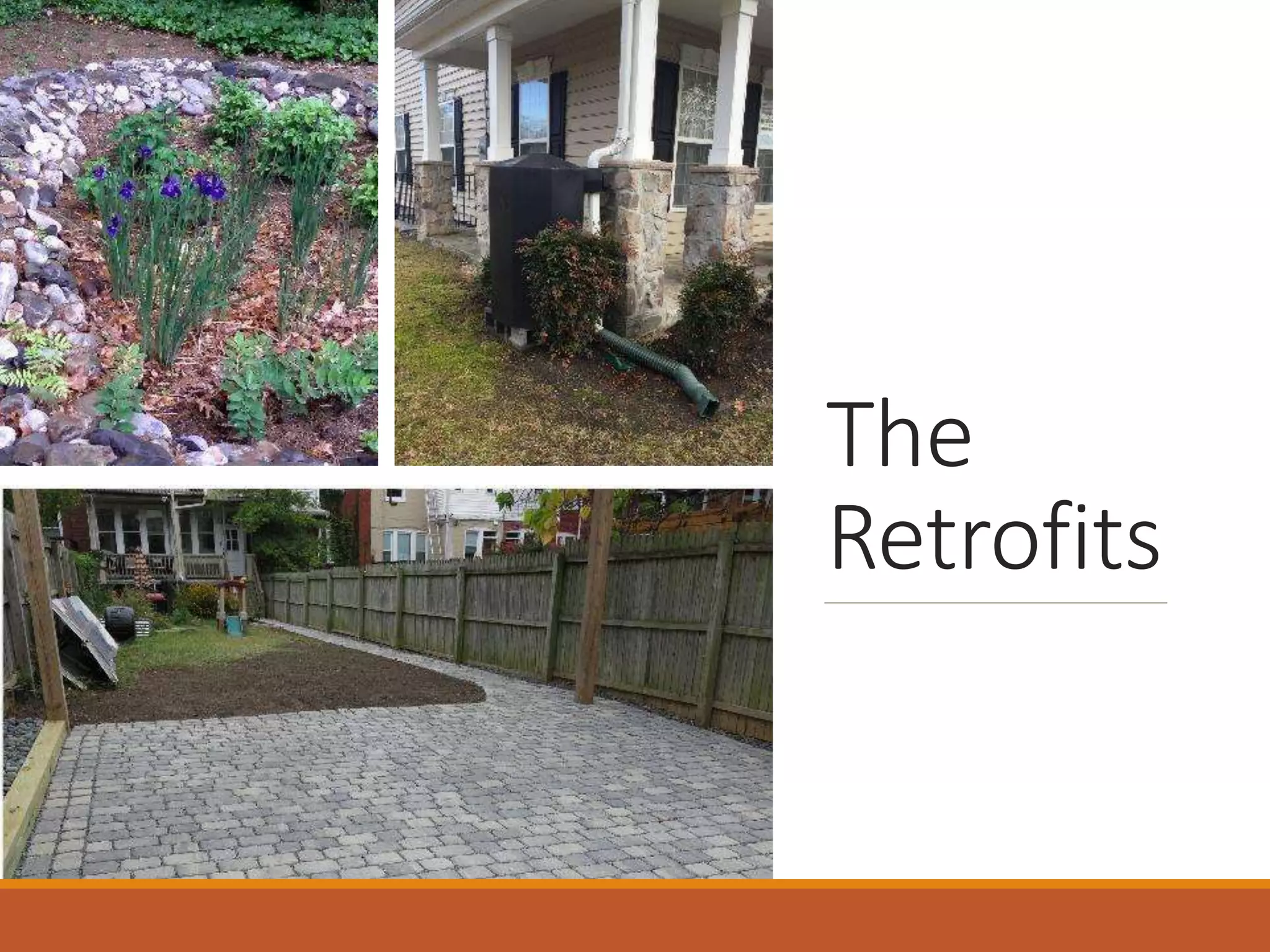
The
Retrofits
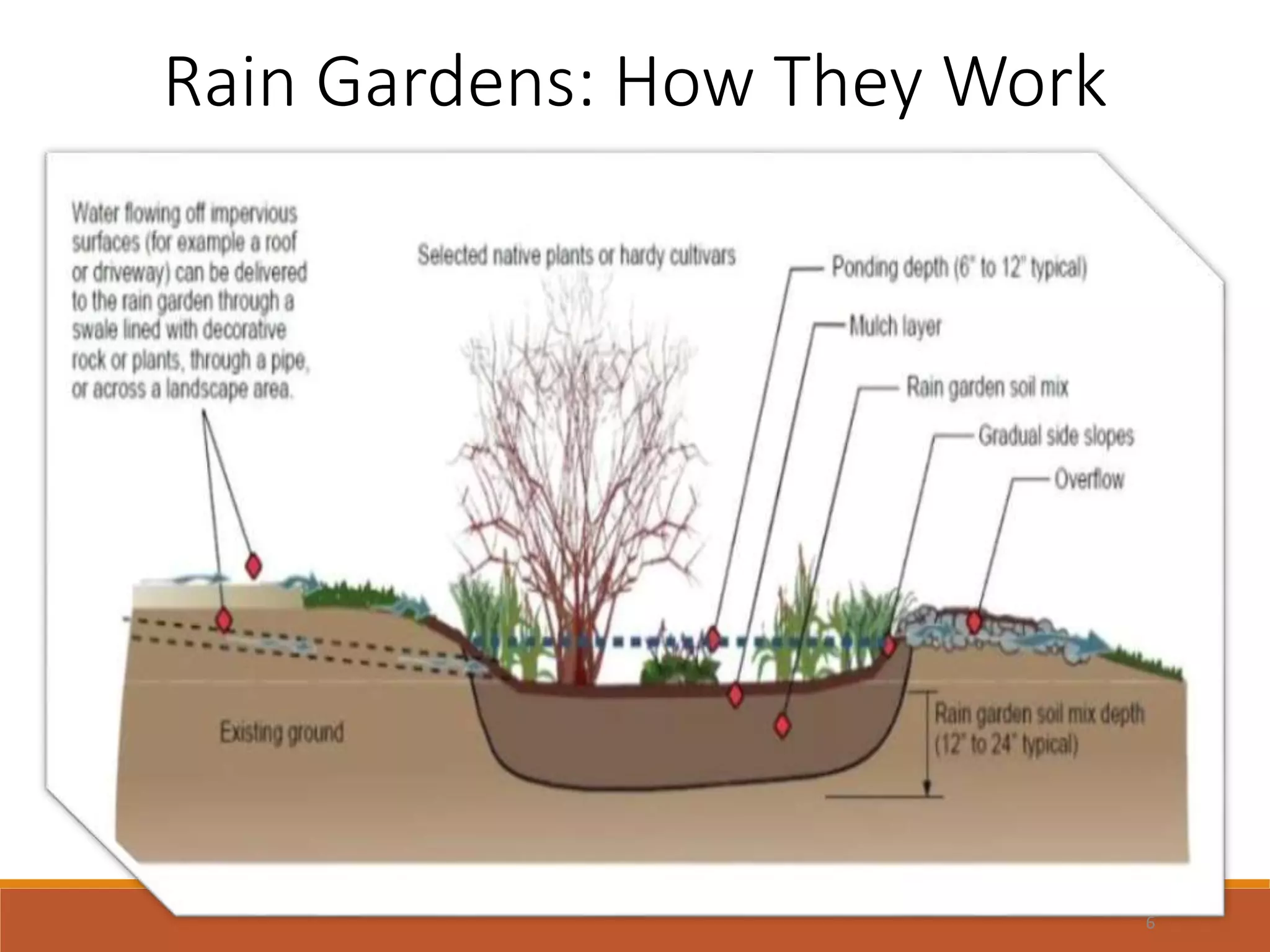
Rain Gardens: How They Work
6
.
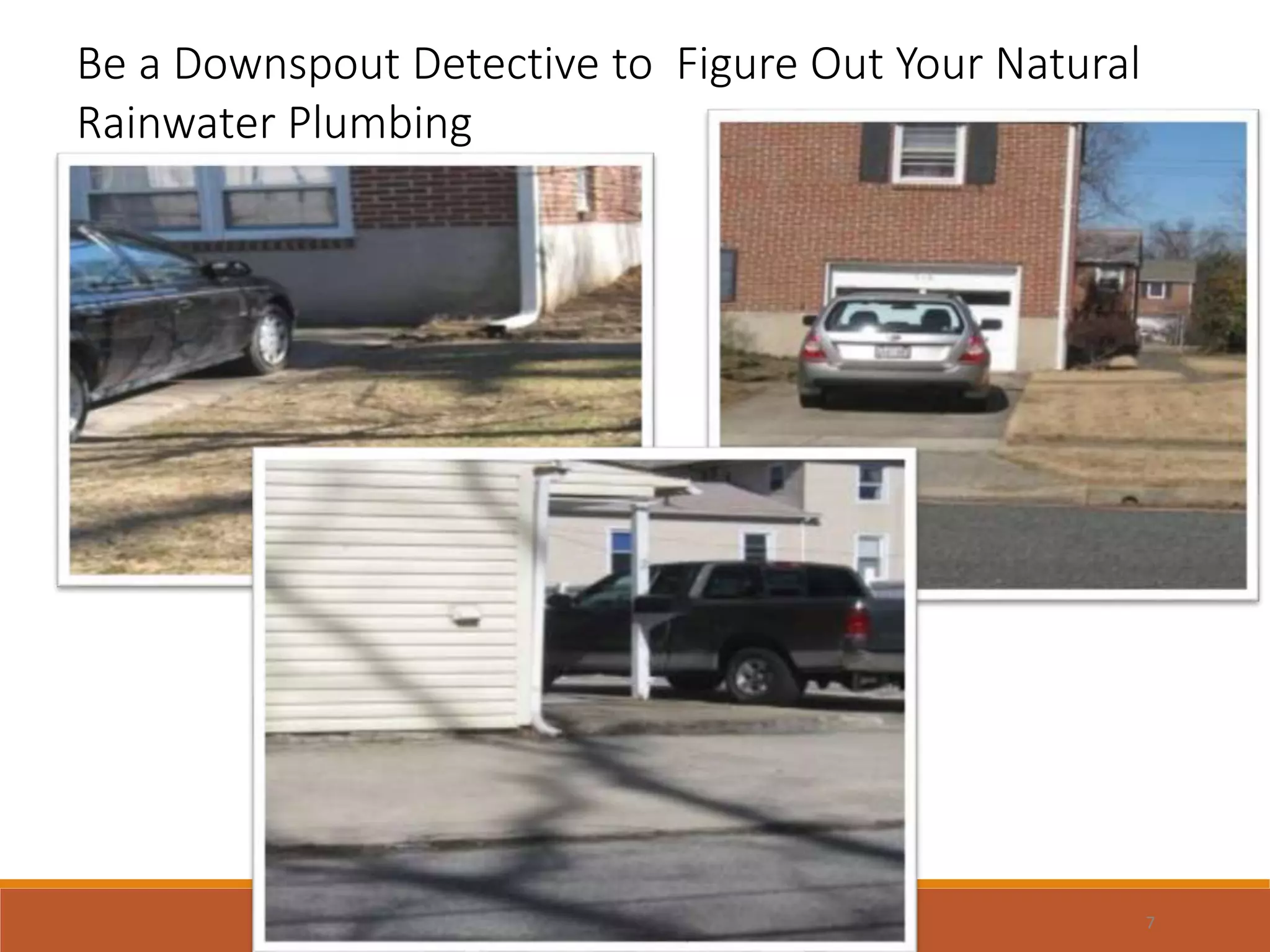
Be a Downspout Detective to Figure Out Your Natural
Rainwater Plumbing
7
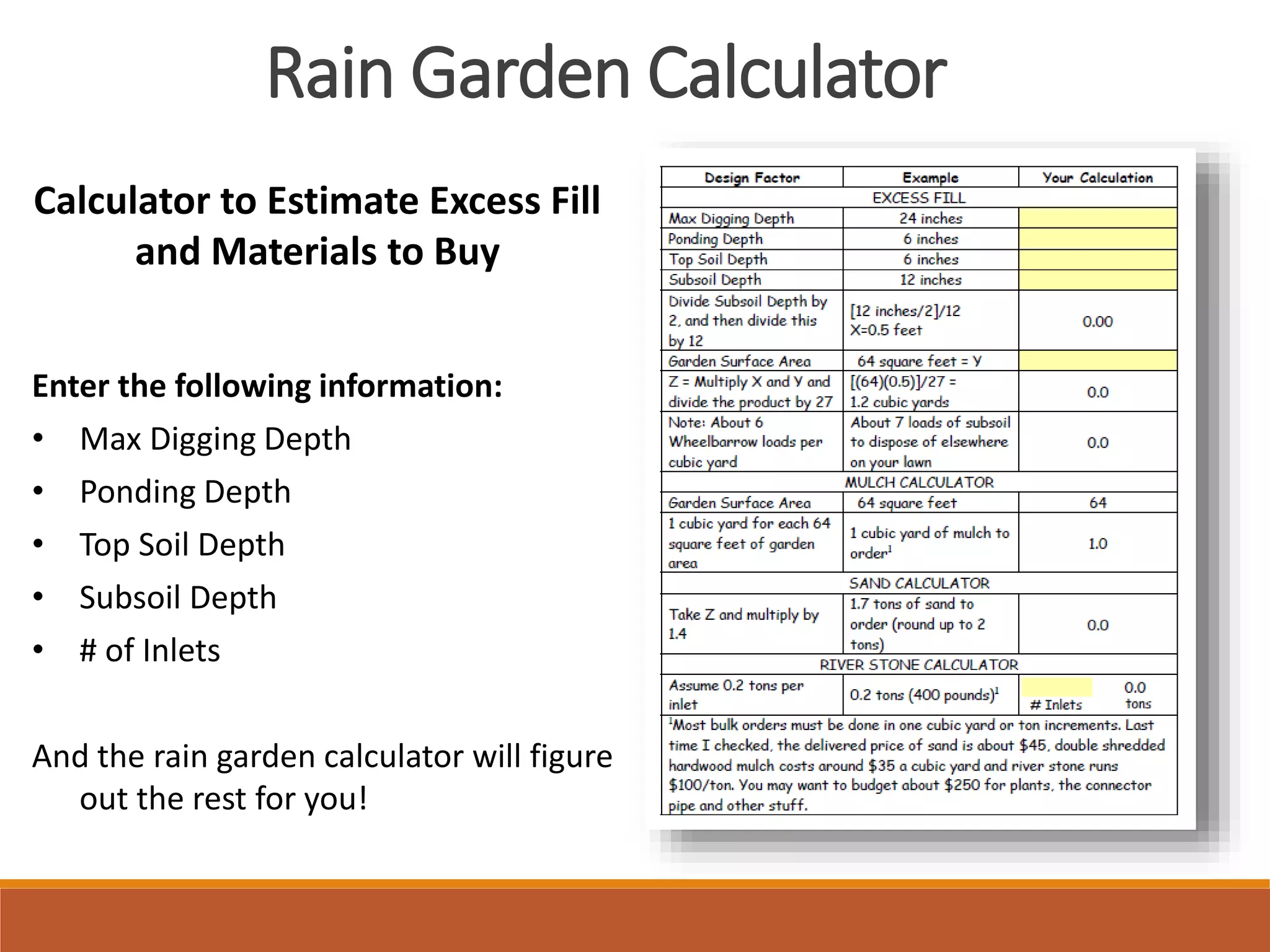
Rain Garden Calculator
Calculator to Estimate Excess Fill
and Materials to Buy
Enter the following information:
• Max Digging Depth
• Ponding Depth
• Top Soil Depth
• Subsoil Depth
• # of Inlets
And the rain garden calculator will figure
out the rest for you!
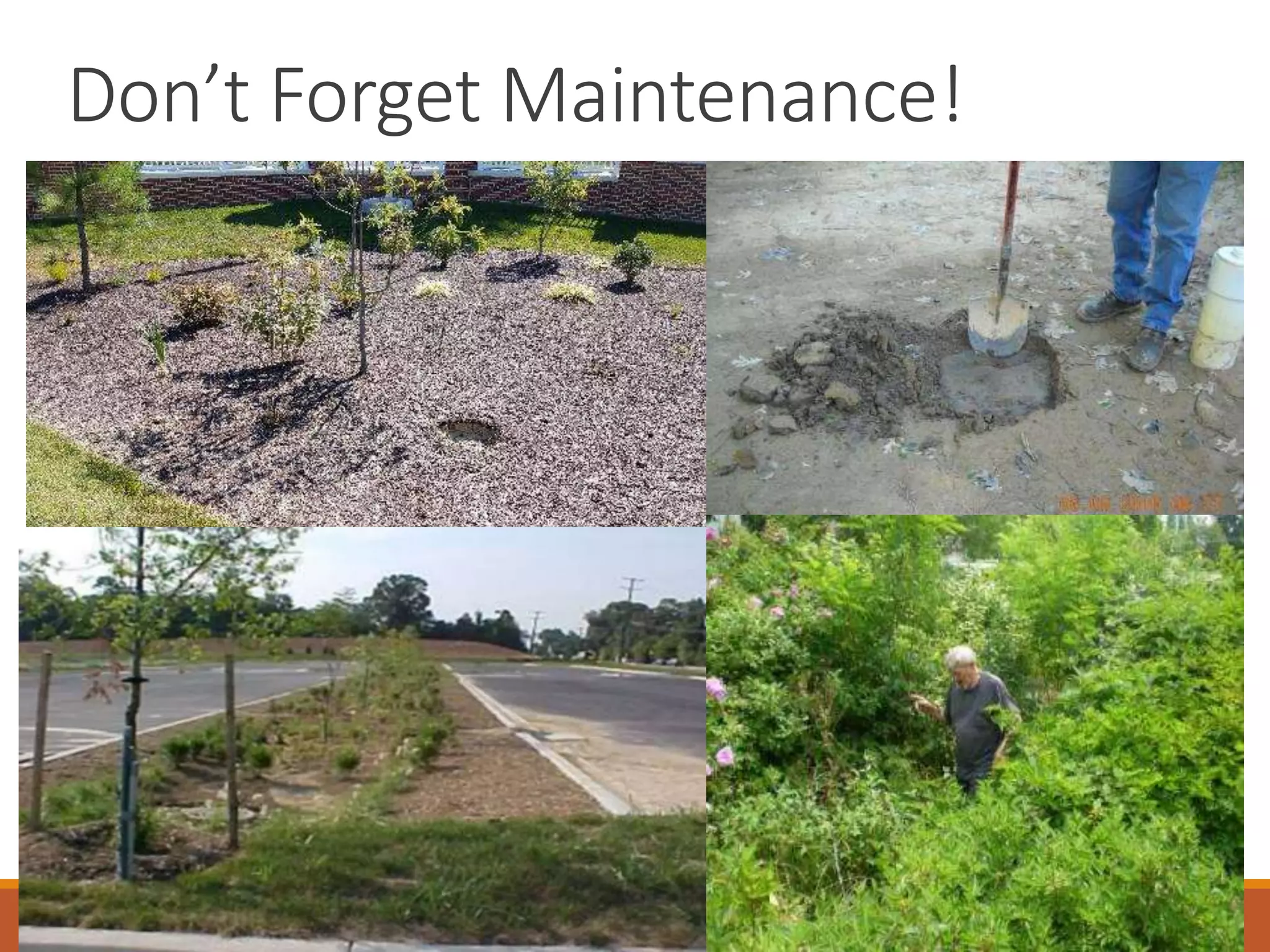
Don’t Forget Maintenance!
Bay-Friendly Lawn Care
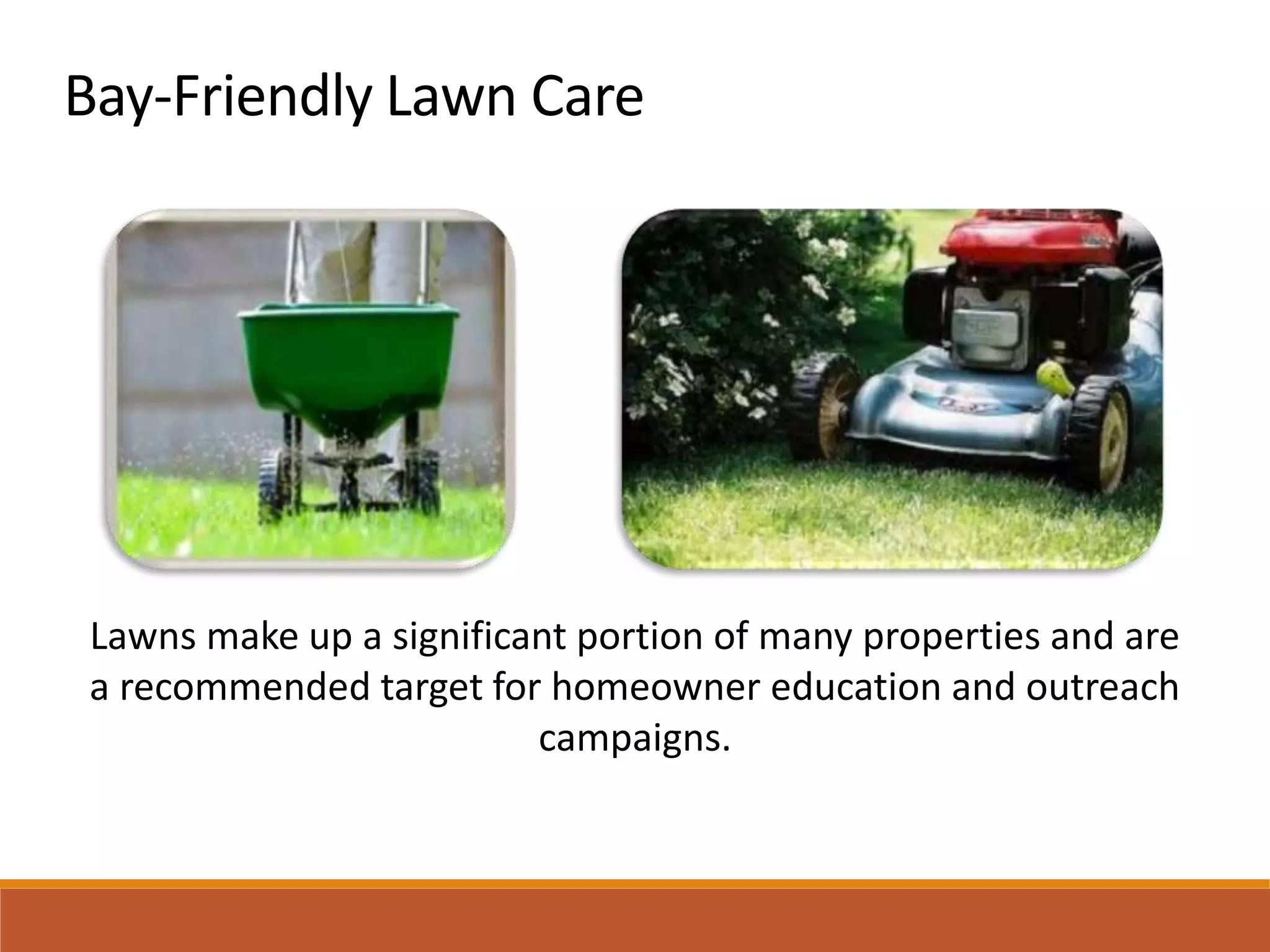
Lawns make up a significant portion of many properties and are
a recommended target for homeowner education and outreach
campaigns.
Start by targeting High-Risk Lawns
Some urban lawns are more likely to export nutrients:
1. Over-fertilizing beyond state or
extension recommendations
2. P-saturated soils as determined by
a soil analysis
3. Newly established turf
4. Steep slopes (> 15%)
5. Exposed soil (more than 5 % for
managed turf and 15% for
unmanaged turf)
6. High water table (within three feet
of surface )
7. Over-irrigated lawns
8. Soils that are shallow, compacted
or low water holding capacity
9. High use areas (e.g., athletic fields,
golf courses)
10.Sandy soils (infiltration rate more
than 2 inches per hour)
11.Adjacent to stream, river or Bay
(within 300 feet)
12.Karst terrain
12
Tips for Getting Started
Review your procurement contracts for routine
landscape maintenance to ensure the crews are
trained and qualified to implement UNM plans
Work with a good UNM partner, such as master
gardeners, soil conservation district and cooperative
extension who can be the “retail provider”
Reduce or Eliminate Fertilizer
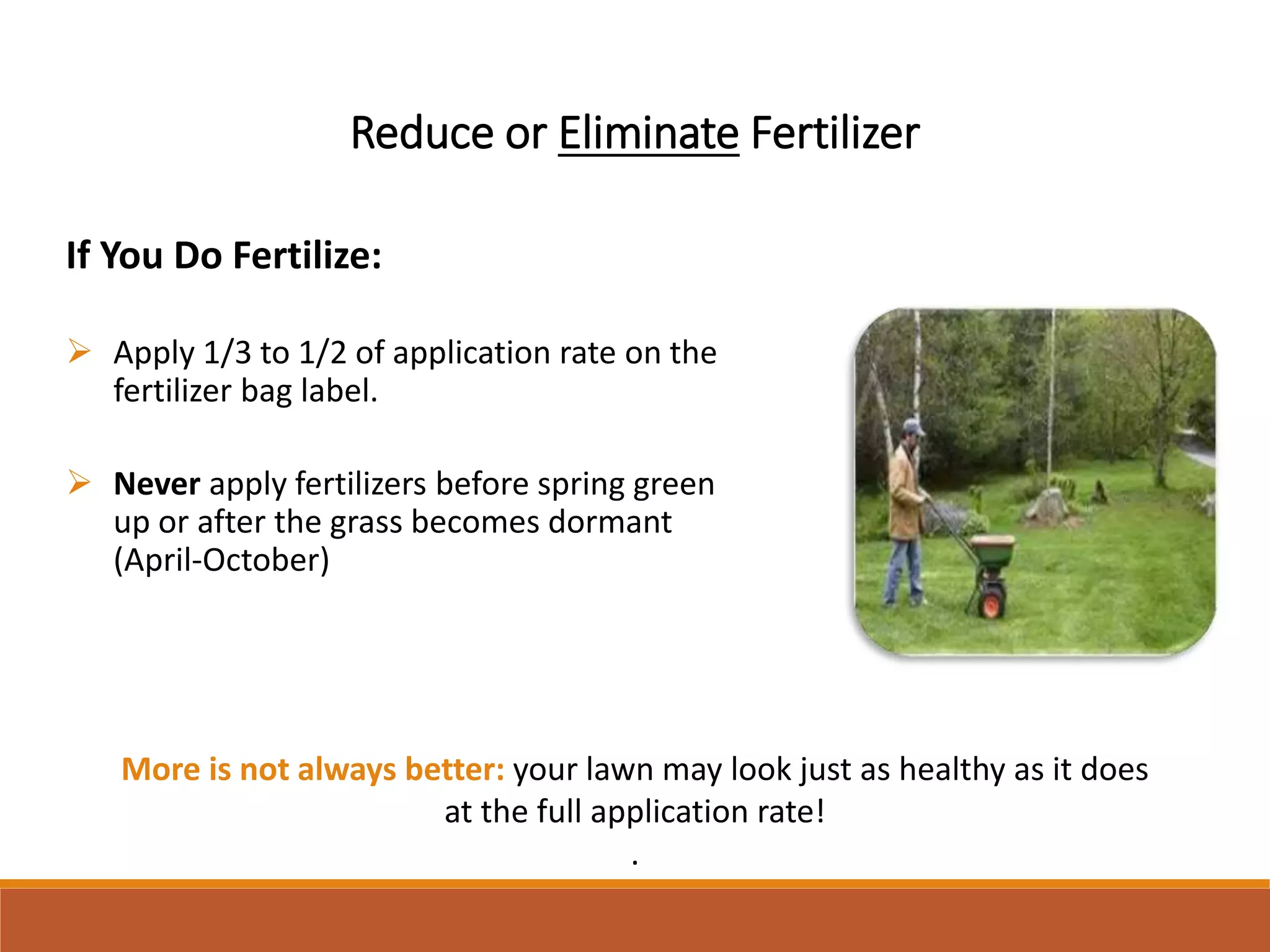
If You Do Fertilize:
 Apply 1/3 to 1/2 of application rate on the
fertilizer bag label.
 Never apply fertilizers before spring green
up or after the grass becomes dormant
(April-October)
More is not always better: your lawn may look just as healthy as it does
at the full application rate!
.
Set Mower Height at 3” or Taller
Taller Grass means deeper roots that take up
more nutrients. Taller grass is more drought
resistant and helps suppress weeds
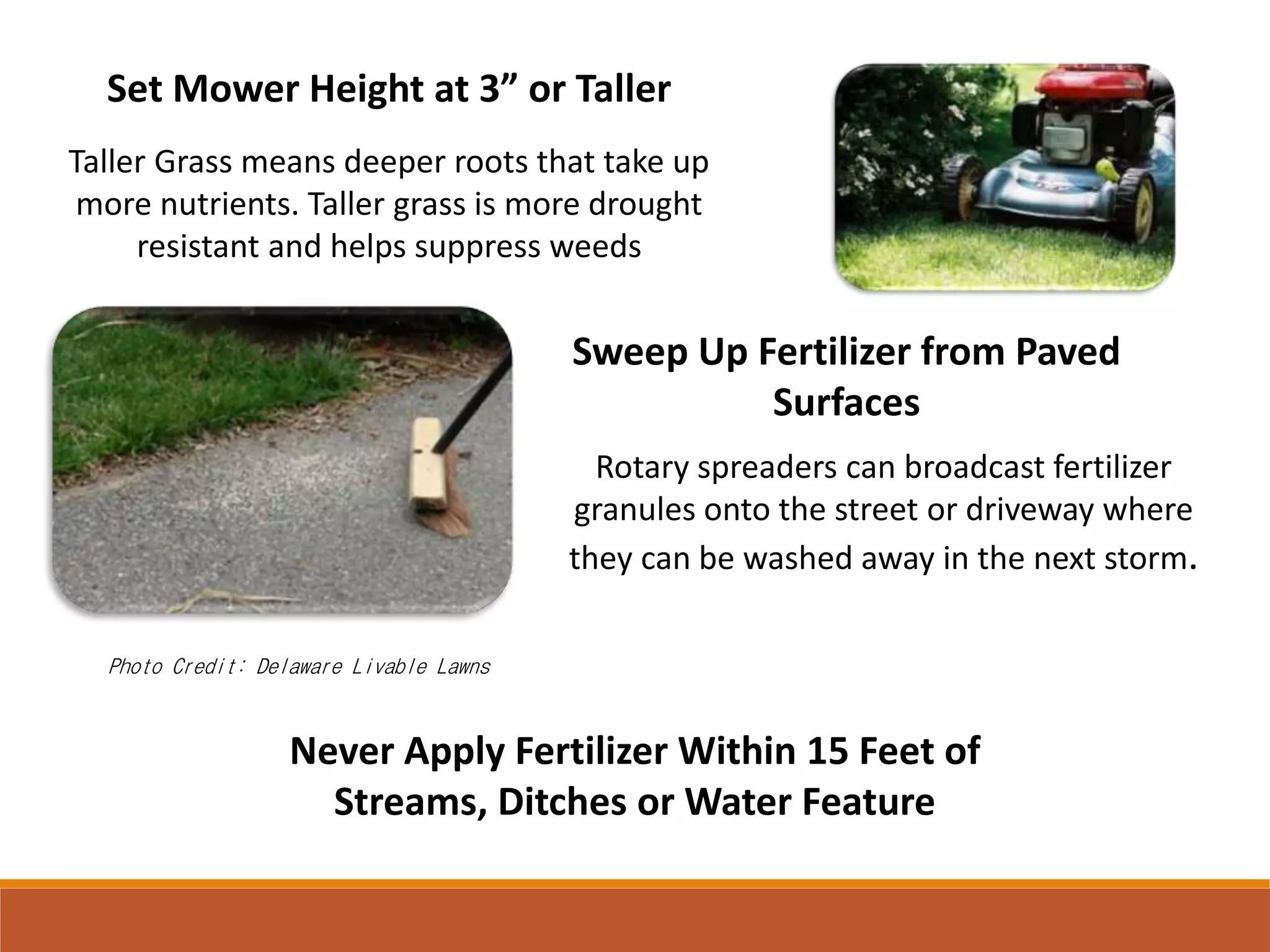
Sweep Up Fertilizer from Paved
Surfaces
Never Apply Fertilizer Within 15 Feet of
Streams, Ditches or Water Feature
Rotary spreaders can broadcast fertilizer
granules onto the street or driveway where
they can be washed away in the next storm.
Photo Credit: Delaware Livable Lawns
The Many Tree BMPs:
15
1. Urban Tree Canopy
2. Urban Forest Planting
3. Riparian Buffer Planting
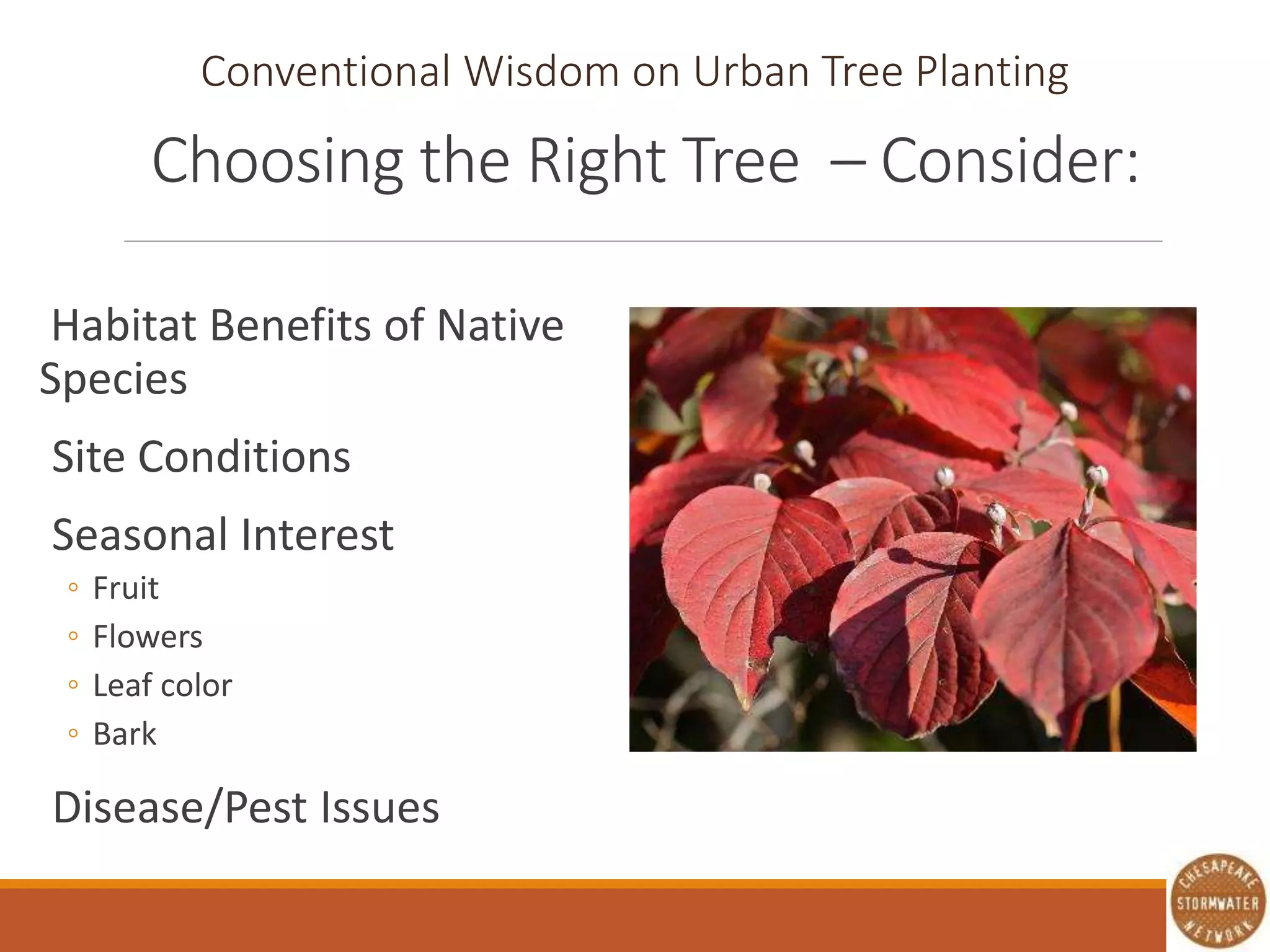
Choosing the Right Tree – Consider:
Habitat Benefits of Native
Species
Site Conditions
Seasonal Interest
◦ Fruit
◦ Flowers
◦ Leaf color
◦ Bark
Disease/Pest Issues
Conventional Wisdom on Urban Tree Planting
17
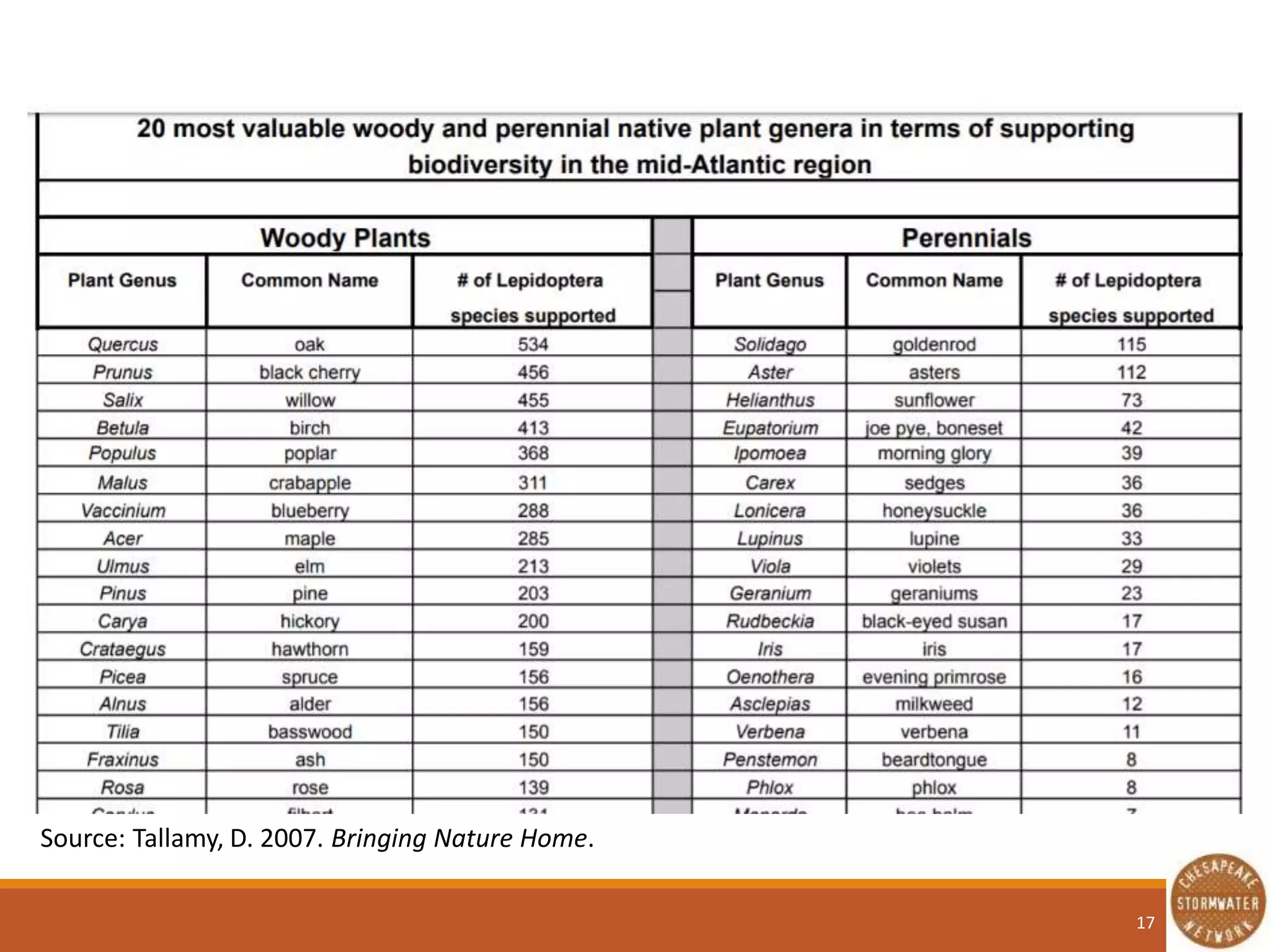
Source: Tallamy, D. 2007. Bringing Nature Home.
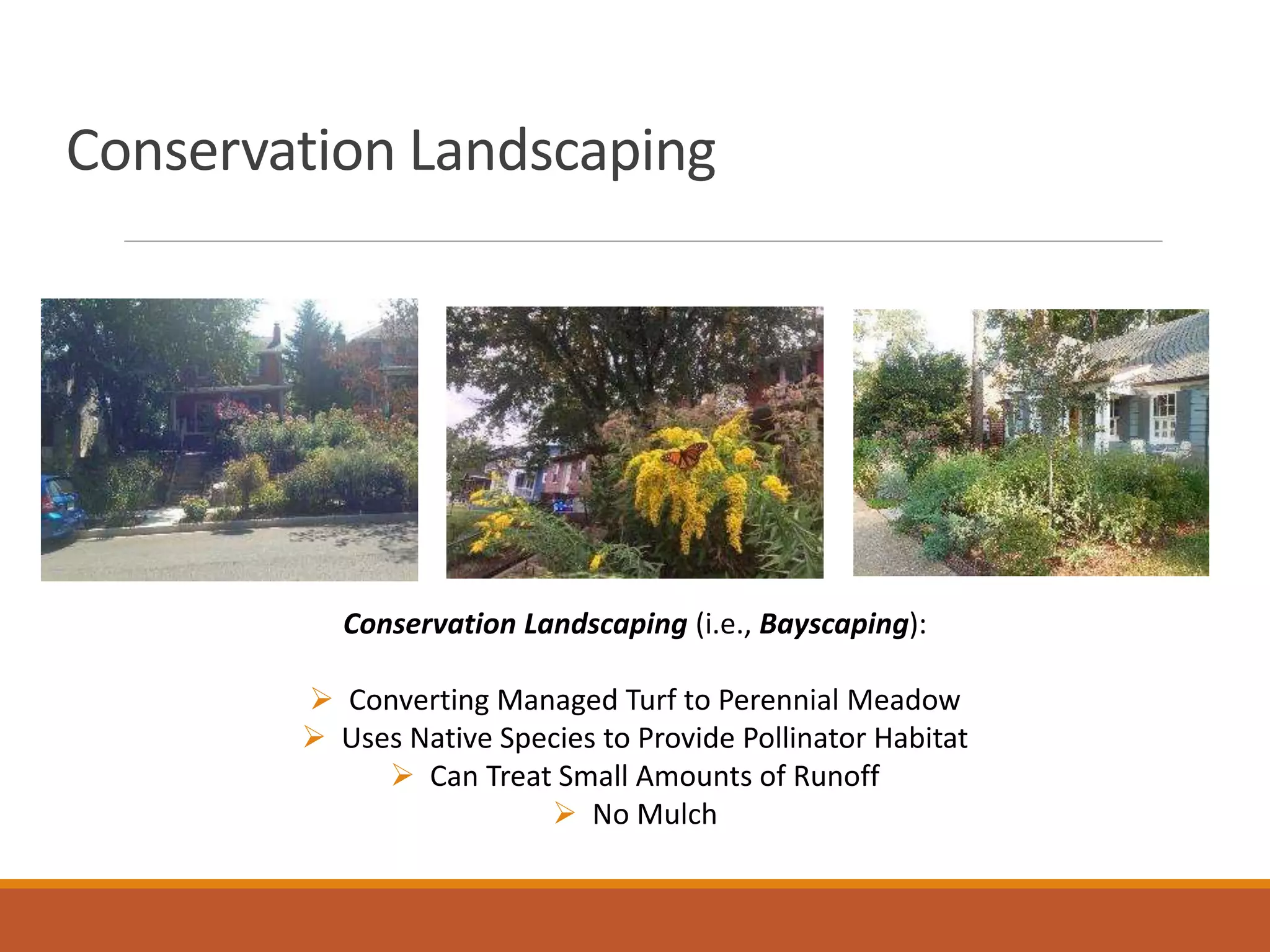
Conservation Landscaping
Conservation Landscaping (i.e., Bayscaping):
 Converting Managed Turf to Perennial Meadow
 Uses Native Species to Provide Pollinator Habitat
 Can Treat Small Amounts of Runoff
 No Mulch
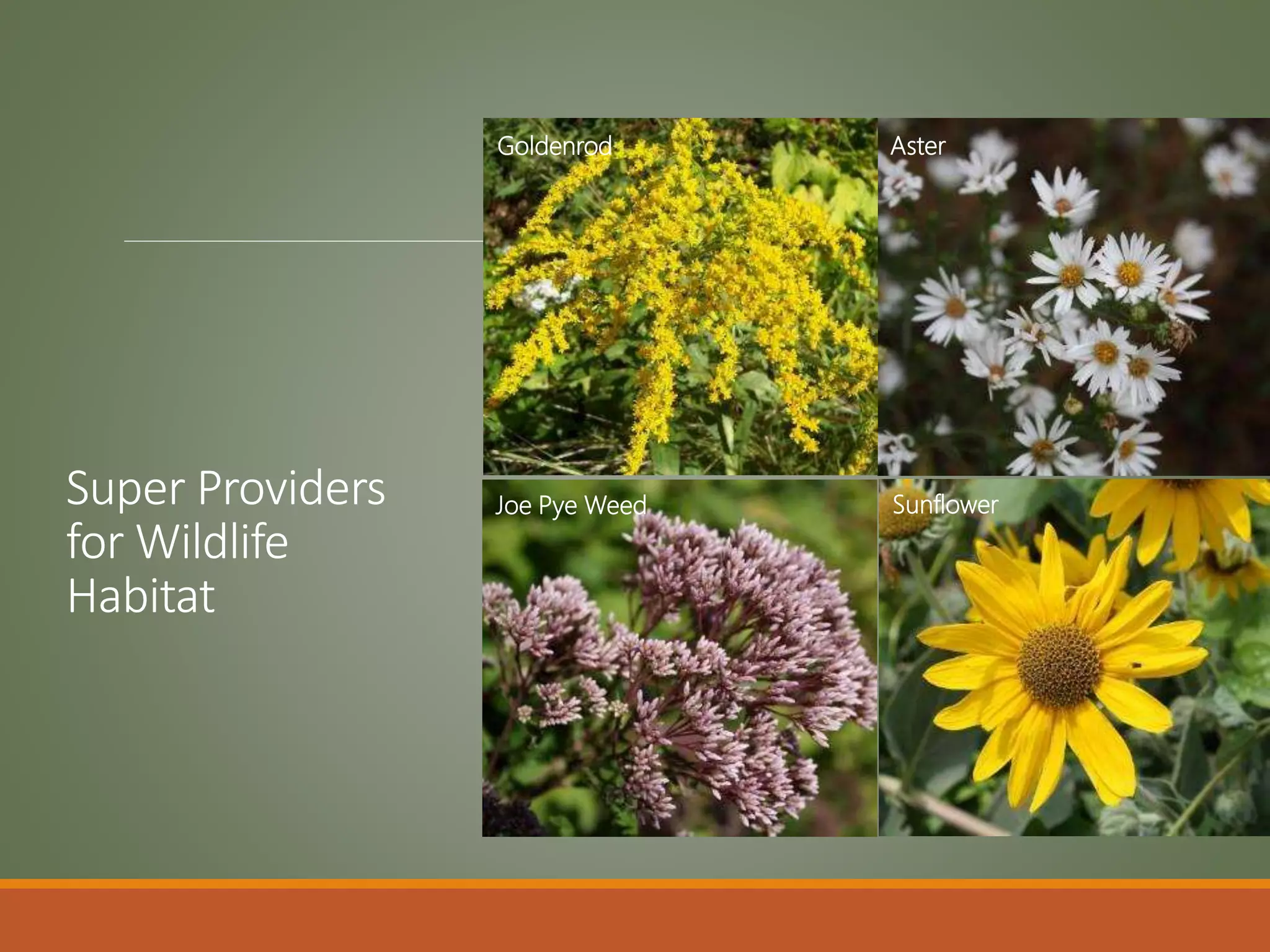
Super Providers
for Wildlife
Habitat
Joe Pye Weed Sunflower
Goldenrod Aster
Thinking Bigger?
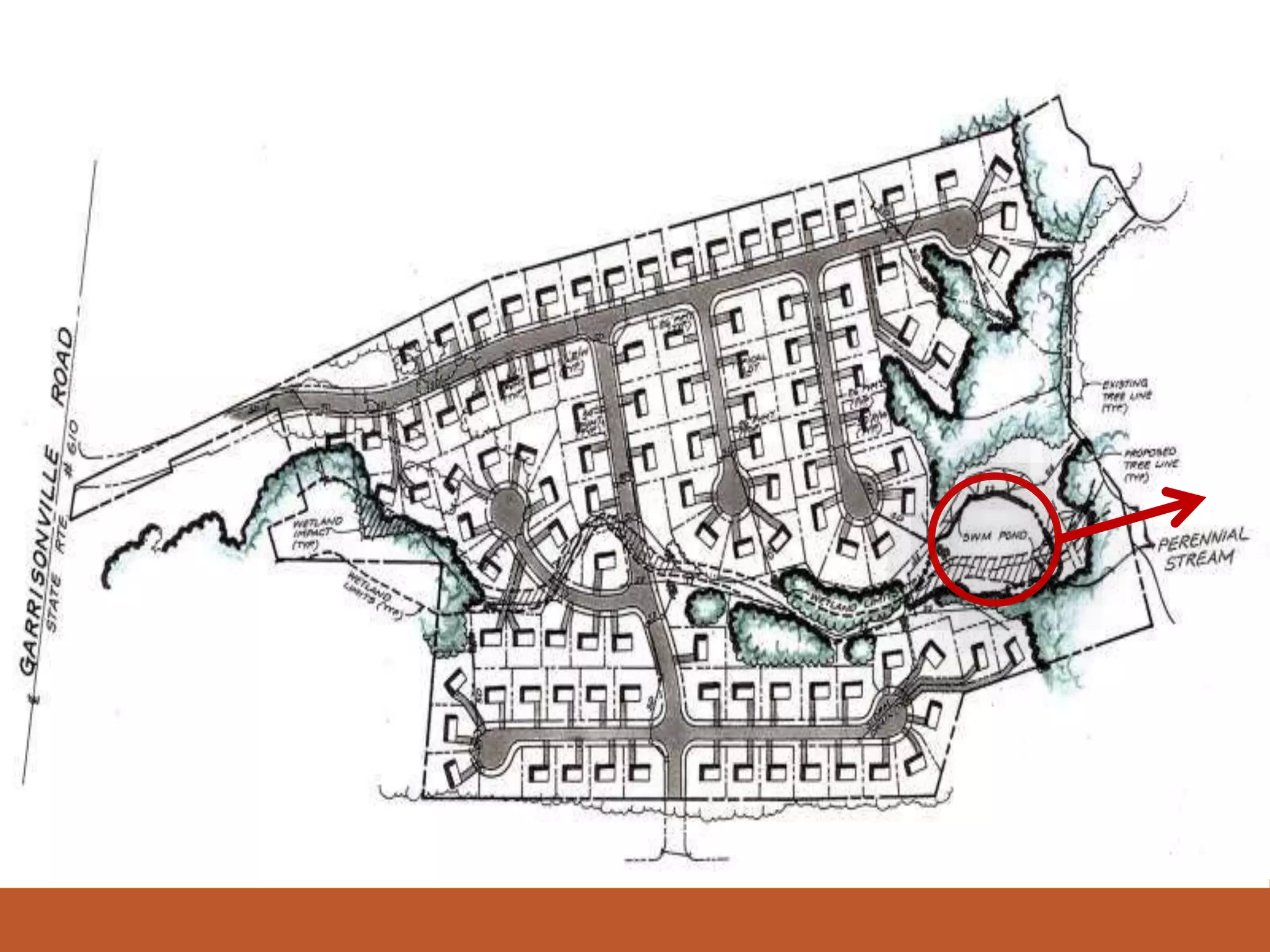
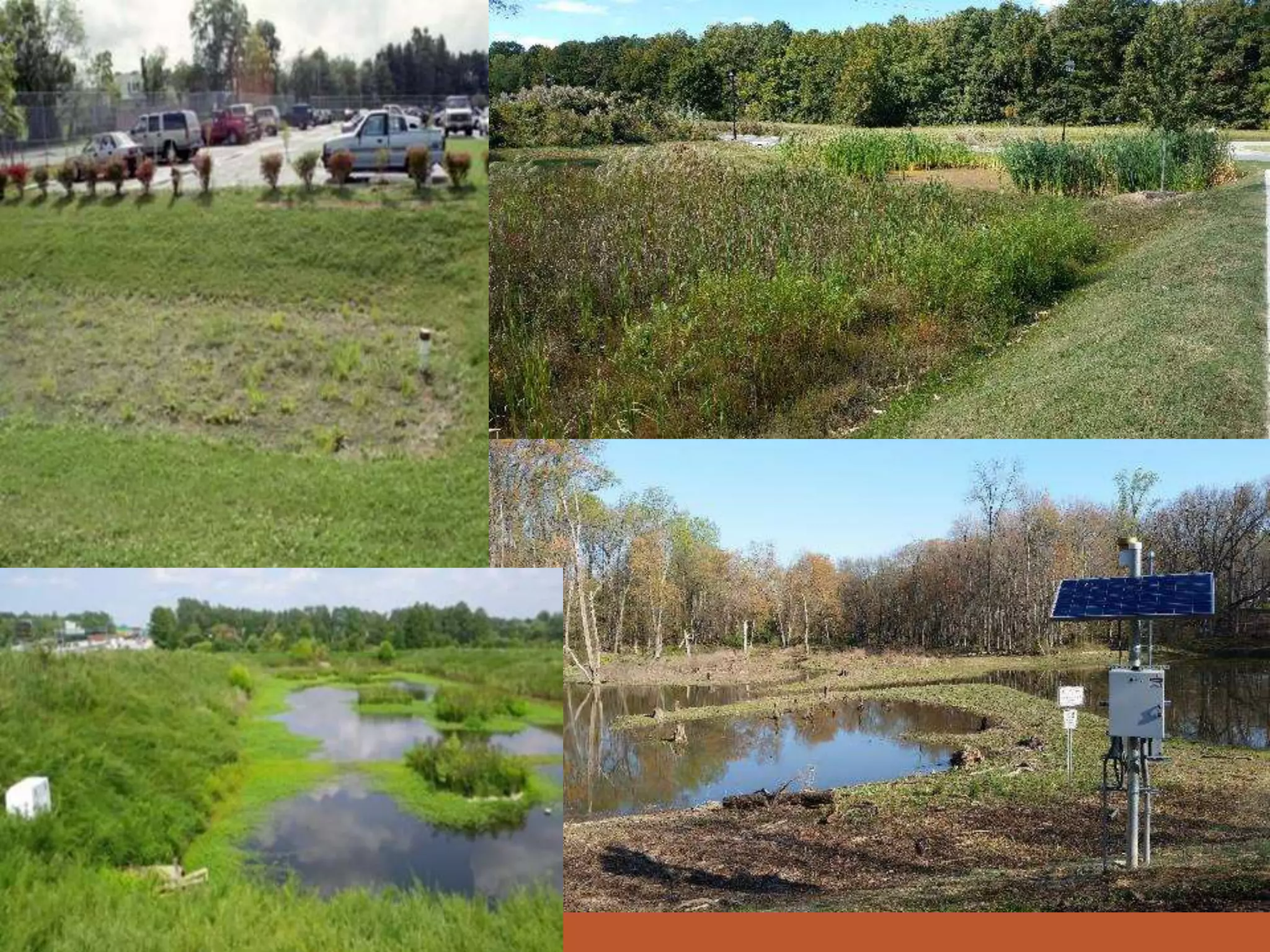
STORMWATER PONDS
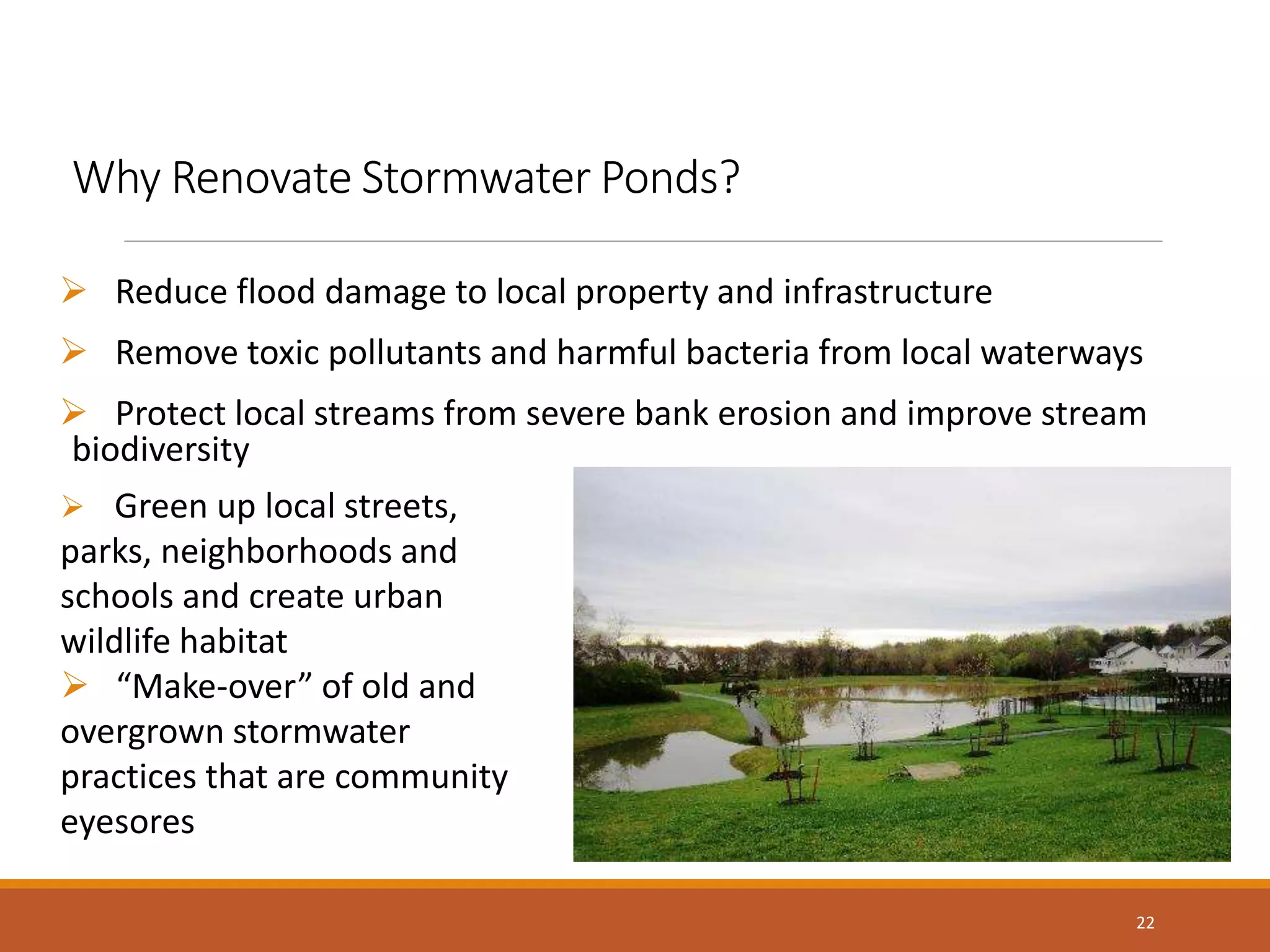
Why Renovate Stormwater Ponds?
 Reduce flood damage to local property and infrastructure
 Remove toxic pollutants and harmful bacteria from local waterways
 Protect local streams from severe bank erosion and improve stream
biodiversity
22
 Green up local streets,
parks, neighborhoods and
schools and create urban
wildlife habitat
 “Make-over” of old and
overgrown stormwater
practices that are community
eyesores
A Suburban Watershed Ethic
1. Get involved in Local Planning
2. Be Informed About Local Watershed Issues
3. Let Elected Officials Know Where You Stand
4. Take a Monthly Watershed Walk
5. Practice Nutrient Management
6. Make Your Yard Watershed Friendly
7. Express Stewardship in Your Daily Consumer Behaviors
Pond Management Resources
www.chesapeakestormwater.net
25
Title of Resource Web link
The Pond Protocol https://chesapeakestormwater.net/2017/12/the-pond-
protocol/
[Webcast] The Pond Protocol https://chesapeakestormwater.net/2017/12/the-pond-
protocol/
[Webcast] Pond Management
Techniques
https://chesapeakestormwater.net/events/webcast-pond-
management-techniques/
Pond Retrofit Resources http://chesapeakestormwater.net/bmp-resources/retrofits/
Floating Treatment Wetland
Resources
http://chesapeakestormwater.net/bmp-resources/floating-
treatment-wetlands/
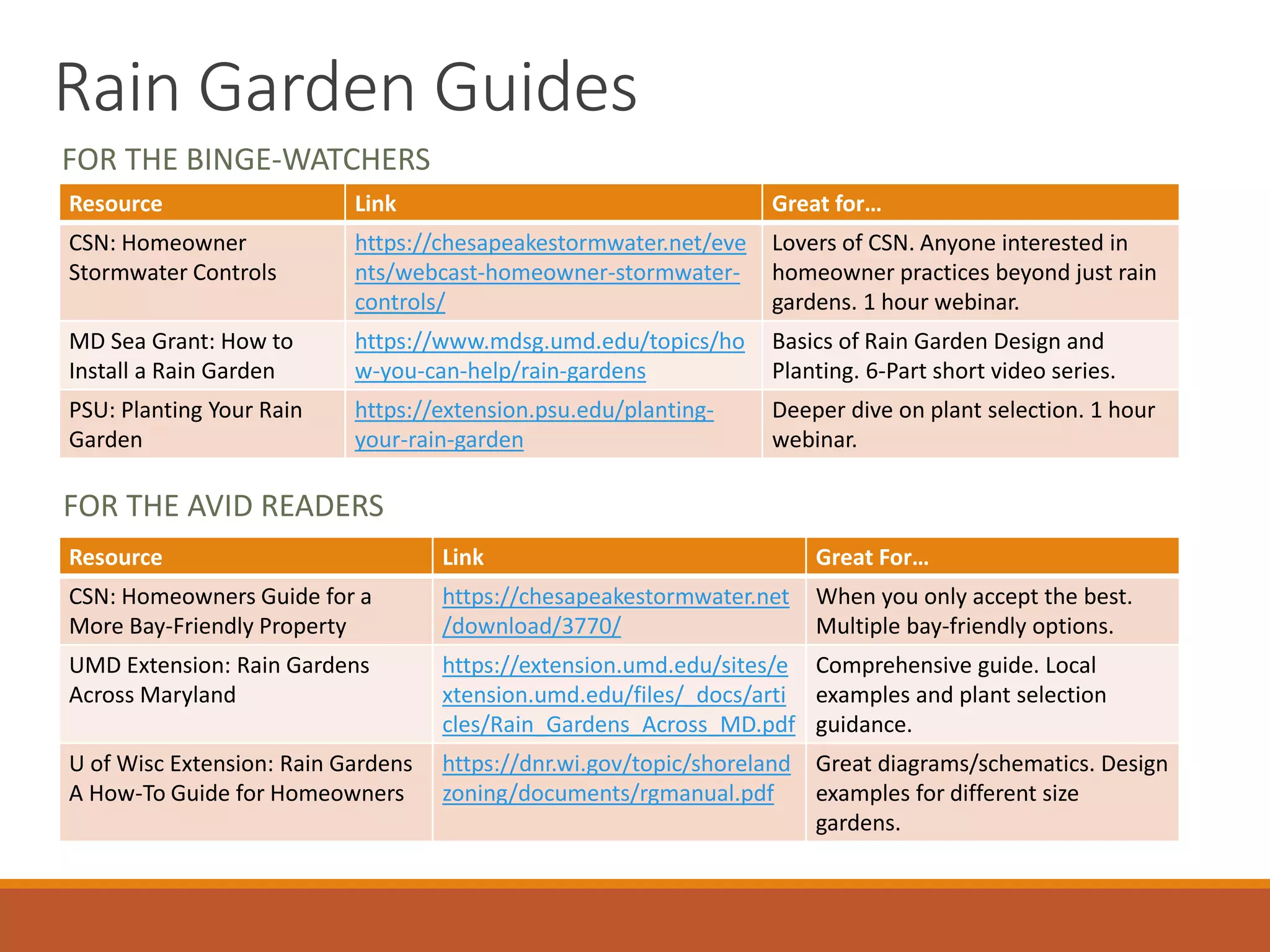
Rain Garden Guides
FOR THE AVID READERS
FOR THE BINGE-WATCHERS
Resource Link Great for…
CSN: Homeowner
Stormwater Controls
https://chesapeakestormwater.net/eve
nts/webcast-homeowner-stormwater-
controls/
Lovers of CSN. Anyone interested in
homeowner practices beyond just rain
gardens. 1 hour webinar.
MD Sea Grant: How to
Install a Rain Garden
https://www.mdsg.umd.edu/topics/ho
w-you-can-help/rain-gardens
Basics of Rain Garden Design and
Planting. 6-Part short video series.
PSU: Planting Your Rain
Garden
https://extension.psu.edu/planting-
your-rain-garden
Deeper dive on plant selection. 1 hour
webinar.
Resource Link Great For…
CSN: Homeowners Guide for a
More Bay-Friendly Property
https://chesapeakestormwater.net
/download/3770/
When you only accept the best.
Multiple bay-friendly options.
UMD Extension: Rain Gardens
Across Maryland
https://extension.umd.edu/sites/e
xtension.umd.edu/files/_docs/arti
cles/Rain_Gardens_Across_MD.pdf
Comprehensive guide. Local
examples and plant selection
guidance.
U of Wisc Extension: Rain Gardens
A How-To Guide for Homeowners
https://dnr.wi.gov/topic/shoreland
zoning/documents/rgmanual.pdf
Great diagrams/schematics. Design
examples for different size
gardens.
Other Residential BMP Resources:
http://chesapeakestormwater.net/bmp-resources/crediting-residential-bmps/
CSN’s Watershed Hacks Series:
Victory Rain Gardens
 https://chesapeakestormwater.net/events/hacks-victory-raingardens/
Planting Trees for your Kids’ Future Canopy
 https://chesapeakestormwater.net/events/watershed-hacks-planting-trees-for-your-
kids-future-canopy/
Stormwater Art
 https://chesapeakestormwater.net/events/watershed-hacks-stormwater-art/
Sustainable Lawns and Conservation Landscaping
 https://chesapeakestormwater.net/events/watershed-hacks-sustainable-lawns-and-
family-gardening/

Capturing the Rain: Residential and Community Best Management Practices

  • 1.
    RESIDENTIAL AND COMMUNITYBEST MANAGEMENT PRACTICES CAPTURING THE RAIN: GI OPTIONS FOR HOA COMMON AREAS JUNE 8, 2020 DAVID WOOD CHESAPEAKE STORMWATER NETWORK WOOD.CSN@OUTLOOK.COM
  • 2.
    2 http://chesapeakestormwater.net/join/ Webcasts Monthly Newsletter Fact Sheetsand Resources Best Urban BMP in the Bay Awards Trainings and Workshops It’s Free!
  • 3.
    Outline  Starting Small:Stewardship Practices for Communities and Homeowners  Rain Gardens  Turf Management  Tree Plantings  Conservation Landscapes  Thinking Big: Improving Large Stormwater Ponds  A Suburban Watershed Ethic
  • 4.
    Homeowner BMPs 1. Raingardens 2. Rainwater harvesting 3. Downspout disconnections or dry wells 4. Permeable hard-scapes (e.g. sidewalks/driveways) 5. Urban nutrient management 6. Tree planting 7. Impervious cover removal 8. Conservation Landscaping 4
  • 5.
  • 6.
    Rain Gardens: HowThey Work 6
  • 7.
    . Be a DownspoutDetective to Figure Out Your Natural Rainwater Plumbing 7
  • 8.
    Rain Garden Calculator Calculatorto Estimate Excess Fill and Materials to Buy Enter the following information: • Max Digging Depth • Ponding Depth • Top Soil Depth • Subsoil Depth • # of Inlets And the rain garden calculator will figure out the rest for you!
  • 9.
  • 10.
    Bay-Friendly Lawn Care Lawnsmake up a significant portion of many properties and are a recommended target for homeowner education and outreach campaigns.
  • 11.
    Start by targetingHigh-Risk Lawns Some urban lawns are more likely to export nutrients: 1. Over-fertilizing beyond state or extension recommendations 2. P-saturated soils as determined by a soil analysis 3. Newly established turf 4. Steep slopes (> 15%) 5. Exposed soil (more than 5 % for managed turf and 15% for unmanaged turf) 6. High water table (within three feet of surface ) 7. Over-irrigated lawns 8. Soils that are shallow, compacted or low water holding capacity 9. High use areas (e.g., athletic fields, golf courses) 10.Sandy soils (infiltration rate more than 2 inches per hour) 11.Adjacent to stream, river or Bay (within 300 feet) 12.Karst terrain
  • 12.
    12 Tips for GettingStarted Review your procurement contracts for routine landscape maintenance to ensure the crews are trained and qualified to implement UNM plans Work with a good UNM partner, such as master gardeners, soil conservation district and cooperative extension who can be the “retail provider”
  • 13.
    Reduce or EliminateFertilizer If You Do Fertilize:  Apply 1/3 to 1/2 of application rate on the fertilizer bag label.  Never apply fertilizers before spring green up or after the grass becomes dormant (April-October) More is not always better: your lawn may look just as healthy as it does at the full application rate! .
  • 14.
    Set Mower Heightat 3” or Taller Taller Grass means deeper roots that take up more nutrients. Taller grass is more drought resistant and helps suppress weeds Sweep Up Fertilizer from Paved Surfaces Never Apply Fertilizer Within 15 Feet of Streams, Ditches or Water Feature Rotary spreaders can broadcast fertilizer granules onto the street or driveway where they can be washed away in the next storm. Photo Credit: Delaware Livable Lawns
  • 15.
    The Many TreeBMPs: 15 1. Urban Tree Canopy 2. Urban Forest Planting 3. Riparian Buffer Planting
  • 16.
    Choosing the RightTree – Consider: Habitat Benefits of Native Species Site Conditions Seasonal Interest ◦ Fruit ◦ Flowers ◦ Leaf color ◦ Bark Disease/Pest Issues Conventional Wisdom on Urban Tree Planting
  • 17.
    17 Source: Tallamy, D.2007. Bringing Nature Home.
  • 18.
    Conservation Landscaping Conservation Landscaping(i.e., Bayscaping):  Converting Managed Turf to Perennial Meadow  Uses Native Species to Provide Pollinator Habitat  Can Treat Small Amounts of Runoff  No Mulch
  • 19.
    Super Providers for Wildlife Habitat JoePye Weed Sunflower Goldenrod Aster
  • 20.
  • 22.
    Why Renovate StormwaterPonds?  Reduce flood damage to local property and infrastructure  Remove toxic pollutants and harmful bacteria from local waterways  Protect local streams from severe bank erosion and improve stream biodiversity 22  Green up local streets, parks, neighborhoods and schools and create urban wildlife habitat  “Make-over” of old and overgrown stormwater practices that are community eyesores
  • 24.
    A Suburban WatershedEthic 1. Get involved in Local Planning 2. Be Informed About Local Watershed Issues 3. Let Elected Officials Know Where You Stand 4. Take a Monthly Watershed Walk 5. Practice Nutrient Management 6. Make Your Yard Watershed Friendly 7. Express Stewardship in Your Daily Consumer Behaviors
  • 25.
    Pond Management Resources www.chesapeakestormwater.net 25 Titleof Resource Web link The Pond Protocol https://chesapeakestormwater.net/2017/12/the-pond- protocol/ [Webcast] The Pond Protocol https://chesapeakestormwater.net/2017/12/the-pond- protocol/ [Webcast] Pond Management Techniques https://chesapeakestormwater.net/events/webcast-pond- management-techniques/ Pond Retrofit Resources http://chesapeakestormwater.net/bmp-resources/retrofits/ Floating Treatment Wetland Resources http://chesapeakestormwater.net/bmp-resources/floating- treatment-wetlands/
  • 26.
    Rain Garden Guides FORTHE AVID READERS FOR THE BINGE-WATCHERS Resource Link Great for… CSN: Homeowner Stormwater Controls https://chesapeakestormwater.net/eve nts/webcast-homeowner-stormwater- controls/ Lovers of CSN. Anyone interested in homeowner practices beyond just rain gardens. 1 hour webinar. MD Sea Grant: How to Install a Rain Garden https://www.mdsg.umd.edu/topics/ho w-you-can-help/rain-gardens Basics of Rain Garden Design and Planting. 6-Part short video series. PSU: Planting Your Rain Garden https://extension.psu.edu/planting- your-rain-garden Deeper dive on plant selection. 1 hour webinar. Resource Link Great For… CSN: Homeowners Guide for a More Bay-Friendly Property https://chesapeakestormwater.net /download/3770/ When you only accept the best. Multiple bay-friendly options. UMD Extension: Rain Gardens Across Maryland https://extension.umd.edu/sites/e xtension.umd.edu/files/_docs/arti cles/Rain_Gardens_Across_MD.pdf Comprehensive guide. Local examples and plant selection guidance. U of Wisc Extension: Rain Gardens A How-To Guide for Homeowners https://dnr.wi.gov/topic/shoreland zoning/documents/rgmanual.pdf Great diagrams/schematics. Design examples for different size gardens.
  • 27.
    Other Residential BMPResources: http://chesapeakestormwater.net/bmp-resources/crediting-residential-bmps/ CSN’s Watershed Hacks Series: Victory Rain Gardens  https://chesapeakestormwater.net/events/hacks-victory-raingardens/ Planting Trees for your Kids’ Future Canopy  https://chesapeakestormwater.net/events/watershed-hacks-planting-trees-for-your- kids-future-canopy/ Stormwater Art  https://chesapeakestormwater.net/events/watershed-hacks-stormwater-art/ Sustainable Lawns and Conservation Landscaping  https://chesapeakestormwater.net/events/watershed-hacks-sustainable-lawns-and- family-gardening/