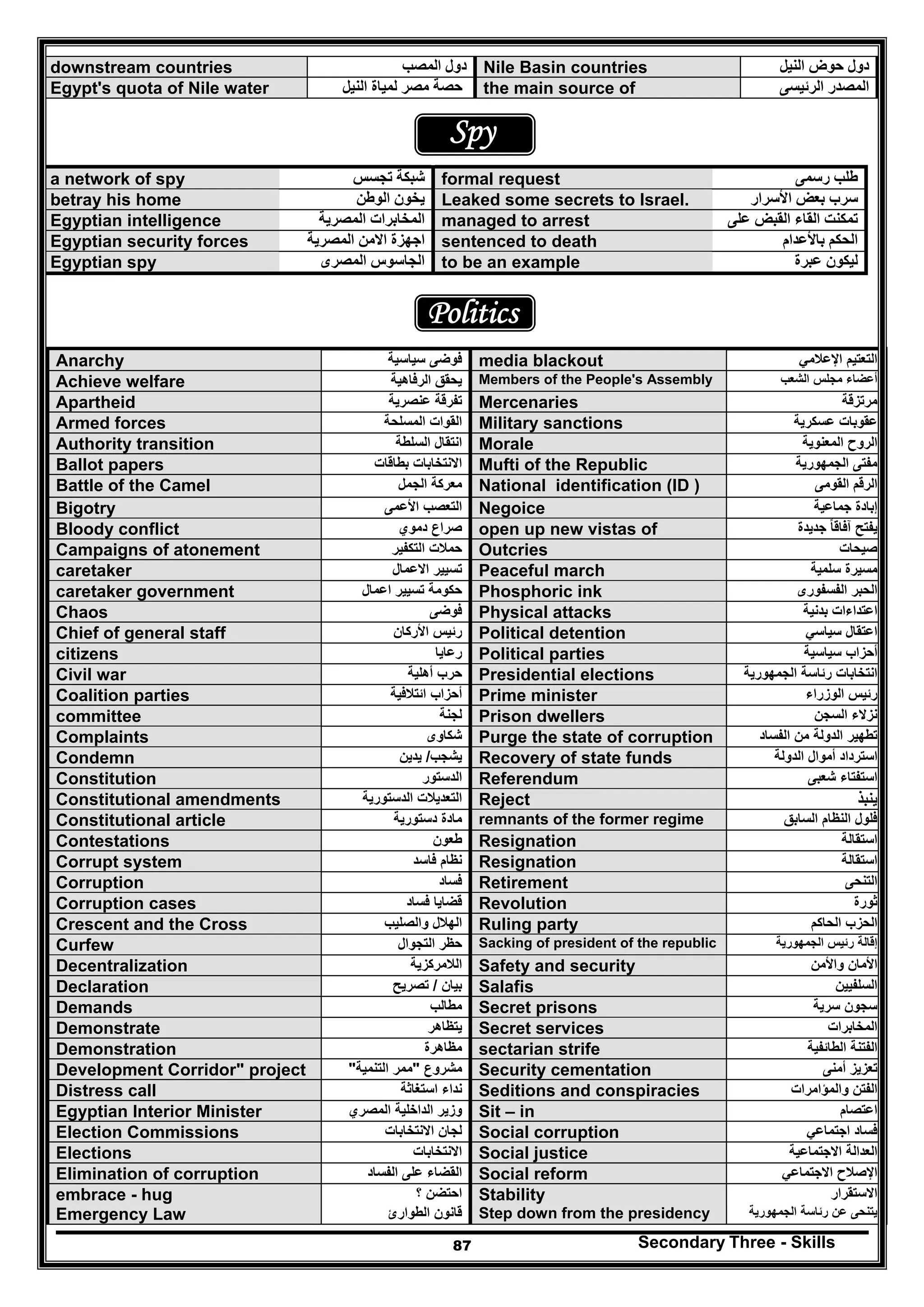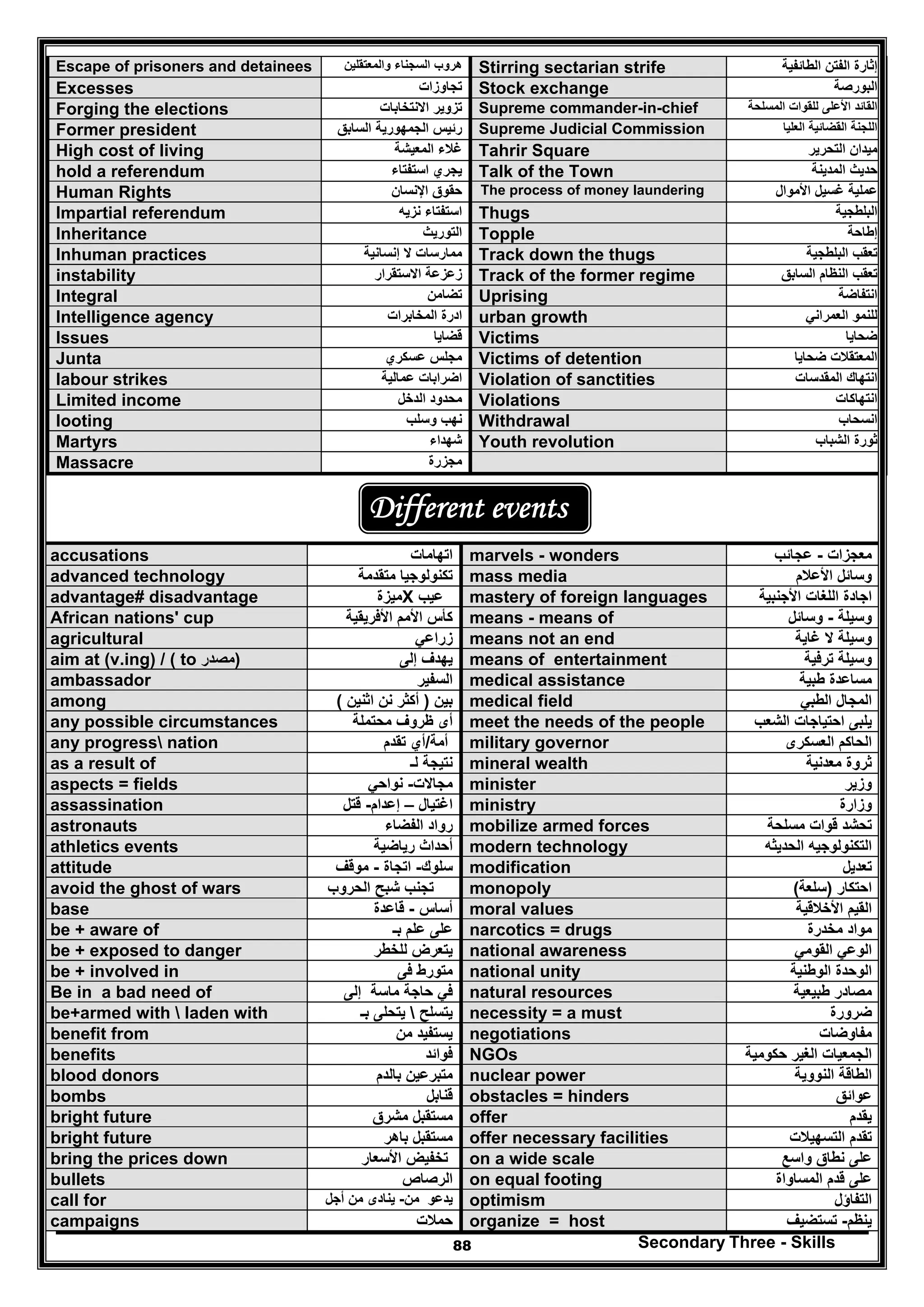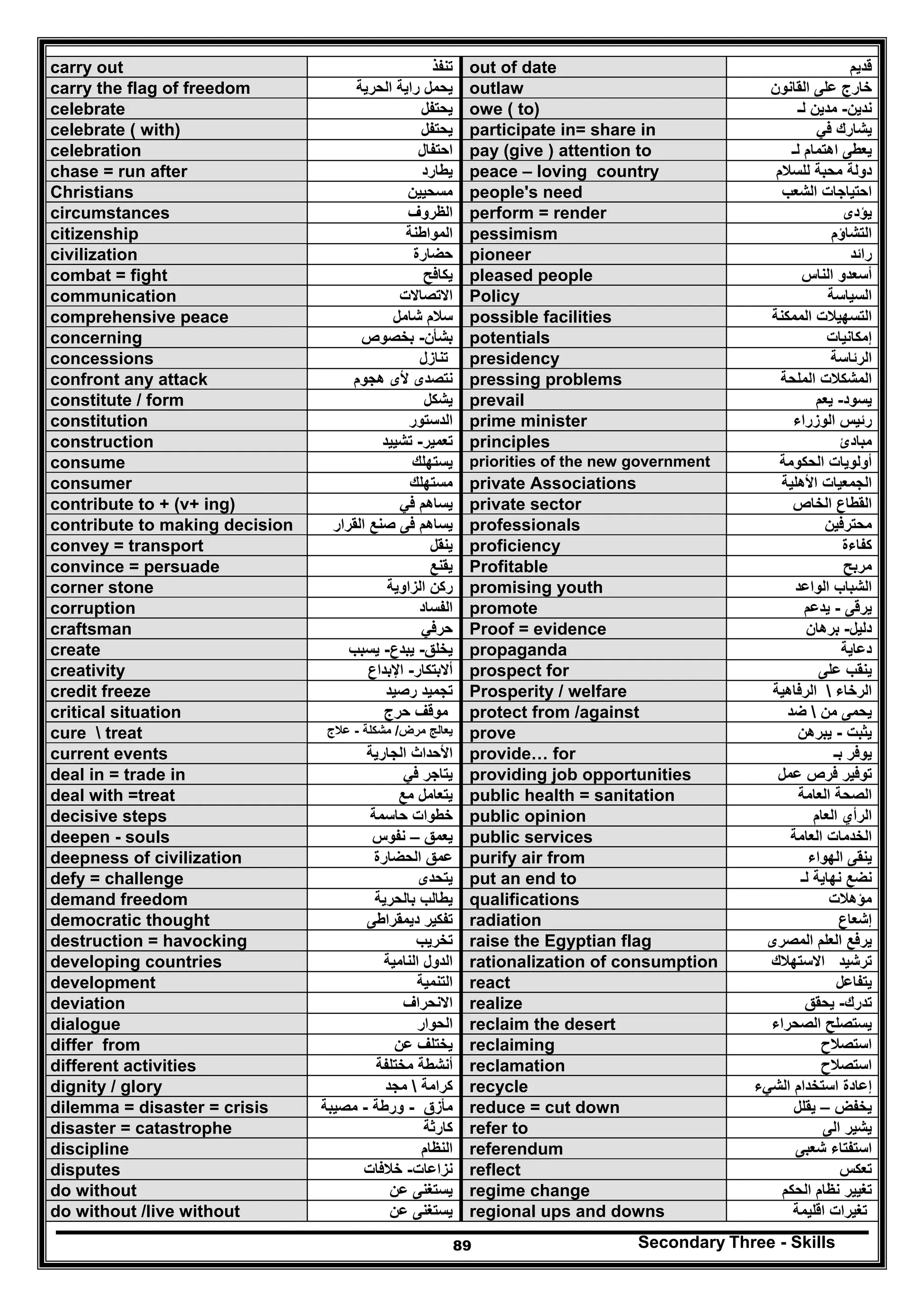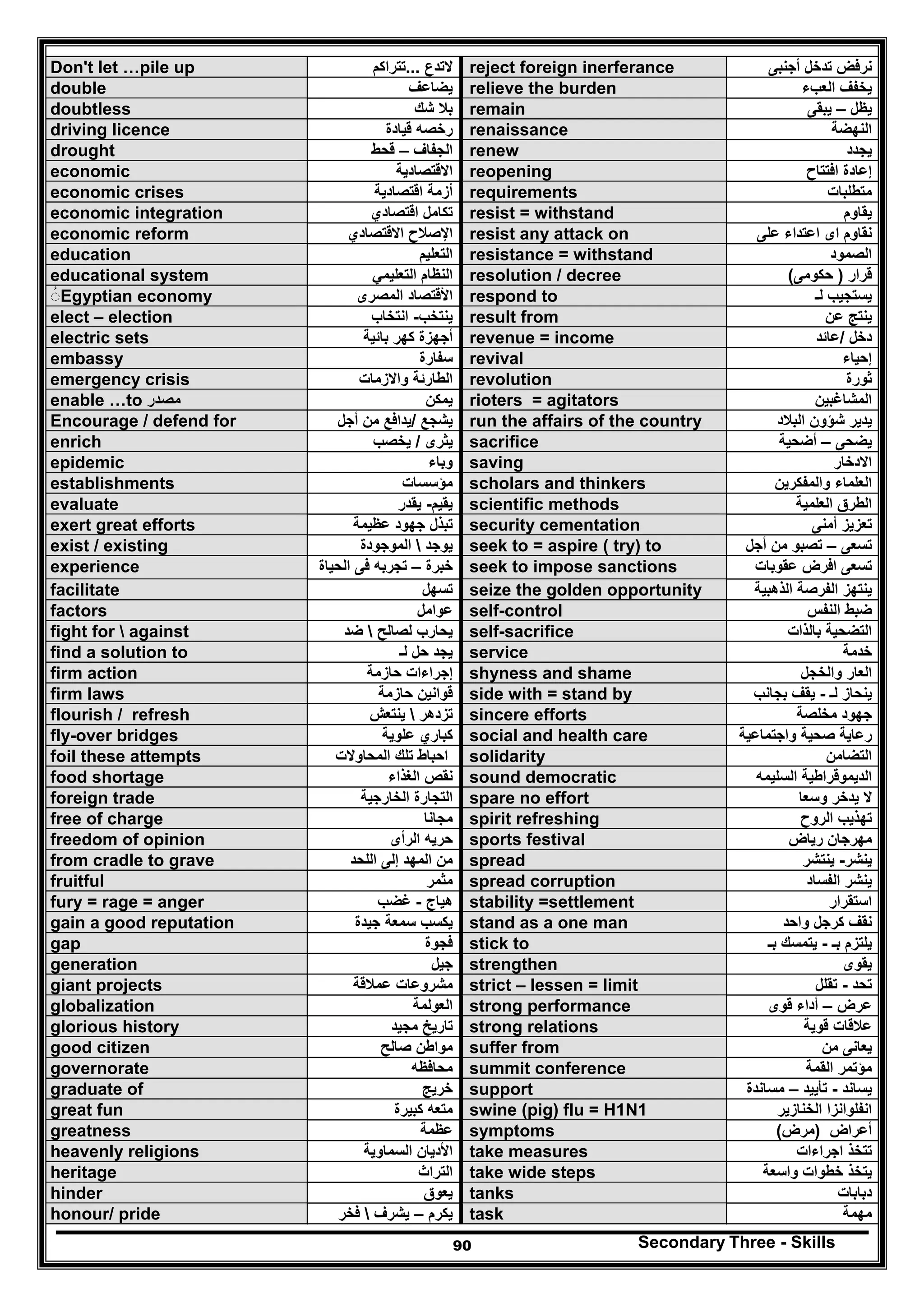
Secondary Three - Skills2
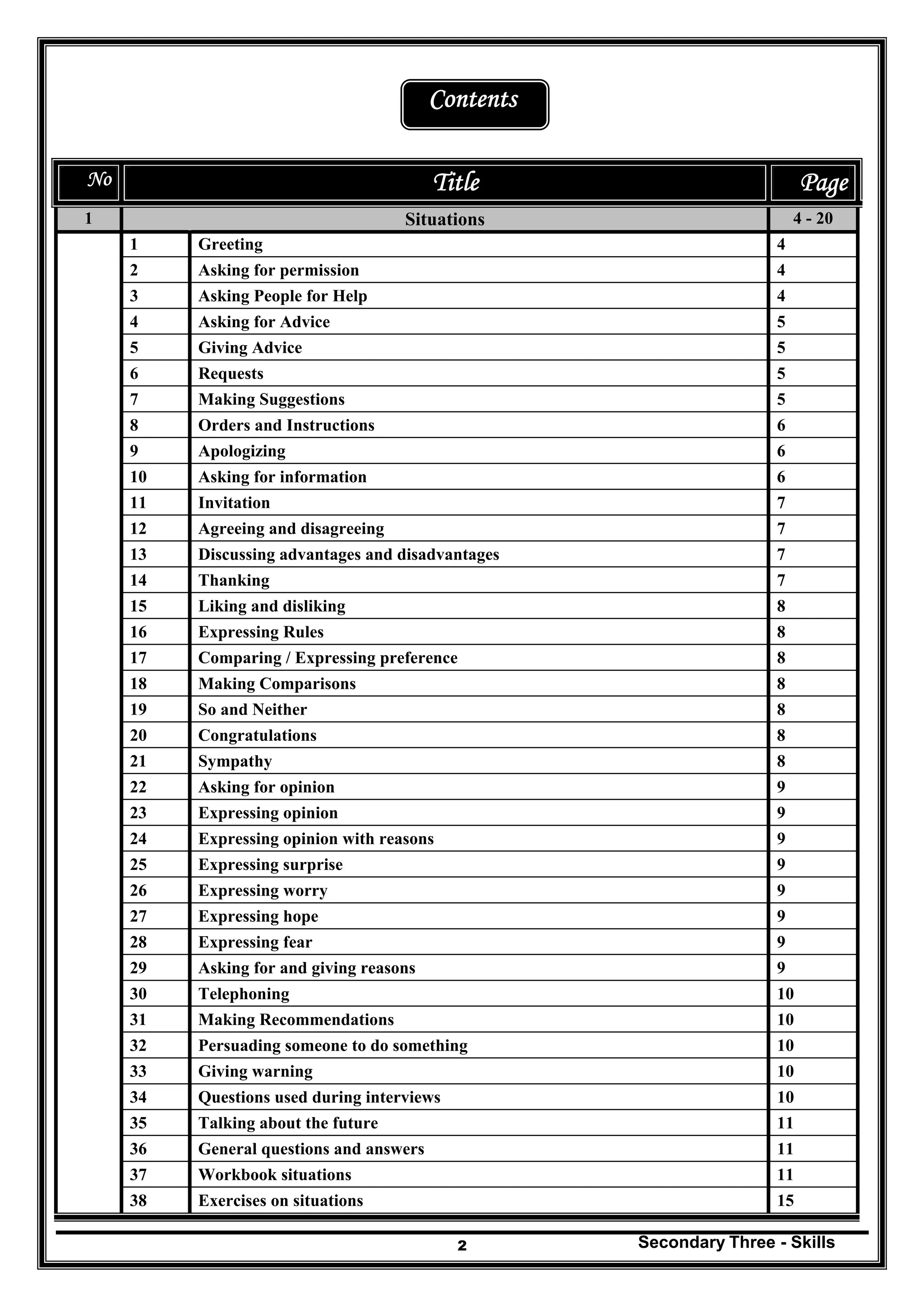
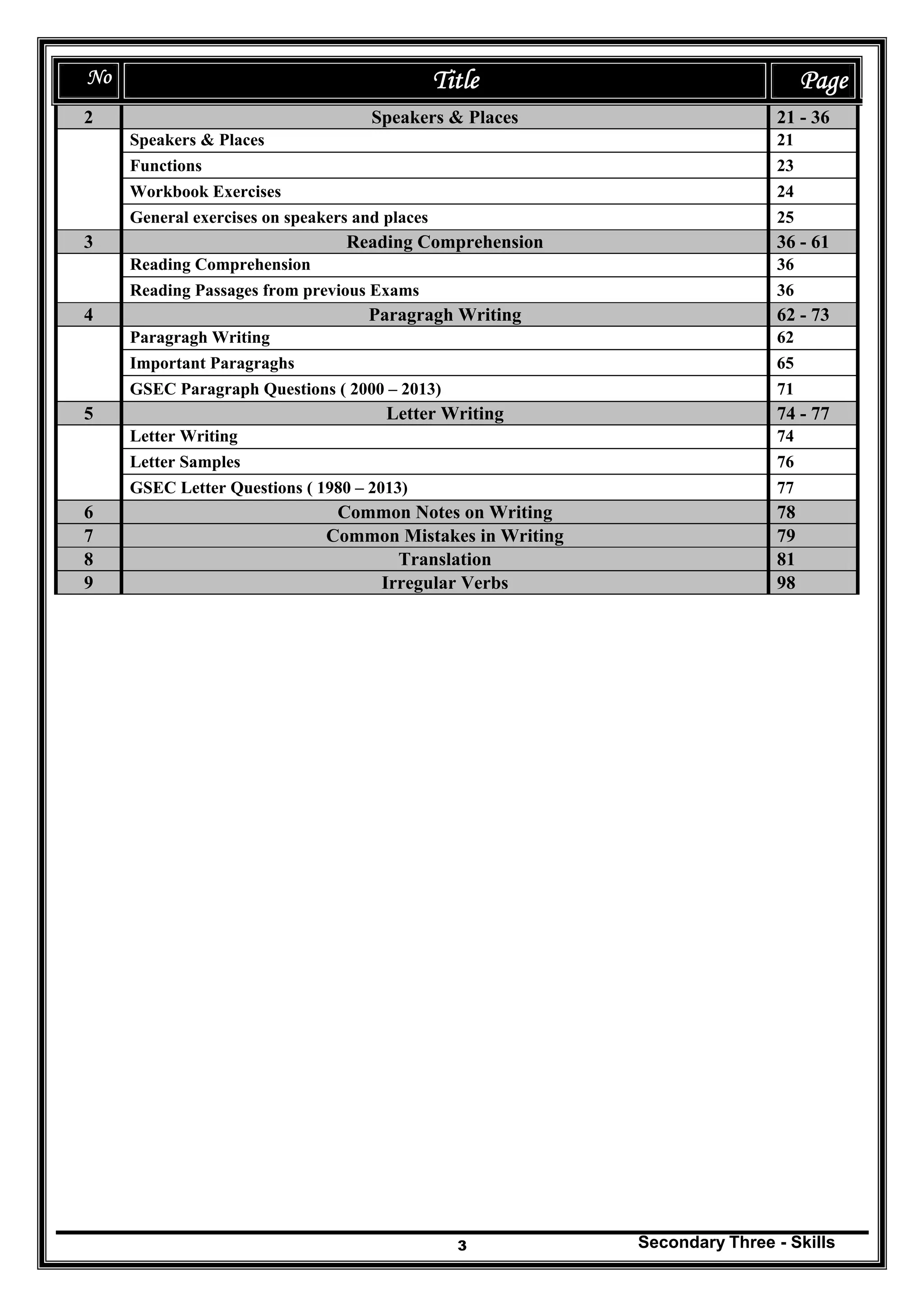
Contents
No Title Page
1 Situations 4 - 20
1 Greeting 4
2 Asking for permission 4
3 Asking People for Help 4
4 Asking for Advice 5
5 Giving Advice 5
6 Requests 5
7 Making Suggestions 5
8 Orders and Instructions 6
9 Apologizing 6
10 Asking for information 6
11 Invitation 7
12 Agreeing and disagreeing 7
13 Discussing advantages and disadvantages 7
14 Thanking 7
15 Liking and disliking 8
16 Expressing Rules 8
17 Comparing / Expressing preference 8
18 Making Comparisons 8
19 So and Neither 8
20 Congratulations 8
21 Sympathy 8
22 Asking for opinion 9
23 Expressing opinion 9
24 Expressing opinion with reasons 9
25 Expressing surprise 9
26 Expressing worry 9
27 Expressing hope 9
28 Expressing fear 9
29 Asking for and giving reasons 9
30 Telephoning 10
31 Making Recommendations 10
32 Persuading someone to do something 10
33 Giving warning 10
34 Questions used during interviews 10
35 Talking about the future 11
36 General questions and answers 11
37 Workbook situations 11
38 Exercises on situations 15
Secondary Three - Skills3
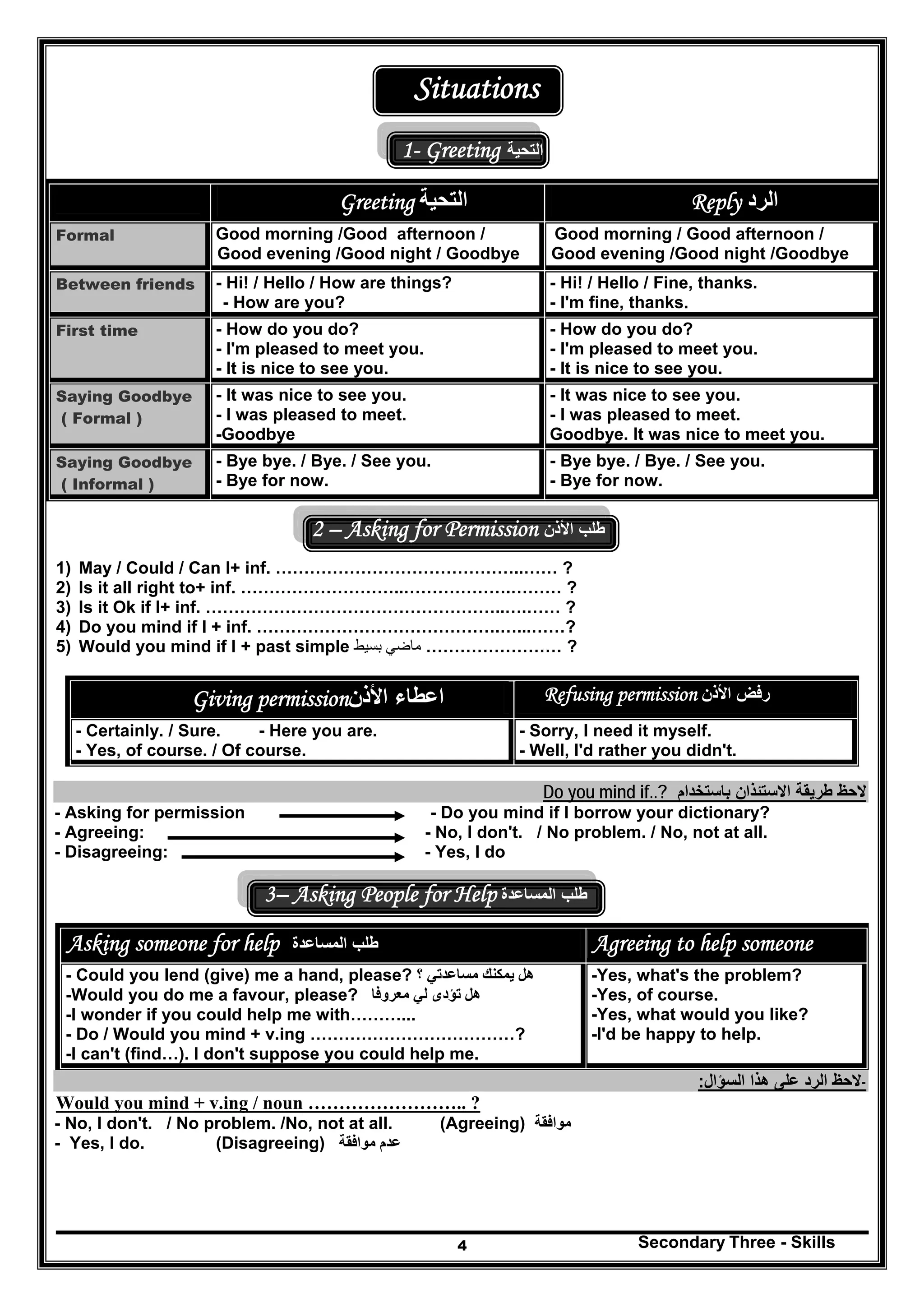
No Title Page
2 Speakers & Places 21 - 36
Speakers & Places 21
Functions 23
Workbook Exercises 24
General exercises on speakers and places 25
3 Reading Comprehension 36 - 61
Reading Comprehension 36
Reading Passages from previous Exams 36
4 Paragragh Writing 62 - 73
Paragragh Writing 62
Important Paragraghs 65
GSEC Paragraph Questions ( 2000 – 2013) 71
5 Letter Writing 74 - 77
Letter Writing 74
Letter Samples 76
GSEC Letter Questions ( 1980 – 2013) 77
6 Common Notes on Writing 78
7 Common Mistakes in Writing 79
8 Translation 81
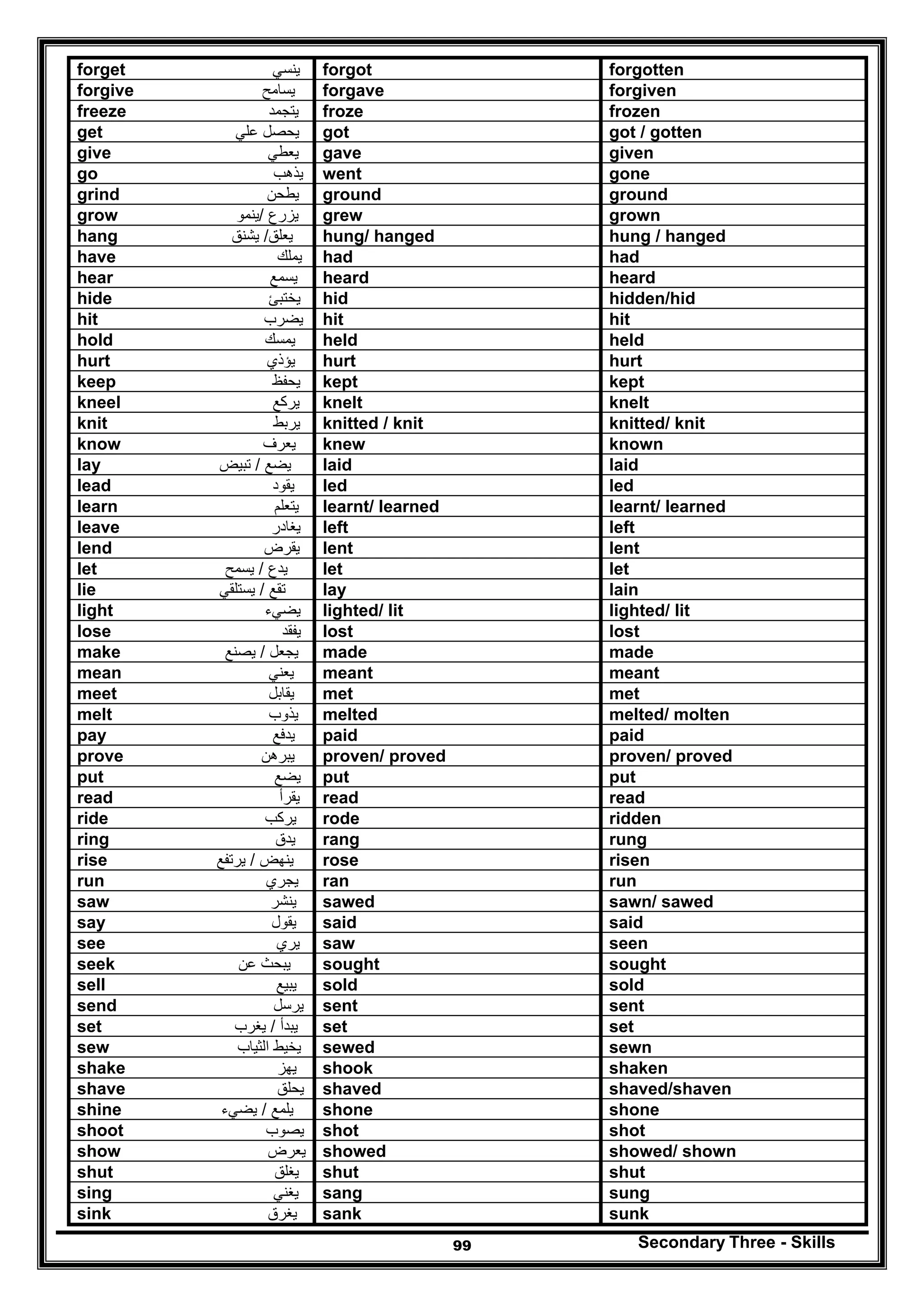
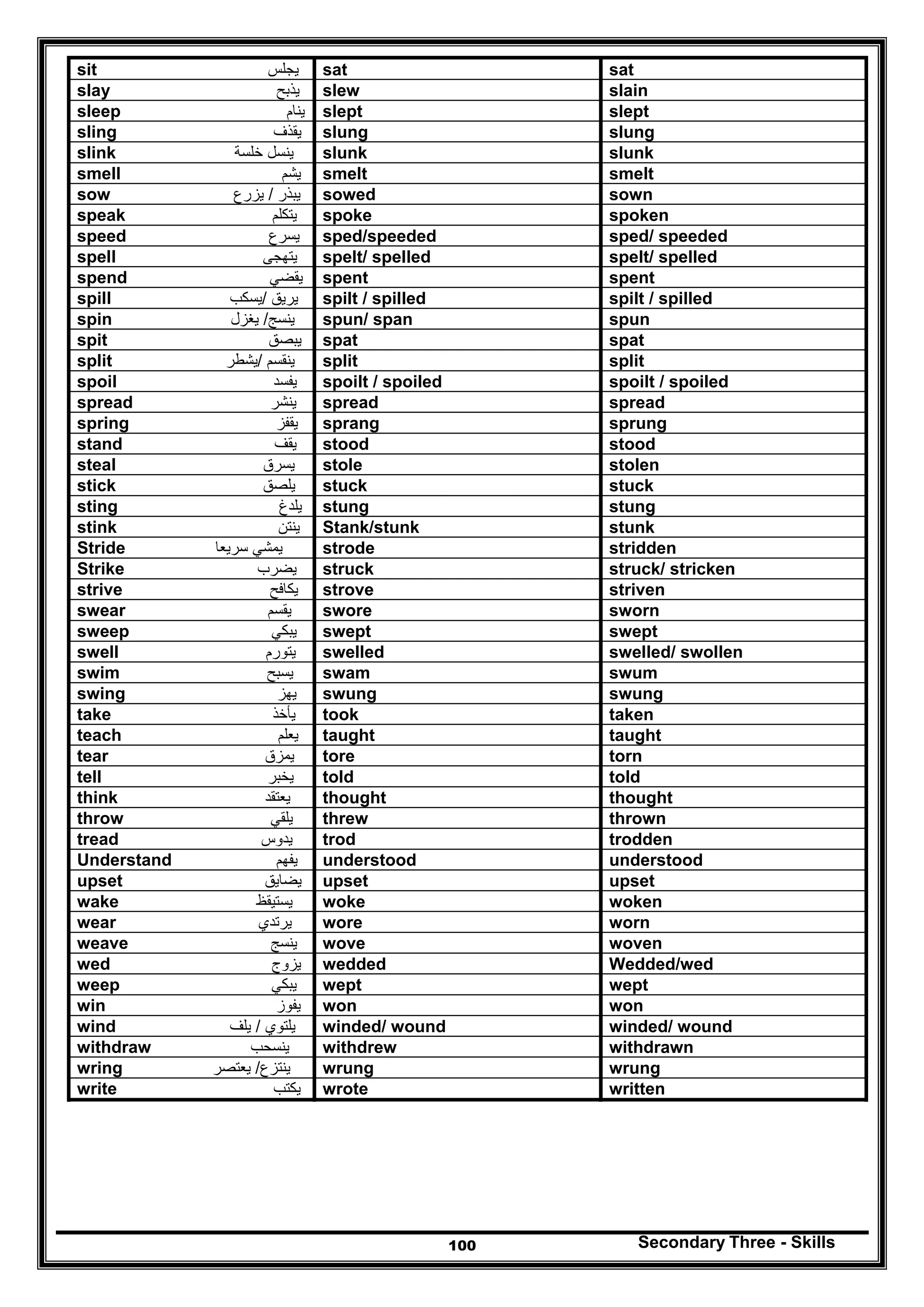
9 Irregular Verbs 98
Secondary Three - Skills4
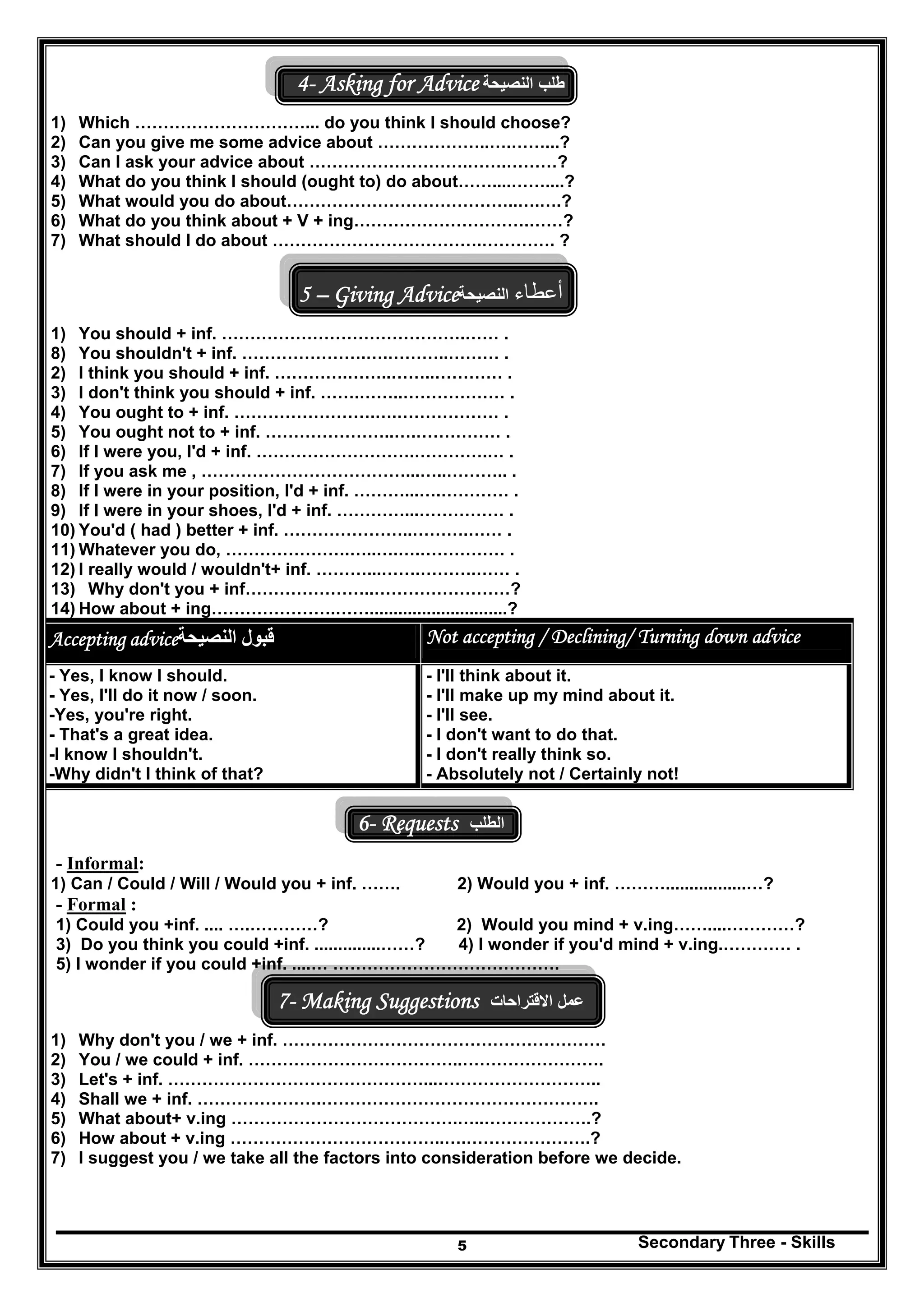
Situations
1- Greeting ‫التحية‬
‫التحية‬Greeting ‫الرد‬Reply
Formal Good morning /Good afternoon /
Good evening /Good night / Goodbye
Good morning / Good afternoon /
Good evening /Good night /Goodbye
Between friends - Hi! / Hello / How are things?
- How are you?
- Hi! / Hello / Fine, thanks.
- I'm fine, thanks.
First time - How do you do?
- I'm pleased to meet you.
- It is nice to see you.
- How do you do?
- I'm pleased to meet you.
- It is nice to see you.
Saying Goodbye
( Formal )
- It was nice to see you.
- I was pleased to meet.
-Goodbye
- It was nice to see you.
- I was pleased to meet.
Goodbye. It was nice to meet you.
Saying Goodbye
( Informal )
- Bye bye. / Bye. / See you.
- Bye for now.
- Bye bye. / Bye. / See you.
- Bye for now.
2 – Asking for Permission ‫طلب‬‫األذن‬
1) May / Could / Can I+ inf. ……………………………………..…… ?
2) Is it all right to+ inf. ………………………..……………….……… ?
3) Is it Ok if I+ inf. ……………………………………………..….…… ?
4) Do you mind if I + inf. …………………………………….…...……?
5) Would you mind if I + past simple ‫بسيط‬ ‫ماضي‬ …………………… ?
‫اعطاء‬‫األذن‬Giving permission Refusing permission ‫األذن‬ ‫رفض‬
- Certainly. / Sure. - Here you are.
- Yes, of course. / Of course.
- Sorry, I need it myself.
- Well, I'd rather you didn't.
‫ا‬ ‫طريقة‬ ‫الحظ‬‫باستخدام‬ ‫الستئذان‬?..Do you mind if
- Asking for permission - Do you mind if I borrow your dictionary?
- Agreeing: - No, I don't. / No problem. / No, not at all.
- Disagreeing: - Yes, I do
3– Asking People for Help ‫طلب‬‫المساعدة‬
‫المساعدة‬ ‫طلب‬Asking someone for help Agreeing to help someone
- Could you lend (give) me a hand, please? ‫مساعدتي‬ ‫يمكنك‬ ‫ھل‬‫؟‬
-Would you do me a favour, please? ‫معروفا‬ ‫لي‬ ‫تؤدى‬ ‫ھل‬
-I wonder if you could help me with………...
- Do / Would you mind + v.ing ………………………………?
-I can't (find…). I don't suppose you could help me.
-Yes, what's the problem?
-Yes, of course.
-Yes, what would you like?
-I'd be happy to help.
-‫السؤال‬ ‫ھذا‬ ‫على‬ ‫الرد‬ ‫الحظ‬:
Would you mind + v.ing / noun …………………….. ?
- No, I don't. / No problem. /No, not at all. (Agreeing) ‫موافقة‬
- Yes, I do. (Disagreeing) ‫موافقة‬ ‫عدم‬
Secondary Three - Skills5
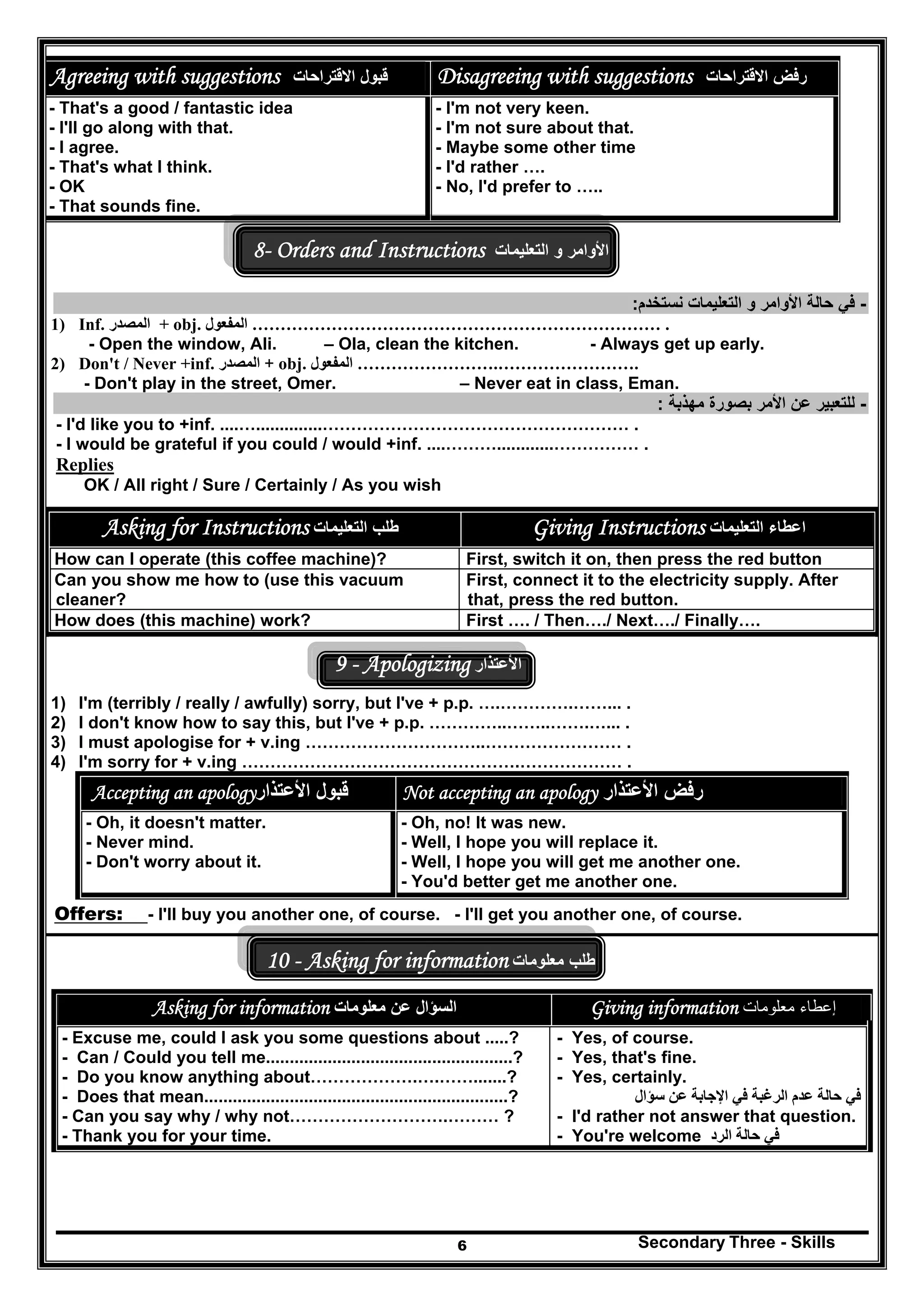
4- Asking for Advice ‫طلب‬‫النصيحة‬
1) Which …………………………... do you think I should choose?
2) Can you give me some advice about ………………..….……...?
3) Can I ask your advice about ……………………….…….………?
4) What do you think I should (ought to) do about……....……....?
5) What would you do about…………………………………..….….?
6) What do you think about + V + ing………………………….……?
7) What should I do about ……………………………….…………. ?
5 – Giving Advice ‫أعطاء‬‫النصيحة‬
1) You should + inf. …………………………………….…… .
8) You shouldn't + inf. ………………….….………..……… .
2) I think you should + inf. ………….……..……..………… .
3) I don't think you should + inf. …….……..……………… .
4) You ought to + inf. …………………….….……………… .
5) You ought not to + inf. …………………..….…………… .
6) If I were you, I'd + inf. ……………………….………….… .
7) If you ask me , ………………………………...…..……….. .
8) If I were in your position, I'd + inf. ………...….………… .
9) If I were in your shoes, I'd + inf. …………...…………… .
10) You'd ( had ) better + inf. …………………..……….…… .
11) Whatever you do, ………………….…..….….…………… .
12) I really would / wouldn't+ inf. ………...…….……….…… .
13) Why don't you + inf…………………..……………………?
14) How about + ing………………….…….............................?
Accepting advice‫النصيحة‬ ‫قبول‬ Not accepting / Declining/ Turning down advice
- Yes, I know I should.
- Yes, I'll do it now / soon.
-Yes, you're right.
- That's a great idea.
-I know I shouldn't.
-Why didn't I think of that?
- I'll think about it.
- I'll make up my mind about it.
- I'll see.
- I don't want to do that.
- I don't really think so.
- Absolutely not / Certainly not!
6- Requests ‫الطلب‬
- Informal:
1) Can / Could / Will / Would you + inf. ……. 2) Would you + inf. ……….................…?
- Formal :
1) Could you +inf. .... ….…………? 2) Would you mind + v.ing……....…………?
3) Do you think you could +inf. ..............……? 4) I wonder if you'd mind + v.ing.………… .
5) I wonder if you could +inf. ....… ………………………………….
7- Making Suggestions ‫عمل‬‫االقتراحات‬
1) Why don't you / we + inf. …………………………………………………
2) You / we could + inf. ………………………………..…………………….
3) Let's + inf. ………………………………………...………………………..
4) Shall we + inf. ………………….………………………………………….
5) What about+ v.ing ………………………………….…..……………….?
6) How about + v.ing ………………………………..….………………….?
7) I suggest you / we take all the factors into consideration before we decide.
Secondary Three - Skills6
‫االقتراحات‬ ‫قبول‬Agreeing with suggestions ‫االقتراحات‬ ‫رفض‬Disagreeing with suggestions
- That's a good / fantastic idea
- I'll go along with that.
- I agree.
- That's what I think.
- OK
- That sounds fine.
- I'm not very keen.
- I'm not sure about that.
- Maybe some other time
- I'd rather ….
- No, I'd prefer to …..
8- Orders and Instructions ‫التعليمات‬ ‫و‬ ‫األوامر‬
-‫نستخدم‬ ‫التعليمات‬ ‫و‬ ‫األوامر‬ ‫حالة‬ ‫في‬:
1) Inf. ‫المصدر‬ + obj. ‫المفعول‬ ……………………………………………………………… .
- Open the window, Ali. – Ola, clean the kitchen. - Always get up early.
2) Don't / Never +inf. ‫المصدر‬ + obj. ‫المفعول‬ …………………….…………………….
- Don't play in the street, Omer. – Never eat in class, Eman.
-‫مھذبة‬ ‫بصورة‬ ‫األمر‬ ‫عن‬ ‫للتعبير‬:
- I'd like you to +inf. ....…..............……………………………………………… .
- I would be grateful if you could / would +inf. ....………............…………… .
Replies
OK / All right / Sure / Certainly / As you wish
9 - Apologizing ‫األعتذار‬
1) I'm (terribly / really / awfully) sorry, but I've + p.p. ….………….……... .
2) I don't know how to say this, but I've + p.p. …………..……..…….…... .
3) I must apologise for + v.ing …………………………..…………………… .
4) I'm sorry for + v.ing ………………………………………….……………… .
‫األعتذار‬ ‫قبول‬Accepting an apology ‫األعتذار‬ ‫رفض‬Not accepting an apology
- Oh, it doesn't matter.
- Never mind.
- Don't worry about it.
- Oh, no! It was new.
- Well, I hope you will replace it.
- Well, I hope you will get me another one.
- You'd better get me another one.
Offers: - I'll buy you another one, of course. - I'll get you another one, of course.
10 - Asking for information ‫طلب‬‫معلومات‬
Asking for information ‫السؤال‬‫عن‬‫معلومات‬ Giving information ‫معلومات‬ ‫إعطاء‬
- Excuse me, could I ask you some questions about .....?
- Can / Could you tell me....................................................?
- Do you know anything about……………….….…….......?
- Does that mean................................................................?
- Can you say why / why not……………………….……… ?
- Thank you for your time.
- Yes, of course.
- Yes, that's fine.
- Yes, certainly.
‫الرغ‬ ‫عدم‬ ‫حالة‬ ‫في‬‫سؤال‬ ‫عن‬ ‫اإلجابة‬ ‫في‬ ‫بة‬
- I'd rather not answer that question.
- You're welcome ‫في‬‫حالة‬‫الرد‬
Asking for Instructions ‫طلب‬‫التعليمات‬ Giving Instructions ‫اعطاء‬‫التعليمات‬
How can I operate (this coffee machine)? First, switch it on, then press the red button
Can you show me how to (use this vacuum
cleaner?
First, connect it to the electricity supply. After
that, press the red button.
How does (this machine) work? First …. / Then…./ Next…./ Finally….
Secondary Three - Skills7
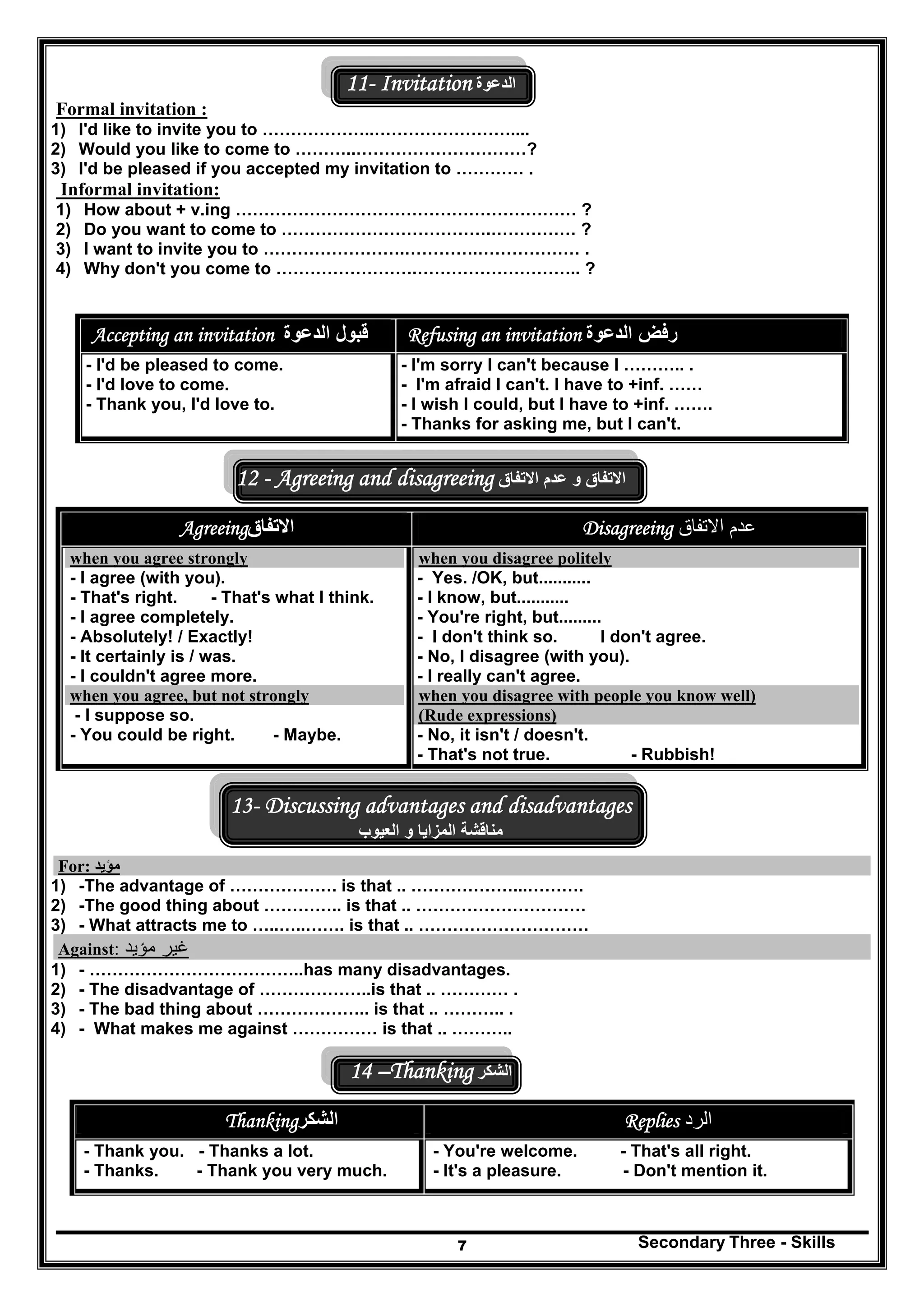
11- Invitation ‫الدعوة‬
Formal invitation :
1) I'd like to invite you to ………………..……………………....
2) Would you like to come to ………..…………………………?
3) I'd be pleased if you accepted my invitation to ………… .
Informal invitation:
1) How about + v.ing …………………………………………………… ?
2) Do you want to come to ……………………………….…………… ?
3) I want to invite you to …………………….………….……………… .
4) Why don't you come to …………………….……………………….. ?
‫قبول‬‫الدعوة‬Accepting an invitation ‫رفض‬‫الدعوة‬Refusing an invitation
- I'd be pleased to come.
- I'd love to come.
- Thank you, I'd love to.
- I'm sorry I can't because I ……….. .
- I'm afraid I can't. I have to +inf. ……
- I wish I could, but I have to +inf. …….
- Thanks for asking me, but I can't.
12 - Agreeing and disagreeing ‫عدم‬ ‫و‬ ‫االتفاق‬‫االتفاق‬
‫االتفاق‬Agreeing ‫االتفاق‬ ‫عدم‬Disagreeing
when you agree strongly
- I agree (with you).
- That's right. - That's what I think.
- I agree completely.
- Absolutely! / Exactly!
- It certainly is / was.
- I couldn't agree more.
when you agree, but not strongly
- I suppose so.
- You could be right. - Maybe.
when you disagree politely
- Yes. /OK, but...........
- I know, but...........
- You're right, but.........
- I don't think so. I don't agree.
- No, I disagree (with you).
- I really can't agree.
when you disagree with people you know well)
(Rude expressions)
- No, it isn't / doesn't.
- That's not true. - Rubbish!
13- Discussing advantages and disadvantages
‫مناقشة‬‫العيوب‬ ‫و‬ ‫المزايا‬
For: ‫مؤيد‬
1) -The advantage of ………………. is that .. ………………...……….
2) -The good thing about ………….. is that .. …………………………
3) - What attracts me to …..…..……. is that .. …………………………
Against: ‫مؤيد‬ ‫غير‬
1) - ………………………………..has many disadvantages.
2) - The disadvantage of ………………..is that .. ………… .
3) - The bad thing about ……………….. is that .. ……….. .
4) - What makes me against …………… is that .. ………..
14 –Thanking ‫الشكر‬
‫الشكر‬Thanking ‫الرد‬Replies
- Thank you. - Thanks a lot.
- Thanks. - Thank you very much.
- You're welcome. - That's all right.
- It's a pleasure. - Don't mention it.
Secondary Three - Skills8
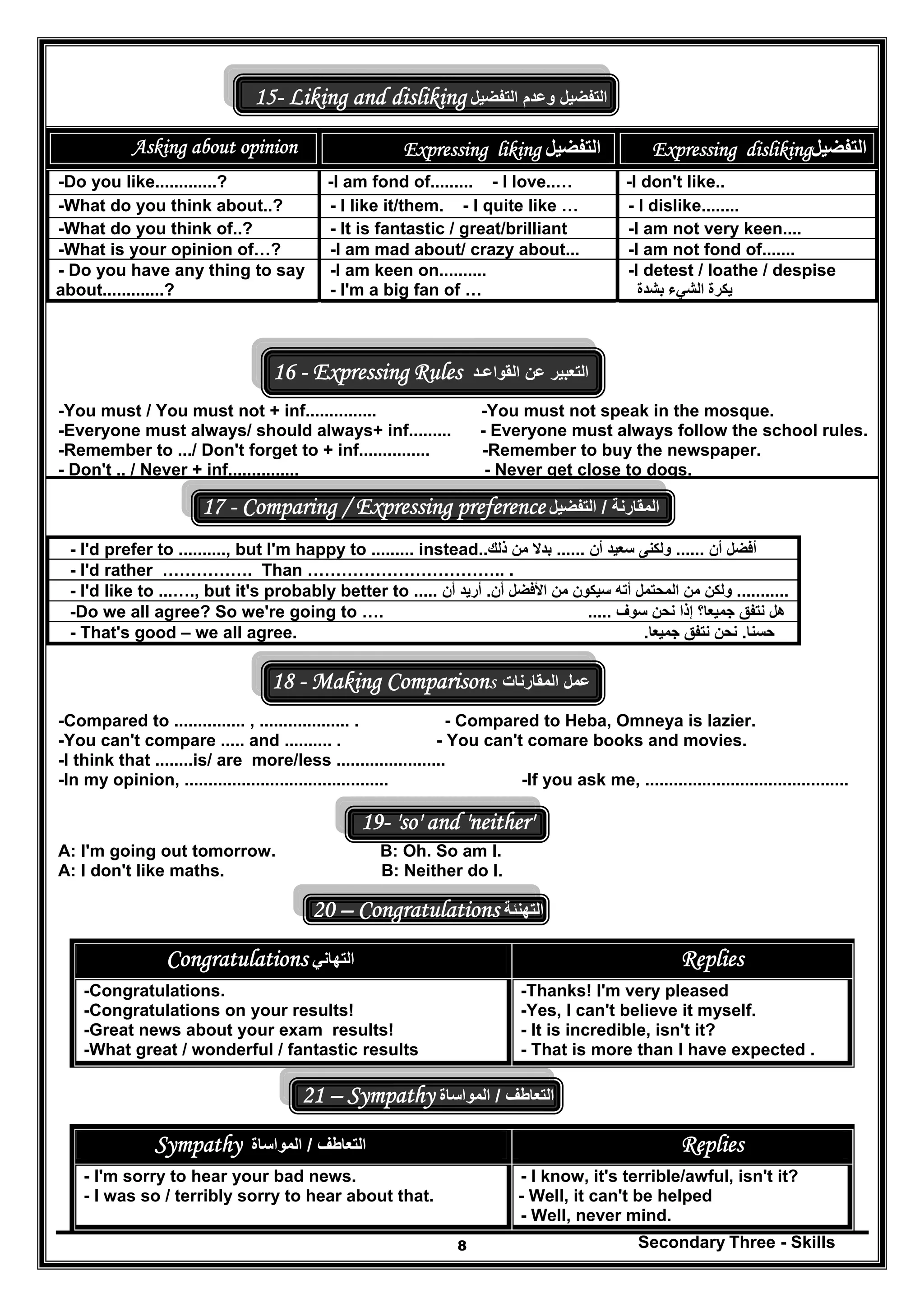
15- Liking and disliking ‫التفضيل‬‫وعدم‬‫التفضيل‬
Asking about opinion ‫التفضيل‬Expressing liking ‫التفضيل‬Expressing disliking
-Do you like.............? -I am fond of......... - I love..… -I don't like..
-What do you think about..? - I like it/them. - I quite like … - I dislike........
-What do you think of..? - It is fantastic / great/brilliant -I am not very keen....
-What is your opinion of…? -I am mad about/ crazy about... -I am not fond of.......
- Do you have any thing to say
about.............?
-I am keen on..........
- I'm a big fan of …
-I detest / loathe / despise
‫بشدة‬ ‫الشيء‬ ‫يكرة‬
16 - Expressing Rules ‫التعبير‬‫عن‬‫القواعـد‬
-You must / You must not + inf............... -You must not speak in the mosque.
-Everyone must always/ should always+ inf......... - Everyone must always follow the school rules.
-Remember to .../ Don't forget to + inf............... -Remember to buy the newspaper.
- Don't .. / Never + inf............... - Never get close to dogs.
17 - Comparing / Expressing preference ‫المقارنة‬/‫التفضيل‬
- I'd prefer to .........., but I'm happy to ......... instead. ‫أن‬ ‫أفضل‬......‫أن‬ ‫سعيد‬ ‫ولكنى‬......‫ذلك‬ ‫من‬ ‫بدال‬.
- I'd rather ……………. Than …………………………….. .
- I'd like to ...…., but it's probably better to ..... ‫أن‬ ‫أريد‬ . ...‫ال‬ ‫من‬ ‫ولكن‬‫أن‬ ‫األفضل‬ ‫من‬ ‫سيكون‬ ‫أته‬ ‫محتمل‬ ........
-Do we all agree? So we're going to … ‫سوف‬ ‫نحن‬ ‫إذا‬ ‫جميعا؟‬ ‫نتفق‬ ‫ھل‬......
- That's good – we all agree. ‫حسنا‬.‫جميعا‬ ‫نتفق‬ ‫نحن‬.
18 - Making Comparisons ‫عمل‬‫المقارن‬‫ات‬
-Compared to ............... , ................... . - Compared to Heba, Omneya is lazier.
-You can't compare ..... and .......... . - You can't comare books and movies.
-I think that ........is/ are more/less .......................
-In my opinion, ........................................... -If you ask me, ...........................................
19- 'so' and 'neither'
A: I'm going out tomorrow. B: Oh. So am I.
A: I don't like maths. B: Neither do I.
20 – Congratulations ‫التھنئة‬
Congratulations ‫التھاني‬ Replies
-Congratulations.
-Congratulations on your results!
-Great news about your exam results!
-What great / wonderful / fantastic results
-Thanks! I'm very pleased
-Yes, I can't believe it myself.
- It is incredible, isn't it?
- That is more than I have expected .
21 – Sympathy ‫التعاطف‬/‫المواساة‬
Sympathy ‫التعاطف‬/‫المواساة‬ Replies
- I'm sorry to hear your bad news.
- I was so / terribly sorry to hear about that.
- I know, it's terrible/awful, isn't it?
- Well, it can't be helped
- Well, never mind.
Secondary Three - Skills9
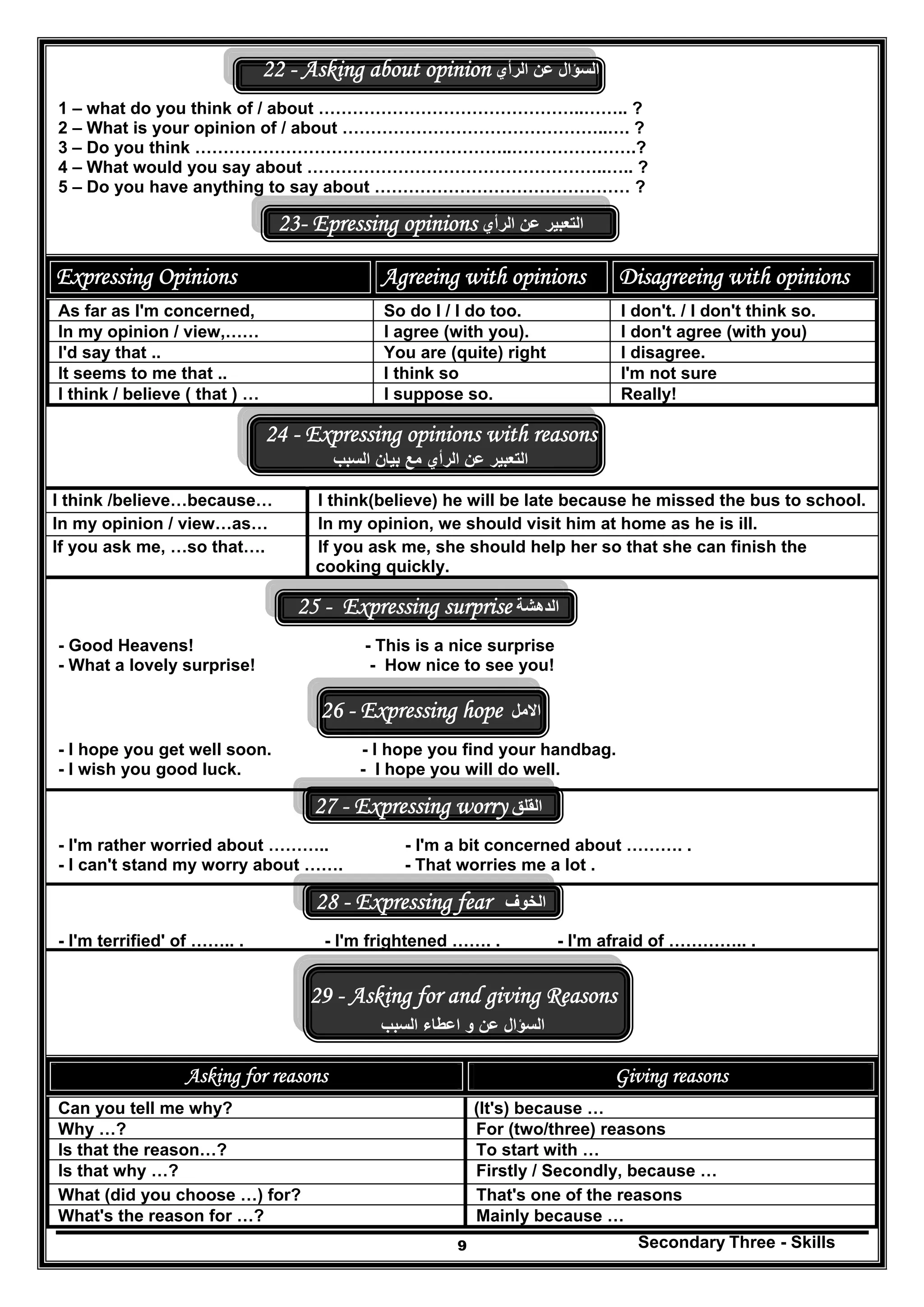
22 - Asking about opinion ‫السؤال‬‫عن‬‫الرأي‬
1 – what do you think of / about ………………………………………..…….. ?
2 – What is your opinion of / about ………………………………………..…. ?
3 – Do you think ………………………………………………..………………….?
4 – What would you say about ……………………………………………..….. ?
5 – Do you have anything to say about ……………………………………… ?
23- Epressing opinions ‫الرأي‬ ‫عن‬ ‫التعبير‬
Expressing Opinions Agreeing with opinions Disagreeing with opinions
As far as I'm concerned, So do I / I do too. I don't. / I don't think so.
In my opinion / view,…… I agree (with you). I don't agree (with you)
I'd say that .. You are (quite) right I disagree.
It seems to me that .. I think so I'm not sure
I think / believe ( that ) … I suppose so. Really!
24 - Expressing opinions with reasons
‫السبب‬ ‫بيان‬ ‫مع‬ ‫الرأي‬ ‫عن‬ ‫التعبير‬
I think /believe…because… I think(believe) he will be late because he missed the bus to school.
In my opinion / view…as… In my opinion, we should visit him at home as he is ill.
If you ask me, …so that…. If you ask me, she should help her so that she can finish the
cooking quickly.
25 - Expressing surprise ‫الدھشة‬
- Good Heavens! - This is a nice surprise
- What a lovely surprise! - How nice to see you!
26 - Expressing hope ‫االمل‬
- I hope you get well soon. - I hope you find your handbag.
- I wish you good luck. - I hope you will do well.
27 - Expressing worry ‫القلق‬
- I'm rather worried about ……….. - I'm a bit concerned about ………. .
- I can't stand my worry about ……. - That worries me a lot .
28 - Expressing fear ‫الخوف‬
- I'm terrified' of …….. . - I'm frightened ……. . - I'm afraid of ………….. .
29 - Asking for and giving Reasons
‫السؤال‬‫السبب‬ ‫اعطاء‬ ‫و‬ ‫عن‬
Asking for reasons Giving reasons
Can you tell me why? (It's) because …
Why …? For (two/three) reasons
Is that the reason…? To start with …
Is that why …? Firstly / Secondly, because …
What (did you choose …) for? That's one of the reasons
What's the reason for …? Mainly because …
Secondary Three - Skills10
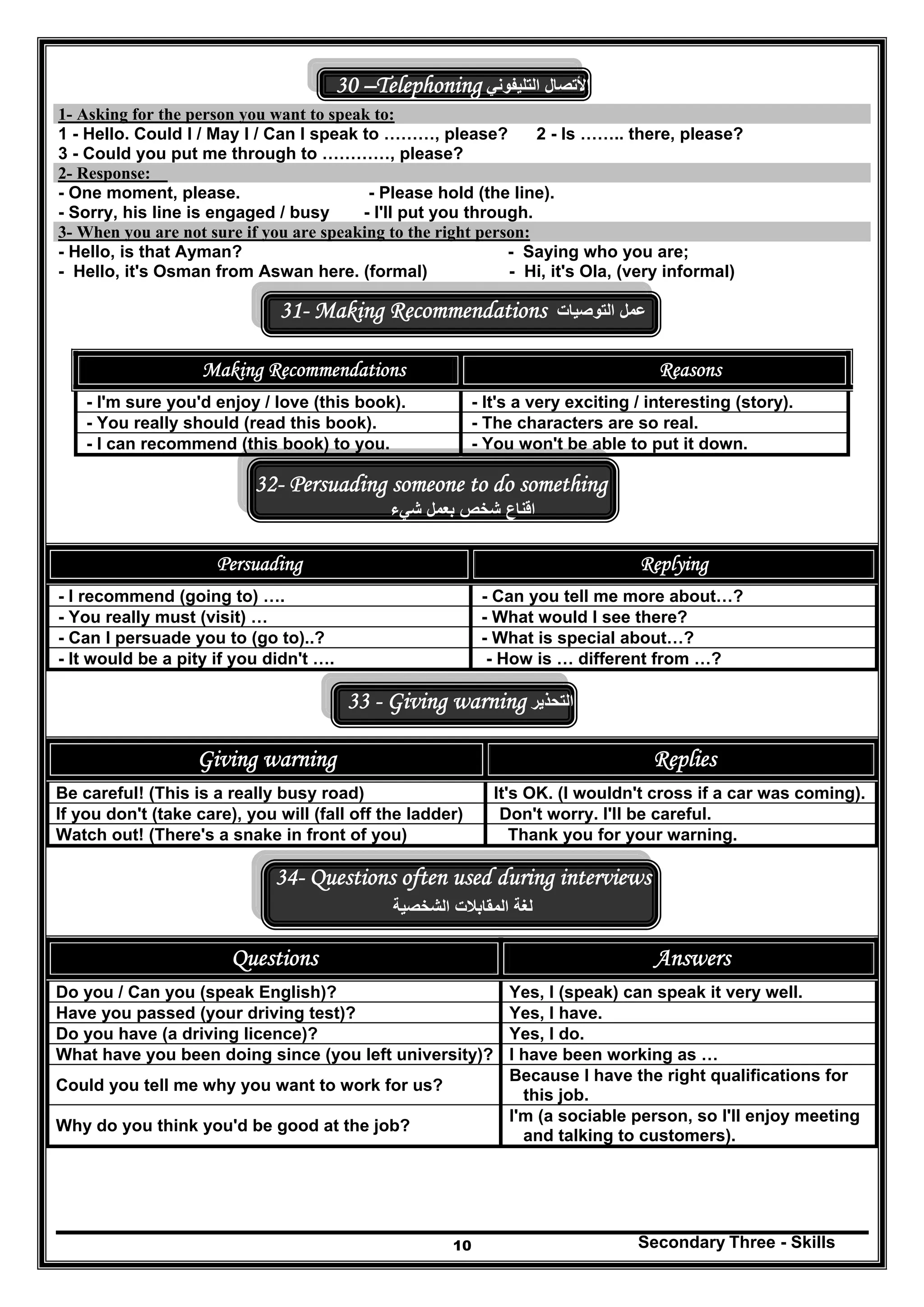
30 –Telephoning ‫األتصال‬‫التليفوني‬
1- Asking for the person you want to speak to:
1 - Hello. Could I / May I / Can I speak to ………, please? 2 - Is …….. there, please?
3 - Could you put me through to …………, please?
2- Response:
- One moment, please. - Please hold (the line).
- Sorry, his line is engaged / busy - I'll put you through.
3- When you are not sure if you are speaking to the right person:
- Hello, is that Ayman? - Saying who you are;
- Hello, it's Osman from Aswan here. (formal) - Hi, it's Ola, (very informal)
31- Making Recommendations ‫عمل‬‫التوصيات‬
Making Recommendations Reasons
- I'm sure you'd enjoy / love (this book). - It's a very exciting / interesting (story).
- You really should (read this book). - The characters are so real.
- I can recommend (this book) to you. - You won't be able to put it down.
32- Persuading someone to do something
‫اقناع‬‫شخص‬‫شيء‬ ‫بعمل‬
Persuading Replying
- I recommend (going to) …. - Can you tell me more about…?
- You really must (visit) … - What would I see there?
- Can I persuade you to (go to)..? - What is special about…?
- It would be a pity if you didn't …. - How is … different from …?
33 - Giving warning ‫التحذير‬
Giving warning Replies
Be careful! (This is a really busy road) It's OK. (I wouldn't cross if a car was coming).
If you don't (take care), you will (fall off the ladder) Don't worry. I'll be careful.
Watch out! (There's a snake in front of you) Thank you for your warning.
34- Questions often used during interviews
‫الشخصية‬ ‫المقابالت‬ ‫لغة‬
Questions Answers
Do you / Can you (speak English)? Yes, I (speak) can speak it very well.
Have you passed (your driving test)? Yes, I have.
Do you have (a driving licence)? Yes, I do.
What have you been doing since (you left university)? I have been working as …
Could you tell me why you want to work for us?
Because I have the right qualifications for
this job.
Why do you think you'd be good at the job?
I'm (a sociable person, so I'll enjoy meeting
and talking to customers).
Secondary Three - Skills11
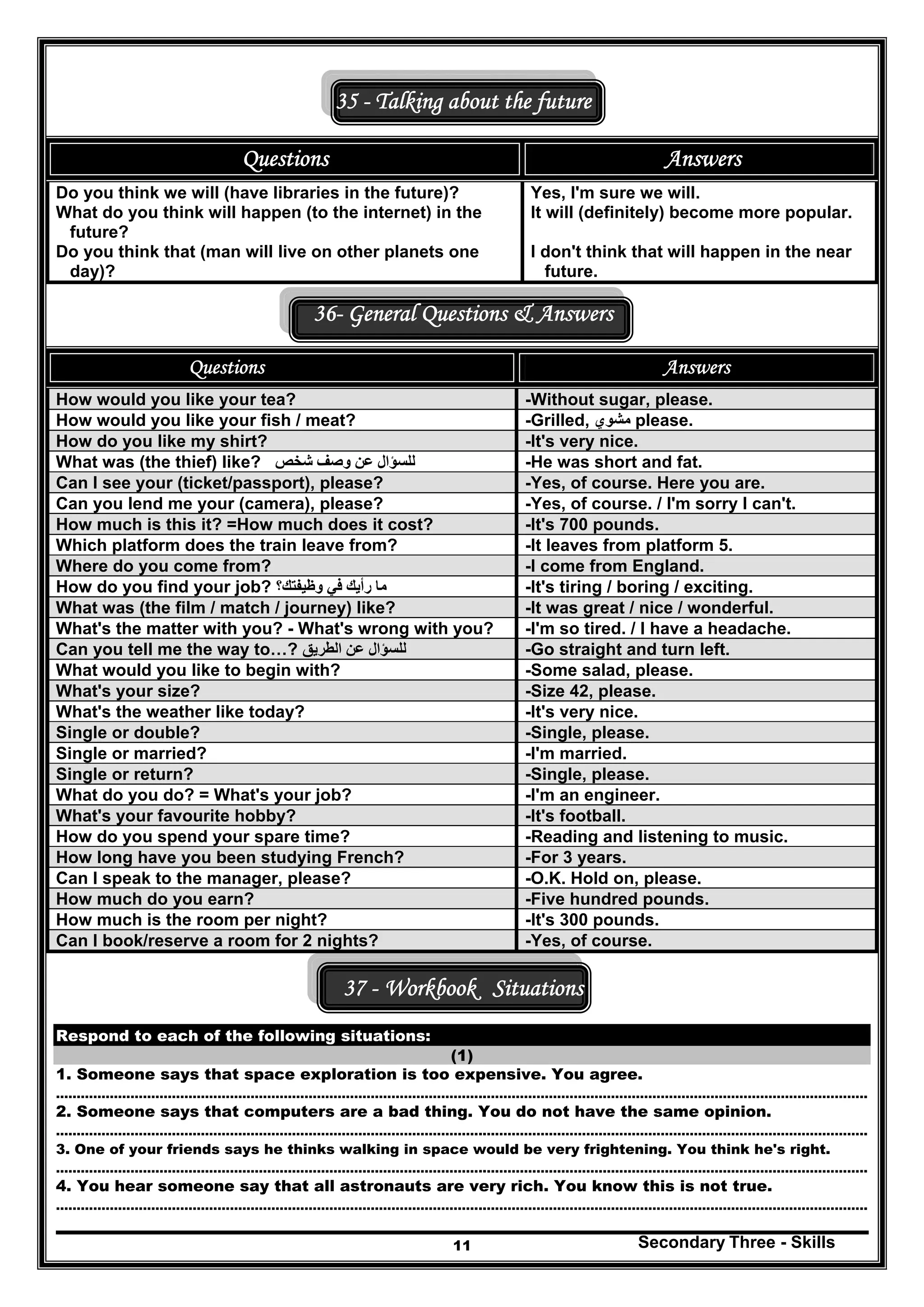
35 - Talking about the future
Questions Answers
Do you think we will (have libraries in the future)? Yes, I'm sure we will.
What do you think will happen (to the internet) in the
future?
It will (definitely) become more popular.
Do you think that (man will live on other planets one
day)?
I don't think that will happen in the near
future.
36- General Questions & Answers
Questions Answers
How would you like your tea? -Without sugar, please.
How would you like your fish / meat? -Grilled, ‫مشوي‬ please.
How do you like my shirt? -It's very nice.
What was (the thief) like? ‫للسؤال‬‫عن‬‫وصف‬‫شخص‬ -He was short and fat.
Can I see your (ticket/passport), please? -Yes, of course. Here you are.
Can you lend me your (camera), please? -Yes, of course. / I'm sorry I can't.
How much is this it? =How much does it cost? -It's 700 pounds.
Which platform does the train leave from? -It leaves from platform 5.
Where do you come from? -I come from England.
How do you find your job? ‫ما‬‫رأيك‬‫في‬‫وظيفتك‬‫؟‬ -It's tiring / boring / exciting.
What was (the film / match / journey) like? -It was great / nice / wonderful.
What's the matter with you? - What's wrong with you? -I'm so tired. / I have a headache.
Can you tell me the way to…? ‫للسؤال‬‫عن‬‫الطريق‬ -Go straight and turn left.
What would you like to begin with? -Some salad, please.
What's your size? -Size 42, please.
What's the weather like today? -It's very nice.
Single or double? -Single, please.
Single or married? -I'm married.
Single or return? -Single, please.
What do you do? = What's your job? -I'm an engineer.
What's your favourite hobby? -It's football.
How do you spend your spare time? -Reading and listening to music.
How long have you been studying French? -For 3 years.
Can I speak to the manager, please? -O.K. Hold on, please.
How much do you earn? -Five hundred pounds.
How much is the room per night? -It's 300 pounds.
Can I book/reserve a room for 2 nights? -Yes, of course.
37 - Workbook Situations
Respond to each of the following situations:
(1)
1. Someone says that space exploration is too expensive. You agree.
…………………………………………………………………………………………..………………………………………………………………………………..
2. Someone says that computers are a bad thing. You do not have the same opinion.
…………………………………………………………………………………………..………………………………………………………………………………..
3. One of your friends says he thinks walking in space would be very frightening. You think he's right.
…………………………………………………………………………………………..………………………………………………………………………………..
4. You hear someone say that all astronauts are very rich. You know this is not true.
…………………………………………………………………………………………..………………………………………………………………………………..
Secondary Three - Skills12
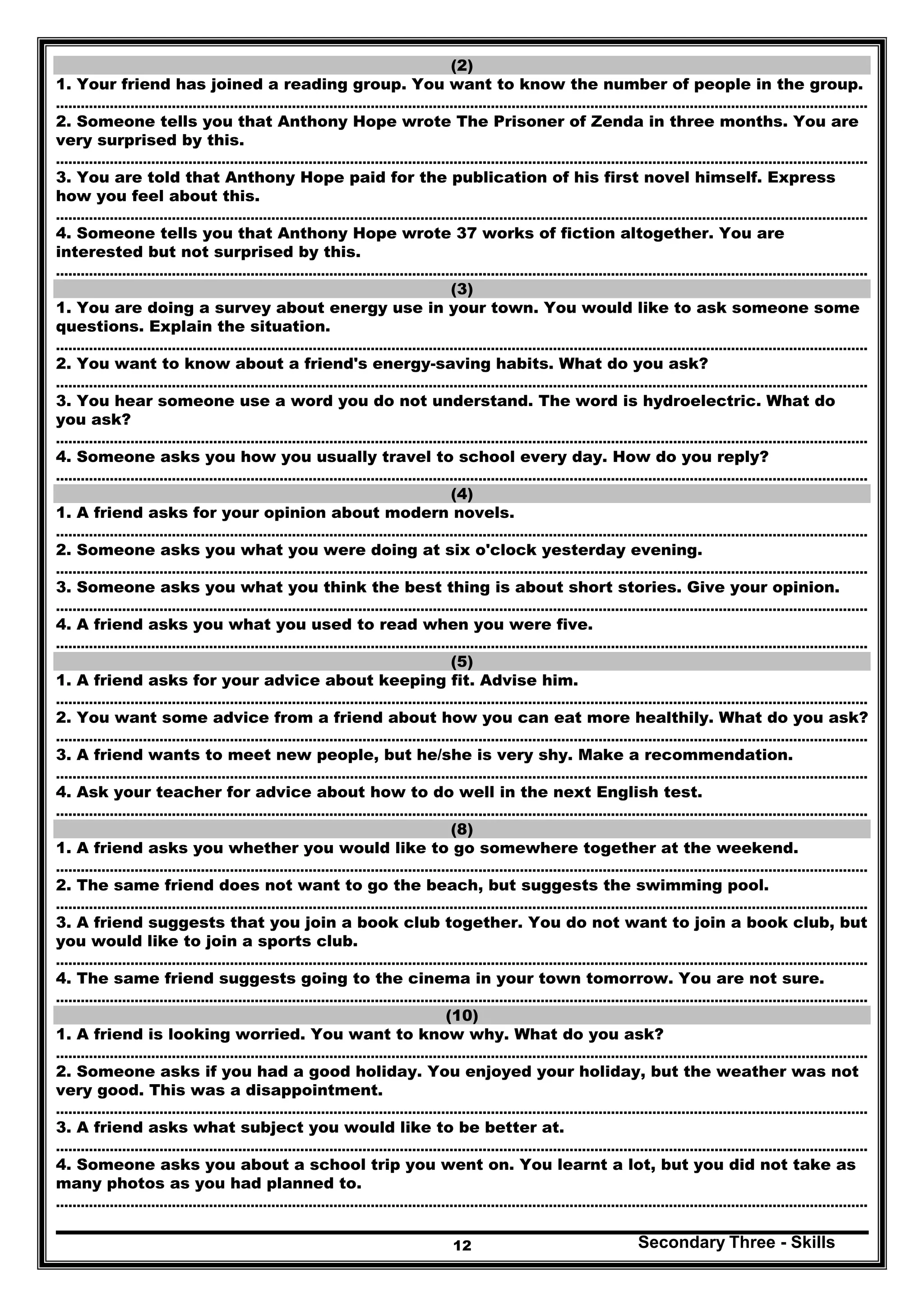
(2)
1. Your friend has joined a reading group. You want to know the number of people in the group.
…………………………………………………………………………………………..………………………………………………………………………………..
2. Someone tells you that Anthony Hope wrote The Prisoner of Zenda in three months. You are
very surprised by this.
…………………………………………………………………………………………..………………………………………………………………………………..
3. You are told that Anthony Hope paid for the publication of his first novel himself. Express
how you feel about this.
…………………………………………………………………………………………..………………………………………………………………………………..
4. Someone tells you that Anthony Hope wrote 37 works of fiction altogether. You are
interested but not surprised by this.
…………………………………………………………………………………………..………………………………………………………………………………..
(3)
1. You are doing a survey about energy use in your town. You would like to ask someone some
questions. Explain the situation.
…………………………………………………………………………………………..………………………………………………………………………………..
2. You want to know about a friend's energy-saving habits. What do you ask?
…………………………………………………………………………………………..………………………………………………………………………………..
3. You hear someone use a word you do not understand. The word is hydroelectric. What do
you ask?
…………………………………………………………………………………………..………………………………………………………………………………..
4. Someone asks you how you usually travel to school every day. How do you reply?
…………………………………………………………………………………………..………………………………………………………………………………..
(4)
1. A friend asks for your opinion about modern novels.
…………………………………………………………………………………………..………………………………………………………………………………..
2. Someone asks you what you were doing at six o'clock yesterday evening.
…………………………………………………………………………………………..………………………………………………………………………………..
3. Someone asks you what you think the best thing is about short stories. Give your opinion.
…………………………………………………………………………………………..………………………………………………………………………………..
4. A friend asks you what you used to read when you were five.
…………………………………………………………………………………………..………………………………………………………………………………..
(5)
1. A friend asks for your advice about keeping fit. Advise him.
…………………………………………………………………………………………..………………………………………………………………………………..
2. You want some advice from a friend about how you can eat more healthily. What do you ask?
…………………………………………………………………………………………..………………………………………………………………………………..
3. A friend wants to meet new people, but he/she is very shy. Make a recommendation.
…………………………………………………………………………………………..………………………………………………………………………………..
4. Ask your teacher for advice about how to do well in the next English test.
…………………………………………………………………………………………..………………………………………………………………………………..
(8)
1. A friend asks you whether you would like to go somewhere together at the weekend.
…………………………………………………………………………………………..………………………………………………………………………………..
2. The same friend does not want to go the beach, but suggests the swimming pool.
…………………………………………………………………………………………..………………………………………………………………………………..
3. A friend suggests that you join a book club together. You do not want to join a book club, but
you would like to join a sports club.
…………………………………………………………………………………………..………………………………………………………………………………..
4. The same friend suggests going to the cinema in your town tomorrow. You are not sure.
…………………………………………………………………………………………..………………………………………………………………………………..
(10)
1. A friend is looking worried. You want to know why. What do you ask?
…………………………………………………………………………………………..………………………………………………………………………………..
2. Someone asks if you had a good holiday. You enjoyed your holiday, but the weather was not
very good. This was a disappointment.
…………………………………………………………………………………………..………………………………………………………………………………..
3. A friend asks what subject you would like to be better at.
…………………………………………………………………………………………..………………………………………………………………………………..
4. Someone asks you about a school trip you went on. You learnt a lot, but you did not take as
many photos as you had planned to.
…………………………………………………………………………………………..………………………………………………………………………………..
Secondary Three - Skills13
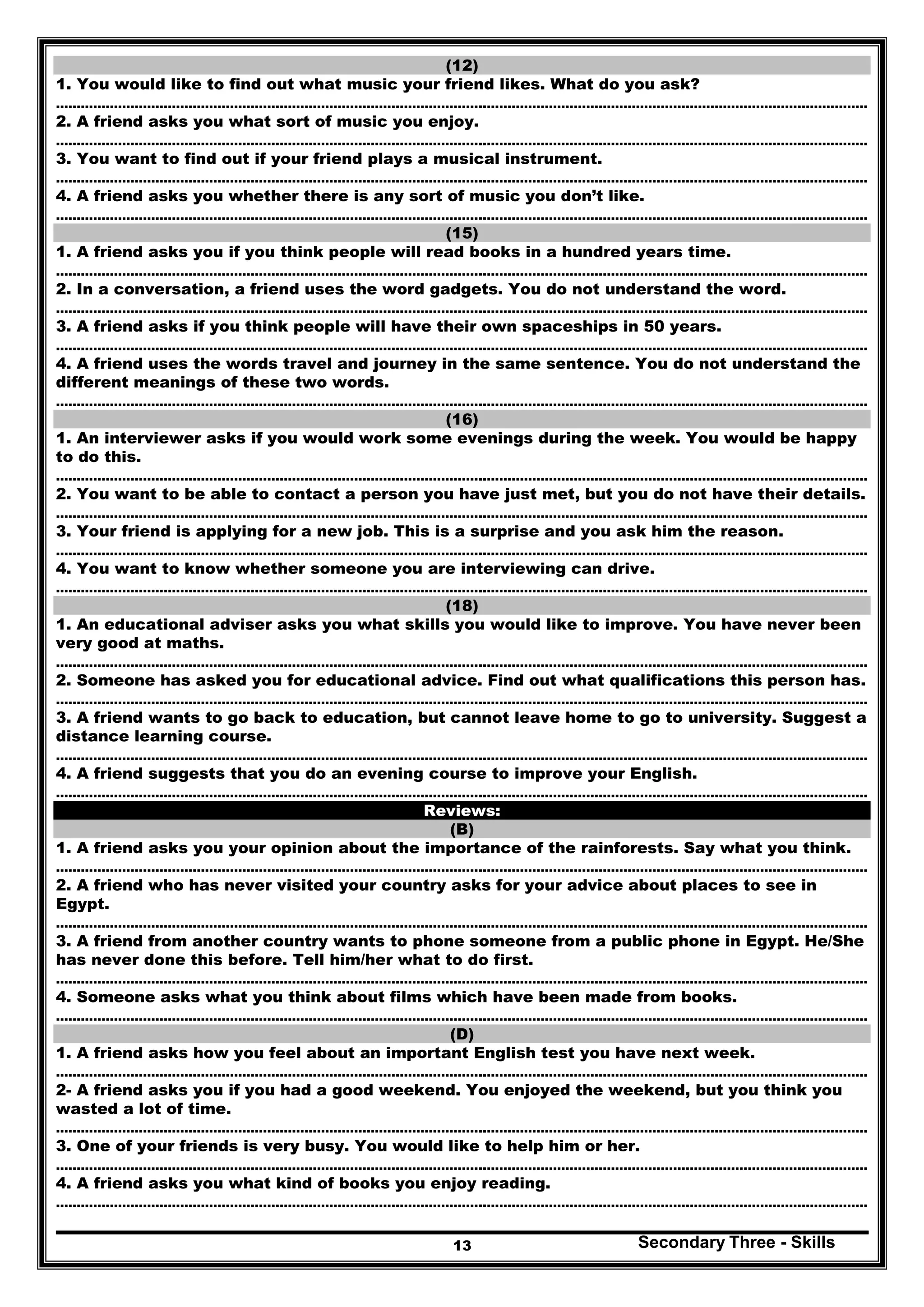
(12)
1. You would like to find out what music your friend likes. What do you ask?
…………………………………………………………………………………………..………………………………………………………………………………..
2. A friend asks you what sort of music you enjoy.
…………………………………………………………………………………………..………………………………………………………………………………..
3. You want to find out if your friend plays a musical instrument.
…………………………………………………………………………………………..………………………………………………………………………………..
4. A friend asks you whether there is any sort of music you don’t like.
…………………………………………………………………………………………..………………………………………………………………………………..
(15)
1. A friend asks you if you think people will read books in a hundred years time.
…………………………………………………………………………………………..………………………………………………………………………………..
2. In a conversation, a friend uses the word gadgets. You do not understand the word.
…………………………………………………………………………………………..………………………………………………………………………………..
3. A friend asks if you think people will have their own spaceships in 50 years.
…………………………………………………………………………………………..………………………………………………………………………………..
4. A friend uses the words travel and journey in the same sentence. You do not understand the
different meanings of these two words.
…………………………………………………………………………………………..………………………………………………………………………………..
(16)
1. An interviewer asks if you would work some evenings during the week. You would be happy
to do this.
…………………………………………………………………………………………..………………………………………………………………………………..
2. You want to be able to contact a person you have just met, but you do not have their details.
…………………………………………………………………………………………..………………………………………………………………………………..
3. Your friend is applying for a new job. This is a surprise and you ask him the reason.
…………………………………………………………………………………………..………………………………………………………………………………..
4. You want to know whether someone you are interviewing can drive.
…………………………………………………………………………………………..………………………………………………………………………………..
(18)
1. An educational adviser asks you what skills you would like to improve. You have never been
very good at maths.
…………………………………………………………………………………………..………………………………………………………………………………..
2. Someone has asked you for educational advice. Find out what qualifications this person has.
…………………………………………………………………………………………..………………………………………………………………………………..
3. A friend wants to go back to education, but cannot leave home to go to university. Suggest a
distance learning course.
…………………………………………………………………………………………..………………………………………………………………………………..
4. A friend suggests that you do an evening course to improve your English.
…………………………………………………………………………………………..………………………………………………………………………………..
Reviews:
(B)
1. A friend asks you your opinion about the importance of the rainforests. Say what you think.
…………………………………………………………………………………………..………………………………………………………………………………..
2. A friend who has never visited your country asks for your advice about places to see in
Egypt.
…………………………………………………………………………………………..………………………………………………………………………………..
3. A friend from another country wants to phone someone from a public phone in Egypt. He/She
has never done this before. Tell him/her what to do first.
…………………………………………………………………………………………..………………………………………………………………………………..
4. Someone asks what you think about films which have been made from books.
…………………………………………………………………………………………..………………………………………………………………………………..
(D)
1. A friend asks how you feel about an important English test you have next week.
…………………………………………………………………………………………..………………………………………………………………………………..
2- A friend asks you if you had a good weekend. You enjoyed the weekend, but you think you
wasted a lot of time.
…………………………………………………………………………………………..………………………………………………………………………………..
3. One of your friends is very busy. You would like to help him or her.
…………………………………………………………………………………………..………………………………………………………………………………..
4. A friend asks you what kind of books you enjoy reading.
…………………………………………………………………………………………..………………………………………………………………………………..
Secondary Three - Skills14
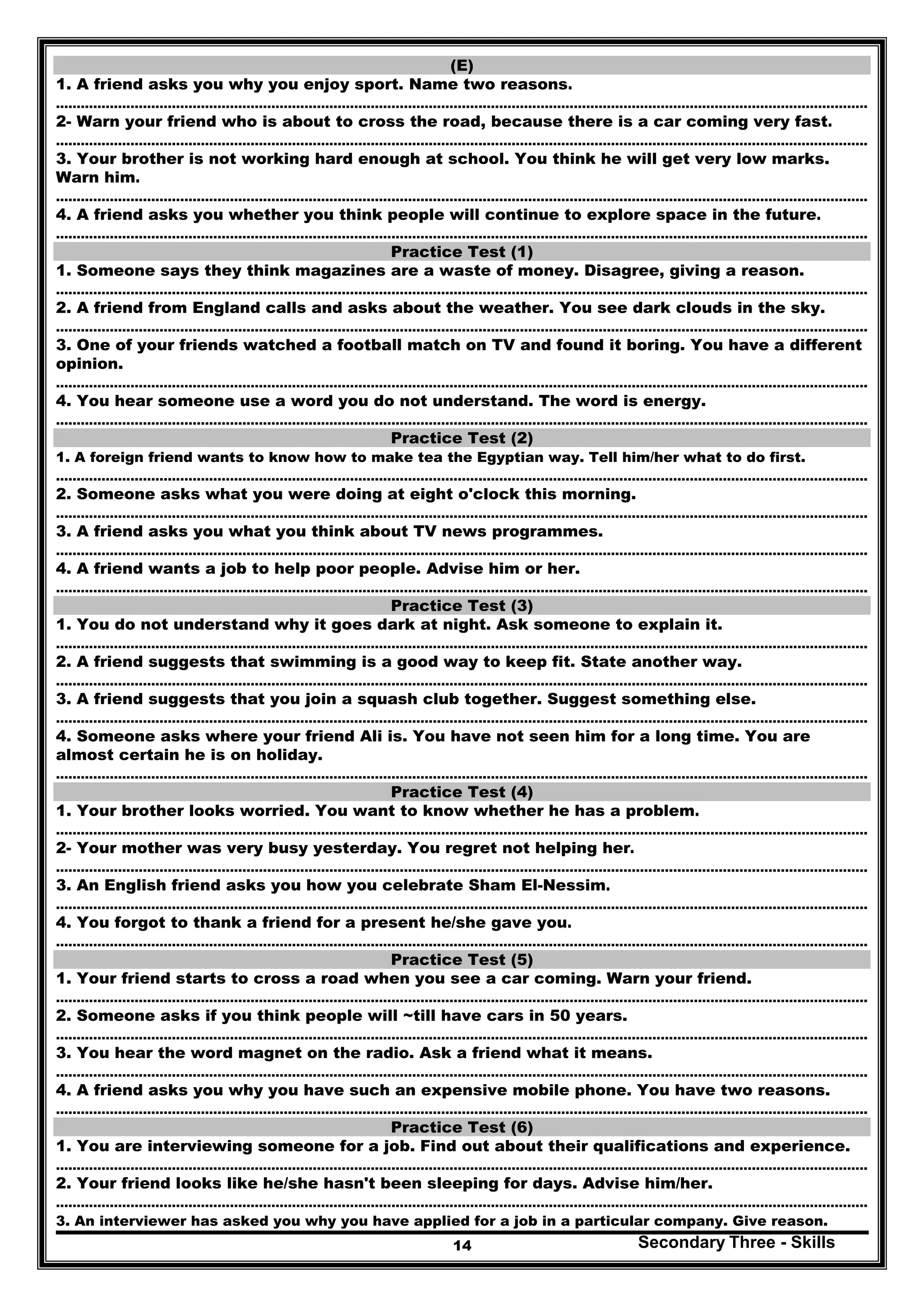
(E)
1. A friend asks you why you enjoy sport. Name two reasons.
…………………………………………………………………………………………..………………………………………………………………………………..
2- Warn your friend who is about to cross the road, because there is a car coming very fast.
…………………………………………………………………………………………..………………………………………………………………………………..
3. Your brother is not working hard enough at school. You think he will get very low marks.
Warn him.
…………………………………………………………………………………………..………………………………………………………………………………..
4. A friend asks you whether you think people will continue to explore space in the future.
…………………………………………………………………………………………..………………………………………………………………………………..
Practice Test (1)
1. Someone says they think magazines are a waste of money. Disagree, giving a reason.
…………………………………………………………………………………………..………………………………………………………………………………..
2. A friend from England calls and asks about the weather. You see dark clouds in the sky.
…………………………………………………………………………………………..………………………………………………………………………………..
3. One of your friends watched a football match on TV and found it boring. You have a different
opinion.
…………………………………………………………………………………………..………………………………………………………………………………..
4. You hear someone use a word you do not understand. The word is energy.
…………………………………………………………………………………………..………………………………………………………………………………..
Practice Test (2)
1. A foreign friend wants to know how to make tea the Egyptian way. Tell him/her what to do first.
…………………………………………………………………………………………..………………………………………………………………………………..
2. Someone asks what you were doing at eight o'clock this morning.
…………………………………………………………………………………………..………………………………………………………………………………..
3. A friend asks you what you think about TV news programmes.
…………………………………………………………………………………………..………………………………………………………………………………..
4. A friend wants a job to help poor people. Advise him or her.
…………………………………………………………………………………………..………………………………………………………………………………..
Practice Test (3)
1. You do not understand why it goes dark at night. Ask someone to explain it.
…………………………………………………………………………………………..………………………………………………………………………………..
2. A friend suggests that swimming is a good way to keep fit. State another way.
…………………………………………………………………………………………..………………………………………………………………………………..
3. A friend suggests that you join a squash club together. Suggest something else.
…………………………………………………………………………………………..………………………………………………………………………………..
4. Someone asks where your friend Ali is. You have not seen him for a long time. You are
almost certain he is on holiday.
…………………………………………………………………………………………..………………………………………………………………………………..
Practice Test (4)
1. Your brother looks worried. You want to know whether he has a problem.
…………………………………………………………………………………………..………………………………………………………………………………..
2- Your mother was very busy yesterday. You regret not helping her.
…………………………………………………………………………………………..………………………………………………………………………………..
3. An English friend asks you how you celebrate Sham El-Nessim.
…………………………………………………………………………………………..………………………………………………………………………………..
4. You forgot to thank a friend for a present he/she gave you.
…………………………………………………………………………………………..………………………………………………………………………………..
Practice Test (5)
1. Your friend starts to cross a road when you see a car coming. Warn your friend.
…………………………………………………………………………………………..………………………………………………………………………………..
2. Someone asks if you think people will ~till have cars in 50 years.
…………………………………………………………………………………………..………………………………………………………………………………..
3. You hear the word magnet on the radio. Ask a friend what it means.
…………………………………………………………………………………………..………………………………………………………………………………..
4. A friend asks you why you have such an expensive mobile phone. You have two reasons.
…………………………………………………………………………………………..………………………………………………………………………………..
Practice Test (6)
1. You are interviewing someone for a job. Find out about their qualifications and experience.
…………………………………………………………………………………………..………………………………………………………………………………..
2. Your friend looks like he/she hasn't been sleeping for days. Advise him/her.
…………………………………………………………………………………………..………………………………………………………………………………..
3. An interviewer has asked you why you have applied for a job in a particular company. Give reason.
Secondary Three - Skills15
…………………………………………………………………………………………..………………………………………………………………………………..
4. You do not understand what distance learning is. Ask a friend.
…………………………………………………………………………………………..………………………………………………………………………………..
‫الوزارة‬ ‫موقع‬ ‫مواقف‬
1. You ask your friend if he took part in the 25th January revolution.
…………………………………………………………………………………………..………………………………………………………………………………..
2. You want to know about a friend's studying habits. What do you ask?
…………………………………………………………………………………………..………………………………………………………………………………..
3. You are asked about the reason for building the Aswan High Dam.
…………………………………………………………………………………………..………………………………………………………………………………..
4. You advise your little sister not to let the water tap run all the time.
…………………………………………………………………………………………..………………………………………………………………………………..
5. You invite your friend to go to the theatre.
…………………………………………………………………………………………..………………………………………………………………………………..
6. It's the beginning of the New Year. What would you say?
…………………………………………………………………………………………..………………………………………………………………………………..
7. You don't think that something is true.
…………………………………………………………………………………………..………………………………………………………………………………..
8. A friend asks you what you think about TV news programmes.
…………………………………………………………………………………………..………………………………………………………………………………..
9- Your friend thinks that the television has many disadvantages. You agree.
…………………………………………………………………………………………..………………………………………………………………………………..
10- Someone asks if you had a good stay in Luxor. You enjoyed the time there.
…………………………………………………………………………………………..………………………………………………………………………………..
11- A friend asks you if you think people will read newspapers in a hundred years time. You
think they won't.
…………………………………………………………………………………………..………………………………………………………………………………..
13- You see a boy throwing litter in the street.
…………………………………………………………………………………………..………………………………………………………………………………..
‫المواقف‬‫الحديث‬ ‫المنھج‬ ‫فى‬ ‫سابقة‬ ‫امتحانات‬ ‫فى‬ ‫وردت‬ ‫التى‬:
1] Respond to each of the following situations: ‫أول‬ ‫دور‬2011
1- Your younger brother is very busy. You would like to help him.
…………………………………………………………………………………………..………………………………………………………………………………..
2- A classmate asks you why you enjoy playing sports. Name one reason.
…………………………………………………………………………………………..………………………………………………………………………………..
3- Someone asks you the time of the next train to Aswan.
…………………………………………………………………………………………..………………………………………………………………………………..
4- Your sister asks you your opinion about the importance of e-books.
…………………………………………………………………………………………..………………………………………………………………………………..
1) Respond to each of the following situations: ‫ثانى‬ ‫دور‬2011
1- A tourist wants to visit some places of interest in Egypt.
…………………………………………………………………………………………..………………………………………………………………………………..
2- A friend asks about your plans for the next holiday.
…………………………………………………………………………………………..………………………………………………………………………………..
3- Your father wants to know your opinion about the TV serials.
…………………………………………………………………………………………..………………………………………………………………………………..
4- The teacher asks Samia which language skill she would like to improve.
…………………………………………………………………………………………..………………………………………………………………………………..
1. Respond to each of the following situations: ( )2012
1- A friend says: "You look very cheerful today." Tell him/her why.
…………………………………………………………………………………………..………………………………………………………………………………..
2- A person is using his mobile while crossing the highway. Warn him.
…………………………………………………………………………………………..………………………………………………………………………………..
3- Your cousin is going out with you in a small boat. Advise him to wear a lifejacket.
…………………………………………………………………………………………..………………………………………………………………………………..
4- You are on a crowded train, and there's only one empty seat. What do you ask the person
sitting next to it?
…………………………………………………………………………………………..………………………………………………………………………………..
Respond to each of the following situations: ‫ثانى‬ ‫دور‬2012 )
1- Your brother is preparing to leave for the airport. Offer to give him a hand.
…………………………………………………………………………………………..………………………………………………………………………………..
2- A friend is worried about an interview tomorrow. Suggest a way to make him/her feel better
Secondary Three - Skills16
…………………………………………………………………………………………..………………………………………………………………………………..
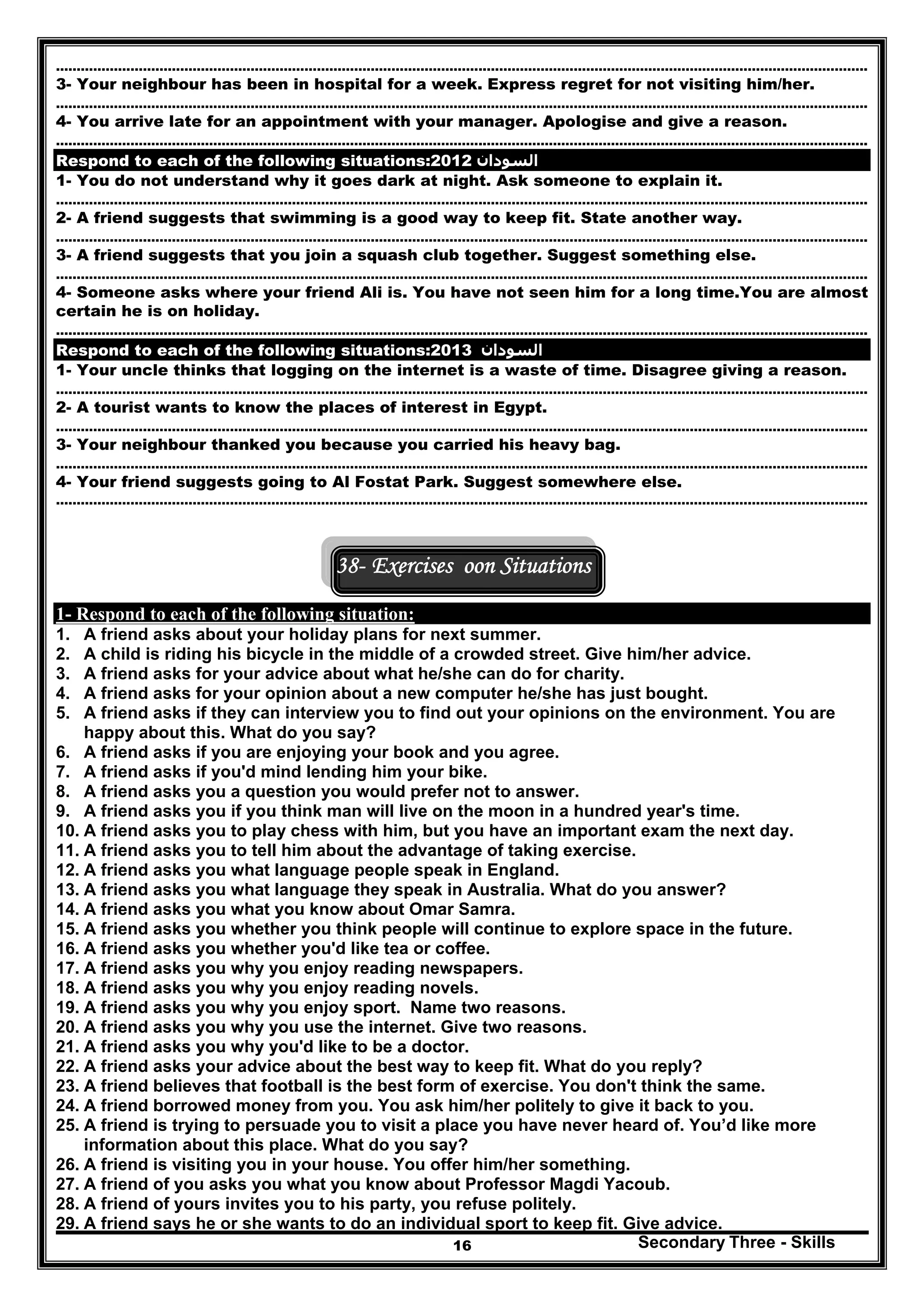
3- Your neighbour has been in hospital for a week. Express regret for not visiting him/her.
…………………………………………………………………………………………..………………………………………………………………………………..
4- You arrive late for an appointment with your manager. Apologise and give a reason.
…………………………………………………………………………………………..………………………………………………………………………………..
Respond to each of the following situations: ‫السودان‬2012
1- You do not understand why it goes dark at night. Ask someone to explain it.
…………………………………………………………………………………………..………………………………………………………………………………..
2- A friend suggests that swimming is a good way to keep fit. State another way.
…………………………………………………………………………………………..………………………………………………………………………………..
3- A friend suggests that you join a squash club together. Suggest something else.
…………………………………………………………………………………………..………………………………………………………………………………..
4- Someone asks where your friend Ali is. You have not seen him for a long time.You are almost
certain he is on holiday.
…………………………………………………………………………………………..………………………………………………………………………………..
Respond to each of the following situations: ‫السودان‬2013
1- Your uncle thinks that logging on the internet is a waste of time. Disagree giving a reason.
…………………………………………………………………………………………..………………………………………………………………………………..
2- A tourist wants to know the places of interest in Egypt.
…………………………………………………………………………………………..………………………………………………………………………………..
3- Your neighbour thanked you because you carried his heavy bag.
…………………………………………………………………………………………..………………………………………………………………………………..
4- Your friend suggests going to Al Fostat Park. Suggest somewhere else.
…………………………………………………………………………………………..………………………………………………………………………………..
38- Exercises oon Situations
1- Respond to each of the following situation:
1. A friend asks about your holiday plans for next summer.
2. A child is riding his bicycle in the middle of a crowded street. Give him/her advice.
3. A friend asks for your advice about what he/she can do for charity.
4. A friend asks for your opinion about a new computer he/she has just bought.
5. A friend asks if they can interview you to find out your opinions on the environment. You are
happy about this. What do you say?
6. A friend asks if you are enjoying your book and you agree.
7. A friend asks if you'd mind lending him your bike.
8. A friend asks you a question you would prefer not to answer.
9. A friend asks you if you think man will live on the moon in a hundred year's time.
10. A friend asks you to play chess with him, but you have an important exam the next day.
11. A friend asks you to tell him about the advantage of taking exercise.
12. A friend asks you what language people speak in England.
13. A friend asks you what language they speak in Australia. What do you answer?
14. A friend asks you what you know about Omar Samra.
15. A friend asks you whether you think people will continue to explore space in the future.
16. A friend asks you whether you'd like tea or coffee.
17. A friend asks you why you enjoy reading newspapers.
18. A friend asks you why you enjoy reading novels.
19. A friend asks you why you enjoy sport. Name two reasons.
20. A friend asks you why you use the internet. Give two reasons.
21. A friend asks you why you'd like to be a doctor.
22. A friend asks your advice about the best way to keep fit. What do you reply?
23. A friend believes that football is the best form of exercise. You don't think the same.
24. A friend borrowed money from you. You ask him/her politely to give it back to you.
25. A friend is trying to persuade you to visit a place you have never heard of. You’d like more
information about this place. What do you say?
26. A friend is visiting you in your house. You offer him/her something.
27. A friend of you asks you what you know about Professor Magdi Yacoub.
28. A friend of yours invites you to his party, you refuse politely.
29. A friend says he or she wants to do an individual sport to keep fit. Give advice.
Secondary Three - Skills17
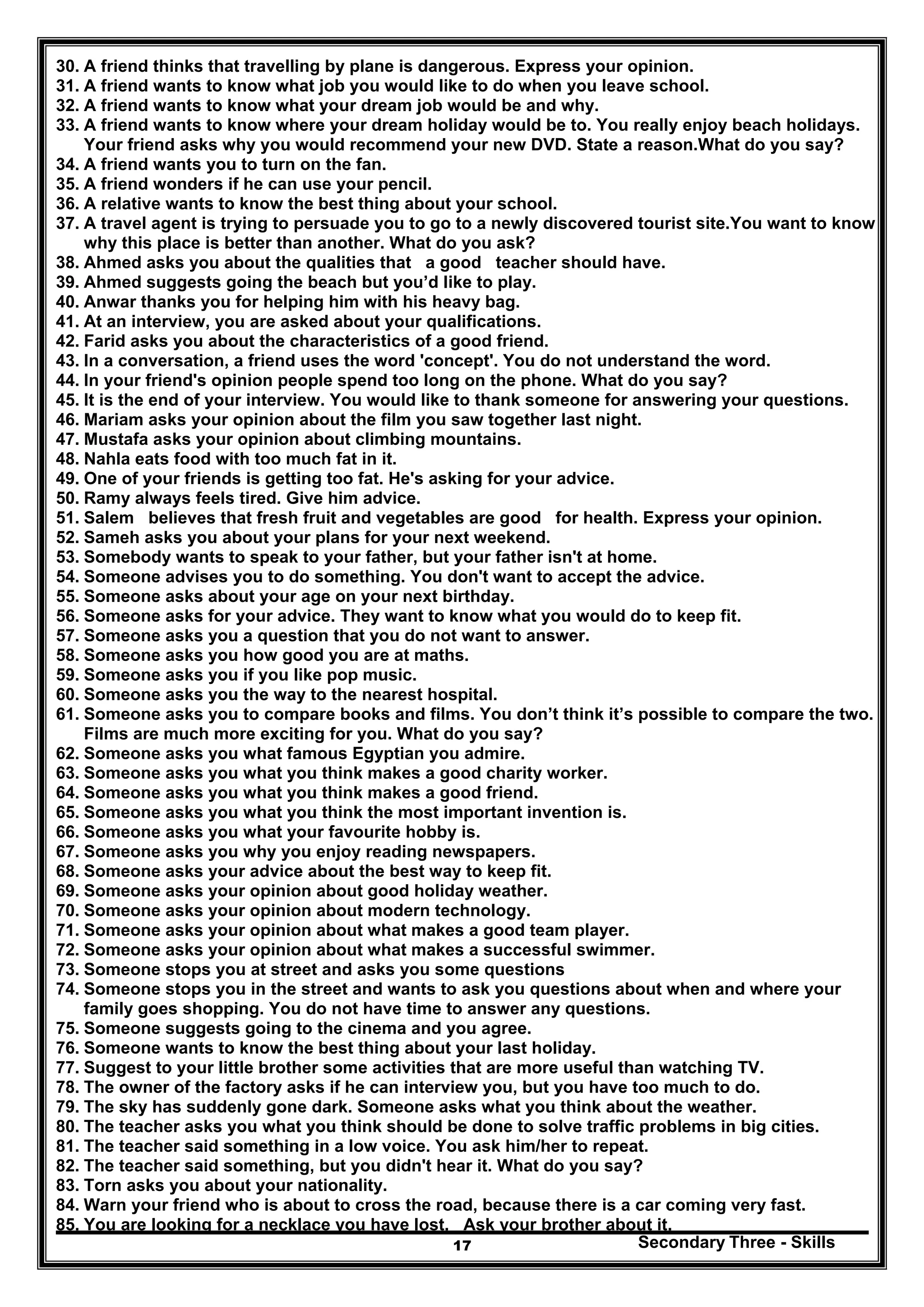
30. A friend thinks that travelling by plane is dangerous. Express your opinion.
31. A friend wants to know what job you would like to do when you leave school.
32. A friend wants to know what your dream job would be and why.
33. A friend wants to know where your dream holiday would be to. You really enjoy beach holidays.
Your friend asks why you would recommend your new DVD. State a reason.What do you say?
34. A friend wants you to turn on the fan.
35. A friend wonders if he can use your pencil.
36. A relative wants to know the best thing about your school.
37. A travel agent is trying to persuade you to go to a newly discovered tourist site.You want to know
why this place is better than another. What do you ask?
38. Ahmed asks you about the qualities that a good teacher should have.
39. Ahmed suggests going the beach but you’d like to play.
40. Anwar thanks you for helping him with his heavy bag.
41. At an interview, you are asked about your qualifications.
42. Farid asks you about the characteristics of a good friend.
43. In a conversation, a friend uses the word 'concept'. You do not understand the word.
44. In your friend's opinion people spend too long on the phone. What do you say?
45. It is the end of your interview. You would like to thank someone for answering your questions.
46. Mariam asks your opinion about the film you saw together last night.
47. Mustafa asks your opinion about climbing mountains.
48. Nahla eats food with too much fat in it.
49. One of your friends is getting too fat. He's asking for your advice.
50. Ramy always feels tired. Give him advice.
51. Salem believes that fresh fruit and vegetables are good for health. Express your opinion.
52. Sameh asks you about your plans for your next weekend.
53. Somebody wants to speak to your father, but your father isn't at home.
54. Someone advises you to do something. You don't want to accept the advice.
55. Someone asks about your age on your next birthday.
56. Someone asks for your advice. They want to know what you would do to keep fit.
57. Someone asks you a question that you do not want to answer.
58. Someone asks you how good you are at maths.
59. Someone asks you if you like pop music.
60. Someone asks you the way to the nearest hospital.
61. Someone asks you to compare books and films. You don’t think it’s possible to compare the two.
Films are much more exciting for you. What do you say?
62. Someone asks you what famous Egyptian you admire.
63. Someone asks you what you think makes a good charity worker.
64. Someone asks you what you think makes a good friend.
65. Someone asks you what you think the most important invention is.
66. Someone asks you what your favourite hobby is.
67. Someone asks you why you enjoy reading newspapers.
68. Someone asks your advice about the best way to keep fit.
69. Someone asks your opinion about good holiday weather.
70. Someone asks your opinion about modern technology.
71. Someone asks your opinion about what makes a good team player.
72. Someone asks your opinion about what makes a successful swimmer.
73. Someone stops you at street and asks you some questions
74. Someone stops you in the street and wants to ask you questions about when and where your
family goes shopping. You do not have time to answer any questions.
75. Someone suggests going to the cinema and you agree.
76. Someone wants to know the best thing about your last holiday.
77. Suggest to your little brother some activities that are more useful than watching TV.
78. The owner of the factory asks if he can interview you, but you have too much to do.
79. The sky has suddenly gone dark. Someone asks what you think about the weather.
80. The teacher asks you what you think should be done to solve traffic problems in big cities.
81. The teacher said something in a low voice. You ask him/her to repeat.
82. The teacher said something, but you didn't hear it. What do you say?
83. Torn asks you about your nationality.
84. Warn your friend who is about to cross the road, because there is a car coming very fast.
85. You are looking for a necklace you have lost. Ask your brother about it.
Secondary Three - Skills18
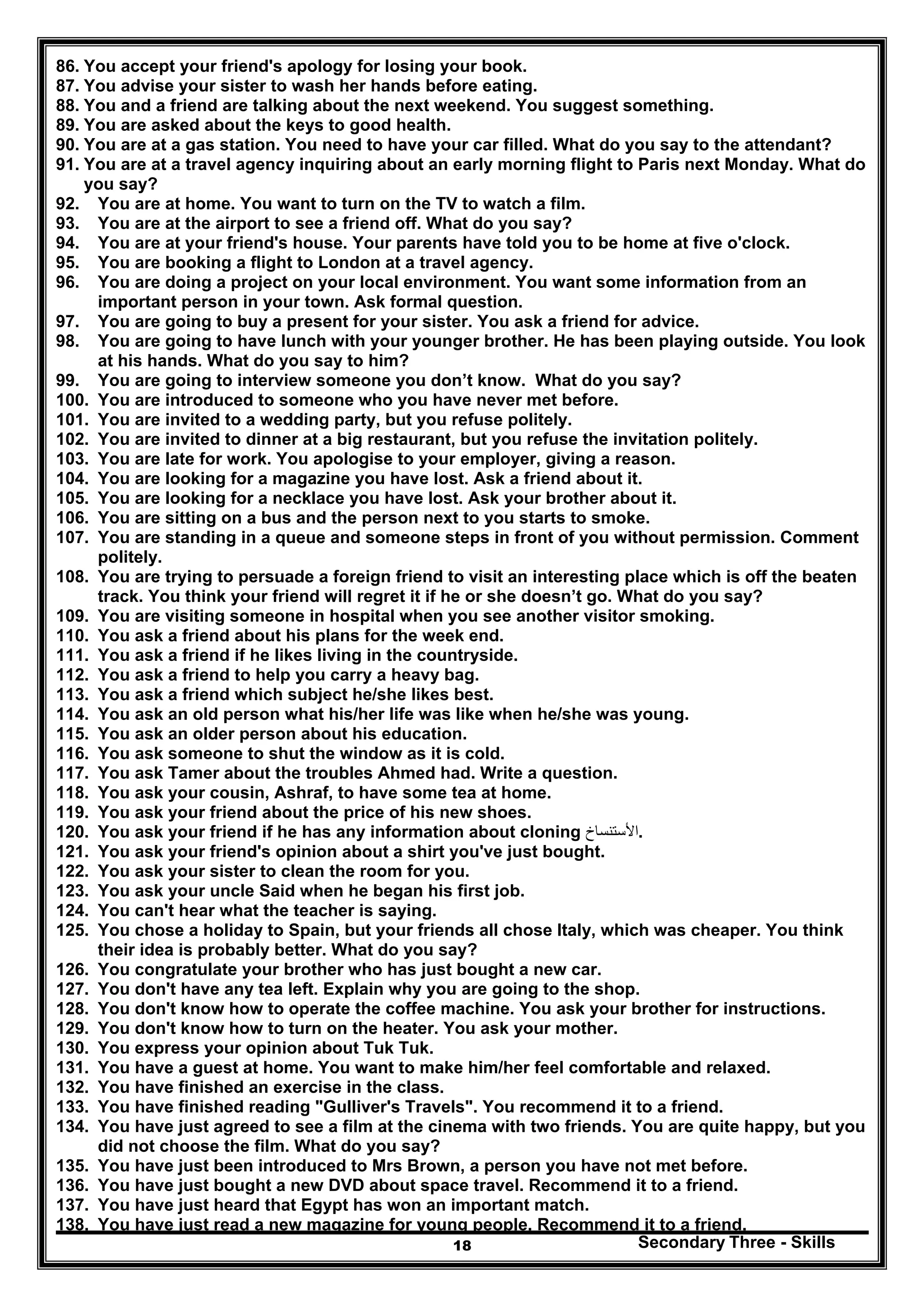
86. You accept your friend's apology for losing your book.
87. You advise your sister to wash her hands before eating.
88. You and a friend are talking about the next weekend. You suggest something.
89. You are asked about the keys to good health.
90. You are at a gas station. You need to have your car filled. What do you say to the attendant?
91. You are at a travel agency inquiring about an early morning flight to Paris next Monday. What do
you say?
92. You are at home. You want to turn on the TV to watch a film.
93. You are at the airport to see a friend off. What do you say?
94. You are at your friend's house. Your parents have told you to be home at five o'clock.
95. You are booking a flight to London at a travel agency.
96. You are doing a project on your local environment. You want some information from an
important person in your town. Ask formal question.
97. You are going to buy a present for your sister. You ask a friend for advice.
98. You are going to have lunch with your younger brother. He has been playing outside. You look
at his hands. What do you say to him?
99. You are going to interview someone you don’t know. What do you say?
100. You are introduced to someone who you have never met before.
101. You are invited to a wedding party, but you refuse politely.
102. You are invited to dinner at a big restaurant, but you refuse the invitation politely.
103. You are late for work. You apologise to your employer, giving a reason.
104. You are looking for a magazine you have lost. Ask a friend about it.
105. You are looking for a necklace you have lost. Ask your brother about it.
106. You are sitting on a bus and the person next to you starts to smoke.
107. You are standing in a queue and someone steps in front of you without permission. Comment
politely.
108. You are trying to persuade a foreign friend to visit an interesting place which is off the beaten
track. You think your friend will regret it if he or she doesn’t go. What do you say?
109. You are visiting someone in hospital when you see another visitor smoking.
110. You ask a friend about his plans for the week end.
111. You ask a friend if he likes living in the countryside.
112. You ask a friend to help you carry a heavy bag.
113. You ask a friend which subject he/she likes best.
114. You ask an old person what his/her life was like when he/she was young.
115. You ask an older person about his education.
116. You ask someone to shut the window as it is cold.
117. You ask Tamer about the troubles Ahmed had. Write a question.
118. You ask your cousin, Ashraf, to have some tea at home.
119. You ask your friend about the price of his new shoes.
120. You ask your friend if he has any information about cloning ‫األست‬‫ن‬‫ساخ‬ .
121. You ask your friend's opinion about a shirt you've just bought.
122. You ask your sister to clean the room for you.
123. You ask your uncle Said when he began his first job.
124. You can't hear what the teacher is saying.
125. You chose a holiday to Spain, but your friends all chose Italy, which was cheaper. You think
their idea is probably better. What do you say?
126. You congratulate your brother who has just bought a new car.
127. You don't have any tea left. Explain why you are going to the shop.
128. You don't know how to operate the coffee machine. You ask your brother for instructions.
129. You don't know how to turn on the heater. You ask your mother.
130. You express your opinion about Tuk Tuk.
131. You have a guest at home. You want to make him/her feel comfortable and relaxed.
132. You have finished an exercise in the class.
133. You have finished reading "Gulliver's Travels". You recommend it to a friend.
134. You have just agreed to see a film at the cinema with two friends. You are quite happy, but you
did not choose the film. What do you say?
135. You have just been introduced to Mrs Brown, a person you have not met before.
136. You have just bought a new DVD about space travel. Recommend it to a friend.
137. You have just heard that Egypt has won an important match.
138. You have just read a new magazine for young people. Recommend it to a friend.
Secondary Three - Skills19
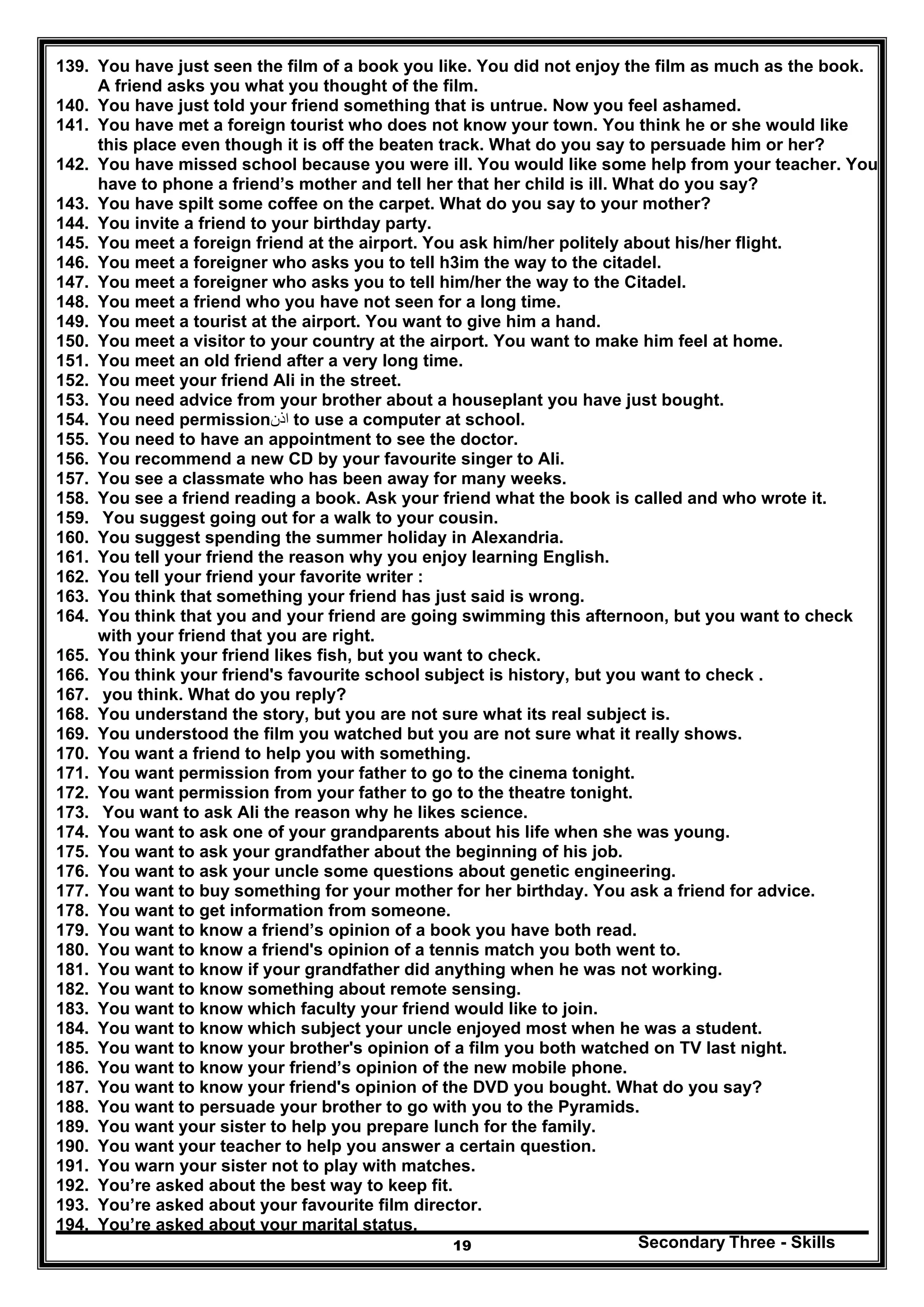
139. You have just seen the film of a book you like. You did not enjoy the film as much as the book.
A friend asks you what you thought of the film.
140. You have just told your friend something that is untrue. Now you feel ashamed.
141. You have met a foreign tourist who does not know your town. You think he or she would like
this place even though it is off the beaten track. What do you say to persuade him or her?
142. You have missed school because you were ill. You would like some help from your teacher. You
have to phone a friend’s mother and tell her that her child is ill. What do you say?
143. You have spilt some coffee on the carpet. What do you say to your mother?
144. You invite a friend to your birthday party.
145. You meet a foreign friend at the airport. You ask him/her politely about his/her flight.
146. You meet a foreigner who asks you to tell h3im the way to the citadel.
147. You meet a foreigner who asks you to tell him/her the way to the Citadel.
148. You meet a friend who you have not seen for a long time.
149. You meet a tourist at the airport. You want to give him a hand.
150. You meet a visitor to your country at the airport. You want to make him feel at home.
151. You meet an old friend after a very long time.
152. You meet your friend Ali in the street.
153. You need advice from your brother about a houseplant you have just bought.
154. You need permission‫اذن‬ to use a computer at school.
155. You need to have an appointment to see the doctor.
156. You recommend a new CD by your favourite singer to Ali.
157. You see a classmate who has been away for many weeks.
158. You see a friend reading a book. Ask your friend what the book is called and who wrote it.
159. You suggest going out for a walk to your cousin.
160. You suggest spending the summer holiday in Alexandria.
161. You tell your friend the reason why you enjoy learning English.
162. You tell your friend your favorite writer :
163. You think that something your friend has just said is wrong.
164. You think that you and your friend are going swimming this afternoon, but you want to check
with your friend that you are right.
165. You think your friend likes fish, but you want to check.
166. You think your friend's favourite school subject is history, but you want to check .
167. you think. What do you reply?
168. You understand the story, but you are not sure what its real subject is.
169. You understood the film you watched but you are not sure what it really shows.
170. You want a friend to help you with something.
171. You want permission from your father to go to the cinema tonight.
172. You want permission from your father to go to the theatre tonight.
173. You want to ask Ali the reason why he likes science.
174. You want to ask one of your grandparents about his life when she was young.
175. You want to ask your grandfather about the beginning of his job.
176. You want to ask your uncle some questions about genetic engineering.
177. You want to buy something for your mother for her birthday. You ask a friend for advice.
178. You want to get information from someone.
179. You want to know a friend’s opinion of a book you have both read.
180. You want to know a friend's opinion of a tennis match you both went to.
181. You want to know if your grandfather did anything when he was not working.
182. You want to know something about remote sensing.
183. You want to know which faculty your friend would like to join.
184. You want to know which subject your uncle enjoyed most when he was a student.
185. You want to know your brother's opinion of a film you both watched on TV last night.
186. You want to know your friend’s opinion of the new mobile phone.
187. You want to know your friend's opinion of the DVD you bought. What do you say?
188. You want to persuade your brother to go with you to the Pyramids.
189. You want your sister to help you prepare lunch for the family.
190. You want your teacher to help you answer a certain question.
191. You warn your sister not to play with matches.
192. You’re asked about the best way to keep fit.
193. You’re asked about your favourite film director.
194. You’re asked about your marital status.
Secondary Three - Skills20
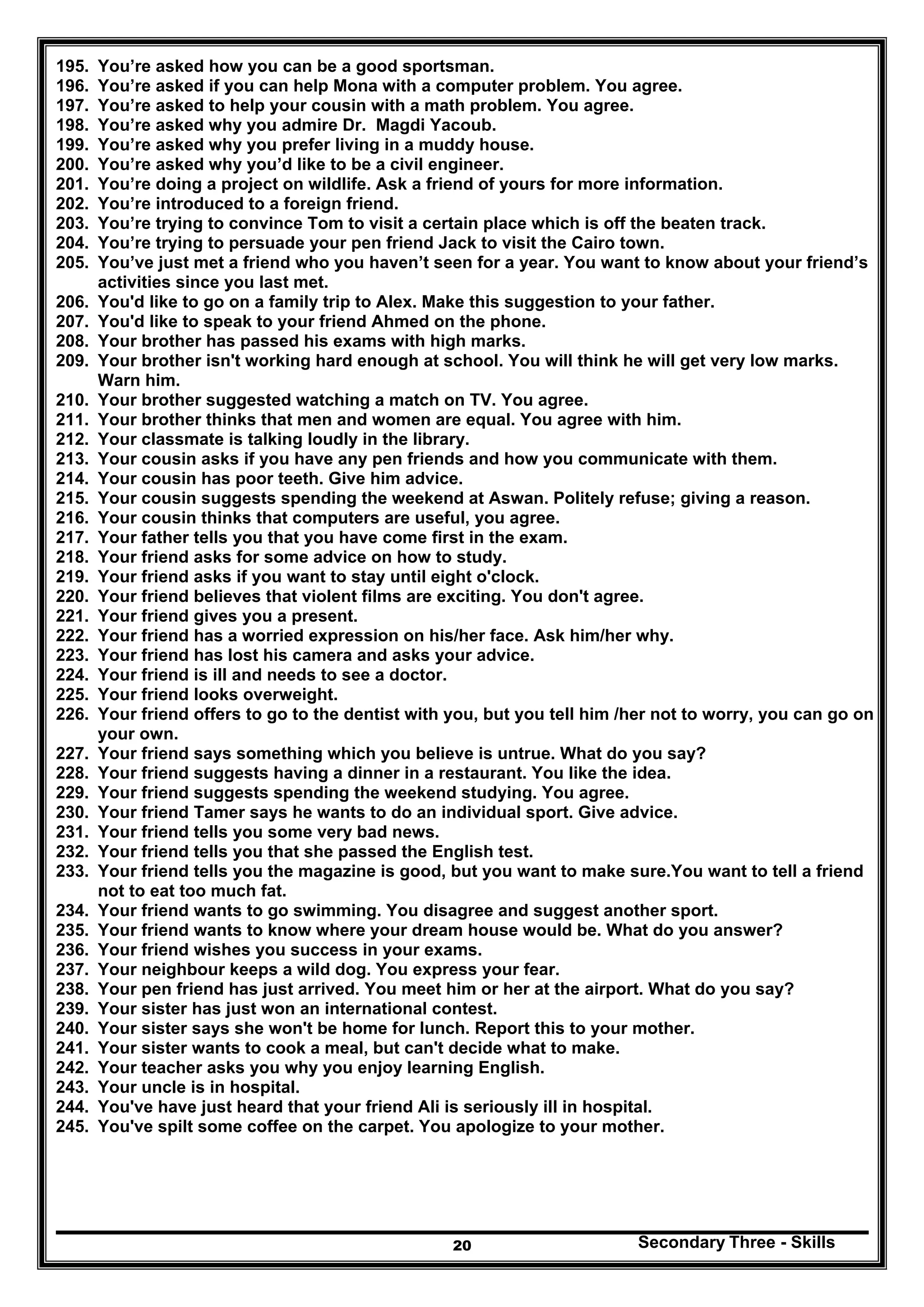
195. You’re asked how you can be a good sportsman.
196. You’re asked if you can help Mona with a computer problem. You agree.
197. You’re asked to help your cousin with a math problem. You agree.
198. You’re asked why you admire Dr. Magdi Yacoub.
199. You’re asked why you prefer living in a muddy house.
200. You’re asked why you’d like to be a civil engineer.
201. You’re doing a project on wildlife. Ask a friend of yours for more information.
202. You’re introduced to a foreign friend.
203. You’re trying to convince Tom to visit a certain place which is off the beaten track.
204. You’re trying to persuade your pen friend Jack to visit the Cairo town.
205. You’ve just met a friend who you haven’t seen for a year. You want to know about your friend’s
activities since you last met.
206. You'd like to go on a family trip to Alex. Make this suggestion to your father.
207. You'd like to speak to your friend Ahmed on the phone.
208. Your brother has passed his exams with high marks.
209. Your brother isn't working hard enough at school. You will think he will get very low marks.
Warn him.
210. Your brother suggested watching a match on TV. You agree.
211. Your brother thinks that men and women are equal. You agree with him.
212. Your classmate is talking loudly in the library.
213. Your cousin asks if you have any pen friends and how you communicate with them.
214. Your cousin has poor teeth. Give him advice.
215. Your cousin suggests spending the weekend at Aswan. Politely refuse; giving a reason.
216. Your cousin thinks that computers are useful, you agree.
217. Your father tells you that you have come first in the exam.
218. Your friend asks for some advice on how to study.
219. Your friend asks if you want to stay until eight o'clock.
220. Your friend believes that violent films are exciting. You don't agree.
221. Your friend gives you a present.
222. Your friend has a worried expression on his/her face. Ask him/her why.
223. Your friend has lost his camera and asks your advice.
224. Your friend is ill and needs to see a doctor.
225. Your friend looks overweight.
226. Your friend offers to go to the dentist with you, but you tell him /her not to worry, you can go on
your own.
227. Your friend says something which you believe is untrue. What do you say?
228. Your friend suggests having a dinner in a restaurant. You like the idea.
229. Your friend suggests spending the weekend studying. You agree.
230. Your friend Tamer says he wants to do an individual sport. Give advice.
231. Your friend tells you some very bad news.
232. Your friend tells you that she passed the English test.
233. Your friend tells you the magazine is good, but you want to make sure.You want to tell a friend
not to eat too much fat.
234. Your friend wants to go swimming. You disagree and suggest another sport.
235. Your friend wants to know where your dream house would be. What do you answer?
236. Your friend wishes you success in your exams.
237. Your neighbour keeps a wild dog. You express your fear.
238. Your pen friend has just arrived. You meet him or her at the airport. What do you say?
239. Your sister has just won an international contest.
240. Your sister says she won't be home for lunch. Report this to your mother.
241. Your sister wants to cook a meal, but can't decide what to make.
242. Your teacher asks you why you enjoy learning English.
243. Your uncle is in hospital.
244. You've have just heard that your friend Ali is seriously ill in hospital.
245. You've spilt some coffee on the carpet. You apologize to your mother.
Secondary Three - Skills21
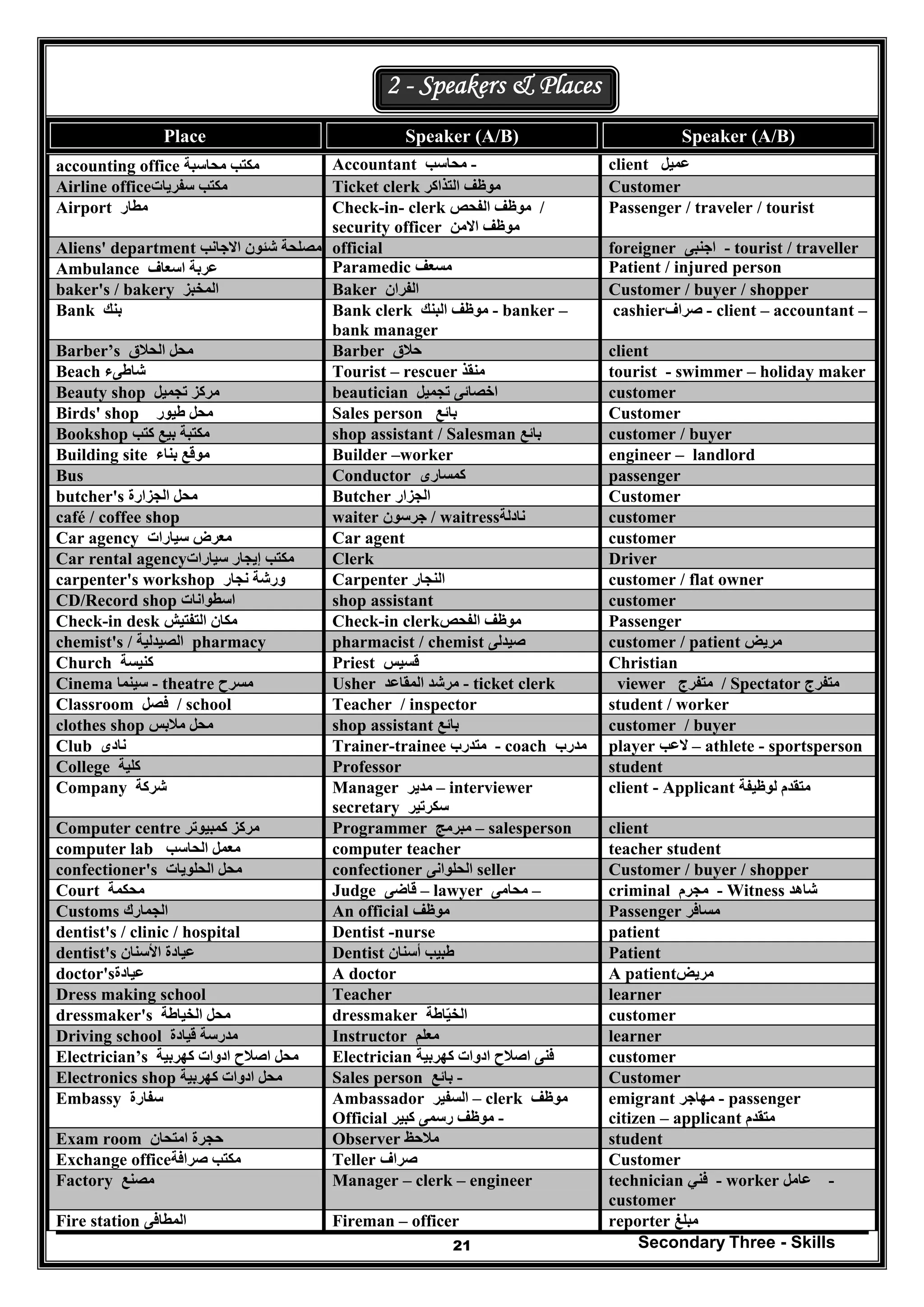
2 - Speakers & Places
Place Speaker (A/B) Speaker (A/B)
accounting office ‫محاسبة‬ ‫مكتب‬ Accountant ‫محاسب‬ - client ‫عميل‬
Airline office‫سفريات‬ ‫مكتب‬ Ticket clerk ‫التذاكر‬ ‫موظف‬ Customer
Airport ‫مطار‬ Check-in- clerk ‫الفحص‬ ‫موظف‬ /
security officer ‫االمن‬ ‫موظف‬
Passenger / traveler / tourist
Aliens' department ‫االجانب‬ ‫شئون‬ ‫مصلحة‬ official foreigner ‫اجنبى‬ - tourist / traveller
Ambulance ‫اسعاف‬ ‫عربة‬ Paramedic ‫مسعف‬ Patient / injured person
baker's / bakery ‫المخبز‬ Baker ‫الفران‬ Customer / buyer / shopper
Bank ‫بنك‬ Bank clerk ‫البنك‬ ‫موظف‬ - banker –
bank manager
- client – accountant –‫صراف‬cashier
Barber’s ‫الحالق‬ ‫محل‬ Barber ‫حالق‬ client
Beach ‫شاطىء‬ Tourist – rescuer ‫منقذ‬ tourist - swimmer – holiday maker
Beauty shop ‫تجميل‬ ‫مركز‬ beautician ‫تجميل‬ ‫اخصائى‬ customer
Birds' shop ‫طيور‬ ‫محل‬ Sales person ‫بائع‬ Customer
Bookshop ‫كتب‬ ‫بيع‬ ‫مكتبة‬ shop assistant / Salesman ‫بائع‬ customer / buyer
Building site ‫بناء‬ ‫موقع‬ Builder –worker engineer – landlord
Bus Conductor ‫كمسارى‬ passenger
butcher's ‫الجزارة‬ ‫محل‬ Butcher ‫الجزار‬ Customer
café / coffee shop waiter ‫جرسون‬ / waitress ‫نادل‬‫ة‬ customer
Car agency ‫سيارات‬ ‫معرض‬ Car agent customer
Car rental agency‫سيارات‬ ‫إيجار‬ ‫مكتب‬ Clerk Driver
carpenter's workshop ‫نجار‬ ‫ورشة‬ Carpenter ‫النجار‬ customer / flat owner
CD/Record shop ‫اسطوانات‬ shop assistant customer
Check-in desk ‫التفتيش‬ ‫مكان‬ Check-in clerk‫الفحص‬ ‫موظف‬ Passenger
chemist's / ‫الصيدلية‬ pharmacy pharmacist / chemist ‫صيدلى‬ customer / patient ‫مريض‬
Church ‫كنيسة‬ Priest ‫قسيس‬ Christian
Cinema ‫سينما‬ - theatre ‫مسرح‬ Usher ‫المقاعد‬ ‫مرشد‬ - ticket clerk viewer ‫متفرج‬ / Spectator ‫متفرج‬
Classroom ‫فصل‬ / school Teacher / inspector student / worker
clothes shop ‫مالبس‬ ‫محل‬ shop assistant ‫بائع‬ customer / buyer
Club ‫نادى‬ Trainer-trainee ‫متدرب‬ - coach ‫مدرب‬ player ‫العب‬ – athlete - sportsperson
College ‫كلية‬ Professor student
Company ‫شركة‬ Manager ‫مدير‬ – interviewer
secretary ‫سكرتير‬
client - Applicant ‫لوظيفة‬ ‫متقدم‬
Computer centre ‫كمبيوتر‬ ‫مركز‬ Programmer ‫مبرمج‬ – salesperson client
computer lab ‫الحاسب‬ ‫معمل‬ computer teacher teacher student
confectioner's ‫الحلويات‬ ‫محل‬ confectioner ‫الحلوانى‬ seller Customer / buyer / shopper
Court ‫محكمة‬ Judge ‫قاضى‬ – lawyer ‫محامى‬ – criminal ‫مجرم‬ - Witness ‫شاھد‬
Customs ‫الجمارك‬ An official ‫موظف‬ Passenger ‫مسافر‬
dentist's / clinic / hospital Dentist -nurse patient
dentist's ‫األسنان‬ ‫عيادة‬ Dentist ‫أسنان‬ ‫طبيب‬ Patient
doctor's‫عيادة‬ A doctor A patient‫مريض‬
Dress making school Teacher learner
dressmaker's ‫الخياطة‬ ‫محل‬ dressmaker ‫الخياطة‬ّ customer
Driving school ‫قيادة‬ ‫مدرسة‬ Instructor ‫معلم‬ learner
Electrician’s ‫كھربية‬ ‫ادوات‬ ‫اصالح‬ ‫محل‬ Electrician ‫كھربية‬ ‫ادوات‬ ‫اصالح‬ ‫فنى‬ customer
Electronics shop ‫كھربية‬ ‫ادوات‬ ‫محل‬ Sales person ‫بائع‬ - Customer
Embassy ‫سفارة‬ Ambassador ‫السفير‬ – clerk ‫موظف‬
Official ‫كبير‬ ‫رسمى‬ ‫موظف‬ -
emigrant ‫مھاجر‬ - passenger
citizen – applicant ‫متقدم‬
Exam room ‫امتحان‬ ‫حجرة‬ Observer ‫مالحظ‬ student
Exchange office‫صرافة‬ ‫مكتب‬ Teller ‫صراف‬ Customer
Factory ‫مصنع‬ Manager – clerk – engineer technician ‫فني‬ - worker ‫عامل‬ -
customer
Fire station ‫المطافى‬ Fireman – officer reporter ‫مبلغ‬
Secondary Three - Skills22
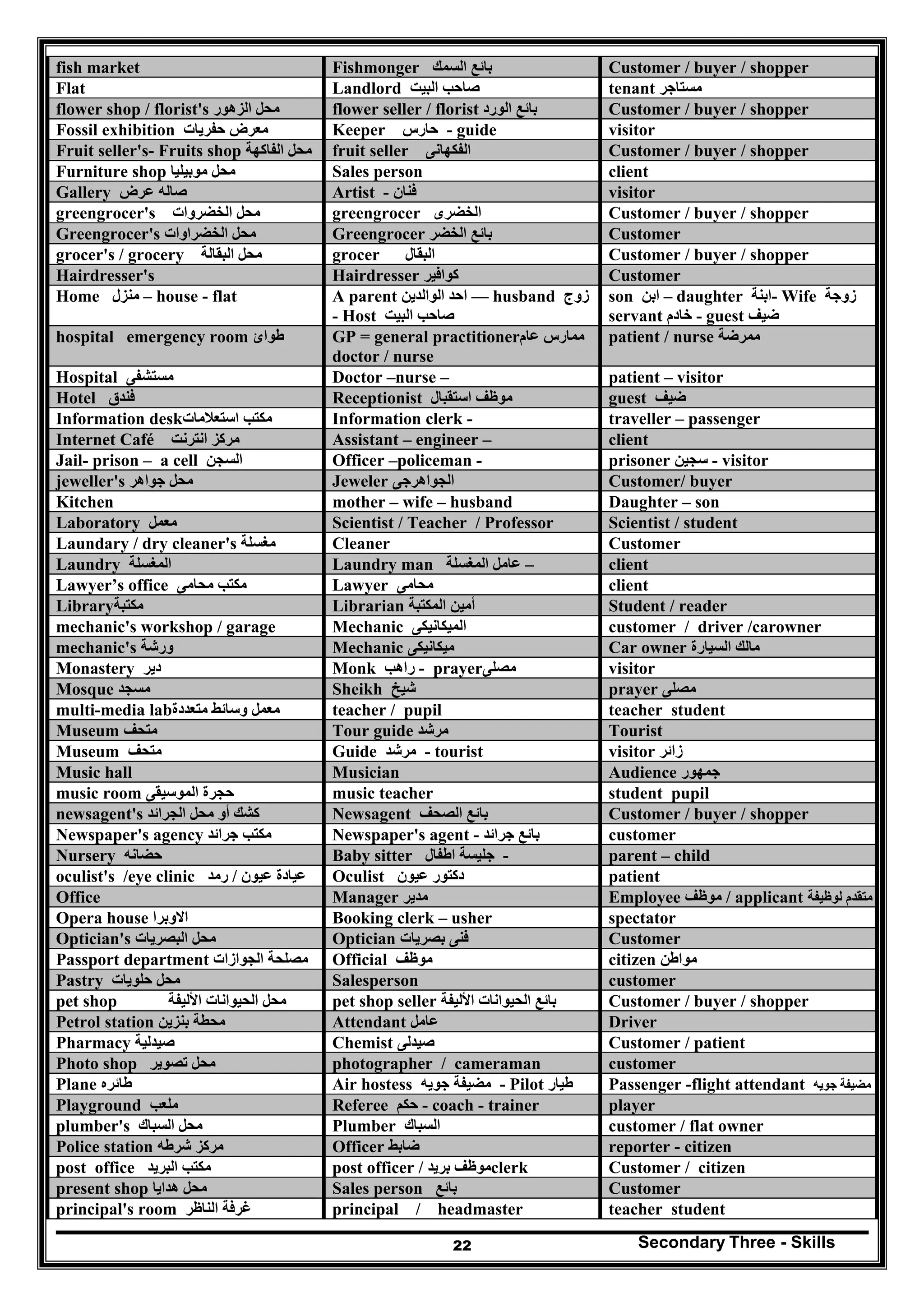
fish market Fishmonger ‫السمك‬ ‫بائع‬ Customer / buyer / shopper
Flat Landlord ‫البيت‬ ‫صاحب‬ tenant ‫مستاجر‬
flower shop / florist's ‫الزھ‬ ‫محل‬‫ور‬ flower seller / florist ‫الورد‬ ‫بائع‬ Customer / buyer / shopper
Fossil exhibition ‫حفري‬ ‫معرض‬‫ات‬ Keeper ‫حارس‬ - guide visitor
Fruit seller's- Fruits shop ‫الفاكھة‬ ‫محل‬ fruit seller ‫الفكھانى‬ Customer / buyer / shopper
Furniture shop ‫موبيليا‬ ‫محل‬ Sales person client
Gallery ‫عرض‬ ‫صاله‬ Artist ‫فنان‬- visitor
greengrocer's ‫الخضروات‬ ‫محل‬ greengrocer ‫الخضرى‬ Customer / buyer / shopper
Greengrocer's ‫الخضراوات‬ ‫محل‬ Greengrocer ‫الخضر‬ ‫بائع‬ Customer
grocer's / grocery ‫البقالة‬ ‫محل‬ grocer ‫البقال‬ Customer / buyer / shopper
Hairdresser's Hairdresser ‫كوافير‬ Customer
Home ‫منزل‬ – house - flat A parent ‫الوالدين‬ ‫احد‬ –– husband ‫زوج‬
- Host ‫البيت‬ ‫صاحب‬
son ‫ابن‬ – daughter ‫-ابنة‬ Wife ‫زوجة‬
servant ‫خادم‬ - guest ‫ضيف‬
hospital emergency room ‫طوائ‬ GP = general practitioner‫عام‬ ‫ممارس‬
doctor / nurse
patient / nurse ‫ممرضة‬
Hospital ‫مستشفى‬ Doctor –nurse – patient – visitor
Hotel ‫فندق‬ Receptionist ‫استقبال‬ ‫موظف‬ guest ‫ضيف‬
Information desk ‫م‬‫استعالمات‬ ‫كتب‬ Information clerk - traveller – passenger
Internet Café ‫انترنت‬ ‫مركز‬ Assistant – engineer – client
Jail- prison – a cell ‫السجن‬ Officer –policeman - prisoner ‫سجين‬ - visitor
jeweller's ‫جواھر‬ ‫محل‬ Jeweler ‫الجواھرجى‬ Customer/ buyer
Kitchen mother – wife – husband Daughter – son
Laboratory ‫معمل‬ Scientist / Teacher / Professor Scientist / student
Laundary / dry cleaner's ‫مغسلة‬ Cleaner Customer
Laundry ‫المغسلة‬ Laundry man ‫المغسلة‬ ‫عامل‬ – client
Lawyer’s office ‫محامى‬ ‫مكتب‬ Lawyer ‫محامى‬ client
Library‫مكتبة‬ Librarian ‫المكتبة‬ ‫أمين‬ Student / reader
mechanic's workshop / garage Mechanic ‫الميكانيكى‬ customer / driver /carowner
mechanic's ‫ورشة‬ Mechanic ‫ميكانيكى‬ Car owner ‫السيارة‬ ‫مالك‬
Monastery ‫دير‬ Monk ‫راھب‬ - prayer‫مصلى‬ visitor
Mosque ‫مسجد‬ Sheikh ‫شيخ‬ prayer ‫مصلى‬
multi-media lab‫متعددة‬ ‫وسائط‬ ‫معمل‬ teacher / pupil teacher student
Museum ‫متحف‬ Tour guide ‫مرشد‬ Tourist
Museum ‫متحف‬ Guide ‫مرشد‬ - tourist visitor ‫زائر‬
Music hall Musician Audience ‫جمھور‬
music room ‫الموسيقى‬ ‫حجرة‬ music teacher student pupil
newsagent's ‫كش‬‫الجرائد‬ ‫محل‬ ‫أو‬ ‫ك‬ Newsagent ‫الصحف‬ ‫بائع‬ Customer / buyer / shopper
Newspaper's agency ‫جرائد‬ ‫مكتب‬ Newspaper's agent ‫جرائد‬ ‫بائع‬- customer
Nursery ‫حضانه‬ Baby sitter ‫اطفال‬ ‫جليسة‬ - parent – child
oculist's /eye clinic ‫عيون‬ ‫عيادة‬/‫رمد‬ Oculist ‫دكت‬‫عيون‬ ‫ور‬ patient
Office Manager ‫مدير‬ Employee ‫موظف‬ / applicant ‫لوظيفة‬ ‫متقدم‬
Opera house ‫االوبرا‬ Booking clerk – usher spectator
Optician's ‫البصريات‬ ‫محل‬ Optician ‫بصريات‬ ‫فنى‬ Customer
Passport department ‫الجوازات‬ ‫مصلحة‬ Official ‫موظف‬ citizen ‫مواطن‬
Pastry ‫حلويات‬ ‫محل‬ Salesperson customer
pet shop ‫األليفة‬ ‫الحيوانات‬ ‫محل‬ pet shop seller ‫األليفة‬ ‫الحيوانات‬ ‫بائع‬ Customer / buyer / shopper
Petrol station ‫بنزين‬ ‫محطة‬ Attendant ‫عامل‬ Driver
Pharmacy ‫صيدلية‬ Chemist ‫صيدلى‬ Customer / patient
Photo shop ‫تصوير‬ ‫محل‬ photographer / cameraman customer
Plane ‫طائره‬ Air hostess ‫جويه‬ ‫مضيفة‬ - Pilot ‫طيار‬ Passenger -flight attendant ‫جويه‬ ‫مضيفة‬
Playground ‫ملعب‬ Referee ‫حكم‬ - coach - trainer player
plumber's ‫السباك‬ ‫محل‬ Plumber ‫السباك‬ customer / flat owner
Police station ‫شرطه‬ ‫مركز‬ Officer ‫ض‬‫ابط‬ reporter - citizen
post office ‫البريد‬ ‫مكتب‬ post officer / ‫بريد‬ ‫موظف‬clerk Customer / citizen
present shop ‫ھدايا‬ ‫محل‬ Sales person ‫بائع‬ Customer
principal's room ‫الناظر‬ ‫غرفة‬ principal / headmaster teacher student
Secondary Three - Skills23
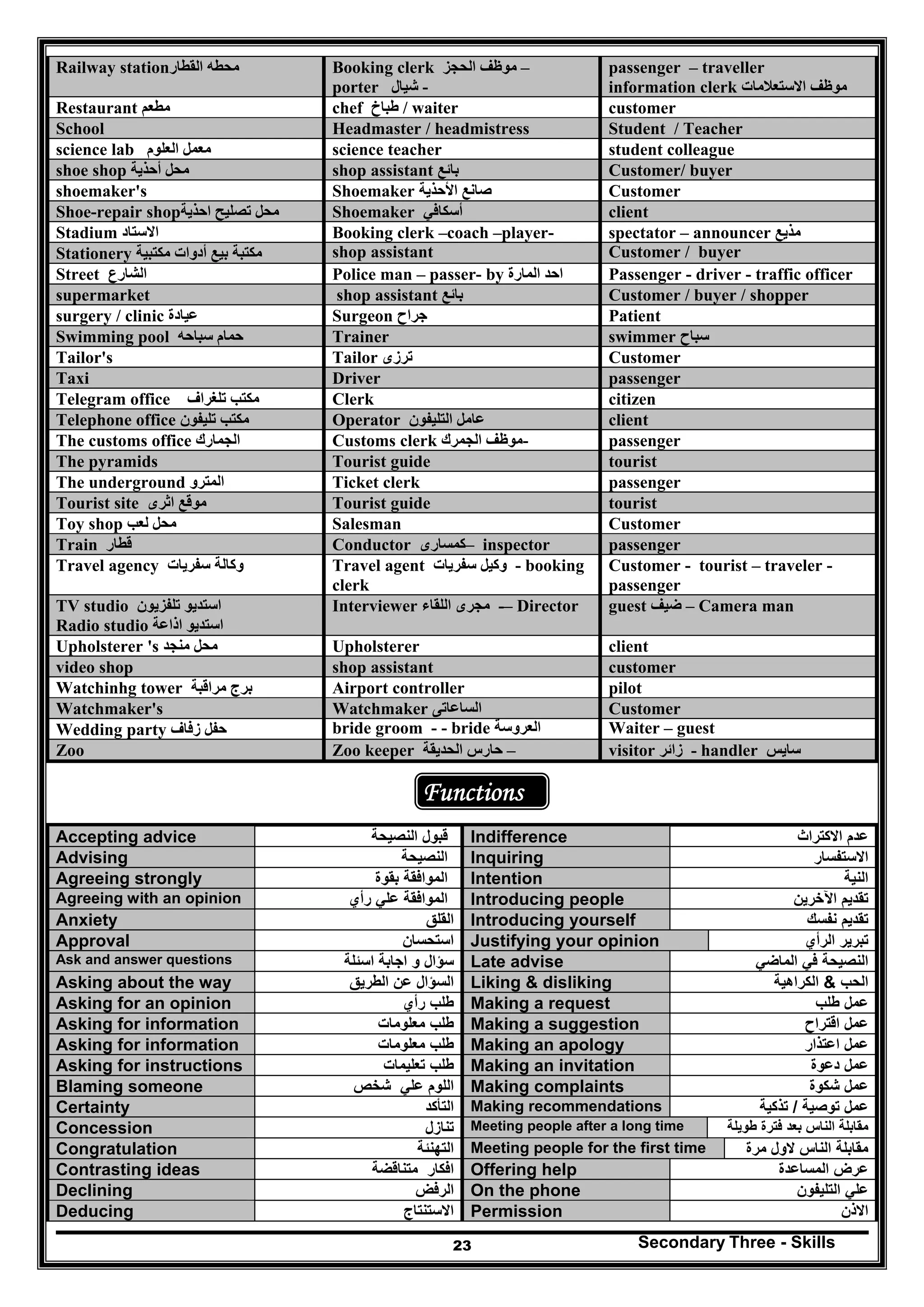
Railway station‫القطار‬ ‫محطه‬ Booking clerk ‫الحجز‬ ‫موظف‬ –
porter ‫شيال‬ -
passenger – traveller
information clerk ‫االستعالمات‬ ‫موظف‬
Restaurant ‫مطعم‬ chef ‫طباخ‬ / waiter customer
School Headmaster / headmistress Student / Teacher
science lab ‫العلوم‬ ‫معمل‬ science teacher student colleague
shoe shop ‫أحذية‬ ‫محل‬ shop assistant ‫بائع‬ Customer/ buyer
shoemaker's Shoemaker ‫األحذية‬ ‫صانع‬ Customer
Shoe-repair shop‫احذية‬ ‫تصليح‬ ‫محل‬ Shoemaker ‫أسكافي‬ client
Stadium ‫االستاد‬ Booking clerk –coach –player- spectator – announcer ‫مذيع‬
Stationery ‫مكتبية‬ ‫أدوات‬ ‫بيع‬ ‫مكتبة‬ shop assistant Customer / buyer
Street ‫الشارع‬ Police man – passer- by ‫المارة‬ ‫احد‬ Passenger - driver - traffic officer
supermarket ‫بائع‬shop assistant Customer / buyer / shopper
surgery / clinic ‫عيادة‬ Surgeon ‫جراح‬ Patient
Swimming pool ‫سباحه‬ ‫حمام‬ Trainer swimmer ‫سباح‬
Tailor's Tailor ‫ترزى‬ Customer
Taxi Driver passenger
Telegram office ‫تلغراف‬ ‫مكتب‬ Clerk citizen
Telephone office ‫تليفون‬ ‫مكتب‬ Operator ‫التليفون‬ ‫عامل‬ client
The customs office ‫الجمارك‬ Customs clerk ‫الجمرك‬ ‫-موظف‬ passenger
The pyramids Tourist guide tourist
The underground ‫المترو‬ Ticket clerk passenger
Tourist site ‫اثرى‬ ‫موقع‬ Tourist guide tourist
Toy shop ‫لعب‬ ‫محل‬ Salesman Customer
Train ‫قطار‬ Conductor ‫–كمسارى‬ inspector passenger
Travel agency ‫سفريات‬ ‫وكالة‬ Travel agent ‫سفريات‬ ‫وكيل‬ - booking
clerk
Customer - tourist – traveler -
passenger
TV studio ‫تلفزيون‬ ‫استديو‬
Radio studio ‫اذاعة‬ ‫استديو‬
Interviewer ‫اللقاء‬ ‫مجرى‬ -– Director guest ‫ضيف‬ – Camera man
Upholsterer 's ‫منجد‬ ‫محل‬ Upholsterer client
video shop shop assistant customer
Watchinhg tower ‫مراقبة‬ ‫برج‬ Airport controller pilot
Watchmaker's Watchmaker ‫الساعاتى‬ Customer
Wedding party ‫زفاف‬ ‫حفل‬ bride groom - - bride ‫العروسة‬ Waiter – guest
Zoo Zoo keeper ‫الحديقة‬ ‫حارس‬ – visitor ‫زائر‬ - handler ‫سايس‬
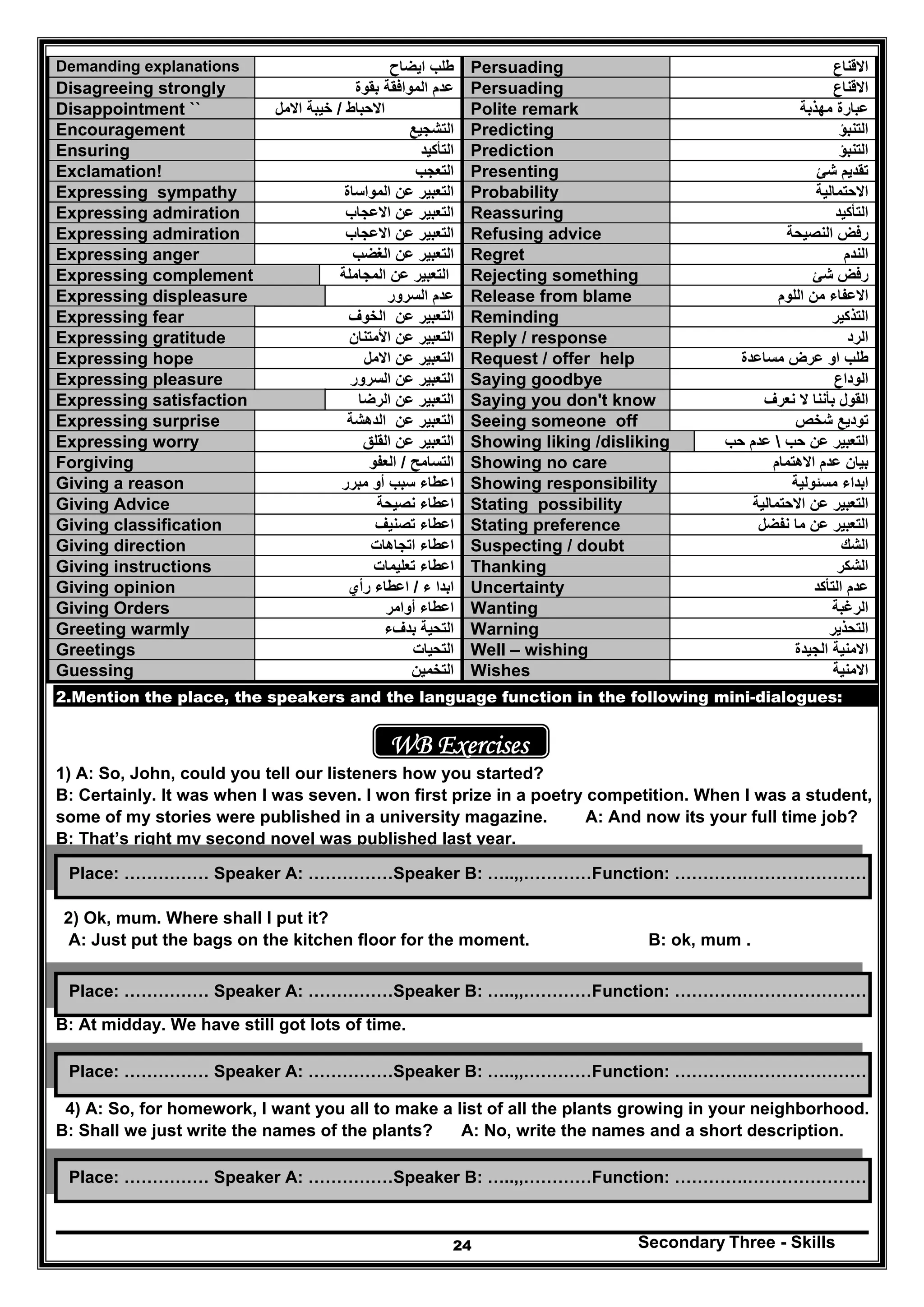
Functions
‫االكتراث‬ ‫عدم‬Indifference‫النصيحة‬ ‫قبول‬Accepting advice
‫االستفسار‬Inquiring‫النصيحة‬Advising
‫النية‬Intention‫بقوة‬ ‫الموافقة‬Agreeing strongly
‫اآلخرين‬ ‫تقديم‬Introducing people‫رأي‬ ‫علي‬ ‫الموافقة‬Agreeing with an opinion
‫نفسك‬ ‫تقديم‬Introducing yourself‫القلق‬Anxiety
‫الرأي‬ ‫تبرير‬Justifying your opinion‫استحسان‬Approval
‫الماضي‬ ‫في‬ ‫النصيحة‬Late advise‫اسئلة‬ ‫اجابة‬ ‫و‬ ‫سؤال‬Ask and answer questions
‫الحب‬&‫الكراھية‬Liking & disliking‫الطريق‬ ‫عن‬ ‫السؤال‬Asking about the way
‫طلب‬ ‫عمل‬Making a request‫رأي‬ ‫طلب‬Asking for an opinion
‫اقتراح‬ ‫عمل‬Making a suggestion‫معلومات‬ ‫طلب‬Asking for information
‫اعتذار‬ ‫عمل‬Making an apology‫طلب‬‫معلومات‬Asking for information
‫دعوة‬ ‫عمل‬Making an invitation‫تعليمات‬ ‫طلب‬Asking for instructions
‫شكوة‬ ‫عمل‬Making complaints‫شخص‬ ‫علي‬ ‫اللوم‬Blaming someone
‫توصية‬ ‫عمل‬/‫تذكية‬Making recommendations‫التأكد‬Certainty
‫طوي‬ ‫فترة‬ ‫بعد‬ ‫الناس‬ ‫مقابلة‬‫لة‬Meeting people after a long time‫تنازل‬Concession
‫مرة‬ ‫الول‬ ‫الناس‬ ‫مقابلة‬Meeting people for the first time‫التھنئة‬Congratulation
‫المساعدة‬ ‫عرض‬Offering help‫متناقضة‬ ‫افكار‬Contrasting ideas
‫التليفون‬ ‫علي‬On the phone‫الرفض‬Declining
‫اال‬‫ذن‬Permission‫االستنتاج‬Deducing
Secondary Three - Skills24
‫االقناع‬Persuading‫ايضاح‬ ‫طلب‬Demanding explanations
‫االقناع‬Persuading‫بقوة‬ ‫الموافقة‬ ‫عدم‬Disagreeing strongly
‫مھذبة‬ ‫عبارة‬Polite remark‫االحباط‬/‫االمل‬ ‫خيبة‬Disappointment ``
‫التنبؤ‬Predicting‫التشجيع‬Encouragement
‫التنبؤ‬Prediction‫التأكيد‬Ensuring
‫شئ‬ ‫تقديم‬Presenting‫التعجب‬Exclamation!
‫االحتمالية‬Probability‫المواساة‬ ‫عن‬ ‫التعبير‬Expressing sympathy
‫التأكيد‬Reassuring‫االعجاب‬ ‫عن‬ ‫التعبير‬Expressing admiration
‫النصيحة‬ ‫رفض‬Refusing advice‫االعجاب‬ ‫عن‬ ‫التعبير‬Expressing admiration
‫الندم‬Regret‫الغضب‬ ‫عن‬ ‫التعبير‬Expressing anger
‫شئ‬ ‫رفض‬Rejecting something‫المجاملة‬ ‫عن‬ ‫التعبير‬Expressing complement
‫اللوم‬ ‫من‬ ‫االعفاء‬Release from blame‫السرور‬ ‫عدم‬Expressing displeasure
‫التذكير‬Reminding‫الخوف‬ ‫عن‬ ‫التعبير‬Expressing fear
‫الرد‬Reply / response‫عن‬ ‫التعبير‬‫األمتنان‬Expressing gratitude
‫مساعدة‬ ‫عرض‬ ‫او‬ ‫طلب‬Request / offer help‫االمل‬ ‫عن‬ ‫التعبير‬Expressing hope
‫ا‬‫لوداع‬Saying goodbye‫السرور‬ ‫عن‬ ‫التعبير‬Expressing pleasure
‫نعرف‬ ‫ال‬ ‫بأننا‬ ‫القول‬Saying you don't know‫الرضا‬ ‫عن‬ ‫التعبير‬Expressing satisfaction
‫شخص‬ ‫توديع‬Seeing someone off‫الدھشة‬ ‫عن‬ ‫التعبير‬Expressing surprise
‫حب‬ ‫عن‬ ‫التعبير‬‫حب‬ ‫عدم‬Showing liking /disliking‫القلق‬ ‫عن‬ ‫التعبير‬Expressing worry
‫االھتمام‬ ‫عدم‬ ‫بيان‬Showing no care‫التسامح‬/‫العفو‬Forgiving
‫مسئولية‬ ‫ابداء‬Showing responsibility‫مبرر‬ ‫أو‬ ‫سبب‬ ‫اعطاء‬Giving a reason
‫االحتمالية‬ ‫عن‬ ‫التعبير‬Stating possibility‫نصيحة‬ ‫اعطاء‬Giving Advice
‫نفضل‬ ‫ما‬ ‫عن‬ ‫التعبير‬Stating preference‫تصنيف‬ ‫اعطاء‬Giving classification
‫الشك‬Suspecting / doubt‫اتجاھات‬ ‫اعطاء‬Giving direction
‫الشكر‬Thanking‫تعليمات‬ ‫اعطاء‬Giving instructions
‫التأكد‬ ‫عدم‬Uncertainty‫ء‬ ‫ابدا‬/‫رأي‬ ‫اعطاء‬Giving opinion
‫الرغبة‬Wanting‫أوامر‬ ‫اعطاء‬Giving Orders
‫التحذير‬Warning‫بدفء‬ ‫التحية‬Greeting warmly
‫الجيدة‬ ‫االمنية‬Well – wishing‫التحيات‬Greetings
‫االمنية‬Wishes‫التخمين‬Guessing
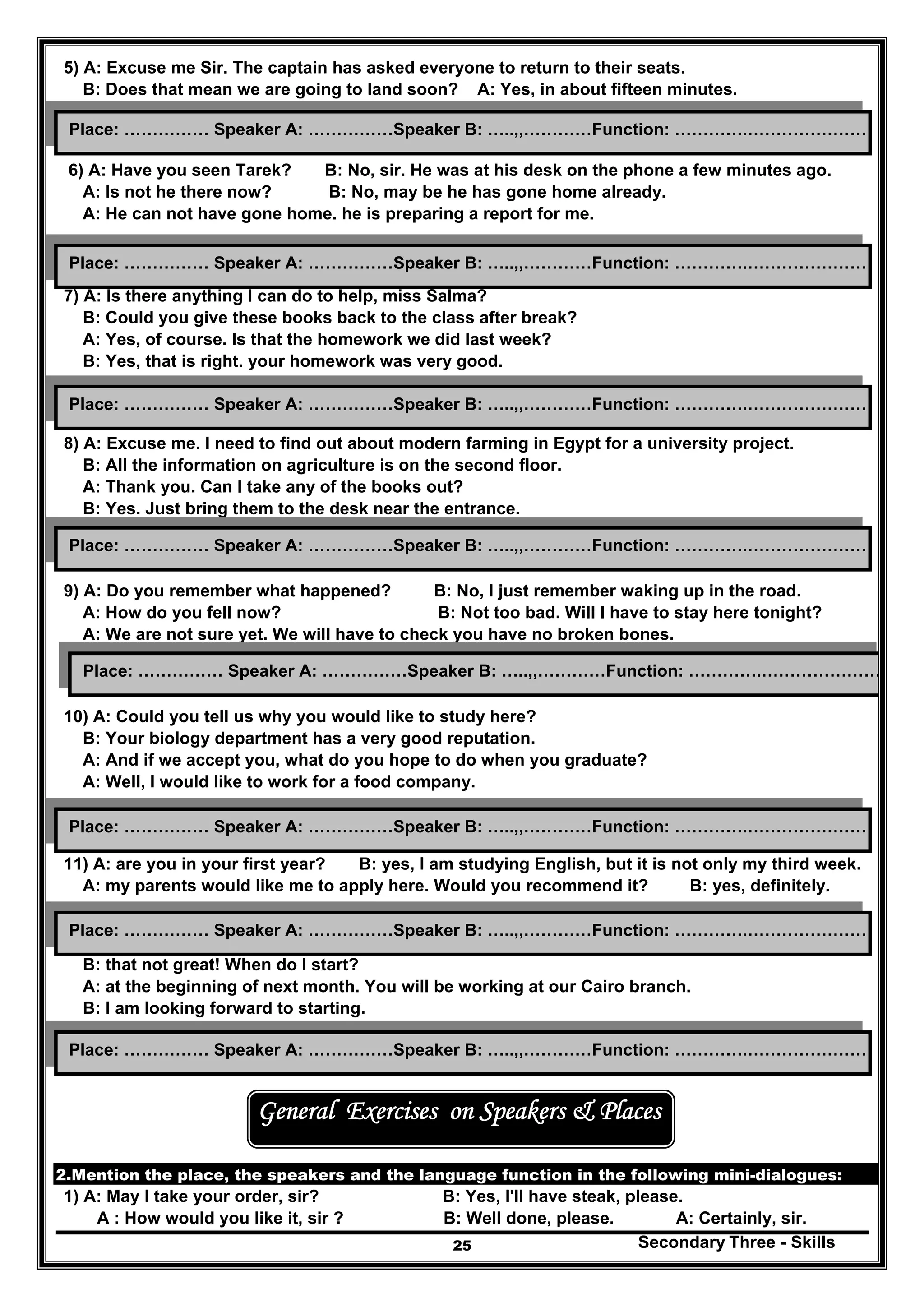
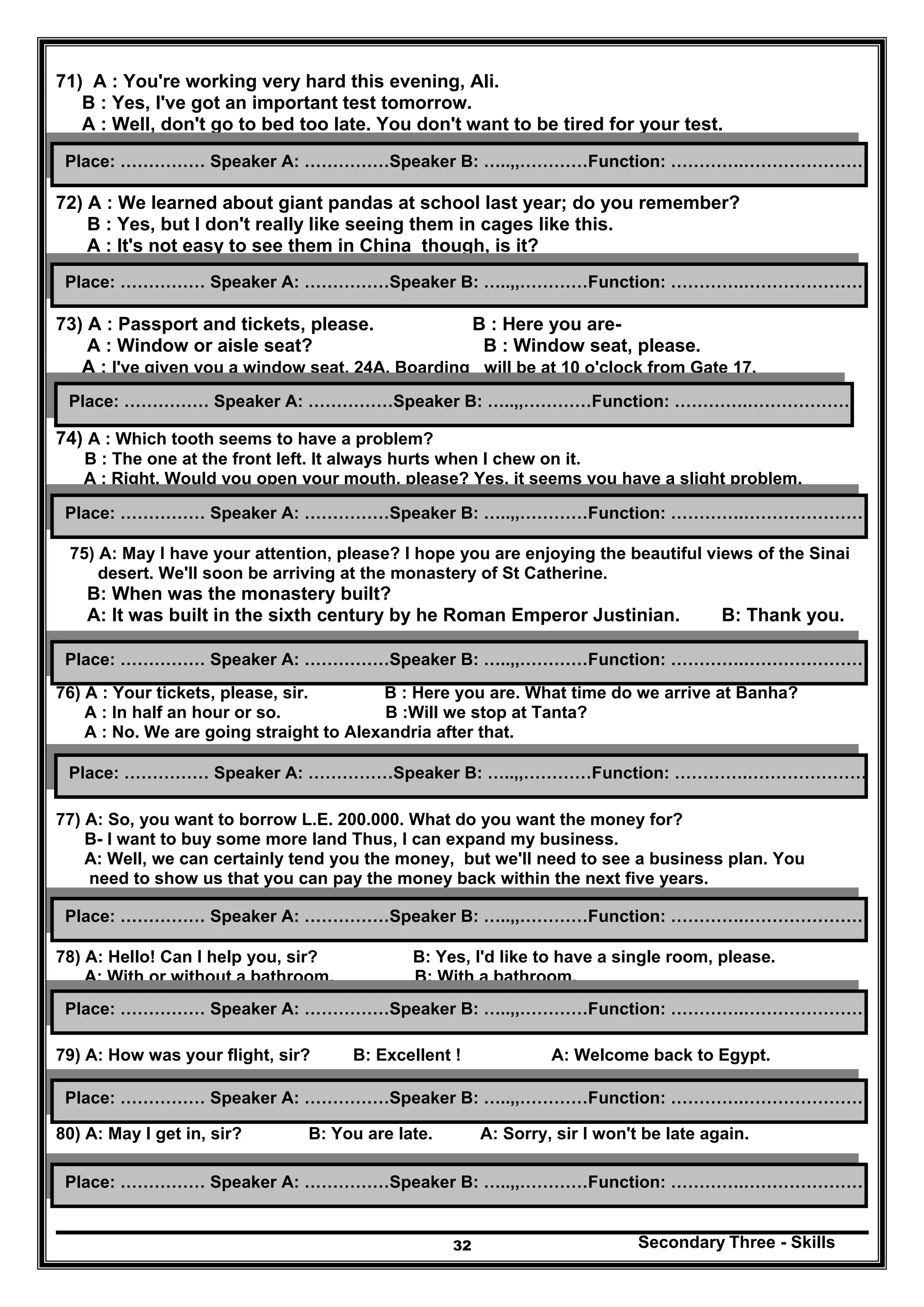
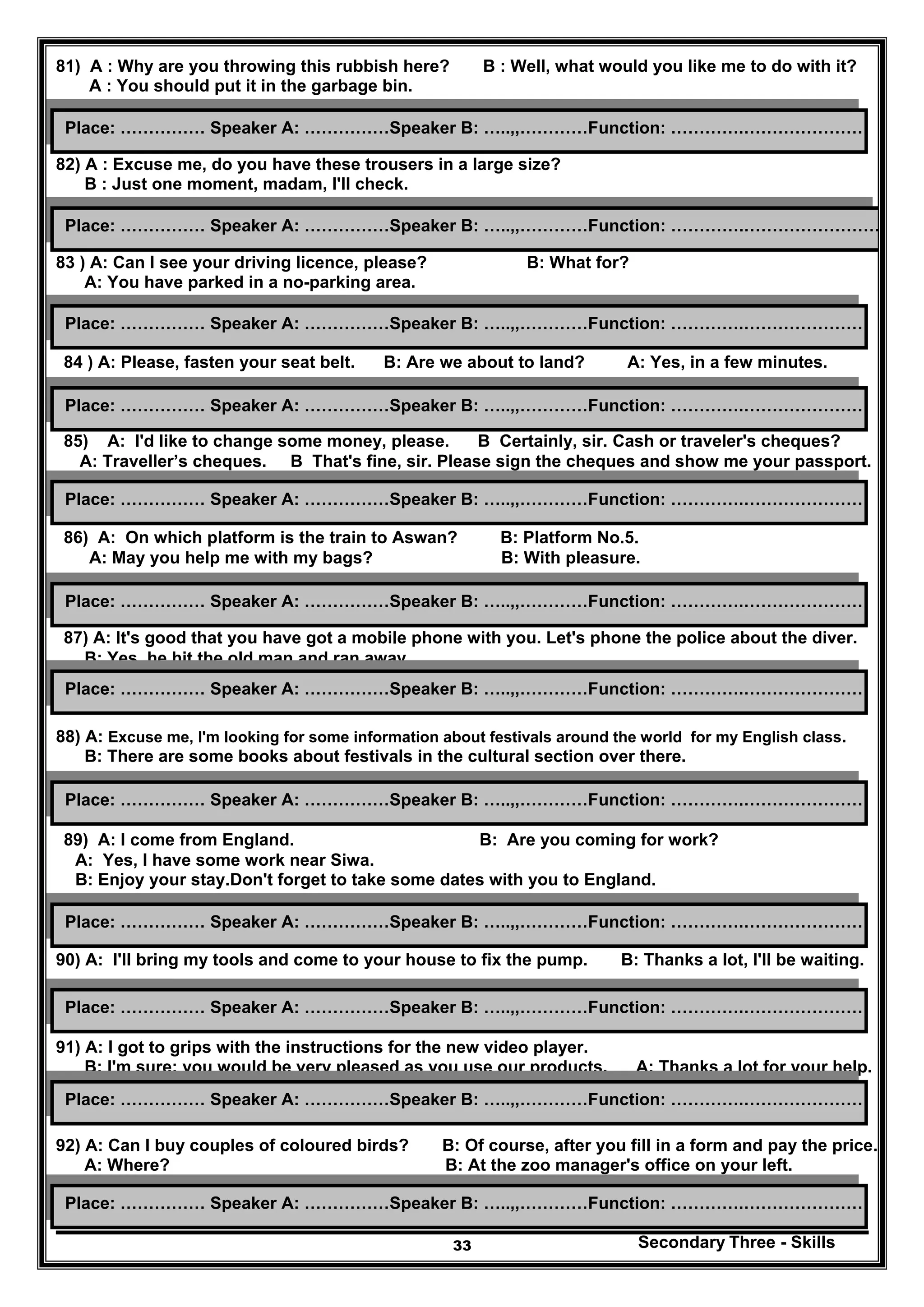
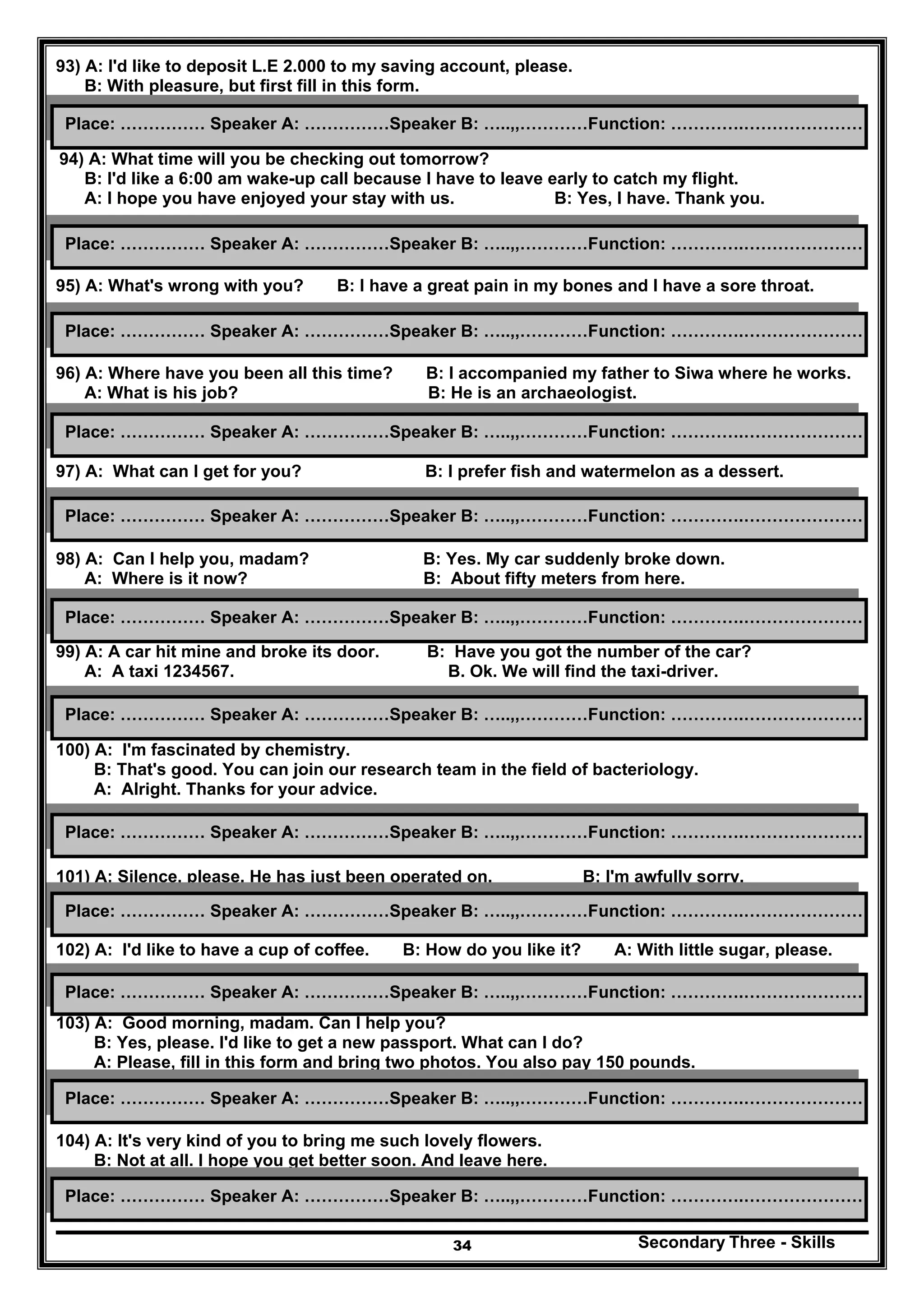
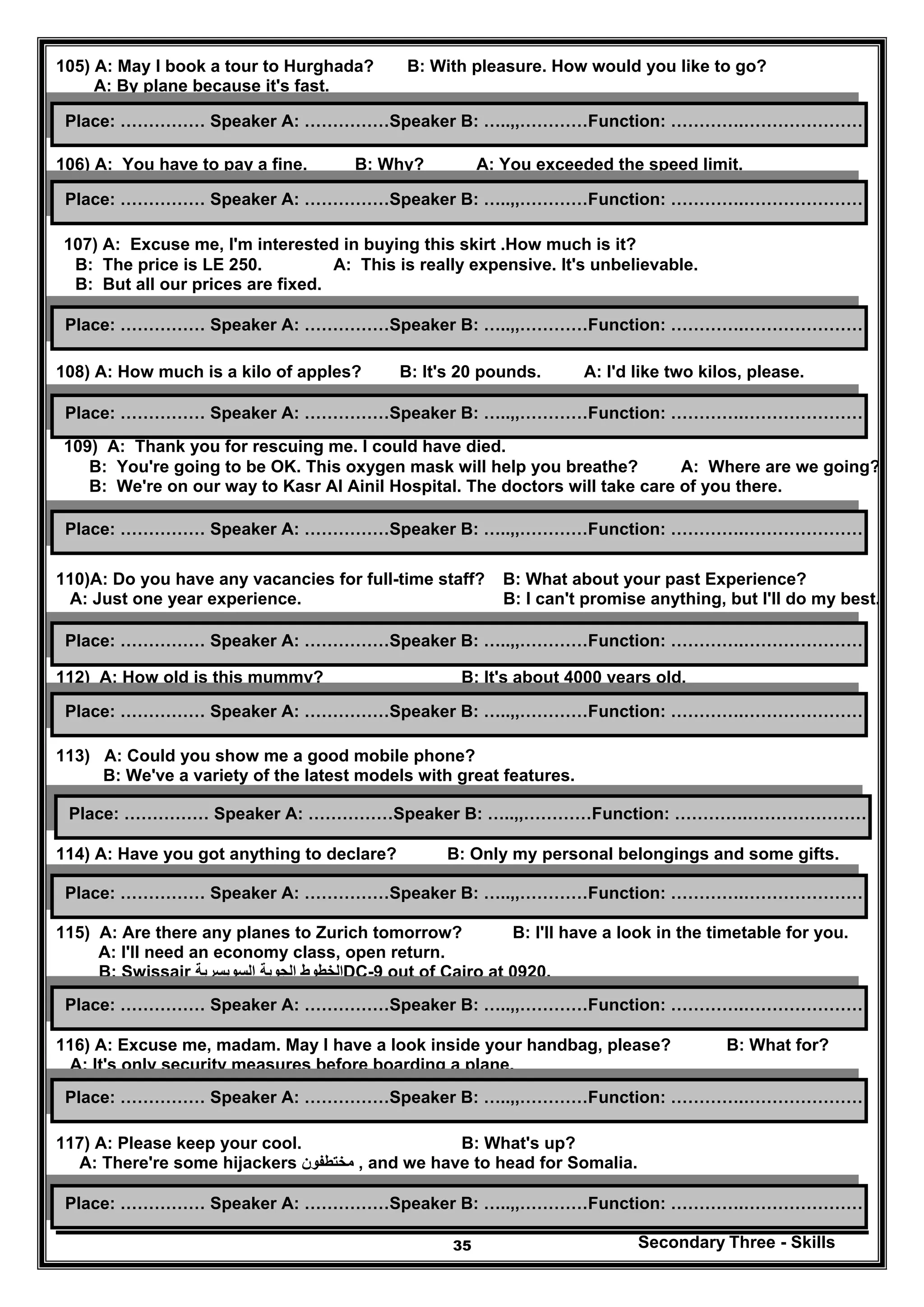
2.Mention the place, the speakers and the language function in the following mini-dialogues:
WB Exercises
1) A: So, John, could you tell our listeners how you started?
B: Certainly. It was when I was seven. I won first prize in a poetry competition. When I was a student,
some of my stories were published in a university magazine. A: And now its your full time job?
B: That’s right my second novel was published last year.
A: Could you help me carry the shopping into the house, please, Aisha? B:
2) Ok, mum. Where shall I put it?
A: Just put the bags on the kitchen floor for the moment. B: ok, mum .
3) A: At last we are here. What time does our flight leave, dad?
B: At midday. We have still got lots of time.
4) A: So, for homework, I want you all to make a list of all the plants growing in your neighborhood.
B: Shall we just write the names of the plants? A: No, write the names and a short description.
Place: …………… Speaker A: ……………Speaker B: …..,,…………Function: ………….…………………
Secondary Three - Skills25
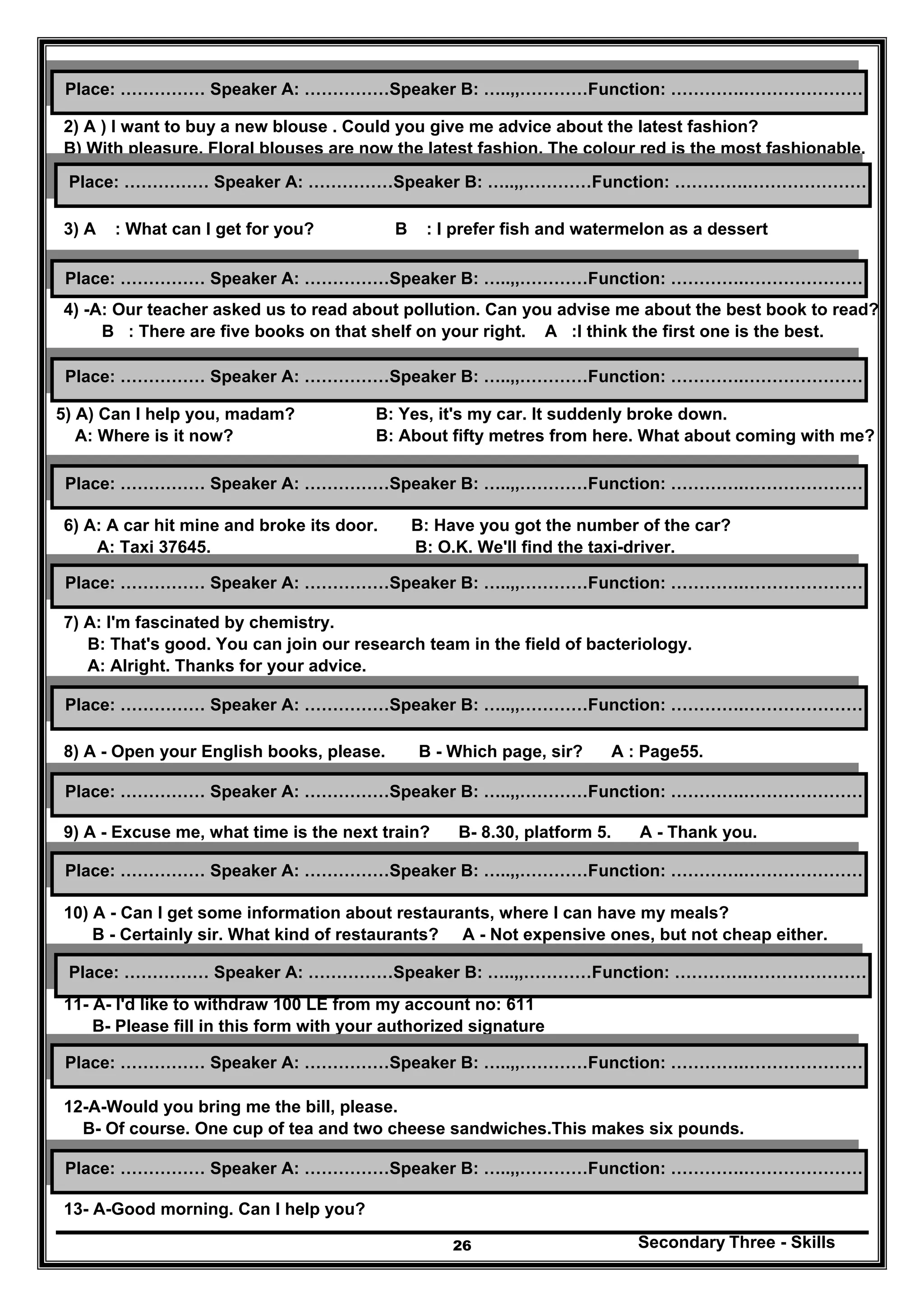
5) A: Excuse me Sir. The captain has asked everyone to return to their seats.
B: Does that mean we are going to land soon? A: Yes, in about fifteen minutes.
6) A: Have you seen Tarek? B: No, sir. He was at his desk on the phone a few minutes ago.
A: Is not he there now? B: No, may be he has gone home already.
A: He can not have gone home. he is preparing a report for me.
7) A: Is there anything I can do to help, miss Salma?
B: Could you give these books back to the class after break?
A: Yes, of course. Is that the homework we did last week?
B: Yes, that is right. your homework was very good.
8) A: Excuse me. I need to find out about modern farming in Egypt for a university project.
B: All the information on agriculture is on the second floor.
A: Thank you. Can I take any of the books out?
B: Yes. Just bring them to the desk near the entrance.
9) A: Do you remember what happened? B: No, I just remember waking up in the road.
A: How do you fell now? B: Not too bad. Will I have to stay here tonight?
A: We are not sure yet. We will have to check you have no broken bones.
10) A: Could you tell us why you would like to study here?
B: Your biology department has a very good reputation.
A: And if we accept you, what do you hope to do when you graduate?
A: Well, I would like to work for a food company.
11) A: are you in your first year? B: yes, I am studying English, but it is not only my third week.
A: my parents would like me to apply here. Would you recommend it? B: yes, definitely.
12) A: well, your application has been successful.
B: that not great! When do I start?
A: at the beginning of next month. You will be working at our Cairo branch.
B: I am looking forward to starting.
General Exercises on Speakers & Places
2.Mention the place, the speakers and the language function in the following mini-dialogues:
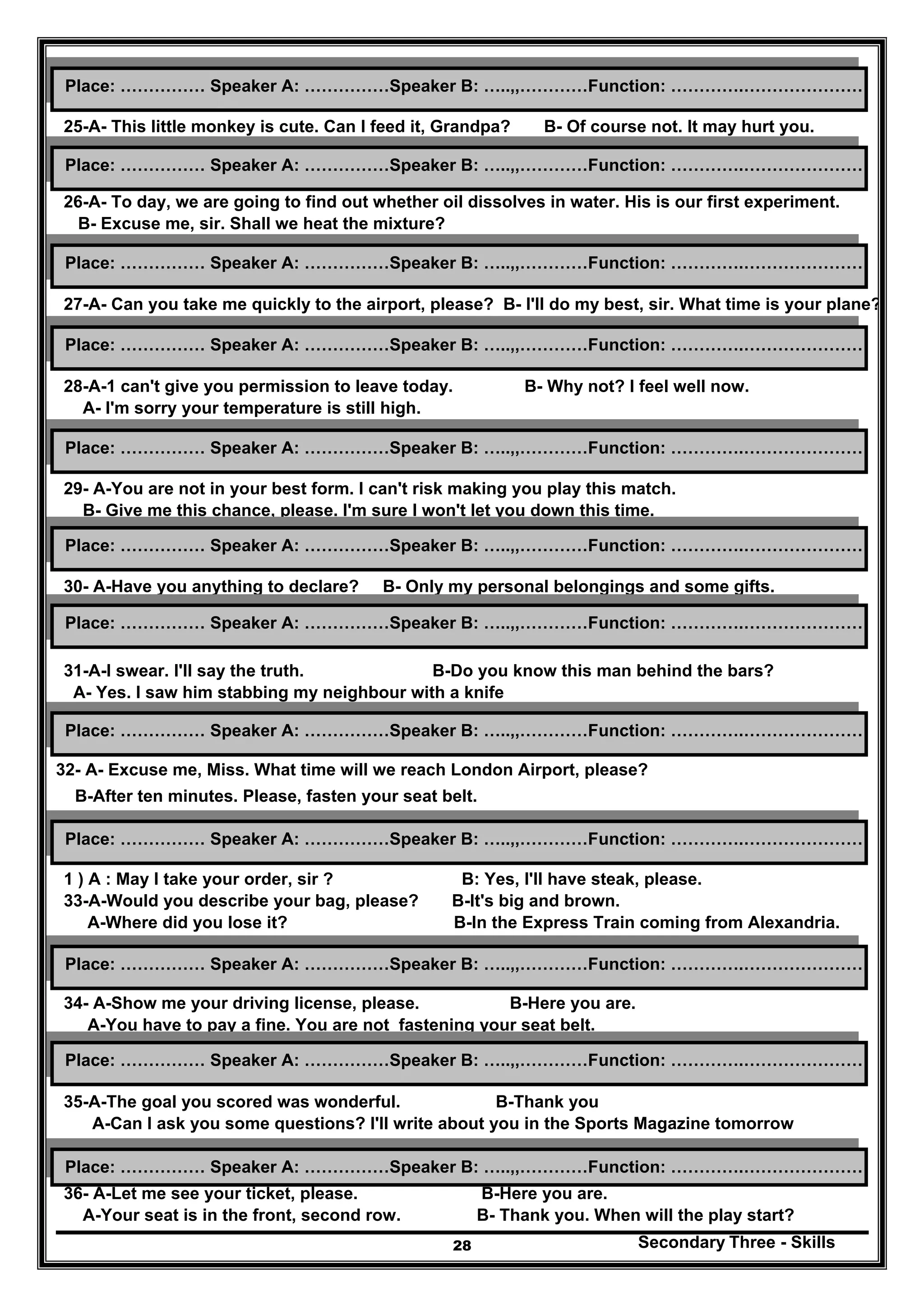
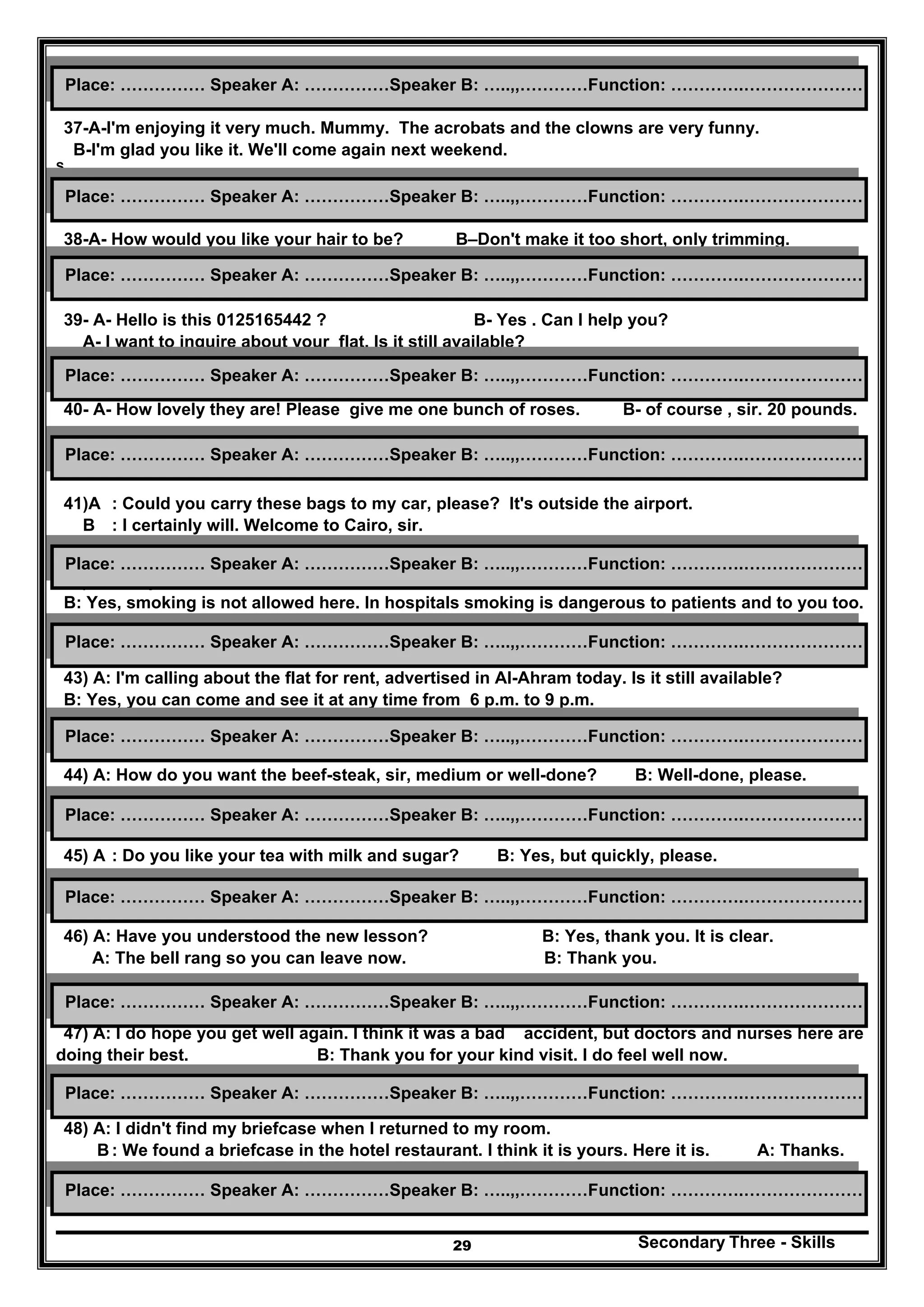
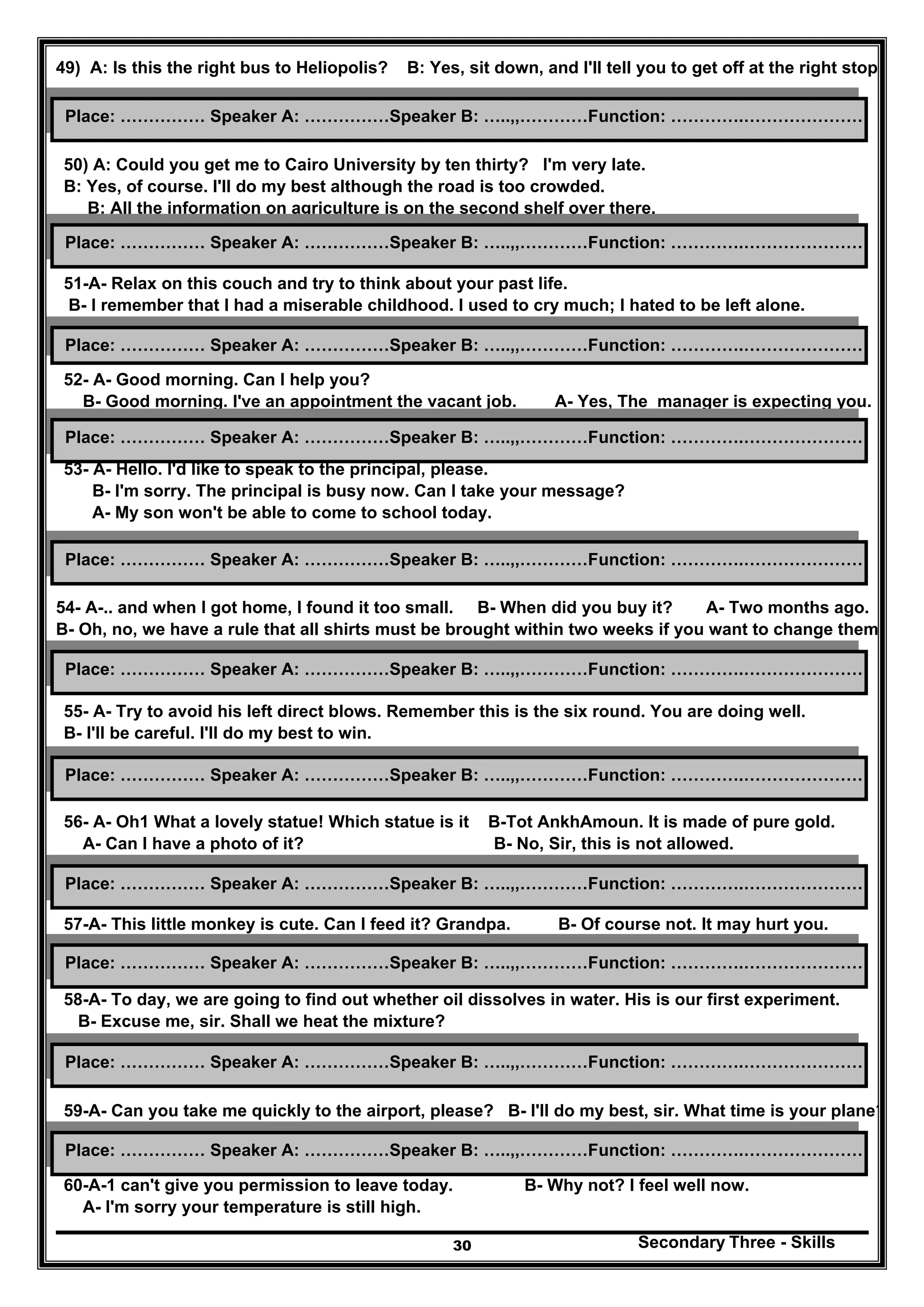
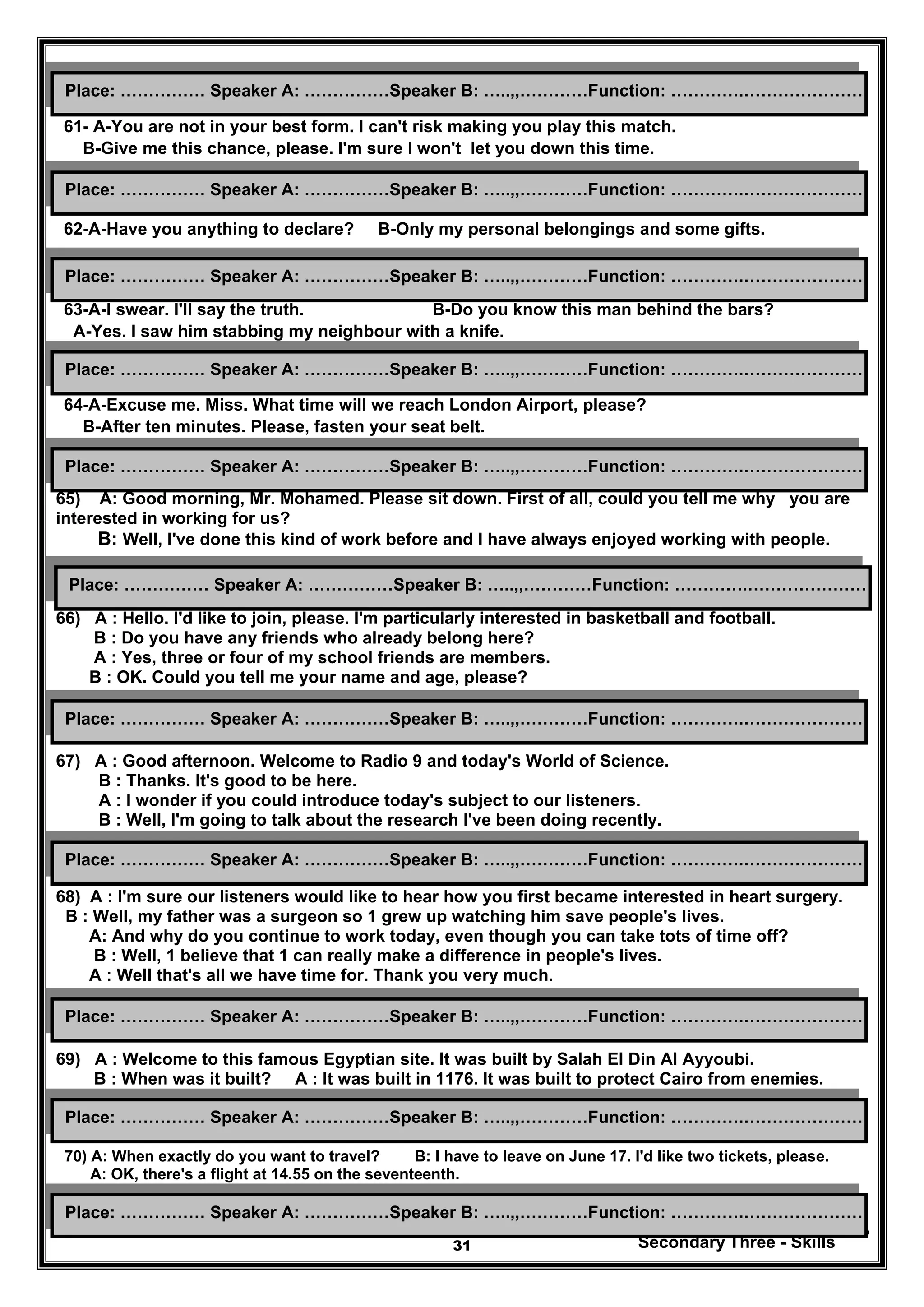
1) A: May I take your order, sir? B: Yes, I'll have steak, please.
A : How would you like it, sir ? B: Well done, please. A: Certainly, sir.
Place: …………… Speaker A: ……………Speaker B: …..,,…………Function: ………….…………………
Secondary Three - Skills26
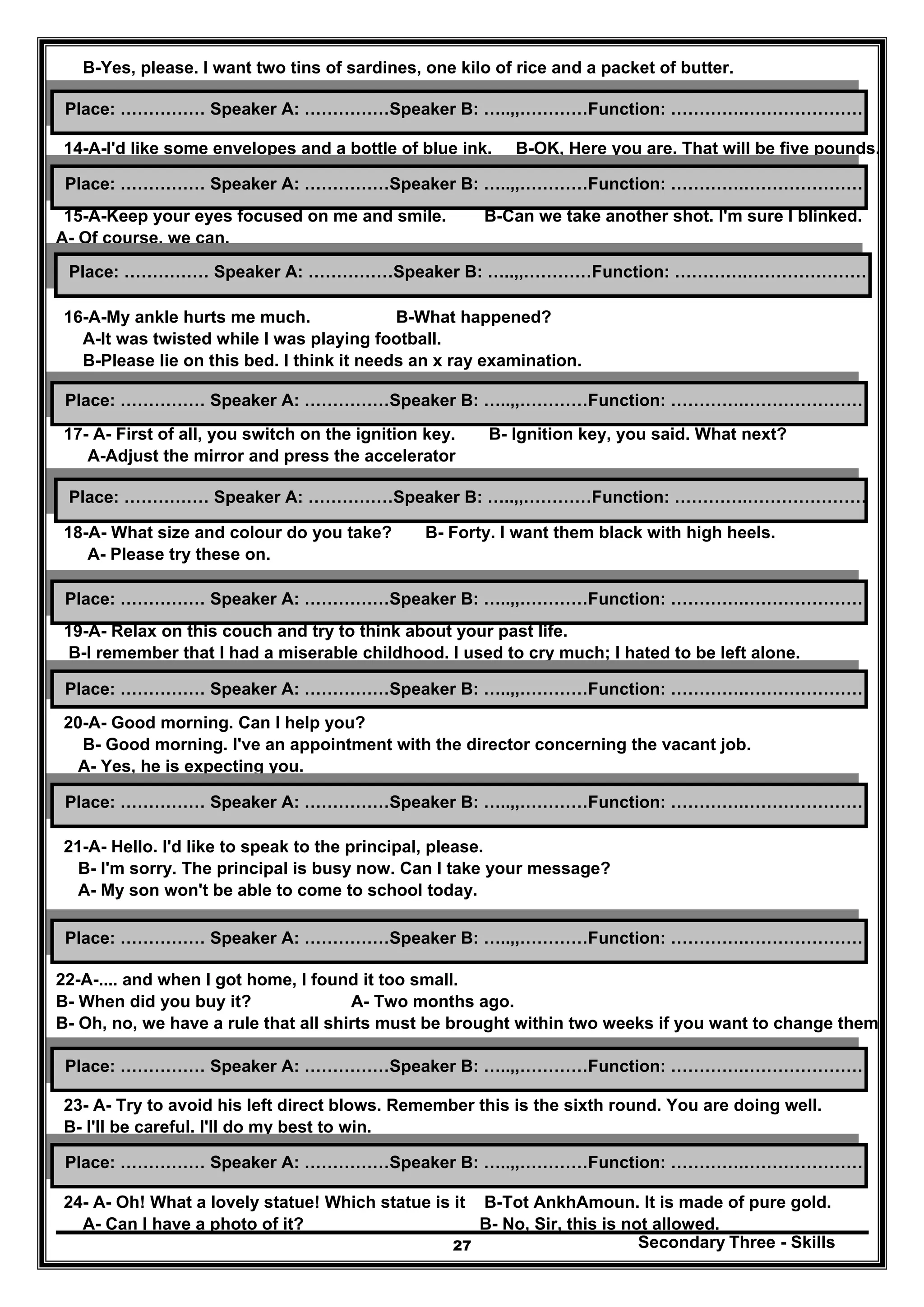
2) A ) I want to buy a new blouse . Could you give me advice about the latest fashion?
B) With pleasure. Floral blouses are now the latest fashion. The colour red is the most fashionable.
3) A : What can I get for you? B : I prefer fish and watermelon as a dessert
4) -A: Our teacher asked us to read about pollution. Can you advise me about the best book to read?
B : There are five books on that shelf on your right. A :I think the first one is the best.
5) A) Can I help you, madam? B: Yes, it's my car. It suddenly broke down.
A: Where is it now? B: About fifty metres from here. What about coming with me?
6) A: A car hit mine and broke its door. B: Have you got the number of the car?
A: Taxi 37645. B: O.K. We'll find the taxi-driver.
7) A: I'm fascinated by chemistry.
B: That's good. You can join our research team in the field of bacteriology.
A: Alright. Thanks for your advice.
8) A - Open your English books, please. B - Which page, sir? A : Page55.
9) A - Excuse me, what time is the next train? B- 8.30, platform 5. A - Thank you.
10) A - Can I get some information about restaurants, where I can have my meals?
B - Certainly sir. What kind of restaurants? A - Not expensive ones, but not cheap either.
11- A- I'd like to withdraw 100 LE from my account no: 611
B- Please fill in this form with your authorized signature
12-A-Would you bring me the bill, please.
B- Of course. One cup of tea and two cheese sandwiches.This makes six pounds.
13- A-Good morning. Can I help you?
Place: …………… Speaker A: ……………Speaker B: …..,,…………Function: ………….…………………
Secondary Three - Skills27
B-Yes, please. I want two tins of sardines, one kilo of rice and a packet of butter.
14-A-I'd like some envelopes and a bottle of blue ink. B-OK, Here you are. That will be five pounds.
15-A-Keep your eyes focused on me and smile. B-Can we take another shot. I'm sure I blinked.
A- Of course, we can.
16-A-My ankle hurts me much. B-What happened?
A-It was twisted while I was playing football.
B-Please lie on this bed. I think it needs an x ray examination.
17- A- First of all, you switch on the ignition key. B- Ignition key, you said. What next?
A-Adjust the mirror and press the accelerator
18-A- What size and colour do you take? B- Forty. I want them black with high heels.
A- Please try these on.
B: All the information on agriculture is on the second shelf over there.
19-A- Relax on this couch and try to think about your past life.
B-I remember that I had a miserable childhood. I used to cry much; I hated to be left alone.
20-A- Good morning. Can I help you?
B- Good morning. I've an appointment with the director concerning the vacant job.
A- Yes, he is expecting you.
21-A- Hello. I'd like to speak to the principal, please.
B- I'm sorry. The principal is busy now. Can I take your message?
A- My son won't be able to come to school today.
22-A-.... and when I got home, I found it too small.
B- When did you buy it? A- Two months ago.
B- Oh, no, we have a rule that all shirts must be brought within two weeks if you want to change them.
23- A- Try to avoid his left direct blows. Remember this is the sixth round. You are doing well.
B- I'll be careful. I'll do my best to win.
24- A- Oh! What a lovely statue! Which statue is it B-Tot AnkhAmoun. It is made of pure gold.
A- Can I have a photo of it? B- No, Sir, this is not allowed.
Place: …………… Speaker A: ……………Speaker B: …..,,…………Function: ………….…………………
Secondary Three - Skills28
25-A- This little monkey is cute. Can I feed it, Grandpa? B- Of course not. It may hurt you.
26-A- To day, we are going to find out whether oil dissolves in water. His is our first experiment.
B- Excuse me, sir. Shall we heat the mixture?
27-A- Can you take me quickly to the airport, please? B- I'll do my best, sir. What time is your plane?
28-A-1 can't give you permission to leave today. B- Why not? I feel well now.
A- I'm sorry your temperature is still high.
29- A-You are not in your best form. I can't risk making you play this match.
B- Give me this chance, please. I'm sure I won't let you down this time.
30- A-Have you anything to declare? B- Only my personal belongings and some gifts.
31-A-I swear. I'll say the truth. B-Do you know this man behind the bars?
A- Yes. I saw him stabbing my neighbour with a knife
32- A- Excuse me, Miss. What time will we reach London Airport, please?
B-After ten minutes. Please, fasten your seat belt.
1 ) A : May I take your order, sir ? B: Yes, I'll have steak, please.
33-A-Would you describe your bag, please? B-It's big and brown.
A-Where did you lose it? B-In the Express Train coming from Alexandria.
34- A-Show me your driving license, please. B-Here you are.
A-You have to pay a fine. You are not fastening your seat belt.
B: All the information on agriculture is on the second shelf over there.
35-A-The goal you scored was wonderful. B-Thank you
A-Can I ask you some questions? I'll write about you in the Sports Magazine tomorrow
36- A-Let me see your ticket, please. B-Here you are.
A-Your seat is in the front, second row. B- Thank you. When will the play start?
Place: …………… Speaker A: ……………Speaker B: …..,,…………Function: ………….…………………
Secondary Three - Skills29
37-A-I'm enjoying it very much. Mummy. The acrobats and the clowns are very funny.
B-I'm glad you like it. We'll come again next weekend.
S
38-A- How would you like your hair to be? B–Don't make it too short, only trimming.
39- A- Hello is this 0125165442 ? B- Yes . Can I help you?
A- I want to inquire about your flat. Is it still available?
40- A- How lovely they are! Please give me one bunch of roses. B- of course , sir. 20 pounds.
41)A : Could you carry these bags to my car, please? It's outside the airport.
B : I certainly will. Welcome to Cairo, sir.
42) A: Do you mind if I smoke, doctor?
B: Yes, smoking is not allowed here. In hospitals smoking is dangerous to patients and to you too.
43) A: I'm calling about the flat for rent, advertised in Al-Ahram today. Is it still available?
B: Yes, you can come and see it at any time from 6 p.m. to 9 p.m.
44) A: How do you want the beef-steak, sir, medium or well-done? B: Well-done, please.
45) A : Do you like your tea with milk and sugar? B: Yes, but quickly, please.
46) A: Have you understood the new lesson? B: Yes, thank you. It is clear.
A: The bell rang so you can leave now. B: Thank you.
47) A: I do hope you get well again. I think it was a bad accident, but doctors and nurses here are
doing their best. B: Thank you for your kind visit. I do feel well now.
48) A: I didn't find my briefcase when I returned to my room.
B: We found a briefcase in the hotel restaurant. I think it is yours. Here it is. A: Thanks.
Place: …………… Speaker A: ……………Speaker B: …..,,…………Function: ………….…………………
Secondary Three - Skills30
49) A: Is this the right bus to Heliopolis? B: Yes, sit down, and I'll tell you to get off at the right stop.
50) A: Could you get me to Cairo University by ten thirty? I'm very late.
B: Yes, of course. I'll do my best although the road is too crowded.
B: All the information on agriculture is on the second shelf over there.
51-A- Relax on this couch and try to think about your past life.
B- I remember that I had a miserable childhood. I used to cry much; I hated to be left alone.
52- A- Good morning. Can I help you?
B- Good morning. I've an appointment the vacant job. A- Yes, The manager is expecting you.
53- A- Hello. I'd like to speak to the principal, please.
B- I'm sorry. The principal is busy now. Can I take your message?
A- My son won't be able to come to school today.
54- A-.. and when I got home, I found it too small. B- When did you buy it? A- Two months ago.
B- Oh, no, we have a rule that all shirts must be brought within two weeks if you want to change them.
55- A- Try to avoid his left direct blows. Remember this is the six round. You are doing well.
B- I'll be careful. I'll do my best to win.
56- A- Oh1 What a lovely statue! Which statue is it B-Tot AnkhAmoun. It is made of pure gold.
A- Can I have a photo of it? B- No, Sir, this is not allowed.
57-A- This little monkey is cute. Can I feed it? Grandpa. B- Of course not. It may hurt you.
58-A- To day, we are going to find out whether oil dissolves in water. His is our first experiment.
B- Excuse me, sir. Shall we heat the mixture?
59-A- Can you take me quickly to the airport, please? B- I'll do my best, sir. What time is your plane?
60-A-1 can't give you permission to leave today. B- Why not? I feel well now.
A- I'm sorry your temperature is still high.
Place: …………… Speaker A: ……………Speaker B: …..,,…………Function: ………….…………………
Secondary Three - Skills31
61- A-You are not in your best form. I can't risk making you play this match.
B-Give me this chance, please. I'm sure I won't let you down this time.
62-A-Have you anything to declare? B-Only my personal belongings and some gifts.
63-A-I swear. I'll say the truth. B-Do you know this man behind the bars?
A-Yes. I saw him stabbing my neighbour with a knife.
64-A-Excuse me. Miss. What time will we reach London Airport, please?
B-After ten minutes. Please, fasten your seat belt.
65) A: Good morning, Mr. Mohamed. Please sit down. First of all, could you tell me why you are
interested in working for us?
B: Well, I've done this kind of work before and I have always enjoyed working with people.
66) A : Hello. I'd like to join, please. I'm particularly interested in basketball and football.
B : Do you have any friends who already belong here?
A : Yes, three or four of my school friends are members.
B : OK. Could you tell me your name and age, please?
67) A : Good afternoon. Welcome to Radio 9 and today's World of Science.
B : Thanks. It's good to be here.
A : I wonder if you could introduce today's subject to our listeners.
B : Well, I'm going to talk about the research I've been doing recently.
68) A : I'm sure our listeners would like to hear how you first became interested in heart surgery.
B : Well, my father was a surgeon so 1 grew up watching him save people's lives.
A: And why do you continue to work today, even though you can take tots of time off?
B : Well, 1 believe that 1 can really make a difference in people's lives.
A : Well that's all we have time for. Thank you very much.
69) A : Welcome to this famous Egyptian site. It was built by Salah El Din Al Ayyoubi.
B : When was it built? A : It was built in 1176. It was built to protect Cairo from enemies.
70) A: When exactly do you want to travel? B: I have to leave on June 17. I'd like two tickets, please.
A: OK, there's a flight at 14.55 on the seventeenth.
Place: …………… Speaker A: ……………Speaker B: …..,,…………Function: ………….…………………
Secondary Three - Skills32
71) A : You're working very hard this evening, Ali.
B : Yes, I've got an important test tomorrow.
A : Well, don't go to bed too late. You don't want to be tired for your test.
72) A : We learned about giant pandas at school last year; do you remember?
B : Yes, but I don't really like seeing them in cages like this.
A : It's not easy to see them in China though, is it?
73) A : Passport and tickets, please. B : Here you are-
A : Window or aisle seat? B : Window seat, please.
A : I've given you a window seat, 24A. Boarding will be at 10 o'clock from Gate 17.
74) A : Which tooth seems to have a problem?
B : The one at the front left. It always hurts when I chew on it.
A : Right. Would you open your mouth, please? Yes, it seems you have a slight problem.
75) A: May I have your attention, please? I hope you are enjoying the beautiful views of the Sinai
desert. We'll soon be arriving at the monastery of St Catherine.
B: When was the monastery built?
A: It was built in the sixth century by he Roman Emperor Justinian. B: Thank you.
76) A : Your tickets, please, sir. B : Here you are. What time do we arrive at Banha?
A : In half an hour or so. B :Will we stop at Tanta?
A : No. We are going straight to Alexandria after that.
77) A: So, you want to borrow L.E. 200.000. What do you want the money for?
B- I want to buy some more land Thus, I can expand my business.
A: Well, we can certainly tend you the money, but we'll need to see a business plan. You
need to show us that you can pay the money back within the next five years.
78) A: Hello! Can I help you, sir? B: Yes, I'd like to have a single room, please.
A: With or without a bathroom. B: With a bathroom.
79) A: How was your flight, sir? B: Excellent ! A: Welcome back to Egypt.
80) A: May I get in, sir? B: You are late. A: Sorry, sir I won't be late again.
Place: …………… Speaker A: ……………Speaker B: …..,,…………Function: ………….…………………
Place: …………… Speaker A: ……………Speaker B: …..,,…………Function: ………….………………
Place: …………… Speaker A: ……………Speaker B: …..,,…………Function: ………….…………………
Secondary Three - Skills33
81) A : Why are you throwing this rubbish here? B : Well, what would you like me to do with it?
A : You should put it in the garbage bin.
82) A : Excuse me, do you have these trousers in a large size?
B : Just one moment, madam, I'll check.
83 ) A: Can I see your driving licence, please? B: What for?
A: You have parked in a no-parking area.
84 ) A: Please, fasten your seat belt. B: Are we about to land? A: Yes, in a few minutes.
85) A: I'd like to change some money, please. B Certainly, sir. Cash or traveler's cheques?
A: Traveller’s cheques. B That's fine, sir. Please sign the cheques and show me your passport.
86) A: On which platform is the train to Aswan? B: Platform No.5.
A: May you help me with my bags? B: With pleasure.
87) A: It's good that you have got a mobile phone with you. Let's phone the police about the diver.
B: Yes, he hit the old man and ran away.
88) A: Excuse me, I'm looking for some information about festivals around the world for my English class.
B: There are some books about festivals in the cultural section over there.
89) A: I come from England. B: Are you coming for work?
A: Yes, I have some work near Siwa.
B: Enjoy your stay.Don't forget to take some dates with you to England.
90) A: I'll bring my tools and come to your house to fix the pump. B: Thanks a lot, I'll be waiting.
91) A: I got to grips with the instructions for the new video player.
B: I'm sure; you would be very pleased as you use our products. A: Thanks a lot for your help.
92) A: Can I buy couples of coloured birds? B: Of course, after you fill in a form and pay the price.
A: Where? B: At the zoo manager's office on your left.
Place: …………… Speaker A: ……………Speaker B: …..,,…………Function: ………….……………………
Place: …………… Speaker A: ……………Speaker B: …..,,…………Function: ………….…………………
Secondary Three - Skills34
93) A: I'd like to deposit L.E 2.000 to my saving account, please.
B: With pleasure, but first fill in this form.
94) A: What time will you be checking out tomorrow?
B: I'd like a 6:00 am wake-up call because I have to leave early to catch my flight.
A: I hope you have enjoyed your stay with us. B: Yes, I have. Thank you.
95) A: What's wrong with you? B: I have a great pain in my bones and I have a sore throat.
96) A: Where have you been all this time? B: I accompanied my father to Siwa where he works.
A: What is his job? B: He is an archaeologist.
97) A: What can I get for you? B: I prefer fish and watermelon as a dessert.
98) A: Can I help you, madam? B: Yes. My car suddenly broke down.
A: Where is it now? B: About fifty meters from here.
99) A: A car hit mine and broke its door. B: Have you got the number of the car?
A: A taxi 1234567. B. Ok. We will find the taxi-driver.
100) A: I'm fascinated by chemistry.
B: That's good. You can join our research team in the field of bacteriology.
A: Alright. Thanks for your advice.
101) A: Silence, please. He has just been operated on. B: I'm awfully sorry.
102) A: I'd like to have a cup of coffee. B: How do you like it? A: With little sugar, please.
103) A: Good morning, madam. Can I help you?
B: Yes, please. I'd like to get a new passport. What can I do?
A: Please, fill in this form and bring two photos. You also pay 150 pounds.
104) A: It's very kind of you to bring me such lovely flowers.
B: Not at all. I hope you get better soon. And leave here.
Place: …………… Speaker A: ……………Speaker B: …..,,…………Function: ………….…………………
Secondary Three - Skills35
105) A: May I book a tour to Hurghada? B: With pleasure. How would you like to go?
A: By plane because it's fast.
106) A: You have to pay a fine. B: Why? A: You exceeded the speed limit.
107) A: Excuse me, I'm interested in buying this skirt .How much is it?
B: The price is LE 250. A: This is really expensive. It's unbelievable.
B: But all our prices are fixed.
108) A: How much is a kilo of apples? B: It's 20 pounds. A: I'd like two kilos, please.
109) A: Thank you for rescuing me. I could have died.
B: You're going to be OK. This oxygen mask will help you breathe? A: Where are we going?
B: We're on our way to Kasr Al Ainil Hospital. The doctors will take care of you there.
110)A: Do you have any vacancies for full-time staff? B: What about your past Experience?
A: Just one year experience. B: I can't promise anything, but I'll do my best.
112) A: How old is this mummy? B: It's about 4000 years old.
113) A: Could you show me a good mobile phone?
B: We've a variety of the latest models with great features.
114) A: Have you got anything to declare? B: Only my personal belongings and some gifts.
115) A: Are there any planes to Zurich tomorrow? B: I'll have a look in the timetable for you.
A: I'll need an economy class, open return.
B: Swissair ‫السويسري‬ ‫الجوية‬ ‫الخطوط‬‫ة‬ DC-9 out of Cairo at 0920.
116) A: Excuse me, madam. May I have a look inside your handbag, please? B: What for?
A: It's only security measures before boarding a plane.
117) A: Please keep your cool. B: What's up?
A: There're some hijackers ‫مختطفون‬ , and we have to head for Somalia.
Place: …………… Speaker A: ……………Speaker B: …..,,…………Function: ………….…………………
Secondary Three - Skills36
118) A: Have the instruments been sterilized? B: Yes, of course.
A: Has the patient been prepared? B: Certainly.
A: Then he should be operated on at once.
119) A: I have insomnia and I want something which would help me sleep.
B: I'm sorry; such drugs can't be sold without a prescription from a doctor.
120) A: I swear I'll say the truth and nothing but the truth.
B: Do you know this man behind the bars? A: Yes, I saw him stabbing my neighbour with a knife.
121) A: I'd like six passport-sized photographs. B: Ok, sir. Please have a seat.
A: When can I have them developed? B: In two hours' time.
122) A: Can I have these trousers taken in at waist?
B: Sure, Let me take the measurement of your waist.
123) A: Oh! It's frightening. B: Don't be afraid. It's in the cage.
A: Please, can I give him some food? B: You can, but be cautious.
124) A: I'd like it to be the best of all the dresses I've ever worn.
B: OK, but please give me some more time. A: No problem. When can I come to try it on?
125) A: How about these earrings and necklace? B: Woo! They are fantastic. How heavy are they?
A: They are fifty grams
126) A: I'd like to buy a tennis racket. B: Here you are. A: How much is it? B: 200 pounds.
127) A: The airport please. B: OK, that's 50 pounds.
A: No problem. Could you go a little faster?" B: Sorry, I can't. There're restrictions on speed.
128) A: Next time, I'll send you off . B: Why? A: For your deliberate fouls. B: I'm sorry.
129) A: How shall I cut it, sir? B; Very short all over, please.
Place: …………… Speaker A: ……………Speaker B: …..,,…………Function: ………….…………………
Mr. Secondary Three - Skills37
130) A: Can I still get tickets for tonight's show?
B: You can sit wherever you like in the second row. A: When does the play start?
131) A: How can I help you, Sir? B: I'd like to book a double room, please. A: At your disposal sir.
132) A: Look out! B: What's up?
A: You nearly rammed the car in front. B: Thank goodness. It was a close call.
3 - Reading Comprehension
‫و‬ ‫القراءة‬‫ال‬‫ـ‬‫ف‬‫ـ‬‫ھم‬
‫ﻛﻳﻔ‬‫ﺔ‬‫اﻟ‬‫اﻟﻔﻬم‬ ‫ﻗطﻌﺔ‬ ‫ﻣﻊ‬ ‫ﺗﻌﺎﻣﻝ‬:
‫ل‬‫ھناك‬ ‫يس‬‫طريقة‬‫التدريب‬ ‫ولكن‬ ‫الفھم‬ ‫قطع‬ ‫مع‬ ‫للتعامل‬ ‫عليھا‬ ‫االعتماد‬ ‫يمكن‬ ‫معينة‬‫المكثف‬‫الي‬ ‫باالضافة‬ ،‫ا‬‫ة‬‫اللغوي‬ ‫روة‬‫لث‬-‫ا‬‫وأنجحھ‬ ‫ائل‬‫الوس‬ ‫ضل‬‫أف‬ ‫م‬‫ھ‬
‫السؤال‬ ‫ھذا‬ ‫من‬ ‫للتمكن‬‫التالى‬ ‫االعتبار‬ ‫فى‬ ‫واضعين‬ ‫وإجادته‬:
1-‫القطعة‬ ‫على‬ ‫الواردة‬ ‫األسئلة‬ ‫إقرأ‬‫حوله‬ ‫تدور‬ ‫ما‬ ‫لك‬ ‫يبين‬ ‫وھذا‬‫عنھا‬ ‫ستبحث‬ ‫التى‬ ‫المعلومات‬ ‫لك‬ ‫ويحدد‬ ‫القطعة‬‫الحقا‬ً.
2-‫الجمل‬ ‫أو‬ ‫بالمفردات‬ ‫كثيرا‬ ‫بالك‬ ‫تشغل‬ ‫ال‬ ‫و‬ ‫القطعة‬ ‫إقرأ‬ً‫القطعة‬ ‫فى‬ ‫الواردة‬ ‫واضحة‬ ‫والغير‬ ‫الصعبة‬.
‫ال‬ ‫واردة‬ ‫الصعبة‬ ‫فالمفردات‬‫شك‬……‫وما‬‫الكلمة‬ ‫ألن‬ ‫القطعة‬ ‫موضوع‬ ‫حسب‬ ‫المفردات‬ ‫وتطويع‬ ‫العام‬ ‫المعنى‬ ‫فھم‬ ‫ھو‬ ‫يلزمك‬‫يتغير‬‫حسب‬ ‫معناھا‬
‫فيه‬ ‫الواردة‬ ‫السياق‬.‫التخمين‬ ‫على‬ ‫القدرة‬ ‫استخدام‬ ‫مع‬.
‫تجد‬ ‫وقد‬‫لفظة‬ ‫وردت‬ ‫فقد‬ ‫فمثال‬ ‫لھا‬ ‫التالية‬ ‫العبارة‬ ‫فى‬ ‫ما‬ ‫قطعة‬ ‫فى‬ ‫واردة‬ ‫صعبة‬ ‫لكلمة‬ ‫إيضاح‬ً“the namaste"‫صافح‬‫الت‬ ‫ا‬‫ومعناھ‬ ‫صعبة‬ ‫لفظة‬ ‫وھى‬
‫امتحان‬ ‫فى‬ ‫باليد‬2003‫أولى‬ ‫مرحلة‬‫التالى‬ ‫اإليضاح‬ ‫تبعھا‬:
“Placing your two palms together with fingers pointed upwards”
‫بعينه‬ ‫لفظ‬ ‫عند‬ ‫التوقف‬ ‫دون‬ ‫العام‬ ‫المعنى‬ ‫معرفة‬ ‫ھنا‬ ‫والمھارة‬.
3-‫العادية‬ ‫القطعة‬ ‫أسئلة‬ ‫وتنقسم‬comprehension‫نوعين‬ ‫إلى‬:
‫األول‬:‫يمكنك‬ ‫وھنا‬‫ب‬ ‫الجمع‬ ‫أو‬ ‫الخاص‬ ‫أسلوبك‬ ‫أو‬ ‫القطعة‬ ‫بأسلوب‬ ‫اإلجابة‬ ‫تكتب‬ ‫أن‬‫ينھما‬.
‫الثانى‬:‫ھو‬‫ھذا‬ ‫على‬ ‫اإلجابة‬ ‫وتتطلب‬ ‫فقط‬ ‫المختارة‬ ‫اإلجابة‬ ‫تكتب‬ ‫أن‬ ‫عليك‬ ‫وھنا‬ ‫االختيارى‬ ‫سؤال‬‫التركيز‬ ‫و‬ ‫الفھم‬ ‫فى‬ ‫عالية‬ ‫مھارة‬ ‫السؤال‬
"‫تأكد‬ ‫الصحيحة‬ ‫اإلجابة‬ ‫اختيار‬ ‫قبل‬‫بالمرة‬ ‫صحيحة‬ ‫غير‬ ‫األخرى‬ ‫االختيارات‬ ‫أن‬".
4-‫القطعة‬ ‫من‬ ‫اإلجابة‬ ‫استخالص‬ ‫فى‬ ‫تمھل‬‫تكو‬ ‫فقد‬‫الفقرة‬ ‫فى‬ ‫تكون‬ ‫أن‬ ‫شرطا‬ ‫ليس‬ ‫و‬ ‫الثانية‬ ‫الفقرة‬ ‫فى‬ ‫األول‬ ‫السؤال‬ ‫إجابة‬ ‫ن‬ً‫االولى‬.
5-‫والغير‬ ‫فيھا‬ ‫المبالغ‬ ‫الزيادات‬ ‫ألن‬ ‫تزيد‬ ‫وال‬ ‫فقط‬ ‫الصحيحة‬ ‫اإلجابة‬ ‫اكتب‬‫المصحح‬ ‫يضعھا‬ ‫التى‬ ‫الدرجة‬ ‫من‬ ‫تقلل‬ ‫مطلوبة‬.
6-‫للجملة‬ ‫السليم‬ ‫بالبناء‬ ‫التزم‬‫وغيره‬ ‫والضمائر‬ ‫الزمن‬ ‫حيث‬ ‫من‬7-‫بالقلم‬ ‫خط‬ ‫بوضع‬ ‫األخرى‬ ‫عن‬ ‫إجابة‬ ‫كل‬ ‫افصل‬‫الرصاص‬
8-‫من‬ ‫تأكد‬‫نصف‬ ‫يعادل‬ ‫السؤال‬ ‫فھم‬ ‫أن‬ ‫وتذكر‬ ‫تتعجل‬ ‫وال‬ ‫السؤال‬ ‫فھم‬‫اإلجابة‬.
9-‫فى‬ ‫واجتھد‬ ‫وخالفه‬ ‫ترقيم‬ ‫عالمات‬ ‫من‬ ‫الكتابة‬ ‫قى‬ ‫العامة‬ ‫القواعد‬ ‫راعى‬‫الخط‬ ‫تحسين‬.
Reading Passages from previous Exams
‫نماذج‬‫ق‬‫ـ‬‫ط‬‫ـــ‬‫ع‬‫ال‬‫ـ‬‫ف‬‫ـ‬‫ھم‬‫السابقة‬ ‫األمتحانات‬ ‫من‬
1. Read the passage then answer the following questions:-
People may be divided into two types: winners and losers. Because our families and friends
have a great influence on us as we grow, we are born helpless and dependent on our environment.
Winners are able to change their situation and become independent by being responsible for their
own lies. They don’t blame others for their mistakes. They do their own thinking, they listen to
others, evaluate what they say, and then they make up their minds. Although they may fail at times,
yet they keep self-confidence. Winners overcome their bad experiences. They enjoy work, play,
food and the world of nature.
They freely enjoy themselves but they can postpone it if duty calls. Losers, on the other hand
never learn to take responsibility for their own lives. There are many causes why people can
become losers: disease, poor nutrition, cruelty, unhappy relationships and bad experiences. These
can interfere with the normal progress towards becoming a winner. But whereas winners fight
theses situations, losers hang on to them, and use them as excuses. Losers usually feel anxious,
unhappy and bored. They are afraid to try new things and often repeat their own mistakes again and
again.
Place: …………… Speaker A: ……………Speaker B: …..,,…………Function: ………….…………………
Secondary Three - Skills38
Losers spend their lives waiting for something wonderful to happen to save them from their
problems with their lives but never try to change.
a) Answer the following questions:
1- What determines the life of the winners?
2- What does the underlined word (these) refer to?
3- Give a suitable title to the passage?
4- Find in the text words which mean :
a) To put off until a later time b) To get in the way of
b) Choose the correct answer from a, b, c or d:
5- When winners fail at times, they ----------------------
a) are afraid to try new things b) never keep their self – confidence
c) spend their time waiting d) never repeat their own mistakes
6- Losers are people who ---------------------------
a) blame others for their mistakes b) overcome their bad experiences
c) learn to take responsibility d) try to change
7- Winners can change their own lives by ----------------------
a) blaming others for their mistakes b) using their mistakes as excuses
c) waiting for something wonderful d) being responsible for their own lives
2. Read the passage then answer the following questions:-
Did you think of money? Is it important to us or not? Aristotle, the Greek philosopher, summed
up the four chief qualities of money some 2000 years ago. It must be lasting and easy to recognize,
to divide, and to carry. This means it must be, “durable, distinct, divisible and portable? “. When we
think of money today, we picture it either as round, flat pieces of metal, which we call coins or as
printed paper notes. But there are still parts of the world today where coins and notes are of no use
.They will buy nothing, and a traveller might starve if he had none of the particular local “ money “
to exchange for food .
Among isolated people, who are not often reached by traders from outside commerce usually
means barter. This is a direct exchange for pots, baskets, or other manufactured goods. For this
kind of trading, money is not needed, but there is often something that everyone wants and
everybody can use, such as salt to flavour food, shells for ornaments, or iron and copper to make
into tools and vessels. These things:
Salt, shells or metals are still used as money in some primitive parts of the world today.
a) Answer the following questions:
1- Which of the four qualities of money, do you think, is the most essential?
2- How would you describe money at present?
3- What does the underlined word (barter) mean?
4- Give a suitable title for the passage?
b ) Choose the correct answer from a, b, c or d:
5- In some isolated parts of the world money is ---------------------------
a) needed for trading b) not needed for trading
c) needed for buying thing d) wanted as coins or paper notes
6- In some parts of the world today where coins and notes are of no use we can ---------------------------
a) exchange goods b) use local money only c) use any other money d) buy nothing
7- According to the passage, everyone in the isolated parts needs ---------------
a) only salt to flavour food b) iron and copper to make into tools
c) salt , shells , iron and copper d) tools and vessels
3. Read the passage then answer the following questions:-
One day, I was standing outside an underground station in London waiting for a friend, when I
saw two men. One was sitting on the pavement. His clothes were old and dirty and had a hat in front
of him. As people passed by, he said, “Can you give me some change, please? “ A few people
tossed some coins into the hat but mist people ignored him.
The other man was wearing a suit and holding plastic petrol can. He stopped people and told
them his car had run out of petrol and he had forgotten his wallet. He asked them to lend him some
money for petrol. Most people happily gave him money. Some gave him coins, but most gave him
notes. I watched him for ten minutes. In that time he collected a lot of money. He put it in his
pocket, but he did no go to the petrol station. It became clear to me that both men were beggars.
The one in the dirty clothes needed money more than one in the suit. But the one in the suit was
much more successful. Isn’t that strange?
a) Answer the following questions:
1- Why was the writer standing outside the station?
Secondary Three - Skills39
2- Which man collected the most money?
3- Did the man in the suit really have a car which had run out of petrol?
4- What does the pronoun “it “in bold refer to?
b ) Choose the correct answer from a, b, c or d:
5- “Most people ignored him “means people ----------------------------
a) shouted at him b) refused to give any money
c) walked past without looking at him d) moved quickly
6- People ----------------- the second man’s story.
a) didn’t believe b) believed c) doubted d) knew
7- The man in the suit asked people to ------------------ him money.
a) take b) borrow c) spend d) lend
4. Read the passage then answer the following questions:-
The neighbours closest to my house are my favourite people. The man is a retired army officer
and his wife still working for the nearby university. They are very hospitable and usually invite their
friends to lunch. It is particularly enjoyable to wake up a Friday morning to the sounds of their
music playing which are really quite artistic. However, I also love to hear them laughing when they
make a mistake in their music playing. Besides music, carpentry is still man’s main interest, and
most days he is outside in his work space in the garden, making an artistic piece of furniture.
My neighbours are ideal to live next door, too, because they can very helpful if I need them. I
respect them as they never interfere in my private life and I behave with them in the same way. We
have helped each other with numerous emergencies such as fire and car accidents. We also co-
operate with each other in little ways such as bringing the mail, when one of us is away. We
sometimes meet when they invite me over for coffee, with some of their friends who are usually
very interesting people: poets, painters, professors and other lively persons whom I enjoy meeting.
Sometimes we go to the fireworks display. Apart from this, we simply live next door to each other
peacefully, side by side.
a) Answer the following questions:
1- Give one reason why the writer likes his neighbours.
2- What hobbies do the writer’s neighbours practice?
3- Why does the write respect his neighbours?
4- Why the writer’s are neighbours ideal?
b ) Choose the correct answer from a, b, c or d:
5- The underlined word “usually “means -----------------------
a) always b) never c) seldom d) many times
6- At the neighbours’ house, the write meets ----------------------
a) interesting people b) uninteresting people
c) soldiers and artists only d) officers and professors only
7- The underlined words “little ways “refer to -------------------
a) short roads b) not long streets c) personal business d) simple services offered
5. Read the passage then answer the following questions:-
Amal and Hassan, a newly married couple, were poor. Hassan’s wage enough to rent only a very
small flat. But there were two things of which each was proud ! Amal had the longest and most
beautiful hair and Hassan possessed a magnificent gold pocket-watch, given to him by his father.
Amal always noticed sadly, when he looked at this watch fixed to the buttonhole of his coat by a
common old leather strap. He really needed a gold chain. Hassan often thought if only he could buy
her a jeweled comb to hold her long hair in place.
Now, it was the feast, Hassan and Amal began to think what present they could afford to give each
other. Amal had a wonderful idea. She ran down the street to the shop with the notice : “ Hair
bought “ . She entered and an hour later walked out of the shop richer by five hundred dollar but
without her hair. She bought a chain to suit Hassan’s watch and wrapped it in a piece of coloured
paper.
When Hassan saw her hair, he was speechless. Amal cried, “It will grow again very quickly”. I
had to sell it buy your present. She produced the parcel from behind her back. Opening it laughed
until tears came into his eyes. He had sold his watch to buy a jeweled comb for her hair. Amal
smiled and said. “Ours are the best feast presents in the world “.
a) Answer the following questions:
1- Show that Hassan and Amal led a hard life?
2- What did Amal’s sacrifice show?
3- Why was Hassan deeply moved?
4- Give a title to the passage.
Secondary Three - Skills40
b ) Choose the correct answer from a, b, c or d:
5- Amal sold her hair ------------------------ the feast.
a) exactly on b) one day before c) two days d) one day after
6- When Hassan saw Amal without her long hair he felt ------------------
a) happy b) angry c) shocked d) ashamed
7- The underlined word “ It “ refers to ----------------------
a) Hassan’s watch b) Amal’s hair c) the feast d) the chain
6. Read the passage then answer the following questions:-
It was the end of the summer holiday and Nadia was worried. She had still not done her
homework. Nadia had missed the day of school because she had been ill . She had phoned her
friend Azza and asked what homework their teacher had set for the summer holiday. Azza had told
her that teacher had asked them to write a composition. Nadia had written down the title. It was
“The best things in life are three “
Nadia didn’t know what to write. When she thought about the best things in life, they didn’t
seem to be “ three “ at all . She thought about her parents. There were two of them. Her brothers
and sisters, there were four of them. She thought about happiness, love, nature. She couldn’t count
these at all. On the first day school, Nadia’s teacher asked her to read her composition to the class.
Nadia stood up and began. “I don’t think the best things in life are three at all, “she said. “ I think
they are things you can’t count “The other students stated to laugh. “ Nadia “said her teacher
gently. “ The title of the composition was: The best things in life are free. “
a) Answer the following questions:
1- Why wasn’t Nadia at school when the teacher set the homework?
2- Why did the rest of the class laugh when Nadia started to read her composition?
3- What does the word “It “in the first paragraph refers to?
4- Do you agree that the best things in life are free? Why?
b ) Choose the correct answer from a, b, c or d:
5- Nadia communicated with Azza by ----------------------------
a) phone b) letter c) e-mail d) message
6- Nadia’s teacher was -------------------- with Nadia.
a) happy b) pleased c) angry d) worried
7- Nadia disagreed with the title of the composition because -------------------
a) She wrote it down wrongly b) She couldn’t count the best things in life
c) She didn’t want to write the composition d) She didn’t have time to write the composition.
7. Read the passage then answer the following questions:-
Your goal is something that you want to do. First you should decide what that goal is. Do you
want to pass an exam? Do you want to be a doctor? Do you want to be wealthy? Think about what
you want and decide on your goal. You should write your goal on a piece of paper. Put your goal
poster on your wall and look at it everyday. Then decide what you have to do to achieve your goal.
Some people never reach their goal because they think it is impossible. You should think
positively. Don’t think “the exam is difficult and I will probably fail it, “instead you should think “The
exam is difficult, but I have worked hard and will pass it “. People who think negatively seldom
reach their goals, so be positive!
We are most successful at things we enjoy. So you should try to enjoy your work. Look at your
goal poster. Think how happy you will be when you have reached your goal. Think about that
happiness while you are working and you will enjoy your work.
a) Answer the following questions:
1- What is a goal ?
2- What does the underlined word (it) refer to?
3- How can you learn to enjoy your work?
4- Do you agree with the advice of the writer?
b ) Choose the correct answer from a, b, c or d:
5- The best title for the passage is -----------------------
a) How to be a doctor b) Three ways to reach your goal
c) The best way to pass an exam d) How to make a goal poster
6- “You should think positively “mean that you should “------------
a) realize that it is difficult to reach your goal b) work harder
c) be confident and optimistic d) learn to take responsibility
7- The opposite of positive is -----------------------
a) negative b) responsive c) relative d) possessive
Secondary Three - Skills41
8. Read the passage then answer the following questions:-
Scientists believe that there is a number of reasons for climatic changes. One reason could be
the changes in the amount of heat which actually comes from the sun at different times. Another
could be volcanic dust. People have also been adding gases such as carbon dioxide to the
atmosphere. These are called greenhouses because they hang in the atmosphere around the Earth
like the roof and walls of a greenhouse. The Earth receives heat and light from the sun sends this
back into space as infrared radiation. Much of this radiation cannot pass through the greenhouse
gases and this causes increased temperatures near the Earth.
The amount of carbon dioxide in the atmosphere is increasing mainly because all countries
burn fossil fuels such as oil, natural gas and coal. The destruction of the big rain forests, which
absorb carbon dioxide and give out oxygen, makes matters worse.
What can be done to prevent this situation? Global warming is a problem that affects every
country and every person in the world. First of all, all governments must agree to stop the
destruction of the world’s rain forests. Secondly, they must agree to reduce the amount of carbon
dioxide that transport and industries emit into the atmosphere. And we can all play a part as
individuals. We should all try to reduce the amount of carbon dioxide we emit into the atmosphere.
This can be done by driving fuel- efficient cars. The best way people can help is to use public
transport as much as possible instead of their cars. And finally, we should plant more trees in the
cities and on farms to give us back the air we need.
a) Answer the following questions:
1- What are the reasons for climatic changes?
2- What does the underlined word this refers to?
3- Why does the amount of carbon dioxide increase in the atmosphere?
4- Give a title to the passage?
b ) Choose the correct answer from a, b, c or d:
5- If the amount of carbon dioxide doubles, the average temperature will --------
a) decrease b) reduce c) increase d) raise
6- To help, people can use ----------------
a) their private cars b) their old buses c) private cars and bicycles d) public transport
7- Trees are important because they -------------------
a) take in oxygen and produce carbon dioxide b) absorb infrared radiation
c) absorb carbon dioxide d) take in carbon dioxide and emit oxygen
9. Read the passage then answer the following questions:-
You have got some things that are complicated and you don’t know much about them. Your
tongue is about 10 centimeters long. It is covered with taste buds. These are tiny nerve endings,
which enable you to taste your food. Babies are born with taste buds all over their mouths. Theses
gradually disappear as they grow older leaving only those on the tongue. An adult has about 1.000
taste buds.
We can taste our food when saliva, a liquid produced by the mouth, dissolves chemicals in the
food and washes them over taste buds. There are four basic tastes: Sweet, sour, salt and bitter. All
the taste buds can detect all these tastes to some extent, but different areas of the tongue detect
different tastes best.
Sweet tastes such as sugar, are best detected by the taste buds at the tip of the tongue. Salt is
detected by those at the front sides of the tongue. The taste buds along the edges at back of the
tongue are good at detecting sour tastes, such as lemon, and those on the back of the tongue detect
bitter tastes such as coffee. There are no taste buds in the center of the tongue.
The tongue is also used in speaking. The combined action of the tongue, throat, mouth and lips
changes the sounds into words.
a) Answer the following questions:
1-Name the four taste types mentioned in the passage and give an example of each.
2- How does saliva help us to taste food?
3- What does the underlined word (those) refer to?
4- What is different about the way a baby tastes from the way an adult tastes?
b ) Choose the correct answer from a, b, c or d:
5- Which one of these is not a liquid? --------------------
a) saliva b) water c) salt d) lemon juice
6- The center of the tongue ------------------------
a) tastes food b) doesn’t taste food c) is found in adult’s mouth d) tastes sour food
7- The function of the tongue is to --------------------
a) taste food only b) taste food and change the sounds into c)words make words only d) make sounds only
Secondary Three - Skills42
10.Read the passage then answer the following questions:-
El-Arish is one of the most important cities in Sinai . It has always been the gateway to Egypt
and so it has been used by invading armies as far back as the Turks and Romans. These armies
have destroyed a great deal of Arishi traditional culture . For example, there are hardly any original
Arishi houses left. They used to be built around an open courtyard, but nearly all of them have, by
now, been destroyed.
Nowadays, there are plans to develop the region. There will be no industrial complexes and
huge cities. The developments will follow a “green “approach, and agriculture, fishing and tourism
will be the key to the region’s development.
North Sinai Bedouins have not been nomads for some time as they could not travel because of
restrictions at borders. Nowadays, many Bedouins own farms on land which has been reclaimed
from the desert. Other settled Bedouins became fishermen in Lake Baradawil. There has been a
change in the lives of many Bedouin Women. In the old days, they were only allowed to look after
the family and some of its animals. Now, many are managing their own businesses producing
traditional handcrafts, such as carpets and cloth.
Because of the absence of historic sites in the area, the planners are going to use its unpolluted
environment to attract tourists. Tourists like unpolluted areas, therefore all new projects will protect
the environment. This approach is called Ecotourism . Ecotourism will not only be good for the
economy, it will help to protect our national heritage.
a) Answer the following questions:
1- How will North Sinai be developed in the future?
2- Why have most North Sinai Bedouins become settled?
3- What changes have come to the lives of many Bedouin women?
4- What is the meaning of Ecotourism? Why is it important?
b ) Choose the correct answer from a, b, c or d:
5- ------------------ destroyed most Arishi culture.
a) Turks b) Invading armies c) Romans d) The courtyard
6- Traditional houses were built around and open -----------------------
a) courtyard b) culture c) green approach d) environment
7- The planners are going to use unpolluted environments to attract tourists owing to ------
a) the absence of historic sites b) protecting the environment
c) approach the tourists d) producing traditional handcrafts
11.Read the passage then answer the following questions:-
In many countries today, a difficult question is being asked: Do we the right to use animals in
laboratory experiments? Using animals in medical research has many benefits. Animal research
has enabled researchers to develop treatments for diseases like smallpox without animal research.
Every drug anyone takes today was tried first on animals. Which is more important, the life of a rat
that of a three year old child? Medical research is also an excellent way of using animals in
research, any more than it can be used as a reason for experimenting on other humans. Animals
suffer a lot during these experiments. They are forced to live in small cages and they may be
unable to move. Animals have the same rights as humans do, to be able to move freely and not to
have pain or fear forced on them . We can use computer modeling instead of animals in research
laboratories to save animals’ life.
a) Answer the following questions:
1- Why is animal research useful?
2- How do animals suffer during experiments?
3- What is the other way that can be used instead of experimenting on animals?
4- Are you with or against using animals
b ) Choose the correct answer from a, b, c or d:
5- According to the passage, some people support using animals in research because the think
that ------------------
a) the life of people is more important than the life of animals . b) animals are harmful creatures .
c) many people do not like animals . d) animals do not suffer during experiments .
6- The idea against using animals in research is that ------------------
a) the life of animals is more important than the life of humans .
b) people should help to increase the number of animals .
c) researcher have to use animals in their medical research . d) animals have the same rights as humans do .
7- An appropriate title for this passage would be ----------------------
a) Scientific Research b) Research Laboratories c) Animal Rights d) Human Rights
Secondary Three - Skills43
12.Read the passage then answer the following questions:-
On leaving, Mrs. Madga gave last minute instructions to the new baby-sitter, a young girl of
seventeen whose main work was to look after the baby. The girl had never done this work before
and Mrs. Magda was a little bit anxious. “Make yourself comfortable, Soha. “ Mrs. Magda said “I’ve
prepared a tray of food and fruit for you. It’s on the table. You can, of course, listen to the radio or
watch the television, but don’t have it on too loud because it might wake our little baby. Sound
moves terribly in this house. If the boy wakes up, go to his room and stay with there until he goes
back to sleep. Anyway, he’s two years old so you shouldn’t have any trouble. My husband and I will
than they had expected. They heard the sound of TV. A light was still on in the living room. The little
baby was crying loudly. His face was living room immediately and came out, holding the baby who
very hungry.
“What is she doing there? Where is Soha? She is fast asleep! She has eaten all the food here! “
a) Answer the following questions:
1- Why was Mrs. Magda worried about the baby-sitter?
2- What did Mr. & Mrs. Kamal find when they returned home?
3- What instructions did Mrs. Magda give the baby-sitter?
4- Was Soha a good baby-sitter or a bad one? Why?
b) Choose the correct answer from a, b, c or d:
5- Although Mrs. Magda gave strict instructions to the baby-sister, she ---------
a) forgot them b) carried them out c) neglected them d) followed them
6- When Mrs. Magda returned home, she was surprised because ---------------
a) the baby-sitter was awake . b) the television was on .
c) there was a light in the living – room . d) the baby was crying and Soha was fast asleep
7- Mrs. Magda came home --------------------------
a) before five b) after five c) at give d) at half past four
13.Read the passage then answer the following questions:-
It was believed that being overweight was healthy but nowadays few people agree to this
viewpoint. While many people are fighting the battle to reduce weight, studies are being performed
concerning appetite and how it is controlled by both emotional and biochemical factors. Some of
the conclusions of these studies may give us the ability to understand how deal with weight
problems. For example, when several people were asked about their eating habits in times of
stress, 44% said they reacted to stressful situations by eating
Further investigations of both humans and animals indicated that it is not food which relieves
tension, but rather the act of chewing. A test showed that extremely fat people have a high sense of
taste, and love more flavored food than thin people. When deprived of the variety of tastes,
extremely fat people are not satisfied and consequently eat more to fulfil this need. Exercise has
been recommended as an important part of weight-loss programmes. However, it has been found
out that mild exercise is a way of losing weight because using the stairs instead of the lift is better
in the long run than taking on a severe programme such as running slowly ( jogging ). Many people
find jogging difficult to continue over long periods of time, it also increases appetite.
a) Answer the following questions:
1-What is the main idea of the passage?
2-What is the best treatment for overweight, according to writer’s point of view?
3-What are the two kinds of exercises that help lose weight?
4-How does eating relieve tension?
b ) Choose the correct answer from a, b, c or d:
5- One of the emotional factors which control appetite is -------------------------
a) jogging b) chewing c) eating d) stress
6- When fat people are deprived of the variety of taste they --------------------
a) lose weight b) practice exercises c) eat more d) use flavours
7- The word “ further “ in the passage means -----------------------
a) more b) super c) greater d) extreme
14.Read the passage then answer the following questions:-
Samer lived with his parents until he was twenty-four years old, and then he got a job in an
office of a big factory in another town, so he left home. He found a little flat and lived there on his
own. At first he cleaned it himself, but after a few weeks he asked Mrs. Leila to help him. She
promised to come to clean his flat for an hour every morning. After she had been working for Samer
for two weeks, one evening, he looked at the mirror in his bedroom and thought, “That mirror looks
very dusty. Mrs. Leila's forgotten to clean it, I can write on the dust with my finger! “
Secondary Three - Skills44
Before he left for work in the morning he wrote this message on the dust “I cough whenever I
breathe because everything in this room is very dusty! “ When he got home that evening, he looked
at the mirror and wondered why she hadn’t cleaned it. Then he bent down and saw a bottle in front
of the mirror. He picked the bottle up and looked at it carefully. Mrs. Leila had written some words
on it. He read the words “Cough Medicine “and he couldn’t make head nor tail.
a) Answer the following questions:
1- Why did Samer leave his parents’ home?
2- What caused Samer to cough?
3- How did Samer know that Mrs. Leila had read his message?
4- What do you think Mrs. Leila? Why?
b ) Choose the correct answer from a, b, c or d:
5- Samer found the mirror dirty, after Leila had been working for --------------
a) a fortnight b) a year c) a month d) fifteen days
6- To ask Mrs. Leila to clean the mirror, Samer --------------------
a) wrote a letter b) telephoned her c) wrote a letter d) spoke to her
7- When Samer read the words on the bottle he ------------------
a) took the medicine b) was happy c) was interested d) was confused
15.Read the passage then answer the following questions:-
During a recent car trip, I pulled into a rest area and was approached by a dirty man who asked
for money to get petrol for his car. I rejected his appeal rationalizing that to give money to beggars
would be to encourage a practice already on a disturbing rise in our country.
Later, I had a change of heart. I handed the man ten pounds and wished him well, but I couldn’t
bring myself to grasp the outstretched hand he offered in appreciation. People begin and end
almost every interaction with handshakes. Handshaking has become a thing of the past and
increasingly dangerous, too. Risks associated with handshaking have become more threatening
than the mere passing of germs from one person to anther. It is true that diseases such as hepatitis
can not be passed from one person to another through a simple handshake. But what about cold
viruses? Rather than risk our health unnecessarily, we might adopt an alternative to handshaking,
The “ namaste “ – placing your two palms together with fingers pointed upward – is used
throughout much of the world as a display of respect when greeting someone. Similarly, the military
salute would permit us to greet each other without touching. As a possible compromise between
the “ namaste “ and the salute, we might consider the familiar Japanese bow .
a) Answer the following questions:
1- Why does the writer think handshaking is a bad habit?
2- Why did the writer hesitate to give money to the man?
3- What is the advantage of a military salute?
4- Are you with or against handshaking? Why?
b ) Choose the correct answer from a, b, c or d:
5- According to the writer, we ----------------- get cold viruses by handshaking.
a) can b) can never c) couldn’t d) never
6- “ I couldn’t bring myself to grasp the outstretched hand “ means that writer ------------------- hands .
a) stretched his b) shook c) didn’t shake d) was able to shake
7- There are --------------------------- alternatives to handshaking.
a) no b) two c) three d) four
16.Read the passage then answer the following questions:-
Video and television are responsible for the declining interest in reading among the young.
While they may be harmless in themselves, they do nothing to build up reading skills. If some of the
hours children spend watching television were devoted to reading, the population would be better
educated.
Watching a story is a totally passive pastime. Someone else has made the decisions about
everything in the story. Reading a story is an active partnership between writer and reader. Ideas
are sketched and the mind of the reader creates the rest. Watching something is easier.
The problem is that many children read very slowly. They decode a page or two in a class and
about the same again for homework. It is hardly surprising that such children then declare that they
find reading boring and prefer to watch television. Their difficulty is not reading the words-it is
interpreting them. They need to be able to read fast enough to feed the mind’s hunger for a story.
That means practice. Only by reading daily will a child become a strong and independent reader.
Parents need to be convinced of the importance of preventing their children from wasting their
hours on inert viewing. Without the television the child is likely to turn to books for entertainment.
a) Answer the following questions:
Secondary Three - Skills45
1- What is the writer’s main objection to video and TV?
2- Why is watching a story easier than reading it?
3- How can children be good readers?
4- The writer believes that visual images, such as watching television, spoil the imagination. Do
you agree? Why?
b ) Choose the correct answer from a, b, c or d:
5- The underlined pronoun “they “refers to -----------------------
a) the young b) video & television c) children d) reading skills
6- The writer says that population would be better educated if children --------
a) do their homework b) watch TV c) read much b) read slowly
7- According to the writer’s view, TV is ------------- means of entertainment
a) not an effective b) an encouraging c) an effective d) not a cheap
17.Read the passage then answer the following questions:-
The ancient Greeks always asserted that a healthy mind in a healthy body is the key to a
well-balanced life. Nowadays many schools are decreasing the amount of time given to spots, and
some schools are removing it altogether. Although academic subjects are certainly a very important
part of the school curriculum, I am strongly opposed to the complete removal of sports.
Firstly, schools have a responsibility to educate children in all areas. For that reason, it is just
as important to provide sports practice for the professional sportsmen and women of the future, as
it is to provide academic training to those who will go on to university.
In addition, students these days spend long hours studying or working at their computers.
Therefore, they need the opportunity to do some physical activity during the school day. This will
not help to increase their level of fitness and make them healthier, it will also mean that they
develop better social skills and are able to concentrate on their studies for longer, and thus achieve
better result.
In conclusion, I strongly believe that sports should remain a key part of the school curriculum.
All children have the right to get a balanced education, and they should not be deprived of the
opportunity to learn how to play sports.
a) Answer the following questions:
1-Does the write support or oppose the issue of increasing sport time at schools?
2-In your opinion, how could practising sports at schools help students later in University and at
work?
3-Why is it important to practise sports during the school day?
4-What should not children be deprived of?
b ) Choose the correct answer from a, b, c or d:
5- Which statement is not true?
a) Sports encourage team spirit b) Sports give the chance to be physically fit.
c) Sports help students become more successful d) Sports lead to overweight
6- The ancient Greeks believe that:
a) There is a connection between intelligence and a strong boy b) Well-balanced food is important
c) There is a negative effect of sports on the body d) Studying is more important than sports .
7- The word “key “means ------------------------------------
a) lock b) necessary c) clue d) guide
18.Read the passage then answer the following questions:-
Over the past twenty years, computers and the internet have become more and more important
to us. In fact, depending on computer technology continues to grow everyday. We seem to use
computers for almost everything these days, in shopping, driving our car or, communicating with
relatives and colleagues.
This explosion in computer technology has resulted in a rush to install computers in every
classroom and to “wire “every school to the Internet. In the USA, between 1984, and 1997 alone, the
number of computers in secondary schools increased to more than 8 million nits, Both educators
and students alike have been forced to keep up with this new wave of technology. Teachers have
found that even though they themselves are still trying to learn the most basic of computer skills,
they are expected to teach students about computer know-how.
Few people would question the role that computers could play in education. Some educators
claim that students given the opportunity to use them in a classroom setting will get better grades
than those who learn without having had any computer experience. These people say that just as
computer technology has improved the way cars work, computers will make the classroom a better
place to teach concepts and ideas that students need to become brighter, more successful adults.
a) Answer the following questions:
Secondary Three - Skills46
1-How could computers help students become more successful?
2-Give an example from the passage that shows that computers have been widely used in
secondary education .
3-Give some examples of everyday uses of computers in our life.
4-In your opinion, what are the possible disadvantages of using computers in education?
b ) Choose the correct answer from a, b, c or d:
5- Teachers are expected to teach students how to use computers although
a) they know to use computer. b) they are still learning how to use computers.
c) they know all the basics of computer skills . d) they are forced to use.
6- “Few people would question the role that computers could play “means………
a) Many people are certain about the importance of computers b) Some people ask questions about computers
c) Not many people doubt the importance of computers d) Some people want more computers
7- The expression “keep up with “means -------------------------.
a) keep in touch b) support c) manage d) continue to learn
19. Read the passage then answer the following questions:-
It had been a tiring day and I was looking forward to a quiet evening. My husband would not be
back until late and decided to settle down in a comfortable armchair in the living-room and read a
book. I put the children to bed early and prepared cold supper and some coffee. Soon I was sitting
comfortably with a tray full of food before me and a book at my side.
I was just beginning to eat when the telephone rang. I dropped my knife and fork and hurried to
answer it. By the time I got back the living-room, my coffee had got cold. After I finished my supper,
I began drinking cold coffee with book open at page one. Suddenly there was a loud knock at the
door. It gives me such a surprise that I spilt the coffee and an ugly stain on my skirt. A stranger has
lost his way and wanted me to direct him. It took me ages to get rid of him. At length I managed to sit
down again and actually read a whole page without further interruption until the baby work up. He
began crying loudly and I rushed upstairs. They baby was still awake at 11 o’clock when my
husband came home. I could have screamed when he asked me if had spent a pleasant evening!
a) Answer the following questions:
1- How did the writer intend to spend her evening?
2- Why did writer’s food and drink become cold?
3- What do the underlined words “At length “mean?
4- Did the writer live in a flat or in a villa? How do you know?
b ) Choose the correct answer from a, b, c or d:
5- The child slept ---------------------------------
a) late b) early c) at 11 o’clock d) at noon
6- When the writer’s husband returned, she was -------------------------
a) nervous b) pleased c) happy d) ugly
7- The writer read -------------------------------------
a) no pages b) five pages c) only one page d) 11 pages
20.Read the passage then answer the following questions:-
There is no doubt that Egypt has every reason to be proud of its ancient civilization that has
yielded wonderful remains and monuments. These have captured people’s admiration and high
appreciation everywhere all over the world. Moreover, tourism is one of the main sources of income
and hard currency that is badly needed to carry out investment projects. When tourists are well
treated, satisfied and pleased with their visits in Egypt, they will, no doubt, speak well of Egypt. The
result will be that more and more tourists will come to our country, so tourists themselves can be
good propaganda for Egypt.
In order to attract tourists to Egypt, tourist offices in our embassies in Europe, America and
Asia should distribute well prepared booklets and brochures that contain full and exciting
information about the old Egyptian legacy and its effects on other civilizations. Places of interest
and services that could be offered to help tourists enjoy their tour should also be included.
Ancient remains as well as new discoveries of antiquities should be described in an attractive
manner. Moreover, art’s history museums as well as Egyptian civilization museums should be set
up in capitals of European and American countries. More important still is the necessity of offering
all possible facilities to tourists as soon as they set foot in Egypt. We have to be sure that tourists
feel that their stay is enjoyable, comfortable and without any troubles. Tourist police should stop
any nuisance that would spoil tourists’ enjoyment and safety.
a) Answer the following questions:
1-How can tourists be a good propaganda to attract more tourists to the country?
2-What role could tourist offices play in other continents?
Secondary Three - Skills47
3-Why is tourism important for our country?
4-What should tourist police do?
b ) Choose the correct answer from a, b, c or d:
5- Egypt is proud of its ancient civilization because ------------
a) tourists are very well treated, satisfied and pleased b) it brings us hard currency
c) it has attracted people’s admiration and high appreciation everywhere
d) booklets contain exciting information about monuments
6- Tourist offices in our embassies abroad should -------------
a) carry out investment projects b) distribute brochures that tell about the old Egyptian legacy
c) afford all possible facilities to tourists as soon as they set foot in Egypt
d) stop any nuisance that would spoil tourist’s enjoyment and safety
7- Egyptian civilization museums should --------
a) be we prepared in booklets. b) be set up in Europe and the United States.
c) be limited to be a source of income. d)be set up in foreign capitals all over the world.
21. Read the passage then answer the following questions:-
Many people have been recently discussing the use of seat belts while driving their cars. Although
seat belts have been shown to save lives, people give a number of reasons for not using them.
First, many people think that they are a nuisance; they say that the belt is uncomfortable and
inhibits freedom of movement. Second, many people are lazy. For them, it is too much trouble to
put on and adjust a seat belt, especially if they are only going a short distance. Third, many people
believe they will not have an accident because they are clever and careful drivers. They think that
they are able to avoid Accidents. Finally, some people are worried the seat belts may trap them in
their cars and prevent them from running away. If they have an accident, they may not be able to
get out of a car that is burning, or they may be unconscious. In spite of all these reasons, statistics
prove that wearing seat belts saves lives and prevents serious injuries.
a) Answer the following questions:
1 - How are seat belts considered a nuisance to some drivers?
2 - Why do some people think they will not have accidents?
3 - What makes seat belts a trap according to some drivers?
b ) Choose the correct answer from a, b, c or d:
4- Statistics prove that many accidents happen because …………………..
a) of high speed b) drivers are lazy c) of not using seat belts d) drivers are worried.
5- Find words in the passage, which mean the opposite of:
a) careless b) allow
22.Read the passage then answer the following questions:-
Anne had been driving her small Fiat car for several years. In fact, she had always been a very
careful driver. She often drove into town to do her shopping or take her children to school.
Sometimes she gave her husband a lift to his office. She had to pass several traffic lights on her way.
One day, the first traffic lights were just changing from green to red when she passed them.
Almost at once, a policeman on his motor cycle asked her to stop. He asked her angrily why she
had not stopped at the red light. Anne answered politely that she had been afraid to stop suddenly
otherwise the car behind her might hit her." The policeman answered that it was not an excuse and
asked her to pay fifty pounds as a fine. Anne had to pay the fine and drove quickly to the next traffic
lights. This time she stopped suddenly when the lights changed.Something banged at the back of
her car and threw her forward. When Anne looked back at the mirror, she saw the same policeman
shouting. His motor cycle was pressed against the back of her car.
a) Answer the following questions:
1- Why did Anne usually drive into town? Give two reasons.
2- Why did the policeman ask Anne to pay a fine?
3- What does the word them refer to?
b ) Choose the correct answer from a, b, c or d:
4- Anne did not stop at the first traffic lights because …………………….
a) she did not see the traffic lights. b) she was giving her husband a lift.
c) she was late. d) the car behind might bang at the back of her car.
5- Find a word in the passage which means each of the following:
a- showing good manners b- at once
23.Read the passage then answer the following questions:-
Mrs. Fox's husband has been killed in the war and one of her sons in an accident. For many
years Mrs. Fox had to work to support herself and her remaining son Hill. One morning Mrs. Fox
received a letter from her lawyer telling her that her rich uncle had died in Canada and left her a
Secondary Three - Skills48
large amount of money. Now everything is changed in Mrs. Fox's life. She bought two flats; one for
herself and one for her son. She put the rest of the money in the bank.
Mrs. Fox rang Hill after supper. After Hill had said hello to his mother, she heard him put the
telephone down on the table. Then she heard angry voices. The noise increased and she heard the
sound of breaking furniture, low cries and finally she heard a shot. She shouted into the telephone
again, but there was a terrible silence. Mrs. Fox, at once, rang up the police.
Five minutes later, two policemen were running up the flat. When Hill opened the door the
policeman pushed him away looking for signs of blood. Suddenly, the officer laughed when he
looked at the radio. In fact, the sound of the shot was coming from a play on the radio. Hill could
not answer his mother because he was busy paying the milkman at the door.
a) Answer the following questions:
1- What was the good news Mrs. Fox received from her lawyer?
2- How was everything changed in Mrs. Fox's life?
3- Why did Mrs. Fox ring up the police?
b ) Choose the correct answer from a, b, c or d:
4- The policeman reached Hill's flat……………………..
a) after a long time b) immediately after Mrs. fox's call
c) before Mrs. Fox's call d) before the milkman came.
5- The noise increased in paragraph 2 means:
a) It did not last for long. b) It became lower. c) It became higher. d) It stopped suddenly
24.Read the passage then answer the following questions:-
When she was two years old Helen Keller suffered a severe illness which left her without sight
and hearing. She lived in darkness and stillness and her life was without past or future. The most
important step in her education was learning how to read. By raised letters on cards, she learned to
recognize words. Despite blindness and deafness she had the will to learn how to communicate
with others. Helen used to study out of doors. She felt roses in gardens. She pressed them softly in
her hands. She enjoyed nature by feeling and touching the dew on the grass.
In spite of her great pains, she was able to join the university. She received her BA degree with
honors in 1904. She devoted her life to help the blind and the deaf. She worked and wrote for them.
Helen never gave up and always thanked God who gave her the blessing of being alive.
a) Answer the following questions:
1- When did Helen lose her sight and hearing?
2- How did Helen learn how to read?
3- them line 5 refers to …………………………....
b ) Choose the correct answer from a, b, c or d:
4- Helen used to go outside her house to …………………...
a) hear the singing of birds . b) study new things. c) see roses. d) meet her friends.
5- Helen Keller could enjoy nature by ………………………..
a) running in the open. b) reading books. c) playing in the rain. d) feeling the dew on grass.
25.Read the passage then answer the following questions:-
When you drive your car, there are many rules to follow. Your car should be in a good condition.
You should check the amount of petrol in your car; otherwise it may stop suddenly in the middle of
a crowded street causing you a lot of trouble. Adjust the mirror to be sure that no one is parking
behind you. Don't forget to measure the level of oil in your engine and be sure the battery is
working properly. The tyres should be checked before moving. If you neglect that, you will have to
face the trouble of changing the flat tyre by yourself.
If you don't check your wipers you will be sorry. It might rain suddenly and spoil your trip. You
have to check the brakes also or you will bang against the first tree in front of you. Don't forget to
fasten your seat belts or you'll pay a fine. After all these precautions, do you still want to drive a car?
a) Answer the following questions:
1- What will happen if you don't check the petrol in your tank?
2- Why should you check the tyres before driving?
3- You should examine the brakes of the car. Why?
b ) Choose the correct answer from a, b, c or d:
4- What will happen if-you don't fasten your seat belt?
a) You will make an accident. b) You will face troubles in crowded streets
c) Your car will break down. d) You may pay a fine.
5- Find a word in the passage which means:
"give no or too little attention"
Secondary Three - Skills49
26.Read the passage then answer the following questions:-
Most of the passengers were asleep in the eight o'clock train. It was already half past nine. I was
smoking while my wife was reading a letter. My little daughter was eating an ice cream. Suddenly we
were all shocked to hear a loud cry from a young lady. She screamed "Help! Help! He's going to kill
me. He has a gun." Many people ran towards her. We asked her where the murderer was. She looked
around for a few moments, then at us and finally said "What a terrible dream!" We comforted her
saying that she was safe. One of us got her a cold drink. When she felt better we returned to our seats.
An old man was sitting beside her. He kept talking to her all through the last hour of the journey.
When we got off at the station. I said to the man "It was kind of you to keep talking with her to help
her to be quiet." He said with a smile, "Oh! No, I only wanted to prevent her from sleeping and
having another dream."
a) Answer the following questions:
1- What was the writer's wife doing in the train?
2- Why did the old man keep talking with the young lady?
3- 'we' line 5 refers to …………………………….
b ) Choose the correct answer from a, b, c or d:
4- The train had been running for ……….. when the young lady cried.
a) two hours b) one hour and a half. c) an hour. d) eight hours
5- The young lady awoke when ………………………...
a) the passengers ran towards her b) the thief attacked her.
c) the old man spoke to her d) she took the cold drink.
27.Read the passage then answer the following questions:-
I have a friend called Gogo who always pretends to know everything. Whenever a name is
mentioned, he says he knows the person who owns that name. I believed Gogo until one day I
found out he was a big liar. Once he visited me when I was sitting with my cousin Mr. Sami Salim,
who happened to be a well famous writer. Before I introduced my friend to Mr. Sami his eyes fell on
one of the books, which was lying on the table. Gogo at once said that the author of the book was
one of his relatives, and started telling stories about the adventures they had together. He also said
that Sami Salim never wrote a book before discussing its ideas with him. Sami kept on listening
with interest. He asked my friend Gogo if he could recognize Mr. Sami Salim if he saw him. My
friend assured him that he would. With a loud laugh, Mr: Sami introduced himself to my friend who
was so ashamed that he immediately left the house. Since that day my friend Gogo does his best to
avoid me, and when he does meet me he never says that he knows anything or anybody.
a) Answer the following questions:
1- What was Gogo's bad habit?
2- When did the writer discover that Gogo was a big liar?
3- The word they in line 6 refers to......
b ) Choose the correct answer from a, b, c or d:
4- Gogo............................
a) knew every body in the city b) never told lies c) did not know everybody d) knew Mr. Sami
5- The writer's cousin asked Gogo if he knew Sami Salim to…………………...
a) prove that Gogo was not telling the truth b) know where he lived
c) discuss the ideas with him d) tell him about his new story
28.Read the passage then answer the following questions:-
The sinking of the great passenger ship 'Titanic' seventy years ago is nearly forgotten. A small
number of passengers were actually saved; those who are still alive today can be counted on the
fingers of one hand.
Then you will easily understand why I have been asked to write about that sad story. The
Titanic, the largest ship in the world, was thought by many people at that time to be unsinkable. Yet
when it hit an iceberg in thick fog in the North Atlantic Ocean, it actually disappeared in less than
twenty minutes, taking nearly fifteen hundred people to the bottom.
My own life was saved by my youth. Being only a boy of fourteen, I was one of those lucky
women and children who were allowed to get away first from the sinking ship. The other
passengers threw themselves into deep water and tried to mount our boat with the result that it
turned over. Many people drowned, but I was strong enough to swim for three hours in the icy water
before a passing ship picked me up.
a) Answer the following questions:
1- What was the cause of the sinking of the 'Titanic'?
2- How was the writer of this passage saved?
Secondary Three - Skills50
3- What did the people think about the ship before the tragedy?
b ) Choose the correct answer from a, b, c or d:
4- "can be counted on the fingers of one hand " line 2 /3 means……………..
a- ten persons b- many people c- very few people d- five hundred men
5- The sinking of the ship happened nearly in................................................
a- 1990 b- 1930 c- 1800 d- 2000
29.Read the passage then answer the following questions:-
Hand-signs and gestures were used long before men learned to speak in words. In fact, words
are not man's only means of communicating with each other. Red Indians, for example, once spoke
different languages but has a common sign language. The sight of smoke and the sound of drums
are means of sending different messages. These are common sign languages without words.
Today, people who are deaf or mute make even greater use of sign language. Though they may
never be able to speak or hear they can understand each other by gestures or hand signals. Signs
are as good as words. In African jungles, drum messages warn people against dangers. In Canary
Islands a whistling language passes messages among sailing boats. In cities, of course, traffic
lights; red, yellow and green control vehicles and people. They give to them different instructions
without words.
Shaking hands and bowing show that we are friendly to each other. Gestures which mean Yes
or No are most interesting. In some countries people show no by shaking their heads from side to
side. This happens in Egypt, but in Lebanon people lift their heads up and back, so that their chins
move forward.
a) Answer the following questions:
1- What did people use in order to communicate before learning to speak?
2- Why do Africans use drums in jungles?
3- How do traffic lights give instructions without words?
b ) Choose the correct answer from a, b, c or d:
4- People in Canary Islands communicate by……………..
a- shouting b- whistling c- smoke d- drums
5 According to the passage the oldest method of communication is……………
a- words b- pictures c- traffic lights d- hand signs
30.Read the passage then answer the following questions:-
Pluto is a nice little dog, which we have had for almost five years. He has soft and white hair,
which is so smooth that everyone of the family enjoys moving his hand on him. Pluto is now
convinced that he is actually a member of the family, and so has equal rights. It is his rights that
Pluto insists on but duties he has none.
One day we were expecting some guests for dinner. Mother woke up early to prepare food
before the guests arrived. Pluto followed her and started barking asking for some food. Mother
dismissed him from the kitchen, closed the door and carried on her cooking in peace.
The guests arrived; took their seats around the table and started eating. All of a sudden Pluto
jumped in front of one of the lady guests. She was so frightened that she screamed loudly. In spite
of Pluto's strong resistance, my sister took him away. He kept shouting when he was locked up in a
room. Finally, my mother gave him something to eat. One of the good things about Pluto is that he
forgets our little cruelties to him. Anyhow, he looked up at my mother gratefully, and ate with great
appetite.
a) Answer the following questions:
1- Why does every one like to move his hands on Pluto?
2- Why did mother wake up early one day?
3- The pronoun her line6 refers to ……………………....
b ) Choose the correct answer from a, b, c or d:
4- Pluto jumped in front of the lady to……………………………..
a- make her scream b- take food from her plate c- show her that he had equal rights d- welcome her
5- The lady screamed because………………....
a- she did not expect to see Pluto. b- Pluto shared the food with her.
c- Pluto was an ugly dog. d- the food was hot.
31.Read the passage then answer the following questions:-
It was 40 degrees below zero. The wind was blowing hard. A group of five men pushed their way
through the high snow. They were disappointed, when they reached the top of the Alps. They found
that others had reached it before them. After fixing he British flag, they started their long journey
back.
Secondary Three - Skills51
The journey was slow, and the joy had gone out of them. The sun hardly appeared. The snow
was soft and snowstorms often made it impossible to see the stones they had put to guide their
way back. Captain Scott, the head of the group, showed signs of weakness and fell into a deep hole
in the ice. The four men who were left continued their journey. Day by day the men became more
tired. The following days were terrible. There was very little food left and even body was desperate.
Captain Hil suffered from frozen feet that made him walk slowly in great pain. One day he walked
out in the snow and never came back. He hoped that his death would help his friends to continue
the journey.
Now only three men were left. They were brave and patient. They knew that they could make it.
Two days later a helicopter spotted their place and saved them.
a) Answer the following questions:
1- Why were the men disappointed?
2- How did Captain Scott lose his life?
3- What did the men do to guide their way back?
b ) Choose the correct answer from a, b, c or d:
4- Captain Hil walked slowly because…………....
a- he had pain in his feet b- he was hungry and tired c- it was very cold d- the sun was very hot
5- We know all about the trip from………………..
a- one of the men who survived. b- Mr. Scott c- Mr. Hil d- the pilot of the helicopter
32.Read the passage then answer the following questions:-
A retired English businessman, John Courtney, was visiting his daughter, Mrs. Bert and his two
grand daughters Julia and Anne. Enjoying one of his pleasures of being a grandfather, John, took
the two little girls off for an afternoon outing at the famous London zoo.
From then on, the story was one of sheer horror. Carrying a bag of sweets, Julia slipped from
her grandfather's hand, skipped along in front of the cages until she stopped at one occupied by
two African lions. She offered them sweets. Suddenly one of the lions shot a paw through the bars
and pinned the little girl by the hand .The lion pulled her little by little to his cage. A loud scream
was heard and a crowd of people gathered rounds the place.
A man with a cane tried to hit the lion on the head. He grabbed the child's legs and tried to pull
her away but the lion was stronger. The man was Julia's grandfather. The guard came quickly. With
a rifle in his hand, he began shooting at the lion. But it was too late. The poor child was torn into
pieces inside the cage and the grand father collapsed.
a) Answer the following questions:
1- Why did John Courtney go to the zoo?
2- Why did Julia approach the lion's cage?
3-The pronoun them line 6 refers to……………………...
b ) Choose the correct answer from a, b, c or d:
4- The guard was holding ……………………... in his hand.
a- a cane b- a rifle c- a whip d- a packet of sweets
5- A suitable title for the passage is………………………
a- Two African lions b- A tragic end c- Mrs. Bert and her two daughters d- The kind grandfather
33.Read the passage then answer the following questions:-
Joan of Arc was a young brave girl born in a small village in France. Her only ambition was to
help her country, which was at war with England.She dreamt of setting her country free from the
hands of the English. She went to Charles, the king of France and told him that she had been sent
by God to save France. The king believed her story and permitted her to lead the French army
against the enemy. She went from town to town and from village to village asking people to join the
army against the British enemy.
Joan of Arc led the attack. Fort after fort fell to the French. The English army retreated and was
about to lose the battle. Suddenly, Joan fell down to the ground wounded. The fight went on but the
wounded brave girl did not give up.
Unfortunately, she fell into the hands of the English. The English believed that she worked for
the devil and she should be burnt to death. After five hundreds years, the world was told that Joan
was a saint who took her orders from God. Every year the French people celebrate her birth and her
death and remember her as a great national heroine who sacrificed herself for the sake of her
country. Tourists never forget to visit her village and her grave whenever they go to France.
a) Answer the following questions:
1- What was Joan's real ambition in life?
2- Why did Joan go to the king of France?
Secondary Three - Skills52
3- How did Joan lose her life?
b ) Choose the correct answer from a, b, c or d:
4- Charles made Joan the leader of the army because …………..
a- he lost his mind b- Joan was a good fighter
c- she was an ambitious girl d- he believed that God had sent her to save France
5- The English burned Joan alive because ………………...
a- she was fighting them b- they believed that the devil helped her
c- she won the battle d- she was a brave woman
34.Read the passage then answer the following questions:-
This is an old folklore tale from Holland. The people in the village were watching a little boy who
was putting an apple on top of his head. Not far away stood a man holding a crossbow. This man
who was going to shoot at the apple was the boy's father. Every one was quiet waiting to see what
would happen. The story said that many years ago the people of Holland had a very cruel ruler. He
used to have his hat on the top of tall post. Every villager who passed bye had to bow to it as sign
of respect. But Wilson Mill refused to do so.
When the ruler heard that Wilson disobeyed his orders, he became angry. The ruler knew that
Wilson was the best to shoot with the crossbow. So he ordered Wilson to shoot an apple off his
son's head or he would kill both of them.
The boy stood still. He was not afraid. His father shot the arrow with no hesitation and the apple
was cut in two. It was said that later Wilson killed the ruler and the villagers got rid of his tyranny.
a) Answer the following questions:
1- Why did the ruler put his hat on the post?
2- Why was an apple put on the boy's head?
3- Give an example to show that William's son was brave.
b ) Choose the correct answer from a, b, c or d:
4- Wilson helped the villagers because ………………..
a) he did not bow to the rulers hat b) he put the apple on his son's head
c) he shot the arrow without hesitation d) he killed the ruler
5- The word cruel in line 4 is closest in meaning to……………
a) brave b) generous c) unkind d) quiet
35.Read the passage then answer the following questions:-
Four hundreds years ago, six ships, carrying 300 men started out to sail round the world. No
one believed it could be done. They started from Spain. The captain who led the sailors was called
Sindbad.
The ships were old and in a bad state. The six ships began the journey in clear weather. Many
heavy storms came and the cold winter set in. Now many sailors turned against Sindbad. They
wanted to go home. But Sindbad knew how to deal with them. Some were put in locked rooms;
others were taken to shore; one was killed. When it turned warm, the ships started to sail again.
One of the ships was lost in a great storm. Now Sindbad was sailing where no ships have ever been
there. For months and months they sailed. It seemed that the sea had no end. Food and water ran
out. The men became so weak that they could hardly stand. Many were sick; some died.
Later, they sighted islands. There they found food and water. On one of the islands they had
war with the natives. Sindbad was killed, but some of his men got back to the ships. Now the trip
was coming to an end. One ship and only five sailors returned. Sindbad's ambition came true. For
the first time, men had sailed round the world.
a) Answer the following questions:
1- What did the people think about the journey?
2- Why did many sailors turn against Sindbad?
3- Where was Sindbad killed?
b ) Choose the correct answer from a, b, c or d:
4- How many ships were destroyed during the journey?
a) six ships b) one ship c) five ships d) no ships
5- Sindbad's ambition turned true because………………………...
a) he was killed. b) many sailors lost their lives.
c) they could sail round the world. d) it took them little time to sail round the world.
36.Read the passage then answer the following questions:-
Mrs. Hill reached the Central Railway Station in Cairo. Her leg was troubling her badly. So she
sat down there with satisfaction. By her side she placed the stick which she had to use when
walking. She never believed that sitting there would improve her health; but Dr. Magdi had said that
Secondary Three - Skills53
she must be out of her flat in the open air every day. However, sitting in the railway station cost her
nothing. She looked down at her old shoes and thought of herself as an old, poor and useless
woman.
Suddenly, two policemen sat down in front of her. One of them took a photograph from his
pocket. Mrs. Hill could see that it was the photograph of a young man. A train moved slowly into the
station and stopped. Mrs. Hill could recognize the young man whom she saw in the picture coming
down the train. When he saw the policemen, the young man jumped backward and started to run
away. As the thief passed by Mrs. Hill's seat, she threw her stick towards him. By chance, it went
directly between his legs and he fell down. The police officer thanked the old woman and offered
her a reward of one thousand pounds.
a) Answer the following questions:
1- Why did Mrs. Hill use a stick while walking?
2- What did Dr. Magdi advise the old woman to do?
3- How was Mrs. Hill a great help to the police?
b ) Choose the correct answer from a, b, c or d:
4- When the thief saw the police,……………………..
a) he stopped at once. b) he went to Mrs Hill. c) he went to the police officer. d) he ran away
5- When the thief passed Mrs. Hill,…………………….
a) she shouted loudly. b) she called the police at once
c) she ran away d) she threw her stick at the young thief.
37.Read the passage then answer the following questions:-
The sun was high in the sky and the rays shone directly on a bare piece of ground in the forest.
In the centre of this bare spot there was something that looked like a large stone; it was a tiger.
The tiger lay quite still. It was no longer able to attack the deer that were so easy to kill when he
was young. They moved too quickly for him now. In order that he might live, it found himself forced
to hunt the weakest animal of all, namely man. In other words, the tiger became a man-eater. It
would wait impatiently near the stream until some unfortunate woman came near enough for it.
When the men of the village arrived at the scene of the killing, the tiger was far away.
People began to talk about it. Some of them made efforts to find it, but in vain. The tiger's habit
of never going to the same place where it had once killed made it very difficult to know where it
was. Tricks of all kinds were tried. Traps were cleverly laid but the tiger escaped them all.
One morning the people of the village were surprised. They found the tiger lying dead near the
lake. The villagers discovered that the old tiger had a fight at night with a big buffalo.
a) Answer the following questions:
1- What did the old tiger hunt?
2- Why was it difficult for the villagers to kill the tiger?
3- How was the old tiger killed at last?
b ) Choose the correct answer from a, b, c or d:
4-'They moved too quickly for him' in paragraph 2 means…………...
a) the tiger moved very quickly b) the tiger was strong
c) the tiger was a fast runner d) the tiger could not hunt the deer.
5-The villagers were ........................... When they found the tiger dead.
a) patient b) clever c) afraid d) amazed
38.Read the passage then answer the following questions:-
With the development of modern civilization, life has become more and more complicated. As a
result, the car, which was considered a luxury, is now looked upon as a necessity. Doctors,
engineers and businessmen can not work without private cars. Moreover, the rapid growth of
population in capitals and main cities has actually made the joy of possessing a car much less.
Besides the problems of keeping a car in good condition and the lack of garages, there is the big
problem of crowded streets.
Most people insist on having a private car to avoid the long wait at a bus stop. To get on or off
the bus is a hard struggle. Going to places by taxi does not solve the problem as taxi drivers take
passengers according to rules they themselves set. They sometimes ask for more money than they
deserve.
Cars could be a source of trouble. Many people had to leave their cars in the streets because
garages are expensive and crowded. This exposes them to decay or robbery. In rush hours streets
are so blocked that it takes a driver a long time to get to his destination.
a) Answer the following questions:
1- Why has modern life become more complicated?
Secondary Three - Skills54
2- When are cars, according to the writer, exposed to robbery?
3- Give a suitable title for the passage
b ) Choose the correct answer from a, b, c or d:
4- Taking a public bus is a problem because ……………..
a) it is expensive b) getting on and off the bus is difficult c) it is very slow d) bus drivers drive carelessly
5-" they" line 9 refers to …………………....
a) taxi drivers b) taxies c) buses d) passengers
39.Read the passage then answer the following questions:-
Professor Ameen was an Egyptian scientist who lived a quiet life with his wife. People called
him absent-minded because he always forgets things. One day he told his wife that he was going to
fly next week to France. His wife Maha asked him where he was going to stay. "I don't know yet," he
said. Then his wife asked him to send her the hotel's address in a telegram. Professor Ameen flew
to Paris. He was lucky to find a good hotel in the centre of the city. He unpacked his things in his
room and then he sent his wife a telegram to know where he was staying. He did not forget to put
his hotel's address in it.
In the evening he finished his work early, so he went to the Metro cinema to watch a film. He
came out at ten o'clock and dreamed of a nice dinner and a good sleep in his room. The driver of
the taxi asked the professor where he wanted to go. Unfortunately, Mr. Ameen could not remember
the name and address of the hotel.
Professor Ameen got off the taxi and went to a telegraph office. There, he sent his wife another
telegram. In it he wrote, "Please send my hotel address at this telegraph office." What made things
worse was that professor Ameen had to look for another hotel to spend the night as his wife did not
receive the first telegram.
a) Answer the following questions:
1- What was strange about the professor?
2- Why did Ameen's wife ask him to send her the hotel's address?
3- Find words in the passage which mean the opposite of: better - luckily
b ) Choose the correct answer from a, b, c or d:
4- The professor's wife did not answer the telegram as……………….
a) she was careless b) she was asleep c) she did not receive the first one. d) she was absent minded
5- How many telegrams did the professor send to his wife?
a) one telegram b) two telegrams c) three telegrams d) no telegrams
40.Read the passage then answer the following questions:-
When I got to Port Said harbor, I knew that the ship from Liverpool, and on which my wife was
travelling, had been delayed in Tunisia with engine trouble. It was expected to be two hours late. I
decided, therefore, to wander around to make the time pass quickly.
The walk in the fresh air made me good. I went to the cafeteria where I ordered a cup of tea. I sat
down at the comer drinking my tea and studying the faces around me. Some looked anxious and
some were nervous. One could easily know who was going to leave and who was expecting
somebody.
When I had finished my tea, I made my way to a bookshop where I bought some magazines to
kill time. Then I went to one of the waiting rooms and sat comfortably in an armchair. As soon as I
began opening my magazines, someone touched my shoulder. He was an old friend who was about
to leave Port Said to Athens. My friend Hosam and I found things to talk about until the arrival of my
wife's ship.
When the ship arrived, I was disappointed not to find my wife. When I asked the captain of the
ship, he was sorry to tell me that the name of my wife was not among the list of passengers.
a) Answer the following questions:
1- Why did the writer go to Port Said harbor?
2- What was the writer doing while having his tea?
3- Where was the writer when his friend saw him?
b ) Choose the correct answer from a, b, c or d:
4-The ship was delayed in Tunisia because of.....................
a) a violent storm b) high waves c) troubles in the engine d) heavy rain
5-The writer was disappointed because ………………...
a) he saw the captain b) the ship was late c) he met his friend d) he did not find his wife
41.Read the passage then answer the following questions:-
The main reason why so many young people start smoking is that they see adults smoking.
They think that it is a "grown up" thing to do. They smoke in order to look older and impress others,
Secondary Three - Skills55
and also because they don't really believe that smoking will cause any harm. They don't want to
believe others about the dangers of smoking.
Smoking may cause cancer, lungs and heart diseases. Nicotine is addictive It makes the heart
beat faster and makes the arteries contract. Tar and carbon monoxide may cause cancer. If you are
a regular smoker you will lose ten minutes of your life for every cigarette you smoke.
Anti smoking societies aim at discouraging people from smoking. They try to make people give
up this bad and harmful habit. These societies are doing their best to limit cigarette advertising in
the newspapers and on television.
a) Answer the following questions:
1- According to the passage why do young people smoke?
2- Mention some diseases caused by smoking.
3- What do anti smoking societies aim at?
b ) Choose the correct answer from a, b, c or d:
4- If you are a regular smoker you will………………….
a) live a healthy life b) live a long life c) live a short life d) enjoy your life
5-The word 'they' in the last paragraph refers to………………….
a) people b) advertisements c) Anti-smoking societies d) newspapers
42.Read the passage then answer the following questions:-
Robinson Crusoe's real desire was to be a sailor. His parents would not let him go because they
believed he was still young and there were many dangers at sea. Robinson Crusoe was tired of
waiting and decided to run away with his friends on a big ship. One afternoon high waves crashed
on the ship. Robinson remembered all the dangers his parents had talked about. Suddenly a big
wave came up and pulled Robinson off the ship and into the water. He swam on and on until he
came to an island.
When the sun came up next day, Robinson looked on the beach but no one was there. He knew
that he had to stay on the island alone. He cut down some trees so as to make a house to protect
himself against wild animals.
Years went by. His clothes became more and more ragged. He made some new clothes from
goat skins. After that he made an umbrella to keep the rain and the sun off him. Now Robinson had
been on the island for many years.
At last Robinson saw a ship coming towards the island. He lit fire to signal the ship. The captain
of the ship saw the fire and carried Robinson Crusoe back to England.
a) Answer the following questions:
1- What was Robinson Crusoe's ambition?
2- Why did Robinson want to make a house on the island?
3- Find words in the passage that mean the opposite of these words: - pushed - tame
b ) Choose the correct answer from a, b, c or d:
4- They line 1 refers to ..................................
a) the dangers at sea b) wild animals c) Robinson's parents d) Robinson's friends
5- The word ' ragged' line 10 means ..........................
a) light b) heavy c) worn out d) unchanged
43.Read the passage then answer the following questions:-
Fire broke out yesterday in a large store. Fortunately, the only casualty was the watchman.
There was extensive damage to the third floor.
The fire officer said, "We suspect the fire was started by a device which someone had set to go
off at about 2 a.m." Hassari, the night watchman, was there alone. He was overcome by fumes and
was taken to hospital unconscious. When he came to himself, he said to reporters: "I had already
done my third inspection of the store and was sitting down to write my report when I noticed an odd
smell. It wasn't until I'd made absolutely sure there was a fire and I couldn't do anything about it
myself that I rang the fire brigade." The store manager reported, "We have had a number of threats
lately. There was a minor fire in the store the same time last year and we had received a number of
warnings before that one, too." He went on, "Fire prevention people suggested some more fire
precautions. Accordingly, we have installed a complete new fire prevention system" "But for
Hassan," he added, "it could have been much worse. We shall be showing our appreciation to him
with a gift."
a) Answer the following questions:
1- What did the watchman do when he was sure there was a fire?
2- Why did the store manager intend to give the watchman a gift?
3- Why was Hassan taken to hospital?
b ) Choose the correct answer from a, b, c or d:
Secondary Three - Skills56
4- If Hassan had not called the fire brigade,……………….
a- there would be more damage b- there would have been more damage.
c- The manager would have called the police. d- There will be more damage.
5- When Hassan went to inspect the smell, he …………………....
a- was doing his third round b- had just sat down to write his report.
c- knew how bad the fire was. d- had already heard the alarm bell.
44.Read the passage then answer the following questions:-
Superstition is a belief, which is not based on reason or fact, but on associations of ideas, as in
magic. Some people believe in one or two superstitions. For instance, many people believe that
misfortune will happen if the water in which eggs have been boiled touch your hand. A potato
carried in your pocket will ward you off rheumatism .For the prevention of toothache; some people
believe that the sufferer should drive a nail into a big tree.
Others believe that putting on the left stocking before the right cause's bad luck. Opening an
umbrella inside the house will make you miserable all day. Horror of number 13 is a popular
superstition. Some hotels, in fact, knowing the fear of this unlucky number, exclude this number
from all rooms. Crossed knives on a table mean a quarrel. Some people believe that a broken mirror
foretells a death in the family. In England, throughout the middle Ages, horseshoes were nailed on
the doors. This keeps away evil spirits. The Japanese nail a piece of wood from a certain tree on
their walls to keep off thieves.
a) Answer the following questions:
1- Why do some hotels omit number 13 from their rooms?
2- When does a mirror foretell death in the family?
3- How can one prevent toothache according to the passage?
b ) Choose the correct answer from a, b, c or d:
4- Horse shoes were nailed on some doors in England to ...
a- bring good luck. b- prevent evil spirits c- keep off diseases d- stop a quarrel
5- Carrying a potato, according to the text, protects you against...
a- thieves b- toothache c- misfortune d- rheumatism
45.Read the passage then answer the following questions:-
It is a disturbing fact that many different wild animals throughout the world are in danger. The
reasons for this are many and varied, but we must blame pollution, pesticides, the disturbance of
the animal's natural environment and man's greed.
Industry has grown enormously, and it has become common practice for factories to dispose of
waste matter in streams, canals and rivers, causing great loss of river life. Modern agricultural
methods include using pesticides, which effectively control insects classified as pests, but which
also destroy many that are not. An increase in population has meant more buildings, more vehicles,
more pollution... and with it the destruction of much of the countryside that provide shelters for wild
animals. To satisfy man's selfish desires the polar bear in North America is under threat hunted by
sportsmen; whales are killed worldwide for the oil and food they yield. These are only a few of the
species under threat.
But the problem is receiving worldwide recognition, and some action is being taken. For
example pollution in the River Thames has been greatly reduced; trading in some furs has been
forbidden; and organizations like "friends of the Earth" do valuable work in this deserving cause.
a) Answer the following questions:
1- Why are many wild animals facing danger nowadays? Give three reasons
2- Why are many whales hunted throughout the world?
3- What does the organization "Friends of the Earth" work on?
b ) Choose the correct answer from a, b, c or d:
4- It has become common practice for factories to dispose their waste in streams and rivers. This
means that factories ………………………...
a- deliver their waste to streams, canals and rivers b- get over their waste in streams, canals and rivers
c- get rid of their waste in streams , canals and rivers d- store their waste in streams and rivers
5- The underlined word "many" refers to...................
a- pesticides b-pests only c- agricultural methods d- insects other than pests
46.Read the passage then answer the following questions:-
Usually a person, who keeps putting his hand on one of his pockets as if to make sure that
something valuable is still there, attracts a thief’s attention.
A friend of mine once had an amusing experience on a bus. He rarely travels by bus because he
has been driving his car for many years. But it so happened that his car broke down near his home.
He was going to Omar Afandi to buy a television after he had taken out of the bank two thousand
Secondary Three - Skills57
pounds that would cover the price of the set. He put the money in an envelope in one of his pockets
and got on a bus. He met an old friend on the bus and had a conversation with him. Unconsciously,
every now and then he put his hand on his pocket to make sure that the envelope was still there.
But suddenly he felt it had gone.
He looked at the faces of the people around him but could not know which one was the thief. He
did not lose his nerve and with a smile he said to his friend. "A foolish thief has taken from my
pocket the envelope which is full of newspaper cuttings about a subject I am going to write an
article about for my paper. I think the fool thought it was full of money." Every body heard what he
said. My friend looked down and saw his envelope under the feet of the passengers. He picked it
up. As he was anxious to count the money in it, he left the bus at the next stop. He was happy to
find the two thousand pounds still in the envelope.
a) Answer the following questions:
1- Why does my friend rarely travel by bus?
2- Why did my friend put his hand on his pockets every now and then?
3- Where did my friend find his lost envelope?
b ) Choose the correct answer from a, b, c or d:
4- The coloured television would cost………………....
a- more than two thousand pounds. b- less than two thousand pounds.
c- less than one thousand pounds. d- exactly one thousand pounds.
5- My friend got off the bus at the next stop...........................
a- to count the money b- because he was happy
c- because he arrived to Omar Affandi d- to call the police.
47.Read the passage then answer the following questions:-
A clever person used to mean a person who would exert efforts to achieve alegitimate aim.
Hence, a clever pupil is a bright one who makes the best of hiseducational chances. A clever lawyer
is one who handles the law so as to prove that his client is in the right. A clever doctor gives the
right diagnosis for his patients and prescribes the right medicine for them. This is perfectly feasible
in a simple society, which will allow a good number of people to do their best to succeed in their
pursuits or better their life conditions.
But in a society that has grown in complexity so that only the fittest can survive the term has
taken a new meaning. If two persons have one chance, the cleverer of them is the one who can
push the other out of the way to secure the chance for him.
Worse still a clever person might twist it wrong to make it look right. A clever lawyer in the
sense of the word is he who manages to prove the innocence of a wrong doer. A doctor who
entices more patients to go to him and consequently makes more money out of them would be a
clever doctor. A company whose products are not much in demand, employs a clever propagandist
to increase its sales. There are clever men both in commerce and in politics. Even in government
offices there are clever social climbers that get all gains with the least efforts.
Yet, there are still honest people in society who have a reputation for doing what they are
convinced is right.
a) Answer the following questions:
1- Why would a modern man resent being described as clever?
2- How would a clever man in simple societies win a competition?
3- What happens when chances are limited in a society?
b ) Choose the correct answer from a, b, c or d:
4- An honest doctor .............................
a) makes as much money as he can from his patients. b) gives the right diagnosis.
c) entices more patients to go to him. d) prescribes the wrong medicine .
5- A suitable title for the passage is..........................
a) a simple society b) honest and dishonest people c) a chance for oneself d) life conditions
48.Read the passage then answer the following questions:-
History is the past experience of mankind. More exactly, history is the memory of the past
experience as it has been preserved, largely in written records. The subject matter of history is the
significant past, meaning the institutions an individual action that affect the experience and
development of whole communities.
Traditionally, history has focused on the actions of governments, their leaders, and the conflicts
among them - in other words political and diplomatic history. In the last hundred years the scope of
historical interest has broadened to include the history of ideas and the patterns and trends in
economic and social life that characterize or influence society as a whole.
The study of history has been regarded either as a branch of the humanities or as a social
science. Actually, in method as well as in subject matter, history belongs to both of these branches
Secondary Three - Skills58
of learning. As a social science history deals with all the various fields of human experience that
are treated separately in political science, sociology, anthropology, and economics.
History is a subject to the standard of social science as an attempt to establish objective truth
about man and society; at the same time the historian's work of synthesis and interpretation
requires some imagination which makes it nearer to the arts. The historical narrative is a form of
literature. Furthermore, much of the content of historical study has to do with man's humanistic
experience in intellectual and cultural spheres. History is sub-divided geographically by countries,
and the subjects it deals with are also divided into the political, diplomatic, economic and cultural
aspects of human experience. Biography is a branch of history that focuses on the life of great
historical figures. Histories of religion, science, philosophy... are all types of historical studies.
a) Answer the following questions:
1- How has the study of history developed?
2- " History is a multi- sided discipline" Explain with reference to the text.
3- Find words in the passage which mean : a) important b) the story of a person's life
b ) Choose the correct answer from a, b, c or d:
4 - History is the study of……………...
a) personal events b) social science c) the great past experiences of mankind d) diplomacy
5 - " The historical narrative is a form of literature" means that…………….
a) it is unreal. b) the historian is not objective.
c) the historian analyses and interprets events with imagination. d) the historian merely copies events.
49.Read the passage then answer the following questions:-
You don't need to look back twenty years to realize the Tremendous developments in science
and technology and how these advances are changing the lifestyle of millions of people all over the
world .Although the T.V and video were there in those days ,no one had heard then of those
wonderful remote control units that turn the equipment on and off helping us to choose our
entertainment with the least physical effort.
There are many other effects of technology that made our life more comfortable. You no longer
worry about washing the dishes; your dishwashing machine can take care of that. If you want a hot
meal, you just pop your favourite food into the microwave oven and it is ready in minutes. If you
need to send an urgent message, just write it down and send it through your fax machine.
Passenger planes fly nonstop to different parts of the world and their pilots can find time to relax as
the computers do most of the hard work for them. This all leaves people more time to enjoy
themselves and it also explains the remarkable current progress in the leisure industry.
Leisure today is big business. Just read the advertisement in your newspaper. You just won't
believe the variety; you will find something to fit all incomes and tastes. As robots take over the
work of people in industry, as communications across the world became faster., and while
technology continues to create ways of persuading us to work less and enjoy ourselves more, so
the leisure industry will play a far more important role in the lives of us all.
a) Answer the following questions:
1- Give three examples showing how technology affects our life.
2- Why will leisure industry have an important role in our-life?
3- Find in the text words which mean: a- put b- convincing
b ) Choose the correct answer from a, b, c or d:
4- Due to modern technology, the lifestyle has changed.................
a- 20 years ago b- within the last 20 years
c- before the last 20 years d- in more than 20 years
5- Leisure today is......................................ever before.
a- more expensive than b- less expensive than
c- as expensive as d- much more varied in costs than
50.Read the passage then answer the following questions:-
Dr. Christina, from a medical school in Brazil, is visiting the Middleton Medical School to give a
talk on new medicines. She is one of a team of doctors and pharmacists who work in the Amazon
Forest. They work to find out about the methods which local people use to treat diseases. Local
people use medicines, which come from plants and the team wants to learn about these plants and
study them to find the active component. Then they plan to experiment with them.
Plant medicines were used for treating illness very long ago, and they are still common in many
parts of the world. These plant medicines are safer and cheaper than scientific medicines, and they
work just as well for many diseases.
However, many people still use scientific medicines. Dr. Christina says that we are too
dependent on scientific medicines, which can be dangerous and make people ill. Some diseases
have become resistant to them. If the medicines stop killing bacteria and viruses, then they are
more dangerous than useful. Many doctors do not recommend plant medicines but this is because
Secondary Three - Skills59
they do not understand them. Dr. Christina says, "We are learning about forest plants so that we
can teach city people to use them." She thinks we should use plant medicines for most of our
illnesses, and keep scientific medicines for treating dangerous diseases.
a) Answer the following questions:
1- What did Dr. Christina do at the Amazon Forest?
2- When can scientific medicines be dangerous?
3- What does the underlined word them refer to?
b ) Choose the correct answer from a, b, c or d:
4- Plant medicines are ……....scientific ones for treating many diseases
a) more effective than b) less effective than
c) as effective as d) more dangerous than
5- Many doctors do not recommend plant medicines as …………….....
a) they tried them out and knew they were not useful b) they are dangerous to health
c) they are very expensive d) they do not know how useful they are
51.Read the passage then answer the following questions:-
A Japanese journalist wrote a report about why she and milllions of other Japanese have
become lovers of running. "Eleven years ago when I started running, most runners were middle -
aged men and high school athletes. Today I see young girls, old men and others of every age. We,
also, have today thousands of running clubs and hundreds of special running boutiques. Running
suits are also offered now by top fashion designers.
The Japanese have looked at sports as good for both the mind and the body. And in recent
years there has been an increased interest in physical fitness. In addition, facilities for most sports,
such as golf and tennis are extremely limited and often very expensive. But running can be done
almost anywhere and you do not have to spend a lot of money to do it.
Running can also be a part of daily routine, and help the individual to live a more orderly life.
Most of us today live rather sedentary lives because we usually work sitting down, using our brains
instead of our bodies. Daily we find ourselves under increasing mental and psychological pressure
from our jobs. So running can be looked at as a medicine. While a person is running he has time to
be alone with his thoughts.
I think more and more people are becoming runners because they have realized that if they want
a full and affluent life, they must be healthy, too. Running is the quickest and easiest way to achieve
this balance,"
a) Answer the following questions:
1- Why is running a more available sport for everyone?
2- How is running a medicine for our daily pressure?
3- Find in the text words which mean : a) sportsmen b) rich and luxurious life
b ) Choose the correct answer from a, b, c or d:
4- The best title to the text is ............
a) Running suits b) Running and health c) A running magazine d) Running clubs
5- The Japanese have thought that running is good for…………………
a) increasing mental and psychological pressure. b) our physical and mental health.
c) using our brains instead of our bodies. d) physical fitness only.
52.Read the passage then answer the following questions:-
You have got something that is more complicated than the most powerful computer in the
world. With this thing you can experience the sight and smell of a flower, the memory of a holiday,
the pain when you hit your thumb with a hammer, the sound of your favourite singer, your thoughts
and ideas. All these are possible because of a kilo of cells in your skull: the brain.
Your brain controls everything you do. It receives information from your senses about
conditions inside your body and outside it. Your brain analyses this information with amazing
speed and sends out messages that control your body. For example, when you put your hand in
very hot water, you think "Oh! That hurts!" and you remove your hand from the water. This is what
happens in your brain. Your hand sends a message to your brain: "Very hot" and your brain
immediately sends a message to your hand: "Take your hand out of the water".
Try this experiment. Close your eyes hold your nose and taste a piece of watermelon, a mango
and an orange. Could you taste the difference? You probably couldn't because your brain has fewer
messages and so, your sense of taste will not work properly.
Your brain also stores memories of things that happened to you in the past and this makes
learning and remembering possible. Finally, your brain controls your lungs, heartbeat, body
temperature and the actions of your stomach.
a) Answer the following questions:
Secondary Three - Skills60
1- How heavy is your brain?
2- What makes you feel pain?
3- Where does your brain get its information?
b ) Choose the correct answer from a, b, c or d:
4- Your brain usually analyses information from the senses....
a- quite carelessly c- rather slowly b- very quickly d- fairly regularly
5- To have a proper taste, the brain needs messages from the....
a- tongue and the nose b- mouth and the eyes
c- eyes, feelings and the mouth d- eyes, the nose and the tongue
53.Read the passage then answer the following questions:-
The neighbours closest to my house are my favourite people. The man is a retired army officer
and his wife is still working for the nearby university. They are very hospitable and usually invite
friends to lunch. It is particularly enjoyable to wake up on a Friday morning to the sounds Of their
music playing which are really quite artistic. However, I also love to hear them laughing when they
make a mistake in their music playing. Besides music, carpentry is still the man's main interest, and
most days he practices his hobby in his work space in the garden, making an artistic piece of
furniture.
My neighbours are ideal to live next door to, because they can be very helpful if I need them. I
respect them as they never interfere in my private life and I behave with them in the same way. We
have helped each other with numerous emergencies such as fire and car accident. We also co-
operate with each other in little ways such as bringing in the mail, when one of us is away. We
sometimes meet when they invite me over to coffee, with some of their friends who are usually very
interesting people; poets, painters, professors and other lively persons whom I enjoy meeting.
Sometimes we go out together to share some special occasions such as the 6th October, when we
watch the fireworks display. Apart from this, we simply live next door to each other peacefully, side
by side.
a) Answer the following questions:
1- Give one reason why the writer likes his neighbours.
2- What hobbies do the writer's neighbours practise?
3- Why does the writer respect his neighbours?
b ) Choose the correct answer from a, b, c or d:
4- The underlined word usually line 3 means……………...
a- always b- seldom c- many times d- never
5- the writer's neighbours are ideal because they ……………….
a-have ideas b-are perfect c-are unbearable d-are troublesome
54.Read the passage then answer the following questions:-
One year an agricultural expert visited a poor village in India. His purpose was to improve
agriculture and food production in the village. The village relied for food on the two crops of rice
and vegetables it grew each year. The villagers worked very hard during the planting and harvesting
seasons, but their crops were sometimes poor and insufficient because of the weather. The expert
told the head of the village that he could give the villagers a new type of rice, which would produce
double the quantity.
The head of the village was delighted and agreed to try it out. The villagers planted me new rice
and when they harvested it, it produced double the quantity. When the expert returned after me first
crop, he was pleased to see the villagers so happy. The expert returned later to see if I second crop
had been equally good. This time he found the fields empty. The villagers were sitting around
playing cards and taking the life easy.
When he asked me head of me village about the second crop, he replied, "We didn't need to
plant a second crop because we had enough rice after the first crop. So we are relaxing and
enjoying ourselves". The expert realized it was useless to tell the head of the village that he had not
given them the new rice so mat they could spend half a year without working
a) Answer the following questions:
1- Why did the expert go to the Indian village?
2- Were the fields cultivated when the expert visited the village for the second time?
3- Find words in the passage which mean: a- kind b- depend on
b ) Choose the correct answer from a, b, c or d:
4- It was difficult for the villagers to find enough rice because…………….
a- me first crop was not enough b- the second crop was not enough
c- both crops were not enough d- the villagers were too poor to buy enough food
5- The agricultural expert ..........................
a- told the villagers that it was useless to spend half a year with no work
Secondary Three - Skills61
b- thought not to give the villagers the new rice again c- told the head of the village that his help was useless
d- was pleased because the villagers were relaxing
55.Read the passage then answer the following questions:-
A goal is something you want to achieve. First, decide what your goal is. For example, do you
want to pass a test? Do you want to be a doctor? When you have decided on your goal, write it
down on paper and look at it every day. Then decide what you must do to succeed.
Some people never reach their goal because they think it is impossible. But you must always
believe that your goals are possible. Don't think, "This test is difficult. I'll probably fail". Instead,
think, "This test is difficult, but I've worked hard and I will pass it". Most people are successful at
things they enjoy. So always try to enjoy your work. Keep looking at the goal you wrote on paper
and think how happy you will be when you succeed. Think about that happiness while you are
working and you will enjoy your work.
a ) Give short answers to the following questions:
1-What is this passage about?
2-What should you do when you have written your goal on paper?
3-Why do some people not reach their goal?
b ) Choose the correct answer from a, b, c or d:
4-What is the opposite of pass?
a) succeed b) fail c) lose d) miss
5-What kind of things are most people successful at?
a) Things that are easy. b) Things that are difficult.
c) Things that they enjoy doing. d) Things they work hard
Secondary Three - Skills62
4 - Paragraph Writing
‫التعبير‬ ‫موضوع‬ ‫لكتابة‬ ‫العامة‬ ‫القواعد‬
‫تواجه‬ ‫التي‬ ‫االسئلة‬ ‫أصعب‬ ‫من‬ ‫التعبير‬ ‫موضوع‬ ‫يعتبر‬‫ال‬‫ولذ‬ ‫طالب‬‫لك‬‫باالمر‬ ‫ليس‬ ‫كاملة‬ ‫التعبير‬ ‫درجة‬ ‫علي‬ ‫الحصول‬‫السھل‬.‫فقد‬ ‫ذلك‬ ‫علي‬ ‫وبناء‬‫ت‬ ‫تم‬‫خص‬‫ي‬‫ص‬
‫يكتسب‬ ‫بحيث‬ ‫التعبير‬ ‫موضوع‬ ‫كتابة‬ ‫علي‬ ‫المكثف‬ ‫للتدريب‬ ‫ووسيلة‬ ‫للطالب‬ ‫عون‬ ‫ليكون‬ ‫الجزء‬ ‫ھذا‬‫وكذلك‬ ‫السؤال‬ ‫ھذا‬ ‫مع‬ ‫للتعامل‬ ‫الالزمة‬ ‫الخبرة‬ ‫الطالب‬
‫الكتابة‬ ‫مھارة‬ ‫يكتسب‬.‫جيدا‬ ‫التالي‬ ‫تتبع‬ ‫أن‬ ‫وعليك‬ ‫الفرصة‬ ‫ھذه‬ ‫نوفر‬ ‫ھنا‬ ‫ونحن‬ ‫التعبير‬ ‫موضوعات‬ ‫كتابة‬ ‫علي‬ ‫المستمر‬ ‫بالتدريب‬ ‫اال‬ ‫يتحقق‬ ‫ال‬ ‫األمر‬ ‫وھذا‬:
‫أوال‬:-‫لك‬ ‫يتسني‬ ‫ما‬ ‫حفظ‬ ‫مع‬ ‫اللغوية‬ ‫الثروة‬ ‫من‬ ‫معقول‬ ‫بقدر‬ ‫االلمام‬‫الشائعة‬ ‫التعبيرات‬ ‫من‬.
‫ثانيا‬:-‫السليم‬ ‫البناء‬ ‫تعرف‬ ‫ان‬ ‫عليك‬ ‫لزاما‬ ‫كان‬ ‫ولذا‬ ‫المعني‬ ‫في‬ ‫مترابطة‬ ‫جمل‬ ‫عدة‬ ‫عن‬ ‫عبارة‬ ‫ھو‬ ‫التعبير‬ ‫موضوع‬‫الخبرية‬ ‫للجملة‬.)‫الترجمة‬ ‫فى‬ ‫ذكر‬ ‫ما‬ ‫كل‬(
‫ثالثا‬:-‫وھي‬ ‫التعبير‬ ‫موضوع‬ ‫لكتابة‬ ‫العامة‬ ‫القواعد‬ ‫مراعاة‬ ‫يجب‬:
1-‫أن‬‫تعادل‬ ‫مسافة‬ ‫تترك‬‫خمسة‬‫اح‬‫ر‬‫الموضوع‬ ‫من‬ ‫فقط‬ ‫االول‬ ‫السطر‬ ‫في‬ ‫ف‬.2-‫بحرف‬ ‫جملة‬ ‫كل‬ ‫تبدأ‬ ‫ان‬Capital‫وواضح‬ ‫كبير‬.
3-‫أن‬‫تضع‬(.)‫جملة‬ ‫كل‬ ‫نھاية‬ ‫في‬ ‫واضحة‬.4-‫ب‬ ‫الموضع‬ ‫ابدأ‬‫ـ‬topic sentence‫الموضوع‬ ‫فكرة‬ ‫علي‬ ‫مجملھا‬ ‫في‬ ‫نحتوي‬ ‫رئيسية‬ ‫جملة‬ ‫أي‬.
5-‫الع‬ ‫والتنسيق‬ ‫الترابط‬ ‫تراعي‬ ‫أن‬‫الموضوع‬ ‫أفكار‬ ‫بين‬ ‫ام‬.
6-‫بينھم‬ ‫خليط‬ ‫أو‬ ‫المستقبل‬ ‫أو‬ ‫الماضي‬ ‫في‬ ‫يكون‬ ‫وقد‬ ‫المضارع‬ ‫في‬ ‫يكون‬ ‫فقد‬ ‫تكتبه‬ ‫الذي‬ ‫الموضوع‬ ‫لنوعية‬ ‫والمناسب‬ ‫الصحيح‬ ‫الزمن‬ ‫تستخدم‬ ‫ان‬.
7-‫مفردا‬ ‫علي‬ ‫تحتوي‬ ‫والتي‬ ‫المعقدة‬ ‫الجمل‬ ‫استخدام‬ ‫تجنب‬‫أخطاء‬ ‫في‬ ‫توقعك‬ ‫قد‬ ‫صعبة‬ ‫وتركيبات‬ ‫ت‬‫وعليك‬ ‫عنھا‬ ‫غني‬ ‫في‬ ‫أنت‬‫البسيطة‬ ‫الجمل‬ ‫باستخدام‬
‫المعني‬ ‫في‬ ‫والسھلة‬.
8-‫كاملة‬ ‫صفحة‬ ‫خصص‬‫صفحتين‬ ‫أو‬‫الموضوع‬ ‫كتابة‬ ‫عند‬ ‫سطر‬ ‫تترك‬ ‫أن‬ ‫دائما‬ ‫ويفضل‬ ‫االمتحان‬ ‫ورقة‬ ‫في‬ ‫للموضوع‬.
9-‫ا‬‫خط‬ ‫تحسين‬ ‫في‬ ‫جتھد‬‫وا‬ ‫كلمة‬ ‫كل‬ ‫بين‬ ‫مسافة‬ ‫بترك‬ ‫وذلك‬ ‫ك‬‫للمصحح‬ ‫طيبا‬ ‫انطبعا‬ ‫يعطي‬ ‫فھذا‬ ‫خري‬
‫الى‬ ‫التعبير‬ ‫موضوع‬ ‫تقسيم‬ ‫وينبغي‬:
1-‫البداية‬)‫المقدمة‬(2-‫النھاية‬(the end)3-‫الموضوع‬(subject matter)
1(‫المقدمة‬:
1-‫الموضوع‬ ‫حوله‬ ‫يدور‬ ‫ما‬ ‫خاللھا‬ ‫من‬ ‫القارئ‬ ‫يفھم‬ ‫الموضوع‬ ‫عن‬ ‫عامة‬ ‫جملة‬.
2-‫حكمة‬‫حكاية‬ ‫أو‬ ‫مثل‬ ‫أو‬.3-‫الموضوع‬ ‫تعريف‬.4-‫اقتباس‬.5–‫الموضوع‬ ‫حول‬ ‫عام‬ ‫سؤال‬
‫نافعة‬ ‫لموضوعات‬ ‫تصلح‬ ‫افتتاحية‬ ‫جمل‬)‫ايجابية‬(
)‫المتوسط‬ ‫دون‬ ‫أو‬ ‫المتوسط‬ ‫بالطالب‬ ‫خاص‬(
‫ملحوظة‬:‫الموضوع‬ ‫تمثل‬ ‫عبارة‬ ‫او‬ ‫كلمة‬ ‫التعبيرات‬ ‫ھذه‬ ‫في‬ ‫الموجود‬ ‫الفراغ‬ ‫في‬ ‫نضع‬:
We all agree that …………….... is one of the most important things in our life and has it is vital role
nowadays . ‫أن‬ ‫جميعا‬ ‫نتفق‬...............‫االيام‬ ‫ھذه‬ ‫حيويا‬ ‫دورا‬ ‫وله‬ ‫حياتنا‬ ‫في‬ ‫األشياء‬ ‫أھم‬ ‫من‬ ‫واحد‬.
We all admit the importance and necessity of ……………….... in our life. ‫وضرورة‬ ‫باھمية‬ ‫نقر‬ ‫كلنا‬......‫حياتنا‬ ‫في‬
No wonder if we say that ……. has (have) its good and positive effects on us.
‫أن‬ ‫قلنا‬ ‫إذا‬ ‫عجب‬ ‫ال‬............................‫جميعا‬ ‫علينا‬ ‫وايجابية‬ ‫طيبة‬ ‫أثار‬ ‫له‬.
We all agree that …. is very necessary and plays an important part in our life.
‫أن‬ ‫نتفق‬ ‫كلنا‬..........................‫حياتنا‬ ‫في‬ ‫ھاما‬ ‫دورا‬ ‫ويلعب‬ ‫جدا‬ ‫ضروري‬.
We should put into consideration that ……………… has (have) become one of the most important
things in everyone's life. ‫ان‬ ‫االعتبار‬ ‫في‬ ‫نضع‬ ‫أن‬ ‫يجب‬...............‫شخص‬ ‫كل‬ ‫حياة‬ ‫في‬ ‫االشياء‬ ‫أھم‬ ‫من‬ ‫واحدا‬ ‫أصبح‬ ‫قد‬.
In my opinion, ………………. is really important and necessary nowadays. It may have good and
positive effects on all of us. I think so because ……… may bring all the good to our society.
‫رأيي‬ ‫في‬......‫الن‬ ‫ذلك‬ ‫اعتقد‬ ‫وانني‬ ‫جميعا‬ ‫علينا‬ ‫وااليجابي‬ ‫الطيب‬ ‫االثر‬ ‫له‬ ‫يكون‬ ‫وقد‬ ‫االيام‬ ‫ھذه‬ ‫وضروري‬ ‫مھم‬ ‫حقا‬ ‫ھو‬.......‫مجتمعنا‬ ‫علي‬ ‫بالنفع‬ ‫يعود‬ ‫قد‬.
To begin with, I'd like to say that we, Egyptians, always react well to what is good and react badly to
what is bad. Thus, we all agree to and encourage …..
‫المصريين‬ ‫نحن‬ ‫أننا‬ ‫أقول‬ ‫أن‬ ‫أود‬ ‫البداية‬ ‫في‬‫دائما‬‫على‬ ‫نوافق‬ ‫كلنا‬ ‫ذلك‬ ‫على‬ ‫وبناء‬ ‫سيء‬ ‫ھو‬ ‫ما‬ ‫لكل‬ ‫سيء‬ ‫فعل‬ ‫رد‬ ‫لنا‬ ‫وكذلك‬ ‫جيدا‬ ‫نراه‬ ‫لما‬ ‫جيدا‬ ‫نستجيب‬
‫ونشجع‬.......
2
1
6
3
4
5
7
Secondary Three - Skills63
No one can deny that …………. plays a very important role in our life.
*‫أن‬ ‫ينكر‬ ‫أن‬ ‫أحد‬ ‫يستطيع‬ ‫ال‬............‫حياتنا‬ ‫في‬ ‫ھاما‬ ‫دورا‬ ‫يلعب‬ً ً.
There is no doubt that this subject has affected our thought and caused a great impact on us.
*‫علينا‬ ‫بالغا‬ ‫تأثيرا‬ ‫وأحدث‬ ‫فكرنا‬ ‫على‬ ‫أثر‬ ‫قد‬ ‫الموضوع‬ ‫ھذا‬ ‫أن‬ ‫شك‬ ‫ال‬ً ً.
In an attempt to deal with this subject, we have to take into account every bit of information that
makes it clear and understood.
*‫في‬ ‫نضع‬ ‫أن‬ ‫يجب‬ ‫الموضوع‬ ‫ھذا‬ ‫تناول‬ ‫محاولة‬ ‫عند‬‫ومفھوما‬ ‫واضحا‬ ‫الموضوع‬ ‫ھذا‬ ‫تجعل‬ ‫معلومة‬ ‫من‬ ‫جزء‬ ‫كل‬ ‫االعتبار‬ً ً.
‫لموضوعات‬ ‫تصلح‬ ‫افتتاحية‬ ‫جمل‬‫ضارة‬)‫سلبية‬(
)‫المتوسط‬ ‫دون‬ ‫أو‬ ‫المتوسط‬ ‫بالطالب‬ ‫خاص‬(
1) I see that ........................... stands for an obstacle in the way of our progress so our state spares
no effort to put an end to it. ‫أن‬ ‫أري‬ ‫إنني‬...........‫له‬ ‫حدا‬ ‫تضع‬ ‫لكي‬ ‫جھدا‬ ‫تدخر‬ ‫ال‬ ‫فدولتنا‬ ‫ثم‬ ‫ومن‬ ‫تقدمنا‬ ‫طريق‬ ‫في‬ ‫عقبة‬ ‫يمثل‬.
2) In my point of view, ……………..... is really serious and harmful nowadays. It may have bad and
negative effects on all of us. I think so because ............ may bring all the evil to our society.
‫نظري‬ ‫وجھة‬ ‫من‬...‫جميعا‬ ‫علينا‬ ‫وسلبية‬ ‫سيئة‬ ‫اثار‬ ‫له‬ ‫يكون‬ ‫وقد‬ ‫االيام‬ ‫ھذه‬ ‫وضار‬ ‫خطير‬ ‫فعال‬ ‫ھو‬.‫الن‬ ‫ذلك‬ ‫اعتقد‬ ‫وانني‬......‫إلي‬ ‫الشرور‬ ‫يجلب‬ ‫قد‬
‫مجتمعنا‬.
3) There is no doubt that ………….... is one of the most dangerous phenomena in our life and has its
bad and negative effects nowadays.
‫أن‬ ‫فيه‬ ‫الشك‬ ‫مما‬......................‫ھذا‬ ‫وقتنا‬ ‫في‬ ‫والسلبية‬ ‫السيئة‬ ‫اثاره‬ ‫له‬ ‫وكذلك‬ ‫حياتنا‬ ‫في‬ ‫الظواھر‬ ‫أخطر‬ ‫من‬ ‫واحدة‬ ‫ھي‬.
4) Frankly Speaking, ………………... is one of the worst things in our life. Thus, our state spares no
effort to fight it. ‫القول‬ ‫بصراحة‬.............‫حياتنا‬ ‫في‬ ‫األشياء‬ ‫أسوأ‬ ‫من‬ ‫واحدا‬.‫الشئ‬ ‫ھذا‬ ‫وتقاوم‬ ‫تكافح‬ ‫لكي‬ ‫جھدا‬ ‫تدخر‬ ‫ال‬ ‫دولتنا‬ ‫فان‬ ‫ھذا‬ ‫وعلي‬.
2(‫الوسط‬)‫الموضوع‬(:
1-‫ومتوازنة‬ ‫واضحة‬ ‫الجمل‬ ‫تكون‬ ‫أن‬ ‫يجب‬.
2-‫ال‬ ‫الجمل‬ ‫تجنب‬‫عام‬ ‫بشكل‬ ‫طويلة‬.‫الكل‬ ‫تختار‬ ‫وأن‬‫الفكر‬ ‫عن‬ ‫للتعبير‬ ‫المناسبة‬ ‫مات‬‫ة‬‫الغريبة‬ ‫الكلمات‬ ‫استخدام‬ ‫وتجنب‬.
3-‫الترقيم‬ ‫لعالمات‬ ‫الصحيح‬ ‫االستخدام‬(punctuation).
4-‫موضوع‬ ‫مثل‬ ‫الموضوع‬ ‫لكاتب‬ ‫شخص‬ ‫يخص‬ ‫الموضوع‬ ‫كان‬ ‫إذا‬ ‫اال‬ ‫المتكلم‬ ‫بضمير‬ ‫الكتابة‬ ‫تجنب‬My favourite game–‫المفضلة‬ ‫لعبتي‬.
‫الموضوع‬ ‫عن‬ ‫الكتابة‬ ‫كيفية‬
-‫ال‬‫جملة‬‫التالية‬‫يمكن‬‫ان‬‫توضع‬‫وسط‬‫الموضوع‬‫لربط‬‫الرئيسي‬ ‫بالموضوع‬ ‫المقدمة‬‫وھي‬‫تناسب‬‫جميع‬‫الموضوعات‬.
- In addition to what I have written about …………before, I can add that……..
-‫جملتك‬ ‫ابدأ‬‫التال‬ ‫بالعبارات‬‫للتوكيد‬ ‫ية‬:
Everyone knows that+ ‫جملة‬ ‫أن‬ ‫يعرفون‬ ‫الجميع‬
I don't exaggerate when I say that+ ‫جملة‬ ‫ان‬ ‫أقول‬ ‫عندما‬ ‫أبالغ‬ ‫ال‬
I reveal no secret when I say that+ ‫جملة‬ ‫ان‬ ‫أقول‬ ‫عندما‬ ‫سرا‬ ‫افشى‬ ‫ال‬
It can't be denied that+ ‫جملة‬ ‫ان‬ ‫ينكر‬ ‫ان‬ ‫يمكنه‬ ‫احد‬ ‫ال‬
It goes without saying that+ ‫جملة‬ ‫ان‬ ‫البيان‬ ‫عن‬ ‫غنى‬
It is crystal clear that + ‫جملة‬ ‫تماما‬ ‫الواضح‬ ‫من‬‫أن‬
It is known that+ ‫جملة‬ ‫ان‬ ‫المعروف‬ ‫من‬
It is taken for granted that+ ‫جملة‬ ‫ان‬ ‫به‬ ‫المسلم‬ ‫من‬
There is no doubt that+ ‫جملة‬ ‫فيه‬ ‫الشك‬ ‫مما‬
-‫أن‬ ‫تريد‬ ‫عندما‬‫ت‬‫مثاال‬ ‫عطى‬‫ب‬ ‫جملتك‬ ‫ابدأ‬‫ـ‬For example, … / For instance ……
-‫أن‬ ‫تريد‬ ‫عندما‬‫مثاال‬ ‫تعطى‬‫استخدم‬ ‫الجمله‬ ‫داخل‬like………‫او‬such as
-‫أن‬ ‫تريد‬ ‫عندما‬‫بـ‬ ‫تبدأ‬ ‫جديده‬ ‫فكره‬ ‫تضيف‬...
Above all ‫وفوق‬‫ذلك‬ ‫كل‬ It is worth mentioning that ‫ان‬ ‫بالذكر‬ ‫الجدير‬ ‫من‬
And as a result ‫لذلك‬ ‫ونتيجة‬ Last but not least ‫أخرا‬ ‫وليس‬ ‫وأخيرا‬
Another thing is that ‫ان‬ ‫ھو‬ ‫أخر‬ ‫شئ‬ More than that ‫ذلك‬ ‫من‬ ‫اكثر‬
At the same time ‫الوقت‬ ‫نفس‬ ‫في‬ Moreover = further more ‫ذلك‬ ‫علي‬ ‫عالوة‬
Concerning ‫بخصوص‬ On one hand ‫ناحية‬ ‫من‬
Consequently ‫لذلك‬ ‫نتيجة‬ On the other hand ‫أخري‬ ‫ناحية‬ ‫من‬
Hence ‫ثم‬ ‫ومن‬ Over and above ‫ذلك‬ ‫إلي‬ ‫مضافا‬
In addition to that ‫ذلك‬ ‫إلي‬ ‫باإلضافة‬ Thus ‫ذلك‬ ‫علي‬ ‫وبناء‬
8
9
10
Secondary Three - Skills64
-‫أن‬ ‫تريد‬ ‫عندما‬‫ان‬ ‫تقول‬‫ھذا‬‫الخاص‬ ‫رأيك‬ ‫الكالم‬:
- In my opinion, ………….. - As far as I am concerned….. - I do believe that ……….
3-‫الخاتمة‬The end:
‫ملخصا‬ ‫الخاتمة‬ ‫تتضمن‬ ‫ما‬ ‫غالبا‬(summary)‫عبرت‬ ‫التي‬ ‫لآلراء‬‫والنتيجة‬ ‫إليھا‬ ‫وصلت‬ ‫التي‬ ‫النتيجة‬ ‫أو‬ ‫عنھا‬‫ا‬ ‫أو‬ ‫تحذير‬ ‫أو‬ ‫نصيحة‬ ‫تكون‬ ‫قد‬ ‫ھذه‬‫عطاء‬
‫أ‬ ‫رأي‬‫غيره‬ ‫و‬.
‫جمل‬‫ختامية‬‫لموضوعات‬ ‫تصلح‬‫التعبير‬
)‫المتوسط‬ ‫دون‬ ‫أو‬ ‫المتوسط‬ ‫بالطالب‬ ‫خاص‬(
- Finally, it is quite clear that ……. )‫الموضوع‬( ….. Is really…… )‫صفة‬( ..
- In brief, I think that ……….… is really ………………
- To sum up, one can say that ……… is really ……………
- I can end my speech by saying that…………..
- I can end my speech by saying that we, the citizens should do our best to put an end to this
danger which threatens our life and society. ‫اذا‬‫كان‬‫الموضوع‬‫ضار‬)‫مشكلة‬(
- In the end, I wish I had pointed out all the aspects of this subject and made it clear.
‫واضحا‬ ‫وجعلته‬ ‫الموضوع‬ ‫ھذا‬ ‫جوانب‬ ‫كل‬ ‫وضحت‬ ‫أكون‬ ‫أن‬ ‫أتمنى‬ ‫النھاية‬ ‫في‬ً.
- To conclude, I hope my words were enough to illuminate the most vital sides of this subject.
‫كلم‬ ‫تكون‬ ‫أن‬ ‫أتمني‬ ‫فإنني‬ ‫كالمي‬ ‫أختم‬ ‫لكي‬‫الموضوع‬ ‫ھذا‬ ‫جوانب‬ ‫أھم‬ ‫لتوضيح‬ ‫كافية‬ ‫اتي‬.
Important Paragraphs
Citizenship & National Unity
Citizenship is one of the most important features of the Egyptian society. All Egyptians are
equal. There is no difference between Muslims and Christians. They have the same rights and are
to do the same duties .They are the two elements of the nation. All Egyptians always say, "Religion
is for Allah and Egypt is for all" This means that there is no distinction between the sons of Egypt
due to religion race or colour. Although Christians in Egypt are a minority, they are enjoying all
rights and privileges that are given to Muslims who constitute 90% of the population of Egypt.
National unity and good relations between Muslims and Christians are not slogans but rather a
tangible reality reflected in the unique experience of the people. In all wars and revolutions, we saw
Christians and Muslims fighting their enemies in defense of our dear country. Muslims and
Christians in Egypt are always partners in joy and annoy. When a Christian gets married, his
Muslim friends and neighbours go to the church to attend his wedding party and vice versa.
Whenever a Muslim dies, Christians condole his family and vice versa. On feasts, both Muslims and
Christians exchange, congratulations, gifts and good so that wishes. Finally, I'd like to point that
Egypt will ever remain a homeland for all its sons.
The Nile basin crisis
Herodotus said, “Egypt is the gift of the Nile” .The Nile is the artery‫شريان‬ of life in Egypt. We
depend mainly on it to irrigate ‫نروى‬our fields and to drink .So messing around ‫التالعب‬ Egypt share ‫حصة‬
from the Nile water is a national security case. ‫قضية‬‫امن‬‫قومى‬ .Throughout history, the great Egyptian
rulers ‫حكام‬paid attention to the Nile and its strategic importance ‫اھمية‬‫استراتيجية‬ as part of our national
security since the time of ancient Egyptians. Mohamed Ali understood the importance of both
Sudan and the Nile sources and thus he expanded in the South before he would go to the East and
to the North building his empire.
There have been continuous warnings ‫تحذيرات‬‫مستمرة‬ that Israel was and is still messing around in
the Nile Basin countries encouraging them to build dams giving them expertise ‫الخبرة‬needed to do
such thing in order to affect Egypt's share from the Nile water.
There is a huge responsibility on us whether a regime or the people. We waste the Nile water
using it in useless projects like golf courses and those endless swimming pools everywhere
whereas farmers do not have access to clean water and use sewage instead and people across the
country can't have a clean glass of water. The official media used to attack the farmers and does
not dare to open its mouth against the businessmen who are wasting our precious water in useless
Secondary Three - Skills65
projects and polluting it with their industrial and chemical wastes. I believe the current crisis, the
current struggle is an alarm to us all.
Some people believe that we are on the verge of the first water war in the world. However, we
can reach a peaceful solution that will make everyone happy if we really want to. We must have real
cooperation with the Nile basin countries. We can make them our real allies. ‫حلفاء‬ We must stop
Israel from messing around us and threatening our national security. We must think in a strategic
way to win allies and friends. These African countries need us as much as we need them.
The River Nile
It is known that Egypt is the gift of the Nile. No doubt, it is the source of our life. In fact, that is
true . Without this gift Egypt, would be a desert. The River Nile is the longest river in the world. It
provides people with fresh water, which is essential for drinking, washing, agriculture and industry.
Agriculture depends on irrigation. Without water, farmers wouldn’t be able to grow rice, wheat,
maize‫ذرة‬ , fruits, vegetables... etc. The River provides us also with fish, which adds to the food
wealth of the country.On the other hand, the High Dam in Aswan is the main factor for generating
electricity, which is necessary to push forward the wheels of industry. The River is also a good
means of transportation and sports. Ferryboats‫مراكب‬ and cargo ‫شحن‬ships carry people and goods
from place to place.
Keeping Nile clean is the responsibility of every Egyptian who cares for a clean and healthy
life. Dumping rubbish and throwing factory waste in the river should be stopped completely. When
we look at the continuing flow of the river, we should remember our ancient and glorious history
and work hard to keep the power of this glory forever. In my opinion, the government should set up
a new ministry and call it the Ministry of the Nile to look after the river and grant it every respect,
care and attention.
Water
No body can deny the fact that water is the main source of life. Without water, life on earth
would have come to an end. Man, animals and plants would have died. In fact, water is the main
factor in the development of countries both in agriculture, industry and all aspects of life. Man can
get water from rain, rivers, wells, seas and lakes. To increase the supply of water, reservoirs and
dams have been built to store water for the time of need. As the consumption of water is increasing
so rapidly, the world may face a shortage in the quantity of water in the near future.
To solve this serious problem, the world should economize the consumption of water
especially in agriculture, industry and also in domestic use. In my view, another solution is to have
the water recycled to avoid wasting it. More dams and reservoirs should be built. We can obtain
water also by desalinating ‫تحلية‬water from seas. Although this is an expensive method, but we can
rely on it if necessary.
Charity Societies
Charity Societies are organizations concerned with helping the poor. Rich people establish
them. They do their best to make homeless and poor children live in a reasonable standard. They
offer them care in different aspects. They offer the poor medical care free of charge. If they are
homeless, charities offer them houses and food.
Businessmen have got a duty towards these societies. They should give them support. They
can pay a part of their taxes for these societies. All of us should take part in the activities of these
societies. We can donate clothes, money, and food or even we can donate efforts to please these
poor children.
To make people trust these charities, honest people only should manage them. Some people
refuse to donate anything because they do not trust people who run these societies. After our
revolution against corruption, we should revolt against poverty, homelessness and illness.
Charities can play a basic role against these problems.
The Road to success is not straight
We all want to succeed in everything we do. We all have goals in our lives which we aspire to
achieve. But the road to success is not always straight. You will have problems on your way. But, if
you have determination, you will reach the place called ‘success’. Nothing succeeds like success.
This is a true saying because we all work for success whose joy can be felt by successful people
Secondary Three - Skills66
and their families and close friends. To succeed in life, you must do your best in achieving you
goal. Once you have reached your goal, you must work harder to keep it. But does success have
enemies? Yes, the enemies of success are those who know how to succeed but do not have the
enthusiasm and hard work to achieve it. Day dreams and bad friends are also enemies of success
.Such dreams and people must be avoided. And one last thing we should put into consideration:
the more difficulties we face to reach our goals, the happier we feel after reaching them.
The problem of over – population
We all agree that over population in Egypt is a serious problem. It results in ‫تؤدى‬‫إلى‬ other more
serious problems. Our youth can't find a flat to marry in or a suitable job to start their life. There is
also a possible shortage‫نقص‬ of food. Our cities became very crowded; they lack the needed
infrastructure ‫البنية‬‫التحتية‬ for living.
So it has become a must that we should invade the desert. The “Development” project of Dr
Farouk Elbaz can be a good start. The government should do its best to encourage people to have
small families through public awareness programmes ‫برامج‬‫التوعية‬‫الع‬‫امة‬ on TV and newspapers.
Campaigns ‫حمالت‬ should be sent to remote and small villages to offer people information about
birth regulation ‫تنظيم‬‫النسل‬
Computers
The invention of computers can be considered the most important event in the modern age. It
has been the most important factor in the development in many fields. The computer has a lot of
advantages ‫مميزات‬. It can store a lot of information; it can do a lot of calculations ‫حسابات‬ in no time. It
can pay wages, reserve seats on planes, design buildings, compose music and do many jobs.
Doctors also use the computer widely in their job. But it has also some disadvantages ‫عيوب‬, it can
waste our time if it is used foolishly or if it is used just for fun. It has also a bad effect on our health
specially our sight ‫اإلبصار‬. It also teaches the children violence ‫العنف‬through playing computer games.
So it is a double-edged weapon. ‫سالح‬‫ذو‬‫حدين‬
Sources of Clean power in Egypt
Egypt has a lot of gifts ‫تنعم‬‫مصر‬‫بكثير‬‫من‬‫الھبات‬ . It is rich in sunshine, water and man power. The
sunshine can be a source of renewable and clean energy. It is useful for the growth of animals and
plants as well. It can help in producing solar power. Thus, Egypt can be a developed country using
a clean source of energy. Water is also plentiful ‫وفير‬ in Egypt. It can be used in planting vast areas
of desert land so that we can increase our food production. There is also wind power that can
provide us with clean and cheap electricity. Egypt also has man power which can be a positive
productive power if it is made use of. However, if we don't employ man power in a proper way, ‫بطريقة‬
‫مالئمة‬ we may spoil ‫نھدر‬ our natural resources. Man is the master of all these resources. Plans should
be made to benefit from ‫يستفيد‬‫من‬ man power to be able to face any problem in our country.
Technology in our life
Nowadays technology is everywhere. We all enjoy technology but in different ways. We can
travel from one place to another very easily, comfortably and fast. Modern means of transport are
now supplied with all means of comfort ‫كل‬‫وسائل‬‫الراحة‬ . Space travel is now more possible than it used
to be in the past. One day people may be able to enjoy space journeys.
Technology has also played a role in medical care ‫الرعاية‬‫الطبية‬ . Now the computer can be used
to check people's health accurately. It is also used for teaching. Students can benefit from the
internet in their researches as well. Mobile phones made it easy to communicate with anybody
anywhere at any time. Satellite TV enabled us to see what is going on all over the world. No doubt
technology has changed our life to the better.
Sports
"A sound mind is in a sound body". ‫العقل‬‫السليم‬‫فى‬‫الجسم‬‫السليم‬ This is a true saying. If someone
practises a sport, they will be fit. Practising a sport helps us to carry out our mental an physical
tasks efficiently. The ministry of education must give suitable attention ‫االھتمام‬‫الواجب‬ to sports in our
Secondary Three - Skills67
schools. Students who get prizes or medals in any sports championship should be encouraged a
lot. Schools also should set up sports competitions and offer prizes for the winners. The
government must encourage sports. It must set up youth centres and clubs everywhere to enable
everyone old or young to practise sports. Sports festivals are a call for peace and love among
nations ‫نداء‬‫للمحبة‬‫والسالم‬‫بين‬‫األمم‬ . So every country should gives due care for taking part in the
international championships. ‫البطوالت‬‫الدولية‬
Tourism
Tourism is one of the most important earners of foreign currency and national income.
Tourists spend a lot of money during their stay in Egypt. They like to visit Egypt to enjoy the sun
shine, and the wonderful historic places. They like to visit the Citadel, the Pyramids, Luxor and
Aswan. They like to see our modern renaissance ‫نھضتنا‬‫الحديثة‬ as well. We should do our best to
encourage tourists to visit us again and again. We should establish cheap hotels and tourist
villages along our shores. We should also encourage medical tourism and conference tourism
which is clearly successful in Sharm El-Sheikh. We should also take care of the way we deal with
tourists. They should be respected and protected from being blackmailed by thugs or beggars. The
more tourists come to Egypt, the more we benefit in different ways.
The role of the youth in development
After 25th January revolution, it has become clear that the youth are the most effective power in
the Egyptian society. They managed to put an end to the corrupt system ant its leaders. Now the
youth should first work hard to achieve success and increase production. When they graduate from
their universities they have duties towards their society ‫لديھم‬‫واجب‬‫نحو‬‫وطنھم‬ . They can share in the social
work by working in the co-operative field. They can share in abolishing illiteracy ‫محو‬‫األمبة‬ in their
villages. They can take part in reclaiming the desert to increase food production. They can join the
army to defend their country in case there is a war. They can also help a lot in solving any problem
concerning their society. They should work hard for the welfare ‫رفاھية‬of their beloved nation.
Life in the Future
As long as we live, we have to think. Our life in the future will change completely. Computers
and internet will occupy our life. So, instead of wasting time going here and there, we will use the
internet to get our needs. Students of the future will get the information they need through their
computers which will be available and within the reach of their hands. Housewives can shop
through the internet and the housework will be done by certain kind of robots. Most houses will be
air conditioned and people won't suffer from the heat of the sun. Our factories will be
computerized. There will be better means of communications and transport. Scientists will control
the weather, so there will be no floods or drought ‫.جفاف‬ But I think man will not change.
Preventing pollution
It isn't acceptable to be in the third millennium ‫األلفية‬‫الثالثة‬ and we still pollute our environment.
Individuals, companies and factories should find ways to control their waste. Clean streets and
roads are the bad need of every citizen, so we shouldn't throw things away in the streets. There
must be laws to punish those who break them. Filters should be fixed in factories to help reduce air
pollution. It's our environment and everybody should do their best to live a happy life. Keeping the
place clean would surely avoid us thousands of infectious diseases that may ruin our life and turn
our happiness into mirage. A clean environment improves the public taste. It encourages creativity
and hard work. I hope we all will do our best to keep our environment clean.
Unemployment
Unemployment must be rooted out ‫تستأصل‬ because it leads to further poverty. The government
is always encouraging investors to invest their money in establishing new projects and shoulder
their responsibilities ‫يتحمل‬‫مسئولية‬ to provide business opportunities for youth. Giant projects such as
Six October industrial city, reclaiming Sinai and others with small projects will give a hand to
increase different kinds of jobs for those who need them. Banks are also important; they can lend
young people small loans with slight interest to help them set up small industries all over Egypt.
Secondary Three - Skills68
When we solve this pressing problem, ‫المشكلة‬‫الملحة‬ we will eradicate extremity ‫نستأصل‬‫التطرف‬ and
terrorism among those poor young people.
Zewail and the Femto Second
The secret of a good invention or discovery is simplicity ‫البساطة‬ .The Egyptian scientist Dr
Ahmed Zewail, the Nobel Prize laureate ‫حائز‬ for Chemistry in 1999, managed to discover the
smallest unit of time; in other words, "the femto second". This great work will help scientists to see
the chemical reactions and discover new and better drugs for curing many fatal diseases such as
cancer. On behalf of the Egyptian people, he was awarded the Necklace of The Nile in recognition
‫إعترافا‬of his amazing achievement ‫اإلنجاز‬‫العظيم‬ that raised Egypt's name high in the sky.
Importance of Learning English
Language is an important part of your personality, your character and yourself. English is the
most important international language. It is the language of science and technology. You can no
more get rid of it than your shadow. Knowledge of good English enables you to communicate with
foreign friends and countries. It enables you to find a better job because it helps you express ‫يعبر‬‫عن‬
yourself and deal with tourists freely. We cannot cope with the technological renaissance ‫النھضة‬
without learning how to use the computer and internet, so learning English is a must. When you are
armed with ‫مسلح‬‫بـ‬ English, you can understand what is going on around you and you can deal with
the knowledge explosion easily ‫االنفجار‬‫المعرفى‬ without any fear.
Electricity and its importance
With the help of modern inventions and discoveries, our life became easy and smooth. What
is electricity? It's the mysterious power which is produced by various means: e.g. by batteries or
generators which provide us with heat, light and sound. It drives machines and different kinds of
devices. ‫أنواع‬‫مختلفة‬‫من‬‫األجھزة‬ The progress, man achieves, depends basically on it. Electricity helps
man increase production because it drives our factories. It gives us peace because it illuminates ‫تنير‬
our streets, houses, and schools. We can generate electricity from waterfalls, wind and the atomic
power as well as the sun. It's a clean and cheap source of energy. Awareness should be spread to
cut down its consumption. We have to be thankful to God who gives us the blessing of thinking
which led man to the use of electricity because its advantages are endless.
Women's role in our society
Who are women? They are mothers, daughters, sisters, wives, aunts or grandmothers. God
created people as either men or women. Each of them has a different nature and a different role. We
all have rights and duties, ‫حقوق‬‫وواجبات‬ so we mustn't forget the role of women in the Egyptian society.
They form more than 52% of Egypt's population. They can work as teachers, doctors, social
workers and many other jobs. Women mustn't forget that bringing up children ‫تربية‬‫األطفال‬ is their first
role to create sound individuals, able to shoulder ‫تحمل‬ their responsibilities. so we can't ignore their
role in the progress of Egypt. Without all people's help women and men, we wouldn't achieve the
expectations of the new millennium, ‫األ‬‫لفية‬‫الجديدة‬
Money
No one can deny that money is a mixed blessing. ‫نعمة‬‫ونقمة‬ in other words, it is a good servant
but a bad master. On the one hand, money helps us to get all our needs but we should not earn it in
a dishonest way. With the help of money problems can be solved. Money makes money and with
money people can lead a comfortable life. On the other hand money is the root of all evils. For the
sake of getting money some people deceive, kill and commit crimes. Wars are waged ‫تشعل‬‫الحروب‬ and
thousands of people are killed because of money. We must all put in mind that money is a means,
not a destination.
Secondary Three - Skills69
The duties of young people towards their parents
It is well-known that we owe much to our parents. ‫ندين‬‫بالكثير‬‫آلبائنا‬ They looked after us when we
were young. They did their best to provide us with food, clothing, shelter and education. They sat
up beside our beds when we were ill. They spared no effort ‫لم‬‫يألو‬‫جھدا‬ to give us the best start in life.
So it is our duty to love and respect them. We have to take their advice and obey their orders . ‫نطيع‬
‫أوامرھم‬since they have experienced life with its ups and downs. It is also our duty to help them in
every possible way. We can do the shopping and help them at home. When they grow old, it is our
turn to repay their kindness. We should look after them and provide them with every possible
comfort. It is truly said that a good turn deserves another. ‫قابلو‬‫المعروف‬‫بالمعروف‬
How to study
The best way to use time is to plan it, so the skill of making a study plan is very important not
only for students but also for every successful man. It saves time and energy ‫توفر‬‫الوقت‬‫والجھد‬ because
you know what to do and when to do it. You don't waste time doing a bit of work here and a bit
there. It enables you to see a comprehensive overall picture ‫صورة‬‫كاملة‬‫وشاملة‬ of your time and how to
manage it. A study plan should be flexible and elastic to cope with any sudden circumstances. It
should include time for rest and play to keep your mind fresh and your body sound I'd like to say
that you can't enjoy your life unless you plan it. . Finally, Let study have its time and enjoy the rest
of your time. Don’t forget that life is for living, not for suffering.
Protecting local products
We should be proud of our country and its local products. ‫المنتجات‬‫المحلية‬ .Our local products are
usually cheaper than the imported ones and sometimes better. In addition, buying our local
products creates job opportunities for our youth and brings hard currency which we need to import
our needs. There is no doubt that our products have the Egyptian taste which appeals to us and
Cope with our nature and way of living. Not only this but also they best cope with our hot and
humid weather, with our habits of eating and doing the daily work.But manufacturers should do
their best to improve local products. A good product will be sold easily and can also be exported.
Finally, buying our local products increases our national income and raises our standard of living.
Terrorism
Terrorism is no doubt the enemy of the whole world today. No part of the world hasn't
witnessed a bomb attack or killing of a prominent figure ‫عضو‬‫بارز‬ of society. As it is said, “Terrorism
has no home or eyes." In order to eradicate terrorism, a lot of things should be done. First, Justice
‫العدل‬and democracy should spread, every citizen should feel that he gets his rights and has the
ability to express his ideas without fear or persecution. ‫اضطھاد‬ Writers, mosques and churches have
a great role in this battle. they have to find approaches ‫مداخل‬to change terrorists' attitudes ‫اتجاھات‬and
spread the right thought. ‫الفكر‬‫الصحيح‬
Equality among people, Muslims and Christians, the White and the Black, should be the base
which make one feel citizenship. ‫يشعر‬‫بالمواطنة‬ A law should be issued to ban distorting religions ‫قانون‬‫يحظر‬
‫تشويه‬‫األديان‬ and other people's thoughts. Finally comes the role of police to shoulder their
responsibilities.
English and The Internet
The importance of the Internet grows rapidly in all fields of human life, including not only
research and education but also marketing and trade as well as entertainment and hobbies. This
implies ‫يتضمن‬that it becomes more and more important to know how to use Internet services and, as
a part of this, to read and write English. But although Internet services themselves are easy to learn
and use, you will find yourself isolated ‫معزول‬on the Internet if you are not familiar with English. This
means that knowledge or lack of knowledge of English ‫المعرفة‬‫أو‬‫نقصھا‬‫باللغة‬ is one of the most severe
factors ‫الھامة‬ ‫العوامل‬that cause interest. Learning to use a new Internet service or user interface ‫واجھة‬
‫استخدام‬ may take a few hours, a few days, or even weeks, but it takes years to learn a language so
that you can use it in a fluent and self-confident manner. Of course, when you know some English,
Secondary Three - Skills70
you can learn more just by using it on the Internet. So, English and the internet became two faces
of the same coin. ‫وجھان‬‫لعملة‬‫واحدة‬
The advantages and disadvantages of modern technology
Our life today is quite different from life fifty years ago. Life in the past was very simple and
easy. In the past people used animals to go from place to place. People died from many diseases
which they could not cure. Today, thanks to ‫بفضل‬ modern science and technology, there are many
inventions which have made man’s life easier and more comfortable. Modern means of transport
help us to travel long distances in a very short time. The progress ‫تقدم‬ in medicine has enabled us to
find a cure for most diseases. We also have pure ‫نقية‬ water and electric supply.
However modern technology has several disadvantages. The most noticeable ‫ملحوظة‬
disadvantage is pollution. Pollution is very harmful to man's life and can cause many diseases. Man
now depends too much on machines. There are a lot of people who can't find jobs because we use
machines to do most of our work. Many people nowadays suffer from stress ‫ضغط‬/‫توتر‬ and worry.
Some people may have a nervous breakdown‫عصبي‬ ‫.انھيار‬
Living in space
Next summer I am going to travel to space with three friends. We are going to have some
training at first. The training will be long and difficult. You must be fit ‫جسميا‬ ‫الئق‬ in order to survive in
space. We are going to take some things with us like canned ‫معلب‬ food and bottles of water.
In space there are a lot of problems. There is no gravity ‫الجاذبية‬ in space. It is hard to live
without gravity. We will stay in the space shuttle all the time. We will miss our families. We will try
to keep ourselves busy by reading books or listening to music. Living in space will be an exciting
experience in spite of its disadvantages.
Lifelong learning
Lifelong learning goes on for life ‫الحياة‬ ‫,مدي‬ from the time you graduate ‫يتخرج‬ until you retire ‫يتقاعد‬
. This is necessary as employers ‫العمل‬ ‫أصحاب‬ do not offer permanent ‫دائمة‬ jobs. We must learn the
skills required ‫المطلوبة‬ ‫المھارات‬ for different jobs. Companies pay a lot to provide training for their
employees ‫.العاملين‬ Lifelong learning helps us to acquire the knowledge ‫المعرفة‬ ‫يكتسب‬ and skills needed
in the labour market.
Distance learning ‫بعد‬ ‫عن‬ ‫التعلم‬ is a method ‫طريقة‬ of study that helps us to continue our learning.
We need to continue learning to keep up with ‫نواكب‬ the latest developments ‫التطورات‬ ‫أحدث‬ in different
fields. Human knowledge is increasing all the time. If we do not update ‫نطور‬ our knowledge, we will
not be able to live in today's world. In fact, lifelong learning is important to everyone.
How we can help to protect and improve the environment
Environmental pollution ‫ا‬ ‫التلوث‬‫لبيئي‬ is a very serious problem nowadays. This pollution causes
great damage ‫كبيرة‬ ‫أضرار‬ to the environment and all living things. There are a lot of things we can do
to preserve ‫علي‬ ‫يحافظ‬ the environment. Factories should be moved to land outside cities. A great
number of trees should be planted along the sides of the roads. Trees take in carbon dioxide and
release oxygen, so they help to clean the air.
The government should pass laws to reduce the number of cars on the roads. We have to
spread awareness ‫الوعي‬ ‫ينشر‬ among ordinary people of the importance of preserving the
environment. We must teach young children how to keep the environment clean. If we succeed in
preserving (conserving) the environment, our children and grandchildren can enjoy the world we
live in. Preserving the environment has become a very important issue ‫ھامة‬ ‫مسألة‬ in the modern
world.
Recycling
Many societies reuse materials that are thrown away. Materials ranging from precious metals
‫ثمينة‬ ‫معادن‬ to plastic spoons, can be reused. This recycling process extracts ‫تستخلص‬ the original
material ‫األصلية‬ ‫المادة‬ and uses it in new products. In general, using recycled materials ‫تصنيعھا‬ ‫المعاد‬ ‫المواد‬
to make new products costs less and requires ‫يتطلب‬ less energy than using new materials. The most
commonly recycled waste product is printed ‫المطبوعة‬materials.
Secondary Three - Skills71
Glass is a material which is economical to recycle. The recycled glass is melted‫يصھر‬ and
formed into new products. Certain types of nuclear waste ‫النووية‬ ‫النفايات‬ can be recycled. Rare
materials, such as gold and silver, are recycled because getting new supplies is expensive. It
reduces pollution because recycling a product creates less pollution than producing a new one.
Most experts ‫الخبراء‬ state ‫يبينون‬ that the economic consequences ‫االقتصادية‬ ‫النتائج‬ of recycling are positive
in the long term.
Value of reading
Reading is very important. It is the food of the mind. Through reading, we benefit from ‫من‬ ‫يستفيد‬
the experience ‫خبرة‬ of other people. Reading has a good effect on our behaviour ‫.سلوك‬ It helps us to
acquire good qualities ‫.صفات‬ It enables us to understand the world that we live in. It helps us to
solve our problems in life.
Through reading, we get a lot of information about the progress in science and technology. By
reading, we never feel lonely ‫بالوحدة‬ ‫.يشعر‬ In fact, books are the best friends. Reading helps us to
develop our characters ‫شخصيات‬ and widen our horizons ‫.آفاق‬ Mrs. Mubarak has started the project
‘Reading for All’. This project aims at spreading‫نشر‬ the habit of reading among young children. It
also aims at developing the abilities‫قدرات‬ of young children to become good citizens ‫مواطنين‬ in the
future. Many public libraries have been set up in towns and villages. This will enrich our cultural life
and create ‫يخلق‬ generations ‫أجيال‬ of scientists and thinkers ‫.مفكرين‬
Life in big cities
Life in big cities is very hard. People there suffer from many problems such as over-
population, housing problems and crowded means of transport. It takes a very long time to go from
one place to another. There is very little cooperation ‫تعاون‬ among people. overcrowding ‫الشديد‬ ‫الزحام‬
results in ‫إلى‬ ‫يؤدي‬ many accidents.
Pollution caused by car fumes is a major cause of many diseases.The air is unclean and
impure ‫نقي‬ ‫.غير‬ There are no gardens or green areas where people can spend nice time. The noise
from cars and machines also make life in big cities unbearable ‫تحتمل‬ ‫.ال‬ Great efforts are needed to
solve the problems in big cities. People should think of going to new cities built in the desert or the
country.
Over-population
Over-population is a very serious problem. Egypt has been suffering from this problem for a
long time now. The increase in population has led to many other problems such as shortage of
food, ‫الطعام‬ ‫نقص‬overcrowded means of transport, ‫المواصالت‬ ‫وسائل‬ ‫ازدحام‬ lack ‫نقص‬ of job opportunities ‫فرص‬
‫العمل‬ and the problem of housing‫.اإلسكان‬ There aren’t enough houses, jobs or food for all people. If we
continue to increase in this way, we may face starvation ‫مجاعة‬/‫الموت‬‫جوعا‬ .
Great efforts are made to solve this problem. The government does its best to convince‫تقنـع‬
the people of the importance of birth control ‫النسل‬ ‫تحديد‬ and family planning ‫األسرة‬ ‫.تنظيم‬ Vast areas ‫مناطق‬
‫شاسعة‬ of the desert land have been reclaimed. New cities and communities have been built. Mass
media are doing their best to persuade ‫تقنع‬ people to participate effectively ‫فعالة‬ ‫بصورة‬ ‫يشاركوا‬ in solving
this problem.
‫جميع‬‫أسئلة‬( Paragraph)‫من‬ ‫عامة‬ ‫ثانوية‬2000
1.You have just come back from a school trip. Write a paragraph describing how you spent time
there. (2000)
2. Describe what you would like a tourist to see in your country. (2001)
3. The role of the youth in our society. (2001)
4.How to solve the problem of over population (1988)
5.Suggest some ways that may clear the traffic jam into your town or city(1988)
6.The number of tourists in Egypt has been growing in recent years. Tell how Egypt could be a big
centre for tourism (1989).
7.The recent changes that have taken place in Egypt (1989).
Secondary Three - Skills72
8.Describe a place you know which is worth visiting. Choose anyplace you like such as a city, a
museum, a historical place, a building, an airport, a factory, a park etc.(1991)
Try to cover the following points: - where the place is - why you think it is interesting - what you like most about it
9.Yesterday you saw a man break into your neighbours' house while you were out. He left later on
carrying some of their possessions. The police want you to write a statement, describing exactly
what you saw. Include a description of the man, how he entered the house and what you saw him
carrying.(1991)
10.Your plans for the future. (Azhar 2001)
You may expand the following ideas:
-passing the final exam
-getting high marks to join one of the top faculties
-being humble and avoiding to be a money-maker
11. "How to make your city a better place to live in" (Azhar 2002)
You may expand the following ideas :
-state the problem / city dirty / need to do something
-start recycling / create more parks / plant trees
-all work together / city better place
12. " Manners make a man" (Azhar 2004)
You may expand the following ideas :
-good manners and bad manners
-gain people's respect / set a good example / sense of responsibility / love of God
13. What do you think of the French law that forbids Muslim female students from wearing their
veils at schools? ( Azhar 2004)
-obey God's orders / protect women and girls / conservative / interfere in personal beliefs / self-respect and personal
decisions
14. The advantages of buying local products labeled "Made in Egypt". (2002)
Guiding points
-great variety – cheaper prices – work opportunities – Egyptian taste – help local industries – national income
15. Keeping a clean environment is the responsibility of every citizen. (2002)
Guiding points :
-role of the individual – air pollution – water pollution – noise – hygiene and public health
16. You have received an invitation from an international space agency to travel in space. The trip
will take one month , however you can only take four things with you. Describe your feelings, tell
us about the four things you would take and why they are so necessary for you. Tell us about the
first person you would tell about your trip and why you chose him / he. (2003)
17. Some people like life in the countryside because it is calm, peaceful and away from pollution.
Others like life in the city because it is more lively, more entertaining and faster. Which kind of life
do you prefer. State why. (2003)
18. The continuous rise in prices has become a national problem for most Egyptian families. (2004)
Write about :
-the reasons for the increase in prices of most goods –the role the government plays in controlling the market –
some suggestions on how to overcome this problem
19. Choose a job that you would like to do after you graduate . Write about your reasons ,
advantages of working in this career, and the skills and training required for it. (2004)
20. "Computers in Society" (2005)
Personal computers first appeared in the mid 1970s , and since then they have changed our lives forever. How ?
What about the different areas in which we use computers : Education , business , entertainment , government ,
communication , offices , …..etc
21. A lot of things we use every day like electric lights , television , computers , telephones and
mobile phones , etc are so much a part of our daily lives that we take them for granted. Write
about :
Secondary Three - Skills73
What would life be like if they hadn't been invited ? Which one would you miss most ? (2005)
22. "Thinking about the future" What will life be like in the future ? Will it be better, worse or the
same as now ? What do you hope about the future ? Think about : technology, medicine ,
education , war and peace , food , work , people and other things of your choice. (2006)
23. "What should be done for children's welfare ?" (2006)
You may use the following :
-duty – government – interest – children / build – kindergartens –provide – means of entertainment / parents –
teachers – set good examples / TV programmes – carefully chosen / instruction – religion – develop – virtues
24. Social work is a means through which Egyptian youth can help society (2007)
You may use the following words :
Share – neighbourhood – educate the illiterate – job opportunity – better life – care for orphans – bring happiness
25. "The advantages and disadvantages of running your own business"
You may use the following ideas :
Starting your own business – being your own boss – flexible working hours – gaining all the profits – taking risks –
suffering losses – need a lot of money – expensive equipment
26."The various ways through which people can keep good health and fitness" (2008)
You may use the following ideas :
-the value of exercising a sport regularly – going on a diet and eating healthy food –walking as a priceless and easy
exercise
27. " A day trip or a school outing that you enjoyed" (2008)
You may use the following ideas :
-being with colleagues and teachers – open areas – playing games – having fun
28. Write a paragraph of about 100 words about: (1st 2011)
How to share in the progress of our country
29. Write a paragraph of about 100 words about: (2nd 2011)
A day you will never forget
30. Write a paragraph of about 100 words about: (Sudan 2012)
"The internet is one of the most recent inventions in our life."
31. Write a paragraph of about 100 words about ... (1st 2012)
"Do today's young people show enough respect towards older people?"
34. Write a paragraph of about 100 words about the following: (2nd 2012)
"If you could go back to some time and place in the past, when and where would you go?"
35. 'Write a paragraph of about 100 words about: (1st 2013)
The different ways people can do to save energy
Secondary Three - Skills74
5 - Letter Writing
‫أنـ‬‫الخطاب‬ ‫ـــواع‬
1-‫الرسمي‬ ‫الخطاب‬Formal letter
-‫خطاب‬ ‫ھو‬ ‫التجاري‬ ‫أو‬ ‫الرسمي‬ ‫الخطاب‬‫يرسل‬‫شركة‬ ‫إلي‬/‫مؤسسة‬/‫بنك‬/‫وظيفة‬ ‫علي‬ ‫الحصول‬ ‫مثل‬ ‫معين‬ ‫لغرض‬ ‫رسمية‬ ‫جھة‬/‫قرض‬/
‫عضوية‬ ‫طلب‬‫الذي‬ ‫الخطاب‬ ‫لغة‬ ‫عن‬ ‫تختلف‬ ‫رسمية‬ ‫بلغة‬ ‫الرسمي‬ ‫الخطاب‬ ‫يكتب‬ ‫وعادة‬‫ي‬‫لصديق‬ ‫رسل‬:
‫موضوعاته‬ ‫أھم‬:
‫ا‬(-‫وظيفة‬ ‫طلب‬Job application‫ب‬(-‫شكوى‬Complaint‫جـ‬(-‫التماس‬Petition
‫الرسمي‬ ‫الخطاب‬ ‫كتابة‬ ‫كيفية‬
1-‫الصفحة‬ ‫يمين‬ ‫أعلي‬ ‫في‬ ‫التاريخ‬ ‫و‬ ‫عنوانك‬ ‫اكتب‬2-‫اإللكتروني‬ ‫البريد‬ ‫و‬ ‫التليفون‬ ‫رقم‬ ‫إضافة‬ ‫ويمكنك‬
3-‫مباشرة‬ ‫عنوانك‬ ‫بعد‬ ‫الصفحة‬ ‫من‬ ‫األيسر‬ ‫الجانب‬ ‫في‬ ‫لھا‬ ‫تكتب‬ ‫التي‬ ‫الشركة‬ ‫أو‬ ‫الشخص‬ ‫وعنوان‬ ‫اسم‬ ‫يكتب‬
4-‫الشخص‬ ‫لقب‬ ‫باستخدام‬ ‫الخطاب‬ ‫ابدأ‬5-‫األولي‬ ‫الفقرة‬ ‫في‬‫الخطاب‬ ‫ارسال‬ ‫من‬ ‫الغرض‬ ‫بوضوح‬ ‫اكتب‬
6-‫اختصارات‬ ‫تستخدم‬ ‫ال‬‫األفعــال‬ ‫في‬
Your dress/date‫التاريخ‬ ‫و‬ ‫عنوانك‬
Your Phone No.
E-mail address
Name and address of the Company/ person you are writing to
‫ا‬ ‫أو‬ ‫الشخص‬ ‫وعنوان‬ ‫اسم‬‫لشركة‬
Dear Mr./ Mrs./ Dear Sir or Madam,
( Letter details ‫موضوع‬‫الخطاب‬ )
Yours Sincerely,
‫الخطاب‬ ‫مرسل‬ ‫وتوقيع‬ ‫اسم‬ Name and Signature
2-‫الودي‬ ‫الخطاب‬)‫الرسمي‬ ‫غير‬(Informal letter
‫االقارب‬ ‫أحد‬ ‫الي‬ ‫مرسل‬ ‫ھو‬ ‫و‬)Relative(‫صديق‬ ‫أو‬)Friend.(
‫موضوعاته‬ ‫أھم‬ ‫و‬:
‫ا‬(-‫دعوة‬Invitation‫ب‬(-‫تھنئة‬Congratulation‫جـ‬(-‫شكر‬Thanking‫د‬(-‫مواساة‬Consolation
(‫لألكبر‬ ‫األصغر‬ ‫من‬ )‫العنـــــــــــوان‬
‫التاريـــــــــــخ‬
Dear + ‫إليه‬ ‫المرسل‬ ‫اسم‬
‫المقدمــة‬
-------------------------------------------------------------------------------------------------------------------------------------------------------------------------------------------------------------------------------
-------------------------------------------------------------------------------------------------------------------------------------------------------------------------------------------------------------------------------
‫الموضوع‬
-------------------------------------------------------------------------------------------------------------------------------------------------------------------------------------------------------------------------------
------------------------------------------------------------------------------------------------------------------------------------------------------------------------------------------------------------------------------
-‫الخاتمة‬
-------------------------------------------------------------------------------------------------------------------------------------------------------------------------------------------------------------------------------
-------------------------------------------------------------------------------------------------------------------------------------------------------------------------------------------------------------------------------
Yours sincerely, / Best Wishes,
‫الر‬ ‫اسم‬‫ا‬‫سل‬
Secondary Three - Skills75
‫الخطاب‬ ‫عناصر‬
1-‫العنوان‬
‫االكبر‬ ‫الي‬ ‫االصغر‬ ‫من‬ ‫ويكتب‬ ‫اليمين‬ ‫ناحية‬ ‫من‬ ‫الصفحة‬ ‫اعلي‬ ‫في‬ ‫ويكتب‬)‫المنزل‬ ‫رقم‬ ‫بمعني‬–‫اذا‬ ‫ثم‬ ‫المدينة‬ ‫او‬ ‫الحي‬ ‫اسم‬ ‫ثم‬ ‫الشارع‬ ‫اسم‬
‫نكتب‬ ‫مصر‬ ‫خارج‬ ‫الخطاب‬ ‫كان‬Egypt‫وضع‬ ‫مالحظة‬ ‫مع‬comma‫سطر‬ ‫كل‬ ‫نھاية‬ ‫في‬‫ونضع‬‫العنوان‬ ‫نھاية‬ ‫في‬Fullstop(
2-‫التاريخ‬
‫اليوم‬ ‫ويكتب‬ ‫للعنوان‬ ‫مباشرة‬ ‫التالي‬ ‫السطر‬ ‫في‬ ‫ويكتب‬‫مثل‬ ‫باالرقام‬ ‫السنة‬ ‫ثم‬ ‫كامال‬ ‫بالحروف‬ ‫والشھر‬ ‫والنھاية‬ ‫بالرقم‬)26th
April,2013..(
3-‫اسم‬‫اليه‬ ‫المرسل‬:Dear+
‫اقصي‬ ‫من‬ ‫للتاريخ‬ ‫مباشرة‬ ‫التالي‬ ‫السطر‬ ‫في‬ ‫وتكتب‬‫اليسار‬‫حاالت‬ ‫ثالث‬ ‫ولھا‬:-
‫ا‬(‫صديق‬ ‫الي‬:‫كلمة‬ ‫نكتب‬ ‫ال‬friend‫مباشرة‬ ‫الصديق‬ ‫اسم‬ ‫نكتب‬ ‫ولكن‬.‫مثل‬Dear Ahmed,.
‫ب‬(‫قريب‬ ‫الي‬:‫مثل‬ ‫القرابة‬ ‫درجة‬ ‫نكتب‬ ‫ان‬ ‫يجوز‬Dear my father,Mother,sister,aunt……..ect.
‫ج‬(‫مسؤ‬ ‫الي‬‫و‬‫ل‬:‫نكتب‬Dear Sir,‫امراة‬ ‫او‬ ‫رجل‬ ‫كان‬ ‫سواء‬‫نعرفه‬ ‫كنا‬ ‫اذا‬ ‫المسؤول‬ ‫لقب‬ ‫نستخدم‬ ‫أو‬.
4-‫المقــــدمة‬
‫جم‬‫ـ‬‫افتتاحي‬ ‫ل‬‫ـ‬‫تص‬ ‫ة‬‫ـ‬‫لح‬‫للخطــــــــــــــــاب‬
)‫المتوسط‬ ‫دون‬ ‫أو‬ ‫المتوسط‬ ‫بالطالب‬ ‫خاص‬(
‫فمثال‬ ‫الخطاب‬ ‫كتابة‬ ‫من‬ ‫الغرض‬ ‫باختالف‬ ‫تختلف‬ ‫وھي‬:-
‫أ‬(‫مقدمة‬‫الرسمي‬ ‫الخطاب‬:
- It gives me a great honour to write you this letter to tell you that ----------
-‫أن‬ ‫ليشرفني‬ ‫انه‬‫ألخبركم‬ ‫الخطاب‬ ‫ھذا‬ ‫إليكم‬ ‫اكتب‬
- I am very pleased to write you this letter to tell you that ----------------
-‫أن‬ ‫سرورى‬ ‫دواعى‬ ‫من‬‫ألخبركم‬ ‫الخطاب‬ ‫ھذا‬ ‫إليكم‬ ‫اكتب‬....................
‫ب‬(‫مقدمة‬‫الودي‬ ‫الخطاب‬)‫سارة‬ ‫مقدمة‬(:
- I'm very glad to write this letter to you hopping that you and your family are in good health.
- From the deepest bottom of my heart, I write you this letter to -----------
- I hope you and your family are fine. -I’d like to invite you to…………...
-I’m writing to thank you for (inviting me to………….)
-It gives me the greatest pleasure to send you this letter………….
-I have the pleasure to accept your kind invitation.
- I’d like to congratulate you on your (success / marriage / birthday)
- I am very thankful to you for (your nice present / your kind offer)
- Would you please allow me to invite you to………..…
- I `m very pleased to write you this letter. I hope that you are well when you receive this letter.
- I hope you are in a good health when you receive my letter, you can't imagine how pleased I was
while I was writing this letter.
‫ج‬(‫مقدمة‬‫الودي‬ ‫الخطاب‬)‫سارة‬ ‫غير‬ ‫مقدمة‬‫التعزية‬ ‫في‬–‫والمرض‬–‫والفقدان‬–‫والحادثة‬......‫الخ‬(
- I am so sorry to hear about your illness
- I was so sorry to hear that you (had an accident….)
-I am so sorry I won’t be able to accept your invitation because…
you made an accident
you feel ill
- I can't tell you how sad I feel when I heard that ….. your father's death ,
your flat was robbed
your grandfather's death
- I can't tell you how sad I felt when I heard that your (……..) died last week. You know such is
heaven's command.
- It pleases me a lot to write you this letter.
- It is always my joy either to write to you or get letters from you.
- I was so happy when I received your letter. Thank you very much for that letter.
- I was so sorry when I heard your bad news. I hope you overcome these circumstances.
Secondary Three - Skills76
5(‫الموضـــوع‬
‫و‬ ‫الخطاب‬ ‫نكتب‬ ‫اجله‬ ‫من‬ ‫الذي‬ ‫وھو‬ ‫الخطاب‬ ‫في‬ ‫جزأ‬ ‫اھم‬ ‫ھو‬‫الخطاب‬ ‫موضوع‬ ‫ماياتى‬ ‫غالبا‬)‫الرسالة‬ ‫من‬ ‫الغرض‬(‫كاالتى‬ ‫السؤال‬ ‫رأس‬ ‫في‬
- Write a letter to your father thanking him ‫تشكره‬ ,Telling him ‫تخبره‬, informing him ‫تخبره‬, advising
him ‫تنصحه‬ , congratulating him ‫تھنئه‬ , consoling him ‫تواسيه‬ , inviting him‫تدعوه‬, Asking him ‫تطلب‬‫منة‬ …..etc.
-‫أوال‬ ‫اآلتية‬ ‫الجملة‬ ‫نستخدم‬ ‫أن‬ ‫يمكن‬ ‫الموضوع‬ ‫كتابة‬ ‫عند‬:
- I write this letter in order to thank you, tell you , inform you , congratulate you ….. etc.
‫الم‬ ‫لبعض‬ ‫نماذج‬‫وضوعات‬:
1-‫الدعوة‬ ‫خطاب‬) :invitation(
- I would like to invite you to …. . I'm sure you won't be sorry for coming because you will enjoy a
happy time among us.
2-‫بالموافقة‬ ‫الدعوة‬ ‫على‬ ‫الرد‬
- I'm very grateful to you for your kind invitation. It is great honour to accept your invitation. I will
arrive in time.
3-‫بالرفض‬ ‫الدعوة‬ ‫على‬ ‫الرد‬
- I'm very grateful to you for your kind invitation, I'm very sorry for not being able to accept your
invitation because ( I'm busy , I have exams , …. ) please accept my apology.
4-‫التھنئة‬ ‫خطاب‬)congratulating(
- I send this letter to congratulate you on …. …..
- I'm sure that is the result of your hard study. - I hope you enjoy your new life with your wife.
5-‫الشكر‬ ‫خطابات‬)thanking(
- I would like to express my deep thanking for your ….. and that is doubtless a thoughtful of you.
6-‫التعذية‬ ‫خطابات‬:
- I would like to express my deep sorrow and sympathy but that's our destiny and we can't show
any objection because such is heaven's command. I hope you are patient.
6-‫الخاتمة‬:
‫جم‬‫ـ‬‫ل‬‫ختامية‬‫تص‬‫ـ‬‫لح‬‫للخطــــــــــــــــاب‬
)‫المتوسط‬ ‫دون‬ ‫أو‬ ‫المتوسط‬ ‫بالطالب‬ ‫خاص‬(
‫عن‬ ‫التقل‬ ‫مسافة‬ ‫ترك‬ ‫بعد‬ ‫أو‬ ‫السطر‬ ‫منتصف‬ ‫وفى‬ ‫المضمون‬ ‫نھاية‬ ‫في‬ ‫تكتب‬ ‫وان‬ ‫البد‬2‫مثل‬ ‫كثيرة‬ ‫وھي‬ ‫اليسار‬ ‫ناحية‬ ‫من‬ ‫سم‬:
- I’m looking forward to hearing from you soon. - Give my hands to all your family
- Give my love to all your family. - Remember me to all at home.
- Please, write back soon. - My best regards to all at home.
7-‫التوقيع‬
-‫الخطاب‬ ‫حسب‬ ‫على‬ ‫اآلتية‬ ‫التوقيعات‬ ‫استخدام‬ ‫ويمكن‬ ‫اليمين‬ ‫أقصى‬ ‫في‬ ‫الموضوع‬ ‫نھاية‬ ‫في‬ ‫يكتب‬
Yours ‫المخلص‬ , yours sincerely ‫لك‬ ‫المخلص‬‫ولألصدقاء‬, your loving son ‫ابنك‬‫المحب‬
‫منه‬ ‫اسفل‬ ‫الراسل‬ ‫اسم‬ ‫نكتب‬ ‫ثم‬.
‫الخطاب‬ ‫نماذج‬)‫اجابة‬ ‫و‬ ‫سؤال‬(
1- Write a letter to your friend John who wants to come to visit Egypt. Tell him about: the weather,
suitable clothes to bring, places to visit and any other information you think is important. Your
name is Sami. You live at 69 Safyia Zaghloul st. Alezandria. (2005).
69 Safyia Zaghloul st,
Alexandria,
Egypt.
15th
June 2007.
Dear John,
It gives me the greatest pleasure to send you this letter to tell you that I'm happy that you want
to visit my country Egypt , the weather here is fine , you can get any suitable clothes , we will enjoy
our time here as Egypt , as you know , is full of historic places , we will visit the great pyramids , the
sphinx and Cairo tower , I will take you to see my uncle's farm , it is very beautiful .
I wait for you.
Good bye
Yours'
Sami.
Secondary Three - Skills77
2-‫عليه‬ ‫والرد‬ ‫وظيفة‬ ‫عن‬ ‫اإلعالن‬ ‫خطاب‬:
15 Ahmad Sarhan St., 55EL Bustan St.,
Zagazig, Garden City,
Bahgat Company. Cairo.
8th
, March 2012.
Dear Sir,
It gives me honour to write you this letter to tell you that I have read your advertisement and it
gives me pleasure to tell you that I would like to work with you, I am ------ years old, I am single, I
have the qualification required, and I have a good experience as I worked in this field advertised
before.
Please write back to me.
Yours' faithfully
Ayman Rashad
‫الخطاب‬ ‫اسئله‬ ‫جميع‬‫سنه‬ ‫منذ‬ ‫العامه‬ ‫الثانويه‬ ‫امتحانات‬ ‫فى‬ ‫وردت‬ ‫التى‬1980
1. Your American friend Tom sent you a letter asking about the best time for visiting Egypt. Write
him an answer to his letter. Your name is Ihsan and you live at 9El-Kased Street , Mansoura (1980)
Use the following guiding words to write the body of the letter:
Egypt – fine weather – all the year round – winter – warm – visit – monuments – Luxor – Aswan – summer – not
too hot – enjoy – beach – Alexandria
2. Write a letter to your friend John with whom you worked in England last summer as you have
decided to work in Egypt instead. Your name is Galal and you live at 33 El-Nahda Street, Mansourah.
Use the following guiding words to write the body of the letter: (1981)
enjoy – stay – England – prefer – in Egypt – reclaim – desert land – produce – more food –less money – serve – my
country
3. You have come to know that your friend Tom whom you met last summer in London, had an
accident and broke one of his legs. Write a letter enquiring about his condition and wishing he would
get well. Your name is Zaki and you live at 12 El-Barrad Street , Shoubra , Cairo. (1982)
Use the following guiding words:
heard – accident – driving – motor cycle – broke – how serious – improving – well – soon
4. Write a letter to your friend Ahmed who lives in Cairo inviting him to your sister's wedding. Your
name is Ramzy and you live at 15 Mabrouk Street, Tanta. (1983)
5. You received an invitation from your English friend Tom asking you to spend ten days with him in
England, but unfortunately you can't go. Write a letter thanking him for his invitation and telling him
you won't be able to go. Your name is Sherif, and you live at 120 Ramses Street , Cairo. (1984)
6. Write a letter to your friend Herbert who lives in England and is in business with his father. Invite
him to visit the Cairo International Exhibition and tell him what exhibits he will see. Your name is
Ahmed. You live at 25, Nobar Street, Sayeda Zeinab, Cairo. (1985).
7. Write a letter to your brother who is studying in the U.S.A. asking him to study hard and telling
him what his country expects him to do when he returns home. Your name is Ashraf and you live at
67, Ramses Street, Cairo. (1986)
Using all the guiding words is not a must :
-double – efforts – achieve – success – return – country – await – take part –projects – production – repay – state
loans
7. Write a letter to your friend , John , in London , telling him that you have finished your studies in
agriculture. The government is giving you a piece of reclaimed land. You are going to live and work
there. Your name is Ali and you live at 70 Ramses Street , Cairo. (1987)
You don't have to use the following guiding words :
-great plans – future – increase – Egypt's green land – food – animal production – vital – life – economy
8- Write a letter in reply to the following one. Your name is Kareem and you live at 18 Omar Ibn El
Khattab St. Nasr City, Cairo. (1994)
Secondary Three - Skills78
Dear Kareem,
I’ve just reveived a letter from Yasser in which he told me that you had to go into hospital last
Friday. I was greatly disappointed to hear about it. Yasser also informed me that you had an accident while driving
your car downtown and that you broke one of your legs.
I’d like to know from you, as soon as possible, how serious the injury is. It would be a great relief to me to hear of
your speedy recovery. Please accept the bunch of flowers I’m sending.
With my best wishes to you and your family
Yours sicerely,
Ashraf
9. Adrian Doff is an English student who came to Egypt to visit Luxor and see Opera Aida. He stayed
at the Sphinx Hotel, 12 Nile Street, Luxor. Adrian wrote a letter to his friend Martin telling him how
much he enjoyed watching the performance as well as seeing the monuments at Luxor. Write Adrian's
letter to Martin. (1995 1st Stage)
10. You visited the Sixth of October City last week. Write a letter to your friend, Hany, telling him
about your visit and describing what you liked most: modern houses, wide streets, new factories and
lovely parks. Your name is Mohsen and you live at 20 Nile Street, Cairo. (1996)
11. Write a letter to your friend, Samy, congratulating him on his successand asking him about his
plans for spending the summer holidays. Your name is Hatem and you live at 20 Adly Street, Cairo.
(1996 1st Stage)
12. Write a letter to your friend David with whom you spent a week in London. Thank him for his
hospitality and kindness. Your name is Ahmed and you live at 50 Ramses Street, Cairo. (1997)
You may make use of the following points:
-thank – invitation – enjoy – meet – nice family – delicious food – places visited – shopping – presents – visit Egypt
somebody
13. Write a letter to your British friend, Andy, telling him how life has greatly changed in Egypt,
especially in the fields of industry, transport , and education. Your name is Abu Bakr El-Gaweesh and
you live at 10 El-Mineisee Street, Ettel EL-kabeer, and Ismailiya.
14. Write a reply to the following letter from your Syrian friend, Jomana. Your name is Asmaa and
you live at 18, Horreya Street, Heliopolis (2007 1st Stage).
Dear Asmaa,
How nice it is to remember the happy old days ! Six months have passed since we last met. I've got some good
news for you. I joined the faculty of Fine Arts. My studies take up all my time but I'm looking forward to coming
for the summer holidays. Tell me how things are going along. What faculty have you joined in Cairo? How are you
going on with your studies? You promised to visit our country soon. If so, let me know.
Yours sincerely,
Jomana
15. Write a letter to your friend Jones who wants to come to visit Egypt. (2005 1st Stage)
Tell him about: the weather, suitable clothes to bring, places to visit, accommodation and any other information
you think is important. Your name is Sami. You live at 69 Safya Zagloul Street, Alexandria
6 - Common Notes on Writing
‫علي‬ ‫عامة‬ ‫مالحظات‬‫الكتابة‬
-‫تقول‬ ‫أن‬ ‫تريد‬ ‫عندما‬:‫من‬ ‫الكثير‬ ‫يوجد‬........
‫نستخدم‬:There are a lot of‫نستخدم‬ ‫و‬ ‫تعد‬ ‫التي‬ ‫الجمع‬ ‫األسماء‬ ‫حالة‬ ‫في‬There is a lot of‫المفرد‬ ‫و‬ ‫تعد‬ ‫ال‬ ‫التي‬ ‫األسماء‬ ‫حالة‬ ‫في‬
- There are a lot of computers in our schools nowadays.
- There is a lot of evidence that smoking is harmful to health.
-‫بين‬ ‫فرق‬ ‫ھناك‬
There ‫ھناك‬)‫مكان‬ ‫ظرف‬( Their ‫ضمير‬‫ملكية‬
-The boys studied their lessons well. - Can you see the tree over there?
Everywhere, anywhere, next week, last week ‫جر‬ ‫حرف‬ ‫نستخدم‬ ‫ال‬‫مع‬
- Computers are used everywhere nowadays. - I will travel to London next week.
Secondary Three - Skills79
have an effect on ‫أو‬ affect + obj ‫فيھا‬ ‫جملة‬ ‫ترجمة‬ ‫عند‬"‫في‬ ‫يؤثر‬"‫إما‬ ‫نقول‬
- Smoking has a bad effect on health. - Smoking affects health badly.
Capital‫بحرف‬ ‫تبدأ‬ ‫الجنسية‬ ‫على‬ ‫الدالة‬ ‫الكلمات‬
- The government provides health care for all Egyptians.
It’s ‫أن‬ ‫الحظ‬ ‫و‬‫االسم‬ ‫بعده‬ ‫يأتي‬ ‫ملكية‬ ‫ضمير‬ ‫ھو‬:
- A lot of tourists visit Egypt to enjoy its beautiful weather.
it is / it has ‫اختصار‬ ‫ھي‬ It’s ‫أن‬ ‫الحظ‬ ‫و‬
- It’s raining now. - It’s written in English.
- It’s the most beautiful garden I have ever seen.
‫اآلتية‬ ‫الكلمات‬‫لكن‬ ‫و‬ ‫مفرد‬ ‫فعل‬ ‫بعدھا‬ ‫يأتى‬‫جمع‬ ‫بضمير‬ ‫إليھا‬ ‫يشار‬:
someone/ somebody/ everyone/ everybody/ anyone / anybody / no one / nobody
- Everyone should do their best so that Egypt can keep up with advanced countries.
-‫الصحيحة‬ ‫ھي‬ ‫اآلتية‬ ‫الجمل‬ ‫أن‬ ‫الحظ‬ ‫خطاب‬ ‫كتابة‬ ‫عند‬:
- I am writing this letter to thank … - I am waiting for your reply.
-‫الفعل‬ ‫أن‬ ‫الحظ‬teach‫بمعني‬"‫يعلم‬"‫أو‬"‫يدرس‬"‫كلمة‬ ‫منھا‬ ‫يأتي‬ ‫و‬teacher
-‫الفعل‬ ‫أن‬ ‫الحظ‬learn‫بمعني‬"‫يتعلم‬"‫كلمة‬ ‫منھا‬ ‫يأتي‬ ‫و‬ ‫أو‬learner)‫متعلم‬/‫دارس‬(
- Schools teach us English.
- We learn English at school.
-‫فعل‬ ‫أن‬ ‫الحظ‬beto‫يستخدم‬‫ھي‬ ‫حاالت‬ ‫ثالث‬ ‫في‬:
1(‫المستمر‬ ‫الماضي‬ ‫و‬ ‫المستمر‬ ‫المضارع‬ ‫زمن‬ ‫تكوين‬ ‫في‬
- They are building a new road.
- She was listening to the news.
2(‫للمجھول‬ ‫المبني‬ ‫تكوين‬ ‫في‬
- The city was destroyed by the earthquake.
3(‫الجمل‬ ‫في‬ ‫أساسي‬ ‫كفعل‬‫ة‬
- The weather was beautiful yesterday.
-‫كلمة‬ ‫أن‬ ‫الحظ‬means‫األداة‬ ‫تسبقھا‬ ‫المفرد‬ ‫حالة‬ ‫في‬ ‫و‬ ‫الھجاء‬ ‫بنفس‬ ‫الجمع‬ ‫و‬ ‫المفرد‬ ‫في‬ ‫تستخدم‬:a
- Television is a means of communication.
- Buses and trains are means of transport.
-‫له‬ ‫مضاف‬ ‫بفعل‬ ‫تبدأ‬ ‫التي‬ ‫الجملة‬ing‫مفرد‬ ‫الفعل‬ ‫معھا‬ ‫يأتي‬:
- Learning foreign languages is useful.
- Doing sports helps us to get fit.
-‫يلي‬ ‫ما‬ ‫الحظ‬:
With the help of………… ‫بمساعدة‬. In this way……… ‫بھذه‬‫الطريقة‬..
One of the advantages of ………….. is that ……………..
7 - Common Mistakes in Writing
‫الكتابة‬ ‫فى‬ ‫شائعة‬ ‫أخطاء‬
punctuation ‫الترقيم‬ ‫عالمات‬
-‫أحيانا‬‫يبدأ‬‫الجمل‬ ‫الطالب‬‫ة‬‫بحرف‬small‫ويستخدم‬capital‫في‬‫الجمل‬ ‫ينھى‬ ‫وقد‬ ‫مكانه‬ ‫غير‬‫ة‬‫بفاصل‬‫ة‬‫بنقط‬ ‫السؤال‬ ‫ويختم‬‫ة‬
‫يعرف‬ ‫أن‬ ‫البد‬ ‫و‬‫الطالب‬‫أن‬:
1(‫حرف‬ ‫أول‬‫في‬‫الجمل‬‫ة‬‫يك‬ ‫أن‬ ‫البد‬‫ون‬capital‫ف‬‫مثال‬‫نكتب‬ ‫أن‬ ‫يصح‬ ‫ال‬he is ill.‫نكتبھا‬ ‫بل‬:He is ill.
2(‫الضمير‬)I(‫ھكذا‬ ‫يكون‬capital‫الجمل‬ ‫فى‬ ‫مكان‬ ‫أى‬ ‫فى‬‫ة‬.
3(‫أسماء‬‫األيام‬‫والشھور‬‫واألشخاص‬‫سدود‬‫وال‬ ‫ان‬‫والخلج‬ ‫وات‬‫والقن‬ ‫ات‬‫والمحيط‬ ‫ار‬‫واالنھ‬ ‫ار‬‫والبح‬ ‫والجنسيات‬ ‫واللغات‬ ‫والوزارات‬ ‫والبالد‬
‫و‬ ‫والواحات‬‫ا‬‫الجالل‬ ‫ولفظ‬ ‫والصحف‬ ‫والكتب‬ ‫لجبال‬‫ة‬God‫كلھ‬ ‫واأللقاب‬ ‫وضمائره‬‫ا‬‫بحرف‬ ‫تبدأ‬.capital
4(‫الجمل‬ ‫ننھى‬‫ة‬‫بنقط‬‫ة‬.
5(‫بعالم‬ ‫السؤال‬ ‫ننھى‬‫ة‬‫استفھام‬.
6(‫بعد‬Yes‫او‬No‫ن‬‫ضع‬‫فاصل‬‫ة‬‫سفلية‬(,)‫ق‬ ‫وكذلك‬‫ب‬‫مخاطب‬ ‫وعند‬ ‫المباشر‬ ‫الكالم‬ ‫ل‬‫ة‬‫مجموع‬ ‫بين‬ ‫وللفصل‬ ‫شخص‬‫ة‬‫قائم‬ ‫ى‬‫ف‬ ‫ات‬‫الكلم‬ ‫من‬‫ة‬
‫واحد‬ ‫نوع‬ ‫من‬.
7(‫وعالم‬‫ة‬‫التعجب‬ ‫بعد‬ ‫التعجب‬.What a good pen !
8(‫التنصيص‬ ‫عالمات‬" "‫المباشر‬ ‫االسلوب‬ ‫فى‬.
9(‫ال‬‫ـ‬apostrophe‫للملكي‬‫ة‬:‫سيار‬‫ة‬‫عمر‬Omar's car‫ب‬ ‫منتھى‬ ‫االسم‬ ‫ولو‬s‫نضع‬'‫فقط‬.
Secondary Three - Skills80
Grammar ‫أخطاء‬‫القواعد‬:
1-‫الجمل‬ ‫كتابه‬‫ة‬‫ان‬ ‫الطالب‬ ‫العتقاد‬ ‫وھذا‬ ‫فعل‬ ‫بدون‬‫ه‬‫الج‬ ‫مادامت‬‫ا‬ ‫فى‬ ‫مله‬‫لعربى‬‫ليس‬‫فعل‬ ‫فيھا‬)‫االسمي‬ ‫الجمل‬‫ة‬‫طبعا‬(‫فانه‬‫االنجليزٮ‬ ‫فى‬‫ة‬‫نفس‬
‫الوضع‬.‫ھذا‬ ‫و‬‫الكالم‬‫صحيح‬ ‫غير‬‫ألن‬‫الجمل‬‫ة‬‫االنجليز‬ ‫فى‬‫ية‬‫ف‬ ‫فيھا‬ ‫يكون‬‫الجمل‬ ‫فى‬ ‫فعل‬ ‫تجد‬ ‫لم‬ ‫اذا‬ ‫لذلك‬ ‫عل‬‫ة‬‫الى‬ ‫تترجمھا‬ ‫التى‬ ‫العربى‬
‫احد‬ ‫عندك‬ ‫من‬ ‫استخدم‬ ‫انجليزى‬‫لـ‬ ‫المناسبة‬ ‫التصريفات‬verb to be.
‫مثال‬:
-‫العالم‬ ‫فى‬ ‫بلد‬ ‫احسن‬ ‫مصر‬Egypt the best country in the world
‫نقول‬ ‫أن‬ ‫الصحيح‬ ‫و‬ ‫خطأ‬ ‫ھذا‬ ‫و‬Egypt is the best country in the world.
2-‫عدم‬‫استخدام‬a / an‫يكون‬ ‫حينما‬‫ال‬ ‫من‬‫استخدامھم‬ ‫ضرورى‬:
‫مثال‬:
‫كتابا‬ ‫اشتريت‬I bought book.
‫نقول‬ ‫أن‬ ‫الصحيح‬ ‫و‬ ‫خطأ‬ ‫ھذا‬ ‫و‬I bought a book‫النه‬‫ن‬ ‫معدود‬ ‫مفرد‬ ‫اسم‬‫كر‬‫ة‬‫قبله‬ ‫نضع‬ ‫أن‬ ‫فالبد‬‫ادا‬‫ة‬‫نكر‬‫ة‬a‫مع‬‫ا‬‫بحرف‬ ‫البادئ‬ ‫السم‬
‫و‬ ‫ساكن‬an‫ا‬ ‫مع‬‫متحرك‬ ‫بحرف‬ ‫لبادئ‬.
3-‫االستخد‬‫ل‬ ‫الخطأ‬ ‫ام‬‫ـ‬the‫من‬ ‫فكثير‬‫ت‬ ‫ال‬ ‫كلمات‬ ‫قبل‬ ‫يستخدمھا‬ ‫الطالب‬‫أ‬‫خذ‬the‫الطالب‬ ‫ننصح‬ ‫ولذلك‬‫ب‬‫مراجعة‬‫استخدامات‬the‫ومتى‬‫ال‬
‫تستخدم‬.
‫ان‬ ‫تذكر‬the‫الرياضي‬ ‫االلعاب‬ ‫قبل‬ ‫التستخدم‬‫ة‬football‫وليس‬the football‫وال‬‫الدراسي‬ ‫المواد‬ ‫اسماء‬ ‫قبل‬ ‫تستخدم‬‫ة‬‫ا‬ ‫وال‬‫وال‬ ‫الخام‬ ‫لمواد‬
‫االسماء‬‫المعنوي‬‫ة‬‫وال‬‫الوجب‬ ‫اسماء‬‫كلم‬ ‫قبل‬ ‫وال‬ ‫اللغات‬ ‫اسماء‬ ‫وال‬ ‫ات‬‫ة‬home‫كلم‬ ‫قبل‬ ‫وال‬‫ة‬work‫اسماء‬ ‫قبل‬ ‫تستخدم‬ ‫وال‬ ‫العمل‬ ‫بمعنى‬
‫وال‬ ‫االشخاص‬‫القاعد‬ ‫ھذه‬ ‫من‬ ‫المستثنى‬ ‫اال‬ ‫بالد‬‫ة‬‫او‬ ‫محدد‬ ‫شيئ‬ ‫الى‬ ‫اشار‬ ‫ان‬ ‫اما‬ ‫محدد‬ ‫غير‬ ‫عام‬ ‫شئ‬ ‫الى‬ ‫يشير‬ ‫الذى‬ ‫الجمع‬ ‫االسم‬ ‫قبل‬ ‫وال‬
‫ب‬ ‫يسبق‬ ‫مخصص‬.the
4-‫لترجم‬ ‫الخاطئ‬ ‫االستخدام‬‫ة‬‫ا‬ ‫فى‬ ‫جر‬ ‫بحرف‬ ‫تتبع‬ ‫التى‬ ‫االفعال‬‫للغ‬‫ة‬‫العربي‬‫ة‬‫ت‬ ‫ال‬ ‫االفعال‬ ‫ھذه‬ ‫بينما‬‫أ‬‫االنجليزي‬ ‫فى‬ ‫جر‬ ‫حرف‬ ‫خذ‬‫ة‬‫الختالف‬ ‫وذلك‬
‫طبيع‬‫ة‬‫لغ‬ ‫كل‬‫ة‬‫األ‬ ‫ھذه‬ ‫واليك‬ ‫االخرى‬ ‫عن‬‫مثل‬‫ة‬:
-‫ب‬ ‫يتمتع‬enjoy‫وليس‬enjoy with‫أكيد‬ ‫خطأ‬ ‫وھذا‬ ‫الطالب‬ ‫من‬ ‫كثير‬ ‫يكتبھا‬ ‫كما‬.
-‫يحتفل‬‫ب‬‫ـ‬celebrate/‫يخاطر‬‫ب‬‫ـ‬risk/‫على‬ ‫يتغلب‬overcome/‫على‬ ‫يجيب‬answer/‫من‬ ‫يقترب‬approach/‫من‬ ‫ينتھى‬finish
-‫الى‬ ‫يصل‬reach/arrive at/ arrive in/‫ل‬ ‫يسمح‬let/‫على‬ ‫يؤثر‬affect
5-‫من‬‫استخدام‬ ‫الخطأ‬to‫ب‬‫الناقص‬ ‫االقعال‬ ‫عد‬‫ة‬‫فال‬‫ن‬‫قول‬will to / can to / could to ……..
6-‫استخدام‬verb to be‫ت‬ ‫بدون‬ ‫االفعال‬ ‫كل‬ ‫قبل‬‫مييز‬:
‫مثال‬:
‫يكتب‬‫ال‬‫طالب‬:The government is pays attention to developing education‫طبعا‬، ‫كبير‬ ‫خطأ‬ ‫ھذا‬‫ف‬‫يعرف‬ ‫ان‬ ‫البد‬
‫استخدامات‬ ‫الطالب‬verb to be‫الجمل‬ ‫فى‬ ‫اساسى‬ ‫كفعل‬‫ة‬)‫آخر‬ ‫فعل‬ ‫معه‬ ‫يوجد‬ ‫ال‬(‫بمعنى‬)‫يكو‬‫ن‬(‫أحي‬ ‫و‬‫بمعنى‬ ‫انا‬)‫يوجد‬(‫الحال‬ ‫ھذه‬ ‫وفى‬‫ة‬
‫صف‬ ‫بعد‬ ‫يأتى‬‫ة‬He is ill.‫اسم‬ ‫او‬He is a doctor.‫مكان‬ ‫ظرف‬ ‫او‬I am here....‫إلخ‬،‫ويستخدم‬‫االزمن‬ ‫تكوين‬ ‫فى‬ ‫مساعد‬ ‫كفعل‬ ‫ايضا‬‫ة‬
‫المستمر‬‫ة‬I am writing a letter now.‫لل‬ ‫المبنى‬ ‫وفى‬‫م‬‫جھول‬Football is played by me every day.
7-‫و‬‫الجمل‬ ‫يستھل‬ ‫الطالب‬ ‫بعض‬ ‫ان‬ ‫االخطاء‬ ‫من‬‫ة‬‫الض‬ ‫وبعده‬ ‫باالسم‬‫مير‬:
‫مثال‬:
‫يكتب‬‫ال‬‫طالب‬:Ahmed he is nice.‫طبعا‬‫خطأ‬ ‫ھذا‬‫ف‬‫اما‬‫أن‬‫يقول‬Ahmed is nice.‫او‬He is nice.
8-‫األ‬ ‫من‬‫الشھير‬ ‫خطاء‬‫ة‬‫اضاف‬ ‫نسيان‬‫ة‬‫ال‬s‫الضمائر‬ ‫مع‬he/ she/ it‫زم‬ ‫استخدام‬ ‫عند‬ ‫االسماء‬ ‫من‬ ‫ومايساويھا‬‫الذى‬ ‫البسيط‬ ‫المضارع‬ ‫ن‬
‫يكتب‬ ‫الطالب‬ ‫تجد‬ ‫فمثال‬ ‫والعادات‬ ‫الحقائق‬ ‫عن‬ ‫يعبر‬:He play football every day.‫فال‬ ‫خطأ‬ ‫وھذا‬‫مفروض‬‫أن‬‫يكتب‬:plays
9-‫الواضح‬ ‫االخطاء‬ ‫من‬‫ة‬‫للم‬ ‫الخاطئه‬ ‫الترجمه‬‫اليه‬ ‫والمضاف‬ ‫ضاف‬)‫نكر‬ ‫اسم‬‫ة‬+‫معرف‬ ‫اسم‬‫ة‬(‫مثل‬)‫البيئ‬ ‫تلوث‬‫ة‬(‫يكتبھا‬ ‫الطالب‬ ‫تجد‬:
Pollution environment‫وطبعا‬‫خطأ‬ ‫وھذا‬‫و‬‫الصح‬‫يح‬‫انك‬‫عندما‬‫تترجم‬)‫نكر‬ ‫اسم‬‫ة‬+‫معرف‬‫ة‬(‫تضع‬the‫و‬ ‫النكره‬ ‫قبل‬of‫بعده‬
‫فتصبح‬:the pollution of the environment‫أو‬:environment pollution
10-‫الترجم‬ ‫االخطاء‬ ‫من‬ ‫وكذلك‬‫ة‬‫الحرفي‬‫ة‬‫المصاحب‬ ‫الجر‬ ‫لحروف‬‫ة‬‫الطالب‬ ‫لظن‬ ‫الكلمات‬ ‫لبعض‬‫اللغ‬ ‫ان‬‫ة‬‫العربي‬‫ة‬‫التختلف‬‫االنجليزي‬ ‫عن‬‫ة‬‫اى‬ ‫فى‬
‫شئ‬‫االمثل‬ ‫بعض‬ ‫واليك‬ ‫خطأ‬ ‫طبعا‬ ‫وھذا‬‫ة‬:‫فى‬ ‫يساھم‬contribute to‫وليس‬contribute in/‫فى‬ ‫جيد‬good at‫وليس‬good in
‫الترجم‬ ‫الحظ‬‫ة‬‫الصحيح‬‫ة‬‫يلى‬ ‫لما‬:‫على‬ ‫خطر‬dangerous to :/‫فى‬ ‫يفكر‬think of/ about/‫ب‬ ‫يحلم‬dream of/ about/
‫يشجع‬...‫على‬encourage ..to‫يمكن‬..‫من‬enable …to/‫يثنيه‬...‫عن‬discourage … from/‫وھكذا‬
11-‫المعروف‬ ‫االخطاء‬ ‫من‬ ‫وكذلك‬‫ة‬‫الناتج‬‫ة‬‫اللغ‬ ‫بين‬ ‫االختالف‬ ‫عن‬‫ة‬‫االنجليزي‬‫ة‬‫واللغ‬‫ة‬‫العربي‬‫ة‬‫باللغ‬ ‫كلمات‬ ‫ھناك‬ ‫ان‬‫ة‬‫العربي‬‫ة‬‫فى‬ ‫بينما‬ ‫جمع‬
‫االنجليزي‬‫ة‬‫وتاخذ‬ ‫معدود‬ ‫غير‬ ‫مفرد‬‫مفر‬ ‫فعل‬‫جمع‬ ‫وليس‬ ‫د‬‫مثل‬‫اللغ‬‫ة‬‫العربي‬‫ة‬‫يقول‬ ‫طالب‬ ‫فتجد‬:The news are good today.‫خطأ‬ ‫وھذا‬
‫فال‬‫مفروض‬‫أن‬‫يكتب‬The news is good today.
Secondary Three - Skills81
Translation
Introduction
‫ال‬‫يمكن‬‫ترجمة‬‫ا‬‫الجملة‬ ‫قراءة‬ ‫دون‬ ‫لكلمة‬،‫وال‬‫يمكن‬‫ترجمة‬‫ا‬‫العا‬ ‫السياق‬ ‫علي‬ ‫التعرف‬ ‫دون‬ ‫لجملة‬‫م‬،‫ھي‬ ‫وإنما‬ ‫لفظ‬ ‫أو‬ ‫كلمة‬ ‫نقل‬ ‫مجرد‬ ‫ليست‬ ‫فالترجمة‬
‫ما‬ ‫بكل‬ ‫الكالم‬ ‫مفاھيم‬ ‫نقل‬‫معاني‬ ‫من‬ ‫تحويه‬.
‫مثال‬:
‫كلمة‬(Home)‫يصعب‬‫دون‬ ‫الترجمة‬ ‫تكون‬ ‫الجملة‬ ‫ھذه‬ ‫سياق‬ ‫في‬ ‫وردت‬ ‫فاذا‬ ، ‫السياق‬ ‫خارج‬ ‫ترجمتھا‬‫شك‬"‫المنزل‬ ‫في‬ ‫أنه‬"
- He is at home.
‫لكن‬‫عند‬‫ذكر‬‫كلمة‬(Home)‫في‬‫جملة‬‫مثل‬:-
- Home means a lot to me.
‫الج‬ ‫في‬ ‫الترجمة‬ ‫صعبة‬ ‫الكلمة‬ ‫ھذه‬ ‫تصبح‬‫مل‬‫االحتماالت‬ ‫ھذه‬ ‫وإليك‬ ‫بأكمله‬ ‫النص‬ ‫قراءة‬ ‫من‬ ‫والبد‬ ‫ذاتھا‬ ‫ة‬:
1-‫شخص‬‫زميله‬ ‫إلي‬ ‫يتحدث‬ ‫الخارج‬ ‫في‬‫قائال‬ُ‫كلمة‬ ‫فتكون‬ ‫السابقة‬ ‫الجملة‬(Home)‫الوطن‬ ‫ھنا‬.
2-‫موظفة‬‫المساء‬ ‫في‬ ‫وتعود‬ ‫الصباح‬ ‫في‬ ‫بيتھا‬ ‫تغادر‬.‫ف‬‫كلمة‬(Home)‫االسرية‬ ‫الحياة‬ ‫لھا‬ ‫تعني‬.
3-‫بكلمة‬ ‫تفوه‬ ‫مثال‬ ‫الصحراء‬ ‫في‬ ‫العاملين‬ ‫أحد‬(Home)‫والدفء‬ ‫الراحة‬ ‫له‬ ‫تعني‬ ‫فھى‬.
‫السياق‬ ‫في‬ ‫المعاني‬ ‫علي‬ ‫الترجمة‬ ‫تعتمد‬ ‫اذا‬.
‫المعطاة‬ ‫الكلمات‬ ‫صعوبة‬ ‫في‬ ‫تكمن‬ ‫الترجمة‬ ‫صعوبة‬ ‫ان‬ ‫البعض‬ ‫يظن‬‘‫ولكن‬‫الفھم‬‫السليم‬‫ل‬‫ال‬ ‫للجملة‬ ‫اللغوي‬ ‫لبناء‬‫الصحيحة‬ ‫البداية‬ ‫ھو‬ ‫معطاة‬‫للترجمة‬.
How to be a good translator?
1-‫مثل‬ ‫بالفاعل‬ ‫تبدأ‬ ‫اإلنجليزية‬ ‫الجملة‬ ‫فإن‬ ‫اإلنجليزية‬ ‫إلى‬ ‫العربية‬ ‫من‬ ‫الترجمة‬ ‫عند‬ ‫الجمل‬ ‫كل‬ ‫فى‬:-
-‫فيھا‬ ‫تعيش‬ ‫التى‬ ‫البيئة‬ ‫مع‬ ‫والطيور‬ ‫الحيوانات‬ ‫كل‬ ‫تتكيف‬.-All animals and birds adapt to the environment in which they live
-‫الجديدة‬ ‫المستصلحة‬ ‫األراضي‬ ‫الحكومة‬ ‫توزع‬-The government distributes the newly reclaimed land.
-‫العرب‬ ‫إلى‬ ‫بالكثير‬ ‫العالم‬ ‫حضارة‬ ‫تدين‬.- The World civilisation owes a great deal to the Arabs.
-‫خالل‬ ‫عظيمة‬ ‫انجازات‬ ‫مصر‬ ‫حققت‬‫االخيرة‬ ‫سنة‬ ‫العشرون‬- Egypt made great achievements during the last twenty years.
2-‫الجملة‬ ‫زمن‬ ‫حدد‬:‫األزمنة‬ ‫من‬ ‫مزيج‬ ‫أم‬ ‫مستقبل‬ ‫أم‬ ‫ماضي‬ ‫أم‬ ‫مضارع‬ ‫ھو‬ ‫ھل‬:
"‫السالم‬ ‫عملية‬ ‫علي‬ ‫طيبا‬ ‫أثرا‬ ‫لھذا‬ ‫وسيكون‬ ‫العرب‬ ‫القادة‬ ‫شمل‬ ‫جمع‬ ‫في‬ ‫مصر‬ ‫نجحت‬ ‫لقد‬"
‫الحظ‬:‫ع‬ ‫تحتوي‬ ‫ھنا‬ ‫الجملة‬‫زمن‬ ‫من‬ ‫أكثر‬ ‫لي‬.‫مستقبل‬ ‫واألخر‬ ‫مضارع‬ ‫زمن‬ ‫علي‬ ‫يحتوي‬ ‫الجملة‬ ‫من‬ ‫األول‬ ‫الجزء‬.‫؟‬ ‫الترجمة‬ ‫تكون‬ ‫كيف‬ ‫لنري‬
- Egypt has succeeded in closing the ranks of the Arab leaders and this will have a great effect on
the peace process.
3-‫دائما‬ ‫تجنب‬‫تؤدي‬ ‫التي‬ ‫الحرفية‬ ‫الترجمة‬‫للجملة‬ ‫السليم‬ ‫الشكل‬ ‫تحطيم‬ ‫إلي‬.‫فمثال‬:
"‫البطالة‬ ‫مشكلة‬ ‫من‬ ‫نعاني‬ ‫مازلنا‬"
-Still suffer from problem of unemployment. (X)
‫خطأ‬ ‫فالجملة‬ ‫وبالتالي‬ ‫اللغة‬ ‫قواعد‬ ‫يطبق‬ ‫لم‬ ‫طالب‬ ‫ترجمة‬ ‫وھذه‬‫ھو‬ ‫والصحيح‬ ‫تماما‬:
- We are still suffering from the problem of unemployment.
4-‫مع‬ ‫صحيح‬ ‫بشكل‬ ‫تتعامل‬ ‫أن‬ ‫يجب‬(Verb to be):
‫نقول‬ ، ‫نسيانه‬ ‫إلي‬ ‫يؤدي‬ ‫قد‬ ‫العربية‬ ‫اللغة‬ ‫في‬ ‫الجملة‬ ‫تركيب‬ ‫ألن‬"‫ماھر‬ ‫الطالب‬"‫؟‬ ‫الجملة‬ ‫فعل‬ ‫اين‬
‫الفعل‬ ‫من‬ ‫البد‬ ‫االنجليزية‬ ‫في‬ ‫لكن‬ ‫العربية‬ ‫اللغة‬ ‫في‬ ‫فعل‬ ‫تحتاج‬ ‫وال‬ ‫سليمة‬ ‫جملة‬ ‫ھي‬ ‫الواقع‬ ‫في‬.
‫فنقول‬:-The student is clever.
‫الطبيعية‬ ‫بثراوتھا‬ ‫غنية‬ ‫مصر‬ ‫صحراء‬ ‫إن‬- The desert of Egypt is rich in its natural resource.
‫يحل‬ ‫قد‬ ‫كذلك‬(Verb to be)‫الضمائر‬ ‫محل‬)‫ھو‬/‫ھي‬/‫ھما‬/‫ھم‬/‫ھن‬......‫الخ‬(
-‫للنجاح‬ ‫الوحيد‬ ‫السبيل‬ ‫ھو‬ ‫الجاد‬ ‫العمل‬
- Hard work is the only way to succeed.
5-‫مع‬ ‫صحيح‬ ‫بشكل‬ ‫تتعامل‬ ‫أن‬ ‫يجب‬ ‫ايضا‬(verb to have):
‫فمثال‬"‫الطبيعي‬ ‫الموارد‬ ‫من‬ ‫الكثير‬ ‫لدينا‬"‫والفعل‬ ‫الفاعل‬ ‫اين‬ ‫ھنا‬)‫نمتلك‬ ‫نحن‬(‫الترجمة‬ ‫وتكون‬:
- We have a lot of natural resources.
-‫لـ‬ ‫مختلفة‬ ‫معاني‬ ‫ھناك‬ ‫و‬(verb to have)‫السياق‬ ‫حسب‬:
-‫بيضت‬ ‫معاذ‬ ‫تناول‬‫االفطار‬ ‫في‬ ‫ين‬.- Moaz had two eggs for breakfast.
-‫باألمس‬ ‫شديد‬ ‫صداع‬ ‫اصابني‬.- I had a bad headache yesterday.
6.‫اإلنجليزية‬ ‫فى‬ ‫مطلق‬ ‫مفعول‬ ‫يوجد‬ ‫ال‬)‫الحال‬ ‫يليه‬ ‫الفعل‬ ‫نستخدم‬(،‫أن‬ ‫أي‬‫ظرفية‬ ‫عبارة‬ ‫أو‬ ‫ظرف‬ ‫إلي‬ ‫اإلنجليزية‬ ‫اللغة‬ ‫في‬ ‫يترجم‬ ‫المطلق‬ ‫المفعول‬
Tourism is greatly affected by the current events in the world. -‫العالم‬ ‫في‬ ‫الجارية‬ ‫باألحداث‬ ‫كبيرا‬ ‫تأثرا‬ ‫السياحة‬ ‫تتأثر‬
Smoking affects health negatively. -‫يؤثر‬‫التدخين‬‫تأثيرا‬ً‫سلبيا‬ً‫على‬‫الصحة‬.
- Industry developed greatly. ‫تطورت‬‫الصناعة‬‫تطورا‬ً‫كبيرا‬ً
- My teacher treats me well. ‫يعاملنى‬‫معلمى‬‫معاملة‬ً‫حسنة‬ً
-‫كبيرا‬ ‫اھتماما‬ ‫بالتعليم‬ ‫الدولة‬ ‫تھتم‬ً- The state is (greatly) seriously interested in Education.
-‫خطير‬ ‫بشكل‬ ‫سوءا‬ ‫الموقف‬ ‫ازداد‬- The situation grew seriously bad.
Secondary Three - Skills82
7-‫غالبا‬‫الفعل‬ ‫بعد‬ ‫والظرف‬ ‫األسم‬ ‫قبل‬ ‫تأتي‬ ‫الصفة‬:
- He is foolish boy. ‫انه‬‫ولد‬‫أحمق‬
- He behaves foolishly. ‫انه‬‫يتصرف‬‫بحماقة‬
8--‫صيغتھا‬ ‫و‬ ‫الجملة‬ ‫زمن‬ ‫مراعاة‬ ‫يجب‬)‫مجھــول‬ ‫أو‬ ‫معلوم‬(
-‫القومي‬ ‫للدخل‬ ‫ھاما‬ ‫مصدرا‬ ‫السيـــــاحة‬ ‫ُتعتبر‬ً ً) .‫للم‬ ‫مبنى‬ ‫مضارع‬ ‫فعل‬ ‫ُتعتبر‬‫جھول‬(
- Tourism is considered an important source of national income.
-‫الكمبيوتر‬ ‫على‬ ‫أساسيا‬ ‫اعتمادا‬ ‫التقدم‬ ‫يعتمد‬ً ً) .‫للمعلوم‬ ‫مبنى‬ ‫مضارع‬ ‫فعل‬ ‫يعتمد‬(
- Progress depends mainly on the computer.
.‫المجھول‬ ‫فى‬ ‫اإلنجليزية‬ ‫جملة‬ ‫فعل‬ ‫كان‬ ‫إذا‬:
‫أ‬-‫مثل‬ ‫المعلوم‬ ‫فى‬ ‫للعربية‬ ‫ترجمته‬ ‫يفضل‬:
- The operation was performed by a well-known surgeon.
‫الجرا‬ ‫العملية‬ ‫باجراء‬ ‫مشھور‬ ‫جراح‬ ‫قام‬‫حية‬./‫مشھور‬ ‫جراح‬ ‫العملية‬ ‫أجري‬ ‫لقد‬./‫طريق‬ ‫عن‬ ‫الجراحية‬ ‫العملية‬ ‫أجريت‬‫مشھور‬ ‫جراح‬.
‫ب‬-‫الفعل‬ ‫استخدام‬ ‫الممكن‬ ‫من‬)‫تم‬(‫مثل‬ ‫األصلي‬ ‫الفعل‬ ‫من‬ ‫االسم‬ ‫يليه‬:
-The task was carried out in time. ‫فى‬ ‫المھمة‬ ‫تنفيذ‬ ‫تم‬‫الوقت‬‫المحدد‬
9-‫تستخدم‬"of "‫خاصة‬ ‫و‬ ‫الحاالت‬ ‫جميع‬ ‫في‬‫مثل‬ ‫عاقل‬ ‫غير‬ ‫اليه‬ ‫المضاف‬ ‫يكون‬ ‫عندما‬:
- The ministry of Education ‫وزارة‬‫التعليم‬
- The problem of unemployment ‫مشكلة‬‫البطالة‬
10-‫تستخدم‬"S"‫الملكية‬‫غالبا‬‫مثل‬ ‫عاقل‬ ‫اليه‬ ‫المضاف‬ ‫يكون‬ ‫عندما‬:
‫مفرد‬ ‫ملكية‬)'s‫والدتي‬ ‫منزل‬(- My mother's house.
‫جمع‬ ‫ملكية‬)'s‫والدي‬ ‫منزل‬(- My parents' house.
11‫مثل‬ ‫التوكيد‬ ‫كلمات‬ ‫ـ‬)‫إن‬/‫أن‬/‫فى‬/‫فإن‬( .....‫فى‬ ‫مرادف‬ ‫لھا‬ ‫ليس‬‫المعنى‬ ‫على‬ ‫تأثير‬ ‫لھا‬ ‫وليس‬ ‫تحذف‬ ‫ولذلك‬ ‫اإلنجليزية‬.
- Peace is the dream of all nations. ‫الشعوب‬ ‫كل‬ ‫حلم‬ ‫السالم‬ ‫إن‬
12-‫أ‬‫ما‬ ‫حفظ‬‫يمكنك‬‫بھا‬ ‫الخاصة‬ ‫الجر‬ ‫وحروف‬ ‫االفعال‬ ‫من‬:
‫فمثال‬:‫ترجم‬‫الجملة‬ ‫ھذه‬ ‫ة‬"‫عملي‬ ‫من‬ ‫مسرور‬ ‫مدرسي‬"
- My teacher is pleased with my work. (Pleased from ‫نقول‬ ‫أن‬ ‫الخطأ‬ ‫من‬ )
- The child is afraid of the lion. (afraid from ‫القول‬ ‫الخطأ‬ ‫)من‬
13-‫جر‬ ‫حروف‬ ‫إلي‬ ‫تحتاج‬ ‫ال‬ ‫التي‬ ‫األفعال‬ ‫حفظ‬:
-‫الطفولة‬ ‫بعيد‬ ‫نحتفل‬ ‫نحن‬.
- We celebrate the Child day. / - We enjoyed the party. .‫بالحفلة‬ ‫استمتعنا‬
-‫ھناك‬‫جر‬ ‫حرف‬ ‫بعدھا‬ ‫تحتاج‬ ‫ال‬ ‫افعال‬‫مثل‬:
Admire ‫بــ‬ ‫يعجب‬ Celebrate ‫بـ‬ ‫يحتفل‬ Include ‫علي‬ ‫يشتمل‬ Pass ‫ينجح‬/‫يجتاز‬
Affect ‫علي‬ ‫يؤثر‬ Enjoy ‫يتمتع‬‫بــ‬ Join ‫بـ‬ ‫يلتحق‬ Reach ‫إلي‬ ‫يصل‬
Arrest ‫علي‬ ‫يقبض‬ Fear ‫أن‬ ‫يخشي‬ Obtain ‫علي‬ ‫يحصل‬ Recognize ‫علي‬ ‫يتعرف‬
Avoid ‫يتجنب‬ Feel ‫بـ‬ ‫يشعر‬ Owe ‫بـ‬ ‫يدين‬ Sacrifice ‫يضحي‬
14-‫أ‬‫الصحيح‬ ‫زمنھا‬ ‫في‬ ‫الجملة‬ ‫كتابة‬ ‫من‬ ‫تتمكن‬ ‫حتي‬ ‫الشائعة‬ ‫االفعال‬ ‫تصريفات‬ ‫حفظ‬:
-‫لقد‬‫أصبح‬‫تطوير‬‫لتحقيقھا‬ ‫الحكومة‬ ‫تسعي‬ ‫التي‬ ‫االھداف‬ ‫أھم‬ ‫من‬ ‫التعليم‬.
- Developing education has become one of the most important aims the government tries to achieve.
15-‫من‬+‫صفة‬+‫علي‬ ‫أو‬ ‫لـ‬+‫مفعول‬+‫ان‬:
- It is + adj. + for + ‫مفعول‬ ‫ضمير‬ / ‫فاعل‬ + to + inf……………..
‫الناس‬ ‫بين‬ ‫لالتصال‬ ‫وسيلة‬ ‫النھا‬ ‫االجنبية‬ ‫اللغات‬ ‫نتعلم‬ ‫أن‬ ‫لنا‬ ‫األفضل‬ ‫من‬
- It is better for us to learn foreign languages because they are means of communication among
people.
16-‫العربية‬ ‫فى‬ ‫المستترة‬ ‫الضمائر‬pronouns‫اإلنجلي‬ ‫إلى‬ ‫الترجمة‬ ‫عند‬ ‫إظھارھا‬ ‫يجب‬‫زية‬:
‫أمس‬ ‫زاروني‬..me yesterdayThey visited-
‫مصر‬ ‫في‬ ‫االول‬ ‫المشروع‬ ‫ھو‬ ‫التعليم‬ ‫بأن‬ ‫نفخر‬that education is the first national project in Egyptre proud'We-
17-‫إل‬ ‫تترجم‬ ‫التعليل‬ ‫الم‬‫ى‬:‫المصدر‬+In order to / so as to / to…
‫أعماله‬ ‫جميع‬ ‫لينھى‬ ‫الليل‬ ‫طوال‬ ‫سھر‬
- He stayed up all night so as to finish all his work.
18-‫إلي‬ ‫يترجم‬ ‫فعل‬ ‫إلي‬ ‫المضاف‬ ‫الضمير‬)‫مفعول‬ ‫ضمير‬- hermeyou -–him–emth–us:(
‫يمكن‬ ‫األجنبية‬ ‫اللغات‬ ‫تعلم‬ ‫إن‬‫العالمية‬ ‫الصحف‬ ‫قراءة‬ ‫من‬ ‫نا‬.
- Learning foreign languages enables us to read international newspapers.
19-‫إلي‬ ‫يترجم‬ ‫اسم‬ ‫إلي‬ ‫المضاف‬ ‫الضمير‬)‫ملكية‬ ‫صفة‬)myher-their--his-our-itsyour-(:
‫القديمة‬ ‫أثارھا‬ ‫لمشاھدة‬ ‫عام‬ ‫كل‬ ‫السياح‬ ‫من‬ ‫كثير‬ ‫مصر‬ ‫يزور‬
- Every year, a lot of tourists visit Egypt to watch its ancient monuments.
20-‫تأخذ‬ ‫ال‬ ‫المعنوية‬ ‫األسماء‬the‫اإلنجليزية‬ ‫إلى‬ ‫ترجمتھا‬ ‫عند‬‫عام‬ ‫معني‬ ‫نقصد‬ ‫عندما‬:
Beauty ‫الجمال‬ Honesty ‫األمانة‬ Peace ‫السالم‬ truth ‫الصدق‬
Friendship ‫الصدقة‬ Honour ‫الشرف‬ progress ‫التقدم‬ Virtue ‫الفضيلة‬
Secondary Three - Skills83
‫الحديث‬ ‫العلم‬ ‫إلى‬ ‫والطب‬ ‫والصناعة‬ ‫الزراعة‬ ‫فى‬ ‫التقدم‬ ‫يرجع‬.
Progress in agriculture, industry and medicine is due to modern science.
‫نقول‬ ‫أن‬ ‫يصح‬ ‫فال‬ ‫عامة‬ ‫بصفة‬ ‫والزارعة‬ ‫والصناعة‬ ‫التقدم‬ ‫عن‬ ‫نتكلم‬ ‫فھنا‬The progress
‫ف‬ ‫التقدم‬ ‫وقلنا‬ ‫خصصنا‬ ‫إذا‬ ‫ولكن‬‫مصر‬ ‫ى‬The progress in Egypt ………
21-‫بـ‬ ‫المسبوقة‬ ‫الصفة‬)the(‫العربية‬ ‫اللغة‬ ‫في‬ ‫جمع‬ ‫اسم‬ ‫إلي‬ ‫تترجم‬ ‫أسم‬ ‫يتبعھا‬ ‫وال‬:
‫األغنياء‬the rich–‫الفقراء‬the poor-‫البكم‬the dumb
22-‫تجمع‬ ‫ال‬ ‫التى‬ ‫األسماء‬Uncountable Nouns‫المعرفة‬ ‫أداة‬ ‫تأخذ‬ ‫ال‬the‫مع‬ ‫نقصد‬ ‫عندما‬‫عام‬ ‫ني‬:
baggage ‫الحقائب‬ Grass ‫العشب‬ luggage ‫األمتعة‬ news ‫أخبار‬
electricity ‫الكھرباء‬ information ‫معلومات‬ money ‫المال‬ oil ‫الزيت‬
23-‫ترجمة‬ ‫لھا‬ ‫ليست‬ ‫العربية‬ ‫اللغة‬ ‫فى‬ ‫التوكيد‬ ‫كلمات‬:
‫التنمية‬ ‫أساس‬ ‫ھى‬ ‫الصناعة‬ ‫إن‬
- Industry is the basis of development.
24-‫الـ‬ ‫حرف‬)‫س‬(‫وكلمة‬)‫سوف‬(‫البسيط‬ ‫المستقبل‬ ‫زمن‬ ‫ھو‬ ‫اإلنجليزية‬ ‫اللغة‬ ‫فى‬ ‫لھما‬ ‫المرادف‬:
- The government will build a lot of schools. ‫ستبنى‬‫الحكومة‬‫مدارس‬‫كثيرة‬
25-‫لقد‬+‫إ‬ ‫تترجم‬ ‫البسيط‬ ‫الماضى‬ ‫على‬ ‫تدل‬ ‫إشارة‬ ‫الجملة‬ ‫وفى‬ ‫ماضى‬ ‫فعل‬‫بسيط‬ ‫ماضى‬ ‫لى‬:
- He telephoned me yesterday. ‫لقد‬‫اتصل‬‫بى‬‫أمس‬‫ھاتفيا‬ً
26-‫لقد‬+‫تام‬ ‫لمضارع‬ ‫تترجم‬ ‫الماضى‬ ‫على‬ ‫تدل‬ ‫إشارة‬ ‫أى‬ ‫بدون‬ ‫ماضى‬ ‫فعل‬:
‫بالتعليم‬ ‫الدولة‬ ‫اھتمت‬ ‫لقد‬
-The state has taken great interest in education.
‫مريحة‬ ‫حياة‬ ‫يحيا‬ ‫أن‬ ‫على‬ ‫اإلنسان‬ ‫العلم‬ ‫ساعد‬ ‫لقد‬
-Science has helped man to lead a comfortable life.
‫العصر‬ ‫وباء‬ ‫ھو‬ ‫اإلدمان‬ ‫إن‬ ‫الواضح‬ ‫من‬ ‫أصبح‬ ‫لقد‬
- It has become clear that addiction is the plague of the age.
‫المجاالت‬ ‫جميع‬ ‫فى‬ ‫كبيرة‬ ‫حضارية‬ ‫قفزة‬ ‫مصر‬ ‫شھدت‬ ‫لقد‬
- Egypt has witnessed a great cultural leap in all fields.
27-‫قد‬+‫نستخدم‬ ‫و‬ ‫االحتمال‬ ‫على‬ ‫يدل‬ ‫ذلك‬ ‫فإن‬ ‫مضارع‬ ‫فعل‬:may
‫السالم‬ ‫نحو‬ ‫ھائلة‬ ‫تطورات‬ ‫العام‬ ‫ھذا‬ ‫يشھد‬ ‫قد‬
-This year may witness immense development towards peace.
28-‫لن‬+‫منفى‬ ‫بسيط‬ ‫مستقبل‬ ‫اإلنجليزية‬ ‫فى‬ ‫يقابله‬ ‫مضارع‬ ‫فعل‬future simple:
- I won’t do that again. ‫أخرى‬ ‫مرة‬ ‫ذلك‬ ‫أفعل‬ ‫لن‬
29-‫لم‬+‫اإلنجليز‬ ‫فى‬ ‫يقابله‬ ‫مضارع‬ ‫فعل‬‫بسيط‬ ‫ماضى‬ ‫ية‬:Past simple
- Ahmed did not attend my birthday party. ‫ميالدى‬ ‫عيد‬ ‫حفل‬ ‫أحمد‬ ‫يحضر‬ ‫لم‬
30-‫كان‬+‫مستمر‬ ‫ماضى‬ ‫اإلنجليزية‬ ‫فى‬ ‫يقابله‬ ‫مضارع‬ ‫فعل‬:
‫الباب‬ ‫جرس‬ ‫دق‬ ‫عندما‬ ‫الصحيفة‬ ‫يقرأ‬ ‫والدى‬ ‫كان‬
- Dad was reading the paper when the doorbell rang .
31-‫كان‬+‫الماضى‬ ‫فى‬ ‫عادة‬ ‫على‬ ‫دل‬ ‫إذا‬ ‫البسيط‬ ‫الماضى‬ ‫اإلنجليزية‬ ‫فى‬ ‫يقابله‬ ‫مضارع‬ ‫فعل‬:
‫الحجارة‬ ‫من‬ ‫أھرامھم‬ ‫يبنون‬ ‫المصريون‬ ‫القدماء‬ ‫كان‬
-The Ancient Egyptians built their pyramids of stones.
‫ف‬ ‫يقابله‬ ‫قد‬ ‫العربية‬ ‫اللغة‬ ‫فى‬ ‫المضارع‬ ‫الفعل‬‫الفعل‬ ‫اإلنجليزية‬ ‫ى‬+ing:
- I saw him playing ‫رأيته‬‫يلعب‬
32-‫كان‬+‫قد‬+‫التام‬ ‫الماضي‬ ‫اإلنجليزية‬ ‫فى‬ ‫يقابله‬ ‫ماضى‬ ‫فعل‬:
‫بدأ‬ ‫قد‬ ‫الفيلم‬ ‫كان‬ ‫السينما‬ ‫إلى‬ ‫وصلت‬ ‫عندما‬.
- When I arrived at the cinema the film had started.
33.‫نضع‬of‫نستخدم‬ ‫ال‬ ‫و‬ ‫المضاف‬ ‫نضع‬ ‫ثم‬ ‫إليه‬ ‫بالمضاف‬ ‫نبدأ‬ ‫أو‬ ‫إليه‬ ‫المضاف‬ ‫و‬ ‫المضاف‬ ‫بين‬of:-
‫المعيشة‬ ‫مستوى‬living standardstandard of living
‫الھواء‬ ‫تلوث‬air pollutionPollution of the air
‫معدل‬‫المواليد‬Birth ratethe rate of birth
‫البيئة‬ ‫تلوث‬environment pollutionPollution of environment
34-‫وصيغتھا‬ ‫الجملة‬ ‫زمن‬ ‫يراعى‬)‫للمعلوم‬ ‫مبنى‬ ‫أم‬ ‫للمجھول‬ ‫مبنى‬(
Tourism is considered an important source ‫ھاما‬ ‫مصدرا‬ ‫السياحة‬ ‫تعتبر‬ً
We consider tourism an important source ‫ھاما‬ ‫مصدرا‬ ‫السياحة‬ ‫نعتبر‬ ‫نحن‬ً ً
35-‫اال‬ ‫نتخير‬ ‫ان‬ ‫يجب‬‫الصحيحة‬ ‫االنجليزية‬ ‫لفاظ‬:
- I held my bag when I left home. ‫أمسكت‬‫المنزل‬ ‫غادرت‬ ‫حين‬ ‫بحقيبتي‬
- I caught the thief before he escaped. ‫أمسكت‬‫يھرب‬ ‫ان‬ ‫قبل‬ ‫باللص‬
Secondary Three - Skills84
36-"‫للـ‬+‫اسم‬"‫إلى‬ ‫تترجم‬have has+‫االسم‬.
-The town has wide streets. ‫للمدينة‬‫شوارع‬‫واسعة‬
37-‫به‬ ‫بفعل‬ ‫الجملة‬ ‫بداية‬ ‫عند‬ing‫أداة‬ ‫قبلة‬ ‫توضع‬ ‫ال‬.
- Reading is the mind food. ‫القراءة‬‫غذاء‬‫العقل‬.
38-‫الظرف‬/‫الحال‬adverb.
- He behaves carelessly. )‫الفعل‬ ‫يصف‬(
- She is extremely beautiful. )‫الصفة‬ ‫يصف‬(
- He runs very quickly. )‫أخر‬ ‫حال‬ ‫يصف‬(
39-‫كلمة‬ ‫ترجمة‬"‫كل‬"‫اإلنجليزية‬ ‫إلى‬:
- Every (Each) father is responsible for his family. -‫أسرته‬ ‫عن‬ ‫مسئول‬ ‫أب‬ ‫كل‬.
- All teachers are responsible for the educational process. -‫التعليمية‬ ‫العملية‬ ‫عن‬ ‫مسئولون‬ ‫المعلمين‬ ‫كل‬ُ.
40-‫كلمة‬ ‫جاءت‬ ‫إذا‬(the more / The + adj.+er)‫إلى‬ ‫تترجم‬ ‫جملة‬ ‫يليھا‬:‫كلمــا‬
- The more you read, the better you become. ‫أفضل‬ ‫أصبحت‬ ‫كلما‬ ‫قرأت‬ ‫كلما‬.
41-‫اإلنجليزية‬ ‫اللغة‬ ‫في‬ ‫نكرة‬ ‫اسم‬ ‫يترجم‬ ‫قد‬ ‫العربية‬ ‫اللغة‬ ‫في‬ ‫المعرفة‬ ‫االسم‬
-‫ان‬ ‫يجب‬‫وقدراته‬ ‫مواھبه‬ ‫تناسب‬ ‫التي‬ ‫بالكلية‬ ‫الطالب‬ ‫يلتحق‬
A student should join the faculty that suits his talents and abilities.
42-‫كلمة‬"‫علينا‬"‫إلى‬ ‫تترجم‬:We should + inf.
- We should save energy. ‫علينا‬‫أن‬‫نوفر‬‫الطاقة‬
Translation of Maeaning
‫انجليزي‬ ‫إلي‬ ‫عربي‬ ‫من‬ ‫الترجمة‬ ‫عند‬
‫كلمة‬ ‫عن‬ ‫ذھنك‬ ‫في‬ ‫تبحث‬ ‫أن‬ ‫عليك‬ ‫صعبة‬ ‫كلمة‬ ‫امامك‬ ‫وقفت‬ ‫واذا‬ ‫الجملة‬ ‫معني‬ ‫تفھم‬ ‫لكي‬ ‫عربي‬ ‫إلي‬ ‫عربي‬ ‫من‬ ‫أوال‬ ‫ترجم‬‫عربية‬‫نفس‬ ‫وتؤدي‬ ‫منھا‬ ‫قريبة‬
‫فمثال‬ ‫تقريبا‬ ‫المعني‬ً:
‫الوطن‬ ‫المنتجات‬ ‫أفضل‬‫مصرية‬ ‫صناعة‬ ‫النھا‬ ‫ية‬
‫المنتجات‬ ‫كلمة‬ ‫تعرف‬ ‫ال‬ ‫انك‬ ‫أفترض‬(Products)‫البضائع‬ ‫مثل‬ ‫للمعني‬ ‫قريب‬ ‫بديل‬ ‫عن‬ ‫تبحث‬ ‫أن‬ ‫يمكنك‬)goods(‫السلع‬ ‫أو‬( articles )
‫ھكذا‬...‫الوطنية‬ ‫كلمة‬ ‫ايضا‬ ‫تعرف‬ ‫ال‬ ‫انك‬ ‫وافترض‬( national )‫كلمة‬ ‫استخدام‬ ‫فيمكنك‬local‫واحد‬ ‫والمعني‬ ‫المحلية‬ ‫وتعني‬‫تقريبا‬)‫المنتجات‬
‫الوطنية‬) (‫المحلية‬ ‫البضائع‬(‫تتصرف‬ ‫أن‬ ‫المھم‬
"‫عمل‬ ‫بال‬ ‫االنسان‬ ‫يعيش‬ ‫أن‬ ‫الصعب‬ ‫من‬ ‫أنه‬"
‫عبارة‬ ‫التعرف‬ ‫انك‬ ‫افترض‬"‫الصعب‬ ‫من‬ ‫انة‬"It is difficult"‫تقول‬ ‫ان‬ ‫فيمكنك‬"It is not easy"‫واحد‬ ‫والمعني‬
"‫ضروري‬ ‫للزراعة‬ ‫صالحة‬ ‫اراضي‬ ‫الي‬ ‫وتحويلھا‬ ‫الصحراء‬ ‫غزو‬‫االنتاج‬ ‫لزيادة‬ ‫ا‬"
‫للزراعة‬ ‫صالحة‬ ‫اراضي‬ ‫عبارة‬=cultivable land‫مثل‬ ‫اخر‬ ‫تستخدم‬ ‫ان‬ ‫يمكنك‬green land......‫وھكذا‬
‫التالى‬ ‫المثال‬ ‫واليك‬ ‫نھايتھا‬ ‫او‬ ‫الجملة‬ ‫بداية‬ ‫في‬ ‫اما‬ ‫والمكان‬ ‫الزمان‬ ‫ظرف‬ ‫يكون‬ ‫ان‬ ‫نفضل‬ ‫االنجليزية‬ ‫اللغة‬ ‫في‬ ‫انه‬ ‫الحظ‬:
"‫في‬ ‫الشعبية‬ ‫للفنون‬ ‫مھرجان‬ ‫يقام‬‫العالم‬ ‫دول‬ ‫معظم‬ ‫من‬ ‫فرق‬ ‫فية‬ ‫وتشترك‬ ‫عام‬ ‫كل‬ ‫االسماعلية‬"
- Every year in Ismailia a folk festival is held and most of world countries take part in it.
- A folk festival is held every year in Ismailia and most of world countries take part in it.
‫عند‬‫من‬ ‫الترجمة‬‫العربية‬ ‫الي‬ ‫االنجليزية‬ ‫اللغة‬:
1-‫القطعة‬ ‫حوله‬ ‫تدور‬ ‫الذى‬ ‫الموضوع‬ ‫لتعرف‬ ‫بعناية‬ ‫القطعة‬ ‫اقرأ‬.2-‫الصعبة‬ ‫الكلمات‬ ‫تحت‬ ‫خطا‬ ‫وضع‬ ‫ثانية‬ ‫مرة‬ ‫القطعة‬ ‫اقرأ‬ً.
3-‫طريق‬ ‫عن‬ ‫الصعبة‬ ‫الكلمات‬ ‫معنى‬ ‫تخمين‬ ‫حاول‬:
‫أ‬(-‫ككل‬ ‫الجملة‬ ‫أخذ‬.‫ب‬(-‫مقار‬‫ب‬‫تعرفھا‬ ‫منھا‬ ‫قريبة‬ ‫أخرى‬ ‫بكلمات‬ ‫الصعبة‬ ‫الكلمة‬ ‫ة‬.
‫التالي‬ ‫المثال‬ ‫خذ‬:
- We should insist on buying commodities "made in Egypt "even if we have to pay a little more.
‫كلمة‬ ‫ترجمة‬ ‫علينا‬ ‫تستعصي‬ ‫قد‬ ‫الجملة‬ ‫ھذة‬ ‫مثل‬ ‫في‬(commodities)‫ت‬ ‫اذا‬‫معناھا‬ ‫تخمن‬ ‫فسوف‬ ‫ككل‬ ‫الجملة‬ ‫قرانا‬ ‫اذا‬ ‫عندھااما‬ ‫وقفنا‬)‫حاجيات‬–‫سلع‬-
‫بضائع‬-‫يلي‬ ‫كما‬ ‫الجملة‬ ‫ترجمة‬ ‫فتكون‬ ‫الخ‬:
"‫السلع‬ ‫بشراء‬ ‫تتمسك‬ ‫ان‬ ‫يجب‬)‫مصر‬ ‫في‬ ‫المصنوعة‬(‫قليال‬ ‫اكثر‬ ‫ثمنا‬ ‫فيھا‬ ‫ولودفعنا‬ ‫حتي‬"
‫التالي‬ ‫المثال‬ ‫خذ‬:
- In the 10th of Ramadan city there are 135 plants now in operation and nearly 20.000 flats.
‫والھواء‬ ‫العبث‬ ‫من‬ ‫شئيا‬ ‫ھكذا‬ ‫النھاية‬ ‫في‬ ‫ترجمتنا‬ ‫تكون‬ ‫فسوف‬ ‫الكالم‬ ‫سياق‬ ‫عن‬ ‫منفصلة‬ ‫الكلمات‬ ‫وترجمنا‬ ‫تسرعنا‬ ‫لو‬:-
)‫يوجد‬ ‫رمضان‬ ‫من‬ ‫العاشر‬ ‫مدينة‬ ‫في‬135‫نبات‬"X"‫الجراحية‬ ‫العملية‬ ‫في‬"X"‫حوالي‬20000‫مسطح‬"X"(
‫التف‬ ‫امعنا‬ ‫اذا‬ ‫أما‬‫التالية‬ ‫الصحيحة‬ ‫الترجمة‬ ‫تقدم‬ ‫فسوف‬ ‫تقرأ‬ ‫فيما‬ ‫كير‬:-
)‫يوجد‬ ‫رمضان‬ ‫من‬ ‫العاشر‬ ‫مدينة‬ ‫في‬135‫مصنع‬"‫صناعية‬ ‫وحدة‬"‫حوالي‬ ‫حاليا‬ ‫تعمل‬20000‫سكنية‬ ‫شقة‬(
4-‫بفعل‬ ‫تبدأ‬ ‫ما‬ ‫فغالبا‬ ‫العربية‬ ‫اللغة‬ ‫فى‬ ‫أما‬ ‫بفاعل‬ ‫تبدأ‬ ‫االنجليزية‬ ‫اللغة‬ ‫فى‬ ‫الجملة‬ ‫أن‬ ‫اعتبارك‬ ‫فى‬ ‫ضع‬)‫با‬ ‫تبدأ‬ ‫أن‬ ‫وممكن‬‫االسم‬ ‫قبل‬ ‫إن‬ ‫وضع‬ ‫ويجوز‬ ‫سم‬.(
5-‫بنقطة‬ ‫بعضھا‬ ‫عن‬ ‫منفصلة‬ ‫االنجليزية‬ ‫الجملة‬.‫العطف‬ ‫بأدوات‬ ‫الجمل‬ ‫ھذه‬ ‫اربط‬ ‫العربية‬ ‫اللغة‬ ‫إلى‬ ‫الترجمة‬ ‫وعند‬)‫واو‬.‫ثم‬.‫فاء‬(‫مثل‬ ‫بعبارات‬ ‫أو‬:‫ومن‬
‫ثم‬,‫أن‬ ‫مع‬–‫أن‬ ‫بيد‬–‫ذلك‬ ‫ومع‬.
Success in life depends on patience and hard work. A pupil who starts learning his lesson from the
beginning of the year will find no difficulty in passing his examination.
‫في‬ ‫يبدأ‬ ‫الذي‬ ‫التلميذ‬ ‫فان‬ ‫ولذلك‬ ‫الجاد‬ ‫والعمل‬ ‫الصبر‬ ‫على‬ ‫الحياة‬ ‫في‬ ‫النجاح‬ ‫يعتمد‬‫االمتحان‬ ‫اجتيازه‬ ‫في‬ ‫صعوبة‬ ‫يجد‬ ‫لن‬ ‫العام‬ ‫بداية‬ ‫من‬ ‫دروسه‬ ‫تعلم‬.
6-‫عندك‬ ‫من‬ ‫كلمة‬ ‫إضافة‬ ‫إلى‬ ‫تحتاج‬ ‫وقد‬ ‫النحوية‬ ‫واألخطاء‬ ‫الحرفية‬ ‫الترجمة‬ ‫تجنب‬ ‫مع‬ ‫سليم‬ ‫عربى‬ ‫بأسلوب‬ ‫مكتوبة‬ ‫أنھا‬ ‫من‬ ‫لتتأكد‬ ‫العربية‬ ‫الترجمة‬ ‫اقرأ‬
‫المعنى‬ ‫نقل‬ ‫فن‬ ‫ھى‬ ‫الترجمة‬ ‫أن‬ ‫تذكر‬.
Secondary Three - Skills85
Verb to (be)
‫المبتدئ‬ ‫المترجم‬ ‫أو‬ ‫الطالب‬ ‫يجد‬ ‫قد‬–‫ترج‬ ‫في‬ ‫صعوبة‬ ‫األحيان‬ ‫بعض‬ ‫في‬‫مة‬verb to be‫العربية‬ ‫إلي‬.‫اظھاره‬ ‫علي‬ ‫اصراره‬ ‫في‬ ‫غالبا‬ ‫الصعوبة‬ ‫تلك‬ ‫وتأتي‬
‫يمكن‬ ‫مختلفة‬ ‫طرق‬ ‫عدة‬ ‫لدينا‬ ‫توجد‬ ‫المشكلة‬ ‫تلك‬ ‫علي‬ ‫وللتغلب‬ ‫السياق‬ ‫في‬ ‫معناه‬ ‫فھم‬ ‫في‬ ‫الخفائه‬ ‫او‬ ‫عنه‬ ‫للتعبير‬ ‫الكينونة‬ ‫فعل‬ ‫واستخدام‬ ، ‫العربية‬ ‫الجملة‬ ‫في‬
‫يلي‬ ‫كما‬ ‫وھي‬ ، ‫للترجمة‬ ‫احدھا‬ ‫اتباع‬:
1-‫اس‬‫مثال‬ ، ‫العربية‬ ‫الجملة‬ ‫من‬ ‫الفعل‬ ‫قاط‬:
- The manger is absent today. ‫المدير‬‫غائب‬‫اليوم‬
2-‫مثال‬ ‫العربية‬ ‫اللغة‬ ‫في‬ ‫شخصي‬ ‫بضمير‬ ‫الفعل‬ ‫ترجمة‬:
- Egypt is the heart of the Arab Nation. ‫مصر‬‫ھي‬‫قلب‬‫االمة‬‫العربية‬
3-‫الــ‬ ‫ترجمة‬verb to be‫وبشكل‬ ‫كامال‬ ‫المعني‬ ‫نقل‬ ‫في‬ ‫وايسرھا‬ ‫اتباعا‬ ‫الطرق‬ ‫اكثر‬ ‫وھذه‬ ‫السياق‬ ‫يميله‬ ‫لما‬ ‫طبقا‬ ‫الكيونة‬ ‫فعل‬ ‫غير‬ ‫العربية‬ ‫في‬ ‫اخر‬ ‫بفعل‬
‫التالية‬ ‫االمثلة‬ ‫واليك‬ ‫واضح‬:
1- Democracy is a corner stone in our world today.
‫حجر‬ ‫الديمقراطية‬ ‫تشكل‬‫ال‬‫اليوم‬ ‫عالمنا‬ ‫في‬ ‫زاوية‬.
2- The era of despotism is warning away.
‫االستبد‬ ‫عھد‬ ‫أن‬‫الزوال‬ ‫في‬ ‫أخذ‬ ‫اد‬.
3- The wedding was last week.
‫الماضي‬ ‫االسبوع‬ ‫القران‬ ‫عقد‬ ‫تم‬
4- Rolex is a gold watch.
‫الذھب‬ ‫من‬ ‫مصنوعة‬ ‫رولكس‬ ‫ساعة‬
5- A knife is for cutting
‫للقطع‬ ‫السكين‬ ‫تستخدم‬
Numbers
‫مراعا‬ ‫يجب‬‫من‬ ‫االعداد‬ ‫ان‬ ‫ة‬1‫إلي‬9‫ارقاما‬ ‫فيكتب‬ ‫ذلك‬ ‫عن‬ ‫زاد‬ ‫أما‬ ، ‫دائما‬ ‫ھجائيا‬ ‫تكتب‬ً:
- Nine people were killed and 112 were injured.
‫قيمته‬ ‫كانت‬ ‫ايا‬ ‫دائما‬ ‫ھجائيا‬ ‫يكتب‬ ‫فانه‬ ‫العدد‬ ‫بذكر‬ ‫االنجليزية‬ ‫الحملة‬ ‫تبدأ‬ ‫عندما‬ ‫انه‬ ‫مالحظة‬ ‫مع‬
- Seventy-six people were arrested. - Ten thousands were laid off.
Only
‫لفظة‬ ‫تستخدم‬(only)‫بعدھا‬ ‫ما‬ ‫لتقصر‬ ‫االنجليزية‬ ‫في‬،‫اي‬‫أنھا‬‫العربية‬ ‫اللغة‬ ‫في‬ ‫االستثناء‬ ‫أو‬ ‫القصر‬ ‫اداة‬ ‫عمل‬ ‫بنفس‬ ‫تقوم‬.‫و‬‫أن‬ ‫الخاطئة‬ ‫العادة‬ ‫جرت‬
‫كلمة‬ ‫تترجم‬only‫الذ‬ ‫المعني‬ ‫عن‬ ‫النظر‬ ‫بغض‬ ‫فقط‬ ‫بكلمة‬‫المقترحة‬ ‫االساليب‬ ‫بعض‬ ‫سويا‬ ‫ولنستعرض‬ ‫السياق‬ ‫يمليه‬ ‫ي‬‫لترجمة‬only‫الصحيح‬ ‫بالمعني‬
‫تحملھا‬ ‫التي‬ ‫الداللة‬ ‫قوة‬ ‫علي‬ ‫الحفاظ‬ ‫مع‬ ‫السياق‬ ‫يقتضي‬ ‫حسبما‬only‫الجملة‬ ‫في‬...‫التالي‬ ‫المثال‬ ‫واليك‬:
Only five members attended the meeting
‫اعضاء‬ ‫خمسة‬ ‫سوى‬ ‫االجتماع‬ ‫يحضر‬ ‫لم‬./‫لم‬‫اعضاء‬ ‫خمسة‬ ‫اال‬ ‫االجتماع‬ ‫يحضر‬./‫فحسب‬ ‫اعضاء‬ ‫خمسة‬ ‫االجتماع‬ ‫حضر‬.
‫التباسه‬ ‫إلي‬ ‫األقل‬ ‫علي‬ ‫أو‬ ‫المعني‬ ‫تغيير‬ ‫إلي‬ ‫تؤدي‬ ‫الصحيح‬ ‫موقعھا‬ ‫خارج‬ ‫فالكلمة‬ ، ‫الكلمات‬ ‫ترتيب‬ ‫في‬ ‫بالمرونة‬ ‫تمتعھا‬ ‫عدم‬ ‫االنجليزية‬ ‫اللغة‬ ‫سمات‬ ‫من‬
‫لفظة‬ ‫مع‬ ‫شديد‬ ‫بوضوح‬ ‫تتجلي‬ ‫الخاصية‬ ‫وھذه‬ ، ‫وغموضه‬only‫و‬‫التالية‬ ‫االمثلة‬ ‫اليك‬:
- Only Ahmed saw Mustafa this morning. ‫يري‬ ‫لم‬‫مصطفي‬‫اال‬ ‫الصباح‬ ‫ھذا‬‫أحمد‬.
- Ahmed only saw Mustafa this morning. ‫يقم‬ ‫لم‬‫أحمد‬‫االبرؤية‬‫مصطفي‬‫الصباح‬ ‫ھذا‬
- Ahmed saw only Mustafa this morning. ‫ير‬ ‫لم‬‫أحمد‬‫اال‬‫مصطفي‬‫الصباح‬ ‫ھذا‬
- Ahmed saw Mustafa only this morning. ‫ير‬ ‫لم‬‫أحمد‬‫مصطفي‬‫الصباح‬ ‫ھذا‬ ‫اال‬
Words
‫فمثال‬ ‫السياق‬ ‫حسب‬ ‫معناھا‬ ‫الواحدة‬ ‫الكلمة‬ ‫الن‬ ‫موقعھا‬ ‫حسب‬ ‫للكملة‬ ‫المناسب‬ ‫المعني‬ ‫اختيار‬ ‫يجب‬ ‫وعليه‬ ‫معني‬ ‫من‬ ‫اكثر‬ ‫لھا‬ ‫يكون‬ ‫قد‬ ‫الواحدة‬ ‫الكلمة‬:
‫سماء‬‫صافية‬Pure sky‫رجل‬‫نقي‬‫السريرة‬Pure man
‫ھواء‬‫عليل‬pure weather‫مياه‬‫صالح‬‫ة‬‫للشرب‬Pure water
‫صوف‬‫خالص‬Pure wool
Word Order
‫الجملة‬ ‫في‬ ‫للكلمات‬ ‫السليم‬ ‫الترتيب‬:-
‫اخ‬ ‫واال‬ ‫الجملة‬ ‫في‬ ‫سليم‬ ‫وضع‬ ‫في‬ ‫الكلمات‬ ‫ترتيب‬ ‫من‬ ‫البد‬‫المثال‬ ‫ھذا‬ ‫في‬ ‫كما‬ ‫تماما‬ ‫المعني‬ ‫تلف‬:
- Withdrawal from occupied Arab territories…… ‫المحتلة‬ ‫العربية‬ ‫االراضي‬ ‫من‬ ‫االنسحاب‬.
- Withdrawal from territories Arab occupied…… ‫العرب‬ ‫يحتلھا‬ ‫التي‬ ‫االراضي‬ ‫من‬ ‫االنسحاب‬.
‫لفظ‬ ‫نقل‬ ‫مجرد‬ ‫وليس‬ ‫المعني‬ ‫نقل‬ ‫االساس‬ ‫في‬ ‫ھي‬ ‫الترجمة‬
- He is green with jealousy.
‫ھي‬ ‫الصحيحة‬ ‫الترجمة‬ ‫ولكن‬ ‫االخضر‬ ‫باللون‬ ‫الغيرة‬ ‫وصف‬ ‫يمكن‬ ‫ال‬ ‫النه‬ ‫قاصرة‬ ‫ترجمة‬ ‫فتكون‬ ‫بالغيرة‬ ‫اخضر‬ ‫انه‬ ‫ترجمت‬ ‫اذا‬:
‫قلبه‬ ‫الغيرة‬ ‫تأكل‬.‫الغيرة‬ ‫نار‬ ‫تأكله‬ ‫أو‬.
-He returned empty-handed "‫حنين‬ ‫بخفى‬ ‫عاد‬"
Secondary Three - Skills86
Adjectives
‫ال‬ ‫فى‬ ‫الصفة‬‫موقعان‬ ‫لھا‬ ‫اإلنجليزية‬ ‫لغة‬:
1-‫مفعوال‬ ‫أو‬ ‫فاعال‬ ‫كان‬ ‫سواء‬ ‫االسم‬ ‫قبل‬ ‫عادة‬ ‫توضع‬ً ً ً.
- An honest man found this case in the street and delivered it to the police station.
- I met a fat man in the street.
-‫نضع‬ ‫مفرد‬ ‫الموصوف‬ ‫االسم‬ ‫كان‬ ‫ذا‬a-an‫االسم‬ ‫ليس‬ ‫و‬ ‫الصفة‬ ‫فى‬ ‫األول‬ ‫الحرف‬ ‫حسب‬ ‫الصفة‬ ‫قبل‬:
‫عجوز‬ ‫رجل‬an old man‫ُمجد‬ ‫عامل‬a hard worker
‫شيقة‬ ‫حكاية‬an interesting anecdote‫خطيرة‬ ‫مشكلة‬a serious problem
-‫نضع‬ ‫ال‬ ‫يعد‬ ‫جمع‬ ‫الموصوف‬ ‫االسم‬ ‫كان‬ ‫إذا‬ ‫و‬a-an‫نضيف‬ ‫و‬ ‫الصفة‬ ‫قبل‬s‫االسم‬ ‫نھاية‬ ‫فى‬:
‫مسن‬ ‫رجال‬‫ون‬old men‫ُمجدون‬ ‫عمال‬hard workers
-‫نضع‬ ‫ال‬ ‫يعد‬ ‫ال‬ ‫الموصوف‬ ‫االسم‬ ‫كان‬ ‫إذا‬ ‫و‬a-an‫نضيف‬ ‫ال‬ ‫و‬ ‫الصفة‬ ‫قبل‬s‫االسم‬ ‫نھاية‬ ‫فى‬:
‫جديد‬ ‫أثاث‬new furniture‫مفيدة‬ ‫معلومات‬useful information
2-‫أھمھا‬ ‫من‬ ‫أفعال‬ ‫بعد‬ ‫الصفة‬ ‫تأتى‬"be"‫مثل‬ ‫أخرى‬ ‫وأفعال‬seem = look / get = become‫مثل‬ ‫الحواس‬ ‫أفعال‬ ‫و‬taste/feel /
smell / sound
- He gets tired easily. - This flower smells good.
-‫المعرفة‬ ‫بأداة‬ ‫الصفة‬ ‫تسبق‬ ‫أن‬ ‫يمكن‬the‫مثل‬ ‫الناس‬ ‫من‬ ‫معينة‬ ‫طائفة‬ ‫إلى‬ ‫يشير‬ ‫جمع‬ ‫اسم‬ ‫محل‬ ‫لتحل‬:
- The strong ‫األقوياء‬ - the poor ‫الفقراء‬
The rich should help the poor. -‫الفقراء‬ ‫يساعدوا‬ ‫أن‬ ‫األغنياء‬ ‫على‬ ‫يجب‬
‫االنجليزية‬ ‫اللغة‬ ‫تتسم‬–‫العربية‬ ‫اللغة‬ ‫بعكس‬–‫التكرار‬ ‫إلي‬ ‫الميل‬ ‫وعدم‬ ‫باألقتضاب‬)‫ك‬ ‫اذا‬ ‫اال‬‫متعمدا‬ ‫ان‬(‫الحظ‬ ،:
- Heavy clouds and rains.
‫يلي‬ ‫كما‬ ‫السابقة‬ ‫العبارة‬ ‫لجاءت‬ ‫وإال‬:
- Heavy clouds and Heavy rains.
‫الصفة‬ ‫ترجمة‬ ‫عليه‬ ‫أن‬ ‫يدرك‬ ‫أن‬ ‫المترجم‬ ‫علي‬ ‫يجب‬ ‫العربية‬ ‫إلي‬ ‫لنقله‬ ‫البناء‬ ‫ھذا‬ ‫مثل‬ ‫مع‬ ‫التعامل‬ ‫وعند‬ ‫بعدھا‬ ‫الواقعين‬ ‫االسمين‬ ‫من‬ ‫كل‬ ‫تصف‬ ‫ھنا‬ ‫فالصفة‬
‫مرتي‬‫ن‬)‫منھما‬ ‫اسم‬ ‫كل‬ ‫مع‬ ‫واحدة‬ ‫مرة‬(‫الترابط‬ ‫قاعدة‬ ‫علي‬ ‫اعتمادا‬ ‫الترادف‬ ‫إلي‬ ‫اللجوء‬ ‫مراعاة‬ ‫مع‬ ‫باالسھاب‬ ‫العربية‬ ‫تتسم‬ ‫حيث‬،‫الترجمة‬ ‫جاءت‬ ‫فاذا‬
"‫كثيفة‬ ‫وامطار‬ ‫سحب‬/‫غ‬ ‫وامطار‬ ‫سحب‬‫ز‬‫ي‬‫ر‬‫ة‬"‫ھي‬ ‫السليمة‬ ‫الترجمة‬ ‫ولكن‬ ‫خاطئة‬ ‫ترجمة‬ ‫تصبح‬:‫بالكثا‬ ‫توصف‬ ‫السحب‬ ‫الن‬ ‫غزيرة‬ ‫وامطار‬ ‫كثيفة‬ ‫سحب‬‫فة‬
‫بالغزارة‬ ‫األمطار‬ ‫توصف‬ ‫حين‬ ‫في‬.
‫أخر‬ ‫مثال‬ ‫واليك‬:
- International peace and security ‫واالمن‬ ‫الدولي‬ ‫السلم‬)‫قاصر‬ ‫ترجمة‬‫ة‬(
‫تكون‬ ‫الصحيحة‬ ‫والترجمة‬:‫الدوليان‬ ‫واالمن‬ ‫السلم‬
‫ماذا‬‫ي‬‫الشكل‬ ‫بھذا‬ ‫المقاطع‬ ‫متعددة‬ ‫صفة‬ ‫قابلته‬ ‫لو‬ ‫المترجم‬ ‫فعل‬
- This decision is unchangeable.
‫بمعني‬ ‫ملما‬ ‫المترجم‬ ‫ويكون‬‫أصل‬‫الكلمة‬)‫أن‬ ‫مالحظة‬ ‫مع‬‫األصل‬‫الحالة‬ ‫ھذه‬ ‫في‬(‫دائما‬ ‫فعال‬ ‫يكون‬
‫التالية‬ ‫الخطوات‬ ‫اتباع‬ ‫عليه‬ ‫ونقترح‬:
1-‫البادئة‬ ‫نترجم‬:‫غير‬ ‫أو‬ ‫ال‬2-‫الفعل‬ ‫صيغة‬ ‫من‬ ‫باالسم‬ ‫نأتي‬:‫تغيير‬.3-‫الالحقة‬ ‫نترجم‬:‫قابل‬ ‫أو‬ ‫يمكن‬.
4-‫الثالث‬ ‫المقاطع‬ ‫ترتيب‬ ‫نعيد‬:‫للتغيير‬ ‫قابل‬ ‫غير‬ ، ‫تغيير‬ ‫اليمكن‬
‫الترجمة‬ ‫تكون‬ ‫ذلك‬ ‫وعلي‬
‫تغييره‬ ‫يمكن‬ ‫ال‬ ‫القرار‬ ‫ھذا‬./‫تغييره‬ ‫يتعذر‬ ‫القرار‬ ‫ھذا‬./‫للتغير‬ ‫قابل‬ ‫غير‬ ‫القرار‬ ‫ھذا‬.
Elections
a vice-president ‫ال‬ ‫نائب‬‫رئيس‬ opponents ‫المعارضون‬
await ‫بـ‬ ‫يتربص‬ peaceful nuclear program ‫نووي‬ ‫برنامج‬‫سلمي‬
be + deprived of ‫من‬ ‫محرومة‬ ‫تكون‬ representation for women ‫المرأة‬ ‫بتمثيل‬
contestations ‫طعون‬ support ‫يؤيد‬‫يدعم‬
elections was marked ‫تميزت‬‫األنتخابات‬ the appointment of ‫تعيين‬
fair (honest) elections ‫نزيھة‬ ‫انتخابات‬ the independents ‫المستقلين‬
forging the elections ‫االنتخابات‬ ‫تزوير‬ the National Democratic Party ‫ال‬‫الوطنى‬ ‫حزب‬‫الديموقراطي‬
have / has the right to ‫أن‬ ‫الحق‬ ‫له‬ vote ‫بصوته‬ ‫يدلى‬
invalid elections ‫باطلة‬ ‫انتخابات‬ witnessed (experienced)fraud ‫تزوير‬ ‫شھدت‬
The Nile Crisis
a matter of life or death ‫موت‬ ‫أو‬ ‫حياة‬ ‫مسألة‬ emergency meeting ‫ا‬‫ج‬‫طارئ‬ ‫تماع‬
constructive political dialogue ‫البناء‬ ‫السياسي‬ ‫حوار‬ improve our relationship with ‫عالق‬ ‫تحسن‬ ‫أن‬‫اتھا‬‫مع‬
deal with this seriously ‫بجدية‬ ‫ھذا‬ ‫مع‬ ‫نتعامل‬ lifeblood = artery of life ‫الحياة‬ ‫شريان‬
Secondary Three - Skills87
downstream countries ‫المصب‬ ‫دول‬ Nile Basin countries ‫النيل‬ ‫حوض‬ ‫دول‬
Egypt's quota of Nile water ‫النيل‬ ‫لمياة‬ ‫مصر‬ ‫حصة‬ the main source of ‫الرئيسى‬ ‫المصدر‬
Spy
a network of spy ‫تجسس‬ ‫شبكة‬ formal request ‫رسمى‬ ‫طلب‬
betray his home ‫الوطن‬ ‫يخون‬ Leaked some secrets to Israel. ‫األسرار‬ ‫بعض‬ ‫سرب‬
Egyptian intelligence ‫المصرية‬ ‫المخابرات‬ managed to arrest ‫تمكنت‬‫القبض‬ ‫القاء‬‫على‬
Egyptian security forces ‫المصري‬ ‫االمن‬ ‫اجھزة‬‫ة‬ sentenced to death ‫باألعدام‬ ‫الحكم‬
Egyptian spy ‫المصرى‬ ‫الجاسوس‬ to be an example ‫عبرة‬ ‫ليكون‬
Politics
Anarchy ‫سياسية‬ ‫فوضى‬ media blackout ‫اإلعالمي‬ ‫التعتيم‬
Achieve welfare ‫الرفاھية‬ ‫يحقق‬ Members of the People's Assembly ‫أعضاء‬‫الشعب‬ ‫مجلس‬
Apartheid ‫عنصرية‬ ‫تفرقة‬ Mercenaries ‫مرتزقة‬
Armed forces ‫المسلحة‬ ‫القوات‬ Military sanctions ‫عسكرية‬ ‫عقوبات‬
Authority transition ‫السلطة‬ ‫انتقال‬ Morale ‫المعنوية‬ ‫الروح‬
Ballot papers ‫بطاقات‬ ‫االنتخابات‬ Mufti of the Republic ‫الجمھورية‬ ‫مفتى‬
Battle of the Camel ‫الج‬ ‫معركة‬‫مل‬ National identification (ID ) ‫القومى‬ ‫الرقم‬
Bigotry ‫التعصب‬‫األعمى‬ Negoice ‫جماعية‬ ‫إبادة‬
Bloody conflict ‫صراع‬‫دموي‬ open up new vistas of ‫جديدة‬ ‫آفاقا‬ ‫يفتح‬ً
Campaigns of atonement ‫التكفير‬ ‫حمالت‬ Outcries ‫صيحات‬
caretaker ‫االعمال‬ ‫تسيير‬ Peaceful march ‫سلمية‬ ‫مسيرة‬
caretaker government ‫اعمال‬ ‫تسيير‬ ‫حكومة‬ Phosphoric ink ‫الفسفورى‬ ‫الحبر‬
Chaos ‫فوضى‬ Physical attacks ‫بدنية‬ ‫اعتداءات‬
Chief of general staff ‫األركان‬ ‫رئيس‬ Political detention ‫اعتقال‬‫سياسي‬
citizens ‫رعايا‬ Political parties ‫سياسية‬ ‫أحزاب‬
Civil war ‫ح‬‫رب‬‫أھلية‬ Presidential elections ‫الجمھورية‬ ‫رئاسة‬ ‫انتخابات‬
Coalition parties ‫أحزاب‬‫ائتالفية‬ Prime minister ‫الوزراء‬ ‫رئيس‬
committee ‫لجن‬‫ة‬ Prison dwellers ‫السجن‬ ‫نزالء‬
Complaints ‫شكاوى‬ Purge the state of corruption ‫الفساد‬ ‫من‬ ‫الدولة‬ ‫تطھير‬
Condemn ‫يشجب‬/‫يدين‬ Recovery of state funds ‫استرداد‬‫أموال‬‫الدولة‬
Constitution ‫الدستور‬ Referendum ‫شعبى‬ ‫استفتاء‬
Constitutional amendments ‫الدستورية‬ ‫التعديالت‬ Reject ‫ينبذ‬
Constitutional article ‫دستورية‬ ‫مادة‬ remnants of the former regime ‫السابق‬ ‫النظام‬ ‫فلول‬
Contestations ‫ط‬‫عون‬ Resignation ‫استقالة‬
Corrupt system ‫فاسد‬ ‫نظام‬ Resignation ‫استقالة‬
Corruption ‫فساد‬ Retirement ‫التنحى‬
Corruption cases ‫فساد‬ ‫قضايا‬ Revolution ‫ثورة‬
Crescent and the Cross ‫والصليب‬ ‫الھالل‬ Ruling party ‫الحاكم‬ ‫الحزب‬
Curfew ‫ح‬‫ظ‬‫التجوال‬ ‫ر‬ Sacking of president of the republic ‫إقالة‬‫الجمھورية‬ ‫رئيس‬
Decentralization ‫الالمركزية‬ Safety and security ‫واألمن‬ ‫األمان‬
Declaration ‫بيان‬/‫تصريح‬ Salafis ‫السلفيين‬
Demands ‫مطالب‬ Secret prisons ‫سرية‬ ‫سجون‬
Demonstrate ‫يتظاھر‬ Secret services ‫المخابرات‬
Demonstration ‫مظاھرة‬ sectarian strife ‫الطائفية‬ ‫الفتنة‬
Development Corridor" project ‫مشروع‬"‫التنمية‬ ‫ممر‬" Security cementation ‫أمنى‬ ‫تعزيز‬
Distress call ‫استغاثة‬ ‫نداء‬ Seditions and conspiracies ‫والمؤامرات‬ ‫الفتن‬
Egyptian Interior Minister ‫وزير‬‫الداخلية‬‫المصري‬ Sit – in ‫اعتصام‬
Election Commissions ‫االنتخابات‬ ‫لجان‬ Social corruption ‫فساد‬‫اجتماعي‬
Elections ‫االنتخابات‬ Social justice ‫االجتماعية‬ ‫العدالة‬
Elimination of corruption ‫على‬ ‫القضاء‬‫الفساد‬ Social reform ‫االجتماعي‬ ‫اإلصالح‬
embrace - hug ‫؟‬ ‫احتضن‬ Stability ‫االستقرار‬
Emergency Law ‫قانون‬‫الطوارئ‬ Step down from the presidency ‫الجمھورية‬ ‫رئاسة‬ ‫عن‬ ‫يتنحى‬
Secondary Three - Skills88
Escape of prisoners and detainees ‫والمعتقلين‬ ‫السجناء‬ ‫ھروب‬ Stirring sectarian strife ‫إثارة‬‫الطائفية‬ ‫الفتن‬
Excesses ‫تجاوزات‬ Stock exchange ‫البورصة‬
Forging the elections ‫االنتخابات‬ ‫تزوير‬ Supreme commander-in-chief ‫القائد‬‫األعلى‬‫المسلحة‬ ‫للقوات‬
Former president ‫السابق‬ ‫الجمھورية‬ ‫رئيس‬ Supreme Judicial Commission ‫العليا‬ ‫القضائية‬ ‫اللجنة‬
High cost of living ‫المعيشة‬ ‫غالء‬ Tahrir Square ‫التحرير‬ ‫ميدان‬
hold a referendum ‫استفتاء‬ ‫يجري‬ Talk of the Town ‫المدينة‬ ‫حديث‬
Human Rights ‫حقوق‬‫اإلنسان‬ The process of money laundering ‫غسيل‬ ‫عملية‬‫األموال‬
Impartial referendum ‫استفتاء‬‫نزيه‬ Thugs ‫البلطجية‬
Inheritance ‫التوريث‬ Topple ‫إطاحة‬
Inhuman practices ‫إن‬ ‫ال‬ ‫ممارسات‬‫سانية‬ Track down the thugs ‫تعقب‬‫البلطجي‬‫ة‬
instability ‫االستقرار‬ ‫زعزعة‬ Track of the former regime ‫السابق‬ ‫النظام‬ ‫تعقب‬
Integral ‫تضامن‬ Uprising ‫انتفاضة‬
Intelligence agency ‫المخابرات‬ ‫ادرة‬ urban growth ‫للنمو‬‫العمراني‬
Issues ‫قضايا‬ Victims ‫ضحايا‬
Junta ‫عسكري‬ ‫مجلس‬ Victims of detention ‫ضحايا‬ ‫المعتقالت‬
labour strikes ‫عمالية‬ ‫اضرابات‬ Violation of sanctities ‫المقدسات‬ ‫انتھاك‬
Limited income ‫الدخل‬ ‫محدود‬ Violations ‫انتھاكات‬
looting ‫وسلب‬ ‫نھب‬ Withdrawal ‫انسحاب‬
Martyrs ‫شھداء‬ Youth revolution ‫الشباب‬ ‫ثورة‬
Massacre ‫مجزرة‬
Different events
accusations ‫اتھامات‬ marvels - wonders ‫معجزات‬-‫عجائب‬
advanced technology ‫متقدمة‬ ‫تكنولوجيا‬ mass media ‫األعالم‬ ‫وسائل‬
advantage# disadvantage ‫ميزة‬X ‫عيب‬ mastery of foreign languages ‫األجنبية‬ ‫اللغات‬ ‫اجادة‬
African nations' cup ‫األفريقية‬ ‫األمم‬ ‫كأس‬ means - means of ‫وسيلة‬-‫وسائل‬
agricultural ‫زراعي‬ means not an end ‫غاية‬ ‫ال‬ ‫وسيلة‬
aim at (v.ing) / ( to ‫)مصدر‬ ‫إلى‬ ‫يھدف‬ means of entertainment ‫ت‬ ‫وسيلة‬‫رفية‬
ambassador ‫السفير‬ medical assistance ‫طبية‬ ‫مساعدة‬
among ‫بين‬)‫اثنين‬ ‫نن‬ ‫أكثر‬( medical field ‫الطبي‬ ‫المجال‬
any possible circumstances ‫محتملة‬ ‫ظروف‬ ‫أى‬ meet the needs of the people ‫احتياجات‬ ‫يلبى‬‫الشعب‬
any progress nation ‫تقدم‬ ‫أمة/أي‬ military governor ‫العسكرى‬ ‫الحاكم‬
as a result of ‫لـ‬ ‫نتيجة‬ mineral wealth ‫معدنية‬ ‫ثروة‬
aspects = fields ‫مجاالت‬-‫نواحي‬ minister ‫وزير‬
assassination ‫اغتيال‬–‫إعدام‬-‫قتل‬ ministry ‫وزارة‬
astronauts ‫الفضاء‬ ‫رواد‬ mobilize armed forces ‫مسلحة‬ ‫قوات‬ ‫تحشد‬
athletics events ‫رياضية‬ ‫أحداث‬ modern technology ‫الحديثه‬ ‫التكنولوجيه‬
attitude ‫سلوك‬-‫اتجاة‬-‫موقف‬ modification ‫تعديل‬
avoid the ghost of wars ‫الحروب‬ ‫شبح‬ ‫تجنب‬ monopoly ‫احتكار‬)‫سلعة‬(
base ‫أساس‬-‫قاعدة‬ moral values ‫األخالقية‬ ‫القيم‬
be + aware of ‫ع‬‫بـ‬ ‫علم‬ ‫لى‬ narcotics = drugs ‫مخدرة‬ ‫مواد‬
be + exposed to danger ‫للخطر‬ ‫يتعرض‬ national awareness ‫القومي‬ ‫الوعي‬
be + involved in ‫فى‬ ‫متورط‬ national unity ‫الوطنية‬ ‫الوحدة‬
Be in a bad need of ‫إلى‬ ‫ماسة‬ ‫حاجة‬ ‫في‬ natural resources ‫طبيعية‬ ‫مصادر‬
be+armed with  laden with ‫يتسلح‬‫بـ‬ ‫يتحلى‬ necessity = a must ‫ضرورة‬
benefit from ‫من‬ ‫يستفيد‬ negotiations ‫مفاوضات‬
benefits ‫فوائد‬ NGOs ‫حكومية‬ ‫الغير‬ ‫الجمعيات‬
blood donors ‫بالدم‬ ‫متبرعين‬ nuclear power ‫النووية‬ ‫الطاقة‬
bombs ‫قنابل‬ obstacles = hinders ‫عوائق‬
bright future ‫م‬‫مشرق‬ ‫ستقبل‬ offer ‫يقدم‬
bright future ‫باھر‬ ‫مستقبل‬ offer necessary facilities ‫التسھيالت‬ ‫تقدم‬
bring the prices down ‫األسعار‬ ‫تخفيض‬ on a wide scale ‫واسع‬ ‫نطاق‬ ‫على‬
bullets ‫الرصاص‬ on equal footing ‫المساواة‬ ‫قدم‬ ‫على‬
call for ‫من‬ ‫يدعو‬-‫أجل‬ ‫من‬ ‫ينادى‬ optimism ‫الت‬‫فاؤل‬
campaigns ‫حمالت‬ organize = host ‫ينظم‬-‫تستضيف‬
Secondary Three - Skills89
carry out ‫تنفذ‬ out of date ‫قديم‬
carry the flag of freedom ‫الحرية‬ ‫راية‬ ‫يحمل‬ outlaw ‫القانون‬ ‫على‬ ‫خارج‬
celebrate ‫يحتفل‬ owe ( to) ‫ندين‬-‫ل‬ ‫مدين‬‫ـ‬
celebrate ( with) ‫يحتفل‬ participate in= share in ‫في‬ ‫يشارك‬
celebration ‫احتفال‬ pay (give ) attention to ‫لـ‬ ‫اھتمام‬ ‫يعطى‬
chase = run after ‫يطارد‬ peace – loving country ‫للسالم‬ ‫محبة‬ ‫دولة‬
Christians ‫مسحيين‬ people's need ‫الشعب‬ ‫احتياجات‬
circumstances ‫الظروف‬ perform = render ‫يؤدى‬
citizenship ‫المواطنة‬ pessimism ‫التشاؤم‬
civilization ‫حضارة‬ pioneer ‫رائد‬
combat = fight ‫يكافح‬ pleased people ‫الناس‬ ‫أسعدو‬
communication ‫االتصاالت‬ Policy ‫السياسة‬
comprehensive peace ‫شامل‬ ‫سالم‬ possible facilities ‫الممكنة‬ ‫التسھيالت‬
concerning ‫بشأن‬-‫بخصوص‬ potentials ‫إمكانيات‬
concessions ‫تنازل‬ presidency ‫الرئاسة‬
confront any attack ‫ھجوم‬ ‫ألى‬ ‫نتصدى‬ pressing problems ‫الملحة‬ ‫المشكالت‬
constitute / form ‫يشكل‬ prevail ‫يسود‬-‫يعم‬
constitution ‫الدستور‬ prime minister ‫الوزراء‬ ‫رئيس‬
construction ‫تعمير‬-‫تشييد‬ principles ‫مبادئ‬
consume ‫يستھلك‬ priorities of the new government ‫أولويات‬‫الحكومة‬
consumer ‫مستھلك‬ private Associations ‫األھلية‬ ‫الجمعيات‬
contribute to + (v+ ing) ‫في‬ ‫يساھم‬ private sector ‫الخاص‬ ‫القطاع‬
contribute to making decision ‫القرار‬ ‫صنع‬ ‫فى‬ ‫يساھم‬ professionals ‫محترفين‬
convey = transport ‫ينقل‬ proficiency ‫كفاءة‬
convince = persuade ‫يقنع‬ Profitable ‫مربح‬
corner stone ‫الزاوية‬ ‫ركن‬ promising youth ‫الواعد‬ ‫الشباب‬
corruption ‫الفساد‬ promote ‫يرقى‬-‫يدعم‬
craftsman ‫حرفي‬ Proof = evidence ‫دليل‬-‫برھان‬
create ‫يخلق‬-‫يبدع‬-‫يسبب‬ propaganda ‫دعاية‬
creativity ‫أالبتكار‬-‫اإلبداع‬ prospect for ‫على‬ ‫ينقب‬
credit freeze ‫رصيد‬ ‫تجميد‬ Prosperity / welfare ‫الرخاء‬‫الرفاھية‬
critical situation ‫حرج‬ ‫موقف‬ protect from /against ‫ي‬‫من‬ ‫حمى‬‫ضد‬
cure  treat ‫مرض‬ ‫يعالج‬/‫مشكلة‬-‫عالج‬ prove ‫يثبت‬-‫يبرھن‬
current events ‫الجارية‬ ‫األحداث‬ provide… for ‫بـ‬ ‫يوفر‬
deal in = trade in ‫في‬ ‫يتاجر‬ providing job opportunities ‫عمل‬ ‫فرص‬ ‫توفير‬
deal with =treat ‫مع‬ ‫يتعامل‬ public health = sanitation ‫الص‬‫العامة‬ ‫حة‬
decisive steps ‫حاسمة‬ ‫خطوات‬ public opinion ‫العام‬ ‫الرأي‬
deepen - souls ‫يعمق‬–‫نفوس‬ public services ‫العامة‬ ‫الخدمات‬
deepness of civilization ‫الحضارة‬ ‫عمق‬ purify air from ‫الھواء‬ ‫ينقى‬
defy = challenge ‫يتحدى‬ put an end to ‫لـ‬ ‫نھاية‬ ‫نضع‬
demand freedom ‫بالحرية‬ ‫يطالب‬ qualifications ‫مؤھالت‬
democratic thought ‫ديمقراطى‬ ‫تفكير‬ radiation ‫إشعاع‬
destruction = havocking ‫تخريب‬ raise the Egyptian flag ‫المصرى‬ ‫العلم‬ ‫يرفع‬
developing countries ‫النامية‬ ‫الدول‬ rationalization of consumption ‫االستھالك‬ ‫ترشيد‬
development ‫التنمية‬ react ‫يتفاعل‬
deviation ‫االنحراف‬ realize ‫تدرك‬-‫يحقق‬
dialogue ‫الحوار‬ reclaim the desert ‫الصحراء‬ ‫يستصلح‬
differ from ‫عن‬ ‫يختلف‬ reclaiming ‫استصالح‬
different activities ‫مختلفة‬ ‫أنشطة‬ reclamation ‫استصالح‬
dignity / glory ‫كرامة‬‫مجد‬ recycle ‫الشيء‬ ‫استخدام‬ ‫إعادة‬
dilemma = disaster = crisis ‫مأزق‬-‫ورطة‬-‫مصيبة‬ reduce = cut down ‫يخفض‬–‫يقلل‬
disaster = catastrophe ‫كارثة‬ refer to ‫الى‬ ‫يشير‬
discipline ‫النظام‬ referendum ‫شعبى‬ ‫استفتاء‬
disputes ‫نزاعات‬-‫خالفات‬ reflect ‫تعكس‬
do without ‫عن‬ ‫يستغنى‬ regime change ‫تغيير‬‫الحكم‬ ‫نظام‬
do without /live without ‫عن‬ ‫يستغنى‬ regional ups and downs ‫اقليمة‬ ‫تغيرات‬
Secondary Three - Skills90
Don't let …pile up ‫التدع‬...‫تتراكم‬ reject foreign inerferance ‫أجنبى‬ ‫تدخل‬ ‫نرفض‬
double ‫يضاعف‬ relieve the burden ‫العبء‬ ‫يخفف‬
doubtless ‫شك‬ ‫بال‬ remain ‫يظل‬–‫يبقى‬
driving licence ‫قيادة‬ ‫رخصه‬ renaissance ‫النھضة‬
drought ‫الجفاف‬–‫قحط‬ renew ‫يجدد‬
economic ‫االقتصادية‬ reopening ‫افتتاح‬ ‫إعادة‬
economic crises ‫اقتصادية‬ ‫أزمة‬ requirements ‫متطلبات‬
economic integration ‫اقتصادي‬ ‫تكامل‬ resist = withstand ‫يقاوم‬
economic reform ‫االقتصادي‬ ‫اإلصالح‬ resist any attack on ‫على‬ ‫اعتداء‬ ‫اى‬ ‫نقاوم‬
education ‫التعليم‬ resistance = withstand ‫الصمود‬
educational system ‫التعليمي‬ ‫النظام‬ resolution / decree ‫قرار‬)‫حكومى‬(
ُ◌Egyptian economy ‫المصرى‬ ‫األقتصاد‬ respond to ‫لـ‬ ‫يستجيب‬
elect – election ‫ينتخب‬-‫انتخاب‬ result from ‫عن‬ ‫ينتج‬
electric sets ‫بائية‬ ‫كھر‬ ‫أجھزة‬ revenue = income ‫دخل‬/‫عائد‬
embassy ‫سفارة‬ revival ‫إحياء‬
emergency crisis ‫واالزمات‬ ‫الطارئة‬ revolution ‫ثورة‬
enable …to ‫مصدر‬ ‫يمكن‬ rioters = agitators ‫المشاغبين‬
Encourage / defend for ‫يشجع‬/‫أجل‬ ‫من‬ ‫يدافع‬ run the affairs of the country ‫البالد‬ ‫شؤون‬ ‫يدير‬
enrich ‫يثرى‬/‫يخصب‬ sacrifice ‫يضحى‬–‫أضحية‬
epidemic ‫وباء‬ saving ‫االدخار‬
establishments ‫مؤسسات‬ scholars and thinkers ‫ال‬‫والمفكرين‬ ‫علماء‬
evaluate ‫يقيم‬-‫يقدر‬ scientific methods ‫العلمية‬ ‫الطرق‬
exert great efforts ‫عظيمة‬ ‫جھود‬ ‫تبذل‬ security cementation ‫أمنى‬ ‫تعزيز‬
exist / existing ‫يوجد‬‫الموجودة‬ seek to = aspire ( try) to ‫تسعى‬–‫أجل‬ ‫من‬ ‫تصبو‬
experience ‫خبرة‬–‫الح‬ ‫فى‬ ‫تجربه‬‫ياة‬ seek to impose sanctions ‫عقوبات‬ ‫افرض‬ ‫تسعى‬
facilitate ‫تسھل‬ seize the golden opportunity ‫الذھبية‬ ‫الفرصة‬ ‫ينتھز‬
factors ‫عوامل‬ self-control ‫النفس‬ ‫ضبط‬
fight for  against ‫لصالح‬ ‫يحارب‬‫ضد‬ self-sacrifice ‫بالذات‬ ‫التضحية‬
find a solution to ‫لـ‬ ‫حل‬ ‫يجد‬ service ‫خدمة‬
firm action ‫حازمة‬ ‫إجراءات‬ shyness and shame ‫والخجل‬ ‫العار‬
firm laws ‫حازمة‬ ‫قوانين‬ side with = stand by ‫لـ‬ ‫ينحاز‬-‫بجانب‬ ‫يقف‬
flourish / refresh ‫تزدھر‬‫ينتعش‬ sincere efforts ‫مخلصة‬ ‫جھود‬
fly-over bridges ‫علوية‬ ‫كباري‬ social and health care ‫واجتماعية‬ ‫صحية‬ ‫رعاية‬
foil these attempts ‫احباط‬‫المحاوالت‬ ‫تلك‬ solidarity ‫التضامن‬
food shortage ‫الغذاء‬ ‫نقص‬ sound democratic ‫السليمه‬ ‫الديموقراطية‬
foreign trade ‫الخارجية‬ ‫التجارة‬ spare no effort ‫وسعا‬ ‫يدخر‬ ‫ال‬
free of charge ‫مجانا‬ spirit refreshing ‫الروح‬ ‫تھذيب‬
freedom of opinion ‫الرأى‬ ‫حريه‬ sports festival ‫رياض‬ ‫مھرجان‬
from cradle to grave ‫اللحد‬ ‫إلى‬ ‫المھد‬ ‫من‬ spread ‫ينشر‬-‫ينتشر‬
fruitful ‫مثمر‬ spread corruption ‫الفساد‬ ‫ينشر‬
fury = rage = anger ‫ھياج‬-‫غضب‬ stability =settlement ‫استقرار‬
gain a good reputation ‫جيدة‬ ‫سمعة‬ ‫يكسب‬ stand as a one man ‫واحد‬ ‫كرجل‬ ‫نقف‬
gap ‫فجوة‬ stick to ‫بـ‬ ‫يلتزم‬-‫بـ‬ ‫يتمسك‬
generation ‫جيل‬ strengthen ‫يقوى‬
giant projects ‫عمالقة‬ ‫مشروعات‬ strict – lessen = limit ‫تحد‬-‫تقلل‬
globalization ‫العولمة‬ strong performance ‫عرض‬–‫قوى‬ ‫أداء‬
glorious history ‫مجيد‬ ‫تاريخ‬ strong relations ‫قوية‬ ‫عالقات‬
good citizen ‫صالح‬ ‫مواطن‬ suffer from ‫من‬ ‫يعانى‬
governorate ‫محافظه‬ summit conference ‫القمة‬ ‫مؤتمر‬
graduate of ‫خريج‬ support ‫يساند‬-‫تأييد‬–‫مساندة‬
great fun ‫كبيرة‬ ‫متعه‬ swine (pig) flu = H1N1 ‫الخنازير‬ ‫انفلوانزا‬
greatness ‫عظمة‬ symptoms ‫أعراض‬)‫مرض‬(
heavenly religions ‫السماوية‬ ‫األديان‬ take measures ‫اجراءات‬ ‫تتخذ‬
heritage ‫التراث‬ take wide steps ‫واسعة‬ ‫خطوات‬ ‫يتخذ‬
hinder ‫يعوق‬ tanks ‫دبابات‬
honour/ pride ‫يكرم‬–‫يشرف‬‫فخر‬ task ‫مھ‬‫مة‬
Secondary Three - Skills91
hostility = enmity =aggression ‫ع‬‫داء‬ tell the truth ‫الحقيقة‬ ‫يقول‬
housing problem ‫اإلسكان‬ ‫مشكلة‬ thanks to ‫بفضل‬
huge responsibility ‫ضخمة‬ ‫مسؤولية‬ the basis of ‫أساس‬
humanity ‫اإلنسانية‬–‫البشرية‬ the core of ‫جوھر‬-‫لب‬-‫أساس‬
illegal migration ‫شرعيه‬ ‫غير‬ ‫ھجره‬ the current of reform ‫اإلصالح‬ ‫تيار‬
illiteracy ‫األمية‬ the high cost of living ‫تكلفة‬ ‫ارتفاع‬‫المعيشة‬
impose restrictions ‫قيود‬ ‫يفرض‬ the movement of ‫حركة‬
improve ‫يحسن‬ the narrow Nile Valley ‫الضيق‬ ‫النيل‬ ‫وادي‬
in anticipation of ‫لـ‬ ‫تحسبا‬ the nightmare of terrorism ‫اإلرھاب‬ ‫كابوس‬
in favour of ‫لـ‬ ‫مؤيد‬ the only solution ‫الوحيد‬ ‫الحل‬
inaugurate ‫يفتتح‬ the return of rights to ‫الى‬ ‫الحقوق‬ ‫عودة‬
inauguration ‫افتتاح‬ the sincerity and loyalty ‫والوالء‬ ‫األخالص‬
independence ‫األستقالل‬ the space channels ‫الفضائية‬ ‫القنوات‬
individuals ‫األفراد‬ the standard of living ‫المعيشة‬ ‫مستوى‬
industrial ‫صناعي‬ the state - nation - home ‫الدولة‬-‫أمة‬-‫وطن‬
infection ‫العدوى‬ the underground metro ‫اإلنفاق‬ ‫مترو‬
inflation of population ‫السكاني‬ ‫التضخم‬ third world countries ‫الثالث‬ ‫العالم‬ ‫دول‬
influence ‫تؤثر‬–‫تأثير‬)‫معنوى‬( threat  threaten ‫تھديد‬‫يھدد‬
information systems ‫المعلومات‬ ‫نظم‬ assassinate ‫يغتال‬
infrastructure ‫األساسية‬ ‫البنية‬)‫التحتية‬( to a great extent ‫كبير‬ ‫حد‬ ‫على‬
intense competition ‫قوية‬ ‫منافسة‬ training centers ‫تدريب‬ ‫مراكز‬
investment ‫استثمار‬ try the corrupt ‫الفاسدين‬ ‫يحاكم‬
irritate people against ‫يثير‬-‫ضد‬ ‫الناس‬ ‫يھيج‬ undermine security and stability ‫زعزعة‬‫اإلستقرار‬
issue laws ‫تصدر‬‫قانون‬ unemployed youth ‫العاطل‬ ‫الشباب‬
land and sea transport ‫والبحرى‬ ‫البرى‬ unpaved roads ‫الممھدة‬ ‫غير‬ ‫والطرق‬
launch a campaign ‫يطلق‬-‫حملة‬ ‫يشن‬ unsuitable for ‫بـ‬ ‫مالئم‬ ‫غير‬
launch a campaign against ‫ضد‬ ‫حملة‬ ‫يشن‬ up to date ‫حديث‬
legitimate channels ‫ا‬ ‫القنوات‬‫لمشروعة‬ vary - various ‫يتنوع‬-‫عديد‬
limited / low-income ‫الدخل‬ ‫محدودى‬ vocational training ‫المھني‬ ‫التدريب‬
lock up ‫يحتجز‬ wage a war against ‫ضد‬ ‫حرب‬ ‫يشن‬
long live ‫يعيش‬ wage the flame of sedition ‫الفتننة‬ ‫فتيل‬ ‫يشعل‬
loyalty and belonging ‫واألنتماء‬ ‫الوالء‬ we are compelled to ‫أن‬ ‫مجبرين‬ ‫نحن‬
make up for ‫يعوض‬ western culture ‫الغربية‬ ‫الثقافة‬
make us aware of ‫وعى‬ ‫على‬ ‫يجعلنا‬ with great speed ‫فائقة‬ ‫بسرعة‬
manufacture ‫تصنيع‬-‫يصنع‬ world armament race ‫العالمي‬ ‫التسلح‬ ‫سباق‬
martyrs ‫الشھداء‬ world environment day ‫العالمي‬ ‫البيئة‬ ‫يوم‬
Science – culture – space
Examine ‫يفحص‬ Invent ‫يخترع‬ Ignorance ‫الجھل‬
Miracles ‫معجزات‬ Inventiveness ‫االبتكار‬ ‫علي‬ ‫القدرة‬ Ignorant ‫جاھل‬
Technology ‫التقنية‬ Manufacture ‫يصنع‬ Eliminate illiteracy ‫االمي‬ ‫علي‬ ‫يقضي‬‫ة‬
Diagnose ‫يشخص‬ Inventions ‫اختراعات‬ Civilized society ‫متحضر‬ ‫مجتمع‬
Artificial satellite ‫اصطناعي‬ ‫قمر‬ Inventor ‫مخترع‬ Ignore ‫يتجاھل‬
Discoveries ‫اكتشافات‬ Discoverer ‫مكتشف‬ Refrigerator ‫ثالجة‬
Electric iron ‫كھربائية‬ ‫مكواة‬ Discovery ‫اكتشاف‬ Heater ‫سخان‬
Electric fan ‫كھربائية‬ ‫مروحة‬ Elements ‫عناصر‬ Washing machine ‫غسالة‬
Industrialism ‫التصنيع‬ Scientific research ‫العلمي‬ ‫البحث‬ Cooker ‫بوتاجاز‬
Industrialize ‫يصنع‬ Symptoms ‫أعراض‬
Economy
Birth – control ‫النسل‬ ‫تحديد‬ Ideal society ‫مثالي‬ ‫مجتمع‬
Crowded with ‫مزدح‬‫بــ‬ ‫م‬ increase ‫يزيد‬-‫زيادة‬
Economic crisis ‫االقتصادية‬ ‫االزمة‬ Over – crowdedness ‫الزحام‬ ‫شدة‬
Secondary Three - Skills92
Economic progress ‫االقتصادي‬ ‫التقدم‬ Over – population problem ‫السكان‬ ‫زيادة‬ ‫مشكلة‬
Economic system ‫االقتصادي‬ ‫النظام‬ Self – reliance ‫الذات‬ ‫علي‬ ‫االعتماد‬
Economical ‫مقتصد‬ Self sufficiency ‫الذاتي‬ ‫االكتفاء‬
Economise ‫يقتصد‬ socialism ‫االشتراكية‬
Economist ‫االقتصاد‬ ‫علماء‬ The economic open door policy ‫االقتصادي‬ ‫انفتاح‬ ‫سياسة‬
Economy ‫االقتصاد‬ The new world order ‫الجديد‬ ‫العالمي‬ ‫النظام‬
Family planning ‫االسرة‬ ‫تنظيم‬ Transport problem ‫النقل‬ ‫مشكلة‬
Health insurance ‫الصحي‬ ‫التامين‬ Unemployed ‫موظف‬ ‫غير‬/‫عاطل‬
Health services ‫صحية‬ ‫خدمات‬ Unemployment ‫البطالة‬
Housing problem ‫االسكان‬ ‫مشكلة‬ Welfare and prosperity ‫والرخاء‬ ‫الرفاھية‬
Transport
Air crash ‫طائرة‬ ‫تصادم‬ ‫حادث‬ Cross – rods ‫تق‬‫الطرق‬ ‫اطع‬ Railway station ‫حديد‬ ‫سكة‬ ‫محطة‬
Arrival lounge ‫القدوم‬ ‫صالة‬ Departure lounge ‫المغادرة‬ ‫صالة‬ Run ways ‫ممرات‬
Avenue ‫مشجر‬ ‫طريق‬ Flow of traffic ‫المرور‬ ‫انسياب‬ Ship ‫سفينة‬
ban = prohibit ‫يمنع‬–‫يحظر‬ Landing ‫ھبوط‬ Side street ‫جانبي‬ ‫شارع‬
Boat ‫قارب‬ Lorry ‫ع‬‫لوري‬ ‫ربة‬ Sign ‫الفتة‬
Carriage ‫قطار‬ ‫في‬ ‫عربة‬ Miss ‫يفقد‬–‫يفوته‬ Take off ‫اقالع‬
Cart ‫كارو‬ ‫عربة‬ No parking ‫الوقوف‬ ‫ممنوع‬ Time tale ‫مواعيد‬ ‫جدول‬
Catch ‫بـ‬ ‫يلحق‬ platform ‫ميناء‬ ‫رصيف‬ Traffic instructions ‫المرور‬ ‫تعليمات‬
City center ‫المدينة‬ ‫وسط‬ Private cars ‫سيارات‬‫خاصة‬ Traffic regulation ‫المرور‬ ‫تنظيمات‬
Comfortable ‫مريح‬ Prohibition ‫حظر‬–‫منع‬ Tunnel ‫نفق‬
Conductor ‫كمسري‬ Public means of
transport
‫العامة‬ ‫المواصالت‬ ‫وسائل‬ Uncomfortable ‫مريح‬ ‫غير‬
Tourism
Advertise ‫عن‬ ‫يعلن‬ Go on a journey ‫بجولة‬ ‫يقوم‬ Sight - seeing ‫رؤي‬‫السياحية‬ ‫المعالم‬ ‫ة‬
ancient Egyptians ‫المصريين‬ ‫القدماء‬ Go on a tour ‫سياحية‬ ‫بجولة‬ ‫يقوم‬ Temples and mosques ‫والمساجد‬ ‫المعابد‬
ancient remains ‫القديمة‬ ‫االثار‬ Guide ‫يرشد‬–‫مرشد‬ The valley of kings ‫الملوك‬ ‫وادي‬
Baggage / luggage ‫السفر‬ ‫امتعة‬ Hard currency ‫العم‬‫الصعبة‬ ‫لة‬ Tour ‫يتجول‬
Book = reserve ‫يحجز‬ mark of civilization ‫الحضارة‬ ‫رمز‬ Tourism industry ‫السياحة‬ ‫صناعة‬
Booking clerk ‫الحجز‬ ‫موظف‬ Ministry of tourism ‫السياحة‬ ‫وزارة‬ Tourist ‫سائح‬–‫سياحي‬
citadel ‫القلعة‬ Monuments ‫اثار‬ Tourist agency ‫سياحية‬ ‫وكالية‬
Civilized behaviour ‫متحضر‬ ‫سلوك‬ museums ‫متاحف‬ Tourist awareness ‫سياحي‬ ‫وعي‬
conducted tour ‫مرشد‬ ‫مع‬ ‫جولة‬ National income ‫القومي‬ ‫الدخل‬ Tourist information ‫سياحية‬ ‫معلومات‬
Cruise ‫نھرية‬ ‫رحلة‬ Pharaohs Tourist villages ‫قري‬–‫سياحة‬
Feasts ‫اعياد‬ Pharaonic remains ‫االثار‬‫الفرعونية‬ Traveler ‫مسافر‬
Flight ‫جوية‬ ‫رحلة‬ Provide employment ‫العمل‬ ‫فرص‬ ‫يوفر‬ Voyage ‫بحرية‬ ‫رحلة‬
Mass Media
Amuse ‫يسلي‬ Editor-in-chief ‫التحرير‬ ‫رئيس‬ Postpone ‫يؤجل‬
Amusement ‫تسلية‬ Free press ‫حرة‬ ‫صحافة‬ Press ‫صحافة‬
Author ‫مؤلف‬ Humour ‫فكاھة‬ Producer ‫منتج‬
Candid camera ‫الخفية‬ ‫الكاميرا‬ Interpret ‫فوري‬ ‫يترجم‬ Public relations ‫اجتماعية‬ ‫عالقات‬
Classic ‫كالسيكي‬ Interpreter ‫فوري‬ ‫مترجم‬ Realistic films ‫واقعية‬ ‫افالم‬
Classicism ‫كالسيكية‬ Introduce ‫يقدم‬ Recommend ‫بـــ‬ ‫يوصي‬
Critic ‫ناقد‬ Introduction ‫تقديم‬–‫مقدمة‬ Romantic ‫رومانسي‬
Critical ‫نقدي‬–‫حرج‬ Journalism ‫صحافة‬ Rumour ‫اشاعة‬
Criticism ‫نقد‬ Journalist ‫محرر‬ Sound and light show ‫والضوء‬ ‫الصوت‬ ‫عرض‬
Criticize ‫بنقد‬ minister of information ‫االعالم‬ ‫وزير‬ TV screen ‫التليفزيون‬ ‫شاشة‬
Director ‫مخرج‬ News agency ‫انباء‬ ‫وكالة‬ TV serials ‫تليفزيونية‬ ‫مساسالت‬
Editor ‫محرر‬ Owe to ‫لـ‬ ‫يدين‬ TV viewers ‫التليفزيون‬ ‫مشاھدي‬
Secondary Three - Skills93
(1980 – 2010 )Translate into English
1.‫اض‬‫ر‬‫أﻷﻣ‬ ‫ﻣن‬ ‫ﻛﺛﻳر‬ ‫ﻓﻰ‬ ‫اﻟﺳﺑب‬ ‫أﻧﻪ‬ ‫إذ‬ ‫اﻟﺗدﺧﻳن‬ ‫ﻣن‬ ‫اﻟﻧﺎس‬ ‫اﻷطﺑﺎء‬ ‫ﻳﺣذر‬)1980(
........................................................................................................................................................
2.‫اﻟﻣﻌﻳﺷﻪ‬ ‫ﺗﻛﺎﻟﻳف‬ ‫ارﺗﻔﺎع‬ ‫ﻣﺟﺎﺑﻬﻪ‬ ‫ﻣن‬ ‫ى‬‫اﻟﻣﺻر‬ ‫اطن‬‫و‬‫اﻟﻣ‬ ‫ﻟﺗﻣﻛن‬ ‫ﺟﻬدﻫﺎ‬ ‫أﻗﺻﻰ‬ ‫اﻟﺣﻛوﻣﻪ‬ ‫ﺗﺑذﻝ‬)1980(
........................................................................................................................................................
3.‫اﺋز‬‫و‬‫اﻟﺟ‬ ‫ﻟﻳﺳﻠﻣﻬم‬ ‫اﻟﺟﻣﻬورﻳﻪ‬ ‫رﺋﻳس‬ ‫اﻟﺣﻔﻝ‬ ‫ﻫذا‬ ‫ﻳﺣﺿر‬ ‫ﻛﺑﻳرو‬ ‫ﺣﻔﻝ‬ ‫ﻓﻰ‬ ‫ﻋﺎم‬ ‫ﻛﻝ‬ ‫ﻗﻳﻣﻪ‬ ‫اﺋز‬‫و‬‫ﺟ‬ ‫اﻟﻌﻠﻣﺎء‬‫و‬ ‫اﻟﻛﺗﺎب‬ ‫ﻳﺗﺳﻠم‬)1981(
........................................................................................................................................................
4.‫اﻟﻣدﺧﻧﻳن‬ ‫ﻋدد‬ ‫ا‬‫ر‬‫ﻛﺛﻳ‬ ‫ﺗﻧﺎﻗص‬ ‫ﻟذا‬ ‫ﺻﺣﻪ‬ ‫أﻛﺛر‬‫و‬ ‫أطوﻝ‬ ‫ﺣﻳﺎﻩ‬ ‫ﻳﻌﻳﺷون‬ ‫ﻣطﻠﻘﺎ‬ ‫ﻳدﺧﻧون‬ ‫ﻻ‬ ‫ﻣن‬ ‫أن‬ ‫اﻷطﺑﺎء‬ ‫أﺛﺑت‬ ‫ﻟﻘد‬0)1982(
........................................................................................................................................................
5.‫اﻟﺳودان‬‫و‬ ‫ﻣﺻر‬ ‫ﻟﺷﻌﺑﻰ‬ ‫ﻟﻠرﺧﺎء‬ ‫ا‬‫ر‬‫ﻣﺻد‬ ‫اﻟﻧﻳﻝ‬ ‫ﺗﻬر‬ ‫ﻳﻌﺗﺑر‬)1983(
........................................................................................................................................................
6.‫اﻟﺳودان‬ ‫ﻣﻊ‬ ‫ﻗوﻳﻪ‬ ‫ﻋﻼﻗﺎت‬ ‫ﻟﻣﺻر‬ ‫ﺗﻛون‬ ‫ان‬ ‫اﻟطﺑﻳﻌﻰ‬ ‫ﻣن‬) .1983(
........................................................................................................................................................
7.‫ﺗﺳﺑﺑﻬ‬ ‫اﻟﺗﻰ‬ ‫اﻟﺿوﺿﺎء‬ ‫إن‬‫ﺳﻣﻌﻧﺎ‬ ‫ﻋﻰ‬ ‫ﺳﻳﺋﺎ‬ ‫ا‬‫ر‬‫ﺗﺄﺛﻳ‬ ‫ﺗؤﺛر‬ ‫اﻟﺣدﻳﺛﻪ‬ ‫اﻟﻣدﻧﻳﻪ‬ ‫ﺎ‬0)1984(
........................................................................................................................................................
8.‫دروﺳ‬ ‫ﻳﺳﺗذﻛرون‬ ‫اﻟذﻳن‬ ‫اﻟطﻠﺑﻪ‬ ‫أو‬ ‫اﻟﻣرﺿﻰ‬ ‫ﻋﺞ‬‫ﻧز‬ ‫أﻻ‬ ‫ﻋﻠﻳﻧﺎ‬‫اﻟﻬدؤ‬ ‫اﻋﺎﻩ‬‫ر‬‫ﺑﻣ‬ ‫وذﻟك‬ ‫ﻬم‬0)1984(
........................................................................................................................................................
9.‫اﻻﻧﺗﺎج‬ ‫زﻳﺎدﻩ‬ ‫ﻳﺳﺗﻠزم‬ ‫وﻫذا‬ ‫اﻟﺳﺑﻝ‬ ‫ﺑﻛﻝ‬ ‫اﻟﺷﻌب‬ ‫اﺣﺗﻳﺎﺟﺎت‬ ‫ﺗوﻓﻳر‬ ‫اﻟﻰ‬ ‫اﻟﺣﻛوﻣﻪ‬ ‫ﺗﺳﻌﻰ‬0)1985(
........................................................................................................................................................
10.‫ﻣﺻر‬ ‫رﺧﺎء‬ ‫أﺟﻝ‬ ‫ﻣن‬ ‫ﺻﻣت‬ ‫ﻓﻰ‬ ‫ﻳﻌﻣﻝ‬ ‫اﻟذى‬ ‫اﻟﻣﺣﺑوب‬ ‫رﺋﻳﺳﻧﺎ‬ ‫ﺧﻠف‬ ‫اﺣد‬‫و‬ ‫ﻛرﺟﻝ‬ ‫وﻧﻘف‬ ‫ﻧﺗﺣد‬ ‫أن‬ ‫ﻳﺟب‬)1986(
........................................................................................................................................................
11.‫ﻣﺻﺎﻧﻌﻪ‬ ‫ﺗدﻳر‬ ‫وﻛﻬرﺑﺎء‬ ‫اﻟﺟﻔﺎف‬ ‫ﻗﺣط‬ ‫ﻣن‬ ‫اﻟﺷﻌب‬ ‫وﺗﺣﻣﻰ‬ ‫اﻷرض‬ ‫ﺗروى‬ ‫ﻣﻳﺎﻫﺎ‬ ‫ﺑﻣﺻرﻳﺗﻪ‬ ‫ﻓﺧور‬ ‫ى‬‫ﻣﺻر‬ ‫ﻟﻛﻝ‬ ‫ﻳﻌﻧﻰ‬ ‫اﻟﻌﺎﻟﻰ‬ ‫اﻟﺳد‬ ‫إن‬)1987(
........................................................................................................................................................
12.‫ﻓرد‬ ‫ﻛﻝ‬ ‫اك‬‫ر‬‫ﻻﺷﺗ‬ ‫ا‬‫ر‬‫وﻧظ‬ ‫ﻋﺎم‬ ‫ﻛﻝ‬ ‫ﻣﺎرس‬ ‫ﻣن‬ ‫اﻟﻌﺷرون‬‫و‬ ‫اﻟﺣﺎدى‬ ‫ﻓﻰ‬ ‫اﻻم‬ ‫ﺑﻌﻳد‬ ‫ﻣﺻر‬ ‫ﻓﻰ‬ ‫ﻩ‬‫اﺳر‬ ‫ﻛﻝ‬ ‫ﺗﺣﺗﻔﻝ‬ ‫أن‬ ‫اﻟﻌﺎدﻩ‬ ‫ﺟرت‬‫ﻓﻘد‬ ‫اﻻﺣﺗﻔﺎﻝ‬ ‫ﻫذا‬ ‫ﻓﻰ‬ ‫ﻩ‬‫اﻻﺳر‬ ‫ﻓﻰ‬
‫ﻩ‬‫اﻻﺳر‬ ‫ﺑﻌﻳد‬ ‫ﺳﻣﻰ‬)1988(
........................................................................................................................................................
13.‫اﻟﺳ‬ ‫اﻟﺗﻘدم‬ ‫ﻋن‬ ‫ﻳﻌوﻗﻬﺎ‬ ‫ﻧﺎﻣﻳﻪ‬ ‫دوﻟﻪ‬ ‫ﻓﻰ‬ ‫اﻟﺳﻛﺎن‬ ‫اﻳد‬‫ز‬‫ﺗ‬ ‫إن‬‫رﻳﻊ‬)1989(
........................................................................................................................................................
14.‫اﻟطﻔﻝ‬ ‫ﺛﻘﺎﻓﻪ‬ ‫اء‬‫ر‬‫إﺛ‬ ‫ﻧﺣو‬ ‫ﻫﺎﻣﻪ‬ ‫ﺧطوﻩ‬ ‫اﻟطﻔﻝ‬ ‫ﻣﻛﺗﺑﺎت‬ ‫ﻣن‬ ‫اﻟﻛﺛﻳر‬ ‫إﻧﺷﺎء‬ ‫ﻳﻌد‬)1990(
........................................................................................................................................................
15.‫ﻫﺎﻣﺎ‬ ‫ﺳﻳﺎﺣﻳﺎ‬ ‫ﻣرﻛز‬ ‫اﻟﻘرﻳب‬ ‫اﻟﻣﺳﺗﻘﺑﻝ‬ ‫ﻓﻰ‬ ‫ﺳﻳﻧﺎء‬ ‫ﺟﻧوب‬ ‫ﺳﺗﻛون‬.)1991(
........................................................................................................................................................
16.‫اﻟدوﻝ‬ ‫أﻏﻧﻰ‬ ‫ﻣن‬ ‫ﻻﺻﺑﺣﻧﺎ‬ ‫اﺳﺗﻐﻼﻟﻬﺎ‬ ‫اﺣﺳن‬ ‫ﻟو‬ ‫اﻟﺗﻰ‬ ‫اﻟطﺑﻳﻌﻳﻪ‬ ‫ارد‬‫و‬‫اﻟﻣ‬ ‫ﻣن‬ ‫ﻛﺛﻳر‬ ‫ﻣﺻر‬ ‫اﷲ‬ ‫وﻫب‬ ‫ﻟﻘد‬.)1991(
........................................................................................................................................................
17.‫اﻟﻧﻳﻝ‬ ‫ﺿﻔﺗﻰ‬ ‫ﻋﻠﻰ‬ ‫اﻟﺗﻛدس‬ ‫ﻣن‬ ‫ﺑدﻻ‬ ‫اء‬‫ر‬‫اﻟﺻﺣ‬ ‫ﻻﺳﺗﺻﻼح‬ ‫اﻻﺗﺟﺎﻩ‬‫و‬ ‫ﻟﻣﺻر‬ ‫اﻟﺳﻛﺎﻧﻳﻪ‬ ‫اﻟﺧرﻳطﻪ‬ ‫ﻓﻰ‬ ‫اﻟﻧظر‬ ‫إﻋﺎدﻩ‬ ‫ى‬‫اﻟﺿرور‬ ‫ﻣن‬)92(
........................................................................................................................................................
18.‫اء‬‫و‬‫اﻟﺳ‬ ‫ﻋﻠﻰ‬ ‫ى‬‫اﻟﻘر‬‫و‬ ‫اﻟﻣدن‬ ‫ﻓﻰ‬ ‫اﻟﺷﺑﺎب‬ ‫و‬ ‫اﻻطﻔﺎﻝ‬ ‫ﻣﻛﺗﺑﺎت‬ ‫ﻓﻰ‬ ‫ﺗﺗﻣﺛﻝ‬ ‫ﺛﻘﺎﻓﻳﻪ‬ ‫ﻩ‬‫ﺑﺛور‬ ‫ﻣﺻر‬ ‫ﺗﻧﻌم‬)1993(
........................................................................................................................................................
19.‫اﻟﺑﻳﺊ‬ ‫اﻟﺗﻠوث‬ ‫ﻧﺳﺑﻪ‬ ‫ﻣن‬ ‫ﺗﻘﻠﻝ‬ ‫ﻓﻬﻰ‬ ‫ﻩ‬‫ﻛﺑﻳر‬ ‫ﻫور‬‫اﻟز‬‫و‬ ‫اﻻﺷﺟﺎر‬ ‫ﺗﺟﺎﻩ‬ ‫ى‬‫ﻣﺻر‬ ‫ﻛﻝ‬ ‫ﻣﺳؤﻟﻳﻪ‬)1994(
........................................................................................................................................................
Secondary Three - Skills94
20.‫اوﻳﻪ‬‫ر‬‫اﻟﺻﺣ‬ ‫اﻟﻣﻧﺎطق‬‫و‬ ‫ﺳﻳﻧﺎء‬ ‫ﻓﻰ‬ ‫ﺧﺎﺻﻪ‬ ‫اﺿﻰ‬‫ر‬‫اﻻ‬ ‫اﺳﺗﺻﻼح‬‫و‬ ‫اﻟﻣﺻﺎﻧﻊ‬ ‫إﻧﺷﺎء‬ ‫ﻋﻠﻰ‬ ‫اﻟﻣﺻرﻳﻳن‬ ‫ﻓﻰ‬ ‫اﻻﻋﻣﺎﻝ‬ ‫رﺟﺎﻝ‬ ‫اﻟﺣﻛوﻣﻪ‬ ‫ﺗﺷﺣﻊ‬ٕ)1995(
........................................................................................................................................................
21.‫ﻫﺎب‬‫اﻻر‬ ‫وﻣﻛﺎﻓﺣﻪ‬ ‫اﻟﺳﻼم‬ ‫ﻋﻣﻠﻳﻪ‬ ‫ﻓﻰ‬ ‫ار‬‫ر‬‫اﻹﺳﺗﻣ‬ ‫إﻟﻰ‬ ‫ﻳﻬدف‬ ‫ﻋﺎﻟﻣﻰ‬ ‫ﻟﻣؤﺗﻣر‬ ‫ﺗدﻋو‬ ‫أن‬ ‫ﻣﺻر‬ ‫ﻋﻠﻰ‬ ‫اﻣﺎ‬‫ز‬‫ﻟ‬ ‫ﻛﺎن‬)1996(
........................................................................................................................................................
22.‫اﻟﻐذاء‬ ‫ﻣن‬ ‫اﻟﻣزﻳد‬ ‫ﻻﻧﺗﺎج‬ ‫اء‬‫ر‬‫ﺧﺿ‬ ‫ارض‬ ‫اﻟﻰ‬ ‫اء‬‫ر‬‫اﻟﺻﺣ‬ ‫ﺗﺣوﻳﻝ‬ ‫اﻟﻣﺻرﻳون‬ ‫ﻳﺳﺗطﻳﻊ‬)1996(
........................................................................................................................................................
23.‫اﻟﻌﻳوب‬ ‫ﺑﻌض‬ ‫ﻟﻬﺎ‬ ‫؟أن‬ ‫ﻛﻣﺎ‬ ‫اﻳﺎ‬‫ز‬‫اﻟﻣ‬ ‫ﻣن‬ ‫اﻟﻛﺛﻳر‬ ‫اﻟﺣدﻳﺛﻪ‬ ‫اﻋﺎت‬‫ر‬‫ﻟﻼﺧﺗ‬)1997(
........................................................................................................................................................
24.‫ﺟﻣﻳ‬ ‫ﺗﺗطﻠﻊ‬‫وﺳﻼم‬ ‫ﺣب‬ ‫ﻓﻰ‬ ‫ﻣﻌﺎ‬ ‫اﻟﻌﻳش‬ ‫اﻟﻰ‬ ‫اﻟﻌﺎﻟم‬ ‫ﺷﻌوب‬ ‫ﻊ‬)1997(
........................................................................................................................................................
25.‫اﺳ‬‫و‬ ‫اﻓرﻳﻘﻳﺎ‬ ‫ﺑﻛﺄس‬ ‫اﻟﻘدم‬ ‫ﻩ‬‫ﻟﻛر‬ ‫ى‬‫اﻟﻣﺻر‬ ‫اﻟﻘوﻣﻰ‬ ‫اﻟﻔرﻳق‬ ‫ﻓﺎز‬ ‫ﻟﻘد‬‫اﻟﻣﺻرﻳﻳن‬ ‫ﻛﻝ‬ ‫ﻌد‬)1998(
........................................................................................................................................................
26.‫اﻟﻣﺷﺎﻛﻝ‬ ‫ﻣن‬ ‫اﻟﻛﺛﻳر‬ ‫وﻳﺣﻝ‬ ‫اﻟﻘوﻣﻰ‬ ‫اﻻﻗﺗﺻﺎد‬ ‫ﻳﻧﻣﻰ‬ ‫اﻟﺟدﻳدﻩ‬ ‫اﻟﻣدن‬ ‫وﺑﻧﺎء‬ ‫اء‬‫ر‬‫اﻟﺻﺣ‬ ‫اﻋﻪ‬‫ر‬‫ز‬ ‫إن‬‫اﻻﺟﺗﻣﺎﻋﻳﻪ‬)1998(
........................................................................................................................................................
27.‫ﻗﻳﻣﻪ‬ ‫اﺋز‬‫و‬‫ﺟ‬ ‫اﻟﻣﺗﻣﻳزﻳن‬ ‫اﻟﻌﻠﻣﺎء‬‫و‬ ‫اﻟﻛﺗﺎب‬ ‫اﻟﺟﻣﻬورﻳﻪ‬ ‫رﺋﻳس‬ ‫ﻳﺳﻠم‬ ‫ﻋﺎم‬ ‫ﻛﻝ‬)1999(
........................................................................................................................................................
28.‫اﻟﺑﻳﺋﻳﻪ‬‫و‬ ‫اﻻﺟﺗﻣﺎﻋﻳﻪ‬‫و‬ ‫اﻻﻗﺗﺻﺎدﻳﻪ‬ ‫ﻣﺷﺎﻛﻠﻧﺎ‬ ‫ﻋﻠﻰ‬ ‫ﻟﻠﺗﻐﻠب‬ ‫اﻟﻣﺳؤﻟﻳﻪ‬ ‫ﺗﺣﻣﻝ‬ ‫ﻓﻰ‬ ‫ﻳﺷﺎرك‬ ‫أن‬ ‫ﻓرد‬ ‫ﻛﻝ‬ ‫ﻋﻠﻰ‬)1999(
........................................................................................................................................................
29.‫ﻟﻬم‬ ‫ﻣﺳﺎﻛن‬ ‫وﺑﻧﺎء‬ ‫ﻟﻠﺷﺑﺎب‬ ‫ﻋﻣﻝ‬ ‫ﻓرص‬ ‫ﻹﻳﺟﺎد‬ ‫ﺟﻬدﻫﺎ‬ ‫أﻗﺻﻰ‬ ‫اﻟﺣﻛوﻣﻪ‬ ‫ﺗﺑذﻝ‬)2000(
........................................................................................................................................................
30.‫اﻟﺻﻐﺎر‬ ‫أطﻔﺎﻟﻧﺎ‬ ‫ﻟﺗرﺑﻳﻪ‬ ‫اﻟطرق‬ ‫أﻓﺿﻝ‬ ‫ﻧﺳﺗﺧدم‬ ‫ان‬ ‫ﻳﺟب‬)2000(
........................................................................................................................................................
31.‫اﻟﺷﺗﺎء‬ ‫ﻓﻰ‬ ‫اﻟﺟﻣﻳﻝ‬ ‫ﺑﺎﻟﺟو‬ ‫ا‬‫و‬‫ﻟﻳﺳﺗﻣﺗﻌ‬ ‫ﻣﺻر‬ ‫اﻟﻰ‬ ‫اﻟﺳﻳﺎح‬ ‫ﻳﺄﺗﻰ‬ ‫ﻋﺎم‬ ‫ﻛﻝ‬ ‫ﻓﻰ‬)2000(
........................................................................................................................................................
32.‫اﻫﺑﻬم‬‫و‬‫ﻣ‬ ‫وﺗﻧﻣﻳﻪ‬ ‫اﻟﻣوﻫوﺑﻳن‬ ‫ﻋﺎﻳﻪ‬‫ر‬ ‫ﻋﻠﻰ‬ ‫اﻟدوﻟﻪ‬ ‫ﺗﻌﻣﻝ‬)2001(
........................................................................................................................................................
33.‫ا‬ ‫ﻟﺧدﻣﻪ‬ ‫ﻳوم‬ ‫ﻛﻝ‬ ‫اﻟﺟدﻳد‬ ‫اﻟﻌﻠﻣﺎء‬ ‫ﻳﻘدم‬‫ﻟﺑﺷرﻳﻪ‬)2001(
........................................................................................................................................................
34.‫اﻟﻣوﺳﻳﻘﻰ‬ ‫اﻟﻰ‬ ‫اﻻﺳﺗﻣﺎع‬‫و‬ ‫اﻟﺧﻳﺎﻟﻳﻪ‬ ‫اﻟﻘﺻص‬ ‫اءﻩ‬‫ر‬‫ﻗ‬ ‫ﻫﻰ‬ ‫اﻟﻣﻔﺿﻠﻪ‬ ‫اﻳﺗﻰ‬‫و‬‫ﻫ‬ ‫ان‬)2001(
........................................................................................................................................................
35.‫اﻟﻣدرﺳﻰ‬ ‫اﻟﻛﺗﺎب‬ ‫وﻣﺣﺗوى‬ ‫ﺷﻛﻝ‬ ‫اﻟﻘﺎدم‬ ‫اﻟﻌﺎم‬ ‫ﺳﻳﺗﻐﻳر‬)2002(
........................................................................................................................................................
36.‫اﻟﻣﺳﺗﻘﺑﻝ‬ ‫ﻓﻰ‬ ‫اﻟﺗﻘدم‬ ‫ﻗﺎﻋدﺗﺎ‬ ‫ﻫﻣﺎ‬ ‫اﻻﺑﺗﻛﺎر‬‫و‬ ‫اﻟﻣﻌرﻓﻪ‬ ‫ان‬)2002(
........................................................................................................................................................
37.‫اﻟﺑﻠد‬ ‫ﺑﺎﺧﺗﻼف‬ ‫ﺗﺧﺗﻠف‬ ‫ﻟﻠزﻓﺎف‬ ‫ﺗﻘﺎﻟﻳد‬ ‫وﻫﻧﺎك‬ ‫ﺑﻠد‬ ‫ﻛﻝ‬ ‫ﻓﻰ‬ ‫ﻫﺎﻣﻪ‬ ‫ﻣﻧﺎﺳﺑﺎت‬ ‫اﻟزﻓﺎف‬ ‫ﺣﻔﻼت‬ ‫ان‬)2002(
........................................................................................................................................................
38.‫اﺧر‬ ‫ﻋﺎﻟم‬ ‫ﻓﻰ‬ ‫او‬ ‫اﻟﻣﺳﺗﻘﺑﻝ‬ ‫ﻓﻰ‬ ‫اﻟﺣﻳﺎﻩ‬ ‫ﺷﻛﻝ‬ ‫ﻋن‬ ‫ﻟﻠﻛﺗﺎﺑﻪ‬ ‫ﺟﺎدﻩ‬ ‫ﻣﺣﺎوﻟﻪ‬ ‫ﻳﻛون‬ ‫ﻣﺎ‬ ‫ﻋﺎدﻩ‬ ‫اﻟﻌﻠﻣﻰ‬ ‫اﻟﺧﻳﺎﻝ‬ ‫ان‬)2002(
........................................................................................................................................................
39.‫ﻣﺻر‬ ‫ﻓﻰ‬ ‫اﻷوﻝ‬ ‫اﻟﻘوﻣﻰ‬ ‫ع‬‫اﻟﻣﺷرو‬ ‫ﻫو‬ ‫اﻟﺗﻌﻠﻳم‬ ‫ﺑﺄن‬ ‫ﻧﻔﺧر‬)2003(
........................................................................................................................................................
40.‫ﻟﻼﺳﻣﺗ‬ ‫ا‬‫ر‬‫اﻷوﺑ‬ ‫اﻟﻰ‬ ‫اﻟذﻫﺎب‬ ‫أﺣب‬‫اﻗﻳﻪ‬‫ر‬‫اﻟ‬ ‫ﺑﺎﻟﻣوﺳﻳﻘﻰ‬ ‫ﺎع‬)2003(
Secondary Three - Skills95
........................................................................................................................................................
41.‫اﻟﻌﺎﻟم‬ ‫ﻓﻰ‬ ‫اﻟﺟﺎرﻳﻪ‬ ‫ﺑﺎﻻﺣداث‬ ‫ا‬‫ر‬‫ﻛﺑﻳ‬ ‫ا‬‫ر‬‫ﺗﺄﺛ‬ ‫اﻟﺳﻳﺎﺣﻪ‬ ‫ﺗﺗﺄﺛر‬)2003(
........................................................................................................................................................
42.‫اﻟﺟدﻳد‬ ‫ادى‬‫و‬‫اﻟ‬‫و‬ ‫ﺗوﺷﻛﻰ‬ ‫ﻓﻰ‬ ‫اﻟﻣﺷروﻋﺎت‬ ‫ﻹﻗﺎﻣﻪ‬ ‫ا‬‫ر‬‫ﻛﺑﻳ‬ ‫اﻫﺗﻣﺎﻣﺎ‬ ‫اﻟﺣﻛوﻣﻪ‬ ‫ﺗوﻟﻰ‬)2003(
........................................................................................................................................................
43.‫اﻟﺳﻼم‬ ‫اوﻗﺎت‬ ‫ﻓﻰ‬ ‫اﻓﺿﻝ‬ ‫ﺗزدﻫر‬ ‫ﻩ‬‫اﻟﺣﺿﺎر‬)2004(
........................................................................................................................................................
44.‫اﺗﻪ‬‫ر‬‫وﻗد‬ ‫اﻫﺑﻪ‬‫و‬‫ﻣ‬ ‫ﺗﻧﺎﺳب‬ ‫اﻟﺗﻰ‬ ‫ﺑﺎﻟﻛﻠﻳﻪ‬ ‫اﻟطﺎﻟب‬ ‫ﻳﻠﺗﺣق‬ ‫ان‬ ‫ﻳﺟب‬)2004(
........................................................................................................................................................
45.‫اﻻﻧﺗﺎج‬ ‫وﺧﺎﺻﻪ‬ ‫اﻟﺣﻳﺎﻩ‬ ‫ﻣﺟﺎﻻت‬ ‫ﺟﻣﻳﻊ‬ ‫ﻓﻰ‬ ‫اﻟﺣدﻳﺛﻪ‬ ‫اﻟﺗﻛﻧوﻟوﺟﻳﺎ‬ ‫ﻧﺳﺗﺧدم‬ ‫ان‬ ‫ﻳﺟب‬)2004(
........................................................................................................................................................
46.‫ﺗﺑذﻝ‬ ‫اﻟﺗﻰ‬ ‫اﻟﺟﻬود‬ ‫ان‬‫اﻟﺣﻛوﻣﻪ‬ ‫ﻣﻊ‬ ‫اد‬‫ر‬‫اﻻﻓ‬ ‫ﺑﺗﻌﺎون‬ ‫اﻻ‬ ‫ﺑﻧﺟﺎح‬ ‫ﺗﺗم‬ ‫ان‬ ‫ﻻﻳﻣﻛن‬ ‫اﻟﺻﺣﻪ‬ ‫ﺗﺣﺳﻳن‬ ‫اﺟﻝ‬ ‫ﻣن‬)2004(
........................................................................................................................................................
47.‫ﻛﻝ‬ ‫ﻓﻰ‬ ‫اﻟﻌﺎﻣﻪ‬ ‫اﻟﻣﻛﺗﺑﺎت‬ ‫ﺗﻧﺷﺄ‬‫اءﻩ‬‫ر‬‫اﻟﻘ‬ ‫ﻋﻠﻰ‬ ‫ﻩ‬‫اﻻﺳر‬ ‫اد‬‫ر‬‫اﻓ‬ ‫ﻟﺗﺷﺟﻳﻊ‬ ‫ﻣﻛﺎن‬)2005(
........................................................................................................................................................
48.‫اﻟﻰ‬ ‫ﺣﺎﺳب‬ ‫ﺟﻬﺎز‬ ‫اﻗﺗﻧﺎء‬ ‫طﺎﻟب‬ ‫ﻟﻛﻝ‬ ‫ﻣﺗﺎﺣﺎ‬ ‫اﺻﺑﺢ‬ ‫ﻟﻘد‬)2005(
........................................................................................................................................................
49.‫ﻫﺎب‬‫اﻻر‬ ‫وﺿد‬ ‫ﻟﻠﺳﻼم‬ ‫ﻣﺣب‬ ‫ﺑﻠد‬ ‫ﻣﺻر‬ ‫ان‬ ‫ﻩ‬‫ﺑﺄﺳر‬ ‫اﻟﻌﺎﻟم‬ ‫ﻳﻌرف‬ ‫ان‬ ‫ﻳﺟب‬)2005(
........................................................................................................................................................
50.‫ﻣﻠﺣوظﺎ‬ ‫ﺗﻘدﻣﺎ‬ ‫ﻣﺻر‬ ‫ﻓﻰ‬ ‫اﻟﻘﻠب‬ ‫اﻋﻪ‬‫ر‬‫ز‬ ‫اﺣﻪ‬‫ر‬‫ﺟ‬ ‫ﺗﻘدﻣت‬ ‫ﻟﻘد‬)2005(
........................................................................................................................................................
51.‫اﻟﻌﻧف‬ ‫وﻧﺑذ‬ ‫اﻟﺗﺳﺎﻣﺢ‬‫و‬ ‫اﻟﺳﻼم‬‫و‬ ‫اﻟﺣب‬ ‫اﻟﻰ‬ ‫ﻛﻠﻬﺎ‬ ‫اﻟﺳﻣﺎوﻳﻪ‬ ‫اﻟدﻳﺎﻧﺎت‬ ‫ﺗدﻋو‬)2006(
........................................................................................................................................................
52.‫اﺋﻊ‬‫ر‬‫اﻟ‬ ‫اﻟطﻘس‬‫و‬ ‫اﻟﺟذاﺑﻪ‬ ‫اﻟﺳﻳﺎﺣﻳﻪ‬ ‫اﻻﻣﺎﻛن‬ ‫ﻣن‬ ‫اﻟﻛﺛﻳر‬ ‫ﻣﺻر‬ ‫اﷲ‬ ‫وﻫب‬ ‫ﻟﻘد‬)2006(
........................................................................................................................................................
53.‫ﻋظﻳﻣﺎ‬ ‫ا‬‫ز‬‫اﻧﺟﺎ‬ ‫ﺑذﻟك‬ ‫ﻣﺣﻘﻘﻪ‬ ‫اﻟﻌﺎم‬ ‫ﻫذا‬ ‫اﻷﻓرﻳﻘﻳﻪ‬ ‫اﻷﻣم‬ ‫ﻛﺄس‬ ‫ﻋﻠﻰ‬ ‫ﻣﺻر‬ ‫ﺣﺻﻠت‬)2006(
........................................................................................................................................................
54.‫ﻩ‬‫أﺟﻬز‬ ‫اﻟﻣﺻرﻳون‬ ‫اﻟطﻼب‬ ‫ﻳﺳﺗﺧدم‬‫ﻣﺻر‬ ‫ﺗﻘدم‬ ‫ﻓﻰ‬ ‫اﻟﻌظﻳم‬ ‫ﻩ‬‫أﺛر‬ ‫ﻟذﻟك‬ ‫وﺳﻳﻛون‬ ‫ﻣدارﺳﻬم‬ ‫ﻓﻰ‬ ‫اﻟﻛﻣﺑﻳوﺗر‬)2006(
........................................................................................................................................................
55.‫ﻳﺟب‬ ‫وﻟﻛن‬ ‫ﺑﺣرﻳﻪ‬ ‫أﻳك‬‫ر‬ ‫ﻋن‬ ‫ﺗﻌﺑر‬ ‫ان‬ ‫ﺣﻘك‬ ‫ﻣن‬‫اﻷﺧرﻳن‬ ‫أى‬‫ر‬ ‫ﺗﺣﺗرم‬ ‫ان‬)2007(
........................................................................................................................................................
56.‫اﻟﺗﻛﻧوﻟوﺟﻳﺎ‬‫و‬ ‫اﻟﺻﻧﺎﻋﻪ‬ ‫ﻓﻰ‬ ‫اﻷﺧرﻳن‬ ‫ﺗﺟﺎرب‬ ‫ﻣن‬ ‫ﻧﺳﺗﻔﻳد‬ ‫أن‬ ‫ﻳﺟب‬)2007(
........................................................................................................................................................
57.‫ﻟﻠﻣﺧﺎطر‬ ‫اﻟﺗﻌرض‬ ‫ﻟﺗﺟﻧب‬ ‫ﻋﻳﻪ‬‫اﻟﺷر‬ ‫ﻏﻳر‬ ‫ﻩ‬‫اﻟﻬﺟر‬ ‫ﻣن‬ ‫داﺋﻣﺎ‬ ‫اﻟﺷﺑﺎب‬ ‫اﻟدوﻟﻪ‬ ‫ﺗﺣذر‬)2007(
........................................................................................................................................................
58.‫اﻟﻐرﺑﻳﻪ‬ ‫اﻟﺛﻘﺎﻓﻪ‬ ‫ﻋﻠﻰ‬ ‫ﻛﺑﻳر‬ ‫ﺗﺄﺛﻳر‬ ‫اﻟﻌرب‬ ‫اﻟﻣﻔﻛرﻳن‬‫و‬ ‫ﻟﻠﻌﻠﻣﺎء‬ ‫ﻛﺎن‬)2007(
........................................................................................................................................................
59.‫ﻣﻔﺗوﺣﺎ‬ ‫ﻋﺎﻟﻣﺎ‬ ‫اﻟﻌﺎﻟم‬ ‫ﺟﻌﻝ‬ ‫اﻟذى‬ ‫اﻷﺗﺻﺎﻻت‬ ‫ﻋﺻر‬ ‫اﻷن‬ ‫ﻧﻌﻳش‬ ‫ﻧﺣن‬)2008(
........................................................................................................................................................
60.‫ﺑﺄﻣﺎن‬ ‫اﻟﺣﻳﺎﻩ‬ ‫رﺣﻠﻪ‬ ‫ا‬‫و‬‫اﺻﻠ‬‫و‬‫ﻟﻳ‬ ‫اﺑﻧﺎﺋﻬم‬ ‫ﻋﺎﻳﻪ‬‫ور‬ ‫ﺗوﺟﻳﻪ‬ ‫اﻟدﻳن‬‫و‬‫اﻟ‬ ‫ﻋﻠﻰ‬ ‫ﻳﺟب‬)2008(
........................................................................................................................................................
Secondary Three - Skills96
61.‫اﻟﻌﺎﻟم‬ ‫دوﻝ‬ ‫ﻛﻝ‬ ‫ﻣﻧﻬﻣﺎ‬ ‫ﺗﻌﺎﻧﻰ‬ ‫اﻟﺗﻰ‬ ‫اﻟرﺋﻳﺳﺗﻳن‬ ‫اﻟﻣﺷﻛﻠﺗﻳن‬ ‫ﻫﻣﺎ‬ ‫اﻟطﻌﺎم‬ ‫وﻧﻘص‬ ‫اﻟﻣرﺗﻔﻌﻪ‬ ‫اﻷﺳﻌﺎر‬)2008(
........................................................................................................................................................
62.‫ﻗ‬ ‫ﺗﺷﻐﻝ‬‫ﻣﺧﺗﻠﻔﻪ‬ ‫ﻋﺎﻟﻣﻳﻪ‬ ‫ﻟﻣﻧظﻣﺎت‬ ‫اﻟرﺋﻳﺳﻰ‬ ‫اﻻﻫﺗﻣﺎم‬ ‫اﻻن‬ ‫اﻻﻧﺳﺎن‬ ‫ﺣﻘوق‬ ‫ﺿﻳﻪ‬)2008(
........................................................................................................................................................
63.‫ﺗﻌطﻳ‬ ‫ﻓﻲ‬ ‫اﻟﺑرﻛﺎﻧﻲ‬ ‫اﻟرﻣﺎد‬ ‫ﺳﺣﺎﺑﺔ‬ ‫ﺗﺳﺑﺑت‬‫ﻓﺎدﺣﺔ‬ ‫اﻗﺗﺻﺎدﻳﺔ‬ ‫ﺧﺳﺎﺋر‬ ‫اﺣداث‬ ‫و‬ ‫اﻟﺟوي‬ ‫اﻟﻧﻘﻝ‬ ‫ﻝ‬).2010(
........................................................................................................................................................
64.‫اﻟﺻﻳ‬ ‫ﺑﺳﺑب‬ ‫اض‬‫ر‬‫ﺑﺎﻻﻧﻘ‬ ‫ﻣﻬددة‬ ‫اﻟﻧﺳور‬ ‫أن‬ ‫اﻟﺑﻳﺋﺔ‬ ‫اء‬‫ر‬‫ﺧﺑ‬ ‫ﻳؤﻛد‬‫اﻟﺟﺎﺋر‬ ‫د‬) .2010(
........................................................................................................................................................
( 1998 – 2009 )Translate into Arabic
Start your day by drinking two glasses of water and drink at least six to eight more during the
rest of the day. Water is absolutely vital for the body to function properly. Water also helps to clean
the body, so one should take a daily bath.
..............................................................................................................................................................................
..............................................................................................................................................................................
..............................................................................................................................................................................
Our deserts are one of our chief sources of wealth. If we give them due care, we can increase
our national income and solve many of our problems by increasing the cultivated land and finding
new jobs for our youth.
..............................................................................................................................................................................
..............................................................................................................................................................................
..............................................................................................................................................................................
People don’t have the same idea about how children are greatly influenced by their home and
school. Inside his home, the child gets his first lessons in behaving towards others. School also
helps him to learn to respect his elders.
..............................................................................................................................................................................
..............................................................................................................................................................................
..............................................................................................................................................................................
Sports are useful for character development. In their books, children learn about such values as
unselfishness, courage and love of one’s country. However, what is learned by experience in sports
has a deeper effect on a child’s character.
..............................................................................................................................................................................
..............................................................................................................................................................................
..............................................................................................................................................................................
There are different kinds of gardens. Gardens can be made with every plant carefully placed as a
part of a man-made design. Gardens can also be made to look as if every flower has sprung from
seeds sown by nature. Public parks are for every one to enjoy and relax.
..............................................................................................................................................................................
..............................................................................................................................................................................
..............................................................................................................................................................................
The Nile TV Channel is the first international Egyptian channel transmitting 24 hours a day. Its
programmes are in English and French. It covers all Arab and European countries and the United
States as well.
..............................................................................................................................................................................
..............................................................................................................................................................................
..............................................................................................................................................................................
Great efforts have been made towards equality between men and women. Women demand equal
pay for equal work. Although women have gained many of their rights, they still have a long way for
complete equality.
..............................................................................................................................................................................
..............................................................................................................................................................................
..............................................................................................................................................................................
The three-day conference took place at the Bibliotheca (library) Alexandria. It was attended by
170 Arab businessmen and thinkers. Journalists were not allowed to enter so that ideas could be
exchanged freely.
Secondary Three - Skills97
..............................................................................................................................................................................
..............................................................................................................................................................................
..............................................................................................................................................................................
People travel to foreign countries because they believe they would be different form home in
their architecture, food and national dress. However, one large city is very much like another.
Perhaps a nation's greatest attraction is its people.
..............................................................................................................................................................................
..............................................................................................................................................................................
..............................................................................................................................................................................
Protecting our heritage is up to us. It is not the responsibility of the government alone but of
individuals as well. If we don’t look after our heritage, it could easily disappear like most of the
wonders of the world.
..............................................................................................................................................................................
..............................................................................................................................................................................
..............................................................................................................................................................................
Great efforts have been made towards equality between men and women. Women are offered
the same jobs and get equal pay for equal work. Although women have gained many of their rights,
they still have some demands to reach complete equality.
..............................................................................................................................................................................
..............................................................................................................................................................................
..............................................................................................................................................................................
There are many things to be said in favour of technological advancement. It undoubtedly makes
people’s lives easier. Without the benefits that technology brings, the world would be a much
harder place to live in.
..............................................................................................................................................................................
..............................................................................................................................................................................
..............................................................................................................................................................................
Do you know how dangerous the streets can be? It affects us both physically and mentally. So,
reducing streets is something that we should all try to do through some form of exercise.
..............................................................................................................................................................................
..............................................................................................................................................................................
..............................................................................................................................................................................
No one is going to hand you success on a silver plate. If you want to make it, you will have to
make it on your own. In order to be successful, you should have courage, ambition, self-confidence
and self-dependence
..............................................................................................................................................................................
..............................................................................................................................................................................
..............................................................................................................................................................................
The car is a quick means of transportation. Yet, pollution and traffic congestion are directly
proportional to the increase numbers of cars. Consequently, scientists are trying to develop cleaner
cars that may be kinder to the environment
..............................................................................................................................................................................
..............................................................................................................................................................................
..............................................................................................................................................................................
Secondary Three - Skills98
9 – Irregular Verbs
Past ParticiplePast SimpleInfinitive
arisenarosearise ‫ينشأ‬
awaken / awakedawokeawake ‫يستيقظ‬
beenWas / werebe ‫يكون‬
borneborebear ‫يتحمل‬
bornborebear ‫تلد‬
beatenbeatbeat ‫يھزم‬
becomebecameBecome ‫يصبح‬
begunbeganbegin ‫يبدأ‬
bentbentbend ‫ينحني‬
betbetbet ‫يراھن‬
boundboundbind ‫يربط‬
bitten/ bitbitbite ‫يعض‬
bledbledbleed ‫ينزف‬
blessed / blestblessed/ blestbless ‫يبارك‬
blownblewblow ‫يھب‬/ ‫يضرب‬
brokenbrokebreak ‫يكسر‬
bredbredbreed ‫يربي‬
broughtbroughtbring ‫يحضر‬
broadcast-edbroadcast-edbroadcast ‫يذيع‬
builtbuiltbuild ‫يبني‬
burntburntburn ‫يحرق‬
burstburstburst ‫ينفجر‬
boughtboughtbuy ‫يشتري‬
caughtcaughtCatch ‫يلحق‬‫بــ‬
chosenchosechoose ‫يختار‬
clungclangcling ‫يتمسك‬
comecamecome ‫يأتي‬
costcostcost ‫يكلف‬
Cutcutcut ‫يقطع‬
creptcreptcreep ‫يزحف‬
dealtdealtdeal ‫تعامل‬
dugdugdig ‫يحفر‬
doneDiddo ‫يفعل‬
drowndrewdraw ‫يرسم‬
dreamed / dreamtdreamt/ dreameddream ‫يحلم‬
drunkdrankDrink ‫يشرب‬
drivendrovedrive ‫يقود‬
dweltdweltDwell ‫يقطن‬/‫يعيش‬
eatenateeat ‫يأكل‬
fallenfellfall ‫يسقط‬
fedfedfeed ‫يغذي‬
foughtfoughtfight ‫يحارب‬
foundfoundfind ‫يجد‬
fledfledflee ‫يھرب‬
flungflungfling ‫يرمي‬‫بقوة‬
flownflewfly ‫يطير‬
forbiddenforbadeforbid ‫يمنع‬
forecast / edforecast / edforecast ‫يتنبأ‬
foreseenforesawforesee ‫يتنبأ‬
foretoldforetoldforetell ‫يتنبأ‬
Secondary Three - Skills99
forgottenforgotforget ‫ينسي‬
forgivenforgaveforgive ‫يسامح‬
frozenfrozefreeze ‫يتجمد‬
got / gottengotget ‫يحصل‬‫علي‬
givengavegive ‫يعطي‬
gonewentgo ‫يذھب‬
groundgroundgrind ‫يطحن‬
growngrewgrow ‫يزرع‬/‫ينمو‬
hung / hangedhung/ hangedhang ‫يع‬‫لق‬/‫يشنق‬
hadhadhave ‫يملك‬
heardheardhear ‫يسمع‬
hidden/hidhidhide ‫يختبئ‬
hithithit ‫يضرب‬
heldheldhold ‫يمسك‬
hurthurthurt ‫يؤذي‬
keptkeptkeep ‫يحفظ‬
kneltkneltkneel ‫يركع‬
knitted/ knitknitted / knitknit ‫يربط‬
knownknewknow ‫يعرف‬
laidlaidlay ‫يضع‬/‫تبيض‬
ledledlead ‫يقود‬
learnt/ learnedlearnt/ learnedlearn ‫يتعلم‬
leftleftleave ‫يغادر‬
lentlentlend ‫يقرض‬
letletlet ‫يدع‬/‫يسمح‬
lainlaylie ‫تقع‬/‫يستلقي‬
lighted/ litlighted/ litlight ‫يضيء‬
lostlostlose ‫يفقد‬
mademademake ‫يجعل‬/‫يصنع‬
meantmeantmean ‫يعني‬
metmetmeet ‫يقابل‬
melted/ moltenmeltedmelt ‫يذوب‬
paidpaidpay ‫يدفع‬
proven/ provedproven/ provedprove ‫يبرھن‬
putputput ‫يضع‬
readreadread ‫يقرأ‬
riddenroderide ‫يركب‬
rungrangring ‫يدق‬
risenroserise ‫ينھض‬/‫يرتفع‬
runranrun ‫يجري‬
sawn/ sawedsawedsaw ‫ينشر‬
saidsaidsay ‫يقول‬
seensawsee ‫يري‬
soughtsoughtseek ‫يبحث‬‫عن‬
soldsoldsell ‫يبيع‬
sentsentsend ‫يرسل‬
setsetset ‫يبدأ‬/‫يغرب‬
sewnsewedsew ‫يخيط‬‫الثياب‬
shakenshookshake ‫يھز‬
shaved/shavenshavedshave ‫يح‬‫لق‬
shoneshoneshine ‫يلمع‬/‫يضيء‬
shotshotshoot ‫يصوب‬
showed/ shownshowedshow ‫يعرض‬
shutshutshut ‫يغلق‬
sungsangsing ‫يغني‬
sunksanksink ‫يغرق‬
Secondary Three - Skills100
satsatsit ‫يجلس‬
slainslewslay ‫يذبح‬
sleptsleptsleep ‫ينام‬
slungslungsling ‫يقذف‬
slunkslunkslink ‫ينسل‬‫خلسة‬
smeltsmeltsmell ‫يشم‬
sownsowedsow ‫يبذر‬/‫يزرع‬
spokenspokespeak ‫يتكلم‬
sped/ speededsped/speededspeed ‫يسرع‬
spelt/ spelledspelt/ spelledspell ‫يتھجى‬
spentspentspend ‫يقضي‬
spilt / spilledspilt / spilledspill ‫يريق‬/‫يسكب‬
spunspun/ spanspin ‫ينسج‬/‫يغزل‬
spatspatspit ‫يبصق‬
splitsplitsplit ‫ينقسم‬/‫يشطر‬
spoilt / spoiledspoilt / spoiledspoil ‫يفسد‬
spreadspreadspread ‫ينشر‬
sprungsprangspring ‫يقفز‬
stoodstoodstand ‫يقف‬
stolenstolesteal ‫يسرق‬
stuckstuckstick ‫يلصق‬
stungstungsting ‫يلدغ‬
stunkStank/stunkstink ‫ينتن‬
striddenstrodeStride ‫يمشي‬‫سريعا‬
struck/ strickenstruckStrike ‫يضرب‬
strivenstrovestrive ‫يكافح‬
swornsworeswear ‫يقسم‬
sweptsweptsweep ‫يبكي‬
swelled/ swollenswelledswell ‫يتورم‬
swumswamswim ‫يسبح‬
swungswungswing ‫يھز‬
takentooktake ‫يأخذ‬
taughttaughtteach ‫يعلم‬
torntoretear ‫يمزق‬
toldtoldtell ‫يخبر‬
thoughtthoughtthink ‫يعتقد‬
thrownthrewthrow ‫يلقي‬
troddentrodtread ‫يدوس‬
understoodunderstoodUnderstand ‫يفھم‬
upsetupsetupset ‫يضايق‬
wokenwokewake ‫يستيقظ‬
wornworewear ‫يرتدي‬
wovenwoveweave ‫ينس‬‫ج‬
Wedded/wedweddedwed ‫يزوج‬
weptweptweep ‫يبكي‬
wonwonwin ‫يفوز‬
winded/ woundwinded/ woundwind ‫يلتوي‬/‫يلف‬
withdrawnwithdrewwithdraw ‫ينسحب‬
wrungwrungwring ‫ينتزع‬/‫يعتصر‬
writtenwrotewrite ‫يكتب‬

skills 3sc

  • 2.
    Secondary Three -Skills2 Contents No Title Page 1 Situations 4 - 20 1 Greeting 4 2 Asking for permission 4 3 Asking People for Help 4 4 Asking for Advice 5 5 Giving Advice 5 6 Requests 5 7 Making Suggestions 5 8 Orders and Instructions 6 9 Apologizing 6 10 Asking for information 6 11 Invitation 7 12 Agreeing and disagreeing 7 13 Discussing advantages and disadvantages 7 14 Thanking 7 15 Liking and disliking 8 16 Expressing Rules 8 17 Comparing / Expressing preference 8 18 Making Comparisons 8 19 So and Neither 8 20 Congratulations 8 21 Sympathy 8 22 Asking for opinion 9 23 Expressing opinion 9 24 Expressing opinion with reasons 9 25 Expressing surprise 9 26 Expressing worry 9 27 Expressing hope 9 28 Expressing fear 9 29 Asking for and giving reasons 9 30 Telephoning 10 31 Making Recommendations 10 32 Persuading someone to do something 10 33 Giving warning 10 34 Questions used during interviews 10 35 Talking about the future 11 36 General questions and answers 11 37 Workbook situations 11 38 Exercises on situations 15
  • 3.
    Secondary Three -Skills3 No Title Page 2 Speakers & Places 21 - 36 Speakers & Places 21 Functions 23 Workbook Exercises 24 General exercises on speakers and places 25 3 Reading Comprehension 36 - 61 Reading Comprehension 36 Reading Passages from previous Exams 36 4 Paragragh Writing 62 - 73 Paragragh Writing 62 Important Paragraghs 65 GSEC Paragraph Questions ( 2000 – 2013) 71 5 Letter Writing 74 - 77 Letter Writing 74 Letter Samples 76 GSEC Letter Questions ( 1980 – 2013) 77 6 Common Notes on Writing 78 7 Common Mistakes in Writing 79 8 Translation 81 9 Irregular Verbs 98
  • 4.
    Secondary Three -Skills4 Situations 1- Greeting ‫التحية‬ ‫التحية‬Greeting ‫الرد‬Reply Formal Good morning /Good afternoon / Good evening /Good night / Goodbye Good morning / Good afternoon / Good evening /Good night /Goodbye Between friends - Hi! / Hello / How are things? - How are you? - Hi! / Hello / Fine, thanks. - I'm fine, thanks. First time - How do you do? - I'm pleased to meet you. - It is nice to see you. - How do you do? - I'm pleased to meet you. - It is nice to see you. Saying Goodbye ( Formal ) - It was nice to see you. - I was pleased to meet. -Goodbye - It was nice to see you. - I was pleased to meet. Goodbye. It was nice to meet you. Saying Goodbye ( Informal ) - Bye bye. / Bye. / See you. - Bye for now. - Bye bye. / Bye. / See you. - Bye for now. 2 – Asking for Permission ‫طلب‬‫األذن‬ 1) May / Could / Can I+ inf. ……………………………………..…… ? 2) Is it all right to+ inf. ………………………..……………….……… ? 3) Is it Ok if I+ inf. ……………………………………………..….…… ? 4) Do you mind if I + inf. …………………………………….…...……? 5) Would you mind if I + past simple ‫بسيط‬ ‫ماضي‬ …………………… ? ‫اعطاء‬‫األذن‬Giving permission Refusing permission ‫األذن‬ ‫رفض‬ - Certainly. / Sure. - Here you are. - Yes, of course. / Of course. - Sorry, I need it myself. - Well, I'd rather you didn't. ‫ا‬ ‫طريقة‬ ‫الحظ‬‫باستخدام‬ ‫الستئذان‬?..Do you mind if - Asking for permission - Do you mind if I borrow your dictionary? - Agreeing: - No, I don't. / No problem. / No, not at all. - Disagreeing: - Yes, I do 3– Asking People for Help ‫طلب‬‫المساعدة‬ ‫المساعدة‬ ‫طلب‬Asking someone for help Agreeing to help someone - Could you lend (give) me a hand, please? ‫مساعدتي‬ ‫يمكنك‬ ‫ھل‬‫؟‬ -Would you do me a favour, please? ‫معروفا‬ ‫لي‬ ‫تؤدى‬ ‫ھل‬ -I wonder if you could help me with………... - Do / Would you mind + v.ing ………………………………? -I can't (find…). I don't suppose you could help me. -Yes, what's the problem? -Yes, of course. -Yes, what would you like? -I'd be happy to help. -‫السؤال‬ ‫ھذا‬ ‫على‬ ‫الرد‬ ‫الحظ‬: Would you mind + v.ing / noun …………………….. ? - No, I don't. / No problem. /No, not at all. (Agreeing) ‫موافقة‬ - Yes, I do. (Disagreeing) ‫موافقة‬ ‫عدم‬
  • 5.
    Secondary Three -Skills5 4- Asking for Advice ‫طلب‬‫النصيحة‬ 1) Which …………………………... do you think I should choose? 2) Can you give me some advice about ………………..….……...? 3) Can I ask your advice about ……………………….…….………? 4) What do you think I should (ought to) do about……....……....? 5) What would you do about…………………………………..….….? 6) What do you think about + V + ing………………………….……? 7) What should I do about ……………………………….…………. ? 5 – Giving Advice ‫أعطاء‬‫النصيحة‬ 1) You should + inf. …………………………………….…… . 8) You shouldn't + inf. ………………….….………..……… . 2) I think you should + inf. ………….……..……..………… . 3) I don't think you should + inf. …….……..……………… . 4) You ought to + inf. …………………….….……………… . 5) You ought not to + inf. …………………..….…………… . 6) If I were you, I'd + inf. ……………………….………….… . 7) If you ask me , ………………………………...…..……….. . 8) If I were in your position, I'd + inf. ………...….………… . 9) If I were in your shoes, I'd + inf. …………...…………… . 10) You'd ( had ) better + inf. …………………..……….…… . 11) Whatever you do, ………………….…..….….…………… . 12) I really would / wouldn't+ inf. ………...…….……….…… . 13) Why don't you + inf…………………..……………………? 14) How about + ing………………….…….............................? Accepting advice‫النصيحة‬ ‫قبول‬ Not accepting / Declining/ Turning down advice - Yes, I know I should. - Yes, I'll do it now / soon. -Yes, you're right. - That's a great idea. -I know I shouldn't. -Why didn't I think of that? - I'll think about it. - I'll make up my mind about it. - I'll see. - I don't want to do that. - I don't really think so. - Absolutely not / Certainly not! 6- Requests ‫الطلب‬ - Informal: 1) Can / Could / Will / Would you + inf. ……. 2) Would you + inf. ……….................…? - Formal : 1) Could you +inf. .... ….…………? 2) Would you mind + v.ing……....…………? 3) Do you think you could +inf. ..............……? 4) I wonder if you'd mind + v.ing.………… . 5) I wonder if you could +inf. ....… …………………………………. 7- Making Suggestions ‫عمل‬‫االقتراحات‬ 1) Why don't you / we + inf. ………………………………………………… 2) You / we could + inf. ………………………………..……………………. 3) Let's + inf. ………………………………………...……………………….. 4) Shall we + inf. ………………….…………………………………………. 5) What about+ v.ing ………………………………….…..……………….? 6) How about + v.ing ………………………………..….………………….? 7) I suggest you / we take all the factors into consideration before we decide.
  • 6.
    Secondary Three -Skills6 ‫االقتراحات‬ ‫قبول‬Agreeing with suggestions ‫االقتراحات‬ ‫رفض‬Disagreeing with suggestions - That's a good / fantastic idea - I'll go along with that. - I agree. - That's what I think. - OK - That sounds fine. - I'm not very keen. - I'm not sure about that. - Maybe some other time - I'd rather …. - No, I'd prefer to ….. 8- Orders and Instructions ‫التعليمات‬ ‫و‬ ‫األوامر‬ -‫نستخدم‬ ‫التعليمات‬ ‫و‬ ‫األوامر‬ ‫حالة‬ ‫في‬: 1) Inf. ‫المصدر‬ + obj. ‫المفعول‬ ……………………………………………………………… . - Open the window, Ali. – Ola, clean the kitchen. - Always get up early. 2) Don't / Never +inf. ‫المصدر‬ + obj. ‫المفعول‬ …………………….……………………. - Don't play in the street, Omer. – Never eat in class, Eman. -‫مھذبة‬ ‫بصورة‬ ‫األمر‬ ‫عن‬ ‫للتعبير‬: - I'd like you to +inf. ....…..............……………………………………………… . - I would be grateful if you could / would +inf. ....………............…………… . Replies OK / All right / Sure / Certainly / As you wish 9 - Apologizing ‫األعتذار‬ 1) I'm (terribly / really / awfully) sorry, but I've + p.p. ….………….……... . 2) I don't know how to say this, but I've + p.p. …………..……..…….…... . 3) I must apologise for + v.ing …………………………..…………………… . 4) I'm sorry for + v.ing ………………………………………….……………… . ‫األعتذار‬ ‫قبول‬Accepting an apology ‫األعتذار‬ ‫رفض‬Not accepting an apology - Oh, it doesn't matter. - Never mind. - Don't worry about it. - Oh, no! It was new. - Well, I hope you will replace it. - Well, I hope you will get me another one. - You'd better get me another one. Offers: - I'll buy you another one, of course. - I'll get you another one, of course. 10 - Asking for information ‫طلب‬‫معلومات‬ Asking for information ‫السؤال‬‫عن‬‫معلومات‬ Giving information ‫معلومات‬ ‫إعطاء‬ - Excuse me, could I ask you some questions about .....? - Can / Could you tell me....................................................? - Do you know anything about……………….….…….......? - Does that mean................................................................? - Can you say why / why not……………………….……… ? - Thank you for your time. - Yes, of course. - Yes, that's fine. - Yes, certainly. ‫الرغ‬ ‫عدم‬ ‫حالة‬ ‫في‬‫سؤال‬ ‫عن‬ ‫اإلجابة‬ ‫في‬ ‫بة‬ - I'd rather not answer that question. - You're welcome ‫في‬‫حالة‬‫الرد‬ Asking for Instructions ‫طلب‬‫التعليمات‬ Giving Instructions ‫اعطاء‬‫التعليمات‬ How can I operate (this coffee machine)? First, switch it on, then press the red button Can you show me how to (use this vacuum cleaner? First, connect it to the electricity supply. After that, press the red button. How does (this machine) work? First …. / Then…./ Next…./ Finally….
  • 7.
    Secondary Three -Skills7 11- Invitation ‫الدعوة‬ Formal invitation : 1) I'd like to invite you to ………………..…………………….... 2) Would you like to come to ………..…………………………? 3) I'd be pleased if you accepted my invitation to ………… . Informal invitation: 1) How about + v.ing …………………………………………………… ? 2) Do you want to come to ……………………………….…………… ? 3) I want to invite you to …………………….………….……………… . 4) Why don't you come to …………………….……………………….. ? ‫قبول‬‫الدعوة‬Accepting an invitation ‫رفض‬‫الدعوة‬Refusing an invitation - I'd be pleased to come. - I'd love to come. - Thank you, I'd love to. - I'm sorry I can't because I ……….. . - I'm afraid I can't. I have to +inf. …… - I wish I could, but I have to +inf. ……. - Thanks for asking me, but I can't. 12 - Agreeing and disagreeing ‫عدم‬ ‫و‬ ‫االتفاق‬‫االتفاق‬ ‫االتفاق‬Agreeing ‫االتفاق‬ ‫عدم‬Disagreeing when you agree strongly - I agree (with you). - That's right. - That's what I think. - I agree completely. - Absolutely! / Exactly! - It certainly is / was. - I couldn't agree more. when you agree, but not strongly - I suppose so. - You could be right. - Maybe. when you disagree politely - Yes. /OK, but........... - I know, but........... - You're right, but......... - I don't think so. I don't agree. - No, I disagree (with you). - I really can't agree. when you disagree with people you know well) (Rude expressions) - No, it isn't / doesn't. - That's not true. - Rubbish! 13- Discussing advantages and disadvantages ‫مناقشة‬‫العيوب‬ ‫و‬ ‫المزايا‬ For: ‫مؤيد‬ 1) -The advantage of ………………. is that .. ………………...………. 2) -The good thing about ………….. is that .. ………………………… 3) - What attracts me to …..…..……. is that .. ………………………… Against: ‫مؤيد‬ ‫غير‬ 1) - ………………………………..has many disadvantages. 2) - The disadvantage of ………………..is that .. ………… . 3) - The bad thing about ……………….. is that .. ……….. . 4) - What makes me against …………… is that .. ……….. 14 –Thanking ‫الشكر‬ ‫الشكر‬Thanking ‫الرد‬Replies - Thank you. - Thanks a lot. - Thanks. - Thank you very much. - You're welcome. - That's all right. - It's a pleasure. - Don't mention it.
  • 8.
    Secondary Three -Skills8 15- Liking and disliking ‫التفضيل‬‫وعدم‬‫التفضيل‬ Asking about opinion ‫التفضيل‬Expressing liking ‫التفضيل‬Expressing disliking -Do you like.............? -I am fond of......... - I love..… -I don't like.. -What do you think about..? - I like it/them. - I quite like … - I dislike........ -What do you think of..? - It is fantastic / great/brilliant -I am not very keen.... -What is your opinion of…? -I am mad about/ crazy about... -I am not fond of....... - Do you have any thing to say about.............? -I am keen on.......... - I'm a big fan of … -I detest / loathe / despise ‫بشدة‬ ‫الشيء‬ ‫يكرة‬ 16 - Expressing Rules ‫التعبير‬‫عن‬‫القواعـد‬ -You must / You must not + inf............... -You must not speak in the mosque. -Everyone must always/ should always+ inf......... - Everyone must always follow the school rules. -Remember to .../ Don't forget to + inf............... -Remember to buy the newspaper. - Don't .. / Never + inf............... - Never get close to dogs. 17 - Comparing / Expressing preference ‫المقارنة‬/‫التفضيل‬ - I'd prefer to .........., but I'm happy to ......... instead. ‫أن‬ ‫أفضل‬......‫أن‬ ‫سعيد‬ ‫ولكنى‬......‫ذلك‬ ‫من‬ ‫بدال‬. - I'd rather ……………. Than …………………………….. . - I'd like to ...…., but it's probably better to ..... ‫أن‬ ‫أريد‬ . ...‫ال‬ ‫من‬ ‫ولكن‬‫أن‬ ‫األفضل‬ ‫من‬ ‫سيكون‬ ‫أته‬ ‫محتمل‬ ........ -Do we all agree? So we're going to … ‫سوف‬ ‫نحن‬ ‫إذا‬ ‫جميعا؟‬ ‫نتفق‬ ‫ھل‬...... - That's good – we all agree. ‫حسنا‬.‫جميعا‬ ‫نتفق‬ ‫نحن‬. 18 - Making Comparisons ‫عمل‬‫المقارن‬‫ات‬ -Compared to ............... , ................... . - Compared to Heba, Omneya is lazier. -You can't compare ..... and .......... . - You can't comare books and movies. -I think that ........is/ are more/less ....................... -In my opinion, ........................................... -If you ask me, ........................................... 19- 'so' and 'neither' A: I'm going out tomorrow. B: Oh. So am I. A: I don't like maths. B: Neither do I. 20 – Congratulations ‫التھنئة‬ Congratulations ‫التھاني‬ Replies -Congratulations. -Congratulations on your results! -Great news about your exam results! -What great / wonderful / fantastic results -Thanks! I'm very pleased -Yes, I can't believe it myself. - It is incredible, isn't it? - That is more than I have expected . 21 – Sympathy ‫التعاطف‬/‫المواساة‬ Sympathy ‫التعاطف‬/‫المواساة‬ Replies - I'm sorry to hear your bad news. - I was so / terribly sorry to hear about that. - I know, it's terrible/awful, isn't it? - Well, it can't be helped - Well, never mind.
  • 9.
    Secondary Three -Skills9 22 - Asking about opinion ‫السؤال‬‫عن‬‫الرأي‬ 1 – what do you think of / about ………………………………………..…….. ? 2 – What is your opinion of / about ………………………………………..…. ? 3 – Do you think ………………………………………………..………………….? 4 – What would you say about ……………………………………………..….. ? 5 – Do you have anything to say about ……………………………………… ? 23- Epressing opinions ‫الرأي‬ ‫عن‬ ‫التعبير‬ Expressing Opinions Agreeing with opinions Disagreeing with opinions As far as I'm concerned, So do I / I do too. I don't. / I don't think so. In my opinion / view,…… I agree (with you). I don't agree (with you) I'd say that .. You are (quite) right I disagree. It seems to me that .. I think so I'm not sure I think / believe ( that ) … I suppose so. Really! 24 - Expressing opinions with reasons ‫السبب‬ ‫بيان‬ ‫مع‬ ‫الرأي‬ ‫عن‬ ‫التعبير‬ I think /believe…because… I think(believe) he will be late because he missed the bus to school. In my opinion / view…as… In my opinion, we should visit him at home as he is ill. If you ask me, …so that…. If you ask me, she should help her so that she can finish the cooking quickly. 25 - Expressing surprise ‫الدھشة‬ - Good Heavens! - This is a nice surprise - What a lovely surprise! - How nice to see you! 26 - Expressing hope ‫االمل‬ - I hope you get well soon. - I hope you find your handbag. - I wish you good luck. - I hope you will do well. 27 - Expressing worry ‫القلق‬ - I'm rather worried about ……….. - I'm a bit concerned about ………. . - I can't stand my worry about ……. - That worries me a lot . 28 - Expressing fear ‫الخوف‬ - I'm terrified' of …….. . - I'm frightened ……. . - I'm afraid of ………….. . 29 - Asking for and giving Reasons ‫السؤال‬‫السبب‬ ‫اعطاء‬ ‫و‬ ‫عن‬ Asking for reasons Giving reasons Can you tell me why? (It's) because … Why …? For (two/three) reasons Is that the reason…? To start with … Is that why …? Firstly / Secondly, because … What (did you choose …) for? That's one of the reasons What's the reason for …? Mainly because …
  • 10.
    Secondary Three -Skills10 30 –Telephoning ‫األتصال‬‫التليفوني‬ 1- Asking for the person you want to speak to: 1 - Hello. Could I / May I / Can I speak to ………, please? 2 - Is …….. there, please? 3 - Could you put me through to …………, please? 2- Response: - One moment, please. - Please hold (the line). - Sorry, his line is engaged / busy - I'll put you through. 3- When you are not sure if you are speaking to the right person: - Hello, is that Ayman? - Saying who you are; - Hello, it's Osman from Aswan here. (formal) - Hi, it's Ola, (very informal) 31- Making Recommendations ‫عمل‬‫التوصيات‬ Making Recommendations Reasons - I'm sure you'd enjoy / love (this book). - It's a very exciting / interesting (story). - You really should (read this book). - The characters are so real. - I can recommend (this book) to you. - You won't be able to put it down. 32- Persuading someone to do something ‫اقناع‬‫شخص‬‫شيء‬ ‫بعمل‬ Persuading Replying - I recommend (going to) …. - Can you tell me more about…? - You really must (visit) … - What would I see there? - Can I persuade you to (go to)..? - What is special about…? - It would be a pity if you didn't …. - How is … different from …? 33 - Giving warning ‫التحذير‬ Giving warning Replies Be careful! (This is a really busy road) It's OK. (I wouldn't cross if a car was coming). If you don't (take care), you will (fall off the ladder) Don't worry. I'll be careful. Watch out! (There's a snake in front of you) Thank you for your warning. 34- Questions often used during interviews ‫الشخصية‬ ‫المقابالت‬ ‫لغة‬ Questions Answers Do you / Can you (speak English)? Yes, I (speak) can speak it very well. Have you passed (your driving test)? Yes, I have. Do you have (a driving licence)? Yes, I do. What have you been doing since (you left university)? I have been working as … Could you tell me why you want to work for us? Because I have the right qualifications for this job. Why do you think you'd be good at the job? I'm (a sociable person, so I'll enjoy meeting and talking to customers).
  • 11.
    Secondary Three -Skills11 35 - Talking about the future Questions Answers Do you think we will (have libraries in the future)? Yes, I'm sure we will. What do you think will happen (to the internet) in the future? It will (definitely) become more popular. Do you think that (man will live on other planets one day)? I don't think that will happen in the near future. 36- General Questions & Answers Questions Answers How would you like your tea? -Without sugar, please. How would you like your fish / meat? -Grilled, ‫مشوي‬ please. How do you like my shirt? -It's very nice. What was (the thief) like? ‫للسؤال‬‫عن‬‫وصف‬‫شخص‬ -He was short and fat. Can I see your (ticket/passport), please? -Yes, of course. Here you are. Can you lend me your (camera), please? -Yes, of course. / I'm sorry I can't. How much is this it? =How much does it cost? -It's 700 pounds. Which platform does the train leave from? -It leaves from platform 5. Where do you come from? -I come from England. How do you find your job? ‫ما‬‫رأيك‬‫في‬‫وظيفتك‬‫؟‬ -It's tiring / boring / exciting. What was (the film / match / journey) like? -It was great / nice / wonderful. What's the matter with you? - What's wrong with you? -I'm so tired. / I have a headache. Can you tell me the way to…? ‫للسؤال‬‫عن‬‫الطريق‬ -Go straight and turn left. What would you like to begin with? -Some salad, please. What's your size? -Size 42, please. What's the weather like today? -It's very nice. Single or double? -Single, please. Single or married? -I'm married. Single or return? -Single, please. What do you do? = What's your job? -I'm an engineer. What's your favourite hobby? -It's football. How do you spend your spare time? -Reading and listening to music. How long have you been studying French? -For 3 years. Can I speak to the manager, please? -O.K. Hold on, please. How much do you earn? -Five hundred pounds. How much is the room per night? -It's 300 pounds. Can I book/reserve a room for 2 nights? -Yes, of course. 37 - Workbook Situations Respond to each of the following situations: (1) 1. Someone says that space exploration is too expensive. You agree. …………………………………………………………………………………………..……………………………………………………………………………….. 2. Someone says that computers are a bad thing. You do not have the same opinion. …………………………………………………………………………………………..……………………………………………………………………………….. 3. One of your friends says he thinks walking in space would be very frightening. You think he's right. …………………………………………………………………………………………..……………………………………………………………………………….. 4. You hear someone say that all astronauts are very rich. You know this is not true. …………………………………………………………………………………………..………………………………………………………………………………..
  • 12.
    Secondary Three -Skills12 (2) 1. Your friend has joined a reading group. You want to know the number of people in the group. …………………………………………………………………………………………..……………………………………………………………………………….. 2. Someone tells you that Anthony Hope wrote The Prisoner of Zenda in three months. You are very surprised by this. …………………………………………………………………………………………..……………………………………………………………………………….. 3. You are told that Anthony Hope paid for the publication of his first novel himself. Express how you feel about this. …………………………………………………………………………………………..……………………………………………………………………………….. 4. Someone tells you that Anthony Hope wrote 37 works of fiction altogether. You are interested but not surprised by this. …………………………………………………………………………………………..……………………………………………………………………………….. (3) 1. You are doing a survey about energy use in your town. You would like to ask someone some questions. Explain the situation. …………………………………………………………………………………………..……………………………………………………………………………….. 2. You want to know about a friend's energy-saving habits. What do you ask? …………………………………………………………………………………………..……………………………………………………………………………….. 3. You hear someone use a word you do not understand. The word is hydroelectric. What do you ask? …………………………………………………………………………………………..……………………………………………………………………………….. 4. Someone asks you how you usually travel to school every day. How do you reply? …………………………………………………………………………………………..……………………………………………………………………………….. (4) 1. A friend asks for your opinion about modern novels. …………………………………………………………………………………………..……………………………………………………………………………….. 2. Someone asks you what you were doing at six o'clock yesterday evening. …………………………………………………………………………………………..……………………………………………………………………………….. 3. Someone asks you what you think the best thing is about short stories. Give your opinion. …………………………………………………………………………………………..……………………………………………………………………………….. 4. A friend asks you what you used to read when you were five. …………………………………………………………………………………………..……………………………………………………………………………….. (5) 1. A friend asks for your advice about keeping fit. Advise him. …………………………………………………………………………………………..……………………………………………………………………………….. 2. You want some advice from a friend about how you can eat more healthily. What do you ask? …………………………………………………………………………………………..……………………………………………………………………………….. 3. A friend wants to meet new people, but he/she is very shy. Make a recommendation. …………………………………………………………………………………………..……………………………………………………………………………….. 4. Ask your teacher for advice about how to do well in the next English test. …………………………………………………………………………………………..……………………………………………………………………………….. (8) 1. A friend asks you whether you would like to go somewhere together at the weekend. …………………………………………………………………………………………..……………………………………………………………………………….. 2. The same friend does not want to go the beach, but suggests the swimming pool. …………………………………………………………………………………………..……………………………………………………………………………….. 3. A friend suggests that you join a book club together. You do not want to join a book club, but you would like to join a sports club. …………………………………………………………………………………………..……………………………………………………………………………….. 4. The same friend suggests going to the cinema in your town tomorrow. You are not sure. …………………………………………………………………………………………..……………………………………………………………………………….. (10) 1. A friend is looking worried. You want to know why. What do you ask? …………………………………………………………………………………………..……………………………………………………………………………….. 2. Someone asks if you had a good holiday. You enjoyed your holiday, but the weather was not very good. This was a disappointment. …………………………………………………………………………………………..……………………………………………………………………………….. 3. A friend asks what subject you would like to be better at. …………………………………………………………………………………………..……………………………………………………………………………….. 4. Someone asks you about a school trip you went on. You learnt a lot, but you did not take as many photos as you had planned to. …………………………………………………………………………………………..………………………………………………………………………………..
  • 13.
    Secondary Three -Skills13 (12) 1. You would like to find out what music your friend likes. What do you ask? …………………………………………………………………………………………..……………………………………………………………………………….. 2. A friend asks you what sort of music you enjoy. …………………………………………………………………………………………..……………………………………………………………………………….. 3. You want to find out if your friend plays a musical instrument. …………………………………………………………………………………………..……………………………………………………………………………….. 4. A friend asks you whether there is any sort of music you don’t like. …………………………………………………………………………………………..……………………………………………………………………………….. (15) 1. A friend asks you if you think people will read books in a hundred years time. …………………………………………………………………………………………..……………………………………………………………………………….. 2. In a conversation, a friend uses the word gadgets. You do not understand the word. …………………………………………………………………………………………..……………………………………………………………………………….. 3. A friend asks if you think people will have their own spaceships in 50 years. …………………………………………………………………………………………..……………………………………………………………………………….. 4. A friend uses the words travel and journey in the same sentence. You do not understand the different meanings of these two words. …………………………………………………………………………………………..……………………………………………………………………………….. (16) 1. An interviewer asks if you would work some evenings during the week. You would be happy to do this. …………………………………………………………………………………………..……………………………………………………………………………….. 2. You want to be able to contact a person you have just met, but you do not have their details. …………………………………………………………………………………………..……………………………………………………………………………….. 3. Your friend is applying for a new job. This is a surprise and you ask him the reason. …………………………………………………………………………………………..……………………………………………………………………………….. 4. You want to know whether someone you are interviewing can drive. …………………………………………………………………………………………..……………………………………………………………………………….. (18) 1. An educational adviser asks you what skills you would like to improve. You have never been very good at maths. …………………………………………………………………………………………..……………………………………………………………………………….. 2. Someone has asked you for educational advice. Find out what qualifications this person has. …………………………………………………………………………………………..……………………………………………………………………………….. 3. A friend wants to go back to education, but cannot leave home to go to university. Suggest a distance learning course. …………………………………………………………………………………………..……………………………………………………………………………….. 4. A friend suggests that you do an evening course to improve your English. …………………………………………………………………………………………..……………………………………………………………………………….. Reviews: (B) 1. A friend asks you your opinion about the importance of the rainforests. Say what you think. …………………………………………………………………………………………..……………………………………………………………………………….. 2. A friend who has never visited your country asks for your advice about places to see in Egypt. …………………………………………………………………………………………..……………………………………………………………………………….. 3. A friend from another country wants to phone someone from a public phone in Egypt. He/She has never done this before. Tell him/her what to do first. …………………………………………………………………………………………..……………………………………………………………………………….. 4. Someone asks what you think about films which have been made from books. …………………………………………………………………………………………..……………………………………………………………………………….. (D) 1. A friend asks how you feel about an important English test you have next week. …………………………………………………………………………………………..……………………………………………………………………………….. 2- A friend asks you if you had a good weekend. You enjoyed the weekend, but you think you wasted a lot of time. …………………………………………………………………………………………..……………………………………………………………………………….. 3. One of your friends is very busy. You would like to help him or her. …………………………………………………………………………………………..……………………………………………………………………………….. 4. A friend asks you what kind of books you enjoy reading. …………………………………………………………………………………………..………………………………………………………………………………..
  • 14.
    Secondary Three -Skills14 (E) 1. A friend asks you why you enjoy sport. Name two reasons. …………………………………………………………………………………………..……………………………………………………………………………….. 2- Warn your friend who is about to cross the road, because there is a car coming very fast. …………………………………………………………………………………………..……………………………………………………………………………….. 3. Your brother is not working hard enough at school. You think he will get very low marks. Warn him. …………………………………………………………………………………………..……………………………………………………………………………….. 4. A friend asks you whether you think people will continue to explore space in the future. …………………………………………………………………………………………..……………………………………………………………………………….. Practice Test (1) 1. Someone says they think magazines are a waste of money. Disagree, giving a reason. …………………………………………………………………………………………..……………………………………………………………………………….. 2. A friend from England calls and asks about the weather. You see dark clouds in the sky. …………………………………………………………………………………………..……………………………………………………………………………….. 3. One of your friends watched a football match on TV and found it boring. You have a different opinion. …………………………………………………………………………………………..……………………………………………………………………………….. 4. You hear someone use a word you do not understand. The word is energy. …………………………………………………………………………………………..……………………………………………………………………………….. Practice Test (2) 1. A foreign friend wants to know how to make tea the Egyptian way. Tell him/her what to do first. …………………………………………………………………………………………..……………………………………………………………………………….. 2. Someone asks what you were doing at eight o'clock this morning. …………………………………………………………………………………………..……………………………………………………………………………….. 3. A friend asks you what you think about TV news programmes. …………………………………………………………………………………………..……………………………………………………………………………….. 4. A friend wants a job to help poor people. Advise him or her. …………………………………………………………………………………………..……………………………………………………………………………….. Practice Test (3) 1. You do not understand why it goes dark at night. Ask someone to explain it. …………………………………………………………………………………………..……………………………………………………………………………….. 2. A friend suggests that swimming is a good way to keep fit. State another way. …………………………………………………………………………………………..……………………………………………………………………………….. 3. A friend suggests that you join a squash club together. Suggest something else. …………………………………………………………………………………………..……………………………………………………………………………….. 4. Someone asks where your friend Ali is. You have not seen him for a long time. You are almost certain he is on holiday. …………………………………………………………………………………………..……………………………………………………………………………….. Practice Test (4) 1. Your brother looks worried. You want to know whether he has a problem. …………………………………………………………………………………………..……………………………………………………………………………….. 2- Your mother was very busy yesterday. You regret not helping her. …………………………………………………………………………………………..……………………………………………………………………………….. 3. An English friend asks you how you celebrate Sham El-Nessim. …………………………………………………………………………………………..……………………………………………………………………………….. 4. You forgot to thank a friend for a present he/she gave you. …………………………………………………………………………………………..……………………………………………………………………………….. Practice Test (5) 1. Your friend starts to cross a road when you see a car coming. Warn your friend. …………………………………………………………………………………………..……………………………………………………………………………….. 2. Someone asks if you think people will ~till have cars in 50 years. …………………………………………………………………………………………..……………………………………………………………………………….. 3. You hear the word magnet on the radio. Ask a friend what it means. …………………………………………………………………………………………..……………………………………………………………………………….. 4. A friend asks you why you have such an expensive mobile phone. You have two reasons. …………………………………………………………………………………………..……………………………………………………………………………….. Practice Test (6) 1. You are interviewing someone for a job. Find out about their qualifications and experience. …………………………………………………………………………………………..……………………………………………………………………………….. 2. Your friend looks like he/she hasn't been sleeping for days. Advise him/her. …………………………………………………………………………………………..……………………………………………………………………………….. 3. An interviewer has asked you why you have applied for a job in a particular company. Give reason.
  • 15.
    Secondary Three -Skills15 …………………………………………………………………………………………..……………………………………………………………………………….. 4. You do not understand what distance learning is. Ask a friend. …………………………………………………………………………………………..……………………………………………………………………………….. ‫الوزارة‬ ‫موقع‬ ‫مواقف‬ 1. You ask your friend if he took part in the 25th January revolution. …………………………………………………………………………………………..……………………………………………………………………………….. 2. You want to know about a friend's studying habits. What do you ask? …………………………………………………………………………………………..……………………………………………………………………………….. 3. You are asked about the reason for building the Aswan High Dam. …………………………………………………………………………………………..……………………………………………………………………………….. 4. You advise your little sister not to let the water tap run all the time. …………………………………………………………………………………………..……………………………………………………………………………….. 5. You invite your friend to go to the theatre. …………………………………………………………………………………………..……………………………………………………………………………….. 6. It's the beginning of the New Year. What would you say? …………………………………………………………………………………………..……………………………………………………………………………….. 7. You don't think that something is true. …………………………………………………………………………………………..……………………………………………………………………………….. 8. A friend asks you what you think about TV news programmes. …………………………………………………………………………………………..……………………………………………………………………………….. 9- Your friend thinks that the television has many disadvantages. You agree. …………………………………………………………………………………………..……………………………………………………………………………….. 10- Someone asks if you had a good stay in Luxor. You enjoyed the time there. …………………………………………………………………………………………..……………………………………………………………………………….. 11- A friend asks you if you think people will read newspapers in a hundred years time. You think they won't. …………………………………………………………………………………………..……………………………………………………………………………….. 13- You see a boy throwing litter in the street. …………………………………………………………………………………………..……………………………………………………………………………….. ‫المواقف‬‫الحديث‬ ‫المنھج‬ ‫فى‬ ‫سابقة‬ ‫امتحانات‬ ‫فى‬ ‫وردت‬ ‫التى‬: 1] Respond to each of the following situations: ‫أول‬ ‫دور‬2011 1- Your younger brother is very busy. You would like to help him. …………………………………………………………………………………………..……………………………………………………………………………….. 2- A classmate asks you why you enjoy playing sports. Name one reason. …………………………………………………………………………………………..……………………………………………………………………………….. 3- Someone asks you the time of the next train to Aswan. …………………………………………………………………………………………..……………………………………………………………………………….. 4- Your sister asks you your opinion about the importance of e-books. …………………………………………………………………………………………..……………………………………………………………………………….. 1) Respond to each of the following situations: ‫ثانى‬ ‫دور‬2011 1- A tourist wants to visit some places of interest in Egypt. …………………………………………………………………………………………..……………………………………………………………………………….. 2- A friend asks about your plans for the next holiday. …………………………………………………………………………………………..……………………………………………………………………………….. 3- Your father wants to know your opinion about the TV serials. …………………………………………………………………………………………..……………………………………………………………………………….. 4- The teacher asks Samia which language skill she would like to improve. …………………………………………………………………………………………..……………………………………………………………………………….. 1. Respond to each of the following situations: ( )2012 1- A friend says: "You look very cheerful today." Tell him/her why. …………………………………………………………………………………………..……………………………………………………………………………….. 2- A person is using his mobile while crossing the highway. Warn him. …………………………………………………………………………………………..……………………………………………………………………………….. 3- Your cousin is going out with you in a small boat. Advise him to wear a lifejacket. …………………………………………………………………………………………..……………………………………………………………………………….. 4- You are on a crowded train, and there's only one empty seat. What do you ask the person sitting next to it? …………………………………………………………………………………………..……………………………………………………………………………….. Respond to each of the following situations: ‫ثانى‬ ‫دور‬2012 ) 1- Your brother is preparing to leave for the airport. Offer to give him a hand. …………………………………………………………………………………………..……………………………………………………………………………….. 2- A friend is worried about an interview tomorrow. Suggest a way to make him/her feel better
  • 16.
    Secondary Three -Skills16 …………………………………………………………………………………………..……………………………………………………………………………….. 3- Your neighbour has been in hospital for a week. Express regret for not visiting him/her. …………………………………………………………………………………………..……………………………………………………………………………….. 4- You arrive late for an appointment with your manager. Apologise and give a reason. …………………………………………………………………………………………..……………………………………………………………………………….. Respond to each of the following situations: ‫السودان‬2012 1- You do not understand why it goes dark at night. Ask someone to explain it. …………………………………………………………………………………………..……………………………………………………………………………….. 2- A friend suggests that swimming is a good way to keep fit. State another way. …………………………………………………………………………………………..……………………………………………………………………………….. 3- A friend suggests that you join a squash club together. Suggest something else. …………………………………………………………………………………………..……………………………………………………………………………….. 4- Someone asks where your friend Ali is. You have not seen him for a long time.You are almost certain he is on holiday. …………………………………………………………………………………………..……………………………………………………………………………….. Respond to each of the following situations: ‫السودان‬2013 1- Your uncle thinks that logging on the internet is a waste of time. Disagree giving a reason. …………………………………………………………………………………………..……………………………………………………………………………….. 2- A tourist wants to know the places of interest in Egypt. …………………………………………………………………………………………..……………………………………………………………………………….. 3- Your neighbour thanked you because you carried his heavy bag. …………………………………………………………………………………………..……………………………………………………………………………….. 4- Your friend suggests going to Al Fostat Park. Suggest somewhere else. …………………………………………………………………………………………..……………………………………………………………………………….. 38- Exercises oon Situations 1- Respond to each of the following situation: 1. A friend asks about your holiday plans for next summer. 2. A child is riding his bicycle in the middle of a crowded street. Give him/her advice. 3. A friend asks for your advice about what he/she can do for charity. 4. A friend asks for your opinion about a new computer he/she has just bought. 5. A friend asks if they can interview you to find out your opinions on the environment. You are happy about this. What do you say? 6. A friend asks if you are enjoying your book and you agree. 7. A friend asks if you'd mind lending him your bike. 8. A friend asks you a question you would prefer not to answer. 9. A friend asks you if you think man will live on the moon in a hundred year's time. 10. A friend asks you to play chess with him, but you have an important exam the next day. 11. A friend asks you to tell him about the advantage of taking exercise. 12. A friend asks you what language people speak in England. 13. A friend asks you what language they speak in Australia. What do you answer? 14. A friend asks you what you know about Omar Samra. 15. A friend asks you whether you think people will continue to explore space in the future. 16. A friend asks you whether you'd like tea or coffee. 17. A friend asks you why you enjoy reading newspapers. 18. A friend asks you why you enjoy reading novels. 19. A friend asks you why you enjoy sport. Name two reasons. 20. A friend asks you why you use the internet. Give two reasons. 21. A friend asks you why you'd like to be a doctor. 22. A friend asks your advice about the best way to keep fit. What do you reply? 23. A friend believes that football is the best form of exercise. You don't think the same. 24. A friend borrowed money from you. You ask him/her politely to give it back to you. 25. A friend is trying to persuade you to visit a place you have never heard of. You’d like more information about this place. What do you say? 26. A friend is visiting you in your house. You offer him/her something. 27. A friend of you asks you what you know about Professor Magdi Yacoub. 28. A friend of yours invites you to his party, you refuse politely. 29. A friend says he or she wants to do an individual sport to keep fit. Give advice.
  • 17.
    Secondary Three -Skills17 30. A friend thinks that travelling by plane is dangerous. Express your opinion. 31. A friend wants to know what job you would like to do when you leave school. 32. A friend wants to know what your dream job would be and why. 33. A friend wants to know where your dream holiday would be to. You really enjoy beach holidays. Your friend asks why you would recommend your new DVD. State a reason.What do you say? 34. A friend wants you to turn on the fan. 35. A friend wonders if he can use your pencil. 36. A relative wants to know the best thing about your school. 37. A travel agent is trying to persuade you to go to a newly discovered tourist site.You want to know why this place is better than another. What do you ask? 38. Ahmed asks you about the qualities that a good teacher should have. 39. Ahmed suggests going the beach but you’d like to play. 40. Anwar thanks you for helping him with his heavy bag. 41. At an interview, you are asked about your qualifications. 42. Farid asks you about the characteristics of a good friend. 43. In a conversation, a friend uses the word 'concept'. You do not understand the word. 44. In your friend's opinion people spend too long on the phone. What do you say? 45. It is the end of your interview. You would like to thank someone for answering your questions. 46. Mariam asks your opinion about the film you saw together last night. 47. Mustafa asks your opinion about climbing mountains. 48. Nahla eats food with too much fat in it. 49. One of your friends is getting too fat. He's asking for your advice. 50. Ramy always feels tired. Give him advice. 51. Salem believes that fresh fruit and vegetables are good for health. Express your opinion. 52. Sameh asks you about your plans for your next weekend. 53. Somebody wants to speak to your father, but your father isn't at home. 54. Someone advises you to do something. You don't want to accept the advice. 55. Someone asks about your age on your next birthday. 56. Someone asks for your advice. They want to know what you would do to keep fit. 57. Someone asks you a question that you do not want to answer. 58. Someone asks you how good you are at maths. 59. Someone asks you if you like pop music. 60. Someone asks you the way to the nearest hospital. 61. Someone asks you to compare books and films. You don’t think it’s possible to compare the two. Films are much more exciting for you. What do you say? 62. Someone asks you what famous Egyptian you admire. 63. Someone asks you what you think makes a good charity worker. 64. Someone asks you what you think makes a good friend. 65. Someone asks you what you think the most important invention is. 66. Someone asks you what your favourite hobby is. 67. Someone asks you why you enjoy reading newspapers. 68. Someone asks your advice about the best way to keep fit. 69. Someone asks your opinion about good holiday weather. 70. Someone asks your opinion about modern technology. 71. Someone asks your opinion about what makes a good team player. 72. Someone asks your opinion about what makes a successful swimmer. 73. Someone stops you at street and asks you some questions 74. Someone stops you in the street and wants to ask you questions about when and where your family goes shopping. You do not have time to answer any questions. 75. Someone suggests going to the cinema and you agree. 76. Someone wants to know the best thing about your last holiday. 77. Suggest to your little brother some activities that are more useful than watching TV. 78. The owner of the factory asks if he can interview you, but you have too much to do. 79. The sky has suddenly gone dark. Someone asks what you think about the weather. 80. The teacher asks you what you think should be done to solve traffic problems in big cities. 81. The teacher said something in a low voice. You ask him/her to repeat. 82. The teacher said something, but you didn't hear it. What do you say? 83. Torn asks you about your nationality. 84. Warn your friend who is about to cross the road, because there is a car coming very fast. 85. You are looking for a necklace you have lost. Ask your brother about it.
  • 18.
    Secondary Three -Skills18 86. You accept your friend's apology for losing your book. 87. You advise your sister to wash her hands before eating. 88. You and a friend are talking about the next weekend. You suggest something. 89. You are asked about the keys to good health. 90. You are at a gas station. You need to have your car filled. What do you say to the attendant? 91. You are at a travel agency inquiring about an early morning flight to Paris next Monday. What do you say? 92. You are at home. You want to turn on the TV to watch a film. 93. You are at the airport to see a friend off. What do you say? 94. You are at your friend's house. Your parents have told you to be home at five o'clock. 95. You are booking a flight to London at a travel agency. 96. You are doing a project on your local environment. You want some information from an important person in your town. Ask formal question. 97. You are going to buy a present for your sister. You ask a friend for advice. 98. You are going to have lunch with your younger brother. He has been playing outside. You look at his hands. What do you say to him? 99. You are going to interview someone you don’t know. What do you say? 100. You are introduced to someone who you have never met before. 101. You are invited to a wedding party, but you refuse politely. 102. You are invited to dinner at a big restaurant, but you refuse the invitation politely. 103. You are late for work. You apologise to your employer, giving a reason. 104. You are looking for a magazine you have lost. Ask a friend about it. 105. You are looking for a necklace you have lost. Ask your brother about it. 106. You are sitting on a bus and the person next to you starts to smoke. 107. You are standing in a queue and someone steps in front of you without permission. Comment politely. 108. You are trying to persuade a foreign friend to visit an interesting place which is off the beaten track. You think your friend will regret it if he or she doesn’t go. What do you say? 109. You are visiting someone in hospital when you see another visitor smoking. 110. You ask a friend about his plans for the week end. 111. You ask a friend if he likes living in the countryside. 112. You ask a friend to help you carry a heavy bag. 113. You ask a friend which subject he/she likes best. 114. You ask an old person what his/her life was like when he/she was young. 115. You ask an older person about his education. 116. You ask someone to shut the window as it is cold. 117. You ask Tamer about the troubles Ahmed had. Write a question. 118. You ask your cousin, Ashraf, to have some tea at home. 119. You ask your friend about the price of his new shoes. 120. You ask your friend if he has any information about cloning ‫األست‬‫ن‬‫ساخ‬ . 121. You ask your friend's opinion about a shirt you've just bought. 122. You ask your sister to clean the room for you. 123. You ask your uncle Said when he began his first job. 124. You can't hear what the teacher is saying. 125. You chose a holiday to Spain, but your friends all chose Italy, which was cheaper. You think their idea is probably better. What do you say? 126. You congratulate your brother who has just bought a new car. 127. You don't have any tea left. Explain why you are going to the shop. 128. You don't know how to operate the coffee machine. You ask your brother for instructions. 129. You don't know how to turn on the heater. You ask your mother. 130. You express your opinion about Tuk Tuk. 131. You have a guest at home. You want to make him/her feel comfortable and relaxed. 132. You have finished an exercise in the class. 133. You have finished reading "Gulliver's Travels". You recommend it to a friend. 134. You have just agreed to see a film at the cinema with two friends. You are quite happy, but you did not choose the film. What do you say? 135. You have just been introduced to Mrs Brown, a person you have not met before. 136. You have just bought a new DVD about space travel. Recommend it to a friend. 137. You have just heard that Egypt has won an important match. 138. You have just read a new magazine for young people. Recommend it to a friend.
  • 19.
    Secondary Three -Skills19 139. You have just seen the film of a book you like. You did not enjoy the film as much as the book. A friend asks you what you thought of the film. 140. You have just told your friend something that is untrue. Now you feel ashamed. 141. You have met a foreign tourist who does not know your town. You think he or she would like this place even though it is off the beaten track. What do you say to persuade him or her? 142. You have missed school because you were ill. You would like some help from your teacher. You have to phone a friend’s mother and tell her that her child is ill. What do you say? 143. You have spilt some coffee on the carpet. What do you say to your mother? 144. You invite a friend to your birthday party. 145. You meet a foreign friend at the airport. You ask him/her politely about his/her flight. 146. You meet a foreigner who asks you to tell h3im the way to the citadel. 147. You meet a foreigner who asks you to tell him/her the way to the Citadel. 148. You meet a friend who you have not seen for a long time. 149. You meet a tourist at the airport. You want to give him a hand. 150. You meet a visitor to your country at the airport. You want to make him feel at home. 151. You meet an old friend after a very long time. 152. You meet your friend Ali in the street. 153. You need advice from your brother about a houseplant you have just bought. 154. You need permission‫اذن‬ to use a computer at school. 155. You need to have an appointment to see the doctor. 156. You recommend a new CD by your favourite singer to Ali. 157. You see a classmate who has been away for many weeks. 158. You see a friend reading a book. Ask your friend what the book is called and who wrote it. 159. You suggest going out for a walk to your cousin. 160. You suggest spending the summer holiday in Alexandria. 161. You tell your friend the reason why you enjoy learning English. 162. You tell your friend your favorite writer : 163. You think that something your friend has just said is wrong. 164. You think that you and your friend are going swimming this afternoon, but you want to check with your friend that you are right. 165. You think your friend likes fish, but you want to check. 166. You think your friend's favourite school subject is history, but you want to check . 167. you think. What do you reply? 168. You understand the story, but you are not sure what its real subject is. 169. You understood the film you watched but you are not sure what it really shows. 170. You want a friend to help you with something. 171. You want permission from your father to go to the cinema tonight. 172. You want permission from your father to go to the theatre tonight. 173. You want to ask Ali the reason why he likes science. 174. You want to ask one of your grandparents about his life when she was young. 175. You want to ask your grandfather about the beginning of his job. 176. You want to ask your uncle some questions about genetic engineering. 177. You want to buy something for your mother for her birthday. You ask a friend for advice. 178. You want to get information from someone. 179. You want to know a friend’s opinion of a book you have both read. 180. You want to know a friend's opinion of a tennis match you both went to. 181. You want to know if your grandfather did anything when he was not working. 182. You want to know something about remote sensing. 183. You want to know which faculty your friend would like to join. 184. You want to know which subject your uncle enjoyed most when he was a student. 185. You want to know your brother's opinion of a film you both watched on TV last night. 186. You want to know your friend’s opinion of the new mobile phone. 187. You want to know your friend's opinion of the DVD you bought. What do you say? 188. You want to persuade your brother to go with you to the Pyramids. 189. You want your sister to help you prepare lunch for the family. 190. You want your teacher to help you answer a certain question. 191. You warn your sister not to play with matches. 192. You’re asked about the best way to keep fit. 193. You’re asked about your favourite film director. 194. You’re asked about your marital status.
  • 20.
    Secondary Three -Skills20 195. You’re asked how you can be a good sportsman. 196. You’re asked if you can help Mona with a computer problem. You agree. 197. You’re asked to help your cousin with a math problem. You agree. 198. You’re asked why you admire Dr. Magdi Yacoub. 199. You’re asked why you prefer living in a muddy house. 200. You’re asked why you’d like to be a civil engineer. 201. You’re doing a project on wildlife. Ask a friend of yours for more information. 202. You’re introduced to a foreign friend. 203. You’re trying to convince Tom to visit a certain place which is off the beaten track. 204. You’re trying to persuade your pen friend Jack to visit the Cairo town. 205. You’ve just met a friend who you haven’t seen for a year. You want to know about your friend’s activities since you last met. 206. You'd like to go on a family trip to Alex. Make this suggestion to your father. 207. You'd like to speak to your friend Ahmed on the phone. 208. Your brother has passed his exams with high marks. 209. Your brother isn't working hard enough at school. You will think he will get very low marks. Warn him. 210. Your brother suggested watching a match on TV. You agree. 211. Your brother thinks that men and women are equal. You agree with him. 212. Your classmate is talking loudly in the library. 213. Your cousin asks if you have any pen friends and how you communicate with them. 214. Your cousin has poor teeth. Give him advice. 215. Your cousin suggests spending the weekend at Aswan. Politely refuse; giving a reason. 216. Your cousin thinks that computers are useful, you agree. 217. Your father tells you that you have come first in the exam. 218. Your friend asks for some advice on how to study. 219. Your friend asks if you want to stay until eight o'clock. 220. Your friend believes that violent films are exciting. You don't agree. 221. Your friend gives you a present. 222. Your friend has a worried expression on his/her face. Ask him/her why. 223. Your friend has lost his camera and asks your advice. 224. Your friend is ill and needs to see a doctor. 225. Your friend looks overweight. 226. Your friend offers to go to the dentist with you, but you tell him /her not to worry, you can go on your own. 227. Your friend says something which you believe is untrue. What do you say? 228. Your friend suggests having a dinner in a restaurant. You like the idea. 229. Your friend suggests spending the weekend studying. You agree. 230. Your friend Tamer says he wants to do an individual sport. Give advice. 231. Your friend tells you some very bad news. 232. Your friend tells you that she passed the English test. 233. Your friend tells you the magazine is good, but you want to make sure.You want to tell a friend not to eat too much fat. 234. Your friend wants to go swimming. You disagree and suggest another sport. 235. Your friend wants to know where your dream house would be. What do you answer? 236. Your friend wishes you success in your exams. 237. Your neighbour keeps a wild dog. You express your fear. 238. Your pen friend has just arrived. You meet him or her at the airport. What do you say? 239. Your sister has just won an international contest. 240. Your sister says she won't be home for lunch. Report this to your mother. 241. Your sister wants to cook a meal, but can't decide what to make. 242. Your teacher asks you why you enjoy learning English. 243. Your uncle is in hospital. 244. You've have just heard that your friend Ali is seriously ill in hospital. 245. You've spilt some coffee on the carpet. You apologize to your mother.
  • 21.
    Secondary Three -Skills21 2 - Speakers & Places Place Speaker (A/B) Speaker (A/B) accounting office ‫محاسبة‬ ‫مكتب‬ Accountant ‫محاسب‬ - client ‫عميل‬ Airline office‫سفريات‬ ‫مكتب‬ Ticket clerk ‫التذاكر‬ ‫موظف‬ Customer Airport ‫مطار‬ Check-in- clerk ‫الفحص‬ ‫موظف‬ / security officer ‫االمن‬ ‫موظف‬ Passenger / traveler / tourist Aliens' department ‫االجانب‬ ‫شئون‬ ‫مصلحة‬ official foreigner ‫اجنبى‬ - tourist / traveller Ambulance ‫اسعاف‬ ‫عربة‬ Paramedic ‫مسعف‬ Patient / injured person baker's / bakery ‫المخبز‬ Baker ‫الفران‬ Customer / buyer / shopper Bank ‫بنك‬ Bank clerk ‫البنك‬ ‫موظف‬ - banker – bank manager - client – accountant –‫صراف‬cashier Barber’s ‫الحالق‬ ‫محل‬ Barber ‫حالق‬ client Beach ‫شاطىء‬ Tourist – rescuer ‫منقذ‬ tourist - swimmer – holiday maker Beauty shop ‫تجميل‬ ‫مركز‬ beautician ‫تجميل‬ ‫اخصائى‬ customer Birds' shop ‫طيور‬ ‫محل‬ Sales person ‫بائع‬ Customer Bookshop ‫كتب‬ ‫بيع‬ ‫مكتبة‬ shop assistant / Salesman ‫بائع‬ customer / buyer Building site ‫بناء‬ ‫موقع‬ Builder –worker engineer – landlord Bus Conductor ‫كمسارى‬ passenger butcher's ‫الجزارة‬ ‫محل‬ Butcher ‫الجزار‬ Customer café / coffee shop waiter ‫جرسون‬ / waitress ‫نادل‬‫ة‬ customer Car agency ‫سيارات‬ ‫معرض‬ Car agent customer Car rental agency‫سيارات‬ ‫إيجار‬ ‫مكتب‬ Clerk Driver carpenter's workshop ‫نجار‬ ‫ورشة‬ Carpenter ‫النجار‬ customer / flat owner CD/Record shop ‫اسطوانات‬ shop assistant customer Check-in desk ‫التفتيش‬ ‫مكان‬ Check-in clerk‫الفحص‬ ‫موظف‬ Passenger chemist's / ‫الصيدلية‬ pharmacy pharmacist / chemist ‫صيدلى‬ customer / patient ‫مريض‬ Church ‫كنيسة‬ Priest ‫قسيس‬ Christian Cinema ‫سينما‬ - theatre ‫مسرح‬ Usher ‫المقاعد‬ ‫مرشد‬ - ticket clerk viewer ‫متفرج‬ / Spectator ‫متفرج‬ Classroom ‫فصل‬ / school Teacher / inspector student / worker clothes shop ‫مالبس‬ ‫محل‬ shop assistant ‫بائع‬ customer / buyer Club ‫نادى‬ Trainer-trainee ‫متدرب‬ - coach ‫مدرب‬ player ‫العب‬ – athlete - sportsperson College ‫كلية‬ Professor student Company ‫شركة‬ Manager ‫مدير‬ – interviewer secretary ‫سكرتير‬ client - Applicant ‫لوظيفة‬ ‫متقدم‬ Computer centre ‫كمبيوتر‬ ‫مركز‬ Programmer ‫مبرمج‬ – salesperson client computer lab ‫الحاسب‬ ‫معمل‬ computer teacher teacher student confectioner's ‫الحلويات‬ ‫محل‬ confectioner ‫الحلوانى‬ seller Customer / buyer / shopper Court ‫محكمة‬ Judge ‫قاضى‬ – lawyer ‫محامى‬ – criminal ‫مجرم‬ - Witness ‫شاھد‬ Customs ‫الجمارك‬ An official ‫موظف‬ Passenger ‫مسافر‬ dentist's / clinic / hospital Dentist -nurse patient dentist's ‫األسنان‬ ‫عيادة‬ Dentist ‫أسنان‬ ‫طبيب‬ Patient doctor's‫عيادة‬ A doctor A patient‫مريض‬ Dress making school Teacher learner dressmaker's ‫الخياطة‬ ‫محل‬ dressmaker ‫الخياطة‬ّ customer Driving school ‫قيادة‬ ‫مدرسة‬ Instructor ‫معلم‬ learner Electrician’s ‫كھربية‬ ‫ادوات‬ ‫اصالح‬ ‫محل‬ Electrician ‫كھربية‬ ‫ادوات‬ ‫اصالح‬ ‫فنى‬ customer Electronics shop ‫كھربية‬ ‫ادوات‬ ‫محل‬ Sales person ‫بائع‬ - Customer Embassy ‫سفارة‬ Ambassador ‫السفير‬ – clerk ‫موظف‬ Official ‫كبير‬ ‫رسمى‬ ‫موظف‬ - emigrant ‫مھاجر‬ - passenger citizen – applicant ‫متقدم‬ Exam room ‫امتحان‬ ‫حجرة‬ Observer ‫مالحظ‬ student Exchange office‫صرافة‬ ‫مكتب‬ Teller ‫صراف‬ Customer Factory ‫مصنع‬ Manager – clerk – engineer technician ‫فني‬ - worker ‫عامل‬ - customer Fire station ‫المطافى‬ Fireman – officer reporter ‫مبلغ‬
  • 22.
    Secondary Three -Skills22 fish market Fishmonger ‫السمك‬ ‫بائع‬ Customer / buyer / shopper Flat Landlord ‫البيت‬ ‫صاحب‬ tenant ‫مستاجر‬ flower shop / florist's ‫الزھ‬ ‫محل‬‫ور‬ flower seller / florist ‫الورد‬ ‫بائع‬ Customer / buyer / shopper Fossil exhibition ‫حفري‬ ‫معرض‬‫ات‬ Keeper ‫حارس‬ - guide visitor Fruit seller's- Fruits shop ‫الفاكھة‬ ‫محل‬ fruit seller ‫الفكھانى‬ Customer / buyer / shopper Furniture shop ‫موبيليا‬ ‫محل‬ Sales person client Gallery ‫عرض‬ ‫صاله‬ Artist ‫فنان‬- visitor greengrocer's ‫الخضروات‬ ‫محل‬ greengrocer ‫الخضرى‬ Customer / buyer / shopper Greengrocer's ‫الخضراوات‬ ‫محل‬ Greengrocer ‫الخضر‬ ‫بائع‬ Customer grocer's / grocery ‫البقالة‬ ‫محل‬ grocer ‫البقال‬ Customer / buyer / shopper Hairdresser's Hairdresser ‫كوافير‬ Customer Home ‫منزل‬ – house - flat A parent ‫الوالدين‬ ‫احد‬ –– husband ‫زوج‬ - Host ‫البيت‬ ‫صاحب‬ son ‫ابن‬ – daughter ‫-ابنة‬ Wife ‫زوجة‬ servant ‫خادم‬ - guest ‫ضيف‬ hospital emergency room ‫طوائ‬ GP = general practitioner‫عام‬ ‫ممارس‬ doctor / nurse patient / nurse ‫ممرضة‬ Hospital ‫مستشفى‬ Doctor –nurse – patient – visitor Hotel ‫فندق‬ Receptionist ‫استقبال‬ ‫موظف‬ guest ‫ضيف‬ Information desk ‫م‬‫استعالمات‬ ‫كتب‬ Information clerk - traveller – passenger Internet Café ‫انترنت‬ ‫مركز‬ Assistant – engineer – client Jail- prison – a cell ‫السجن‬ Officer –policeman - prisoner ‫سجين‬ - visitor jeweller's ‫جواھر‬ ‫محل‬ Jeweler ‫الجواھرجى‬ Customer/ buyer Kitchen mother – wife – husband Daughter – son Laboratory ‫معمل‬ Scientist / Teacher / Professor Scientist / student Laundary / dry cleaner's ‫مغسلة‬ Cleaner Customer Laundry ‫المغسلة‬ Laundry man ‫المغسلة‬ ‫عامل‬ – client Lawyer’s office ‫محامى‬ ‫مكتب‬ Lawyer ‫محامى‬ client Library‫مكتبة‬ Librarian ‫المكتبة‬ ‫أمين‬ Student / reader mechanic's workshop / garage Mechanic ‫الميكانيكى‬ customer / driver /carowner mechanic's ‫ورشة‬ Mechanic ‫ميكانيكى‬ Car owner ‫السيارة‬ ‫مالك‬ Monastery ‫دير‬ Monk ‫راھب‬ - prayer‫مصلى‬ visitor Mosque ‫مسجد‬ Sheikh ‫شيخ‬ prayer ‫مصلى‬ multi-media lab‫متعددة‬ ‫وسائط‬ ‫معمل‬ teacher / pupil teacher student Museum ‫متحف‬ Tour guide ‫مرشد‬ Tourist Museum ‫متحف‬ Guide ‫مرشد‬ - tourist visitor ‫زائر‬ Music hall Musician Audience ‫جمھور‬ music room ‫الموسيقى‬ ‫حجرة‬ music teacher student pupil newsagent's ‫كش‬‫الجرائد‬ ‫محل‬ ‫أو‬ ‫ك‬ Newsagent ‫الصحف‬ ‫بائع‬ Customer / buyer / shopper Newspaper's agency ‫جرائد‬ ‫مكتب‬ Newspaper's agent ‫جرائد‬ ‫بائع‬- customer Nursery ‫حضانه‬ Baby sitter ‫اطفال‬ ‫جليسة‬ - parent – child oculist's /eye clinic ‫عيون‬ ‫عيادة‬/‫رمد‬ Oculist ‫دكت‬‫عيون‬ ‫ور‬ patient Office Manager ‫مدير‬ Employee ‫موظف‬ / applicant ‫لوظيفة‬ ‫متقدم‬ Opera house ‫االوبرا‬ Booking clerk – usher spectator Optician's ‫البصريات‬ ‫محل‬ Optician ‫بصريات‬ ‫فنى‬ Customer Passport department ‫الجوازات‬ ‫مصلحة‬ Official ‫موظف‬ citizen ‫مواطن‬ Pastry ‫حلويات‬ ‫محل‬ Salesperson customer pet shop ‫األليفة‬ ‫الحيوانات‬ ‫محل‬ pet shop seller ‫األليفة‬ ‫الحيوانات‬ ‫بائع‬ Customer / buyer / shopper Petrol station ‫بنزين‬ ‫محطة‬ Attendant ‫عامل‬ Driver Pharmacy ‫صيدلية‬ Chemist ‫صيدلى‬ Customer / patient Photo shop ‫تصوير‬ ‫محل‬ photographer / cameraman customer Plane ‫طائره‬ Air hostess ‫جويه‬ ‫مضيفة‬ - Pilot ‫طيار‬ Passenger -flight attendant ‫جويه‬ ‫مضيفة‬ Playground ‫ملعب‬ Referee ‫حكم‬ - coach - trainer player plumber's ‫السباك‬ ‫محل‬ Plumber ‫السباك‬ customer / flat owner Police station ‫شرطه‬ ‫مركز‬ Officer ‫ض‬‫ابط‬ reporter - citizen post office ‫البريد‬ ‫مكتب‬ post officer / ‫بريد‬ ‫موظف‬clerk Customer / citizen present shop ‫ھدايا‬ ‫محل‬ Sales person ‫بائع‬ Customer principal's room ‫الناظر‬ ‫غرفة‬ principal / headmaster teacher student
  • 23.
    Secondary Three -Skills23 Railway station‫القطار‬ ‫محطه‬ Booking clerk ‫الحجز‬ ‫موظف‬ – porter ‫شيال‬ - passenger – traveller information clerk ‫االستعالمات‬ ‫موظف‬ Restaurant ‫مطعم‬ chef ‫طباخ‬ / waiter customer School Headmaster / headmistress Student / Teacher science lab ‫العلوم‬ ‫معمل‬ science teacher student colleague shoe shop ‫أحذية‬ ‫محل‬ shop assistant ‫بائع‬ Customer/ buyer shoemaker's Shoemaker ‫األحذية‬ ‫صانع‬ Customer Shoe-repair shop‫احذية‬ ‫تصليح‬ ‫محل‬ Shoemaker ‫أسكافي‬ client Stadium ‫االستاد‬ Booking clerk –coach –player- spectator – announcer ‫مذيع‬ Stationery ‫مكتبية‬ ‫أدوات‬ ‫بيع‬ ‫مكتبة‬ shop assistant Customer / buyer Street ‫الشارع‬ Police man – passer- by ‫المارة‬ ‫احد‬ Passenger - driver - traffic officer supermarket ‫بائع‬shop assistant Customer / buyer / shopper surgery / clinic ‫عيادة‬ Surgeon ‫جراح‬ Patient Swimming pool ‫سباحه‬ ‫حمام‬ Trainer swimmer ‫سباح‬ Tailor's Tailor ‫ترزى‬ Customer Taxi Driver passenger Telegram office ‫تلغراف‬ ‫مكتب‬ Clerk citizen Telephone office ‫تليفون‬ ‫مكتب‬ Operator ‫التليفون‬ ‫عامل‬ client The customs office ‫الجمارك‬ Customs clerk ‫الجمرك‬ ‫-موظف‬ passenger The pyramids Tourist guide tourist The underground ‫المترو‬ Ticket clerk passenger Tourist site ‫اثرى‬ ‫موقع‬ Tourist guide tourist Toy shop ‫لعب‬ ‫محل‬ Salesman Customer Train ‫قطار‬ Conductor ‫–كمسارى‬ inspector passenger Travel agency ‫سفريات‬ ‫وكالة‬ Travel agent ‫سفريات‬ ‫وكيل‬ - booking clerk Customer - tourist – traveler - passenger TV studio ‫تلفزيون‬ ‫استديو‬ Radio studio ‫اذاعة‬ ‫استديو‬ Interviewer ‫اللقاء‬ ‫مجرى‬ -– Director guest ‫ضيف‬ – Camera man Upholsterer 's ‫منجد‬ ‫محل‬ Upholsterer client video shop shop assistant customer Watchinhg tower ‫مراقبة‬ ‫برج‬ Airport controller pilot Watchmaker's Watchmaker ‫الساعاتى‬ Customer Wedding party ‫زفاف‬ ‫حفل‬ bride groom - - bride ‫العروسة‬ Waiter – guest Zoo Zoo keeper ‫الحديقة‬ ‫حارس‬ – visitor ‫زائر‬ - handler ‫سايس‬ Functions ‫االكتراث‬ ‫عدم‬Indifference‫النصيحة‬ ‫قبول‬Accepting advice ‫االستفسار‬Inquiring‫النصيحة‬Advising ‫النية‬Intention‫بقوة‬ ‫الموافقة‬Agreeing strongly ‫اآلخرين‬ ‫تقديم‬Introducing people‫رأي‬ ‫علي‬ ‫الموافقة‬Agreeing with an opinion ‫نفسك‬ ‫تقديم‬Introducing yourself‫القلق‬Anxiety ‫الرأي‬ ‫تبرير‬Justifying your opinion‫استحسان‬Approval ‫الماضي‬ ‫في‬ ‫النصيحة‬Late advise‫اسئلة‬ ‫اجابة‬ ‫و‬ ‫سؤال‬Ask and answer questions ‫الحب‬&‫الكراھية‬Liking & disliking‫الطريق‬ ‫عن‬ ‫السؤال‬Asking about the way ‫طلب‬ ‫عمل‬Making a request‫رأي‬ ‫طلب‬Asking for an opinion ‫اقتراح‬ ‫عمل‬Making a suggestion‫معلومات‬ ‫طلب‬Asking for information ‫اعتذار‬ ‫عمل‬Making an apology‫طلب‬‫معلومات‬Asking for information ‫دعوة‬ ‫عمل‬Making an invitation‫تعليمات‬ ‫طلب‬Asking for instructions ‫شكوة‬ ‫عمل‬Making complaints‫شخص‬ ‫علي‬ ‫اللوم‬Blaming someone ‫توصية‬ ‫عمل‬/‫تذكية‬Making recommendations‫التأكد‬Certainty ‫طوي‬ ‫فترة‬ ‫بعد‬ ‫الناس‬ ‫مقابلة‬‫لة‬Meeting people after a long time‫تنازل‬Concession ‫مرة‬ ‫الول‬ ‫الناس‬ ‫مقابلة‬Meeting people for the first time‫التھنئة‬Congratulation ‫المساعدة‬ ‫عرض‬Offering help‫متناقضة‬ ‫افكار‬Contrasting ideas ‫التليفون‬ ‫علي‬On the phone‫الرفض‬Declining ‫اال‬‫ذن‬Permission‫االستنتاج‬Deducing
  • 24.
    Secondary Three -Skills24 ‫االقناع‬Persuading‫ايضاح‬ ‫طلب‬Demanding explanations ‫االقناع‬Persuading‫بقوة‬ ‫الموافقة‬ ‫عدم‬Disagreeing strongly ‫مھذبة‬ ‫عبارة‬Polite remark‫االحباط‬/‫االمل‬ ‫خيبة‬Disappointment `` ‫التنبؤ‬Predicting‫التشجيع‬Encouragement ‫التنبؤ‬Prediction‫التأكيد‬Ensuring ‫شئ‬ ‫تقديم‬Presenting‫التعجب‬Exclamation! ‫االحتمالية‬Probability‫المواساة‬ ‫عن‬ ‫التعبير‬Expressing sympathy ‫التأكيد‬Reassuring‫االعجاب‬ ‫عن‬ ‫التعبير‬Expressing admiration ‫النصيحة‬ ‫رفض‬Refusing advice‫االعجاب‬ ‫عن‬ ‫التعبير‬Expressing admiration ‫الندم‬Regret‫الغضب‬ ‫عن‬ ‫التعبير‬Expressing anger ‫شئ‬ ‫رفض‬Rejecting something‫المجاملة‬ ‫عن‬ ‫التعبير‬Expressing complement ‫اللوم‬ ‫من‬ ‫االعفاء‬Release from blame‫السرور‬ ‫عدم‬Expressing displeasure ‫التذكير‬Reminding‫الخوف‬ ‫عن‬ ‫التعبير‬Expressing fear ‫الرد‬Reply / response‫عن‬ ‫التعبير‬‫األمتنان‬Expressing gratitude ‫مساعدة‬ ‫عرض‬ ‫او‬ ‫طلب‬Request / offer help‫االمل‬ ‫عن‬ ‫التعبير‬Expressing hope ‫ا‬‫لوداع‬Saying goodbye‫السرور‬ ‫عن‬ ‫التعبير‬Expressing pleasure ‫نعرف‬ ‫ال‬ ‫بأننا‬ ‫القول‬Saying you don't know‫الرضا‬ ‫عن‬ ‫التعبير‬Expressing satisfaction ‫شخص‬ ‫توديع‬Seeing someone off‫الدھشة‬ ‫عن‬ ‫التعبير‬Expressing surprise ‫حب‬ ‫عن‬ ‫التعبير‬‫حب‬ ‫عدم‬Showing liking /disliking‫القلق‬ ‫عن‬ ‫التعبير‬Expressing worry ‫االھتمام‬ ‫عدم‬ ‫بيان‬Showing no care‫التسامح‬/‫العفو‬Forgiving ‫مسئولية‬ ‫ابداء‬Showing responsibility‫مبرر‬ ‫أو‬ ‫سبب‬ ‫اعطاء‬Giving a reason ‫االحتمالية‬ ‫عن‬ ‫التعبير‬Stating possibility‫نصيحة‬ ‫اعطاء‬Giving Advice ‫نفضل‬ ‫ما‬ ‫عن‬ ‫التعبير‬Stating preference‫تصنيف‬ ‫اعطاء‬Giving classification ‫الشك‬Suspecting / doubt‫اتجاھات‬ ‫اعطاء‬Giving direction ‫الشكر‬Thanking‫تعليمات‬ ‫اعطاء‬Giving instructions ‫التأكد‬ ‫عدم‬Uncertainty‫ء‬ ‫ابدا‬/‫رأي‬ ‫اعطاء‬Giving opinion ‫الرغبة‬Wanting‫أوامر‬ ‫اعطاء‬Giving Orders ‫التحذير‬Warning‫بدفء‬ ‫التحية‬Greeting warmly ‫الجيدة‬ ‫االمنية‬Well – wishing‫التحيات‬Greetings ‫االمنية‬Wishes‫التخمين‬Guessing 2.Mention the place, the speakers and the language function in the following mini-dialogues: WB Exercises 1) A: So, John, could you tell our listeners how you started? B: Certainly. It was when I was seven. I won first prize in a poetry competition. When I was a student, some of my stories were published in a university magazine. A: And now its your full time job? B: That’s right my second novel was published last year. A: Could you help me carry the shopping into the house, please, Aisha? B: 2) Ok, mum. Where shall I put it? A: Just put the bags on the kitchen floor for the moment. B: ok, mum . 3) A: At last we are here. What time does our flight leave, dad? B: At midday. We have still got lots of time. 4) A: So, for homework, I want you all to make a list of all the plants growing in your neighborhood. B: Shall we just write the names of the plants? A: No, write the names and a short description. Place: …………… Speaker A: ……………Speaker B: …..,,…………Function: ………….………………… Place: …………… Speaker A: ……………Speaker B: …..,,…………Function: ………….………………… Place: …………… Speaker A: ……………Speaker B: …..,,…………Function: ………….………………… Place: …………… Speaker A: ……………Speaker B: …..,,…………Function: ………….…………………
  • 25.
    Secondary Three -Skills25 5) A: Excuse me Sir. The captain has asked everyone to return to their seats. B: Does that mean we are going to land soon? A: Yes, in about fifteen minutes. 6) A: Have you seen Tarek? B: No, sir. He was at his desk on the phone a few minutes ago. A: Is not he there now? B: No, may be he has gone home already. A: He can not have gone home. he is preparing a report for me. 7) A: Is there anything I can do to help, miss Salma? B: Could you give these books back to the class after break? A: Yes, of course. Is that the homework we did last week? B: Yes, that is right. your homework was very good. 8) A: Excuse me. I need to find out about modern farming in Egypt for a university project. B: All the information on agriculture is on the second floor. A: Thank you. Can I take any of the books out? B: Yes. Just bring them to the desk near the entrance. 9) A: Do you remember what happened? B: No, I just remember waking up in the road. A: How do you fell now? B: Not too bad. Will I have to stay here tonight? A: We are not sure yet. We will have to check you have no broken bones. 10) A: Could you tell us why you would like to study here? B: Your biology department has a very good reputation. A: And if we accept you, what do you hope to do when you graduate? A: Well, I would like to work for a food company. 11) A: are you in your first year? B: yes, I am studying English, but it is not only my third week. A: my parents would like me to apply here. Would you recommend it? B: yes, definitely. 12) A: well, your application has been successful. B: that not great! When do I start? A: at the beginning of next month. You will be working at our Cairo branch. B: I am looking forward to starting. General Exercises on Speakers & Places 2.Mention the place, the speakers and the language function in the following mini-dialogues: 1) A: May I take your order, sir? B: Yes, I'll have steak, please. A : How would you like it, sir ? B: Well done, please. A: Certainly, sir. Place: …………… Speaker A: ……………Speaker B: …..,,…………Function: ………….………………… Place: …………… Speaker A: ……………Speaker B: …..,,…………Function: ………….………………… Place: …………… Speaker A: ……………Speaker B: …..,,…………Function: ………….………………… Place: …………… Speaker A: ……………Speaker B: …..,,…………Function: ………….………………… Place: …………… Speaker A: ……………Speaker B: …..,,…………Function: ………….………………… Place: …………… Speaker A: ……………Speaker B: …..,,…………Function: ………….………………… Place: …………… Speaker A: ……………Speaker B: …..,,…………Function: ………….………………… Place: …………… Speaker A: ……………Speaker B: …..,,…………Function: ………….…………………
  • 26.
    Secondary Three -Skills26 2) A ) I want to buy a new blouse . Could you give me advice about the latest fashion? B) With pleasure. Floral blouses are now the latest fashion. The colour red is the most fashionable. 3) A : What can I get for you? B : I prefer fish and watermelon as a dessert 4) -A: Our teacher asked us to read about pollution. Can you advise me about the best book to read? B : There are five books on that shelf on your right. A :I think the first one is the best. 5) A) Can I help you, madam? B: Yes, it's my car. It suddenly broke down. A: Where is it now? B: About fifty metres from here. What about coming with me? 6) A: A car hit mine and broke its door. B: Have you got the number of the car? A: Taxi 37645. B: O.K. We'll find the taxi-driver. 7) A: I'm fascinated by chemistry. B: That's good. You can join our research team in the field of bacteriology. A: Alright. Thanks for your advice. 8) A - Open your English books, please. B - Which page, sir? A : Page55. 9) A - Excuse me, what time is the next train? B- 8.30, platform 5. A - Thank you. 10) A - Can I get some information about restaurants, where I can have my meals? B - Certainly sir. What kind of restaurants? A - Not expensive ones, but not cheap either. 11- A- I'd like to withdraw 100 LE from my account no: 611 B- Please fill in this form with your authorized signature 12-A-Would you bring me the bill, please. B- Of course. One cup of tea and two cheese sandwiches.This makes six pounds. 13- A-Good morning. Can I help you? Place: …………… Speaker A: ……………Speaker B: …..,,…………Function: ………….………………… Place: …………… Speaker A: ……………Speaker B: …..,,…………Function: ………….………………… Place: …………… Speaker A: ……………Speaker B: …..,,…………Function: ………….………………… Place: …………… Speaker A: ……………Speaker B: …..,,…………Function: ………….………………… Place: …………… Speaker A: ……………Speaker B: …..,,…………Function: ………….………………… Place: …………… Speaker A: ……………Speaker B: …..,,…………Function: ………….………………… Place: …………… Speaker A: ……………Speaker B: …..,,…………Function: ………….………………… Place: …………… Speaker A: ……………Speaker B: …..,,…………Function: ………….………………… Place: …………… Speaker A: ……………Speaker B: …..,,…………Function: ………….………………… Place: …………… Speaker A: ……………Speaker B: …..,,…………Function: ………….………………… Place: …………… Speaker A: ……………Speaker B: …..,,…………Function: ………….………………… Place: …………… Speaker A: ……………Speaker B: …..,,…………Function: ………….…………………
  • 27.
    Secondary Three -Skills27 B-Yes, please. I want two tins of sardines, one kilo of rice and a packet of butter. 14-A-I'd like some envelopes and a bottle of blue ink. B-OK, Here you are. That will be five pounds. 15-A-Keep your eyes focused on me and smile. B-Can we take another shot. I'm sure I blinked. A- Of course, we can. 16-A-My ankle hurts me much. B-What happened? A-It was twisted while I was playing football. B-Please lie on this bed. I think it needs an x ray examination. 17- A- First of all, you switch on the ignition key. B- Ignition key, you said. What next? A-Adjust the mirror and press the accelerator 18-A- What size and colour do you take? B- Forty. I want them black with high heels. A- Please try these on. B: All the information on agriculture is on the second shelf over there. 19-A- Relax on this couch and try to think about your past life. B-I remember that I had a miserable childhood. I used to cry much; I hated to be left alone. 20-A- Good morning. Can I help you? B- Good morning. I've an appointment with the director concerning the vacant job. A- Yes, he is expecting you. 21-A- Hello. I'd like to speak to the principal, please. B- I'm sorry. The principal is busy now. Can I take your message? A- My son won't be able to come to school today. 22-A-.... and when I got home, I found it too small. B- When did you buy it? A- Two months ago. B- Oh, no, we have a rule that all shirts must be brought within two weeks if you want to change them. 23- A- Try to avoid his left direct blows. Remember this is the sixth round. You are doing well. B- I'll be careful. I'll do my best to win. 24- A- Oh! What a lovely statue! Which statue is it B-Tot AnkhAmoun. It is made of pure gold. A- Can I have a photo of it? B- No, Sir, this is not allowed. Place: …………… Speaker A: ……………Speaker B: …..,,…………Function: ………….………………… Place: …………… Speaker A: ……………Speaker B: …..,,…………Function: ………….………………… Place: …………… Speaker A: ……………Speaker B: …..,,…………Function: ………….………………… Place: …………… Speaker A: ……………Speaker B: …..,,…………Function: ………….………………… Place: …………… Speaker A: ……………Speaker B: …..,,…………Function: ………….………………… Place: …………… Speaker A: ……………Speaker B: …..,,…………Function: ………….………………… Place: …………… Speaker A: ……………Speaker B: …..,,…………Function: ………….………………… Place: …………… Speaker A: ……………Speaker B: …..,,…………Function: ………….………………… Place: …………… Speaker A: ……………Speaker B: …..,,…………Function: ………….………………… Place: …………… Speaker A: ……………Speaker B: …..,,…………Function: ………….………………… Place: …………… Speaker A: ……………Speaker B: …..,,…………Function: ………….…………………
  • 28.
    Secondary Three -Skills28 25-A- This little monkey is cute. Can I feed it, Grandpa? B- Of course not. It may hurt you. 26-A- To day, we are going to find out whether oil dissolves in water. His is our first experiment. B- Excuse me, sir. Shall we heat the mixture? 27-A- Can you take me quickly to the airport, please? B- I'll do my best, sir. What time is your plane? 28-A-1 can't give you permission to leave today. B- Why not? I feel well now. A- I'm sorry your temperature is still high. 29- A-You are not in your best form. I can't risk making you play this match. B- Give me this chance, please. I'm sure I won't let you down this time. 30- A-Have you anything to declare? B- Only my personal belongings and some gifts. 31-A-I swear. I'll say the truth. B-Do you know this man behind the bars? A- Yes. I saw him stabbing my neighbour with a knife 32- A- Excuse me, Miss. What time will we reach London Airport, please? B-After ten minutes. Please, fasten your seat belt. 1 ) A : May I take your order, sir ? B: Yes, I'll have steak, please. 33-A-Would you describe your bag, please? B-It's big and brown. A-Where did you lose it? B-In the Express Train coming from Alexandria. 34- A-Show me your driving license, please. B-Here you are. A-You have to pay a fine. You are not fastening your seat belt. B: All the information on agriculture is on the second shelf over there. 35-A-The goal you scored was wonderful. B-Thank you A-Can I ask you some questions? I'll write about you in the Sports Magazine tomorrow 36- A-Let me see your ticket, please. B-Here you are. A-Your seat is in the front, second row. B- Thank you. When will the play start? Place: …………… Speaker A: ……………Speaker B: …..,,…………Function: ………….………………… Place: …………… Speaker A: ……………Speaker B: …..,,…………Function: ………….………………… Place: …………… Speaker A: ……………Speaker B: …..,,…………Function: ………….………………… Place: …………… Speaker A: ……………Speaker B: …..,,…………Function: ………….………………… Place: …………… Speaker A: ……………Speaker B: …..,,…………Function: ………….………………… Place: …………… Speaker A: ……………Speaker B: …..,,…………Function: ………….………………… Place: …………… Speaker A: ……………Speaker B: …..,,…………Function: ………….………………… Place: …………… Speaker A: ……………Speaker B: …..,,…………Function: ………….………………… Place: …………… Speaker A: ……………Speaker B: …..,,…………Function: ………….………………… Place: …………… Speaker A: ……………Speaker B: …..,,…………Function: ………….………………… Place: …………… Speaker A: ……………Speaker B: …..,,…………Function: ………….………………… Place: …………… Speaker A: ……………Speaker B: …..,,…………Function: ………….…………………
  • 29.
    Secondary Three -Skills29 37-A-I'm enjoying it very much. Mummy. The acrobats and the clowns are very funny. B-I'm glad you like it. We'll come again next weekend. S 38-A- How would you like your hair to be? B–Don't make it too short, only trimming. 39- A- Hello is this 0125165442 ? B- Yes . Can I help you? A- I want to inquire about your flat. Is it still available? 40- A- How lovely they are! Please give me one bunch of roses. B- of course , sir. 20 pounds. 41)A : Could you carry these bags to my car, please? It's outside the airport. B : I certainly will. Welcome to Cairo, sir. 42) A: Do you mind if I smoke, doctor? B: Yes, smoking is not allowed here. In hospitals smoking is dangerous to patients and to you too. 43) A: I'm calling about the flat for rent, advertised in Al-Ahram today. Is it still available? B: Yes, you can come and see it at any time from 6 p.m. to 9 p.m. 44) A: How do you want the beef-steak, sir, medium or well-done? B: Well-done, please. 45) A : Do you like your tea with milk and sugar? B: Yes, but quickly, please. 46) A: Have you understood the new lesson? B: Yes, thank you. It is clear. A: The bell rang so you can leave now. B: Thank you. 47) A: I do hope you get well again. I think it was a bad accident, but doctors and nurses here are doing their best. B: Thank you for your kind visit. I do feel well now. 48) A: I didn't find my briefcase when I returned to my room. B: We found a briefcase in the hotel restaurant. I think it is yours. Here it is. A: Thanks. Place: …………… Speaker A: ……………Speaker B: …..,,…………Function: ………….………………… Place: …………… Speaker A: ……………Speaker B: …..,,…………Function: ………….………………… Place: …………… Speaker A: ……………Speaker B: …..,,…………Function: ………….………………… Place: …………… Speaker A: ……………Speaker B: …..,,…………Function: ………….………………… Place: …………… Speaker A: ……………Speaker B: …..,,…………Function: ………….………………… Place: …………… Speaker A: ……………Speaker B: …..,,…………Function: ………….………………… Place: …………… Speaker A: ……………Speaker B: …..,,…………Function: ………….………………… Place: …………… Speaker A: ……………Speaker B: …..,,…………Function: ………….………………… Place: …………… Speaker A: ……………Speaker B: …..,,…………Function: ………….………………… Place: …………… Speaker A: ……………Speaker B: …..,,…………Function: ………….………………… Place: …………… Speaker A: ……………Speaker B: …..,,…………Function: ………….………………… Place: …………… Speaker A: ……………Speaker B: …..,,…………Function: ………….………………… Place: …………… Speaker A: ……………Speaker B: …..,,…………Function: ………….…………………
  • 30.
    Secondary Three -Skills30 49) A: Is this the right bus to Heliopolis? B: Yes, sit down, and I'll tell you to get off at the right stop. 50) A: Could you get me to Cairo University by ten thirty? I'm very late. B: Yes, of course. I'll do my best although the road is too crowded. B: All the information on agriculture is on the second shelf over there. 51-A- Relax on this couch and try to think about your past life. B- I remember that I had a miserable childhood. I used to cry much; I hated to be left alone. 52- A- Good morning. Can I help you? B- Good morning. I've an appointment the vacant job. A- Yes, The manager is expecting you. 53- A- Hello. I'd like to speak to the principal, please. B- I'm sorry. The principal is busy now. Can I take your message? A- My son won't be able to come to school today. 54- A-.. and when I got home, I found it too small. B- When did you buy it? A- Two months ago. B- Oh, no, we have a rule that all shirts must be brought within two weeks if you want to change them. 55- A- Try to avoid his left direct blows. Remember this is the six round. You are doing well. B- I'll be careful. I'll do my best to win. 56- A- Oh1 What a lovely statue! Which statue is it B-Tot AnkhAmoun. It is made of pure gold. A- Can I have a photo of it? B- No, Sir, this is not allowed. 57-A- This little monkey is cute. Can I feed it? Grandpa. B- Of course not. It may hurt you. 58-A- To day, we are going to find out whether oil dissolves in water. His is our first experiment. B- Excuse me, sir. Shall we heat the mixture? 59-A- Can you take me quickly to the airport, please? B- I'll do my best, sir. What time is your plane? 60-A-1 can't give you permission to leave today. B- Why not? I feel well now. A- I'm sorry your temperature is still high. Place: …………… Speaker A: ……………Speaker B: …..,,…………Function: ………….………………… Place: …………… Speaker A: ……………Speaker B: …..,,…………Function: ………….………………… Place: …………… Speaker A: ……………Speaker B: …..,,…………Function: ………….………………… Place: …………… Speaker A: ……………Speaker B: …..,,…………Function: ………….………………… Place: …………… Speaker A: ……………Speaker B: …..,,…………Function: ………….………………… Place: …………… Speaker A: ……………Speaker B: …..,,…………Function: ………….………………… Place: …………… Speaker A: ……………Speaker B: …..,,…………Function: ………….………………… Place: …………… Speaker A: ……………Speaker B: …..,,…………Function: ………….………………… Place: …………… Speaker A: ……………Speaker B: …..,,…………Function: ………….………………… Place: …………… Speaker A: ……………Speaker B: …..,,…………Function: ………….………………… Place: …………… Speaker A: ……………Speaker B: …..,,…………Function: ………….…………………
  • 31.
    Secondary Three -Skills31 61- A-You are not in your best form. I can't risk making you play this match. B-Give me this chance, please. I'm sure I won't let you down this time. 62-A-Have you anything to declare? B-Only my personal belongings and some gifts. 63-A-I swear. I'll say the truth. B-Do you know this man behind the bars? A-Yes. I saw him stabbing my neighbour with a knife. 64-A-Excuse me. Miss. What time will we reach London Airport, please? B-After ten minutes. Please, fasten your seat belt. 65) A: Good morning, Mr. Mohamed. Please sit down. First of all, could you tell me why you are interested in working for us? B: Well, I've done this kind of work before and I have always enjoyed working with people. 66) A : Hello. I'd like to join, please. I'm particularly interested in basketball and football. B : Do you have any friends who already belong here? A : Yes, three or four of my school friends are members. B : OK. Could you tell me your name and age, please? 67) A : Good afternoon. Welcome to Radio 9 and today's World of Science. B : Thanks. It's good to be here. A : I wonder if you could introduce today's subject to our listeners. B : Well, I'm going to talk about the research I've been doing recently. 68) A : I'm sure our listeners would like to hear how you first became interested in heart surgery. B : Well, my father was a surgeon so 1 grew up watching him save people's lives. A: And why do you continue to work today, even though you can take tots of time off? B : Well, 1 believe that 1 can really make a difference in people's lives. A : Well that's all we have time for. Thank you very much. 69) A : Welcome to this famous Egyptian site. It was built by Salah El Din Al Ayyoubi. B : When was it built? A : It was built in 1176. It was built to protect Cairo from enemies. 70) A: When exactly do you want to travel? B: I have to leave on June 17. I'd like two tickets, please. A: OK, there's a flight at 14.55 on the seventeenth. Place: …………… Speaker A: ……………Speaker B: …..,,…………Function: ………….………………… Place: …………… Speaker A: ……………Speaker B: …..,,…………Function: ………….………………… Place: …………… Speaker A: ……………Speaker B: …..,,…………Function: ………….………………… Place: …………… Speaker A: ……………Speaker B: …..,,…………Function: ………….………………… Place: …………… Speaker A: ……………Speaker B: …..,,…………Function: ………….………………… Place: …………… Speaker A: ……………Speaker B: …..,,…………Function: ………….………………… Place: …………… Speaker A: ……………Speaker B: …..,,…………Function: ………….………………… Place: …………… Speaker A: ……………Speaker B: …..,,…………Function: ………….………………… Place: …………… Speaker A: ……………Speaker B: …..,,…………Function: ………….………………… Place: …………… Speaker A: ……………Speaker B: …..,,…………Function: ………….………………… Place: …………… Speaker A: ……………Speaker B: …..,,…………Function: ………….…………………
  • 32.
    Secondary Three -Skills32 71) A : You're working very hard this evening, Ali. B : Yes, I've got an important test tomorrow. A : Well, don't go to bed too late. You don't want to be tired for your test. 72) A : We learned about giant pandas at school last year; do you remember? B : Yes, but I don't really like seeing them in cages like this. A : It's not easy to see them in China though, is it? 73) A : Passport and tickets, please. B : Here you are- A : Window or aisle seat? B : Window seat, please. A : I've given you a window seat, 24A. Boarding will be at 10 o'clock from Gate 17. 74) A : Which tooth seems to have a problem? B : The one at the front left. It always hurts when I chew on it. A : Right. Would you open your mouth, please? Yes, it seems you have a slight problem. 75) A: May I have your attention, please? I hope you are enjoying the beautiful views of the Sinai desert. We'll soon be arriving at the monastery of St Catherine. B: When was the monastery built? A: It was built in the sixth century by he Roman Emperor Justinian. B: Thank you. 76) A : Your tickets, please, sir. B : Here you are. What time do we arrive at Banha? A : In half an hour or so. B :Will we stop at Tanta? A : No. We are going straight to Alexandria after that. 77) A: So, you want to borrow L.E. 200.000. What do you want the money for? B- I want to buy some more land Thus, I can expand my business. A: Well, we can certainly tend you the money, but we'll need to see a business plan. You need to show us that you can pay the money back within the next five years. 78) A: Hello! Can I help you, sir? B: Yes, I'd like to have a single room, please. A: With or without a bathroom. B: With a bathroom. 79) A: How was your flight, sir? B: Excellent ! A: Welcome back to Egypt. 80) A: May I get in, sir? B: You are late. A: Sorry, sir I won't be late again. Place: …………… Speaker A: ……………Speaker B: …..,,…………Function: ………….………………… Place: …………… Speaker A: ……………Speaker B: …..,,…………Function: ………….………………… Place: …………… Speaker A: ……………Speaker B: …..,,…………Function: ………….………………… Place: …………… Speaker A: ……………Speaker B: …..,,…………Function: ………….………………… Place: …………… Speaker A: ……………Speaker B: …..,,…………Function: ………….………………… Place: …………… Speaker A: ……………Speaker B: …..,,…………Function: ………….……………… Place: …………… Speaker A: ……………Speaker B: …..,,…………Function: ………….………………… Place: …………… Speaker A: ……………Speaker B: …..,,…………Function: ………….………………… Place: …………… Speaker A: ……………Speaker B: …..,,…………Function: ………….………………… Place: …………… Speaker A: ……………Speaker B: …..,,…………Function: ………….…………………
  • 33.
    Secondary Three -Skills33 81) A : Why are you throwing this rubbish here? B : Well, what would you like me to do with it? A : You should put it in the garbage bin. 82) A : Excuse me, do you have these trousers in a large size? B : Just one moment, madam, I'll check. 83 ) A: Can I see your driving licence, please? B: What for? A: You have parked in a no-parking area. 84 ) A: Please, fasten your seat belt. B: Are we about to land? A: Yes, in a few minutes. 85) A: I'd like to change some money, please. B Certainly, sir. Cash or traveler's cheques? A: Traveller’s cheques. B That's fine, sir. Please sign the cheques and show me your passport. 86) A: On which platform is the train to Aswan? B: Platform No.5. A: May you help me with my bags? B: With pleasure. 87) A: It's good that you have got a mobile phone with you. Let's phone the police about the diver. B: Yes, he hit the old man and ran away. 88) A: Excuse me, I'm looking for some information about festivals around the world for my English class. B: There are some books about festivals in the cultural section over there. 89) A: I come from England. B: Are you coming for work? A: Yes, I have some work near Siwa. B: Enjoy your stay.Don't forget to take some dates with you to England. 90) A: I'll bring my tools and come to your house to fix the pump. B: Thanks a lot, I'll be waiting. 91) A: I got to grips with the instructions for the new video player. B: I'm sure; you would be very pleased as you use our products. A: Thanks a lot for your help. 92) A: Can I buy couples of coloured birds? B: Of course, after you fill in a form and pay the price. A: Where? B: At the zoo manager's office on your left. Place: …………… Speaker A: ……………Speaker B: …..,,…………Function: ………….…………………… Place: …………… Speaker A: ……………Speaker B: …..,,…………Function: ………….………………… Place: …………… Speaker A: ……………Speaker B: …..,,…………Function: ………….………………… Place: …………… Speaker A: ……………Speaker B: …..,,…………Function: ………….………………… Place: …………… Speaker A: ……………Speaker B: …..,,…………Function: ………….………………… Place: …………… Speaker A: ……………Speaker B: …..,,…………Function: ………….………………… Place: …………… Speaker A: ……………Speaker B: …..,,…………Function: ………….………………… Place: …………… Speaker A: ……………Speaker B: …..,,…………Function: ………….………………… Place: …………… Speaker A: ……………Speaker B: …..,,…………Function: ………….………………… Place: …………… Speaker A: ……………Speaker B: …..,,…………Function: ………….………………… Place: …………… Speaker A: ……………Speaker B: …..,,…………Function: ………….………………… Place: …………… Speaker A: ……………Speaker B: …..,,…………Function: ………….…………………
  • 34.
    Secondary Three -Skills34 93) A: I'd like to deposit L.E 2.000 to my saving account, please. B: With pleasure, but first fill in this form. 94) A: What time will you be checking out tomorrow? B: I'd like a 6:00 am wake-up call because I have to leave early to catch my flight. A: I hope you have enjoyed your stay with us. B: Yes, I have. Thank you. 95) A: What's wrong with you? B: I have a great pain in my bones and I have a sore throat. 96) A: Where have you been all this time? B: I accompanied my father to Siwa where he works. A: What is his job? B: He is an archaeologist. 97) A: What can I get for you? B: I prefer fish and watermelon as a dessert. 98) A: Can I help you, madam? B: Yes. My car suddenly broke down. A: Where is it now? B: About fifty meters from here. 99) A: A car hit mine and broke its door. B: Have you got the number of the car? A: A taxi 1234567. B. Ok. We will find the taxi-driver. 100) A: I'm fascinated by chemistry. B: That's good. You can join our research team in the field of bacteriology. A: Alright. Thanks for your advice. 101) A: Silence, please. He has just been operated on. B: I'm awfully sorry. 102) A: I'd like to have a cup of coffee. B: How do you like it? A: With little sugar, please. 103) A: Good morning, madam. Can I help you? B: Yes, please. I'd like to get a new passport. What can I do? A: Please, fill in this form and bring two photos. You also pay 150 pounds. 104) A: It's very kind of you to bring me such lovely flowers. B: Not at all. I hope you get better soon. And leave here. Place: …………… Speaker A: ……………Speaker B: …..,,…………Function: ………….………………… Place: …………… Speaker A: ……………Speaker B: …..,,…………Function: ………….………………… Place: …………… Speaker A: ……………Speaker B: …..,,…………Function: ………….………………… Place: …………… Speaker A: ……………Speaker B: …..,,…………Function: ………….………………… Place: …………… Speaker A: ……………Speaker B: …..,,…………Function: ………….………………… Place: …………… Speaker A: ……………Speaker B: …..,,…………Function: ………….………………… Place: …………… Speaker A: ……………Speaker B: …..,,…………Function: ………….………………… Place: …………… Speaker A: ……………Speaker B: …..,,…………Function: ………….………………… Place: …………… Speaker A: ……………Speaker B: …..,,…………Function: ………….………………… Place: …………… Speaker A: ……………Speaker B: …..,,…………Function: ………….………………… Place: …………… Speaker A: ……………Speaker B: …..,,…………Function: ………….………………… Place: …………… Speaker A: ……………Speaker B: …..,,…………Function: ………….…………………
  • 35.
    Secondary Three -Skills35 105) A: May I book a tour to Hurghada? B: With pleasure. How would you like to go? A: By plane because it's fast. 106) A: You have to pay a fine. B: Why? A: You exceeded the speed limit. 107) A: Excuse me, I'm interested in buying this skirt .How much is it? B: The price is LE 250. A: This is really expensive. It's unbelievable. B: But all our prices are fixed. 108) A: How much is a kilo of apples? B: It's 20 pounds. A: I'd like two kilos, please. 109) A: Thank you for rescuing me. I could have died. B: You're going to be OK. This oxygen mask will help you breathe? A: Where are we going? B: We're on our way to Kasr Al Ainil Hospital. The doctors will take care of you there. 110)A: Do you have any vacancies for full-time staff? B: What about your past Experience? A: Just one year experience. B: I can't promise anything, but I'll do my best. 112) A: How old is this mummy? B: It's about 4000 years old. 113) A: Could you show me a good mobile phone? B: We've a variety of the latest models with great features. 114) A: Have you got anything to declare? B: Only my personal belongings and some gifts. 115) A: Are there any planes to Zurich tomorrow? B: I'll have a look in the timetable for you. A: I'll need an economy class, open return. B: Swissair ‫السويسري‬ ‫الجوية‬ ‫الخطوط‬‫ة‬ DC-9 out of Cairo at 0920. 116) A: Excuse me, madam. May I have a look inside your handbag, please? B: What for? A: It's only security measures before boarding a plane. 117) A: Please keep your cool. B: What's up? A: There're some hijackers ‫مختطفون‬ , and we have to head for Somalia. Place: …………… Speaker A: ……………Speaker B: …..,,…………Function: ………….………………… Place: …………… Speaker A: ……………Speaker B: …..,,…………Function: ………….………………… Place: …………… Speaker A: ……………Speaker B: …..,,…………Function: ………….………………… Place: …………… Speaker A: ……………Speaker B: …..,,…………Function: ………….………………… Place: …………… Speaker A: ……………Speaker B: …..,,…………Function: ………….………………… Place: …………… Speaker A: ……………Speaker B: …..,,…………Function: ………….………………… Place: …………… Speaker A: ……………Speaker B: …..,,…………Function: ………….………………… Place: …………… Speaker A: ……………Speaker B: …..,,…………Function: ………….………………… Place: …………… Speaker A: ……………Speaker B: …..,,…………Function: ………….………………… Place: …………… Speaker A: ……………Speaker B: …..,,…………Function: ………….………………… Place: …………… Speaker A: ……………Speaker B: …..,,…………Function: ………….………………… Place: …………… Speaker A: ……………Speaker B: …..,,…………Function: ………….…………………
  • 36.
    Secondary Three -Skills36 118) A: Have the instruments been sterilized? B: Yes, of course. A: Has the patient been prepared? B: Certainly. A: Then he should be operated on at once. 119) A: I have insomnia and I want something which would help me sleep. B: I'm sorry; such drugs can't be sold without a prescription from a doctor. 120) A: I swear I'll say the truth and nothing but the truth. B: Do you know this man behind the bars? A: Yes, I saw him stabbing my neighbour with a knife. 121) A: I'd like six passport-sized photographs. B: Ok, sir. Please have a seat. A: When can I have them developed? B: In two hours' time. 122) A: Can I have these trousers taken in at waist? B: Sure, Let me take the measurement of your waist. 123) A: Oh! It's frightening. B: Don't be afraid. It's in the cage. A: Please, can I give him some food? B: You can, but be cautious. 124) A: I'd like it to be the best of all the dresses I've ever worn. B: OK, but please give me some more time. A: No problem. When can I come to try it on? 125) A: How about these earrings and necklace? B: Woo! They are fantastic. How heavy are they? A: They are fifty grams 126) A: I'd like to buy a tennis racket. B: Here you are. A: How much is it? B: 200 pounds. 127) A: The airport please. B: OK, that's 50 pounds. A: No problem. Could you go a little faster?" B: Sorry, I can't. There're restrictions on speed. 128) A: Next time, I'll send you off . B: Why? A: For your deliberate fouls. B: I'm sorry. 129) A: How shall I cut it, sir? B; Very short all over, please. Place: …………… Speaker A: ……………Speaker B: …..,,…………Function: ………….………………… Place: …………… Speaker A: ……………Speaker B: …..,,…………Function: ………….………………… Place: …………… Speaker A: ……………Speaker B: …..,,…………Function: ………….………………… Place: …………… Speaker A: ……………Speaker B: …..,,…………Function: ………….………………… Place: …………… Speaker A: ……………Speaker B: …..,,…………Function: ………….………………… Place: …………… Speaker A: ……………Speaker B: …..,,…………Function: ………….………………… Place: …………… Speaker A: ……………Speaker B: …..,,…………Function: ………….………………… Place: …………… Speaker A: ……………Speaker B: …..,,…………Function: ………….………………… Place: …………… Speaker A: ……………Speaker B: …..,,…………Function: ………….………………… Place: …………… Speaker A: ……………Speaker B: …..,,…………Function: ………….………………… Place: …………… Speaker A: ……………Speaker B: …..,,…………Function: ………….………………… Place: …………… Speaker A: ……………Speaker B: …..,,…………Function: ………….…………………
  • 37.
    Mr. Secondary Three- Skills37 130) A: Can I still get tickets for tonight's show? B: You can sit wherever you like in the second row. A: When does the play start? 131) A: How can I help you, Sir? B: I'd like to book a double room, please. A: At your disposal sir. 132) A: Look out! B: What's up? A: You nearly rammed the car in front. B: Thank goodness. It was a close call. 3 - Reading Comprehension ‫و‬ ‫القراءة‬‫ال‬‫ـ‬‫ف‬‫ـ‬‫ھم‬ ‫ﻛﻳﻔ‬‫ﺔ‬‫اﻟ‬‫اﻟﻔﻬم‬ ‫ﻗطﻌﺔ‬ ‫ﻣﻊ‬ ‫ﺗﻌﺎﻣﻝ‬: ‫ل‬‫ھناك‬ ‫يس‬‫طريقة‬‫التدريب‬ ‫ولكن‬ ‫الفھم‬ ‫قطع‬ ‫مع‬ ‫للتعامل‬ ‫عليھا‬ ‫االعتماد‬ ‫يمكن‬ ‫معينة‬‫المكثف‬‫الي‬ ‫باالضافة‬ ،‫ا‬‫ة‬‫اللغوي‬ ‫روة‬‫لث‬-‫ا‬‫وأنجحھ‬ ‫ائل‬‫الوس‬ ‫ضل‬‫أف‬ ‫م‬‫ھ‬ ‫السؤال‬ ‫ھذا‬ ‫من‬ ‫للتمكن‬‫التالى‬ ‫االعتبار‬ ‫فى‬ ‫واضعين‬ ‫وإجادته‬: 1-‫القطعة‬ ‫على‬ ‫الواردة‬ ‫األسئلة‬ ‫إقرأ‬‫حوله‬ ‫تدور‬ ‫ما‬ ‫لك‬ ‫يبين‬ ‫وھذا‬‫عنھا‬ ‫ستبحث‬ ‫التى‬ ‫المعلومات‬ ‫لك‬ ‫ويحدد‬ ‫القطعة‬‫الحقا‬ً. 2-‫الجمل‬ ‫أو‬ ‫بالمفردات‬ ‫كثيرا‬ ‫بالك‬ ‫تشغل‬ ‫ال‬ ‫و‬ ‫القطعة‬ ‫إقرأ‬ً‫القطعة‬ ‫فى‬ ‫الواردة‬ ‫واضحة‬ ‫والغير‬ ‫الصعبة‬. ‫ال‬ ‫واردة‬ ‫الصعبة‬ ‫فالمفردات‬‫شك‬……‫وما‬‫الكلمة‬ ‫ألن‬ ‫القطعة‬ ‫موضوع‬ ‫حسب‬ ‫المفردات‬ ‫وتطويع‬ ‫العام‬ ‫المعنى‬ ‫فھم‬ ‫ھو‬ ‫يلزمك‬‫يتغير‬‫حسب‬ ‫معناھا‬ ‫فيه‬ ‫الواردة‬ ‫السياق‬.‫التخمين‬ ‫على‬ ‫القدرة‬ ‫استخدام‬ ‫مع‬. ‫تجد‬ ‫وقد‬‫لفظة‬ ‫وردت‬ ‫فقد‬ ‫فمثال‬ ‫لھا‬ ‫التالية‬ ‫العبارة‬ ‫فى‬ ‫ما‬ ‫قطعة‬ ‫فى‬ ‫واردة‬ ‫صعبة‬ ‫لكلمة‬ ‫إيضاح‬ً“the namaste"‫صافح‬‫الت‬ ‫ا‬‫ومعناھ‬ ‫صعبة‬ ‫لفظة‬ ‫وھى‬ ‫امتحان‬ ‫فى‬ ‫باليد‬2003‫أولى‬ ‫مرحلة‬‫التالى‬ ‫اإليضاح‬ ‫تبعھا‬: “Placing your two palms together with fingers pointed upwards” ‫بعينه‬ ‫لفظ‬ ‫عند‬ ‫التوقف‬ ‫دون‬ ‫العام‬ ‫المعنى‬ ‫معرفة‬ ‫ھنا‬ ‫والمھارة‬. 3-‫العادية‬ ‫القطعة‬ ‫أسئلة‬ ‫وتنقسم‬comprehension‫نوعين‬ ‫إلى‬: ‫األول‬:‫يمكنك‬ ‫وھنا‬‫ب‬ ‫الجمع‬ ‫أو‬ ‫الخاص‬ ‫أسلوبك‬ ‫أو‬ ‫القطعة‬ ‫بأسلوب‬ ‫اإلجابة‬ ‫تكتب‬ ‫أن‬‫ينھما‬. ‫الثانى‬:‫ھو‬‫ھذا‬ ‫على‬ ‫اإلجابة‬ ‫وتتطلب‬ ‫فقط‬ ‫المختارة‬ ‫اإلجابة‬ ‫تكتب‬ ‫أن‬ ‫عليك‬ ‫وھنا‬ ‫االختيارى‬ ‫سؤال‬‫التركيز‬ ‫و‬ ‫الفھم‬ ‫فى‬ ‫عالية‬ ‫مھارة‬ ‫السؤال‬ "‫تأكد‬ ‫الصحيحة‬ ‫اإلجابة‬ ‫اختيار‬ ‫قبل‬‫بالمرة‬ ‫صحيحة‬ ‫غير‬ ‫األخرى‬ ‫االختيارات‬ ‫أن‬". 4-‫القطعة‬ ‫من‬ ‫اإلجابة‬ ‫استخالص‬ ‫فى‬ ‫تمھل‬‫تكو‬ ‫فقد‬‫الفقرة‬ ‫فى‬ ‫تكون‬ ‫أن‬ ‫شرطا‬ ‫ليس‬ ‫و‬ ‫الثانية‬ ‫الفقرة‬ ‫فى‬ ‫األول‬ ‫السؤال‬ ‫إجابة‬ ‫ن‬ً‫االولى‬. 5-‫والغير‬ ‫فيھا‬ ‫المبالغ‬ ‫الزيادات‬ ‫ألن‬ ‫تزيد‬ ‫وال‬ ‫فقط‬ ‫الصحيحة‬ ‫اإلجابة‬ ‫اكتب‬‫المصحح‬ ‫يضعھا‬ ‫التى‬ ‫الدرجة‬ ‫من‬ ‫تقلل‬ ‫مطلوبة‬. 6-‫للجملة‬ ‫السليم‬ ‫بالبناء‬ ‫التزم‬‫وغيره‬ ‫والضمائر‬ ‫الزمن‬ ‫حيث‬ ‫من‬7-‫بالقلم‬ ‫خط‬ ‫بوضع‬ ‫األخرى‬ ‫عن‬ ‫إجابة‬ ‫كل‬ ‫افصل‬‫الرصاص‬ 8-‫من‬ ‫تأكد‬‫نصف‬ ‫يعادل‬ ‫السؤال‬ ‫فھم‬ ‫أن‬ ‫وتذكر‬ ‫تتعجل‬ ‫وال‬ ‫السؤال‬ ‫فھم‬‫اإلجابة‬. 9-‫فى‬ ‫واجتھد‬ ‫وخالفه‬ ‫ترقيم‬ ‫عالمات‬ ‫من‬ ‫الكتابة‬ ‫قى‬ ‫العامة‬ ‫القواعد‬ ‫راعى‬‫الخط‬ ‫تحسين‬. Reading Passages from previous Exams ‫نماذج‬‫ق‬‫ـ‬‫ط‬‫ـــ‬‫ع‬‫ال‬‫ـ‬‫ف‬‫ـ‬‫ھم‬‫السابقة‬ ‫األمتحانات‬ ‫من‬ 1. Read the passage then answer the following questions:- People may be divided into two types: winners and losers. Because our families and friends have a great influence on us as we grow, we are born helpless and dependent on our environment. Winners are able to change their situation and become independent by being responsible for their own lies. They don’t blame others for their mistakes. They do their own thinking, they listen to others, evaluate what they say, and then they make up their minds. Although they may fail at times, yet they keep self-confidence. Winners overcome their bad experiences. They enjoy work, play, food and the world of nature. They freely enjoy themselves but they can postpone it if duty calls. Losers, on the other hand never learn to take responsibility for their own lives. There are many causes why people can become losers: disease, poor nutrition, cruelty, unhappy relationships and bad experiences. These can interfere with the normal progress towards becoming a winner. But whereas winners fight theses situations, losers hang on to them, and use them as excuses. Losers usually feel anxious, unhappy and bored. They are afraid to try new things and often repeat their own mistakes again and again. Place: …………… Speaker A: ……………Speaker B: …..,,…………Function: ………….………………… Place: …………… Speaker A: ……………Speaker B: …..,,…………Function: ………….………………… Place: …………… Speaker A: ……………Speaker B: …..,,…………Function: ………….…………………
  • 38.
    Secondary Three -Skills38 Losers spend their lives waiting for something wonderful to happen to save them from their problems with their lives but never try to change. a) Answer the following questions: 1- What determines the life of the winners? 2- What does the underlined word (these) refer to? 3- Give a suitable title to the passage? 4- Find in the text words which mean : a) To put off until a later time b) To get in the way of b) Choose the correct answer from a, b, c or d: 5- When winners fail at times, they ---------------------- a) are afraid to try new things b) never keep their self – confidence c) spend their time waiting d) never repeat their own mistakes 6- Losers are people who --------------------------- a) blame others for their mistakes b) overcome their bad experiences c) learn to take responsibility d) try to change 7- Winners can change their own lives by ---------------------- a) blaming others for their mistakes b) using their mistakes as excuses c) waiting for something wonderful d) being responsible for their own lives 2. Read the passage then answer the following questions:- Did you think of money? Is it important to us or not? Aristotle, the Greek philosopher, summed up the four chief qualities of money some 2000 years ago. It must be lasting and easy to recognize, to divide, and to carry. This means it must be, “durable, distinct, divisible and portable? “. When we think of money today, we picture it either as round, flat pieces of metal, which we call coins or as printed paper notes. But there are still parts of the world today where coins and notes are of no use .They will buy nothing, and a traveller might starve if he had none of the particular local “ money “ to exchange for food . Among isolated people, who are not often reached by traders from outside commerce usually means barter. This is a direct exchange for pots, baskets, or other manufactured goods. For this kind of trading, money is not needed, but there is often something that everyone wants and everybody can use, such as salt to flavour food, shells for ornaments, or iron and copper to make into tools and vessels. These things: Salt, shells or metals are still used as money in some primitive parts of the world today. a) Answer the following questions: 1- Which of the four qualities of money, do you think, is the most essential? 2- How would you describe money at present? 3- What does the underlined word (barter) mean? 4- Give a suitable title for the passage? b ) Choose the correct answer from a, b, c or d: 5- In some isolated parts of the world money is --------------------------- a) needed for trading b) not needed for trading c) needed for buying thing d) wanted as coins or paper notes 6- In some parts of the world today where coins and notes are of no use we can --------------------------- a) exchange goods b) use local money only c) use any other money d) buy nothing 7- According to the passage, everyone in the isolated parts needs --------------- a) only salt to flavour food b) iron and copper to make into tools c) salt , shells , iron and copper d) tools and vessels 3. Read the passage then answer the following questions:- One day, I was standing outside an underground station in London waiting for a friend, when I saw two men. One was sitting on the pavement. His clothes were old and dirty and had a hat in front of him. As people passed by, he said, “Can you give me some change, please? “ A few people tossed some coins into the hat but mist people ignored him. The other man was wearing a suit and holding plastic petrol can. He stopped people and told them his car had run out of petrol and he had forgotten his wallet. He asked them to lend him some money for petrol. Most people happily gave him money. Some gave him coins, but most gave him notes. I watched him for ten minutes. In that time he collected a lot of money. He put it in his pocket, but he did no go to the petrol station. It became clear to me that both men were beggars. The one in the dirty clothes needed money more than one in the suit. But the one in the suit was much more successful. Isn’t that strange? a) Answer the following questions: 1- Why was the writer standing outside the station?
  • 39.
    Secondary Three -Skills39 2- Which man collected the most money? 3- Did the man in the suit really have a car which had run out of petrol? 4- What does the pronoun “it “in bold refer to? b ) Choose the correct answer from a, b, c or d: 5- “Most people ignored him “means people ---------------------------- a) shouted at him b) refused to give any money c) walked past without looking at him d) moved quickly 6- People ----------------- the second man’s story. a) didn’t believe b) believed c) doubted d) knew 7- The man in the suit asked people to ------------------ him money. a) take b) borrow c) spend d) lend 4. Read the passage then answer the following questions:- The neighbours closest to my house are my favourite people. The man is a retired army officer and his wife still working for the nearby university. They are very hospitable and usually invite their friends to lunch. It is particularly enjoyable to wake up a Friday morning to the sounds of their music playing which are really quite artistic. However, I also love to hear them laughing when they make a mistake in their music playing. Besides music, carpentry is still man’s main interest, and most days he is outside in his work space in the garden, making an artistic piece of furniture. My neighbours are ideal to live next door, too, because they can very helpful if I need them. I respect them as they never interfere in my private life and I behave with them in the same way. We have helped each other with numerous emergencies such as fire and car accidents. We also co- operate with each other in little ways such as bringing the mail, when one of us is away. We sometimes meet when they invite me over for coffee, with some of their friends who are usually very interesting people: poets, painters, professors and other lively persons whom I enjoy meeting. Sometimes we go to the fireworks display. Apart from this, we simply live next door to each other peacefully, side by side. a) Answer the following questions: 1- Give one reason why the writer likes his neighbours. 2- What hobbies do the writer’s neighbours practice? 3- Why does the write respect his neighbours? 4- Why the writer’s are neighbours ideal? b ) Choose the correct answer from a, b, c or d: 5- The underlined word “usually “means ----------------------- a) always b) never c) seldom d) many times 6- At the neighbours’ house, the write meets ---------------------- a) interesting people b) uninteresting people c) soldiers and artists only d) officers and professors only 7- The underlined words “little ways “refer to ------------------- a) short roads b) not long streets c) personal business d) simple services offered 5. Read the passage then answer the following questions:- Amal and Hassan, a newly married couple, were poor. Hassan’s wage enough to rent only a very small flat. But there were two things of which each was proud ! Amal had the longest and most beautiful hair and Hassan possessed a magnificent gold pocket-watch, given to him by his father. Amal always noticed sadly, when he looked at this watch fixed to the buttonhole of his coat by a common old leather strap. He really needed a gold chain. Hassan often thought if only he could buy her a jeweled comb to hold her long hair in place. Now, it was the feast, Hassan and Amal began to think what present they could afford to give each other. Amal had a wonderful idea. She ran down the street to the shop with the notice : “ Hair bought “ . She entered and an hour later walked out of the shop richer by five hundred dollar but without her hair. She bought a chain to suit Hassan’s watch and wrapped it in a piece of coloured paper. When Hassan saw her hair, he was speechless. Amal cried, “It will grow again very quickly”. I had to sell it buy your present. She produced the parcel from behind her back. Opening it laughed until tears came into his eyes. He had sold his watch to buy a jeweled comb for her hair. Amal smiled and said. “Ours are the best feast presents in the world “. a) Answer the following questions: 1- Show that Hassan and Amal led a hard life? 2- What did Amal’s sacrifice show? 3- Why was Hassan deeply moved? 4- Give a title to the passage.
  • 40.
    Secondary Three -Skills40 b ) Choose the correct answer from a, b, c or d: 5- Amal sold her hair ------------------------ the feast. a) exactly on b) one day before c) two days d) one day after 6- When Hassan saw Amal without her long hair he felt ------------------ a) happy b) angry c) shocked d) ashamed 7- The underlined word “ It “ refers to ---------------------- a) Hassan’s watch b) Amal’s hair c) the feast d) the chain 6. Read the passage then answer the following questions:- It was the end of the summer holiday and Nadia was worried. She had still not done her homework. Nadia had missed the day of school because she had been ill . She had phoned her friend Azza and asked what homework their teacher had set for the summer holiday. Azza had told her that teacher had asked them to write a composition. Nadia had written down the title. It was “The best things in life are three “ Nadia didn’t know what to write. When she thought about the best things in life, they didn’t seem to be “ three “ at all . She thought about her parents. There were two of them. Her brothers and sisters, there were four of them. She thought about happiness, love, nature. She couldn’t count these at all. On the first day school, Nadia’s teacher asked her to read her composition to the class. Nadia stood up and began. “I don’t think the best things in life are three at all, “she said. “ I think they are things you can’t count “The other students stated to laugh. “ Nadia “said her teacher gently. “ The title of the composition was: The best things in life are free. “ a) Answer the following questions: 1- Why wasn’t Nadia at school when the teacher set the homework? 2- Why did the rest of the class laugh when Nadia started to read her composition? 3- What does the word “It “in the first paragraph refers to? 4- Do you agree that the best things in life are free? Why? b ) Choose the correct answer from a, b, c or d: 5- Nadia communicated with Azza by ---------------------------- a) phone b) letter c) e-mail d) message 6- Nadia’s teacher was -------------------- with Nadia. a) happy b) pleased c) angry d) worried 7- Nadia disagreed with the title of the composition because ------------------- a) She wrote it down wrongly b) She couldn’t count the best things in life c) She didn’t want to write the composition d) She didn’t have time to write the composition. 7. Read the passage then answer the following questions:- Your goal is something that you want to do. First you should decide what that goal is. Do you want to pass an exam? Do you want to be a doctor? Do you want to be wealthy? Think about what you want and decide on your goal. You should write your goal on a piece of paper. Put your goal poster on your wall and look at it everyday. Then decide what you have to do to achieve your goal. Some people never reach their goal because they think it is impossible. You should think positively. Don’t think “the exam is difficult and I will probably fail it, “instead you should think “The exam is difficult, but I have worked hard and will pass it “. People who think negatively seldom reach their goals, so be positive! We are most successful at things we enjoy. So you should try to enjoy your work. Look at your goal poster. Think how happy you will be when you have reached your goal. Think about that happiness while you are working and you will enjoy your work. a) Answer the following questions: 1- What is a goal ? 2- What does the underlined word (it) refer to? 3- How can you learn to enjoy your work? 4- Do you agree with the advice of the writer? b ) Choose the correct answer from a, b, c or d: 5- The best title for the passage is ----------------------- a) How to be a doctor b) Three ways to reach your goal c) The best way to pass an exam d) How to make a goal poster 6- “You should think positively “mean that you should “------------ a) realize that it is difficult to reach your goal b) work harder c) be confident and optimistic d) learn to take responsibility 7- The opposite of positive is ----------------------- a) negative b) responsive c) relative d) possessive
  • 41.
    Secondary Three -Skills41 8. Read the passage then answer the following questions:- Scientists believe that there is a number of reasons for climatic changes. One reason could be the changes in the amount of heat which actually comes from the sun at different times. Another could be volcanic dust. People have also been adding gases such as carbon dioxide to the atmosphere. These are called greenhouses because they hang in the atmosphere around the Earth like the roof and walls of a greenhouse. The Earth receives heat and light from the sun sends this back into space as infrared radiation. Much of this radiation cannot pass through the greenhouse gases and this causes increased temperatures near the Earth. The amount of carbon dioxide in the atmosphere is increasing mainly because all countries burn fossil fuels such as oil, natural gas and coal. The destruction of the big rain forests, which absorb carbon dioxide and give out oxygen, makes matters worse. What can be done to prevent this situation? Global warming is a problem that affects every country and every person in the world. First of all, all governments must agree to stop the destruction of the world’s rain forests. Secondly, they must agree to reduce the amount of carbon dioxide that transport and industries emit into the atmosphere. And we can all play a part as individuals. We should all try to reduce the amount of carbon dioxide we emit into the atmosphere. This can be done by driving fuel- efficient cars. The best way people can help is to use public transport as much as possible instead of their cars. And finally, we should plant more trees in the cities and on farms to give us back the air we need. a) Answer the following questions: 1- What are the reasons for climatic changes? 2- What does the underlined word this refers to? 3- Why does the amount of carbon dioxide increase in the atmosphere? 4- Give a title to the passage? b ) Choose the correct answer from a, b, c or d: 5- If the amount of carbon dioxide doubles, the average temperature will -------- a) decrease b) reduce c) increase d) raise 6- To help, people can use ---------------- a) their private cars b) their old buses c) private cars and bicycles d) public transport 7- Trees are important because they ------------------- a) take in oxygen and produce carbon dioxide b) absorb infrared radiation c) absorb carbon dioxide d) take in carbon dioxide and emit oxygen 9. Read the passage then answer the following questions:- You have got some things that are complicated and you don’t know much about them. Your tongue is about 10 centimeters long. It is covered with taste buds. These are tiny nerve endings, which enable you to taste your food. Babies are born with taste buds all over their mouths. Theses gradually disappear as they grow older leaving only those on the tongue. An adult has about 1.000 taste buds. We can taste our food when saliva, a liquid produced by the mouth, dissolves chemicals in the food and washes them over taste buds. There are four basic tastes: Sweet, sour, salt and bitter. All the taste buds can detect all these tastes to some extent, but different areas of the tongue detect different tastes best. Sweet tastes such as sugar, are best detected by the taste buds at the tip of the tongue. Salt is detected by those at the front sides of the tongue. The taste buds along the edges at back of the tongue are good at detecting sour tastes, such as lemon, and those on the back of the tongue detect bitter tastes such as coffee. There are no taste buds in the center of the tongue. The tongue is also used in speaking. The combined action of the tongue, throat, mouth and lips changes the sounds into words. a) Answer the following questions: 1-Name the four taste types mentioned in the passage and give an example of each. 2- How does saliva help us to taste food? 3- What does the underlined word (those) refer to? 4- What is different about the way a baby tastes from the way an adult tastes? b ) Choose the correct answer from a, b, c or d: 5- Which one of these is not a liquid? -------------------- a) saliva b) water c) salt d) lemon juice 6- The center of the tongue ------------------------ a) tastes food b) doesn’t taste food c) is found in adult’s mouth d) tastes sour food 7- The function of the tongue is to -------------------- a) taste food only b) taste food and change the sounds into c)words make words only d) make sounds only
  • 42.
    Secondary Three -Skills42 10.Read the passage then answer the following questions:- El-Arish is one of the most important cities in Sinai . It has always been the gateway to Egypt and so it has been used by invading armies as far back as the Turks and Romans. These armies have destroyed a great deal of Arishi traditional culture . For example, there are hardly any original Arishi houses left. They used to be built around an open courtyard, but nearly all of them have, by now, been destroyed. Nowadays, there are plans to develop the region. There will be no industrial complexes and huge cities. The developments will follow a “green “approach, and agriculture, fishing and tourism will be the key to the region’s development. North Sinai Bedouins have not been nomads for some time as they could not travel because of restrictions at borders. Nowadays, many Bedouins own farms on land which has been reclaimed from the desert. Other settled Bedouins became fishermen in Lake Baradawil. There has been a change in the lives of many Bedouin Women. In the old days, they were only allowed to look after the family and some of its animals. Now, many are managing their own businesses producing traditional handcrafts, such as carpets and cloth. Because of the absence of historic sites in the area, the planners are going to use its unpolluted environment to attract tourists. Tourists like unpolluted areas, therefore all new projects will protect the environment. This approach is called Ecotourism . Ecotourism will not only be good for the economy, it will help to protect our national heritage. a) Answer the following questions: 1- How will North Sinai be developed in the future? 2- Why have most North Sinai Bedouins become settled? 3- What changes have come to the lives of many Bedouin women? 4- What is the meaning of Ecotourism? Why is it important? b ) Choose the correct answer from a, b, c or d: 5- ------------------ destroyed most Arishi culture. a) Turks b) Invading armies c) Romans d) The courtyard 6- Traditional houses were built around and open ----------------------- a) courtyard b) culture c) green approach d) environment 7- The planners are going to use unpolluted environments to attract tourists owing to ------ a) the absence of historic sites b) protecting the environment c) approach the tourists d) producing traditional handcrafts 11.Read the passage then answer the following questions:- In many countries today, a difficult question is being asked: Do we the right to use animals in laboratory experiments? Using animals in medical research has many benefits. Animal research has enabled researchers to develop treatments for diseases like smallpox without animal research. Every drug anyone takes today was tried first on animals. Which is more important, the life of a rat that of a three year old child? Medical research is also an excellent way of using animals in research, any more than it can be used as a reason for experimenting on other humans. Animals suffer a lot during these experiments. They are forced to live in small cages and they may be unable to move. Animals have the same rights as humans do, to be able to move freely and not to have pain or fear forced on them . We can use computer modeling instead of animals in research laboratories to save animals’ life. a) Answer the following questions: 1- Why is animal research useful? 2- How do animals suffer during experiments? 3- What is the other way that can be used instead of experimenting on animals? 4- Are you with or against using animals b ) Choose the correct answer from a, b, c or d: 5- According to the passage, some people support using animals in research because the think that ------------------ a) the life of people is more important than the life of animals . b) animals are harmful creatures . c) many people do not like animals . d) animals do not suffer during experiments . 6- The idea against using animals in research is that ------------------ a) the life of animals is more important than the life of humans . b) people should help to increase the number of animals . c) researcher have to use animals in their medical research . d) animals have the same rights as humans do . 7- An appropriate title for this passage would be ---------------------- a) Scientific Research b) Research Laboratories c) Animal Rights d) Human Rights
  • 43.
    Secondary Three -Skills43 12.Read the passage then answer the following questions:- On leaving, Mrs. Madga gave last minute instructions to the new baby-sitter, a young girl of seventeen whose main work was to look after the baby. The girl had never done this work before and Mrs. Magda was a little bit anxious. “Make yourself comfortable, Soha. “ Mrs. Magda said “I’ve prepared a tray of food and fruit for you. It’s on the table. You can, of course, listen to the radio or watch the television, but don’t have it on too loud because it might wake our little baby. Sound moves terribly in this house. If the boy wakes up, go to his room and stay with there until he goes back to sleep. Anyway, he’s two years old so you shouldn’t have any trouble. My husband and I will than they had expected. They heard the sound of TV. A light was still on in the living room. The little baby was crying loudly. His face was living room immediately and came out, holding the baby who very hungry. “What is she doing there? Where is Soha? She is fast asleep! She has eaten all the food here! “ a) Answer the following questions: 1- Why was Mrs. Magda worried about the baby-sitter? 2- What did Mr. & Mrs. Kamal find when they returned home? 3- What instructions did Mrs. Magda give the baby-sitter? 4- Was Soha a good baby-sitter or a bad one? Why? b) Choose the correct answer from a, b, c or d: 5- Although Mrs. Magda gave strict instructions to the baby-sister, she --------- a) forgot them b) carried them out c) neglected them d) followed them 6- When Mrs. Magda returned home, she was surprised because --------------- a) the baby-sitter was awake . b) the television was on . c) there was a light in the living – room . d) the baby was crying and Soha was fast asleep 7- Mrs. Magda came home -------------------------- a) before five b) after five c) at give d) at half past four 13.Read the passage then answer the following questions:- It was believed that being overweight was healthy but nowadays few people agree to this viewpoint. While many people are fighting the battle to reduce weight, studies are being performed concerning appetite and how it is controlled by both emotional and biochemical factors. Some of the conclusions of these studies may give us the ability to understand how deal with weight problems. For example, when several people were asked about their eating habits in times of stress, 44% said they reacted to stressful situations by eating Further investigations of both humans and animals indicated that it is not food which relieves tension, but rather the act of chewing. A test showed that extremely fat people have a high sense of taste, and love more flavored food than thin people. When deprived of the variety of tastes, extremely fat people are not satisfied and consequently eat more to fulfil this need. Exercise has been recommended as an important part of weight-loss programmes. However, it has been found out that mild exercise is a way of losing weight because using the stairs instead of the lift is better in the long run than taking on a severe programme such as running slowly ( jogging ). Many people find jogging difficult to continue over long periods of time, it also increases appetite. a) Answer the following questions: 1-What is the main idea of the passage? 2-What is the best treatment for overweight, according to writer’s point of view? 3-What are the two kinds of exercises that help lose weight? 4-How does eating relieve tension? b ) Choose the correct answer from a, b, c or d: 5- One of the emotional factors which control appetite is ------------------------- a) jogging b) chewing c) eating d) stress 6- When fat people are deprived of the variety of taste they -------------------- a) lose weight b) practice exercises c) eat more d) use flavours 7- The word “ further “ in the passage means ----------------------- a) more b) super c) greater d) extreme 14.Read the passage then answer the following questions:- Samer lived with his parents until he was twenty-four years old, and then he got a job in an office of a big factory in another town, so he left home. He found a little flat and lived there on his own. At first he cleaned it himself, but after a few weeks he asked Mrs. Leila to help him. She promised to come to clean his flat for an hour every morning. After she had been working for Samer for two weeks, one evening, he looked at the mirror in his bedroom and thought, “That mirror looks very dusty. Mrs. Leila's forgotten to clean it, I can write on the dust with my finger! “
  • 44.
    Secondary Three -Skills44 Before he left for work in the morning he wrote this message on the dust “I cough whenever I breathe because everything in this room is very dusty! “ When he got home that evening, he looked at the mirror and wondered why she hadn’t cleaned it. Then he bent down and saw a bottle in front of the mirror. He picked the bottle up and looked at it carefully. Mrs. Leila had written some words on it. He read the words “Cough Medicine “and he couldn’t make head nor tail. a) Answer the following questions: 1- Why did Samer leave his parents’ home? 2- What caused Samer to cough? 3- How did Samer know that Mrs. Leila had read his message? 4- What do you think Mrs. Leila? Why? b ) Choose the correct answer from a, b, c or d: 5- Samer found the mirror dirty, after Leila had been working for -------------- a) a fortnight b) a year c) a month d) fifteen days 6- To ask Mrs. Leila to clean the mirror, Samer -------------------- a) wrote a letter b) telephoned her c) wrote a letter d) spoke to her 7- When Samer read the words on the bottle he ------------------ a) took the medicine b) was happy c) was interested d) was confused 15.Read the passage then answer the following questions:- During a recent car trip, I pulled into a rest area and was approached by a dirty man who asked for money to get petrol for his car. I rejected his appeal rationalizing that to give money to beggars would be to encourage a practice already on a disturbing rise in our country. Later, I had a change of heart. I handed the man ten pounds and wished him well, but I couldn’t bring myself to grasp the outstretched hand he offered in appreciation. People begin and end almost every interaction with handshakes. Handshaking has become a thing of the past and increasingly dangerous, too. Risks associated with handshaking have become more threatening than the mere passing of germs from one person to anther. It is true that diseases such as hepatitis can not be passed from one person to another through a simple handshake. But what about cold viruses? Rather than risk our health unnecessarily, we might adopt an alternative to handshaking, The “ namaste “ – placing your two palms together with fingers pointed upward – is used throughout much of the world as a display of respect when greeting someone. Similarly, the military salute would permit us to greet each other without touching. As a possible compromise between the “ namaste “ and the salute, we might consider the familiar Japanese bow . a) Answer the following questions: 1- Why does the writer think handshaking is a bad habit? 2- Why did the writer hesitate to give money to the man? 3- What is the advantage of a military salute? 4- Are you with or against handshaking? Why? b ) Choose the correct answer from a, b, c or d: 5- According to the writer, we ----------------- get cold viruses by handshaking. a) can b) can never c) couldn’t d) never 6- “ I couldn’t bring myself to grasp the outstretched hand “ means that writer ------------------- hands . a) stretched his b) shook c) didn’t shake d) was able to shake 7- There are --------------------------- alternatives to handshaking. a) no b) two c) three d) four 16.Read the passage then answer the following questions:- Video and television are responsible for the declining interest in reading among the young. While they may be harmless in themselves, they do nothing to build up reading skills. If some of the hours children spend watching television were devoted to reading, the population would be better educated. Watching a story is a totally passive pastime. Someone else has made the decisions about everything in the story. Reading a story is an active partnership between writer and reader. Ideas are sketched and the mind of the reader creates the rest. Watching something is easier. The problem is that many children read very slowly. They decode a page or two in a class and about the same again for homework. It is hardly surprising that such children then declare that they find reading boring and prefer to watch television. Their difficulty is not reading the words-it is interpreting them. They need to be able to read fast enough to feed the mind’s hunger for a story. That means practice. Only by reading daily will a child become a strong and independent reader. Parents need to be convinced of the importance of preventing their children from wasting their hours on inert viewing. Without the television the child is likely to turn to books for entertainment. a) Answer the following questions:
  • 45.
    Secondary Three -Skills45 1- What is the writer’s main objection to video and TV? 2- Why is watching a story easier than reading it? 3- How can children be good readers? 4- The writer believes that visual images, such as watching television, spoil the imagination. Do you agree? Why? b ) Choose the correct answer from a, b, c or d: 5- The underlined pronoun “they “refers to ----------------------- a) the young b) video & television c) children d) reading skills 6- The writer says that population would be better educated if children -------- a) do their homework b) watch TV c) read much b) read slowly 7- According to the writer’s view, TV is ------------- means of entertainment a) not an effective b) an encouraging c) an effective d) not a cheap 17.Read the passage then answer the following questions:- The ancient Greeks always asserted that a healthy mind in a healthy body is the key to a well-balanced life. Nowadays many schools are decreasing the amount of time given to spots, and some schools are removing it altogether. Although academic subjects are certainly a very important part of the school curriculum, I am strongly opposed to the complete removal of sports. Firstly, schools have a responsibility to educate children in all areas. For that reason, it is just as important to provide sports practice for the professional sportsmen and women of the future, as it is to provide academic training to those who will go on to university. In addition, students these days spend long hours studying or working at their computers. Therefore, they need the opportunity to do some physical activity during the school day. This will not help to increase their level of fitness and make them healthier, it will also mean that they develop better social skills and are able to concentrate on their studies for longer, and thus achieve better result. In conclusion, I strongly believe that sports should remain a key part of the school curriculum. All children have the right to get a balanced education, and they should not be deprived of the opportunity to learn how to play sports. a) Answer the following questions: 1-Does the write support or oppose the issue of increasing sport time at schools? 2-In your opinion, how could practising sports at schools help students later in University and at work? 3-Why is it important to practise sports during the school day? 4-What should not children be deprived of? b ) Choose the correct answer from a, b, c or d: 5- Which statement is not true? a) Sports encourage team spirit b) Sports give the chance to be physically fit. c) Sports help students become more successful d) Sports lead to overweight 6- The ancient Greeks believe that: a) There is a connection between intelligence and a strong boy b) Well-balanced food is important c) There is a negative effect of sports on the body d) Studying is more important than sports . 7- The word “key “means ------------------------------------ a) lock b) necessary c) clue d) guide 18.Read the passage then answer the following questions:- Over the past twenty years, computers and the internet have become more and more important to us. In fact, depending on computer technology continues to grow everyday. We seem to use computers for almost everything these days, in shopping, driving our car or, communicating with relatives and colleagues. This explosion in computer technology has resulted in a rush to install computers in every classroom and to “wire “every school to the Internet. In the USA, between 1984, and 1997 alone, the number of computers in secondary schools increased to more than 8 million nits, Both educators and students alike have been forced to keep up with this new wave of technology. Teachers have found that even though they themselves are still trying to learn the most basic of computer skills, they are expected to teach students about computer know-how. Few people would question the role that computers could play in education. Some educators claim that students given the opportunity to use them in a classroom setting will get better grades than those who learn without having had any computer experience. These people say that just as computer technology has improved the way cars work, computers will make the classroom a better place to teach concepts and ideas that students need to become brighter, more successful adults. a) Answer the following questions:
  • 46.
    Secondary Three -Skills46 1-How could computers help students become more successful? 2-Give an example from the passage that shows that computers have been widely used in secondary education . 3-Give some examples of everyday uses of computers in our life. 4-In your opinion, what are the possible disadvantages of using computers in education? b ) Choose the correct answer from a, b, c or d: 5- Teachers are expected to teach students how to use computers although a) they know to use computer. b) they are still learning how to use computers. c) they know all the basics of computer skills . d) they are forced to use. 6- “Few people would question the role that computers could play “means……… a) Many people are certain about the importance of computers b) Some people ask questions about computers c) Not many people doubt the importance of computers d) Some people want more computers 7- The expression “keep up with “means -------------------------. a) keep in touch b) support c) manage d) continue to learn 19. Read the passage then answer the following questions:- It had been a tiring day and I was looking forward to a quiet evening. My husband would not be back until late and decided to settle down in a comfortable armchair in the living-room and read a book. I put the children to bed early and prepared cold supper and some coffee. Soon I was sitting comfortably with a tray full of food before me and a book at my side. I was just beginning to eat when the telephone rang. I dropped my knife and fork and hurried to answer it. By the time I got back the living-room, my coffee had got cold. After I finished my supper, I began drinking cold coffee with book open at page one. Suddenly there was a loud knock at the door. It gives me such a surprise that I spilt the coffee and an ugly stain on my skirt. A stranger has lost his way and wanted me to direct him. It took me ages to get rid of him. At length I managed to sit down again and actually read a whole page without further interruption until the baby work up. He began crying loudly and I rushed upstairs. They baby was still awake at 11 o’clock when my husband came home. I could have screamed when he asked me if had spent a pleasant evening! a) Answer the following questions: 1- How did the writer intend to spend her evening? 2- Why did writer’s food and drink become cold? 3- What do the underlined words “At length “mean? 4- Did the writer live in a flat or in a villa? How do you know? b ) Choose the correct answer from a, b, c or d: 5- The child slept --------------------------------- a) late b) early c) at 11 o’clock d) at noon 6- When the writer’s husband returned, she was ------------------------- a) nervous b) pleased c) happy d) ugly 7- The writer read ------------------------------------- a) no pages b) five pages c) only one page d) 11 pages 20.Read the passage then answer the following questions:- There is no doubt that Egypt has every reason to be proud of its ancient civilization that has yielded wonderful remains and monuments. These have captured people’s admiration and high appreciation everywhere all over the world. Moreover, tourism is one of the main sources of income and hard currency that is badly needed to carry out investment projects. When tourists are well treated, satisfied and pleased with their visits in Egypt, they will, no doubt, speak well of Egypt. The result will be that more and more tourists will come to our country, so tourists themselves can be good propaganda for Egypt. In order to attract tourists to Egypt, tourist offices in our embassies in Europe, America and Asia should distribute well prepared booklets and brochures that contain full and exciting information about the old Egyptian legacy and its effects on other civilizations. Places of interest and services that could be offered to help tourists enjoy their tour should also be included. Ancient remains as well as new discoveries of antiquities should be described in an attractive manner. Moreover, art’s history museums as well as Egyptian civilization museums should be set up in capitals of European and American countries. More important still is the necessity of offering all possible facilities to tourists as soon as they set foot in Egypt. We have to be sure that tourists feel that their stay is enjoyable, comfortable and without any troubles. Tourist police should stop any nuisance that would spoil tourists’ enjoyment and safety. a) Answer the following questions: 1-How can tourists be a good propaganda to attract more tourists to the country? 2-What role could tourist offices play in other continents?
  • 47.
    Secondary Three -Skills47 3-Why is tourism important for our country? 4-What should tourist police do? b ) Choose the correct answer from a, b, c or d: 5- Egypt is proud of its ancient civilization because ------------ a) tourists are very well treated, satisfied and pleased b) it brings us hard currency c) it has attracted people’s admiration and high appreciation everywhere d) booklets contain exciting information about monuments 6- Tourist offices in our embassies abroad should ------------- a) carry out investment projects b) distribute brochures that tell about the old Egyptian legacy c) afford all possible facilities to tourists as soon as they set foot in Egypt d) stop any nuisance that would spoil tourist’s enjoyment and safety 7- Egyptian civilization museums should -------- a) be we prepared in booklets. b) be set up in Europe and the United States. c) be limited to be a source of income. d)be set up in foreign capitals all over the world. 21. Read the passage then answer the following questions:- Many people have been recently discussing the use of seat belts while driving their cars. Although seat belts have been shown to save lives, people give a number of reasons for not using them. First, many people think that they are a nuisance; they say that the belt is uncomfortable and inhibits freedom of movement. Second, many people are lazy. For them, it is too much trouble to put on and adjust a seat belt, especially if they are only going a short distance. Third, many people believe they will not have an accident because they are clever and careful drivers. They think that they are able to avoid Accidents. Finally, some people are worried the seat belts may trap them in their cars and prevent them from running away. If they have an accident, they may not be able to get out of a car that is burning, or they may be unconscious. In spite of all these reasons, statistics prove that wearing seat belts saves lives and prevents serious injuries. a) Answer the following questions: 1 - How are seat belts considered a nuisance to some drivers? 2 - Why do some people think they will not have accidents? 3 - What makes seat belts a trap according to some drivers? b ) Choose the correct answer from a, b, c or d: 4- Statistics prove that many accidents happen because ………………….. a) of high speed b) drivers are lazy c) of not using seat belts d) drivers are worried. 5- Find words in the passage, which mean the opposite of: a) careless b) allow 22.Read the passage then answer the following questions:- Anne had been driving her small Fiat car for several years. In fact, she had always been a very careful driver. She often drove into town to do her shopping or take her children to school. Sometimes she gave her husband a lift to his office. She had to pass several traffic lights on her way. One day, the first traffic lights were just changing from green to red when she passed them. Almost at once, a policeman on his motor cycle asked her to stop. He asked her angrily why she had not stopped at the red light. Anne answered politely that she had been afraid to stop suddenly otherwise the car behind her might hit her." The policeman answered that it was not an excuse and asked her to pay fifty pounds as a fine. Anne had to pay the fine and drove quickly to the next traffic lights. This time she stopped suddenly when the lights changed.Something banged at the back of her car and threw her forward. When Anne looked back at the mirror, she saw the same policeman shouting. His motor cycle was pressed against the back of her car. a) Answer the following questions: 1- Why did Anne usually drive into town? Give two reasons. 2- Why did the policeman ask Anne to pay a fine? 3- What does the word them refer to? b ) Choose the correct answer from a, b, c or d: 4- Anne did not stop at the first traffic lights because ……………………. a) she did not see the traffic lights. b) she was giving her husband a lift. c) she was late. d) the car behind might bang at the back of her car. 5- Find a word in the passage which means each of the following: a- showing good manners b- at once 23.Read the passage then answer the following questions:- Mrs. Fox's husband has been killed in the war and one of her sons in an accident. For many years Mrs. Fox had to work to support herself and her remaining son Hill. One morning Mrs. Fox received a letter from her lawyer telling her that her rich uncle had died in Canada and left her a
  • 48.
    Secondary Three -Skills48 large amount of money. Now everything is changed in Mrs. Fox's life. She bought two flats; one for herself and one for her son. She put the rest of the money in the bank. Mrs. Fox rang Hill after supper. After Hill had said hello to his mother, she heard him put the telephone down on the table. Then she heard angry voices. The noise increased and she heard the sound of breaking furniture, low cries and finally she heard a shot. She shouted into the telephone again, but there was a terrible silence. Mrs. Fox, at once, rang up the police. Five minutes later, two policemen were running up the flat. When Hill opened the door the policeman pushed him away looking for signs of blood. Suddenly, the officer laughed when he looked at the radio. In fact, the sound of the shot was coming from a play on the radio. Hill could not answer his mother because he was busy paying the milkman at the door. a) Answer the following questions: 1- What was the good news Mrs. Fox received from her lawyer? 2- How was everything changed in Mrs. Fox's life? 3- Why did Mrs. Fox ring up the police? b ) Choose the correct answer from a, b, c or d: 4- The policeman reached Hill's flat…………………….. a) after a long time b) immediately after Mrs. fox's call c) before Mrs. Fox's call d) before the milkman came. 5- The noise increased in paragraph 2 means: a) It did not last for long. b) It became lower. c) It became higher. d) It stopped suddenly 24.Read the passage then answer the following questions:- When she was two years old Helen Keller suffered a severe illness which left her without sight and hearing. She lived in darkness and stillness and her life was without past or future. The most important step in her education was learning how to read. By raised letters on cards, she learned to recognize words. Despite blindness and deafness she had the will to learn how to communicate with others. Helen used to study out of doors. She felt roses in gardens. She pressed them softly in her hands. She enjoyed nature by feeling and touching the dew on the grass. In spite of her great pains, she was able to join the university. She received her BA degree with honors in 1904. She devoted her life to help the blind and the deaf. She worked and wrote for them. Helen never gave up and always thanked God who gave her the blessing of being alive. a) Answer the following questions: 1- When did Helen lose her sight and hearing? 2- How did Helen learn how to read? 3- them line 5 refers to ………………………….... b ) Choose the correct answer from a, b, c or d: 4- Helen used to go outside her house to …………………... a) hear the singing of birds . b) study new things. c) see roses. d) meet her friends. 5- Helen Keller could enjoy nature by ……………………….. a) running in the open. b) reading books. c) playing in the rain. d) feeling the dew on grass. 25.Read the passage then answer the following questions:- When you drive your car, there are many rules to follow. Your car should be in a good condition. You should check the amount of petrol in your car; otherwise it may stop suddenly in the middle of a crowded street causing you a lot of trouble. Adjust the mirror to be sure that no one is parking behind you. Don't forget to measure the level of oil in your engine and be sure the battery is working properly. The tyres should be checked before moving. If you neglect that, you will have to face the trouble of changing the flat tyre by yourself. If you don't check your wipers you will be sorry. It might rain suddenly and spoil your trip. You have to check the brakes also or you will bang against the first tree in front of you. Don't forget to fasten your seat belts or you'll pay a fine. After all these precautions, do you still want to drive a car? a) Answer the following questions: 1- What will happen if you don't check the petrol in your tank? 2- Why should you check the tyres before driving? 3- You should examine the brakes of the car. Why? b ) Choose the correct answer from a, b, c or d: 4- What will happen if-you don't fasten your seat belt? a) You will make an accident. b) You will face troubles in crowded streets c) Your car will break down. d) You may pay a fine. 5- Find a word in the passage which means: "give no or too little attention"
  • 49.
    Secondary Three -Skills49 26.Read the passage then answer the following questions:- Most of the passengers were asleep in the eight o'clock train. It was already half past nine. I was smoking while my wife was reading a letter. My little daughter was eating an ice cream. Suddenly we were all shocked to hear a loud cry from a young lady. She screamed "Help! Help! He's going to kill me. He has a gun." Many people ran towards her. We asked her where the murderer was. She looked around for a few moments, then at us and finally said "What a terrible dream!" We comforted her saying that she was safe. One of us got her a cold drink. When she felt better we returned to our seats. An old man was sitting beside her. He kept talking to her all through the last hour of the journey. When we got off at the station. I said to the man "It was kind of you to keep talking with her to help her to be quiet." He said with a smile, "Oh! No, I only wanted to prevent her from sleeping and having another dream." a) Answer the following questions: 1- What was the writer's wife doing in the train? 2- Why did the old man keep talking with the young lady? 3- 'we' line 5 refers to ……………………………. b ) Choose the correct answer from a, b, c or d: 4- The train had been running for ……….. when the young lady cried. a) two hours b) one hour and a half. c) an hour. d) eight hours 5- The young lady awoke when ………………………... a) the passengers ran towards her b) the thief attacked her. c) the old man spoke to her d) she took the cold drink. 27.Read the passage then answer the following questions:- I have a friend called Gogo who always pretends to know everything. Whenever a name is mentioned, he says he knows the person who owns that name. I believed Gogo until one day I found out he was a big liar. Once he visited me when I was sitting with my cousin Mr. Sami Salim, who happened to be a well famous writer. Before I introduced my friend to Mr. Sami his eyes fell on one of the books, which was lying on the table. Gogo at once said that the author of the book was one of his relatives, and started telling stories about the adventures they had together. He also said that Sami Salim never wrote a book before discussing its ideas with him. Sami kept on listening with interest. He asked my friend Gogo if he could recognize Mr. Sami Salim if he saw him. My friend assured him that he would. With a loud laugh, Mr: Sami introduced himself to my friend who was so ashamed that he immediately left the house. Since that day my friend Gogo does his best to avoid me, and when he does meet me he never says that he knows anything or anybody. a) Answer the following questions: 1- What was Gogo's bad habit? 2- When did the writer discover that Gogo was a big liar? 3- The word they in line 6 refers to...... b ) Choose the correct answer from a, b, c or d: 4- Gogo............................ a) knew every body in the city b) never told lies c) did not know everybody d) knew Mr. Sami 5- The writer's cousin asked Gogo if he knew Sami Salim to…………………... a) prove that Gogo was not telling the truth b) know where he lived c) discuss the ideas with him d) tell him about his new story 28.Read the passage then answer the following questions:- The sinking of the great passenger ship 'Titanic' seventy years ago is nearly forgotten. A small number of passengers were actually saved; those who are still alive today can be counted on the fingers of one hand. Then you will easily understand why I have been asked to write about that sad story. The Titanic, the largest ship in the world, was thought by many people at that time to be unsinkable. Yet when it hit an iceberg in thick fog in the North Atlantic Ocean, it actually disappeared in less than twenty minutes, taking nearly fifteen hundred people to the bottom. My own life was saved by my youth. Being only a boy of fourteen, I was one of those lucky women and children who were allowed to get away first from the sinking ship. The other passengers threw themselves into deep water and tried to mount our boat with the result that it turned over. Many people drowned, but I was strong enough to swim for three hours in the icy water before a passing ship picked me up. a) Answer the following questions: 1- What was the cause of the sinking of the 'Titanic'? 2- How was the writer of this passage saved?
  • 50.
    Secondary Three -Skills50 3- What did the people think about the ship before the tragedy? b ) Choose the correct answer from a, b, c or d: 4- "can be counted on the fingers of one hand " line 2 /3 means…………….. a- ten persons b- many people c- very few people d- five hundred men 5- The sinking of the ship happened nearly in................................................ a- 1990 b- 1930 c- 1800 d- 2000 29.Read the passage then answer the following questions:- Hand-signs and gestures were used long before men learned to speak in words. In fact, words are not man's only means of communicating with each other. Red Indians, for example, once spoke different languages but has a common sign language. The sight of smoke and the sound of drums are means of sending different messages. These are common sign languages without words. Today, people who are deaf or mute make even greater use of sign language. Though they may never be able to speak or hear they can understand each other by gestures or hand signals. Signs are as good as words. In African jungles, drum messages warn people against dangers. In Canary Islands a whistling language passes messages among sailing boats. In cities, of course, traffic lights; red, yellow and green control vehicles and people. They give to them different instructions without words. Shaking hands and bowing show that we are friendly to each other. Gestures which mean Yes or No are most interesting. In some countries people show no by shaking their heads from side to side. This happens in Egypt, but in Lebanon people lift their heads up and back, so that their chins move forward. a) Answer the following questions: 1- What did people use in order to communicate before learning to speak? 2- Why do Africans use drums in jungles? 3- How do traffic lights give instructions without words? b ) Choose the correct answer from a, b, c or d: 4- People in Canary Islands communicate by…………….. a- shouting b- whistling c- smoke d- drums 5 According to the passage the oldest method of communication is…………… a- words b- pictures c- traffic lights d- hand signs 30.Read the passage then answer the following questions:- Pluto is a nice little dog, which we have had for almost five years. He has soft and white hair, which is so smooth that everyone of the family enjoys moving his hand on him. Pluto is now convinced that he is actually a member of the family, and so has equal rights. It is his rights that Pluto insists on but duties he has none. One day we were expecting some guests for dinner. Mother woke up early to prepare food before the guests arrived. Pluto followed her and started barking asking for some food. Mother dismissed him from the kitchen, closed the door and carried on her cooking in peace. The guests arrived; took their seats around the table and started eating. All of a sudden Pluto jumped in front of one of the lady guests. She was so frightened that she screamed loudly. In spite of Pluto's strong resistance, my sister took him away. He kept shouting when he was locked up in a room. Finally, my mother gave him something to eat. One of the good things about Pluto is that he forgets our little cruelties to him. Anyhow, he looked up at my mother gratefully, and ate with great appetite. a) Answer the following questions: 1- Why does every one like to move his hands on Pluto? 2- Why did mother wake up early one day? 3- The pronoun her line6 refers to …………………….... b ) Choose the correct answer from a, b, c or d: 4- Pluto jumped in front of the lady to…………………………….. a- make her scream b- take food from her plate c- show her that he had equal rights d- welcome her 5- The lady screamed because……………….... a- she did not expect to see Pluto. b- Pluto shared the food with her. c- Pluto was an ugly dog. d- the food was hot. 31.Read the passage then answer the following questions:- It was 40 degrees below zero. The wind was blowing hard. A group of five men pushed their way through the high snow. They were disappointed, when they reached the top of the Alps. They found that others had reached it before them. After fixing he British flag, they started their long journey back.
  • 51.
    Secondary Three -Skills51 The journey was slow, and the joy had gone out of them. The sun hardly appeared. The snow was soft and snowstorms often made it impossible to see the stones they had put to guide their way back. Captain Scott, the head of the group, showed signs of weakness and fell into a deep hole in the ice. The four men who were left continued their journey. Day by day the men became more tired. The following days were terrible. There was very little food left and even body was desperate. Captain Hil suffered from frozen feet that made him walk slowly in great pain. One day he walked out in the snow and never came back. He hoped that his death would help his friends to continue the journey. Now only three men were left. They were brave and patient. They knew that they could make it. Two days later a helicopter spotted their place and saved them. a) Answer the following questions: 1- Why were the men disappointed? 2- How did Captain Scott lose his life? 3- What did the men do to guide their way back? b ) Choose the correct answer from a, b, c or d: 4- Captain Hil walked slowly because………….... a- he had pain in his feet b- he was hungry and tired c- it was very cold d- the sun was very hot 5- We know all about the trip from……………….. a- one of the men who survived. b- Mr. Scott c- Mr. Hil d- the pilot of the helicopter 32.Read the passage then answer the following questions:- A retired English businessman, John Courtney, was visiting his daughter, Mrs. Bert and his two grand daughters Julia and Anne. Enjoying one of his pleasures of being a grandfather, John, took the two little girls off for an afternoon outing at the famous London zoo. From then on, the story was one of sheer horror. Carrying a bag of sweets, Julia slipped from her grandfather's hand, skipped along in front of the cages until she stopped at one occupied by two African lions. She offered them sweets. Suddenly one of the lions shot a paw through the bars and pinned the little girl by the hand .The lion pulled her little by little to his cage. A loud scream was heard and a crowd of people gathered rounds the place. A man with a cane tried to hit the lion on the head. He grabbed the child's legs and tried to pull her away but the lion was stronger. The man was Julia's grandfather. The guard came quickly. With a rifle in his hand, he began shooting at the lion. But it was too late. The poor child was torn into pieces inside the cage and the grand father collapsed. a) Answer the following questions: 1- Why did John Courtney go to the zoo? 2- Why did Julia approach the lion's cage? 3-The pronoun them line 6 refers to……………………... b ) Choose the correct answer from a, b, c or d: 4- The guard was holding ……………………... in his hand. a- a cane b- a rifle c- a whip d- a packet of sweets 5- A suitable title for the passage is……………………… a- Two African lions b- A tragic end c- Mrs. Bert and her two daughters d- The kind grandfather 33.Read the passage then answer the following questions:- Joan of Arc was a young brave girl born in a small village in France. Her only ambition was to help her country, which was at war with England.She dreamt of setting her country free from the hands of the English. She went to Charles, the king of France and told him that she had been sent by God to save France. The king believed her story and permitted her to lead the French army against the enemy. She went from town to town and from village to village asking people to join the army against the British enemy. Joan of Arc led the attack. Fort after fort fell to the French. The English army retreated and was about to lose the battle. Suddenly, Joan fell down to the ground wounded. The fight went on but the wounded brave girl did not give up. Unfortunately, she fell into the hands of the English. The English believed that she worked for the devil and she should be burnt to death. After five hundreds years, the world was told that Joan was a saint who took her orders from God. Every year the French people celebrate her birth and her death and remember her as a great national heroine who sacrificed herself for the sake of her country. Tourists never forget to visit her village and her grave whenever they go to France. a) Answer the following questions: 1- What was Joan's real ambition in life? 2- Why did Joan go to the king of France?
  • 52.
    Secondary Three -Skills52 3- How did Joan lose her life? b ) Choose the correct answer from a, b, c or d: 4- Charles made Joan the leader of the army because ………….. a- he lost his mind b- Joan was a good fighter c- she was an ambitious girl d- he believed that God had sent her to save France 5- The English burned Joan alive because ………………... a- she was fighting them b- they believed that the devil helped her c- she won the battle d- she was a brave woman 34.Read the passage then answer the following questions:- This is an old folklore tale from Holland. The people in the village were watching a little boy who was putting an apple on top of his head. Not far away stood a man holding a crossbow. This man who was going to shoot at the apple was the boy's father. Every one was quiet waiting to see what would happen. The story said that many years ago the people of Holland had a very cruel ruler. He used to have his hat on the top of tall post. Every villager who passed bye had to bow to it as sign of respect. But Wilson Mill refused to do so. When the ruler heard that Wilson disobeyed his orders, he became angry. The ruler knew that Wilson was the best to shoot with the crossbow. So he ordered Wilson to shoot an apple off his son's head or he would kill both of them. The boy stood still. He was not afraid. His father shot the arrow with no hesitation and the apple was cut in two. It was said that later Wilson killed the ruler and the villagers got rid of his tyranny. a) Answer the following questions: 1- Why did the ruler put his hat on the post? 2- Why was an apple put on the boy's head? 3- Give an example to show that William's son was brave. b ) Choose the correct answer from a, b, c or d: 4- Wilson helped the villagers because ……………….. a) he did not bow to the rulers hat b) he put the apple on his son's head c) he shot the arrow without hesitation d) he killed the ruler 5- The word cruel in line 4 is closest in meaning to…………… a) brave b) generous c) unkind d) quiet 35.Read the passage then answer the following questions:- Four hundreds years ago, six ships, carrying 300 men started out to sail round the world. No one believed it could be done. They started from Spain. The captain who led the sailors was called Sindbad. The ships were old and in a bad state. The six ships began the journey in clear weather. Many heavy storms came and the cold winter set in. Now many sailors turned against Sindbad. They wanted to go home. But Sindbad knew how to deal with them. Some were put in locked rooms; others were taken to shore; one was killed. When it turned warm, the ships started to sail again. One of the ships was lost in a great storm. Now Sindbad was sailing where no ships have ever been there. For months and months they sailed. It seemed that the sea had no end. Food and water ran out. The men became so weak that they could hardly stand. Many were sick; some died. Later, they sighted islands. There they found food and water. On one of the islands they had war with the natives. Sindbad was killed, but some of his men got back to the ships. Now the trip was coming to an end. One ship and only five sailors returned. Sindbad's ambition came true. For the first time, men had sailed round the world. a) Answer the following questions: 1- What did the people think about the journey? 2- Why did many sailors turn against Sindbad? 3- Where was Sindbad killed? b ) Choose the correct answer from a, b, c or d: 4- How many ships were destroyed during the journey? a) six ships b) one ship c) five ships d) no ships 5- Sindbad's ambition turned true because………………………... a) he was killed. b) many sailors lost their lives. c) they could sail round the world. d) it took them little time to sail round the world. 36.Read the passage then answer the following questions:- Mrs. Hill reached the Central Railway Station in Cairo. Her leg was troubling her badly. So she sat down there with satisfaction. By her side she placed the stick which she had to use when walking. She never believed that sitting there would improve her health; but Dr. Magdi had said that
  • 53.
    Secondary Three -Skills53 she must be out of her flat in the open air every day. However, sitting in the railway station cost her nothing. She looked down at her old shoes and thought of herself as an old, poor and useless woman. Suddenly, two policemen sat down in front of her. One of them took a photograph from his pocket. Mrs. Hill could see that it was the photograph of a young man. A train moved slowly into the station and stopped. Mrs. Hill could recognize the young man whom she saw in the picture coming down the train. When he saw the policemen, the young man jumped backward and started to run away. As the thief passed by Mrs. Hill's seat, she threw her stick towards him. By chance, it went directly between his legs and he fell down. The police officer thanked the old woman and offered her a reward of one thousand pounds. a) Answer the following questions: 1- Why did Mrs. Hill use a stick while walking? 2- What did Dr. Magdi advise the old woman to do? 3- How was Mrs. Hill a great help to the police? b ) Choose the correct answer from a, b, c or d: 4- When the thief saw the police,…………………….. a) he stopped at once. b) he went to Mrs Hill. c) he went to the police officer. d) he ran away 5- When the thief passed Mrs. Hill,……………………. a) she shouted loudly. b) she called the police at once c) she ran away d) she threw her stick at the young thief. 37.Read the passage then answer the following questions:- The sun was high in the sky and the rays shone directly on a bare piece of ground in the forest. In the centre of this bare spot there was something that looked like a large stone; it was a tiger. The tiger lay quite still. It was no longer able to attack the deer that were so easy to kill when he was young. They moved too quickly for him now. In order that he might live, it found himself forced to hunt the weakest animal of all, namely man. In other words, the tiger became a man-eater. It would wait impatiently near the stream until some unfortunate woman came near enough for it. When the men of the village arrived at the scene of the killing, the tiger was far away. People began to talk about it. Some of them made efforts to find it, but in vain. The tiger's habit of never going to the same place where it had once killed made it very difficult to know where it was. Tricks of all kinds were tried. Traps were cleverly laid but the tiger escaped them all. One morning the people of the village were surprised. They found the tiger lying dead near the lake. The villagers discovered that the old tiger had a fight at night with a big buffalo. a) Answer the following questions: 1- What did the old tiger hunt? 2- Why was it difficult for the villagers to kill the tiger? 3- How was the old tiger killed at last? b ) Choose the correct answer from a, b, c or d: 4-'They moved too quickly for him' in paragraph 2 means…………... a) the tiger moved very quickly b) the tiger was strong c) the tiger was a fast runner d) the tiger could not hunt the deer. 5-The villagers were ........................... When they found the tiger dead. a) patient b) clever c) afraid d) amazed 38.Read the passage then answer the following questions:- With the development of modern civilization, life has become more and more complicated. As a result, the car, which was considered a luxury, is now looked upon as a necessity. Doctors, engineers and businessmen can not work without private cars. Moreover, the rapid growth of population in capitals and main cities has actually made the joy of possessing a car much less. Besides the problems of keeping a car in good condition and the lack of garages, there is the big problem of crowded streets. Most people insist on having a private car to avoid the long wait at a bus stop. To get on or off the bus is a hard struggle. Going to places by taxi does not solve the problem as taxi drivers take passengers according to rules they themselves set. They sometimes ask for more money than they deserve. Cars could be a source of trouble. Many people had to leave their cars in the streets because garages are expensive and crowded. This exposes them to decay or robbery. In rush hours streets are so blocked that it takes a driver a long time to get to his destination. a) Answer the following questions: 1- Why has modern life become more complicated?
  • 54.
    Secondary Three -Skills54 2- When are cars, according to the writer, exposed to robbery? 3- Give a suitable title for the passage b ) Choose the correct answer from a, b, c or d: 4- Taking a public bus is a problem because …………….. a) it is expensive b) getting on and off the bus is difficult c) it is very slow d) bus drivers drive carelessly 5-" they" line 9 refers to ………………….... a) taxi drivers b) taxies c) buses d) passengers 39.Read the passage then answer the following questions:- Professor Ameen was an Egyptian scientist who lived a quiet life with his wife. People called him absent-minded because he always forgets things. One day he told his wife that he was going to fly next week to France. His wife Maha asked him where he was going to stay. "I don't know yet," he said. Then his wife asked him to send her the hotel's address in a telegram. Professor Ameen flew to Paris. He was lucky to find a good hotel in the centre of the city. He unpacked his things in his room and then he sent his wife a telegram to know where he was staying. He did not forget to put his hotel's address in it. In the evening he finished his work early, so he went to the Metro cinema to watch a film. He came out at ten o'clock and dreamed of a nice dinner and a good sleep in his room. The driver of the taxi asked the professor where he wanted to go. Unfortunately, Mr. Ameen could not remember the name and address of the hotel. Professor Ameen got off the taxi and went to a telegraph office. There, he sent his wife another telegram. In it he wrote, "Please send my hotel address at this telegraph office." What made things worse was that professor Ameen had to look for another hotel to spend the night as his wife did not receive the first telegram. a) Answer the following questions: 1- What was strange about the professor? 2- Why did Ameen's wife ask him to send her the hotel's address? 3- Find words in the passage which mean the opposite of: better - luckily b ) Choose the correct answer from a, b, c or d: 4- The professor's wife did not answer the telegram as………………. a) she was careless b) she was asleep c) she did not receive the first one. d) she was absent minded 5- How many telegrams did the professor send to his wife? a) one telegram b) two telegrams c) three telegrams d) no telegrams 40.Read the passage then answer the following questions:- When I got to Port Said harbor, I knew that the ship from Liverpool, and on which my wife was travelling, had been delayed in Tunisia with engine trouble. It was expected to be two hours late. I decided, therefore, to wander around to make the time pass quickly. The walk in the fresh air made me good. I went to the cafeteria where I ordered a cup of tea. I sat down at the comer drinking my tea and studying the faces around me. Some looked anxious and some were nervous. One could easily know who was going to leave and who was expecting somebody. When I had finished my tea, I made my way to a bookshop where I bought some magazines to kill time. Then I went to one of the waiting rooms and sat comfortably in an armchair. As soon as I began opening my magazines, someone touched my shoulder. He was an old friend who was about to leave Port Said to Athens. My friend Hosam and I found things to talk about until the arrival of my wife's ship. When the ship arrived, I was disappointed not to find my wife. When I asked the captain of the ship, he was sorry to tell me that the name of my wife was not among the list of passengers. a) Answer the following questions: 1- Why did the writer go to Port Said harbor? 2- What was the writer doing while having his tea? 3- Where was the writer when his friend saw him? b ) Choose the correct answer from a, b, c or d: 4-The ship was delayed in Tunisia because of..................... a) a violent storm b) high waves c) troubles in the engine d) heavy rain 5-The writer was disappointed because ………………... a) he saw the captain b) the ship was late c) he met his friend d) he did not find his wife 41.Read the passage then answer the following questions:- The main reason why so many young people start smoking is that they see adults smoking. They think that it is a "grown up" thing to do. They smoke in order to look older and impress others,
  • 55.
    Secondary Three -Skills55 and also because they don't really believe that smoking will cause any harm. They don't want to believe others about the dangers of smoking. Smoking may cause cancer, lungs and heart diseases. Nicotine is addictive It makes the heart beat faster and makes the arteries contract. Tar and carbon monoxide may cause cancer. If you are a regular smoker you will lose ten minutes of your life for every cigarette you smoke. Anti smoking societies aim at discouraging people from smoking. They try to make people give up this bad and harmful habit. These societies are doing their best to limit cigarette advertising in the newspapers and on television. a) Answer the following questions: 1- According to the passage why do young people smoke? 2- Mention some diseases caused by smoking. 3- What do anti smoking societies aim at? b ) Choose the correct answer from a, b, c or d: 4- If you are a regular smoker you will…………………. a) live a healthy life b) live a long life c) live a short life d) enjoy your life 5-The word 'they' in the last paragraph refers to…………………. a) people b) advertisements c) Anti-smoking societies d) newspapers 42.Read the passage then answer the following questions:- Robinson Crusoe's real desire was to be a sailor. His parents would not let him go because they believed he was still young and there were many dangers at sea. Robinson Crusoe was tired of waiting and decided to run away with his friends on a big ship. One afternoon high waves crashed on the ship. Robinson remembered all the dangers his parents had talked about. Suddenly a big wave came up and pulled Robinson off the ship and into the water. He swam on and on until he came to an island. When the sun came up next day, Robinson looked on the beach but no one was there. He knew that he had to stay on the island alone. He cut down some trees so as to make a house to protect himself against wild animals. Years went by. His clothes became more and more ragged. He made some new clothes from goat skins. After that he made an umbrella to keep the rain and the sun off him. Now Robinson had been on the island for many years. At last Robinson saw a ship coming towards the island. He lit fire to signal the ship. The captain of the ship saw the fire and carried Robinson Crusoe back to England. a) Answer the following questions: 1- What was Robinson Crusoe's ambition? 2- Why did Robinson want to make a house on the island? 3- Find words in the passage that mean the opposite of these words: - pushed - tame b ) Choose the correct answer from a, b, c or d: 4- They line 1 refers to .................................. a) the dangers at sea b) wild animals c) Robinson's parents d) Robinson's friends 5- The word ' ragged' line 10 means .......................... a) light b) heavy c) worn out d) unchanged 43.Read the passage then answer the following questions:- Fire broke out yesterday in a large store. Fortunately, the only casualty was the watchman. There was extensive damage to the third floor. The fire officer said, "We suspect the fire was started by a device which someone had set to go off at about 2 a.m." Hassari, the night watchman, was there alone. He was overcome by fumes and was taken to hospital unconscious. When he came to himself, he said to reporters: "I had already done my third inspection of the store and was sitting down to write my report when I noticed an odd smell. It wasn't until I'd made absolutely sure there was a fire and I couldn't do anything about it myself that I rang the fire brigade." The store manager reported, "We have had a number of threats lately. There was a minor fire in the store the same time last year and we had received a number of warnings before that one, too." He went on, "Fire prevention people suggested some more fire precautions. Accordingly, we have installed a complete new fire prevention system" "But for Hassan," he added, "it could have been much worse. We shall be showing our appreciation to him with a gift." a) Answer the following questions: 1- What did the watchman do when he was sure there was a fire? 2- Why did the store manager intend to give the watchman a gift? 3- Why was Hassan taken to hospital? b ) Choose the correct answer from a, b, c or d:
  • 56.
    Secondary Three -Skills56 4- If Hassan had not called the fire brigade,………………. a- there would be more damage b- there would have been more damage. c- The manager would have called the police. d- There will be more damage. 5- When Hassan went to inspect the smell, he ………………….... a- was doing his third round b- had just sat down to write his report. c- knew how bad the fire was. d- had already heard the alarm bell. 44.Read the passage then answer the following questions:- Superstition is a belief, which is not based on reason or fact, but on associations of ideas, as in magic. Some people believe in one or two superstitions. For instance, many people believe that misfortune will happen if the water in which eggs have been boiled touch your hand. A potato carried in your pocket will ward you off rheumatism .For the prevention of toothache; some people believe that the sufferer should drive a nail into a big tree. Others believe that putting on the left stocking before the right cause's bad luck. Opening an umbrella inside the house will make you miserable all day. Horror of number 13 is a popular superstition. Some hotels, in fact, knowing the fear of this unlucky number, exclude this number from all rooms. Crossed knives on a table mean a quarrel. Some people believe that a broken mirror foretells a death in the family. In England, throughout the middle Ages, horseshoes were nailed on the doors. This keeps away evil spirits. The Japanese nail a piece of wood from a certain tree on their walls to keep off thieves. a) Answer the following questions: 1- Why do some hotels omit number 13 from their rooms? 2- When does a mirror foretell death in the family? 3- How can one prevent toothache according to the passage? b ) Choose the correct answer from a, b, c or d: 4- Horse shoes were nailed on some doors in England to ... a- bring good luck. b- prevent evil spirits c- keep off diseases d- stop a quarrel 5- Carrying a potato, according to the text, protects you against... a- thieves b- toothache c- misfortune d- rheumatism 45.Read the passage then answer the following questions:- It is a disturbing fact that many different wild animals throughout the world are in danger. The reasons for this are many and varied, but we must blame pollution, pesticides, the disturbance of the animal's natural environment and man's greed. Industry has grown enormously, and it has become common practice for factories to dispose of waste matter in streams, canals and rivers, causing great loss of river life. Modern agricultural methods include using pesticides, which effectively control insects classified as pests, but which also destroy many that are not. An increase in population has meant more buildings, more vehicles, more pollution... and with it the destruction of much of the countryside that provide shelters for wild animals. To satisfy man's selfish desires the polar bear in North America is under threat hunted by sportsmen; whales are killed worldwide for the oil and food they yield. These are only a few of the species under threat. But the problem is receiving worldwide recognition, and some action is being taken. For example pollution in the River Thames has been greatly reduced; trading in some furs has been forbidden; and organizations like "friends of the Earth" do valuable work in this deserving cause. a) Answer the following questions: 1- Why are many wild animals facing danger nowadays? Give three reasons 2- Why are many whales hunted throughout the world? 3- What does the organization "Friends of the Earth" work on? b ) Choose the correct answer from a, b, c or d: 4- It has become common practice for factories to dispose their waste in streams and rivers. This means that factories ………………………... a- deliver their waste to streams, canals and rivers b- get over their waste in streams, canals and rivers c- get rid of their waste in streams , canals and rivers d- store their waste in streams and rivers 5- The underlined word "many" refers to................... a- pesticides b-pests only c- agricultural methods d- insects other than pests 46.Read the passage then answer the following questions:- Usually a person, who keeps putting his hand on one of his pockets as if to make sure that something valuable is still there, attracts a thief’s attention. A friend of mine once had an amusing experience on a bus. He rarely travels by bus because he has been driving his car for many years. But it so happened that his car broke down near his home. He was going to Omar Afandi to buy a television after he had taken out of the bank two thousand
  • 57.
    Secondary Three -Skills57 pounds that would cover the price of the set. He put the money in an envelope in one of his pockets and got on a bus. He met an old friend on the bus and had a conversation with him. Unconsciously, every now and then he put his hand on his pocket to make sure that the envelope was still there. But suddenly he felt it had gone. He looked at the faces of the people around him but could not know which one was the thief. He did not lose his nerve and with a smile he said to his friend. "A foolish thief has taken from my pocket the envelope which is full of newspaper cuttings about a subject I am going to write an article about for my paper. I think the fool thought it was full of money." Every body heard what he said. My friend looked down and saw his envelope under the feet of the passengers. He picked it up. As he was anxious to count the money in it, he left the bus at the next stop. He was happy to find the two thousand pounds still in the envelope. a) Answer the following questions: 1- Why does my friend rarely travel by bus? 2- Why did my friend put his hand on his pockets every now and then? 3- Where did my friend find his lost envelope? b ) Choose the correct answer from a, b, c or d: 4- The coloured television would cost……………….... a- more than two thousand pounds. b- less than two thousand pounds. c- less than one thousand pounds. d- exactly one thousand pounds. 5- My friend got off the bus at the next stop........................... a- to count the money b- because he was happy c- because he arrived to Omar Affandi d- to call the police. 47.Read the passage then answer the following questions:- A clever person used to mean a person who would exert efforts to achieve alegitimate aim. Hence, a clever pupil is a bright one who makes the best of hiseducational chances. A clever lawyer is one who handles the law so as to prove that his client is in the right. A clever doctor gives the right diagnosis for his patients and prescribes the right medicine for them. This is perfectly feasible in a simple society, which will allow a good number of people to do their best to succeed in their pursuits or better their life conditions. But in a society that has grown in complexity so that only the fittest can survive the term has taken a new meaning. If two persons have one chance, the cleverer of them is the one who can push the other out of the way to secure the chance for him. Worse still a clever person might twist it wrong to make it look right. A clever lawyer in the sense of the word is he who manages to prove the innocence of a wrong doer. A doctor who entices more patients to go to him and consequently makes more money out of them would be a clever doctor. A company whose products are not much in demand, employs a clever propagandist to increase its sales. There are clever men both in commerce and in politics. Even in government offices there are clever social climbers that get all gains with the least efforts. Yet, there are still honest people in society who have a reputation for doing what they are convinced is right. a) Answer the following questions: 1- Why would a modern man resent being described as clever? 2- How would a clever man in simple societies win a competition? 3- What happens when chances are limited in a society? b ) Choose the correct answer from a, b, c or d: 4- An honest doctor ............................. a) makes as much money as he can from his patients. b) gives the right diagnosis. c) entices more patients to go to him. d) prescribes the wrong medicine . 5- A suitable title for the passage is.......................... a) a simple society b) honest and dishonest people c) a chance for oneself d) life conditions 48.Read the passage then answer the following questions:- History is the past experience of mankind. More exactly, history is the memory of the past experience as it has been preserved, largely in written records. The subject matter of history is the significant past, meaning the institutions an individual action that affect the experience and development of whole communities. Traditionally, history has focused on the actions of governments, their leaders, and the conflicts among them - in other words political and diplomatic history. In the last hundred years the scope of historical interest has broadened to include the history of ideas and the patterns and trends in economic and social life that characterize or influence society as a whole. The study of history has been regarded either as a branch of the humanities or as a social science. Actually, in method as well as in subject matter, history belongs to both of these branches
  • 58.
    Secondary Three -Skills58 of learning. As a social science history deals with all the various fields of human experience that are treated separately in political science, sociology, anthropology, and economics. History is a subject to the standard of social science as an attempt to establish objective truth about man and society; at the same time the historian's work of synthesis and interpretation requires some imagination which makes it nearer to the arts. The historical narrative is a form of literature. Furthermore, much of the content of historical study has to do with man's humanistic experience in intellectual and cultural spheres. History is sub-divided geographically by countries, and the subjects it deals with are also divided into the political, diplomatic, economic and cultural aspects of human experience. Biography is a branch of history that focuses on the life of great historical figures. Histories of religion, science, philosophy... are all types of historical studies. a) Answer the following questions: 1- How has the study of history developed? 2- " History is a multi- sided discipline" Explain with reference to the text. 3- Find words in the passage which mean : a) important b) the story of a person's life b ) Choose the correct answer from a, b, c or d: 4 - History is the study of……………... a) personal events b) social science c) the great past experiences of mankind d) diplomacy 5 - " The historical narrative is a form of literature" means that……………. a) it is unreal. b) the historian is not objective. c) the historian analyses and interprets events with imagination. d) the historian merely copies events. 49.Read the passage then answer the following questions:- You don't need to look back twenty years to realize the Tremendous developments in science and technology and how these advances are changing the lifestyle of millions of people all over the world .Although the T.V and video were there in those days ,no one had heard then of those wonderful remote control units that turn the equipment on and off helping us to choose our entertainment with the least physical effort. There are many other effects of technology that made our life more comfortable. You no longer worry about washing the dishes; your dishwashing machine can take care of that. If you want a hot meal, you just pop your favourite food into the microwave oven and it is ready in minutes. If you need to send an urgent message, just write it down and send it through your fax machine. Passenger planes fly nonstop to different parts of the world and their pilots can find time to relax as the computers do most of the hard work for them. This all leaves people more time to enjoy themselves and it also explains the remarkable current progress in the leisure industry. Leisure today is big business. Just read the advertisement in your newspaper. You just won't believe the variety; you will find something to fit all incomes and tastes. As robots take over the work of people in industry, as communications across the world became faster., and while technology continues to create ways of persuading us to work less and enjoy ourselves more, so the leisure industry will play a far more important role in the lives of us all. a) Answer the following questions: 1- Give three examples showing how technology affects our life. 2- Why will leisure industry have an important role in our-life? 3- Find in the text words which mean: a- put b- convincing b ) Choose the correct answer from a, b, c or d: 4- Due to modern technology, the lifestyle has changed................. a- 20 years ago b- within the last 20 years c- before the last 20 years d- in more than 20 years 5- Leisure today is......................................ever before. a- more expensive than b- less expensive than c- as expensive as d- much more varied in costs than 50.Read the passage then answer the following questions:- Dr. Christina, from a medical school in Brazil, is visiting the Middleton Medical School to give a talk on new medicines. She is one of a team of doctors and pharmacists who work in the Amazon Forest. They work to find out about the methods which local people use to treat diseases. Local people use medicines, which come from plants and the team wants to learn about these plants and study them to find the active component. Then they plan to experiment with them. Plant medicines were used for treating illness very long ago, and they are still common in many parts of the world. These plant medicines are safer and cheaper than scientific medicines, and they work just as well for many diseases. However, many people still use scientific medicines. Dr. Christina says that we are too dependent on scientific medicines, which can be dangerous and make people ill. Some diseases have become resistant to them. If the medicines stop killing bacteria and viruses, then they are more dangerous than useful. Many doctors do not recommend plant medicines but this is because
  • 59.
    Secondary Three -Skills59 they do not understand them. Dr. Christina says, "We are learning about forest plants so that we can teach city people to use them." She thinks we should use plant medicines for most of our illnesses, and keep scientific medicines for treating dangerous diseases. a) Answer the following questions: 1- What did Dr. Christina do at the Amazon Forest? 2- When can scientific medicines be dangerous? 3- What does the underlined word them refer to? b ) Choose the correct answer from a, b, c or d: 4- Plant medicines are ……....scientific ones for treating many diseases a) more effective than b) less effective than c) as effective as d) more dangerous than 5- Many doctors do not recommend plant medicines as ……………..... a) they tried them out and knew they were not useful b) they are dangerous to health c) they are very expensive d) they do not know how useful they are 51.Read the passage then answer the following questions:- A Japanese journalist wrote a report about why she and milllions of other Japanese have become lovers of running. "Eleven years ago when I started running, most runners were middle - aged men and high school athletes. Today I see young girls, old men and others of every age. We, also, have today thousands of running clubs and hundreds of special running boutiques. Running suits are also offered now by top fashion designers. The Japanese have looked at sports as good for both the mind and the body. And in recent years there has been an increased interest in physical fitness. In addition, facilities for most sports, such as golf and tennis are extremely limited and often very expensive. But running can be done almost anywhere and you do not have to spend a lot of money to do it. Running can also be a part of daily routine, and help the individual to live a more orderly life. Most of us today live rather sedentary lives because we usually work sitting down, using our brains instead of our bodies. Daily we find ourselves under increasing mental and psychological pressure from our jobs. So running can be looked at as a medicine. While a person is running he has time to be alone with his thoughts. I think more and more people are becoming runners because they have realized that if they want a full and affluent life, they must be healthy, too. Running is the quickest and easiest way to achieve this balance," a) Answer the following questions: 1- Why is running a more available sport for everyone? 2- How is running a medicine for our daily pressure? 3- Find in the text words which mean : a) sportsmen b) rich and luxurious life b ) Choose the correct answer from a, b, c or d: 4- The best title to the text is ............ a) Running suits b) Running and health c) A running magazine d) Running clubs 5- The Japanese have thought that running is good for………………… a) increasing mental and psychological pressure. b) our physical and mental health. c) using our brains instead of our bodies. d) physical fitness only. 52.Read the passage then answer the following questions:- You have got something that is more complicated than the most powerful computer in the world. With this thing you can experience the sight and smell of a flower, the memory of a holiday, the pain when you hit your thumb with a hammer, the sound of your favourite singer, your thoughts and ideas. All these are possible because of a kilo of cells in your skull: the brain. Your brain controls everything you do. It receives information from your senses about conditions inside your body and outside it. Your brain analyses this information with amazing speed and sends out messages that control your body. For example, when you put your hand in very hot water, you think "Oh! That hurts!" and you remove your hand from the water. This is what happens in your brain. Your hand sends a message to your brain: "Very hot" and your brain immediately sends a message to your hand: "Take your hand out of the water". Try this experiment. Close your eyes hold your nose and taste a piece of watermelon, a mango and an orange. Could you taste the difference? You probably couldn't because your brain has fewer messages and so, your sense of taste will not work properly. Your brain also stores memories of things that happened to you in the past and this makes learning and remembering possible. Finally, your brain controls your lungs, heartbeat, body temperature and the actions of your stomach. a) Answer the following questions:
  • 60.
    Secondary Three -Skills60 1- How heavy is your brain? 2- What makes you feel pain? 3- Where does your brain get its information? b ) Choose the correct answer from a, b, c or d: 4- Your brain usually analyses information from the senses.... a- quite carelessly c- rather slowly b- very quickly d- fairly regularly 5- To have a proper taste, the brain needs messages from the.... a- tongue and the nose b- mouth and the eyes c- eyes, feelings and the mouth d- eyes, the nose and the tongue 53.Read the passage then answer the following questions:- The neighbours closest to my house are my favourite people. The man is a retired army officer and his wife is still working for the nearby university. They are very hospitable and usually invite friends to lunch. It is particularly enjoyable to wake up on a Friday morning to the sounds Of their music playing which are really quite artistic. However, I also love to hear them laughing when they make a mistake in their music playing. Besides music, carpentry is still the man's main interest, and most days he practices his hobby in his work space in the garden, making an artistic piece of furniture. My neighbours are ideal to live next door to, because they can be very helpful if I need them. I respect them as they never interfere in my private life and I behave with them in the same way. We have helped each other with numerous emergencies such as fire and car accident. We also co- operate with each other in little ways such as bringing in the mail, when one of us is away. We sometimes meet when they invite me over to coffee, with some of their friends who are usually very interesting people; poets, painters, professors and other lively persons whom I enjoy meeting. Sometimes we go out together to share some special occasions such as the 6th October, when we watch the fireworks display. Apart from this, we simply live next door to each other peacefully, side by side. a) Answer the following questions: 1- Give one reason why the writer likes his neighbours. 2- What hobbies do the writer's neighbours practise? 3- Why does the writer respect his neighbours? b ) Choose the correct answer from a, b, c or d: 4- The underlined word usually line 3 means……………... a- always b- seldom c- many times d- never 5- the writer's neighbours are ideal because they ………………. a-have ideas b-are perfect c-are unbearable d-are troublesome 54.Read the passage then answer the following questions:- One year an agricultural expert visited a poor village in India. His purpose was to improve agriculture and food production in the village. The village relied for food on the two crops of rice and vegetables it grew each year. The villagers worked very hard during the planting and harvesting seasons, but their crops were sometimes poor and insufficient because of the weather. The expert told the head of the village that he could give the villagers a new type of rice, which would produce double the quantity. The head of the village was delighted and agreed to try it out. The villagers planted me new rice and when they harvested it, it produced double the quantity. When the expert returned after me first crop, he was pleased to see the villagers so happy. The expert returned later to see if I second crop had been equally good. This time he found the fields empty. The villagers were sitting around playing cards and taking the life easy. When he asked me head of me village about the second crop, he replied, "We didn't need to plant a second crop because we had enough rice after the first crop. So we are relaxing and enjoying ourselves". The expert realized it was useless to tell the head of the village that he had not given them the new rice so mat they could spend half a year without working a) Answer the following questions: 1- Why did the expert go to the Indian village? 2- Were the fields cultivated when the expert visited the village for the second time? 3- Find words in the passage which mean: a- kind b- depend on b ) Choose the correct answer from a, b, c or d: 4- It was difficult for the villagers to find enough rice because……………. a- me first crop was not enough b- the second crop was not enough c- both crops were not enough d- the villagers were too poor to buy enough food 5- The agricultural expert .......................... a- told the villagers that it was useless to spend half a year with no work
  • 61.
    Secondary Three -Skills61 b- thought not to give the villagers the new rice again c- told the head of the village that his help was useless d- was pleased because the villagers were relaxing 55.Read the passage then answer the following questions:- A goal is something you want to achieve. First, decide what your goal is. For example, do you want to pass a test? Do you want to be a doctor? When you have decided on your goal, write it down on paper and look at it every day. Then decide what you must do to succeed. Some people never reach their goal because they think it is impossible. But you must always believe that your goals are possible. Don't think, "This test is difficult. I'll probably fail". Instead, think, "This test is difficult, but I've worked hard and I will pass it". Most people are successful at things they enjoy. So always try to enjoy your work. Keep looking at the goal you wrote on paper and think how happy you will be when you succeed. Think about that happiness while you are working and you will enjoy your work. a ) Give short answers to the following questions: 1-What is this passage about? 2-What should you do when you have written your goal on paper? 3-Why do some people not reach their goal? b ) Choose the correct answer from a, b, c or d: 4-What is the opposite of pass? a) succeed b) fail c) lose d) miss 5-What kind of things are most people successful at? a) Things that are easy. b) Things that are difficult. c) Things that they enjoy doing. d) Things they work hard
  • 62.
    Secondary Three -Skills62 4 - Paragraph Writing ‫التعبير‬ ‫موضوع‬ ‫لكتابة‬ ‫العامة‬ ‫القواعد‬ ‫تواجه‬ ‫التي‬ ‫االسئلة‬ ‫أصعب‬ ‫من‬ ‫التعبير‬ ‫موضوع‬ ‫يعتبر‬‫ال‬‫ولذ‬ ‫طالب‬‫لك‬‫باالمر‬ ‫ليس‬ ‫كاملة‬ ‫التعبير‬ ‫درجة‬ ‫علي‬ ‫الحصول‬‫السھل‬.‫فقد‬ ‫ذلك‬ ‫علي‬ ‫وبناء‬‫ت‬ ‫تم‬‫خص‬‫ي‬‫ص‬ ‫يكتسب‬ ‫بحيث‬ ‫التعبير‬ ‫موضوع‬ ‫كتابة‬ ‫علي‬ ‫المكثف‬ ‫للتدريب‬ ‫ووسيلة‬ ‫للطالب‬ ‫عون‬ ‫ليكون‬ ‫الجزء‬ ‫ھذا‬‫وكذلك‬ ‫السؤال‬ ‫ھذا‬ ‫مع‬ ‫للتعامل‬ ‫الالزمة‬ ‫الخبرة‬ ‫الطالب‬ ‫الكتابة‬ ‫مھارة‬ ‫يكتسب‬.‫جيدا‬ ‫التالي‬ ‫تتبع‬ ‫أن‬ ‫وعليك‬ ‫الفرصة‬ ‫ھذه‬ ‫نوفر‬ ‫ھنا‬ ‫ونحن‬ ‫التعبير‬ ‫موضوعات‬ ‫كتابة‬ ‫علي‬ ‫المستمر‬ ‫بالتدريب‬ ‫اال‬ ‫يتحقق‬ ‫ال‬ ‫األمر‬ ‫وھذا‬: ‫أوال‬:-‫لك‬ ‫يتسني‬ ‫ما‬ ‫حفظ‬ ‫مع‬ ‫اللغوية‬ ‫الثروة‬ ‫من‬ ‫معقول‬ ‫بقدر‬ ‫االلمام‬‫الشائعة‬ ‫التعبيرات‬ ‫من‬. ‫ثانيا‬:-‫السليم‬ ‫البناء‬ ‫تعرف‬ ‫ان‬ ‫عليك‬ ‫لزاما‬ ‫كان‬ ‫ولذا‬ ‫المعني‬ ‫في‬ ‫مترابطة‬ ‫جمل‬ ‫عدة‬ ‫عن‬ ‫عبارة‬ ‫ھو‬ ‫التعبير‬ ‫موضوع‬‫الخبرية‬ ‫للجملة‬.)‫الترجمة‬ ‫فى‬ ‫ذكر‬ ‫ما‬ ‫كل‬( ‫ثالثا‬:-‫وھي‬ ‫التعبير‬ ‫موضوع‬ ‫لكتابة‬ ‫العامة‬ ‫القواعد‬ ‫مراعاة‬ ‫يجب‬: 1-‫أن‬‫تعادل‬ ‫مسافة‬ ‫تترك‬‫خمسة‬‫اح‬‫ر‬‫الموضوع‬ ‫من‬ ‫فقط‬ ‫االول‬ ‫السطر‬ ‫في‬ ‫ف‬.2-‫بحرف‬ ‫جملة‬ ‫كل‬ ‫تبدأ‬ ‫ان‬Capital‫وواضح‬ ‫كبير‬. 3-‫أن‬‫تضع‬(.)‫جملة‬ ‫كل‬ ‫نھاية‬ ‫في‬ ‫واضحة‬.4-‫ب‬ ‫الموضع‬ ‫ابدأ‬‫ـ‬topic sentence‫الموضوع‬ ‫فكرة‬ ‫علي‬ ‫مجملھا‬ ‫في‬ ‫نحتوي‬ ‫رئيسية‬ ‫جملة‬ ‫أي‬. 5-‫الع‬ ‫والتنسيق‬ ‫الترابط‬ ‫تراعي‬ ‫أن‬‫الموضوع‬ ‫أفكار‬ ‫بين‬ ‫ام‬. 6-‫بينھم‬ ‫خليط‬ ‫أو‬ ‫المستقبل‬ ‫أو‬ ‫الماضي‬ ‫في‬ ‫يكون‬ ‫وقد‬ ‫المضارع‬ ‫في‬ ‫يكون‬ ‫فقد‬ ‫تكتبه‬ ‫الذي‬ ‫الموضوع‬ ‫لنوعية‬ ‫والمناسب‬ ‫الصحيح‬ ‫الزمن‬ ‫تستخدم‬ ‫ان‬. 7-‫مفردا‬ ‫علي‬ ‫تحتوي‬ ‫والتي‬ ‫المعقدة‬ ‫الجمل‬ ‫استخدام‬ ‫تجنب‬‫أخطاء‬ ‫في‬ ‫توقعك‬ ‫قد‬ ‫صعبة‬ ‫وتركيبات‬ ‫ت‬‫وعليك‬ ‫عنھا‬ ‫غني‬ ‫في‬ ‫أنت‬‫البسيطة‬ ‫الجمل‬ ‫باستخدام‬ ‫المعني‬ ‫في‬ ‫والسھلة‬. 8-‫كاملة‬ ‫صفحة‬ ‫خصص‬‫صفحتين‬ ‫أو‬‫الموضوع‬ ‫كتابة‬ ‫عند‬ ‫سطر‬ ‫تترك‬ ‫أن‬ ‫دائما‬ ‫ويفضل‬ ‫االمتحان‬ ‫ورقة‬ ‫في‬ ‫للموضوع‬. 9-‫ا‬‫خط‬ ‫تحسين‬ ‫في‬ ‫جتھد‬‫وا‬ ‫كلمة‬ ‫كل‬ ‫بين‬ ‫مسافة‬ ‫بترك‬ ‫وذلك‬ ‫ك‬‫للمصحح‬ ‫طيبا‬ ‫انطبعا‬ ‫يعطي‬ ‫فھذا‬ ‫خري‬ ‫الى‬ ‫التعبير‬ ‫موضوع‬ ‫تقسيم‬ ‫وينبغي‬: 1-‫البداية‬)‫المقدمة‬(2-‫النھاية‬(the end)3-‫الموضوع‬(subject matter) 1(‫المقدمة‬: 1-‫الموضوع‬ ‫حوله‬ ‫يدور‬ ‫ما‬ ‫خاللھا‬ ‫من‬ ‫القارئ‬ ‫يفھم‬ ‫الموضوع‬ ‫عن‬ ‫عامة‬ ‫جملة‬. 2-‫حكمة‬‫حكاية‬ ‫أو‬ ‫مثل‬ ‫أو‬.3-‫الموضوع‬ ‫تعريف‬.4-‫اقتباس‬.5–‫الموضوع‬ ‫حول‬ ‫عام‬ ‫سؤال‬ ‫نافعة‬ ‫لموضوعات‬ ‫تصلح‬ ‫افتتاحية‬ ‫جمل‬)‫ايجابية‬( )‫المتوسط‬ ‫دون‬ ‫أو‬ ‫المتوسط‬ ‫بالطالب‬ ‫خاص‬( ‫ملحوظة‬:‫الموضوع‬ ‫تمثل‬ ‫عبارة‬ ‫او‬ ‫كلمة‬ ‫التعبيرات‬ ‫ھذه‬ ‫في‬ ‫الموجود‬ ‫الفراغ‬ ‫في‬ ‫نضع‬: We all agree that …………….... is one of the most important things in our life and has it is vital role nowadays . ‫أن‬ ‫جميعا‬ ‫نتفق‬...............‫االيام‬ ‫ھذه‬ ‫حيويا‬ ‫دورا‬ ‫وله‬ ‫حياتنا‬ ‫في‬ ‫األشياء‬ ‫أھم‬ ‫من‬ ‫واحد‬. We all admit the importance and necessity of ……………….... in our life. ‫وضرورة‬ ‫باھمية‬ ‫نقر‬ ‫كلنا‬......‫حياتنا‬ ‫في‬ No wonder if we say that ……. has (have) its good and positive effects on us. ‫أن‬ ‫قلنا‬ ‫إذا‬ ‫عجب‬ ‫ال‬............................‫جميعا‬ ‫علينا‬ ‫وايجابية‬ ‫طيبة‬ ‫أثار‬ ‫له‬. We all agree that …. is very necessary and plays an important part in our life. ‫أن‬ ‫نتفق‬ ‫كلنا‬..........................‫حياتنا‬ ‫في‬ ‫ھاما‬ ‫دورا‬ ‫ويلعب‬ ‫جدا‬ ‫ضروري‬. We should put into consideration that ……………… has (have) become one of the most important things in everyone's life. ‫ان‬ ‫االعتبار‬ ‫في‬ ‫نضع‬ ‫أن‬ ‫يجب‬...............‫شخص‬ ‫كل‬ ‫حياة‬ ‫في‬ ‫االشياء‬ ‫أھم‬ ‫من‬ ‫واحدا‬ ‫أصبح‬ ‫قد‬. In my opinion, ………………. is really important and necessary nowadays. It may have good and positive effects on all of us. I think so because ……… may bring all the good to our society. ‫رأيي‬ ‫في‬......‫الن‬ ‫ذلك‬ ‫اعتقد‬ ‫وانني‬ ‫جميعا‬ ‫علينا‬ ‫وااليجابي‬ ‫الطيب‬ ‫االثر‬ ‫له‬ ‫يكون‬ ‫وقد‬ ‫االيام‬ ‫ھذه‬ ‫وضروري‬ ‫مھم‬ ‫حقا‬ ‫ھو‬.......‫مجتمعنا‬ ‫علي‬ ‫بالنفع‬ ‫يعود‬ ‫قد‬. To begin with, I'd like to say that we, Egyptians, always react well to what is good and react badly to what is bad. Thus, we all agree to and encourage ….. ‫المصريين‬ ‫نحن‬ ‫أننا‬ ‫أقول‬ ‫أن‬ ‫أود‬ ‫البداية‬ ‫في‬‫دائما‬‫على‬ ‫نوافق‬ ‫كلنا‬ ‫ذلك‬ ‫على‬ ‫وبناء‬ ‫سيء‬ ‫ھو‬ ‫ما‬ ‫لكل‬ ‫سيء‬ ‫فعل‬ ‫رد‬ ‫لنا‬ ‫وكذلك‬ ‫جيدا‬ ‫نراه‬ ‫لما‬ ‫جيدا‬ ‫نستجيب‬ ‫ونشجع‬....... 2 1 6 3 4 5 7
  • 63.
    Secondary Three -Skills63 No one can deny that …………. plays a very important role in our life. *‫أن‬ ‫ينكر‬ ‫أن‬ ‫أحد‬ ‫يستطيع‬ ‫ال‬............‫حياتنا‬ ‫في‬ ‫ھاما‬ ‫دورا‬ ‫يلعب‬ً ً. There is no doubt that this subject has affected our thought and caused a great impact on us. *‫علينا‬ ‫بالغا‬ ‫تأثيرا‬ ‫وأحدث‬ ‫فكرنا‬ ‫على‬ ‫أثر‬ ‫قد‬ ‫الموضوع‬ ‫ھذا‬ ‫أن‬ ‫شك‬ ‫ال‬ً ً. In an attempt to deal with this subject, we have to take into account every bit of information that makes it clear and understood. *‫في‬ ‫نضع‬ ‫أن‬ ‫يجب‬ ‫الموضوع‬ ‫ھذا‬ ‫تناول‬ ‫محاولة‬ ‫عند‬‫ومفھوما‬ ‫واضحا‬ ‫الموضوع‬ ‫ھذا‬ ‫تجعل‬ ‫معلومة‬ ‫من‬ ‫جزء‬ ‫كل‬ ‫االعتبار‬ً ً. ‫لموضوعات‬ ‫تصلح‬ ‫افتتاحية‬ ‫جمل‬‫ضارة‬)‫سلبية‬( )‫المتوسط‬ ‫دون‬ ‫أو‬ ‫المتوسط‬ ‫بالطالب‬ ‫خاص‬( 1) I see that ........................... stands for an obstacle in the way of our progress so our state spares no effort to put an end to it. ‫أن‬ ‫أري‬ ‫إنني‬...........‫له‬ ‫حدا‬ ‫تضع‬ ‫لكي‬ ‫جھدا‬ ‫تدخر‬ ‫ال‬ ‫فدولتنا‬ ‫ثم‬ ‫ومن‬ ‫تقدمنا‬ ‫طريق‬ ‫في‬ ‫عقبة‬ ‫يمثل‬. 2) In my point of view, ……………..... is really serious and harmful nowadays. It may have bad and negative effects on all of us. I think so because ............ may bring all the evil to our society. ‫نظري‬ ‫وجھة‬ ‫من‬...‫جميعا‬ ‫علينا‬ ‫وسلبية‬ ‫سيئة‬ ‫اثار‬ ‫له‬ ‫يكون‬ ‫وقد‬ ‫االيام‬ ‫ھذه‬ ‫وضار‬ ‫خطير‬ ‫فعال‬ ‫ھو‬.‫الن‬ ‫ذلك‬ ‫اعتقد‬ ‫وانني‬......‫إلي‬ ‫الشرور‬ ‫يجلب‬ ‫قد‬ ‫مجتمعنا‬. 3) There is no doubt that ………….... is one of the most dangerous phenomena in our life and has its bad and negative effects nowadays. ‫أن‬ ‫فيه‬ ‫الشك‬ ‫مما‬......................‫ھذا‬ ‫وقتنا‬ ‫في‬ ‫والسلبية‬ ‫السيئة‬ ‫اثاره‬ ‫له‬ ‫وكذلك‬ ‫حياتنا‬ ‫في‬ ‫الظواھر‬ ‫أخطر‬ ‫من‬ ‫واحدة‬ ‫ھي‬. 4) Frankly Speaking, ………………... is one of the worst things in our life. Thus, our state spares no effort to fight it. ‫القول‬ ‫بصراحة‬.............‫حياتنا‬ ‫في‬ ‫األشياء‬ ‫أسوأ‬ ‫من‬ ‫واحدا‬.‫الشئ‬ ‫ھذا‬ ‫وتقاوم‬ ‫تكافح‬ ‫لكي‬ ‫جھدا‬ ‫تدخر‬ ‫ال‬ ‫دولتنا‬ ‫فان‬ ‫ھذا‬ ‫وعلي‬. 2(‫الوسط‬)‫الموضوع‬(: 1-‫ومتوازنة‬ ‫واضحة‬ ‫الجمل‬ ‫تكون‬ ‫أن‬ ‫يجب‬. 2-‫ال‬ ‫الجمل‬ ‫تجنب‬‫عام‬ ‫بشكل‬ ‫طويلة‬.‫الكل‬ ‫تختار‬ ‫وأن‬‫الفكر‬ ‫عن‬ ‫للتعبير‬ ‫المناسبة‬ ‫مات‬‫ة‬‫الغريبة‬ ‫الكلمات‬ ‫استخدام‬ ‫وتجنب‬. 3-‫الترقيم‬ ‫لعالمات‬ ‫الصحيح‬ ‫االستخدام‬(punctuation). 4-‫موضوع‬ ‫مثل‬ ‫الموضوع‬ ‫لكاتب‬ ‫شخص‬ ‫يخص‬ ‫الموضوع‬ ‫كان‬ ‫إذا‬ ‫اال‬ ‫المتكلم‬ ‫بضمير‬ ‫الكتابة‬ ‫تجنب‬My favourite game–‫المفضلة‬ ‫لعبتي‬. ‫الموضوع‬ ‫عن‬ ‫الكتابة‬ ‫كيفية‬ -‫ال‬‫جملة‬‫التالية‬‫يمكن‬‫ان‬‫توضع‬‫وسط‬‫الموضوع‬‫لربط‬‫الرئيسي‬ ‫بالموضوع‬ ‫المقدمة‬‫وھي‬‫تناسب‬‫جميع‬‫الموضوعات‬. - In addition to what I have written about …………before, I can add that…….. -‫جملتك‬ ‫ابدأ‬‫التال‬ ‫بالعبارات‬‫للتوكيد‬ ‫ية‬: Everyone knows that+ ‫جملة‬ ‫أن‬ ‫يعرفون‬ ‫الجميع‬ I don't exaggerate when I say that+ ‫جملة‬ ‫ان‬ ‫أقول‬ ‫عندما‬ ‫أبالغ‬ ‫ال‬ I reveal no secret when I say that+ ‫جملة‬ ‫ان‬ ‫أقول‬ ‫عندما‬ ‫سرا‬ ‫افشى‬ ‫ال‬ It can't be denied that+ ‫جملة‬ ‫ان‬ ‫ينكر‬ ‫ان‬ ‫يمكنه‬ ‫احد‬ ‫ال‬ It goes without saying that+ ‫جملة‬ ‫ان‬ ‫البيان‬ ‫عن‬ ‫غنى‬ It is crystal clear that + ‫جملة‬ ‫تماما‬ ‫الواضح‬ ‫من‬‫أن‬ It is known that+ ‫جملة‬ ‫ان‬ ‫المعروف‬ ‫من‬ It is taken for granted that+ ‫جملة‬ ‫ان‬ ‫به‬ ‫المسلم‬ ‫من‬ There is no doubt that+ ‫جملة‬ ‫فيه‬ ‫الشك‬ ‫مما‬ -‫أن‬ ‫تريد‬ ‫عندما‬‫ت‬‫مثاال‬ ‫عطى‬‫ب‬ ‫جملتك‬ ‫ابدأ‬‫ـ‬For example, … / For instance …… -‫أن‬ ‫تريد‬ ‫عندما‬‫مثاال‬ ‫تعطى‬‫استخدم‬ ‫الجمله‬ ‫داخل‬like………‫او‬such as -‫أن‬ ‫تريد‬ ‫عندما‬‫بـ‬ ‫تبدأ‬ ‫جديده‬ ‫فكره‬ ‫تضيف‬... Above all ‫وفوق‬‫ذلك‬ ‫كل‬ It is worth mentioning that ‫ان‬ ‫بالذكر‬ ‫الجدير‬ ‫من‬ And as a result ‫لذلك‬ ‫ونتيجة‬ Last but not least ‫أخرا‬ ‫وليس‬ ‫وأخيرا‬ Another thing is that ‫ان‬ ‫ھو‬ ‫أخر‬ ‫شئ‬ More than that ‫ذلك‬ ‫من‬ ‫اكثر‬ At the same time ‫الوقت‬ ‫نفس‬ ‫في‬ Moreover = further more ‫ذلك‬ ‫علي‬ ‫عالوة‬ Concerning ‫بخصوص‬ On one hand ‫ناحية‬ ‫من‬ Consequently ‫لذلك‬ ‫نتيجة‬ On the other hand ‫أخري‬ ‫ناحية‬ ‫من‬ Hence ‫ثم‬ ‫ومن‬ Over and above ‫ذلك‬ ‫إلي‬ ‫مضافا‬ In addition to that ‫ذلك‬ ‫إلي‬ ‫باإلضافة‬ Thus ‫ذلك‬ ‫علي‬ ‫وبناء‬ 8 9 10
  • 64.
    Secondary Three -Skills64 -‫أن‬ ‫تريد‬ ‫عندما‬‫ان‬ ‫تقول‬‫ھذا‬‫الخاص‬ ‫رأيك‬ ‫الكالم‬: - In my opinion, ………….. - As far as I am concerned….. - I do believe that ………. 3-‫الخاتمة‬The end: ‫ملخصا‬ ‫الخاتمة‬ ‫تتضمن‬ ‫ما‬ ‫غالبا‬(summary)‫عبرت‬ ‫التي‬ ‫لآلراء‬‫والنتيجة‬ ‫إليھا‬ ‫وصلت‬ ‫التي‬ ‫النتيجة‬ ‫أو‬ ‫عنھا‬‫ا‬ ‫أو‬ ‫تحذير‬ ‫أو‬ ‫نصيحة‬ ‫تكون‬ ‫قد‬ ‫ھذه‬‫عطاء‬ ‫أ‬ ‫رأي‬‫غيره‬ ‫و‬. ‫جمل‬‫ختامية‬‫لموضوعات‬ ‫تصلح‬‫التعبير‬ )‫المتوسط‬ ‫دون‬ ‫أو‬ ‫المتوسط‬ ‫بالطالب‬ ‫خاص‬( - Finally, it is quite clear that ……. )‫الموضوع‬( ….. Is really…… )‫صفة‬( .. - In brief, I think that ……….… is really ……………… - To sum up, one can say that ……… is really …………… - I can end my speech by saying that………….. - I can end my speech by saying that we, the citizens should do our best to put an end to this danger which threatens our life and society. ‫اذا‬‫كان‬‫الموضوع‬‫ضار‬)‫مشكلة‬( - In the end, I wish I had pointed out all the aspects of this subject and made it clear. ‫واضحا‬ ‫وجعلته‬ ‫الموضوع‬ ‫ھذا‬ ‫جوانب‬ ‫كل‬ ‫وضحت‬ ‫أكون‬ ‫أن‬ ‫أتمنى‬ ‫النھاية‬ ‫في‬ً. - To conclude, I hope my words were enough to illuminate the most vital sides of this subject. ‫كلم‬ ‫تكون‬ ‫أن‬ ‫أتمني‬ ‫فإنني‬ ‫كالمي‬ ‫أختم‬ ‫لكي‬‫الموضوع‬ ‫ھذا‬ ‫جوانب‬ ‫أھم‬ ‫لتوضيح‬ ‫كافية‬ ‫اتي‬. Important Paragraphs Citizenship & National Unity Citizenship is one of the most important features of the Egyptian society. All Egyptians are equal. There is no difference between Muslims and Christians. They have the same rights and are to do the same duties .They are the two elements of the nation. All Egyptians always say, "Religion is for Allah and Egypt is for all" This means that there is no distinction between the sons of Egypt due to religion race or colour. Although Christians in Egypt are a minority, they are enjoying all rights and privileges that are given to Muslims who constitute 90% of the population of Egypt. National unity and good relations between Muslims and Christians are not slogans but rather a tangible reality reflected in the unique experience of the people. In all wars and revolutions, we saw Christians and Muslims fighting their enemies in defense of our dear country. Muslims and Christians in Egypt are always partners in joy and annoy. When a Christian gets married, his Muslim friends and neighbours go to the church to attend his wedding party and vice versa. Whenever a Muslim dies, Christians condole his family and vice versa. On feasts, both Muslims and Christians exchange, congratulations, gifts and good so that wishes. Finally, I'd like to point that Egypt will ever remain a homeland for all its sons. The Nile basin crisis Herodotus said, “Egypt is the gift of the Nile” .The Nile is the artery‫شريان‬ of life in Egypt. We depend mainly on it to irrigate ‫نروى‬our fields and to drink .So messing around ‫التالعب‬ Egypt share ‫حصة‬ from the Nile water is a national security case. ‫قضية‬‫امن‬‫قومى‬ .Throughout history, the great Egyptian rulers ‫حكام‬paid attention to the Nile and its strategic importance ‫اھمية‬‫استراتيجية‬ as part of our national security since the time of ancient Egyptians. Mohamed Ali understood the importance of both Sudan and the Nile sources and thus he expanded in the South before he would go to the East and to the North building his empire. There have been continuous warnings ‫تحذيرات‬‫مستمرة‬ that Israel was and is still messing around in the Nile Basin countries encouraging them to build dams giving them expertise ‫الخبرة‬needed to do such thing in order to affect Egypt's share from the Nile water. There is a huge responsibility on us whether a regime or the people. We waste the Nile water using it in useless projects like golf courses and those endless swimming pools everywhere whereas farmers do not have access to clean water and use sewage instead and people across the country can't have a clean glass of water. The official media used to attack the farmers and does not dare to open its mouth against the businessmen who are wasting our precious water in useless
  • 65.
    Secondary Three -Skills65 projects and polluting it with their industrial and chemical wastes. I believe the current crisis, the current struggle is an alarm to us all. Some people believe that we are on the verge of the first water war in the world. However, we can reach a peaceful solution that will make everyone happy if we really want to. We must have real cooperation with the Nile basin countries. We can make them our real allies. ‫حلفاء‬ We must stop Israel from messing around us and threatening our national security. We must think in a strategic way to win allies and friends. These African countries need us as much as we need them. The River Nile It is known that Egypt is the gift of the Nile. No doubt, it is the source of our life. In fact, that is true . Without this gift Egypt, would be a desert. The River Nile is the longest river in the world. It provides people with fresh water, which is essential for drinking, washing, agriculture and industry. Agriculture depends on irrigation. Without water, farmers wouldn’t be able to grow rice, wheat, maize‫ذرة‬ , fruits, vegetables... etc. The River provides us also with fish, which adds to the food wealth of the country.On the other hand, the High Dam in Aswan is the main factor for generating electricity, which is necessary to push forward the wheels of industry. The River is also a good means of transportation and sports. Ferryboats‫مراكب‬ and cargo ‫شحن‬ships carry people and goods from place to place. Keeping Nile clean is the responsibility of every Egyptian who cares for a clean and healthy life. Dumping rubbish and throwing factory waste in the river should be stopped completely. When we look at the continuing flow of the river, we should remember our ancient and glorious history and work hard to keep the power of this glory forever. In my opinion, the government should set up a new ministry and call it the Ministry of the Nile to look after the river and grant it every respect, care and attention. Water No body can deny the fact that water is the main source of life. Without water, life on earth would have come to an end. Man, animals and plants would have died. In fact, water is the main factor in the development of countries both in agriculture, industry and all aspects of life. Man can get water from rain, rivers, wells, seas and lakes. To increase the supply of water, reservoirs and dams have been built to store water for the time of need. As the consumption of water is increasing so rapidly, the world may face a shortage in the quantity of water in the near future. To solve this serious problem, the world should economize the consumption of water especially in agriculture, industry and also in domestic use. In my view, another solution is to have the water recycled to avoid wasting it. More dams and reservoirs should be built. We can obtain water also by desalinating ‫تحلية‬water from seas. Although this is an expensive method, but we can rely on it if necessary. Charity Societies Charity Societies are organizations concerned with helping the poor. Rich people establish them. They do their best to make homeless and poor children live in a reasonable standard. They offer them care in different aspects. They offer the poor medical care free of charge. If they are homeless, charities offer them houses and food. Businessmen have got a duty towards these societies. They should give them support. They can pay a part of their taxes for these societies. All of us should take part in the activities of these societies. We can donate clothes, money, and food or even we can donate efforts to please these poor children. To make people trust these charities, honest people only should manage them. Some people refuse to donate anything because they do not trust people who run these societies. After our revolution against corruption, we should revolt against poverty, homelessness and illness. Charities can play a basic role against these problems. The Road to success is not straight We all want to succeed in everything we do. We all have goals in our lives which we aspire to achieve. But the road to success is not always straight. You will have problems on your way. But, if you have determination, you will reach the place called ‘success’. Nothing succeeds like success. This is a true saying because we all work for success whose joy can be felt by successful people
  • 66.
    Secondary Three -Skills66 and their families and close friends. To succeed in life, you must do your best in achieving you goal. Once you have reached your goal, you must work harder to keep it. But does success have enemies? Yes, the enemies of success are those who know how to succeed but do not have the enthusiasm and hard work to achieve it. Day dreams and bad friends are also enemies of success .Such dreams and people must be avoided. And one last thing we should put into consideration: the more difficulties we face to reach our goals, the happier we feel after reaching them. The problem of over – population We all agree that over population in Egypt is a serious problem. It results in ‫تؤدى‬‫إلى‬ other more serious problems. Our youth can't find a flat to marry in or a suitable job to start their life. There is also a possible shortage‫نقص‬ of food. Our cities became very crowded; they lack the needed infrastructure ‫البنية‬‫التحتية‬ for living. So it has become a must that we should invade the desert. The “Development” project of Dr Farouk Elbaz can be a good start. The government should do its best to encourage people to have small families through public awareness programmes ‫برامج‬‫التوعية‬‫الع‬‫امة‬ on TV and newspapers. Campaigns ‫حمالت‬ should be sent to remote and small villages to offer people information about birth regulation ‫تنظيم‬‫النسل‬ Computers The invention of computers can be considered the most important event in the modern age. It has been the most important factor in the development in many fields. The computer has a lot of advantages ‫مميزات‬. It can store a lot of information; it can do a lot of calculations ‫حسابات‬ in no time. It can pay wages, reserve seats on planes, design buildings, compose music and do many jobs. Doctors also use the computer widely in their job. But it has also some disadvantages ‫عيوب‬, it can waste our time if it is used foolishly or if it is used just for fun. It has also a bad effect on our health specially our sight ‫اإلبصار‬. It also teaches the children violence ‫العنف‬through playing computer games. So it is a double-edged weapon. ‫سالح‬‫ذو‬‫حدين‬ Sources of Clean power in Egypt Egypt has a lot of gifts ‫تنعم‬‫مصر‬‫بكثير‬‫من‬‫الھبات‬ . It is rich in sunshine, water and man power. The sunshine can be a source of renewable and clean energy. It is useful for the growth of animals and plants as well. It can help in producing solar power. Thus, Egypt can be a developed country using a clean source of energy. Water is also plentiful ‫وفير‬ in Egypt. It can be used in planting vast areas of desert land so that we can increase our food production. There is also wind power that can provide us with clean and cheap electricity. Egypt also has man power which can be a positive productive power if it is made use of. However, if we don't employ man power in a proper way, ‫بطريقة‬ ‫مالئمة‬ we may spoil ‫نھدر‬ our natural resources. Man is the master of all these resources. Plans should be made to benefit from ‫يستفيد‬‫من‬ man power to be able to face any problem in our country. Technology in our life Nowadays technology is everywhere. We all enjoy technology but in different ways. We can travel from one place to another very easily, comfortably and fast. Modern means of transport are now supplied with all means of comfort ‫كل‬‫وسائل‬‫الراحة‬ . Space travel is now more possible than it used to be in the past. One day people may be able to enjoy space journeys. Technology has also played a role in medical care ‫الرعاية‬‫الطبية‬ . Now the computer can be used to check people's health accurately. It is also used for teaching. Students can benefit from the internet in their researches as well. Mobile phones made it easy to communicate with anybody anywhere at any time. Satellite TV enabled us to see what is going on all over the world. No doubt technology has changed our life to the better. Sports "A sound mind is in a sound body". ‫العقل‬‫السليم‬‫فى‬‫الجسم‬‫السليم‬ This is a true saying. If someone practises a sport, they will be fit. Practising a sport helps us to carry out our mental an physical tasks efficiently. The ministry of education must give suitable attention ‫االھتمام‬‫الواجب‬ to sports in our
  • 67.
    Secondary Three -Skills67 schools. Students who get prizes or medals in any sports championship should be encouraged a lot. Schools also should set up sports competitions and offer prizes for the winners. The government must encourage sports. It must set up youth centres and clubs everywhere to enable everyone old or young to practise sports. Sports festivals are a call for peace and love among nations ‫نداء‬‫للمحبة‬‫والسالم‬‫بين‬‫األمم‬ . So every country should gives due care for taking part in the international championships. ‫البطوالت‬‫الدولية‬ Tourism Tourism is one of the most important earners of foreign currency and national income. Tourists spend a lot of money during their stay in Egypt. They like to visit Egypt to enjoy the sun shine, and the wonderful historic places. They like to visit the Citadel, the Pyramids, Luxor and Aswan. They like to see our modern renaissance ‫نھضتنا‬‫الحديثة‬ as well. We should do our best to encourage tourists to visit us again and again. We should establish cheap hotels and tourist villages along our shores. We should also encourage medical tourism and conference tourism which is clearly successful in Sharm El-Sheikh. We should also take care of the way we deal with tourists. They should be respected and protected from being blackmailed by thugs or beggars. The more tourists come to Egypt, the more we benefit in different ways. The role of the youth in development After 25th January revolution, it has become clear that the youth are the most effective power in the Egyptian society. They managed to put an end to the corrupt system ant its leaders. Now the youth should first work hard to achieve success and increase production. When they graduate from their universities they have duties towards their society ‫لديھم‬‫واجب‬‫نحو‬‫وطنھم‬ . They can share in the social work by working in the co-operative field. They can share in abolishing illiteracy ‫محو‬‫األمبة‬ in their villages. They can take part in reclaiming the desert to increase food production. They can join the army to defend their country in case there is a war. They can also help a lot in solving any problem concerning their society. They should work hard for the welfare ‫رفاھية‬of their beloved nation. Life in the Future As long as we live, we have to think. Our life in the future will change completely. Computers and internet will occupy our life. So, instead of wasting time going here and there, we will use the internet to get our needs. Students of the future will get the information they need through their computers which will be available and within the reach of their hands. Housewives can shop through the internet and the housework will be done by certain kind of robots. Most houses will be air conditioned and people won't suffer from the heat of the sun. Our factories will be computerized. There will be better means of communications and transport. Scientists will control the weather, so there will be no floods or drought ‫.جفاف‬ But I think man will not change. Preventing pollution It isn't acceptable to be in the third millennium ‫األلفية‬‫الثالثة‬ and we still pollute our environment. Individuals, companies and factories should find ways to control their waste. Clean streets and roads are the bad need of every citizen, so we shouldn't throw things away in the streets. There must be laws to punish those who break them. Filters should be fixed in factories to help reduce air pollution. It's our environment and everybody should do their best to live a happy life. Keeping the place clean would surely avoid us thousands of infectious diseases that may ruin our life and turn our happiness into mirage. A clean environment improves the public taste. It encourages creativity and hard work. I hope we all will do our best to keep our environment clean. Unemployment Unemployment must be rooted out ‫تستأصل‬ because it leads to further poverty. The government is always encouraging investors to invest their money in establishing new projects and shoulder their responsibilities ‫يتحمل‬‫مسئولية‬ to provide business opportunities for youth. Giant projects such as Six October industrial city, reclaiming Sinai and others with small projects will give a hand to increase different kinds of jobs for those who need them. Banks are also important; they can lend young people small loans with slight interest to help them set up small industries all over Egypt.
  • 68.
    Secondary Three -Skills68 When we solve this pressing problem, ‫المشكلة‬‫الملحة‬ we will eradicate extremity ‫نستأصل‬‫التطرف‬ and terrorism among those poor young people. Zewail and the Femto Second The secret of a good invention or discovery is simplicity ‫البساطة‬ .The Egyptian scientist Dr Ahmed Zewail, the Nobel Prize laureate ‫حائز‬ for Chemistry in 1999, managed to discover the smallest unit of time; in other words, "the femto second". This great work will help scientists to see the chemical reactions and discover new and better drugs for curing many fatal diseases such as cancer. On behalf of the Egyptian people, he was awarded the Necklace of The Nile in recognition ‫إعترافا‬of his amazing achievement ‫اإلنجاز‬‫العظيم‬ that raised Egypt's name high in the sky. Importance of Learning English Language is an important part of your personality, your character and yourself. English is the most important international language. It is the language of science and technology. You can no more get rid of it than your shadow. Knowledge of good English enables you to communicate with foreign friends and countries. It enables you to find a better job because it helps you express ‫يعبر‬‫عن‬ yourself and deal with tourists freely. We cannot cope with the technological renaissance ‫النھضة‬ without learning how to use the computer and internet, so learning English is a must. When you are armed with ‫مسلح‬‫بـ‬ English, you can understand what is going on around you and you can deal with the knowledge explosion easily ‫االنفجار‬‫المعرفى‬ without any fear. Electricity and its importance With the help of modern inventions and discoveries, our life became easy and smooth. What is electricity? It's the mysterious power which is produced by various means: e.g. by batteries or generators which provide us with heat, light and sound. It drives machines and different kinds of devices. ‫أنواع‬‫مختلفة‬‫من‬‫األجھزة‬ The progress, man achieves, depends basically on it. Electricity helps man increase production because it drives our factories. It gives us peace because it illuminates ‫تنير‬ our streets, houses, and schools. We can generate electricity from waterfalls, wind and the atomic power as well as the sun. It's a clean and cheap source of energy. Awareness should be spread to cut down its consumption. We have to be thankful to God who gives us the blessing of thinking which led man to the use of electricity because its advantages are endless. Women's role in our society Who are women? They are mothers, daughters, sisters, wives, aunts or grandmothers. God created people as either men or women. Each of them has a different nature and a different role. We all have rights and duties, ‫حقوق‬‫وواجبات‬ so we mustn't forget the role of women in the Egyptian society. They form more than 52% of Egypt's population. They can work as teachers, doctors, social workers and many other jobs. Women mustn't forget that bringing up children ‫تربية‬‫األطفال‬ is their first role to create sound individuals, able to shoulder ‫تحمل‬ their responsibilities. so we can't ignore their role in the progress of Egypt. Without all people's help women and men, we wouldn't achieve the expectations of the new millennium, ‫األ‬‫لفية‬‫الجديدة‬ Money No one can deny that money is a mixed blessing. ‫نعمة‬‫ونقمة‬ in other words, it is a good servant but a bad master. On the one hand, money helps us to get all our needs but we should not earn it in a dishonest way. With the help of money problems can be solved. Money makes money and with money people can lead a comfortable life. On the other hand money is the root of all evils. For the sake of getting money some people deceive, kill and commit crimes. Wars are waged ‫تشعل‬‫الحروب‬ and thousands of people are killed because of money. We must all put in mind that money is a means, not a destination.
  • 69.
    Secondary Three -Skills69 The duties of young people towards their parents It is well-known that we owe much to our parents. ‫ندين‬‫بالكثير‬‫آلبائنا‬ They looked after us when we were young. They did their best to provide us with food, clothing, shelter and education. They sat up beside our beds when we were ill. They spared no effort ‫لم‬‫يألو‬‫جھدا‬ to give us the best start in life. So it is our duty to love and respect them. We have to take their advice and obey their orders . ‫نطيع‬ ‫أوامرھم‬since they have experienced life with its ups and downs. It is also our duty to help them in every possible way. We can do the shopping and help them at home. When they grow old, it is our turn to repay their kindness. We should look after them and provide them with every possible comfort. It is truly said that a good turn deserves another. ‫قابلو‬‫المعروف‬‫بالمعروف‬ How to study The best way to use time is to plan it, so the skill of making a study plan is very important not only for students but also for every successful man. It saves time and energy ‫توفر‬‫الوقت‬‫والجھد‬ because you know what to do and when to do it. You don't waste time doing a bit of work here and a bit there. It enables you to see a comprehensive overall picture ‫صورة‬‫كاملة‬‫وشاملة‬ of your time and how to manage it. A study plan should be flexible and elastic to cope with any sudden circumstances. It should include time for rest and play to keep your mind fresh and your body sound I'd like to say that you can't enjoy your life unless you plan it. . Finally, Let study have its time and enjoy the rest of your time. Don’t forget that life is for living, not for suffering. Protecting local products We should be proud of our country and its local products. ‫المنتجات‬‫المحلية‬ .Our local products are usually cheaper than the imported ones and sometimes better. In addition, buying our local products creates job opportunities for our youth and brings hard currency which we need to import our needs. There is no doubt that our products have the Egyptian taste which appeals to us and Cope with our nature and way of living. Not only this but also they best cope with our hot and humid weather, with our habits of eating and doing the daily work.But manufacturers should do their best to improve local products. A good product will be sold easily and can also be exported. Finally, buying our local products increases our national income and raises our standard of living. Terrorism Terrorism is no doubt the enemy of the whole world today. No part of the world hasn't witnessed a bomb attack or killing of a prominent figure ‫عضو‬‫بارز‬ of society. As it is said, “Terrorism has no home or eyes." In order to eradicate terrorism, a lot of things should be done. First, Justice ‫العدل‬and democracy should spread, every citizen should feel that he gets his rights and has the ability to express his ideas without fear or persecution. ‫اضطھاد‬ Writers, mosques and churches have a great role in this battle. they have to find approaches ‫مداخل‬to change terrorists' attitudes ‫اتجاھات‬and spread the right thought. ‫الفكر‬‫الصحيح‬ Equality among people, Muslims and Christians, the White and the Black, should be the base which make one feel citizenship. ‫يشعر‬‫بالمواطنة‬ A law should be issued to ban distorting religions ‫قانون‬‫يحظر‬ ‫تشويه‬‫األديان‬ and other people's thoughts. Finally comes the role of police to shoulder their responsibilities. English and The Internet The importance of the Internet grows rapidly in all fields of human life, including not only research and education but also marketing and trade as well as entertainment and hobbies. This implies ‫يتضمن‬that it becomes more and more important to know how to use Internet services and, as a part of this, to read and write English. But although Internet services themselves are easy to learn and use, you will find yourself isolated ‫معزول‬on the Internet if you are not familiar with English. This means that knowledge or lack of knowledge of English ‫المعرفة‬‫أو‬‫نقصھا‬‫باللغة‬ is one of the most severe factors ‫الھامة‬ ‫العوامل‬that cause interest. Learning to use a new Internet service or user interface ‫واجھة‬ ‫استخدام‬ may take a few hours, a few days, or even weeks, but it takes years to learn a language so that you can use it in a fluent and self-confident manner. Of course, when you know some English,
  • 70.
    Secondary Three -Skills70 you can learn more just by using it on the Internet. So, English and the internet became two faces of the same coin. ‫وجھان‬‫لعملة‬‫واحدة‬ The advantages and disadvantages of modern technology Our life today is quite different from life fifty years ago. Life in the past was very simple and easy. In the past people used animals to go from place to place. People died from many diseases which they could not cure. Today, thanks to ‫بفضل‬ modern science and technology, there are many inventions which have made man’s life easier and more comfortable. Modern means of transport help us to travel long distances in a very short time. The progress ‫تقدم‬ in medicine has enabled us to find a cure for most diseases. We also have pure ‫نقية‬ water and electric supply. However modern technology has several disadvantages. The most noticeable ‫ملحوظة‬ disadvantage is pollution. Pollution is very harmful to man's life and can cause many diseases. Man now depends too much on machines. There are a lot of people who can't find jobs because we use machines to do most of our work. Many people nowadays suffer from stress ‫ضغط‬/‫توتر‬ and worry. Some people may have a nervous breakdown‫عصبي‬ ‫.انھيار‬ Living in space Next summer I am going to travel to space with three friends. We are going to have some training at first. The training will be long and difficult. You must be fit ‫جسميا‬ ‫الئق‬ in order to survive in space. We are going to take some things with us like canned ‫معلب‬ food and bottles of water. In space there are a lot of problems. There is no gravity ‫الجاذبية‬ in space. It is hard to live without gravity. We will stay in the space shuttle all the time. We will miss our families. We will try to keep ourselves busy by reading books or listening to music. Living in space will be an exciting experience in spite of its disadvantages. Lifelong learning Lifelong learning goes on for life ‫الحياة‬ ‫,مدي‬ from the time you graduate ‫يتخرج‬ until you retire ‫يتقاعد‬ . This is necessary as employers ‫العمل‬ ‫أصحاب‬ do not offer permanent ‫دائمة‬ jobs. We must learn the skills required ‫المطلوبة‬ ‫المھارات‬ for different jobs. Companies pay a lot to provide training for their employees ‫.العاملين‬ Lifelong learning helps us to acquire the knowledge ‫المعرفة‬ ‫يكتسب‬ and skills needed in the labour market. Distance learning ‫بعد‬ ‫عن‬ ‫التعلم‬ is a method ‫طريقة‬ of study that helps us to continue our learning. We need to continue learning to keep up with ‫نواكب‬ the latest developments ‫التطورات‬ ‫أحدث‬ in different fields. Human knowledge is increasing all the time. If we do not update ‫نطور‬ our knowledge, we will not be able to live in today's world. In fact, lifelong learning is important to everyone. How we can help to protect and improve the environment Environmental pollution ‫ا‬ ‫التلوث‬‫لبيئي‬ is a very serious problem nowadays. This pollution causes great damage ‫كبيرة‬ ‫أضرار‬ to the environment and all living things. There are a lot of things we can do to preserve ‫علي‬ ‫يحافظ‬ the environment. Factories should be moved to land outside cities. A great number of trees should be planted along the sides of the roads. Trees take in carbon dioxide and release oxygen, so they help to clean the air. The government should pass laws to reduce the number of cars on the roads. We have to spread awareness ‫الوعي‬ ‫ينشر‬ among ordinary people of the importance of preserving the environment. We must teach young children how to keep the environment clean. If we succeed in preserving (conserving) the environment, our children and grandchildren can enjoy the world we live in. Preserving the environment has become a very important issue ‫ھامة‬ ‫مسألة‬ in the modern world. Recycling Many societies reuse materials that are thrown away. Materials ranging from precious metals ‫ثمينة‬ ‫معادن‬ to plastic spoons, can be reused. This recycling process extracts ‫تستخلص‬ the original material ‫األصلية‬ ‫المادة‬ and uses it in new products. In general, using recycled materials ‫تصنيعھا‬ ‫المعاد‬ ‫المواد‬ to make new products costs less and requires ‫يتطلب‬ less energy than using new materials. The most commonly recycled waste product is printed ‫المطبوعة‬materials.
  • 71.
    Secondary Three -Skills71 Glass is a material which is economical to recycle. The recycled glass is melted‫يصھر‬ and formed into new products. Certain types of nuclear waste ‫النووية‬ ‫النفايات‬ can be recycled. Rare materials, such as gold and silver, are recycled because getting new supplies is expensive. It reduces pollution because recycling a product creates less pollution than producing a new one. Most experts ‫الخبراء‬ state ‫يبينون‬ that the economic consequences ‫االقتصادية‬ ‫النتائج‬ of recycling are positive in the long term. Value of reading Reading is very important. It is the food of the mind. Through reading, we benefit from ‫من‬ ‫يستفيد‬ the experience ‫خبرة‬ of other people. Reading has a good effect on our behaviour ‫.سلوك‬ It helps us to acquire good qualities ‫.صفات‬ It enables us to understand the world that we live in. It helps us to solve our problems in life. Through reading, we get a lot of information about the progress in science and technology. By reading, we never feel lonely ‫بالوحدة‬ ‫.يشعر‬ In fact, books are the best friends. Reading helps us to develop our characters ‫شخصيات‬ and widen our horizons ‫.آفاق‬ Mrs. Mubarak has started the project ‘Reading for All’. This project aims at spreading‫نشر‬ the habit of reading among young children. It also aims at developing the abilities‫قدرات‬ of young children to become good citizens ‫مواطنين‬ in the future. Many public libraries have been set up in towns and villages. This will enrich our cultural life and create ‫يخلق‬ generations ‫أجيال‬ of scientists and thinkers ‫.مفكرين‬ Life in big cities Life in big cities is very hard. People there suffer from many problems such as over- population, housing problems and crowded means of transport. It takes a very long time to go from one place to another. There is very little cooperation ‫تعاون‬ among people. overcrowding ‫الشديد‬ ‫الزحام‬ results in ‫إلى‬ ‫يؤدي‬ many accidents. Pollution caused by car fumes is a major cause of many diseases.The air is unclean and impure ‫نقي‬ ‫.غير‬ There are no gardens or green areas where people can spend nice time. The noise from cars and machines also make life in big cities unbearable ‫تحتمل‬ ‫.ال‬ Great efforts are needed to solve the problems in big cities. People should think of going to new cities built in the desert or the country. Over-population Over-population is a very serious problem. Egypt has been suffering from this problem for a long time now. The increase in population has led to many other problems such as shortage of food, ‫الطعام‬ ‫نقص‬overcrowded means of transport, ‫المواصالت‬ ‫وسائل‬ ‫ازدحام‬ lack ‫نقص‬ of job opportunities ‫فرص‬ ‫العمل‬ and the problem of housing‫.اإلسكان‬ There aren’t enough houses, jobs or food for all people. If we continue to increase in this way, we may face starvation ‫مجاعة‬/‫الموت‬‫جوعا‬ . Great efforts are made to solve this problem. The government does its best to convince‫تقنـع‬ the people of the importance of birth control ‫النسل‬ ‫تحديد‬ and family planning ‫األسرة‬ ‫.تنظيم‬ Vast areas ‫مناطق‬ ‫شاسعة‬ of the desert land have been reclaimed. New cities and communities have been built. Mass media are doing their best to persuade ‫تقنع‬ people to participate effectively ‫فعالة‬ ‫بصورة‬ ‫يشاركوا‬ in solving this problem. ‫جميع‬‫أسئلة‬( Paragraph)‫من‬ ‫عامة‬ ‫ثانوية‬2000 1.You have just come back from a school trip. Write a paragraph describing how you spent time there. (2000) 2. Describe what you would like a tourist to see in your country. (2001) 3. The role of the youth in our society. (2001) 4.How to solve the problem of over population (1988) 5.Suggest some ways that may clear the traffic jam into your town or city(1988) 6.The number of tourists in Egypt has been growing in recent years. Tell how Egypt could be a big centre for tourism (1989). 7.The recent changes that have taken place in Egypt (1989).
  • 72.
    Secondary Three -Skills72 8.Describe a place you know which is worth visiting. Choose anyplace you like such as a city, a museum, a historical place, a building, an airport, a factory, a park etc.(1991) Try to cover the following points: - where the place is - why you think it is interesting - what you like most about it 9.Yesterday you saw a man break into your neighbours' house while you were out. He left later on carrying some of their possessions. The police want you to write a statement, describing exactly what you saw. Include a description of the man, how he entered the house and what you saw him carrying.(1991) 10.Your plans for the future. (Azhar 2001) You may expand the following ideas: -passing the final exam -getting high marks to join one of the top faculties -being humble and avoiding to be a money-maker 11. "How to make your city a better place to live in" (Azhar 2002) You may expand the following ideas : -state the problem / city dirty / need to do something -start recycling / create more parks / plant trees -all work together / city better place 12. " Manners make a man" (Azhar 2004) You may expand the following ideas : -good manners and bad manners -gain people's respect / set a good example / sense of responsibility / love of God 13. What do you think of the French law that forbids Muslim female students from wearing their veils at schools? ( Azhar 2004) -obey God's orders / protect women and girls / conservative / interfere in personal beliefs / self-respect and personal decisions 14. The advantages of buying local products labeled "Made in Egypt". (2002) Guiding points -great variety – cheaper prices – work opportunities – Egyptian taste – help local industries – national income 15. Keeping a clean environment is the responsibility of every citizen. (2002) Guiding points : -role of the individual – air pollution – water pollution – noise – hygiene and public health 16. You have received an invitation from an international space agency to travel in space. The trip will take one month , however you can only take four things with you. Describe your feelings, tell us about the four things you would take and why they are so necessary for you. Tell us about the first person you would tell about your trip and why you chose him / he. (2003) 17. Some people like life in the countryside because it is calm, peaceful and away from pollution. Others like life in the city because it is more lively, more entertaining and faster. Which kind of life do you prefer. State why. (2003) 18. The continuous rise in prices has become a national problem for most Egyptian families. (2004) Write about : -the reasons for the increase in prices of most goods –the role the government plays in controlling the market – some suggestions on how to overcome this problem 19. Choose a job that you would like to do after you graduate . Write about your reasons , advantages of working in this career, and the skills and training required for it. (2004) 20. "Computers in Society" (2005) Personal computers first appeared in the mid 1970s , and since then they have changed our lives forever. How ? What about the different areas in which we use computers : Education , business , entertainment , government , communication , offices , …..etc 21. A lot of things we use every day like electric lights , television , computers , telephones and mobile phones , etc are so much a part of our daily lives that we take them for granted. Write about :
  • 73.
    Secondary Three -Skills73 What would life be like if they hadn't been invited ? Which one would you miss most ? (2005) 22. "Thinking about the future" What will life be like in the future ? Will it be better, worse or the same as now ? What do you hope about the future ? Think about : technology, medicine , education , war and peace , food , work , people and other things of your choice. (2006) 23. "What should be done for children's welfare ?" (2006) You may use the following : -duty – government – interest – children / build – kindergartens –provide – means of entertainment / parents – teachers – set good examples / TV programmes – carefully chosen / instruction – religion – develop – virtues 24. Social work is a means through which Egyptian youth can help society (2007) You may use the following words : Share – neighbourhood – educate the illiterate – job opportunity – better life – care for orphans – bring happiness 25. "The advantages and disadvantages of running your own business" You may use the following ideas : Starting your own business – being your own boss – flexible working hours – gaining all the profits – taking risks – suffering losses – need a lot of money – expensive equipment 26."The various ways through which people can keep good health and fitness" (2008) You may use the following ideas : -the value of exercising a sport regularly – going on a diet and eating healthy food –walking as a priceless and easy exercise 27. " A day trip or a school outing that you enjoyed" (2008) You may use the following ideas : -being with colleagues and teachers – open areas – playing games – having fun 28. Write a paragraph of about 100 words about: (1st 2011) How to share in the progress of our country 29. Write a paragraph of about 100 words about: (2nd 2011) A day you will never forget 30. Write a paragraph of about 100 words about: (Sudan 2012) "The internet is one of the most recent inventions in our life." 31. Write a paragraph of about 100 words about ... (1st 2012) "Do today's young people show enough respect towards older people?" 34. Write a paragraph of about 100 words about the following: (2nd 2012) "If you could go back to some time and place in the past, when and where would you go?" 35. 'Write a paragraph of about 100 words about: (1st 2013) The different ways people can do to save energy
  • 74.
    Secondary Three -Skills74 5 - Letter Writing ‫أنـ‬‫الخطاب‬ ‫ـــواع‬ 1-‫الرسمي‬ ‫الخطاب‬Formal letter -‫خطاب‬ ‫ھو‬ ‫التجاري‬ ‫أو‬ ‫الرسمي‬ ‫الخطاب‬‫يرسل‬‫شركة‬ ‫إلي‬/‫مؤسسة‬/‫بنك‬/‫وظيفة‬ ‫علي‬ ‫الحصول‬ ‫مثل‬ ‫معين‬ ‫لغرض‬ ‫رسمية‬ ‫جھة‬/‫قرض‬/ ‫عضوية‬ ‫طلب‬‫الذي‬ ‫الخطاب‬ ‫لغة‬ ‫عن‬ ‫تختلف‬ ‫رسمية‬ ‫بلغة‬ ‫الرسمي‬ ‫الخطاب‬ ‫يكتب‬ ‫وعادة‬‫ي‬‫لصديق‬ ‫رسل‬: ‫موضوعاته‬ ‫أھم‬: ‫ا‬(-‫وظيفة‬ ‫طلب‬Job application‫ب‬(-‫شكوى‬Complaint‫جـ‬(-‫التماس‬Petition ‫الرسمي‬ ‫الخطاب‬ ‫كتابة‬ ‫كيفية‬ 1-‫الصفحة‬ ‫يمين‬ ‫أعلي‬ ‫في‬ ‫التاريخ‬ ‫و‬ ‫عنوانك‬ ‫اكتب‬2-‫اإللكتروني‬ ‫البريد‬ ‫و‬ ‫التليفون‬ ‫رقم‬ ‫إضافة‬ ‫ويمكنك‬ 3-‫مباشرة‬ ‫عنوانك‬ ‫بعد‬ ‫الصفحة‬ ‫من‬ ‫األيسر‬ ‫الجانب‬ ‫في‬ ‫لھا‬ ‫تكتب‬ ‫التي‬ ‫الشركة‬ ‫أو‬ ‫الشخص‬ ‫وعنوان‬ ‫اسم‬ ‫يكتب‬ 4-‫الشخص‬ ‫لقب‬ ‫باستخدام‬ ‫الخطاب‬ ‫ابدأ‬5-‫األولي‬ ‫الفقرة‬ ‫في‬‫الخطاب‬ ‫ارسال‬ ‫من‬ ‫الغرض‬ ‫بوضوح‬ ‫اكتب‬ 6-‫اختصارات‬ ‫تستخدم‬ ‫ال‬‫األفعــال‬ ‫في‬ Your dress/date‫التاريخ‬ ‫و‬ ‫عنوانك‬ Your Phone No. E-mail address Name and address of the Company/ person you are writing to ‫ا‬ ‫أو‬ ‫الشخص‬ ‫وعنوان‬ ‫اسم‬‫لشركة‬ Dear Mr./ Mrs./ Dear Sir or Madam, ( Letter details ‫موضوع‬‫الخطاب‬ ) Yours Sincerely, ‫الخطاب‬ ‫مرسل‬ ‫وتوقيع‬ ‫اسم‬ Name and Signature 2-‫الودي‬ ‫الخطاب‬)‫الرسمي‬ ‫غير‬(Informal letter ‫االقارب‬ ‫أحد‬ ‫الي‬ ‫مرسل‬ ‫ھو‬ ‫و‬)Relative(‫صديق‬ ‫أو‬)Friend.( ‫موضوعاته‬ ‫أھم‬ ‫و‬: ‫ا‬(-‫دعوة‬Invitation‫ب‬(-‫تھنئة‬Congratulation‫جـ‬(-‫شكر‬Thanking‫د‬(-‫مواساة‬Consolation (‫لألكبر‬ ‫األصغر‬ ‫من‬ )‫العنـــــــــــوان‬ ‫التاريـــــــــــخ‬ Dear + ‫إليه‬ ‫المرسل‬ ‫اسم‬ ‫المقدمــة‬ ------------------------------------------------------------------------------------------------------------------------------------------------------------------------------------------------------------------------------- ------------------------------------------------------------------------------------------------------------------------------------------------------------------------------------------------------------------------------- ‫الموضوع‬ ------------------------------------------------------------------------------------------------------------------------------------------------------------------------------------------------------------------------------- ------------------------------------------------------------------------------------------------------------------------------------------------------------------------------------------------------------------------------ -‫الخاتمة‬ ------------------------------------------------------------------------------------------------------------------------------------------------------------------------------------------------------------------------------- ------------------------------------------------------------------------------------------------------------------------------------------------------------------------------------------------------------------------------- Yours sincerely, / Best Wishes, ‫الر‬ ‫اسم‬‫ا‬‫سل‬
  • 75.
    Secondary Three -Skills75 ‫الخطاب‬ ‫عناصر‬ 1-‫العنوان‬ ‫االكبر‬ ‫الي‬ ‫االصغر‬ ‫من‬ ‫ويكتب‬ ‫اليمين‬ ‫ناحية‬ ‫من‬ ‫الصفحة‬ ‫اعلي‬ ‫في‬ ‫ويكتب‬)‫المنزل‬ ‫رقم‬ ‫بمعني‬–‫اذا‬ ‫ثم‬ ‫المدينة‬ ‫او‬ ‫الحي‬ ‫اسم‬ ‫ثم‬ ‫الشارع‬ ‫اسم‬ ‫نكتب‬ ‫مصر‬ ‫خارج‬ ‫الخطاب‬ ‫كان‬Egypt‫وضع‬ ‫مالحظة‬ ‫مع‬comma‫سطر‬ ‫كل‬ ‫نھاية‬ ‫في‬‫ونضع‬‫العنوان‬ ‫نھاية‬ ‫في‬Fullstop( 2-‫التاريخ‬ ‫اليوم‬ ‫ويكتب‬ ‫للعنوان‬ ‫مباشرة‬ ‫التالي‬ ‫السطر‬ ‫في‬ ‫ويكتب‬‫مثل‬ ‫باالرقام‬ ‫السنة‬ ‫ثم‬ ‫كامال‬ ‫بالحروف‬ ‫والشھر‬ ‫والنھاية‬ ‫بالرقم‬)26th April,2013..( 3-‫اسم‬‫اليه‬ ‫المرسل‬:Dear+ ‫اقصي‬ ‫من‬ ‫للتاريخ‬ ‫مباشرة‬ ‫التالي‬ ‫السطر‬ ‫في‬ ‫وتكتب‬‫اليسار‬‫حاالت‬ ‫ثالث‬ ‫ولھا‬:- ‫ا‬(‫صديق‬ ‫الي‬:‫كلمة‬ ‫نكتب‬ ‫ال‬friend‫مباشرة‬ ‫الصديق‬ ‫اسم‬ ‫نكتب‬ ‫ولكن‬.‫مثل‬Dear Ahmed,. ‫ب‬(‫قريب‬ ‫الي‬:‫مثل‬ ‫القرابة‬ ‫درجة‬ ‫نكتب‬ ‫ان‬ ‫يجوز‬Dear my father,Mother,sister,aunt……..ect. ‫ج‬(‫مسؤ‬ ‫الي‬‫و‬‫ل‬:‫نكتب‬Dear Sir,‫امراة‬ ‫او‬ ‫رجل‬ ‫كان‬ ‫سواء‬‫نعرفه‬ ‫كنا‬ ‫اذا‬ ‫المسؤول‬ ‫لقب‬ ‫نستخدم‬ ‫أو‬. 4-‫المقــــدمة‬ ‫جم‬‫ـ‬‫افتتاحي‬ ‫ل‬‫ـ‬‫تص‬ ‫ة‬‫ـ‬‫لح‬‫للخطــــــــــــــــاب‬ )‫المتوسط‬ ‫دون‬ ‫أو‬ ‫المتوسط‬ ‫بالطالب‬ ‫خاص‬( ‫فمثال‬ ‫الخطاب‬ ‫كتابة‬ ‫من‬ ‫الغرض‬ ‫باختالف‬ ‫تختلف‬ ‫وھي‬:- ‫أ‬(‫مقدمة‬‫الرسمي‬ ‫الخطاب‬: - It gives me a great honour to write you this letter to tell you that ---------- -‫أن‬ ‫ليشرفني‬ ‫انه‬‫ألخبركم‬ ‫الخطاب‬ ‫ھذا‬ ‫إليكم‬ ‫اكتب‬ - I am very pleased to write you this letter to tell you that ---------------- -‫أن‬ ‫سرورى‬ ‫دواعى‬ ‫من‬‫ألخبركم‬ ‫الخطاب‬ ‫ھذا‬ ‫إليكم‬ ‫اكتب‬.................... ‫ب‬(‫مقدمة‬‫الودي‬ ‫الخطاب‬)‫سارة‬ ‫مقدمة‬(: - I'm very glad to write this letter to you hopping that you and your family are in good health. - From the deepest bottom of my heart, I write you this letter to ----------- - I hope you and your family are fine. -I’d like to invite you to…………... -I’m writing to thank you for (inviting me to………….) -It gives me the greatest pleasure to send you this letter…………. -I have the pleasure to accept your kind invitation. - I’d like to congratulate you on your (success / marriage / birthday) - I am very thankful to you for (your nice present / your kind offer) - Would you please allow me to invite you to………..… - I `m very pleased to write you this letter. I hope that you are well when you receive this letter. - I hope you are in a good health when you receive my letter, you can't imagine how pleased I was while I was writing this letter. ‫ج‬(‫مقدمة‬‫الودي‬ ‫الخطاب‬)‫سارة‬ ‫غير‬ ‫مقدمة‬‫التعزية‬ ‫في‬–‫والمرض‬–‫والفقدان‬–‫والحادثة‬......‫الخ‬( - I am so sorry to hear about your illness - I was so sorry to hear that you (had an accident….) -I am so sorry I won’t be able to accept your invitation because… you made an accident you feel ill - I can't tell you how sad I feel when I heard that ….. your father's death , your flat was robbed your grandfather's death - I can't tell you how sad I felt when I heard that your (……..) died last week. You know such is heaven's command. - It pleases me a lot to write you this letter. - It is always my joy either to write to you or get letters from you. - I was so happy when I received your letter. Thank you very much for that letter. - I was so sorry when I heard your bad news. I hope you overcome these circumstances.
  • 76.
    Secondary Three -Skills76 5(‫الموضـــوع‬ ‫و‬ ‫الخطاب‬ ‫نكتب‬ ‫اجله‬ ‫من‬ ‫الذي‬ ‫وھو‬ ‫الخطاب‬ ‫في‬ ‫جزأ‬ ‫اھم‬ ‫ھو‬‫الخطاب‬ ‫موضوع‬ ‫ماياتى‬ ‫غالبا‬)‫الرسالة‬ ‫من‬ ‫الغرض‬(‫كاالتى‬ ‫السؤال‬ ‫رأس‬ ‫في‬ - Write a letter to your father thanking him ‫تشكره‬ ,Telling him ‫تخبره‬, informing him ‫تخبره‬, advising him ‫تنصحه‬ , congratulating him ‫تھنئه‬ , consoling him ‫تواسيه‬ , inviting him‫تدعوه‬, Asking him ‫تطلب‬‫منة‬ …..etc. -‫أوال‬ ‫اآلتية‬ ‫الجملة‬ ‫نستخدم‬ ‫أن‬ ‫يمكن‬ ‫الموضوع‬ ‫كتابة‬ ‫عند‬: - I write this letter in order to thank you, tell you , inform you , congratulate you ….. etc. ‫الم‬ ‫لبعض‬ ‫نماذج‬‫وضوعات‬: 1-‫الدعوة‬ ‫خطاب‬) :invitation( - I would like to invite you to …. . I'm sure you won't be sorry for coming because you will enjoy a happy time among us. 2-‫بالموافقة‬ ‫الدعوة‬ ‫على‬ ‫الرد‬ - I'm very grateful to you for your kind invitation. It is great honour to accept your invitation. I will arrive in time. 3-‫بالرفض‬ ‫الدعوة‬ ‫على‬ ‫الرد‬ - I'm very grateful to you for your kind invitation, I'm very sorry for not being able to accept your invitation because ( I'm busy , I have exams , …. ) please accept my apology. 4-‫التھنئة‬ ‫خطاب‬)congratulating( - I send this letter to congratulate you on …. ….. - I'm sure that is the result of your hard study. - I hope you enjoy your new life with your wife. 5-‫الشكر‬ ‫خطابات‬)thanking( - I would like to express my deep thanking for your ….. and that is doubtless a thoughtful of you. 6-‫التعذية‬ ‫خطابات‬: - I would like to express my deep sorrow and sympathy but that's our destiny and we can't show any objection because such is heaven's command. I hope you are patient. 6-‫الخاتمة‬: ‫جم‬‫ـ‬‫ل‬‫ختامية‬‫تص‬‫ـ‬‫لح‬‫للخطــــــــــــــــاب‬ )‫المتوسط‬ ‫دون‬ ‫أو‬ ‫المتوسط‬ ‫بالطالب‬ ‫خاص‬( ‫عن‬ ‫التقل‬ ‫مسافة‬ ‫ترك‬ ‫بعد‬ ‫أو‬ ‫السطر‬ ‫منتصف‬ ‫وفى‬ ‫المضمون‬ ‫نھاية‬ ‫في‬ ‫تكتب‬ ‫وان‬ ‫البد‬2‫مثل‬ ‫كثيرة‬ ‫وھي‬ ‫اليسار‬ ‫ناحية‬ ‫من‬ ‫سم‬: - I’m looking forward to hearing from you soon. - Give my hands to all your family - Give my love to all your family. - Remember me to all at home. - Please, write back soon. - My best regards to all at home. 7-‫التوقيع‬ -‫الخطاب‬ ‫حسب‬ ‫على‬ ‫اآلتية‬ ‫التوقيعات‬ ‫استخدام‬ ‫ويمكن‬ ‫اليمين‬ ‫أقصى‬ ‫في‬ ‫الموضوع‬ ‫نھاية‬ ‫في‬ ‫يكتب‬ Yours ‫المخلص‬ , yours sincerely ‫لك‬ ‫المخلص‬‫ولألصدقاء‬, your loving son ‫ابنك‬‫المحب‬ ‫منه‬ ‫اسفل‬ ‫الراسل‬ ‫اسم‬ ‫نكتب‬ ‫ثم‬. ‫الخطاب‬ ‫نماذج‬)‫اجابة‬ ‫و‬ ‫سؤال‬( 1- Write a letter to your friend John who wants to come to visit Egypt. Tell him about: the weather, suitable clothes to bring, places to visit and any other information you think is important. Your name is Sami. You live at 69 Safyia Zaghloul st. Alezandria. (2005). 69 Safyia Zaghloul st, Alexandria, Egypt. 15th June 2007. Dear John, It gives me the greatest pleasure to send you this letter to tell you that I'm happy that you want to visit my country Egypt , the weather here is fine , you can get any suitable clothes , we will enjoy our time here as Egypt , as you know , is full of historic places , we will visit the great pyramids , the sphinx and Cairo tower , I will take you to see my uncle's farm , it is very beautiful . I wait for you. Good bye Yours' Sami.
  • 77.
    Secondary Three -Skills77 2-‫عليه‬ ‫والرد‬ ‫وظيفة‬ ‫عن‬ ‫اإلعالن‬ ‫خطاب‬: 15 Ahmad Sarhan St., 55EL Bustan St., Zagazig, Garden City, Bahgat Company. Cairo. 8th , March 2012. Dear Sir, It gives me honour to write you this letter to tell you that I have read your advertisement and it gives me pleasure to tell you that I would like to work with you, I am ------ years old, I am single, I have the qualification required, and I have a good experience as I worked in this field advertised before. Please write back to me. Yours' faithfully Ayman Rashad ‫الخطاب‬ ‫اسئله‬ ‫جميع‬‫سنه‬ ‫منذ‬ ‫العامه‬ ‫الثانويه‬ ‫امتحانات‬ ‫فى‬ ‫وردت‬ ‫التى‬1980 1. Your American friend Tom sent you a letter asking about the best time for visiting Egypt. Write him an answer to his letter. Your name is Ihsan and you live at 9El-Kased Street , Mansoura (1980) Use the following guiding words to write the body of the letter: Egypt – fine weather – all the year round – winter – warm – visit – monuments – Luxor – Aswan – summer – not too hot – enjoy – beach – Alexandria 2. Write a letter to your friend John with whom you worked in England last summer as you have decided to work in Egypt instead. Your name is Galal and you live at 33 El-Nahda Street, Mansourah. Use the following guiding words to write the body of the letter: (1981) enjoy – stay – England – prefer – in Egypt – reclaim – desert land – produce – more food –less money – serve – my country 3. You have come to know that your friend Tom whom you met last summer in London, had an accident and broke one of his legs. Write a letter enquiring about his condition and wishing he would get well. Your name is Zaki and you live at 12 El-Barrad Street , Shoubra , Cairo. (1982) Use the following guiding words: heard – accident – driving – motor cycle – broke – how serious – improving – well – soon 4. Write a letter to your friend Ahmed who lives in Cairo inviting him to your sister's wedding. Your name is Ramzy and you live at 15 Mabrouk Street, Tanta. (1983) 5. You received an invitation from your English friend Tom asking you to spend ten days with him in England, but unfortunately you can't go. Write a letter thanking him for his invitation and telling him you won't be able to go. Your name is Sherif, and you live at 120 Ramses Street , Cairo. (1984) 6. Write a letter to your friend Herbert who lives in England and is in business with his father. Invite him to visit the Cairo International Exhibition and tell him what exhibits he will see. Your name is Ahmed. You live at 25, Nobar Street, Sayeda Zeinab, Cairo. (1985). 7. Write a letter to your brother who is studying in the U.S.A. asking him to study hard and telling him what his country expects him to do when he returns home. Your name is Ashraf and you live at 67, Ramses Street, Cairo. (1986) Using all the guiding words is not a must : -double – efforts – achieve – success – return – country – await – take part –projects – production – repay – state loans 7. Write a letter to your friend , John , in London , telling him that you have finished your studies in agriculture. The government is giving you a piece of reclaimed land. You are going to live and work there. Your name is Ali and you live at 70 Ramses Street , Cairo. (1987) You don't have to use the following guiding words : -great plans – future – increase – Egypt's green land – food – animal production – vital – life – economy 8- Write a letter in reply to the following one. Your name is Kareem and you live at 18 Omar Ibn El Khattab St. Nasr City, Cairo. (1994)
  • 78.
    Secondary Three -Skills78 Dear Kareem, I’ve just reveived a letter from Yasser in which he told me that you had to go into hospital last Friday. I was greatly disappointed to hear about it. Yasser also informed me that you had an accident while driving your car downtown and that you broke one of your legs. I’d like to know from you, as soon as possible, how serious the injury is. It would be a great relief to me to hear of your speedy recovery. Please accept the bunch of flowers I’m sending. With my best wishes to you and your family Yours sicerely, Ashraf 9. Adrian Doff is an English student who came to Egypt to visit Luxor and see Opera Aida. He stayed at the Sphinx Hotel, 12 Nile Street, Luxor. Adrian wrote a letter to his friend Martin telling him how much he enjoyed watching the performance as well as seeing the monuments at Luxor. Write Adrian's letter to Martin. (1995 1st Stage) 10. You visited the Sixth of October City last week. Write a letter to your friend, Hany, telling him about your visit and describing what you liked most: modern houses, wide streets, new factories and lovely parks. Your name is Mohsen and you live at 20 Nile Street, Cairo. (1996) 11. Write a letter to your friend, Samy, congratulating him on his successand asking him about his plans for spending the summer holidays. Your name is Hatem and you live at 20 Adly Street, Cairo. (1996 1st Stage) 12. Write a letter to your friend David with whom you spent a week in London. Thank him for his hospitality and kindness. Your name is Ahmed and you live at 50 Ramses Street, Cairo. (1997) You may make use of the following points: -thank – invitation – enjoy – meet – nice family – delicious food – places visited – shopping – presents – visit Egypt somebody 13. Write a letter to your British friend, Andy, telling him how life has greatly changed in Egypt, especially in the fields of industry, transport , and education. Your name is Abu Bakr El-Gaweesh and you live at 10 El-Mineisee Street, Ettel EL-kabeer, and Ismailiya. 14. Write a reply to the following letter from your Syrian friend, Jomana. Your name is Asmaa and you live at 18, Horreya Street, Heliopolis (2007 1st Stage). Dear Asmaa, How nice it is to remember the happy old days ! Six months have passed since we last met. I've got some good news for you. I joined the faculty of Fine Arts. My studies take up all my time but I'm looking forward to coming for the summer holidays. Tell me how things are going along. What faculty have you joined in Cairo? How are you going on with your studies? You promised to visit our country soon. If so, let me know. Yours sincerely, Jomana 15. Write a letter to your friend Jones who wants to come to visit Egypt. (2005 1st Stage) Tell him about: the weather, suitable clothes to bring, places to visit, accommodation and any other information you think is important. Your name is Sami. You live at 69 Safya Zagloul Street, Alexandria 6 - Common Notes on Writing ‫علي‬ ‫عامة‬ ‫مالحظات‬‫الكتابة‬ -‫تقول‬ ‫أن‬ ‫تريد‬ ‫عندما‬:‫من‬ ‫الكثير‬ ‫يوجد‬........ ‫نستخدم‬:There are a lot of‫نستخدم‬ ‫و‬ ‫تعد‬ ‫التي‬ ‫الجمع‬ ‫األسماء‬ ‫حالة‬ ‫في‬There is a lot of‫المفرد‬ ‫و‬ ‫تعد‬ ‫ال‬ ‫التي‬ ‫األسماء‬ ‫حالة‬ ‫في‬ - There are a lot of computers in our schools nowadays. - There is a lot of evidence that smoking is harmful to health. -‫بين‬ ‫فرق‬ ‫ھناك‬ There ‫ھناك‬)‫مكان‬ ‫ظرف‬( Their ‫ضمير‬‫ملكية‬ -The boys studied their lessons well. - Can you see the tree over there? Everywhere, anywhere, next week, last week ‫جر‬ ‫حرف‬ ‫نستخدم‬ ‫ال‬‫مع‬ - Computers are used everywhere nowadays. - I will travel to London next week.
  • 79.
    Secondary Three -Skills79 have an effect on ‫أو‬ affect + obj ‫فيھا‬ ‫جملة‬ ‫ترجمة‬ ‫عند‬"‫في‬ ‫يؤثر‬"‫إما‬ ‫نقول‬ - Smoking has a bad effect on health. - Smoking affects health badly. Capital‫بحرف‬ ‫تبدأ‬ ‫الجنسية‬ ‫على‬ ‫الدالة‬ ‫الكلمات‬ - The government provides health care for all Egyptians. It’s ‫أن‬ ‫الحظ‬ ‫و‬‫االسم‬ ‫بعده‬ ‫يأتي‬ ‫ملكية‬ ‫ضمير‬ ‫ھو‬: - A lot of tourists visit Egypt to enjoy its beautiful weather. it is / it has ‫اختصار‬ ‫ھي‬ It’s ‫أن‬ ‫الحظ‬ ‫و‬ - It’s raining now. - It’s written in English. - It’s the most beautiful garden I have ever seen. ‫اآلتية‬ ‫الكلمات‬‫لكن‬ ‫و‬ ‫مفرد‬ ‫فعل‬ ‫بعدھا‬ ‫يأتى‬‫جمع‬ ‫بضمير‬ ‫إليھا‬ ‫يشار‬: someone/ somebody/ everyone/ everybody/ anyone / anybody / no one / nobody - Everyone should do their best so that Egypt can keep up with advanced countries. -‫الصحيحة‬ ‫ھي‬ ‫اآلتية‬ ‫الجمل‬ ‫أن‬ ‫الحظ‬ ‫خطاب‬ ‫كتابة‬ ‫عند‬: - I am writing this letter to thank … - I am waiting for your reply. -‫الفعل‬ ‫أن‬ ‫الحظ‬teach‫بمعني‬"‫يعلم‬"‫أو‬"‫يدرس‬"‫كلمة‬ ‫منھا‬ ‫يأتي‬ ‫و‬teacher -‫الفعل‬ ‫أن‬ ‫الحظ‬learn‫بمعني‬"‫يتعلم‬"‫كلمة‬ ‫منھا‬ ‫يأتي‬ ‫و‬ ‫أو‬learner)‫متعلم‬/‫دارس‬( - Schools teach us English. - We learn English at school. -‫فعل‬ ‫أن‬ ‫الحظ‬beto‫يستخدم‬‫ھي‬ ‫حاالت‬ ‫ثالث‬ ‫في‬: 1(‫المستمر‬ ‫الماضي‬ ‫و‬ ‫المستمر‬ ‫المضارع‬ ‫زمن‬ ‫تكوين‬ ‫في‬ - They are building a new road. - She was listening to the news. 2(‫للمجھول‬ ‫المبني‬ ‫تكوين‬ ‫في‬ - The city was destroyed by the earthquake. 3(‫الجمل‬ ‫في‬ ‫أساسي‬ ‫كفعل‬‫ة‬ - The weather was beautiful yesterday. -‫كلمة‬ ‫أن‬ ‫الحظ‬means‫األداة‬ ‫تسبقھا‬ ‫المفرد‬ ‫حالة‬ ‫في‬ ‫و‬ ‫الھجاء‬ ‫بنفس‬ ‫الجمع‬ ‫و‬ ‫المفرد‬ ‫في‬ ‫تستخدم‬:a - Television is a means of communication. - Buses and trains are means of transport. -‫له‬ ‫مضاف‬ ‫بفعل‬ ‫تبدأ‬ ‫التي‬ ‫الجملة‬ing‫مفرد‬ ‫الفعل‬ ‫معھا‬ ‫يأتي‬: - Learning foreign languages is useful. - Doing sports helps us to get fit. -‫يلي‬ ‫ما‬ ‫الحظ‬: With the help of………… ‫بمساعدة‬. In this way……… ‫بھذه‬‫الطريقة‬.. One of the advantages of ………….. is that …………….. 7 - Common Mistakes in Writing ‫الكتابة‬ ‫فى‬ ‫شائعة‬ ‫أخطاء‬ punctuation ‫الترقيم‬ ‫عالمات‬ -‫أحيانا‬‫يبدأ‬‫الجمل‬ ‫الطالب‬‫ة‬‫بحرف‬small‫ويستخدم‬capital‫في‬‫الجمل‬ ‫ينھى‬ ‫وقد‬ ‫مكانه‬ ‫غير‬‫ة‬‫بفاصل‬‫ة‬‫بنقط‬ ‫السؤال‬ ‫ويختم‬‫ة‬ ‫يعرف‬ ‫أن‬ ‫البد‬ ‫و‬‫الطالب‬‫أن‬: 1(‫حرف‬ ‫أول‬‫في‬‫الجمل‬‫ة‬‫يك‬ ‫أن‬ ‫البد‬‫ون‬capital‫ف‬‫مثال‬‫نكتب‬ ‫أن‬ ‫يصح‬ ‫ال‬he is ill.‫نكتبھا‬ ‫بل‬:He is ill. 2(‫الضمير‬)I(‫ھكذا‬ ‫يكون‬capital‫الجمل‬ ‫فى‬ ‫مكان‬ ‫أى‬ ‫فى‬‫ة‬. 3(‫أسماء‬‫األيام‬‫والشھور‬‫واألشخاص‬‫سدود‬‫وال‬ ‫ان‬‫والخلج‬ ‫وات‬‫والقن‬ ‫ات‬‫والمحيط‬ ‫ار‬‫واالنھ‬ ‫ار‬‫والبح‬ ‫والجنسيات‬ ‫واللغات‬ ‫والوزارات‬ ‫والبالد‬ ‫و‬ ‫والواحات‬‫ا‬‫الجالل‬ ‫ولفظ‬ ‫والصحف‬ ‫والكتب‬ ‫لجبال‬‫ة‬God‫كلھ‬ ‫واأللقاب‬ ‫وضمائره‬‫ا‬‫بحرف‬ ‫تبدأ‬.capital 4(‫الجمل‬ ‫ننھى‬‫ة‬‫بنقط‬‫ة‬. 5(‫بعالم‬ ‫السؤال‬ ‫ننھى‬‫ة‬‫استفھام‬. 6(‫بعد‬Yes‫او‬No‫ن‬‫ضع‬‫فاصل‬‫ة‬‫سفلية‬(,)‫ق‬ ‫وكذلك‬‫ب‬‫مخاطب‬ ‫وعند‬ ‫المباشر‬ ‫الكالم‬ ‫ل‬‫ة‬‫مجموع‬ ‫بين‬ ‫وللفصل‬ ‫شخص‬‫ة‬‫قائم‬ ‫ى‬‫ف‬ ‫ات‬‫الكلم‬ ‫من‬‫ة‬ ‫واحد‬ ‫نوع‬ ‫من‬. 7(‫وعالم‬‫ة‬‫التعجب‬ ‫بعد‬ ‫التعجب‬.What a good pen ! 8(‫التنصيص‬ ‫عالمات‬" "‫المباشر‬ ‫االسلوب‬ ‫فى‬. 9(‫ال‬‫ـ‬apostrophe‫للملكي‬‫ة‬:‫سيار‬‫ة‬‫عمر‬Omar's car‫ب‬ ‫منتھى‬ ‫االسم‬ ‫ولو‬s‫نضع‬'‫فقط‬.
  • 80.
    Secondary Three -Skills80 Grammar ‫أخطاء‬‫القواعد‬: 1-‫الجمل‬ ‫كتابه‬‫ة‬‫ان‬ ‫الطالب‬ ‫العتقاد‬ ‫وھذا‬ ‫فعل‬ ‫بدون‬‫ه‬‫الج‬ ‫مادامت‬‫ا‬ ‫فى‬ ‫مله‬‫لعربى‬‫ليس‬‫فعل‬ ‫فيھا‬)‫االسمي‬ ‫الجمل‬‫ة‬‫طبعا‬(‫فانه‬‫االنجليزٮ‬ ‫فى‬‫ة‬‫نفس‬ ‫الوضع‬.‫ھذا‬ ‫و‬‫الكالم‬‫صحيح‬ ‫غير‬‫ألن‬‫الجمل‬‫ة‬‫االنجليز‬ ‫فى‬‫ية‬‫ف‬ ‫فيھا‬ ‫يكون‬‫الجمل‬ ‫فى‬ ‫فعل‬ ‫تجد‬ ‫لم‬ ‫اذا‬ ‫لذلك‬ ‫عل‬‫ة‬‫الى‬ ‫تترجمھا‬ ‫التى‬ ‫العربى‬ ‫احد‬ ‫عندك‬ ‫من‬ ‫استخدم‬ ‫انجليزى‬‫لـ‬ ‫المناسبة‬ ‫التصريفات‬verb to be. ‫مثال‬: -‫العالم‬ ‫فى‬ ‫بلد‬ ‫احسن‬ ‫مصر‬Egypt the best country in the world ‫نقول‬ ‫أن‬ ‫الصحيح‬ ‫و‬ ‫خطأ‬ ‫ھذا‬ ‫و‬Egypt is the best country in the world. 2-‫عدم‬‫استخدام‬a / an‫يكون‬ ‫حينما‬‫ال‬ ‫من‬‫استخدامھم‬ ‫ضرورى‬: ‫مثال‬: ‫كتابا‬ ‫اشتريت‬I bought book. ‫نقول‬ ‫أن‬ ‫الصحيح‬ ‫و‬ ‫خطأ‬ ‫ھذا‬ ‫و‬I bought a book‫النه‬‫ن‬ ‫معدود‬ ‫مفرد‬ ‫اسم‬‫كر‬‫ة‬‫قبله‬ ‫نضع‬ ‫أن‬ ‫فالبد‬‫ادا‬‫ة‬‫نكر‬‫ة‬a‫مع‬‫ا‬‫بحرف‬ ‫البادئ‬ ‫السم‬ ‫و‬ ‫ساكن‬an‫ا‬ ‫مع‬‫متحرك‬ ‫بحرف‬ ‫لبادئ‬. 3-‫االستخد‬‫ل‬ ‫الخطأ‬ ‫ام‬‫ـ‬the‫من‬ ‫فكثير‬‫ت‬ ‫ال‬ ‫كلمات‬ ‫قبل‬ ‫يستخدمھا‬ ‫الطالب‬‫أ‬‫خذ‬the‫الطالب‬ ‫ننصح‬ ‫ولذلك‬‫ب‬‫مراجعة‬‫استخدامات‬the‫ومتى‬‫ال‬ ‫تستخدم‬. ‫ان‬ ‫تذكر‬the‫الرياضي‬ ‫االلعاب‬ ‫قبل‬ ‫التستخدم‬‫ة‬football‫وليس‬the football‫وال‬‫الدراسي‬ ‫المواد‬ ‫اسماء‬ ‫قبل‬ ‫تستخدم‬‫ة‬‫ا‬ ‫وال‬‫وال‬ ‫الخام‬ ‫لمواد‬ ‫االسماء‬‫المعنوي‬‫ة‬‫وال‬‫الوجب‬ ‫اسماء‬‫كلم‬ ‫قبل‬ ‫وال‬ ‫اللغات‬ ‫اسماء‬ ‫وال‬ ‫ات‬‫ة‬home‫كلم‬ ‫قبل‬ ‫وال‬‫ة‬work‫اسماء‬ ‫قبل‬ ‫تستخدم‬ ‫وال‬ ‫العمل‬ ‫بمعنى‬ ‫وال‬ ‫االشخاص‬‫القاعد‬ ‫ھذه‬ ‫من‬ ‫المستثنى‬ ‫اال‬ ‫بالد‬‫ة‬‫او‬ ‫محدد‬ ‫شيئ‬ ‫الى‬ ‫اشار‬ ‫ان‬ ‫اما‬ ‫محدد‬ ‫غير‬ ‫عام‬ ‫شئ‬ ‫الى‬ ‫يشير‬ ‫الذى‬ ‫الجمع‬ ‫االسم‬ ‫قبل‬ ‫وال‬ ‫ب‬ ‫يسبق‬ ‫مخصص‬.the 4-‫لترجم‬ ‫الخاطئ‬ ‫االستخدام‬‫ة‬‫ا‬ ‫فى‬ ‫جر‬ ‫بحرف‬ ‫تتبع‬ ‫التى‬ ‫االفعال‬‫للغ‬‫ة‬‫العربي‬‫ة‬‫ت‬ ‫ال‬ ‫االفعال‬ ‫ھذه‬ ‫بينما‬‫أ‬‫االنجليزي‬ ‫فى‬ ‫جر‬ ‫حرف‬ ‫خذ‬‫ة‬‫الختالف‬ ‫وذلك‬ ‫طبيع‬‫ة‬‫لغ‬ ‫كل‬‫ة‬‫األ‬ ‫ھذه‬ ‫واليك‬ ‫االخرى‬ ‫عن‬‫مثل‬‫ة‬: -‫ب‬ ‫يتمتع‬enjoy‫وليس‬enjoy with‫أكيد‬ ‫خطأ‬ ‫وھذا‬ ‫الطالب‬ ‫من‬ ‫كثير‬ ‫يكتبھا‬ ‫كما‬. -‫يحتفل‬‫ب‬‫ـ‬celebrate/‫يخاطر‬‫ب‬‫ـ‬risk/‫على‬ ‫يتغلب‬overcome/‫على‬ ‫يجيب‬answer/‫من‬ ‫يقترب‬approach/‫من‬ ‫ينتھى‬finish -‫الى‬ ‫يصل‬reach/arrive at/ arrive in/‫ل‬ ‫يسمح‬let/‫على‬ ‫يؤثر‬affect 5-‫من‬‫استخدام‬ ‫الخطأ‬to‫ب‬‫الناقص‬ ‫االقعال‬ ‫عد‬‫ة‬‫فال‬‫ن‬‫قول‬will to / can to / could to …….. 6-‫استخدام‬verb to be‫ت‬ ‫بدون‬ ‫االفعال‬ ‫كل‬ ‫قبل‬‫مييز‬: ‫مثال‬: ‫يكتب‬‫ال‬‫طالب‬:The government is pays attention to developing education‫طبعا‬، ‫كبير‬ ‫خطأ‬ ‫ھذا‬‫ف‬‫يعرف‬ ‫ان‬ ‫البد‬ ‫استخدامات‬ ‫الطالب‬verb to be‫الجمل‬ ‫فى‬ ‫اساسى‬ ‫كفعل‬‫ة‬)‫آخر‬ ‫فعل‬ ‫معه‬ ‫يوجد‬ ‫ال‬(‫بمعنى‬)‫يكو‬‫ن‬(‫أحي‬ ‫و‬‫بمعنى‬ ‫انا‬)‫يوجد‬(‫الحال‬ ‫ھذه‬ ‫وفى‬‫ة‬ ‫صف‬ ‫بعد‬ ‫يأتى‬‫ة‬He is ill.‫اسم‬ ‫او‬He is a doctor.‫مكان‬ ‫ظرف‬ ‫او‬I am here....‫إلخ‬،‫ويستخدم‬‫االزمن‬ ‫تكوين‬ ‫فى‬ ‫مساعد‬ ‫كفعل‬ ‫ايضا‬‫ة‬ ‫المستمر‬‫ة‬I am writing a letter now.‫لل‬ ‫المبنى‬ ‫وفى‬‫م‬‫جھول‬Football is played by me every day. 7-‫و‬‫الجمل‬ ‫يستھل‬ ‫الطالب‬ ‫بعض‬ ‫ان‬ ‫االخطاء‬ ‫من‬‫ة‬‫الض‬ ‫وبعده‬ ‫باالسم‬‫مير‬: ‫مثال‬: ‫يكتب‬‫ال‬‫طالب‬:Ahmed he is nice.‫طبعا‬‫خطأ‬ ‫ھذا‬‫ف‬‫اما‬‫أن‬‫يقول‬Ahmed is nice.‫او‬He is nice. 8-‫األ‬ ‫من‬‫الشھير‬ ‫خطاء‬‫ة‬‫اضاف‬ ‫نسيان‬‫ة‬‫ال‬s‫الضمائر‬ ‫مع‬he/ she/ it‫زم‬ ‫استخدام‬ ‫عند‬ ‫االسماء‬ ‫من‬ ‫ومايساويھا‬‫الذى‬ ‫البسيط‬ ‫المضارع‬ ‫ن‬ ‫يكتب‬ ‫الطالب‬ ‫تجد‬ ‫فمثال‬ ‫والعادات‬ ‫الحقائق‬ ‫عن‬ ‫يعبر‬:He play football every day.‫فال‬ ‫خطأ‬ ‫وھذا‬‫مفروض‬‫أن‬‫يكتب‬:plays 9-‫الواضح‬ ‫االخطاء‬ ‫من‬‫ة‬‫للم‬ ‫الخاطئه‬ ‫الترجمه‬‫اليه‬ ‫والمضاف‬ ‫ضاف‬)‫نكر‬ ‫اسم‬‫ة‬+‫معرف‬ ‫اسم‬‫ة‬(‫مثل‬)‫البيئ‬ ‫تلوث‬‫ة‬(‫يكتبھا‬ ‫الطالب‬ ‫تجد‬: Pollution environment‫وطبعا‬‫خطأ‬ ‫وھذا‬‫و‬‫الصح‬‫يح‬‫انك‬‫عندما‬‫تترجم‬)‫نكر‬ ‫اسم‬‫ة‬+‫معرف‬‫ة‬(‫تضع‬the‫و‬ ‫النكره‬ ‫قبل‬of‫بعده‬ ‫فتصبح‬:the pollution of the environment‫أو‬:environment pollution 10-‫الترجم‬ ‫االخطاء‬ ‫من‬ ‫وكذلك‬‫ة‬‫الحرفي‬‫ة‬‫المصاحب‬ ‫الجر‬ ‫لحروف‬‫ة‬‫الطالب‬ ‫لظن‬ ‫الكلمات‬ ‫لبعض‬‫اللغ‬ ‫ان‬‫ة‬‫العربي‬‫ة‬‫التختلف‬‫االنجليزي‬ ‫عن‬‫ة‬‫اى‬ ‫فى‬ ‫شئ‬‫االمثل‬ ‫بعض‬ ‫واليك‬ ‫خطأ‬ ‫طبعا‬ ‫وھذا‬‫ة‬:‫فى‬ ‫يساھم‬contribute to‫وليس‬contribute in/‫فى‬ ‫جيد‬good at‫وليس‬good in ‫الترجم‬ ‫الحظ‬‫ة‬‫الصحيح‬‫ة‬‫يلى‬ ‫لما‬:‫على‬ ‫خطر‬dangerous to :/‫فى‬ ‫يفكر‬think of/ about/‫ب‬ ‫يحلم‬dream of/ about/ ‫يشجع‬...‫على‬encourage ..to‫يمكن‬..‫من‬enable …to/‫يثنيه‬...‫عن‬discourage … from/‫وھكذا‬ 11-‫المعروف‬ ‫االخطاء‬ ‫من‬ ‫وكذلك‬‫ة‬‫الناتج‬‫ة‬‫اللغ‬ ‫بين‬ ‫االختالف‬ ‫عن‬‫ة‬‫االنجليزي‬‫ة‬‫واللغ‬‫ة‬‫العربي‬‫ة‬‫باللغ‬ ‫كلمات‬ ‫ھناك‬ ‫ان‬‫ة‬‫العربي‬‫ة‬‫فى‬ ‫بينما‬ ‫جمع‬ ‫االنجليزي‬‫ة‬‫وتاخذ‬ ‫معدود‬ ‫غير‬ ‫مفرد‬‫مفر‬ ‫فعل‬‫جمع‬ ‫وليس‬ ‫د‬‫مثل‬‫اللغ‬‫ة‬‫العربي‬‫ة‬‫يقول‬ ‫طالب‬ ‫فتجد‬:The news are good today.‫خطأ‬ ‫وھذا‬ ‫فال‬‫مفروض‬‫أن‬‫يكتب‬The news is good today.
  • 81.
    Secondary Three -Skills81 Translation Introduction ‫ال‬‫يمكن‬‫ترجمة‬‫ا‬‫الجملة‬ ‫قراءة‬ ‫دون‬ ‫لكلمة‬،‫وال‬‫يمكن‬‫ترجمة‬‫ا‬‫العا‬ ‫السياق‬ ‫علي‬ ‫التعرف‬ ‫دون‬ ‫لجملة‬‫م‬،‫ھي‬ ‫وإنما‬ ‫لفظ‬ ‫أو‬ ‫كلمة‬ ‫نقل‬ ‫مجرد‬ ‫ليست‬ ‫فالترجمة‬ ‫ما‬ ‫بكل‬ ‫الكالم‬ ‫مفاھيم‬ ‫نقل‬‫معاني‬ ‫من‬ ‫تحويه‬. ‫مثال‬: ‫كلمة‬(Home)‫يصعب‬‫دون‬ ‫الترجمة‬ ‫تكون‬ ‫الجملة‬ ‫ھذه‬ ‫سياق‬ ‫في‬ ‫وردت‬ ‫فاذا‬ ، ‫السياق‬ ‫خارج‬ ‫ترجمتھا‬‫شك‬"‫المنزل‬ ‫في‬ ‫أنه‬" - He is at home. ‫لكن‬‫عند‬‫ذكر‬‫كلمة‬(Home)‫في‬‫جملة‬‫مثل‬:- - Home means a lot to me. ‫الج‬ ‫في‬ ‫الترجمة‬ ‫صعبة‬ ‫الكلمة‬ ‫ھذه‬ ‫تصبح‬‫مل‬‫االحتماالت‬ ‫ھذه‬ ‫وإليك‬ ‫بأكمله‬ ‫النص‬ ‫قراءة‬ ‫من‬ ‫والبد‬ ‫ذاتھا‬ ‫ة‬: 1-‫شخص‬‫زميله‬ ‫إلي‬ ‫يتحدث‬ ‫الخارج‬ ‫في‬‫قائال‬ُ‫كلمة‬ ‫فتكون‬ ‫السابقة‬ ‫الجملة‬(Home)‫الوطن‬ ‫ھنا‬. 2-‫موظفة‬‫المساء‬ ‫في‬ ‫وتعود‬ ‫الصباح‬ ‫في‬ ‫بيتھا‬ ‫تغادر‬.‫ف‬‫كلمة‬(Home)‫االسرية‬ ‫الحياة‬ ‫لھا‬ ‫تعني‬. 3-‫بكلمة‬ ‫تفوه‬ ‫مثال‬ ‫الصحراء‬ ‫في‬ ‫العاملين‬ ‫أحد‬(Home)‫والدفء‬ ‫الراحة‬ ‫له‬ ‫تعني‬ ‫فھى‬. ‫السياق‬ ‫في‬ ‫المعاني‬ ‫علي‬ ‫الترجمة‬ ‫تعتمد‬ ‫اذا‬. ‫المعطاة‬ ‫الكلمات‬ ‫صعوبة‬ ‫في‬ ‫تكمن‬ ‫الترجمة‬ ‫صعوبة‬ ‫ان‬ ‫البعض‬ ‫يظن‬‘‫ولكن‬‫الفھم‬‫السليم‬‫ل‬‫ال‬ ‫للجملة‬ ‫اللغوي‬ ‫لبناء‬‫الصحيحة‬ ‫البداية‬ ‫ھو‬ ‫معطاة‬‫للترجمة‬. How to be a good translator? 1-‫مثل‬ ‫بالفاعل‬ ‫تبدأ‬ ‫اإلنجليزية‬ ‫الجملة‬ ‫فإن‬ ‫اإلنجليزية‬ ‫إلى‬ ‫العربية‬ ‫من‬ ‫الترجمة‬ ‫عند‬ ‫الجمل‬ ‫كل‬ ‫فى‬:- -‫فيھا‬ ‫تعيش‬ ‫التى‬ ‫البيئة‬ ‫مع‬ ‫والطيور‬ ‫الحيوانات‬ ‫كل‬ ‫تتكيف‬.-All animals and birds adapt to the environment in which they live -‫الجديدة‬ ‫المستصلحة‬ ‫األراضي‬ ‫الحكومة‬ ‫توزع‬-The government distributes the newly reclaimed land. -‫العرب‬ ‫إلى‬ ‫بالكثير‬ ‫العالم‬ ‫حضارة‬ ‫تدين‬.- The World civilisation owes a great deal to the Arabs. -‫خالل‬ ‫عظيمة‬ ‫انجازات‬ ‫مصر‬ ‫حققت‬‫االخيرة‬ ‫سنة‬ ‫العشرون‬- Egypt made great achievements during the last twenty years. 2-‫الجملة‬ ‫زمن‬ ‫حدد‬:‫األزمنة‬ ‫من‬ ‫مزيج‬ ‫أم‬ ‫مستقبل‬ ‫أم‬ ‫ماضي‬ ‫أم‬ ‫مضارع‬ ‫ھو‬ ‫ھل‬: "‫السالم‬ ‫عملية‬ ‫علي‬ ‫طيبا‬ ‫أثرا‬ ‫لھذا‬ ‫وسيكون‬ ‫العرب‬ ‫القادة‬ ‫شمل‬ ‫جمع‬ ‫في‬ ‫مصر‬ ‫نجحت‬ ‫لقد‬" ‫الحظ‬:‫ع‬ ‫تحتوي‬ ‫ھنا‬ ‫الجملة‬‫زمن‬ ‫من‬ ‫أكثر‬ ‫لي‬.‫مستقبل‬ ‫واألخر‬ ‫مضارع‬ ‫زمن‬ ‫علي‬ ‫يحتوي‬ ‫الجملة‬ ‫من‬ ‫األول‬ ‫الجزء‬.‫؟‬ ‫الترجمة‬ ‫تكون‬ ‫كيف‬ ‫لنري‬ - Egypt has succeeded in closing the ranks of the Arab leaders and this will have a great effect on the peace process. 3-‫دائما‬ ‫تجنب‬‫تؤدي‬ ‫التي‬ ‫الحرفية‬ ‫الترجمة‬‫للجملة‬ ‫السليم‬ ‫الشكل‬ ‫تحطيم‬ ‫إلي‬.‫فمثال‬: "‫البطالة‬ ‫مشكلة‬ ‫من‬ ‫نعاني‬ ‫مازلنا‬" -Still suffer from problem of unemployment. (X) ‫خطأ‬ ‫فالجملة‬ ‫وبالتالي‬ ‫اللغة‬ ‫قواعد‬ ‫يطبق‬ ‫لم‬ ‫طالب‬ ‫ترجمة‬ ‫وھذه‬‫ھو‬ ‫والصحيح‬ ‫تماما‬: - We are still suffering from the problem of unemployment. 4-‫مع‬ ‫صحيح‬ ‫بشكل‬ ‫تتعامل‬ ‫أن‬ ‫يجب‬(Verb to be): ‫نقول‬ ، ‫نسيانه‬ ‫إلي‬ ‫يؤدي‬ ‫قد‬ ‫العربية‬ ‫اللغة‬ ‫في‬ ‫الجملة‬ ‫تركيب‬ ‫ألن‬"‫ماھر‬ ‫الطالب‬"‫؟‬ ‫الجملة‬ ‫فعل‬ ‫اين‬ ‫الفعل‬ ‫من‬ ‫البد‬ ‫االنجليزية‬ ‫في‬ ‫لكن‬ ‫العربية‬ ‫اللغة‬ ‫في‬ ‫فعل‬ ‫تحتاج‬ ‫وال‬ ‫سليمة‬ ‫جملة‬ ‫ھي‬ ‫الواقع‬ ‫في‬. ‫فنقول‬:-The student is clever. ‫الطبيعية‬ ‫بثراوتھا‬ ‫غنية‬ ‫مصر‬ ‫صحراء‬ ‫إن‬- The desert of Egypt is rich in its natural resource. ‫يحل‬ ‫قد‬ ‫كذلك‬(Verb to be)‫الضمائر‬ ‫محل‬)‫ھو‬/‫ھي‬/‫ھما‬/‫ھم‬/‫ھن‬......‫الخ‬( -‫للنجاح‬ ‫الوحيد‬ ‫السبيل‬ ‫ھو‬ ‫الجاد‬ ‫العمل‬ - Hard work is the only way to succeed. 5-‫مع‬ ‫صحيح‬ ‫بشكل‬ ‫تتعامل‬ ‫أن‬ ‫يجب‬ ‫ايضا‬(verb to have): ‫فمثال‬"‫الطبيعي‬ ‫الموارد‬ ‫من‬ ‫الكثير‬ ‫لدينا‬"‫والفعل‬ ‫الفاعل‬ ‫اين‬ ‫ھنا‬)‫نمتلك‬ ‫نحن‬(‫الترجمة‬ ‫وتكون‬: - We have a lot of natural resources. -‫لـ‬ ‫مختلفة‬ ‫معاني‬ ‫ھناك‬ ‫و‬(verb to have)‫السياق‬ ‫حسب‬: -‫بيضت‬ ‫معاذ‬ ‫تناول‬‫االفطار‬ ‫في‬ ‫ين‬.- Moaz had two eggs for breakfast. -‫باألمس‬ ‫شديد‬ ‫صداع‬ ‫اصابني‬.- I had a bad headache yesterday. 6.‫اإلنجليزية‬ ‫فى‬ ‫مطلق‬ ‫مفعول‬ ‫يوجد‬ ‫ال‬)‫الحال‬ ‫يليه‬ ‫الفعل‬ ‫نستخدم‬(،‫أن‬ ‫أي‬‫ظرفية‬ ‫عبارة‬ ‫أو‬ ‫ظرف‬ ‫إلي‬ ‫اإلنجليزية‬ ‫اللغة‬ ‫في‬ ‫يترجم‬ ‫المطلق‬ ‫المفعول‬ Tourism is greatly affected by the current events in the world. -‫العالم‬ ‫في‬ ‫الجارية‬ ‫باألحداث‬ ‫كبيرا‬ ‫تأثرا‬ ‫السياحة‬ ‫تتأثر‬ Smoking affects health negatively. -‫يؤثر‬‫التدخين‬‫تأثيرا‬ً‫سلبيا‬ً‫على‬‫الصحة‬. - Industry developed greatly. ‫تطورت‬‫الصناعة‬‫تطورا‬ً‫كبيرا‬ً - My teacher treats me well. ‫يعاملنى‬‫معلمى‬‫معاملة‬ً‫حسنة‬ً -‫كبيرا‬ ‫اھتماما‬ ‫بالتعليم‬ ‫الدولة‬ ‫تھتم‬ً- The state is (greatly) seriously interested in Education. -‫خطير‬ ‫بشكل‬ ‫سوءا‬ ‫الموقف‬ ‫ازداد‬- The situation grew seriously bad.
  • 82.
    Secondary Three -Skills82 7-‫غالبا‬‫الفعل‬ ‫بعد‬ ‫والظرف‬ ‫األسم‬ ‫قبل‬ ‫تأتي‬ ‫الصفة‬: - He is foolish boy. ‫انه‬‫ولد‬‫أحمق‬ - He behaves foolishly. ‫انه‬‫يتصرف‬‫بحماقة‬ 8--‫صيغتھا‬ ‫و‬ ‫الجملة‬ ‫زمن‬ ‫مراعاة‬ ‫يجب‬)‫مجھــول‬ ‫أو‬ ‫معلوم‬( -‫القومي‬ ‫للدخل‬ ‫ھاما‬ ‫مصدرا‬ ‫السيـــــاحة‬ ‫ُتعتبر‬ً ً) .‫للم‬ ‫مبنى‬ ‫مضارع‬ ‫فعل‬ ‫ُتعتبر‬‫جھول‬( - Tourism is considered an important source of national income. -‫الكمبيوتر‬ ‫على‬ ‫أساسيا‬ ‫اعتمادا‬ ‫التقدم‬ ‫يعتمد‬ً ً) .‫للمعلوم‬ ‫مبنى‬ ‫مضارع‬ ‫فعل‬ ‫يعتمد‬( - Progress depends mainly on the computer. .‫المجھول‬ ‫فى‬ ‫اإلنجليزية‬ ‫جملة‬ ‫فعل‬ ‫كان‬ ‫إذا‬: ‫أ‬-‫مثل‬ ‫المعلوم‬ ‫فى‬ ‫للعربية‬ ‫ترجمته‬ ‫يفضل‬: - The operation was performed by a well-known surgeon. ‫الجرا‬ ‫العملية‬ ‫باجراء‬ ‫مشھور‬ ‫جراح‬ ‫قام‬‫حية‬./‫مشھور‬ ‫جراح‬ ‫العملية‬ ‫أجري‬ ‫لقد‬./‫طريق‬ ‫عن‬ ‫الجراحية‬ ‫العملية‬ ‫أجريت‬‫مشھور‬ ‫جراح‬. ‫ب‬-‫الفعل‬ ‫استخدام‬ ‫الممكن‬ ‫من‬)‫تم‬(‫مثل‬ ‫األصلي‬ ‫الفعل‬ ‫من‬ ‫االسم‬ ‫يليه‬: -The task was carried out in time. ‫فى‬ ‫المھمة‬ ‫تنفيذ‬ ‫تم‬‫الوقت‬‫المحدد‬ 9-‫تستخدم‬"of "‫خاصة‬ ‫و‬ ‫الحاالت‬ ‫جميع‬ ‫في‬‫مثل‬ ‫عاقل‬ ‫غير‬ ‫اليه‬ ‫المضاف‬ ‫يكون‬ ‫عندما‬: - The ministry of Education ‫وزارة‬‫التعليم‬ - The problem of unemployment ‫مشكلة‬‫البطالة‬ 10-‫تستخدم‬"S"‫الملكية‬‫غالبا‬‫مثل‬ ‫عاقل‬ ‫اليه‬ ‫المضاف‬ ‫يكون‬ ‫عندما‬: ‫مفرد‬ ‫ملكية‬)'s‫والدتي‬ ‫منزل‬(- My mother's house. ‫جمع‬ ‫ملكية‬)'s‫والدي‬ ‫منزل‬(- My parents' house. 11‫مثل‬ ‫التوكيد‬ ‫كلمات‬ ‫ـ‬)‫إن‬/‫أن‬/‫فى‬/‫فإن‬( .....‫فى‬ ‫مرادف‬ ‫لھا‬ ‫ليس‬‫المعنى‬ ‫على‬ ‫تأثير‬ ‫لھا‬ ‫وليس‬ ‫تحذف‬ ‫ولذلك‬ ‫اإلنجليزية‬. - Peace is the dream of all nations. ‫الشعوب‬ ‫كل‬ ‫حلم‬ ‫السالم‬ ‫إن‬ 12-‫أ‬‫ما‬ ‫حفظ‬‫يمكنك‬‫بھا‬ ‫الخاصة‬ ‫الجر‬ ‫وحروف‬ ‫االفعال‬ ‫من‬: ‫فمثال‬:‫ترجم‬‫الجملة‬ ‫ھذه‬ ‫ة‬"‫عملي‬ ‫من‬ ‫مسرور‬ ‫مدرسي‬" - My teacher is pleased with my work. (Pleased from ‫نقول‬ ‫أن‬ ‫الخطأ‬ ‫من‬ ) - The child is afraid of the lion. (afraid from ‫القول‬ ‫الخطأ‬ ‫)من‬ 13-‫جر‬ ‫حروف‬ ‫إلي‬ ‫تحتاج‬ ‫ال‬ ‫التي‬ ‫األفعال‬ ‫حفظ‬: -‫الطفولة‬ ‫بعيد‬ ‫نحتفل‬ ‫نحن‬. - We celebrate the Child day. / - We enjoyed the party. .‫بالحفلة‬ ‫استمتعنا‬ -‫ھناك‬‫جر‬ ‫حرف‬ ‫بعدھا‬ ‫تحتاج‬ ‫ال‬ ‫افعال‬‫مثل‬: Admire ‫بــ‬ ‫يعجب‬ Celebrate ‫بـ‬ ‫يحتفل‬ Include ‫علي‬ ‫يشتمل‬ Pass ‫ينجح‬/‫يجتاز‬ Affect ‫علي‬ ‫يؤثر‬ Enjoy ‫يتمتع‬‫بــ‬ Join ‫بـ‬ ‫يلتحق‬ Reach ‫إلي‬ ‫يصل‬ Arrest ‫علي‬ ‫يقبض‬ Fear ‫أن‬ ‫يخشي‬ Obtain ‫علي‬ ‫يحصل‬ Recognize ‫علي‬ ‫يتعرف‬ Avoid ‫يتجنب‬ Feel ‫بـ‬ ‫يشعر‬ Owe ‫بـ‬ ‫يدين‬ Sacrifice ‫يضحي‬ 14-‫أ‬‫الصحيح‬ ‫زمنھا‬ ‫في‬ ‫الجملة‬ ‫كتابة‬ ‫من‬ ‫تتمكن‬ ‫حتي‬ ‫الشائعة‬ ‫االفعال‬ ‫تصريفات‬ ‫حفظ‬: -‫لقد‬‫أصبح‬‫تطوير‬‫لتحقيقھا‬ ‫الحكومة‬ ‫تسعي‬ ‫التي‬ ‫االھداف‬ ‫أھم‬ ‫من‬ ‫التعليم‬. - Developing education has become one of the most important aims the government tries to achieve. 15-‫من‬+‫صفة‬+‫علي‬ ‫أو‬ ‫لـ‬+‫مفعول‬+‫ان‬: - It is + adj. + for + ‫مفعول‬ ‫ضمير‬ / ‫فاعل‬ + to + inf…………….. ‫الناس‬ ‫بين‬ ‫لالتصال‬ ‫وسيلة‬ ‫النھا‬ ‫االجنبية‬ ‫اللغات‬ ‫نتعلم‬ ‫أن‬ ‫لنا‬ ‫األفضل‬ ‫من‬ - It is better for us to learn foreign languages because they are means of communication among people. 16-‫العربية‬ ‫فى‬ ‫المستترة‬ ‫الضمائر‬pronouns‫اإلنجلي‬ ‫إلى‬ ‫الترجمة‬ ‫عند‬ ‫إظھارھا‬ ‫يجب‬‫زية‬: ‫أمس‬ ‫زاروني‬..me yesterdayThey visited- ‫مصر‬ ‫في‬ ‫االول‬ ‫المشروع‬ ‫ھو‬ ‫التعليم‬ ‫بأن‬ ‫نفخر‬that education is the first national project in Egyptre proud'We- 17-‫إل‬ ‫تترجم‬ ‫التعليل‬ ‫الم‬‫ى‬:‫المصدر‬+In order to / so as to / to… ‫أعماله‬ ‫جميع‬ ‫لينھى‬ ‫الليل‬ ‫طوال‬ ‫سھر‬ - He stayed up all night so as to finish all his work. 18-‫إلي‬ ‫يترجم‬ ‫فعل‬ ‫إلي‬ ‫المضاف‬ ‫الضمير‬)‫مفعول‬ ‫ضمير‬- hermeyou -–him–emth–us:( ‫يمكن‬ ‫األجنبية‬ ‫اللغات‬ ‫تعلم‬ ‫إن‬‫العالمية‬ ‫الصحف‬ ‫قراءة‬ ‫من‬ ‫نا‬. - Learning foreign languages enables us to read international newspapers. 19-‫إلي‬ ‫يترجم‬ ‫اسم‬ ‫إلي‬ ‫المضاف‬ ‫الضمير‬)‫ملكية‬ ‫صفة‬)myher-their--his-our-itsyour-(: ‫القديمة‬ ‫أثارھا‬ ‫لمشاھدة‬ ‫عام‬ ‫كل‬ ‫السياح‬ ‫من‬ ‫كثير‬ ‫مصر‬ ‫يزور‬ - Every year, a lot of tourists visit Egypt to watch its ancient monuments. 20-‫تأخذ‬ ‫ال‬ ‫المعنوية‬ ‫األسماء‬the‫اإلنجليزية‬ ‫إلى‬ ‫ترجمتھا‬ ‫عند‬‫عام‬ ‫معني‬ ‫نقصد‬ ‫عندما‬: Beauty ‫الجمال‬ Honesty ‫األمانة‬ Peace ‫السالم‬ truth ‫الصدق‬ Friendship ‫الصدقة‬ Honour ‫الشرف‬ progress ‫التقدم‬ Virtue ‫الفضيلة‬
  • 83.
    Secondary Three -Skills83 ‫الحديث‬ ‫العلم‬ ‫إلى‬ ‫والطب‬ ‫والصناعة‬ ‫الزراعة‬ ‫فى‬ ‫التقدم‬ ‫يرجع‬. Progress in agriculture, industry and medicine is due to modern science. ‫نقول‬ ‫أن‬ ‫يصح‬ ‫فال‬ ‫عامة‬ ‫بصفة‬ ‫والزارعة‬ ‫والصناعة‬ ‫التقدم‬ ‫عن‬ ‫نتكلم‬ ‫فھنا‬The progress ‫ف‬ ‫التقدم‬ ‫وقلنا‬ ‫خصصنا‬ ‫إذا‬ ‫ولكن‬‫مصر‬ ‫ى‬The progress in Egypt ……… 21-‫بـ‬ ‫المسبوقة‬ ‫الصفة‬)the(‫العربية‬ ‫اللغة‬ ‫في‬ ‫جمع‬ ‫اسم‬ ‫إلي‬ ‫تترجم‬ ‫أسم‬ ‫يتبعھا‬ ‫وال‬: ‫األغنياء‬the rich–‫الفقراء‬the poor-‫البكم‬the dumb 22-‫تجمع‬ ‫ال‬ ‫التى‬ ‫األسماء‬Uncountable Nouns‫المعرفة‬ ‫أداة‬ ‫تأخذ‬ ‫ال‬the‫مع‬ ‫نقصد‬ ‫عندما‬‫عام‬ ‫ني‬: baggage ‫الحقائب‬ Grass ‫العشب‬ luggage ‫األمتعة‬ news ‫أخبار‬ electricity ‫الكھرباء‬ information ‫معلومات‬ money ‫المال‬ oil ‫الزيت‬ 23-‫ترجمة‬ ‫لھا‬ ‫ليست‬ ‫العربية‬ ‫اللغة‬ ‫فى‬ ‫التوكيد‬ ‫كلمات‬: ‫التنمية‬ ‫أساس‬ ‫ھى‬ ‫الصناعة‬ ‫إن‬ - Industry is the basis of development. 24-‫الـ‬ ‫حرف‬)‫س‬(‫وكلمة‬)‫سوف‬(‫البسيط‬ ‫المستقبل‬ ‫زمن‬ ‫ھو‬ ‫اإلنجليزية‬ ‫اللغة‬ ‫فى‬ ‫لھما‬ ‫المرادف‬: - The government will build a lot of schools. ‫ستبنى‬‫الحكومة‬‫مدارس‬‫كثيرة‬ 25-‫لقد‬+‫إ‬ ‫تترجم‬ ‫البسيط‬ ‫الماضى‬ ‫على‬ ‫تدل‬ ‫إشارة‬ ‫الجملة‬ ‫وفى‬ ‫ماضى‬ ‫فعل‬‫بسيط‬ ‫ماضى‬ ‫لى‬: - He telephoned me yesterday. ‫لقد‬‫اتصل‬‫بى‬‫أمس‬‫ھاتفيا‬ً 26-‫لقد‬+‫تام‬ ‫لمضارع‬ ‫تترجم‬ ‫الماضى‬ ‫على‬ ‫تدل‬ ‫إشارة‬ ‫أى‬ ‫بدون‬ ‫ماضى‬ ‫فعل‬: ‫بالتعليم‬ ‫الدولة‬ ‫اھتمت‬ ‫لقد‬ -The state has taken great interest in education. ‫مريحة‬ ‫حياة‬ ‫يحيا‬ ‫أن‬ ‫على‬ ‫اإلنسان‬ ‫العلم‬ ‫ساعد‬ ‫لقد‬ -Science has helped man to lead a comfortable life. ‫العصر‬ ‫وباء‬ ‫ھو‬ ‫اإلدمان‬ ‫إن‬ ‫الواضح‬ ‫من‬ ‫أصبح‬ ‫لقد‬ - It has become clear that addiction is the plague of the age. ‫المجاالت‬ ‫جميع‬ ‫فى‬ ‫كبيرة‬ ‫حضارية‬ ‫قفزة‬ ‫مصر‬ ‫شھدت‬ ‫لقد‬ - Egypt has witnessed a great cultural leap in all fields. 27-‫قد‬+‫نستخدم‬ ‫و‬ ‫االحتمال‬ ‫على‬ ‫يدل‬ ‫ذلك‬ ‫فإن‬ ‫مضارع‬ ‫فعل‬:may ‫السالم‬ ‫نحو‬ ‫ھائلة‬ ‫تطورات‬ ‫العام‬ ‫ھذا‬ ‫يشھد‬ ‫قد‬ -This year may witness immense development towards peace. 28-‫لن‬+‫منفى‬ ‫بسيط‬ ‫مستقبل‬ ‫اإلنجليزية‬ ‫فى‬ ‫يقابله‬ ‫مضارع‬ ‫فعل‬future simple: - I won’t do that again. ‫أخرى‬ ‫مرة‬ ‫ذلك‬ ‫أفعل‬ ‫لن‬ 29-‫لم‬+‫اإلنجليز‬ ‫فى‬ ‫يقابله‬ ‫مضارع‬ ‫فعل‬‫بسيط‬ ‫ماضى‬ ‫ية‬:Past simple - Ahmed did not attend my birthday party. ‫ميالدى‬ ‫عيد‬ ‫حفل‬ ‫أحمد‬ ‫يحضر‬ ‫لم‬ 30-‫كان‬+‫مستمر‬ ‫ماضى‬ ‫اإلنجليزية‬ ‫فى‬ ‫يقابله‬ ‫مضارع‬ ‫فعل‬: ‫الباب‬ ‫جرس‬ ‫دق‬ ‫عندما‬ ‫الصحيفة‬ ‫يقرأ‬ ‫والدى‬ ‫كان‬ - Dad was reading the paper when the doorbell rang . 31-‫كان‬+‫الماضى‬ ‫فى‬ ‫عادة‬ ‫على‬ ‫دل‬ ‫إذا‬ ‫البسيط‬ ‫الماضى‬ ‫اإلنجليزية‬ ‫فى‬ ‫يقابله‬ ‫مضارع‬ ‫فعل‬: ‫الحجارة‬ ‫من‬ ‫أھرامھم‬ ‫يبنون‬ ‫المصريون‬ ‫القدماء‬ ‫كان‬ -The Ancient Egyptians built their pyramids of stones. ‫ف‬ ‫يقابله‬ ‫قد‬ ‫العربية‬ ‫اللغة‬ ‫فى‬ ‫المضارع‬ ‫الفعل‬‫الفعل‬ ‫اإلنجليزية‬ ‫ى‬+ing: - I saw him playing ‫رأيته‬‫يلعب‬ 32-‫كان‬+‫قد‬+‫التام‬ ‫الماضي‬ ‫اإلنجليزية‬ ‫فى‬ ‫يقابله‬ ‫ماضى‬ ‫فعل‬: ‫بدأ‬ ‫قد‬ ‫الفيلم‬ ‫كان‬ ‫السينما‬ ‫إلى‬ ‫وصلت‬ ‫عندما‬. - When I arrived at the cinema the film had started. 33.‫نضع‬of‫نستخدم‬ ‫ال‬ ‫و‬ ‫المضاف‬ ‫نضع‬ ‫ثم‬ ‫إليه‬ ‫بالمضاف‬ ‫نبدأ‬ ‫أو‬ ‫إليه‬ ‫المضاف‬ ‫و‬ ‫المضاف‬ ‫بين‬of:- ‫المعيشة‬ ‫مستوى‬living standardstandard of living ‫الھواء‬ ‫تلوث‬air pollutionPollution of the air ‫معدل‬‫المواليد‬Birth ratethe rate of birth ‫البيئة‬ ‫تلوث‬environment pollutionPollution of environment 34-‫وصيغتھا‬ ‫الجملة‬ ‫زمن‬ ‫يراعى‬)‫للمعلوم‬ ‫مبنى‬ ‫أم‬ ‫للمجھول‬ ‫مبنى‬( Tourism is considered an important source ‫ھاما‬ ‫مصدرا‬ ‫السياحة‬ ‫تعتبر‬ً We consider tourism an important source ‫ھاما‬ ‫مصدرا‬ ‫السياحة‬ ‫نعتبر‬ ‫نحن‬ً ً 35-‫اال‬ ‫نتخير‬ ‫ان‬ ‫يجب‬‫الصحيحة‬ ‫االنجليزية‬ ‫لفاظ‬: - I held my bag when I left home. ‫أمسكت‬‫المنزل‬ ‫غادرت‬ ‫حين‬ ‫بحقيبتي‬ - I caught the thief before he escaped. ‫أمسكت‬‫يھرب‬ ‫ان‬ ‫قبل‬ ‫باللص‬
  • 84.
    Secondary Three -Skills84 36-"‫للـ‬+‫اسم‬"‫إلى‬ ‫تترجم‬have has+‫االسم‬. -The town has wide streets. ‫للمدينة‬‫شوارع‬‫واسعة‬ 37-‫به‬ ‫بفعل‬ ‫الجملة‬ ‫بداية‬ ‫عند‬ing‫أداة‬ ‫قبلة‬ ‫توضع‬ ‫ال‬. - Reading is the mind food. ‫القراءة‬‫غذاء‬‫العقل‬. 38-‫الظرف‬/‫الحال‬adverb. - He behaves carelessly. )‫الفعل‬ ‫يصف‬( - She is extremely beautiful. )‫الصفة‬ ‫يصف‬( - He runs very quickly. )‫أخر‬ ‫حال‬ ‫يصف‬( 39-‫كلمة‬ ‫ترجمة‬"‫كل‬"‫اإلنجليزية‬ ‫إلى‬: - Every (Each) father is responsible for his family. -‫أسرته‬ ‫عن‬ ‫مسئول‬ ‫أب‬ ‫كل‬. - All teachers are responsible for the educational process. -‫التعليمية‬ ‫العملية‬ ‫عن‬ ‫مسئولون‬ ‫المعلمين‬ ‫كل‬ُ. 40-‫كلمة‬ ‫جاءت‬ ‫إذا‬(the more / The + adj.+er)‫إلى‬ ‫تترجم‬ ‫جملة‬ ‫يليھا‬:‫كلمــا‬ - The more you read, the better you become. ‫أفضل‬ ‫أصبحت‬ ‫كلما‬ ‫قرأت‬ ‫كلما‬. 41-‫اإلنجليزية‬ ‫اللغة‬ ‫في‬ ‫نكرة‬ ‫اسم‬ ‫يترجم‬ ‫قد‬ ‫العربية‬ ‫اللغة‬ ‫في‬ ‫المعرفة‬ ‫االسم‬ -‫ان‬ ‫يجب‬‫وقدراته‬ ‫مواھبه‬ ‫تناسب‬ ‫التي‬ ‫بالكلية‬ ‫الطالب‬ ‫يلتحق‬ A student should join the faculty that suits his talents and abilities. 42-‫كلمة‬"‫علينا‬"‫إلى‬ ‫تترجم‬:We should + inf. - We should save energy. ‫علينا‬‫أن‬‫نوفر‬‫الطاقة‬ Translation of Maeaning ‫انجليزي‬ ‫إلي‬ ‫عربي‬ ‫من‬ ‫الترجمة‬ ‫عند‬ ‫كلمة‬ ‫عن‬ ‫ذھنك‬ ‫في‬ ‫تبحث‬ ‫أن‬ ‫عليك‬ ‫صعبة‬ ‫كلمة‬ ‫امامك‬ ‫وقفت‬ ‫واذا‬ ‫الجملة‬ ‫معني‬ ‫تفھم‬ ‫لكي‬ ‫عربي‬ ‫إلي‬ ‫عربي‬ ‫من‬ ‫أوال‬ ‫ترجم‬‫عربية‬‫نفس‬ ‫وتؤدي‬ ‫منھا‬ ‫قريبة‬ ‫فمثال‬ ‫تقريبا‬ ‫المعني‬ً: ‫الوطن‬ ‫المنتجات‬ ‫أفضل‬‫مصرية‬ ‫صناعة‬ ‫النھا‬ ‫ية‬ ‫المنتجات‬ ‫كلمة‬ ‫تعرف‬ ‫ال‬ ‫انك‬ ‫أفترض‬(Products)‫البضائع‬ ‫مثل‬ ‫للمعني‬ ‫قريب‬ ‫بديل‬ ‫عن‬ ‫تبحث‬ ‫أن‬ ‫يمكنك‬)goods(‫السلع‬ ‫أو‬( articles ) ‫ھكذا‬...‫الوطنية‬ ‫كلمة‬ ‫ايضا‬ ‫تعرف‬ ‫ال‬ ‫انك‬ ‫وافترض‬( national )‫كلمة‬ ‫استخدام‬ ‫فيمكنك‬local‫واحد‬ ‫والمعني‬ ‫المحلية‬ ‫وتعني‬‫تقريبا‬)‫المنتجات‬ ‫الوطنية‬) (‫المحلية‬ ‫البضائع‬(‫تتصرف‬ ‫أن‬ ‫المھم‬ "‫عمل‬ ‫بال‬ ‫االنسان‬ ‫يعيش‬ ‫أن‬ ‫الصعب‬ ‫من‬ ‫أنه‬" ‫عبارة‬ ‫التعرف‬ ‫انك‬ ‫افترض‬"‫الصعب‬ ‫من‬ ‫انة‬"It is difficult"‫تقول‬ ‫ان‬ ‫فيمكنك‬"It is not easy"‫واحد‬ ‫والمعني‬ "‫ضروري‬ ‫للزراعة‬ ‫صالحة‬ ‫اراضي‬ ‫الي‬ ‫وتحويلھا‬ ‫الصحراء‬ ‫غزو‬‫االنتاج‬ ‫لزيادة‬ ‫ا‬" ‫للزراعة‬ ‫صالحة‬ ‫اراضي‬ ‫عبارة‬=cultivable land‫مثل‬ ‫اخر‬ ‫تستخدم‬ ‫ان‬ ‫يمكنك‬green land......‫وھكذا‬ ‫التالى‬ ‫المثال‬ ‫واليك‬ ‫نھايتھا‬ ‫او‬ ‫الجملة‬ ‫بداية‬ ‫في‬ ‫اما‬ ‫والمكان‬ ‫الزمان‬ ‫ظرف‬ ‫يكون‬ ‫ان‬ ‫نفضل‬ ‫االنجليزية‬ ‫اللغة‬ ‫في‬ ‫انه‬ ‫الحظ‬: "‫في‬ ‫الشعبية‬ ‫للفنون‬ ‫مھرجان‬ ‫يقام‬‫العالم‬ ‫دول‬ ‫معظم‬ ‫من‬ ‫فرق‬ ‫فية‬ ‫وتشترك‬ ‫عام‬ ‫كل‬ ‫االسماعلية‬" - Every year in Ismailia a folk festival is held and most of world countries take part in it. - A folk festival is held every year in Ismailia and most of world countries take part in it. ‫عند‬‫من‬ ‫الترجمة‬‫العربية‬ ‫الي‬ ‫االنجليزية‬ ‫اللغة‬: 1-‫القطعة‬ ‫حوله‬ ‫تدور‬ ‫الذى‬ ‫الموضوع‬ ‫لتعرف‬ ‫بعناية‬ ‫القطعة‬ ‫اقرأ‬.2-‫الصعبة‬ ‫الكلمات‬ ‫تحت‬ ‫خطا‬ ‫وضع‬ ‫ثانية‬ ‫مرة‬ ‫القطعة‬ ‫اقرأ‬ً. 3-‫طريق‬ ‫عن‬ ‫الصعبة‬ ‫الكلمات‬ ‫معنى‬ ‫تخمين‬ ‫حاول‬: ‫أ‬(-‫ككل‬ ‫الجملة‬ ‫أخذ‬.‫ب‬(-‫مقار‬‫ب‬‫تعرفھا‬ ‫منھا‬ ‫قريبة‬ ‫أخرى‬ ‫بكلمات‬ ‫الصعبة‬ ‫الكلمة‬ ‫ة‬. ‫التالي‬ ‫المثال‬ ‫خذ‬: - We should insist on buying commodities "made in Egypt "even if we have to pay a little more. ‫كلمة‬ ‫ترجمة‬ ‫علينا‬ ‫تستعصي‬ ‫قد‬ ‫الجملة‬ ‫ھذة‬ ‫مثل‬ ‫في‬(commodities)‫ت‬ ‫اذا‬‫معناھا‬ ‫تخمن‬ ‫فسوف‬ ‫ككل‬ ‫الجملة‬ ‫قرانا‬ ‫اذا‬ ‫عندھااما‬ ‫وقفنا‬)‫حاجيات‬–‫سلع‬- ‫بضائع‬-‫يلي‬ ‫كما‬ ‫الجملة‬ ‫ترجمة‬ ‫فتكون‬ ‫الخ‬: "‫السلع‬ ‫بشراء‬ ‫تتمسك‬ ‫ان‬ ‫يجب‬)‫مصر‬ ‫في‬ ‫المصنوعة‬(‫قليال‬ ‫اكثر‬ ‫ثمنا‬ ‫فيھا‬ ‫ولودفعنا‬ ‫حتي‬" ‫التالي‬ ‫المثال‬ ‫خذ‬: - In the 10th of Ramadan city there are 135 plants now in operation and nearly 20.000 flats. ‫والھواء‬ ‫العبث‬ ‫من‬ ‫شئيا‬ ‫ھكذا‬ ‫النھاية‬ ‫في‬ ‫ترجمتنا‬ ‫تكون‬ ‫فسوف‬ ‫الكالم‬ ‫سياق‬ ‫عن‬ ‫منفصلة‬ ‫الكلمات‬ ‫وترجمنا‬ ‫تسرعنا‬ ‫لو‬:- )‫يوجد‬ ‫رمضان‬ ‫من‬ ‫العاشر‬ ‫مدينة‬ ‫في‬135‫نبات‬"X"‫الجراحية‬ ‫العملية‬ ‫في‬"X"‫حوالي‬20000‫مسطح‬"X"( ‫التف‬ ‫امعنا‬ ‫اذا‬ ‫أما‬‫التالية‬ ‫الصحيحة‬ ‫الترجمة‬ ‫تقدم‬ ‫فسوف‬ ‫تقرأ‬ ‫فيما‬ ‫كير‬:- )‫يوجد‬ ‫رمضان‬ ‫من‬ ‫العاشر‬ ‫مدينة‬ ‫في‬135‫مصنع‬"‫صناعية‬ ‫وحدة‬"‫حوالي‬ ‫حاليا‬ ‫تعمل‬20000‫سكنية‬ ‫شقة‬( 4-‫بفعل‬ ‫تبدأ‬ ‫ما‬ ‫فغالبا‬ ‫العربية‬ ‫اللغة‬ ‫فى‬ ‫أما‬ ‫بفاعل‬ ‫تبدأ‬ ‫االنجليزية‬ ‫اللغة‬ ‫فى‬ ‫الجملة‬ ‫أن‬ ‫اعتبارك‬ ‫فى‬ ‫ضع‬)‫با‬ ‫تبدأ‬ ‫أن‬ ‫وممكن‬‫االسم‬ ‫قبل‬ ‫إن‬ ‫وضع‬ ‫ويجوز‬ ‫سم‬.( 5-‫بنقطة‬ ‫بعضھا‬ ‫عن‬ ‫منفصلة‬ ‫االنجليزية‬ ‫الجملة‬.‫العطف‬ ‫بأدوات‬ ‫الجمل‬ ‫ھذه‬ ‫اربط‬ ‫العربية‬ ‫اللغة‬ ‫إلى‬ ‫الترجمة‬ ‫وعند‬)‫واو‬.‫ثم‬.‫فاء‬(‫مثل‬ ‫بعبارات‬ ‫أو‬:‫ومن‬ ‫ثم‬,‫أن‬ ‫مع‬–‫أن‬ ‫بيد‬–‫ذلك‬ ‫ومع‬. Success in life depends on patience and hard work. A pupil who starts learning his lesson from the beginning of the year will find no difficulty in passing his examination. ‫في‬ ‫يبدأ‬ ‫الذي‬ ‫التلميذ‬ ‫فان‬ ‫ولذلك‬ ‫الجاد‬ ‫والعمل‬ ‫الصبر‬ ‫على‬ ‫الحياة‬ ‫في‬ ‫النجاح‬ ‫يعتمد‬‫االمتحان‬ ‫اجتيازه‬ ‫في‬ ‫صعوبة‬ ‫يجد‬ ‫لن‬ ‫العام‬ ‫بداية‬ ‫من‬ ‫دروسه‬ ‫تعلم‬. 6-‫عندك‬ ‫من‬ ‫كلمة‬ ‫إضافة‬ ‫إلى‬ ‫تحتاج‬ ‫وقد‬ ‫النحوية‬ ‫واألخطاء‬ ‫الحرفية‬ ‫الترجمة‬ ‫تجنب‬ ‫مع‬ ‫سليم‬ ‫عربى‬ ‫بأسلوب‬ ‫مكتوبة‬ ‫أنھا‬ ‫من‬ ‫لتتأكد‬ ‫العربية‬ ‫الترجمة‬ ‫اقرأ‬ ‫المعنى‬ ‫نقل‬ ‫فن‬ ‫ھى‬ ‫الترجمة‬ ‫أن‬ ‫تذكر‬.
  • 85.
    Secondary Three -Skills85 Verb to (be) ‫المبتدئ‬ ‫المترجم‬ ‫أو‬ ‫الطالب‬ ‫يجد‬ ‫قد‬–‫ترج‬ ‫في‬ ‫صعوبة‬ ‫األحيان‬ ‫بعض‬ ‫في‬‫مة‬verb to be‫العربية‬ ‫إلي‬.‫اظھاره‬ ‫علي‬ ‫اصراره‬ ‫في‬ ‫غالبا‬ ‫الصعوبة‬ ‫تلك‬ ‫وتأتي‬ ‫يمكن‬ ‫مختلفة‬ ‫طرق‬ ‫عدة‬ ‫لدينا‬ ‫توجد‬ ‫المشكلة‬ ‫تلك‬ ‫علي‬ ‫وللتغلب‬ ‫السياق‬ ‫في‬ ‫معناه‬ ‫فھم‬ ‫في‬ ‫الخفائه‬ ‫او‬ ‫عنه‬ ‫للتعبير‬ ‫الكينونة‬ ‫فعل‬ ‫واستخدام‬ ، ‫العربية‬ ‫الجملة‬ ‫في‬ ‫يلي‬ ‫كما‬ ‫وھي‬ ، ‫للترجمة‬ ‫احدھا‬ ‫اتباع‬: 1-‫اس‬‫مثال‬ ، ‫العربية‬ ‫الجملة‬ ‫من‬ ‫الفعل‬ ‫قاط‬: - The manger is absent today. ‫المدير‬‫غائب‬‫اليوم‬ 2-‫مثال‬ ‫العربية‬ ‫اللغة‬ ‫في‬ ‫شخصي‬ ‫بضمير‬ ‫الفعل‬ ‫ترجمة‬: - Egypt is the heart of the Arab Nation. ‫مصر‬‫ھي‬‫قلب‬‫االمة‬‫العربية‬ 3-‫الــ‬ ‫ترجمة‬verb to be‫وبشكل‬ ‫كامال‬ ‫المعني‬ ‫نقل‬ ‫في‬ ‫وايسرھا‬ ‫اتباعا‬ ‫الطرق‬ ‫اكثر‬ ‫وھذه‬ ‫السياق‬ ‫يميله‬ ‫لما‬ ‫طبقا‬ ‫الكيونة‬ ‫فعل‬ ‫غير‬ ‫العربية‬ ‫في‬ ‫اخر‬ ‫بفعل‬ ‫التالية‬ ‫االمثلة‬ ‫واليك‬ ‫واضح‬: 1- Democracy is a corner stone in our world today. ‫حجر‬ ‫الديمقراطية‬ ‫تشكل‬‫ال‬‫اليوم‬ ‫عالمنا‬ ‫في‬ ‫زاوية‬. 2- The era of despotism is warning away. ‫االستبد‬ ‫عھد‬ ‫أن‬‫الزوال‬ ‫في‬ ‫أخذ‬ ‫اد‬. 3- The wedding was last week. ‫الماضي‬ ‫االسبوع‬ ‫القران‬ ‫عقد‬ ‫تم‬ 4- Rolex is a gold watch. ‫الذھب‬ ‫من‬ ‫مصنوعة‬ ‫رولكس‬ ‫ساعة‬ 5- A knife is for cutting ‫للقطع‬ ‫السكين‬ ‫تستخدم‬ Numbers ‫مراعا‬ ‫يجب‬‫من‬ ‫االعداد‬ ‫ان‬ ‫ة‬1‫إلي‬9‫ارقاما‬ ‫فيكتب‬ ‫ذلك‬ ‫عن‬ ‫زاد‬ ‫أما‬ ، ‫دائما‬ ‫ھجائيا‬ ‫تكتب‬ً: - Nine people were killed and 112 were injured. ‫قيمته‬ ‫كانت‬ ‫ايا‬ ‫دائما‬ ‫ھجائيا‬ ‫يكتب‬ ‫فانه‬ ‫العدد‬ ‫بذكر‬ ‫االنجليزية‬ ‫الحملة‬ ‫تبدأ‬ ‫عندما‬ ‫انه‬ ‫مالحظة‬ ‫مع‬ - Seventy-six people were arrested. - Ten thousands were laid off. Only ‫لفظة‬ ‫تستخدم‬(only)‫بعدھا‬ ‫ما‬ ‫لتقصر‬ ‫االنجليزية‬ ‫في‬،‫اي‬‫أنھا‬‫العربية‬ ‫اللغة‬ ‫في‬ ‫االستثناء‬ ‫أو‬ ‫القصر‬ ‫اداة‬ ‫عمل‬ ‫بنفس‬ ‫تقوم‬.‫و‬‫أن‬ ‫الخاطئة‬ ‫العادة‬ ‫جرت‬ ‫كلمة‬ ‫تترجم‬only‫الذ‬ ‫المعني‬ ‫عن‬ ‫النظر‬ ‫بغض‬ ‫فقط‬ ‫بكلمة‬‫المقترحة‬ ‫االساليب‬ ‫بعض‬ ‫سويا‬ ‫ولنستعرض‬ ‫السياق‬ ‫يمليه‬ ‫ي‬‫لترجمة‬only‫الصحيح‬ ‫بالمعني‬ ‫تحملھا‬ ‫التي‬ ‫الداللة‬ ‫قوة‬ ‫علي‬ ‫الحفاظ‬ ‫مع‬ ‫السياق‬ ‫يقتضي‬ ‫حسبما‬only‫الجملة‬ ‫في‬...‫التالي‬ ‫المثال‬ ‫واليك‬: Only five members attended the meeting ‫اعضاء‬ ‫خمسة‬ ‫سوى‬ ‫االجتماع‬ ‫يحضر‬ ‫لم‬./‫لم‬‫اعضاء‬ ‫خمسة‬ ‫اال‬ ‫االجتماع‬ ‫يحضر‬./‫فحسب‬ ‫اعضاء‬ ‫خمسة‬ ‫االجتماع‬ ‫حضر‬. ‫التباسه‬ ‫إلي‬ ‫األقل‬ ‫علي‬ ‫أو‬ ‫المعني‬ ‫تغيير‬ ‫إلي‬ ‫تؤدي‬ ‫الصحيح‬ ‫موقعھا‬ ‫خارج‬ ‫فالكلمة‬ ، ‫الكلمات‬ ‫ترتيب‬ ‫في‬ ‫بالمرونة‬ ‫تمتعھا‬ ‫عدم‬ ‫االنجليزية‬ ‫اللغة‬ ‫سمات‬ ‫من‬ ‫لفظة‬ ‫مع‬ ‫شديد‬ ‫بوضوح‬ ‫تتجلي‬ ‫الخاصية‬ ‫وھذه‬ ، ‫وغموضه‬only‫و‬‫التالية‬ ‫االمثلة‬ ‫اليك‬: - Only Ahmed saw Mustafa this morning. ‫يري‬ ‫لم‬‫مصطفي‬‫اال‬ ‫الصباح‬ ‫ھذا‬‫أحمد‬. - Ahmed only saw Mustafa this morning. ‫يقم‬ ‫لم‬‫أحمد‬‫االبرؤية‬‫مصطفي‬‫الصباح‬ ‫ھذا‬ - Ahmed saw only Mustafa this morning. ‫ير‬ ‫لم‬‫أحمد‬‫اال‬‫مصطفي‬‫الصباح‬ ‫ھذا‬ - Ahmed saw Mustafa only this morning. ‫ير‬ ‫لم‬‫أحمد‬‫مصطفي‬‫الصباح‬ ‫ھذا‬ ‫اال‬ Words ‫فمثال‬ ‫السياق‬ ‫حسب‬ ‫معناھا‬ ‫الواحدة‬ ‫الكلمة‬ ‫الن‬ ‫موقعھا‬ ‫حسب‬ ‫للكملة‬ ‫المناسب‬ ‫المعني‬ ‫اختيار‬ ‫يجب‬ ‫وعليه‬ ‫معني‬ ‫من‬ ‫اكثر‬ ‫لھا‬ ‫يكون‬ ‫قد‬ ‫الواحدة‬ ‫الكلمة‬: ‫سماء‬‫صافية‬Pure sky‫رجل‬‫نقي‬‫السريرة‬Pure man ‫ھواء‬‫عليل‬pure weather‫مياه‬‫صالح‬‫ة‬‫للشرب‬Pure water ‫صوف‬‫خالص‬Pure wool Word Order ‫الجملة‬ ‫في‬ ‫للكلمات‬ ‫السليم‬ ‫الترتيب‬:- ‫اخ‬ ‫واال‬ ‫الجملة‬ ‫في‬ ‫سليم‬ ‫وضع‬ ‫في‬ ‫الكلمات‬ ‫ترتيب‬ ‫من‬ ‫البد‬‫المثال‬ ‫ھذا‬ ‫في‬ ‫كما‬ ‫تماما‬ ‫المعني‬ ‫تلف‬: - Withdrawal from occupied Arab territories…… ‫المحتلة‬ ‫العربية‬ ‫االراضي‬ ‫من‬ ‫االنسحاب‬. - Withdrawal from territories Arab occupied…… ‫العرب‬ ‫يحتلھا‬ ‫التي‬ ‫االراضي‬ ‫من‬ ‫االنسحاب‬. ‫لفظ‬ ‫نقل‬ ‫مجرد‬ ‫وليس‬ ‫المعني‬ ‫نقل‬ ‫االساس‬ ‫في‬ ‫ھي‬ ‫الترجمة‬ - He is green with jealousy. ‫ھي‬ ‫الصحيحة‬ ‫الترجمة‬ ‫ولكن‬ ‫االخضر‬ ‫باللون‬ ‫الغيرة‬ ‫وصف‬ ‫يمكن‬ ‫ال‬ ‫النه‬ ‫قاصرة‬ ‫ترجمة‬ ‫فتكون‬ ‫بالغيرة‬ ‫اخضر‬ ‫انه‬ ‫ترجمت‬ ‫اذا‬: ‫قلبه‬ ‫الغيرة‬ ‫تأكل‬.‫الغيرة‬ ‫نار‬ ‫تأكله‬ ‫أو‬. -He returned empty-handed "‫حنين‬ ‫بخفى‬ ‫عاد‬"
  • 86.
    Secondary Three -Skills86 Adjectives ‫ال‬ ‫فى‬ ‫الصفة‬‫موقعان‬ ‫لھا‬ ‫اإلنجليزية‬ ‫لغة‬: 1-‫مفعوال‬ ‫أو‬ ‫فاعال‬ ‫كان‬ ‫سواء‬ ‫االسم‬ ‫قبل‬ ‫عادة‬ ‫توضع‬ً ً ً. - An honest man found this case in the street and delivered it to the police station. - I met a fat man in the street. -‫نضع‬ ‫مفرد‬ ‫الموصوف‬ ‫االسم‬ ‫كان‬ ‫ذا‬a-an‫االسم‬ ‫ليس‬ ‫و‬ ‫الصفة‬ ‫فى‬ ‫األول‬ ‫الحرف‬ ‫حسب‬ ‫الصفة‬ ‫قبل‬: ‫عجوز‬ ‫رجل‬an old man‫ُمجد‬ ‫عامل‬a hard worker ‫شيقة‬ ‫حكاية‬an interesting anecdote‫خطيرة‬ ‫مشكلة‬a serious problem -‫نضع‬ ‫ال‬ ‫يعد‬ ‫جمع‬ ‫الموصوف‬ ‫االسم‬ ‫كان‬ ‫إذا‬ ‫و‬a-an‫نضيف‬ ‫و‬ ‫الصفة‬ ‫قبل‬s‫االسم‬ ‫نھاية‬ ‫فى‬: ‫مسن‬ ‫رجال‬‫ون‬old men‫ُمجدون‬ ‫عمال‬hard workers -‫نضع‬ ‫ال‬ ‫يعد‬ ‫ال‬ ‫الموصوف‬ ‫االسم‬ ‫كان‬ ‫إذا‬ ‫و‬a-an‫نضيف‬ ‫ال‬ ‫و‬ ‫الصفة‬ ‫قبل‬s‫االسم‬ ‫نھاية‬ ‫فى‬: ‫جديد‬ ‫أثاث‬new furniture‫مفيدة‬ ‫معلومات‬useful information 2-‫أھمھا‬ ‫من‬ ‫أفعال‬ ‫بعد‬ ‫الصفة‬ ‫تأتى‬"be"‫مثل‬ ‫أخرى‬ ‫وأفعال‬seem = look / get = become‫مثل‬ ‫الحواس‬ ‫أفعال‬ ‫و‬taste/feel / smell / sound - He gets tired easily. - This flower smells good. -‫المعرفة‬ ‫بأداة‬ ‫الصفة‬ ‫تسبق‬ ‫أن‬ ‫يمكن‬the‫مثل‬ ‫الناس‬ ‫من‬ ‫معينة‬ ‫طائفة‬ ‫إلى‬ ‫يشير‬ ‫جمع‬ ‫اسم‬ ‫محل‬ ‫لتحل‬: - The strong ‫األقوياء‬ - the poor ‫الفقراء‬ The rich should help the poor. -‫الفقراء‬ ‫يساعدوا‬ ‫أن‬ ‫األغنياء‬ ‫على‬ ‫يجب‬ ‫االنجليزية‬ ‫اللغة‬ ‫تتسم‬–‫العربية‬ ‫اللغة‬ ‫بعكس‬–‫التكرار‬ ‫إلي‬ ‫الميل‬ ‫وعدم‬ ‫باألقتضاب‬)‫ك‬ ‫اذا‬ ‫اال‬‫متعمدا‬ ‫ان‬(‫الحظ‬ ،: - Heavy clouds and rains. ‫يلي‬ ‫كما‬ ‫السابقة‬ ‫العبارة‬ ‫لجاءت‬ ‫وإال‬: - Heavy clouds and Heavy rains. ‫الصفة‬ ‫ترجمة‬ ‫عليه‬ ‫أن‬ ‫يدرك‬ ‫أن‬ ‫المترجم‬ ‫علي‬ ‫يجب‬ ‫العربية‬ ‫إلي‬ ‫لنقله‬ ‫البناء‬ ‫ھذا‬ ‫مثل‬ ‫مع‬ ‫التعامل‬ ‫وعند‬ ‫بعدھا‬ ‫الواقعين‬ ‫االسمين‬ ‫من‬ ‫كل‬ ‫تصف‬ ‫ھنا‬ ‫فالصفة‬ ‫مرتي‬‫ن‬)‫منھما‬ ‫اسم‬ ‫كل‬ ‫مع‬ ‫واحدة‬ ‫مرة‬(‫الترابط‬ ‫قاعدة‬ ‫علي‬ ‫اعتمادا‬ ‫الترادف‬ ‫إلي‬ ‫اللجوء‬ ‫مراعاة‬ ‫مع‬ ‫باالسھاب‬ ‫العربية‬ ‫تتسم‬ ‫حيث‬،‫الترجمة‬ ‫جاءت‬ ‫فاذا‬ "‫كثيفة‬ ‫وامطار‬ ‫سحب‬/‫غ‬ ‫وامطار‬ ‫سحب‬‫ز‬‫ي‬‫ر‬‫ة‬"‫ھي‬ ‫السليمة‬ ‫الترجمة‬ ‫ولكن‬ ‫خاطئة‬ ‫ترجمة‬ ‫تصبح‬:‫بالكثا‬ ‫توصف‬ ‫السحب‬ ‫الن‬ ‫غزيرة‬ ‫وامطار‬ ‫كثيفة‬ ‫سحب‬‫فة‬ ‫بالغزارة‬ ‫األمطار‬ ‫توصف‬ ‫حين‬ ‫في‬. ‫أخر‬ ‫مثال‬ ‫واليك‬: - International peace and security ‫واالمن‬ ‫الدولي‬ ‫السلم‬)‫قاصر‬ ‫ترجمة‬‫ة‬( ‫تكون‬ ‫الصحيحة‬ ‫والترجمة‬:‫الدوليان‬ ‫واالمن‬ ‫السلم‬ ‫ماذا‬‫ي‬‫الشكل‬ ‫بھذا‬ ‫المقاطع‬ ‫متعددة‬ ‫صفة‬ ‫قابلته‬ ‫لو‬ ‫المترجم‬ ‫فعل‬ - This decision is unchangeable. ‫بمعني‬ ‫ملما‬ ‫المترجم‬ ‫ويكون‬‫أصل‬‫الكلمة‬)‫أن‬ ‫مالحظة‬ ‫مع‬‫األصل‬‫الحالة‬ ‫ھذه‬ ‫في‬(‫دائما‬ ‫فعال‬ ‫يكون‬ ‫التالية‬ ‫الخطوات‬ ‫اتباع‬ ‫عليه‬ ‫ونقترح‬: 1-‫البادئة‬ ‫نترجم‬:‫غير‬ ‫أو‬ ‫ال‬2-‫الفعل‬ ‫صيغة‬ ‫من‬ ‫باالسم‬ ‫نأتي‬:‫تغيير‬.3-‫الالحقة‬ ‫نترجم‬:‫قابل‬ ‫أو‬ ‫يمكن‬. 4-‫الثالث‬ ‫المقاطع‬ ‫ترتيب‬ ‫نعيد‬:‫للتغيير‬ ‫قابل‬ ‫غير‬ ، ‫تغيير‬ ‫اليمكن‬ ‫الترجمة‬ ‫تكون‬ ‫ذلك‬ ‫وعلي‬ ‫تغييره‬ ‫يمكن‬ ‫ال‬ ‫القرار‬ ‫ھذا‬./‫تغييره‬ ‫يتعذر‬ ‫القرار‬ ‫ھذا‬./‫للتغير‬ ‫قابل‬ ‫غير‬ ‫القرار‬ ‫ھذا‬. Elections a vice-president ‫ال‬ ‫نائب‬‫رئيس‬ opponents ‫المعارضون‬ await ‫بـ‬ ‫يتربص‬ peaceful nuclear program ‫نووي‬ ‫برنامج‬‫سلمي‬ be + deprived of ‫من‬ ‫محرومة‬ ‫تكون‬ representation for women ‫المرأة‬ ‫بتمثيل‬ contestations ‫طعون‬ support ‫يؤيد‬‫يدعم‬ elections was marked ‫تميزت‬‫األنتخابات‬ the appointment of ‫تعيين‬ fair (honest) elections ‫نزيھة‬ ‫انتخابات‬ the independents ‫المستقلين‬ forging the elections ‫االنتخابات‬ ‫تزوير‬ the National Democratic Party ‫ال‬‫الوطنى‬ ‫حزب‬‫الديموقراطي‬ have / has the right to ‫أن‬ ‫الحق‬ ‫له‬ vote ‫بصوته‬ ‫يدلى‬ invalid elections ‫باطلة‬ ‫انتخابات‬ witnessed (experienced)fraud ‫تزوير‬ ‫شھدت‬ The Nile Crisis a matter of life or death ‫موت‬ ‫أو‬ ‫حياة‬ ‫مسألة‬ emergency meeting ‫ا‬‫ج‬‫طارئ‬ ‫تماع‬ constructive political dialogue ‫البناء‬ ‫السياسي‬ ‫حوار‬ improve our relationship with ‫عالق‬ ‫تحسن‬ ‫أن‬‫اتھا‬‫مع‬ deal with this seriously ‫بجدية‬ ‫ھذا‬ ‫مع‬ ‫نتعامل‬ lifeblood = artery of life ‫الحياة‬ ‫شريان‬
  • 87.
    Secondary Three -Skills87 downstream countries ‫المصب‬ ‫دول‬ Nile Basin countries ‫النيل‬ ‫حوض‬ ‫دول‬ Egypt's quota of Nile water ‫النيل‬ ‫لمياة‬ ‫مصر‬ ‫حصة‬ the main source of ‫الرئيسى‬ ‫المصدر‬ Spy a network of spy ‫تجسس‬ ‫شبكة‬ formal request ‫رسمى‬ ‫طلب‬ betray his home ‫الوطن‬ ‫يخون‬ Leaked some secrets to Israel. ‫األسرار‬ ‫بعض‬ ‫سرب‬ Egyptian intelligence ‫المصرية‬ ‫المخابرات‬ managed to arrest ‫تمكنت‬‫القبض‬ ‫القاء‬‫على‬ Egyptian security forces ‫المصري‬ ‫االمن‬ ‫اجھزة‬‫ة‬ sentenced to death ‫باألعدام‬ ‫الحكم‬ Egyptian spy ‫المصرى‬ ‫الجاسوس‬ to be an example ‫عبرة‬ ‫ليكون‬ Politics Anarchy ‫سياسية‬ ‫فوضى‬ media blackout ‫اإلعالمي‬ ‫التعتيم‬ Achieve welfare ‫الرفاھية‬ ‫يحقق‬ Members of the People's Assembly ‫أعضاء‬‫الشعب‬ ‫مجلس‬ Apartheid ‫عنصرية‬ ‫تفرقة‬ Mercenaries ‫مرتزقة‬ Armed forces ‫المسلحة‬ ‫القوات‬ Military sanctions ‫عسكرية‬ ‫عقوبات‬ Authority transition ‫السلطة‬ ‫انتقال‬ Morale ‫المعنوية‬ ‫الروح‬ Ballot papers ‫بطاقات‬ ‫االنتخابات‬ Mufti of the Republic ‫الجمھورية‬ ‫مفتى‬ Battle of the Camel ‫الج‬ ‫معركة‬‫مل‬ National identification (ID ) ‫القومى‬ ‫الرقم‬ Bigotry ‫التعصب‬‫األعمى‬ Negoice ‫جماعية‬ ‫إبادة‬ Bloody conflict ‫صراع‬‫دموي‬ open up new vistas of ‫جديدة‬ ‫آفاقا‬ ‫يفتح‬ً Campaigns of atonement ‫التكفير‬ ‫حمالت‬ Outcries ‫صيحات‬ caretaker ‫االعمال‬ ‫تسيير‬ Peaceful march ‫سلمية‬ ‫مسيرة‬ caretaker government ‫اعمال‬ ‫تسيير‬ ‫حكومة‬ Phosphoric ink ‫الفسفورى‬ ‫الحبر‬ Chaos ‫فوضى‬ Physical attacks ‫بدنية‬ ‫اعتداءات‬ Chief of general staff ‫األركان‬ ‫رئيس‬ Political detention ‫اعتقال‬‫سياسي‬ citizens ‫رعايا‬ Political parties ‫سياسية‬ ‫أحزاب‬ Civil war ‫ح‬‫رب‬‫أھلية‬ Presidential elections ‫الجمھورية‬ ‫رئاسة‬ ‫انتخابات‬ Coalition parties ‫أحزاب‬‫ائتالفية‬ Prime minister ‫الوزراء‬ ‫رئيس‬ committee ‫لجن‬‫ة‬ Prison dwellers ‫السجن‬ ‫نزالء‬ Complaints ‫شكاوى‬ Purge the state of corruption ‫الفساد‬ ‫من‬ ‫الدولة‬ ‫تطھير‬ Condemn ‫يشجب‬/‫يدين‬ Recovery of state funds ‫استرداد‬‫أموال‬‫الدولة‬ Constitution ‫الدستور‬ Referendum ‫شعبى‬ ‫استفتاء‬ Constitutional amendments ‫الدستورية‬ ‫التعديالت‬ Reject ‫ينبذ‬ Constitutional article ‫دستورية‬ ‫مادة‬ remnants of the former regime ‫السابق‬ ‫النظام‬ ‫فلول‬ Contestations ‫ط‬‫عون‬ Resignation ‫استقالة‬ Corrupt system ‫فاسد‬ ‫نظام‬ Resignation ‫استقالة‬ Corruption ‫فساد‬ Retirement ‫التنحى‬ Corruption cases ‫فساد‬ ‫قضايا‬ Revolution ‫ثورة‬ Crescent and the Cross ‫والصليب‬ ‫الھالل‬ Ruling party ‫الحاكم‬ ‫الحزب‬ Curfew ‫ح‬‫ظ‬‫التجوال‬ ‫ر‬ Sacking of president of the republic ‫إقالة‬‫الجمھورية‬ ‫رئيس‬ Decentralization ‫الالمركزية‬ Safety and security ‫واألمن‬ ‫األمان‬ Declaration ‫بيان‬/‫تصريح‬ Salafis ‫السلفيين‬ Demands ‫مطالب‬ Secret prisons ‫سرية‬ ‫سجون‬ Demonstrate ‫يتظاھر‬ Secret services ‫المخابرات‬ Demonstration ‫مظاھرة‬ sectarian strife ‫الطائفية‬ ‫الفتنة‬ Development Corridor" project ‫مشروع‬"‫التنمية‬ ‫ممر‬" Security cementation ‫أمنى‬ ‫تعزيز‬ Distress call ‫استغاثة‬ ‫نداء‬ Seditions and conspiracies ‫والمؤامرات‬ ‫الفتن‬ Egyptian Interior Minister ‫وزير‬‫الداخلية‬‫المصري‬ Sit – in ‫اعتصام‬ Election Commissions ‫االنتخابات‬ ‫لجان‬ Social corruption ‫فساد‬‫اجتماعي‬ Elections ‫االنتخابات‬ Social justice ‫االجتماعية‬ ‫العدالة‬ Elimination of corruption ‫على‬ ‫القضاء‬‫الفساد‬ Social reform ‫االجتماعي‬ ‫اإلصالح‬ embrace - hug ‫؟‬ ‫احتضن‬ Stability ‫االستقرار‬ Emergency Law ‫قانون‬‫الطوارئ‬ Step down from the presidency ‫الجمھورية‬ ‫رئاسة‬ ‫عن‬ ‫يتنحى‬
  • 88.
    Secondary Three -Skills88 Escape of prisoners and detainees ‫والمعتقلين‬ ‫السجناء‬ ‫ھروب‬ Stirring sectarian strife ‫إثارة‬‫الطائفية‬ ‫الفتن‬ Excesses ‫تجاوزات‬ Stock exchange ‫البورصة‬ Forging the elections ‫االنتخابات‬ ‫تزوير‬ Supreme commander-in-chief ‫القائد‬‫األعلى‬‫المسلحة‬ ‫للقوات‬ Former president ‫السابق‬ ‫الجمھورية‬ ‫رئيس‬ Supreme Judicial Commission ‫العليا‬ ‫القضائية‬ ‫اللجنة‬ High cost of living ‫المعيشة‬ ‫غالء‬ Tahrir Square ‫التحرير‬ ‫ميدان‬ hold a referendum ‫استفتاء‬ ‫يجري‬ Talk of the Town ‫المدينة‬ ‫حديث‬ Human Rights ‫حقوق‬‫اإلنسان‬ The process of money laundering ‫غسيل‬ ‫عملية‬‫األموال‬ Impartial referendum ‫استفتاء‬‫نزيه‬ Thugs ‫البلطجية‬ Inheritance ‫التوريث‬ Topple ‫إطاحة‬ Inhuman practices ‫إن‬ ‫ال‬ ‫ممارسات‬‫سانية‬ Track down the thugs ‫تعقب‬‫البلطجي‬‫ة‬ instability ‫االستقرار‬ ‫زعزعة‬ Track of the former regime ‫السابق‬ ‫النظام‬ ‫تعقب‬ Integral ‫تضامن‬ Uprising ‫انتفاضة‬ Intelligence agency ‫المخابرات‬ ‫ادرة‬ urban growth ‫للنمو‬‫العمراني‬ Issues ‫قضايا‬ Victims ‫ضحايا‬ Junta ‫عسكري‬ ‫مجلس‬ Victims of detention ‫ضحايا‬ ‫المعتقالت‬ labour strikes ‫عمالية‬ ‫اضرابات‬ Violation of sanctities ‫المقدسات‬ ‫انتھاك‬ Limited income ‫الدخل‬ ‫محدود‬ Violations ‫انتھاكات‬ looting ‫وسلب‬ ‫نھب‬ Withdrawal ‫انسحاب‬ Martyrs ‫شھداء‬ Youth revolution ‫الشباب‬ ‫ثورة‬ Massacre ‫مجزرة‬ Different events accusations ‫اتھامات‬ marvels - wonders ‫معجزات‬-‫عجائب‬ advanced technology ‫متقدمة‬ ‫تكنولوجيا‬ mass media ‫األعالم‬ ‫وسائل‬ advantage# disadvantage ‫ميزة‬X ‫عيب‬ mastery of foreign languages ‫األجنبية‬ ‫اللغات‬ ‫اجادة‬ African nations' cup ‫األفريقية‬ ‫األمم‬ ‫كأس‬ means - means of ‫وسيلة‬-‫وسائل‬ agricultural ‫زراعي‬ means not an end ‫غاية‬ ‫ال‬ ‫وسيلة‬ aim at (v.ing) / ( to ‫)مصدر‬ ‫إلى‬ ‫يھدف‬ means of entertainment ‫ت‬ ‫وسيلة‬‫رفية‬ ambassador ‫السفير‬ medical assistance ‫طبية‬ ‫مساعدة‬ among ‫بين‬)‫اثنين‬ ‫نن‬ ‫أكثر‬( medical field ‫الطبي‬ ‫المجال‬ any possible circumstances ‫محتملة‬ ‫ظروف‬ ‫أى‬ meet the needs of the people ‫احتياجات‬ ‫يلبى‬‫الشعب‬ any progress nation ‫تقدم‬ ‫أمة/أي‬ military governor ‫العسكرى‬ ‫الحاكم‬ as a result of ‫لـ‬ ‫نتيجة‬ mineral wealth ‫معدنية‬ ‫ثروة‬ aspects = fields ‫مجاالت‬-‫نواحي‬ minister ‫وزير‬ assassination ‫اغتيال‬–‫إعدام‬-‫قتل‬ ministry ‫وزارة‬ astronauts ‫الفضاء‬ ‫رواد‬ mobilize armed forces ‫مسلحة‬ ‫قوات‬ ‫تحشد‬ athletics events ‫رياضية‬ ‫أحداث‬ modern technology ‫الحديثه‬ ‫التكنولوجيه‬ attitude ‫سلوك‬-‫اتجاة‬-‫موقف‬ modification ‫تعديل‬ avoid the ghost of wars ‫الحروب‬ ‫شبح‬ ‫تجنب‬ monopoly ‫احتكار‬)‫سلعة‬( base ‫أساس‬-‫قاعدة‬ moral values ‫األخالقية‬ ‫القيم‬ be + aware of ‫ع‬‫بـ‬ ‫علم‬ ‫لى‬ narcotics = drugs ‫مخدرة‬ ‫مواد‬ be + exposed to danger ‫للخطر‬ ‫يتعرض‬ national awareness ‫القومي‬ ‫الوعي‬ be + involved in ‫فى‬ ‫متورط‬ national unity ‫الوطنية‬ ‫الوحدة‬ Be in a bad need of ‫إلى‬ ‫ماسة‬ ‫حاجة‬ ‫في‬ natural resources ‫طبيعية‬ ‫مصادر‬ be+armed with laden with ‫يتسلح‬‫بـ‬ ‫يتحلى‬ necessity = a must ‫ضرورة‬ benefit from ‫من‬ ‫يستفيد‬ negotiations ‫مفاوضات‬ benefits ‫فوائد‬ NGOs ‫حكومية‬ ‫الغير‬ ‫الجمعيات‬ blood donors ‫بالدم‬ ‫متبرعين‬ nuclear power ‫النووية‬ ‫الطاقة‬ bombs ‫قنابل‬ obstacles = hinders ‫عوائق‬ bright future ‫م‬‫مشرق‬ ‫ستقبل‬ offer ‫يقدم‬ bright future ‫باھر‬ ‫مستقبل‬ offer necessary facilities ‫التسھيالت‬ ‫تقدم‬ bring the prices down ‫األسعار‬ ‫تخفيض‬ on a wide scale ‫واسع‬ ‫نطاق‬ ‫على‬ bullets ‫الرصاص‬ on equal footing ‫المساواة‬ ‫قدم‬ ‫على‬ call for ‫من‬ ‫يدعو‬-‫أجل‬ ‫من‬ ‫ينادى‬ optimism ‫الت‬‫فاؤل‬ campaigns ‫حمالت‬ organize = host ‫ينظم‬-‫تستضيف‬
  • 89.
    Secondary Three -Skills89 carry out ‫تنفذ‬ out of date ‫قديم‬ carry the flag of freedom ‫الحرية‬ ‫راية‬ ‫يحمل‬ outlaw ‫القانون‬ ‫على‬ ‫خارج‬ celebrate ‫يحتفل‬ owe ( to) ‫ندين‬-‫ل‬ ‫مدين‬‫ـ‬ celebrate ( with) ‫يحتفل‬ participate in= share in ‫في‬ ‫يشارك‬ celebration ‫احتفال‬ pay (give ) attention to ‫لـ‬ ‫اھتمام‬ ‫يعطى‬ chase = run after ‫يطارد‬ peace – loving country ‫للسالم‬ ‫محبة‬ ‫دولة‬ Christians ‫مسحيين‬ people's need ‫الشعب‬ ‫احتياجات‬ circumstances ‫الظروف‬ perform = render ‫يؤدى‬ citizenship ‫المواطنة‬ pessimism ‫التشاؤم‬ civilization ‫حضارة‬ pioneer ‫رائد‬ combat = fight ‫يكافح‬ pleased people ‫الناس‬ ‫أسعدو‬ communication ‫االتصاالت‬ Policy ‫السياسة‬ comprehensive peace ‫شامل‬ ‫سالم‬ possible facilities ‫الممكنة‬ ‫التسھيالت‬ concerning ‫بشأن‬-‫بخصوص‬ potentials ‫إمكانيات‬ concessions ‫تنازل‬ presidency ‫الرئاسة‬ confront any attack ‫ھجوم‬ ‫ألى‬ ‫نتصدى‬ pressing problems ‫الملحة‬ ‫المشكالت‬ constitute / form ‫يشكل‬ prevail ‫يسود‬-‫يعم‬ constitution ‫الدستور‬ prime minister ‫الوزراء‬ ‫رئيس‬ construction ‫تعمير‬-‫تشييد‬ principles ‫مبادئ‬ consume ‫يستھلك‬ priorities of the new government ‫أولويات‬‫الحكومة‬ consumer ‫مستھلك‬ private Associations ‫األھلية‬ ‫الجمعيات‬ contribute to + (v+ ing) ‫في‬ ‫يساھم‬ private sector ‫الخاص‬ ‫القطاع‬ contribute to making decision ‫القرار‬ ‫صنع‬ ‫فى‬ ‫يساھم‬ professionals ‫محترفين‬ convey = transport ‫ينقل‬ proficiency ‫كفاءة‬ convince = persuade ‫يقنع‬ Profitable ‫مربح‬ corner stone ‫الزاوية‬ ‫ركن‬ promising youth ‫الواعد‬ ‫الشباب‬ corruption ‫الفساد‬ promote ‫يرقى‬-‫يدعم‬ craftsman ‫حرفي‬ Proof = evidence ‫دليل‬-‫برھان‬ create ‫يخلق‬-‫يبدع‬-‫يسبب‬ propaganda ‫دعاية‬ creativity ‫أالبتكار‬-‫اإلبداع‬ prospect for ‫على‬ ‫ينقب‬ credit freeze ‫رصيد‬ ‫تجميد‬ Prosperity / welfare ‫الرخاء‬‫الرفاھية‬ critical situation ‫حرج‬ ‫موقف‬ protect from /against ‫ي‬‫من‬ ‫حمى‬‫ضد‬ cure treat ‫مرض‬ ‫يعالج‬/‫مشكلة‬-‫عالج‬ prove ‫يثبت‬-‫يبرھن‬ current events ‫الجارية‬ ‫األحداث‬ provide… for ‫بـ‬ ‫يوفر‬ deal in = trade in ‫في‬ ‫يتاجر‬ providing job opportunities ‫عمل‬ ‫فرص‬ ‫توفير‬ deal with =treat ‫مع‬ ‫يتعامل‬ public health = sanitation ‫الص‬‫العامة‬ ‫حة‬ decisive steps ‫حاسمة‬ ‫خطوات‬ public opinion ‫العام‬ ‫الرأي‬ deepen - souls ‫يعمق‬–‫نفوس‬ public services ‫العامة‬ ‫الخدمات‬ deepness of civilization ‫الحضارة‬ ‫عمق‬ purify air from ‫الھواء‬ ‫ينقى‬ defy = challenge ‫يتحدى‬ put an end to ‫لـ‬ ‫نھاية‬ ‫نضع‬ demand freedom ‫بالحرية‬ ‫يطالب‬ qualifications ‫مؤھالت‬ democratic thought ‫ديمقراطى‬ ‫تفكير‬ radiation ‫إشعاع‬ destruction = havocking ‫تخريب‬ raise the Egyptian flag ‫المصرى‬ ‫العلم‬ ‫يرفع‬ developing countries ‫النامية‬ ‫الدول‬ rationalization of consumption ‫االستھالك‬ ‫ترشيد‬ development ‫التنمية‬ react ‫يتفاعل‬ deviation ‫االنحراف‬ realize ‫تدرك‬-‫يحقق‬ dialogue ‫الحوار‬ reclaim the desert ‫الصحراء‬ ‫يستصلح‬ differ from ‫عن‬ ‫يختلف‬ reclaiming ‫استصالح‬ different activities ‫مختلفة‬ ‫أنشطة‬ reclamation ‫استصالح‬ dignity / glory ‫كرامة‬‫مجد‬ recycle ‫الشيء‬ ‫استخدام‬ ‫إعادة‬ dilemma = disaster = crisis ‫مأزق‬-‫ورطة‬-‫مصيبة‬ reduce = cut down ‫يخفض‬–‫يقلل‬ disaster = catastrophe ‫كارثة‬ refer to ‫الى‬ ‫يشير‬ discipline ‫النظام‬ referendum ‫شعبى‬ ‫استفتاء‬ disputes ‫نزاعات‬-‫خالفات‬ reflect ‫تعكس‬ do without ‫عن‬ ‫يستغنى‬ regime change ‫تغيير‬‫الحكم‬ ‫نظام‬ do without /live without ‫عن‬ ‫يستغنى‬ regional ups and downs ‫اقليمة‬ ‫تغيرات‬
  • 90.
    Secondary Three -Skills90 Don't let …pile up ‫التدع‬...‫تتراكم‬ reject foreign inerferance ‫أجنبى‬ ‫تدخل‬ ‫نرفض‬ double ‫يضاعف‬ relieve the burden ‫العبء‬ ‫يخفف‬ doubtless ‫شك‬ ‫بال‬ remain ‫يظل‬–‫يبقى‬ driving licence ‫قيادة‬ ‫رخصه‬ renaissance ‫النھضة‬ drought ‫الجفاف‬–‫قحط‬ renew ‫يجدد‬ economic ‫االقتصادية‬ reopening ‫افتتاح‬ ‫إعادة‬ economic crises ‫اقتصادية‬ ‫أزمة‬ requirements ‫متطلبات‬ economic integration ‫اقتصادي‬ ‫تكامل‬ resist = withstand ‫يقاوم‬ economic reform ‫االقتصادي‬ ‫اإلصالح‬ resist any attack on ‫على‬ ‫اعتداء‬ ‫اى‬ ‫نقاوم‬ education ‫التعليم‬ resistance = withstand ‫الصمود‬ educational system ‫التعليمي‬ ‫النظام‬ resolution / decree ‫قرار‬)‫حكومى‬( ُ◌Egyptian economy ‫المصرى‬ ‫األقتصاد‬ respond to ‫لـ‬ ‫يستجيب‬ elect – election ‫ينتخب‬-‫انتخاب‬ result from ‫عن‬ ‫ينتج‬ electric sets ‫بائية‬ ‫كھر‬ ‫أجھزة‬ revenue = income ‫دخل‬/‫عائد‬ embassy ‫سفارة‬ revival ‫إحياء‬ emergency crisis ‫واالزمات‬ ‫الطارئة‬ revolution ‫ثورة‬ enable …to ‫مصدر‬ ‫يمكن‬ rioters = agitators ‫المشاغبين‬ Encourage / defend for ‫يشجع‬/‫أجل‬ ‫من‬ ‫يدافع‬ run the affairs of the country ‫البالد‬ ‫شؤون‬ ‫يدير‬ enrich ‫يثرى‬/‫يخصب‬ sacrifice ‫يضحى‬–‫أضحية‬ epidemic ‫وباء‬ saving ‫االدخار‬ establishments ‫مؤسسات‬ scholars and thinkers ‫ال‬‫والمفكرين‬ ‫علماء‬ evaluate ‫يقيم‬-‫يقدر‬ scientific methods ‫العلمية‬ ‫الطرق‬ exert great efforts ‫عظيمة‬ ‫جھود‬ ‫تبذل‬ security cementation ‫أمنى‬ ‫تعزيز‬ exist / existing ‫يوجد‬‫الموجودة‬ seek to = aspire ( try) to ‫تسعى‬–‫أجل‬ ‫من‬ ‫تصبو‬ experience ‫خبرة‬–‫الح‬ ‫فى‬ ‫تجربه‬‫ياة‬ seek to impose sanctions ‫عقوبات‬ ‫افرض‬ ‫تسعى‬ facilitate ‫تسھل‬ seize the golden opportunity ‫الذھبية‬ ‫الفرصة‬ ‫ينتھز‬ factors ‫عوامل‬ self-control ‫النفس‬ ‫ضبط‬ fight for against ‫لصالح‬ ‫يحارب‬‫ضد‬ self-sacrifice ‫بالذات‬ ‫التضحية‬ find a solution to ‫لـ‬ ‫حل‬ ‫يجد‬ service ‫خدمة‬ firm action ‫حازمة‬ ‫إجراءات‬ shyness and shame ‫والخجل‬ ‫العار‬ firm laws ‫حازمة‬ ‫قوانين‬ side with = stand by ‫لـ‬ ‫ينحاز‬-‫بجانب‬ ‫يقف‬ flourish / refresh ‫تزدھر‬‫ينتعش‬ sincere efforts ‫مخلصة‬ ‫جھود‬ fly-over bridges ‫علوية‬ ‫كباري‬ social and health care ‫واجتماعية‬ ‫صحية‬ ‫رعاية‬ foil these attempts ‫احباط‬‫المحاوالت‬ ‫تلك‬ solidarity ‫التضامن‬ food shortage ‫الغذاء‬ ‫نقص‬ sound democratic ‫السليمه‬ ‫الديموقراطية‬ foreign trade ‫الخارجية‬ ‫التجارة‬ spare no effort ‫وسعا‬ ‫يدخر‬ ‫ال‬ free of charge ‫مجانا‬ spirit refreshing ‫الروح‬ ‫تھذيب‬ freedom of opinion ‫الرأى‬ ‫حريه‬ sports festival ‫رياض‬ ‫مھرجان‬ from cradle to grave ‫اللحد‬ ‫إلى‬ ‫المھد‬ ‫من‬ spread ‫ينشر‬-‫ينتشر‬ fruitful ‫مثمر‬ spread corruption ‫الفساد‬ ‫ينشر‬ fury = rage = anger ‫ھياج‬-‫غضب‬ stability =settlement ‫استقرار‬ gain a good reputation ‫جيدة‬ ‫سمعة‬ ‫يكسب‬ stand as a one man ‫واحد‬ ‫كرجل‬ ‫نقف‬ gap ‫فجوة‬ stick to ‫بـ‬ ‫يلتزم‬-‫بـ‬ ‫يتمسك‬ generation ‫جيل‬ strengthen ‫يقوى‬ giant projects ‫عمالقة‬ ‫مشروعات‬ strict – lessen = limit ‫تحد‬-‫تقلل‬ globalization ‫العولمة‬ strong performance ‫عرض‬–‫قوى‬ ‫أداء‬ glorious history ‫مجيد‬ ‫تاريخ‬ strong relations ‫قوية‬ ‫عالقات‬ good citizen ‫صالح‬ ‫مواطن‬ suffer from ‫من‬ ‫يعانى‬ governorate ‫محافظه‬ summit conference ‫القمة‬ ‫مؤتمر‬ graduate of ‫خريج‬ support ‫يساند‬-‫تأييد‬–‫مساندة‬ great fun ‫كبيرة‬ ‫متعه‬ swine (pig) flu = H1N1 ‫الخنازير‬ ‫انفلوانزا‬ greatness ‫عظمة‬ symptoms ‫أعراض‬)‫مرض‬( heavenly religions ‫السماوية‬ ‫األديان‬ take measures ‫اجراءات‬ ‫تتخذ‬ heritage ‫التراث‬ take wide steps ‫واسعة‬ ‫خطوات‬ ‫يتخذ‬ hinder ‫يعوق‬ tanks ‫دبابات‬ honour/ pride ‫يكرم‬–‫يشرف‬‫فخر‬ task ‫مھ‬‫مة‬
  • 91.
    Secondary Three -Skills91 hostility = enmity =aggression ‫ع‬‫داء‬ tell the truth ‫الحقيقة‬ ‫يقول‬ housing problem ‫اإلسكان‬ ‫مشكلة‬ thanks to ‫بفضل‬ huge responsibility ‫ضخمة‬ ‫مسؤولية‬ the basis of ‫أساس‬ humanity ‫اإلنسانية‬–‫البشرية‬ the core of ‫جوھر‬-‫لب‬-‫أساس‬ illegal migration ‫شرعيه‬ ‫غير‬ ‫ھجره‬ the current of reform ‫اإلصالح‬ ‫تيار‬ illiteracy ‫األمية‬ the high cost of living ‫تكلفة‬ ‫ارتفاع‬‫المعيشة‬ impose restrictions ‫قيود‬ ‫يفرض‬ the movement of ‫حركة‬ improve ‫يحسن‬ the narrow Nile Valley ‫الضيق‬ ‫النيل‬ ‫وادي‬ in anticipation of ‫لـ‬ ‫تحسبا‬ the nightmare of terrorism ‫اإلرھاب‬ ‫كابوس‬ in favour of ‫لـ‬ ‫مؤيد‬ the only solution ‫الوحيد‬ ‫الحل‬ inaugurate ‫يفتتح‬ the return of rights to ‫الى‬ ‫الحقوق‬ ‫عودة‬ inauguration ‫افتتاح‬ the sincerity and loyalty ‫والوالء‬ ‫األخالص‬ independence ‫األستقالل‬ the space channels ‫الفضائية‬ ‫القنوات‬ individuals ‫األفراد‬ the standard of living ‫المعيشة‬ ‫مستوى‬ industrial ‫صناعي‬ the state - nation - home ‫الدولة‬-‫أمة‬-‫وطن‬ infection ‫العدوى‬ the underground metro ‫اإلنفاق‬ ‫مترو‬ inflation of population ‫السكاني‬ ‫التضخم‬ third world countries ‫الثالث‬ ‫العالم‬ ‫دول‬ influence ‫تؤثر‬–‫تأثير‬)‫معنوى‬( threat threaten ‫تھديد‬‫يھدد‬ information systems ‫المعلومات‬ ‫نظم‬ assassinate ‫يغتال‬ infrastructure ‫األساسية‬ ‫البنية‬)‫التحتية‬( to a great extent ‫كبير‬ ‫حد‬ ‫على‬ intense competition ‫قوية‬ ‫منافسة‬ training centers ‫تدريب‬ ‫مراكز‬ investment ‫استثمار‬ try the corrupt ‫الفاسدين‬ ‫يحاكم‬ irritate people against ‫يثير‬-‫ضد‬ ‫الناس‬ ‫يھيج‬ undermine security and stability ‫زعزعة‬‫اإلستقرار‬ issue laws ‫تصدر‬‫قانون‬ unemployed youth ‫العاطل‬ ‫الشباب‬ land and sea transport ‫والبحرى‬ ‫البرى‬ unpaved roads ‫الممھدة‬ ‫غير‬ ‫والطرق‬ launch a campaign ‫يطلق‬-‫حملة‬ ‫يشن‬ unsuitable for ‫بـ‬ ‫مالئم‬ ‫غير‬ launch a campaign against ‫ضد‬ ‫حملة‬ ‫يشن‬ up to date ‫حديث‬ legitimate channels ‫ا‬ ‫القنوات‬‫لمشروعة‬ vary - various ‫يتنوع‬-‫عديد‬ limited / low-income ‫الدخل‬ ‫محدودى‬ vocational training ‫المھني‬ ‫التدريب‬ lock up ‫يحتجز‬ wage a war against ‫ضد‬ ‫حرب‬ ‫يشن‬ long live ‫يعيش‬ wage the flame of sedition ‫الفتننة‬ ‫فتيل‬ ‫يشعل‬ loyalty and belonging ‫واألنتماء‬ ‫الوالء‬ we are compelled to ‫أن‬ ‫مجبرين‬ ‫نحن‬ make up for ‫يعوض‬ western culture ‫الغربية‬ ‫الثقافة‬ make us aware of ‫وعى‬ ‫على‬ ‫يجعلنا‬ with great speed ‫فائقة‬ ‫بسرعة‬ manufacture ‫تصنيع‬-‫يصنع‬ world armament race ‫العالمي‬ ‫التسلح‬ ‫سباق‬ martyrs ‫الشھداء‬ world environment day ‫العالمي‬ ‫البيئة‬ ‫يوم‬ Science – culture – space Examine ‫يفحص‬ Invent ‫يخترع‬ Ignorance ‫الجھل‬ Miracles ‫معجزات‬ Inventiveness ‫االبتكار‬ ‫علي‬ ‫القدرة‬ Ignorant ‫جاھل‬ Technology ‫التقنية‬ Manufacture ‫يصنع‬ Eliminate illiteracy ‫االمي‬ ‫علي‬ ‫يقضي‬‫ة‬ Diagnose ‫يشخص‬ Inventions ‫اختراعات‬ Civilized society ‫متحضر‬ ‫مجتمع‬ Artificial satellite ‫اصطناعي‬ ‫قمر‬ Inventor ‫مخترع‬ Ignore ‫يتجاھل‬ Discoveries ‫اكتشافات‬ Discoverer ‫مكتشف‬ Refrigerator ‫ثالجة‬ Electric iron ‫كھربائية‬ ‫مكواة‬ Discovery ‫اكتشاف‬ Heater ‫سخان‬ Electric fan ‫كھربائية‬ ‫مروحة‬ Elements ‫عناصر‬ Washing machine ‫غسالة‬ Industrialism ‫التصنيع‬ Scientific research ‫العلمي‬ ‫البحث‬ Cooker ‫بوتاجاز‬ Industrialize ‫يصنع‬ Symptoms ‫أعراض‬ Economy Birth – control ‫النسل‬ ‫تحديد‬ Ideal society ‫مثالي‬ ‫مجتمع‬ Crowded with ‫مزدح‬‫بــ‬ ‫م‬ increase ‫يزيد‬-‫زيادة‬ Economic crisis ‫االقتصادية‬ ‫االزمة‬ Over – crowdedness ‫الزحام‬ ‫شدة‬
  • 92.
    Secondary Three -Skills92 Economic progress ‫االقتصادي‬ ‫التقدم‬ Over – population problem ‫السكان‬ ‫زيادة‬ ‫مشكلة‬ Economic system ‫االقتصادي‬ ‫النظام‬ Self – reliance ‫الذات‬ ‫علي‬ ‫االعتماد‬ Economical ‫مقتصد‬ Self sufficiency ‫الذاتي‬ ‫االكتفاء‬ Economise ‫يقتصد‬ socialism ‫االشتراكية‬ Economist ‫االقتصاد‬ ‫علماء‬ The economic open door policy ‫االقتصادي‬ ‫انفتاح‬ ‫سياسة‬ Economy ‫االقتصاد‬ The new world order ‫الجديد‬ ‫العالمي‬ ‫النظام‬ Family planning ‫االسرة‬ ‫تنظيم‬ Transport problem ‫النقل‬ ‫مشكلة‬ Health insurance ‫الصحي‬ ‫التامين‬ Unemployed ‫موظف‬ ‫غير‬/‫عاطل‬ Health services ‫صحية‬ ‫خدمات‬ Unemployment ‫البطالة‬ Housing problem ‫االسكان‬ ‫مشكلة‬ Welfare and prosperity ‫والرخاء‬ ‫الرفاھية‬ Transport Air crash ‫طائرة‬ ‫تصادم‬ ‫حادث‬ Cross – rods ‫تق‬‫الطرق‬ ‫اطع‬ Railway station ‫حديد‬ ‫سكة‬ ‫محطة‬ Arrival lounge ‫القدوم‬ ‫صالة‬ Departure lounge ‫المغادرة‬ ‫صالة‬ Run ways ‫ممرات‬ Avenue ‫مشجر‬ ‫طريق‬ Flow of traffic ‫المرور‬ ‫انسياب‬ Ship ‫سفينة‬ ban = prohibit ‫يمنع‬–‫يحظر‬ Landing ‫ھبوط‬ Side street ‫جانبي‬ ‫شارع‬ Boat ‫قارب‬ Lorry ‫ع‬‫لوري‬ ‫ربة‬ Sign ‫الفتة‬ Carriage ‫قطار‬ ‫في‬ ‫عربة‬ Miss ‫يفقد‬–‫يفوته‬ Take off ‫اقالع‬ Cart ‫كارو‬ ‫عربة‬ No parking ‫الوقوف‬ ‫ممنوع‬ Time tale ‫مواعيد‬ ‫جدول‬ Catch ‫بـ‬ ‫يلحق‬ platform ‫ميناء‬ ‫رصيف‬ Traffic instructions ‫المرور‬ ‫تعليمات‬ City center ‫المدينة‬ ‫وسط‬ Private cars ‫سيارات‬‫خاصة‬ Traffic regulation ‫المرور‬ ‫تنظيمات‬ Comfortable ‫مريح‬ Prohibition ‫حظر‬–‫منع‬ Tunnel ‫نفق‬ Conductor ‫كمسري‬ Public means of transport ‫العامة‬ ‫المواصالت‬ ‫وسائل‬ Uncomfortable ‫مريح‬ ‫غير‬ Tourism Advertise ‫عن‬ ‫يعلن‬ Go on a journey ‫بجولة‬ ‫يقوم‬ Sight - seeing ‫رؤي‬‫السياحية‬ ‫المعالم‬ ‫ة‬ ancient Egyptians ‫المصريين‬ ‫القدماء‬ Go on a tour ‫سياحية‬ ‫بجولة‬ ‫يقوم‬ Temples and mosques ‫والمساجد‬ ‫المعابد‬ ancient remains ‫القديمة‬ ‫االثار‬ Guide ‫يرشد‬–‫مرشد‬ The valley of kings ‫الملوك‬ ‫وادي‬ Baggage / luggage ‫السفر‬ ‫امتعة‬ Hard currency ‫العم‬‫الصعبة‬ ‫لة‬ Tour ‫يتجول‬ Book = reserve ‫يحجز‬ mark of civilization ‫الحضارة‬ ‫رمز‬ Tourism industry ‫السياحة‬ ‫صناعة‬ Booking clerk ‫الحجز‬ ‫موظف‬ Ministry of tourism ‫السياحة‬ ‫وزارة‬ Tourist ‫سائح‬–‫سياحي‬ citadel ‫القلعة‬ Monuments ‫اثار‬ Tourist agency ‫سياحية‬ ‫وكالية‬ Civilized behaviour ‫متحضر‬ ‫سلوك‬ museums ‫متاحف‬ Tourist awareness ‫سياحي‬ ‫وعي‬ conducted tour ‫مرشد‬ ‫مع‬ ‫جولة‬ National income ‫القومي‬ ‫الدخل‬ Tourist information ‫سياحية‬ ‫معلومات‬ Cruise ‫نھرية‬ ‫رحلة‬ Pharaohs Tourist villages ‫قري‬–‫سياحة‬ Feasts ‫اعياد‬ Pharaonic remains ‫االثار‬‫الفرعونية‬ Traveler ‫مسافر‬ Flight ‫جوية‬ ‫رحلة‬ Provide employment ‫العمل‬ ‫فرص‬ ‫يوفر‬ Voyage ‫بحرية‬ ‫رحلة‬ Mass Media Amuse ‫يسلي‬ Editor-in-chief ‫التحرير‬ ‫رئيس‬ Postpone ‫يؤجل‬ Amusement ‫تسلية‬ Free press ‫حرة‬ ‫صحافة‬ Press ‫صحافة‬ Author ‫مؤلف‬ Humour ‫فكاھة‬ Producer ‫منتج‬ Candid camera ‫الخفية‬ ‫الكاميرا‬ Interpret ‫فوري‬ ‫يترجم‬ Public relations ‫اجتماعية‬ ‫عالقات‬ Classic ‫كالسيكي‬ Interpreter ‫فوري‬ ‫مترجم‬ Realistic films ‫واقعية‬ ‫افالم‬ Classicism ‫كالسيكية‬ Introduce ‫يقدم‬ Recommend ‫بـــ‬ ‫يوصي‬ Critic ‫ناقد‬ Introduction ‫تقديم‬–‫مقدمة‬ Romantic ‫رومانسي‬ Critical ‫نقدي‬–‫حرج‬ Journalism ‫صحافة‬ Rumour ‫اشاعة‬ Criticism ‫نقد‬ Journalist ‫محرر‬ Sound and light show ‫والضوء‬ ‫الصوت‬ ‫عرض‬ Criticize ‫بنقد‬ minister of information ‫االعالم‬ ‫وزير‬ TV screen ‫التليفزيون‬ ‫شاشة‬ Director ‫مخرج‬ News agency ‫انباء‬ ‫وكالة‬ TV serials ‫تليفزيونية‬ ‫مساسالت‬ Editor ‫محرر‬ Owe to ‫لـ‬ ‫يدين‬ TV viewers ‫التليفزيون‬ ‫مشاھدي‬
  • 93.
    Secondary Three -Skills93 (1980 – 2010 )Translate into English 1.‫اض‬‫ر‬‫أﻷﻣ‬ ‫ﻣن‬ ‫ﻛﺛﻳر‬ ‫ﻓﻰ‬ ‫اﻟﺳﺑب‬ ‫أﻧﻪ‬ ‫إذ‬ ‫اﻟﺗدﺧﻳن‬ ‫ﻣن‬ ‫اﻟﻧﺎس‬ ‫اﻷطﺑﺎء‬ ‫ﻳﺣذر‬)1980( ........................................................................................................................................................ 2.‫اﻟﻣﻌﻳﺷﻪ‬ ‫ﺗﻛﺎﻟﻳف‬ ‫ارﺗﻔﺎع‬ ‫ﻣﺟﺎﺑﻬﻪ‬ ‫ﻣن‬ ‫ى‬‫اﻟﻣﺻر‬ ‫اطن‬‫و‬‫اﻟﻣ‬ ‫ﻟﺗﻣﻛن‬ ‫ﺟﻬدﻫﺎ‬ ‫أﻗﺻﻰ‬ ‫اﻟﺣﻛوﻣﻪ‬ ‫ﺗﺑذﻝ‬)1980( ........................................................................................................................................................ 3.‫اﺋز‬‫و‬‫اﻟﺟ‬ ‫ﻟﻳﺳﻠﻣﻬم‬ ‫اﻟﺟﻣﻬورﻳﻪ‬ ‫رﺋﻳس‬ ‫اﻟﺣﻔﻝ‬ ‫ﻫذا‬ ‫ﻳﺣﺿر‬ ‫ﻛﺑﻳرو‬ ‫ﺣﻔﻝ‬ ‫ﻓﻰ‬ ‫ﻋﺎم‬ ‫ﻛﻝ‬ ‫ﻗﻳﻣﻪ‬ ‫اﺋز‬‫و‬‫ﺟ‬ ‫اﻟﻌﻠﻣﺎء‬‫و‬ ‫اﻟﻛﺗﺎب‬ ‫ﻳﺗﺳﻠم‬)1981( ........................................................................................................................................................ 4.‫اﻟﻣدﺧﻧﻳن‬ ‫ﻋدد‬ ‫ا‬‫ر‬‫ﻛﺛﻳ‬ ‫ﺗﻧﺎﻗص‬ ‫ﻟذا‬ ‫ﺻﺣﻪ‬ ‫أﻛﺛر‬‫و‬ ‫أطوﻝ‬ ‫ﺣﻳﺎﻩ‬ ‫ﻳﻌﻳﺷون‬ ‫ﻣطﻠﻘﺎ‬ ‫ﻳدﺧﻧون‬ ‫ﻻ‬ ‫ﻣن‬ ‫أن‬ ‫اﻷطﺑﺎء‬ ‫أﺛﺑت‬ ‫ﻟﻘد‬0)1982( ........................................................................................................................................................ 5.‫اﻟﺳودان‬‫و‬ ‫ﻣﺻر‬ ‫ﻟﺷﻌﺑﻰ‬ ‫ﻟﻠرﺧﺎء‬ ‫ا‬‫ر‬‫ﻣﺻد‬ ‫اﻟﻧﻳﻝ‬ ‫ﺗﻬر‬ ‫ﻳﻌﺗﺑر‬)1983( ........................................................................................................................................................ 6.‫اﻟﺳودان‬ ‫ﻣﻊ‬ ‫ﻗوﻳﻪ‬ ‫ﻋﻼﻗﺎت‬ ‫ﻟﻣﺻر‬ ‫ﺗﻛون‬ ‫ان‬ ‫اﻟطﺑﻳﻌﻰ‬ ‫ﻣن‬) .1983( ........................................................................................................................................................ 7.‫ﺗﺳﺑﺑﻬ‬ ‫اﻟﺗﻰ‬ ‫اﻟﺿوﺿﺎء‬ ‫إن‬‫ﺳﻣﻌﻧﺎ‬ ‫ﻋﻰ‬ ‫ﺳﻳﺋﺎ‬ ‫ا‬‫ر‬‫ﺗﺄﺛﻳ‬ ‫ﺗؤﺛر‬ ‫اﻟﺣدﻳﺛﻪ‬ ‫اﻟﻣدﻧﻳﻪ‬ ‫ﺎ‬0)1984( ........................................................................................................................................................ 8.‫دروﺳ‬ ‫ﻳﺳﺗذﻛرون‬ ‫اﻟذﻳن‬ ‫اﻟطﻠﺑﻪ‬ ‫أو‬ ‫اﻟﻣرﺿﻰ‬ ‫ﻋﺞ‬‫ﻧز‬ ‫أﻻ‬ ‫ﻋﻠﻳﻧﺎ‬‫اﻟﻬدؤ‬ ‫اﻋﺎﻩ‬‫ر‬‫ﺑﻣ‬ ‫وذﻟك‬ ‫ﻬم‬0)1984( ........................................................................................................................................................ 9.‫اﻻﻧﺗﺎج‬ ‫زﻳﺎدﻩ‬ ‫ﻳﺳﺗﻠزم‬ ‫وﻫذا‬ ‫اﻟﺳﺑﻝ‬ ‫ﺑﻛﻝ‬ ‫اﻟﺷﻌب‬ ‫اﺣﺗﻳﺎﺟﺎت‬ ‫ﺗوﻓﻳر‬ ‫اﻟﻰ‬ ‫اﻟﺣﻛوﻣﻪ‬ ‫ﺗﺳﻌﻰ‬0)1985( ........................................................................................................................................................ 10.‫ﻣﺻر‬ ‫رﺧﺎء‬ ‫أﺟﻝ‬ ‫ﻣن‬ ‫ﺻﻣت‬ ‫ﻓﻰ‬ ‫ﻳﻌﻣﻝ‬ ‫اﻟذى‬ ‫اﻟﻣﺣﺑوب‬ ‫رﺋﻳﺳﻧﺎ‬ ‫ﺧﻠف‬ ‫اﺣد‬‫و‬ ‫ﻛرﺟﻝ‬ ‫وﻧﻘف‬ ‫ﻧﺗﺣد‬ ‫أن‬ ‫ﻳﺟب‬)1986( ........................................................................................................................................................ 11.‫ﻣﺻﺎﻧﻌﻪ‬ ‫ﺗدﻳر‬ ‫وﻛﻬرﺑﺎء‬ ‫اﻟﺟﻔﺎف‬ ‫ﻗﺣط‬ ‫ﻣن‬ ‫اﻟﺷﻌب‬ ‫وﺗﺣﻣﻰ‬ ‫اﻷرض‬ ‫ﺗروى‬ ‫ﻣﻳﺎﻫﺎ‬ ‫ﺑﻣﺻرﻳﺗﻪ‬ ‫ﻓﺧور‬ ‫ى‬‫ﻣﺻر‬ ‫ﻟﻛﻝ‬ ‫ﻳﻌﻧﻰ‬ ‫اﻟﻌﺎﻟﻰ‬ ‫اﻟﺳد‬ ‫إن‬)1987( ........................................................................................................................................................ 12.‫ﻓرد‬ ‫ﻛﻝ‬ ‫اك‬‫ر‬‫ﻻﺷﺗ‬ ‫ا‬‫ر‬‫وﻧظ‬ ‫ﻋﺎم‬ ‫ﻛﻝ‬ ‫ﻣﺎرس‬ ‫ﻣن‬ ‫اﻟﻌﺷرون‬‫و‬ ‫اﻟﺣﺎدى‬ ‫ﻓﻰ‬ ‫اﻻم‬ ‫ﺑﻌﻳد‬ ‫ﻣﺻر‬ ‫ﻓﻰ‬ ‫ﻩ‬‫اﺳر‬ ‫ﻛﻝ‬ ‫ﺗﺣﺗﻔﻝ‬ ‫أن‬ ‫اﻟﻌﺎدﻩ‬ ‫ﺟرت‬‫ﻓﻘد‬ ‫اﻻﺣﺗﻔﺎﻝ‬ ‫ﻫذا‬ ‫ﻓﻰ‬ ‫ﻩ‬‫اﻻﺳر‬ ‫ﻓﻰ‬ ‫ﻩ‬‫اﻻﺳر‬ ‫ﺑﻌﻳد‬ ‫ﺳﻣﻰ‬)1988( ........................................................................................................................................................ 13.‫اﻟﺳ‬ ‫اﻟﺗﻘدم‬ ‫ﻋن‬ ‫ﻳﻌوﻗﻬﺎ‬ ‫ﻧﺎﻣﻳﻪ‬ ‫دوﻟﻪ‬ ‫ﻓﻰ‬ ‫اﻟﺳﻛﺎن‬ ‫اﻳد‬‫ز‬‫ﺗ‬ ‫إن‬‫رﻳﻊ‬)1989( ........................................................................................................................................................ 14.‫اﻟطﻔﻝ‬ ‫ﺛﻘﺎﻓﻪ‬ ‫اء‬‫ر‬‫إﺛ‬ ‫ﻧﺣو‬ ‫ﻫﺎﻣﻪ‬ ‫ﺧطوﻩ‬ ‫اﻟطﻔﻝ‬ ‫ﻣﻛﺗﺑﺎت‬ ‫ﻣن‬ ‫اﻟﻛﺛﻳر‬ ‫إﻧﺷﺎء‬ ‫ﻳﻌد‬)1990( ........................................................................................................................................................ 15.‫ﻫﺎﻣﺎ‬ ‫ﺳﻳﺎﺣﻳﺎ‬ ‫ﻣرﻛز‬ ‫اﻟﻘرﻳب‬ ‫اﻟﻣﺳﺗﻘﺑﻝ‬ ‫ﻓﻰ‬ ‫ﺳﻳﻧﺎء‬ ‫ﺟﻧوب‬ ‫ﺳﺗﻛون‬.)1991( ........................................................................................................................................................ 16.‫اﻟدوﻝ‬ ‫أﻏﻧﻰ‬ ‫ﻣن‬ ‫ﻻﺻﺑﺣﻧﺎ‬ ‫اﺳﺗﻐﻼﻟﻬﺎ‬ ‫اﺣﺳن‬ ‫ﻟو‬ ‫اﻟﺗﻰ‬ ‫اﻟطﺑﻳﻌﻳﻪ‬ ‫ارد‬‫و‬‫اﻟﻣ‬ ‫ﻣن‬ ‫ﻛﺛﻳر‬ ‫ﻣﺻر‬ ‫اﷲ‬ ‫وﻫب‬ ‫ﻟﻘد‬.)1991( ........................................................................................................................................................ 17.‫اﻟﻧﻳﻝ‬ ‫ﺿﻔﺗﻰ‬ ‫ﻋﻠﻰ‬ ‫اﻟﺗﻛدس‬ ‫ﻣن‬ ‫ﺑدﻻ‬ ‫اء‬‫ر‬‫اﻟﺻﺣ‬ ‫ﻻﺳﺗﺻﻼح‬ ‫اﻻﺗﺟﺎﻩ‬‫و‬ ‫ﻟﻣﺻر‬ ‫اﻟﺳﻛﺎﻧﻳﻪ‬ ‫اﻟﺧرﻳطﻪ‬ ‫ﻓﻰ‬ ‫اﻟﻧظر‬ ‫إﻋﺎدﻩ‬ ‫ى‬‫اﻟﺿرور‬ ‫ﻣن‬)92( ........................................................................................................................................................ 18.‫اء‬‫و‬‫اﻟﺳ‬ ‫ﻋﻠﻰ‬ ‫ى‬‫اﻟﻘر‬‫و‬ ‫اﻟﻣدن‬ ‫ﻓﻰ‬ ‫اﻟﺷﺑﺎب‬ ‫و‬ ‫اﻻطﻔﺎﻝ‬ ‫ﻣﻛﺗﺑﺎت‬ ‫ﻓﻰ‬ ‫ﺗﺗﻣﺛﻝ‬ ‫ﺛﻘﺎﻓﻳﻪ‬ ‫ﻩ‬‫ﺑﺛور‬ ‫ﻣﺻر‬ ‫ﺗﻧﻌم‬)1993( ........................................................................................................................................................ 19.‫اﻟﺑﻳﺊ‬ ‫اﻟﺗﻠوث‬ ‫ﻧﺳﺑﻪ‬ ‫ﻣن‬ ‫ﺗﻘﻠﻝ‬ ‫ﻓﻬﻰ‬ ‫ﻩ‬‫ﻛﺑﻳر‬ ‫ﻫور‬‫اﻟز‬‫و‬ ‫اﻻﺷﺟﺎر‬ ‫ﺗﺟﺎﻩ‬ ‫ى‬‫ﻣﺻر‬ ‫ﻛﻝ‬ ‫ﻣﺳؤﻟﻳﻪ‬)1994( ........................................................................................................................................................
  • 94.
    Secondary Three -Skills94 20.‫اوﻳﻪ‬‫ر‬‫اﻟﺻﺣ‬ ‫اﻟﻣﻧﺎطق‬‫و‬ ‫ﺳﻳﻧﺎء‬ ‫ﻓﻰ‬ ‫ﺧﺎﺻﻪ‬ ‫اﺿﻰ‬‫ر‬‫اﻻ‬ ‫اﺳﺗﺻﻼح‬‫و‬ ‫اﻟﻣﺻﺎﻧﻊ‬ ‫إﻧﺷﺎء‬ ‫ﻋﻠﻰ‬ ‫اﻟﻣﺻرﻳﻳن‬ ‫ﻓﻰ‬ ‫اﻻﻋﻣﺎﻝ‬ ‫رﺟﺎﻝ‬ ‫اﻟﺣﻛوﻣﻪ‬ ‫ﺗﺷﺣﻊ‬ٕ)1995( ........................................................................................................................................................ 21.‫ﻫﺎب‬‫اﻻر‬ ‫وﻣﻛﺎﻓﺣﻪ‬ ‫اﻟﺳﻼم‬ ‫ﻋﻣﻠﻳﻪ‬ ‫ﻓﻰ‬ ‫ار‬‫ر‬‫اﻹﺳﺗﻣ‬ ‫إﻟﻰ‬ ‫ﻳﻬدف‬ ‫ﻋﺎﻟﻣﻰ‬ ‫ﻟﻣؤﺗﻣر‬ ‫ﺗدﻋو‬ ‫أن‬ ‫ﻣﺻر‬ ‫ﻋﻠﻰ‬ ‫اﻣﺎ‬‫ز‬‫ﻟ‬ ‫ﻛﺎن‬)1996( ........................................................................................................................................................ 22.‫اﻟﻐذاء‬ ‫ﻣن‬ ‫اﻟﻣزﻳد‬ ‫ﻻﻧﺗﺎج‬ ‫اء‬‫ر‬‫ﺧﺿ‬ ‫ارض‬ ‫اﻟﻰ‬ ‫اء‬‫ر‬‫اﻟﺻﺣ‬ ‫ﺗﺣوﻳﻝ‬ ‫اﻟﻣﺻرﻳون‬ ‫ﻳﺳﺗطﻳﻊ‬)1996( ........................................................................................................................................................ 23.‫اﻟﻌﻳوب‬ ‫ﺑﻌض‬ ‫ﻟﻬﺎ‬ ‫؟أن‬ ‫ﻛﻣﺎ‬ ‫اﻳﺎ‬‫ز‬‫اﻟﻣ‬ ‫ﻣن‬ ‫اﻟﻛﺛﻳر‬ ‫اﻟﺣدﻳﺛﻪ‬ ‫اﻋﺎت‬‫ر‬‫ﻟﻼﺧﺗ‬)1997( ........................................................................................................................................................ 24.‫ﺟﻣﻳ‬ ‫ﺗﺗطﻠﻊ‬‫وﺳﻼم‬ ‫ﺣب‬ ‫ﻓﻰ‬ ‫ﻣﻌﺎ‬ ‫اﻟﻌﻳش‬ ‫اﻟﻰ‬ ‫اﻟﻌﺎﻟم‬ ‫ﺷﻌوب‬ ‫ﻊ‬)1997( ........................................................................................................................................................ 25.‫اﺳ‬‫و‬ ‫اﻓرﻳﻘﻳﺎ‬ ‫ﺑﻛﺄس‬ ‫اﻟﻘدم‬ ‫ﻩ‬‫ﻟﻛر‬ ‫ى‬‫اﻟﻣﺻر‬ ‫اﻟﻘوﻣﻰ‬ ‫اﻟﻔرﻳق‬ ‫ﻓﺎز‬ ‫ﻟﻘد‬‫اﻟﻣﺻرﻳﻳن‬ ‫ﻛﻝ‬ ‫ﻌد‬)1998( ........................................................................................................................................................ 26.‫اﻟﻣﺷﺎﻛﻝ‬ ‫ﻣن‬ ‫اﻟﻛﺛﻳر‬ ‫وﻳﺣﻝ‬ ‫اﻟﻘوﻣﻰ‬ ‫اﻻﻗﺗﺻﺎد‬ ‫ﻳﻧﻣﻰ‬ ‫اﻟﺟدﻳدﻩ‬ ‫اﻟﻣدن‬ ‫وﺑﻧﺎء‬ ‫اء‬‫ر‬‫اﻟﺻﺣ‬ ‫اﻋﻪ‬‫ر‬‫ز‬ ‫إن‬‫اﻻﺟﺗﻣﺎﻋﻳﻪ‬)1998( ........................................................................................................................................................ 27.‫ﻗﻳﻣﻪ‬ ‫اﺋز‬‫و‬‫ﺟ‬ ‫اﻟﻣﺗﻣﻳزﻳن‬ ‫اﻟﻌﻠﻣﺎء‬‫و‬ ‫اﻟﻛﺗﺎب‬ ‫اﻟﺟﻣﻬورﻳﻪ‬ ‫رﺋﻳس‬ ‫ﻳﺳﻠم‬ ‫ﻋﺎم‬ ‫ﻛﻝ‬)1999( ........................................................................................................................................................ 28.‫اﻟﺑﻳﺋﻳﻪ‬‫و‬ ‫اﻻﺟﺗﻣﺎﻋﻳﻪ‬‫و‬ ‫اﻻﻗﺗﺻﺎدﻳﻪ‬ ‫ﻣﺷﺎﻛﻠﻧﺎ‬ ‫ﻋﻠﻰ‬ ‫ﻟﻠﺗﻐﻠب‬ ‫اﻟﻣﺳؤﻟﻳﻪ‬ ‫ﺗﺣﻣﻝ‬ ‫ﻓﻰ‬ ‫ﻳﺷﺎرك‬ ‫أن‬ ‫ﻓرد‬ ‫ﻛﻝ‬ ‫ﻋﻠﻰ‬)1999( ........................................................................................................................................................ 29.‫ﻟﻬم‬ ‫ﻣﺳﺎﻛن‬ ‫وﺑﻧﺎء‬ ‫ﻟﻠﺷﺑﺎب‬ ‫ﻋﻣﻝ‬ ‫ﻓرص‬ ‫ﻹﻳﺟﺎد‬ ‫ﺟﻬدﻫﺎ‬ ‫أﻗﺻﻰ‬ ‫اﻟﺣﻛوﻣﻪ‬ ‫ﺗﺑذﻝ‬)2000( ........................................................................................................................................................ 30.‫اﻟﺻﻐﺎر‬ ‫أطﻔﺎﻟﻧﺎ‬ ‫ﻟﺗرﺑﻳﻪ‬ ‫اﻟطرق‬ ‫أﻓﺿﻝ‬ ‫ﻧﺳﺗﺧدم‬ ‫ان‬ ‫ﻳﺟب‬)2000( ........................................................................................................................................................ 31.‫اﻟﺷﺗﺎء‬ ‫ﻓﻰ‬ ‫اﻟﺟﻣﻳﻝ‬ ‫ﺑﺎﻟﺟو‬ ‫ا‬‫و‬‫ﻟﻳﺳﺗﻣﺗﻌ‬ ‫ﻣﺻر‬ ‫اﻟﻰ‬ ‫اﻟﺳﻳﺎح‬ ‫ﻳﺄﺗﻰ‬ ‫ﻋﺎم‬ ‫ﻛﻝ‬ ‫ﻓﻰ‬)2000( ........................................................................................................................................................ 32.‫اﻫﺑﻬم‬‫و‬‫ﻣ‬ ‫وﺗﻧﻣﻳﻪ‬ ‫اﻟﻣوﻫوﺑﻳن‬ ‫ﻋﺎﻳﻪ‬‫ر‬ ‫ﻋﻠﻰ‬ ‫اﻟدوﻟﻪ‬ ‫ﺗﻌﻣﻝ‬)2001( ........................................................................................................................................................ 33.‫ا‬ ‫ﻟﺧدﻣﻪ‬ ‫ﻳوم‬ ‫ﻛﻝ‬ ‫اﻟﺟدﻳد‬ ‫اﻟﻌﻠﻣﺎء‬ ‫ﻳﻘدم‬‫ﻟﺑﺷرﻳﻪ‬)2001( ........................................................................................................................................................ 34.‫اﻟﻣوﺳﻳﻘﻰ‬ ‫اﻟﻰ‬ ‫اﻻﺳﺗﻣﺎع‬‫و‬ ‫اﻟﺧﻳﺎﻟﻳﻪ‬ ‫اﻟﻘﺻص‬ ‫اءﻩ‬‫ر‬‫ﻗ‬ ‫ﻫﻰ‬ ‫اﻟﻣﻔﺿﻠﻪ‬ ‫اﻳﺗﻰ‬‫و‬‫ﻫ‬ ‫ان‬)2001( ........................................................................................................................................................ 35.‫اﻟﻣدرﺳﻰ‬ ‫اﻟﻛﺗﺎب‬ ‫وﻣﺣﺗوى‬ ‫ﺷﻛﻝ‬ ‫اﻟﻘﺎدم‬ ‫اﻟﻌﺎم‬ ‫ﺳﻳﺗﻐﻳر‬)2002( ........................................................................................................................................................ 36.‫اﻟﻣﺳﺗﻘﺑﻝ‬ ‫ﻓﻰ‬ ‫اﻟﺗﻘدم‬ ‫ﻗﺎﻋدﺗﺎ‬ ‫ﻫﻣﺎ‬ ‫اﻻﺑﺗﻛﺎر‬‫و‬ ‫اﻟﻣﻌرﻓﻪ‬ ‫ان‬)2002( ........................................................................................................................................................ 37.‫اﻟﺑﻠد‬ ‫ﺑﺎﺧﺗﻼف‬ ‫ﺗﺧﺗﻠف‬ ‫ﻟﻠزﻓﺎف‬ ‫ﺗﻘﺎﻟﻳد‬ ‫وﻫﻧﺎك‬ ‫ﺑﻠد‬ ‫ﻛﻝ‬ ‫ﻓﻰ‬ ‫ﻫﺎﻣﻪ‬ ‫ﻣﻧﺎﺳﺑﺎت‬ ‫اﻟزﻓﺎف‬ ‫ﺣﻔﻼت‬ ‫ان‬)2002( ........................................................................................................................................................ 38.‫اﺧر‬ ‫ﻋﺎﻟم‬ ‫ﻓﻰ‬ ‫او‬ ‫اﻟﻣﺳﺗﻘﺑﻝ‬ ‫ﻓﻰ‬ ‫اﻟﺣﻳﺎﻩ‬ ‫ﺷﻛﻝ‬ ‫ﻋن‬ ‫ﻟﻠﻛﺗﺎﺑﻪ‬ ‫ﺟﺎدﻩ‬ ‫ﻣﺣﺎوﻟﻪ‬ ‫ﻳﻛون‬ ‫ﻣﺎ‬ ‫ﻋﺎدﻩ‬ ‫اﻟﻌﻠﻣﻰ‬ ‫اﻟﺧﻳﺎﻝ‬ ‫ان‬)2002( ........................................................................................................................................................ 39.‫ﻣﺻر‬ ‫ﻓﻰ‬ ‫اﻷوﻝ‬ ‫اﻟﻘوﻣﻰ‬ ‫ع‬‫اﻟﻣﺷرو‬ ‫ﻫو‬ ‫اﻟﺗﻌﻠﻳم‬ ‫ﺑﺄن‬ ‫ﻧﻔﺧر‬)2003( ........................................................................................................................................................ 40.‫ﻟﻼﺳﻣﺗ‬ ‫ا‬‫ر‬‫اﻷوﺑ‬ ‫اﻟﻰ‬ ‫اﻟذﻫﺎب‬ ‫أﺣب‬‫اﻗﻳﻪ‬‫ر‬‫اﻟ‬ ‫ﺑﺎﻟﻣوﺳﻳﻘﻰ‬ ‫ﺎع‬)2003(
  • 95.
    Secondary Three -Skills95 ........................................................................................................................................................ 41.‫اﻟﻌﺎﻟم‬ ‫ﻓﻰ‬ ‫اﻟﺟﺎرﻳﻪ‬ ‫ﺑﺎﻻﺣداث‬ ‫ا‬‫ر‬‫ﻛﺑﻳ‬ ‫ا‬‫ر‬‫ﺗﺄﺛ‬ ‫اﻟﺳﻳﺎﺣﻪ‬ ‫ﺗﺗﺄﺛر‬)2003( ........................................................................................................................................................ 42.‫اﻟﺟدﻳد‬ ‫ادى‬‫و‬‫اﻟ‬‫و‬ ‫ﺗوﺷﻛﻰ‬ ‫ﻓﻰ‬ ‫اﻟﻣﺷروﻋﺎت‬ ‫ﻹﻗﺎﻣﻪ‬ ‫ا‬‫ر‬‫ﻛﺑﻳ‬ ‫اﻫﺗﻣﺎﻣﺎ‬ ‫اﻟﺣﻛوﻣﻪ‬ ‫ﺗوﻟﻰ‬)2003( ........................................................................................................................................................ 43.‫اﻟﺳﻼم‬ ‫اوﻗﺎت‬ ‫ﻓﻰ‬ ‫اﻓﺿﻝ‬ ‫ﺗزدﻫر‬ ‫ﻩ‬‫اﻟﺣﺿﺎر‬)2004( ........................................................................................................................................................ 44.‫اﺗﻪ‬‫ر‬‫وﻗد‬ ‫اﻫﺑﻪ‬‫و‬‫ﻣ‬ ‫ﺗﻧﺎﺳب‬ ‫اﻟﺗﻰ‬ ‫ﺑﺎﻟﻛﻠﻳﻪ‬ ‫اﻟطﺎﻟب‬ ‫ﻳﻠﺗﺣق‬ ‫ان‬ ‫ﻳﺟب‬)2004( ........................................................................................................................................................ 45.‫اﻻﻧﺗﺎج‬ ‫وﺧﺎﺻﻪ‬ ‫اﻟﺣﻳﺎﻩ‬ ‫ﻣﺟﺎﻻت‬ ‫ﺟﻣﻳﻊ‬ ‫ﻓﻰ‬ ‫اﻟﺣدﻳﺛﻪ‬ ‫اﻟﺗﻛﻧوﻟوﺟﻳﺎ‬ ‫ﻧﺳﺗﺧدم‬ ‫ان‬ ‫ﻳﺟب‬)2004( ........................................................................................................................................................ 46.‫ﺗﺑذﻝ‬ ‫اﻟﺗﻰ‬ ‫اﻟﺟﻬود‬ ‫ان‬‫اﻟﺣﻛوﻣﻪ‬ ‫ﻣﻊ‬ ‫اد‬‫ر‬‫اﻻﻓ‬ ‫ﺑﺗﻌﺎون‬ ‫اﻻ‬ ‫ﺑﻧﺟﺎح‬ ‫ﺗﺗم‬ ‫ان‬ ‫ﻻﻳﻣﻛن‬ ‫اﻟﺻﺣﻪ‬ ‫ﺗﺣﺳﻳن‬ ‫اﺟﻝ‬ ‫ﻣن‬)2004( ........................................................................................................................................................ 47.‫ﻛﻝ‬ ‫ﻓﻰ‬ ‫اﻟﻌﺎﻣﻪ‬ ‫اﻟﻣﻛﺗﺑﺎت‬ ‫ﺗﻧﺷﺄ‬‫اءﻩ‬‫ر‬‫اﻟﻘ‬ ‫ﻋﻠﻰ‬ ‫ﻩ‬‫اﻻﺳر‬ ‫اد‬‫ر‬‫اﻓ‬ ‫ﻟﺗﺷﺟﻳﻊ‬ ‫ﻣﻛﺎن‬)2005( ........................................................................................................................................................ 48.‫اﻟﻰ‬ ‫ﺣﺎﺳب‬ ‫ﺟﻬﺎز‬ ‫اﻗﺗﻧﺎء‬ ‫طﺎﻟب‬ ‫ﻟﻛﻝ‬ ‫ﻣﺗﺎﺣﺎ‬ ‫اﺻﺑﺢ‬ ‫ﻟﻘد‬)2005( ........................................................................................................................................................ 49.‫ﻫﺎب‬‫اﻻر‬ ‫وﺿد‬ ‫ﻟﻠﺳﻼم‬ ‫ﻣﺣب‬ ‫ﺑﻠد‬ ‫ﻣﺻر‬ ‫ان‬ ‫ﻩ‬‫ﺑﺄﺳر‬ ‫اﻟﻌﺎﻟم‬ ‫ﻳﻌرف‬ ‫ان‬ ‫ﻳﺟب‬)2005( ........................................................................................................................................................ 50.‫ﻣﻠﺣوظﺎ‬ ‫ﺗﻘدﻣﺎ‬ ‫ﻣﺻر‬ ‫ﻓﻰ‬ ‫اﻟﻘﻠب‬ ‫اﻋﻪ‬‫ر‬‫ز‬ ‫اﺣﻪ‬‫ر‬‫ﺟ‬ ‫ﺗﻘدﻣت‬ ‫ﻟﻘد‬)2005( ........................................................................................................................................................ 51.‫اﻟﻌﻧف‬ ‫وﻧﺑذ‬ ‫اﻟﺗﺳﺎﻣﺢ‬‫و‬ ‫اﻟﺳﻼم‬‫و‬ ‫اﻟﺣب‬ ‫اﻟﻰ‬ ‫ﻛﻠﻬﺎ‬ ‫اﻟﺳﻣﺎوﻳﻪ‬ ‫اﻟدﻳﺎﻧﺎت‬ ‫ﺗدﻋو‬)2006( ........................................................................................................................................................ 52.‫اﺋﻊ‬‫ر‬‫اﻟ‬ ‫اﻟطﻘس‬‫و‬ ‫اﻟﺟذاﺑﻪ‬ ‫اﻟﺳﻳﺎﺣﻳﻪ‬ ‫اﻻﻣﺎﻛن‬ ‫ﻣن‬ ‫اﻟﻛﺛﻳر‬ ‫ﻣﺻر‬ ‫اﷲ‬ ‫وﻫب‬ ‫ﻟﻘد‬)2006( ........................................................................................................................................................ 53.‫ﻋظﻳﻣﺎ‬ ‫ا‬‫ز‬‫اﻧﺟﺎ‬ ‫ﺑذﻟك‬ ‫ﻣﺣﻘﻘﻪ‬ ‫اﻟﻌﺎم‬ ‫ﻫذا‬ ‫اﻷﻓرﻳﻘﻳﻪ‬ ‫اﻷﻣم‬ ‫ﻛﺄس‬ ‫ﻋﻠﻰ‬ ‫ﻣﺻر‬ ‫ﺣﺻﻠت‬)2006( ........................................................................................................................................................ 54.‫ﻩ‬‫أﺟﻬز‬ ‫اﻟﻣﺻرﻳون‬ ‫اﻟطﻼب‬ ‫ﻳﺳﺗﺧدم‬‫ﻣﺻر‬ ‫ﺗﻘدم‬ ‫ﻓﻰ‬ ‫اﻟﻌظﻳم‬ ‫ﻩ‬‫أﺛر‬ ‫ﻟذﻟك‬ ‫وﺳﻳﻛون‬ ‫ﻣدارﺳﻬم‬ ‫ﻓﻰ‬ ‫اﻟﻛﻣﺑﻳوﺗر‬)2006( ........................................................................................................................................................ 55.‫ﻳﺟب‬ ‫وﻟﻛن‬ ‫ﺑﺣرﻳﻪ‬ ‫أﻳك‬‫ر‬ ‫ﻋن‬ ‫ﺗﻌﺑر‬ ‫ان‬ ‫ﺣﻘك‬ ‫ﻣن‬‫اﻷﺧرﻳن‬ ‫أى‬‫ر‬ ‫ﺗﺣﺗرم‬ ‫ان‬)2007( ........................................................................................................................................................ 56.‫اﻟﺗﻛﻧوﻟوﺟﻳﺎ‬‫و‬ ‫اﻟﺻﻧﺎﻋﻪ‬ ‫ﻓﻰ‬ ‫اﻷﺧرﻳن‬ ‫ﺗﺟﺎرب‬ ‫ﻣن‬ ‫ﻧﺳﺗﻔﻳد‬ ‫أن‬ ‫ﻳﺟب‬)2007( ........................................................................................................................................................ 57.‫ﻟﻠﻣﺧﺎطر‬ ‫اﻟﺗﻌرض‬ ‫ﻟﺗﺟﻧب‬ ‫ﻋﻳﻪ‬‫اﻟﺷر‬ ‫ﻏﻳر‬ ‫ﻩ‬‫اﻟﻬﺟر‬ ‫ﻣن‬ ‫داﺋﻣﺎ‬ ‫اﻟﺷﺑﺎب‬ ‫اﻟدوﻟﻪ‬ ‫ﺗﺣذر‬)2007( ........................................................................................................................................................ 58.‫اﻟﻐرﺑﻳﻪ‬ ‫اﻟﺛﻘﺎﻓﻪ‬ ‫ﻋﻠﻰ‬ ‫ﻛﺑﻳر‬ ‫ﺗﺄﺛﻳر‬ ‫اﻟﻌرب‬ ‫اﻟﻣﻔﻛرﻳن‬‫و‬ ‫ﻟﻠﻌﻠﻣﺎء‬ ‫ﻛﺎن‬)2007( ........................................................................................................................................................ 59.‫ﻣﻔﺗوﺣﺎ‬ ‫ﻋﺎﻟﻣﺎ‬ ‫اﻟﻌﺎﻟم‬ ‫ﺟﻌﻝ‬ ‫اﻟذى‬ ‫اﻷﺗﺻﺎﻻت‬ ‫ﻋﺻر‬ ‫اﻷن‬ ‫ﻧﻌﻳش‬ ‫ﻧﺣن‬)2008( ........................................................................................................................................................ 60.‫ﺑﺄﻣﺎن‬ ‫اﻟﺣﻳﺎﻩ‬ ‫رﺣﻠﻪ‬ ‫ا‬‫و‬‫اﺻﻠ‬‫و‬‫ﻟﻳ‬ ‫اﺑﻧﺎﺋﻬم‬ ‫ﻋﺎﻳﻪ‬‫ور‬ ‫ﺗوﺟﻳﻪ‬ ‫اﻟدﻳن‬‫و‬‫اﻟ‬ ‫ﻋﻠﻰ‬ ‫ﻳﺟب‬)2008( ........................................................................................................................................................
  • 96.
    Secondary Three -Skills96 61.‫اﻟﻌﺎﻟم‬ ‫دوﻝ‬ ‫ﻛﻝ‬ ‫ﻣﻧﻬﻣﺎ‬ ‫ﺗﻌﺎﻧﻰ‬ ‫اﻟﺗﻰ‬ ‫اﻟرﺋﻳﺳﺗﻳن‬ ‫اﻟﻣﺷﻛﻠﺗﻳن‬ ‫ﻫﻣﺎ‬ ‫اﻟطﻌﺎم‬ ‫وﻧﻘص‬ ‫اﻟﻣرﺗﻔﻌﻪ‬ ‫اﻷﺳﻌﺎر‬)2008( ........................................................................................................................................................ 62.‫ﻗ‬ ‫ﺗﺷﻐﻝ‬‫ﻣﺧﺗﻠﻔﻪ‬ ‫ﻋﺎﻟﻣﻳﻪ‬ ‫ﻟﻣﻧظﻣﺎت‬ ‫اﻟرﺋﻳﺳﻰ‬ ‫اﻻﻫﺗﻣﺎم‬ ‫اﻻن‬ ‫اﻻﻧﺳﺎن‬ ‫ﺣﻘوق‬ ‫ﺿﻳﻪ‬)2008( ........................................................................................................................................................ 63.‫ﺗﻌطﻳ‬ ‫ﻓﻲ‬ ‫اﻟﺑرﻛﺎﻧﻲ‬ ‫اﻟرﻣﺎد‬ ‫ﺳﺣﺎﺑﺔ‬ ‫ﺗﺳﺑﺑت‬‫ﻓﺎدﺣﺔ‬ ‫اﻗﺗﺻﺎدﻳﺔ‬ ‫ﺧﺳﺎﺋر‬ ‫اﺣداث‬ ‫و‬ ‫اﻟﺟوي‬ ‫اﻟﻧﻘﻝ‬ ‫ﻝ‬).2010( ........................................................................................................................................................ 64.‫اﻟﺻﻳ‬ ‫ﺑﺳﺑب‬ ‫اض‬‫ر‬‫ﺑﺎﻻﻧﻘ‬ ‫ﻣﻬددة‬ ‫اﻟﻧﺳور‬ ‫أن‬ ‫اﻟﺑﻳﺋﺔ‬ ‫اء‬‫ر‬‫ﺧﺑ‬ ‫ﻳؤﻛد‬‫اﻟﺟﺎﺋر‬ ‫د‬) .2010( ........................................................................................................................................................ ( 1998 – 2009 )Translate into Arabic Start your day by drinking two glasses of water and drink at least six to eight more during the rest of the day. Water is absolutely vital for the body to function properly. Water also helps to clean the body, so one should take a daily bath. .............................................................................................................................................................................. .............................................................................................................................................................................. .............................................................................................................................................................................. Our deserts are one of our chief sources of wealth. If we give them due care, we can increase our national income and solve many of our problems by increasing the cultivated land and finding new jobs for our youth. .............................................................................................................................................................................. .............................................................................................................................................................................. .............................................................................................................................................................................. People don’t have the same idea about how children are greatly influenced by their home and school. Inside his home, the child gets his first lessons in behaving towards others. School also helps him to learn to respect his elders. .............................................................................................................................................................................. .............................................................................................................................................................................. .............................................................................................................................................................................. Sports are useful for character development. In their books, children learn about such values as unselfishness, courage and love of one’s country. However, what is learned by experience in sports has a deeper effect on a child’s character. .............................................................................................................................................................................. .............................................................................................................................................................................. .............................................................................................................................................................................. There are different kinds of gardens. Gardens can be made with every plant carefully placed as a part of a man-made design. Gardens can also be made to look as if every flower has sprung from seeds sown by nature. Public parks are for every one to enjoy and relax. .............................................................................................................................................................................. .............................................................................................................................................................................. .............................................................................................................................................................................. The Nile TV Channel is the first international Egyptian channel transmitting 24 hours a day. Its programmes are in English and French. It covers all Arab and European countries and the United States as well. .............................................................................................................................................................................. .............................................................................................................................................................................. .............................................................................................................................................................................. Great efforts have been made towards equality between men and women. Women demand equal pay for equal work. Although women have gained many of their rights, they still have a long way for complete equality. .............................................................................................................................................................................. .............................................................................................................................................................................. .............................................................................................................................................................................. The three-day conference took place at the Bibliotheca (library) Alexandria. It was attended by 170 Arab businessmen and thinkers. Journalists were not allowed to enter so that ideas could be exchanged freely.
  • 97.
    Secondary Three -Skills97 .............................................................................................................................................................................. .............................................................................................................................................................................. .............................................................................................................................................................................. People travel to foreign countries because they believe they would be different form home in their architecture, food and national dress. However, one large city is very much like another. Perhaps a nation's greatest attraction is its people. .............................................................................................................................................................................. .............................................................................................................................................................................. .............................................................................................................................................................................. Protecting our heritage is up to us. It is not the responsibility of the government alone but of individuals as well. If we don’t look after our heritage, it could easily disappear like most of the wonders of the world. .............................................................................................................................................................................. .............................................................................................................................................................................. .............................................................................................................................................................................. Great efforts have been made towards equality between men and women. Women are offered the same jobs and get equal pay for equal work. Although women have gained many of their rights, they still have some demands to reach complete equality. .............................................................................................................................................................................. .............................................................................................................................................................................. .............................................................................................................................................................................. There are many things to be said in favour of technological advancement. It undoubtedly makes people’s lives easier. Without the benefits that technology brings, the world would be a much harder place to live in. .............................................................................................................................................................................. .............................................................................................................................................................................. .............................................................................................................................................................................. Do you know how dangerous the streets can be? It affects us both physically and mentally. So, reducing streets is something that we should all try to do through some form of exercise. .............................................................................................................................................................................. .............................................................................................................................................................................. .............................................................................................................................................................................. No one is going to hand you success on a silver plate. If you want to make it, you will have to make it on your own. In order to be successful, you should have courage, ambition, self-confidence and self-dependence .............................................................................................................................................................................. .............................................................................................................................................................................. .............................................................................................................................................................................. The car is a quick means of transportation. Yet, pollution and traffic congestion are directly proportional to the increase numbers of cars. Consequently, scientists are trying to develop cleaner cars that may be kinder to the environment .............................................................................................................................................................................. .............................................................................................................................................................................. ..............................................................................................................................................................................
  • 98.
    Secondary Three -Skills98 9 – Irregular Verbs Past ParticiplePast SimpleInfinitive arisenarosearise ‫ينشأ‬ awaken / awakedawokeawake ‫يستيقظ‬ beenWas / werebe ‫يكون‬ borneborebear ‫يتحمل‬ bornborebear ‫تلد‬ beatenbeatbeat ‫يھزم‬ becomebecameBecome ‫يصبح‬ begunbeganbegin ‫يبدأ‬ bentbentbend ‫ينحني‬ betbetbet ‫يراھن‬ boundboundbind ‫يربط‬ bitten/ bitbitbite ‫يعض‬ bledbledbleed ‫ينزف‬ blessed / blestblessed/ blestbless ‫يبارك‬ blownblewblow ‫يھب‬/ ‫يضرب‬ brokenbrokebreak ‫يكسر‬ bredbredbreed ‫يربي‬ broughtbroughtbring ‫يحضر‬ broadcast-edbroadcast-edbroadcast ‫يذيع‬ builtbuiltbuild ‫يبني‬ burntburntburn ‫يحرق‬ burstburstburst ‫ينفجر‬ boughtboughtbuy ‫يشتري‬ caughtcaughtCatch ‫يلحق‬‫بــ‬ chosenchosechoose ‫يختار‬ clungclangcling ‫يتمسك‬ comecamecome ‫يأتي‬ costcostcost ‫يكلف‬ Cutcutcut ‫يقطع‬ creptcreptcreep ‫يزحف‬ dealtdealtdeal ‫تعامل‬ dugdugdig ‫يحفر‬ doneDiddo ‫يفعل‬ drowndrewdraw ‫يرسم‬ dreamed / dreamtdreamt/ dreameddream ‫يحلم‬ drunkdrankDrink ‫يشرب‬ drivendrovedrive ‫يقود‬ dweltdweltDwell ‫يقطن‬/‫يعيش‬ eatenateeat ‫يأكل‬ fallenfellfall ‫يسقط‬ fedfedfeed ‫يغذي‬ foughtfoughtfight ‫يحارب‬ foundfoundfind ‫يجد‬ fledfledflee ‫يھرب‬ flungflungfling ‫يرمي‬‫بقوة‬ flownflewfly ‫يطير‬ forbiddenforbadeforbid ‫يمنع‬ forecast / edforecast / edforecast ‫يتنبأ‬ foreseenforesawforesee ‫يتنبأ‬ foretoldforetoldforetell ‫يتنبأ‬
  • 99.
    Secondary Three -Skills99 forgottenforgotforget ‫ينسي‬ forgivenforgaveforgive ‫يسامح‬ frozenfrozefreeze ‫يتجمد‬ got / gottengotget ‫يحصل‬‫علي‬ givengavegive ‫يعطي‬ gonewentgo ‫يذھب‬ groundgroundgrind ‫يطحن‬ growngrewgrow ‫يزرع‬/‫ينمو‬ hung / hangedhung/ hangedhang ‫يع‬‫لق‬/‫يشنق‬ hadhadhave ‫يملك‬ heardheardhear ‫يسمع‬ hidden/hidhidhide ‫يختبئ‬ hithithit ‫يضرب‬ heldheldhold ‫يمسك‬ hurthurthurt ‫يؤذي‬ keptkeptkeep ‫يحفظ‬ kneltkneltkneel ‫يركع‬ knitted/ knitknitted / knitknit ‫يربط‬ knownknewknow ‫يعرف‬ laidlaidlay ‫يضع‬/‫تبيض‬ ledledlead ‫يقود‬ learnt/ learnedlearnt/ learnedlearn ‫يتعلم‬ leftleftleave ‫يغادر‬ lentlentlend ‫يقرض‬ letletlet ‫يدع‬/‫يسمح‬ lainlaylie ‫تقع‬/‫يستلقي‬ lighted/ litlighted/ litlight ‫يضيء‬ lostlostlose ‫يفقد‬ mademademake ‫يجعل‬/‫يصنع‬ meantmeantmean ‫يعني‬ metmetmeet ‫يقابل‬ melted/ moltenmeltedmelt ‫يذوب‬ paidpaidpay ‫يدفع‬ proven/ provedproven/ provedprove ‫يبرھن‬ putputput ‫يضع‬ readreadread ‫يقرأ‬ riddenroderide ‫يركب‬ rungrangring ‫يدق‬ risenroserise ‫ينھض‬/‫يرتفع‬ runranrun ‫يجري‬ sawn/ sawedsawedsaw ‫ينشر‬ saidsaidsay ‫يقول‬ seensawsee ‫يري‬ soughtsoughtseek ‫يبحث‬‫عن‬ soldsoldsell ‫يبيع‬ sentsentsend ‫يرسل‬ setsetset ‫يبدأ‬/‫يغرب‬ sewnsewedsew ‫يخيط‬‫الثياب‬ shakenshookshake ‫يھز‬ shaved/shavenshavedshave ‫يح‬‫لق‬ shoneshoneshine ‫يلمع‬/‫يضيء‬ shotshotshoot ‫يصوب‬ showed/ shownshowedshow ‫يعرض‬ shutshutshut ‫يغلق‬ sungsangsing ‫يغني‬ sunksanksink ‫يغرق‬
  • 100.
    Secondary Three -Skills100 satsatsit ‫يجلس‬ slainslewslay ‫يذبح‬ sleptsleptsleep ‫ينام‬ slungslungsling ‫يقذف‬ slunkslunkslink ‫ينسل‬‫خلسة‬ smeltsmeltsmell ‫يشم‬ sownsowedsow ‫يبذر‬/‫يزرع‬ spokenspokespeak ‫يتكلم‬ sped/ speededsped/speededspeed ‫يسرع‬ spelt/ spelledspelt/ spelledspell ‫يتھجى‬ spentspentspend ‫يقضي‬ spilt / spilledspilt / spilledspill ‫يريق‬/‫يسكب‬ spunspun/ spanspin ‫ينسج‬/‫يغزل‬ spatspatspit ‫يبصق‬ splitsplitsplit ‫ينقسم‬/‫يشطر‬ spoilt / spoiledspoilt / spoiledspoil ‫يفسد‬ spreadspreadspread ‫ينشر‬ sprungsprangspring ‫يقفز‬ stoodstoodstand ‫يقف‬ stolenstolesteal ‫يسرق‬ stuckstuckstick ‫يلصق‬ stungstungsting ‫يلدغ‬ stunkStank/stunkstink ‫ينتن‬ striddenstrodeStride ‫يمشي‬‫سريعا‬ struck/ strickenstruckStrike ‫يضرب‬ strivenstrovestrive ‫يكافح‬ swornsworeswear ‫يقسم‬ sweptsweptsweep ‫يبكي‬ swelled/ swollenswelledswell ‫يتورم‬ swumswamswim ‫يسبح‬ swungswungswing ‫يھز‬ takentooktake ‫يأخذ‬ taughttaughtteach ‫يعلم‬ torntoretear ‫يمزق‬ toldtoldtell ‫يخبر‬ thoughtthoughtthink ‫يعتقد‬ thrownthrewthrow ‫يلقي‬ troddentrodtread ‫يدوس‬ understoodunderstoodUnderstand ‫يفھم‬ upsetupsetupset ‫يضايق‬ wokenwokewake ‫يستيقظ‬ wornworewear ‫يرتدي‬ wovenwoveweave ‫ينس‬‫ج‬ Wedded/wedweddedwed ‫يزوج‬ weptweptweep ‫يبكي‬ wonwonwin ‫يفوز‬ winded/ woundwinded/ woundwind ‫يلتوي‬/‫يلف‬ withdrawnwithdrewwithdraw ‫ينسحب‬ wrungwrungwring ‫ينتزع‬/‫يعتصر‬ writtenwrotewrite ‫يكتب‬