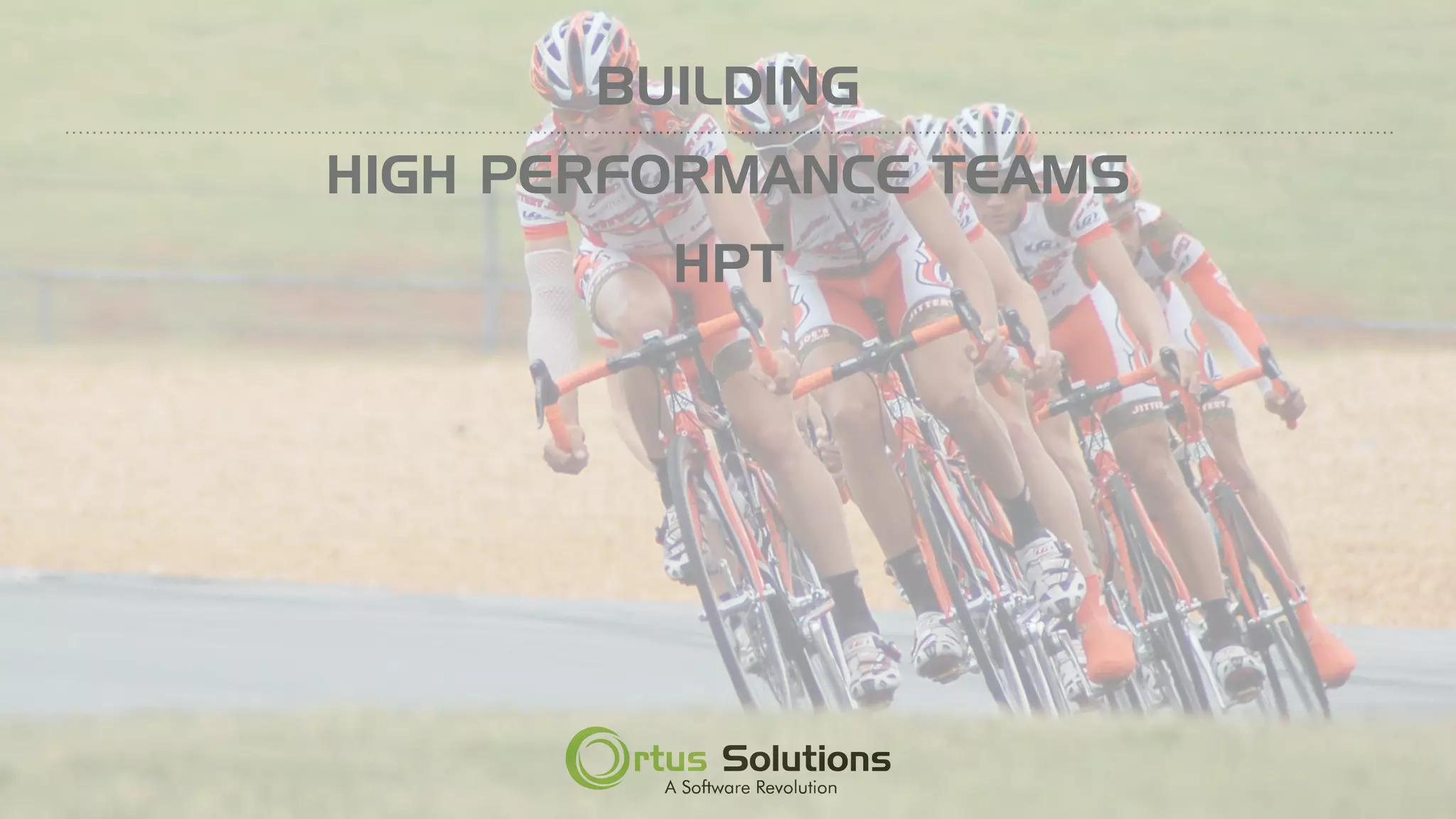
BUILDING
HIGH PERFORMANCE TEAMS
HPT
Jorge Reyes Esme Acevedo
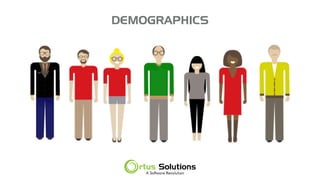
DEMOGRAPHICS
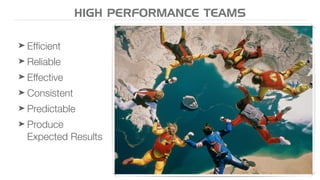
➤ Efficient
➤ Reliable
➤ Effective
➤ Consistent
➤ Predictable
➤ Produce
Expected Results
HIGH PERFORMANCE TEAMS
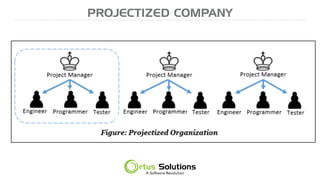
PROJECTIZED COMPANY
HEADS UP FOR PMS!
PM
Story time!
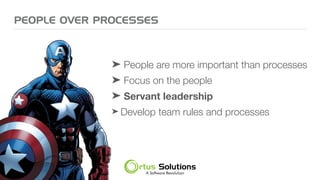
PEOPLE OVER PROCESSES
➤ People are more important than processes
➤ Focus on the people
➤ Servant leadership
➤ Develop team rules and processes
➤ Help grow the team interpersonal and
technical skills
➤ Form and use generalising specialists
➤ Empower and encourage emergent
leadership
➤ Learn team motivators and demotivators
PEOPLE OVER PROCESSES
➤ Encourage communication via collaboration
tools
➤ Shield team from distractions
➤ Track performance and forecast
➤Align team by sharing project vision
PEOPLE OVER PROCESSES
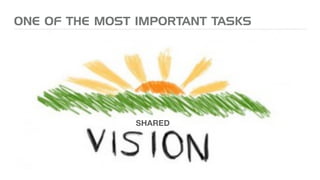
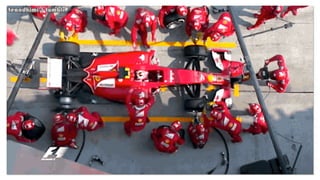
ONE OF THE MOST IMPORTANT TASKS
SHARED
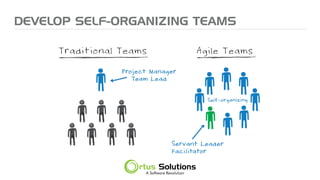
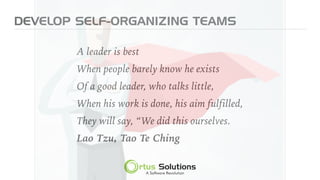
DEVELOP SELF-ORGANIZING TEAMS
A leader is best
When people barely know he exists
Of a good leader, who talks little,
When his work is done, his aim fulfilled,
They will say, “We did this ourselves.
Lao Tzu, Tao Te Ching
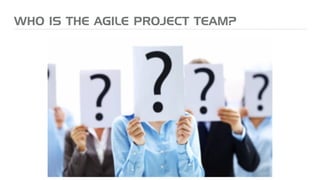
WHO IS THE AGILE PROJECT TEAM?
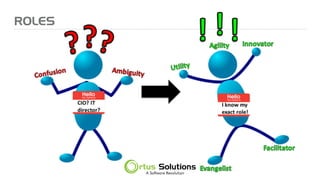
ROLES
BUSINESS REPRESENTATIVES
➤Product Owner
➤Customer
➤Proxy Customer
BUSINESS REPRESENTATIVES
➤Prioritize products features
➤Manages product backlog
➤Ensures a shared understanding
➤Provides the acceptance criteria
➤Makes change requests
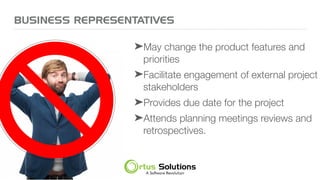
BUSINESS REPRESENTATIVES
➤May change the product features and
priorities
➤Facilitate engagement of external project
stakeholders
➤Provides due date for the project
➤Attends planning meetings reviews and
retrospectives.
SCRUM MASTER
➤Coach or team leader
➤Servant leader
➤Helps the delivery team self-govern and
self-organized
➤Facilitator and communicator
➤Coach and mentor to the delivery team
SCRUM MASTER
➤Guides agile processes
➤Helps product owner manage the
product backlog
➤Helps the product owner
communicate
➤Facilitates meetings
➤Follows up on issues
PROJECT SPONSOR
➤The main advocate for the project
➤Provides direction to the product owner
➤Determines value on time and on budget
➤May attend iteration review meetings
➤Authorizes the project
DEVELOPMENT TEAM
➤GETS THINGS DONE!
TEAM WORK
➤Team outperforms what
would be the sum of its
members’ individual
accomplishments through a
process called synergy.
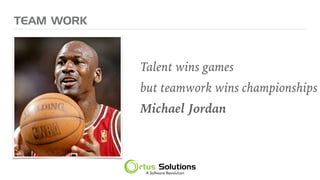
Talent wins games
but teamwork wins championships
Michael Jordan
TEAM WORK
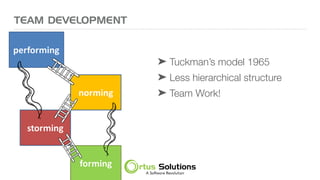
TEAM DEVELOPMENT
➤ Tuckman’s model 1965
➤ Less hierarchical structure
➤ Team Work!
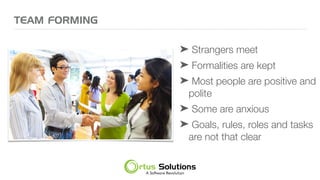
TEAM FORMING
➤ Strangers meet
➤ Formalities are kept
➤ Most people are positive and
polite
➤ Some are anxious
➤ Goals, rules, roles and tasks
are not that clear
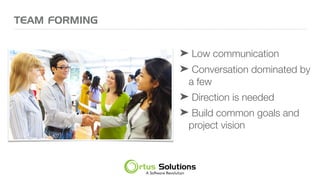
TEAM FORMING
➤ Low communication
➤ Conversation dominated by
a few
➤ Direction is needed
➤ Build common goals and
project vision
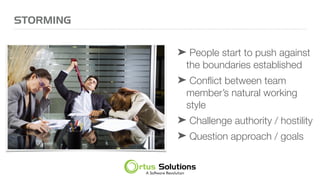
STORMING
➤ People start to push against
the boundaries established
➤ Conflict between team
member’s natural working
style
➤ Challenge authority / hostility
➤ Question approach / goals
STORMING
➤ Stage where many teams
failed.
➤Not a lot of support
➤ Members start to
communicate their feelings
➤ Don’t really view themselves
as part of a team
➤ Conflict and struggle for the
approach - AKA pseudo
team
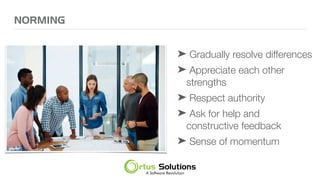
NORMING
➤ Gradually resolve differences
➤ Appreciate each other
strengths
➤ Respect authority
➤ Ask for help and
constructive feedback
➤ Sense of momentum
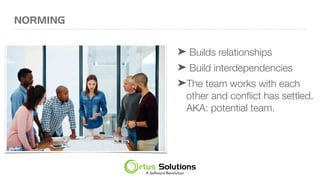
NORMING
➤ Builds relationships
➤ Build interdependencies
➤The team works with each
other and conflict has settled.
AKA: potential team.
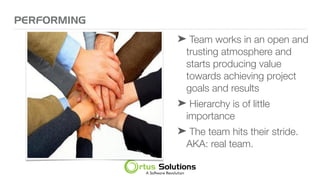
PERFORMING
➤ Team works in an open and
trusting atmosphere and
starts producing value
towards achieving project
goals and results
➤ Hierarchy is of little
importance
➤ The team hits their stride.
AKA: real team.
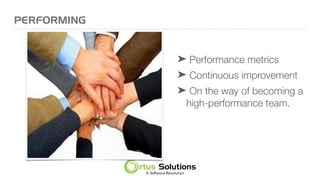
PERFORMING
➤ Performance metrics
➤ Continuous improvement
➤ On the way of becoming a
high-performance team.
TRAITS OF HPT
➤ Performing Team
➤ 12 of fewer members
➤ Team members have complementary skills
➤ Team members are generalising specialist
➤ Team members are committed to a common purpose
➤ Team members hold themselves mutually accountable
➤ Team members share ownership of the project outcome.
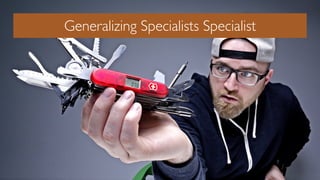
Generalizing Specialists Specialist
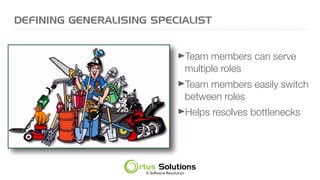
DEFINING GENERALISING SPECIALIST
➤Team members can serve
multiple roles
➤Team members easily switch
between roles
➤Helps resolves bottlenecks
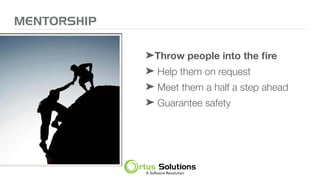
MENTORSHIP
➤Throw people into the fire
➤ Help them on request
➤ Meet them a half a step ahead
➤ Guarantee safety
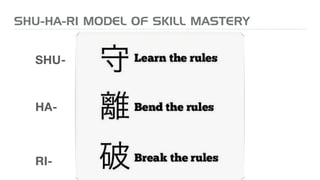
SHU-HA-RI MODEL OF SKILL MASTERY
SHU-
HA-
RI-
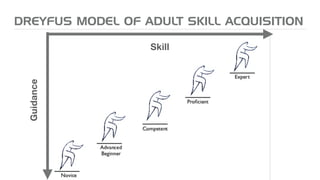
DREYFUS MODEL OF SKILL ACQUISITION
➤ Novice: follow the rules they’ve been
given and make analytical decisions.
➤ Advanced beginner: still following
the rules, but based on experience
better understanding of the context of
the rules
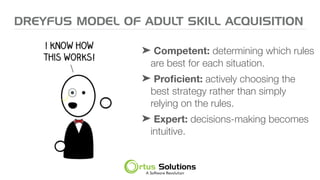
➤ Competent: determining which rules
are best for each situation.
➤ Proficient: actively choosing the
best strategy rather than simply
relying on the rules.
➤ Expert: decisions-making becomes
intuitive.
DREYFUS MODEL OF ADULT SKILL ACQUISITION
Guidance
Skill
DON’T FORGET: LIFE > SOFTWARE
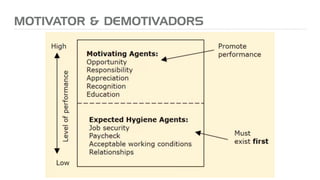
MOTIVATOR & DEMOTIVADORS
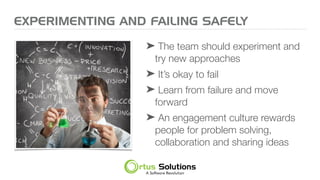
EXPERIMENTING AND FAILING SAFELY
➤ The team should experiment and
try new approaches
➤ It’s okay to fail
➤ Learn from failure and move
forward
➤ An engagement culture rewards
people for problem solving,
collaboration and sharing ideas
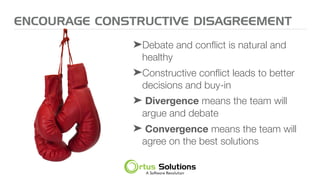
ENCOURAGE CONSTRUCTIVE DISAGREEMENT
➤Debate and conflict is natural and
healthy
➤Constructive conflict leads to better
decisions and buy-in
➤ Divergence means the team will
argue and debate
➤ Convergence means the team will
agree on the best solutions
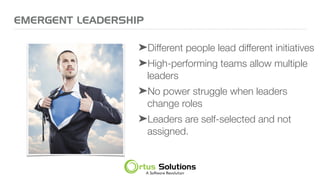
EMERGENT LEADERSHIP
➤Different people lead different initiatives
➤High-performing teams allow multiple
leaders
➤No power struggle when leaders
change roles
➤Leaders are self-selected and not
assigned.
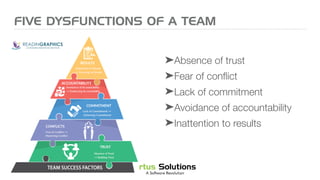
FIVE DYSFUNCTIONS OF A TEAM
➤Absence of trust
➤Fear of conflict
➤Lack of commitment
➤Avoidance of accountability
➤Inattention to results
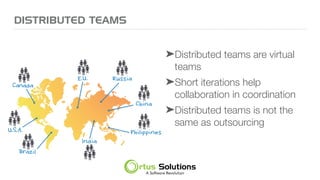
DISTRIBUTED TEAMS
➤Distributed teams are virtual
teams
➤Short iterations help
collaboration in coordination
➤Distributed teams is not the
same as outsourcing
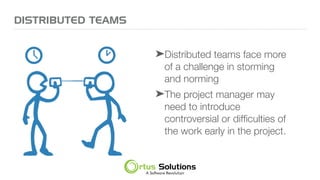
DISTRIBUTED TEAMS
➤Distributed teams face more
of a challenge in storming
and norming
➤The project manager may
need to introduce
controversial or difculties of
the work early in the project.
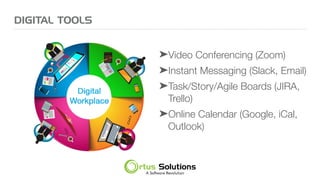
DIGITAL TOOLS
➤Video Conferencing (Zoom)
➤Instant Messaging (Slack, Email)
➤Task/Story/Agile Boards (JIRA,
Trello)
➤Online Calendar (Google, iCal,
Outlook)
➤Keep on track
➤Keep on time
➤Keep track of who is on the call
➤Keep the answers coming
➤Keep it fair
➤Keep it documented
CONFERENCE CALL BEST PRACTICES
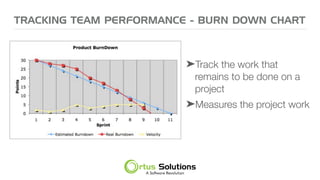
➤Track the work that
remains to be done on a
project
➤Measures the project work
TRACKING TEAM PERFORMANCE - BURN DOWN CHART
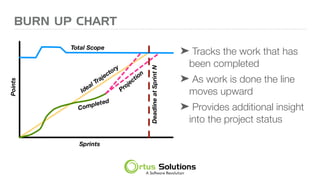
➤ Tracks the work that has
been completed
➤ As work is done the line
moves upward
➤ Provides additional insight
into the project status
BURN UP CHART
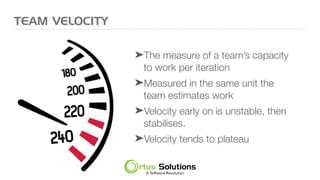
➤The measure of a team’s capacity
to work per iteration
➤Measured in the same unit the
team estimates work
➤Velocity early on is unstable, then
stabilises.
➤Velocity tends to plateau
TEAM VELOCITY
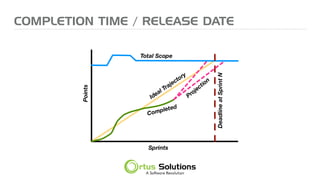
COMPLETION TIME / RELEASE DATE
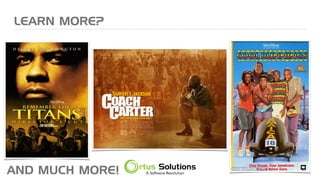
LEARN MORE?
AND MUCH MORE!
Q & A

Into The Box 2018 Building high performance teams

  • 1.
  • 2.
  • 3.
  • 4.
    ➤ Efficient ➤ Reliable ➤Effective ➤ Consistent ➤ Predictable ➤ Produce Expected Results HIGH PERFORMANCE TEAMS
  • 5.
  • 6.
    HEADS UP FORPMS! PM Story time!
  • 7.
    PEOPLE OVER PROCESSES ➤People are more important than processes ➤ Focus on the people ➤ Servant leadership ➤ Develop team rules and processes
  • 8.
    ➤ Help growthe team interpersonal and technical skills ➤ Form and use generalising specialists ➤ Empower and encourage emergent leadership ➤ Learn team motivators and demotivators PEOPLE OVER PROCESSES
  • 9.
    ➤ Encourage communicationvia collaboration tools ➤ Shield team from distractions ➤ Track performance and forecast ➤Align team by sharing project vision PEOPLE OVER PROCESSES
  • 10.
    ONE OF THEMOST IMPORTANT TASKS SHARED
  • 11.
  • 12.
    DEVELOP SELF-ORGANIZING TEAMS Aleader is best When people barely know he exists Of a good leader, who talks little, When his work is done, his aim fulfilled, They will say, “We did this ourselves. Lao Tzu, Tao Te Ching
  • 13.
    WHO IS THEAGILE PROJECT TEAM?
  • 15.
  • 16.
  • 17.
    BUSINESS REPRESENTATIVES ➤Prioritize productsfeatures ➤Manages product backlog ➤Ensures a shared understanding ➤Provides the acceptance criteria ➤Makes change requests
  • 18.
    BUSINESS REPRESENTATIVES ➤May changethe product features and priorities ➤Facilitate engagement of external project stakeholders ➤Provides due date for the project ➤Attends planning meetings reviews and retrospectives.
  • 19.
    SCRUM MASTER ➤Coach orteam leader ➤Servant leader ➤Helps the delivery team self-govern and self-organized ➤Facilitator and communicator ➤Coach and mentor to the delivery team
  • 20.
    SCRUM MASTER ➤Guides agileprocesses ➤Helps product owner manage the product backlog ➤Helps the product owner communicate ➤Facilitates meetings ➤Follows up on issues
  • 21.
    PROJECT SPONSOR ➤The mainadvocate for the project ➤Provides direction to the product owner ➤Determines value on time and on budget ➤May attend iteration review meetings ➤Authorizes the project
  • 22.
  • 23.
    TEAM WORK ➤Team outperformswhat would be the sum of its members’ individual accomplishments through a process called synergy.
  • 24.
    Talent wins games butteamwork wins championships Michael Jordan TEAM WORK
  • 25.
    TEAM DEVELOPMENT ➤ Tuckman’smodel 1965 ➤ Less hierarchical structure ➤ Team Work!
  • 26.
    TEAM FORMING ➤ Strangersmeet ➤ Formalities are kept ➤ Most people are positive and polite ➤ Some are anxious ➤ Goals, rules, roles and tasks are not that clear
  • 27.
    TEAM FORMING ➤ Lowcommunication ➤ Conversation dominated by a few ➤ Direction is needed ➤ Build common goals and project vision
  • 28.
    STORMING ➤ People startto push against the boundaries established ➤ Conflict between team member’s natural working style ➤ Challenge authority / hostility ➤ Question approach / goals
  • 29.
    STORMING ➤ Stage wheremany teams failed. ➤Not a lot of support ➤ Members start to communicate their feelings ➤ Don’t really view themselves as part of a team ➤ Conflict and struggle for the approach - AKA pseudo team
  • 30.
    NORMING ➤ Gradually resolvedifferences ➤ Appreciate each other strengths ➤ Respect authority ➤ Ask for help and constructive feedback ➤ Sense of momentum
  • 31.
    NORMING ➤ Builds relationships ➤Build interdependencies ➤The team works with each other and conflict has settled. AKA: potential team.
  • 32.
    PERFORMING ➤ Team worksin an open and trusting atmosphere and starts producing value towards achieving project goals and results ➤ Hierarchy is of little importance ➤ The team hits their stride. AKA: real team.
  • 33.
    PERFORMING ➤ Performance metrics ➤Continuous improvement ➤ On the way of becoming a high-performance team.
  • 34.
    TRAITS OF HPT ➤Performing Team ➤ 12 of fewer members ➤ Team members have complementary skills ➤ Team members are generalising specialist ➤ Team members are committed to a common purpose ➤ Team members hold themselves mutually accountable ➤ Team members share ownership of the project outcome.
  • 35.
  • 36.
    DEFINING GENERALISING SPECIALIST ➤Teammembers can serve multiple roles ➤Team members easily switch between roles ➤Helps resolves bottlenecks
  • 37.
    MENTORSHIP ➤Throw people intothe fire ➤ Help them on request ➤ Meet them a half a step ahead ➤ Guarantee safety
  • 38.
    SHU-HA-RI MODEL OFSKILL MASTERY SHU- HA- RI-
  • 39.
    DREYFUS MODEL OFSKILL ACQUISITION ➤ Novice: follow the rules they’ve been given and make analytical decisions. ➤ Advanced beginner: still following the rules, but based on experience better understanding of the context of the rules
  • 40.
    ➤ Competent: determiningwhich rules are best for each situation. ➤ Proficient: actively choosing the best strategy rather than simply relying on the rules. ➤ Expert: decisions-making becomes intuitive. DREYFUS MODEL OF ADULT SKILL ACQUISITION
  • 41.
    DREYFUS MODEL OFADULT SKILL ACQUISITION Guidance Skill
  • 42.
  • 43.
  • 44.
    EXPERIMENTING AND FAILINGSAFELY ➤ The team should experiment and try new approaches ➤ It’s okay to fail ➤ Learn from failure and move forward ➤ An engagement culture rewards people for problem solving, collaboration and sharing ideas
  • 45.
    ENCOURAGE CONSTRUCTIVE DISAGREEMENT ➤Debateand conflict is natural and healthy ➤Constructive conflict leads to better decisions and buy-in ➤ Divergence means the team will argue and debate ➤ Convergence means the team will agree on the best solutions
  • 46.
    EMERGENT LEADERSHIP ➤Different peoplelead different initiatives ➤High-performing teams allow multiple leaders ➤No power struggle when leaders change roles ➤Leaders are self-selected and not assigned.
  • 47.
    FIVE DYSFUNCTIONS OFA TEAM ➤Absence of trust ➤Fear of conflict ➤Lack of commitment ➤Avoidance of accountability ➤Inattention to results
  • 48.
    DISTRIBUTED TEAMS ➤Distributed teamsare virtual teams ➤Short iterations help collaboration in coordination ➤Distributed teams is not the same as outsourcing
  • 49.
    DISTRIBUTED TEAMS ➤Distributed teamsface more of a challenge in storming and norming ➤The project manager may need to introduce controversial or difficulties of the work early in the project.
  • 50.
    DIGITAL TOOLS ➤Video Conferencing(Zoom) ➤Instant Messaging (Slack, Email) ➤Task/Story/Agile Boards (JIRA, Trello) ➤Online Calendar (Google, iCal, Outlook)
  • 51.
    ➤Keep on track ➤Keepon time ➤Keep track of who is on the call ➤Keep the answers coming ➤Keep it fair ➤Keep it documented CONFERENCE CALL BEST PRACTICES
  • 52.
    ➤Track the workthat remains to be done on a project ➤Measures the project work TRACKING TEAM PERFORMANCE - BURN DOWN CHART
  • 53.
    ➤ Tracks thework that has been completed ➤ As work is done the line moves upward ➤ Provides additional insight into the project status BURN UP CHART
  • 54.
    ➤The measure ofa team’s capacity to work per iteration ➤Measured in the same unit the team estimates work ➤Velocity early on is unstable, then stabilises. ➤Velocity tends to plateau TEAM VELOCITY
  • 55.
    COMPLETION TIME /RELEASE DATE
  • 56.
  • 57.