New Mexico State University
The Graduate School Journey
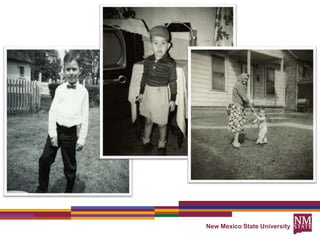
Mi Cuento/My Story
Luis A. Vazquez, Ph.D.
Regents Professor
Associate Vice President for
Research Integrity
Your Experiences Are Real: How You
Face Them Is A Choice
New Mexico State University
My Personal Trail of Language and Culture:
– Speaking Spanish
– Special Education (1965) PL94:142
– Senior Class President
– Going to College
– Graduate School
New Mexico State University
The Combinations of Our Communication
Mehrabian (1967)-Decoding of inconsistent communications
55%
Body Language
(facial liking)
38%
Tone
(vocal liking)
7%
Words
(verbal liking)
Low Context High Context
**Color
Situation:
Academic
Setting**Language
Preferences
*Intelligence
**Culture
*Emotional
Intelligence*
**Social Status
*Personality
Gender
Low Context - High Context Communication
E. T. Hall (1983)- Beyond Culture Dance of Time (Modified by L. Vazquez, 2015)
Tone
THE PHYSICAL PATHWAY FOR EMOTIONAL IQ STARTS IN THE BRAIN, AT THE SPINAL
CORD. YOUR PRIMARY SENSES ENTER HERE AND MUST TRAVEL THROUGH THE
LIMBIC SYSTEM, THE PLACE WHERE EMOTIONS ARE EXPERIENCED, THEN TO THE
RATIONAL CENTER, THE PLACE OF COMMUNICATION. MICRO-AGGRESSIONS VS
EMOTION VS RACIAL/ETHNIC FILTERS IN THE BRAIN.
Communication and Emotional Intelligence
New Mexico State University
Emotional Intelligence:
Impact on Intelligence and Personality
New Mexico State University
EMOTIONAL IQ IS THE FOUNDATION FOR A HOST OF CRITICAL SKILLS. A
LITTLE EFFORT SPENT ON INCREASING YOUR EMOTIONAL IQ TENDS TO
HAVE A EXTENSIVE, POSITIVE IMPACT ON YOUR LIFE.
Impact of Emotional IQ on The Tree of Life
New Mexico State University
Emotional Intelligence: The Necessary 4 Skills
(http://psychology.about.com/library/quiz/bl_eq_quiz.htm)
• Personal Competence
– Self-Awareness: ability to perceive your emotions in the moment and
understand your reactions to events, challenges and people.
– Social Management: using your awareness of your emotions to stay
flexible and direct your behavior positively.
• Social Competence
– Social Awareness: ability to pick up on others’ emotions and understand
what is really going on. Listening and observing most important skill here.
– Relationship Management: ability to use your awareness of your own
emotions and those of others to manage interactions successfully.
New Mexico State University
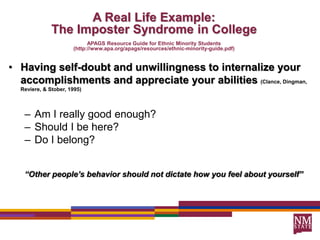
A Real Life Example:
The Imposter Syndrome in College
APAGS Resource Guide for Ethnic Minority Students
(http://www.apa.org/apags/resources/ethnic-minority-guide.pdf)
• Having self-doubt and unwillingness to internalize your
accomplishments and appreciate your abilities (Clance, Dingman,
Reviere, & Stober, 1995)
– Am I really good enough?
– Should I be here?
– Do I belong?
“Other people’s behavior should not dictate how you feel about yourself”
Applying Emotional Intelligence to
the Imposter Syndrome
APAGS Resource Guide for Ethnic Minority Students
(http://www.apa.org/apags/resources/ethnic-minority-guide.pdf)
Self-A: Change your thinking: reframe your thoughts!!/stop playing the
tape
Social-M: Talk to a mentor you trust: sharing the honesty of your skills
Social-A: Knowing your peers: awareness of their emotions and
understanding, what’s really going on that triggers the imposter
phenomenon for you, listen and observe!!
Relationship-M: Own your expertise: dignity, integrity, excellence, pay it
forward
“Other people’s behavior should not dictate how you feel about yourself”
Words of Wisdom
• Open Mind, Good Heart, Eyes that see, Ears that Listen,
Words that Heal.
• The Embrace of Yourself
• The Embrace of Diversity
• Be a Healing Presence for Each Other
New Mexico State University
Dr. Luis A. Vazquez, Regents Professor
Associate Vice President for Research Integrity
New Mexico State University
lvazquez@nmsu.edu
New Mexico State University

2015 MATC Scholars Program: Luis Vazquez

  • 1.
    New Mexico StateUniversity The Graduate School Journey Mi Cuento/My Story Luis A. Vazquez, Ph.D. Regents Professor Associate Vice President for Research Integrity
  • 2.
    Your Experiences AreReal: How You Face Them Is A Choice New Mexico State University My Personal Trail of Language and Culture: – Speaking Spanish – Special Education (1965) PL94:142 – Senior Class President – Going to College – Graduate School
  • 3.
    New Mexico StateUniversity
  • 4.
    New Mexico StateUniversity
  • 5.
    New Mexico StateUniversity
  • 6.
    New Mexico StateUniversity
  • 7.
    New Mexico StateUniversity
  • 8.
    New Mexico StateUniversity
  • 9.
    New Mexico StateUniversity
  • 10.
    New Mexico StateUniversity
  • 11.
    New Mexico StateUniversity
  • 12.
    New Mexico StateUniversity The Combinations of Our Communication Mehrabian (1967)-Decoding of inconsistent communications 55% Body Language (facial liking) 38% Tone (vocal liking) 7% Words (verbal liking)
  • 13.
    Low Context HighContext **Color Situation: Academic Setting**Language Preferences *Intelligence **Culture *Emotional Intelligence* **Social Status *Personality Gender Low Context - High Context Communication E. T. Hall (1983)- Beyond Culture Dance of Time (Modified by L. Vazquez, 2015) Tone
  • 14.
    THE PHYSICAL PATHWAYFOR EMOTIONAL IQ STARTS IN THE BRAIN, AT THE SPINAL CORD. YOUR PRIMARY SENSES ENTER HERE AND MUST TRAVEL THROUGH THE LIMBIC SYSTEM, THE PLACE WHERE EMOTIONS ARE EXPERIENCED, THEN TO THE RATIONAL CENTER, THE PLACE OF COMMUNICATION. MICRO-AGGRESSIONS VS EMOTION VS RACIAL/ETHNIC FILTERS IN THE BRAIN. Communication and Emotional Intelligence New Mexico State University
  • 15.
    Emotional Intelligence: Impact onIntelligence and Personality New Mexico State University
  • 16.
    EMOTIONAL IQ ISTHE FOUNDATION FOR A HOST OF CRITICAL SKILLS. A LITTLE EFFORT SPENT ON INCREASING YOUR EMOTIONAL IQ TENDS TO HAVE A EXTENSIVE, POSITIVE IMPACT ON YOUR LIFE. Impact of Emotional IQ on The Tree of Life New Mexico State University
  • 17.
    Emotional Intelligence: TheNecessary 4 Skills (http://psychology.about.com/library/quiz/bl_eq_quiz.htm) • Personal Competence – Self-Awareness: ability to perceive your emotions in the moment and understand your reactions to events, challenges and people. – Social Management: using your awareness of your emotions to stay flexible and direct your behavior positively. • Social Competence – Social Awareness: ability to pick up on others’ emotions and understand what is really going on. Listening and observing most important skill here. – Relationship Management: ability to use your awareness of your own emotions and those of others to manage interactions successfully. New Mexico State University
  • 18.
    A Real LifeExample: The Imposter Syndrome in College APAGS Resource Guide for Ethnic Minority Students (http://www.apa.org/apags/resources/ethnic-minority-guide.pdf) • Having self-doubt and unwillingness to internalize your accomplishments and appreciate your abilities (Clance, Dingman, Reviere, & Stober, 1995) – Am I really good enough? – Should I be here? – Do I belong? “Other people’s behavior should not dictate how you feel about yourself”
  • 19.
    Applying Emotional Intelligenceto the Imposter Syndrome APAGS Resource Guide for Ethnic Minority Students (http://www.apa.org/apags/resources/ethnic-minority-guide.pdf) Self-A: Change your thinking: reframe your thoughts!!/stop playing the tape Social-M: Talk to a mentor you trust: sharing the honesty of your skills Social-A: Knowing your peers: awareness of their emotions and understanding, what’s really going on that triggers the imposter phenomenon for you, listen and observe!! Relationship-M: Own your expertise: dignity, integrity, excellence, pay it forward “Other people’s behavior should not dictate how you feel about yourself”
  • 20.
    Words of Wisdom •Open Mind, Good Heart, Eyes that see, Ears that Listen, Words that Heal. • The Embrace of Yourself • The Embrace of Diversity • Be a Healing Presence for Each Other New Mexico State University
  • 21.
    Dr. Luis A.Vazquez, Regents Professor Associate Vice President for Research Integrity New Mexico State University lvazquez@nmsu.edu New Mexico State University