


Rethinking Aids Conference - Oakland - November 6-8, 2009


   Questioning the Existence of HIV


                              Etienne de Harven, MD


Former Member of the Sloan Kettering Institute, New York
Emerit. Prof. Pathology, Univ. of Toronto
Member of President T. Mbeki AIDS Advisory Panel, SA
                                              Questioning the Existence of HIV, E. de Harven
Questioning the Existence of HIV


Aids Rethinkers have different scientific arguments

     on the issue of the very existence of HIV


                            Questioning the Existence of HIV, E. de Harven
Two radically distinct positions


• HIV ‘exists’ but is a “harmless passenger virus”

• HIV does not exist


                            Questioning the Existence of HIV, E. de Harven
Two radically distinct positions


Neither of these two positions is fully compatible

      with the available scientific evidence


                            Questioning the Existence of HIV, E. de Harven
An alternative analysis is therefore suggested


                        Questioning the Existence of HIV, E. de Harven
Human Endogenous Retroviruses (HERVs)

interfere heavily with findings and interpretation in

   AIDS research and may offer an alternative

        explanation of the published data


                             Questioning the Existence of HIV, E. de Harven
Two significant papers on HERVs:

1) “The viruses in all of us: characteristics and

   biological significance of human endogenous

   retrovirus sequences”, Löwer R. et al., Proc Natl Acad Sci

   USA, 1996

2) “Demystified ... Human endogenous retroviruses”,

   Nelson, P.N. et al., Mol Pathol. 2003


                                     Questioning the Existence of HIV, E. de Harven
A sizable percentage of the human genome, perhaps as much

as 8%, shows strong analogies to the retroviral genome.

Therefore, pellets centrifuged from human plasma, with variable

amounts of circulating DNA, inevitably contain retroviral-like

sequences. Identified and amplified by PCR methodologies,

these sequences are possibly misinterpreted as HIV markers

and used for the alleged quantification of the hypothetical HIV

“viral load”.

                                  Questioning the Existence of HIV, E. de Harven
The method used for the determination of                      the alleged

“HIV viral load” does not include the isolation of retroviral

particles and the analyzed pellets have never been

controlled by electron microscopy to verify the

hypothetical presence of such particles


                                 Questioning the Existence of HIV, E. de Harven
"Viral load" means the presence of virus particles

      in the peripheral blood, i.e. "viremia"


                            Questioning the Existence of HIV, E. de Harven
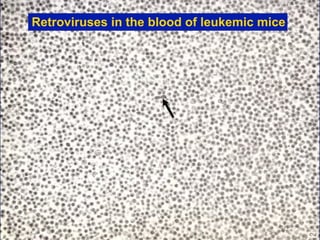
In leukaemic mice and chicken, large numbers

of retroviral particles can easily be

demonstrated by electron microscopy in small

samples of peripheral blood


                            Questioning the Existence of HIV, E. de Harven
Retroviruses in the blood of leukemic mice


                       Questioning the Existence of HIV, E. de Harven
Problems with isolating HIV

    Nobody ever succeeded to demonstrate

retroviral particles in the blood of AIDS patients,

  even in those patients identified by PCR as

        presenting with high "viral load"


                          Questioning the Existence of HIV, E. de Harven
Problems with isolating HIV
• Non pathogenic viruses are readily visualized

  by electron microscopy

• Pathogenic and non-pathogenic viruses look

  alike under the electron microscope

• Exogenous and endogenous retroviruses look

  alike under the electron microscope


                           Questioning the Existence of HIV, E. de Harven
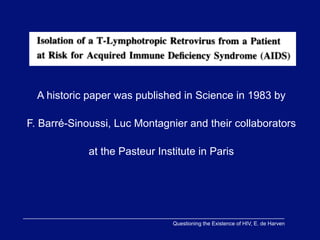
A historic paper was published in Science in 1983 by

F. Barré-Sinoussi, Luc Montagnier and their collaborators

             at the Pasteur Institute in Paris


                                Questioning the Existence of HIV, E. de Harven
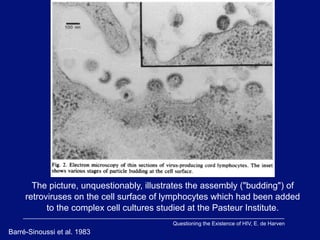
The picture, unquestionably, illustrates the assembly ("budding") of
     retroviruses on the cell surface of lymphocytes which had been added
           to the complex cell cultures studied at the Pasteur Institute.
                                          Questioning the Existence of HIV, E. de Harven
Barré-Sinoussi et al. 1983
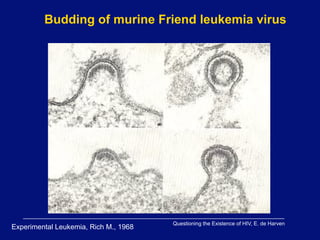
Such electron microscopy evidence is similar to the

classic images of "budding" retrovirus, which I have

published many years ago in studies of the murine

Friend leukemia virus


                               Questioning the Existence of HIV, E. de Harven
Budding of murine Friend leukemia virus


                                       Questioning the Existence of HIV, E. de Harven
Experimental Leukemia, Rich M., 1968
However, the retrovirus producing cells in the French


      publication are cord blood, placenta derived


  lymphocytes. The paper fails to demonstrate that the


observed retroviruses originated from a "pre-AIDS" patient.


                                Questioning the Existence of HIV, E. de Harven
• Human placenta is loaded with endogenous retroviruses (HERVs)

• Pasteur group added HERVs of placental origin to their cell cultures

• Retro-viral particle formation could be shown under these conditions

• This was not possible when using peripheral blood lymphocytes

 instead of cord blood lymphocytes


    Placenta derived HERVs were essential for observation of

                              retroviruses


                                       Questioning the Existence of HIV, E. de Harven
HERVs interfere with the interpretation of

  clinical studies of AIDS patients ("Viral

 load") as well as with the analysis of the

   original 1983 Pasteur Institute paper


                       Questioning the Existence of HIV, E. de Harven
So-called "HIV" has never been


neither isolated nor purified directly from


             an AIDS patient


                       Questioning the Existence of HIV, E. de Harven
Difficulties to isolate and purify a so-called "HIV" have been
 initially stressed by Eleni Papadopulos et al. as early as
 1993, in the classic Biotechnology paper

Such difficulties are best explained by recognizing the fact
 that a so-called exogenous "HIV" does not exist, as stated
 in 1994 by Stefan Lanka


                                  Questioning the Existence of HIV, E. de Harven
Recognizing the non-existence of so-called

   exogenous "HIV”, and the role of HERVs in

   clinical and in basic science studies should

        redirect completely AIDS research

(see ‘Chemical bases of various AIDS epidemics: recreational

      drugs, anti-viral chemotherapy and malnutrition’,

           Duesberg, Köhnlein and Rasnick, 2003)


                                 Questioning the Existence of HIV, E. de Harven
Questioning the Existence of HIV, E. de Harven

Dr. Etienne De harven

  • 1.
    Rethinking Aids Conference- Oakland - November 6-8, 2009 Questioning the Existence of HIV Etienne de Harven, MD Former Member of the Sloan Kettering Institute, New York Emerit. Prof. Pathology, Univ. of Toronto Member of President T. Mbeki AIDS Advisory Panel, SA Questioning the Existence of HIV, E. de Harven
  • 2.
    Questioning the Existenceof HIV Aids Rethinkers have different scientific arguments on the issue of the very existence of HIV Questioning the Existence of HIV, E. de Harven
  • 3.
    Two radically distinctpositions • HIV ‘exists’ but is a “harmless passenger virus” • HIV does not exist Questioning the Existence of HIV, E. de Harven
  • 4.
    Two radically distinctpositions Neither of these two positions is fully compatible with the available scientific evidence Questioning the Existence of HIV, E. de Harven
  • 5.
    An alternative analysisis therefore suggested Questioning the Existence of HIV, E. de Harven
  • 6.
    Human Endogenous Retroviruses(HERVs) interfere heavily with findings and interpretation in AIDS research and may offer an alternative explanation of the published data Questioning the Existence of HIV, E. de Harven
  • 7.
    Two significant paperson HERVs: 1) “The viruses in all of us: characteristics and biological significance of human endogenous retrovirus sequences”, Löwer R. et al., Proc Natl Acad Sci USA, 1996 2) “Demystified ... Human endogenous retroviruses”, Nelson, P.N. et al., Mol Pathol. 2003 Questioning the Existence of HIV, E. de Harven
  • 8.
    A sizable percentageof the human genome, perhaps as much as 8%, shows strong analogies to the retroviral genome. Therefore, pellets centrifuged from human plasma, with variable amounts of circulating DNA, inevitably contain retroviral-like sequences. Identified and amplified by PCR methodologies, these sequences are possibly misinterpreted as HIV markers and used for the alleged quantification of the hypothetical HIV “viral load”. Questioning the Existence of HIV, E. de Harven
  • 9.
    The method usedfor the determination of the alleged “HIV viral load” does not include the isolation of retroviral particles and the analyzed pellets have never been controlled by electron microscopy to verify the hypothetical presence of such particles Questioning the Existence of HIV, E. de Harven
  • 10.
    "Viral load" meansthe presence of virus particles in the peripheral blood, i.e. "viremia" Questioning the Existence of HIV, E. de Harven
  • 11.
    In leukaemic miceand chicken, large numbers of retroviral particles can easily be demonstrated by electron microscopy in small samples of peripheral blood Questioning the Existence of HIV, E. de Harven
  • 12.
    Retroviruses in theblood of leukemic mice Questioning the Existence of HIV, E. de Harven
  • 13.
    Problems with isolatingHIV Nobody ever succeeded to demonstrate retroviral particles in the blood of AIDS patients, even in those patients identified by PCR as presenting with high "viral load" Questioning the Existence of HIV, E. de Harven
  • 14.
    Problems with isolatingHIV • Non pathogenic viruses are readily visualized by electron microscopy • Pathogenic and non-pathogenic viruses look alike under the electron microscope • Exogenous and endogenous retroviruses look alike under the electron microscope Questioning the Existence of HIV, E. de Harven
  • 15.
    A historic paperwas published in Science in 1983 by F. Barré-Sinoussi, Luc Montagnier and their collaborators at the Pasteur Institute in Paris Questioning the Existence of HIV, E. de Harven
  • 16.
    The picture, unquestionably,illustrates the assembly ("budding") of retroviruses on the cell surface of lymphocytes which had been added to the complex cell cultures studied at the Pasteur Institute. Questioning the Existence of HIV, E. de Harven Barré-Sinoussi et al. 1983
  • 17.
    Such electron microscopyevidence is similar to the classic images of "budding" retrovirus, which I have published many years ago in studies of the murine Friend leukemia virus Questioning the Existence of HIV, E. de Harven
  • 18.
    Budding of murineFriend leukemia virus Questioning the Existence of HIV, E. de Harven Experimental Leukemia, Rich M., 1968
  • 19.
    However, the retrovirusproducing cells in the French publication are cord blood, placenta derived lymphocytes. The paper fails to demonstrate that the observed retroviruses originated from a "pre-AIDS" patient. Questioning the Existence of HIV, E. de Harven
  • 20.
    • Human placentais loaded with endogenous retroviruses (HERVs) • Pasteur group added HERVs of placental origin to their cell cultures • Retro-viral particle formation could be shown under these conditions • This was not possible when using peripheral blood lymphocytes instead of cord blood lymphocytes Placenta derived HERVs were essential for observation of retroviruses Questioning the Existence of HIV, E. de Harven
  • 21.
    HERVs interfere withthe interpretation of clinical studies of AIDS patients ("Viral load") as well as with the analysis of the original 1983 Pasteur Institute paper Questioning the Existence of HIV, E. de Harven
  • 22.
    So-called "HIV" hasnever been neither isolated nor purified directly from an AIDS patient Questioning the Existence of HIV, E. de Harven
  • 23.
    Difficulties to isolateand purify a so-called "HIV" have been initially stressed by Eleni Papadopulos et al. as early as 1993, in the classic Biotechnology paper Such difficulties are best explained by recognizing the fact that a so-called exogenous "HIV" does not exist, as stated in 1994 by Stefan Lanka Questioning the Existence of HIV, E. de Harven
  • 24.
    Recognizing the non-existenceof so-called exogenous "HIV”, and the role of HERVs in clinical and in basic science studies should redirect completely AIDS research (see ‘Chemical bases of various AIDS epidemics: recreational drugs, anti-viral chemotherapy and malnutrition’, Duesberg, Köhnlein and Rasnick, 2003) Questioning the Existence of HIV, E. de Harven
  • 25.
    Questioning the Existenceof HIV, E. de Harven