

Your Name
Your Class
Date
a method of picture making based on
principles of light, optics, and chemistry
or a technique of producing images
known as photographs.
 comes from Greek words and means
“drawing with light.”
 One of the world’s leading hobbies which
uses a camera
 a means of communication
 a method of retaining accurate pictorial
records of events
HISTORY OF PHOTOGRAPHY
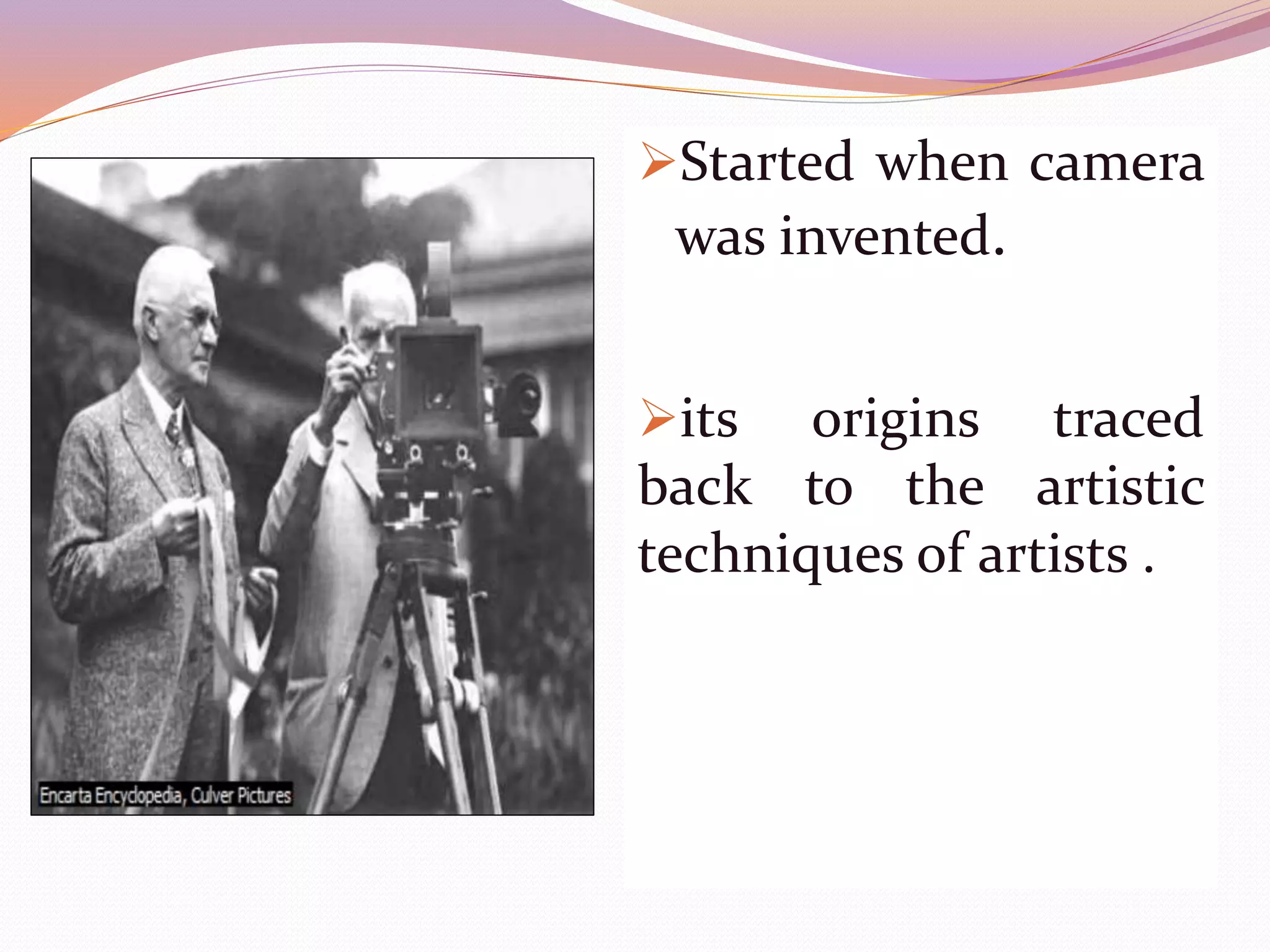
Started when camera
was invented.
its origins traced
back to the artistic
techniques of artists .
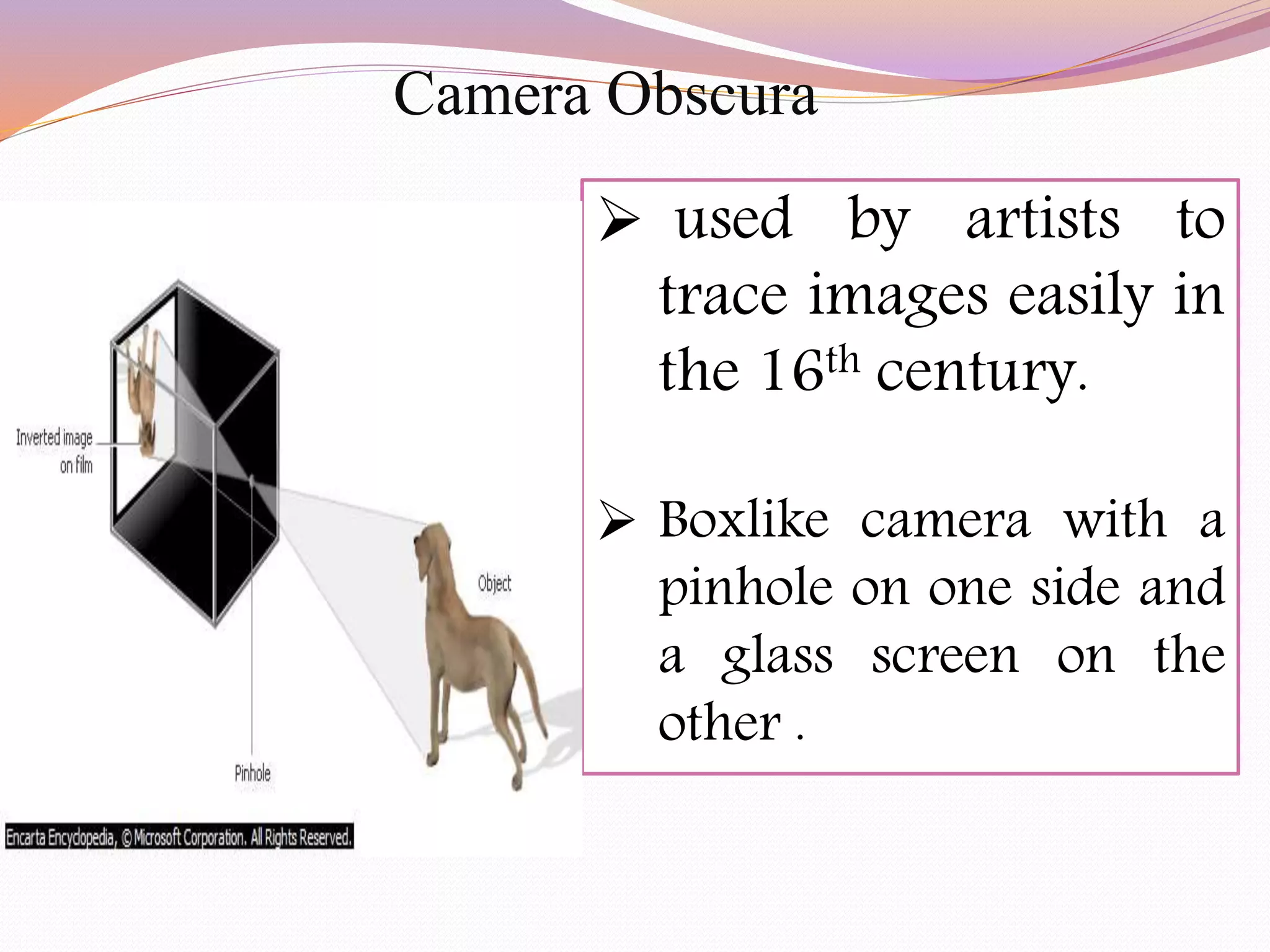
 used by artists to
trace images easily in
the 16th century.
 Boxlike camera with a
pinhole on one side and
a glass screen on the
other .
Camera Obscura
In 1727, Johan Heinrich Schulze of
Germany established the basic concept
of photography when he discovered
that silver is darkened by exposure to
light.
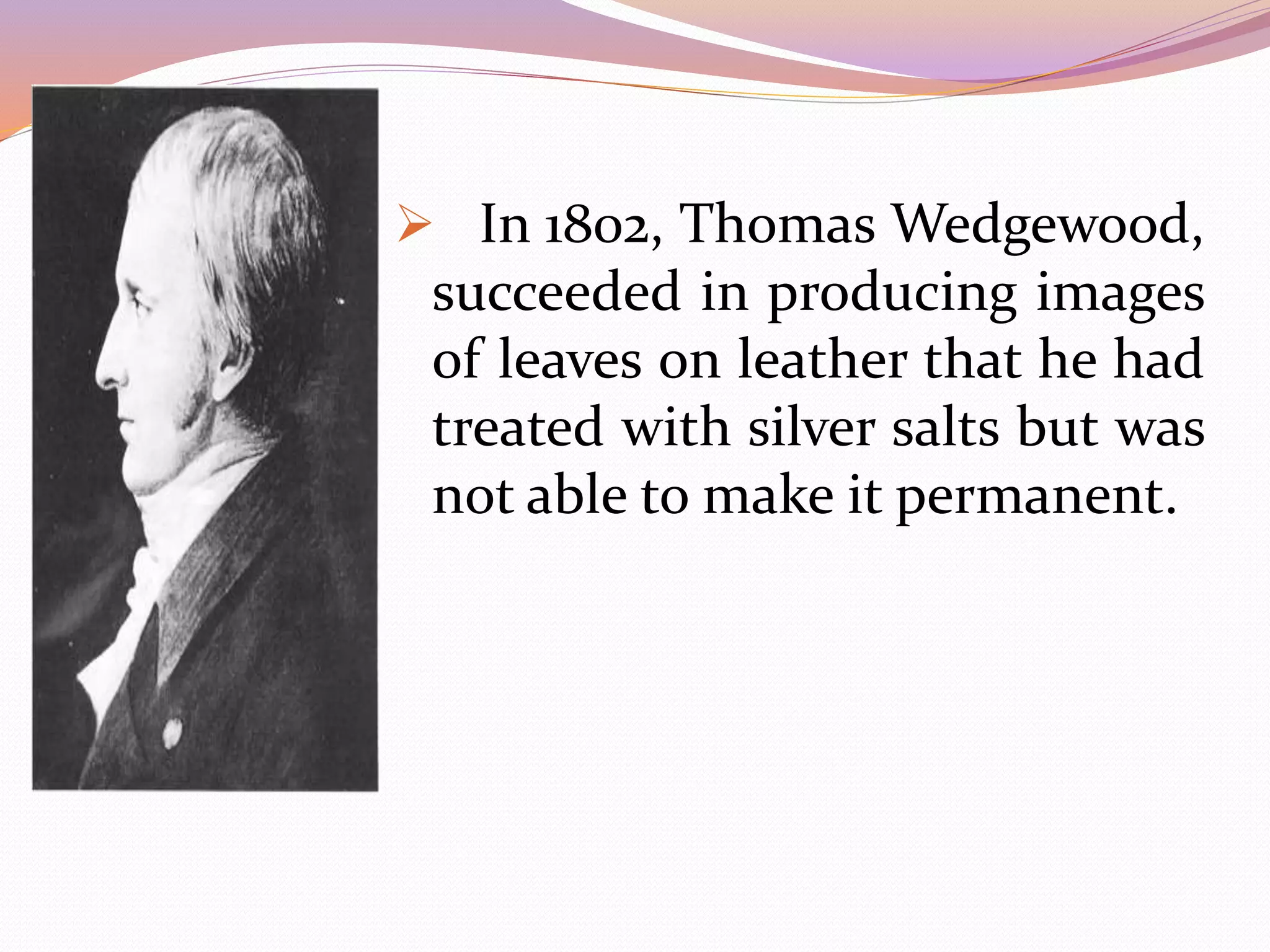
 In 1802, Thomas Wedgewood,
succeeded in producing images
of leaves on leather that he had
treated with silver salts but was
not able to make it permanent.
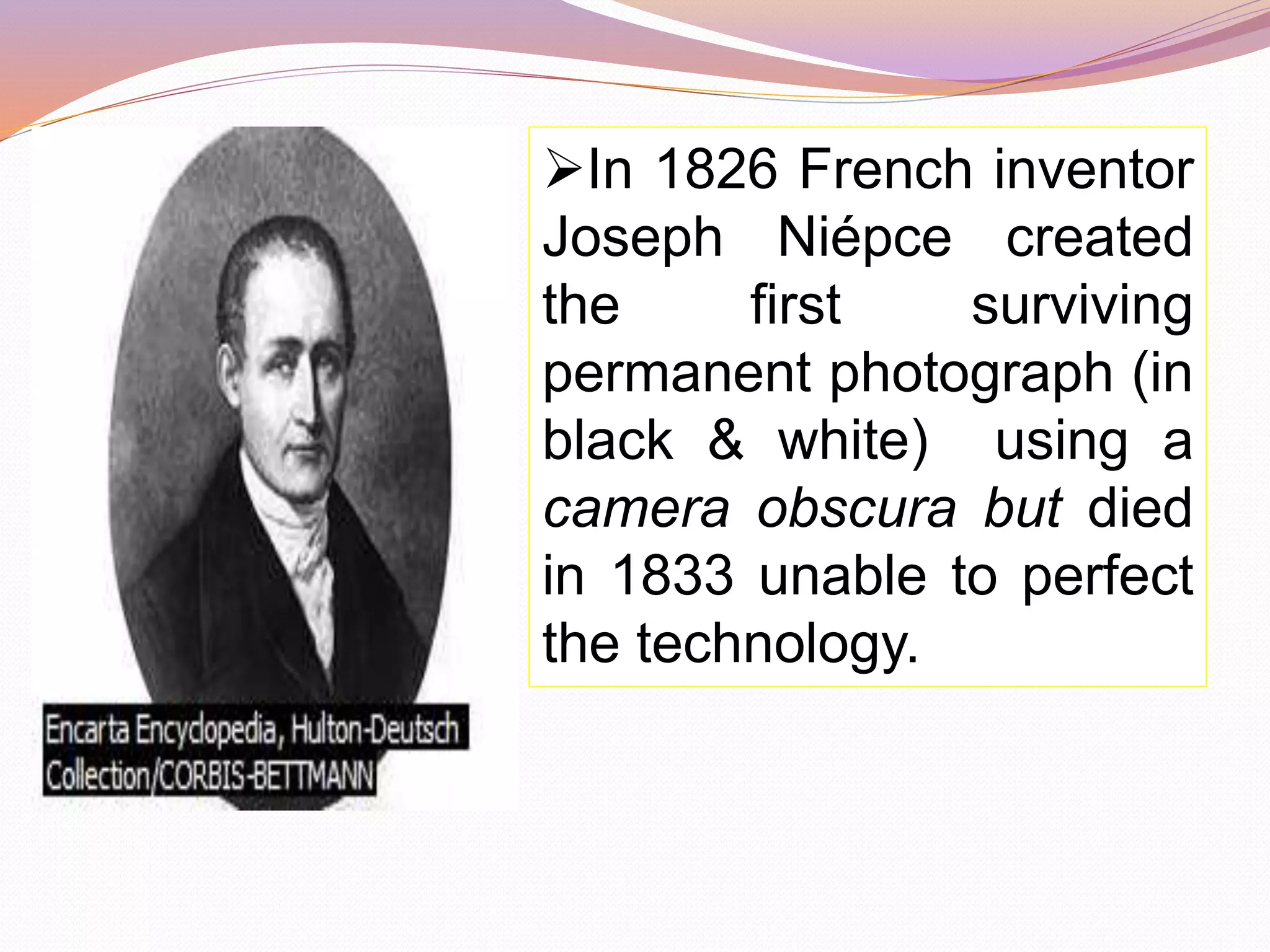
In 1826 French inventor
Joseph Niépce created
the first surviving
permanent photograph (in
black & white) using a
camera obscura but died
in 1833 unable to perfect
the technology.
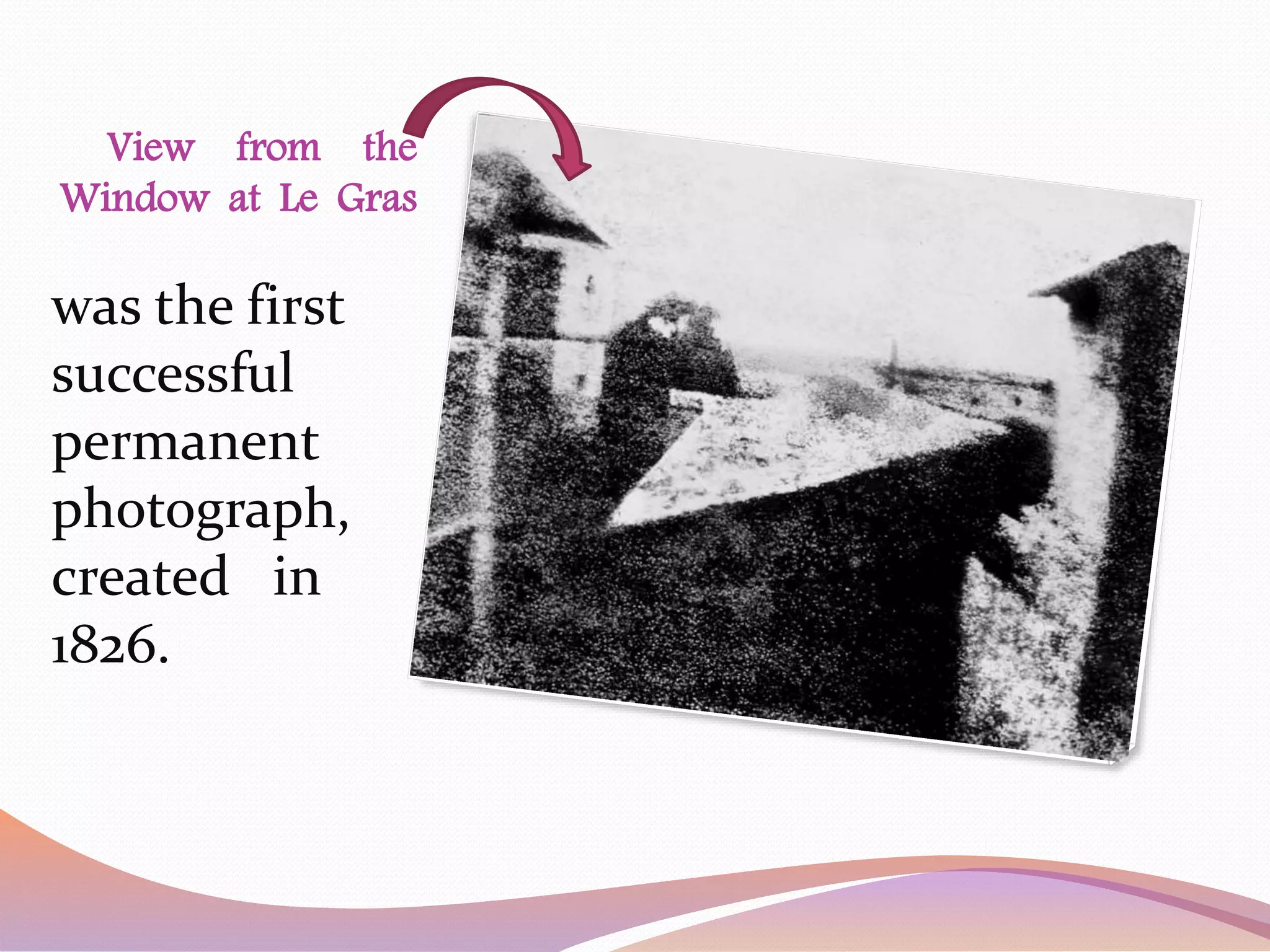
View from the
Window at Le Gras
was the first
successful
permanent
photograph,
created in
1826.
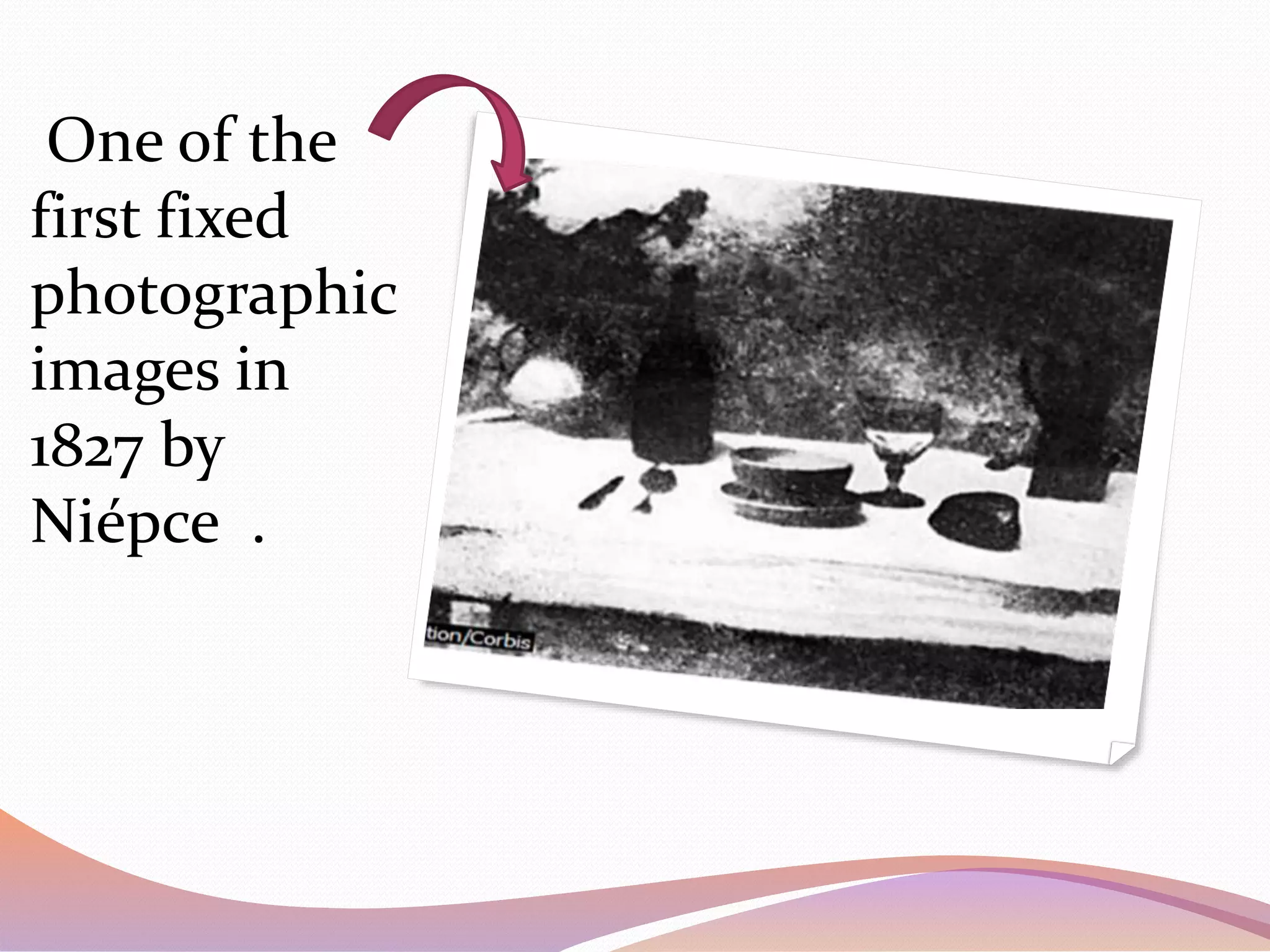
One of the
first fixed
photographic
images in
1827 by
Niépce .
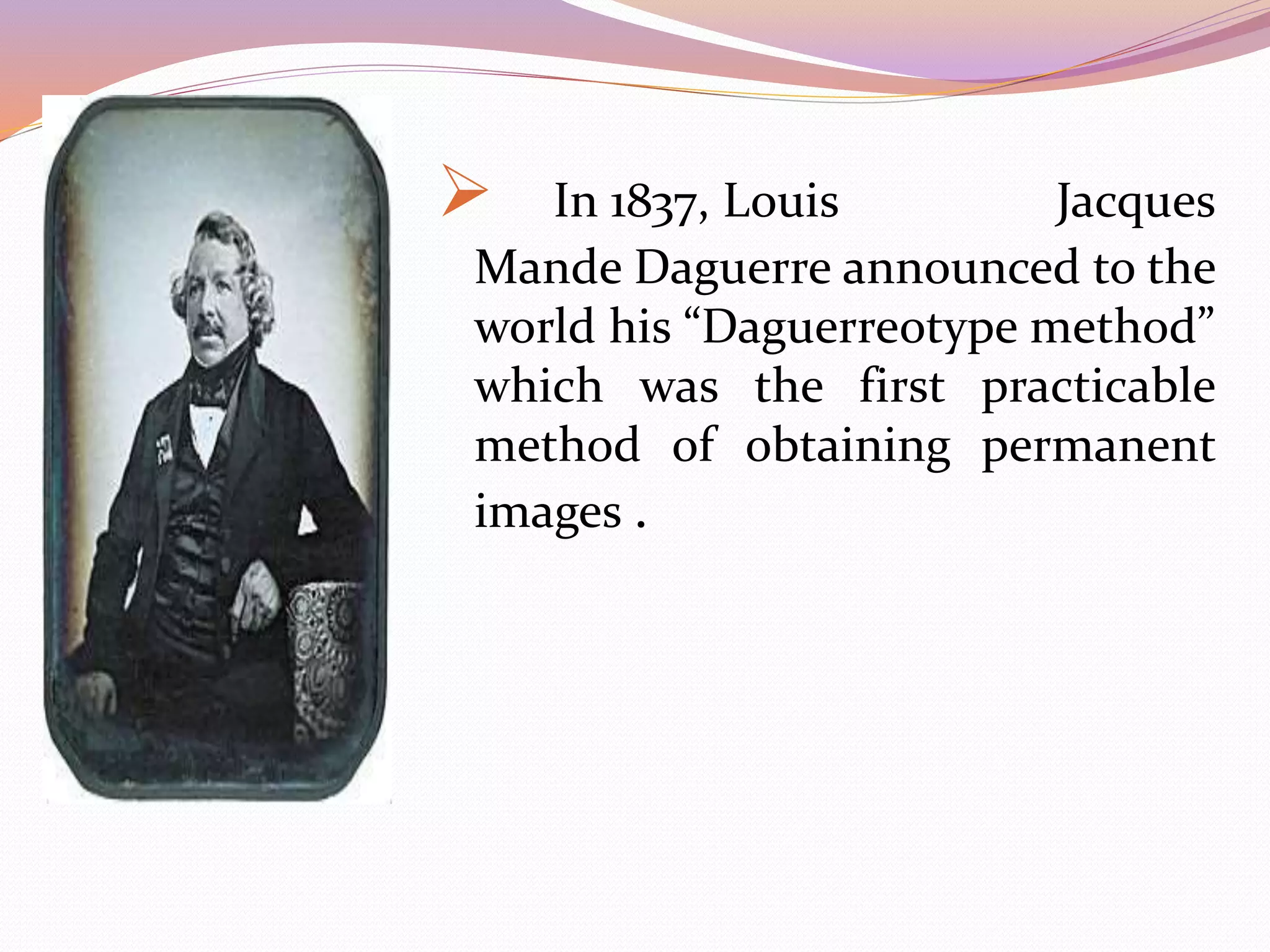
 In 1837, Louis Jacques
Mande Daguerre announced to the
world his “Daguerreotype method”
which was the first practicable
method of obtaining permanent
images .
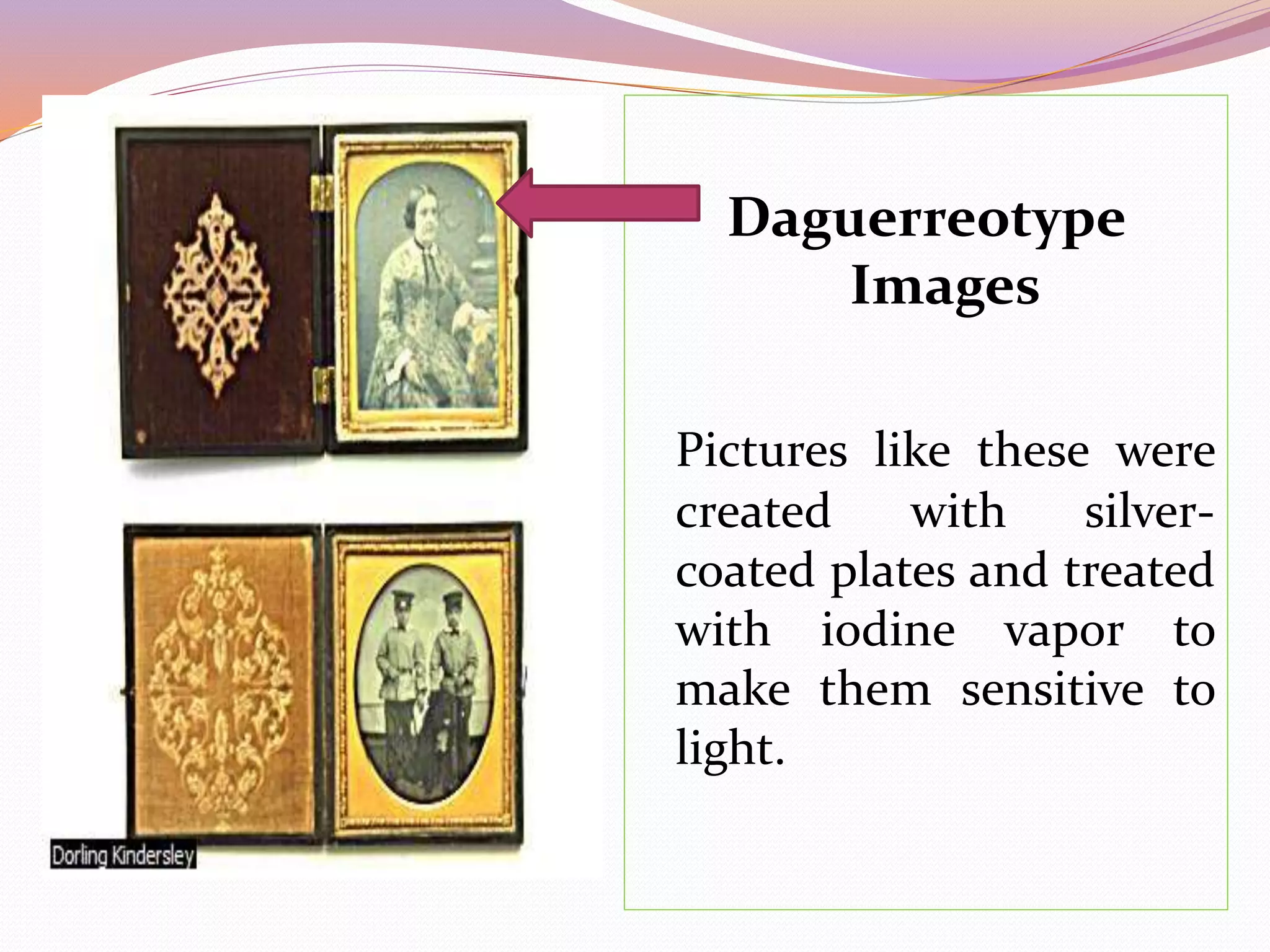
Daguerreotype
Images
Pictures like these were
created with silver-
coated plates and treated
with iodine vapor to
make them sensitive to
light.
Negative image by Talbot
invented in 1835.
In 1839, William
Henry Fox Talbot
announced a
process of
producing negatives
on paper from
which positive
copies were then
made.
In 1851, Frederick
Scott Archer
introduced the
collodion, or wet–
plate process in
photography.
Wet-plate cameras derived
their name from the light-
sensitive chemical coating
applied to the photographic
plate used while wet.
Eastman improved this by using a type of plastic called
celluloid instead of paper, producing the first
photographic film.
In 1880’s, George Eastman devised a long
paper strip that could replace the glass plate.
In 1878, the dry plate was perfected using a
gelatin instead of collodion coating.
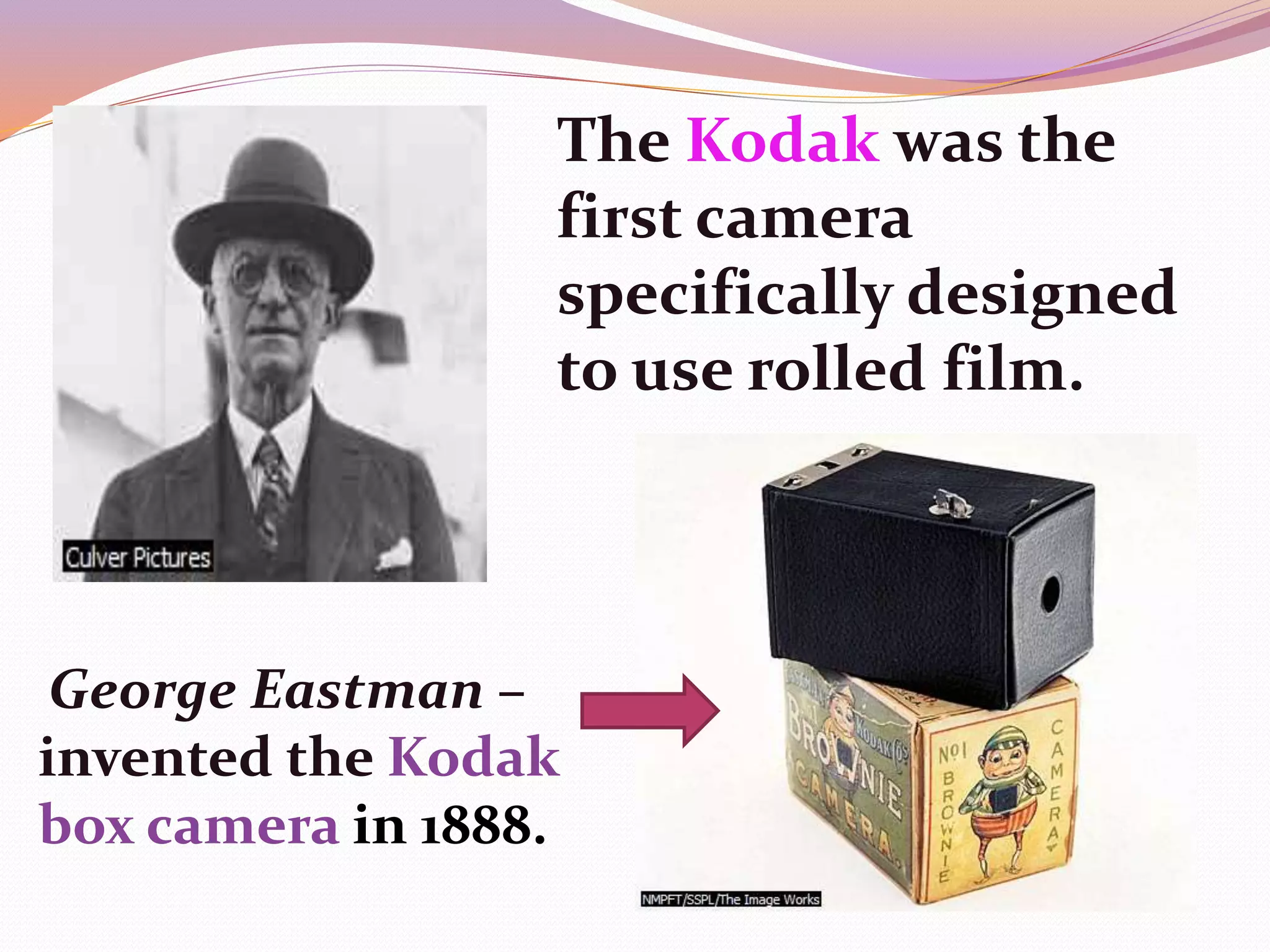
George Eastman –
invented the Kodak
box camera in 1888.
The Kodak was the
first camera
specifically designed
to use rolled film.
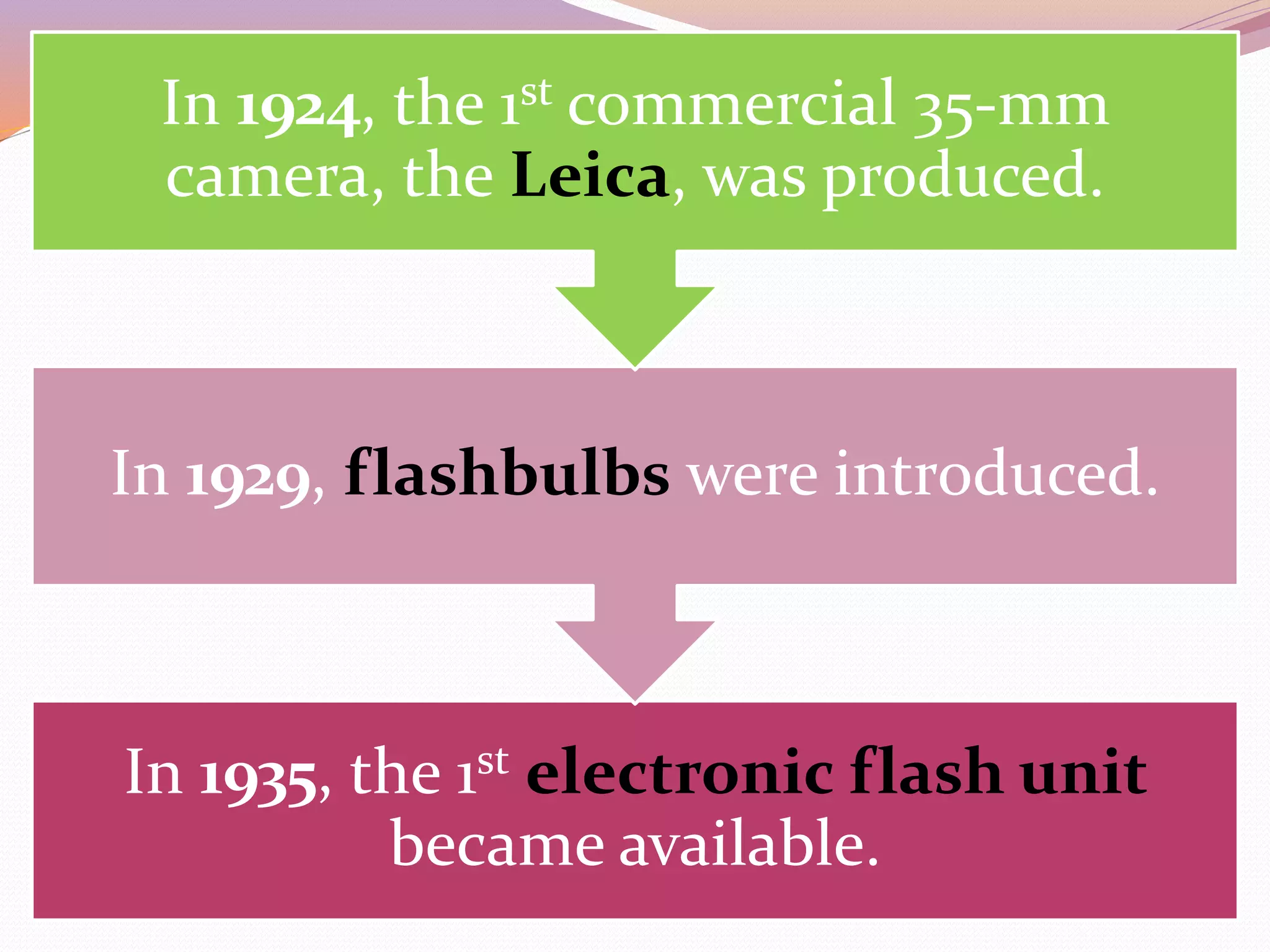
In 1935, the 1st electronic flash unit
became available.
In 1929, flashbulbs were introduced.
In 1924, the 1st commercial 35-mm
camera, the Leica, was produced.
In 1942, the 1st color negative film
called Kodacolor became available.
In 1935, Eastman Kodak Company also
introduced Kodachrome, a color
transparency film.
Polaroid Instant Camera
In 1948, Dr.
Edwin H. Land’s
Polaroid
Corporation
introduced
instant
photography
using a special
camera & self-
developing film.
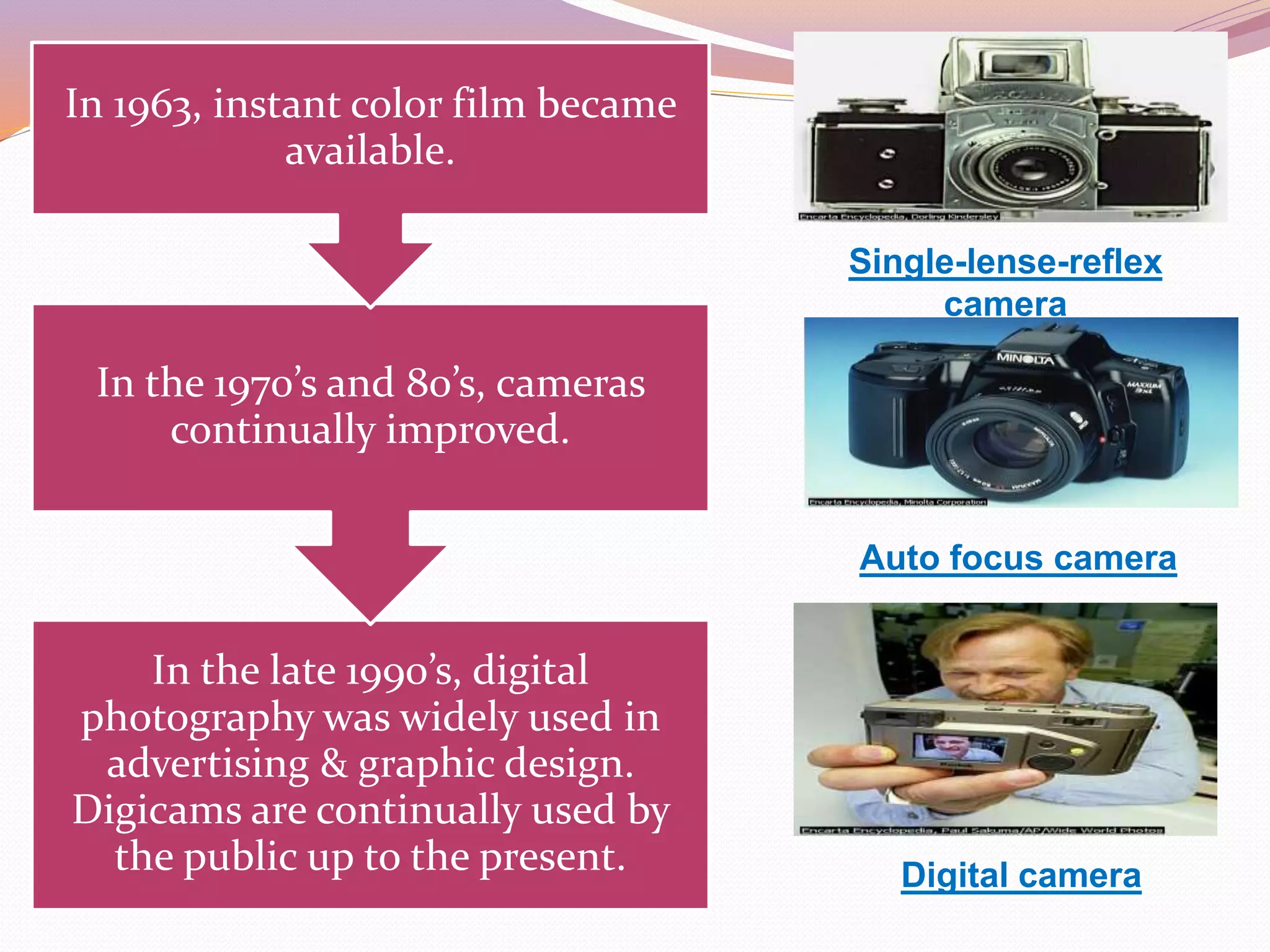
Single-lense-reflex
camera
Auto focus camera
In the late 1990’s, digital
photography was widely used in
advertising & graphic design.
Digicams are continually used by
the public up to the present.
In the 1970’s and 80’s, cameras
continually improved.
In 1963, instant color film became
available.
Digital camera
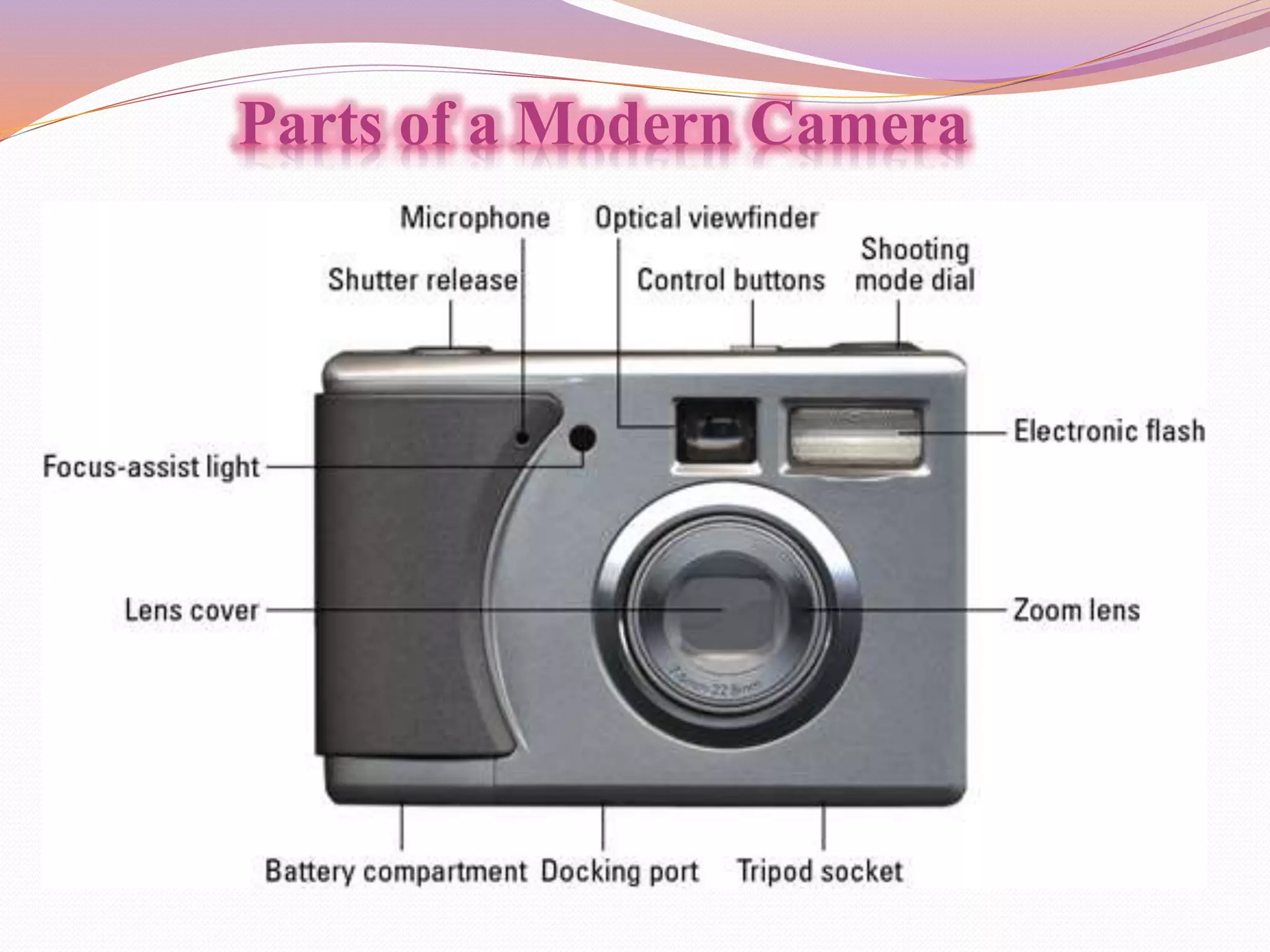
Parts of a Modern Camera
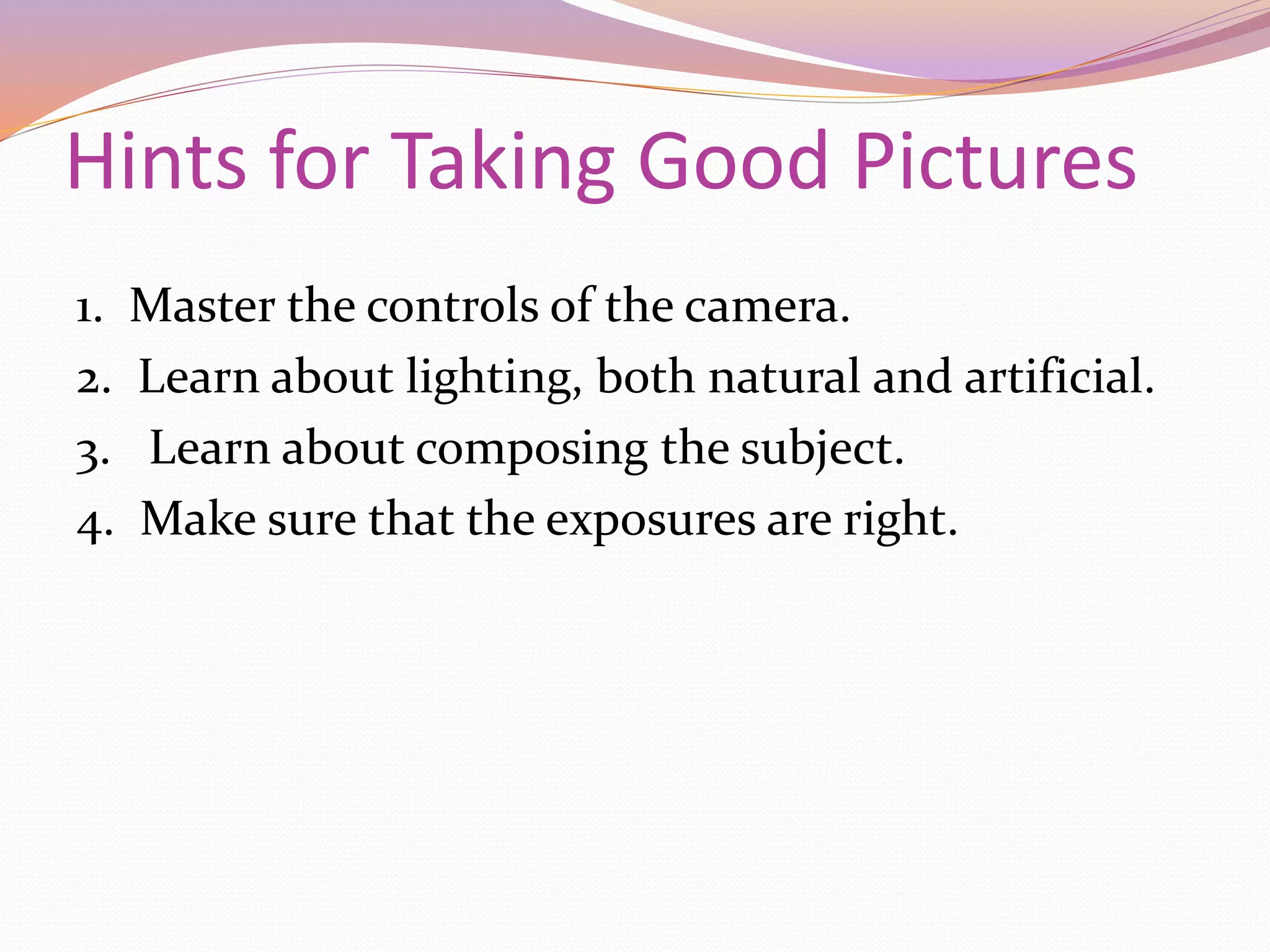
Hints for Taking Good Pictures
1. Master the controls of the camera.
2. Learn about lighting, both natural and artificial.
3. Learn about composing the subject.
4. Make sure that the exposures are right.
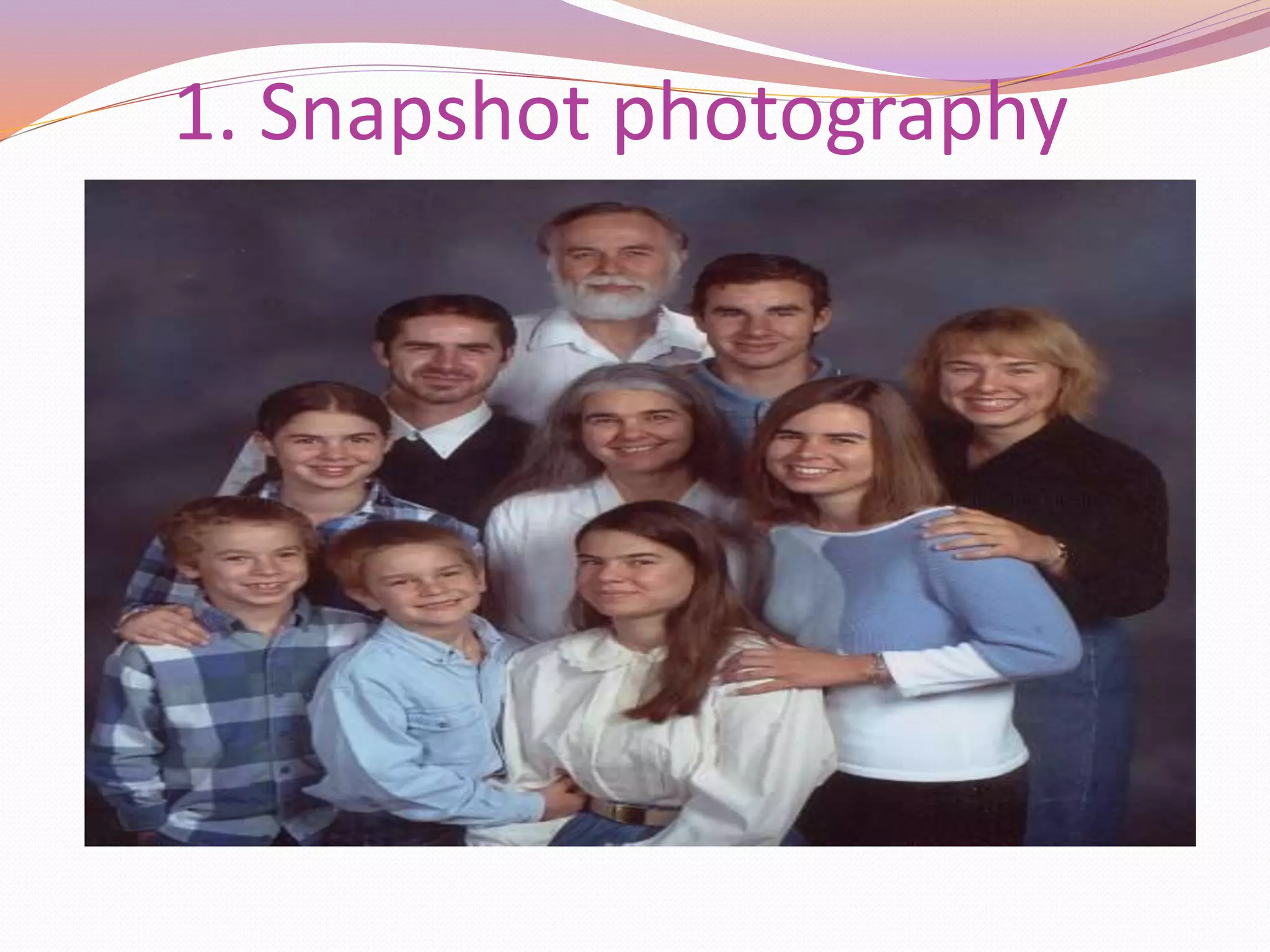
1. Snapshot photography
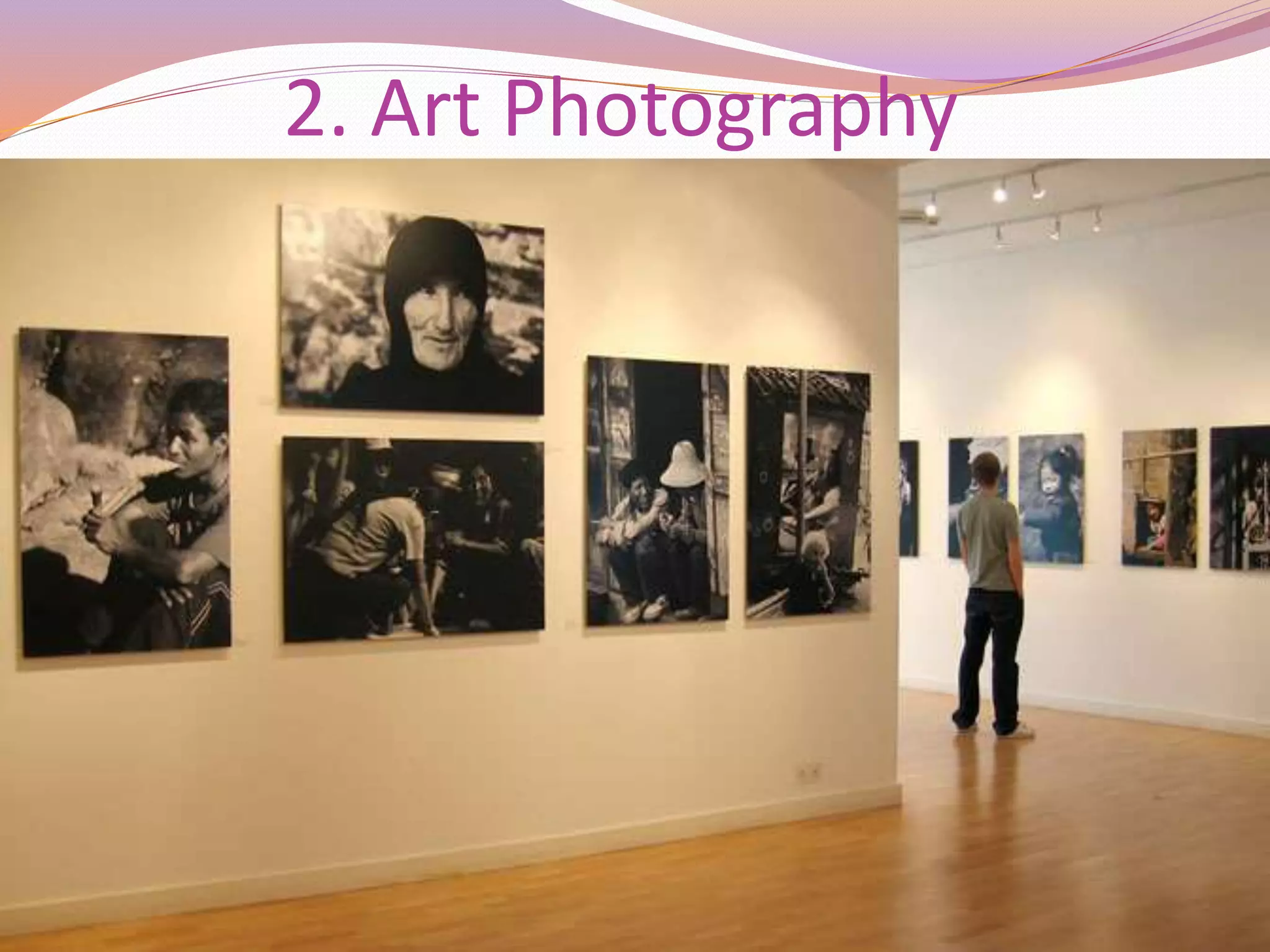
2. Art Photography
5. Commercial and Advertising
Photography
6. Educational Photography
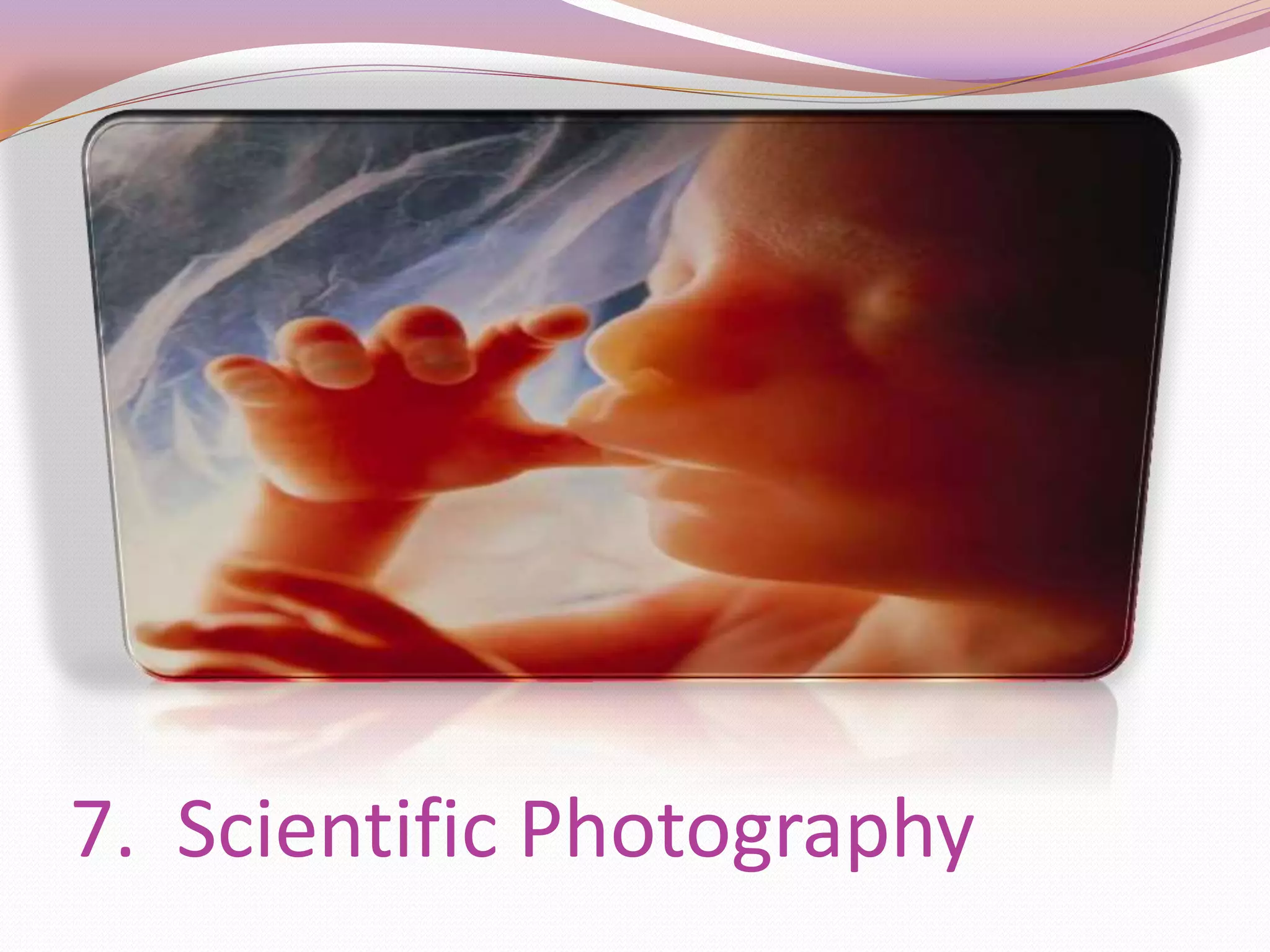
7. Scientific Photography
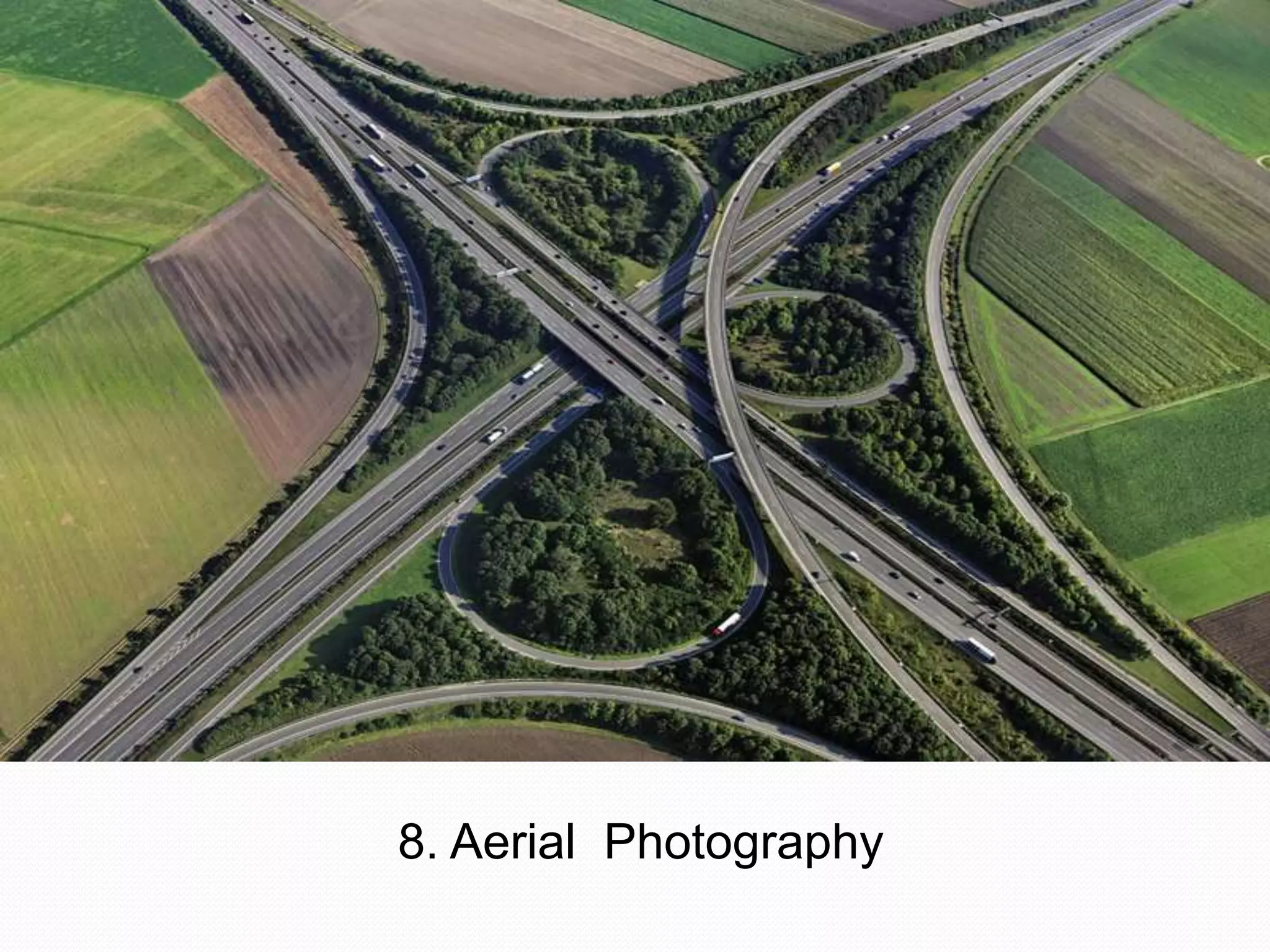
8. Aerial Photography
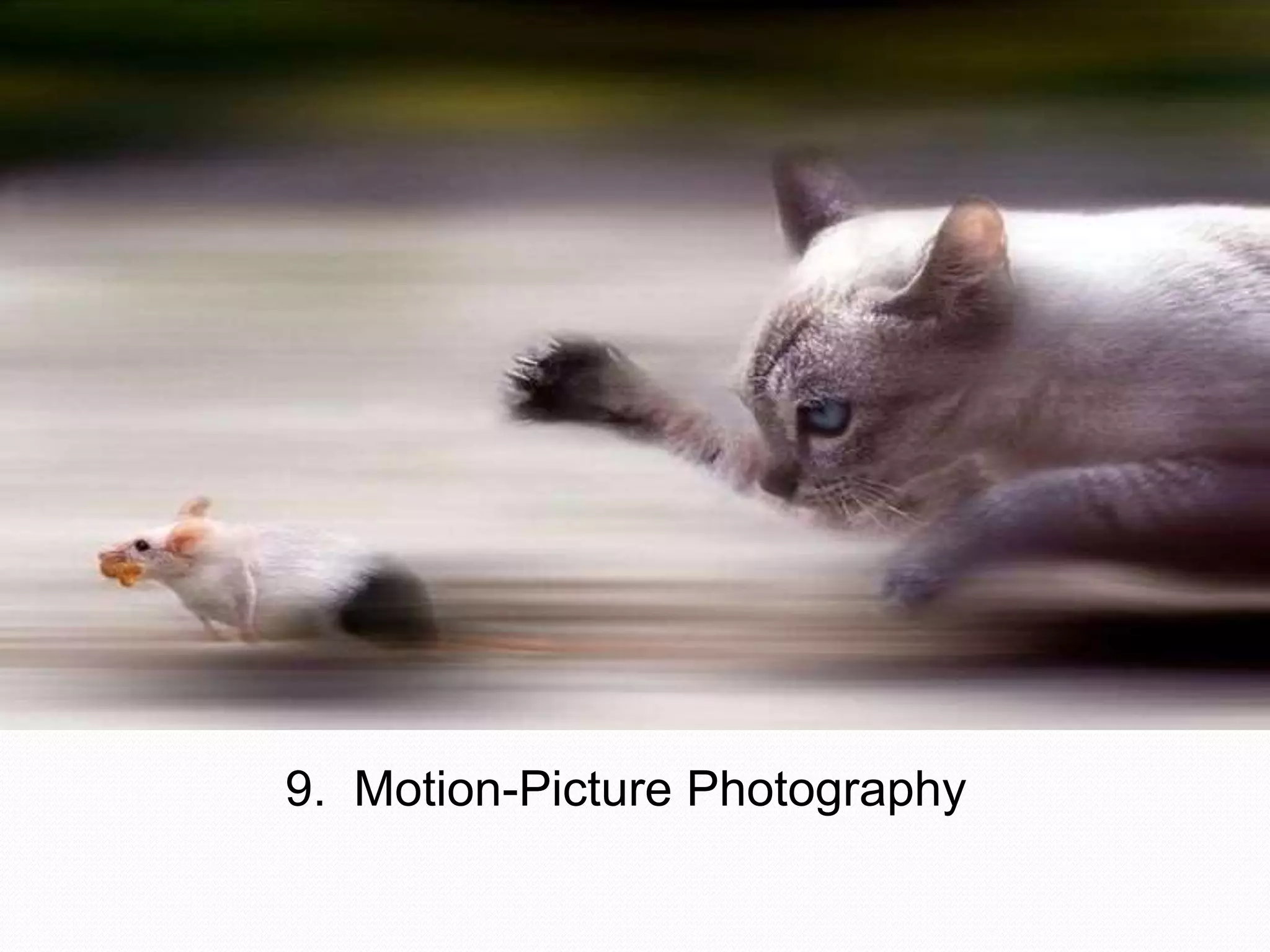
9. Motion-Picture Photography
Other examples:
Photography presentation

Photography presentation

  • 1.
  • 2.
    a method ofpicture making based on principles of light, optics, and chemistry or a technique of producing images known as photographs.
  • 3.
     comes fromGreek words and means “drawing with light.”  One of the world’s leading hobbies which uses a camera  a means of communication  a method of retaining accurate pictorial records of events
  • 4.
  • 5.
    Started when camera wasinvented. its origins traced back to the artistic techniques of artists .
  • 6.
     used byartists to trace images easily in the 16th century.  Boxlike camera with a pinhole on one side and a glass screen on the other . Camera Obscura
  • 7.
    In 1727, JohanHeinrich Schulze of Germany established the basic concept of photography when he discovered that silver is darkened by exposure to light.
  • 8.
     In 1802,Thomas Wedgewood, succeeded in producing images of leaves on leather that he had treated with silver salts but was not able to make it permanent.
  • 9.
    In 1826 Frenchinventor Joseph Niépce created the first surviving permanent photograph (in black & white) using a camera obscura but died in 1833 unable to perfect the technology.
  • 10.
    View from the Windowat Le Gras was the first successful permanent photograph, created in 1826.
  • 11.
    One of the firstfixed photographic images in 1827 by Niépce .
  • 12.
     In 1837,Louis Jacques Mande Daguerre announced to the world his “Daguerreotype method” which was the first practicable method of obtaining permanent images .
  • 13.
    Daguerreotype Images Pictures like thesewere created with silver- coated plates and treated with iodine vapor to make them sensitive to light.
  • 14.
    Negative image byTalbot invented in 1835. In 1839, William Henry Fox Talbot announced a process of producing negatives on paper from which positive copies were then made.
  • 15.
    In 1851, Frederick ScottArcher introduced the collodion, or wet– plate process in photography. Wet-plate cameras derived their name from the light- sensitive chemical coating applied to the photographic plate used while wet.
  • 16.
    Eastman improved thisby using a type of plastic called celluloid instead of paper, producing the first photographic film. In 1880’s, George Eastman devised a long paper strip that could replace the glass plate. In 1878, the dry plate was perfected using a gelatin instead of collodion coating.
  • 17.
    George Eastman – inventedthe Kodak box camera in 1888. The Kodak was the first camera specifically designed to use rolled film.
  • 18.
    In 1935, the1st electronic flash unit became available. In 1929, flashbulbs were introduced. In 1924, the 1st commercial 35-mm camera, the Leica, was produced.
  • 19.
    In 1942, the1st color negative film called Kodacolor became available. In 1935, Eastman Kodak Company also introduced Kodachrome, a color transparency film.
  • 20.
    Polaroid Instant Camera In1948, Dr. Edwin H. Land’s Polaroid Corporation introduced instant photography using a special camera & self- developing film.
  • 21.
    Single-lense-reflex camera Auto focus camera Inthe late 1990’s, digital photography was widely used in advertising & graphic design. Digicams are continually used by the public up to the present. In the 1970’s and 80’s, cameras continually improved. In 1963, instant color film became available. Digital camera
  • 22.
    Parts of aModern Camera
  • 23.
    Hints for TakingGood Pictures 1. Master the controls of the camera. 2. Learn about lighting, both natural and artificial. 3. Learn about composing the subject. 4. Make sure that the exposures are right.
  • 26.
  • 27.
  • 30.
    5. Commercial andAdvertising Photography
  • 31.
  • 32.
  • 33.
  • 34.
  • 35.

Editor's Notes

  • #31 Commercial and Advertising Photography
  • #34 Aerial Photography
  • #35 Motion-Picture Photography
  • #40 “ A picture is worth a thousand words”