Chemicals and Fuels
from Biomass
Norm Olson P.E.
Biomass Energy Conversion (BECON) Facility
Iowaenergycenter.org
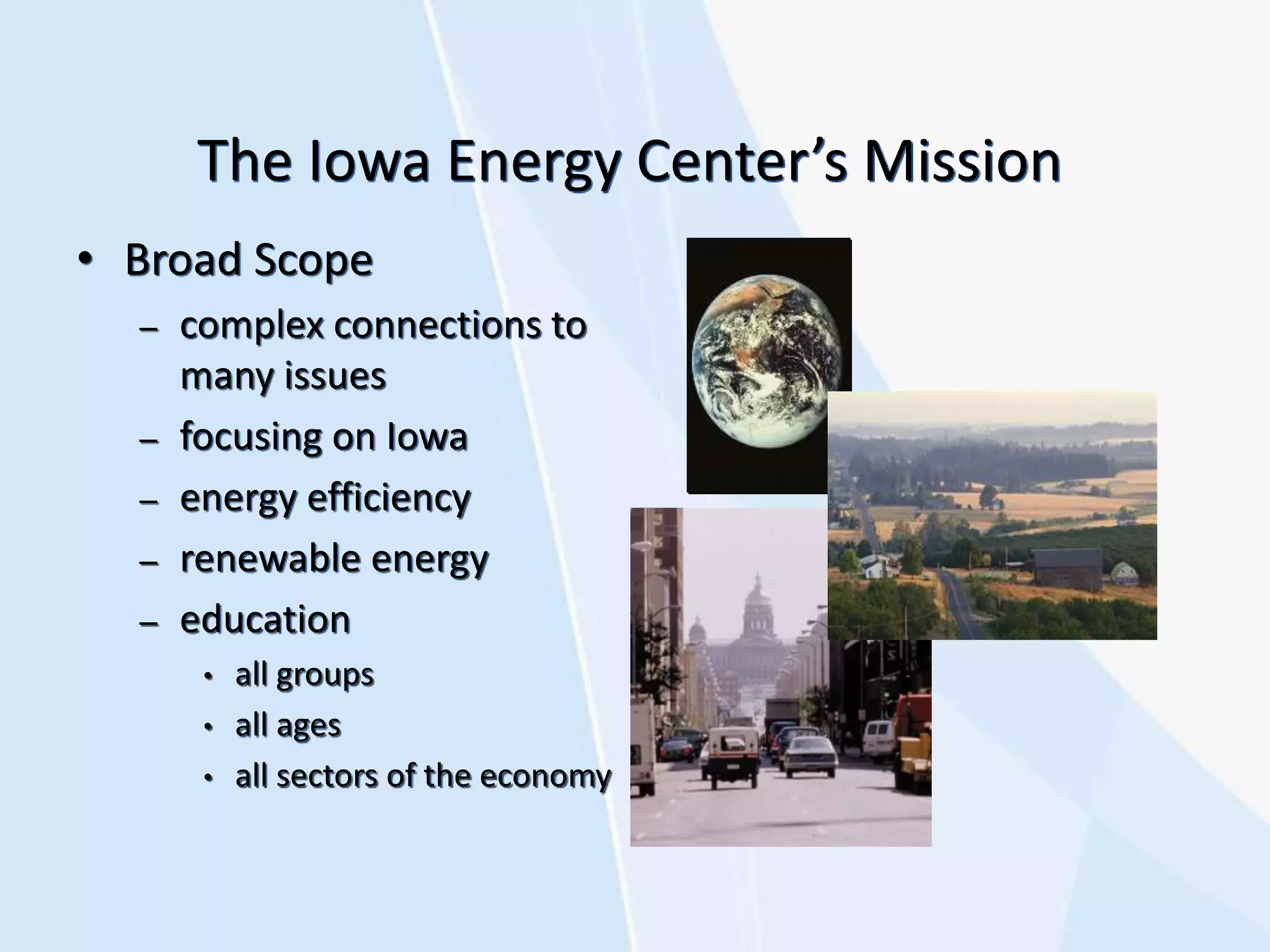
The Iowa Energy Center’s Mission
• Broad Scope
– complex connections to
many issues
– focusing on Iowa
– energy efficiency
– renewable energy
– education
• all groups
• all ages
• all sectors of the economy
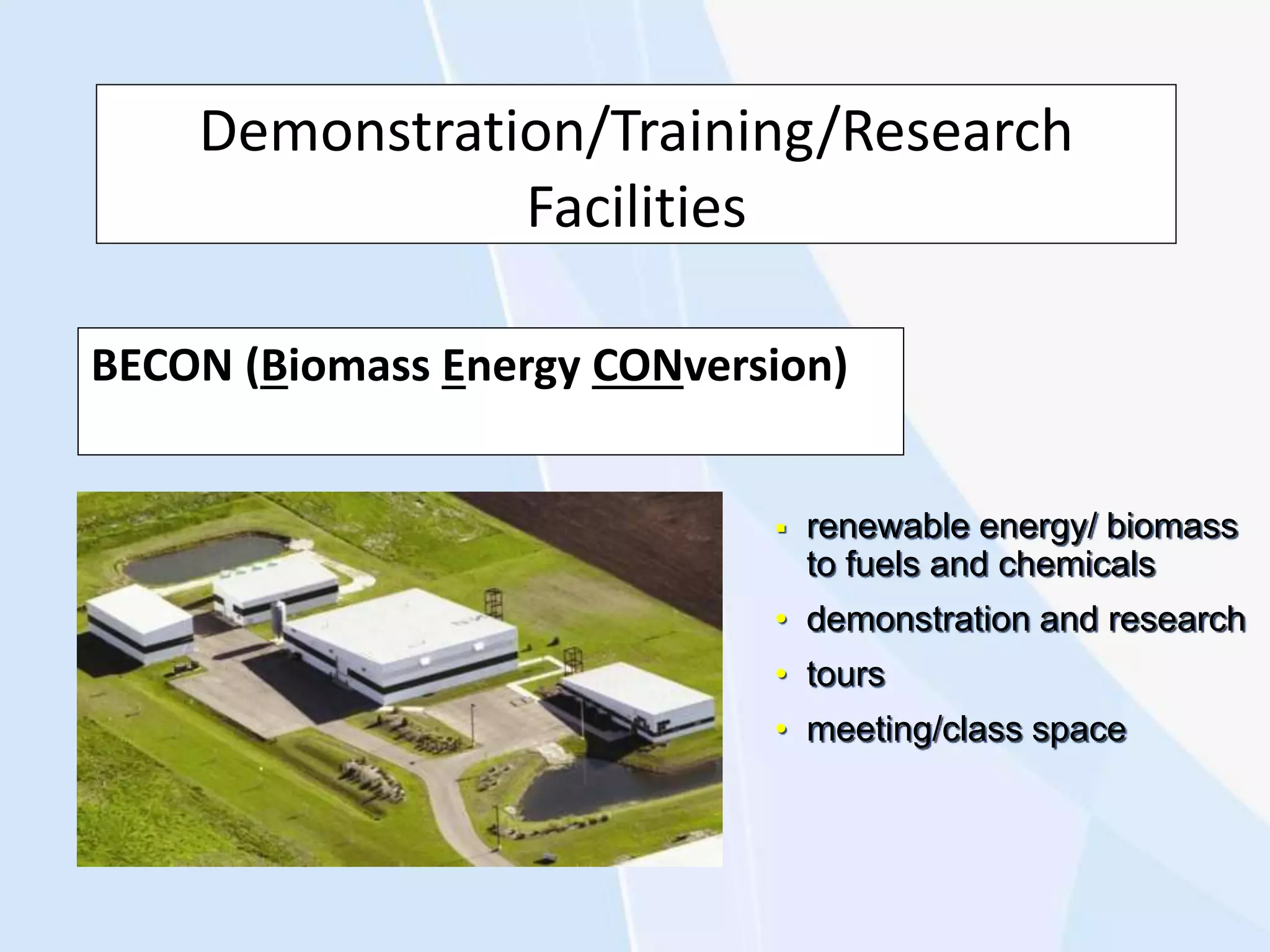
Demonstration/Training/Research
Facilities
BECON (Biomass Energy CONversion)
 renewable energy/ biomass
to fuels and chemicals
• demonstration and research
• tours
• meeting/class space
Outreach
•Nearly 14,000 people have either toured
BECON or heard the BECON presentation
since 1999
•BECON has had visitors from most states and
over 76 foreign countries
•Numerous state and Federal legislators,
Presidential candidates and former U.S.
President George Bush have visited BECON
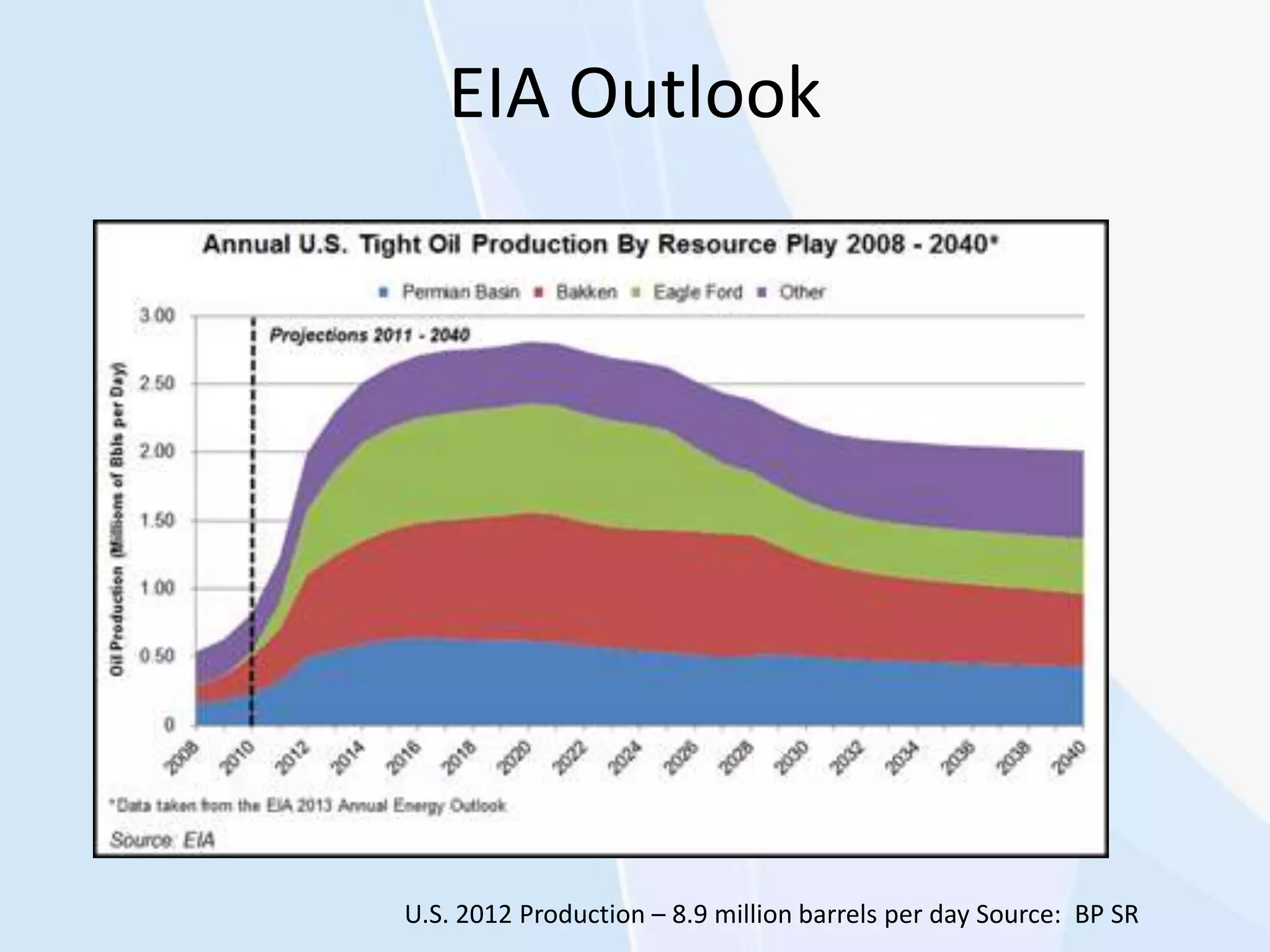
EIA Outlook
U.S. 2012 Production – 8.9 million barrels per day Source: BP SR
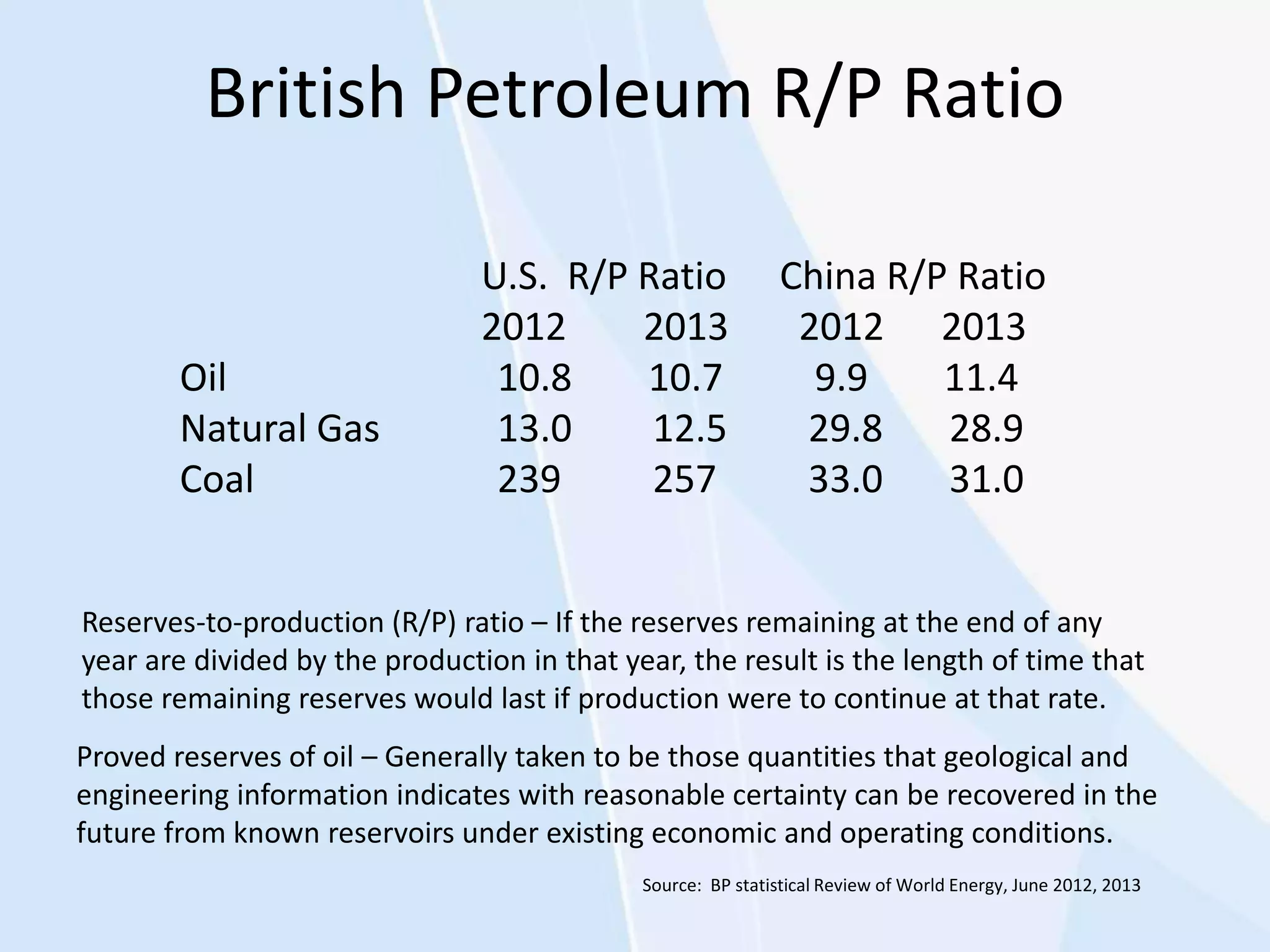
British Petroleum R/P Ratio
Proved reserves of oil – Generally taken to be those quantities that geological and
engineering information indicates with reasonable certainty can be recovered in the
future from known reservoirs under existing economic and operating conditions.
U.S. R/P Ratio China R/P Ratio
2012 2013 2012 2013
Oil 10.8 10.7 9.9 11.4
Natural Gas 13.0 12.5 29.8 28.9
Coal 239 257 33.0 31.0
Reserves-to-production (R/P) ratio – If the reserves remaining at the end of any
year are divided by the production in that year, the result is the length of time that
those remaining reserves would last if production were to continue at that rate.
Source: BP statistical Review of World Energy, June 2012, 2013
The Ideal Alternative Fuel
• Can be produced from any raw energy source (i.e. wind, solar,
biomass, coal, nuclear, hydro etc.)
• Is cost effective
• Has significant storage and delivery systems already in place
• Is environmentally friendly
• Can be used in any prime mover (i.e. diesel engines, fuel cells,
SI engines, gas turbines, etc.)
• Has a proven, acceptable safety record
• Produced in the U.S.
Ammonia Basics 1
• Ammonia (NH3) can be produced from any raw energy
source, including all fossil, renewable and nuclear sources.
• Ammonia is cost competitive with gasoline as a transportation
fuel
• Ammonia has extensive, worldwide transportation and
storage infrastructure already in place
• Ammonia is very environmentally friendly when used as a
transportation fuel and produces only N2 and H20 at the
tailpipe with low-cost emissions controls.
• Ammonia has been successfully demonstrated in SI engines,
CI engines, and fuel cells.
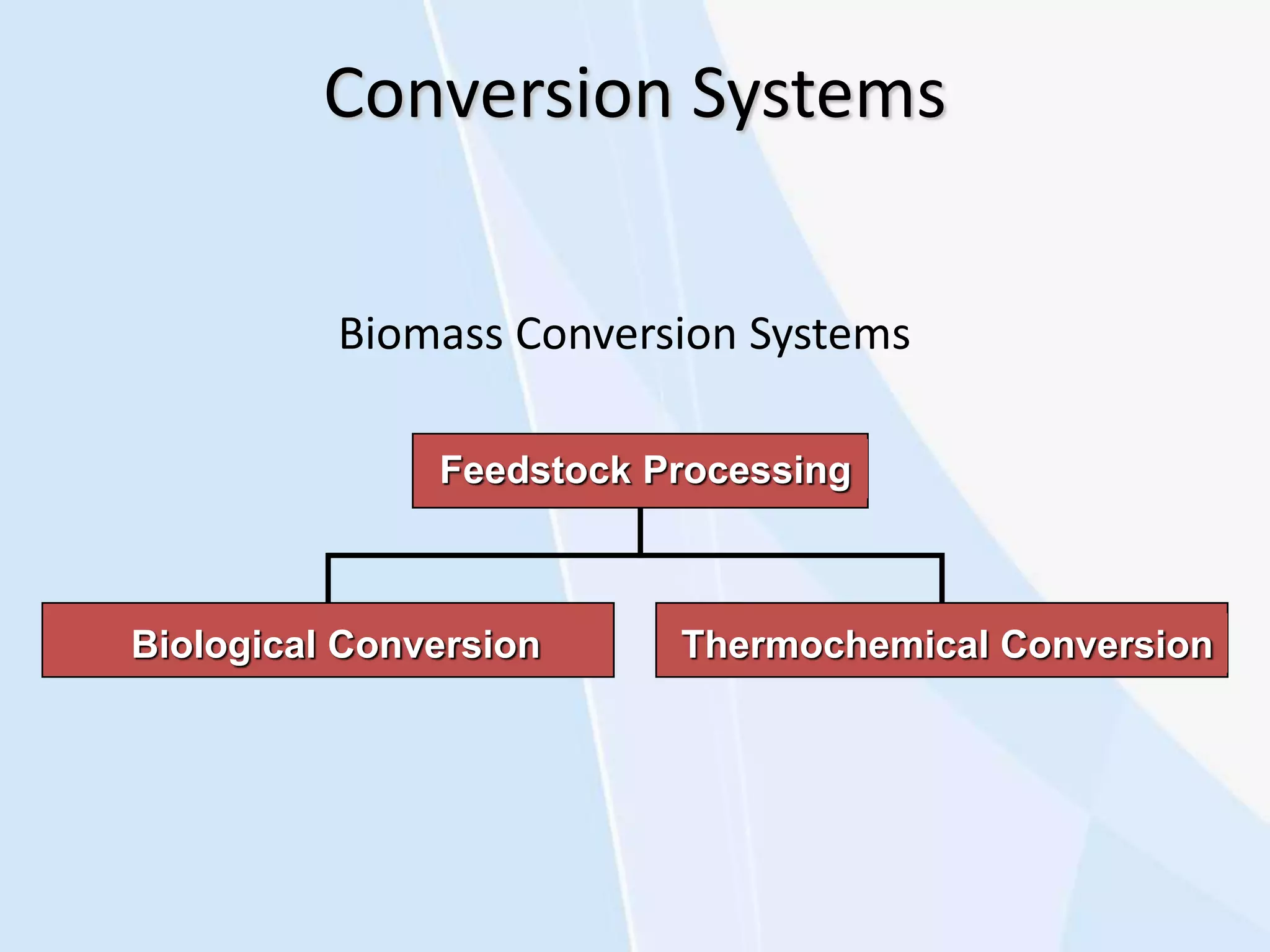
Conversion Systems
Biomass Conversion Systems
Feedstock Processing
Thermochemical ConversionBiological Conversion
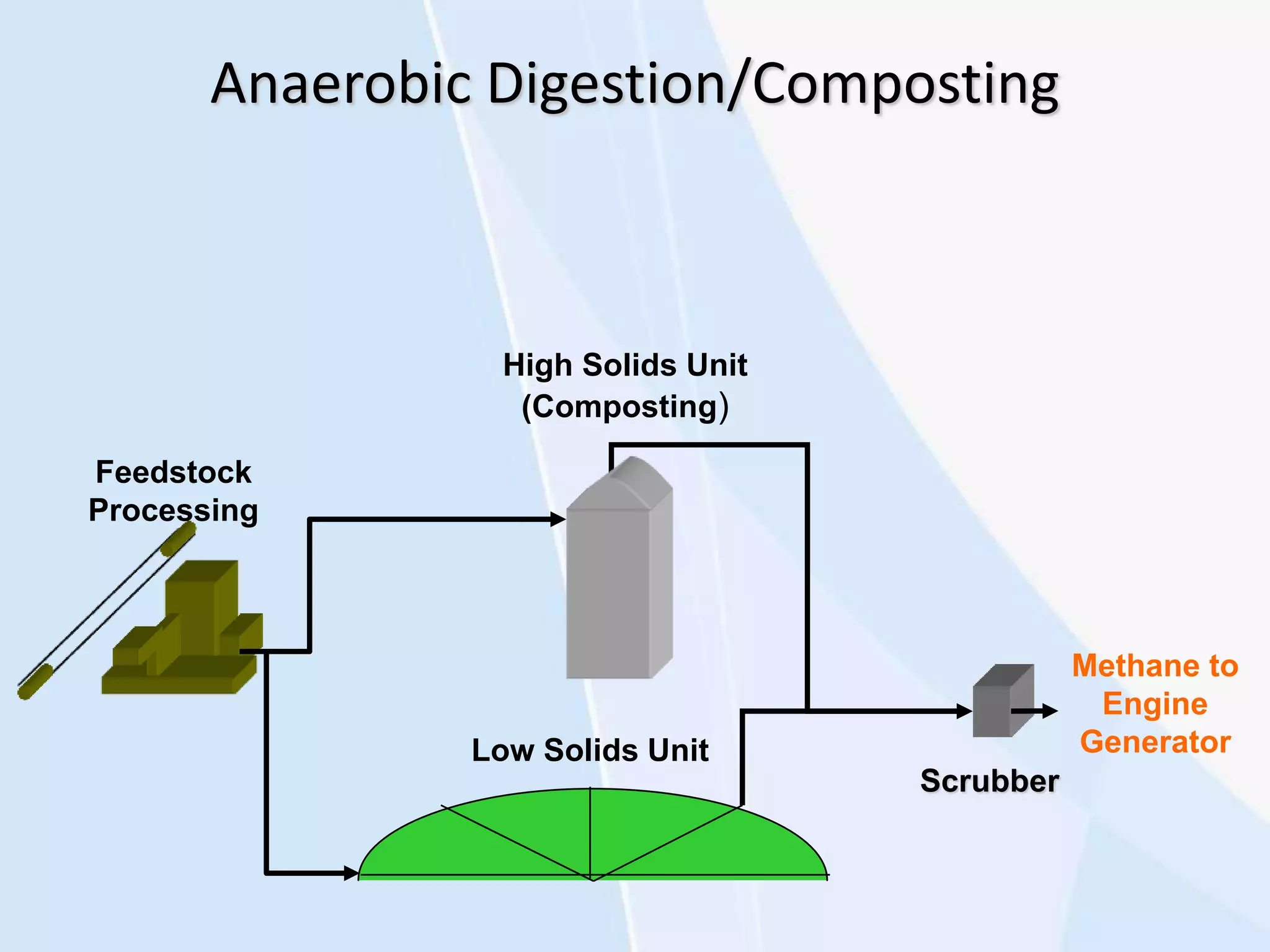
Anaerobic Digestion/Composting
Feedstock
Processing
High Solids Unit
(Composting)
Low Solids Unit
Scrubber
Methane to
Engine
Generator
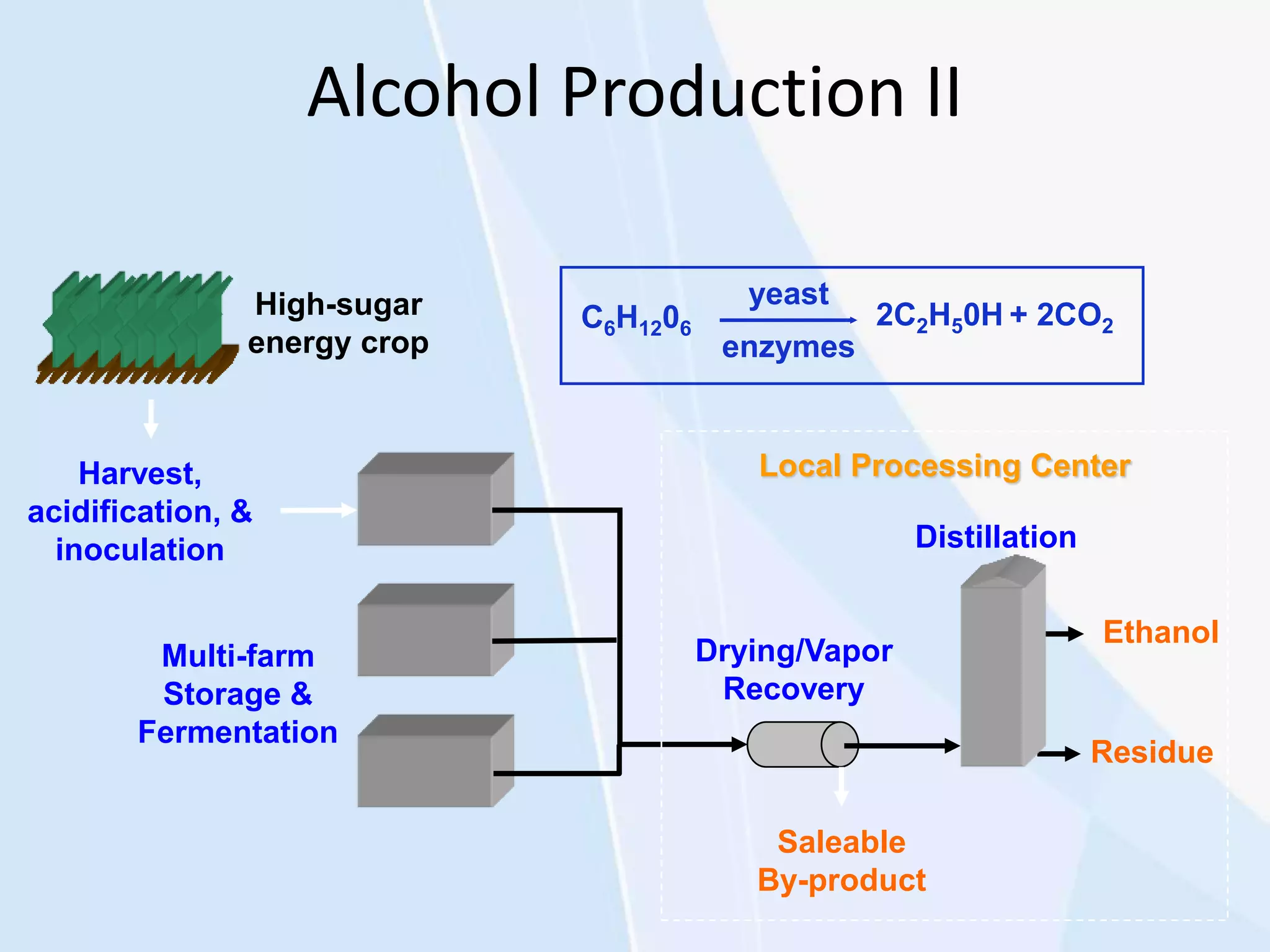
Distillation
Ethanol
Residue
Saleable
By-product
Drying/Vapor
Recovery
Multi-farm
Storage &
Fermentation
Harvest,
acidification, &
inoculation
High-sugar
energy crop
Local Processing Center
Alcohol Production II
C6H1206
yeast
enzymes
2C2H50H + 2CO2
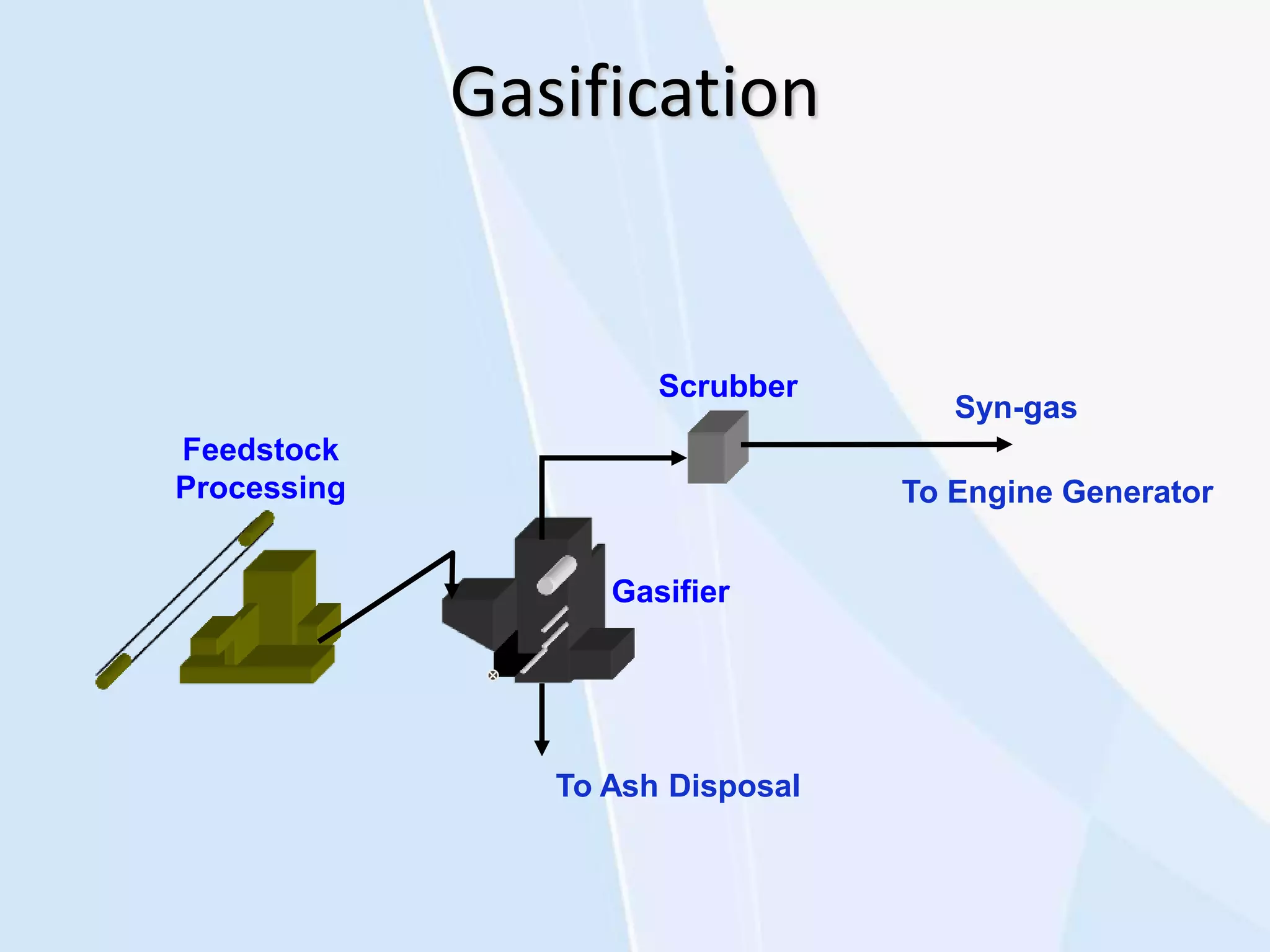
Gasification
Feedstock
Processing To Engine Generator
To Ash Disposal
Gasifier
Scrubber
Syn-gas
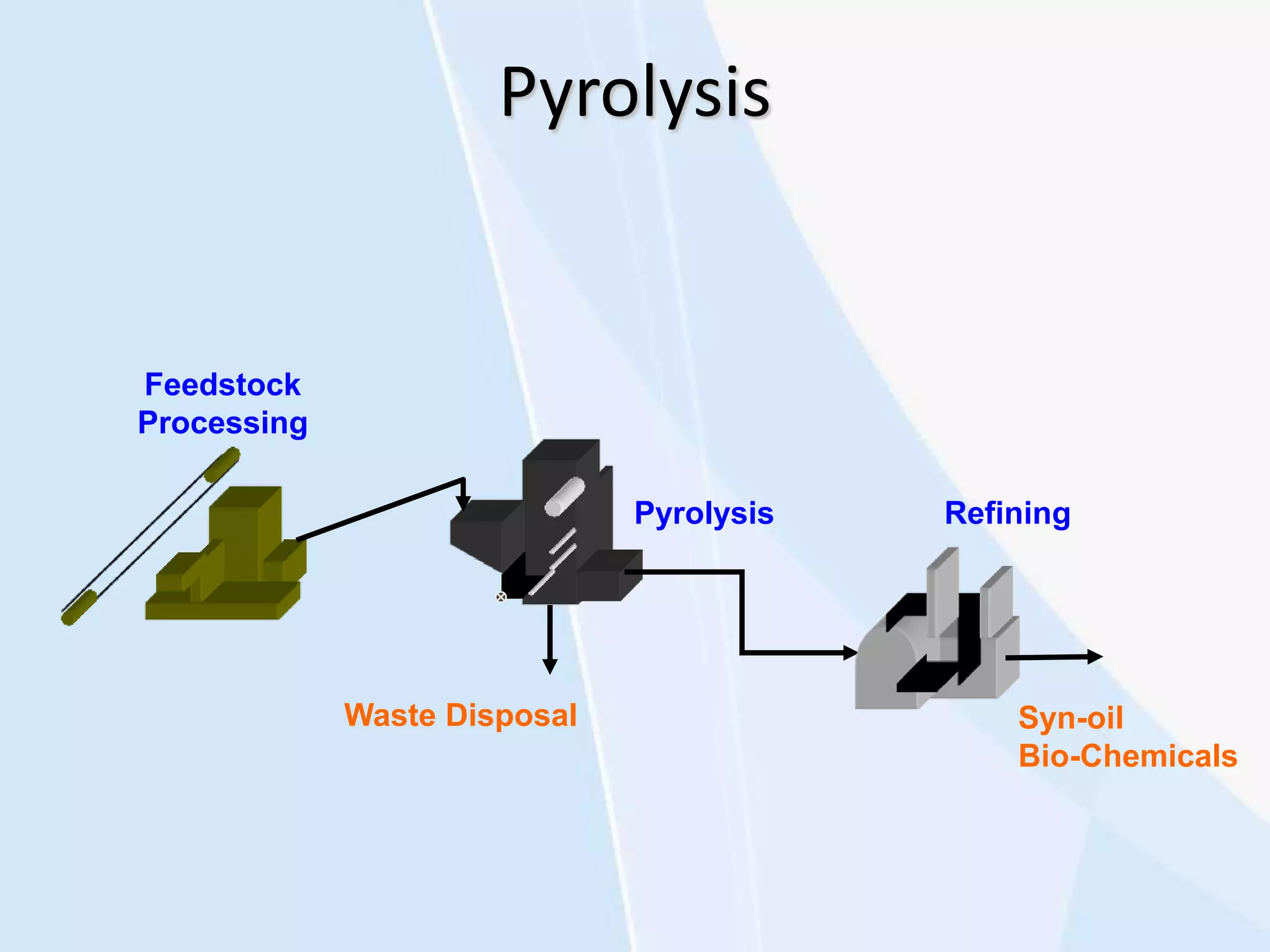
Pyrolysis
Feedstock
Processing
Waste Disposal
Pyrolysis Refining
Syn-oil
Bio-Chemicals
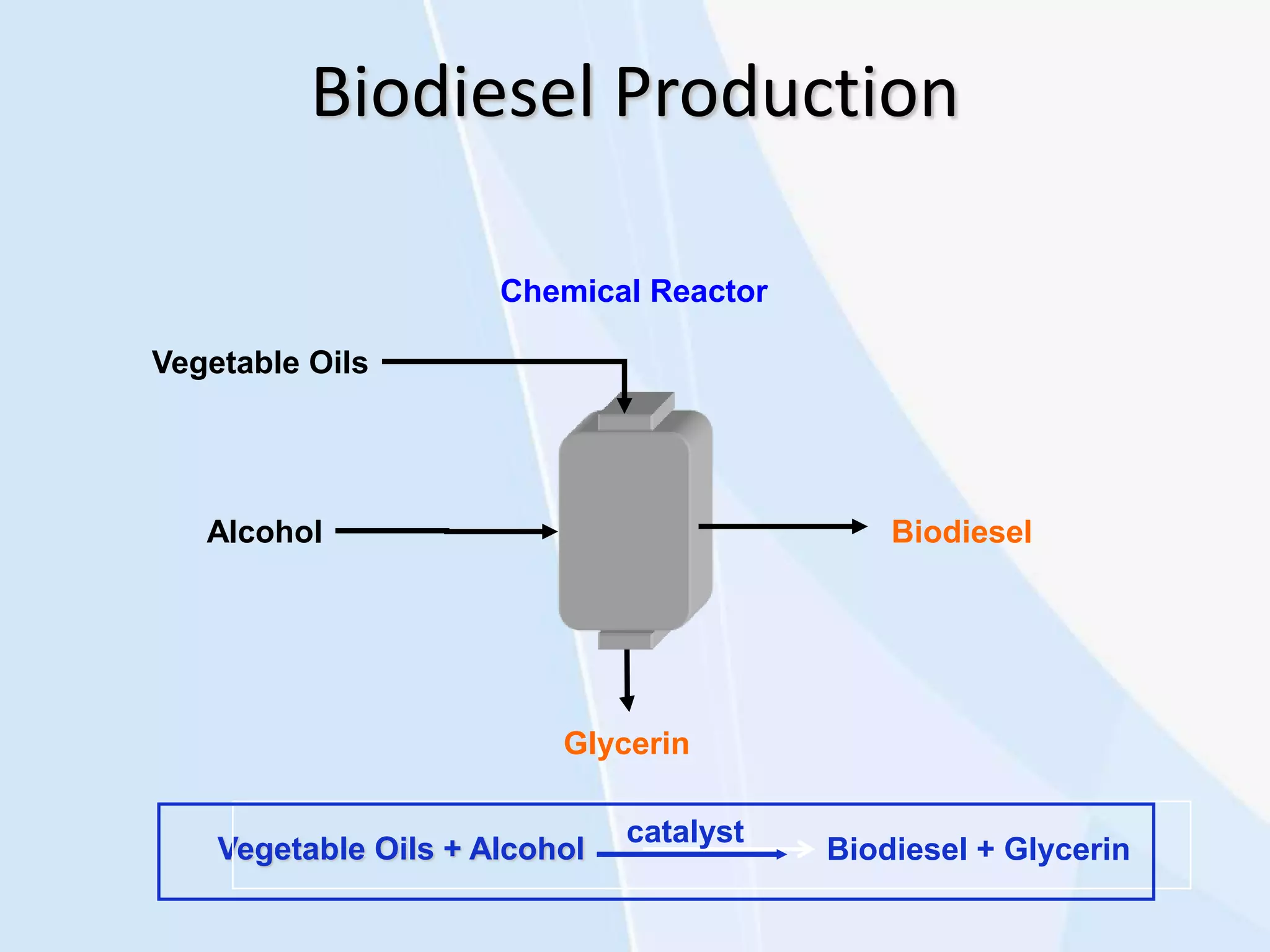
Biodiesel Production
Chemical Reactor
Vegetable Oils
Alcohol
Glycerin
Biodiesel
Vegetable Oils + Alcohol Biodiesel + Glycerin
catalyst
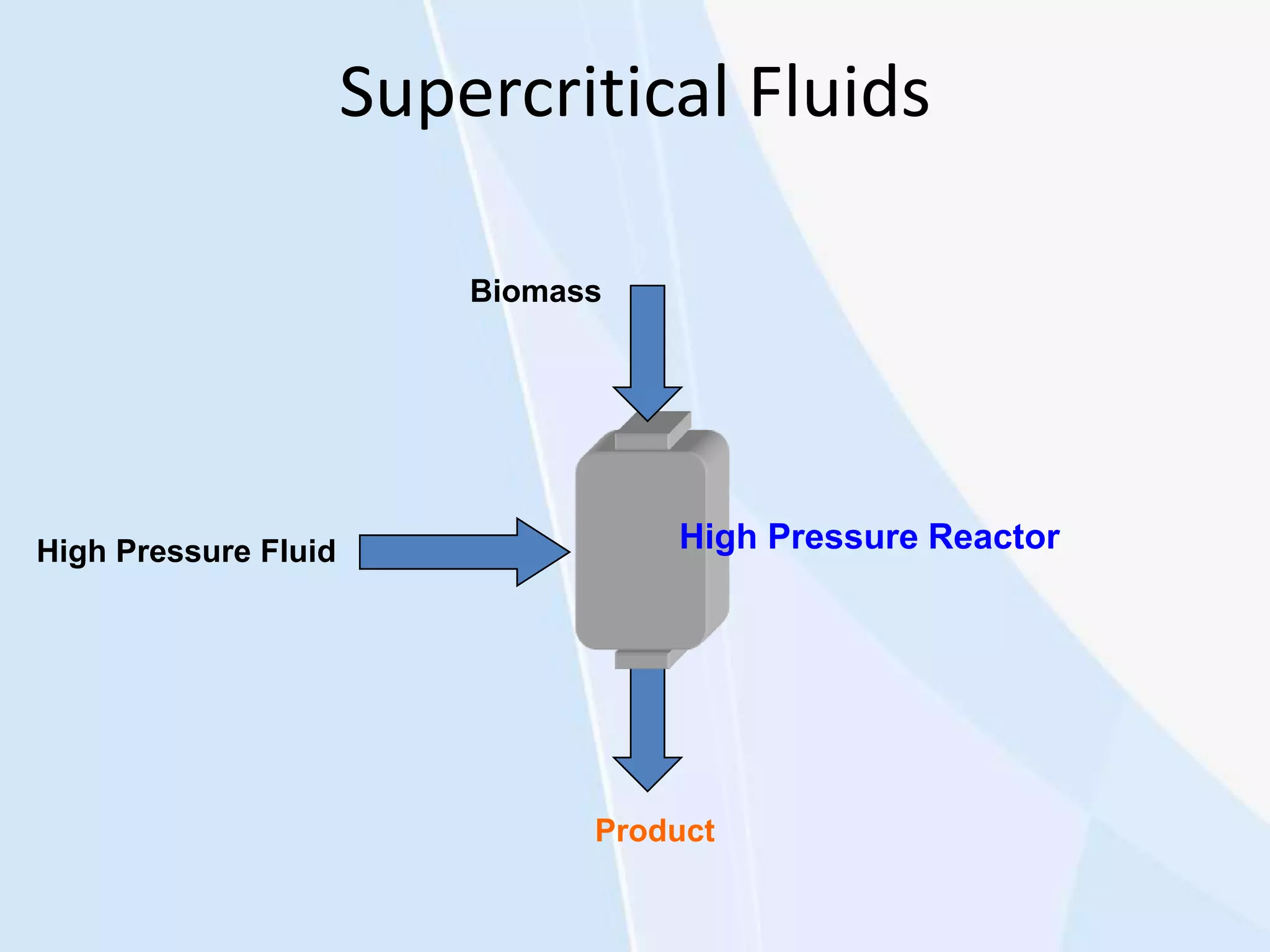
Supercritical Fluids
High Pressure Reactor
Biomass
High Pressure Fluid
Product
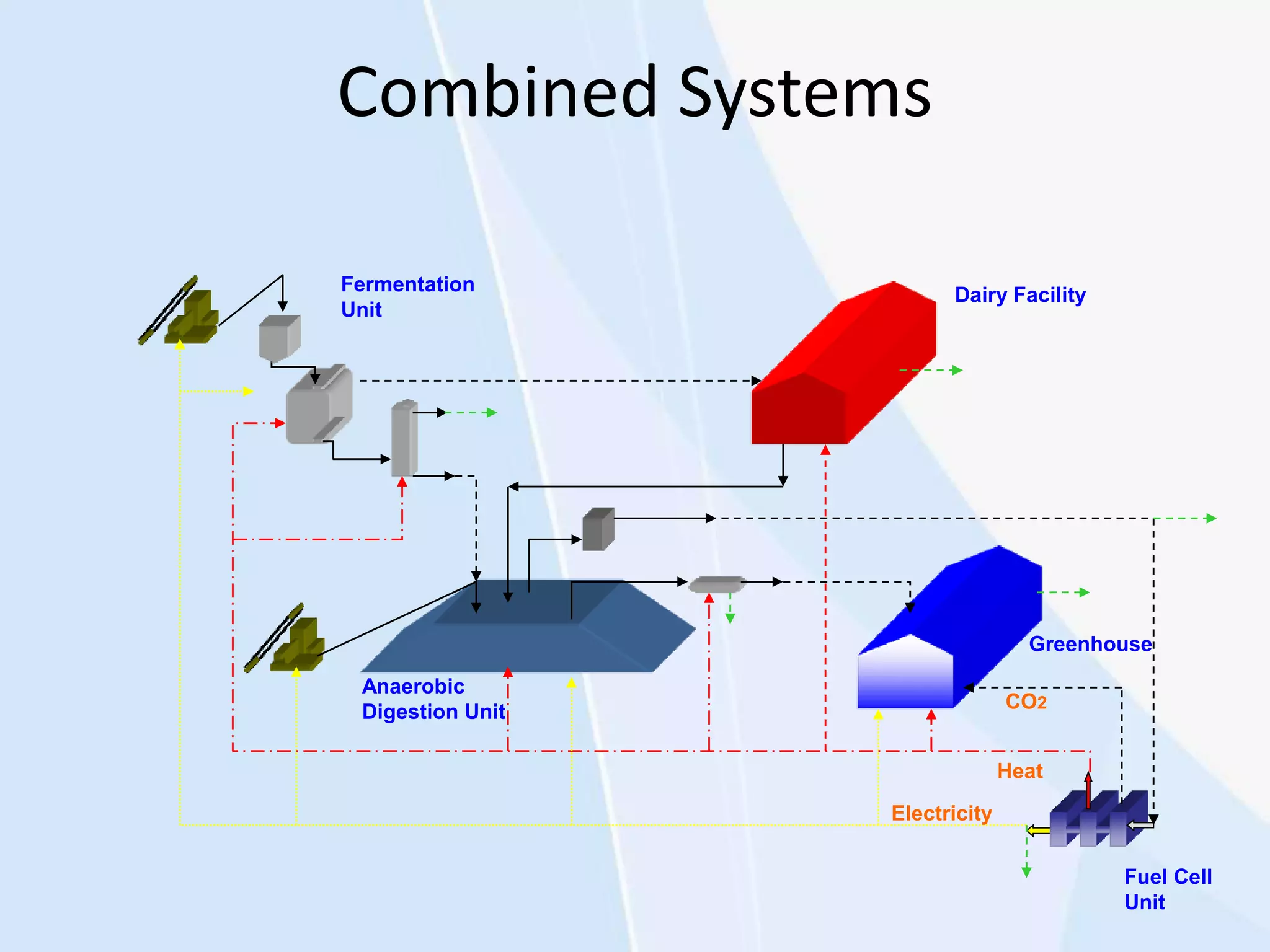
Combined Systems
Greenhouse
Anaerobic
Digestion Unit
Fermentation
Unit
Fuel Cell
Unit
Electricity
Heat
CO2
Dairy Facility
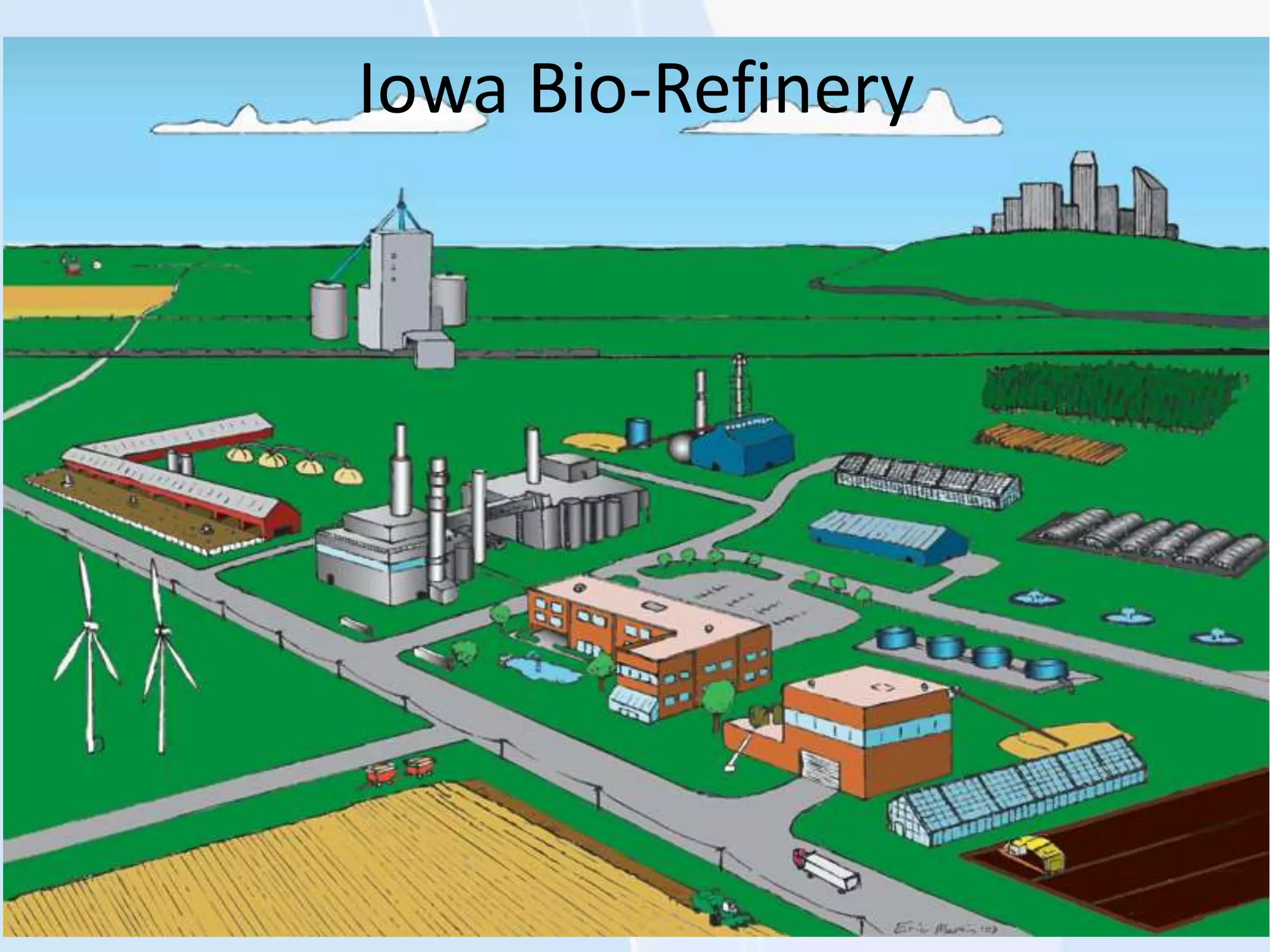
Iowa Bio-Refinery
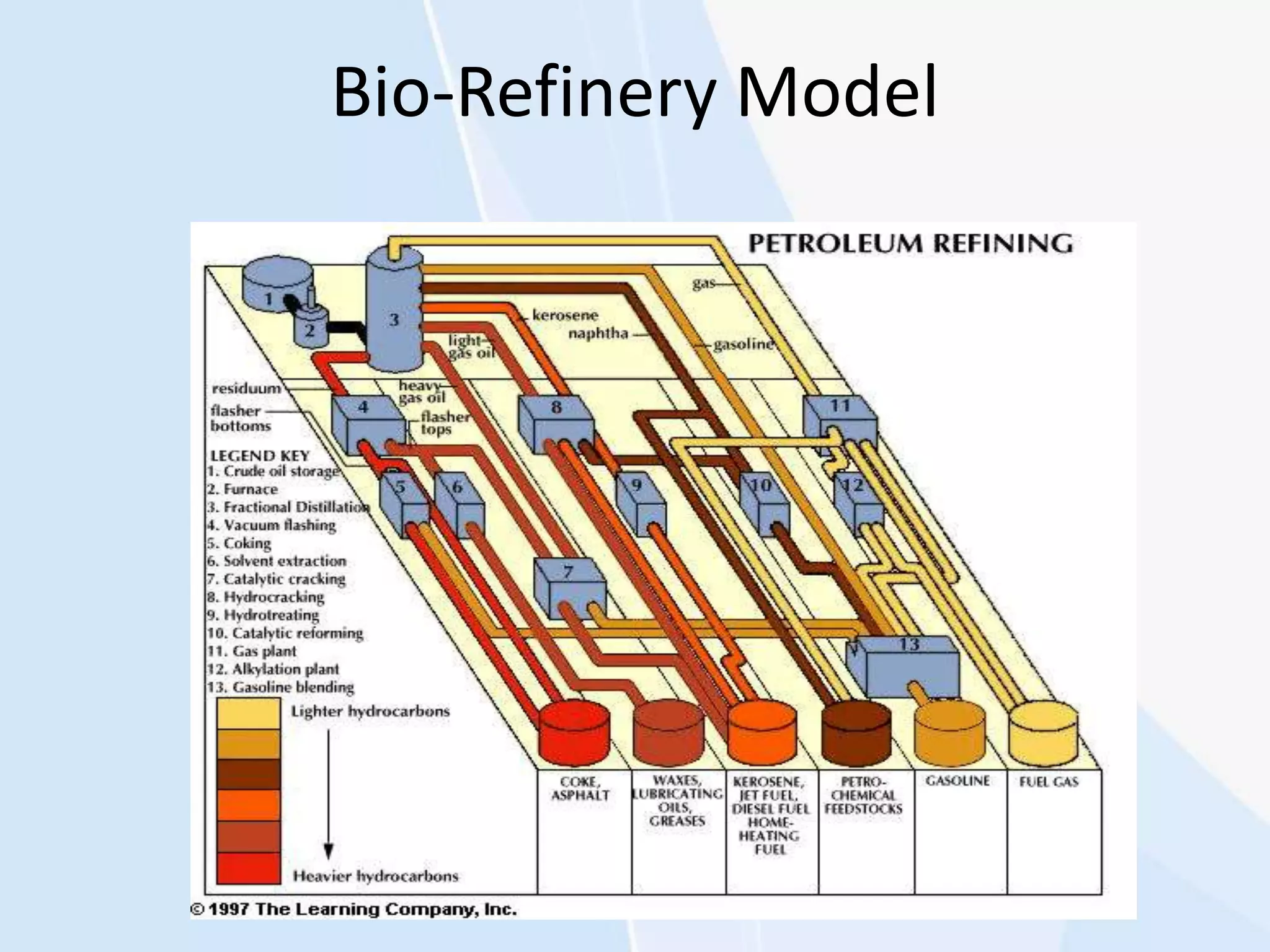
Bio-Refinery Model
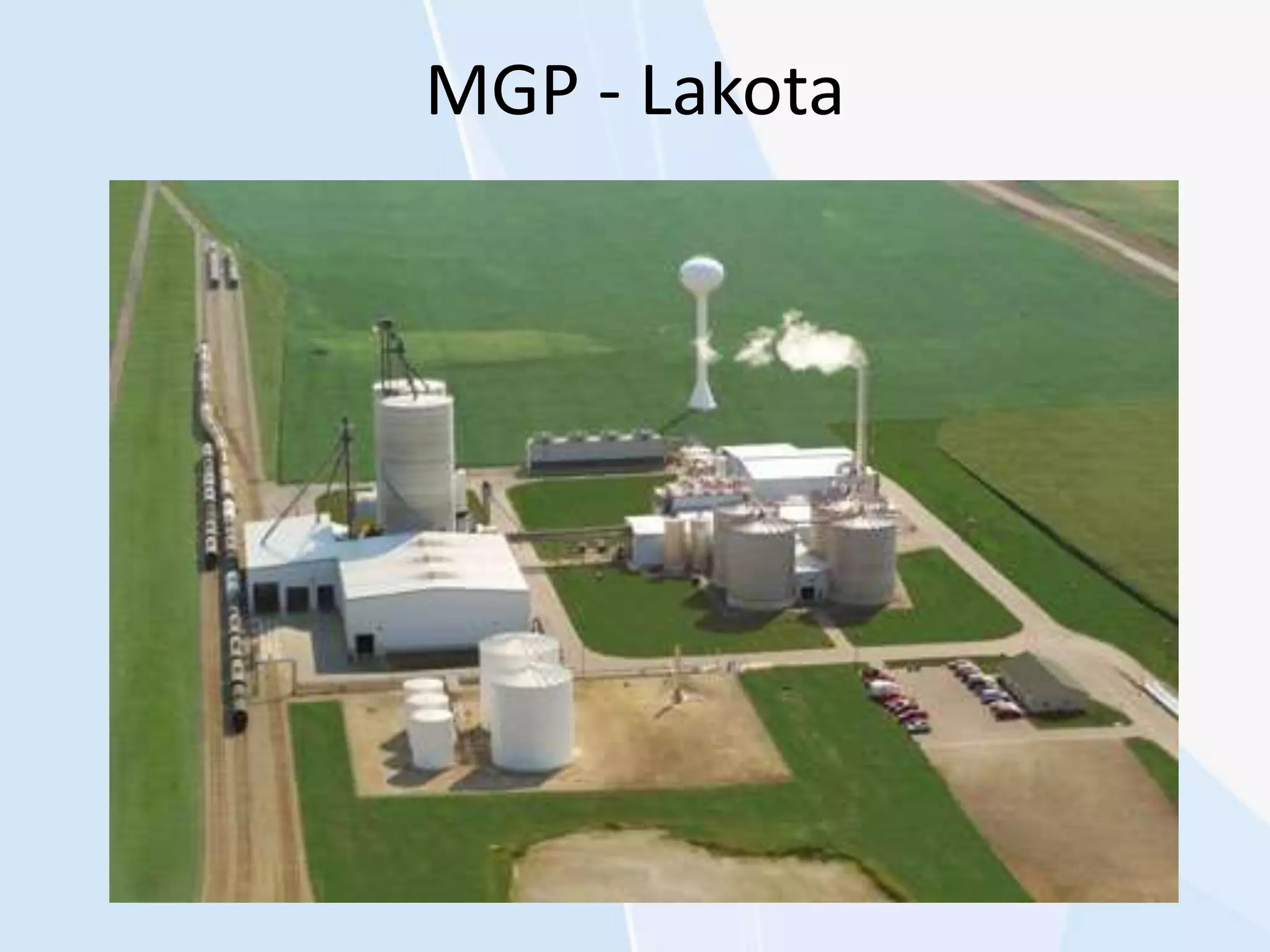
MGP - Lakota
The Ideal Biomass System
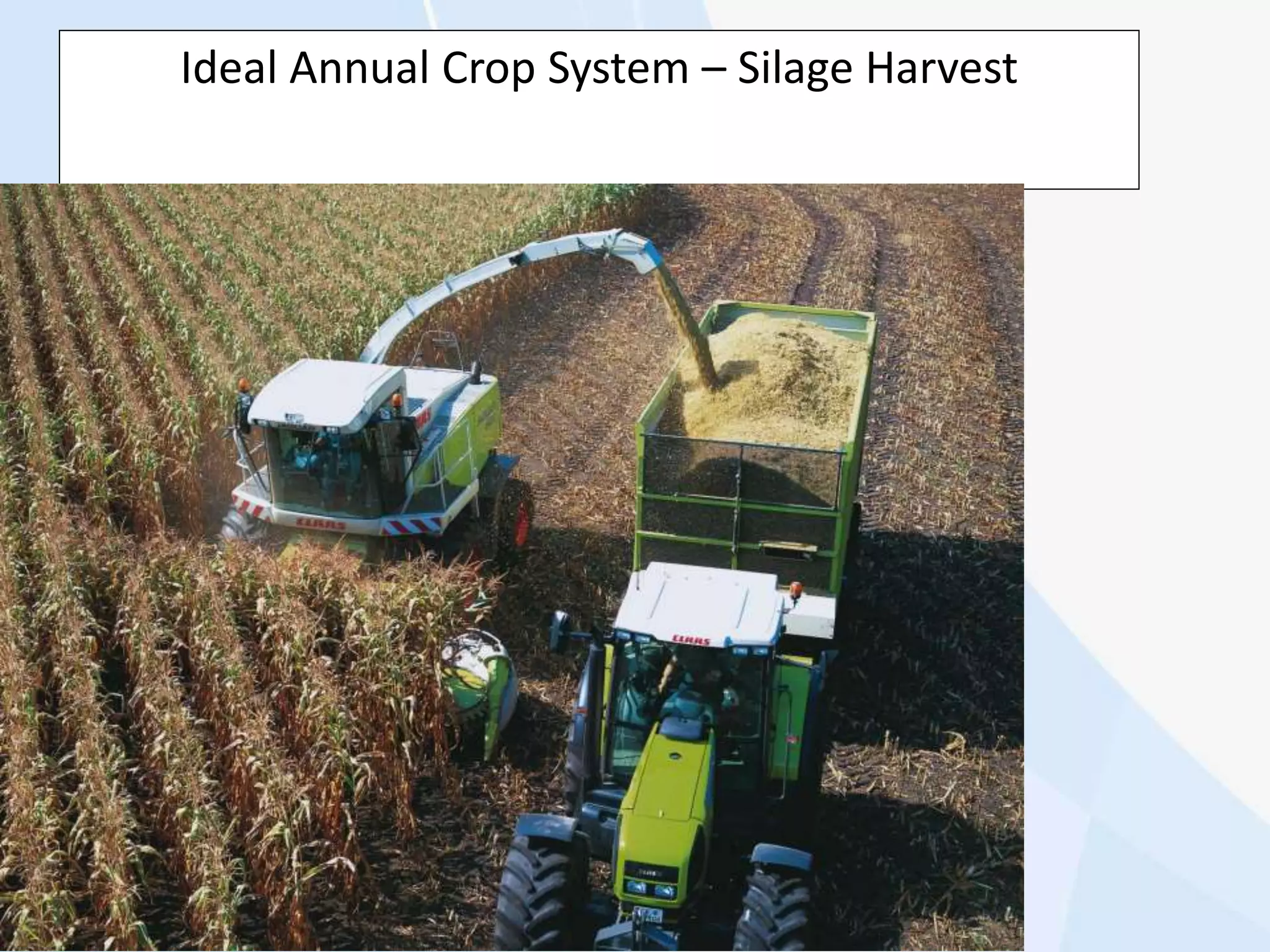
• Soil tilth improved – no erosion loss, increased soil organic carbon
content
• Nutrients and micronutrients returned to soil
• Fertilizer made from plant residue in same field
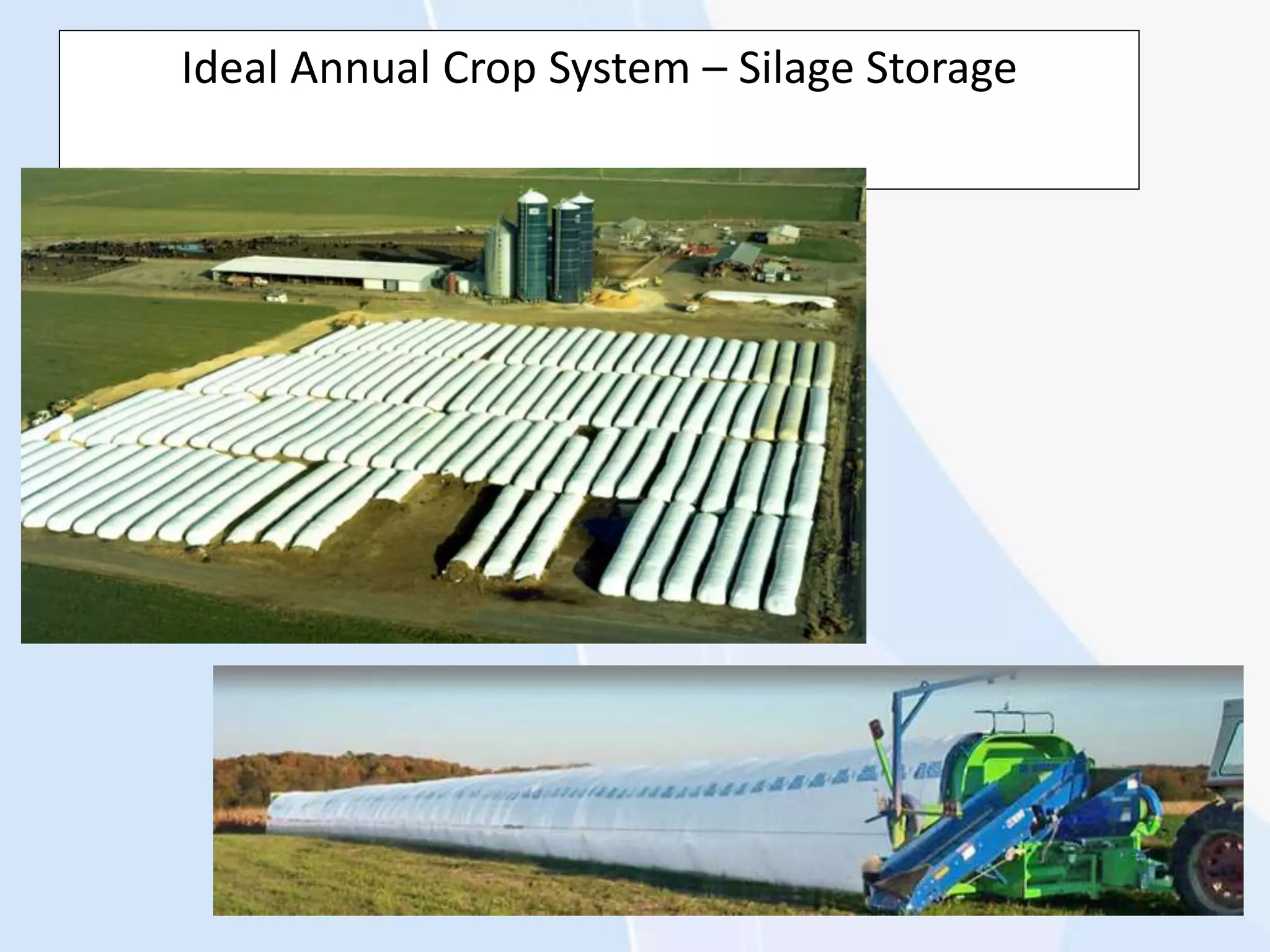
• Use of currently available planting, harvesting storage techniques
• No fossil fuel use
• Cost effective
• Local economic development
• Biorefinery concept – multiple products (food, chemicals, fuel
additives) energy efficient, low air/water emissions, low water use
Ideal Annual Crop System – Silage Harvest
Ideal Annual Crop System – Silage Storage
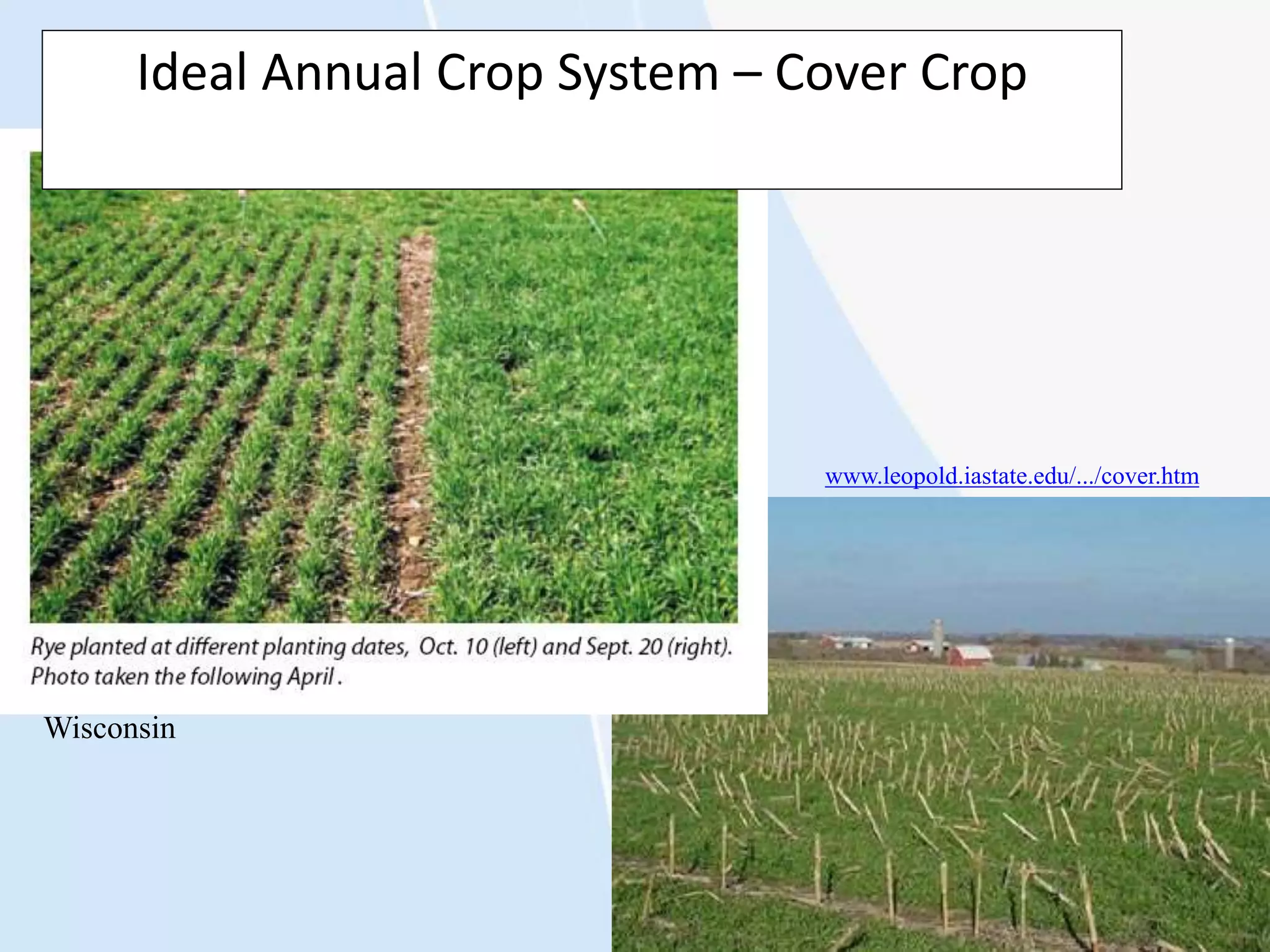
Wisconsin
Ideal Annual Crop System – Cover Crop
www.leopold.iastate.edu/.../cover.htm
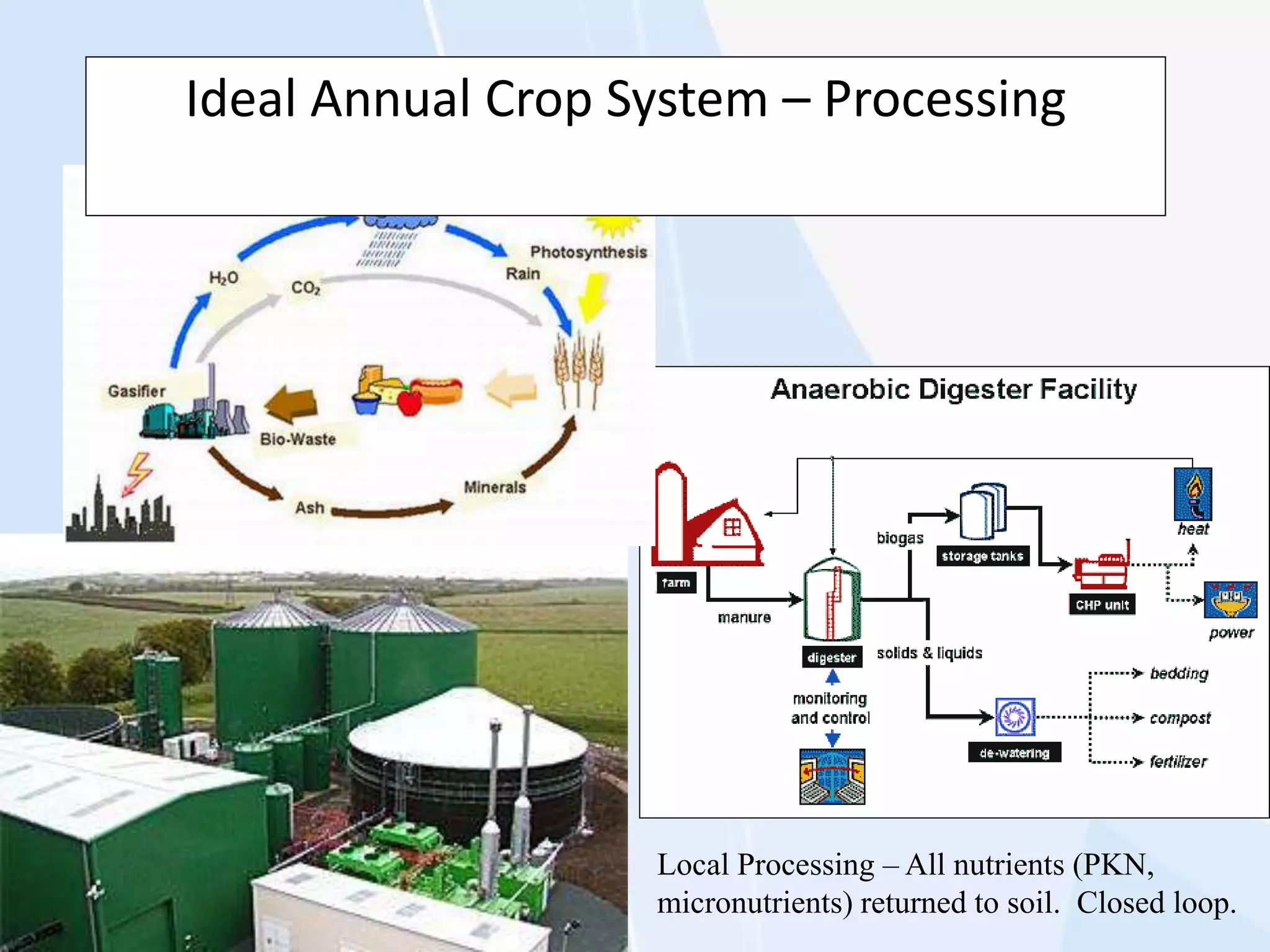
Local Processing – All nutrients (PKN,
micronutrients) returned to soil. Closed loop.
Ideal Annual Crop System – Processing
Biomass Feedstocks
• Agricultural Residues
• Food Processing Waste
• Livestock Production Waste
• Municipal Solid Waste
• Obsolete Seed Corn
• Wood Waste
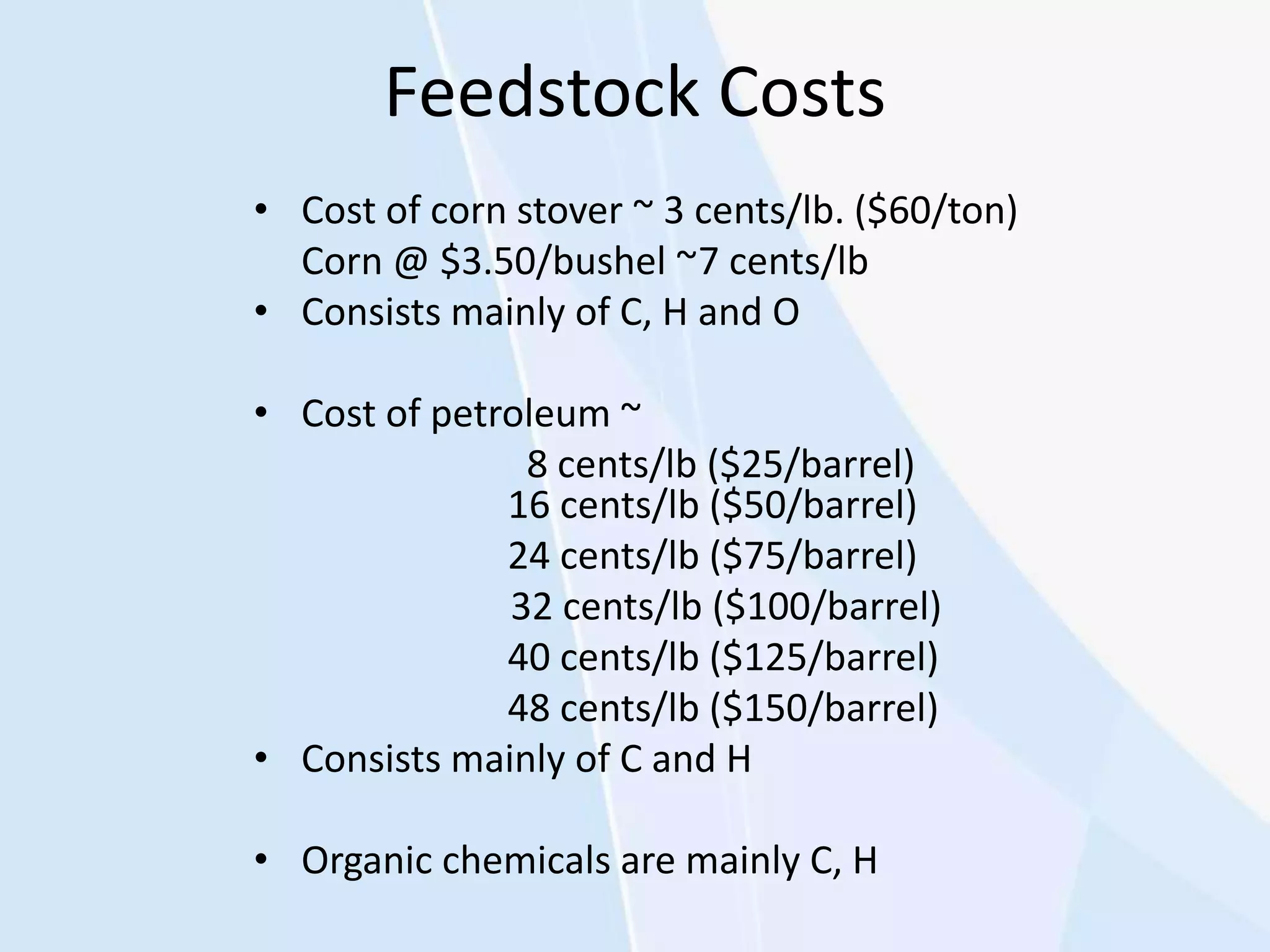
Feedstock Costs
• Cost of corn stover ~ 3 cents/lb. ($60/ton)
Corn @ $3.50/bushel ~7 cents/lb
• Consists mainly of C, H and O
• Cost of petroleum ~
8 cents/lb ($25/barrel)
16 cents/lb ($50/barrel)
24 cents/lb ($75/barrel)
32 cents/lb ($100/barrel)
40 cents/lb ($125/barrel)
48 cents/lb ($150/barrel)
• Consists mainly of C and H
• Organic chemicals are mainly C, H
A Little History
• Oil came in at $1.50/barrel in the mid-1940’s
($0.0045/pound)
• Corn was approximately $1.50/bushel in 1950
(approx. $0.03/pound)
Forward to the Past
• Prior to the 1940’s most chemicals were plant
derived
• Celluloid, Cellophane, Bakelite, rayon, paints,
adhesives
• Henry Ford Vegetable Mobile
• Fermentations to ethanol, butanol, propanol and
other alcohols was common prior to the 1940’s.
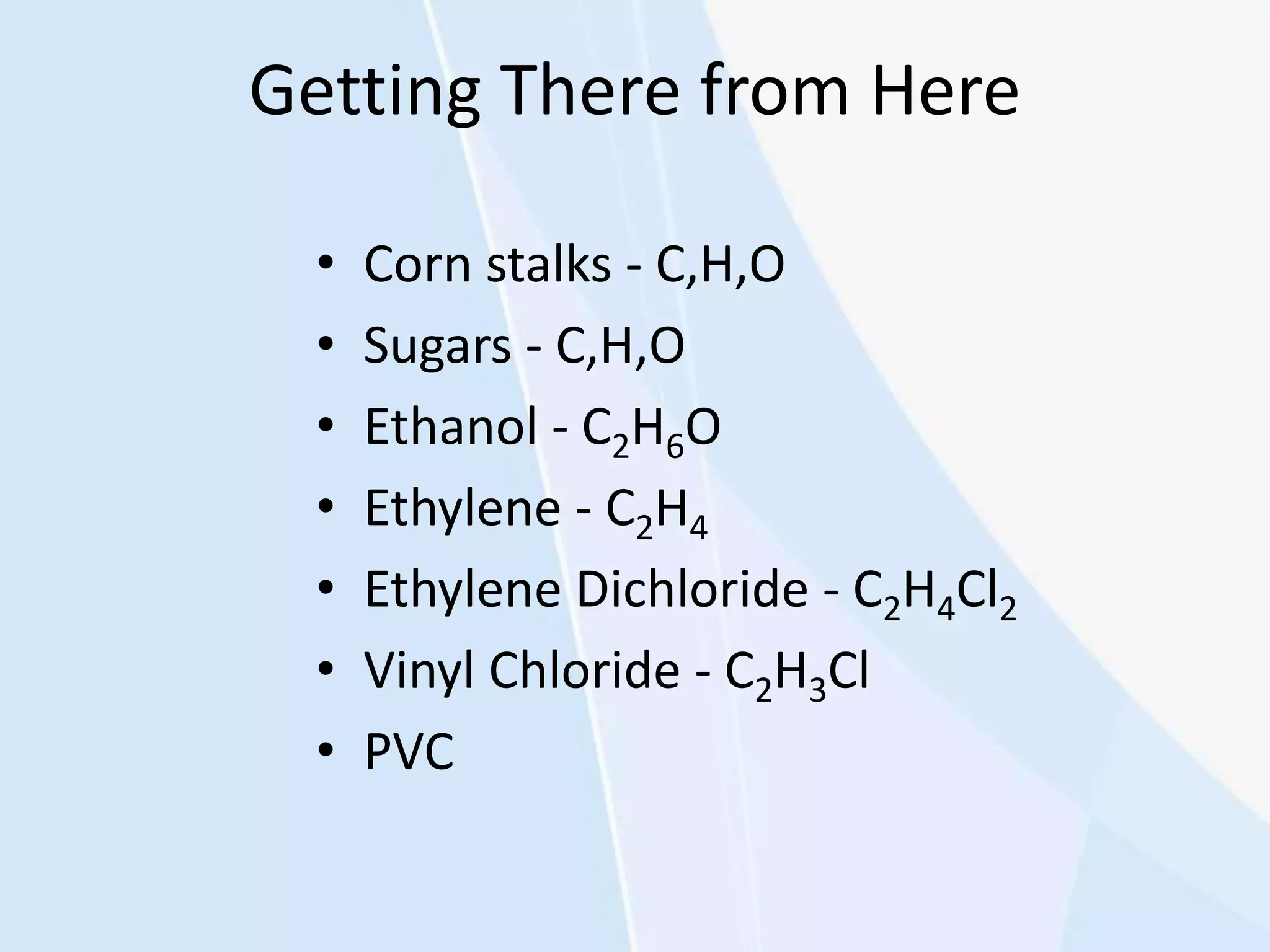
Getting There from Here
• Corn stalks - C,H,O
• Sugars - C,H,O
• Ethanol - C2H6O
• Ethylene - C2H4
• Ethylene Dichloride - C2H4Cl2
• Vinyl Chloride - C2H3Cl
• PVC
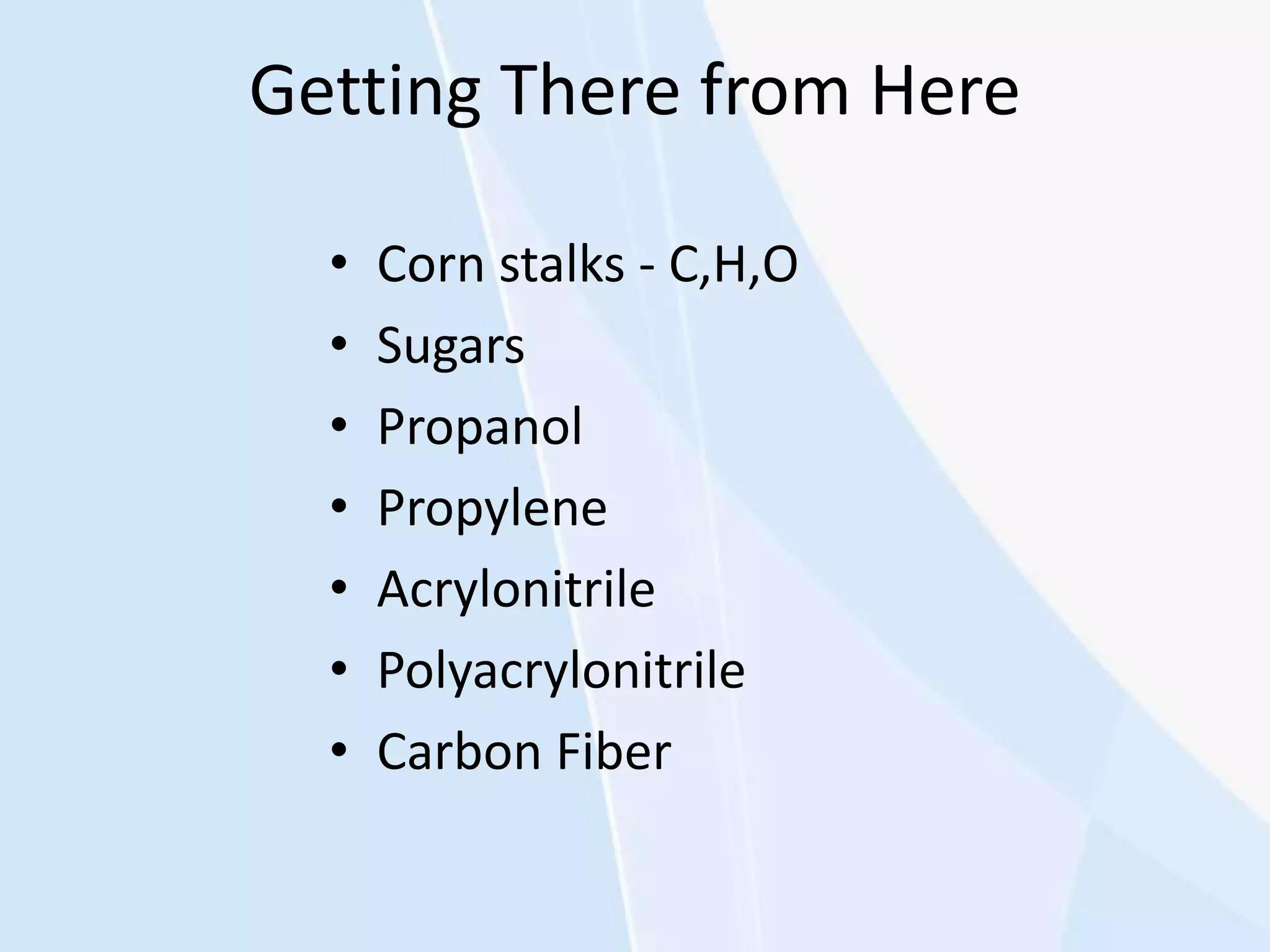
• Corn stalks - C,H,O
• Sugars
• Propanol
• Propylene
• Acrylonitrile
• Polyacrylonitrile
• Carbon Fiber
Getting There from Here
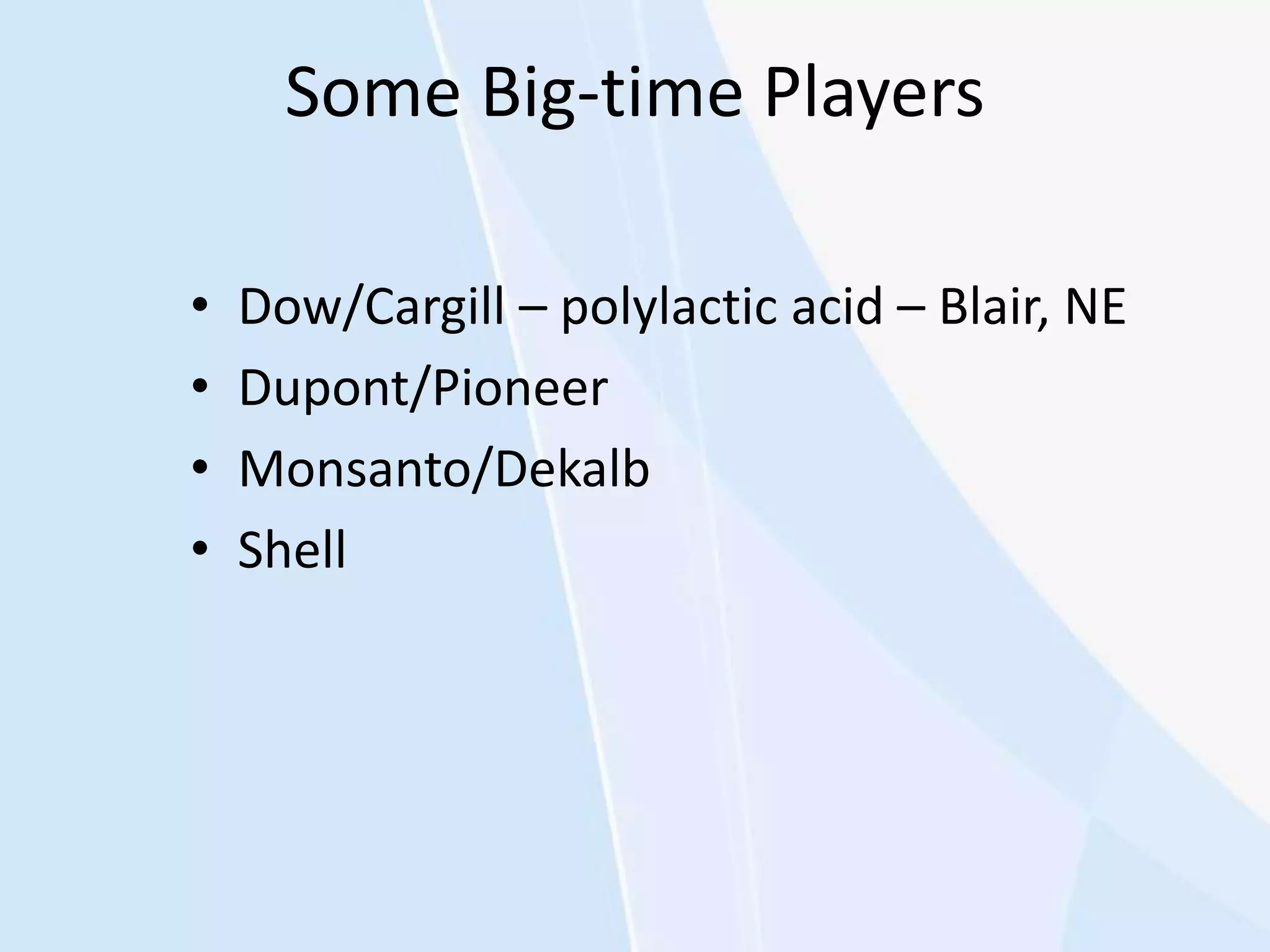
Some Big-time Players
• Dow/Cargill – polylactic acid – Blair, NE
• Dupont/Pioneer
• Monsanto/Dekalb
• Shell
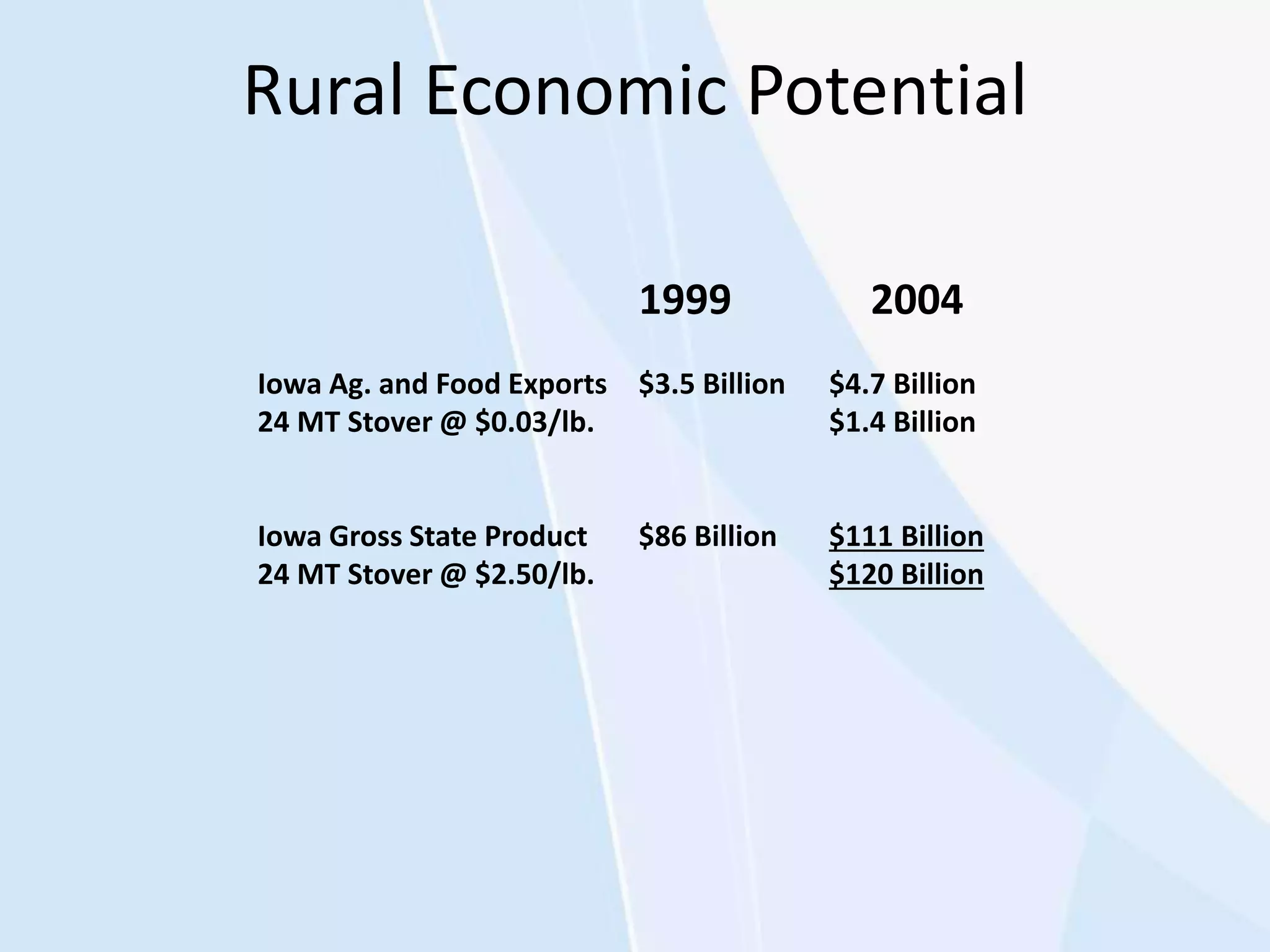
Rural Economic Potential
1999 2004
Iowa Ag. and Food Exports $3.5 Billion $4.7 Billion
24 MT Stover @ $0.03/lb. $1.4 Billion
Iowa Gross State Product $86 Billion $111 Billion
24 MT Stover @ $2.50/lb. $120 Billion
Breakfast Cereal $1-$3/Pound
Clothing - $10-$100’s/Pound
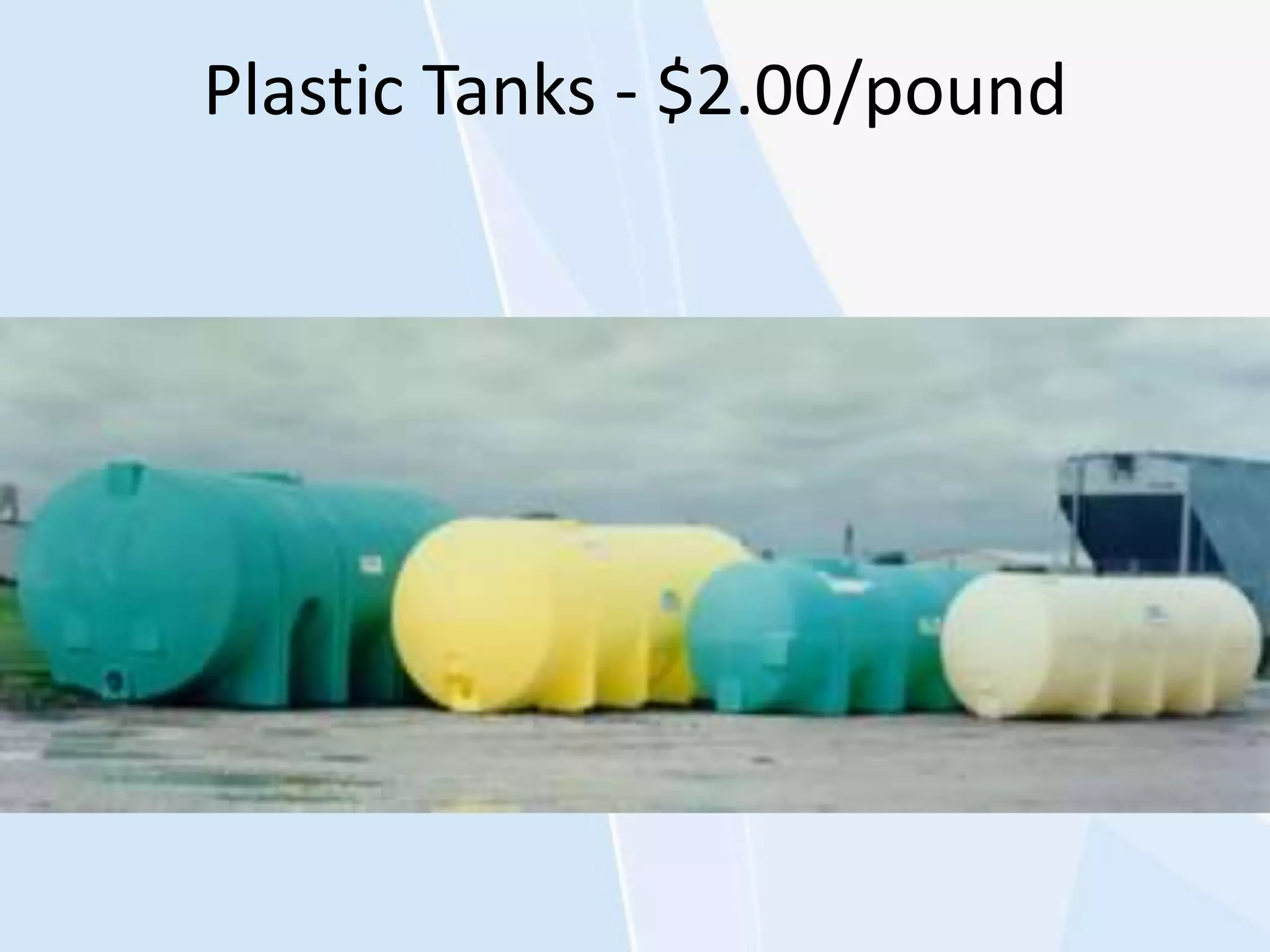
Plastic Tanks - $2.00/pound
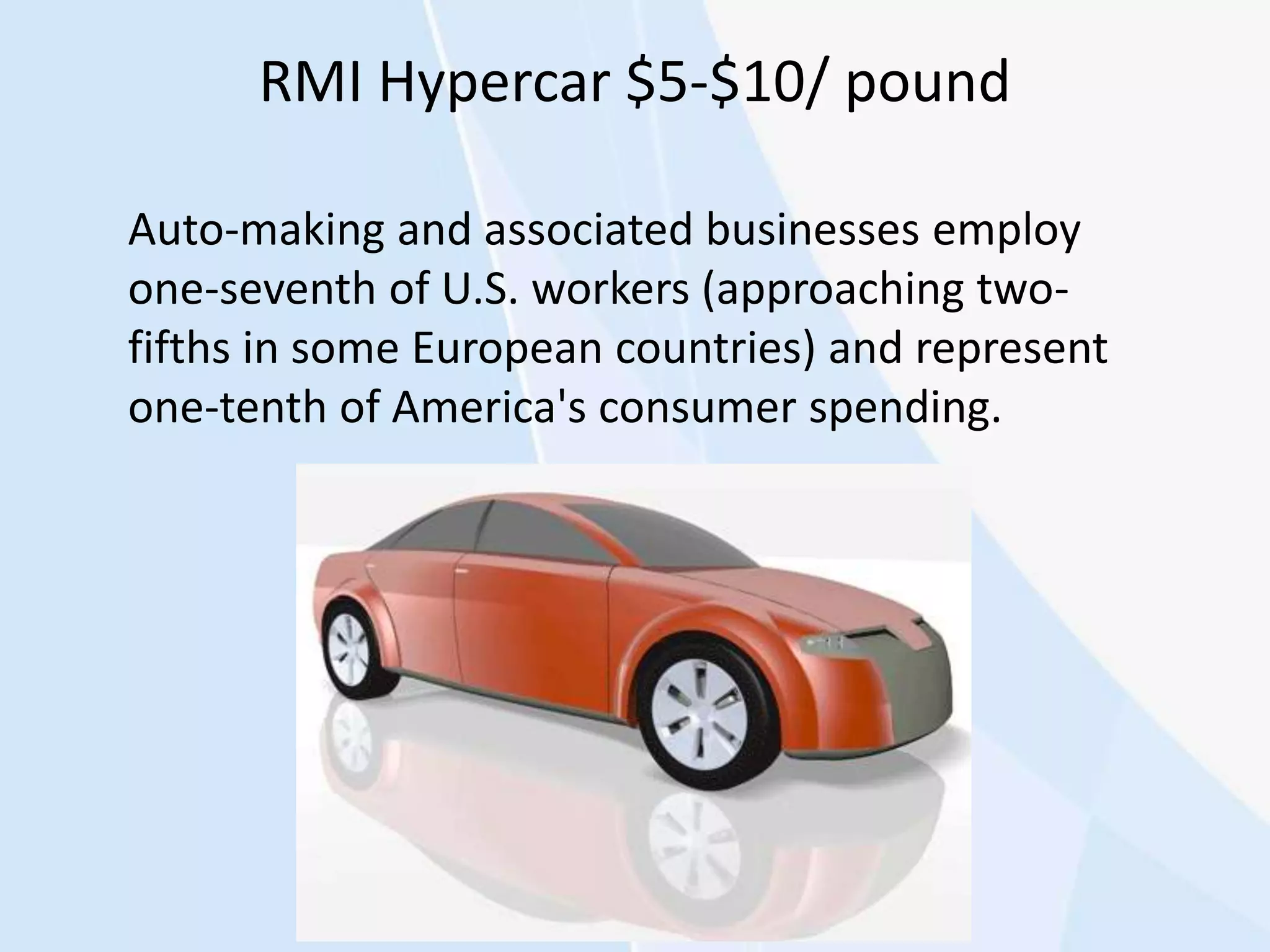
RMI Hypercar $5-$10/ pound
Auto-making and associated businesses employ
one-seventh of U.S. workers (approaching two-
fifths in some European countries) and represent
one-tenth of America's consumer spending.
Henry Ford’s Soybean Plastic
Selected BECON Commercialization
and Educational Highlights
• National Biodiesel Training Center – Jon Van Gerpen – USDA Grant
• Frontline – Thermal Gasification – Commercial installation of thermal gasifier at
Chippewa Valley Ethanol in Benson, Minnesota. BECON thermal gasifier developed
under an IEC grant to Robert Brown.
• Cellencor – microwave drying – numerous commercial installations. Outgrew BECON
and moved/expanded into the Ankeny, Iowa Industrial Park.
• Albemarle/Catilin – heterogeneous catalyst licensed from ISU (Victor Linn). Multi-
year process development currently (2013) in process using BECON’s pre-commercial
biodiesel production unit.
• Conoco Phillips and Avello – pyrolysis – license obtained based on Robert Brown’s
IEC-funded pyrolysis work at BECON.
• Drying Solutions – energy efficient steam heat recovery dryer – several commercial
installations.
• Myco Max – fungal thin stillage treatment - Hans Van Leeuwen. R&D 100 Awards.
Innovator of the Year. “Graduated” to Lincolnway Energy
Key Benefits
• Developing systems to economically produce chemicals and
fuels from biomass will spur rural economic development.
• Adding value to agricultural products will enhance the
profitability of many Iowa industries.
• Demonstrating full-scale biomass conversion systems
promotes increased adoption of these technologies.
• Developing new products and technologies with export
potential will strengthen Iowa’s economy (consulting).
• Producing and using biochemicals is more environmentally
sound than producing and using petrochemicals.
• Combining biomass research, demonstration, education and
training at one facility helps focus this work and enhances
exposure.
What’s it Going to Take?
• Pre-Commercial Demonstration
• Research and Development
• Pioneer Spirit
• Fortitude
• Foresight
• Wisdom
• Integrated Systems
• Political Support
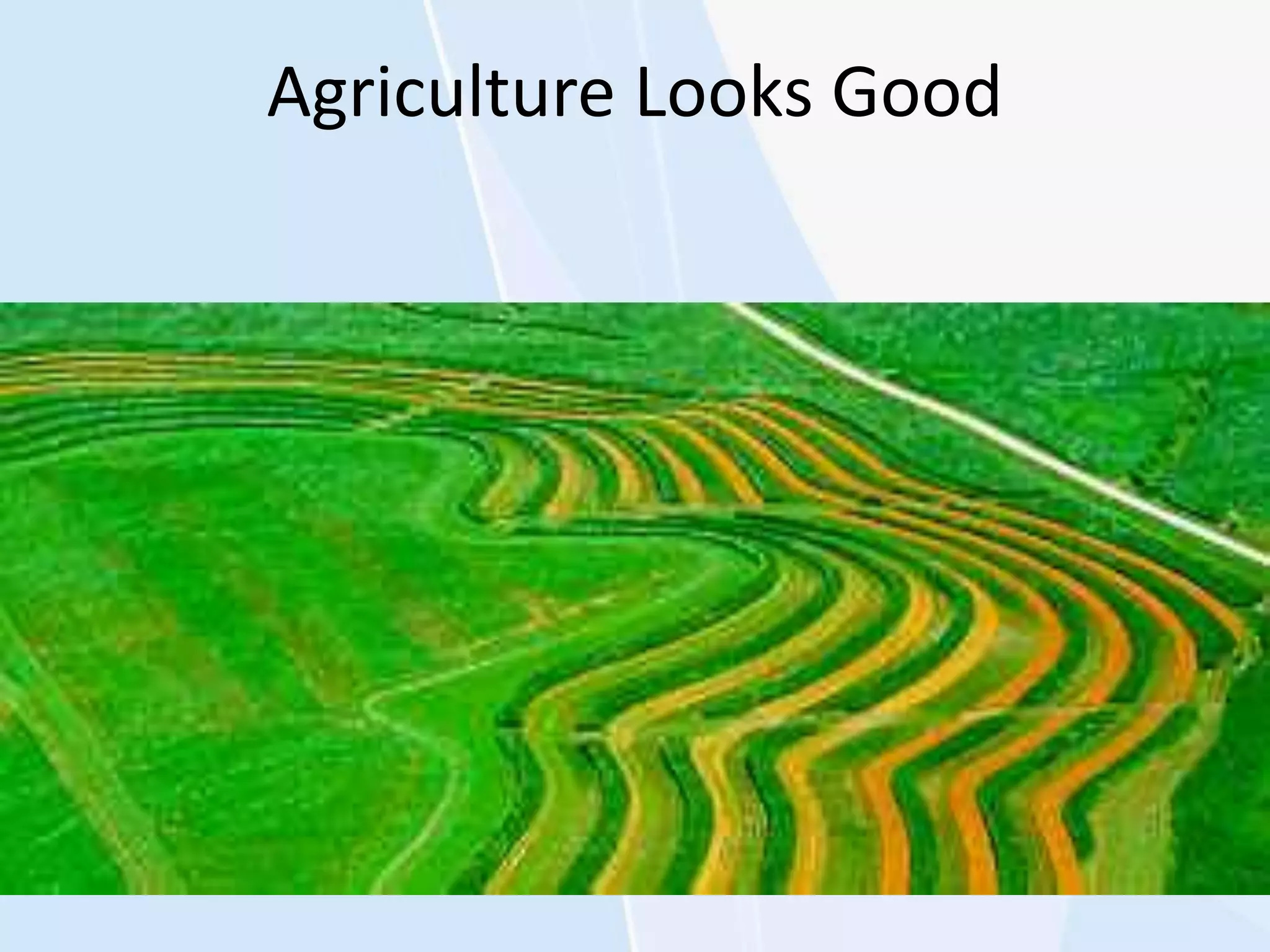
Agriculture Looks Good

Norm olson beconpp 2 2013 v2

  • 1.
    Chemicals and Fuels fromBiomass Norm Olson P.E. Biomass Energy Conversion (BECON) Facility Iowaenergycenter.org
  • 2.
    The Iowa EnergyCenter’s Mission • Broad Scope – complex connections to many issues – focusing on Iowa – energy efficiency – renewable energy – education • all groups • all ages • all sectors of the economy
  • 3.
    Demonstration/Training/Research Facilities BECON (Biomass EnergyCONversion)  renewable energy/ biomass to fuels and chemicals • demonstration and research • tours • meeting/class space
  • 4.
    Outreach •Nearly 14,000 peoplehave either toured BECON or heard the BECON presentation since 1999 •BECON has had visitors from most states and over 76 foreign countries •Numerous state and Federal legislators, Presidential candidates and former U.S. President George Bush have visited BECON
  • 5.
    EIA Outlook U.S. 2012Production – 8.9 million barrels per day Source: BP SR
  • 6.
    British Petroleum R/PRatio Proved reserves of oil – Generally taken to be those quantities that geological and engineering information indicates with reasonable certainty can be recovered in the future from known reservoirs under existing economic and operating conditions. U.S. R/P Ratio China R/P Ratio 2012 2013 2012 2013 Oil 10.8 10.7 9.9 11.4 Natural Gas 13.0 12.5 29.8 28.9 Coal 239 257 33.0 31.0 Reserves-to-production (R/P) ratio – If the reserves remaining at the end of any year are divided by the production in that year, the result is the length of time that those remaining reserves would last if production were to continue at that rate. Source: BP statistical Review of World Energy, June 2012, 2013
  • 7.
    The Ideal AlternativeFuel • Can be produced from any raw energy source (i.e. wind, solar, biomass, coal, nuclear, hydro etc.) • Is cost effective • Has significant storage and delivery systems already in place • Is environmentally friendly • Can be used in any prime mover (i.e. diesel engines, fuel cells, SI engines, gas turbines, etc.) • Has a proven, acceptable safety record • Produced in the U.S.
  • 8.
    Ammonia Basics 1 •Ammonia (NH3) can be produced from any raw energy source, including all fossil, renewable and nuclear sources. • Ammonia is cost competitive with gasoline as a transportation fuel • Ammonia has extensive, worldwide transportation and storage infrastructure already in place • Ammonia is very environmentally friendly when used as a transportation fuel and produces only N2 and H20 at the tailpipe with low-cost emissions controls. • Ammonia has been successfully demonstrated in SI engines, CI engines, and fuel cells.
  • 9.
    Conversion Systems Biomass ConversionSystems Feedstock Processing Thermochemical ConversionBiological Conversion
  • 10.
    Anaerobic Digestion/Composting Feedstock Processing High SolidsUnit (Composting) Low Solids Unit Scrubber Methane to Engine Generator
  • 11.
  • 12.
    Gasification Feedstock Processing To EngineGenerator To Ash Disposal Gasifier Scrubber Syn-gas
  • 13.
  • 14.
    Biodiesel Production Chemical Reactor VegetableOils Alcohol Glycerin Biodiesel Vegetable Oils + Alcohol Biodiesel + Glycerin catalyst
  • 15.
    Supercritical Fluids High PressureReactor Biomass High Pressure Fluid Product
  • 16.
  • 17.
  • 18.
  • 19.
  • 20.
    The Ideal BiomassSystem • Soil tilth improved – no erosion loss, increased soil organic carbon content • Nutrients and micronutrients returned to soil • Fertilizer made from plant residue in same field • Use of currently available planting, harvesting storage techniques • No fossil fuel use • Cost effective • Local economic development • Biorefinery concept – multiple products (food, chemicals, fuel additives) energy efficient, low air/water emissions, low water use
  • 21.
    Ideal Annual CropSystem – Silage Harvest
  • 22.
    Ideal Annual CropSystem – Silage Storage
  • 23.
    Wisconsin Ideal Annual CropSystem – Cover Crop www.leopold.iastate.edu/.../cover.htm
  • 24.
    Local Processing –All nutrients (PKN, micronutrients) returned to soil. Closed loop. Ideal Annual Crop System – Processing
  • 25.
    Biomass Feedstocks • AgriculturalResidues • Food Processing Waste • Livestock Production Waste • Municipal Solid Waste • Obsolete Seed Corn • Wood Waste
  • 26.
    Feedstock Costs • Costof corn stover ~ 3 cents/lb. ($60/ton) Corn @ $3.50/bushel ~7 cents/lb • Consists mainly of C, H and O • Cost of petroleum ~ 8 cents/lb ($25/barrel) 16 cents/lb ($50/barrel) 24 cents/lb ($75/barrel) 32 cents/lb ($100/barrel) 40 cents/lb ($125/barrel) 48 cents/lb ($150/barrel) • Consists mainly of C and H • Organic chemicals are mainly C, H
  • 27.
    A Little History •Oil came in at $1.50/barrel in the mid-1940’s ($0.0045/pound) • Corn was approximately $1.50/bushel in 1950 (approx. $0.03/pound)
  • 28.
    Forward to thePast • Prior to the 1940’s most chemicals were plant derived • Celluloid, Cellophane, Bakelite, rayon, paints, adhesives • Henry Ford Vegetable Mobile • Fermentations to ethanol, butanol, propanol and other alcohols was common prior to the 1940’s.
  • 29.
    Getting There fromHere • Corn stalks - C,H,O • Sugars - C,H,O • Ethanol - C2H6O • Ethylene - C2H4 • Ethylene Dichloride - C2H4Cl2 • Vinyl Chloride - C2H3Cl • PVC
  • 30.
    • Corn stalks- C,H,O • Sugars • Propanol • Propylene • Acrylonitrile • Polyacrylonitrile • Carbon Fiber Getting There from Here
  • 31.
    Some Big-time Players •Dow/Cargill – polylactic acid – Blair, NE • Dupont/Pioneer • Monsanto/Dekalb • Shell
  • 32.
    Rural Economic Potential 19992004 Iowa Ag. and Food Exports $3.5 Billion $4.7 Billion 24 MT Stover @ $0.03/lb. $1.4 Billion Iowa Gross State Product $86 Billion $111 Billion 24 MT Stover @ $2.50/lb. $120 Billion
  • 33.
  • 34.
  • 35.
    Plastic Tanks -$2.00/pound
  • 36.
    RMI Hypercar $5-$10/pound Auto-making and associated businesses employ one-seventh of U.S. workers (approaching two- fifths in some European countries) and represent one-tenth of America's consumer spending.
  • 37.
  • 38.
    Selected BECON Commercialization andEducational Highlights • National Biodiesel Training Center – Jon Van Gerpen – USDA Grant • Frontline – Thermal Gasification – Commercial installation of thermal gasifier at Chippewa Valley Ethanol in Benson, Minnesota. BECON thermal gasifier developed under an IEC grant to Robert Brown. • Cellencor – microwave drying – numerous commercial installations. Outgrew BECON and moved/expanded into the Ankeny, Iowa Industrial Park. • Albemarle/Catilin – heterogeneous catalyst licensed from ISU (Victor Linn). Multi- year process development currently (2013) in process using BECON’s pre-commercial biodiesel production unit. • Conoco Phillips and Avello – pyrolysis – license obtained based on Robert Brown’s IEC-funded pyrolysis work at BECON. • Drying Solutions – energy efficient steam heat recovery dryer – several commercial installations. • Myco Max – fungal thin stillage treatment - Hans Van Leeuwen. R&D 100 Awards. Innovator of the Year. “Graduated” to Lincolnway Energy
  • 39.
    Key Benefits • Developingsystems to economically produce chemicals and fuels from biomass will spur rural economic development. • Adding value to agricultural products will enhance the profitability of many Iowa industries. • Demonstrating full-scale biomass conversion systems promotes increased adoption of these technologies. • Developing new products and technologies with export potential will strengthen Iowa’s economy (consulting). • Producing and using biochemicals is more environmentally sound than producing and using petrochemicals. • Combining biomass research, demonstration, education and training at one facility helps focus this work and enhances exposure.
  • 40.
    What’s it Goingto Take? • Pre-Commercial Demonstration • Research and Development • Pioneer Spirit • Fortitude • Foresight • Wisdom • Integrated Systems • Political Support
  • 41.