by factry Operational intelligence made easy
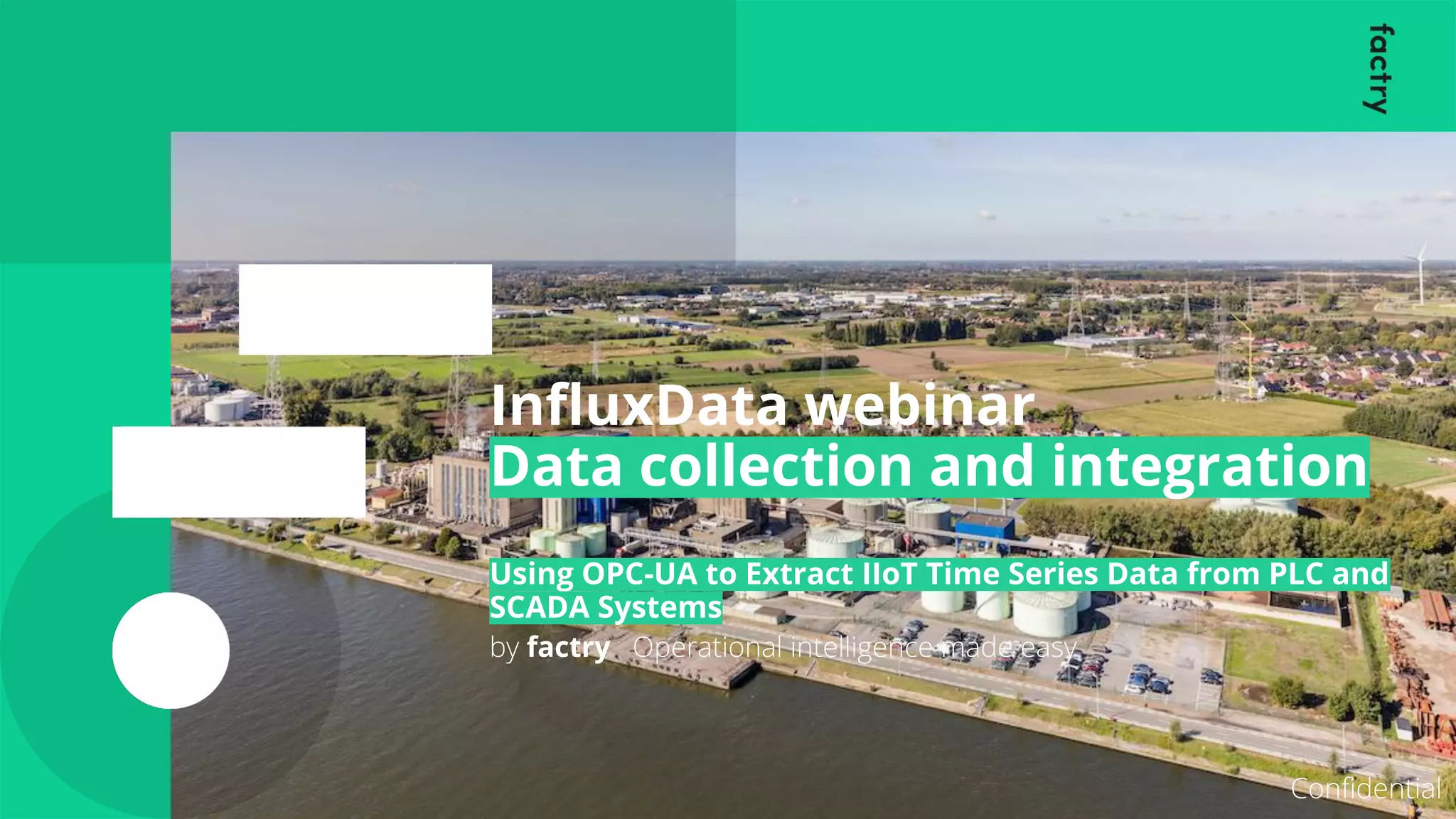
InfluxData webinar
Data collection and integration
Using OPC-UA to Extract IIoT Time Series Data from PLC and
SCADA Systems
Confidential
Improving data integrity, gaining
more insight in the production
process and making better yeast.
Agenda
Introducing Ivo - Algist Bruggeman
Introducing Frederik - Factry
Situation and challenge
Solution and outcomes
Unexpected Benefits
Q&A
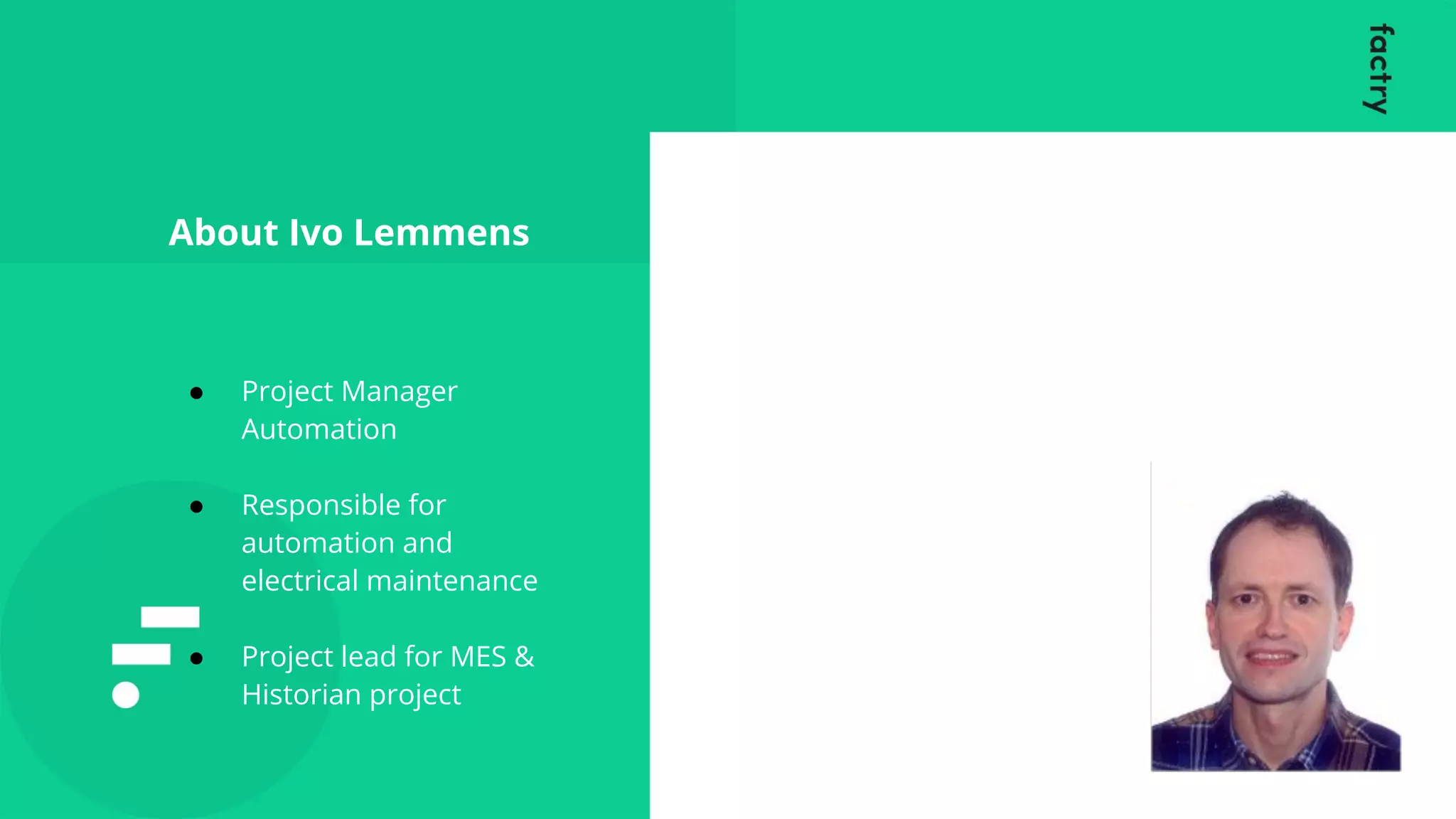
● Project Manager
Automation
● Responsible for
automation and
electrical maintenance
● Project lead for MES &
Historian project
About Ivo Lemmens
About Algist Bruggeman
Algist Bruggeman supplies fresh, liquid and dried yeast to
industrial, semi-artisanal and artisanal bakeries, as well as
to the wine, beer and pharma industry.
Algist Bruggeman is part of Lesaffre Group, a key global
player in fermentation for more than a century, with a 2
billion EUR turnover and established on all continents,
counting 10.000+ employees and more than 85
nationalities.
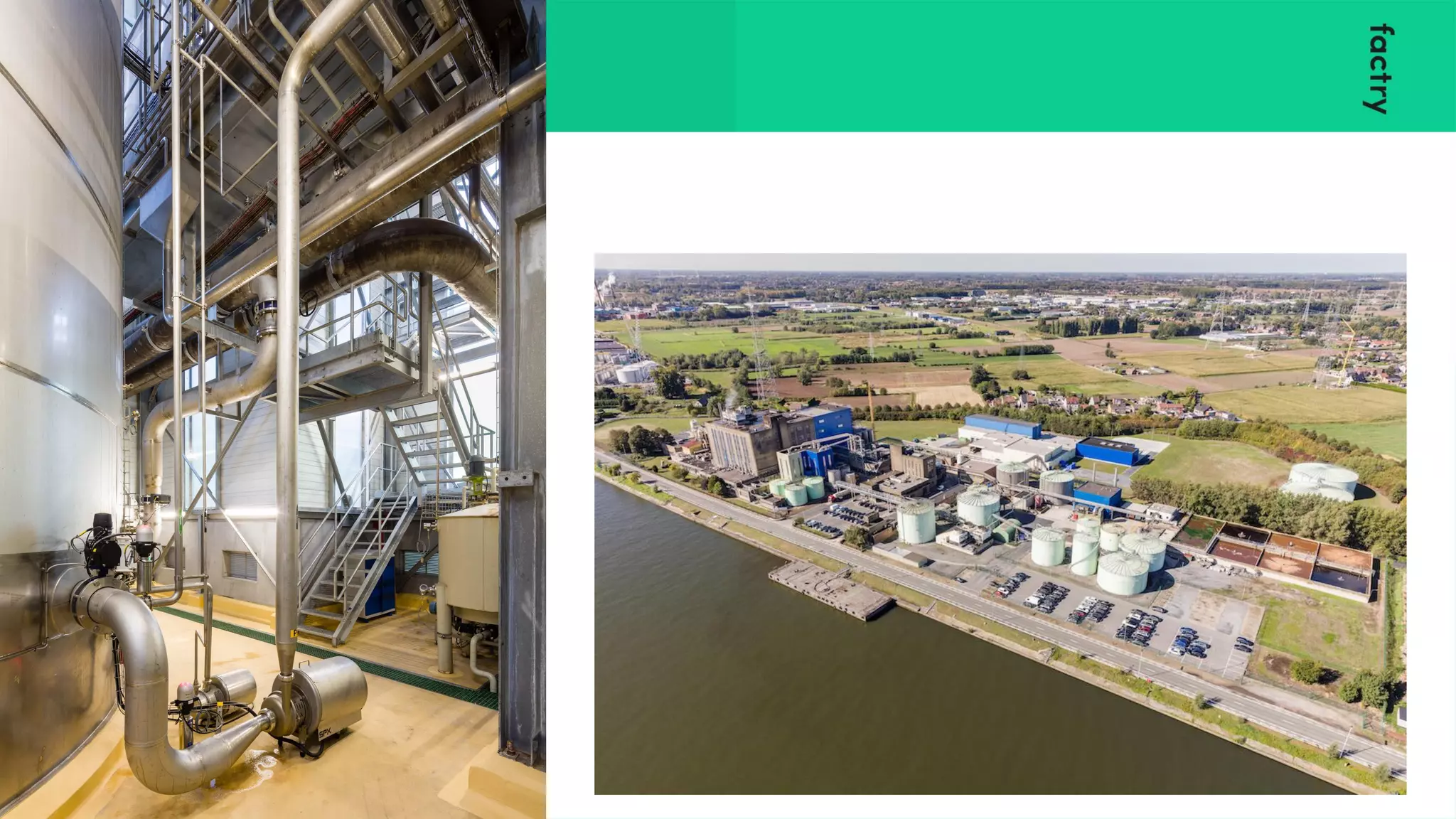
Its Belgian site employs about 170 people and has an
annual turnover of over 120 million euros.
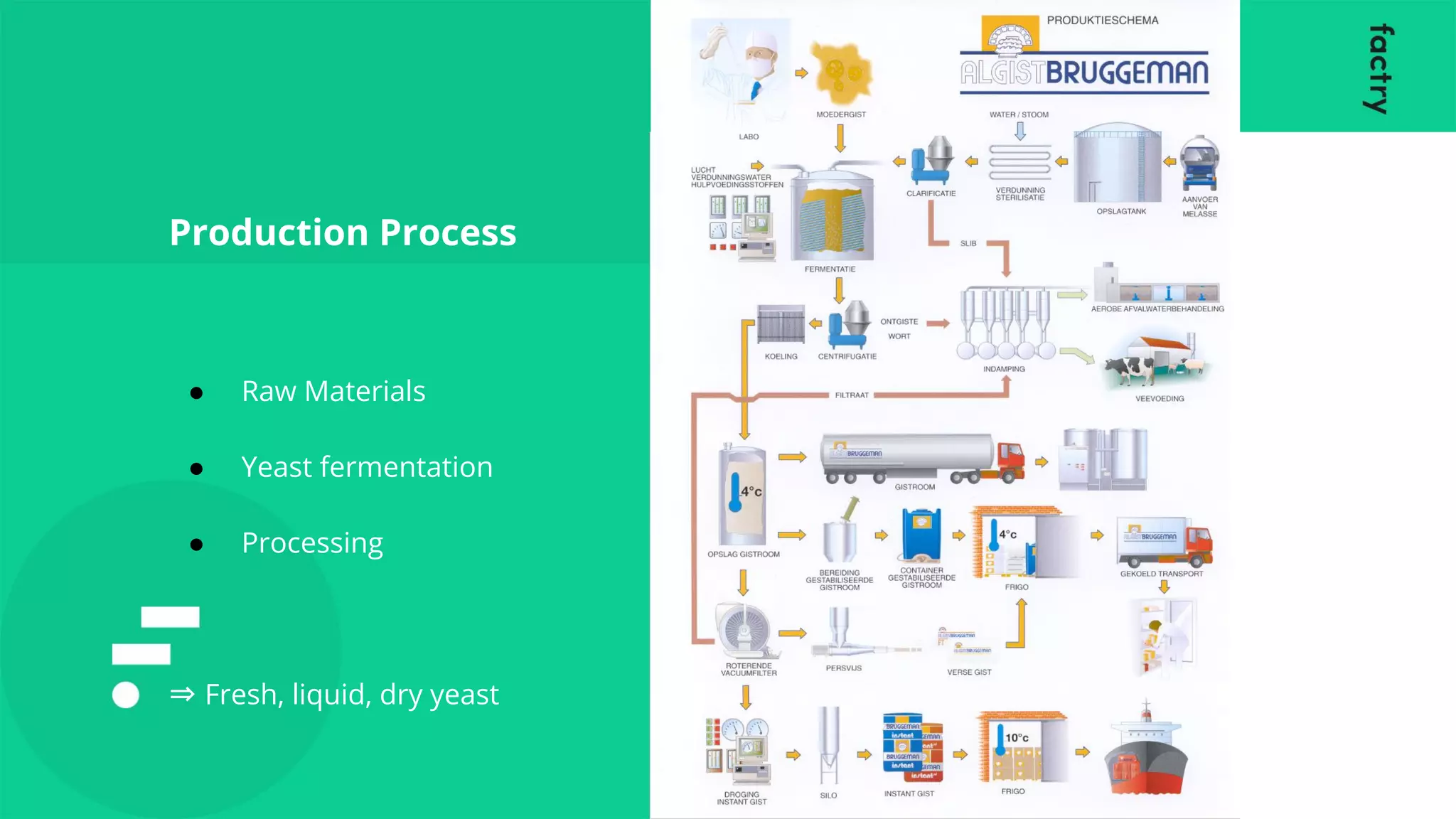
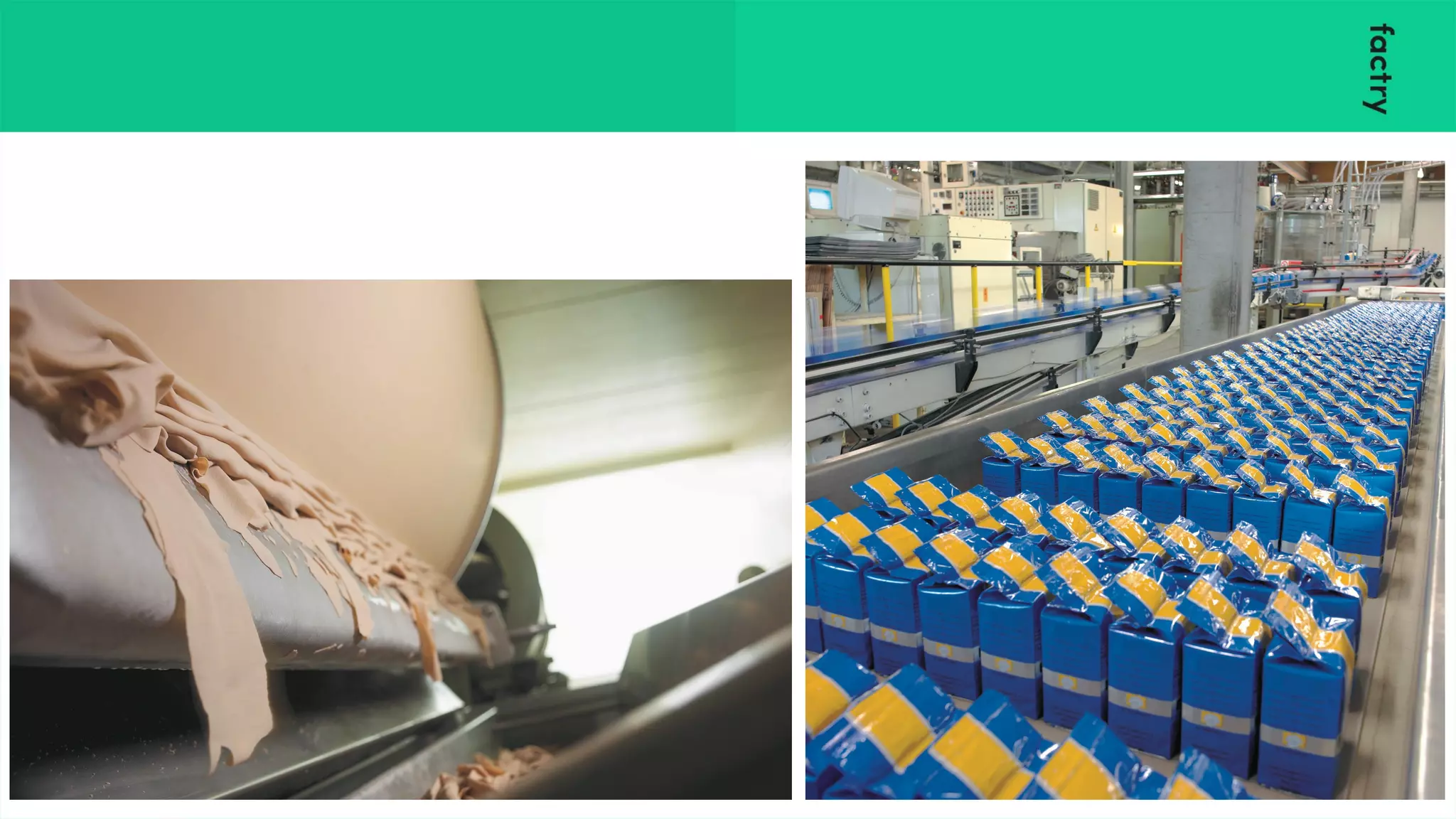
● Raw Materials
● Yeast fermentation
● Processing
⇒ Fresh, liquid, dry yeast
Production Process
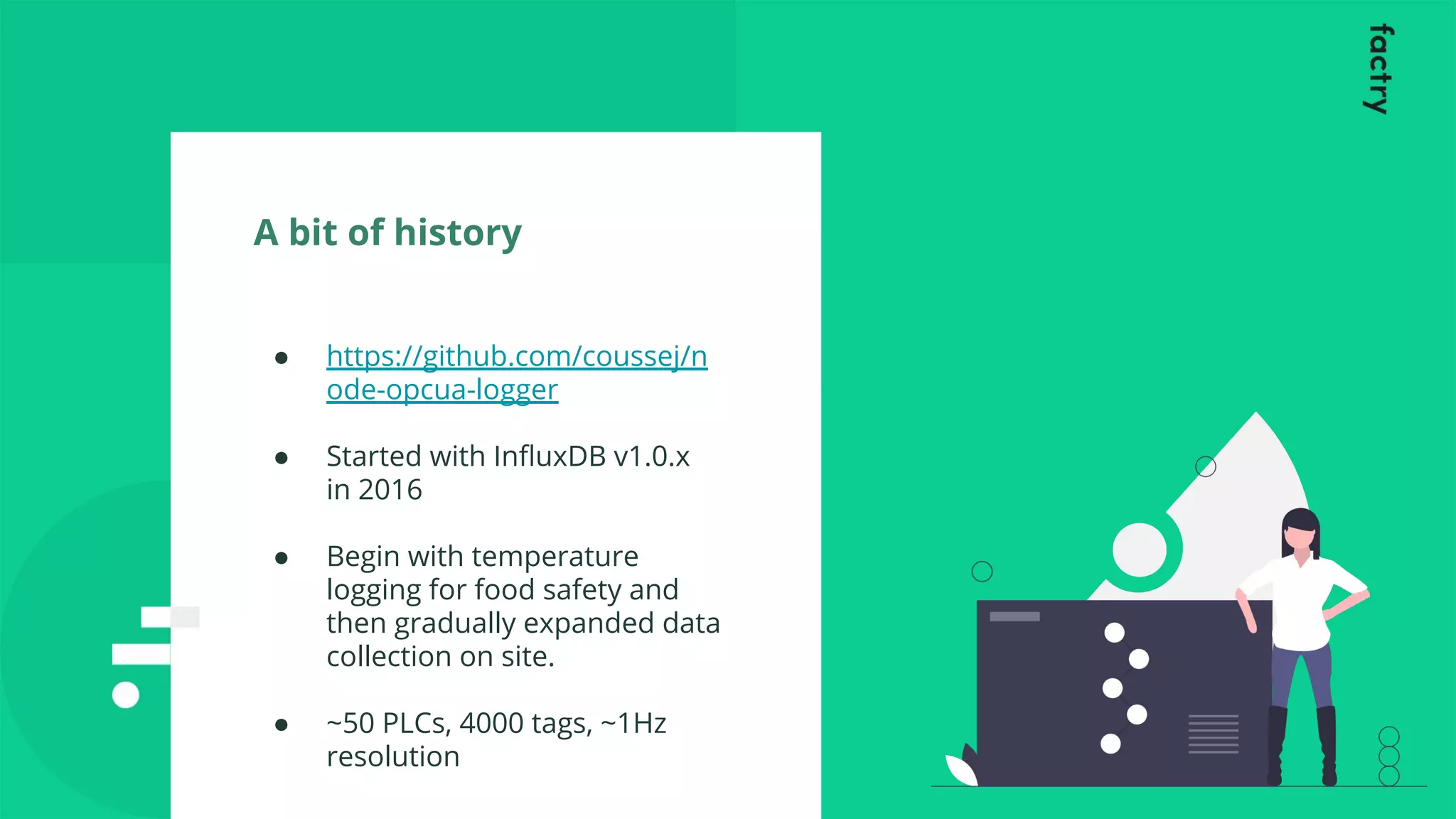
A bit of history
● https://github.com/coussej/n
ode-opcua-logger
● Started with InfluxDB v1.0.x
in 2016
● Begin with temperature
logging for food safety and
then gradually expanded data
collection on site.
● ~50 PLCs, 4000 tags, ~1Hz
resolution
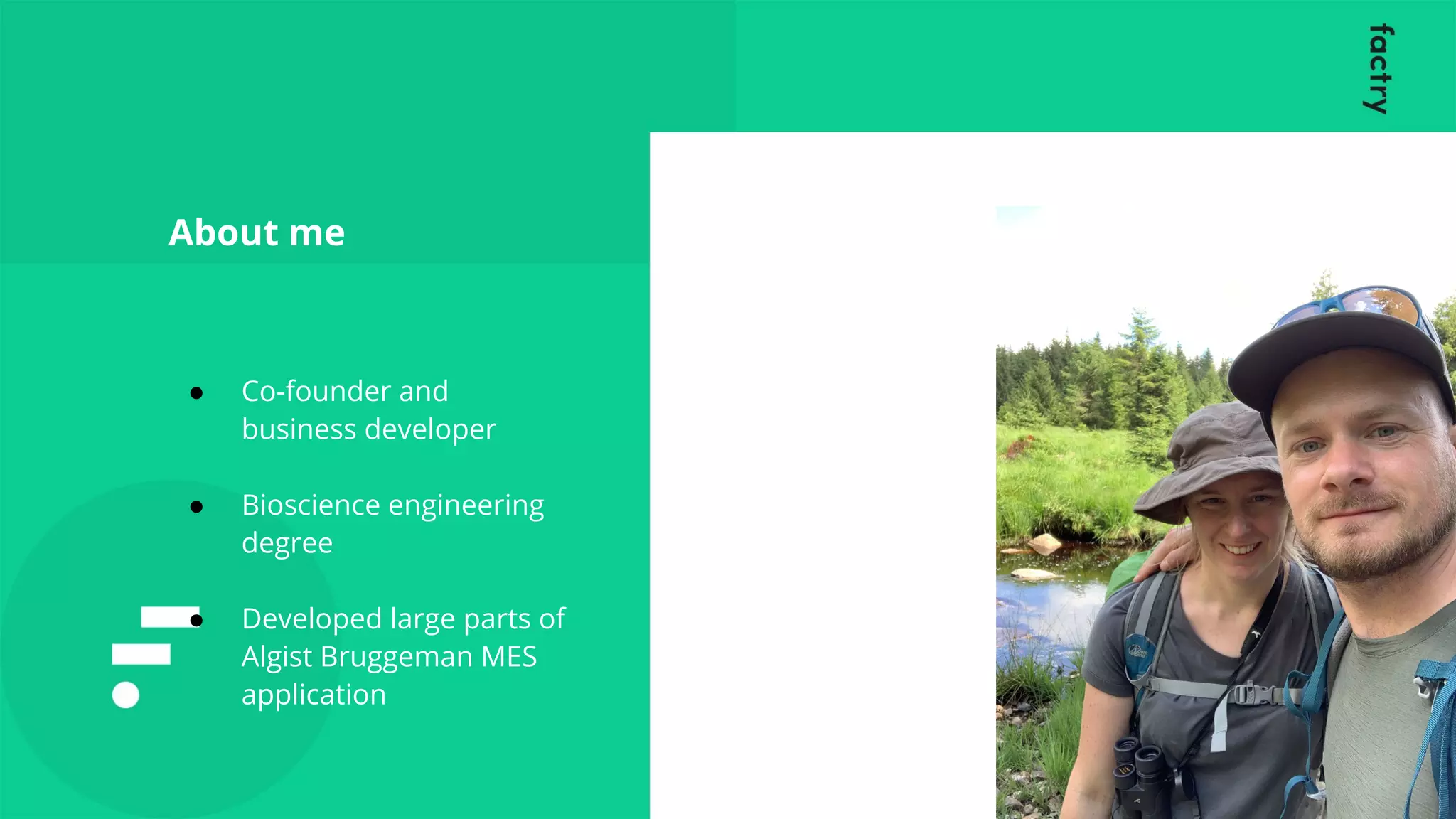
● Co-founder and
business developer
● Bioscience engineering
degree
● Developed large parts of
Algist Bruggeman MES
application
About me
About Factry
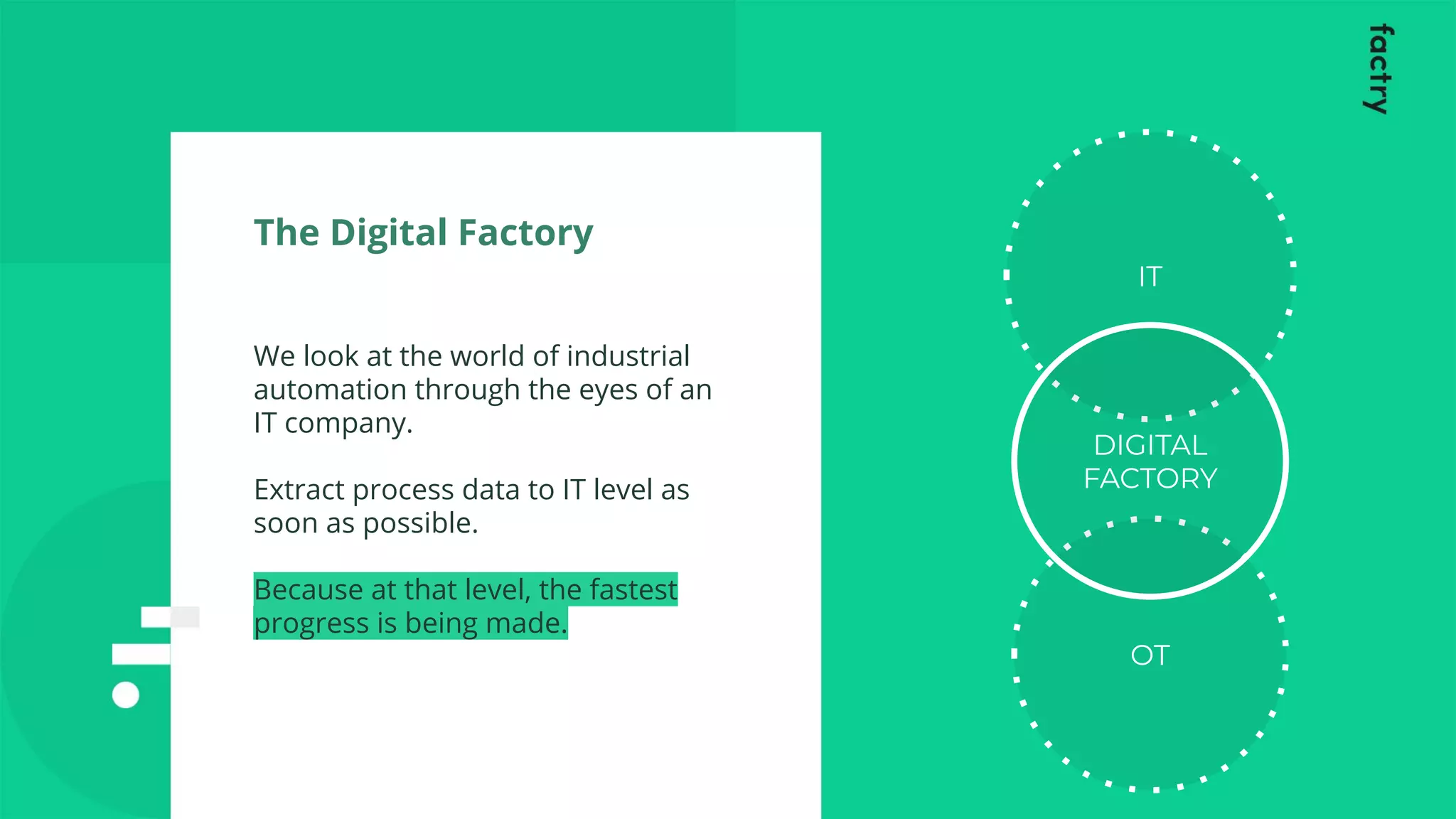
The Digital Factory
We look at the world of industrial
automation through the eyes of an
IT company.
Extract process data to IT level as
soon as possible.
Because at that level, the fastest
progress is being made.
OT
IT
DIGITAL
FACTORY
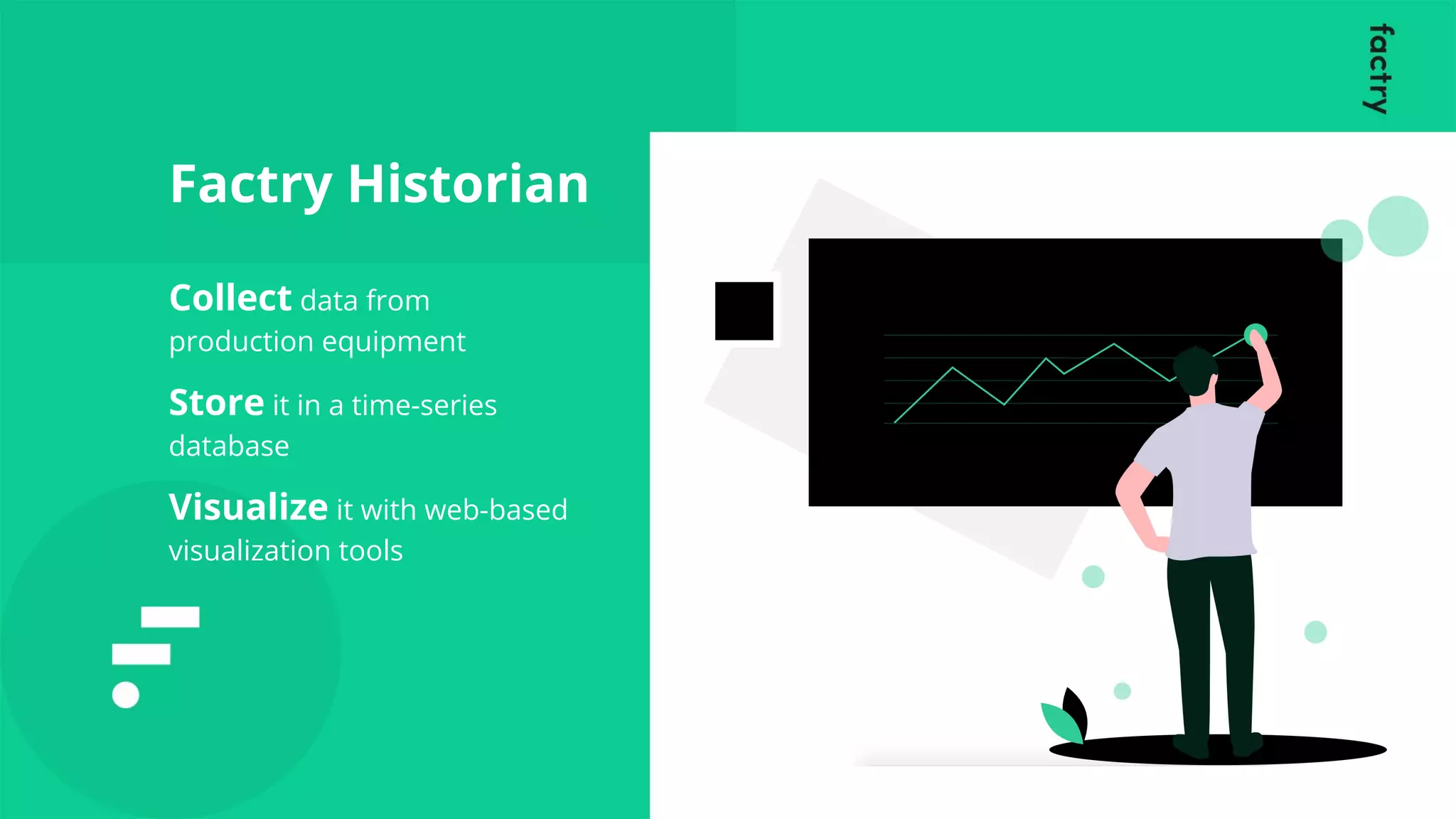
Factry Historian
Collect data from
production equipment
Store it in a time-series
database
Visualize it with web-based
visualization tools
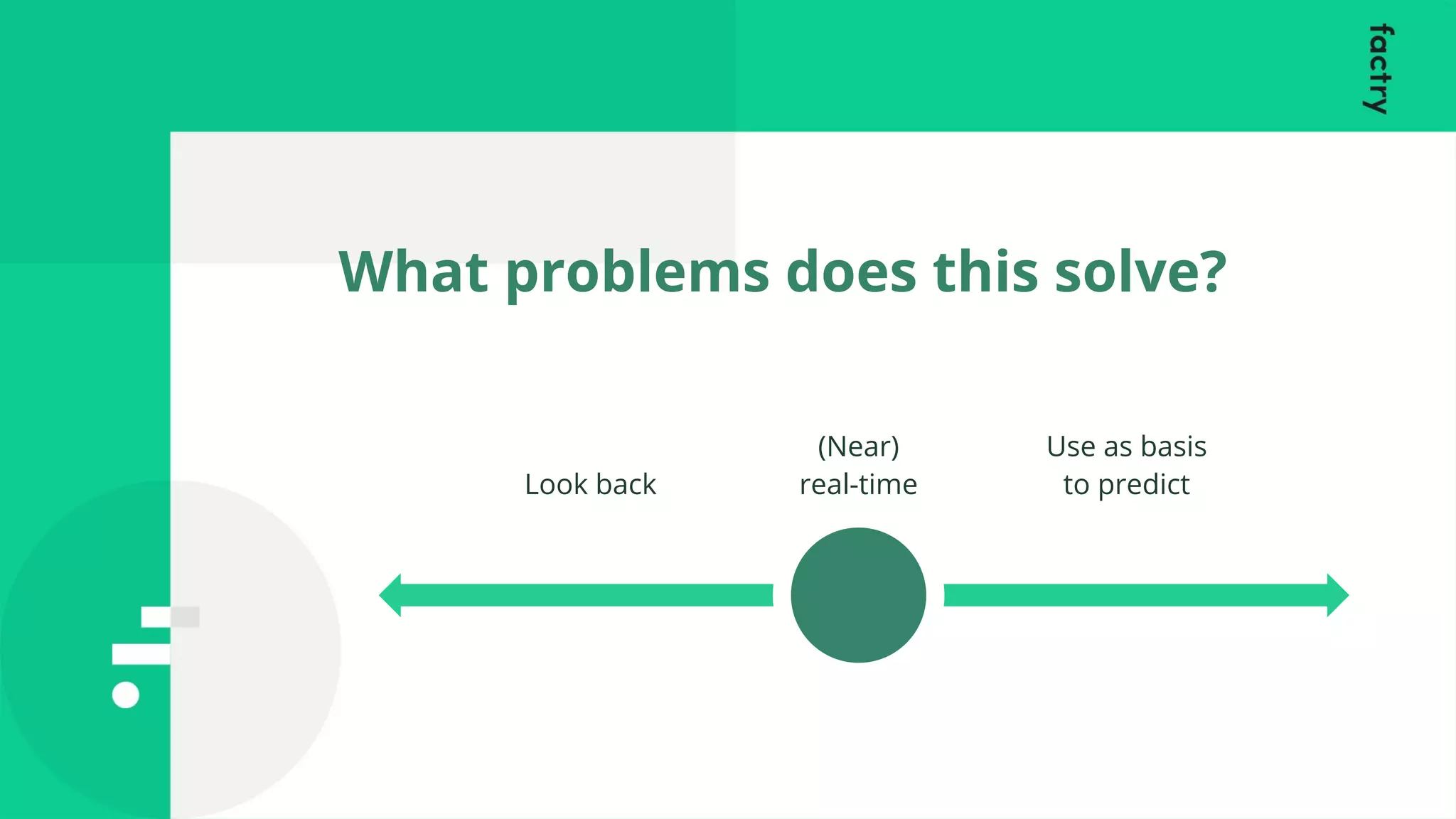
What problems does this solve?
Look back
(Near)
real-time
Use as basis
to predict
Join our team!
https://www.factry.io/jobs
The situation and challenge
The challenge
- Why?
● How did this specific
fermentation perform?
● Does a specific fermentation
perform differently on
fermentor X than on
fermentor Y?
● How well does a certain
fermentation parameter
follow its reference curve?
● Fermentations are followed
up on paper
Valuable information ends up in a
folder
● Some data is registered, but
isolated in a specific system
Cumbersome to answer these
questions
Data is not readily
available
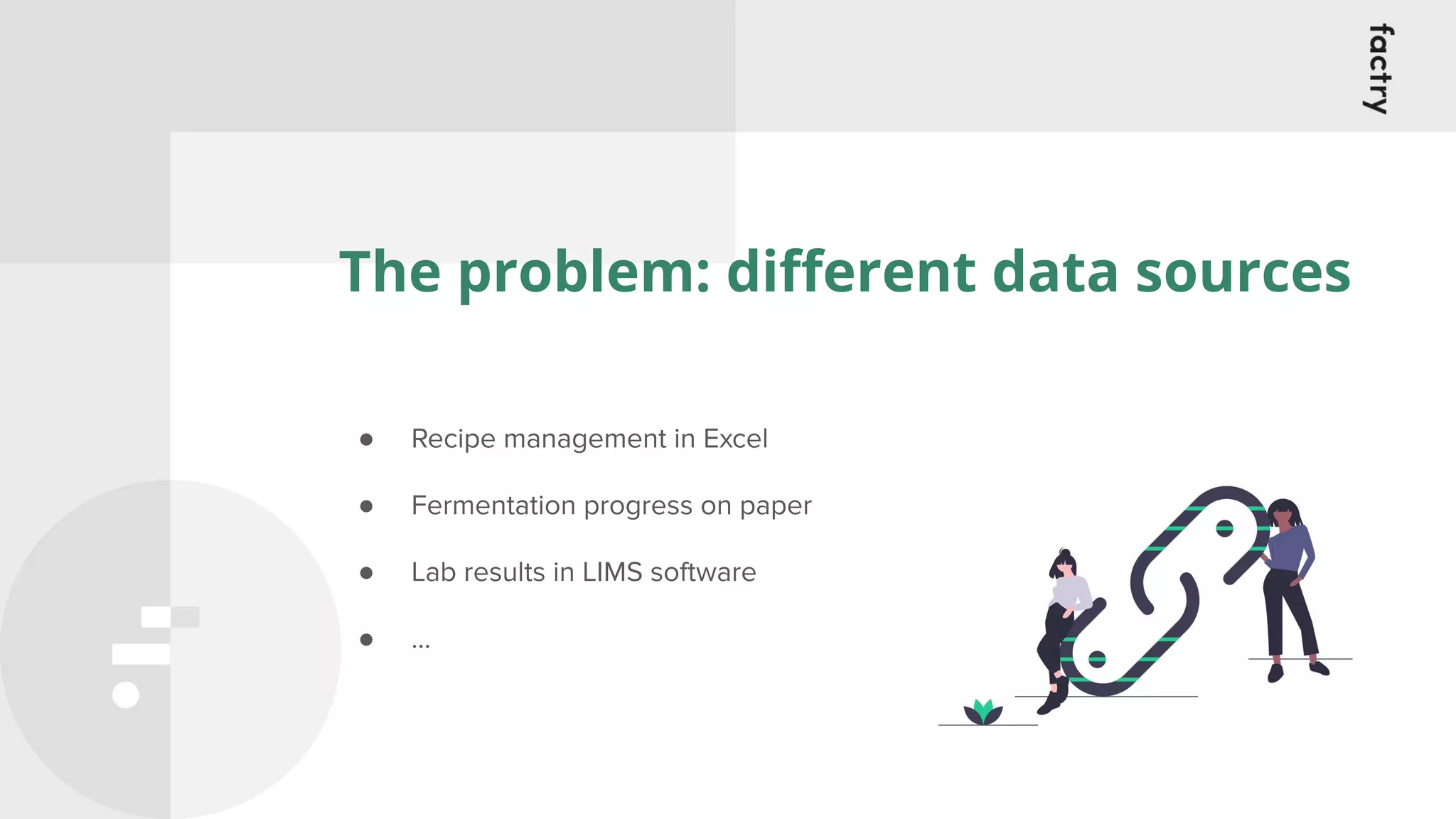
The problem: different data sources
● Recipe management in Excel
● Fermentation progress on paper
● Lab results in LIMS software
● …
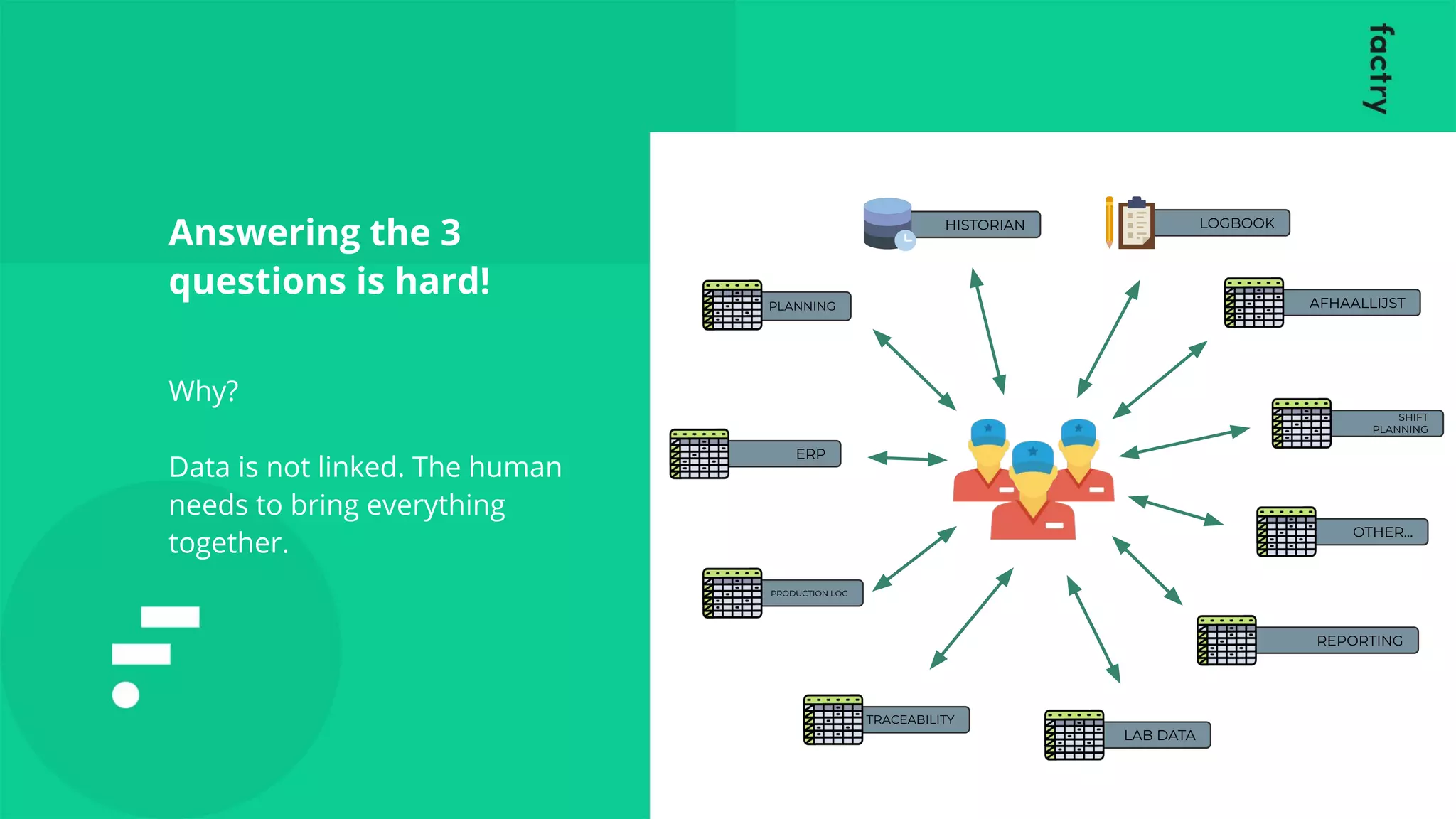
Answering the 3
questions is hard!
Why?
Data is not linked. The human
needs to bring everything
together.
PLANNING
PRODUCTION LOG
HISTORIAN LOGBOOK
TRACEABILITY
LAB DATA
SHIFT
PLANNING
REPORTING
AFHAALLIJST
OTHER...
ERP
So let’s bring this data together
When have we succeeded?
● Human has become a user, not the person linking data
● The 3 questions can be answered in reasonable timeframe
Take a holistic approach
● Before fermentation
○ Planning
○ Recipe management
● During fermentation
○ Dispatching
○ Process data collection with Factry Historian in InfluxDB
○ Automation of fermentation sheet completion
● After fermentation
○ Linking lab results
○ Reporting
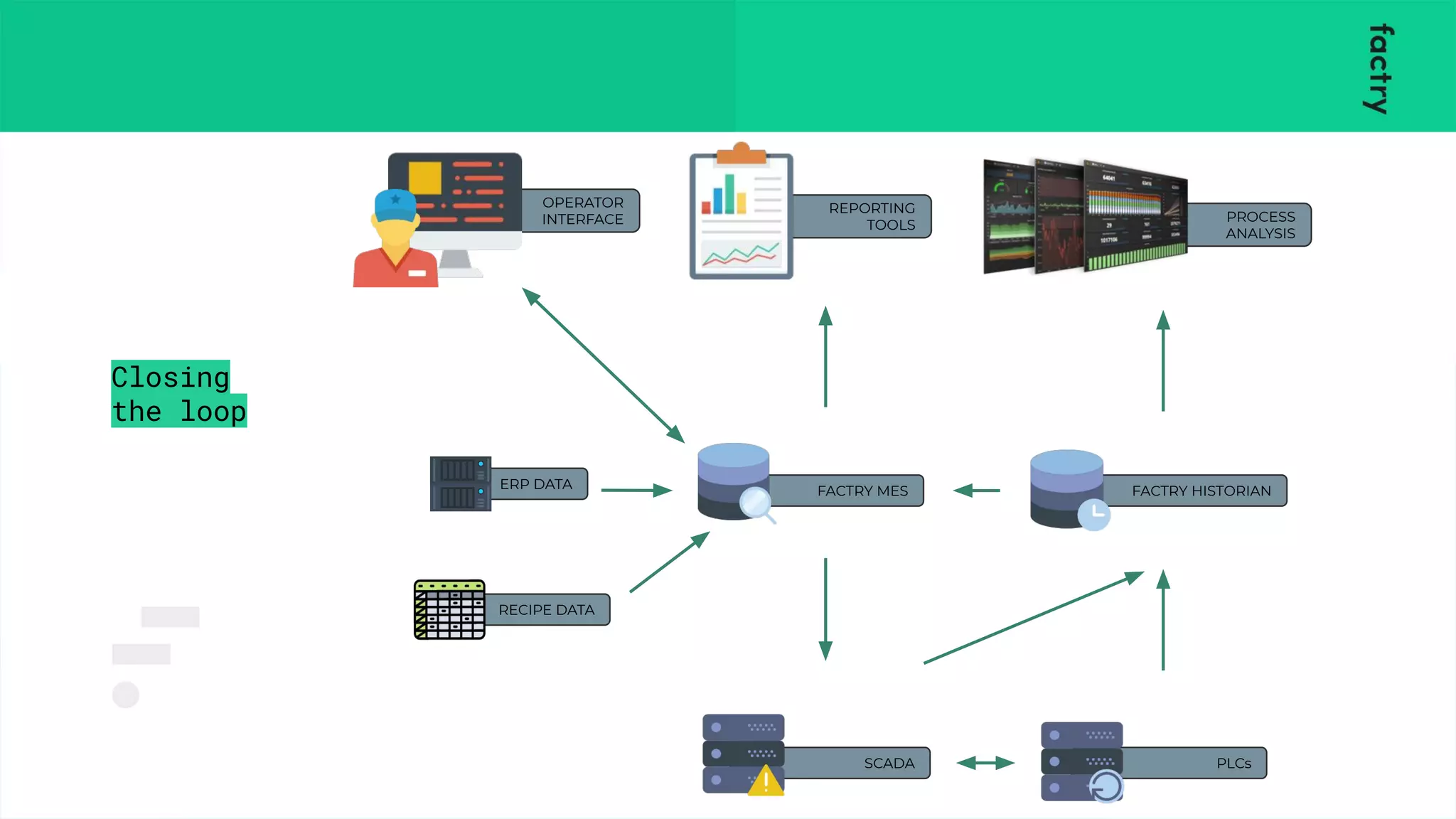
Step 1: get batch information
● Planning of orders
○ Retrieve data from planning software & ERP via B2MML
■ Business 2 Manufacturing Markup Language
■ https://github.com/factrylabs/go-b2mml
● Information:
○ Start- and end times of upcoming batches
○ Equipment these batches will run on
○ BatchID, recipeID and recipe version
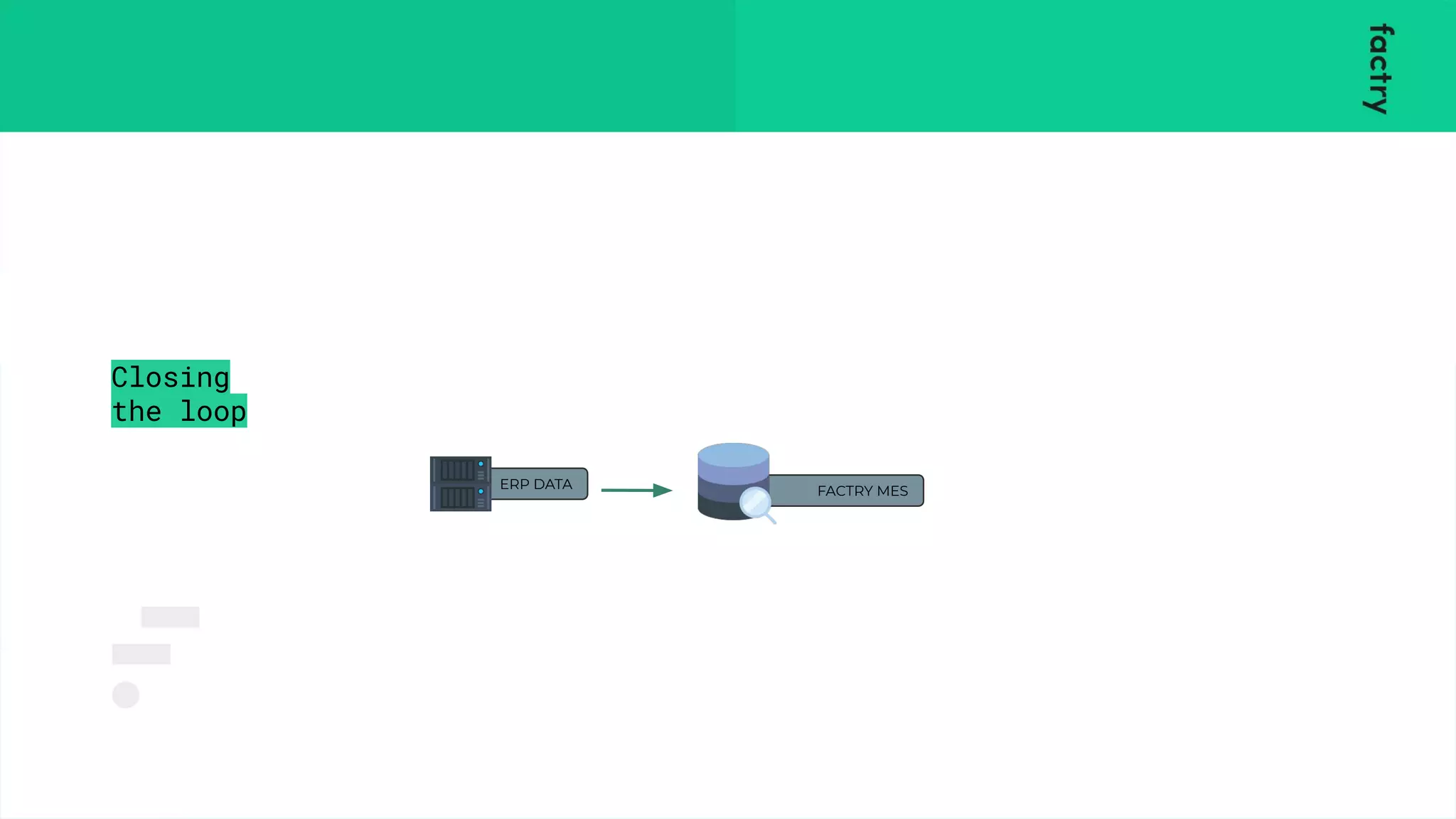
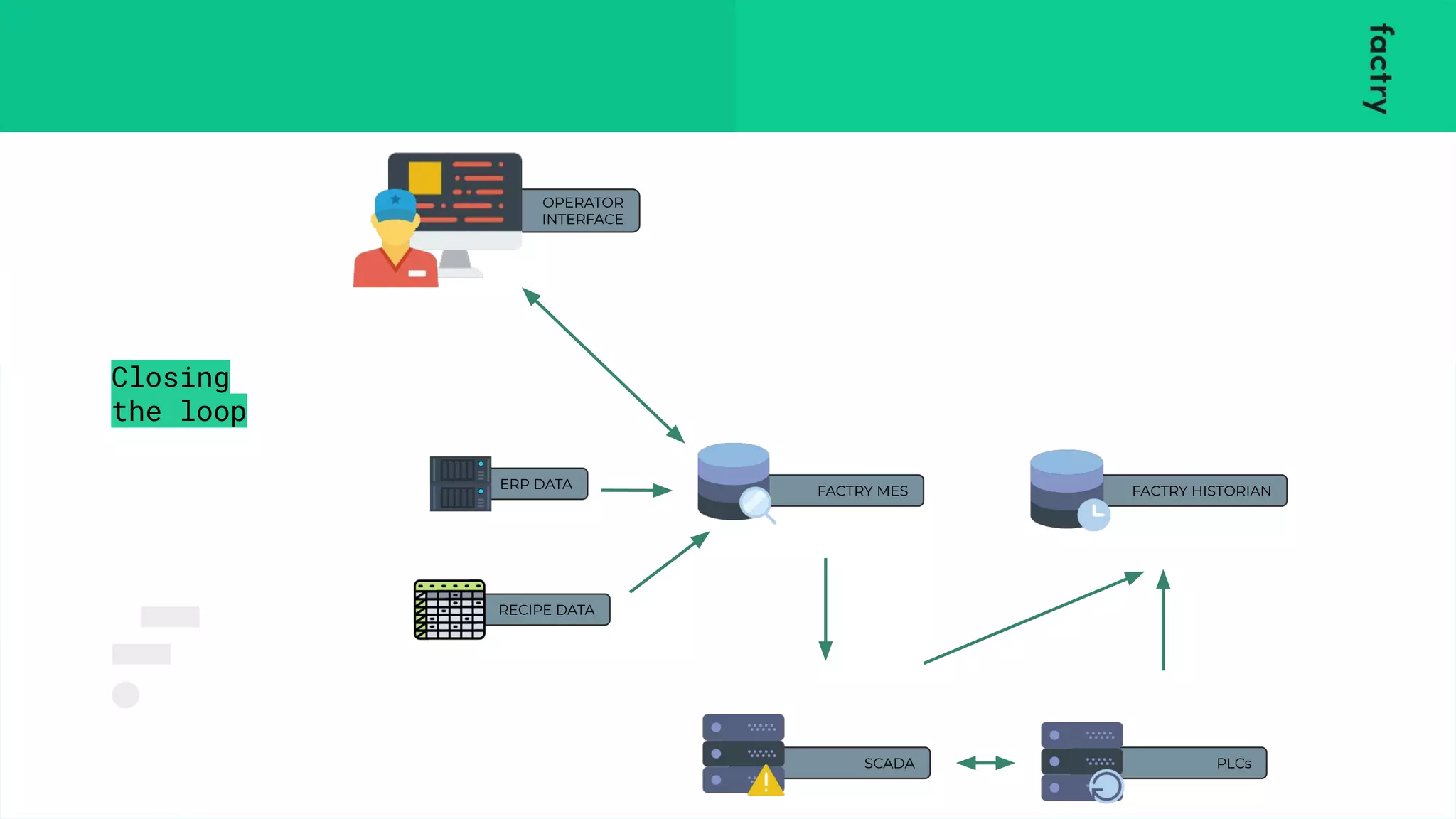
FACTRY MES
ERP DATA
Closing
the loop
Step 2: get recipe data
● Recipe data contains all reference values
○ Material feed
○ Critical process parameters
● Used for:
○ Providing set points to the PLCs that will control the production
process
○ Providing reference values to compare with the actuals recorded
during the production process
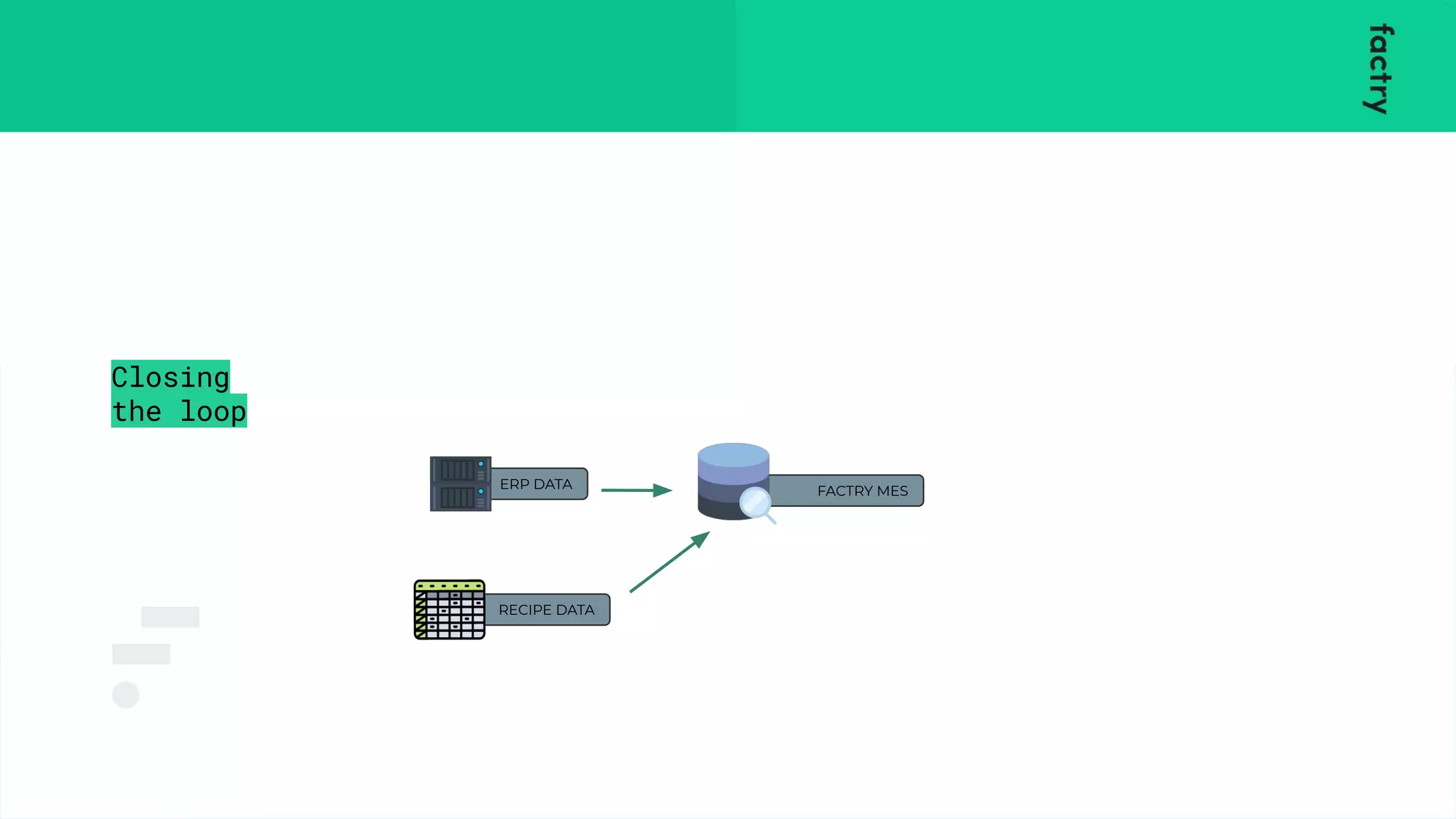
FACTRY MES
ERP DATA
RECIPE DATA
Closing
the loop
Now we know:
● When we will produce
● What we will produce
● How to identify what we’re
going to produce
● Where we will produce
(fermenter)
What’s missing?
● The actuals!
Step 3: dispatching of batches
● Upcoming batches are synched from planning / ERP system
● Because we know the batchIDs, expected start- and end times, recipes…
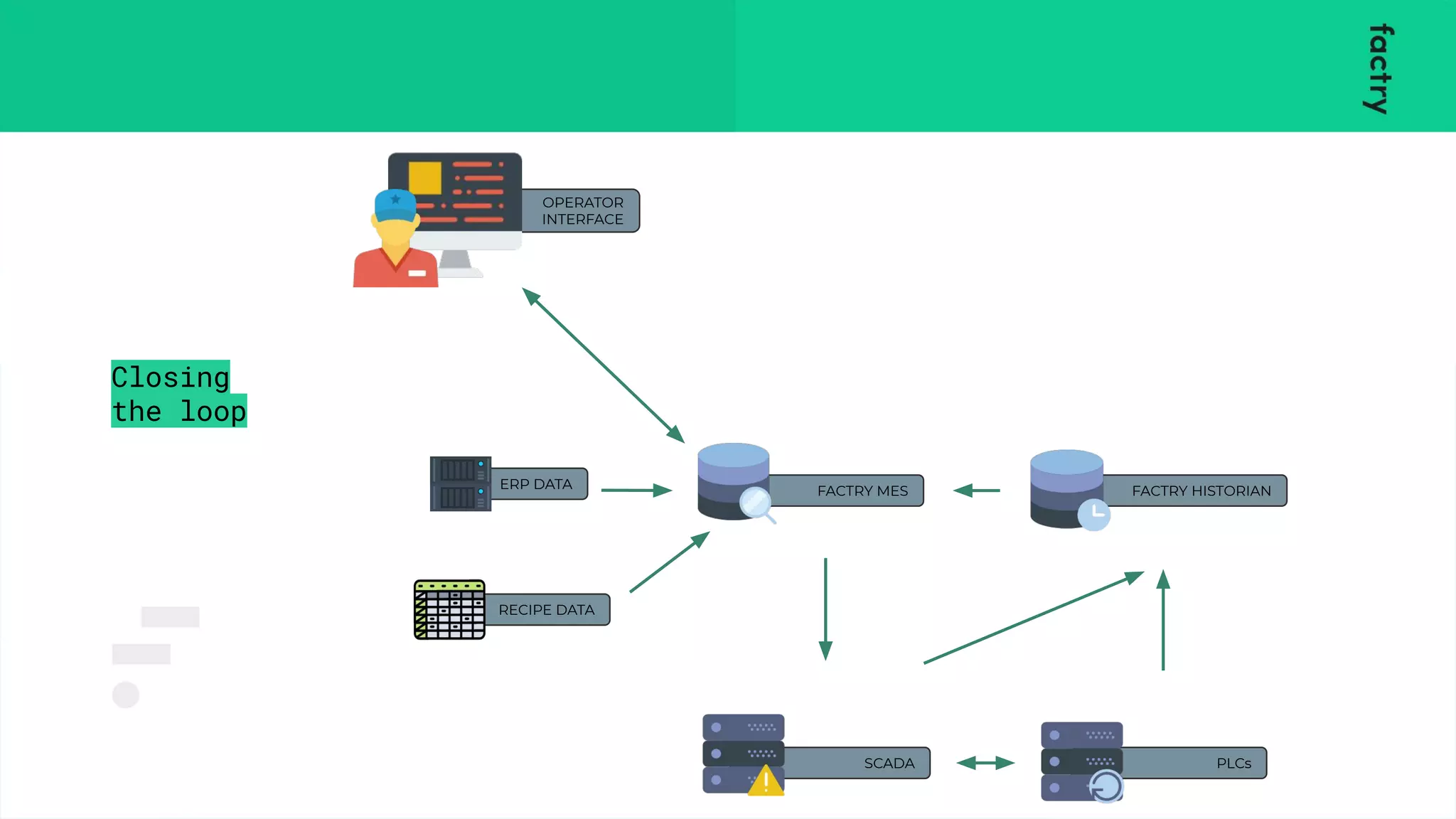
● The operators can just press “Start” and the SCADA system and PLCs are
loaded with the recipe data.
Error-free link between planning and production: No more manual selecting of
a recipe or typing in a BatchID
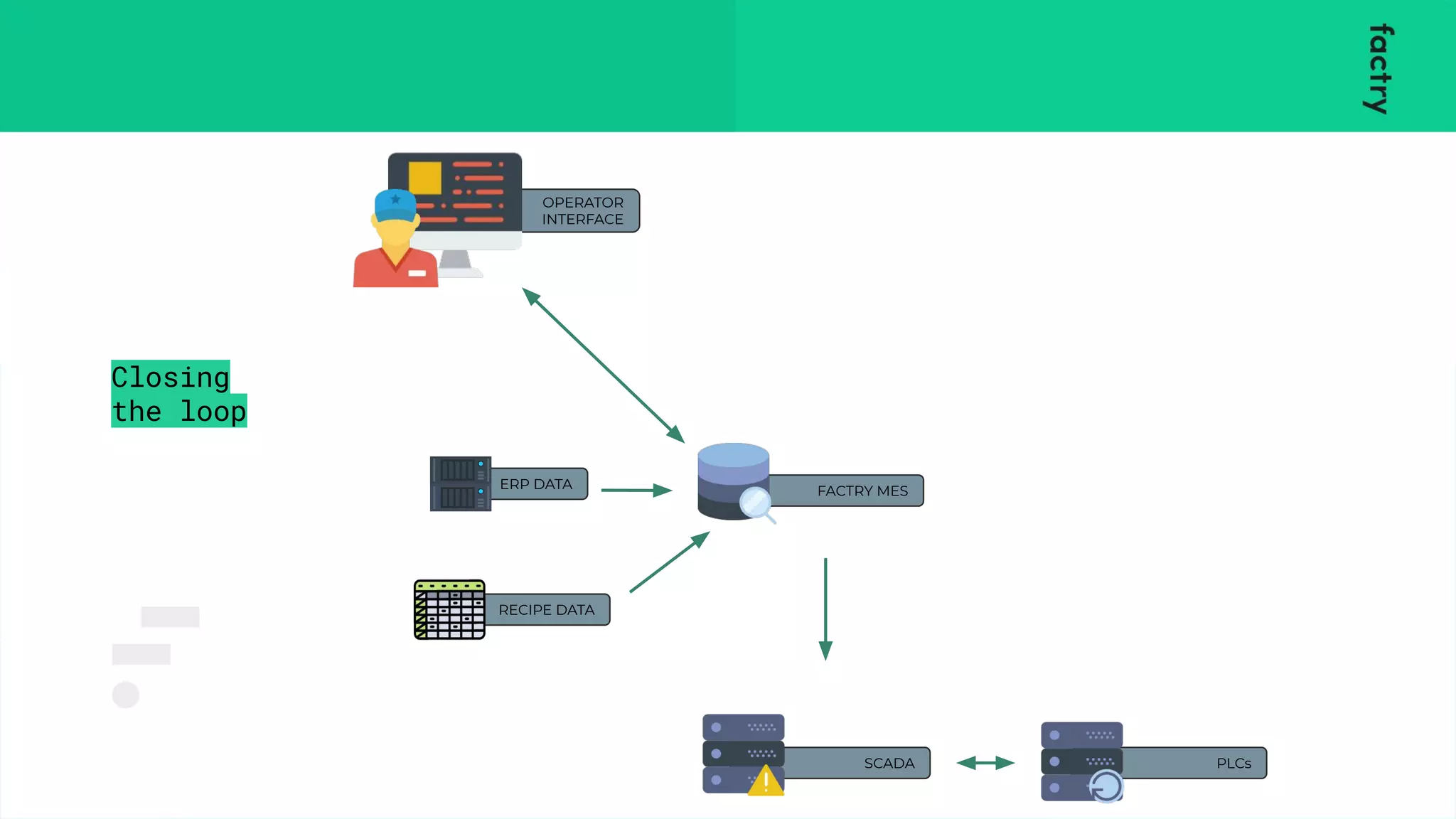
SCADA
FACTRY MES
ERP DATA
RECIPE DATA
Closing
the loop
OPERATOR
INTERFACE
PLCs
Step 4: collecting process data
● High resolution data is gathered from different PLCs
○ Broader than just fermentation
● Dashboarding and process analysis
● Data source for storing what actually happened during production
● Supported by newer PLCs directly, or via SCADA system OPC-UA server
● Collecting metrics:
○ Polled (typical for sensors: e.g. every 5 sec, every min)
○ Monitored (typical for states or valves: on-change)
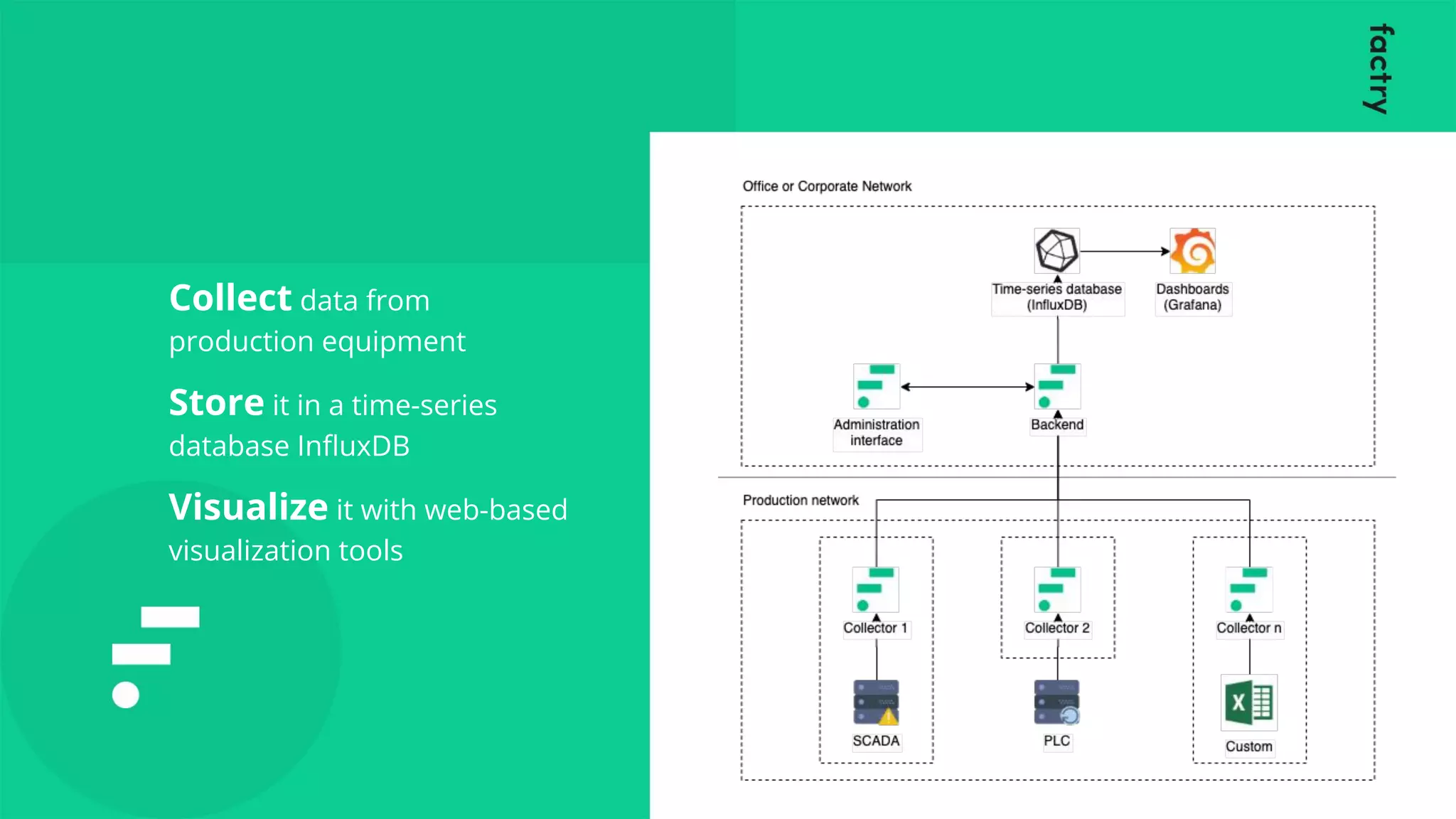
Collect data from
production equipment
Store it in a time-series
database InfluxDB
Visualize it with web-based
visualization tools
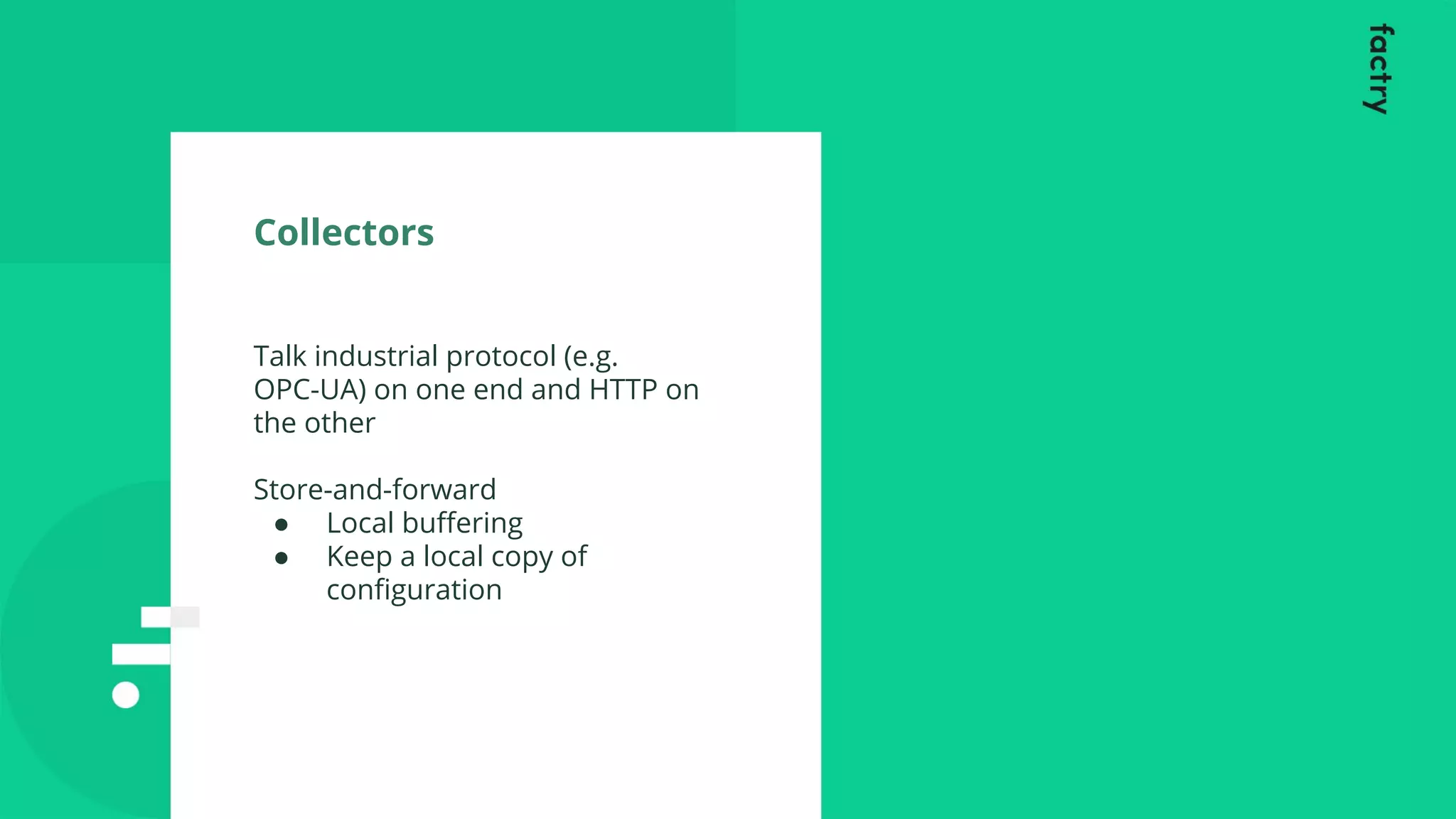
Collectors
Talk industrial protocol (e.g.
OPC-UA) on one end and HTTP on
the other
Store-and-forward
● Local buffering
● Keep a local copy of
configuration
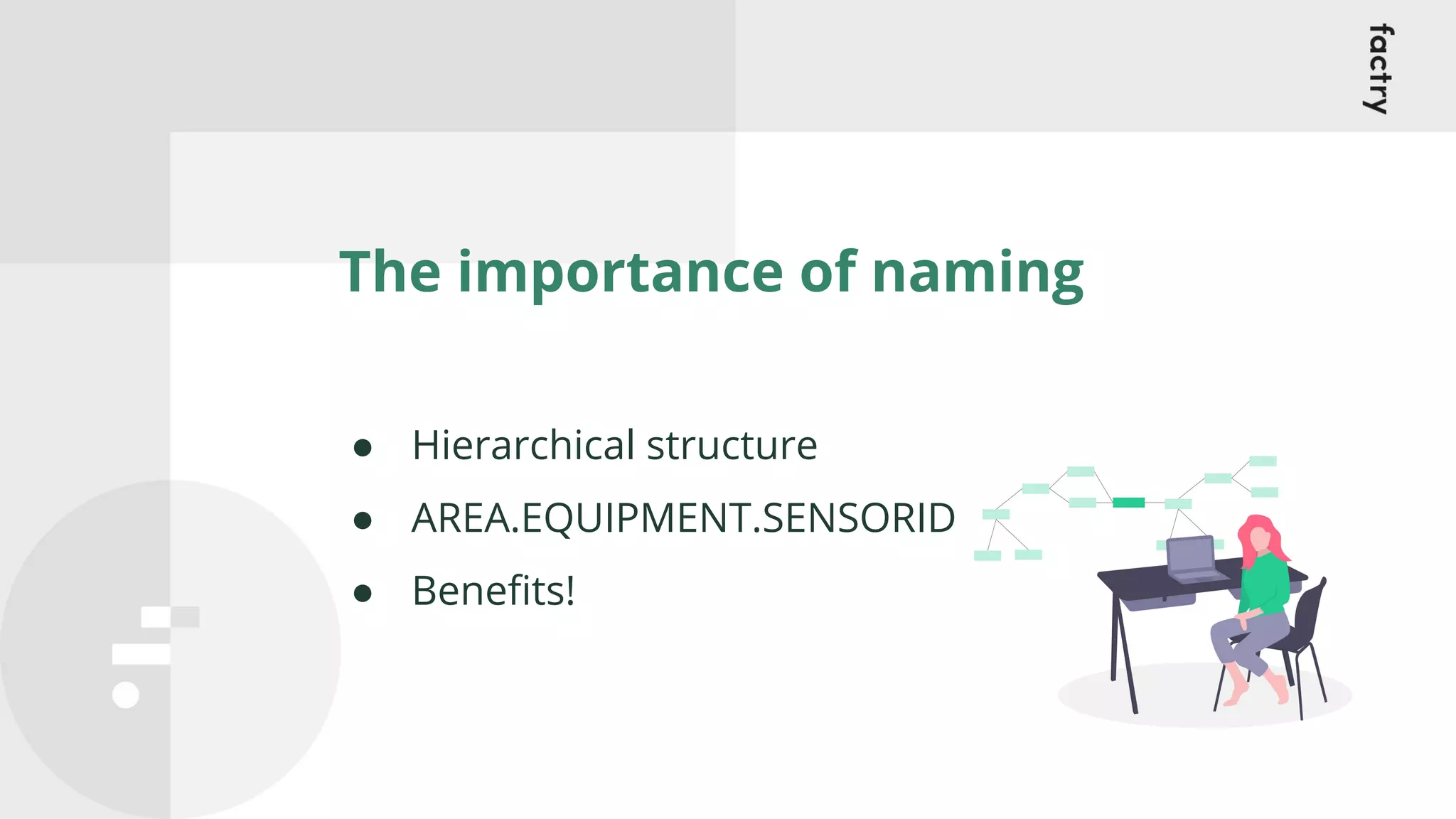
The importance of naming
● Hierarchical structure
● AREA.EQUIPMENT.SENSORID
● Benefits!
PLCs
FACTRY HISTORIAN
SCADA
FACTRY MES
ERP DATA
RECIPE DATA
Closing
the loop
OPERATOR
INTERFACE
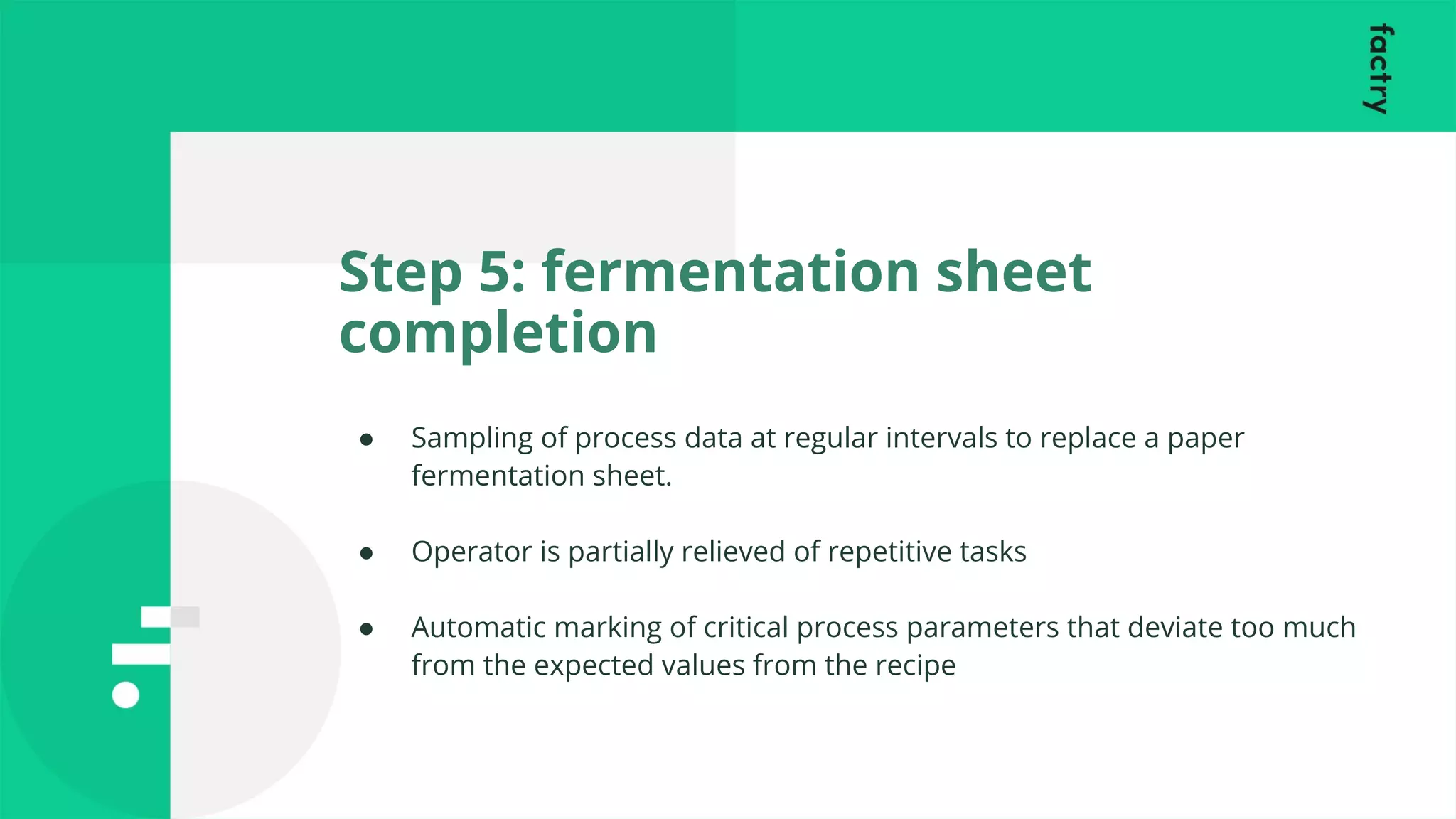
Step 5: fermentation sheet
completion
● Sampling of process data at regular intervals to replace a paper
fermentation sheet.
● Operator is partially relieved of repetitive tasks
● Automatic marking of critical process parameters that deviate too much
from the expected values from the recipe
PLCs
FACTRY HISTORIAN
SCADA
FACTRY MES
ERP DATA
RECIPE DATA
Closing
the loop
OPERATOR
INTERFACE
Step 6: linking LIMS data
● Lab performs analyses for each Batch. This information is synched with
all centrally collected data.
○ Yield
○ Dry matter content
○ ...
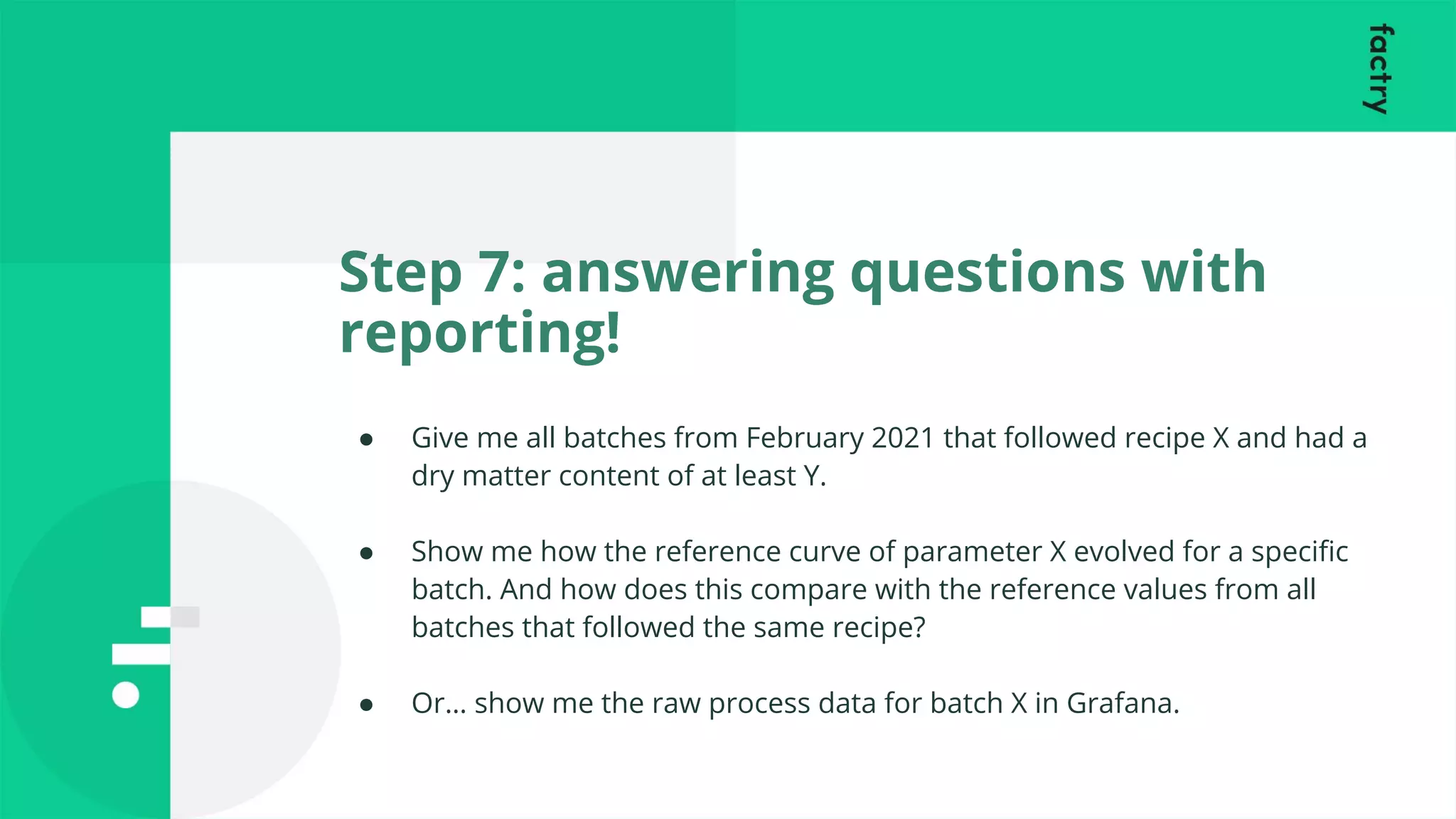
Step 7: answering questions with
reporting!
● Give me all batches from February 2021 that followed recipe X and had a
dry matter content of at least Y.
● Show me how the reference curve of parameter X evolved for a specific
batch. And how does this compare with the reference values from all
batches that followed the same recipe?
● Or… show me the raw process data for batch X in Grafana.
PROCESS
ANALYSIS
PLCs
FACTRY HISTORIAN
SCADA
FACTRY MES
OPERATOR
INTERFACE
REPORTING
TOOLS
ERP DATA
RECIPE DATA
Closing
the loop
Open technologies
and standards
● Vendor independent
● Source code available
● Has been running in
production for years
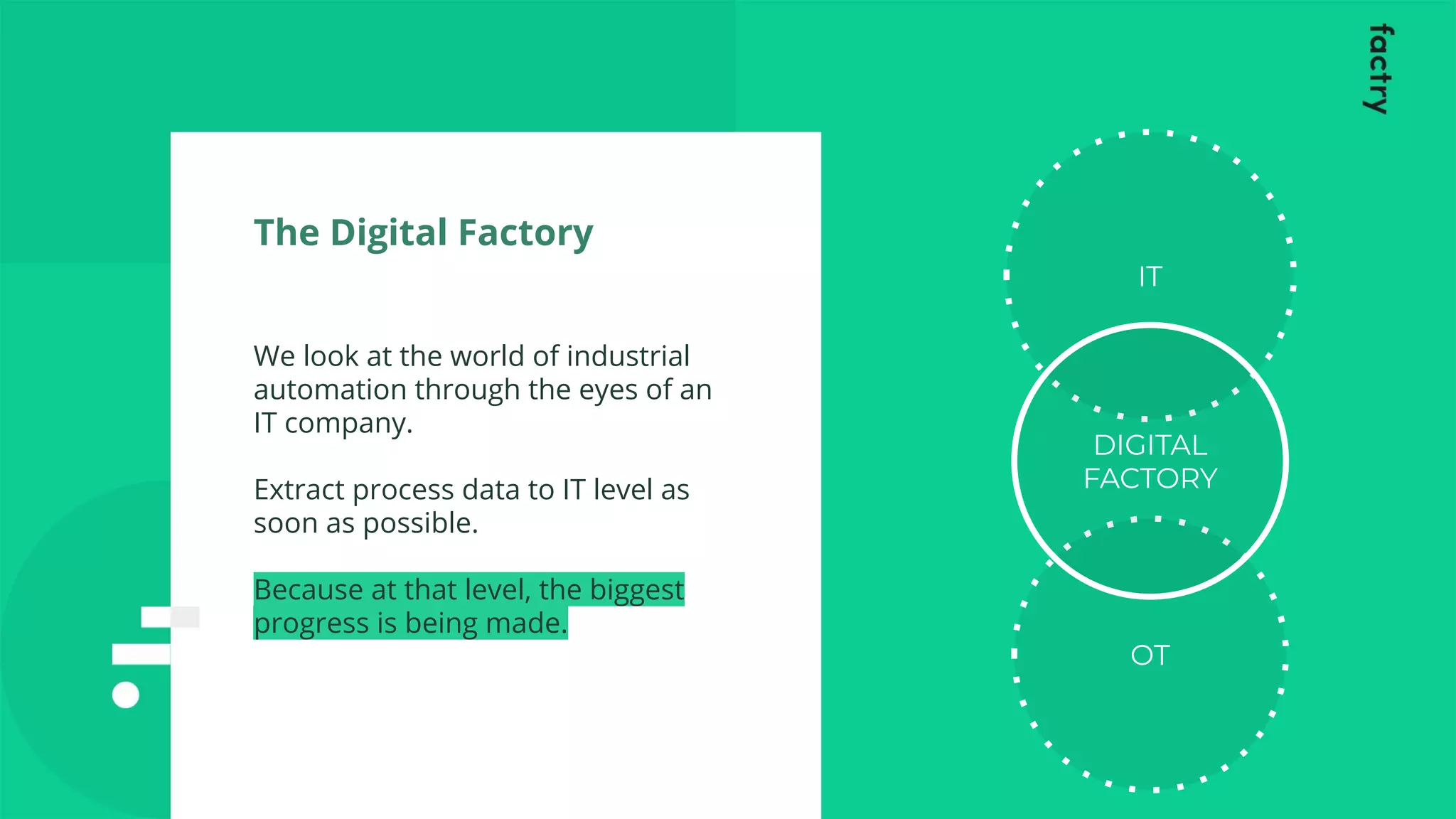
The Digital Factory
We look at the world of industrial
automation through the eyes of an
IT company.
Extract process data to IT level as
soon as possible.
Because at that level, the biggest
progress is being made.
OT
IT
DIGITAL
FACTORY
Some unexpected benefits
1. MRP functionality:
○ Prediction of material and air usage
2. Real-time machine monitoring
○ Valve maintenance
3. Debugging of cold-room door (anomaly detection)
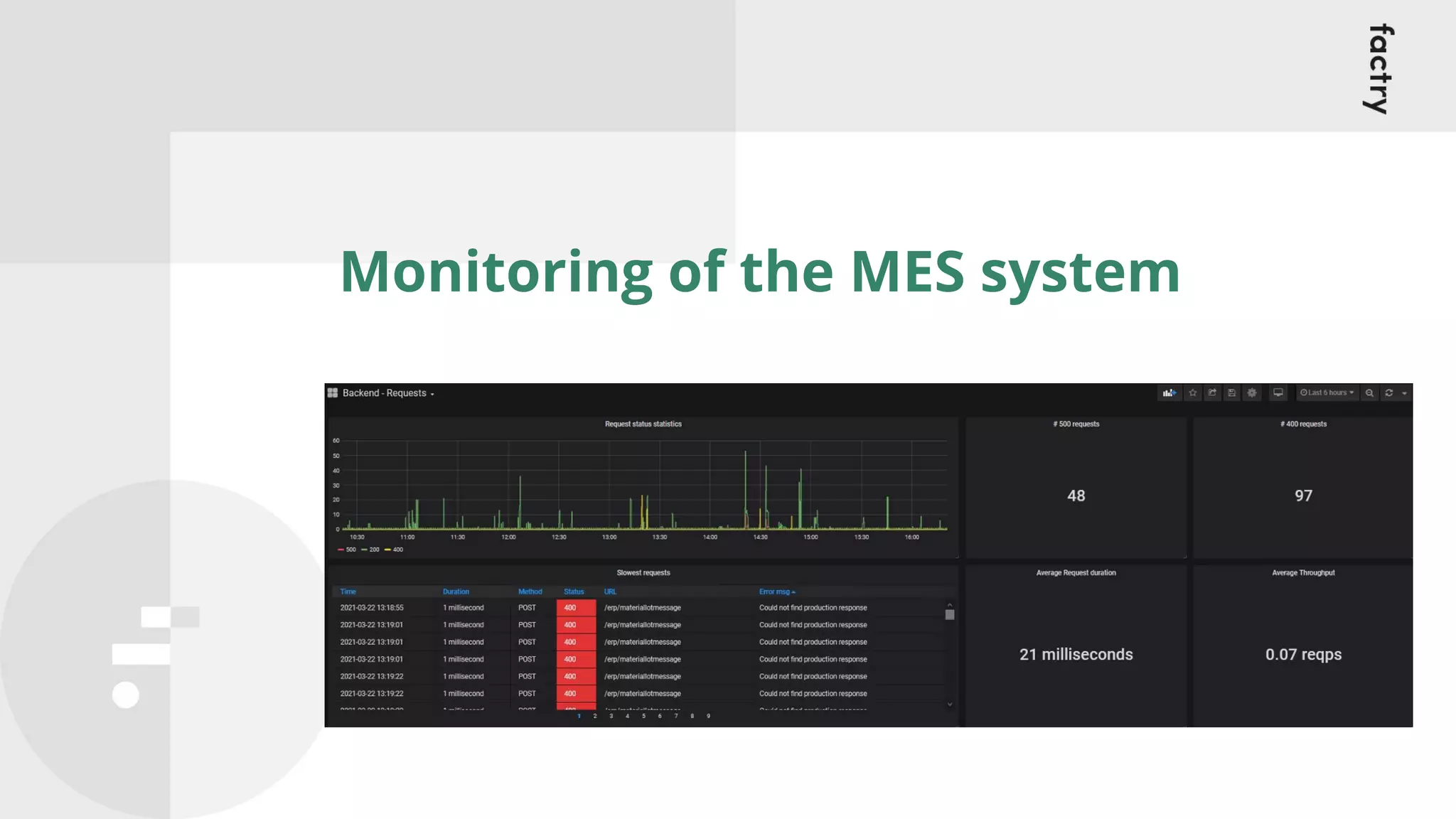
4. Monitoring of the MES and Historian
Some unexpected benefits
1. MRP functionality:
○ Prediction of material and air usage
2. Real-time machine monitoring
○ Valve maintenance
3. Debugging of cold-room door (anomaly detection)
4. Monitoring of the MES and Historian
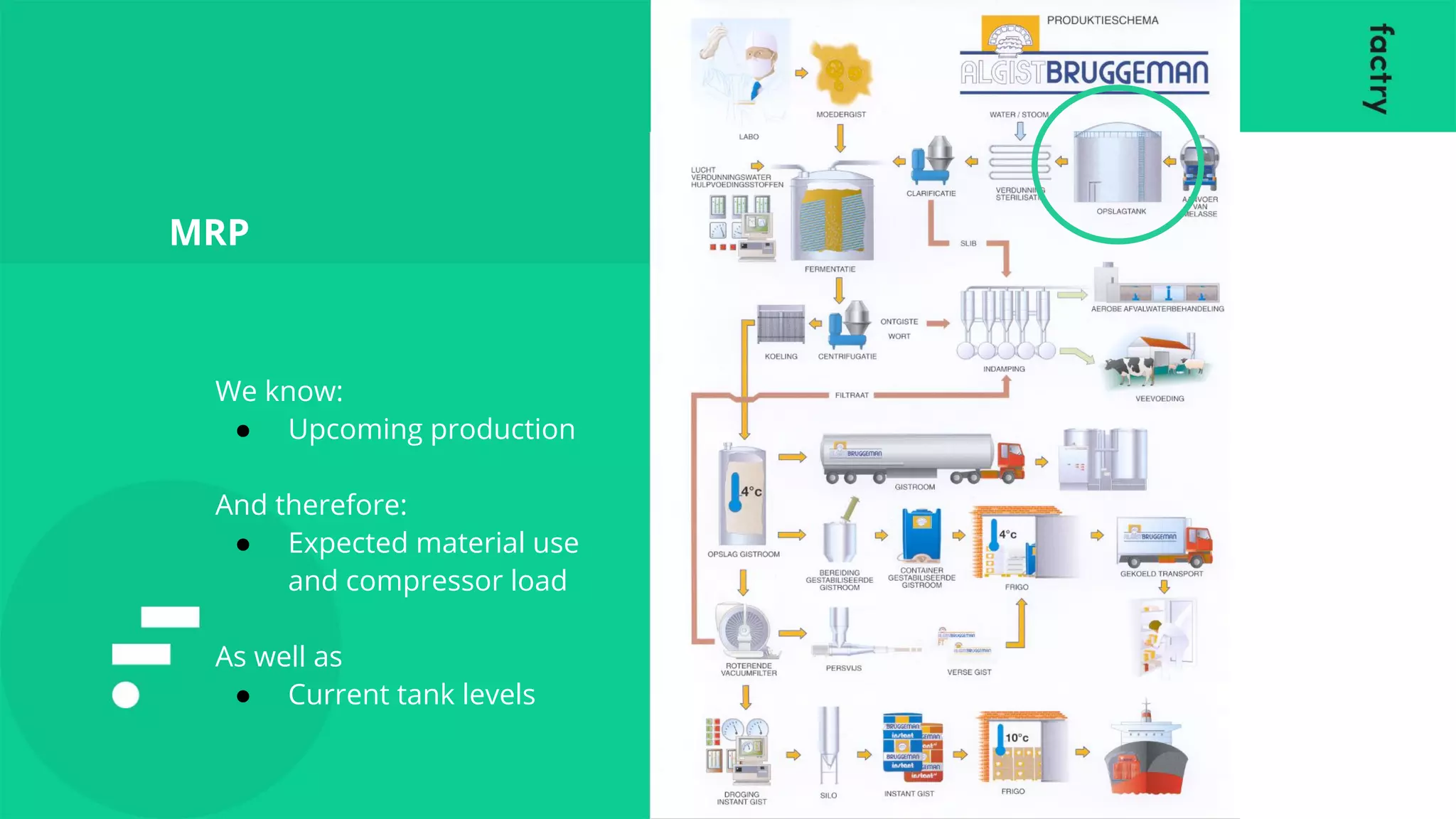
MRP
We know:
● Upcoming production
And therefore:
● Expected material use
and compressor load
As well as
● Current tank levels
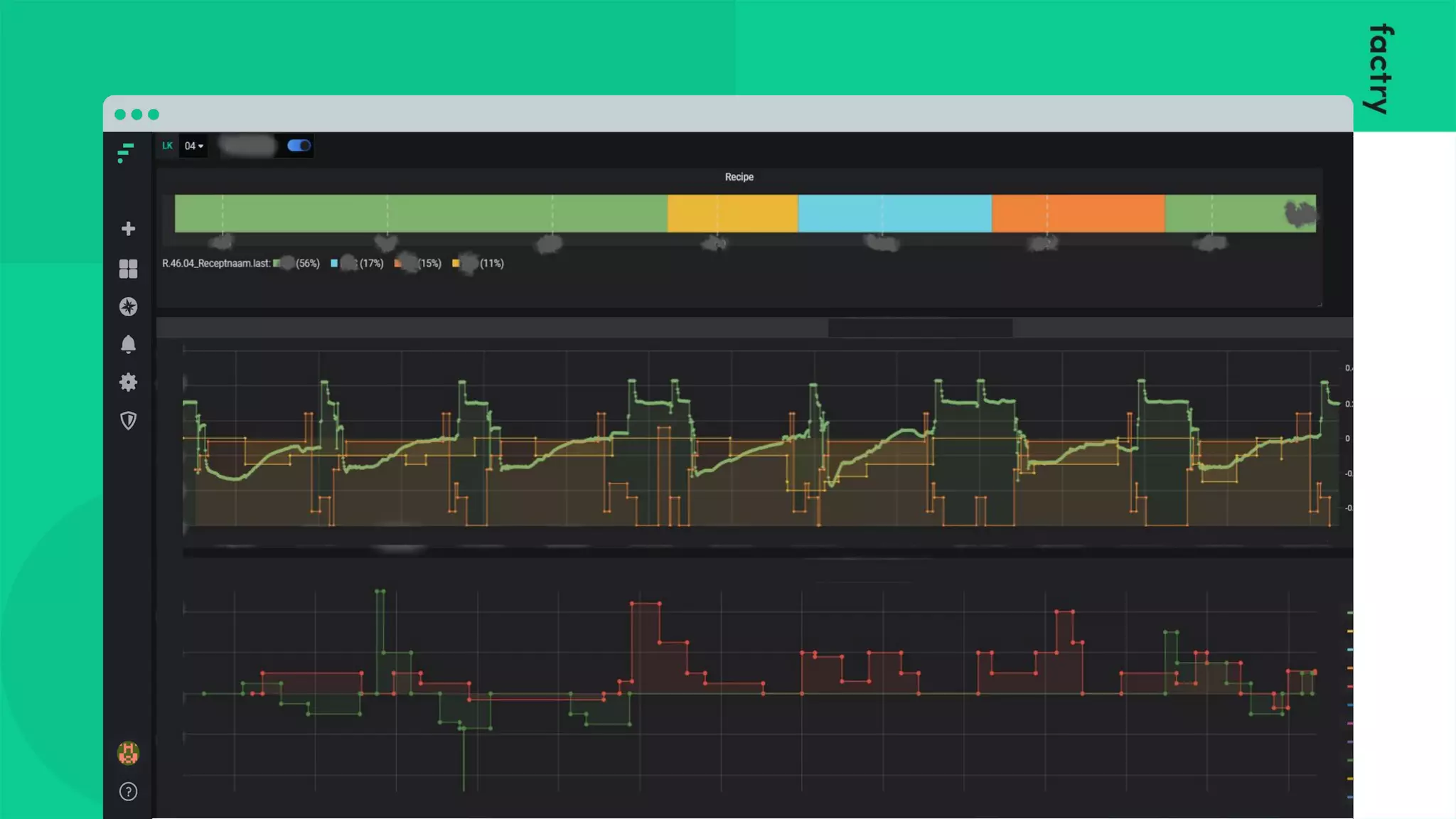
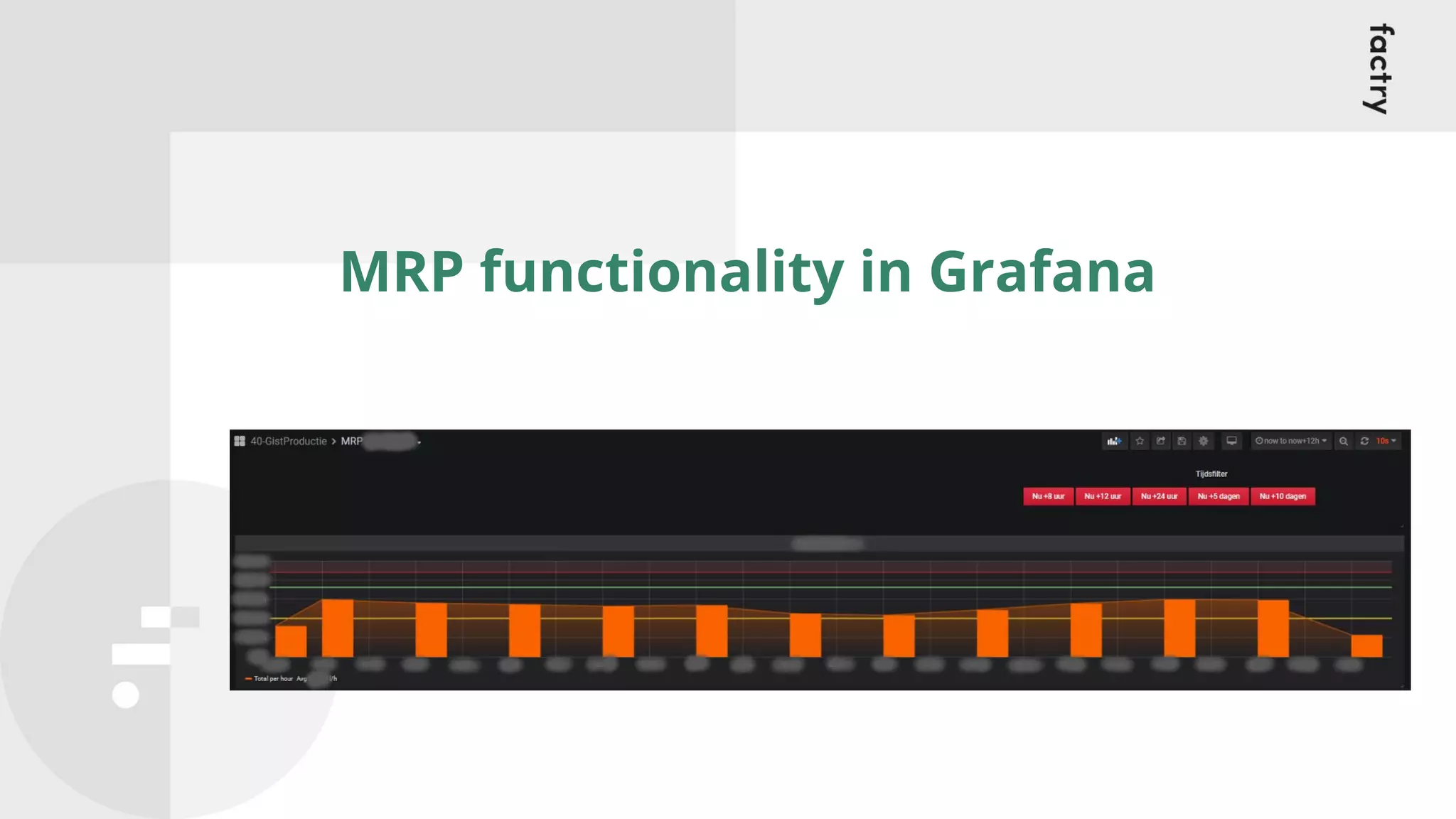
MRP functionality in Grafana
Some unexpected benefits
1. MRP functionality:
○ Prediction of material and air usage
2. Real-time machine monitoring
○ Valve maintenance
3. Debugging of cold-room door (anomaly detection)
4. Monitoring of the MES and Historian
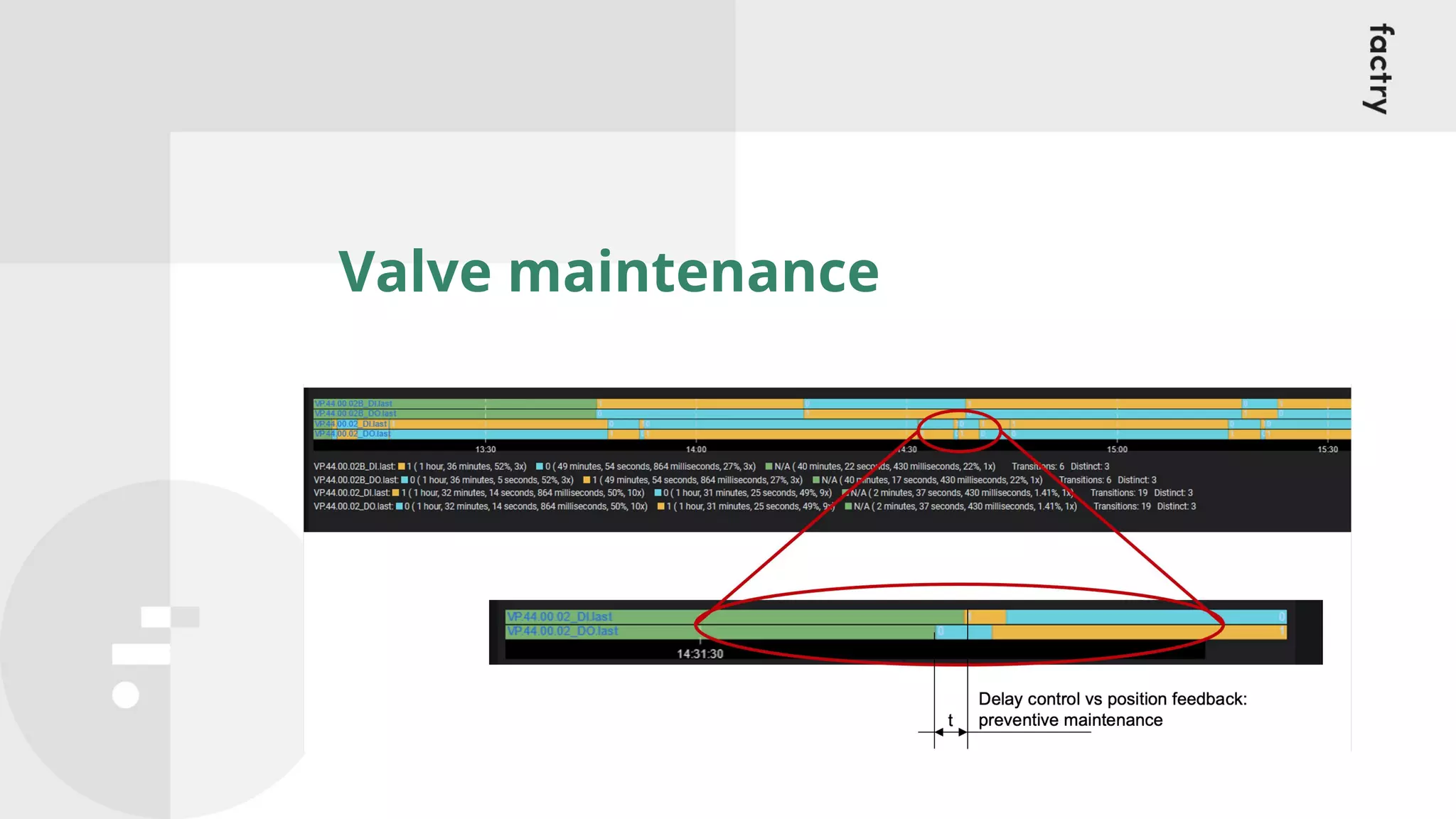
Valve maintenance
Some unexpected benefits
1. MRP functionality:
○ Prediction of material and air usage
2. Real-time machine monitoring
○ Valve maintenance
3. Debugging of cold-room door (anomaly detection)
4. Monitoring of the MES and Historian
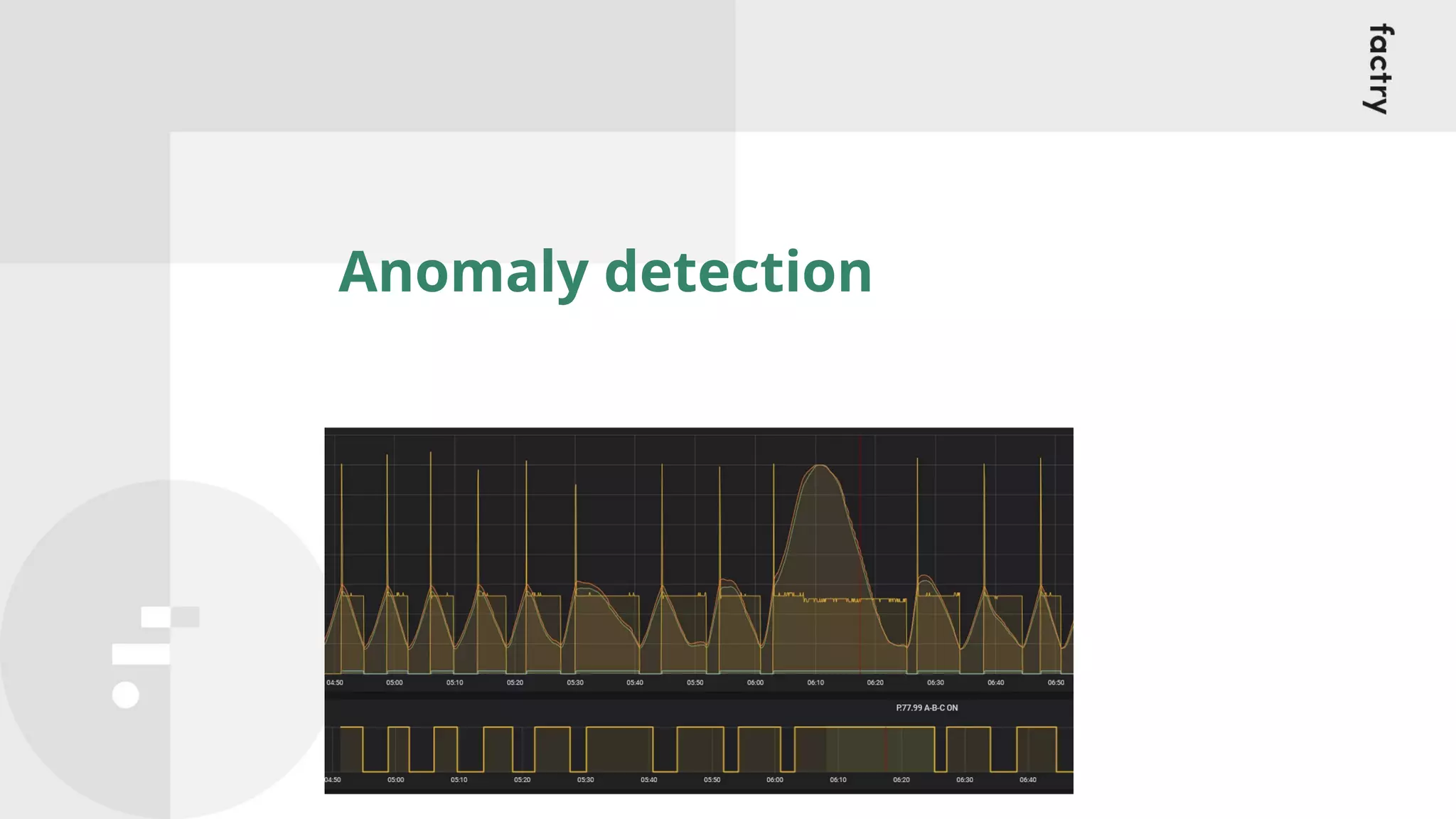
Anomaly detection
Some unexpected benefits
1. MRP functionality:
○ Prediction of material and air usage
2. Real-time machine monitoring
○ Valve maintenance
3. Debugging of cold-room door (anomaly detection)
4. Monitoring of the MES and Historian
Monitoring of the MES system
And finally, our advice
Just give it a try!
https://www.factry.io/blog/process-data-integration-open-source-or-proprietary-software/
Wrapping up
● We are now able to answer the 3 questions in a reasonable amount of
time
● The human has become a user of the information flow, not the
centerpiece
● Additional benefits because of a common data platform
● All of this with open protocols and open source software
Takeaways
1. Build a platform for your
process data, not a collection
of point solutions
2. Think of your naming
structure
3. Work iteratively with all
stakeholders
4. Data has a clear impact on
the business
Thank you!
Questions?
Further reading:
https://www.factry.io/blog
https://medium.com/factry
https://www.linkedin.com/company/factry.io
IVO LEMMENS - Algist Bruggeman
FREDERIK VAN LEECKWYCK - Factry
+32 474 88 85 73
frederik.vanleeckwyck@factry.io

Using OPC-UA to Extract IIoT Time Series Data from PLC and SCADA Systems

  • 1.
    by factry Operationalintelligence made easy by factry Operational intelligence made easy InfluxData webinar Data collection and integration Using OPC-UA to Extract IIoT Time Series Data from PLC and SCADA Systems Confidential
  • 2.
    Improving data integrity,gaining more insight in the production process and making better yeast.
  • 3.
    Agenda Introducing Ivo -Algist Bruggeman Introducing Frederik - Factry Situation and challenge Solution and outcomes Unexpected Benefits Q&A
  • 4.
    ● Project Manager Automation ●Responsible for automation and electrical maintenance ● Project lead for MES & Historian project About Ivo Lemmens
  • 5.
  • 6.
    Algist Bruggeman suppliesfresh, liquid and dried yeast to industrial, semi-artisanal and artisanal bakeries, as well as to the wine, beer and pharma industry. Algist Bruggeman is part of Lesaffre Group, a key global player in fermentation for more than a century, with a 2 billion EUR turnover and established on all continents, counting 10.000+ employees and more than 85 nationalities. Its Belgian site employs about 170 people and has an annual turnover of over 120 million euros.
  • 7.
    ● Raw Materials ●Yeast fermentation ● Processing ⇒ Fresh, liquid, dry yeast Production Process
  • 10.
    A bit ofhistory ● https://github.com/coussej/n ode-opcua-logger ● Started with InfluxDB v1.0.x in 2016 ● Begin with temperature logging for food safety and then gradually expanded data collection on site. ● ~50 PLCs, 4000 tags, ~1Hz resolution
  • 11.
    ● Co-founder and businessdeveloper ● Bioscience engineering degree ● Developed large parts of Algist Bruggeman MES application About me
  • 12.
  • 13.
    The Digital Factory Welook at the world of industrial automation through the eyes of an IT company. Extract process data to IT level as soon as possible. Because at that level, the fastest progress is being made. OT IT DIGITAL FACTORY
  • 14.
    Factry Historian Collect datafrom production equipment Store it in a time-series database Visualize it with web-based visualization tools
  • 15.
    What problems doesthis solve? Look back (Near) real-time Use as basis to predict
  • 16.
  • 17.
  • 18.
    The challenge - Why? ●How did this specific fermentation perform? ● Does a specific fermentation perform differently on fermentor X than on fermentor Y? ● How well does a certain fermentation parameter follow its reference curve?
  • 19.
    ● Fermentations arefollowed up on paper Valuable information ends up in a folder ● Some data is registered, but isolated in a specific system Cumbersome to answer these questions Data is not readily available
  • 20.
    The problem: differentdata sources ● Recipe management in Excel ● Fermentation progress on paper ● Lab results in LIMS software ● …
  • 21.
    Answering the 3 questionsis hard! Why? Data is not linked. The human needs to bring everything together. PLANNING PRODUCTION LOG HISTORIAN LOGBOOK TRACEABILITY LAB DATA SHIFT PLANNING REPORTING AFHAALLIJST OTHER... ERP
  • 22.
    So let’s bringthis data together When have we succeeded? ● Human has become a user, not the person linking data ● The 3 questions can be answered in reasonable timeframe
  • 23.
    Take a holisticapproach ● Before fermentation ○ Planning ○ Recipe management ● During fermentation ○ Dispatching ○ Process data collection with Factry Historian in InfluxDB ○ Automation of fermentation sheet completion ● After fermentation ○ Linking lab results ○ Reporting
  • 24.
    Step 1: getbatch information ● Planning of orders ○ Retrieve data from planning software & ERP via B2MML ■ Business 2 Manufacturing Markup Language ■ https://github.com/factrylabs/go-b2mml ● Information: ○ Start- and end times of upcoming batches ○ Equipment these batches will run on ○ BatchID, recipeID and recipe version
  • 25.
  • 26.
    Step 2: getrecipe data ● Recipe data contains all reference values ○ Material feed ○ Critical process parameters ● Used for: ○ Providing set points to the PLCs that will control the production process ○ Providing reference values to compare with the actuals recorded during the production process
  • 27.
    FACTRY MES ERP DATA RECIPEDATA Closing the loop
  • 28.
    Now we know: ●When we will produce ● What we will produce ● How to identify what we’re going to produce ● Where we will produce (fermenter) What’s missing? ● The actuals!
  • 29.
    Step 3: dispatchingof batches ● Upcoming batches are synched from planning / ERP system ● Because we know the batchIDs, expected start- and end times, recipes… ● The operators can just press “Start” and the SCADA system and PLCs are loaded with the recipe data. Error-free link between planning and production: No more manual selecting of a recipe or typing in a BatchID
  • 30.
    SCADA FACTRY MES ERP DATA RECIPEDATA Closing the loop OPERATOR INTERFACE PLCs
  • 31.
    Step 4: collectingprocess data ● High resolution data is gathered from different PLCs ○ Broader than just fermentation ● Dashboarding and process analysis ● Data source for storing what actually happened during production
  • 32.
    ● Supported bynewer PLCs directly, or via SCADA system OPC-UA server ● Collecting metrics: ○ Polled (typical for sensors: e.g. every 5 sec, every min) ○ Monitored (typical for states or valves: on-change)
  • 34.
    Collect data from productionequipment Store it in a time-series database InfluxDB Visualize it with web-based visualization tools
  • 35.
    Collectors Talk industrial protocol(e.g. OPC-UA) on one end and HTTP on the other Store-and-forward ● Local buffering ● Keep a local copy of configuration
  • 36.
    The importance ofnaming ● Hierarchical structure ● AREA.EQUIPMENT.SENSORID ● Benefits!
  • 37.
    PLCs FACTRY HISTORIAN SCADA FACTRY MES ERPDATA RECIPE DATA Closing the loop OPERATOR INTERFACE
  • 38.
    Step 5: fermentationsheet completion ● Sampling of process data at regular intervals to replace a paper fermentation sheet. ● Operator is partially relieved of repetitive tasks ● Automatic marking of critical process parameters that deviate too much from the expected values from the recipe
  • 39.
    PLCs FACTRY HISTORIAN SCADA FACTRY MES ERPDATA RECIPE DATA Closing the loop OPERATOR INTERFACE
  • 40.
    Step 6: linkingLIMS data ● Lab performs analyses for each Batch. This information is synched with all centrally collected data. ○ Yield ○ Dry matter content ○ ...
  • 41.
    Step 7: answeringquestions with reporting! ● Give me all batches from February 2021 that followed recipe X and had a dry matter content of at least Y. ● Show me how the reference curve of parameter X evolved for a specific batch. And how does this compare with the reference values from all batches that followed the same recipe? ● Or… show me the raw process data for batch X in Grafana.
  • 42.
  • 43.
    Open technologies and standards ●Vendor independent ● Source code available ● Has been running in production for years
  • 44.
    The Digital Factory Welook at the world of industrial automation through the eyes of an IT company. Extract process data to IT level as soon as possible. Because at that level, the biggest progress is being made. OT IT DIGITAL FACTORY
  • 45.
    Some unexpected benefits 1.MRP functionality: ○ Prediction of material and air usage 2. Real-time machine monitoring ○ Valve maintenance 3. Debugging of cold-room door (anomaly detection) 4. Monitoring of the MES and Historian
  • 46.
    Some unexpected benefits 1.MRP functionality: ○ Prediction of material and air usage 2. Real-time machine monitoring ○ Valve maintenance 3. Debugging of cold-room door (anomaly detection) 4. Monitoring of the MES and Historian
  • 47.
    MRP We know: ● Upcomingproduction And therefore: ● Expected material use and compressor load As well as ● Current tank levels
  • 48.
  • 49.
    Some unexpected benefits 1.MRP functionality: ○ Prediction of material and air usage 2. Real-time machine monitoring ○ Valve maintenance 3. Debugging of cold-room door (anomaly detection) 4. Monitoring of the MES and Historian
  • 50.
  • 51.
    Some unexpected benefits 1.MRP functionality: ○ Prediction of material and air usage 2. Real-time machine monitoring ○ Valve maintenance 3. Debugging of cold-room door (anomaly detection) 4. Monitoring of the MES and Historian
  • 52.
  • 53.
    Some unexpected benefits 1.MRP functionality: ○ Prediction of material and air usage 2. Real-time machine monitoring ○ Valve maintenance 3. Debugging of cold-room door (anomaly detection) 4. Monitoring of the MES and Historian
  • 54.
  • 55.
    And finally, ouradvice Just give it a try! https://www.factry.io/blog/process-data-integration-open-source-or-proprietary-software/
  • 56.
    Wrapping up ● Weare now able to answer the 3 questions in a reasonable amount of time ● The human has become a user of the information flow, not the centerpiece ● Additional benefits because of a common data platform ● All of this with open protocols and open source software
  • 57.
    Takeaways 1. Build aplatform for your process data, not a collection of point solutions 2. Think of your naming structure 3. Work iteratively with all stakeholders 4. Data has a clear impact on the business
  • 58.
    Thank you! Questions? Further reading: https://www.factry.io/blog https://medium.com/factry https://www.linkedin.com/company/factry.io IVOLEMMENS - Algist Bruggeman FREDERIK VAN LEECKWYCK - Factry +32 474 88 85 73 frederik.vanleeckwyck@factry.io