










































































Ian Glazer
Senior Director, Identity
Salesforce Identity
@iglazer
Do we have a round
wheel yet?
Why do humans
continually reinvent
what they already
have?
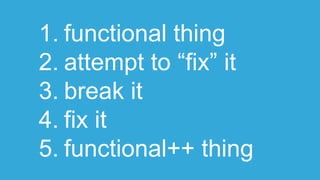
1. functional thing
2. attempt to “fix” it
3. break it
4. fix it
5. functional++ thing
Why is it that we
reinvent the wheel?
Eventually we get a
round one.
Why do we do this in
the world of identity?
We reinvent the wheel
when tasks change
SOA
SOAP
XML
services
SOAP
XML
services
REST
XML
services
REST
JSON
IAM has to stay
contemporary
The load our IAM
wheels have to carry
has changed.
IAM in transition
Right Access
Right People
Right Time
Right Experience
Right People
Right Time
Right Experience
Right People & Things
Right Time
Right Experience
Right People & Things
Right Time
Right Place
But that’s not all
firstName
lastName
email
mobile
ou
nickname
title
…
firstName
lastName
email
mobile
ou
nickname
title
…
firstName
lastName
email
mobile
ou
nickname
title
…
firstName
lastName
email
mobile
ou
nickname
title
…
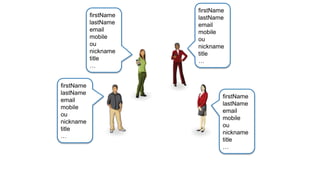
Reasonably large
number of identities
with a reasonable
number of attributes
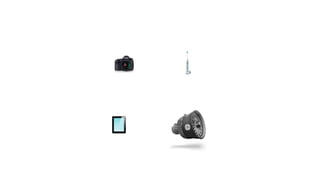
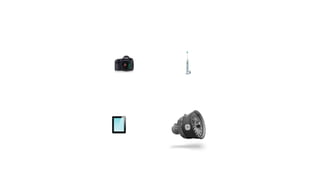
We are being asked
to haul more and
different identities
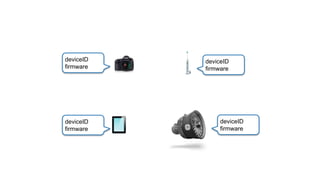
deviceID
firmware
deviceID
firmware
deviceID
firmware
deviceID
firmware
25,000,000,000?
50,000,000,000?
Unreasonably large
number of identities
with a few attributes
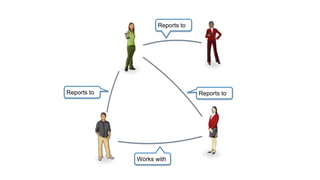
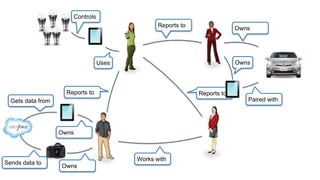
Reports to
Reports toReports to
Works with
Reports to
Reports toReports to
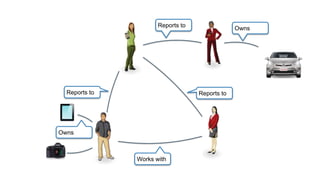
Owns
Works with
Owns
Reports to
Reports toReports to
Owns
Owns
Owns
Sends data to
Gets data from
Owns
Paired with
Uses
Controls
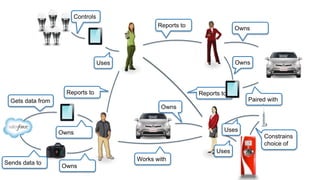
Works with
Reports to
Reports toReports to
Owns
Owns
Owns
Sends data to
Gets data from
Owns
Paired with
Uses
Controls
Owns
Uses
Uses
Constrains
choice of
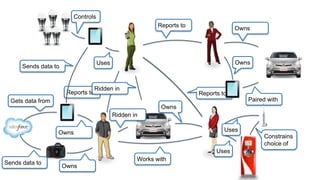
Works with
Reports to
Reports toReports to
Owns
Owns
Owns
Sends data to
Gets data from
Owns
Paired with
Uses
Controls
Owns
Uses
Uses
Constrains
choice of
Sends data to
Ridden in
Ridden in
Works with
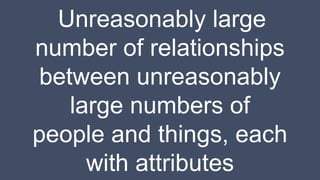
Unreasonably large
number of relationships
between unreasonably
large numbers of
people and things, each
with attributes
1. Authentication
2. Authorization
3. Attributes
4. User Provisioning
Authentication
Authentication Round
Multiple Protocols
Multiple Standards
Complexity
Maturity
OpenID Connect could
use a few more miles
on the road
But you should start
today with it
What about
representing identity
assurance?
Can we harmonize
levels of assurance?
Should we?
myLOA 2 = urLOA 3.1
You’ve been proofed.
You’ve been authenticated.
So what?
Deployment matters.
Poorly deploying
strong authentication
makes it
weak authentication.
LOA?
Trust Framework?
Start here?
Authentication’s wheel
still has lumps
1. Reinvention
2. IAM’s Collective
Shame
Reinventing
just to
reinvent
OAuth A4C
OAuth A4C
IAM’s collective shame
Password Vaulting
The need for
password vaulting
We’ve had fully
workable authentication
standards for years
Yet we still
password vault
Not enough
service provider
enablement
SP’s not acting on
behalf of their
customers’ interests
Standards-based
authentication
(Standards-based user
provisioning too)
Mobile-optimized
authN will (hopefully)
force SPs to act
Killing passwords is
IAM’s new black
Killing the need for
password vaulting
More reasonable
More achievable
More effective
Authentication standards
Federated SSO
2017
ADD ROUND
PICTURE!
Authorization
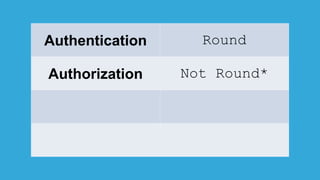
Authentication Round
Authorization Not Round*
1. Over-inflated
2. Flat
XACML can
do anything
Things that allow you
to do anything
tend to make it hard to
do anything
Focus on the PAPs
not the protocol
XACML must be
contemporary
REST & JSON
are good steps forward
Could be used
to represent
authorization decisions
Semantics of scopes?
Binding obligations
=
duties of actors
Still needs more miles
on the road
Enterprise-to-
Enterprise use cases,
please?
How can a thing make
a decision with more
autonomy?
How can we make
decisions closer to the
place and time of use?
Actionable
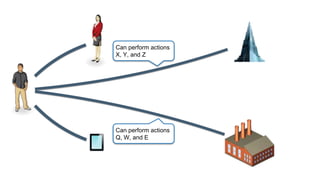
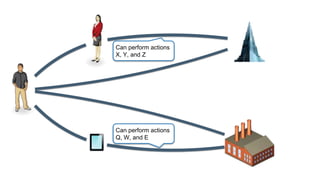
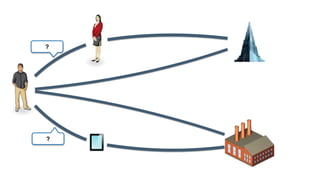
relationships
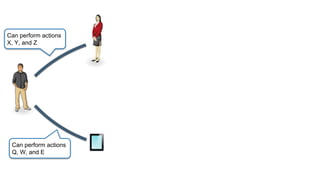
Can perform actions
Q, W, and E
Can perform actions
X, Y, and Z
Can perform actions
Q, W, and E
Can perform actions
X, Y, and Z
Can perform actions
Q, W, and E
Can perform actions
X, Y, and Z
?
?
ADD NOT ROUND
WHEEL
Attributes
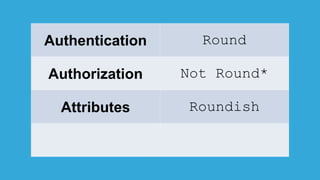
Authentication Round
Authorization Not Round*
Attributes Roundish
The Sad Magic of Commas.
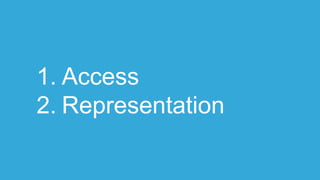
1. Access
2. Representation
Access
Optimized for the
modern web?
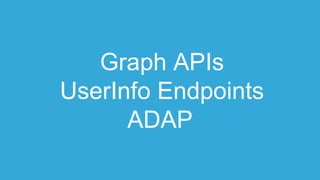
Graph APIs
UserInfo Endpoints
ADAP
LDAP?
Optimized for the
modern web!
Representation
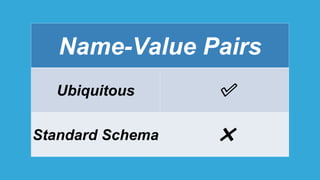
Name-Value Pairs
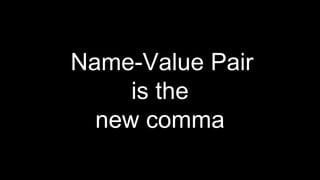
Name-Value Pair
is the
new comma
Name-Value Pairs
Ubiquitous ✅
Standard Schema ❌
Anyone else miss
inetOrgPerson?
inetOrgPerson for a
new generation?
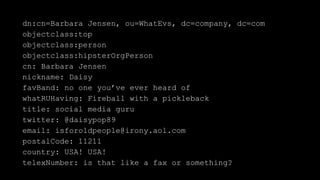
hipsterOrgPerson
dn:cn=Barbara Jensen, ou=WhatEvs, dc=company, dc=com
objectclass:top
objectclass:person
objectclass:hipsterOrgPerson
cn: Barbara Jensen
nickname: Daisy
favBand: no one you’ve ever heard of
whatRUHaving: Fireball with a pickleback
title: social media guru
twitter: @daisypop89
email: isforoldpeople@irony.aol.com
postalCode: 11211
country: USA! USA!
telexNumber: is that like a fax or something?
Make SCIM schema
the standard?
Standardizing schema
can only work in
communities of interest
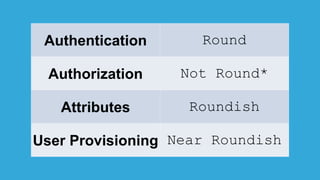
User Provisioning
Authentication Round
Authorization Not Round*
Attributes Roundish
User Provisioning Near Roundish
SPML
SPML v2 was not
round
DSML v2 was round
But neither are well
suited for the modern
web
Others is supporting it.
Others are supporting it.
Join us!
Needs more miles on
the road
Solid use case
representation
Employee Identity
User Provisioning
Customer Identity
User Provisioning
Customer Identity
Profile Management
SCIM can handle both
ADD ROUNDISH
WHEEL
How round are the
identity wheels?
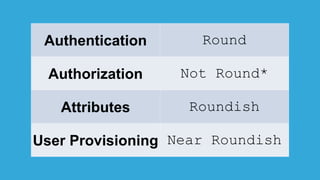
Authentication Round
Authorization Not Round*
Attributes Roundish
User Provisioning Near Roundish
Do we need things
other than wheels?
How do you discover
the identity services
of a service provider?
Besides RTFM?
How do you know
if they use
SAML
SCIM
proprietary attribute
API
FIDO U2F?
How do we connect our
orgs and
our identity services?
How do we kickstart
relationships without
paying p2p costs?
Hubs and axles for our
roundish wheels
Remove the heavy
lifting for providing and
consuming services
This is where we must go.
Our future
People and things
more closely related
Identity as
business enabler
Right Access
Right People
Right Time
Right Experience
Right People
Right Time
Right Experience
Right People & Things
Right Time
Right Experience
Right People & Things
Right Time
Right Place
We are going to
shoulder a heavy load.
Round wheel
Workable standards
Making and measuring
progress
We need a set of
design considerations.
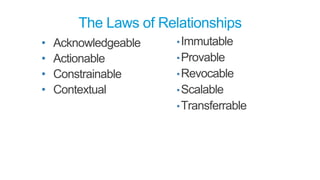
The Laws of Relationships
• Acknowledgeable
• Actionable
• Constrainable
• Contextual
•Immutable
•Provable
•Revocable
•Scalable
•Transferrable
Identity Relationship
Management
Working Group
Joni Brennan
@jonibrennan
Allan Foster
@guruallan
1. Adopt standards
If you don’t,
you are inventing your
own wheel
That is a short-term
optimized strategy at
best.
If the current ones
don’t work for you,
bring out your use
cases.
Kelly Grizzle
@kelly_grizzle
Nat Sakimura
@_nat
Leif Johansson
@leifjohansson
Maciej Machulak
@mmachulak
John Bradley
@ve7jtb
2. Help others to adopt
Build SDKs
to help people use
OpenID and SAML
Support open source
implementations of
SCIM and OAuth
Start with your
organization’s
developers,
then help the
community.
3. Demand standards
From your identity
technology providers.
Demand standards
From your business
service providers.
Demand standards
From your own
developer teams.
Demand standards
If for no other reason
than to kill off the need
for password vaulting.
Demand standards
A round wheel
≠
the goal
A great spec is satisfying
Pamela Dingle
@pamelarosiedee
Chuck Mortimore
@cmort
Eve Maler
@xmlgrrl
David Brossard
@davidjbrossard
Susan Morrow
@avocoidentity
Brian Campbell
@__b_c
but it isn’t the end goal.
We reinvent the wheel,
we revisit and rebuild
our standards
to get round, beautifully
functioning ones
to carry the loads we
must shoulder,
to get us where we
need to go
in this era of modern
identity.
Thanks!

Do we have a round wheel? Thoughts on Identity standards

Editor's Notes

  • #3 Why do human continually seem to reinvent what they already have? Why is it that we take a reasonably functional thing and attempt to rebuild it and in doing so render that reasonably functional thing non-functional for a while? Why is it that we reinvent the wheel?
  • #4 Why is it that we take a reasonably functional thing and attempt to rebuild it and in doing so render that reasonably functional thing non-functional for a while?
  • #5 Because eventually, we get a round one. Anyone who has worked on technical standards, especially identity standards, recognizes this pattern. We build reasonably workable standards only to rebuild and recast them a few years later.
  • #7 We do this not because we develop some horrid allergy to angle brackets, an allergy that can only be calmed by mustache braces. This is not why we reinvent the wheel, why we revisit and rebuild our standards. Furthermore, revisiting and rebuilding standards isn’t simply a “make-work” affair for this guy (insert picture of Tony in Google t-shirt
  • #10 We reinvent the wheel the tasks needed of those wheels change. In IAM, the shift from SOA, SOAP, and XML to little s services, REST, and JSON was profound. And we had to stay contemporary with the way the web and developers worked. In this case, the technical load that our IAM wheels had to carry changed.
  • #17 But there is a more profound change to the tasks we must perform and the loads we must transport and it too will require us to examine our standards and see if they are up to the task.
  • #18 It used to be that enterprise IAM was concerned with answering did the right people get the right access. But that is increasingly not the relevant question. The question we must answer is did the right people get the right experience? IAM is in the midst of a transformation in order to serve customers, citizens, and even our “thing.”
  • #19 It used to be that enterprise IAM was concerned with answering did the right people get the right access. But that is increasingly not the relevant question. The question we must answer is did the right people get the right experience? IAM is in the midst of a transformation in order to serve customers, citizens, and even our “thing.”
  • #20 It used to be that enterprise IAM was concerned with answering did the right people get the right access. But that is increasingly not the relevant question. The question we must answer is did the right people get the right experience? IAM is in the midst of a transformation in order to serve customers, citizens, and even our “thing.”
  • #21 It used to be that enterprise IAM was concerned with answering did the right people get the right access. But that is increasingly not the relevant question. The question we must answer is did the right people get the right experience? IAM is in the midst of a transformation in order to serve customers, citizens, and even our “thing.”
  • #24 IAM is really good at a reasonable number of identities with a lot of attributes
  • #25 but how well will it hold up when we have a completely unreasonable number of identities with very few attributes?
  • #26 but how well will it hold up when we have a completely unreasonable number of identities with very few attributes?
  • #27 but how well will it hold up when we have a completely unreasonable number of identities with very few attributes?
  • #28 but how well will it hold up when we have a completely unreasonable number of identities with very few attributes?
  • #33 but how well will it hold up when we have a completely unreasonable number of identities with very few attributes?
  • #34 but how well will it hold up when we have a completely unreasonable number of identities with very few attributes?
  • #35 but how well will it hold up when we have a completely unreasonable number of identities with very few attributes?
  • #36 but how well will it hold up when we have a completely unreasonable number of identities with very few attributes?
  • #37 but how well will it hold up when we have a completely unreasonable number of identities with very few attributes?
  • #38 but how well will it hold up when we have a completely unreasonable number of identities with very few attributes?
  • #39 25B according to Gartner.
  • #40 50B according to Cisco. I guess we know who has more to gain
  • #42 IAM can handle some amount relationships
  • #48 But this transition is not just from managing identities of people carbon-based life forms to silicon ones. Today we are okay at managing a few relationships each with very few attributes. But what we as an industry must do is manage a completely unreasonable number of relationships between an unreasonable number of things and each of these relationships has a fair number of attributes of their own. That, my friends, is a heavy load to haul.
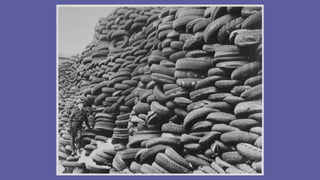
  • #49 Let’s consider identity standards and their “roundness” Image courtesy of NARA: https://upload.wikimedia.org/wikipedia/commons/thumb/f/fa/As_this_big_pile_of_used_auto_tires_indicates%2C_the_United_States_with_its_many_passenger_cars_has_in_discarded_tires..._-_NARA_-_535587.tif/lossy-page1-1244px-As_this_big_pile_of_used_auto_tires_indicates%2C_the_United_States_with_its_many_passenger_cars_has_in_discarded_tires..._-_NARA_-_535587.tif.jpg
  • #51 Overall, I’d say the authentication wheel is round, maybe could use a little air, but its round. We’ve got multiple protocols, multiple standards, which is both a reflection of the complexity of the problem and the maturity of the problem. Now some of these protocols do need a few more miles on them – OpenID Connect but by no means does this mean you shouldn’t use it today. Expect new profiles over time but you certainly can get going today. And where OpenID Connect cannot take you, trusty SAML still can. Although authentication is okay, representing assurance isn’t. I wonder if we need to harmonize level of assurance. I also wonder if this is even possible. Knowing that a person was proofed and how they were authenticated is nice, but as Mark D will be the first to tell you deployment matters. You can deploy a strong auth technology poorly rendering into a weaker state. So knowing your LOA 3 is my LOA 2.25 might not be useful. More importantly, I wonder how small and medium sized organizations, those without a resident identity dork, figure out what LOA to require, what trust framework to use, and how to proceed. This to me, seems like a place for the IDESG and its ilk. And although the authentication wheel is round, that doesn’t mean it isn’t without its lumps. First, we do see some reinventing the wheel just to reinvent the wheel. OAuth A4C is simply not a fruitful activity. Second, the fact that password vaulting exists at this point in history is an embarrassment. To be clear, I am not saying that password vaulting solutions and vendors are an embarrassment. The fact that, having had workable authentication standards for this many years and we still have password vaulting is an embarrassment to our profession. It means that identity vendors have not done enough to enable service providers. It means that service providers still exist who do not want to operate in the best interest of their enterprise customers. At the minimum those service provider must offer a standards-based approach to authentication (and user provisioning would be nice too.) The existence of password vaulting means that organizations haven’t been loud enough in their demands for a better login experience. Interestingly enough, I think the need for a mobile-optimized authentication experience will force service providers hands. I know we are all trying to kill the password but I think a more reasonable, more achievable, and more effective goal is to eliminate the need for password vaulting through the use of authentication and federated SSO standards. By 2020, if I am still saying this, we have failed.
  • #52 Authentication’s wheel is round! Could use a bit of air but pretty good
  • #56 Expect new profiles over time but you certainly can get going today.
  • #57 If OpenID Connect can’t get you there today…
  • #58 SAML can
  • #59 Although authentication is okay, representing assurance isn’t. I wonder if we need to harmonize level of assurance. I also wonder if this is even possible. Knowing that a person was proofed and how they were authenticated is nice, but as Mark D will be the first to tell you deployment matters. You can deploy a strong auth technology poorly rendering into a weaker state. So knowing your LOA 3 is my LOA 2.25 might not be useful. More importantly, I wonder how small and medium sized organizations, those without a resident identity dork, figure out what LOA to require, what trust framework to use, and how to proceed. This to me, seems like a place for the IDESG and its ilk.
  • #63 Knowing that a person was proofed and how they were authenticated is nice
  • #66 So knowing your LOA 3 is my LOA 2.25 might not be useful.
  • #67 More importantly, I wonder how small and medium sized organizations, those without a resident identity dork, figure out what LOA to require, what trust framework to use, and how to proceed. This to me, seems like a place for the IDESG and its ilk.
  • #68 IDESG to the rescue?
  • #69 And although the authentication wheel is round, that doesn’t mean it isn’t without its lumps. First, we do see some reinventing the wheel just to reinvent the wheel. OAuth A4C is simply not a fruitful activity. Second, the fact that password vaulting exists at this point in history is an embarrassment. To be clear, I am not saying that password vaulting solutions and vendors are an embarrassment. The fact that, having had workable authentication standards for this many years and we still have password vaulting is an embarrassment to our profession. It means that identity vendors have not done enough to enable service providers. It means that service providers still exist who do not want to operate in the best interest of their enterprise customers. At the minimum those service provider must offer a standards-based approach to authentication (and user provisioning would be nice too.) The existence of password vaulting means that organizations haven’t been loud enough in their demands for a better login experience. Interestingly enough, I think the need for a mobile-optimized authentication experience will force service providers hands.
  • #72 OAuth A4C is simply not a fruitful activity
  • #73 OAuth A4C is simply not a fruitful activity
  • #74 Second, the fact that password vaulting exists at this point in history is an embarrassment. To be clear, I am not saying that password vaulting solutions and vendors are an embarrassment.
  • #77 The fact that, having had workable authentication standards for this many years and we still have password vaulting is an embarrassment to our profession. It means that identity vendors have not done enough to enable service providers. It means that service providers still exist who do not want to operate in the best interest of their enterprise customers. At the minimum those service provider must offer a standards-based approach to authentication (and user provisioning would be nice too.) The existence of password vaulting means that organizations haven’t been loud enough in their demands for a better login experience. Interestingly enough, I think the need for a mobile-optimized authentication experience will force service providers hands.
  • #79 t means that identity vendors have not done enough to enable service providers.
  • #80 It means that service providers still exist who do not want to operate in the best interest of their enterprise customers.
  • #81 At the minimum those service provider must offer a standards-based approach to authentication (and user provisioning would be nice too.) The existence of password vaulting means that organizations haven’t been loud enough in their demands for a better login experience. Interestingly enough, I think the need for a mobile-optimized authentication experience will force service providers hands.
  • #83 We need organizations to be louder in their demands. Image courtesy of Joe Mills: https://www.flickr.com/photos/joedm/2255363378
  • #85 I know a little something about killing off bits of IAM… I know we are all trying to kill the password but I think a more reasonable, more achievable, and more effective goal is to eliminate the need for password vaulting through the use of authentication and federated SSO standards. By 2020, if I am still saying this, we have failed.
  • #89 By 2017, if I am still saying this, we have failed.
  • #90 The authentication wheel is round Image courtesy of Craig Sunter https://www.flickr.com/photos/16210667@N02/12013320215
  • #92 Authorization’s wheel is not round in an interesting way
  • #94 XACML can do anything; it really is an amazing standard. But the problem with things that allow you to do anything is that they tend to make it hard to do something. The JSON binding is a great start to make XACML more relevant for the modern web. One challenge exists as to how to represent the output of an authorization decision. Once a decision is made, how does the result get communicated to various enforcement points along the way? Certainly OAuth and scopes can be used for that. But this requires an understand of the semantics of scopes, which isn’t a bad thing but it is a thing… service providers have to invest time to understand that. Also there are those who believe bearer tokens are hellspawn… so there’s that too.
  • #100  The JSON binding is a great start to make XACML more relevant for the modern web.
  • #101 We might be able to employ OAuth and scopes.
  • #102 Could be used to represent the output of an authZ decision
  • #103 But this requires an understanding of the semantics of scopes, which isn’t a bad thing but it is a thing… service providers have to invest time to understand that.
  • #104 What about UMA? It definitely holds promise, especially when we consider the duties of all the parties involved in managing and enforcement access to resources. I really like the idea of a standard that has a profile that describes duties of the actors separate from the wireline protocol description. UMA definitely needs more miles on the road and to be perfectly honest I still have a hard time understanding it in an enterprise context. Maybe now that Eve is coming back to the product world, the community will get more UMA awesomeness.
  • #108 There is another thing to think about as we study the roundness of the authorization wheel. Knowing that the load we will have to carry is a heavy one and one that includes “things” I think we need to think about how those “things” can make decisions with more autonomy. How can our authorization systems make authorization decision closer to the place of use at the time of use? As I have been thinking about identity relationship management, I’ve been sketching some design constraints, some laws. This is the law of relationships – Actionable. How can we make relationships actionable so that a thing, an agent, a whatever, can act on the existence of a relationship without always having to consult a back-end authorization service? (use slides from IRM deck)
  • #111 Relationships must be able to carry authorization data
  • #114 Relationships must be able to carry authorization data to account for situations when the backend service cannot be reached
  • #115 Relationships must be able to carry authorization data to account for situations when the backend service cannot be reached
  • #116 Authorization’s wheel is not round… in an interesting way Image courtesy of Judith Doyle https://www.flickr.com/photos/doyland/6688993219
  • #117 The wheel of attributes is more round than not. Now, this is not a diatribe against commas and their sad magic. There are two parts to the attribute story: access and representation. We can access attributes… sorta. There’s no clear winner that is optimized for the modern web. We’ve got graph APIs, ADAP, and UserInfo Endpoints – not to mention proprietary APIs as well. Notice I added the constraint of “optimized for the modern web.” If remove that constraint, then we could say that access to attributes is a fully solved problem: LDAP. But we are going to a protocol that enables workers in the modern web to access attributes. As for a standardized representation… we have one. Name-value pairs. In fact, name-value pairs might be the new comma. (Ian speaks into cellphone “Siri, remind me to kill name-value pairs next year.) And although NVP are ubiquitous, we don’t have a standard schema. What is the inetOrgPerson of a new generation? There is no inetOrgPerson for millennial developers to use. But does that even matter? We could take SCIM’s schema and decree it to be the standard. But we all know, that each of us would extend the hell out of it. Yes we started with a standard schema, but every service provider’s schema is nearly unique.
  • #118 Attributes’ wheel is more round than not
  • #119 This won’t be a diatribe against the sad magic of commas. I promise.
  • #121 We can access attributes… sorta.
  • #122 There’s no clear winner that is optimized for the modern web. We’ve got graph APIs, ADAP, and UserInfo Endpoints – not to mention proprietary APIs as well.
  • #124 If remove that constraint, then we could say that access to attributes is a fully solved problem: LDAP. But we are going to a protocol that enables workers in the modern web to access attributes.
  • #125 But we are going to a protocol that enables workers in the modern web to access attributes.
  • #126 As for a standardized representation… we have one. Name-value pairs. In fact, name-value pairs might be the new comma. (Ian speaks into cellphone “Siri, remind me to kill name-value pairs next year.) And although NVP are ubiquitous, we don’t have a standard schema. What is the inetOrgPerson of a new generation? There is no inetOrgPerson for millennial developers to use. But does that even matter? We could take SCIM’s schema and decree it to be the standard. But we all know, that each of us would extend the hell out of it. Yes we started with a standard schema, but every service provider’s schema is nearly unique.
  • #128 In fact, name-value pairs might be the new comma. (Ian speaks into cellphone “Siri, remind me to kill name-value pairs next year.)
  • #134 We could take SCIM’s schema and decree it to be the standard. But we all know, that each of us would extend the hell out of it. Yes we started with a standard schema, but every service provider’s schema is nearly unique.
  • #136 Attributes’ wheel is roundish
  • #137 User provisioning is on the verge to being semi-inflated. Let’s face it the wheel that SPML v2 built was not round. The example that the standard provided wasn’t even valid XML – not an auspicious start. In fact, SPML was a set away from roundness when we think about DSML v2. DSML v2 was a round wheel. It wouldn’t be very useful to day but it would roll. So what about SCIM? I’m bullish on it. Some really smart people worked on it, including my boss. We are supporting it. We hope you support it too. In fact, hopefully, at the end of this week it might just get ratified at the IETF meeting in Toronto. SCIM definitely needs more miles on the road, but I believe that the use cases that have been used to form SCIM are fairly representative of a majority of use cases we have. It can’t do everything but better believe it can do something. And this narrow focus is important as we think about the work we must do. As we as an industry shift from just dealing with employee identities to those of customers, citizens, and things, there is shift from heavy rich user provisioning to lighter weight registration and profile management. SCIM is just as applicable in an employee identity scenario as it is in a customer identity scenario. And thus is well positioned to make the transition.
  • #138 User Provisioning’s wheel is nearly roundish.
  • #139 Let’s face it the wheel that SPML v2 built was not round. The example that the standard provided wasn’t even valid XML – not an auspicious start. In fact, SPML was a step away from roundness when we think about DSML v2. DSML v2 was a round wheel. It wouldn’t be very useful to day but it would roll.
  • #143 So what about SCIM? I’m bullish on it. Holds great promise. Some really smart people worked on it, including my boss. We are supporting it. We hope you support it too. In fact, hopefully, at the end of this week it might just get ratified at the IETF meeting in Toronto. SCIM definitely needs more miles on the road, but I believe that the use cases that have been used to form SCIM are fairly representative of a majority of use cases we have. It can’t do everything but better believe it can do something. And this narrow focus is important as we think about the work we must do. As we as an industry shift from just dealing with employee identities to those of customers, citizens, and things, there is shift from heavy rich user provisioning to lighter weight registration and profile management. SCIM is just as applicable in an employee identity scenario as it is in a customer identity scenario. And thus is well positioned to make the transition.
  • #150 As we as an industry shift from just dealing with employee identities to those of customers, citizens, and things, there is shift from heavy rich user provisioning to lighter weight registration and profile management. SCIM is just as applicable in an employee identity scenario as it is in a customer identity scenario. And thus is well positioned to make the transition.
  • #154 User provisioning’s wheel is nearly roundish
  • #157 A question – how do you discover identity services of from a service provider? I don’t mean in a specific ODIC way, but in a more general way. How do you know if they use SAML, SCIM, a proprietary attribute API, FIDO U2F, etc? Is there a way to kickstart point-to-point identity relationships without paying the cost of point-to-point drudgery? Could I point my identity system at yours, form a relationship between the organizations, and start to use our joint identity services to meaningfully interact? Let me ask this a different way – do we have hubs and axels for our roundish wheels? Can we building something that removes the heavy lifting when offering and/or consuming identity services? I believe this is the uncharted standards territory into which we must blaze a trail.
  • #158 A question – how do you discover identity services of from a service provider? I don’t mean in a specific ODIC way, but in a more general way. How do you know if they use SAML, SCIM, a proprietary attribute API, FIDO U2F, etc? Is there a way to kickstart point-to-point identity relationships without paying the cost of point-to-point drudgery? Could I point my identity system at yours, form a relationship between the organizations, and start to use our joint identity services to meaningfully interact? Let me ask this a different way – do we have hubs and axels for our roundish wheels? Can we building something that removes the heavy lifting when offering and/or consuming identity services? I believe this is the uncharted standards territory into which we must blaze a trail.
  • #163 Can we kickstart point-to-point identity relationships without paying the p2p costs?
  • #165 Can we build something that removes the heavy lifting when offering and/or consuming identity services?
  • #167 That modern era is one in which more people and more things are more closely related. It is an era that holds the promise of “identity as business enabler.” And in this modern era identity will not only deliver the right access to the right people at the right time but the right experience to the right people at the right time. Not just people but things too To be fair, this modern era will require us to haul a heavy load. To do that we need round wheels. We need workable identity standards. We have made great progress but we are not there yet. I’ll ask 3 things of this audience and of our industry. First, adopt standards. If you aren’t using identity standards, you are inventing your own wheel. That is a strategy only optimized for the short-run. If the current ones don’t work for you, bring those use cases to standards bodies. If you don’t know where to go, ping me, or Mark, or Eve, we’ll help you. Second, help others adopt standards. Build SDKs to help people use OpenID and SAML. Support open source implementations of SCIM and OAuth. Start at home – with you organization’s developers and move out from there. Third, demand standards. From your identity technology providers. Demand standards. From your business service providers. Demand standards. From your own development teams. Demand standards. If for no other reason than to kill off the need for password vaulting. Demand standards. Lastly, keep in mind that a round wheel is not an end in and of itself. A great spec is potentially satisfying to the hard-core identity dorks in the room, me included, but that isn’t the real goal. We reinvent the wheel, we revisiting and rebuild our standards to get round ones – beautifully functioning ones that help carry the loads we must shoulder and us get to where we need to go in this era of modern identity.
  • #170 It used to be that enterprise IAM was concerned with answering did the right people get the right access. But that is increasingly not the relevant question. The question we must answer is did the right people get the right experience? IAM is in the midst of a transformation in order to serve customers, citizens, and even our “thing.”
  • #171 It used to be that enterprise IAM was concerned with answering did the right people get the right access. But that is increasingly not the relevant question. The question we must answer is did the right people get the right experience? IAM is in the midst of a transformation in order to serve customers, citizens, and even our “thing.”
  • #172 It used to be that enterprise IAM was concerned with answering did the right people get the right access. But that is increasingly not the relevant question. The question we must answer is did the right people get the right experience? IAM is in the midst of a transformation in order to serve customers, citizens, and even our “thing.”
  • #173 It used to be that enterprise IAM was concerned with answering did the right people get the right access. But that is increasingly not the relevant question. The question we must answer is did the right people get the right experience? IAM is in the midst of a transformation in order to serve customers, citizens, and even our “thing.”
  • #176 As we continue to refine our standards, we need a way of evaluating the roundness of those wheels, so to speak. We need some set of design considerations to help use decided whether a standard will get us from here to there. A few weeks ago I debuted the laws of relationships. They a set of considerations that we as identity professionals must be mindful of as we begin to navigate the waters of modern IAM – of identity relationship management. They can help evaluate the roundness of our standards… but only if you lend a hand. Kantara is creating an Identity Relationship Management working group to which I am giving these Laws of Relationships. I hope you will join me, and Joni, and Allan, and others in this new working group to help make identity ready for the modern era.
  • #179 Kantara is creating an Identity Relationship Management working group to which I am giving these Laws of Relationships.
  • #180 I hope you will join me, and Joni, and Allan, and others in this new working group to help make identity ready for the modern era.
  • #185 If you don’t know where to go, ping me, or Mark, or Eve, we’ll help you.
  • #200 Lastly, keep in mind that a round wheel is not an end in and of itself. A great spec is potentially satisfying to the hard-core identity dorks in the room, me included, but that isn’t the real goal. We reinvent the wheel, we revisiting and rebuild our standards to get round ones – beautifully functioning ones that help carry the loads we must shoulder and us get to where we need to go in this era of modern identity.
  • #202 at least to the hard core identity geeks in the room