S M Mozakkir Quadri
  10CES-54(5th SEM)
JAMIA MILLIA ISLAMIA
INDRODUCTION

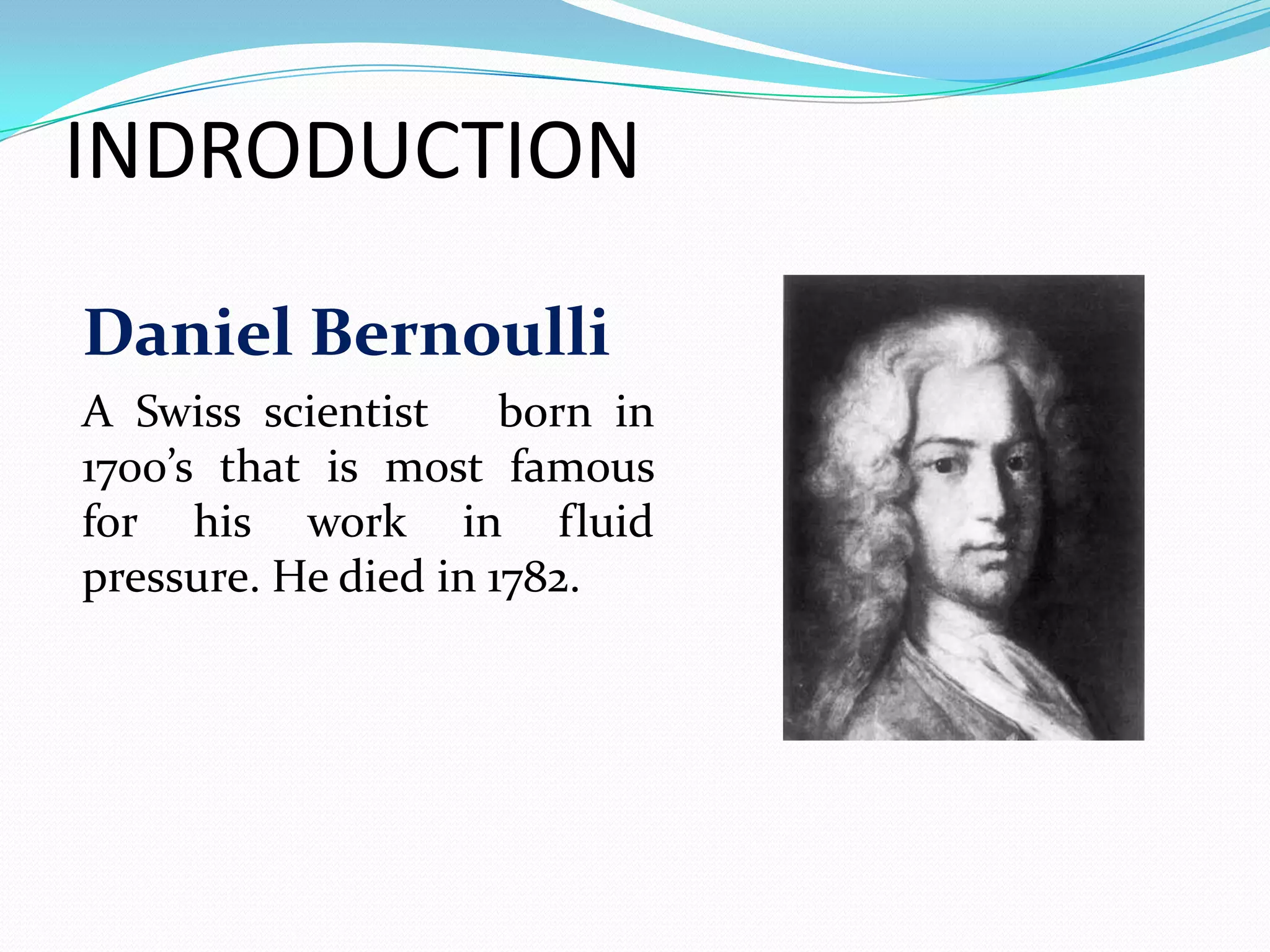
Daniel Bernoulli
A Swiss scientist born in
1700’s that is most famous
for his work in fluid
pressure. He died in 1782.
BERNOULLI’S THEOREM
Bernoulli’s theorem which is also known as
Bernoulli’s principle, states that an increase in the
speed of moving air or a flowing fluid is
accompanied by a decrease in the air or
fluid’s pressure or sum of the kinetic (velocity
head), pressure(static head) and Potential energy
energy of the fluid at any point remains constant,
provided that the flow is steady, irrotational, and
frictionless and the fluid is incompressible.
BERNOULLI’S EQUATION


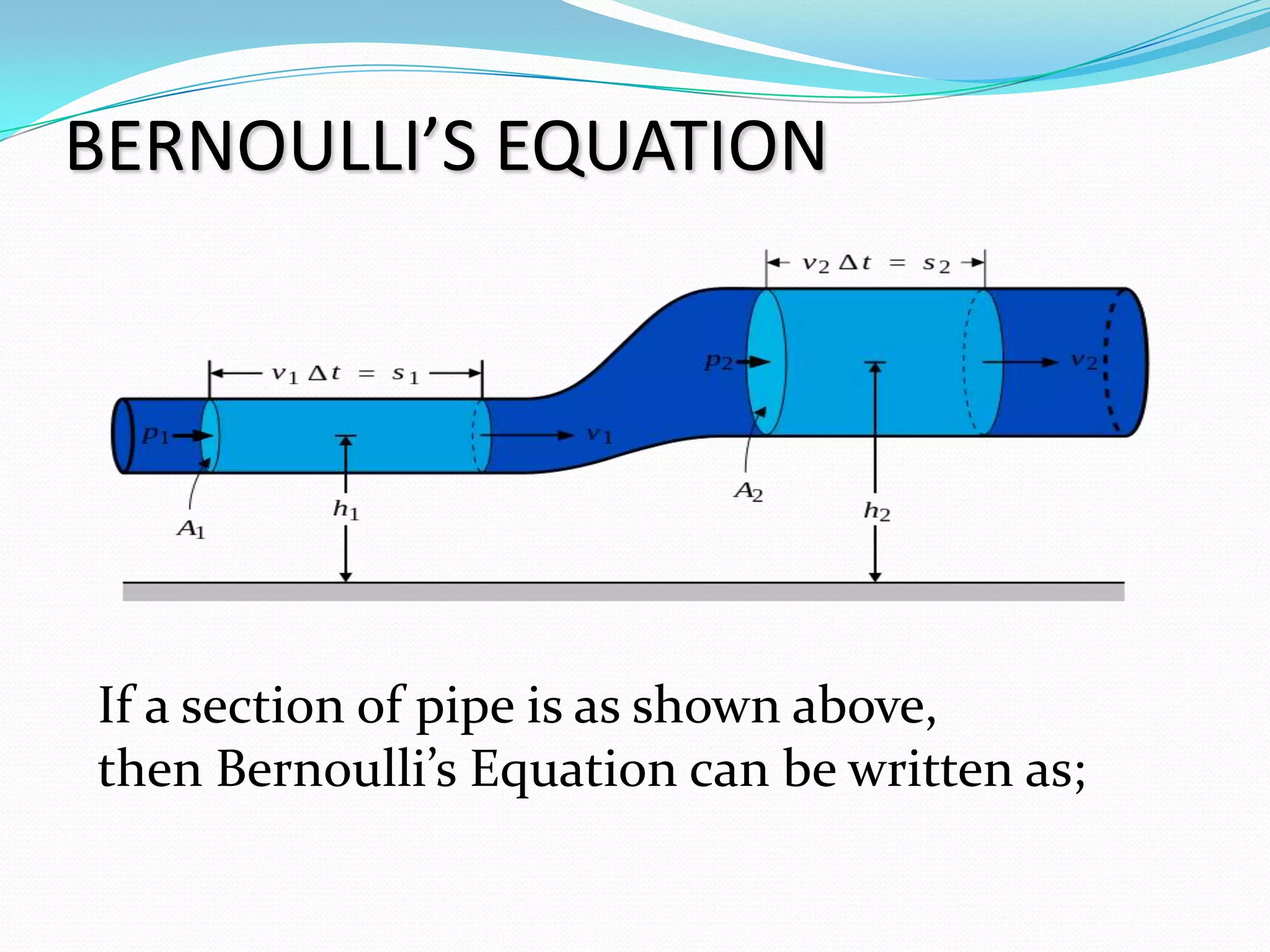
If a section of pipe is as shown above,
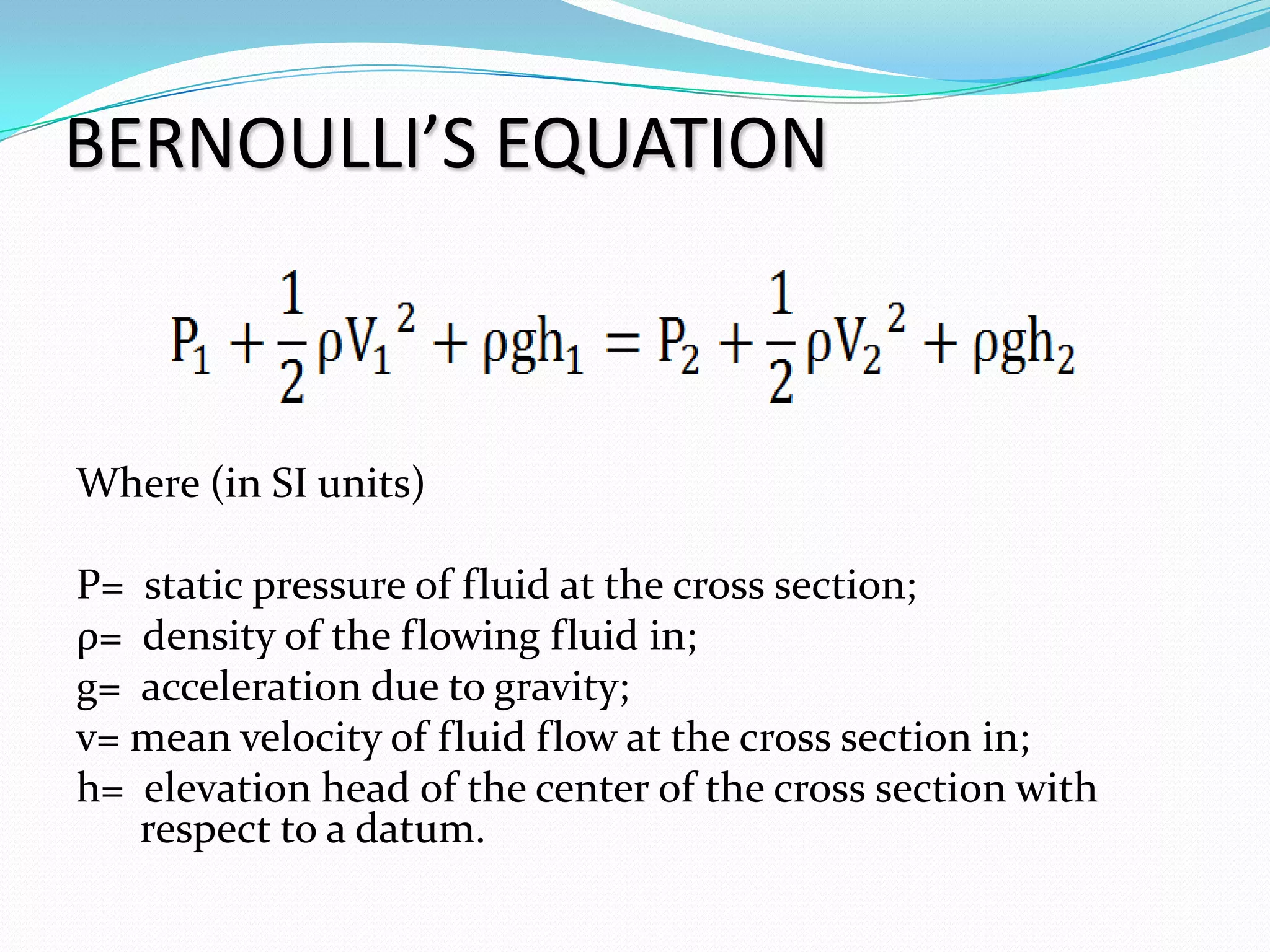
then Bernoulli’s Equation can be written as;
BERNOULLI’S EQUATION


Where (in SI units)

P= static pressure of fluid at the cross section;
ρ= density of the flowing fluid in;
g= acceleration due to gravity;
v= mean velocity of fluid flow at the cross section in;
h= elevation head of the center of the cross section with
   respect to a datum.
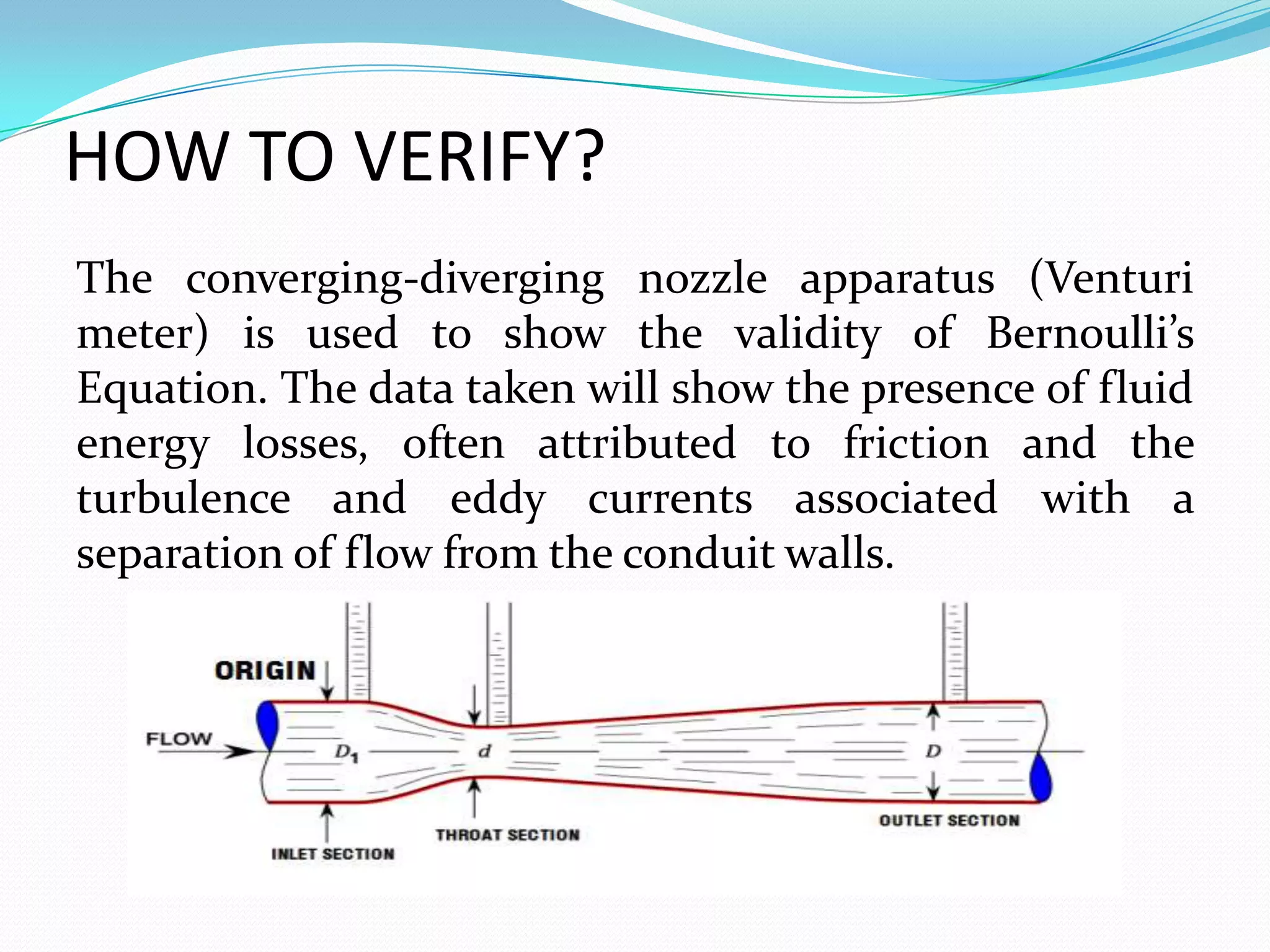
HOW TO VERIFY?
The converging-diverging nozzle apparatus (Venturi
meter) is used to show the validity of Bernoulli’s
Equation. The data taken will show the presence of fluid
energy losses, often attributed to friction and the
turbulence and eddy currents associated with a
separation of flow from the conduit walls.
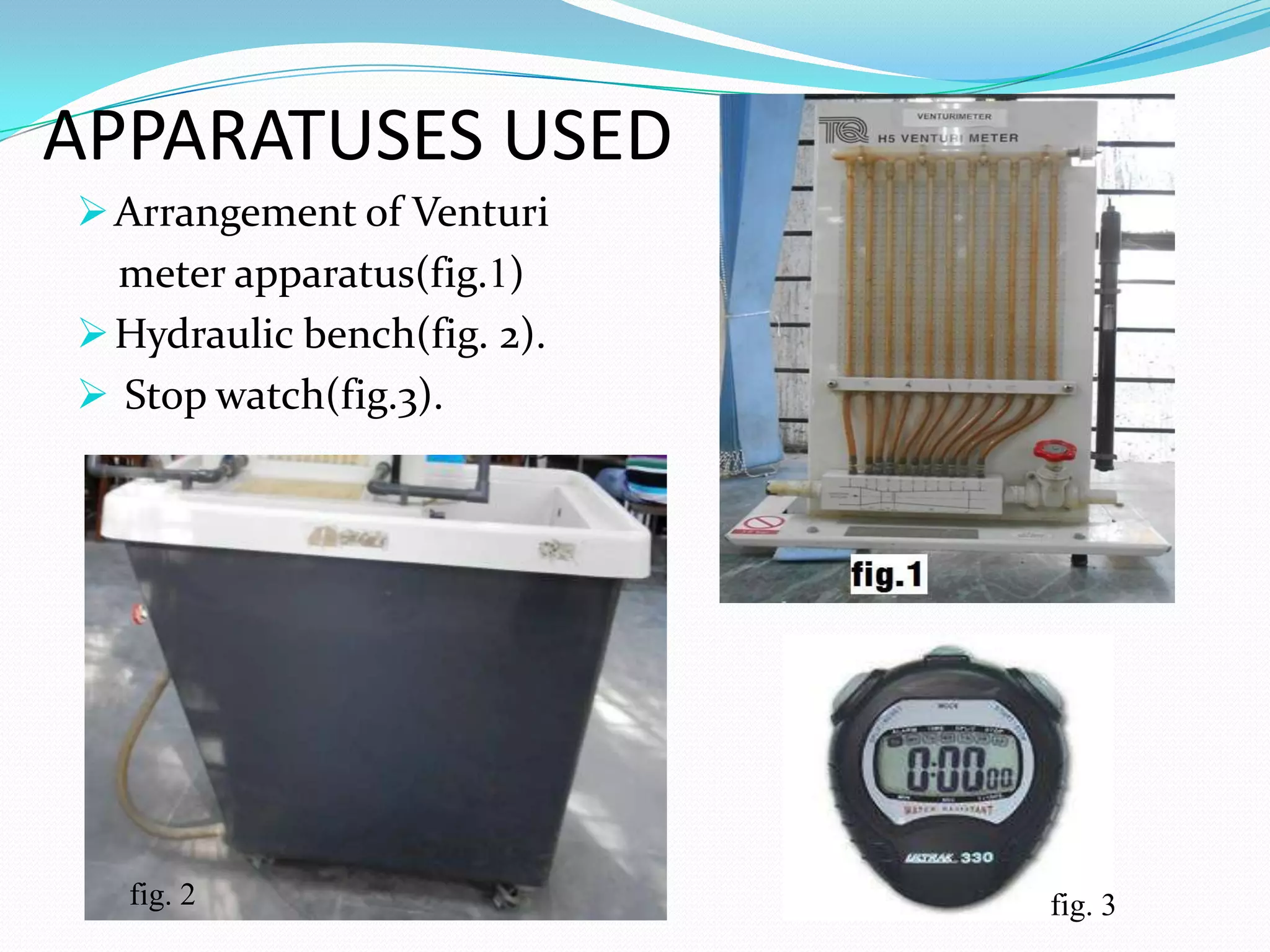
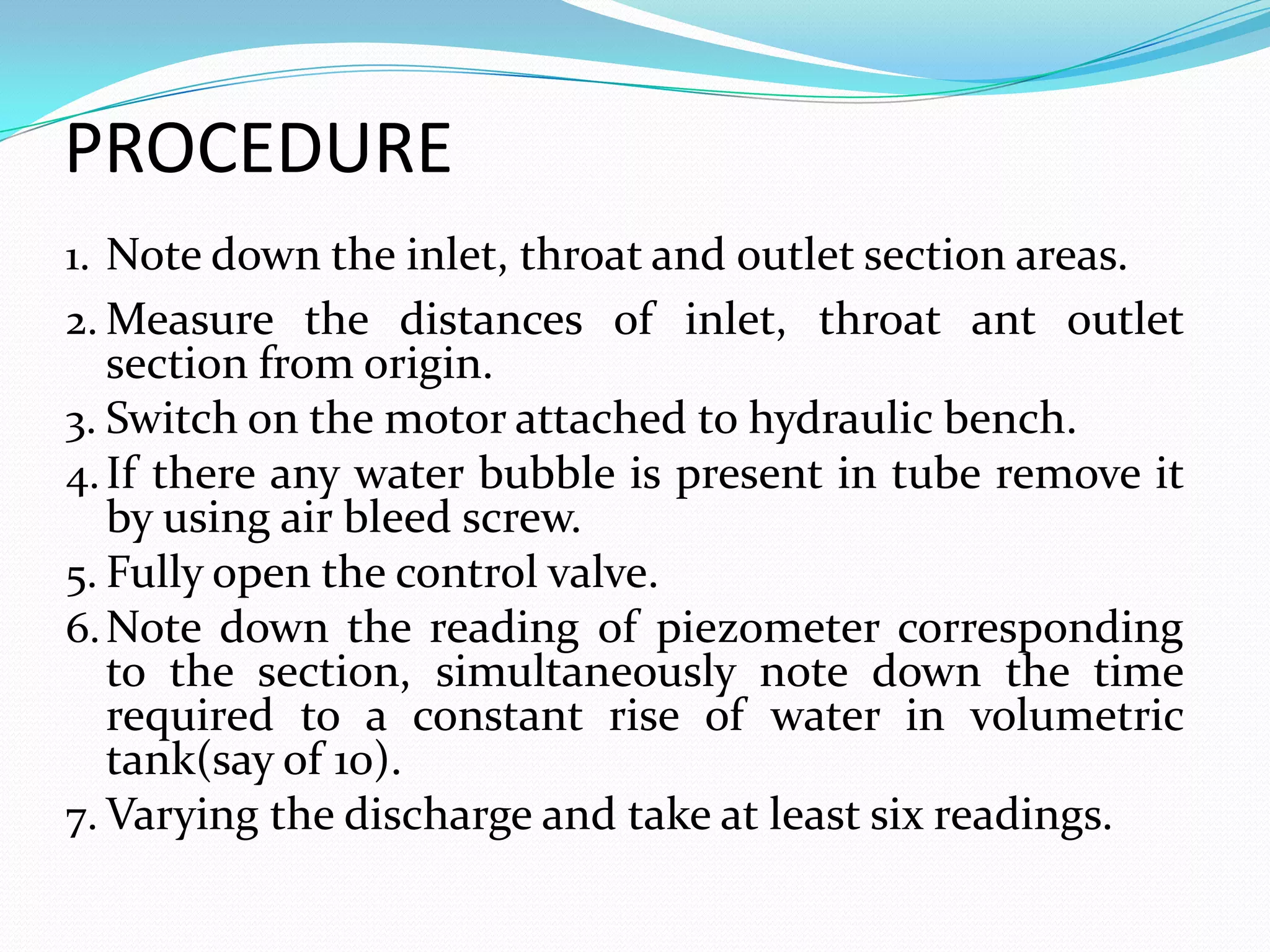
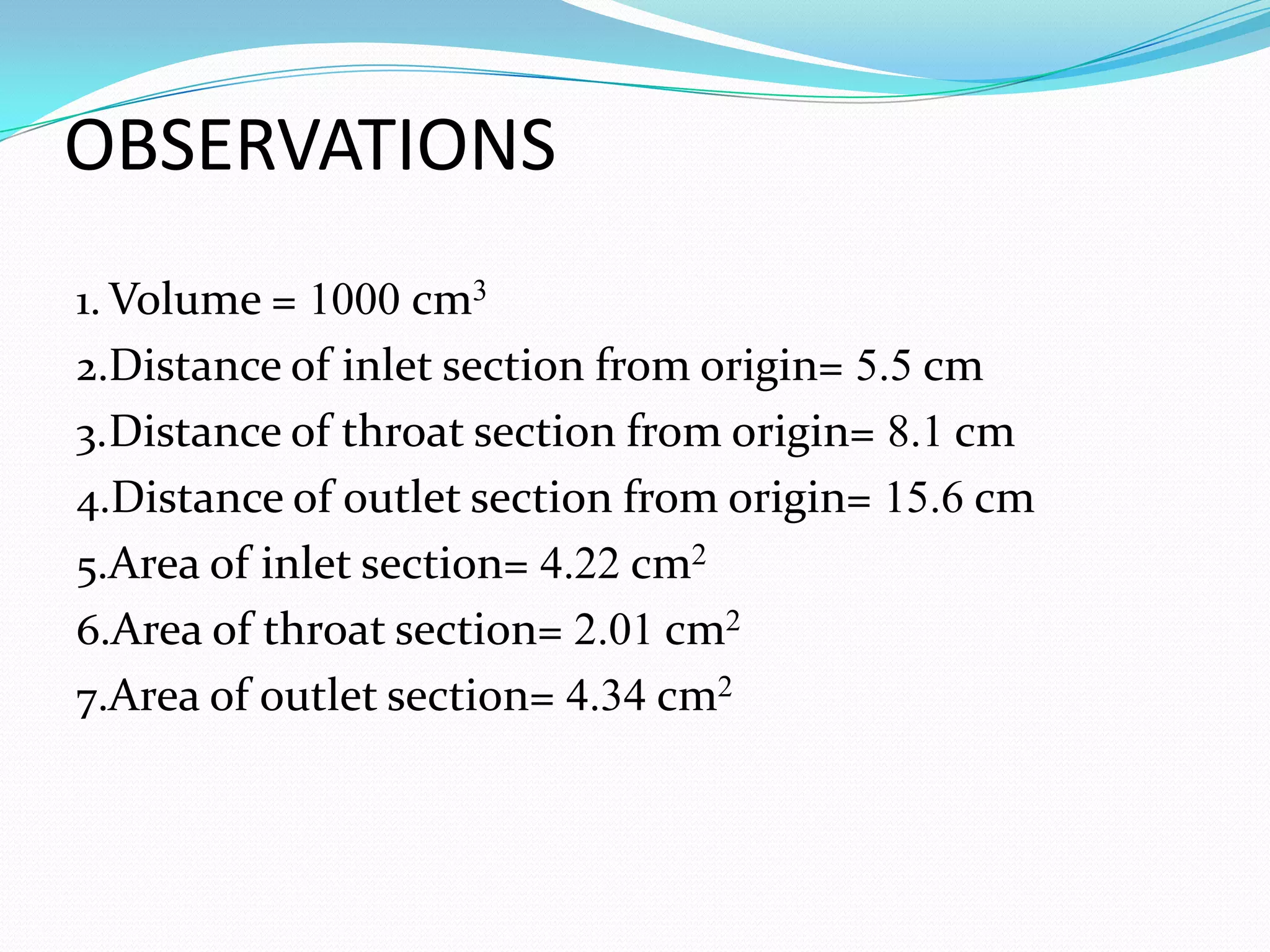
APPARATUSES USED
 Arrangement of Venturi
  meter apparatus(fig.1)
 Hydraulic bench(fig. 2).
 Stop watch(fig.3).


  fig. 2                     fig. 3
PROCEDURE
1. Note down the inlet, throat and outlet section areas.
2. Measure the distances of inlet, throat ant outlet
   section from origin.
3. Switch on the motor attached to hydraulic bench.
4. If there any water bubble is present in tube remove it
   by using air bleed screw.
5. Fully open the control valve.
6. Note down the reading of piezometer corresponding
   to the section, simultaneously note down the time
   required to a constant rise of water in volumetric
   tank(say of 10).
7. Varying the discharge and take at least six readings.
OBSERVATIONS
1. Volume = 1000 cm3
2.Distance of inlet section from origin= 5.5 cm
3. Distance of throat section from origin= 8.1 cm
4.Distance of outlet section from origin= 15.6 cm
5.Area of inlet section= 4.22 cm2
6.Area of throat section= 2.01 cm2
7.Area of outlet section= 4.34 cm2
OBSERVATIONS
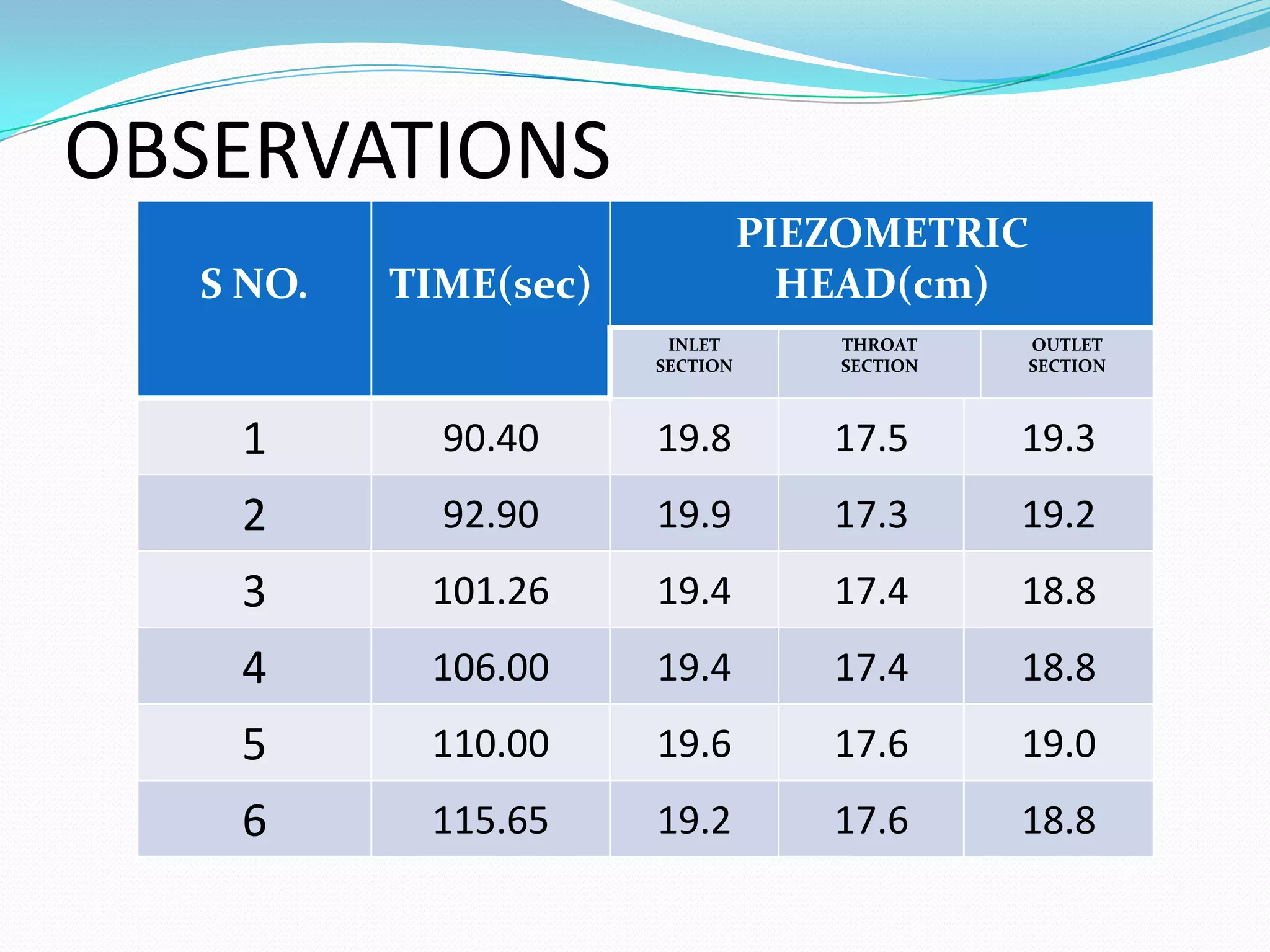
                                PIEZOMETRIC
  S NO.   TIME(sec)               HEAD(cm)
                       INLET       THROAT    OUTLET
                      SECTION      SECTION   SECTION


   1        90.40     19.8         17.5      19.3
   2        92.90     19.9         17.3      19.2
   3       101.26     19.4         17.4      18.8
   4       106.00     19.4         17.4      18.8
   5       110.00     19.6         17.6      19.0
   6       115.65     19.2         17.6      18.8
CALCULATED VALUES
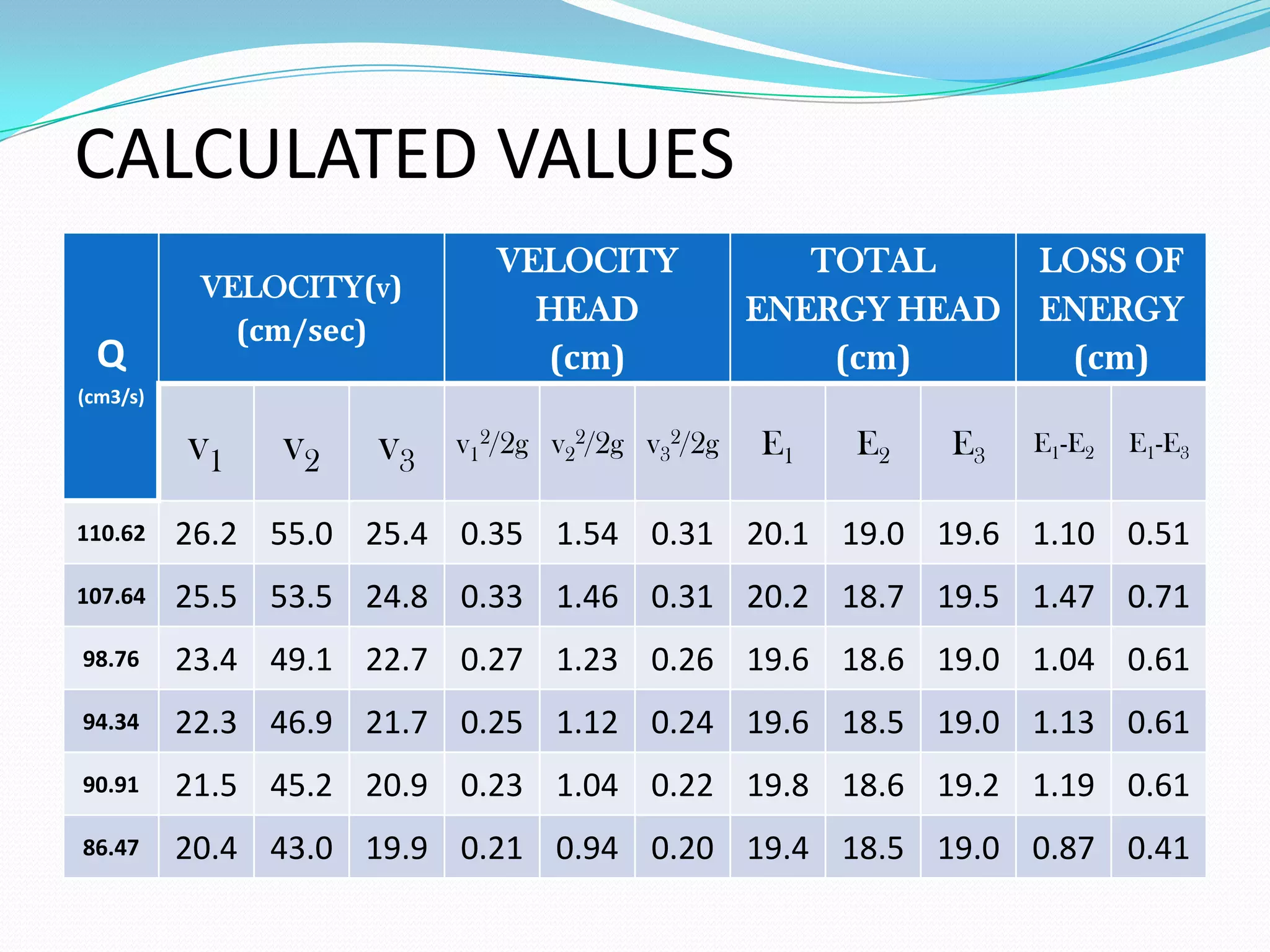
                            VELOCITY               TOTAL       LOSS OF
           VELOCITY(v)
                              HEAD              ENERGY HEAD    ENERGY
             (cm/sec)
 Q                            (cm)                  (cm)        (cm)
(cm3/s)

          v1   v2   v3   v12/2g v22/2g v32/2g   E1   E2   E3   E1-E2   E1-E3


110.62    26.2 55.0 25.4 0.35 1.54 0.31 20.1 19.0 19.6 1.10 0.51
107.64    25.5 53.5 24.8 0.33 1.46 0.31 20.2 18.7 19.5 1.47 0.71
98.76     23.4 49.1 22.7 0.27 1.23 0.26 19.6 18.6 19.0 1.04 0.61
94.34     22.3 46.9 21.7 0.25 1.12 0.24 19.6 18.5 19.0 1.13 0.61
90.91     21.5 45.2 20.9 0.23 1.04 0.22 19.8 18.6 19.2 1.19 0.61
86.47     20.4 43.0 19.9 0.21 0.94 0.20 19.4 18.5 19.0 0.87 0.41
RESULTS
It is observed from the calculated value that at section
where area is less velocity is high and pressure is low
which validates the Bernoulli’s Equation. Graphs are
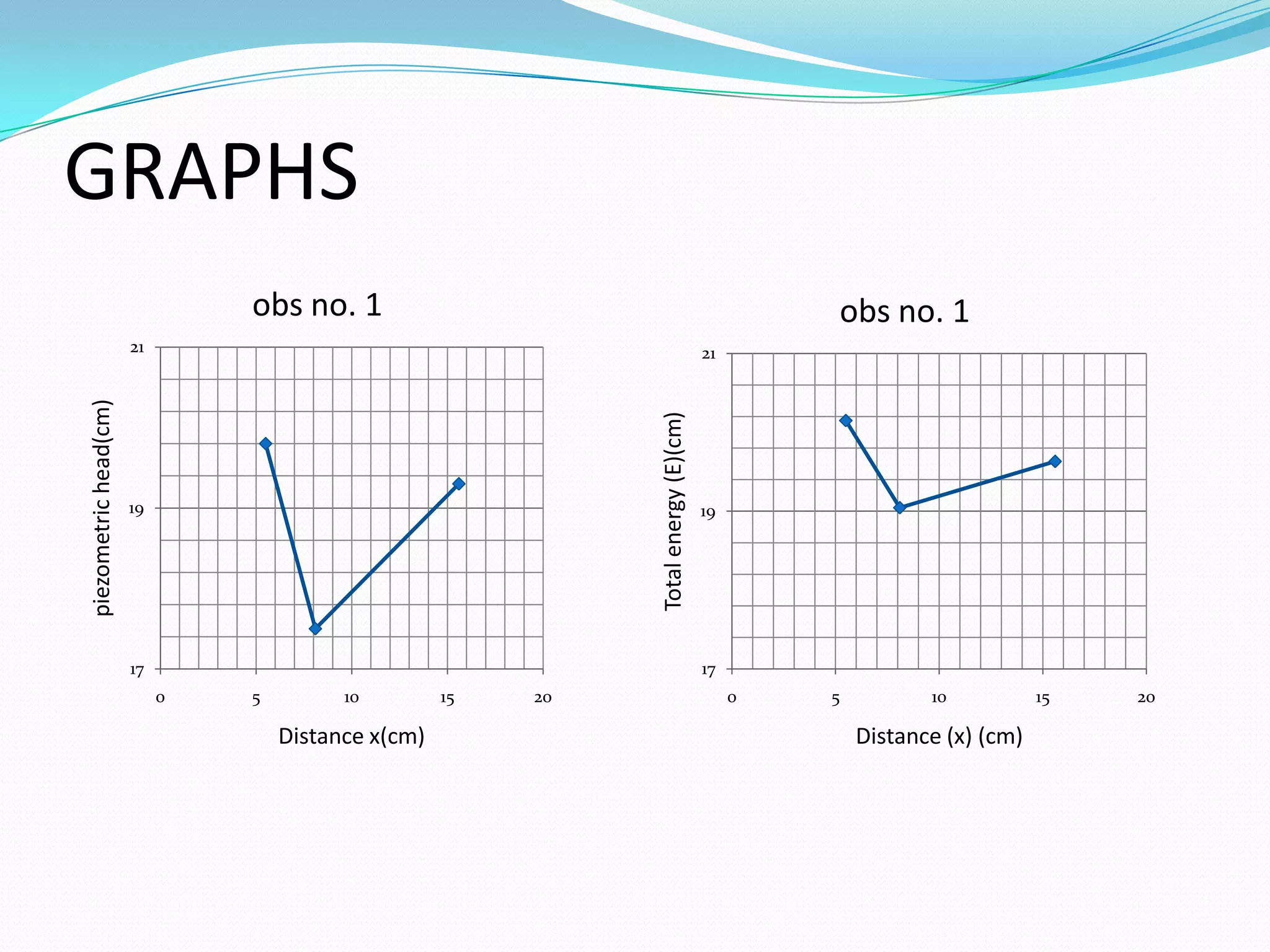
plotted between distance v/s piezometric head and
distance v/s total energy but from the graph (B) we can
observe that there is dissipation in energy at last point
this is because to achieve an ideal condition practically is
not possible.
GRAPHS
                                obs no. 1                                                      obs no. 1
                       21                                                             21
piezometric head(cm)


                                                               Total energy (E)(cm)
                       19                                                             19


                       17                                                             17
                            0   5         10         15   20                               0   5          10           15   20

                                    Distance x(cm)                                                 Distance (x) (cm)
APPLICATIONS
The Bernoulli’s equation forms the basis for solving a
wide variety of fluid flow problems such as jets issuing
from an orifice, jet trajectory flow under a gate and over
a weir, flow metering by obstruction meters, flow
around submerged objects, flows associated with pumps
and turbines etc.
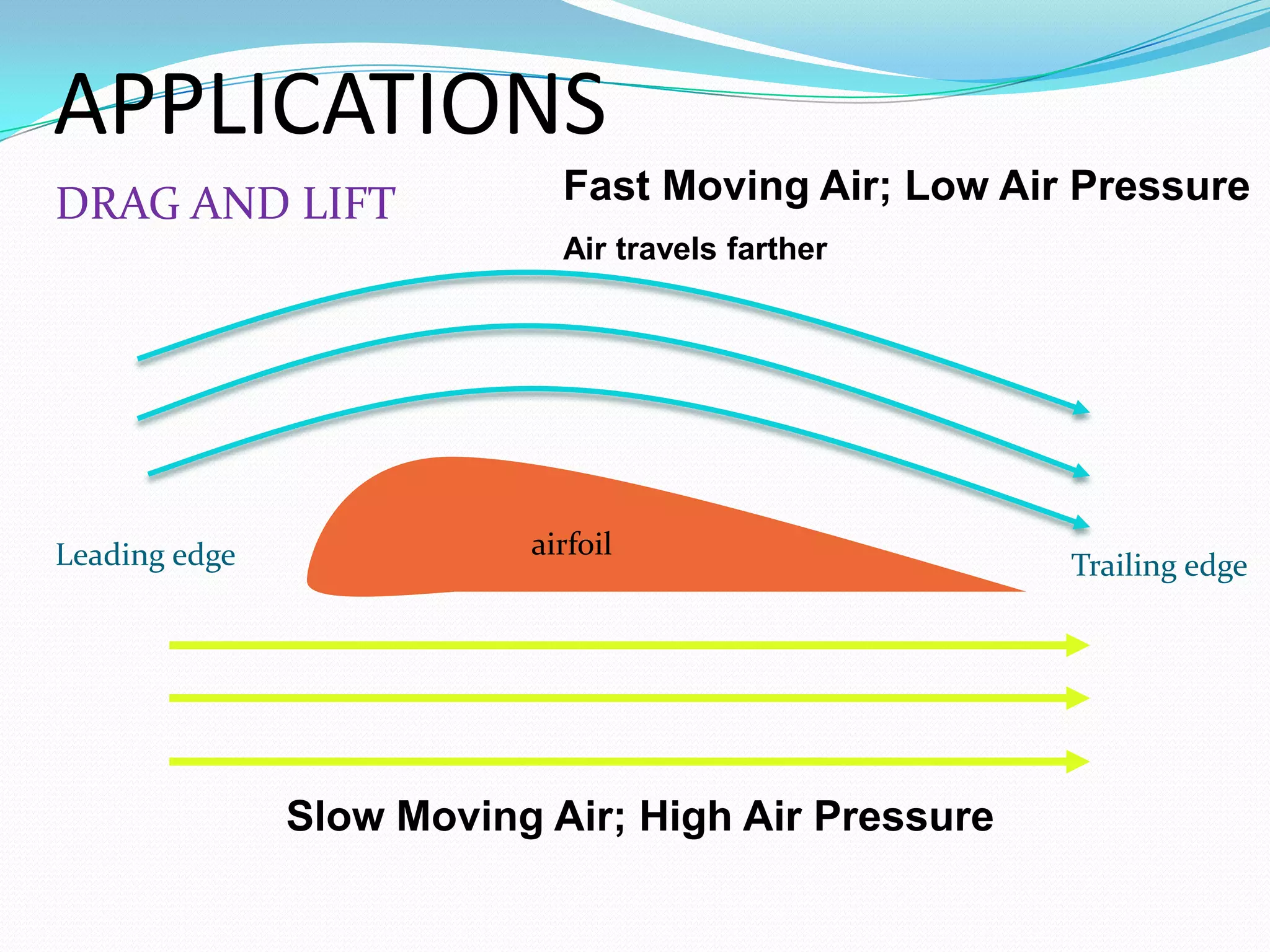
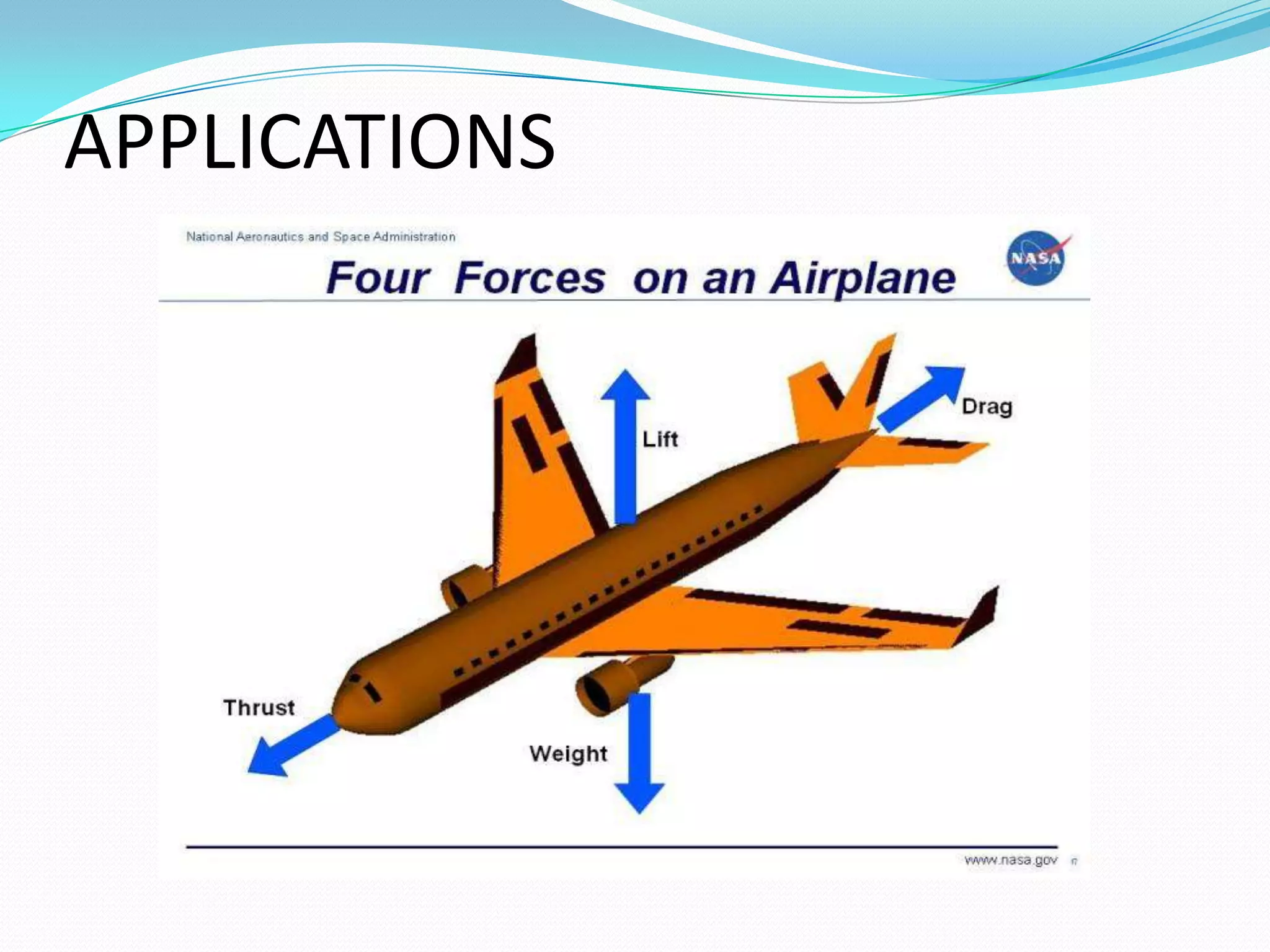
Apart from this Bernoulli’s equation is very useful in
demonstration of various aerodynamic properties like
Drag and Lift.
APPLICATIONS
DRAG AND LIFT               Fast Moving Air; Low Air Pressure
                            Air travels farther


Leading edge              airfoil
                                                    Trailing edge


               Slow Moving Air; High Air Pressure
APPLICATIONS
CONCLUSION
From the result obtained, we can
conclude that the Bernoulli’s equation is
valid for flow as it obeys the equation. As
the area decreases at a section (throat
section) velocity increases, and the
pressure decreases.
THANK YOU

Bernoulli’s Theorem

  • 1.
    S M MozakkirQuadri 10CES-54(5th SEM) JAMIA MILLIA ISLAMIA
  • 2.
    INDRODUCTION Daniel Bernoulli A Swissscientist born in 1700’s that is most famous for his work in fluid pressure. He died in 1782.
  • 3.
    BERNOULLI’S THEOREM Bernoulli’s theoremwhich is also known as Bernoulli’s principle, states that an increase in the speed of moving air or a flowing fluid is accompanied by a decrease in the air or fluid’s pressure or sum of the kinetic (velocity head), pressure(static head) and Potential energy energy of the fluid at any point remains constant, provided that the flow is steady, irrotational, and frictionless and the fluid is incompressible.
  • 4.
    BERNOULLI’S EQUATION If asection of pipe is as shown above, then Bernoulli’s Equation can be written as;
  • 5.
    BERNOULLI’S EQUATION Where (inSI units) P= static pressure of fluid at the cross section; ρ= density of the flowing fluid in; g= acceleration due to gravity; v= mean velocity of fluid flow at the cross section in; h= elevation head of the center of the cross section with respect to a datum.
  • 6.
    HOW TO VERIFY? Theconverging-diverging nozzle apparatus (Venturi meter) is used to show the validity of Bernoulli’s Equation. The data taken will show the presence of fluid energy losses, often attributed to friction and the turbulence and eddy currents associated with a separation of flow from the conduit walls.
  • 7.
    APPARATUSES USED  Arrangementof Venturi meter apparatus(fig.1)  Hydraulic bench(fig. 2).  Stop watch(fig.3). fig. 2 fig. 3
  • 8.
    PROCEDURE 1. Note downthe inlet, throat and outlet section areas. 2. Measure the distances of inlet, throat ant outlet section from origin. 3. Switch on the motor attached to hydraulic bench. 4. If there any water bubble is present in tube remove it by using air bleed screw. 5. Fully open the control valve. 6. Note down the reading of piezometer corresponding to the section, simultaneously note down the time required to a constant rise of water in volumetric tank(say of 10). 7. Varying the discharge and take at least six readings.
  • 9.
    OBSERVATIONS 1. Volume =1000 cm3 2.Distance of inlet section from origin= 5.5 cm 3. Distance of throat section from origin= 8.1 cm 4.Distance of outlet section from origin= 15.6 cm 5.Area of inlet section= 4.22 cm2 6.Area of throat section= 2.01 cm2 7.Area of outlet section= 4.34 cm2
  • 10.
    OBSERVATIONS PIEZOMETRIC S NO. TIME(sec) HEAD(cm) INLET THROAT OUTLET SECTION SECTION SECTION 1 90.40 19.8 17.5 19.3 2 92.90 19.9 17.3 19.2 3 101.26 19.4 17.4 18.8 4 106.00 19.4 17.4 18.8 5 110.00 19.6 17.6 19.0 6 115.65 19.2 17.6 18.8
  • 11.
    CALCULATED VALUES VELOCITY TOTAL LOSS OF VELOCITY(v) HEAD ENERGY HEAD ENERGY (cm/sec) Q (cm) (cm) (cm) (cm3/s) v1 v2 v3 v12/2g v22/2g v32/2g E1 E2 E3 E1-E2 E1-E3 110.62 26.2 55.0 25.4 0.35 1.54 0.31 20.1 19.0 19.6 1.10 0.51 107.64 25.5 53.5 24.8 0.33 1.46 0.31 20.2 18.7 19.5 1.47 0.71 98.76 23.4 49.1 22.7 0.27 1.23 0.26 19.6 18.6 19.0 1.04 0.61 94.34 22.3 46.9 21.7 0.25 1.12 0.24 19.6 18.5 19.0 1.13 0.61 90.91 21.5 45.2 20.9 0.23 1.04 0.22 19.8 18.6 19.2 1.19 0.61 86.47 20.4 43.0 19.9 0.21 0.94 0.20 19.4 18.5 19.0 0.87 0.41
  • 12.
    RESULTS It is observedfrom the calculated value that at section where area is less velocity is high and pressure is low which validates the Bernoulli’s Equation. Graphs are plotted between distance v/s piezometric head and distance v/s total energy but from the graph (B) we can observe that there is dissipation in energy at last point this is because to achieve an ideal condition practically is not possible.
  • 13.
    GRAPHS obs no. 1 obs no. 1 21 21 piezometric head(cm) Total energy (E)(cm) 19 19 17 17 0 5 10 15 20 0 5 10 15 20 Distance x(cm) Distance (x) (cm)
  • 14.
    APPLICATIONS The Bernoulli’s equationforms the basis for solving a wide variety of fluid flow problems such as jets issuing from an orifice, jet trajectory flow under a gate and over a weir, flow metering by obstruction meters, flow around submerged objects, flows associated with pumps and turbines etc. Apart from this Bernoulli’s equation is very useful in demonstration of various aerodynamic properties like Drag and Lift.
  • 15.
    APPLICATIONS DRAG AND LIFT Fast Moving Air; Low Air Pressure Air travels farther Leading edge airfoil Trailing edge Slow Moving Air; High Air Pressure
  • 16.
  • 17.
    CONCLUSION From the resultobtained, we can conclude that the Bernoulli’s equation is valid for flow as it obeys the equation. As the area decreases at a section (throat section) velocity increases, and the pressure decreases.
  • 18.