Download to read offline










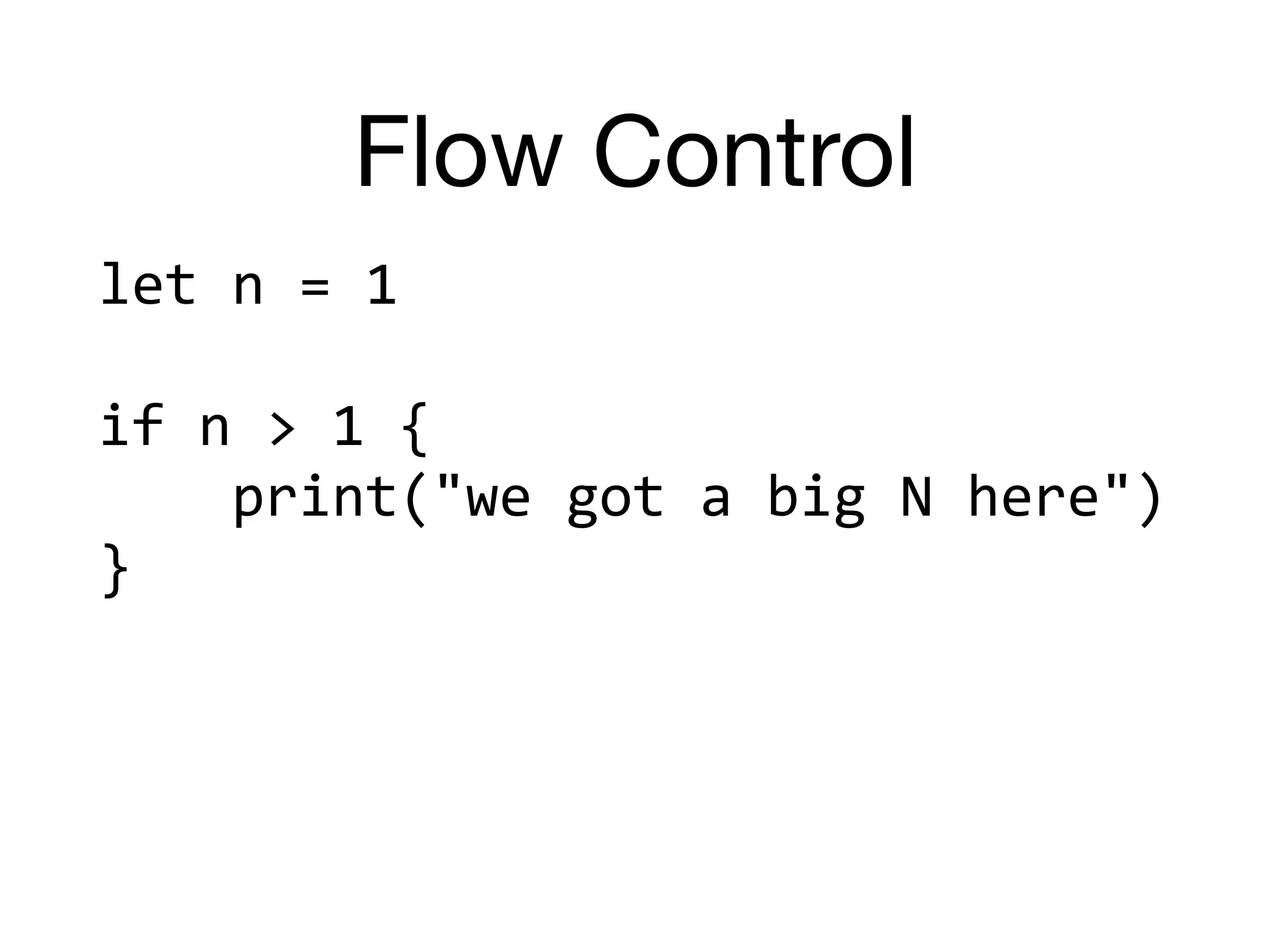
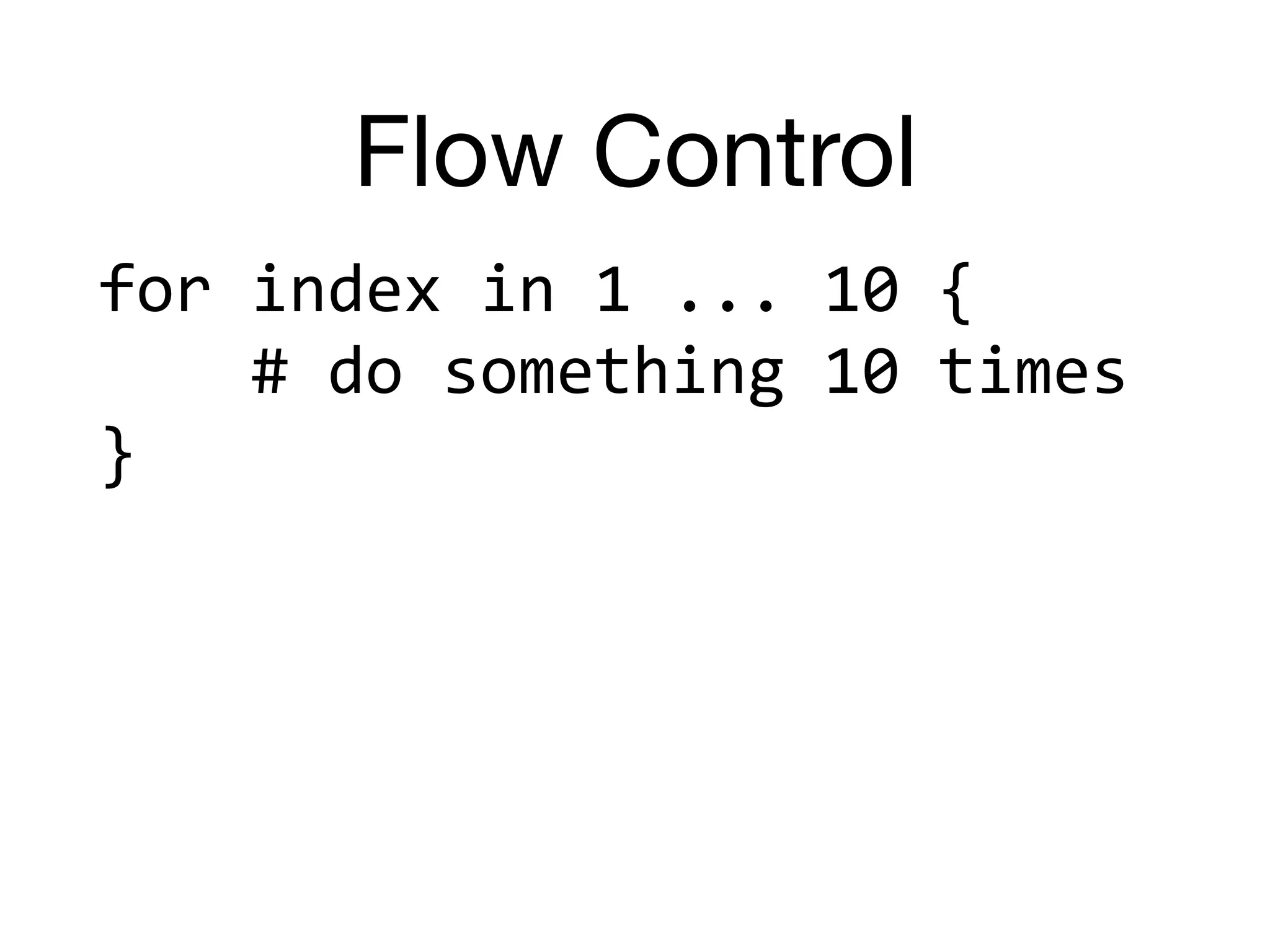
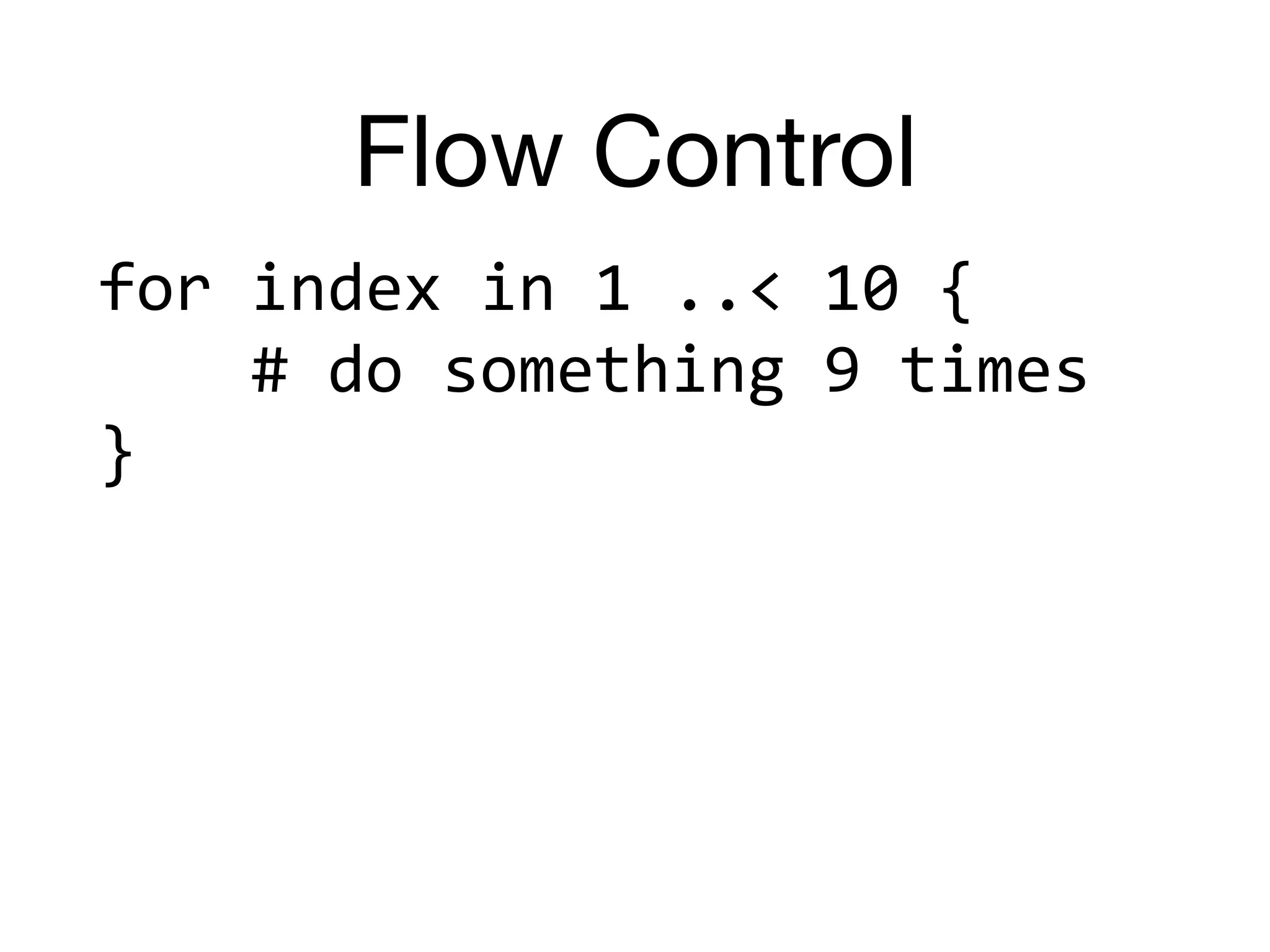
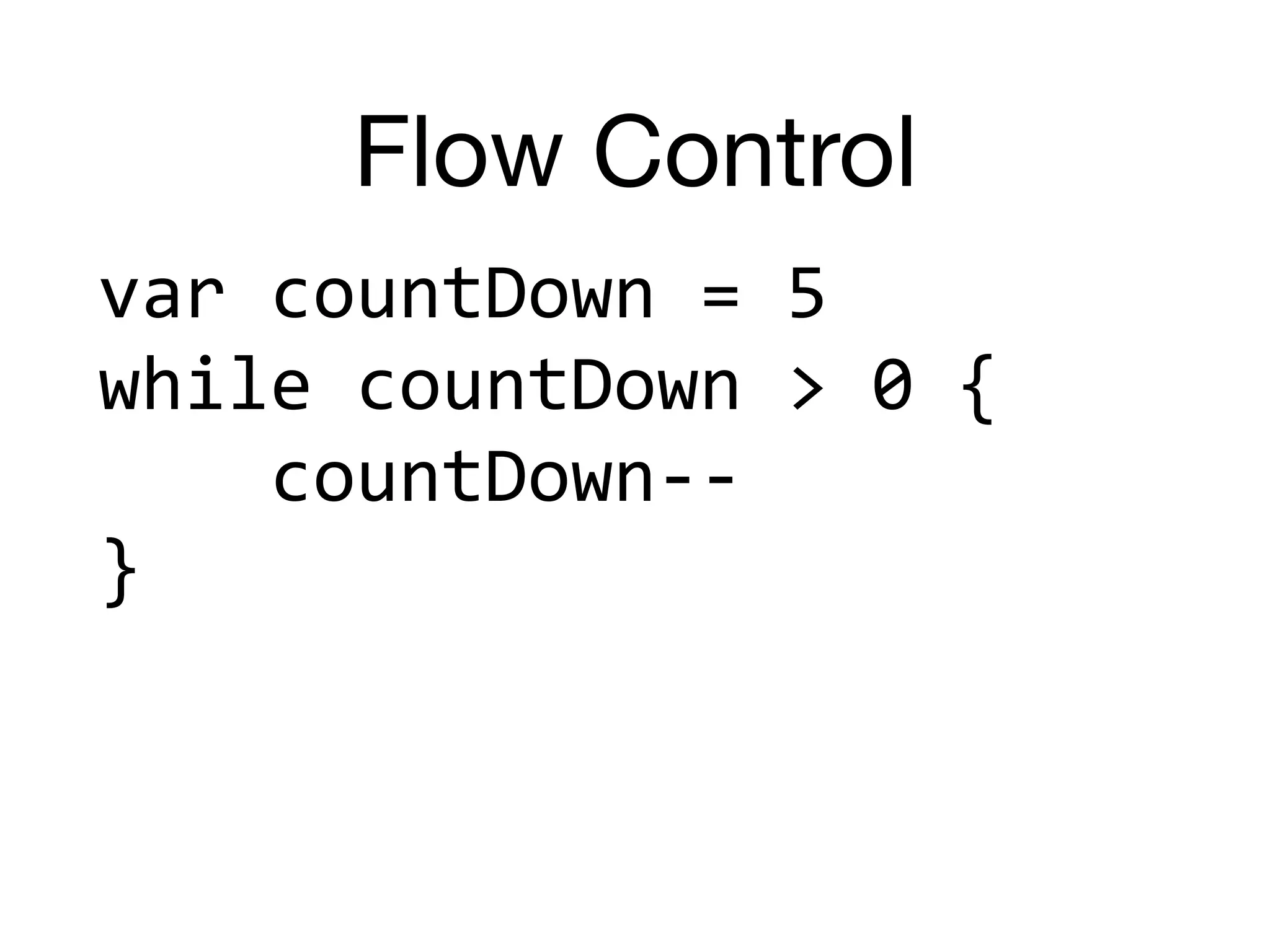
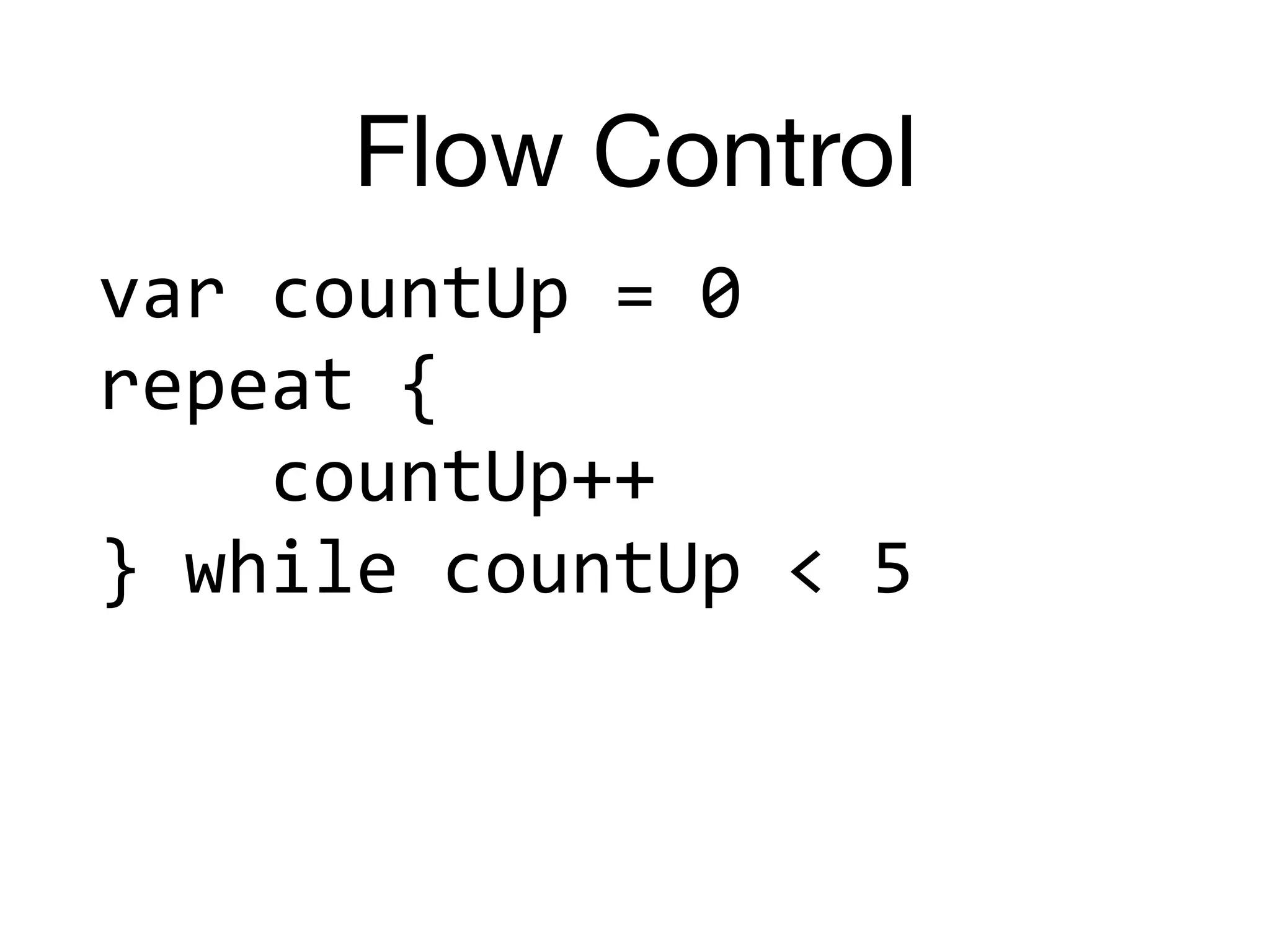
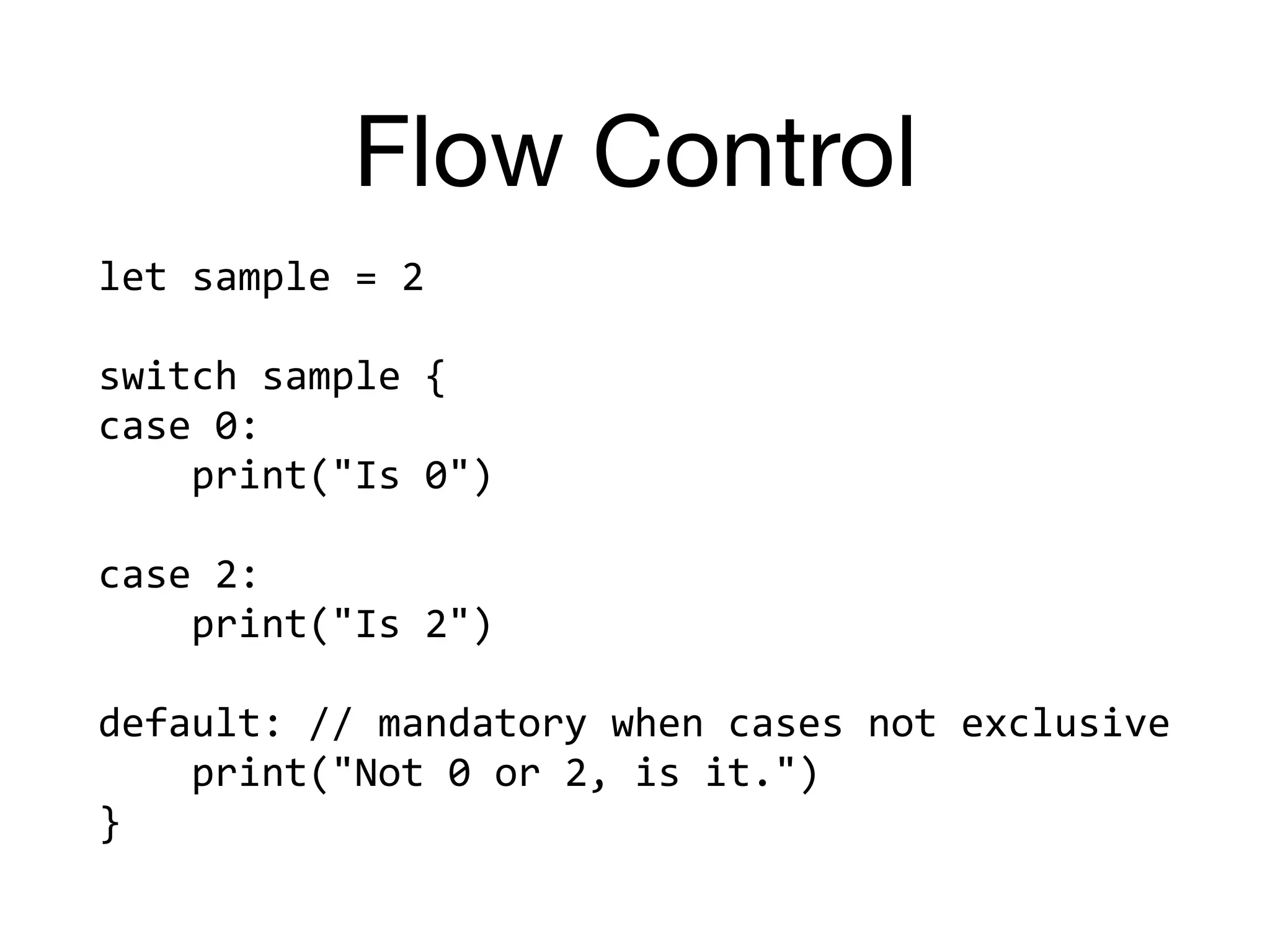
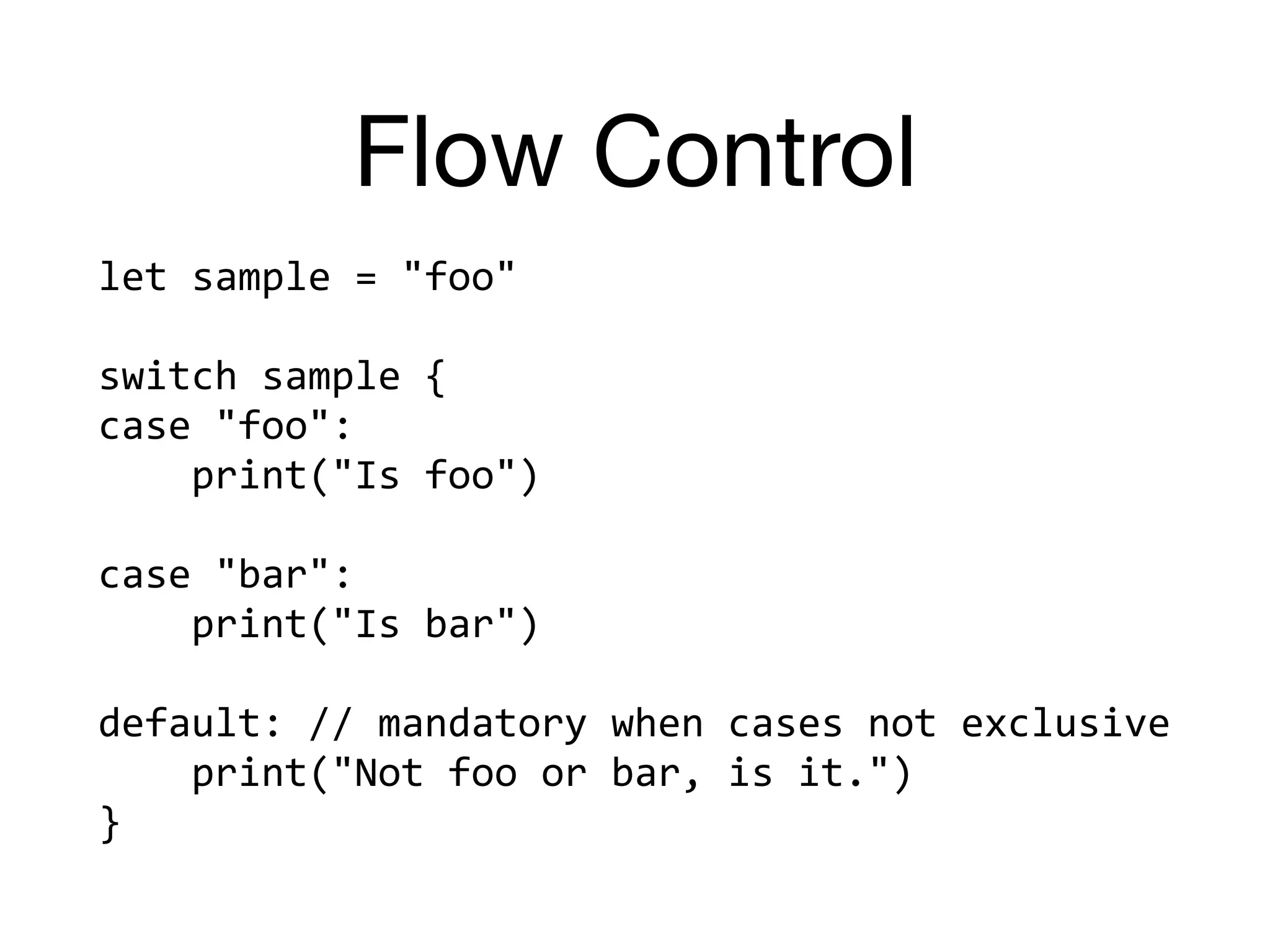
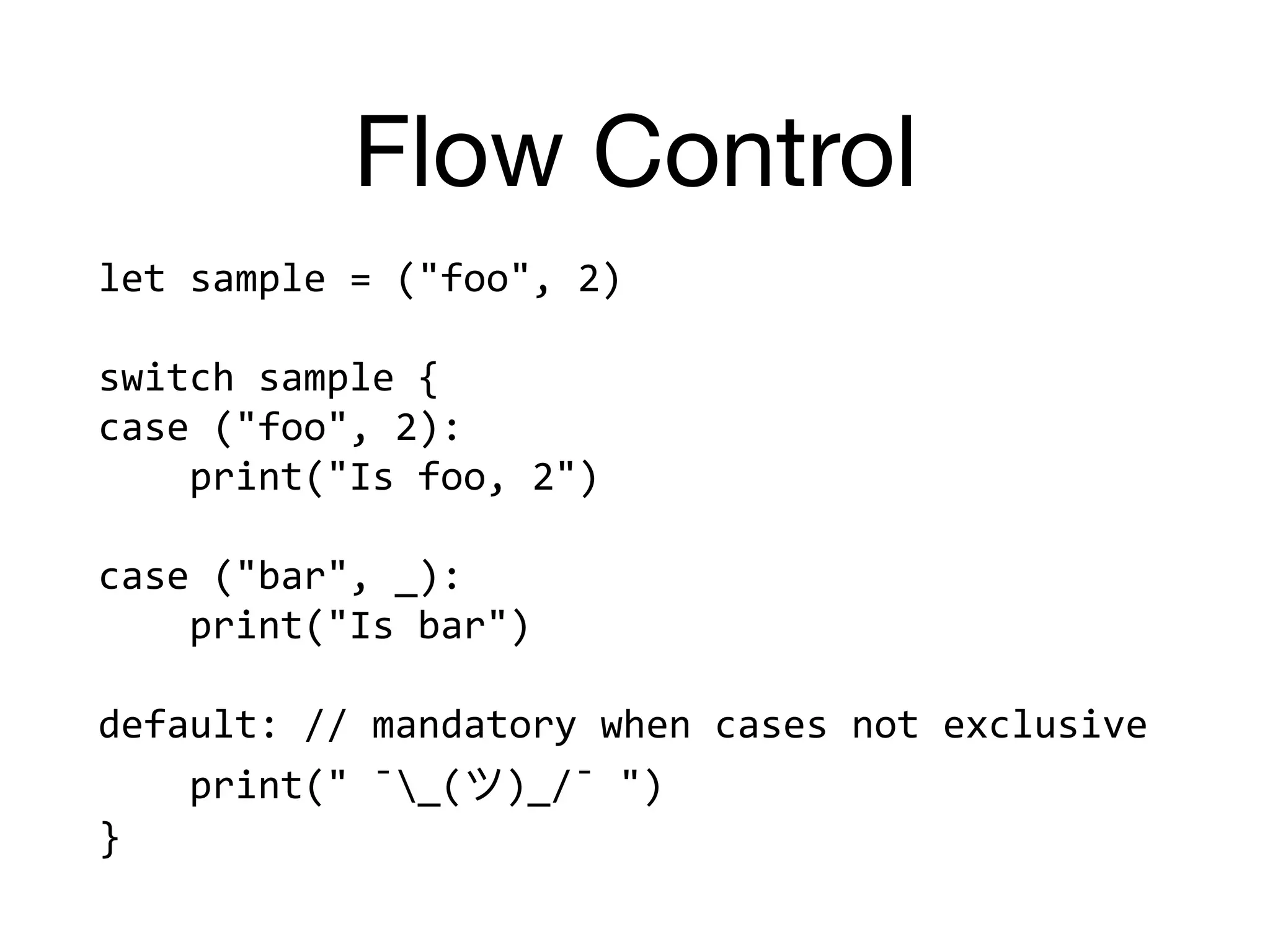
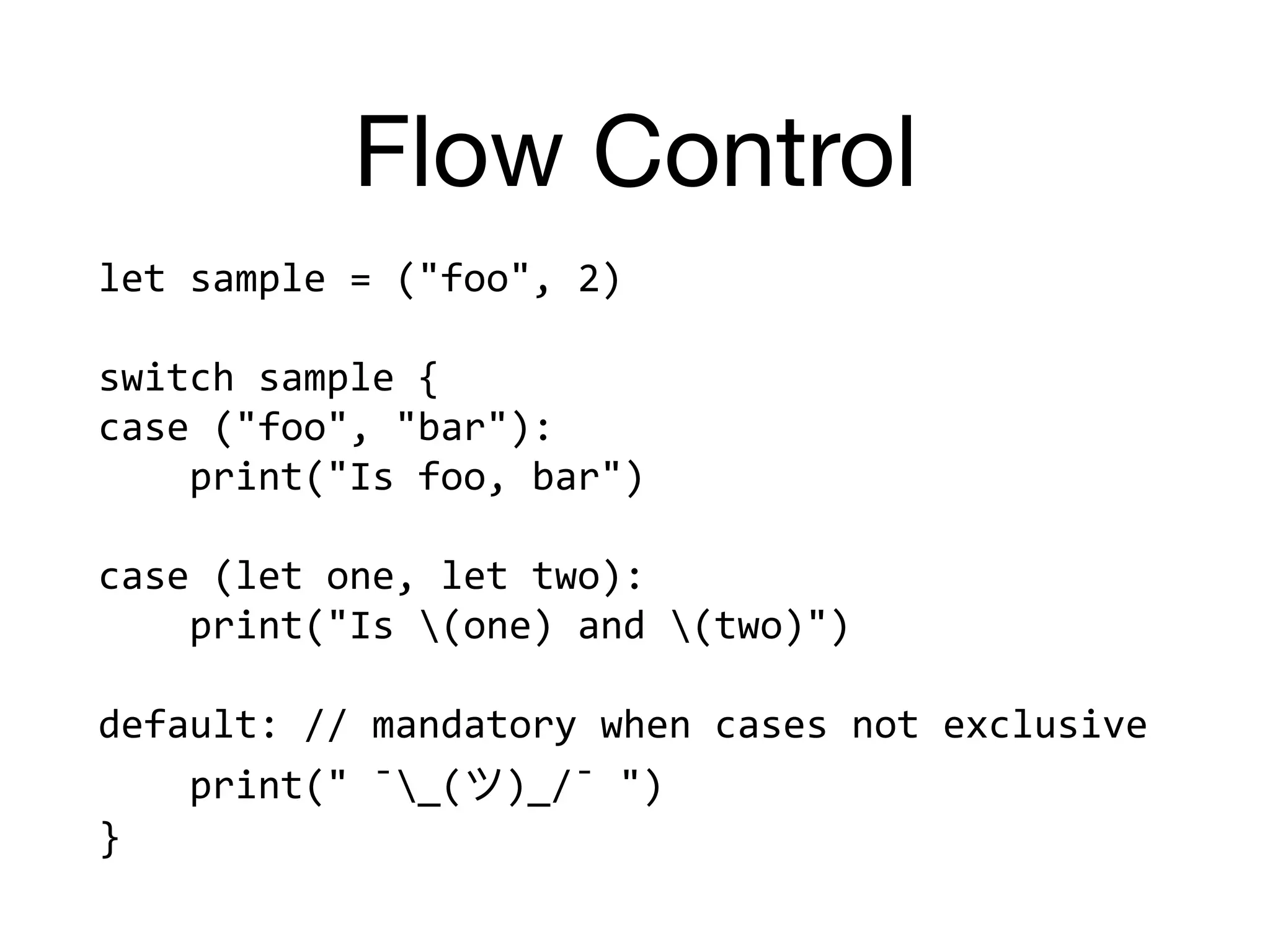
![Flow Control
let arr = [ 1, 2, 3, 4]
var sum = 0
for elem in arr {
sum += elem
}
// sum now is 10](https://image.slidesharecdn.com/intro-to-swift-ppw-160311001715/75/A-Modest-Introduction-to-Swift-34-2048.jpg)

![Arrays
let nums = [1, 2, 3]
var strs : [String]
// _can_ mix & match
let mixed = [1, "foo"]
// but you probably shouldn't](https://image.slidesharecdn.com/intro-to-swift-ppw-160311001715/75/A-Modest-Introduction-to-Swift-52-2048.jpg)
![Dictionary
let orCityCounties = [
"Salem": "Marion",
"West Salem": "Polk",
]
// orCityCounties has type
// [String:String]](https://image.slidesharecdn.com/intro-to-swift-ppw-160311001715/75/A-Modest-Introduction-to-Swift-53-2048.jpg)
![Dictionary
// again can mix & match
let orCityCounties = [
"Salem": "Marion",
"West Salem": 2,
]
// orCityCounties has type
// [String:NSObject]](https://image.slidesharecdn.com/intro-to-swift-ppw-160311001715/75/A-Modest-Introduction-to-Swift-54-2048.jpg)
![Sets
var petSet :Set = [ "cat", "dog",
"fish", "dog"]
petSet.count // returns 3](https://image.slidesharecdn.com/intro-to-swift-ppw-160311001715/75/A-Modest-Introduction-to-Swift-56-2048.jpg)
![Closures
let numbers = [2,1,56,32,120,13]
var sorted = numbers.sort({
(n1: Int, n2: Int) -> Bool in return n2 > n1
})
// sorted = [1, 2, 13, 32, 56, 120]](https://image.slidesharecdn.com/intro-to-swift-ppw-160311001715/75/A-Modest-Introduction-to-Swift-65-2048.jpg)
![Closures
let numbers = [2,1,56,32,120,13]
var sorted = numbers.sort({
(n1: Int, n2: Int) -> Bool in return n2 > n1
})
// sorted = [1, 2, 13, 32, 56, 120]](https://image.slidesharecdn.com/intro-to-swift-ppw-160311001715/75/A-Modest-Introduction-to-Swift-66-2048.jpg)
![Closures
let numbers = [2,1,56,32,120,13]
var sorted = numbers.sort({
(n1: Int, n2: Int) -> Bool in return n2 > n1
})
// sorted = [1, 2, 13, 32, 56, 120]](https://image.slidesharecdn.com/intro-to-swift-ppw-160311001715/75/A-Modest-Introduction-to-Swift-67-2048.jpg)
![Closures
let numbers = [2,1,56,32,120,13]
var sorted = numbers.sort({
(n1: Int, n2: Int) -> Bool in return n2 > n1
})
// sorted = [1, 2, 13, 32, 56, 120]](https://image.slidesharecdn.com/intro-to-swift-ppw-160311001715/75/A-Modest-Introduction-to-Swift-68-2048.jpg)
![Closures
let numbers = [2,1,56,32,120,13]
// inferred param & return types
var sorted = numbers.sort({n1, n2 in return n2 > n1})
// sorted = [1, 2, 13, 32, 56, 120]](https://image.slidesharecdn.com/intro-to-swift-ppw-160311001715/75/A-Modest-Introduction-to-Swift-69-2048.jpg)
![Closures
let numbers = [2,1,56,32,120,13]
// positionally named parameters
var sorted = numbers.sort({return $0 > $1})
// sorted = [1, 2, 13, 32, 56, 120]](https://image.slidesharecdn.com/intro-to-swift-ppw-160311001715/75/A-Modest-Introduction-to-Swift-70-2048.jpg)
![Closures
let numbers = [2,1,56,32,120,13]
// when closure is last param, parens optional
var sorted = numbers.sort { $0 > $1 }
// sorted = [1, 2, 13, 32, 56, 120]](https://image.slidesharecdn.com/intro-to-swift-ppw-160311001715/75/A-Modest-Introduction-to-Swift-71-2048.jpg)


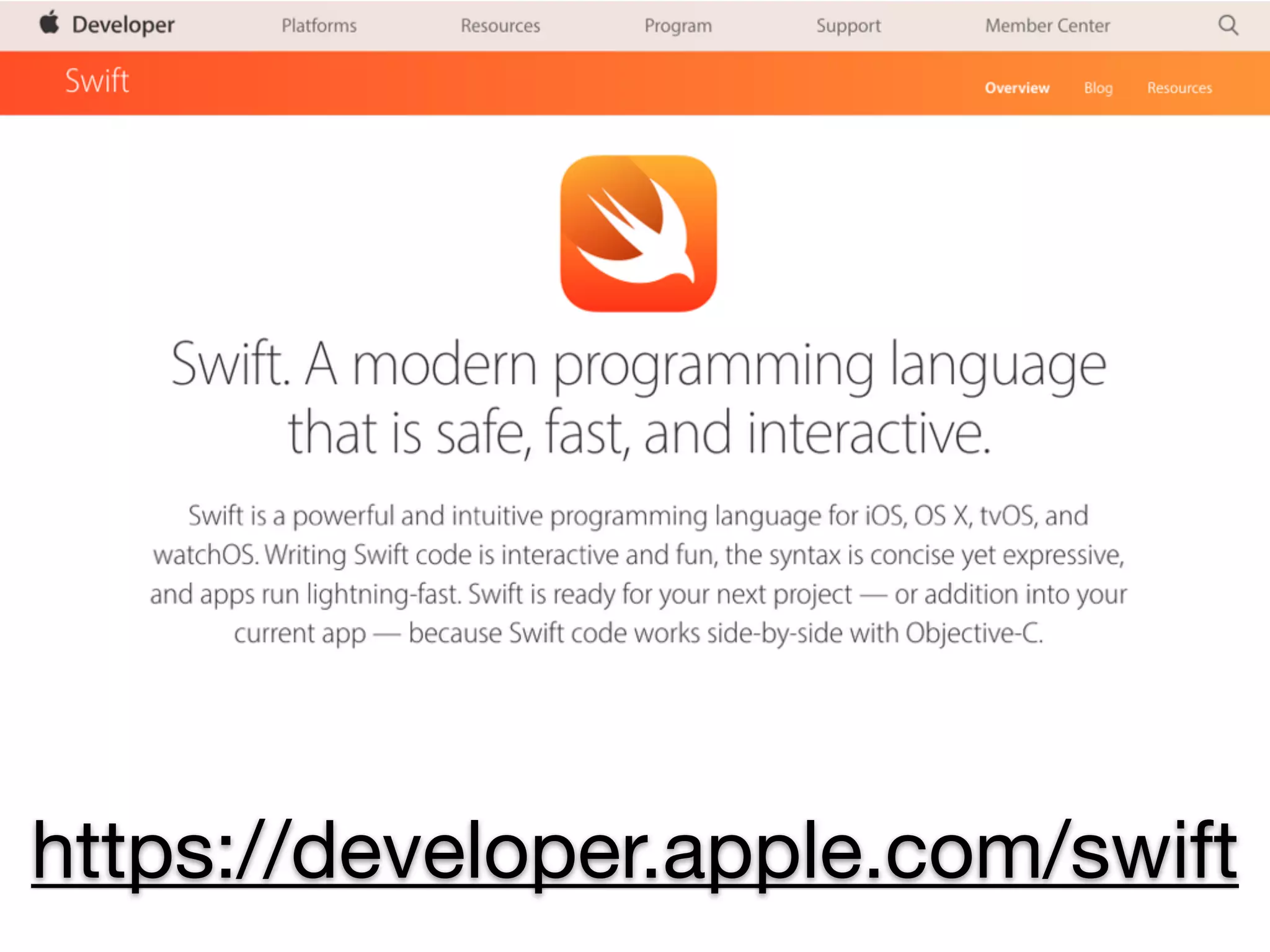


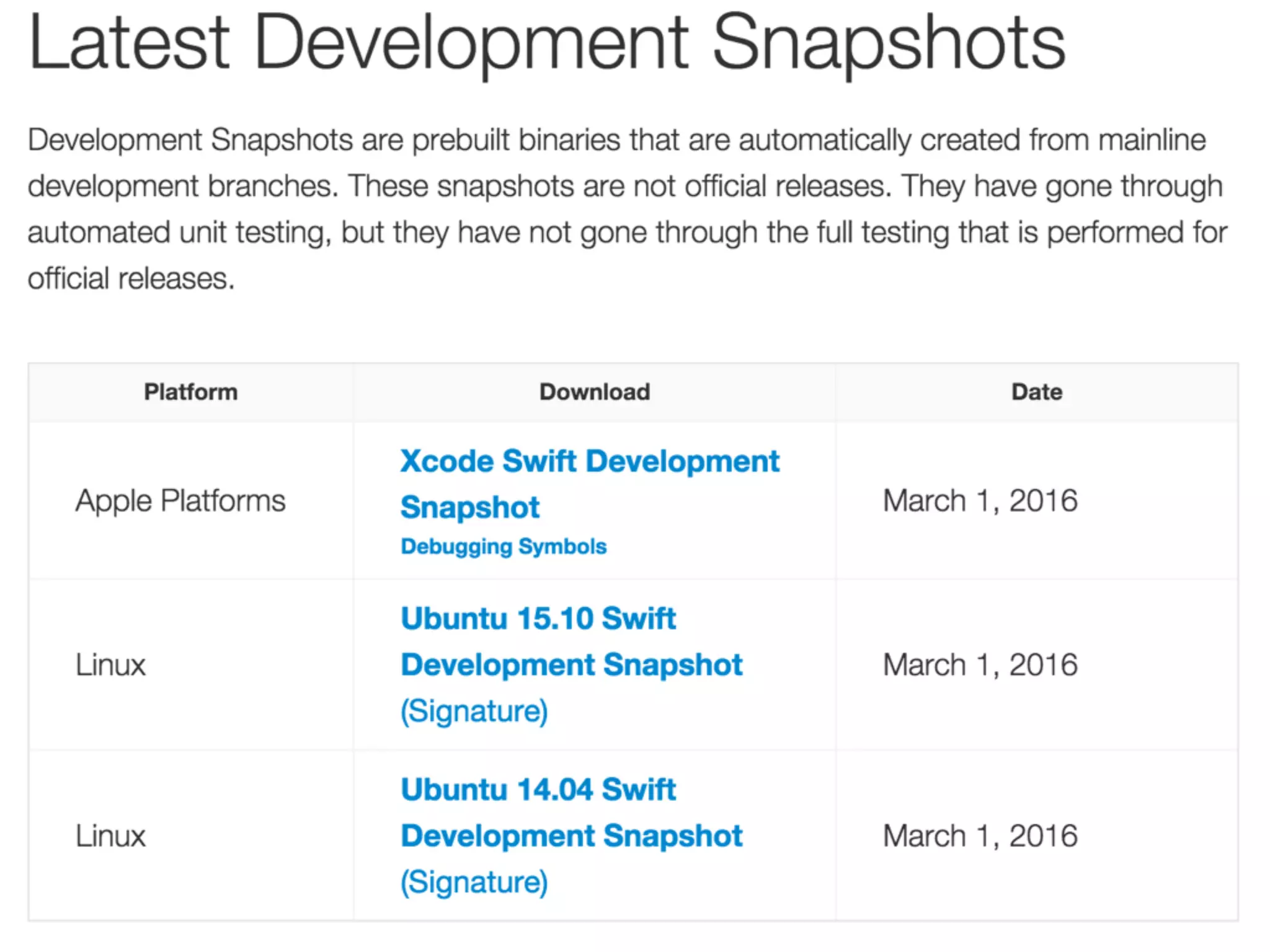
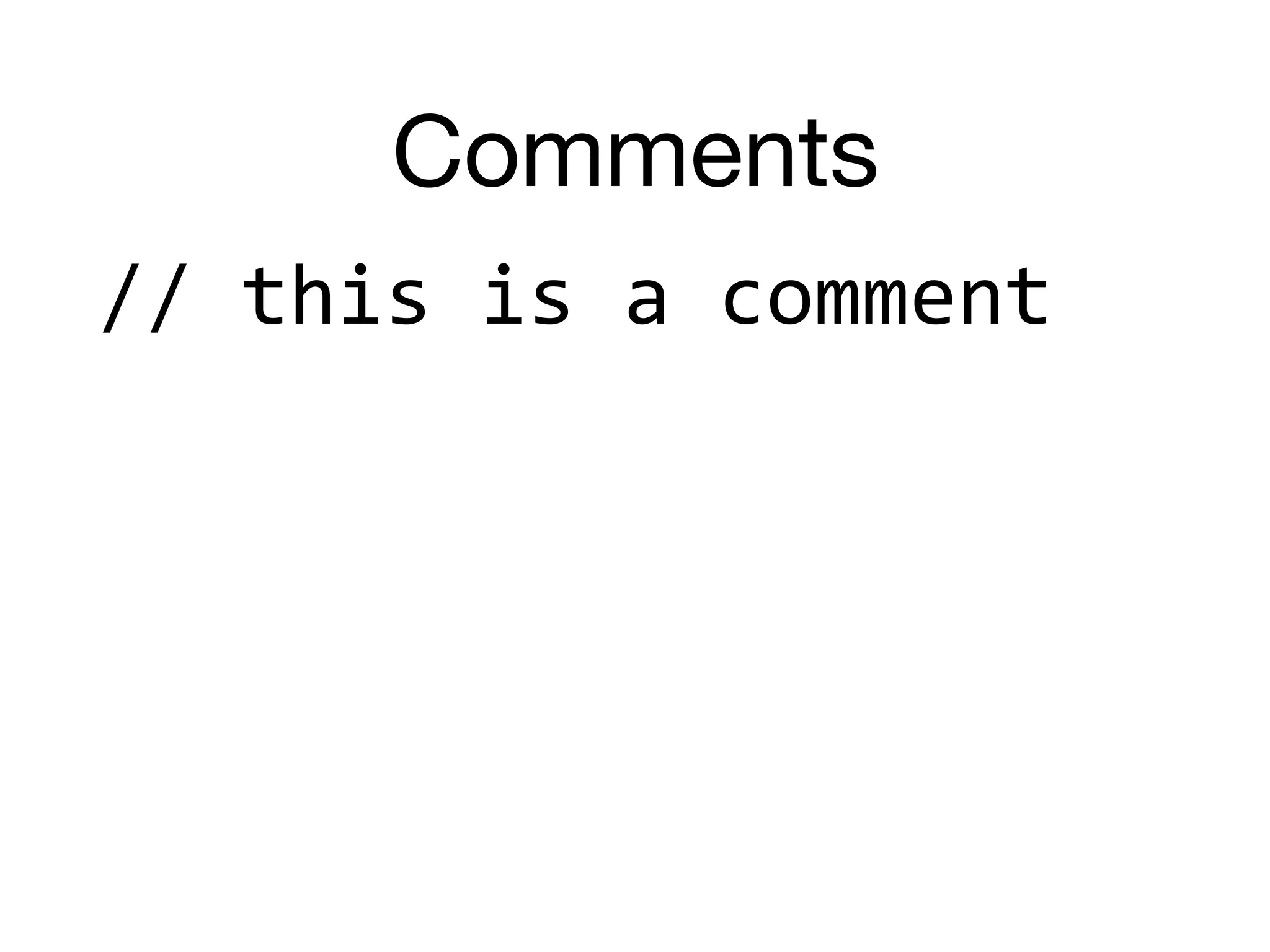
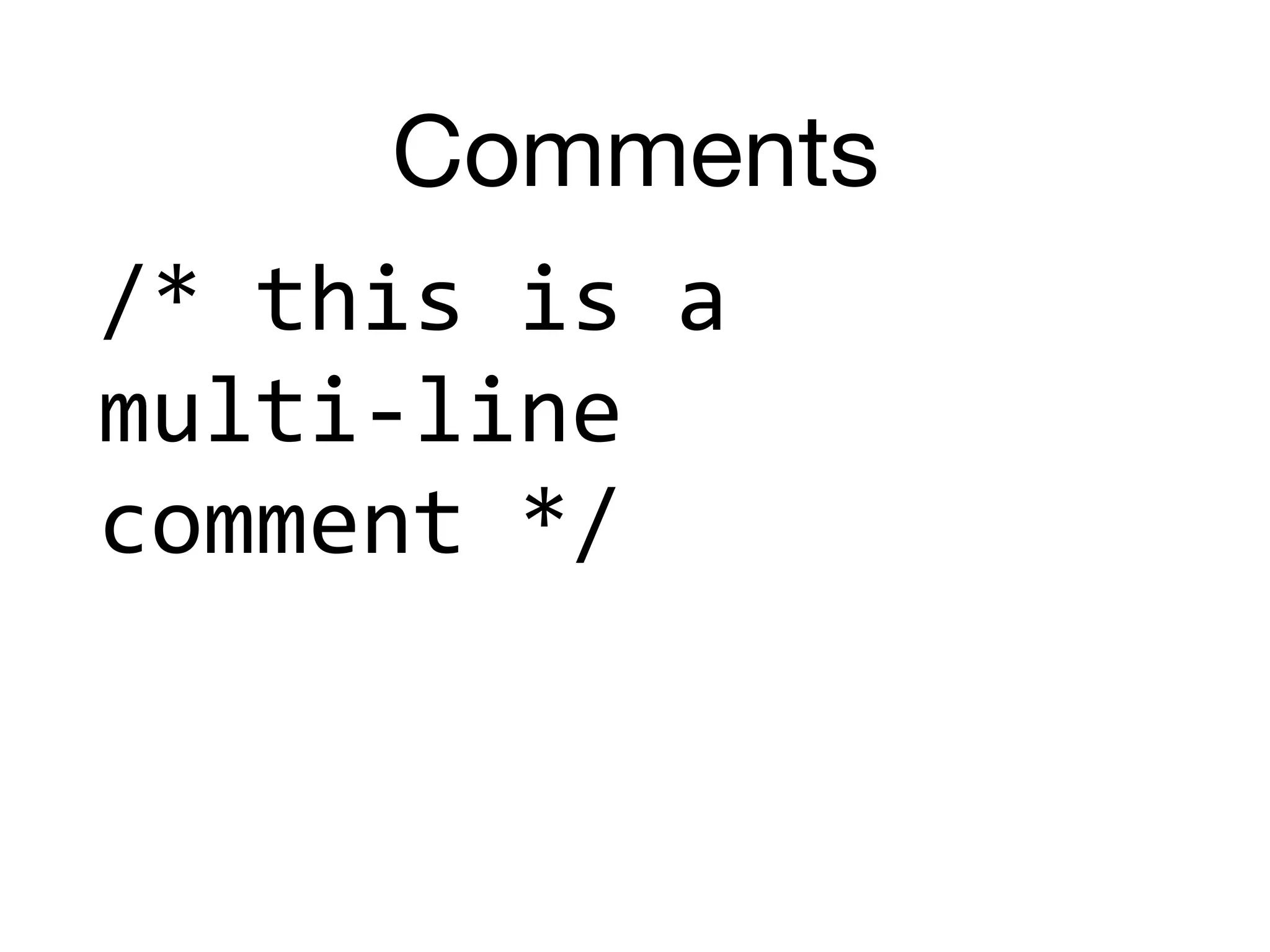
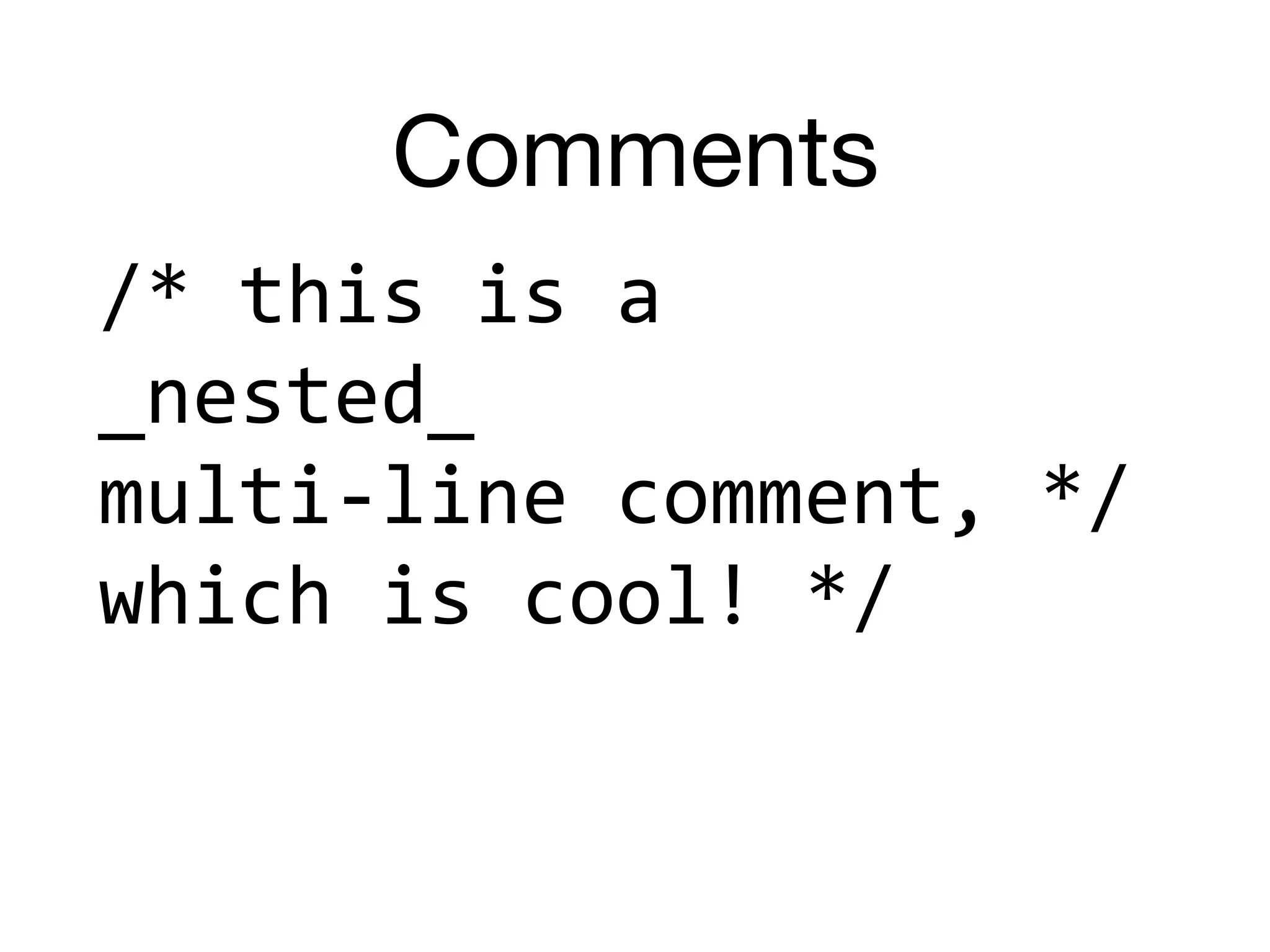
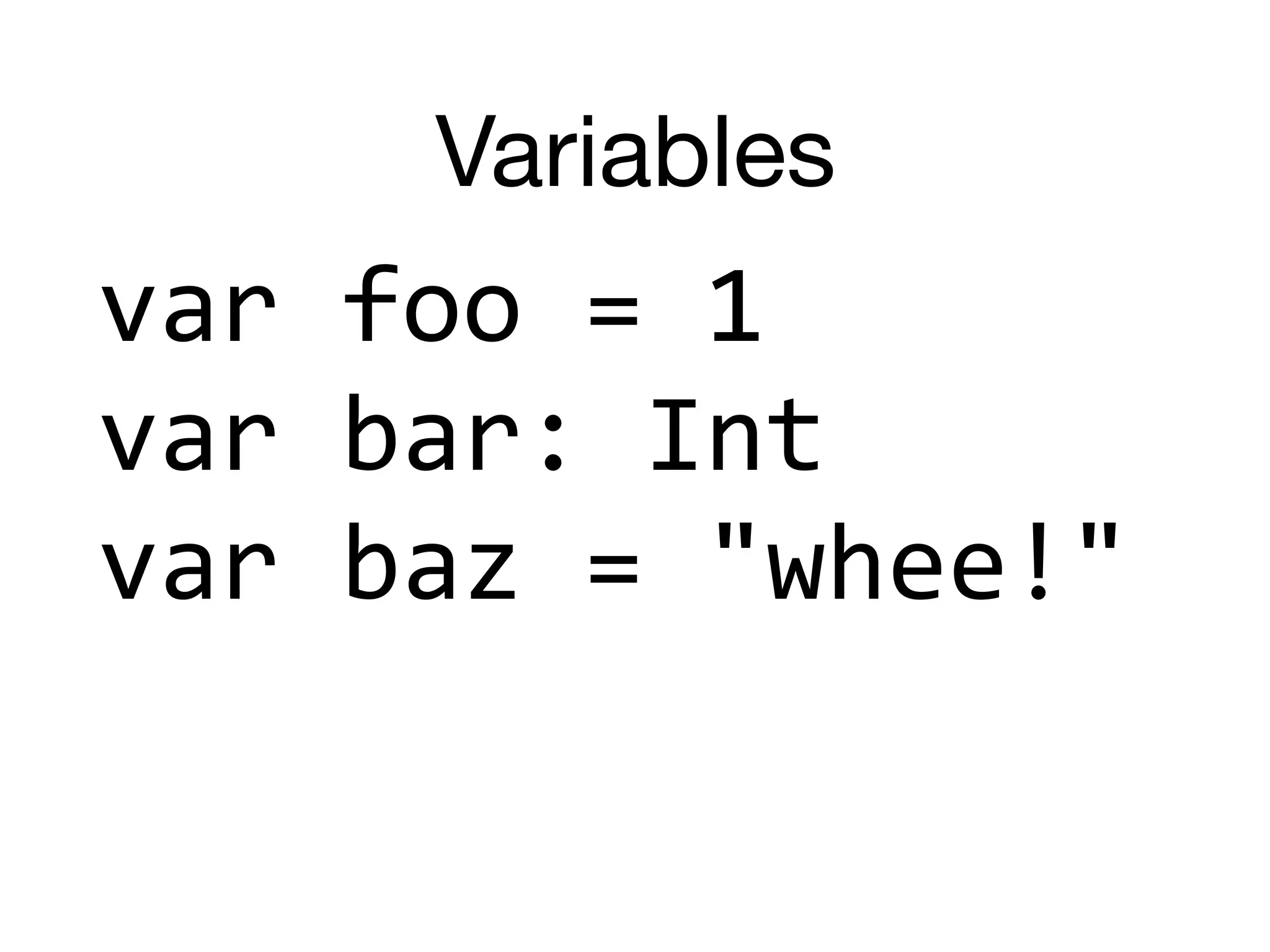
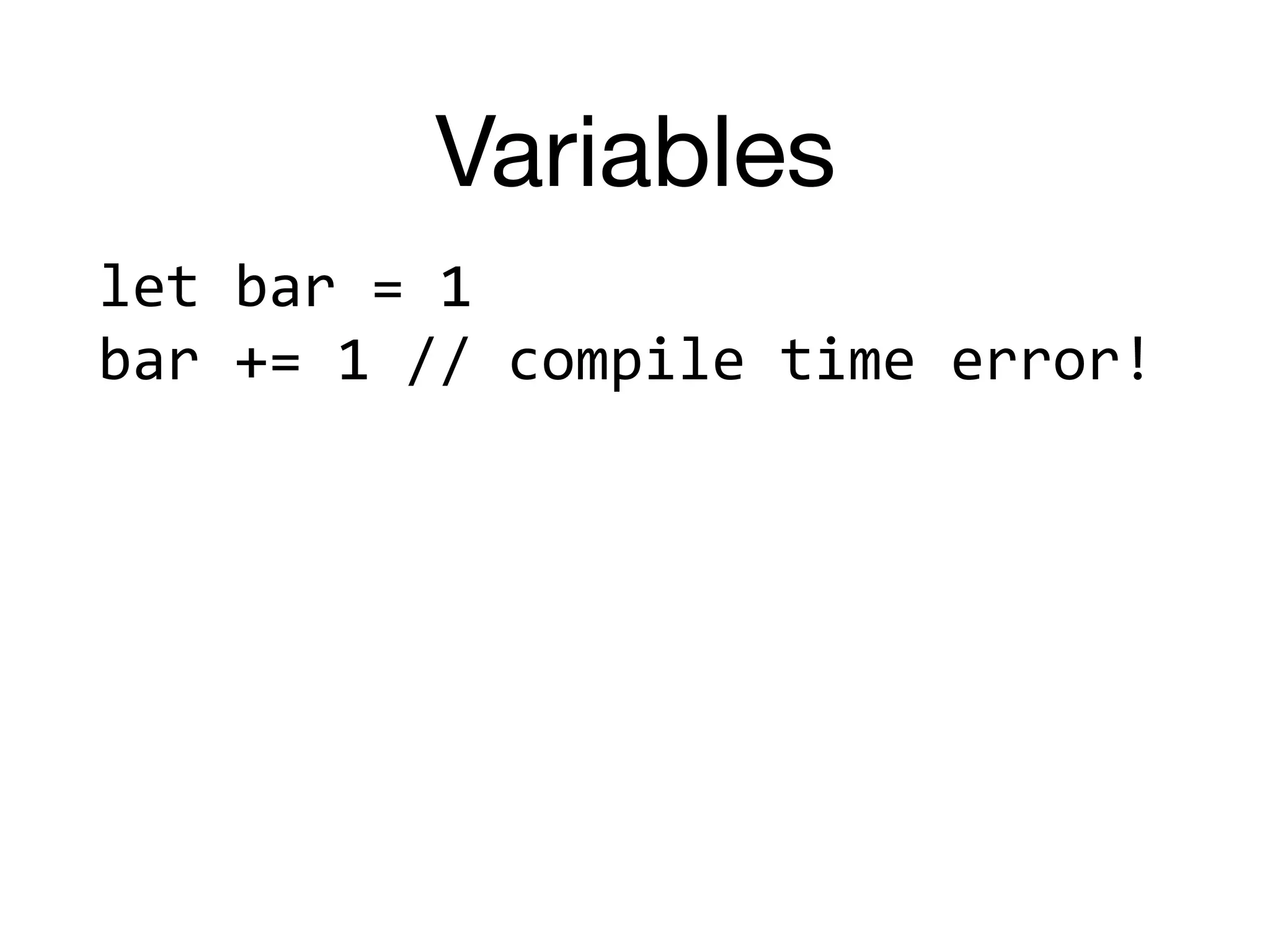
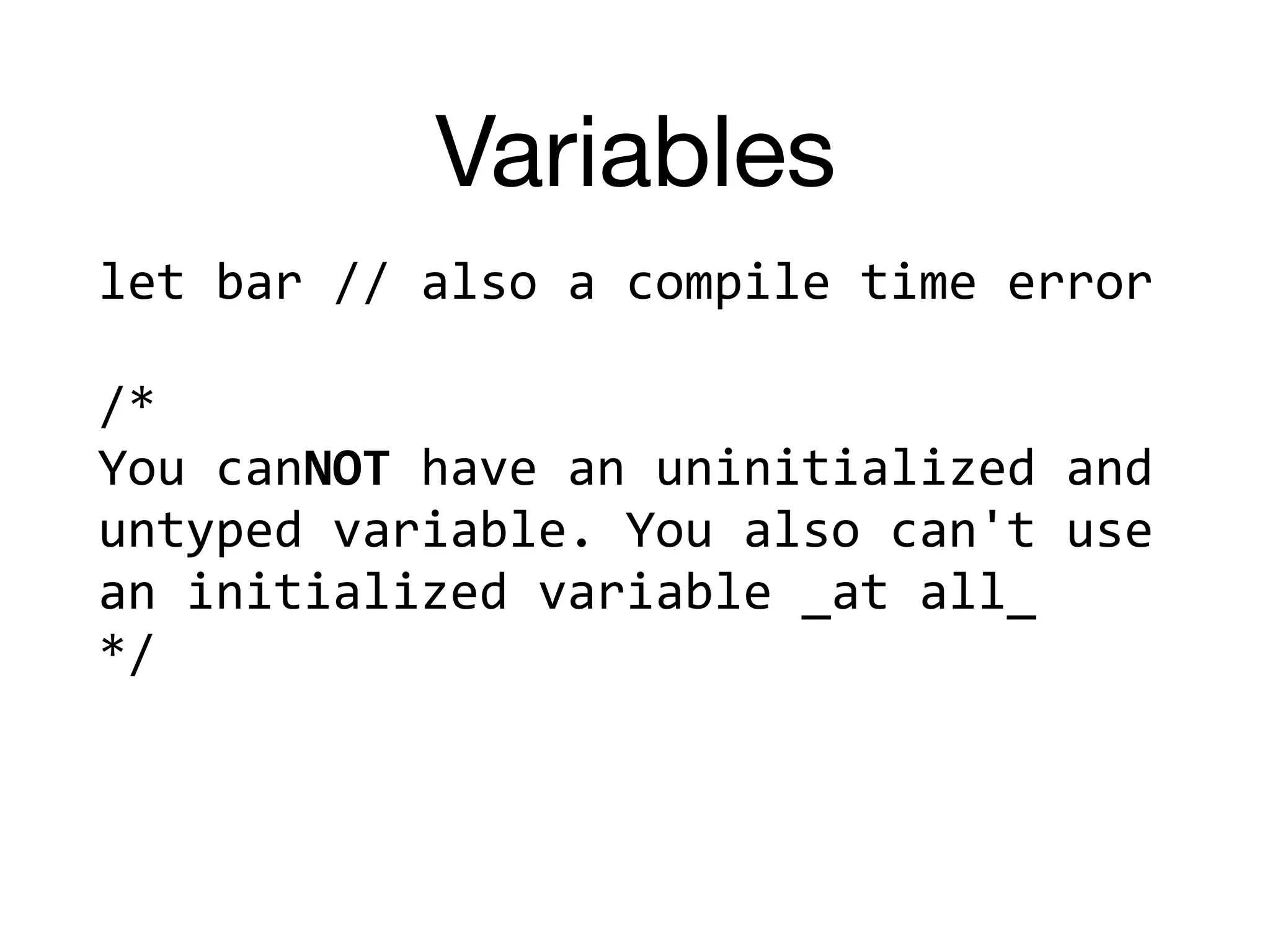
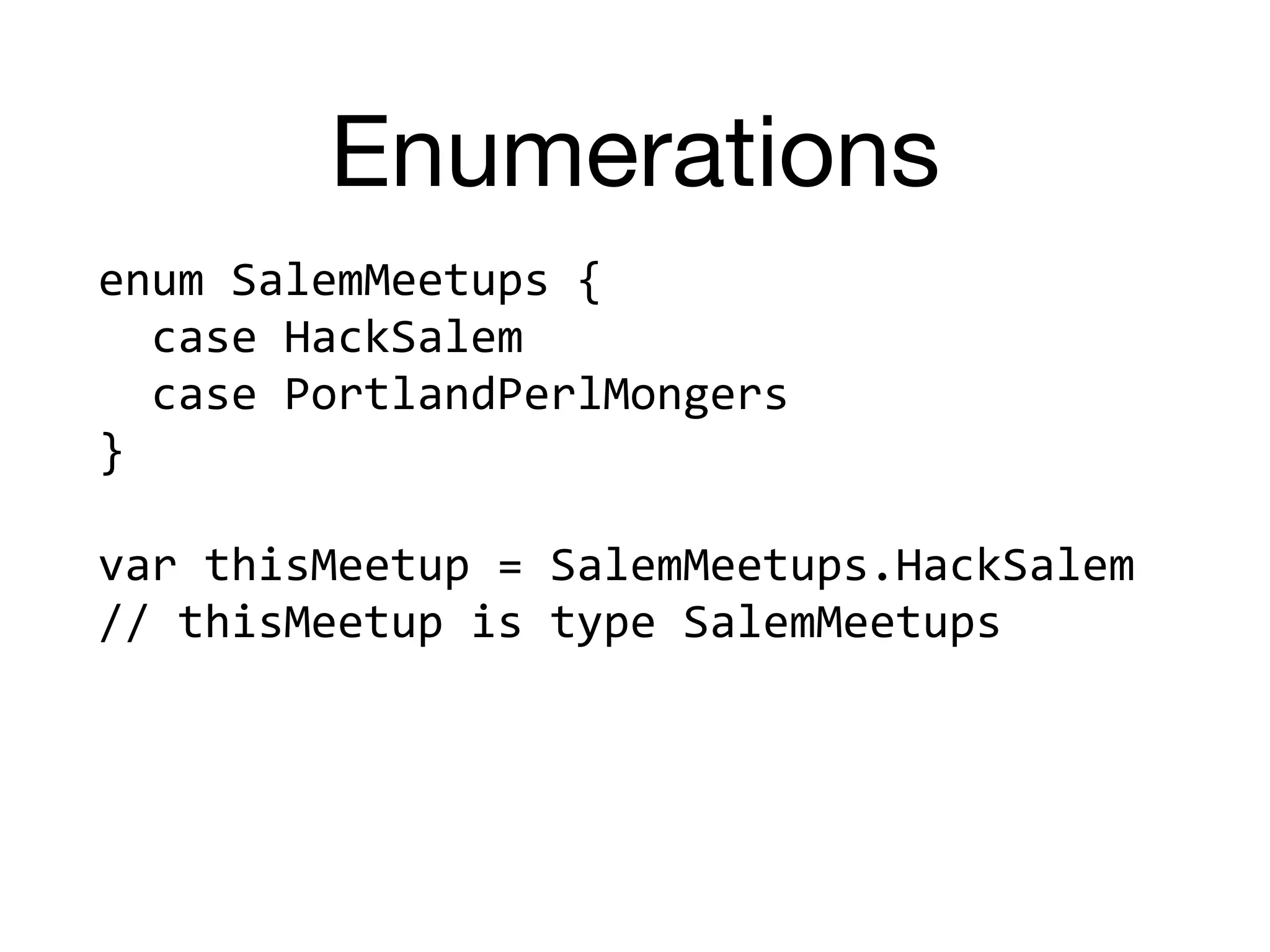
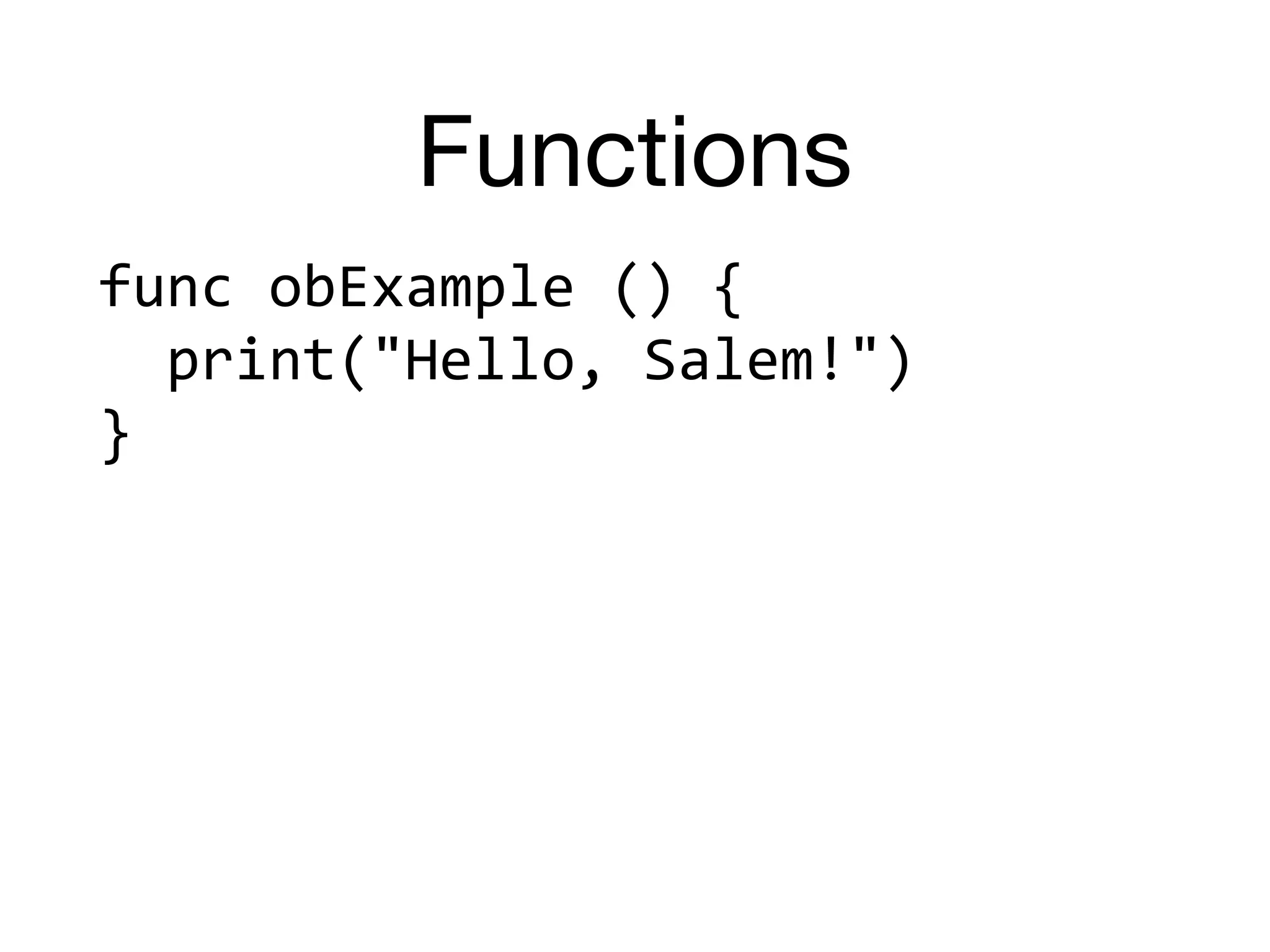
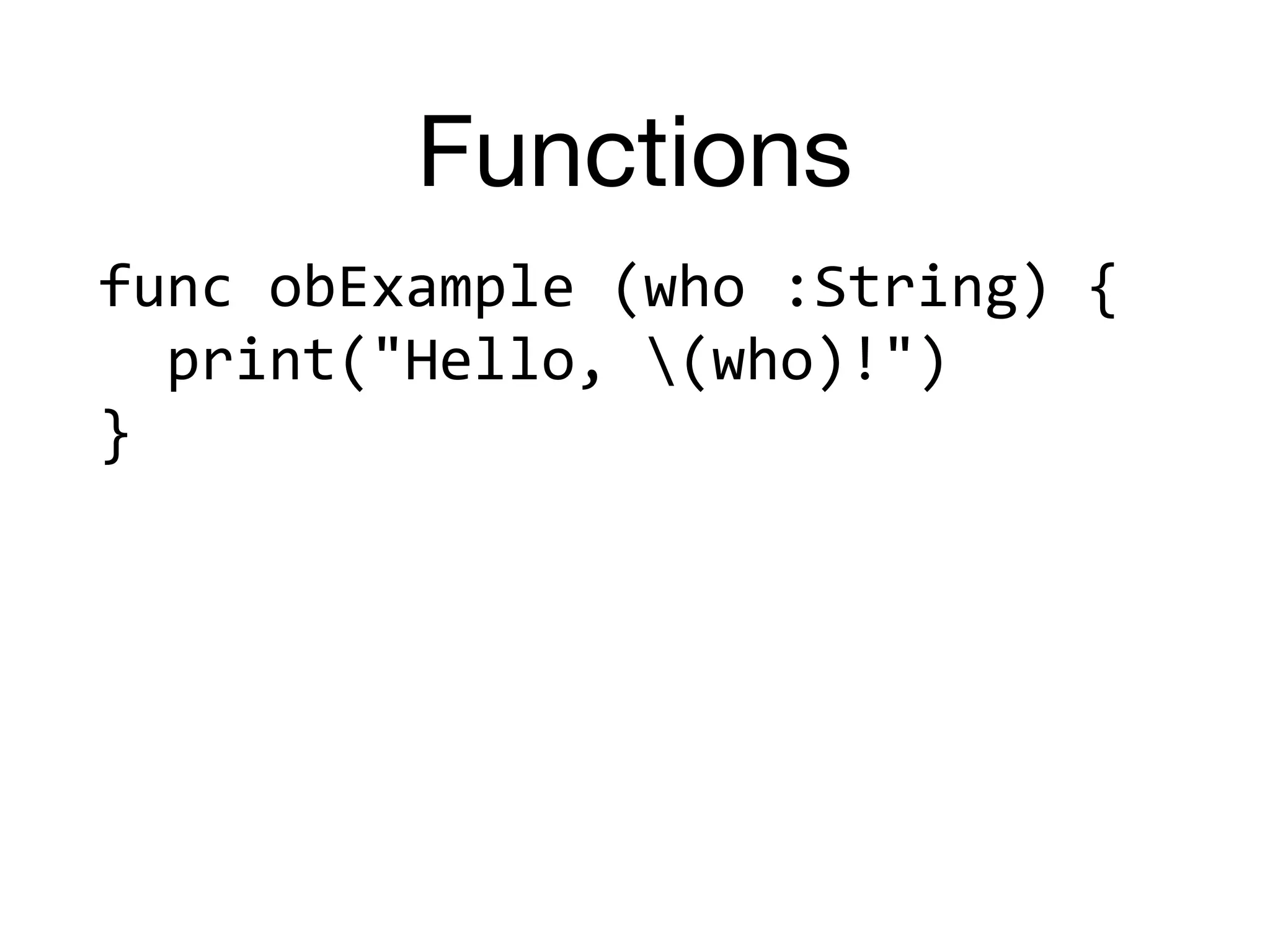
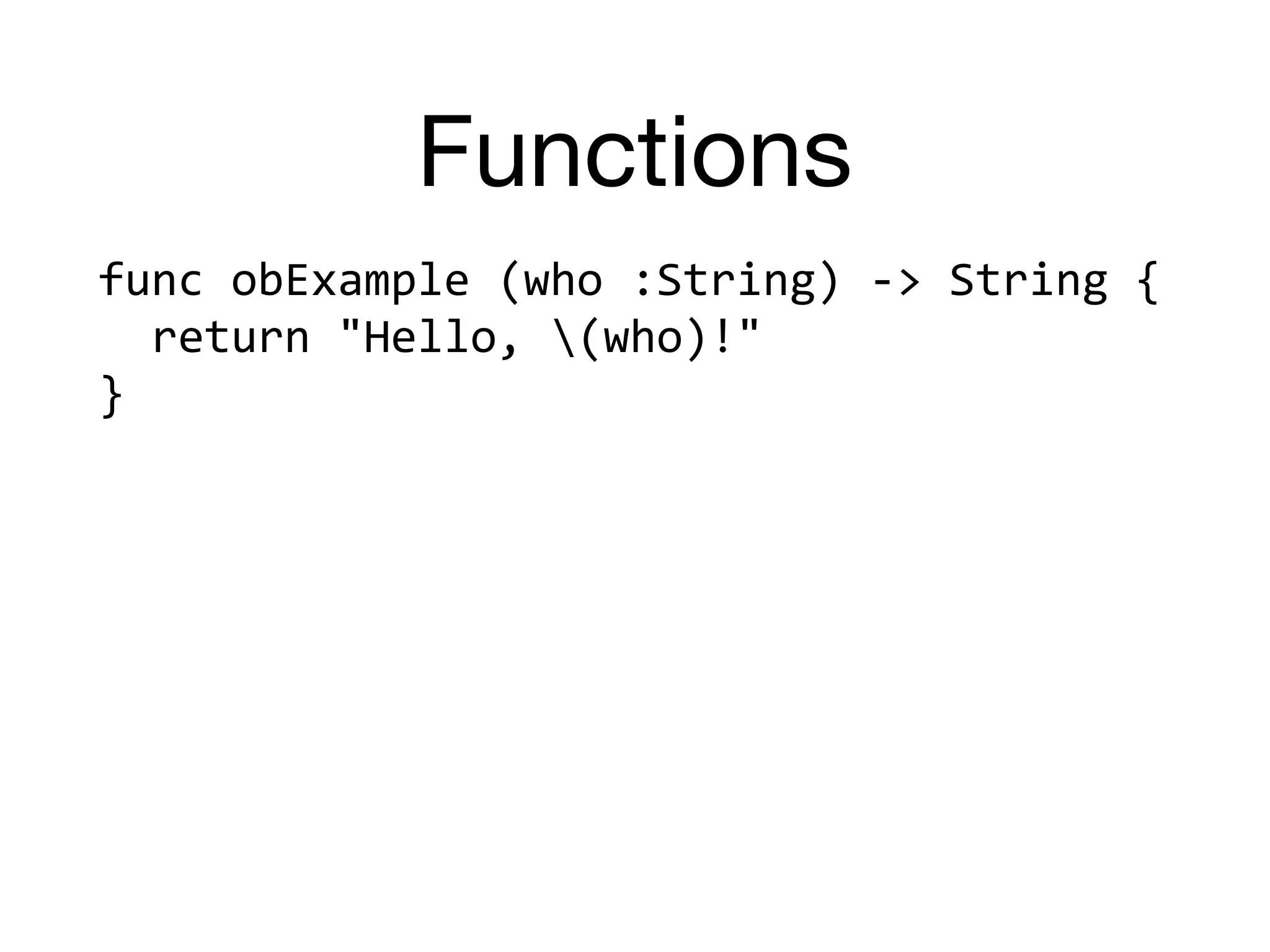
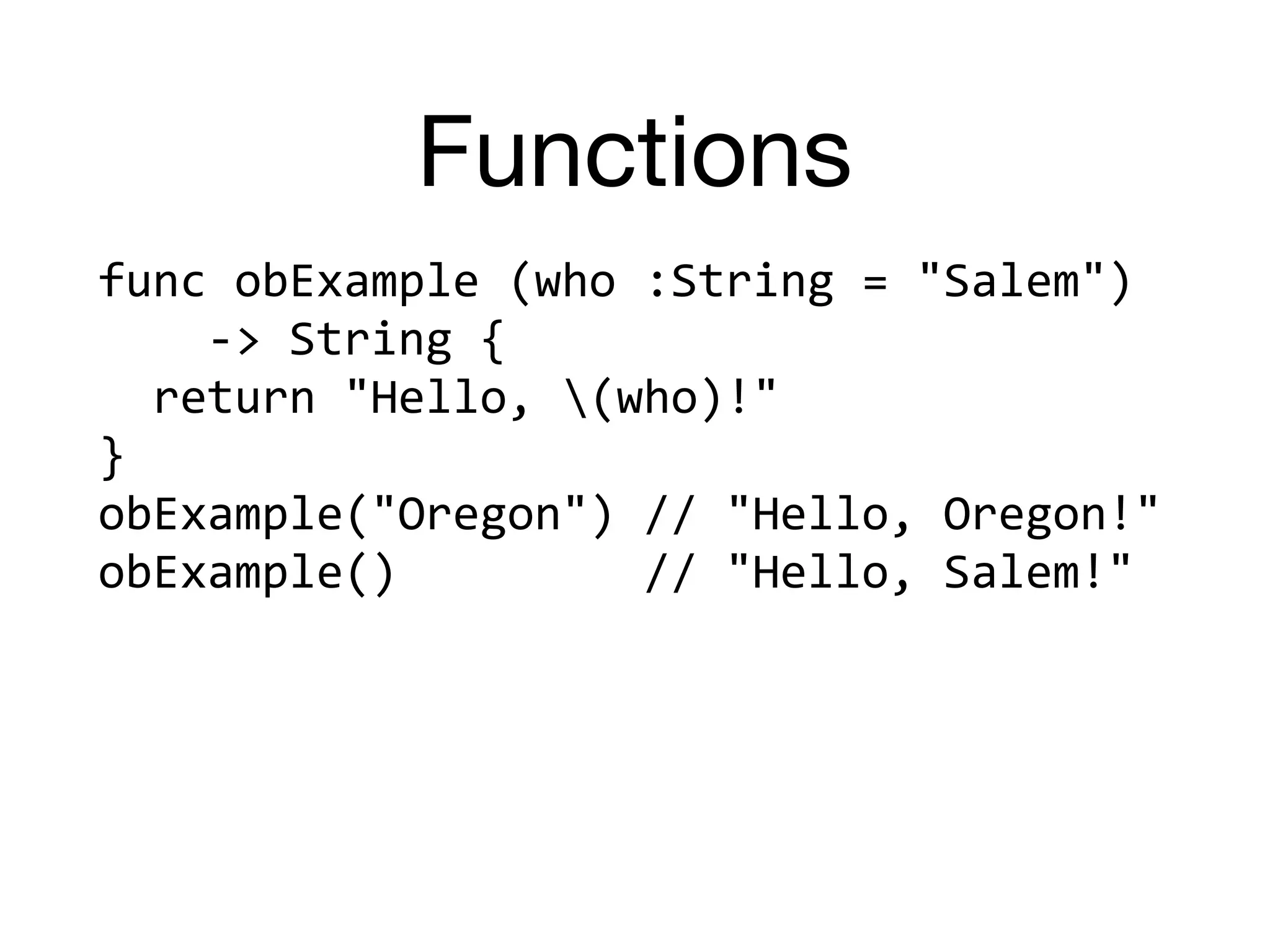
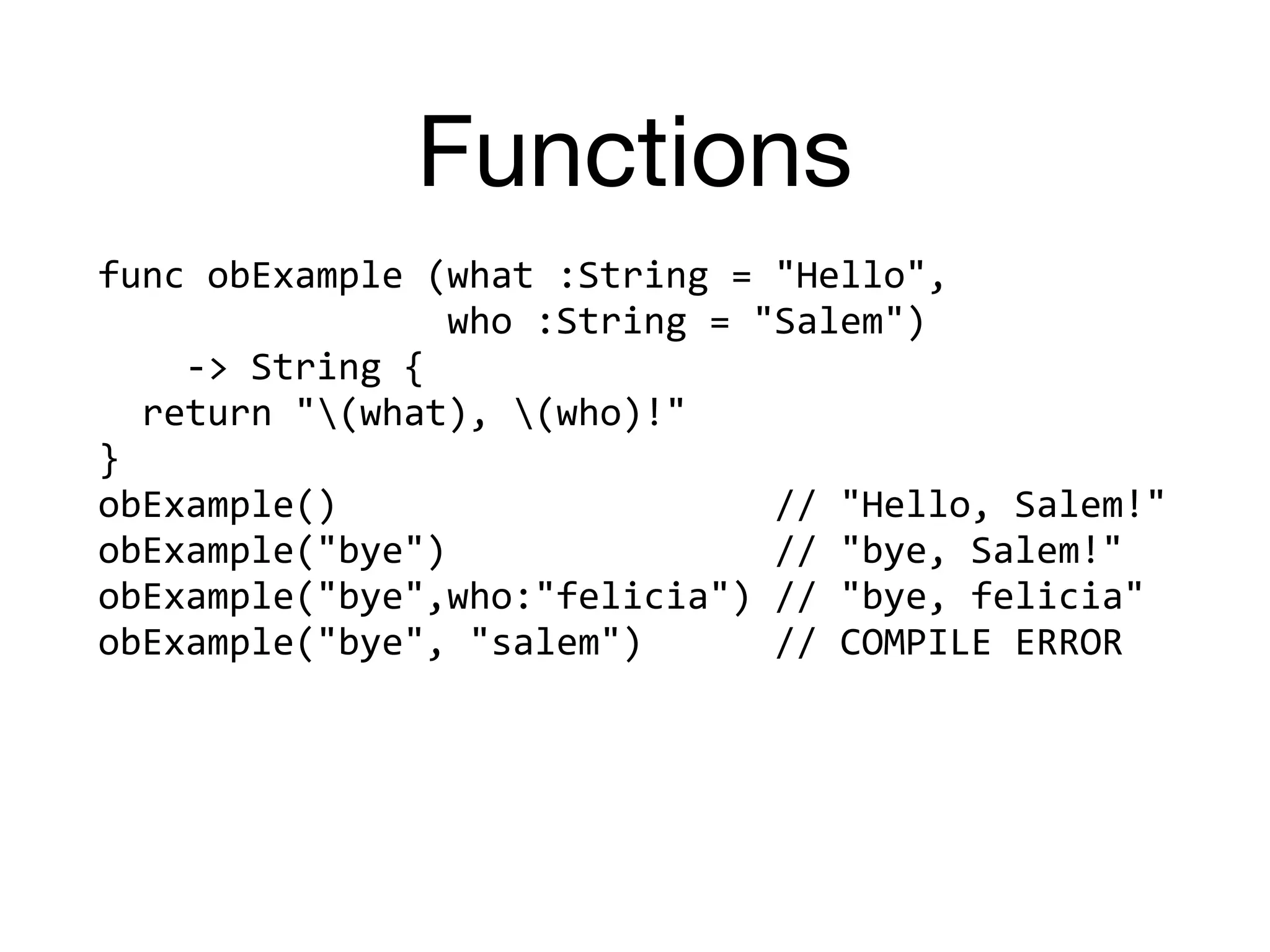
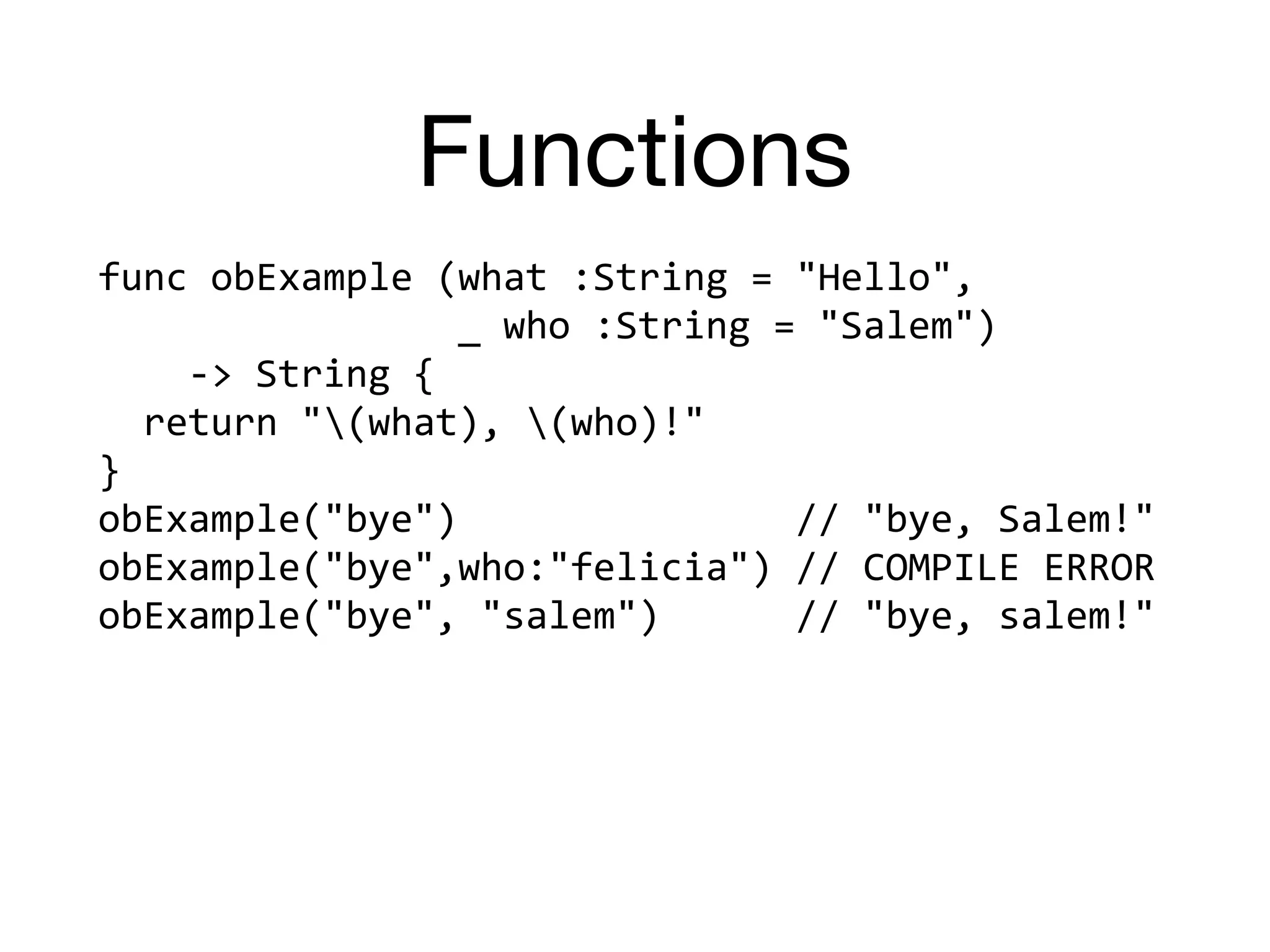
This document provides an introduction to the Swift programming language. It discusses key Swift concepts like variables and constants, comments, flow control, strings, typing, optionals, arrays, dictionaries, enums, sets, functions, closures, and object-oriented programming support. The document demonstrates syntax for these concepts and notes advantages of Swift like strong typing and readability of its syntax compared to earlier Apple languages like Objective-C. It directs readers to Apple's developer site for more information on Swift.


![Computer Networks 01[1 using all terms].pptx](https://cdn.slidesharecdn.com/ss_thumbnails/computernetworks011-251214040533-327dd9f8-thumbnail.jpg?width=640&height=640&fit=bounds)


