Written Exam
18th May PM
Section A – Bringing Texts to Life – The Crucible
Section B- Evaluation of Live Theatre
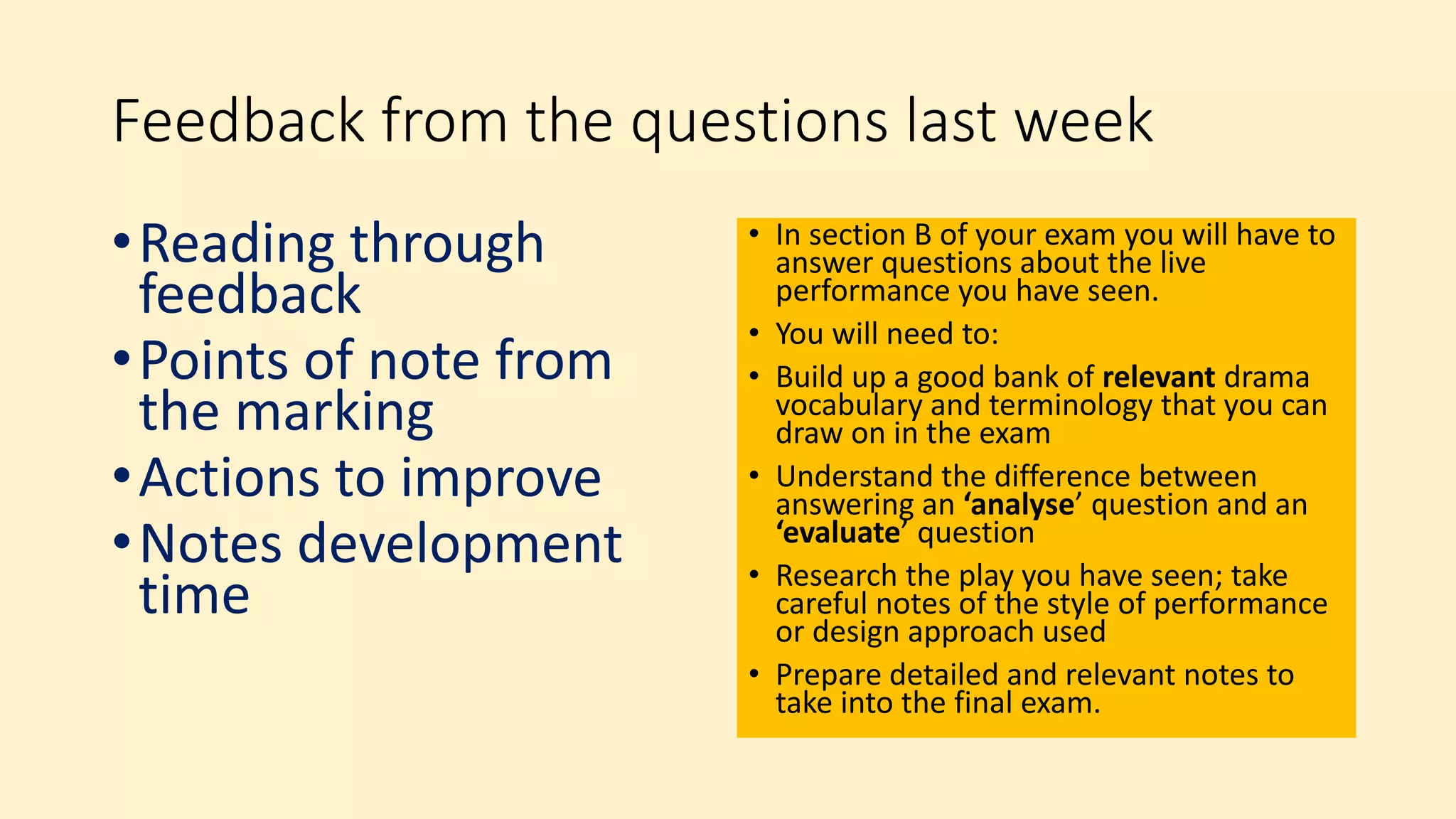
Feedback from the questions last week
•Reading through
feedback
•Points of note from
the marking
•Actions to improve
•Notes development
time
• In section B of your exam you will have to
answer questions about the live
performance you have seen.
• You will need to:
• Build up a good bank of relevant drama
vocabulary and terminology that you can
draw on in the exam
• Understand the difference between
answering an ‘analyse’ question and an
‘evaluate’ question
• Research the play you have seen; take
careful notes of the style of performance
or design approach used
• Prepare detailed and relevant notes to
take into the final exam.
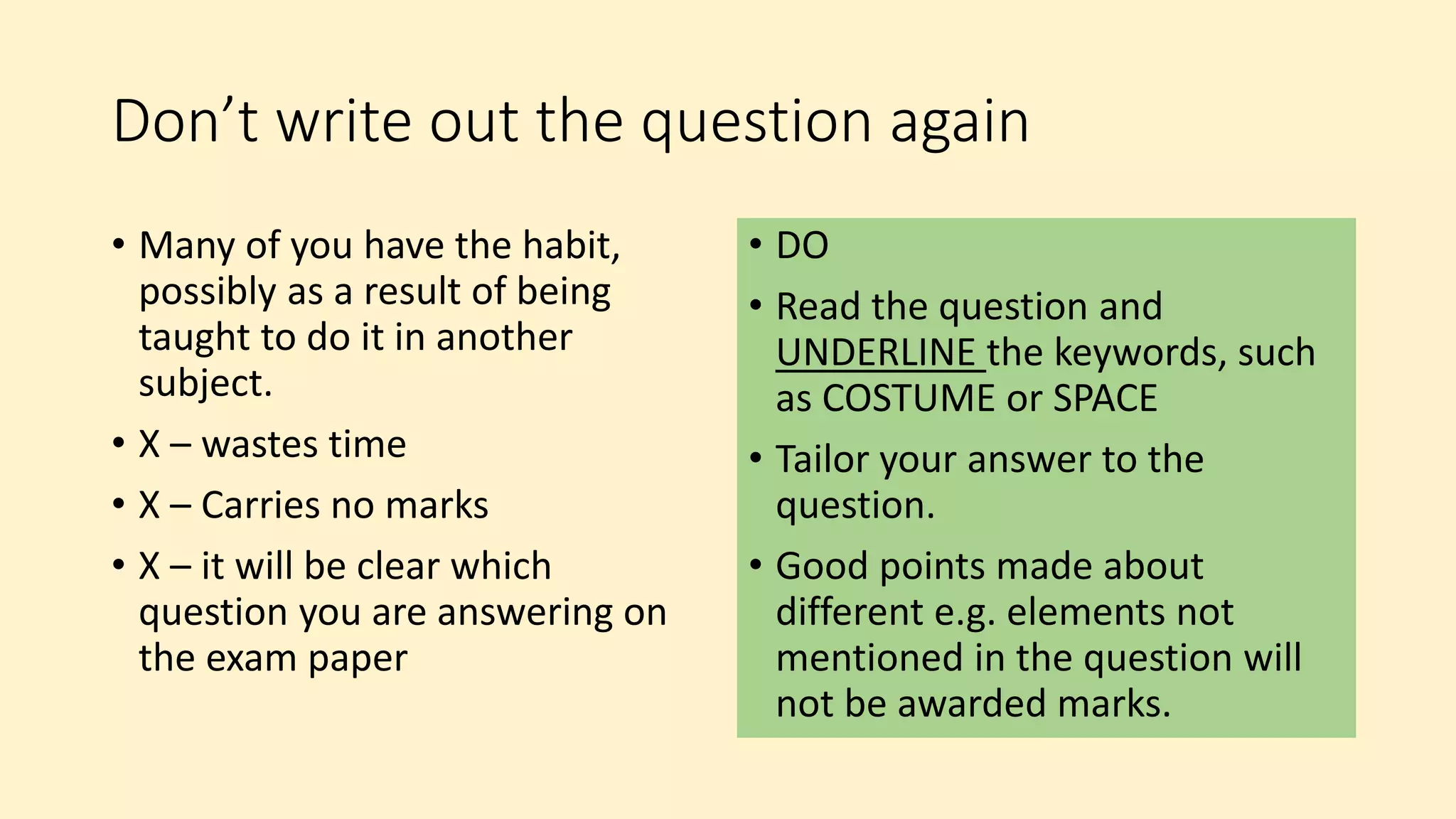
Don’t write out the question again
• Many of you have the habit,
possibly as a result of being
taught to do it in another
subject.
• X – wastes time
• X – Carries no marks
• X – it will be clear which
question you are answering on
the exam paper
• DO
• Read the question and
UNDERLINE the keywords, such
as COSTUME or SPACE
• Tailor your answer to the
question.
• Good points made about
different e.g. elements not
mentioned in the question will
not be awarded marks.
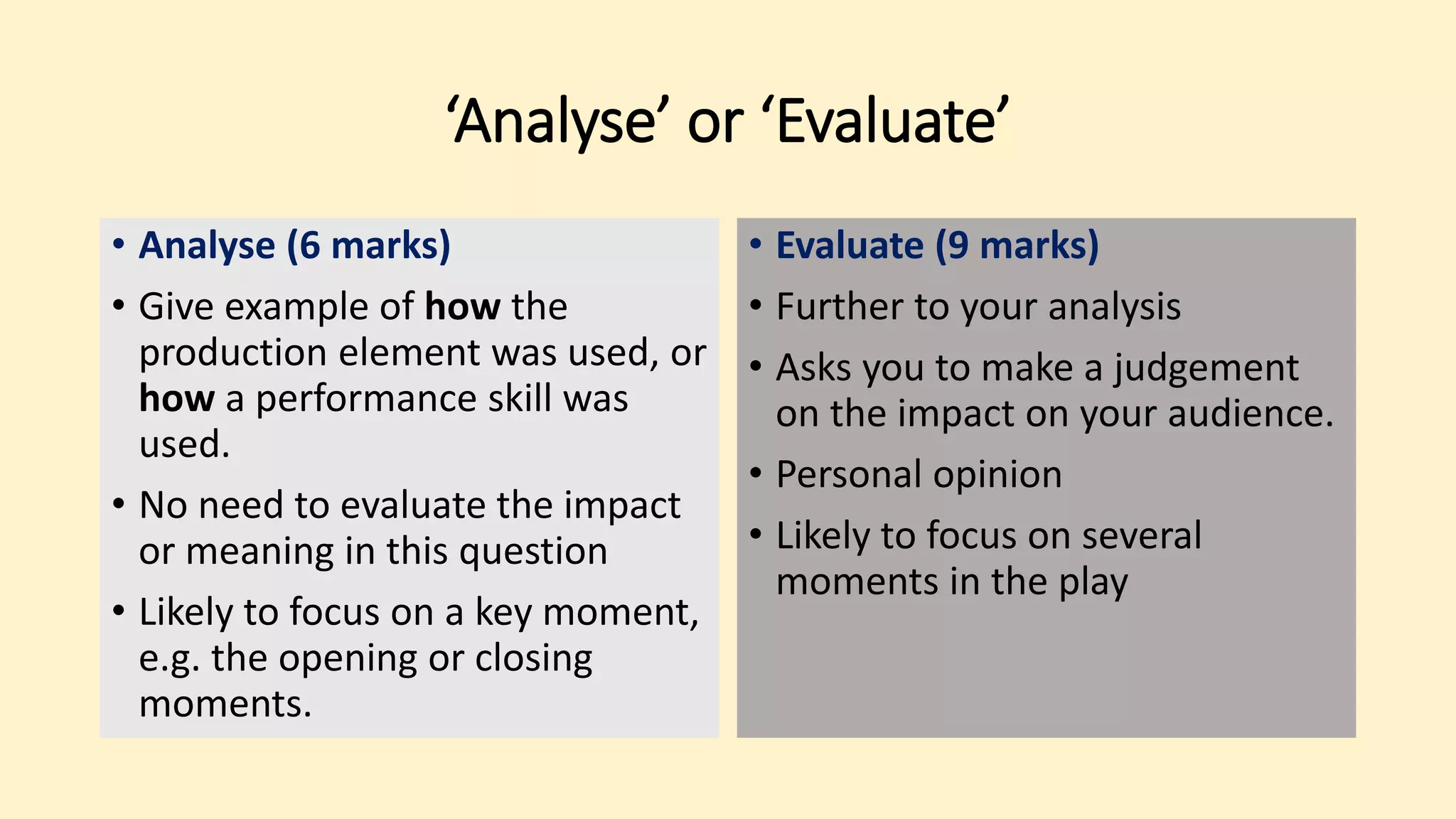
‘Analyse’ or ‘Evaluate’
• Analyse (6 marks)
• Give example of how the
production element was used, or
how a performance skill was
used.
• No need to evaluate the impact
or meaning in this question
• Likely to focus on a key moment,
e.g. the opening or closing
moments.
• Evaluate (9 marks)
• Further to your analysis
• Asks you to make a judgement
on the impact on your audience.
• Personal opinion
• Likely to focus on several
moments in the play
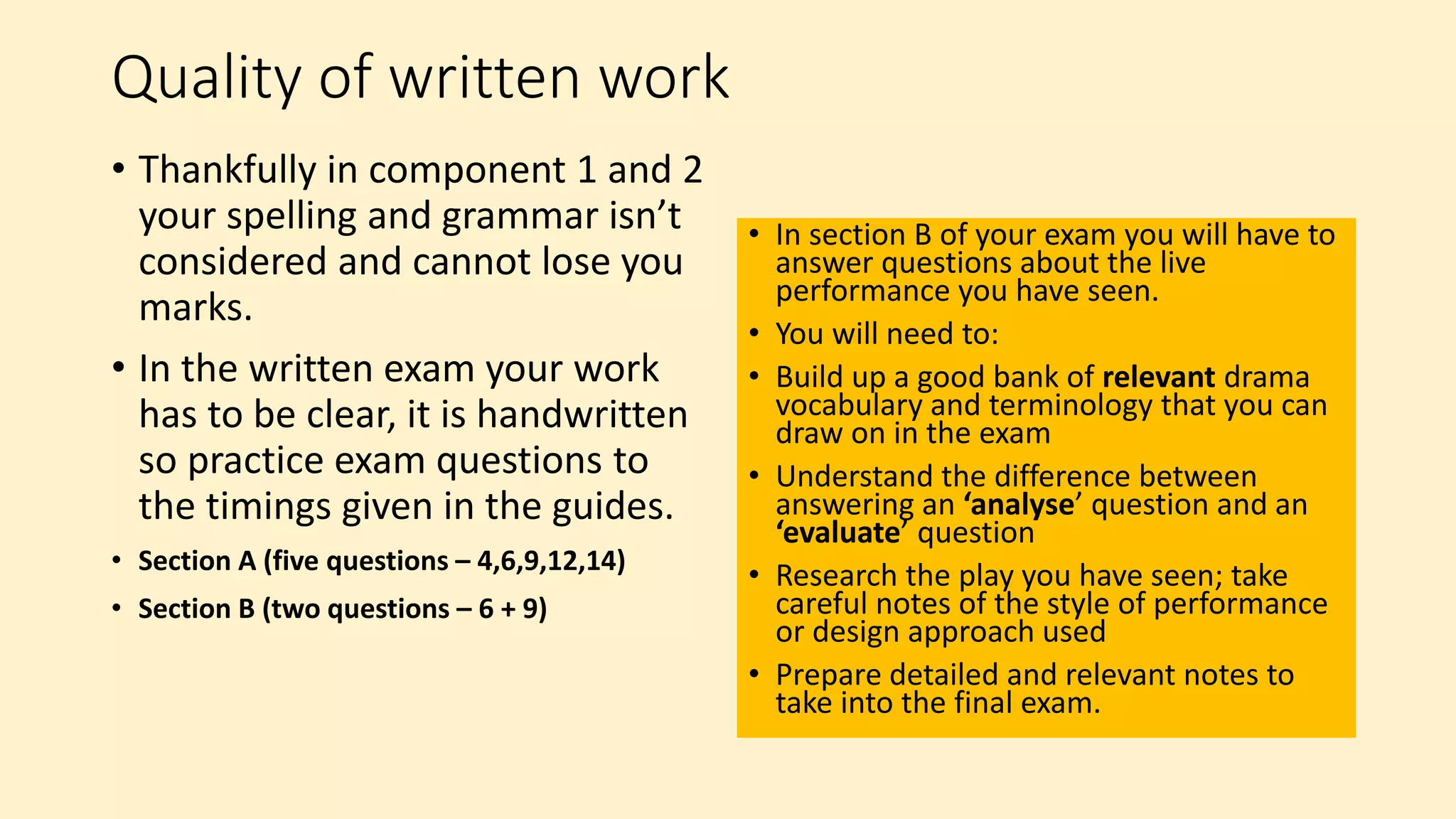
Quality of written work
• Thankfully in component 1 and 2
your spelling and grammar isn’t
considered and cannot lose you
marks.
• In the written exam your work
has to be clear, it is handwritten
so practice exam questions to
the timings given in the guides.
• Section A (five questions – 4,6,9,12,14)
• Section B (two questions – 6 + 9)
• In section B of your exam you will have to
answer questions about the live
performance you have seen.
• You will need to:
• Build up a good bank of relevant drama
vocabulary and terminology that you can
draw on in the exam
• Understand the difference between
answering an ‘analyse’ question and an
‘evaluate’ question
• Research the play you have seen; take
careful notes of the style of performance
or design approach used
• Prepare detailed and relevant notes to
take into the final exam.
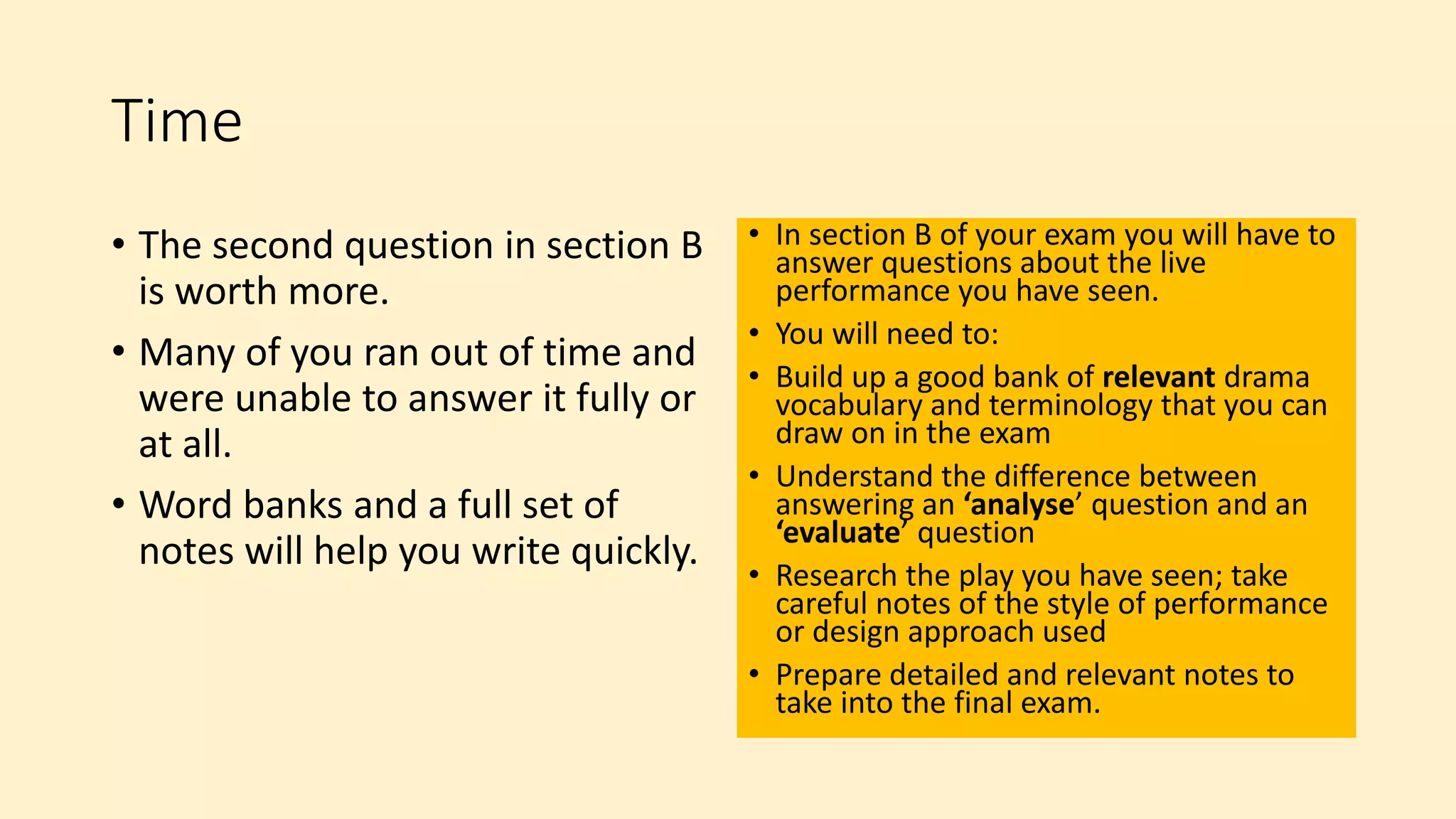
Time
• The second question in section B
is worth more.
• Many of you ran out of time and
were unable to answer it fully or
at all.
• Word banks and a full set of
notes will help you write quickly.
• In section B of your exam you will have to
answer questions about the live
performance you have seen.
• You will need to:
• Build up a good bank of relevant drama
vocabulary and terminology that you can
draw on in the exam
• Understand the difference between
answering an ‘analyse’ question and an
‘evaluate’ question
• Research the play you have seen; take
careful notes of the style of performance
or design approach used
• Prepare detailed and relevant notes to
take into the final exam.
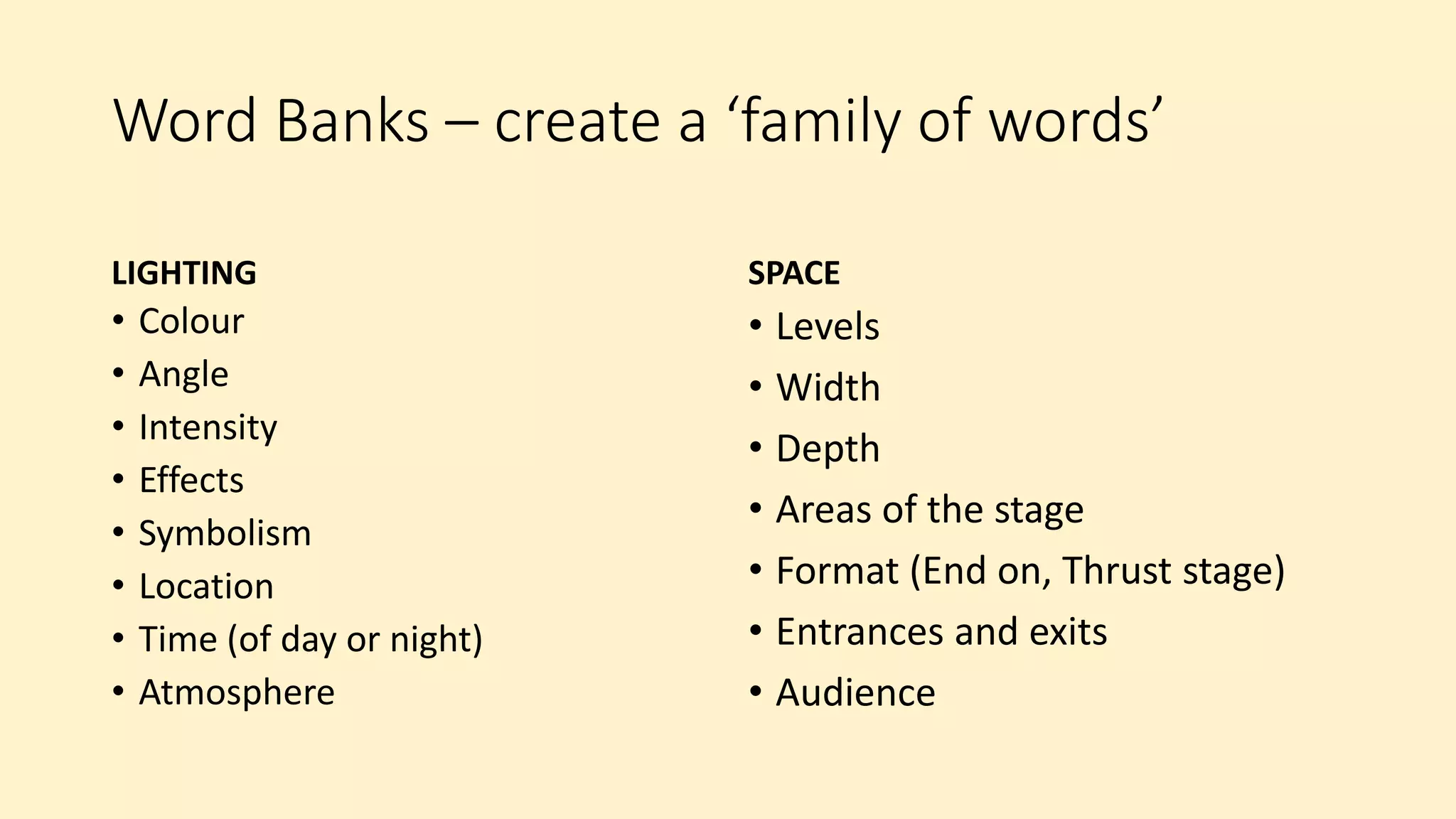
Word Banks – create a ‘family of words’
LIGHTING
• Colour
• Angle
• Intensity
• Effects
• Symbolism
• Location
• Time (of day or night)
• Atmosphere
SPACE
• Levels
• Width
• Depth
• Areas of the stage
• Format (End on, Thrust stage)
• Entrances and exits
• Audience
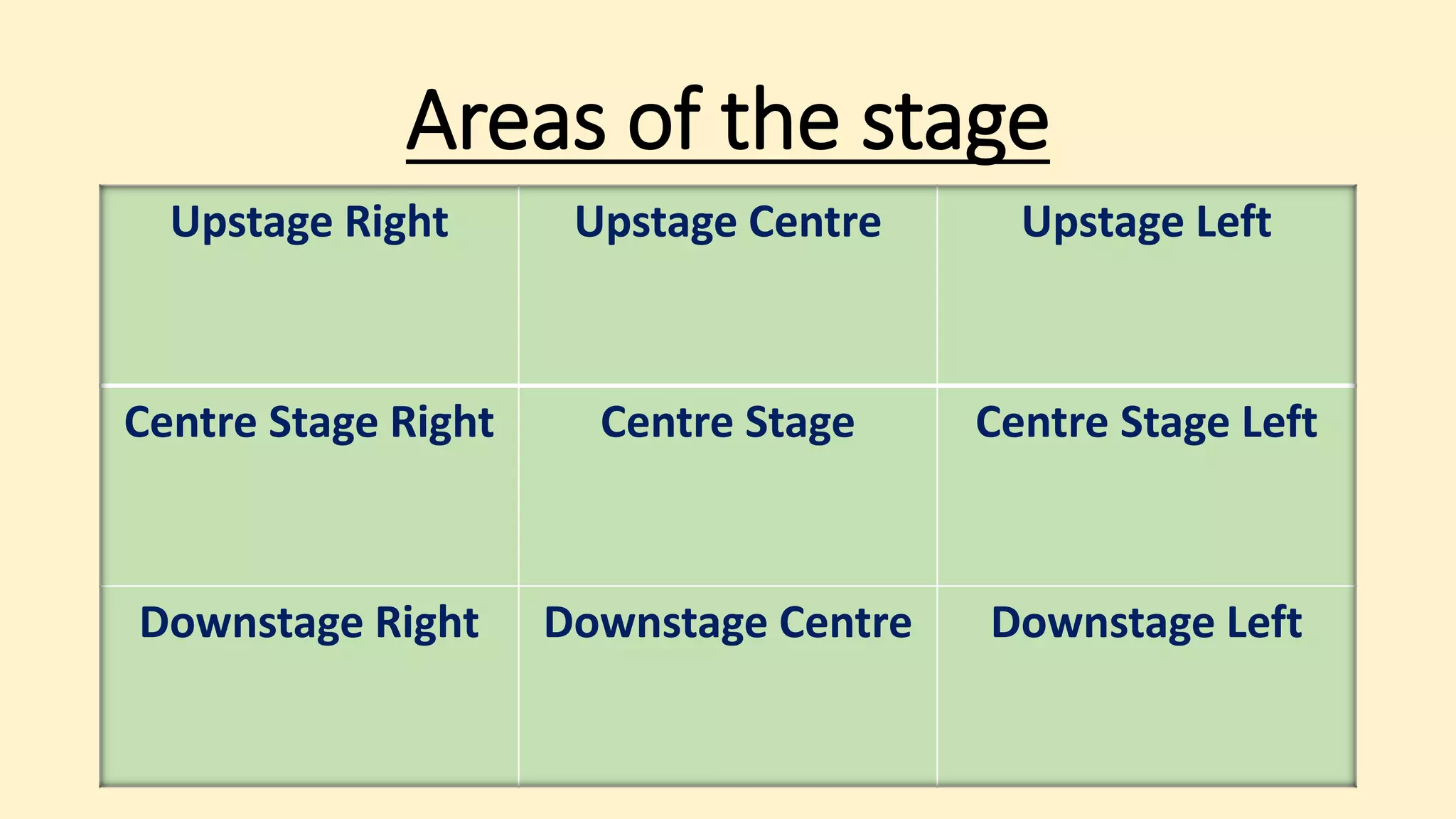
Areas of the stage
Upstage Right Upstage Centre Upstage Left
Centre Stage Right Centre Stage Centre Stage Left
Downstage Right Downstage Centre Downstage Left
Areas of the stage continued…
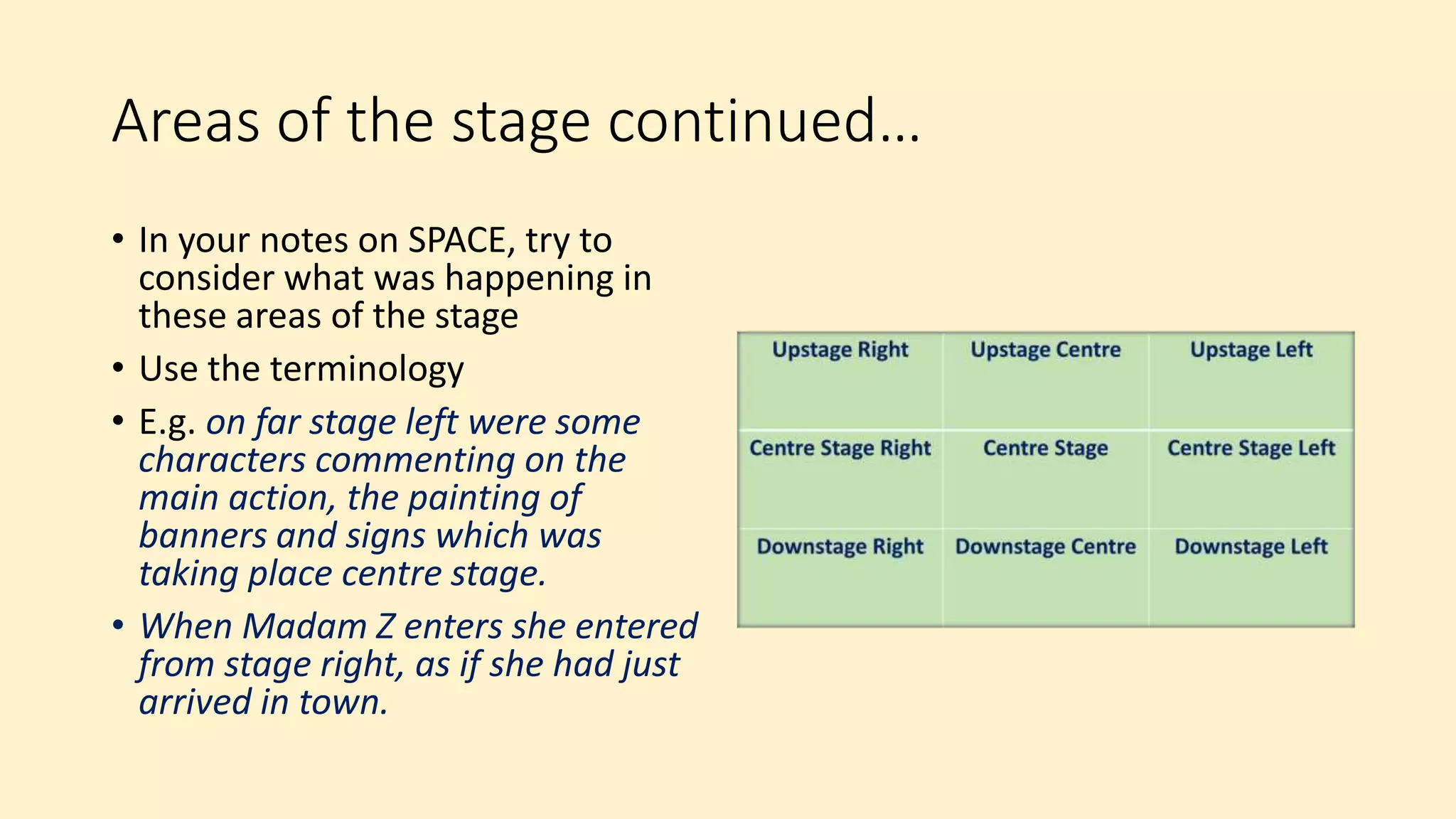
• In your notes on SPACE, try to
consider what was happening in
these areas of the stage
• Use the terminology
• E.g. on far stage left were some
characters commenting on the
main action, the painting of
banners and signs which was
taking place centre stage.
• When Madam Z enters she entered
from stage right, as if she had just
arrived in town.
Key moments for your notes
• As well as the family of words for
each element
• List of key moments from the play
• Create a mind map for each with
notes on how different elements
• SO – two notes based tasks at least
to do
• Families and Key Moments
• In section B of your exam you will have to
answer questions about the live
performance you have seen.
• You will need to:
• Build up a good bank of relevant drama
vocabulary and terminology that you can
draw on in the exam
• Understand the difference between
answering an ‘analyse’ question and an
‘evaluate’ question
• Research the play you have seen; take
careful notes of the style of performance
or design approach used
• Prepare detailed and relevant notes to
take into the final exam.

GCSE Drama Section B Revision 2 checklist

  • 1.
    Written Exam 18th MayPM Section A – Bringing Texts to Life – The Crucible Section B- Evaluation of Live Theatre
  • 2.
    Feedback from thequestions last week •Reading through feedback •Points of note from the marking •Actions to improve •Notes development time • In section B of your exam you will have to answer questions about the live performance you have seen. • You will need to: • Build up a good bank of relevant drama vocabulary and terminology that you can draw on in the exam • Understand the difference between answering an ‘analyse’ question and an ‘evaluate’ question • Research the play you have seen; take careful notes of the style of performance or design approach used • Prepare detailed and relevant notes to take into the final exam.
  • 3.
    Don’t write outthe question again • Many of you have the habit, possibly as a result of being taught to do it in another subject. • X – wastes time • X – Carries no marks • X – it will be clear which question you are answering on the exam paper • DO • Read the question and UNDERLINE the keywords, such as COSTUME or SPACE • Tailor your answer to the question. • Good points made about different e.g. elements not mentioned in the question will not be awarded marks.
  • 4.
    ‘Analyse’ or ‘Evaluate’ •Analyse (6 marks) • Give example of how the production element was used, or how a performance skill was used. • No need to evaluate the impact or meaning in this question • Likely to focus on a key moment, e.g. the opening or closing moments. • Evaluate (9 marks) • Further to your analysis • Asks you to make a judgement on the impact on your audience. • Personal opinion • Likely to focus on several moments in the play
  • 5.
    Quality of writtenwork • Thankfully in component 1 and 2 your spelling and grammar isn’t considered and cannot lose you marks. • In the written exam your work has to be clear, it is handwritten so practice exam questions to the timings given in the guides. • Section A (five questions – 4,6,9,12,14) • Section B (two questions – 6 + 9) • In section B of your exam you will have to answer questions about the live performance you have seen. • You will need to: • Build up a good bank of relevant drama vocabulary and terminology that you can draw on in the exam • Understand the difference between answering an ‘analyse’ question and an ‘evaluate’ question • Research the play you have seen; take careful notes of the style of performance or design approach used • Prepare detailed and relevant notes to take into the final exam.
  • 6.
    Time • The secondquestion in section B is worth more. • Many of you ran out of time and were unable to answer it fully or at all. • Word banks and a full set of notes will help you write quickly. • In section B of your exam you will have to answer questions about the live performance you have seen. • You will need to: • Build up a good bank of relevant drama vocabulary and terminology that you can draw on in the exam • Understand the difference between answering an ‘analyse’ question and an ‘evaluate’ question • Research the play you have seen; take careful notes of the style of performance or design approach used • Prepare detailed and relevant notes to take into the final exam.
  • 7.
    Word Banks –create a ‘family of words’ LIGHTING • Colour • Angle • Intensity • Effects • Symbolism • Location • Time (of day or night) • Atmosphere SPACE • Levels • Width • Depth • Areas of the stage • Format (End on, Thrust stage) • Entrances and exits • Audience
  • 8.
    Areas of thestage Upstage Right Upstage Centre Upstage Left Centre Stage Right Centre Stage Centre Stage Left Downstage Right Downstage Centre Downstage Left
  • 9.
    Areas of thestage continued… • In your notes on SPACE, try to consider what was happening in these areas of the stage • Use the terminology • E.g. on far stage left were some characters commenting on the main action, the painting of banners and signs which was taking place centre stage. • When Madam Z enters she entered from stage right, as if she had just arrived in town.
  • 10.
    Key moments foryour notes • As well as the family of words for each element • List of key moments from the play • Create a mind map for each with notes on how different elements • SO – two notes based tasks at least to do • Families and Key Moments • In section B of your exam you will have to answer questions about the live performance you have seen. • You will need to: • Build up a good bank of relevant drama vocabulary and terminology that you can draw on in the exam • Understand the difference between answering an ‘analyse’ question and an ‘evaluate’ question • Research the play you have seen; take careful notes of the style of performance or design approach used • Prepare detailed and relevant notes to take into the final exam.