Evan Abbey
AEA PD Online
Keystone TIC – 6/17/15
http://bit.ly/personalizedsystem
Online Cohort – July 8-Aug 4
2 credits, $25 license renewal or $150 Drake
Personalized Learning
Personalized learning refers to instruction that is paced to
learning needs, tailored to learning preferences, and tailored to
the specific interests of different learners. In an environment
that is fully personalized, the learning objectives and content as
well as the method and pace may all vary (so personalization
encompasses differentiation and individualization).
- US Department of Education “Transforming American
Education: Learning Powered by Technology” (2010)
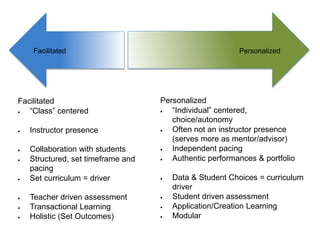
PersonalizedFacilitated
Personalized
 “Individual” centered,
choice/autonomy
 Often not an instructor presence
(serves more as mentor/advisor)
 Independent pacing
 Authentic performances & portfolio
 Data & Student Choices = curriculum
driver
 Student driven assessment
 Application/Creation Learning
 Modular
Facilitated
 “Class” centered
 Instructor presence
 Collaboration with students
 Structured, set timeframe and
pacing
 Set curriculum = driver
 Teacher driven assessment
 Transactional Learning
 Holistic (Set Outcomes)
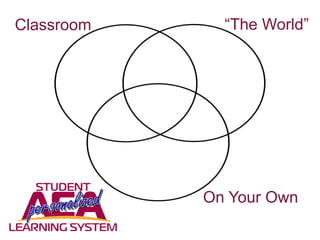
Classroom “The World”
On Your Own
Issues with Implementation
• Troubles with definitions
• Technology system management requires resources
• Content dilemma
• Pathways to post-secondary
• Coordination statewide
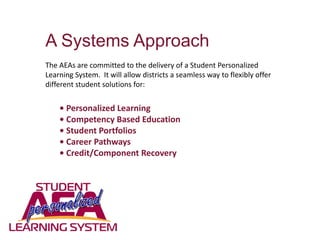
A Systems Approach
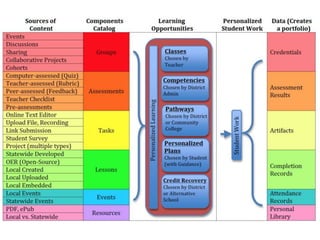
The AEAs are committed to the delivery of a Student Personalized
Learning System. It will allow districts a seamless way to flexibly offer
different student solutions for:
• Personalized Learning
• Competency Based Education
• Student Portfolios
• Career Pathways
• Credit/Component Recovery
Key Content Pieces
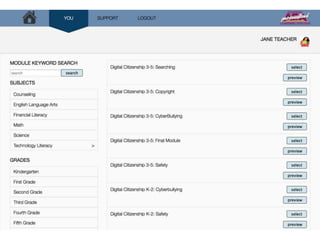
Our content catalog will build from many different locations
• Individual District/Teacher Submission & Community
Contributions
• OER (Open-Source) Content
• AEA PD Online content (training system, OLLIE series, K-
12 server lessons, etc)
• Other Partners (e.g. Institute for Excellence and Ethics)
Key Needs
AEA PD Online cannot do this alone. We have several needs we need
fulfilled externally for this system to succeed.
• One-time funding for targeted development
• Partner identification & awareness
• Common vision and buy-in from stakeholders in this
format for personalized learning
• Leveraging this system for out-of-state sales to fuel
further development
Phases for Implementation
A look at our timeline for development
• Fall 2014 – Development of system infrastructure
• Spring 2015 – Soft Rollout, initial pilot
• 2015 -- Expansion of catalog
• Summer 2015 – Counselor/Alt. Educator cohorts
• Fall 2015 – Onsite training for system use, pilot for local
teacher development
• Spring 2016 – Marketed rollout
• 2016 – Addition of assessments, targeted curriculum
areas (Algebra, Government, History, Biology, etc)
• Fall 2016 – Begin development of social features
Evan Abbey – eabbey@aeapdonline.org
http://bit.ly/personalizedsystem

Personalized Learning & Digital Citizenship

  • 1.
    Evan Abbey AEA PDOnline Keystone TIC – 6/17/15
  • 2.
    http://bit.ly/personalizedsystem Online Cohort –July 8-Aug 4 2 credits, $25 license renewal or $150 Drake
  • 3.
    Personalized Learning Personalized learningrefers to instruction that is paced to learning needs, tailored to learning preferences, and tailored to the specific interests of different learners. In an environment that is fully personalized, the learning objectives and content as well as the method and pace may all vary (so personalization encompasses differentiation and individualization). - US Department of Education “Transforming American Education: Learning Powered by Technology” (2010)
  • 4.
    PersonalizedFacilitated Personalized  “Individual” centered, choice/autonomy Often not an instructor presence (serves more as mentor/advisor)  Independent pacing  Authentic performances & portfolio  Data & Student Choices = curriculum driver  Student driven assessment  Application/Creation Learning  Modular Facilitated  “Class” centered  Instructor presence  Collaboration with students  Structured, set timeframe and pacing  Set curriculum = driver  Teacher driven assessment  Transactional Learning  Holistic (Set Outcomes)
  • 6.
  • 7.
    Issues with Implementation •Troubles with definitions • Technology system management requires resources • Content dilemma • Pathways to post-secondary • Coordination statewide
  • 8.
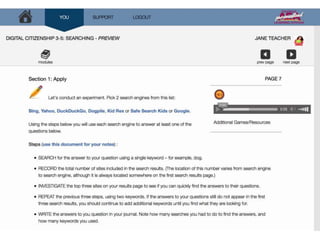
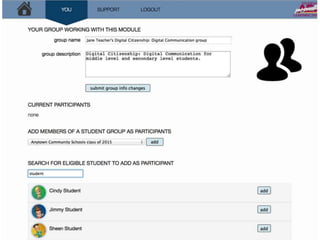
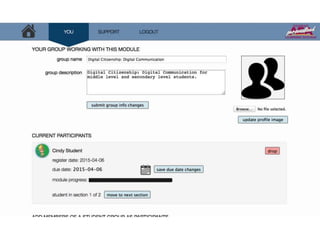
    A Systems Approach TheAEAs are committed to the delivery of a Student Personalized Learning System. It will allow districts a seamless way to flexibly offer different student solutions for: • Personalized Learning • Competency Based Education • Student Portfolios • Career Pathways • Credit/Component Recovery
  • 16.
    Key Content Pieces Ourcontent catalog will build from many different locations • Individual District/Teacher Submission & Community Contributions • OER (Open-Source) Content • AEA PD Online content (training system, OLLIE series, K- 12 server lessons, etc) • Other Partners (e.g. Institute for Excellence and Ethics)
  • 17.
    Key Needs AEA PDOnline cannot do this alone. We have several needs we need fulfilled externally for this system to succeed. • One-time funding for targeted development • Partner identification & awareness • Common vision and buy-in from stakeholders in this format for personalized learning • Leveraging this system for out-of-state sales to fuel further development
  • 18.
    Phases for Implementation Alook at our timeline for development • Fall 2014 – Development of system infrastructure • Spring 2015 – Soft Rollout, initial pilot • 2015 -- Expansion of catalog • Summer 2015 – Counselor/Alt. Educator cohorts • Fall 2015 – Onsite training for system use, pilot for local teacher development • Spring 2016 – Marketed rollout • 2016 – Addition of assessments, targeted curriculum areas (Algebra, Government, History, Biology, etc) • Fall 2016 – Begin development of social features
  • 19.
    Evan Abbey –eabbey@aeapdonline.org http://bit.ly/personalizedsystem