Emerging
Treatment for
Endometriosis
Where we are?
Prof. Aboubakr
Elnashar
Benha university,
Egypt
ABOUBAKR ELNASHAR
ABOUBAKR ELNASHAR
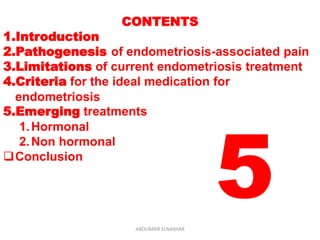
CONTENTS
1.Introduction
2.Pathogenesis of endometriosis-associated pain
3.Limitations of current endometriosis treatment
4.Criteria for the ideal medication for
endometriosis
5.Emerging treatments
1.Hormonal
2.Non hormonal
Conclusion
5ABOUBAKR ELNASHAR
1. Introduction
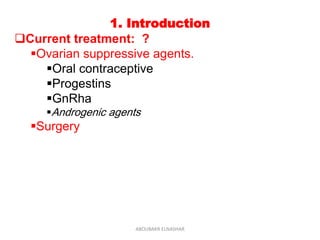
Current treatment: ?
Ovarian suppressive agents.
Oral contraceptive
Progestins
GnRha
Androgenic agents
Surgery
ABOUBAKR ELNASHAR
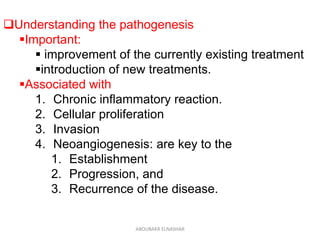
Understanding the pathogenesis
Important:
 improvement of the currently existing treatment
introduction of new treatments.
Associated with
1. Chronic inflammatory reaction.
2. Cellular proliferation
3. Invasion
4. Neoangiogenesis: are key to the
1. Establishment
2. Progression, and
3. Recurrence of the disease.
ABOUBAKR ELNASHAR
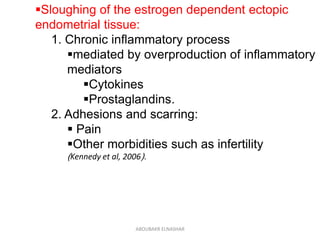
Sloughing of the estrogen dependent ectopic
endometrial tissue:
1. Chronic inflammatory process
mediated by overproduction of inflammatory
mediators
Cytokines
Prostaglandins.
2. Adhesions and scarring:
 Pain
Other morbidities such as infertility
(Kennedy et al, 2006).
ABOUBAKR ELNASHAR
2. Pathogenesis of endometriosis-associated
pain
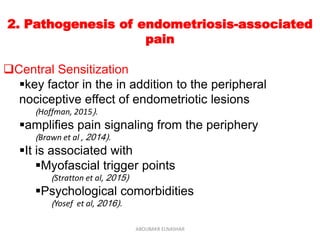
Central Sensitization
key factor in the in addition to the peripheral
nociceptive effect of endometriotic lesions
(Hoffman, 2015).
amplifies pain signaling from the periphery
(Brawn et al , 2014).
It is associated with
Myofascial trigger points
(Stratton et al, 2015)
Psychological comorbidities
(Yosef et al, 2016).
ABOUBAKR ELNASHAR
Treatments to reduce central sensitization are
required in some patients
Tricyclics and antiepileptics
Multidisciplinary approach
Physiotherapy
Psychological therapy
(Peters et al, 1992)
ABOUBAKR ELNASHAR
Currently:
Treatment of endometriosis-associated pain
based on suppressing estrogen production and
inducing amenorrhea:
hypoestrogenic environment:
inhibits ectopic endometrial growth and
prevents disease progression
(Barbieri, 1999).
ABOUBAKR ELNASHAR
3. Limitations of current endometriosis
treatment
1. Suppressive rather than curative therapy
 Temporary relief of symptoms during treatment.
Discontinuation: recurrence of the symptoms
Endometriosis associated pain can continue after
medical treatment or conservative surgery.
After medical or surgical treatment:
Recurrence:
21.5% at 2 y
40% to 50% at 5 y
(Guo, 2009).
ABOUBAKR ELNASHAR
2. Contraceptive rather than fertility-promoting
{1. blocking the hypothalamopituitary-ovarian axis:
suppression of ovulatory function
2. endometrial atrophy: hinders embryo
implantation.
No improvement in natural conception after a course
of ovarian suppression by medical therapy
(Fedele et al, 1992, RCT).
Infertile women with endometriosis
No benefit in the use of ovulation suppression
Pain: NSAIDs: the only medical option consistent
with the maintenance of fertility.
ABOUBAKR ELNASHAR
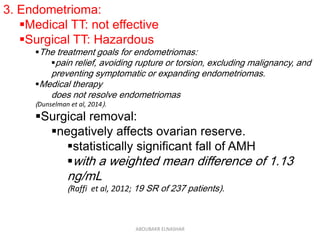
3. Endometrioma:
Medical TT: not effective
Surgical TT: Hazardous
The treatment goals for endometriomas:
pain relief, avoiding rupture or torsion, excluding malignancy, and
preventing symptomatic or expanding endometriomas.
Medical therapy
does not resolve endometriomas
(Dunselman et al, 2014).
Surgical removal:
negatively affects ovarian reserve.
statistically significant fall of AMH
with a weighted mean difference of 1.13
ng/mL
(Raffi et al, 2012; 19 SR of 237 patients).
ABOUBAKR ELNASHAR
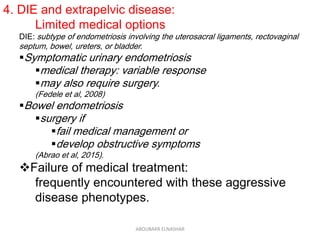
4. DIE and extrapelvic disease:
Limited medical options
DIE: subtype of endometriosis involving the uterosacral ligaments, rectovaginal
septum, bowel, ureters, or bladder.
Symptomatic urinary endometriosis
medical therapy: variable response
may also require surgery.
(Fedele et al, 2008)
Bowel endometriosis
surgery if
fail medical management or
develop obstructive symptoms
(Abrao et al, 2015).
Failure of medical treatment:
frequently encountered with these aggressive
disease phenotypes.
ABOUBAKR ELNASHAR
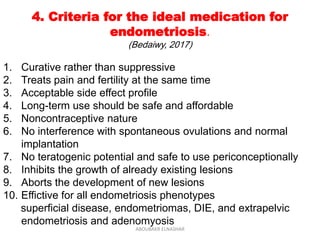
4. Criteria for the ideal medication for
endometriosis.
(Bedaiwy, 2017)
1. Curative rather than suppressive
2. Treats pain and fertility at the same time
3. Acceptable side effect profile
4. Long-term use should be safe and affordable
5. Noncontraceptive nature
6. No interference with spontaneous ovulations and normal
implantation
7. No teratogenic potential and safe to use periconceptionally
8. Inhibits the growth of already existing lesions
9. Aborts the development of new lesions
10. Effictive for all endometriosis phenotypes
superficial disease, endometriomas, DIE, and extrapelvic
endometriosis and adenomyosis
ABOUBAKR ELNASHAR
5. Emerging treatments
Over the past 2 decades
a wide variety of medical options has been tested.
All are aimed at a specific target that contributes
the pathogenesis of the disease.
ABOUBAKR ELNASHAR
I. HORMONAL
1. GnRH antagonists.
inhibits the pain symptoms by reducing the estrogen
levels without causing side effects associated with
hypoestrogenism: VMS, vaginal atrophy, bone demineralization.
Superior to agonists
suppress the secretion of LH and FSH immediately
:avoids the lag seen with the GnRHa
work more effectively and faster in improvement of
symptoms.
Fewer side effects: postmenopausal symptoms and require no
estradiol supplementation
ABOUBAKR ELNASHAR
Injectables (Ganirelix, Cetrorelix)
(Kupker et al., 2002)
3-mg once a week over 8 weeks
Safe and efficient .
Oral nonpeptide forms
(Elagolix, Abarelix,Ozarelix, TAK-385).
ABOUBAKR ELNASHAR
Elagolix
Produce a dose dependent hypoestrogenic environment by
direct pituitary gonadotropin suppression:
inhibits endometriotic cell proliferation and invasion:
maintaining sufficient circulating E2 to avoid VMS, vaginal
atrophy, and bone demineralization.
Partially suppressed estrogen
Advantage
Orally
Short half-life ( 6 h): rapid elimination of drug from
the body if the treatment is interrupted for any
reason.
ABOUBAKR ELNASHAR
Efficacy, safety, and tolerability
demonstrated in phase 1 and 2 trials
(Melis et al, 2016).
Elagolix Vs SC DMPA for endometriosis associated pain
Similar efficacy
Minimal impact on BMD over a 24-w period
(Carr et al, 2014: RCT)
Dose:
150 mg every day, 75 mg twice a day
(Taylor et al, 2017)
ABOUBAKR ELNASHAR
2. Selective progesterone receptor modulators.
SPRM
have variable effects on progesterone receptors from
different tissues:
ranging from being
pure agonist
mixed agonist/antagonist
pure antagonist.
ABOUBAKR ELNASHAR
1. Mifepristone
(Zhang YX, 2016)
Humans
Reduction of endometrial thickness
alleviation of symptoms during 6 mo of treatment.
(Mei et al., 2010)
Rats
SC implanted capsules an effective means for long-term treatment of
chronic endometriosis.
positive effect on pain symptoms
induced amenorrhea without causing
hypoestrogenism.
ABOUBAKR ELNASHAR
2. Asoprisnil
(Chawlisz et al., 2005)
Humans
5, 10, 25 mg significantly reduces nonmenstrual pelvic
pain/dysmenorrhea scores.
Phase 3 trials were discontinued due to
development of endometrial proliferation and
hyperplasia
ABOUBAKR ELNASHAR
3. Ulipristal acetate
approved as
1. an emergency contraceptive
2. treatment of fibroids
(Hunaidi et al., 2013)
Rats
Decreases COX-2 expression
The feasibility for the treatment of endometriosis
has yet to be determined.
ABOUBAKR ELNASHAR
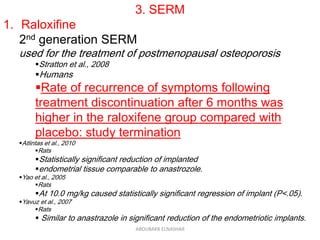
3. SERM
1. Raloxifine
2nd generation SERM
used for the treatment of postmenopausal osteoporosis
Stratton et al., 2008
Humans
Rate of recurrence of symptoms following
treatment discontinuation after 6 months was
higher in the raloxifene group compared with
placebo: study termination
Atlintas et al., 2010
Rats
Statistically significant reduction of implanted
endometrial tissue comparable to anastrozole.
Yao et al., 2005
Rats
At 10.0 mg/kg caused statistically significant regression of implant (P<.05).
Yavuz et al., 2007
Rats
 Similar to anastrazole in significant reduction of the endometriotic implants.
ABOUBAKR ELNASHAR
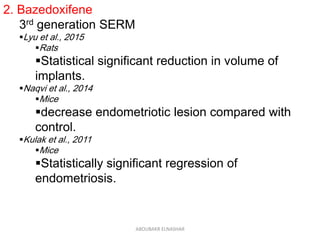
2. Bazedoxifene
3rd generation SERM
Lyu et al., 2015
Rats
Statistical significant reduction in volume of
implants.
Naqvi et al., 2014
Mice
decrease endometriotic lesion compared with
control.
Kulak et al., 2011
Mice
Statistically significant regression of
endometriosis.
ABOUBAKR ELNASHAR
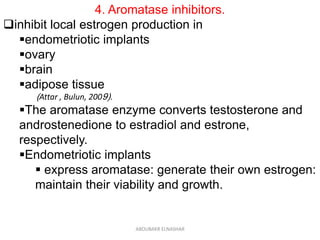
4. Aromatase inhibitors.
inhibit local estrogen production in
endometriotic implants
ovary
brain
adipose tissue
(Attar , Bulun, 2009).
The aromatase enzyme converts testosterone and
androstenedione to estradiol and estrone,
respectively.
Endometriotic implants
 express aromatase: generate their own estrogen:
maintain their viability and growth.
ABOUBAKR ELNASHAR
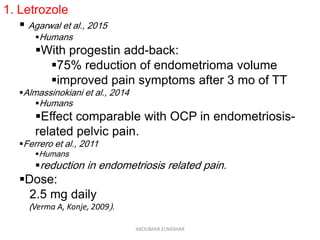
1. Letrozole
 Agarwal et al., 2015
Humans
With progestin add-back:
75% reduction of endometrioma volume
improved pain symptoms after 3 mo of TT
Almassinokiani et al., 2014
Humans
Effect comparable with OCP in endometriosis-
related pelvic pain.
Ferrero et al., 2011
Humans
reduction in endometriosis related pain.
Dose:
2.5 mg daily
(Verma A, Konje, 2009).
ABOUBAKR ELNASHAR
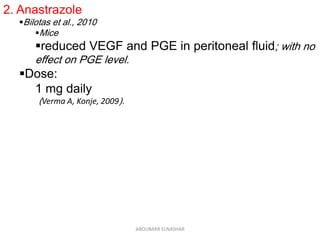
2. Anastrazole
Bilotas et al., 2010
Mice
reduced VEGF and PGE in peritoneal fluid; with no
effect on PGE level.
Dose:
1 mg daily
(Verma A, Konje, 2009).
ABOUBAKR ELNASHAR
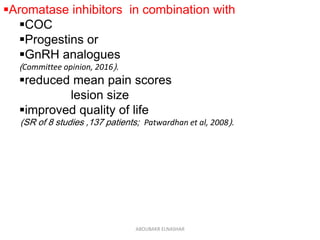
Aromatase inhibitors in combination with
COC
Progestins or
GnRH analogues
(Committee opinion, 2016).
reduced mean pain scores
lesion size
improved quality of life
(SR of 8 studies ,137 patients; Patwardhan et al, 2008).
ABOUBAKR ELNASHAR
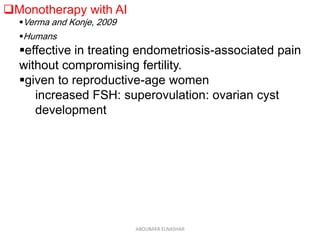
Monotherapy with AI
Verma and Konje, 2009
Humans
effective in treating endometriosis-associated pain
without compromising fertility.
given to reproductive-age women
increased FSH: superovulation: ovarian cyst
development
ABOUBAKR ELNASHAR
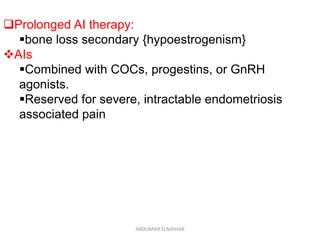
Prolonged AI therapy:
bone loss secondary {hypoestrogenism}
AIs
Combined with COCs, progestins, or GnRH
agonists.
Reserved for severe, intractable endometriosis
associated pain
ABOUBAKR ELNASHAR
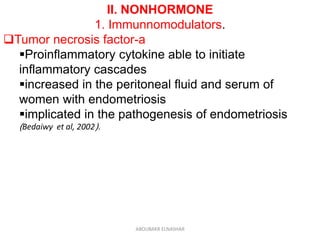
II. NONHORMONE
1. Immunnomodulators.
Tumor necrosis factor-a
Proinflammatory cytokine able to initiate
inflammatory cascades
increased in the peritoneal fluid and serum of
women with endometriosis
implicated in the pathogenesis of endometriosis
(Bedaiwy et al, 2002).
ABOUBAKR ELNASHAR
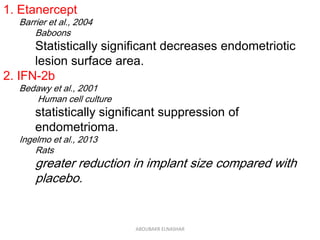
1. Etanercept
Barrier et al., 2004
Baboons
Statistically significant decreases endometriotic
lesion surface area.
2. IFN-2b
Bedawy et al., 2001
Human cell culture
statistically significant suppression of
endometrioma.
Ingelmo et al., 2013
Rats
greater reduction in implant size compared with
placebo.
ABOUBAKR ELNASHAR
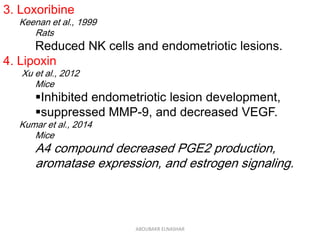
3. Loxoribine
Keenan et al., 1999
Rats
Reduced NK cells and endometriotic lesions.
4. Lipoxin
Xu et al., 2012
Mice
Inhibited endometriotic lesion development,
suppressed MMP-9, and decreased VEGF.
Kumar et al., 2014
Mice
A4 compound decreased PGE2 production,
aromatase expression, and estrogen signaling.
ABOUBAKR ELNASHAR
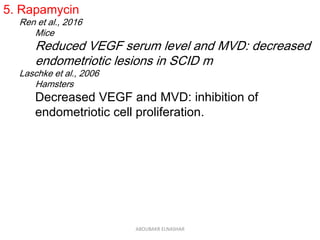
5. Rapamycin
Ren et al., 2016
Mice
Reduced VEGF serum level and MVD: decreased
endometriotic lesions in SCID m
Laschke et al., 2006
Hamsters
Decreased VEGF and MVD: inhibition of
endometriotic cell proliferation.
ABOUBAKR ELNASHAR
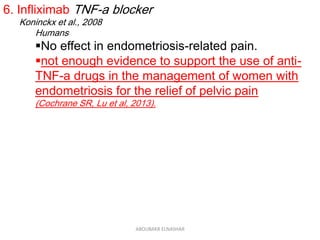
6. Infliximab TNF-a blocker
Koninckx et al., 2008
Humans
No effect in endometriosis-related pain.
not enough evidence to support the use of anti-
TNF-a drugs in the management of women with
endometriosis for the relief of pelvic pain
(Cochrane SR, Lu et al, 2013).
ABOUBAKR ELNASHAR
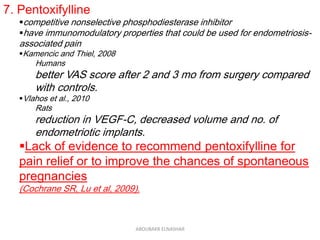
7. Pentoxifylline
competitive nonselective phosphodiesterase inhibitor
have immunomodulatory properties that could be used for endometriosis-
associated pain
Kamencic and Thiel, 2008
Humans
better VAS score after 2 and 3 mo from surgery compared
with controls.
Vlahos et al., 2010
Rats
reduction in VEGF-C, decreased volume and no. of
endometriotic implants.
Lack of evidence to recommend pentoxifylline for
pain relief or to improve the chances of spontaneous
pregnancies
(Cochrane SR, Lu et al, 2009).
ABOUBAKR ELNASHAR
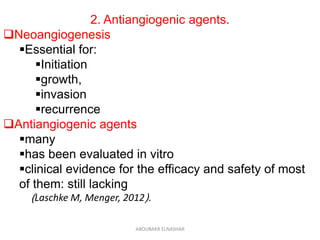
2. Antiangiogenic agents.
Neoangiogenesis
Essential for:
Initiation
growth,
invasion
recurrence
Antiangiogenic agents
many
has been evaluated in vitro
clinical evidence for the efficacy and safety of most
of them: still lacking
(Laschke M, Menger, 2012).
ABOUBAKR ELNASHAR
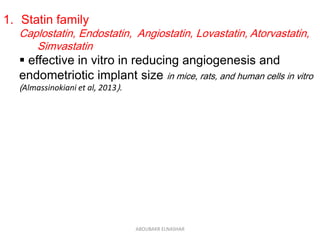
1. Statin family
Caplostatin, Endostatin, Angiostatin, Lovastatin, Atorvastatin,
Simvastatin
 effective in vitro in reducing angiogenesis and
endometriotic implant size in mice, rats, and human cells in vitro
(Almassinokiani et al, 2013).
ABOUBAKR ELNASHAR
2. . Lodamin
Becker et al., 2011
Mice
reduction of endothelial progenitor cells: suppression
of endometriotic tissue growth.
3. Romidepsin
Imesch et al., 2011
Human cell culture
Decreased VEGF secretion.
ABOUBAKR ELNASHAR
4. Icon
Krikun et al., 2010
Mice
Destroyed endometriotic implants through vascular
disruption without toxicity, effect on fertility, or
teratogenicity.
could serve as a novel nontoxic, fertility-
preserving, and effective treatment
ABOUBAKR ELNASHAR
5. Dopaminergic agonists
Cabergoline
Novella-Maestre et al., 2009
Mice/human cell culture
decreased VEGF and VEGFR-2 protein Bromocriptine
expression.
Hamid et al., 2014
Humans
better result in reducing endometrioma size
compared with triptorelin acetate.
Cabergoline and quinagolide
Delgado-Rosas et al., 2011
Mice
equal effect in reducing endometriotic lesions
Cabergoline and bromocriptine
Ercan et al., 2015
Rats
 comparable to GnRHa in reducing endometriotic
lesion. ABOUBAKR ELNASHAR
6. Rosiglitazone
Lebovic et al., 2007
Baboons
Statistically significant reduction of endometriotic lesion
Chang et al., 2013
 Human cell culture
Inhibited aromatase and COX-2 expression: decreased PGE2
production.
Increase risk of
myocardial infarction
death from cardiovascular causes.
premature termination of all clinical trials
(Moravek et al, 2009).
ABOUBAKR ELNASHAR
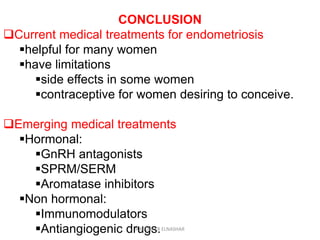
CONCLUSION
Current medical treatments for endometriosis
helpful for many women
have limitations
side effects in some women
contraceptive for women desiring to conceive.
Emerging medical treatments
Hormonal:
GnRH antagonists
SPRM/SERM
Aromatase inhibitors
Non hormonal:
Immunomodulators
Antiangiogenic drugs.ABOUBAKR ELNASHAR
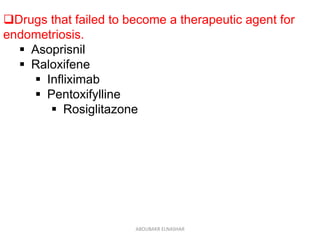
Drugs that failed to become a therapeutic agent for
endometriosis.
 Asoprisnil
 Raloxifene
 Infliximab
 Pentoxifylline
 Rosiglitazone
ABOUBAKR ELNASHAR
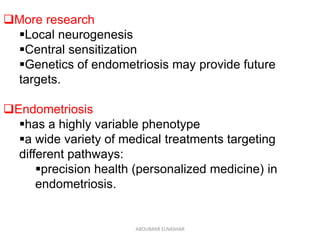
More research
Local neurogenesis
Central sensitization
Genetics of endometriosis may provide future
targets.
Endometriosis
has a highly variable phenotype
a wide variety of medical treatments targeting
different pathways:
precision health (personalized medicine) in
endometriosis.
ABOUBAKR ELNASHAR
ABOUBAKR ELNASHAR
You can get this lecture from:
1.My scientific page on Face book:
Aboubakr Elnashar Lectures.
https://www.facebook.com/groups/2277
44884091351/
2.Slide share web site
3.elnashar53@hotmail.com
4.My clinic: Elthwara St. Mansura

Endometriosis emerging treatment 2017

  • 1.
    Emerging Treatment for Endometriosis Where weare? Prof. Aboubakr Elnashar Benha university, Egypt ABOUBAKR ELNASHAR
  • 2.
  • 3.
    CONTENTS 1.Introduction 2.Pathogenesis of endometriosis-associatedpain 3.Limitations of current endometriosis treatment 4.Criteria for the ideal medication for endometriosis 5.Emerging treatments 1.Hormonal 2.Non hormonal Conclusion 5ABOUBAKR ELNASHAR
  • 4.
    1. Introduction Current treatment:? Ovarian suppressive agents. Oral contraceptive Progestins GnRha Androgenic agents Surgery ABOUBAKR ELNASHAR
  • 5.
    Understanding the pathogenesis Important: improvement of the currently existing treatment introduction of new treatments. Associated with 1. Chronic inflammatory reaction. 2. Cellular proliferation 3. Invasion 4. Neoangiogenesis: are key to the 1. Establishment 2. Progression, and 3. Recurrence of the disease. ABOUBAKR ELNASHAR
  • 6.
    Sloughing of theestrogen dependent ectopic endometrial tissue: 1. Chronic inflammatory process mediated by overproduction of inflammatory mediators Cytokines Prostaglandins. 2. Adhesions and scarring:  Pain Other morbidities such as infertility (Kennedy et al, 2006). ABOUBAKR ELNASHAR
  • 7.
    2. Pathogenesis ofendometriosis-associated pain Central Sensitization key factor in the in addition to the peripheral nociceptive effect of endometriotic lesions (Hoffman, 2015). amplifies pain signaling from the periphery (Brawn et al , 2014). It is associated with Myofascial trigger points (Stratton et al, 2015) Psychological comorbidities (Yosef et al, 2016). ABOUBAKR ELNASHAR
  • 8.
    Treatments to reducecentral sensitization are required in some patients Tricyclics and antiepileptics Multidisciplinary approach Physiotherapy Psychological therapy (Peters et al, 1992) ABOUBAKR ELNASHAR
  • 9.
    Currently: Treatment of endometriosis-associatedpain based on suppressing estrogen production and inducing amenorrhea: hypoestrogenic environment: inhibits ectopic endometrial growth and prevents disease progression (Barbieri, 1999). ABOUBAKR ELNASHAR
  • 10.
    3. Limitations ofcurrent endometriosis treatment 1. Suppressive rather than curative therapy  Temporary relief of symptoms during treatment. Discontinuation: recurrence of the symptoms Endometriosis associated pain can continue after medical treatment or conservative surgery. After medical or surgical treatment: Recurrence: 21.5% at 2 y 40% to 50% at 5 y (Guo, 2009). ABOUBAKR ELNASHAR
  • 11.
    2. Contraceptive ratherthan fertility-promoting {1. blocking the hypothalamopituitary-ovarian axis: suppression of ovulatory function 2. endometrial atrophy: hinders embryo implantation. No improvement in natural conception after a course of ovarian suppression by medical therapy (Fedele et al, 1992, RCT). Infertile women with endometriosis No benefit in the use of ovulation suppression Pain: NSAIDs: the only medical option consistent with the maintenance of fertility. ABOUBAKR ELNASHAR
  • 12.
    3. Endometrioma: Medical TT:not effective Surgical TT: Hazardous The treatment goals for endometriomas: pain relief, avoiding rupture or torsion, excluding malignancy, and preventing symptomatic or expanding endometriomas. Medical therapy does not resolve endometriomas (Dunselman et al, 2014). Surgical removal: negatively affects ovarian reserve. statistically significant fall of AMH with a weighted mean difference of 1.13 ng/mL (Raffi et al, 2012; 19 SR of 237 patients). ABOUBAKR ELNASHAR
  • 13.
    4. DIE andextrapelvic disease: Limited medical options DIE: subtype of endometriosis involving the uterosacral ligaments, rectovaginal septum, bowel, ureters, or bladder. Symptomatic urinary endometriosis medical therapy: variable response may also require surgery. (Fedele et al, 2008) Bowel endometriosis surgery if fail medical management or develop obstructive symptoms (Abrao et al, 2015). Failure of medical treatment: frequently encountered with these aggressive disease phenotypes. ABOUBAKR ELNASHAR
  • 14.
    4. Criteria forthe ideal medication for endometriosis. (Bedaiwy, 2017) 1. Curative rather than suppressive 2. Treats pain and fertility at the same time 3. Acceptable side effect profile 4. Long-term use should be safe and affordable 5. Noncontraceptive nature 6. No interference with spontaneous ovulations and normal implantation 7. No teratogenic potential and safe to use periconceptionally 8. Inhibits the growth of already existing lesions 9. Aborts the development of new lesions 10. Effictive for all endometriosis phenotypes superficial disease, endometriomas, DIE, and extrapelvic endometriosis and adenomyosis ABOUBAKR ELNASHAR
  • 15.
    5. Emerging treatments Overthe past 2 decades a wide variety of medical options has been tested. All are aimed at a specific target that contributes the pathogenesis of the disease. ABOUBAKR ELNASHAR
  • 16.
    I. HORMONAL 1. GnRHantagonists. inhibits the pain symptoms by reducing the estrogen levels without causing side effects associated with hypoestrogenism: VMS, vaginal atrophy, bone demineralization. Superior to agonists suppress the secretion of LH and FSH immediately :avoids the lag seen with the GnRHa work more effectively and faster in improvement of symptoms. Fewer side effects: postmenopausal symptoms and require no estradiol supplementation ABOUBAKR ELNASHAR
  • 17.
    Injectables (Ganirelix, Cetrorelix) (Kupkeret al., 2002) 3-mg once a week over 8 weeks Safe and efficient . Oral nonpeptide forms (Elagolix, Abarelix,Ozarelix, TAK-385). ABOUBAKR ELNASHAR
  • 18.
    Elagolix Produce a dosedependent hypoestrogenic environment by direct pituitary gonadotropin suppression: inhibits endometriotic cell proliferation and invasion: maintaining sufficient circulating E2 to avoid VMS, vaginal atrophy, and bone demineralization. Partially suppressed estrogen Advantage Orally Short half-life ( 6 h): rapid elimination of drug from the body if the treatment is interrupted for any reason. ABOUBAKR ELNASHAR
  • 19.
    Efficacy, safety, andtolerability demonstrated in phase 1 and 2 trials (Melis et al, 2016). Elagolix Vs SC DMPA for endometriosis associated pain Similar efficacy Minimal impact on BMD over a 24-w period (Carr et al, 2014: RCT) Dose: 150 mg every day, 75 mg twice a day (Taylor et al, 2017) ABOUBAKR ELNASHAR
  • 20.
    2. Selective progesteronereceptor modulators. SPRM have variable effects on progesterone receptors from different tissues: ranging from being pure agonist mixed agonist/antagonist pure antagonist. ABOUBAKR ELNASHAR
  • 21.
    1. Mifepristone (Zhang YX,2016) Humans Reduction of endometrial thickness alleviation of symptoms during 6 mo of treatment. (Mei et al., 2010) Rats SC implanted capsules an effective means for long-term treatment of chronic endometriosis. positive effect on pain symptoms induced amenorrhea without causing hypoestrogenism. ABOUBAKR ELNASHAR
  • 22.
    2. Asoprisnil (Chawlisz etal., 2005) Humans 5, 10, 25 mg significantly reduces nonmenstrual pelvic pain/dysmenorrhea scores. Phase 3 trials were discontinued due to development of endometrial proliferation and hyperplasia ABOUBAKR ELNASHAR
  • 23.
    3. Ulipristal acetate approvedas 1. an emergency contraceptive 2. treatment of fibroids (Hunaidi et al., 2013) Rats Decreases COX-2 expression The feasibility for the treatment of endometriosis has yet to be determined. ABOUBAKR ELNASHAR
  • 24.
    3. SERM 1. Raloxifine 2ndgeneration SERM used for the treatment of postmenopausal osteoporosis Stratton et al., 2008 Humans Rate of recurrence of symptoms following treatment discontinuation after 6 months was higher in the raloxifene group compared with placebo: study termination Atlintas et al., 2010 Rats Statistically significant reduction of implanted endometrial tissue comparable to anastrozole. Yao et al., 2005 Rats At 10.0 mg/kg caused statistically significant regression of implant (P<.05). Yavuz et al., 2007 Rats  Similar to anastrazole in significant reduction of the endometriotic implants. ABOUBAKR ELNASHAR
  • 25.
    2. Bazedoxifene 3rd generationSERM Lyu et al., 2015 Rats Statistical significant reduction in volume of implants. Naqvi et al., 2014 Mice decrease endometriotic lesion compared with control. Kulak et al., 2011 Mice Statistically significant regression of endometriosis. ABOUBAKR ELNASHAR
  • 26.
    4. Aromatase inhibitors. inhibitlocal estrogen production in endometriotic implants ovary brain adipose tissue (Attar , Bulun, 2009). The aromatase enzyme converts testosterone and androstenedione to estradiol and estrone, respectively. Endometriotic implants  express aromatase: generate their own estrogen: maintain their viability and growth. ABOUBAKR ELNASHAR
  • 27.
    1. Letrozole  Agarwalet al., 2015 Humans With progestin add-back: 75% reduction of endometrioma volume improved pain symptoms after 3 mo of TT Almassinokiani et al., 2014 Humans Effect comparable with OCP in endometriosis- related pelvic pain. Ferrero et al., 2011 Humans reduction in endometriosis related pain. Dose: 2.5 mg daily (Verma A, Konje, 2009). ABOUBAKR ELNASHAR
  • 28.
    2. Anastrazole Bilotas etal., 2010 Mice reduced VEGF and PGE in peritoneal fluid; with no effect on PGE level. Dose: 1 mg daily (Verma A, Konje, 2009). ABOUBAKR ELNASHAR
  • 29.
    Aromatase inhibitors incombination with COC Progestins or GnRH analogues (Committee opinion, 2016). reduced mean pain scores lesion size improved quality of life (SR of 8 studies ,137 patients; Patwardhan et al, 2008). ABOUBAKR ELNASHAR
  • 30.
    Monotherapy with AI Vermaand Konje, 2009 Humans effective in treating endometriosis-associated pain without compromising fertility. given to reproductive-age women increased FSH: superovulation: ovarian cyst development ABOUBAKR ELNASHAR
  • 31.
    Prolonged AI therapy: boneloss secondary {hypoestrogenism} AIs Combined with COCs, progestins, or GnRH agonists. Reserved for severe, intractable endometriosis associated pain ABOUBAKR ELNASHAR
  • 32.
    II. NONHORMONE 1. Immunnomodulators. Tumornecrosis factor-a Proinflammatory cytokine able to initiate inflammatory cascades increased in the peritoneal fluid and serum of women with endometriosis implicated in the pathogenesis of endometriosis (Bedaiwy et al, 2002). ABOUBAKR ELNASHAR
  • 33.
    1. Etanercept Barrier etal., 2004 Baboons Statistically significant decreases endometriotic lesion surface area. 2. IFN-2b Bedawy et al., 2001 Human cell culture statistically significant suppression of endometrioma. Ingelmo et al., 2013 Rats greater reduction in implant size compared with placebo. ABOUBAKR ELNASHAR
  • 34.
    3. Loxoribine Keenan etal., 1999 Rats Reduced NK cells and endometriotic lesions. 4. Lipoxin Xu et al., 2012 Mice Inhibited endometriotic lesion development, suppressed MMP-9, and decreased VEGF. Kumar et al., 2014 Mice A4 compound decreased PGE2 production, aromatase expression, and estrogen signaling. ABOUBAKR ELNASHAR
  • 35.
    5. Rapamycin Ren etal., 2016 Mice Reduced VEGF serum level and MVD: decreased endometriotic lesions in SCID m Laschke et al., 2006 Hamsters Decreased VEGF and MVD: inhibition of endometriotic cell proliferation. ABOUBAKR ELNASHAR
  • 36.
    6. Infliximab TNF-ablocker Koninckx et al., 2008 Humans No effect in endometriosis-related pain. not enough evidence to support the use of anti- TNF-a drugs in the management of women with endometriosis for the relief of pelvic pain (Cochrane SR, Lu et al, 2013). ABOUBAKR ELNASHAR
  • 37.
    7. Pentoxifylline competitive nonselectivephosphodiesterase inhibitor have immunomodulatory properties that could be used for endometriosis- associated pain Kamencic and Thiel, 2008 Humans better VAS score after 2 and 3 mo from surgery compared with controls. Vlahos et al., 2010 Rats reduction in VEGF-C, decreased volume and no. of endometriotic implants. Lack of evidence to recommend pentoxifylline for pain relief or to improve the chances of spontaneous pregnancies (Cochrane SR, Lu et al, 2009). ABOUBAKR ELNASHAR
  • 38.
    2. Antiangiogenic agents. Neoangiogenesis Essentialfor: Initiation growth, invasion recurrence Antiangiogenic agents many has been evaluated in vitro clinical evidence for the efficacy and safety of most of them: still lacking (Laschke M, Menger, 2012). ABOUBAKR ELNASHAR
  • 39.
    1. Statin family Caplostatin,Endostatin, Angiostatin, Lovastatin, Atorvastatin, Simvastatin  effective in vitro in reducing angiogenesis and endometriotic implant size in mice, rats, and human cells in vitro (Almassinokiani et al, 2013). ABOUBAKR ELNASHAR
  • 40.
    2. . Lodamin Beckeret al., 2011 Mice reduction of endothelial progenitor cells: suppression of endometriotic tissue growth. 3. Romidepsin Imesch et al., 2011 Human cell culture Decreased VEGF secretion. ABOUBAKR ELNASHAR
  • 41.
    4. Icon Krikun etal., 2010 Mice Destroyed endometriotic implants through vascular disruption without toxicity, effect on fertility, or teratogenicity. could serve as a novel nontoxic, fertility- preserving, and effective treatment ABOUBAKR ELNASHAR
  • 42.
    5. Dopaminergic agonists Cabergoline Novella-Maestreet al., 2009 Mice/human cell culture decreased VEGF and VEGFR-2 protein Bromocriptine expression. Hamid et al., 2014 Humans better result in reducing endometrioma size compared with triptorelin acetate. Cabergoline and quinagolide Delgado-Rosas et al., 2011 Mice equal effect in reducing endometriotic lesions Cabergoline and bromocriptine Ercan et al., 2015 Rats  comparable to GnRHa in reducing endometriotic lesion. ABOUBAKR ELNASHAR
  • 43.
    6. Rosiglitazone Lebovic etal., 2007 Baboons Statistically significant reduction of endometriotic lesion Chang et al., 2013  Human cell culture Inhibited aromatase and COX-2 expression: decreased PGE2 production. Increase risk of myocardial infarction death from cardiovascular causes. premature termination of all clinical trials (Moravek et al, 2009). ABOUBAKR ELNASHAR
  • 44.
    CONCLUSION Current medical treatmentsfor endometriosis helpful for many women have limitations side effects in some women contraceptive for women desiring to conceive. Emerging medical treatments Hormonal: GnRH antagonists SPRM/SERM Aromatase inhibitors Non hormonal: Immunomodulators Antiangiogenic drugs.ABOUBAKR ELNASHAR
  • 45.
    Drugs that failedto become a therapeutic agent for endometriosis.  Asoprisnil  Raloxifene  Infliximab  Pentoxifylline  Rosiglitazone ABOUBAKR ELNASHAR
  • 46.
    More research Local neurogenesis Centralsensitization Genetics of endometriosis may provide future targets. Endometriosis has a highly variable phenotype a wide variety of medical treatments targeting different pathways: precision health (personalized medicine) in endometriosis. ABOUBAKR ELNASHAR
  • 47.
    ABOUBAKR ELNASHAR You canget this lecture from: 1.My scientific page on Face book: Aboubakr Elnashar Lectures. https://www.facebook.com/groups/2277 44884091351/ 2.Slide share web site 3.elnashar53@hotmail.com 4.My clinic: Elthwara St. Mansura