University of Luxembourg
Multilingual. Personalized. Connected.
Optimising Autonomous Robot Swarm Parameters for Stable Formation Design
Daniel H. Stolfi1
Grégoire Danoy1,2
The Genetic and Evolutionary Computation Conference – GECCO 2022
July 9th – 13th, 2022
1
SnT - Interdisciplinary Centre for Security, Reliability and Trust, University of Luxembourg, Luxembourg
2
FSTM/DCS, University of Luxembourg, Luxembourg
TABLE OF CONTENTS
1 INTRODUCTION
2 ROBOT FORMATION APPROACHES
3 EXPERIMENTAL RESULTS
4 CONCLUSIONS AND FUTURE WORK
TABLE OF CONTENTS
1 INTRODUCTION
2 ROBOT FORMATION APPROACHES
3 EXPERIMENTAL RESULTS
4 CONCLUSIONS AND FUTURE WORK
1/24
ROBOT FORMATION
Coordination of swarms of robots
Predefined shapes
Self Organisation
Collective tasks:
I Surveillance
I Salvage
I Mapping
I Displays
I Etc. Image source: https://newsroom.intel.com/
2/24
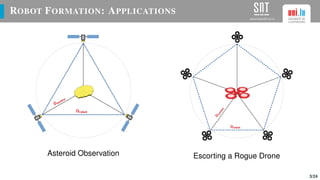
ROBOT FORMATION: APPLICATIONS
Asteroid Observation Escorting a Rogue Drone
3/24
TABLE OF CONTENTS
1 INTRODUCTION
2 ROBOT FORMATION APPROACHES
3 EXPERIMENTAL RESULTS
4 CONCLUSIONS AND FUTURE WORK
4/24
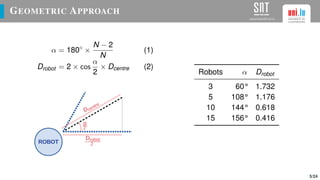
GEOMETRIC APPROACH
α = 180◦
×
N − 2
N
(1)
Drobot = 2 × cos
α
2
× Dcentre (2)
Robots α Drobot
3 60° 1.732
5 108° 1.176
10 144° 0.618
15 156° 0.416
5/24
FORMATION ALGORITHM
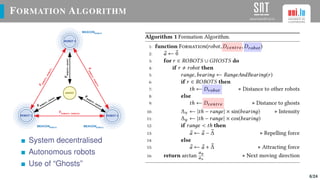
System decentralised
Autonomous robots
Use of “Ghosts”
6/24
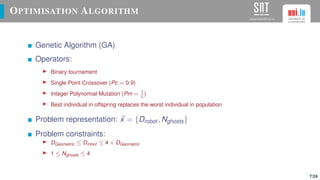
OPTIMISATION ALGORITHM
Genetic Algorithm (GA)
Operators:
I Binary tournament
I Single Point Crossover (Pc = 0.9)
I Integer Polynomial Mutation (Pm = 1
L
)
I Best individual in offspring replaces the worst individual in population
Problem representation: ~
x = {Drobot , Nghosts}
Problem constraints:
I DGeometric ≤ Drobot ≤ 4 × DGeometric
I 1 ≤ Nghosts ≤ 4
7/24
EVALUATION: FITNESS FUNCTION
F(~
x) =
1
M
M
X
j
[P(~
x) + min(~
x) + max (~
x)] + ω(G − 1) (3)
P(~
x) = k
N
X
i
~
rik (4)
εmin(~
x) =
N
X
i
| min[D(~
ri, ~
centre)] − Dcentre| (5)
εmax (~
x) =
N
X
i
| max[D(~
ri, ~
centre)] − Dcentre| (6)
8/24
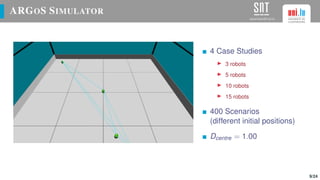
ARGOS SIMULATOR
4 Case Studies
I 3 robots
I 5 robots
I 10 robots
I 15 robots
400 Scenarios
(different initial positions)
Dcentre = 1.00
9/24
TABLE OF CONTENTS
1 INTRODUCTION
2 ROBOT FORMATION APPROACHES
3 EXPERIMENTAL RESULTS
4 CONCLUSIONS AND FUTURE WORK
10/24
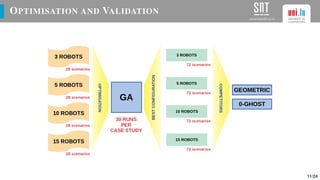
OPTIMISATION AND VALIDATION
11/24
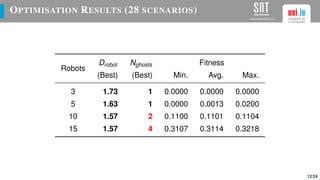
OPTIMISATION RESULTS (28 SCENARIOS)
Robots
Drobot Nghosts Fitness
(Best) (Best) Min. Avg. Max.
3 1.73 1 0.0000 0.0000 0.0000
5 1.63 1 0.0000 0.0013 0.0200
10 1.57 2 0.1100 0.1101 0.1104
15 1.57 4 0.3107 0.3114 0.3218
12/24
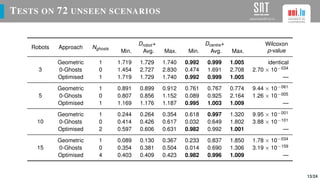
TESTS ON 72 UNSEEN SCENARIOS
Robots Approach Nghosts
Drobot ? Dcentre? Wilcoxon
p-value
Min. Avg. Max. Min. Avg. Max.
3
Geometric 1 1.719 1.729 1.740 0.992 0.999 1.005 identical
0-Ghosts 0 1.454 2.727 2.830 0.474 1.691 2.708 2.70 × 10−034
Optimised 1 1.719 1.729 1.740 0.992 0.999 1.005 —
5
Geometric 1 0.891 0.899 0.912 0.761 0.767 0.774 9.44 × 10−061
0-Ghosts 0 0.807 0.856 1.152 0.089 0.925 2.164 1.26 × 10−005
Optimised 1 1.169 1.176 1.187 0.995 1.003 1.009 —
10
Geometric 1 0.244 0.264 0.354 0.618 0.997 1.320 9.95 × 10−001
0-Ghosts 0 0.414 0.426 0.617 0.032 0.649 1.802 3.88 × 10−101
Optimised 2 0.597 0.606 0.631 0.982 0.992 1.001 —
15
Geometric 1 0.089 0.130 0.367 0.233 0.837 1.850 1.78 × 10−034
0-Ghosts 0 0.354 0.381 0.504 0.014 0.690 1.306 3.19 × 10−159
Optimised 4 0.403 0.409 0.423 0.982 0.996 1.009 —
13/24
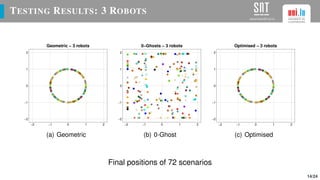
TESTING RESULTS: 3 ROBOTS
(a) Geometric (b) 0-Ghost (c) Optimised
Final positions of 72 scenarios
14/24
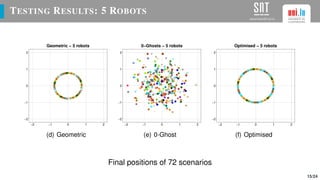
TESTING RESULTS: 5 ROBOTS
(d) Geometric (e) 0-Ghost (f) Optimised
Final positions of 72 scenarios
15/24
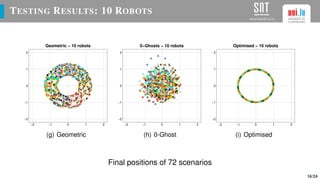
TESTING RESULTS: 10 ROBOTS
(g) Geometric (h) 0-Ghost (i) Optimised
Final positions of 72 scenarios
16/24
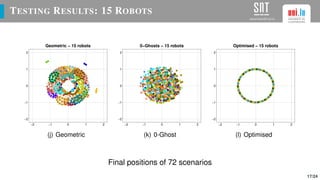
TESTING RESULTS: 15 ROBOTS
(j) Geometric (k) 0-Ghost (l) Optimised
Final positions of 72 scenarios
17/24
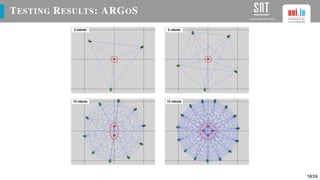
TESTING RESULTS: ARGOS
18/24
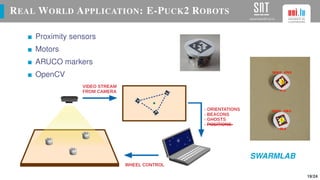
REAL WORLD APPLICATION: E-PUCK2 ROBOTS
Proximity sensors
Motors
ARUCO markers
OpenCV
SWARMLAB
19/24
E-PUCK2 FORMATION
20/24
TABLE OF CONTENTS
1 INTRODUCTION
2 ROBOT FORMATION APPROACHES
3 EXPERIMENTAL RESULTS
4 CONCLUSIONS AND FUTURE WORK
21/24
CONCLUSIONS
We have proposed a new formation algorithm
We have optimised its parameters using a GA
Several ghosts were needed in the more complex scenarios
Our approach have achieved stable formations in the 288 unseen scenarios
We have also validated our proposal using real robots (E-Puck2)
22/24
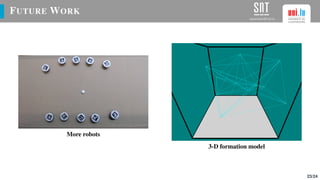
FUTURE WORK
More robots
3-D formation model
23/24
QUESTIONS?
Daniel H. Stolfi
daniel.stolfi@uni.lu
https://adars.uni.lu/
https://pcog.uni.lu/
https://wwwen.uni.lu/snt/
https://wwwen.uni.lu/
Optimising Autonomous Robot Swarm Parameters for Stable Formation Design
Daniel H. Stolfi1, and Grégoire Danoy1,2
1 SnT - Interdisciplinary Centre for Security, Reliability and Trust, University of Luxembourg, Luxembourg
2 FSTM/DCS, University of Luxembourg, Luxembourg
This work is supported by the Luxembourg National Research Fund (FNR) – ADARS Project, ref. C20/IS/14762457. The experiments presented in this paper
were carried out using the the SwarmLab facility of the FSTM/DCS and the HPC facilities of the University of Luxembourg – see https://hpc.uni.lu.
24/24

Optimising Autonomous Robot Swarm Parameters for Stable Formation Design

  • 1.
    University of Luxembourg Multilingual.Personalized. Connected. Optimising Autonomous Robot Swarm Parameters for Stable Formation Design Daniel H. Stolfi1 Grégoire Danoy1,2 The Genetic and Evolutionary Computation Conference – GECCO 2022 July 9th – 13th, 2022 1 SnT - Interdisciplinary Centre for Security, Reliability and Trust, University of Luxembourg, Luxembourg 2 FSTM/DCS, University of Luxembourg, Luxembourg
  • 2.
    TABLE OF CONTENTS 1INTRODUCTION 2 ROBOT FORMATION APPROACHES 3 EXPERIMENTAL RESULTS 4 CONCLUSIONS AND FUTURE WORK
  • 3.
    TABLE OF CONTENTS 1INTRODUCTION 2 ROBOT FORMATION APPROACHES 3 EXPERIMENTAL RESULTS 4 CONCLUSIONS AND FUTURE WORK 1/24
  • 4.
    ROBOT FORMATION Coordination ofswarms of robots Predefined shapes Self Organisation Collective tasks: I Surveillance I Salvage I Mapping I Displays I Etc. Image source: https://newsroom.intel.com/ 2/24
  • 5.
    ROBOT FORMATION: APPLICATIONS AsteroidObservation Escorting a Rogue Drone 3/24
  • 6.
    TABLE OF CONTENTS 1INTRODUCTION 2 ROBOT FORMATION APPROACHES 3 EXPERIMENTAL RESULTS 4 CONCLUSIONS AND FUTURE WORK 4/24
  • 7.
    GEOMETRIC APPROACH α =180◦ × N − 2 N (1) Drobot = 2 × cos α 2 × Dcentre (2) Robots α Drobot 3 60° 1.732 5 108° 1.176 10 144° 0.618 15 156° 0.416 5/24
  • 8.
  • 9.
    OPTIMISATION ALGORITHM Genetic Algorithm(GA) Operators: I Binary tournament I Single Point Crossover (Pc = 0.9) I Integer Polynomial Mutation (Pm = 1 L ) I Best individual in offspring replaces the worst individual in population Problem representation: ~ x = {Drobot , Nghosts} Problem constraints: I DGeometric ≤ Drobot ≤ 4 × DGeometric I 1 ≤ Nghosts ≤ 4 7/24
  • 10.
    EVALUATION: FITNESS FUNCTION F(~ x)= 1 M M X j [P(~ x) + min(~ x) + max (~ x)] + ω(G − 1) (3) P(~ x) = k N X i ~ rik (4) εmin(~ x) = N X i | min[D(~ ri, ~ centre)] − Dcentre| (5) εmax (~ x) = N X i | max[D(~ ri, ~ centre)] − Dcentre| (6) 8/24
  • 11.
    ARGOS SIMULATOR 4 CaseStudies I 3 robots I 5 robots I 10 robots I 15 robots 400 Scenarios (different initial positions) Dcentre = 1.00 9/24
  • 12.
    TABLE OF CONTENTS 1INTRODUCTION 2 ROBOT FORMATION APPROACHES 3 EXPERIMENTAL RESULTS 4 CONCLUSIONS AND FUTURE WORK 10/24
  • 13.
  • 14.
    OPTIMISATION RESULTS (28SCENARIOS) Robots Drobot Nghosts Fitness (Best) (Best) Min. Avg. Max. 3 1.73 1 0.0000 0.0000 0.0000 5 1.63 1 0.0000 0.0013 0.0200 10 1.57 2 0.1100 0.1101 0.1104 15 1.57 4 0.3107 0.3114 0.3218 12/24
  • 15.
    TESTS ON 72UNSEEN SCENARIOS Robots Approach Nghosts Drobot ? Dcentre? Wilcoxon p-value Min. Avg. Max. Min. Avg. Max. 3 Geometric 1 1.719 1.729 1.740 0.992 0.999 1.005 identical 0-Ghosts 0 1.454 2.727 2.830 0.474 1.691 2.708 2.70 × 10−034 Optimised 1 1.719 1.729 1.740 0.992 0.999 1.005 — 5 Geometric 1 0.891 0.899 0.912 0.761 0.767 0.774 9.44 × 10−061 0-Ghosts 0 0.807 0.856 1.152 0.089 0.925 2.164 1.26 × 10−005 Optimised 1 1.169 1.176 1.187 0.995 1.003 1.009 — 10 Geometric 1 0.244 0.264 0.354 0.618 0.997 1.320 9.95 × 10−001 0-Ghosts 0 0.414 0.426 0.617 0.032 0.649 1.802 3.88 × 10−101 Optimised 2 0.597 0.606 0.631 0.982 0.992 1.001 — 15 Geometric 1 0.089 0.130 0.367 0.233 0.837 1.850 1.78 × 10−034 0-Ghosts 0 0.354 0.381 0.504 0.014 0.690 1.306 3.19 × 10−159 Optimised 4 0.403 0.409 0.423 0.982 0.996 1.009 — 13/24
  • 16.
    TESTING RESULTS: 3ROBOTS (a) Geometric (b) 0-Ghost (c) Optimised Final positions of 72 scenarios 14/24
  • 17.
    TESTING RESULTS: 5ROBOTS (d) Geometric (e) 0-Ghost (f) Optimised Final positions of 72 scenarios 15/24
  • 18.
    TESTING RESULTS: 10ROBOTS (g) Geometric (h) 0-Ghost (i) Optimised Final positions of 72 scenarios 16/24
  • 19.
    TESTING RESULTS: 15ROBOTS (j) Geometric (k) 0-Ghost (l) Optimised Final positions of 72 scenarios 17/24
  • 20.
  • 21.
    REAL WORLD APPLICATION:E-PUCK2 ROBOTS Proximity sensors Motors ARUCO markers OpenCV SWARMLAB 19/24
  • 22.
  • 23.
    TABLE OF CONTENTS 1INTRODUCTION 2 ROBOT FORMATION APPROACHES 3 EXPERIMENTAL RESULTS 4 CONCLUSIONS AND FUTURE WORK 21/24
  • 24.
    CONCLUSIONS We have proposeda new formation algorithm We have optimised its parameters using a GA Several ghosts were needed in the more complex scenarios Our approach have achieved stable formations in the 288 unseen scenarios We have also validated our proposal using real robots (E-Puck2) 22/24
  • 25.
    FUTURE WORK More robots 3-Dformation model 23/24
  • 26.
    QUESTIONS? Daniel H. Stolfi daniel.stolfi@uni.lu https://adars.uni.lu/ https://pcog.uni.lu/ https://wwwen.uni.lu/snt/ https://wwwen.uni.lu/ OptimisingAutonomous Robot Swarm Parameters for Stable Formation Design Daniel H. Stolfi1, and Grégoire Danoy1,2 1 SnT - Interdisciplinary Centre for Security, Reliability and Trust, University of Luxembourg, Luxembourg 2 FSTM/DCS, University of Luxembourg, Luxembourg This work is supported by the Luxembourg National Research Fund (FNR) – ADARS Project, ref. C20/IS/14762457. The experiments presented in this paper were carried out using the the SwarmLab facility of the FSTM/DCS and the HPC facilities of the University of Luxembourg – see https://hpc.uni.lu. 24/24