Teacher Reflection and Growth
through Classroom Observations
High Schools That Work (HSTW)
Staff Development Conference
Atlanta, GA
July 17, 2015
Tysza Gandha
Senior Research Associate
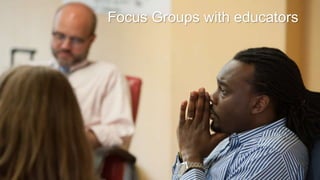
Focus Groups with educators
3
“Teachers can see their strengths and
weak areas…and have a roadmap for
how to reach higher.”
“I like reflecting on where I am and
where I want to be.”
“My admin asked a lot of tough but
good questions.”
“It takes so much time…I don’t know
how to do it all.”
“Sometimes I feel I don’t know what
feedback to give.”
“My admin met with me for less than
five minutes, just asked me to sign and
asked if I am happy with my score.”
Participant introductions
- Your school or district or state
- Your role
- Your goal(s) for classroom
observations
- Your biggest challenge(s) with
classroom observations
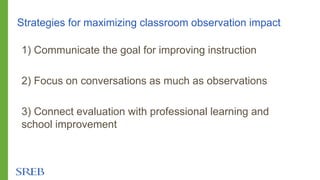
Strategies for maximizing classroom observation impact
1) Communicate the goal for improving instruction
2) Focus on conversations as much as observations
3) Connect evaluation with professional learning and
school improvement
Strategies for maximizing classroom observation impact
1) Communicate the goal for improving instruction
2) Focus on conversations as much as observations
3) Connect evaluation with professional learning and
school improvement
What’s your observation system called?
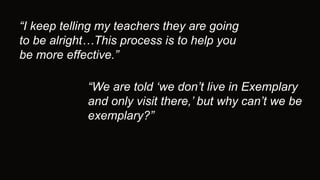
“I keep telling my teachers they are going
to be alright…This process is to help you
be more effective.”
“We are told ‘we don’t live in Exemplary
and only visit there,’ but why can’t we be
exemplary?”
Participant discussion
Thinking about your communication
about classroom observations,
- What’s going well?
- What could you do differently?
Strategies for maximizing classroom observation impact
1) Communicate the goal for improving instruction
2) Focus on conversations as much as observations
3) Connect evaluation with professional learning and
school improvement
Go to todaysmeet.com/growya
What have YOU found
challenging about
observation-related
conversations?
Tips for creating more time
- A school schedule and team structure that
“make the most of existing resources”
- “Focusing is deciding what NOT to do.”
Tips for improving instructional conversations
- Get feedback on your feedback
- Get better with practice
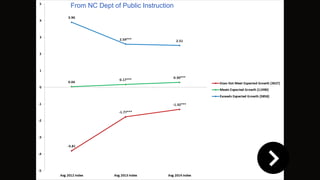
From NC Dept of Public Instruction
Strategies for maximizing classroom observation impact
1) Communicate the goal for improving instruction
2) Focus on conversations as much as observations
3) Connect evaluation with professional learning and
school improvement
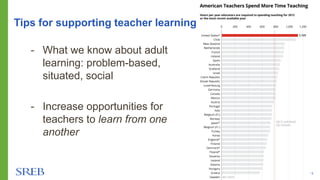
Tips for supporting teacher learning
- What we know about adult
learning: problem-based,
situated, social
- Increase opportunities for
teachers to learn from one
another
ALF 5/1/15 Baxter & Gandha 21
- How are observation data being used for
- Teacher professional growth plans
- Team/department/PLC plans
- Schoolwide improvement plans
Tips for aligning teacher and school improvement
For more information:
Tysza Gandha
Senior Research Associate
Tysza.Gandha@sreb.org
(704) 559-9917
www.sreb.org/ee
Thank you!

Teacher Reflection and Growth Through Classroom Observations

  • 1.
    Teacher Reflection andGrowth through Classroom Observations High Schools That Work (HSTW) Staff Development Conference Atlanta, GA July 17, 2015 Tysza Gandha Senior Research Associate
  • 2.
  • 3.
  • 5.
    “Teachers can seetheir strengths and weak areas…and have a roadmap for how to reach higher.” “I like reflecting on where I am and where I want to be.” “My admin asked a lot of tough but good questions.”
  • 6.
    “It takes somuch time…I don’t know how to do it all.” “Sometimes I feel I don’t know what feedback to give.” “My admin met with me for less than five minutes, just asked me to sign and asked if I am happy with my score.”
  • 7.
    Participant introductions - Yourschool or district or state - Your role - Your goal(s) for classroom observations - Your biggest challenge(s) with classroom observations
  • 8.
    Strategies for maximizingclassroom observation impact 1) Communicate the goal for improving instruction 2) Focus on conversations as much as observations 3) Connect evaluation with professional learning and school improvement
  • 9.
    Strategies for maximizingclassroom observation impact 1) Communicate the goal for improving instruction 2) Focus on conversations as much as observations 3) Connect evaluation with professional learning and school improvement
  • 11.
  • 12.
    “I keep tellingmy teachers they are going to be alright…This process is to help you be more effective.” “We are told ‘we don’t live in Exemplary and only visit there,’ but why can’t we be exemplary?”
  • 13.
    Participant discussion Thinking aboutyour communication about classroom observations, - What’s going well? - What could you do differently?
  • 14.
    Strategies for maximizingclassroom observation impact 1) Communicate the goal for improving instruction 2) Focus on conversations as much as observations 3) Connect evaluation with professional learning and school improvement
  • 16.
    Go to todaysmeet.com/growya Whathave YOU found challenging about observation-related conversations?
  • 17.
    Tips for creatingmore time - A school schedule and team structure that “make the most of existing resources” - “Focusing is deciding what NOT to do.”
  • 18.
    Tips for improvinginstructional conversations - Get feedback on your feedback - Get better with practice
  • 19.
    From NC Deptof Public Instruction
  • 20.
    Strategies for maximizingclassroom observation impact 1) Communicate the goal for improving instruction 2) Focus on conversations as much as observations 3) Connect evaluation with professional learning and school improvement
  • 21.
    Tips for supportingteacher learning - What we know about adult learning: problem-based, situated, social - Increase opportunities for teachers to learn from one another ALF 5/1/15 Baxter & Gandha 21
  • 22.
    - How areobservation data being used for - Teacher professional growth plans - Team/department/PLC plans - Schoolwide improvement plans Tips for aligning teacher and school improvement
  • 23.
    For more information: TyszaGandha Senior Research Associate Tysza.Gandha@sreb.org (704) 559-9917 www.sreb.org/ee Thank you!