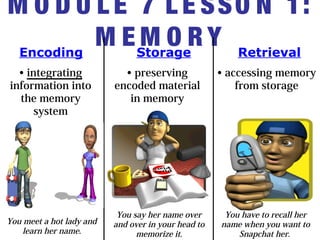
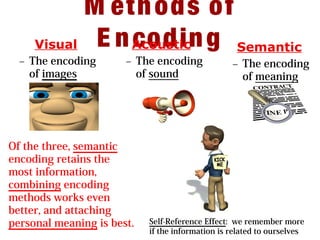
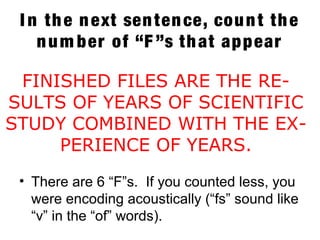
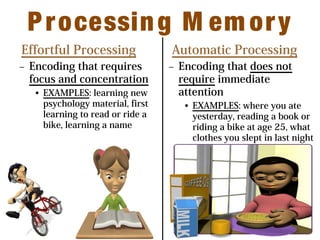
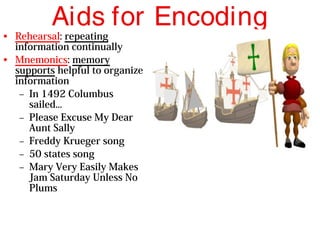
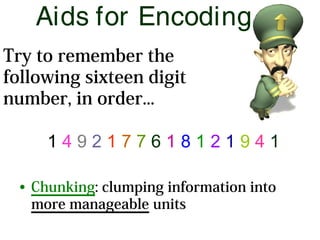
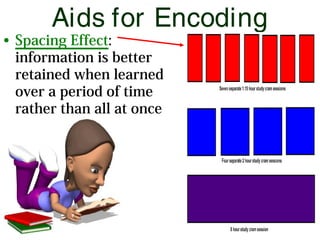
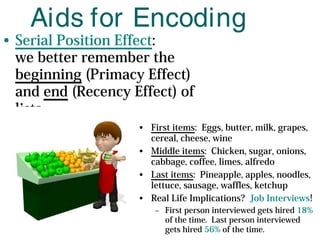
1) The document discusses the three main components of memory: encoding, storage, and retrieval. It focuses on different methods of encoding information, such as visually, acoustically, and semantically, as well as aids that help with encoding like rehearsal, mnemonics, chunking, and spacing effect.
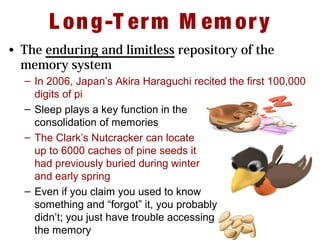
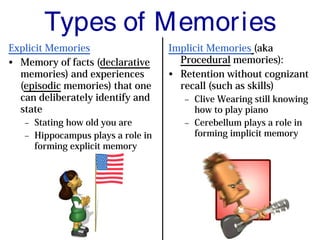
2) Information is held briefly in short-term memory before being transferred to long-term memory for storage. Long-term memory is able to hold information essentially limitlessly through consolidation during sleep. There are both explicit and implicit types of long-term memories.
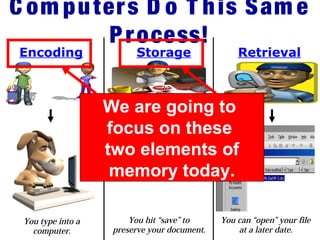
3) The document provides examples of how memory encoding, storage, and retrieval work similarly in computers to the human memory system.