SACON
SACON International 2020
India | Bangalore | February 21 - 22 | Gregory Pickett
Adventures In SDN Security
SACON
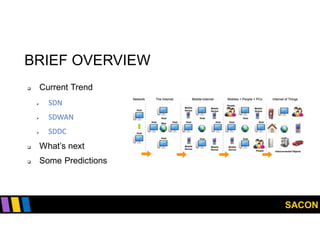
BRIEF OVERVIEW
 Current Trend
 SDN
 SDWAN
 SDDC
 What’s next
 Some Predictions
SACON
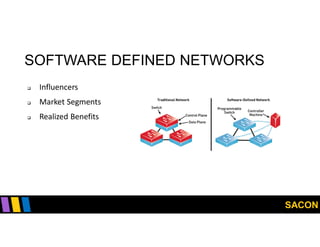
SOFTWARE DEFINED NETWORKS
 Influencers
 Market Segments
 Realized Benefits
SACON
INFLUENCERS
 Academics
 Vendors
 Big Switch Networks
 VMWare
 Cisco
 Practitioners
SACON
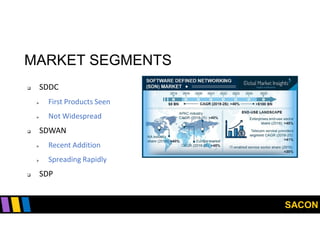
MARKET SEGMENTS
 SDDC
 First Products Seen
 Not Widespread
 SDWAN
 Recent Addition
 Spreading Rapidly
 SDP
SACON
REALIZED BENEFITS
 Integrated Approach
 Orchestration is Baked In
 Moves Toward Composable
Infrastructure
 Optimized Operations
 Reduced Complexity
 Faster Application Development
 Reduced Provisioning
 Improved Bandwidth
SACON
REALIZED BENEFITS
 Optimized Operations
 Improved Uptime
 Shorter Return on Investment
 Dynamic and Flexible Security
SACON
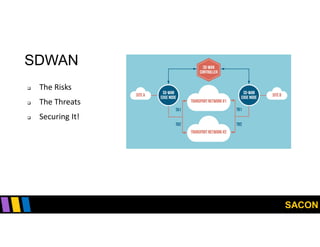
SDWAN
 The Risks
 The Threats
 Securing It!
SACON
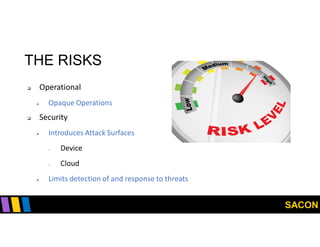
THE RISKS
 Operational
 Opaque Operations
 Security
 Introduces Attack Surfaces
- Device
- Cloud
 Limits detection of and response to threats
SACON
VULNERABILITIES
 Weak Encryption
 Weak Authentication
 Insecure Applications
SACON
WEAK ENCRYPTION
 Bad Certificates
 Poor Key Management
 No Encryption
SACON
WEAK AUTHENTICATION
 Client-Side Logic
 Default Passwords
 Hardcoded Credentials
 Hardcoded Certificates
 Route Spoofing
 No Authentication
SACON
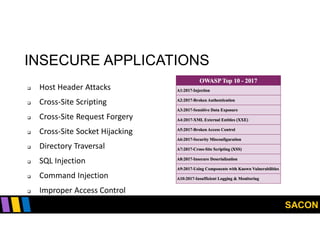
INSECURE APPLICATIONS
 Host Header Attacks
 Cross-Site Scripting
 Cross-Site Request Forgery
 Cross-Site Socket Hijacking
 Directory Traversal
 SQL Injection
 Command Injection
 Improper Access Control
SACON
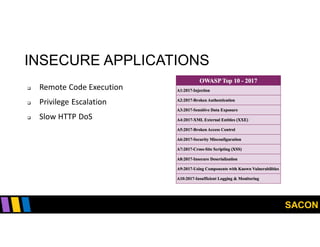
INSECURE APPLICATIONS
 Remote Code Execution
 Privilege Escalation
 Slow HTTP DoS
SACON
Attacks
 Viprinet
 Citrix
 Viptela
 SilverPeak
 Riverbed
 Versa
 Arista
 Verocloud
 Talari
 Brain4Net
SACON
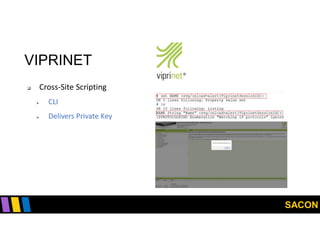
VIPRINET
 Cross-Site Scripting
 CLI
 Delivers Private Key
SACON
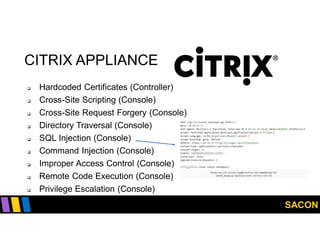
CITRIX APPLIANCE
 Hardcoded Certificates (Controller)
 Cross-Site Scripting (Console)
 Cross-Site Request Forgery (Console)
 Directory Traversal (Console)
 SQL Injection (Console)
 Command Injection (Console)
 Improper Access Control (Console)
 Remote Code Execution (Console)
 Privilege Escalation (Console)
SACON
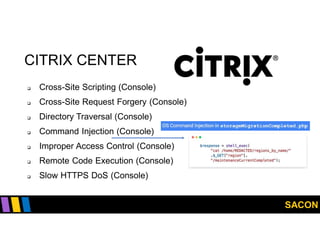
CITRIX CENTER
 Cross-Site Scripting (Console)
 Cross-Site Request Forgery (Console)
 Directory Traversal (Console)
 Command Injection (Console)
 Improper Access Control (Console)
 Remote Code Execution (Console)
 Slow HTTPS DoS (Console)
SACON
VIPTELA
 Cross-Site Request Forgery
 API
SACON
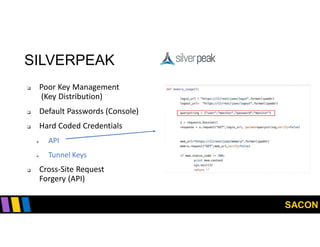
SILVERPEAK
 Poor Key Management
(Key Distribution)
 Default Passwords (Console)
 Hard Coded Credentials
 API
 Tunnel Keys
 Cross-Site Request
Forgery (API)
SACON
RIVERBED
 Host Header
 Console
 Password Reset
SACON
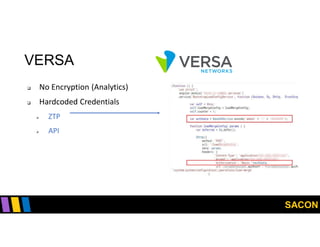
VERSA
 No Encryption (Analytics)
 Hardcoded Credentials
 ZTP
 API
SACON
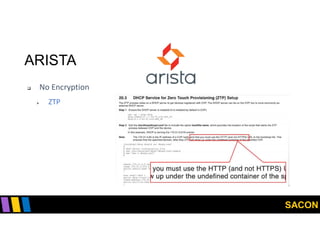
ARISTA
 No Encryption
 ZTP
SACON
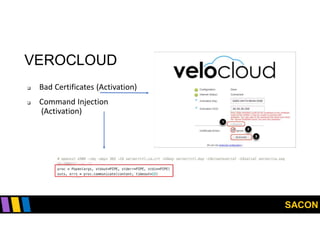
VEROCLOUD
 Bad Certificates (Activation)
 Command Injection
(Activation)
SACON
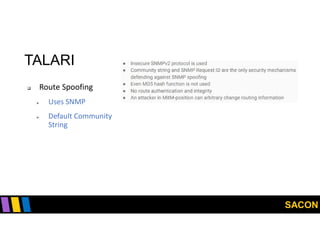
TALARI
 Route Spoofing
 Uses SNMP
 Default Community
String
SACON
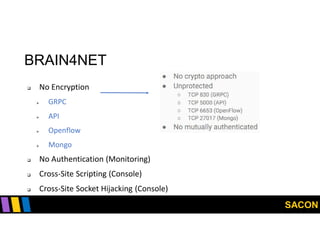
BRAIN4NET
 No Encryption
 GRPC
 API
 Openflow
 Mongo
 No Authentication (Monitoring)
 Cross-Site Scripting (Console)
 Cross-Site Socket Hijacking (Console)
SACON
SECURING IT
 General Approaches
 Case Study
SACON
GENERAL APPROACHES
 Backhaul Encryption
 Second Line of Defense
 Inspection
 Firewalling
 Logging
 Monitoring
SACON
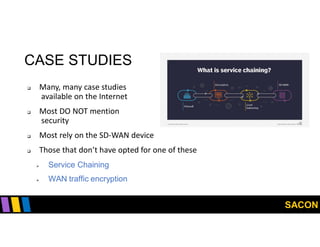
CASE STUDIES
 Many, many case studies
available on the Internet
 Most DO NOT mention
security
 Most rely on the SD-WAN device
 Those that don’t have opted for one of these
 Service Chaining
 WAN traffic encryption
SACON
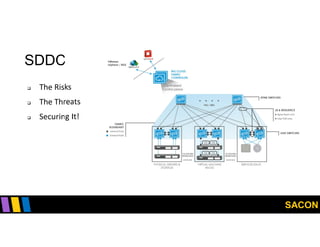
SDDC
 The Risks
 The Threats
 Securing It!
SACON
THE RISKS
 Operational
 Large Failure Domain
 Security
 Introduces Attack Surfaces
- Forwarding Elements
- Controllers
 Limits detection of and response to threats
SACON
VULNERABILITIES
 Weak Encryption
 Denial of Service
 Weak Authentication
 Insecure Session
 Insecure Installation
 Insecure Boot
 Insecure Applications
 Others
SACON
WEAK ENCRYPTION
 Outdated OpenSSL
 Insufficient Entropy
 Hardcoded Certificate
 No Encryption
SACON
WEAK AUTHENTICATION
 Default Password
 Hardcoded Credentials
 Weak Passwords
 No Authentication
SACON
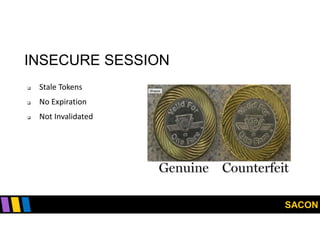
INSECURE SESSION
 Stale Tokens
 No Expiration
 Not Invalidated
SACON
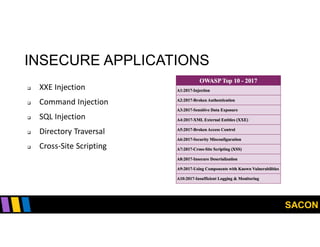
INSECURE APPLICATIONS
 XXE Injection
 Command Injection
 SQL Injection
 Directory Traversal
 Cross-Site Scripting
SACON
OTHERS
 Improper Access Controls
 Shell Bypass
 Privilege Escalation
SACON
Attacks
 Floodlight
 Open Daylight
 Cisco APIC
 ONOS
 Openflow
 Protocol
 Agents
 ONIE
 Cumulus Linux
 MLNX-OS
 Switch Light
SACON
FLOODLIGHT
 Open Source
 No Encryption (Openflow, Console)
 Denial of Service (Controller)
 No Authentication (Console)
 Atlassian
 Denial of Service (Forwarding Module)
 Cross-Site Scripting (Console)
SACON
FLOODLIGHT
 Big Cloud Fabric
 No Encryption (ZTN, ONIE, Sync)
 No Authentication (ZTN, ONIE)
 Weak Password (API)
 Token Stale, Doesn’t Expire, and Doesn’t Invalidate (API)
SACON
BIG CLOUD FABRIC (Architecture)
 Storage
 Structure
 Partitions
 Hosts
 Services
 Authentication
 Users
 Services
 Management
 SSH
 Console
 API
SACON
BIG CLOUD FABRIC (Services)
 Shell
 Mail
 DNS
 Proxy
 Web (Console/API/ONIE/ZTN)
 Queues
 Database
 Sync (Cluster)
 OpenFlow
 Others
SACON
BIG CLOUD FABRIC (Backdoor)
 It’s not magic!
 It’s built-in
 Just enter “debug bash”
 From there, “sudo” anything that you want
SACON
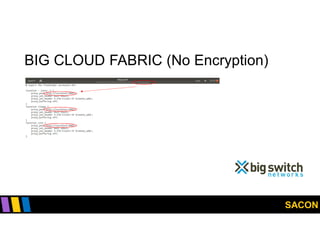
BIG CLOUD FABRIC (No Encryption)
SACON
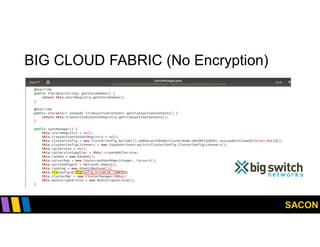
BIG CLOUD FABRIC (No Encryption)
SACON
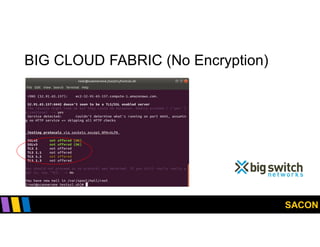
BIG CLOUD FABRIC (No Encryption)
SACON
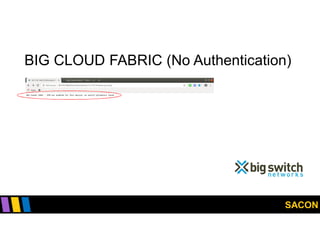
BIG CLOUD FABRIC (No Authentication)
SACON
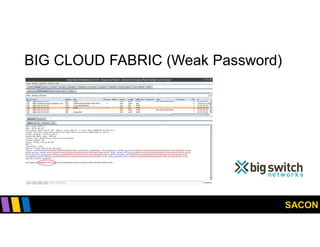
BIG CLOUD FABRIC (Weak Password)
SACON
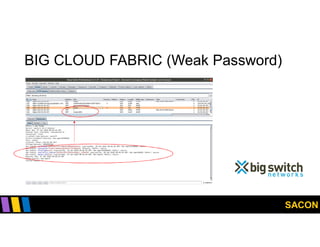
BIG CLOUD FABRIC (Weak Password)
SACON
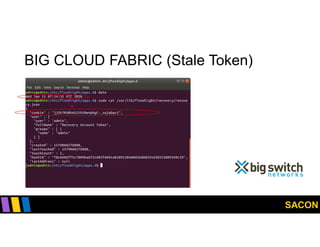
BIG CLOUD FABRIC (Stale Token)
SACON
BIG CLOUD FABRIC (Stale Token)
SACON
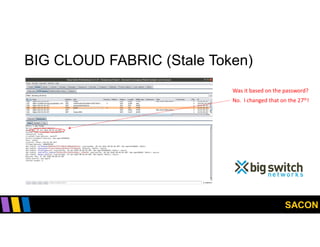
BIG CLOUD FABRIC (Stale Token)
Was it based on the password?
No. I changed that on the 27th!
SACON
BIG CLOUD FABRIC (Stale Token)
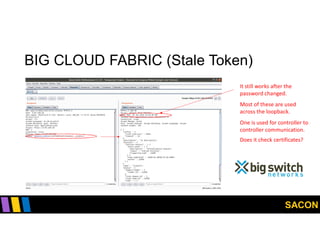
It still works after the
password changed.
Most of these are used
across the loopback.
One is used for controller to
controller communication.
Does it check certificates?
SACON
BIG CLOUD FABRIC (Remaining)
 API
 OpenFlow
 Sync (with working client)
SACON
OPEN DAYLIGHT
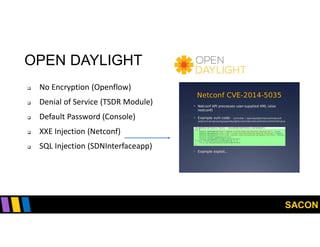
 No Encryption (Openflow)
 Denial of Service (TSDR Module)
 Default Password (Console)
 XXE Injection (Netconf)
 SQL Injection (SDNInterfaceapp)
SACON
CISCO APIC
 Hardcoded Certificate (csync, ifc)
 No Authentication (HMS)
 Weak Password (Console)
 Token Not Invalidated (Console)
 Improper Access Controls (HMS)
SACON
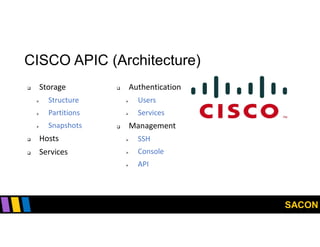
CISCO APIC (Architecture)
 Storage
 Structure
 Partitions
 Snapshots
 Hosts
 Services
 Authentication
 Users
 Services
 Management
 SSH
 Console
 API
SACON
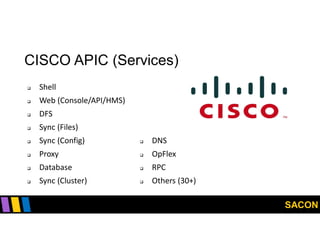
CISCO APIC (Services)
 Shell
 Web (Console/API/HMS)
 DFS
 Sync (Files)
 Sync (Config)
 Proxy
 Database
 Sync (Cluster)
 DNS
 OpFlex
 RPC
 Others (30+)
SACON
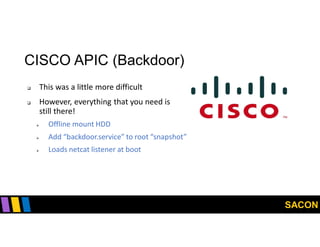
CISCO APIC (Backdoor)
 This was a little more difficult
 However, everything that you need is
still there!
 Offline mount HDD
 Add “backdoor.service” to root “snapshot”
 Loads netcat listener at boot
SACON
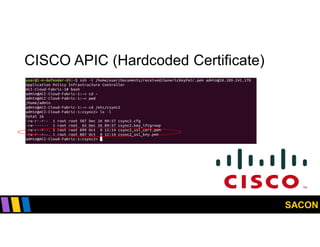
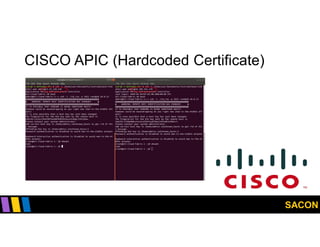
CISCO APIC (Hardcoded Certificate)
SACON
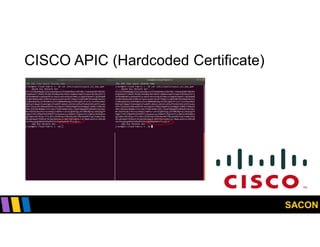
CISCO APIC (Hardcoded Certificate)
SACON
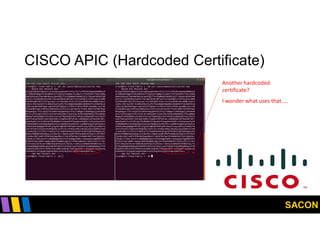
CISCO APIC (Hardcoded Certificate)
SACON
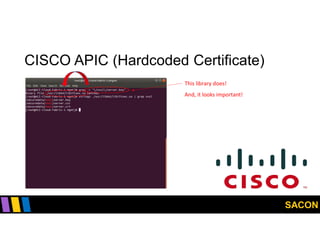
CISCO APIC (Hardcoded Certificate)
Another hardcoded
certificate?
I wonder what uses that ….
SACON
CISCO APIC (Hardcoded Certificate)
This library does!
And, it looks important!
SACON
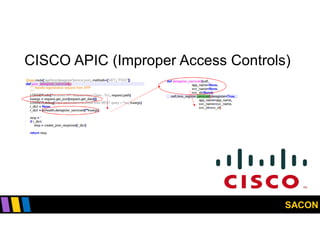
CISCO APIC (Improper Access Controls)
SACON
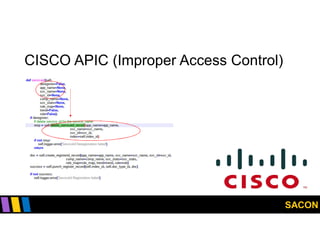
CISCO APIC (Improper Access Control)
SACON
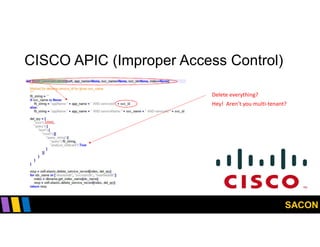
CISCO APIC (Improper Access Control)
Delete everything?
Hey! Aren’t you multi-tenant?
SACON
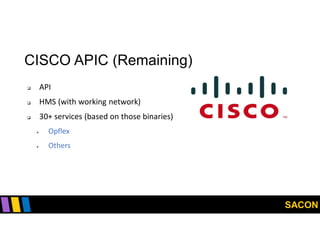
CISCO APIC (Remaining)
 API
 HMS (with working network)
 30+ services (based on those binaries)
 Opflex
 Others
SACON
ONOS
 Denial of Service (OVSDB Component)
 XXE Injection (Notification,
XMLCONFIGPARSER)
 Command Injection (YangWebResource)
 Directory Traversal (Console)
SACON
Openflow
 Protocol
 Denial of Service
 Agents
 Arista, Dell, HP, Huawei, IBM, Juniper, Netgear
Pronto, OVS, Switch Light, and eSwitch
 No Encryption
 Debug Port?
SACON
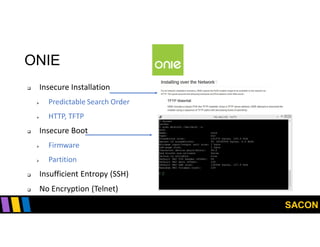
ONIE
 Insecure Installation
 Predictable Search Order
 HTTP, TFTP
 Insecure Boot
 Firmware
 Partition
 Insufficient Entropy (SSH)
 No Encryption (Telnet)
SACON
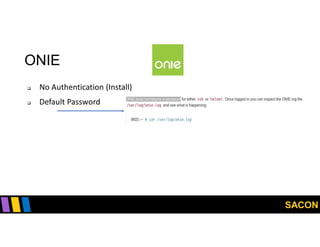
ONIE
 No Authentication (Install)
 Default Password
SACON
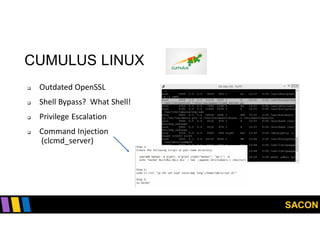
CUMULUS LINUX
 Outdated OpenSSL
 Shell Bypass? What Shell!
 Privilege Escalation
 Command Injection
(clcmd_server)
SACON
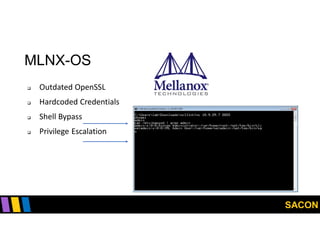
MLNX-OS
 Outdated OpenSSL
 Hardcoded Credentials
 Shell Bypass
 Privilege Escalation
SACON
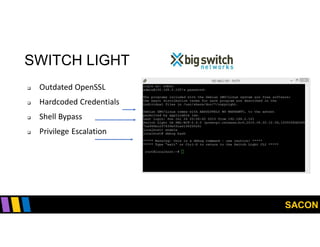
SWITCH LIGHT
 Outdated OpenSSL
 Hardcoded Credentials
 Shell Bypass
 Privilege Escalation
SACON
SECURING IT
 General Approaches
 Case Study
SACON
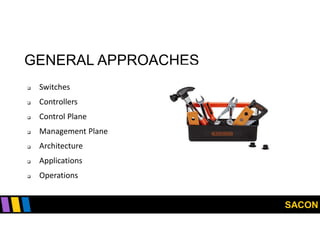
GENERAL APPROACHES
 Switches
 Controllers
 Control Plane
 Management Plane
 Architecture
 Applications
 Operations
SACON
SWITCHES
 Secure Boot
 TPM
 Signed Firmware
 Install Environment
 Remove Telnet
 Increase Key Entropy
 Force Password Changes
 Remove TFTP waterfall
 Encrypted Install
 Authenticated Install
SACON
SWITCHES
 TLS
 Between forwarding element
and controllers
 Using Updated libraries
 Add Mutual Authentication
 DevSecOps or SDN to coordinate certificate
and key distribution
SACON
SWITCHES
 Hardening
 Install Environment (Above)
 Operating System
- Changeable names
- Forced password changes
- Remove uid 0 from admin
- 2FA for shell?
- Remove unnecessary tools … Etc.
SACON
CONTROLLERS
 TLS (Between controllers and users)
 Hardening
 Code Review
 Testing
SACON
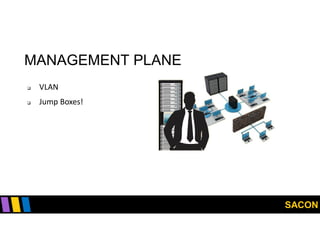
MANAGEMENT PLANE
 VLAN
 Jump Boxes!
SACON
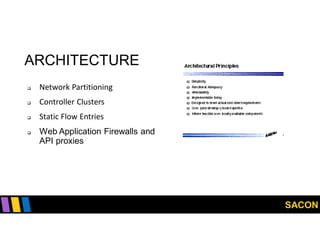
ARCHITECTURE
 Network Partitioning
 Controller Clusters
 Static Flow Entries
 Web Application Firewalls and
API proxies
SACON
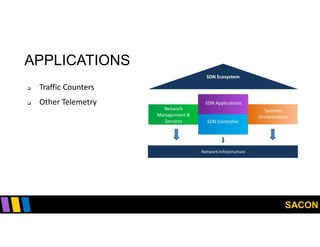
APPLICATIONS
 Traffic Counters
 Other Telemetry
SACON
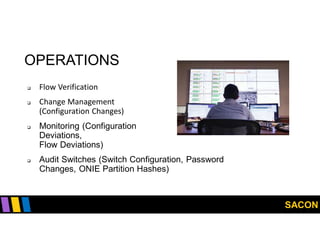
OPERATIONS
 Flow Verification
 Change Management
(Configuration Changes)
 Monitoring (Configuration
Deviations,
Flow Deviations)
 Audit Switches (Switch Configuration, Password
Changes, ONIE Partition Hashes)
SACON
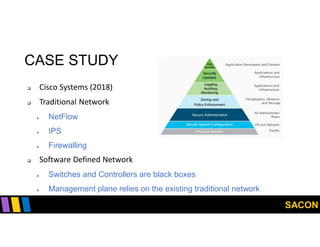
CASE STUDY
 Cisco Systems (2018)
 Traditional Network
 NetFlow
 IPS
 Firewalling
 Software Defined Network
 Switches and Controllers are black boxes
 Management plane relies on the existing traditional network
SACON
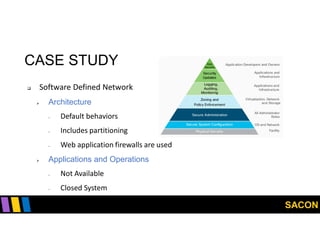
CASE STUDY
 Software Defined Network
 Architecture
- Default behaviors
- Includes partitioning
- Web application firewalls are used
 Applications and Operations
- Not Available
- Closed System
SACON
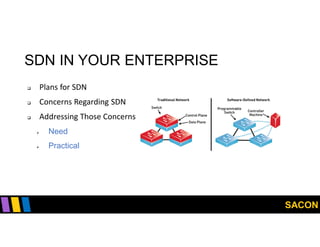
SDN IN YOUR ENTERPRISE
 Plans for SDN
 Concerns Regarding SDN
 Addressing Those Concerns
 Need
 Practical
SACON
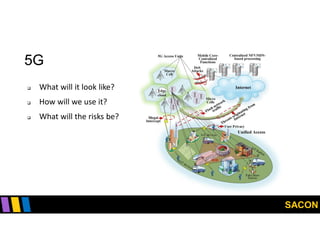
5G
 What will it look like?
 How will we use it?
 What will the risks be?
SACON
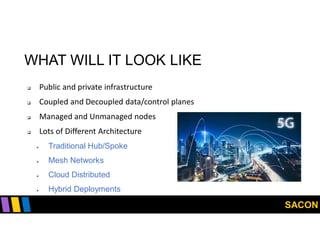
WHAT WILL IT LOOK LIKE
 Public and private infrastructure
 Coupled and Decoupled data/control planes
 Managed and Unmanaged nodes
 Lots of Different Architecture
 Traditional Hub/Spoke
 Mesh Networks
 Cloud Distributed
 Hybrid Deployments
SACON
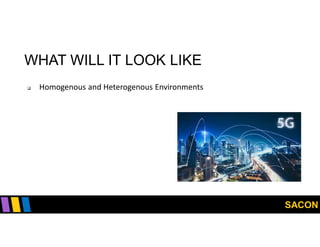
WHAT WILL IT LOOK LIKE
 Homogenous and Heterogenous Environments
SACON
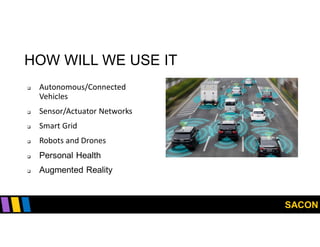
HOW WILL WE USE IT
 Autonomous/Connected
Vehicles
 Sensor/Actuator Networks
 Smart Grid
 Robots and Drones
 Personal Health
 Augmented Reality
SACON
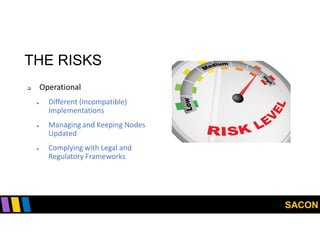
THE RISKS
 Operational
 Different (Incompatible)
Implementations
 Managing and Keeping Nodes
Updated
 Complying with Legal and
Regulatory Frameworks
SACON
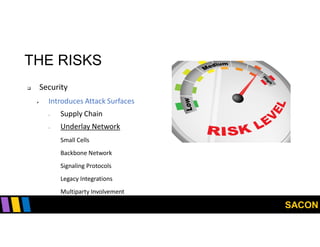
THE RISKS
 Security
 Introduces Attack Surfaces
- Supply Chain
- Underlay Network
Small Cells
Backbone Network
Signaling Protocols
Legacy Integrations
Multiparty Involvement
SACON
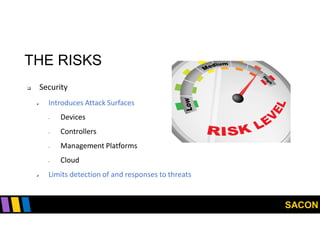
THE RISKS
 Security
 Introduces Attack Surfaces
- Devices
- Controllers
- Management Platforms
- Cloud
 Limits detection of and responses to threats
SACON
VULNERABILITIES
 Weak Encryption
 Denial of Service
 Weak Authentication
 Information Disclosure
 Parameter Manipulation
 Others
SACON
WEAK ENCRYPTION
 Poor Key Management
(Radio Interface
key exchange)
 Forced Downgrades
(3G/Weaker Encryption)
 Differing Standards
 In Transit
 Multiparty Involvement
 No Encryption (Backhaul Network)
SACON
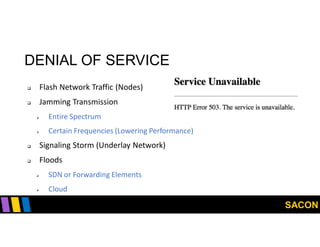
DENIAL OF SERVICE
 Flash Network Traffic (Nodes)
 Jamming Transmission
 Entire Spectrum
 Certain Frequencies (Lowering Performance)
 Signaling Storm (Underlay Network)
 Floods
 SDN or Forwarding Elements
 Cloud
SACON
WEAK AUTHENTICATION
 Differing Standards
 In Transit
 Multiparty Involvement
SACON
INFORMATION DISCLOSURE
 Timing/Boundary/Caching Attacks
(User Location)
 Differing Standards
 At Rest
 Multiparty Involvement
 Shared Resources (Cloud)
SACON
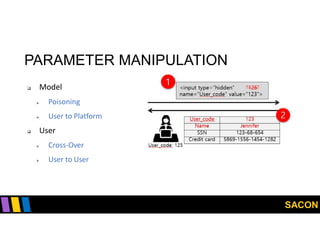
PARAMETER MANIPULATION
 Model
 Poisoning
 User to Platform
 User
 Cross-Over
 User to User
SACON
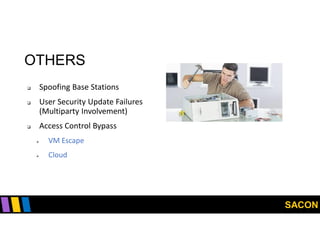
OTHERS
 Spoofing Base Stations
 User Security Update Failures
(Multiparty Involvement)
 Access Control Bypass
 VM Escape
 Cloud
SACON
SECURING IT
 General Approaches
 New Approaches
SACON
GENERAL APPROACHES
 Backhaul Encryption
 Second Line of Defense
 Product/Service appropriate
add-ins
 Work with Providers
SACON
BACKHAUL ENCRYPTION
 Don’t rely on the provider
 Encrypt your traffic
SACON
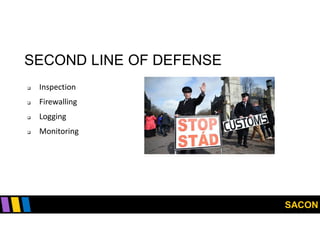
SECOND LINE OF DEFENSE
 Inspection
 Firewalling
 Logging
 Monitoring
SACON
PRODUCT/SERVICES
 Zero Trust
 Proxies and Gateways
SACON
WORK WITH PROVIDERS
 Additional Physical Layer Security
 Radio-Frequency (RF) Fingerprinting
 Asymmetric Security Schemes
 Dynamic Changing Security
 Host Identity Protocol (HIP) for radio interface
key exchange
 Backhaul encryption (Native)
 Adoption of fiber ring network protection
SACON
WORK WITH PROVIDERS
 More use of the cloud for C-RAN
operations
 Better compartmentalization within
the cloud
 Use of the above SDN countermeasures
 More comprehensive data classification policies
SACON
NEW APPROACHES
 SDN
 Regulation of Traffic (Flash Network Traffic)
 Facilitating NFV
 Machine Learning
 Within NFV
 Both provider and customer use
SACON
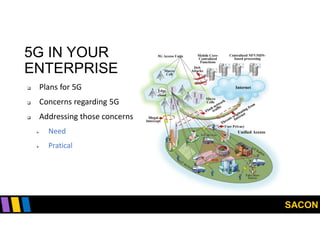
5G IN YOUR
ENTERPRISE
 Plans for 5G
 Concerns regarding 5G
 Addressing those concerns
 Need
 Pratical
SACON
SOME PREDICTIONS
 Lots of Holes
 Supply Chain Attacks
 Mismatches Everywhere
 Privacy Nightmare
 Vulnerabilities in individual components will roll in …
 Regulations will make it worse
 Those building on top of what is offered will
do the best!
SACON
Questions?

(SACON 2020) Adventures In SDN Security