Mobile SensorsBuilding a staff-facing tablet application for library assessmentJason CasdenNorth Carolina State University LibrariesNISO Forum: Mobile Technologies in LibrariesMay 20, 20111
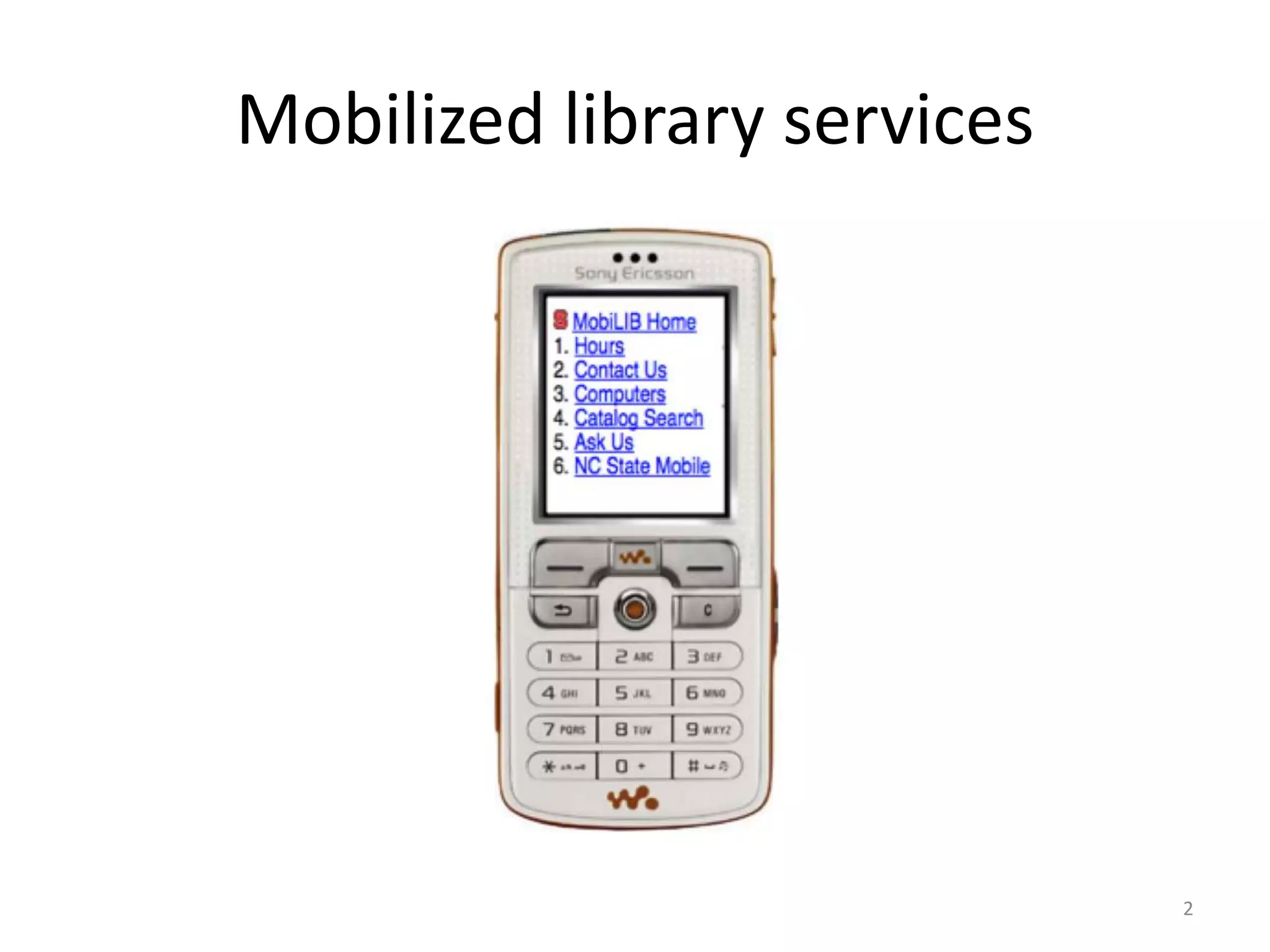
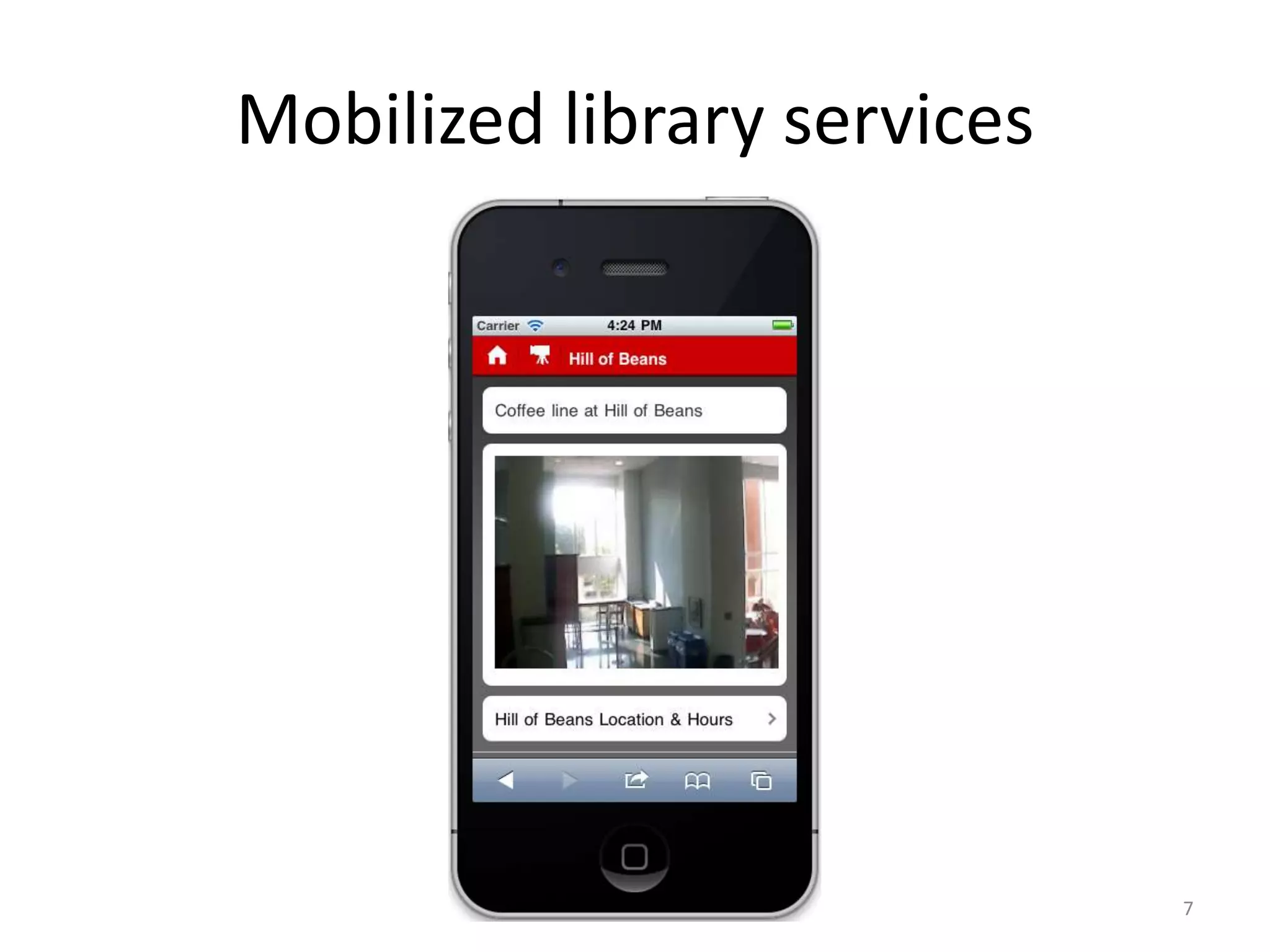
Mobilized library services2
Mobilized library services3
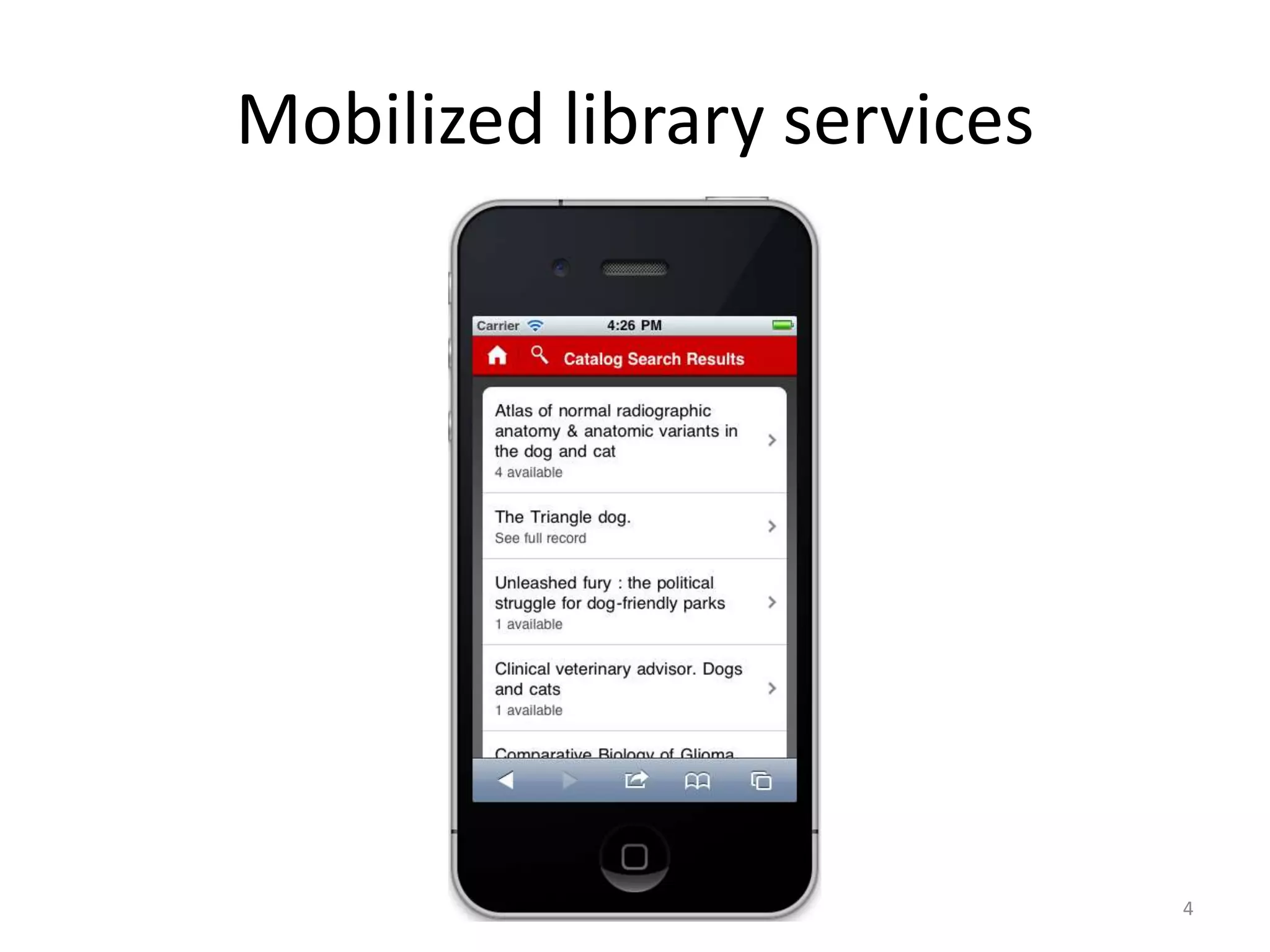
Mobilized library services4
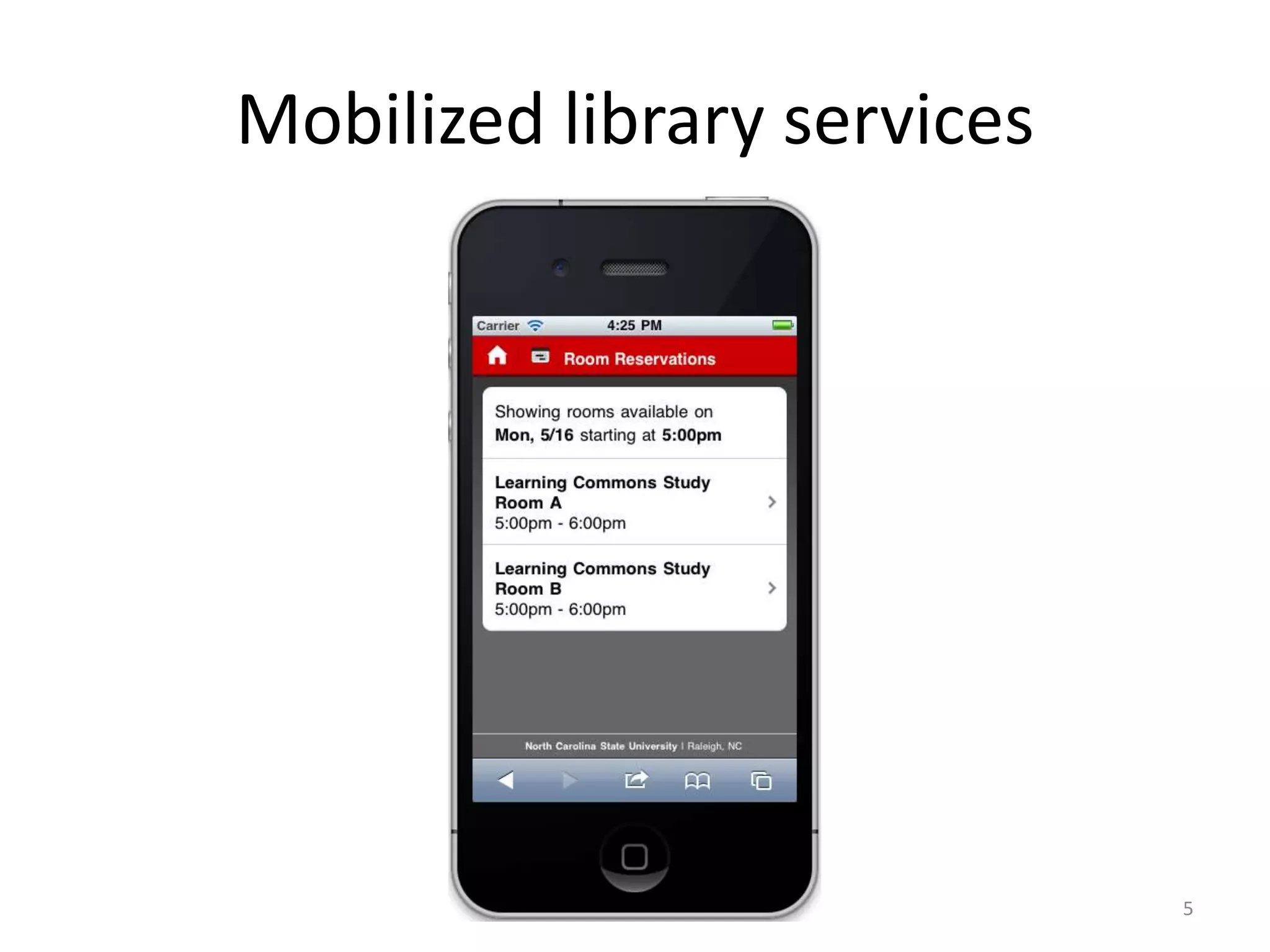
Mobilized library services5
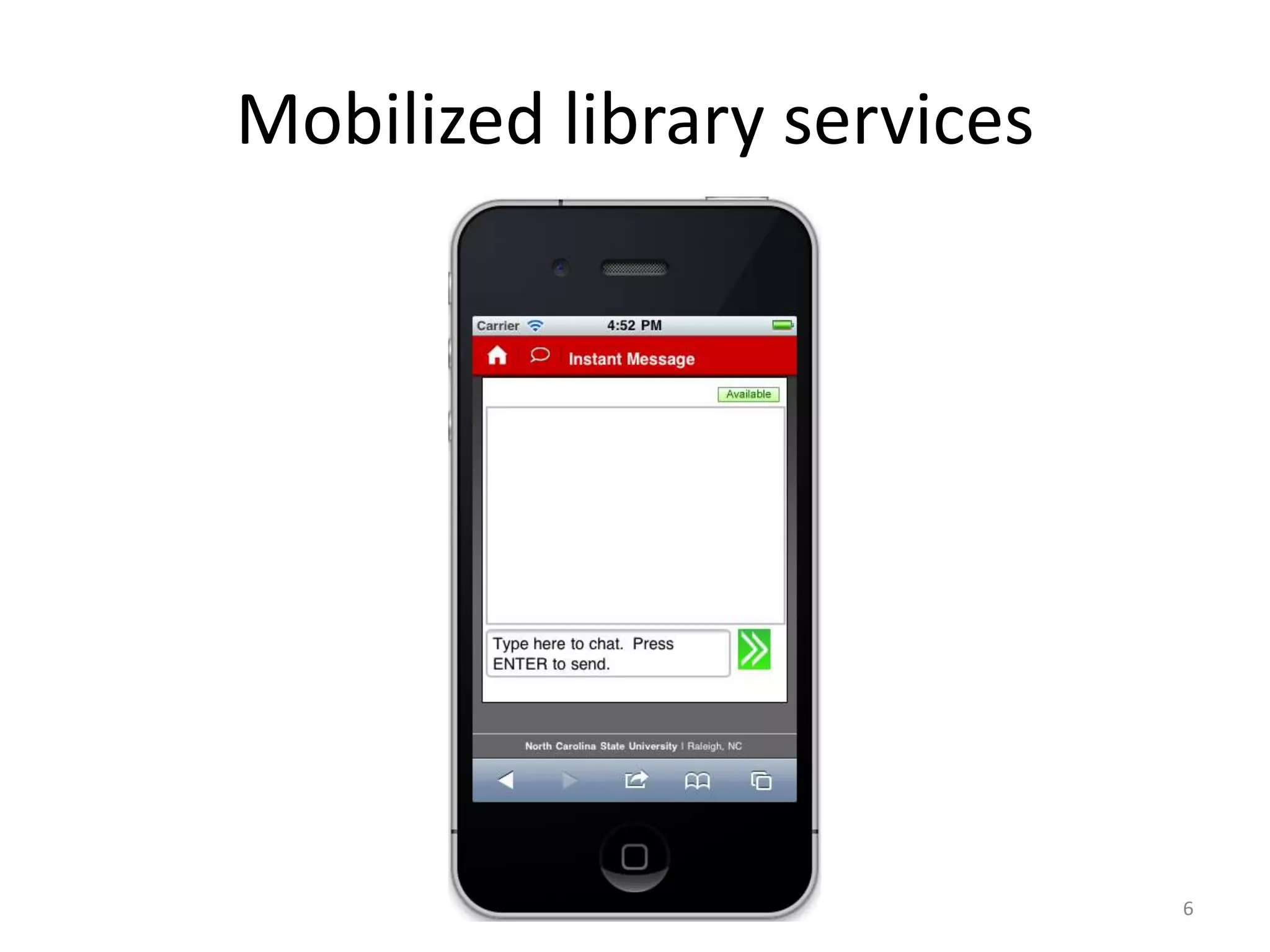
Mobilized library services6
Mobilized library services7
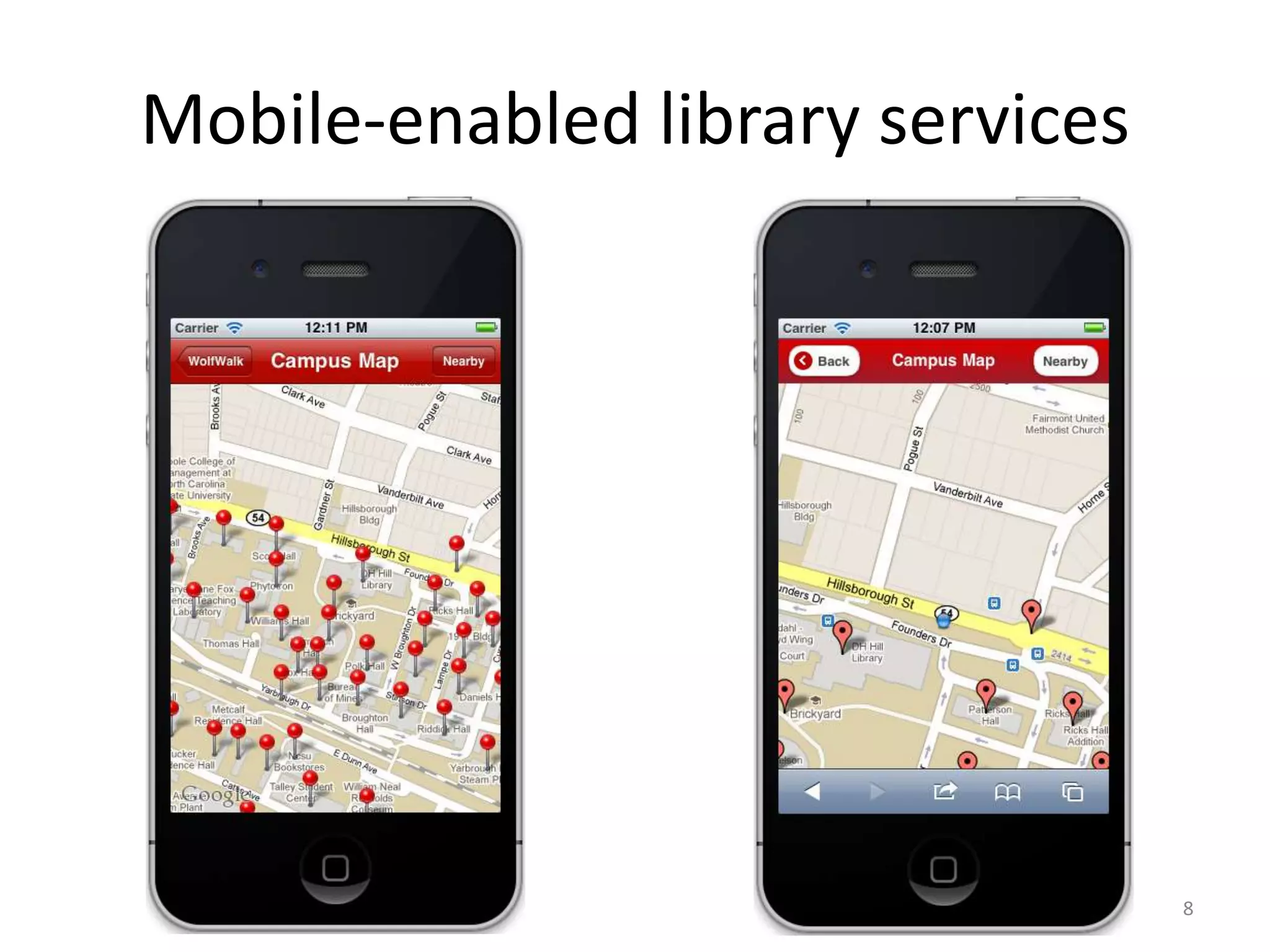
Mobile-enabled library services8
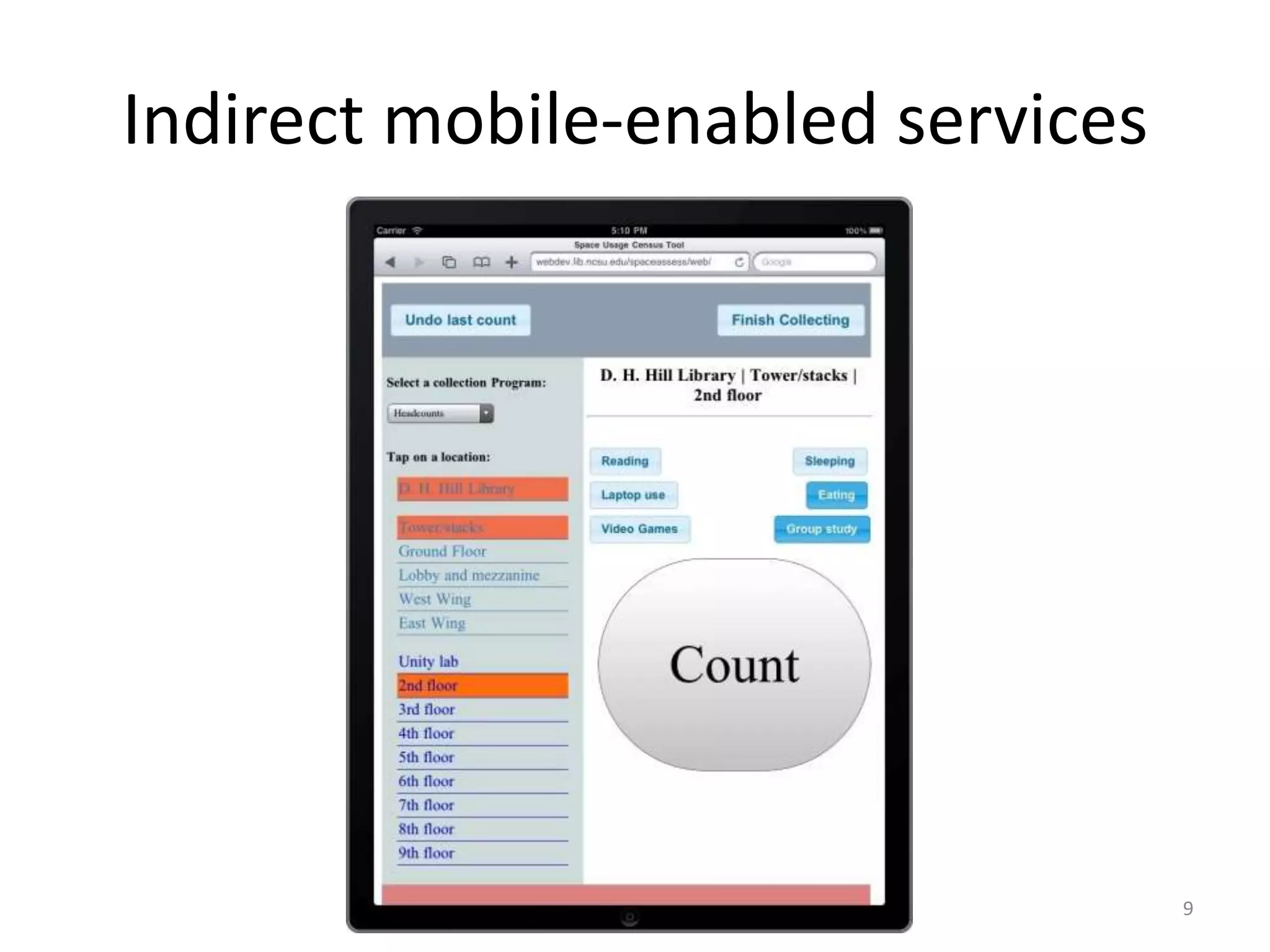
Indirect mobile-enabled services9
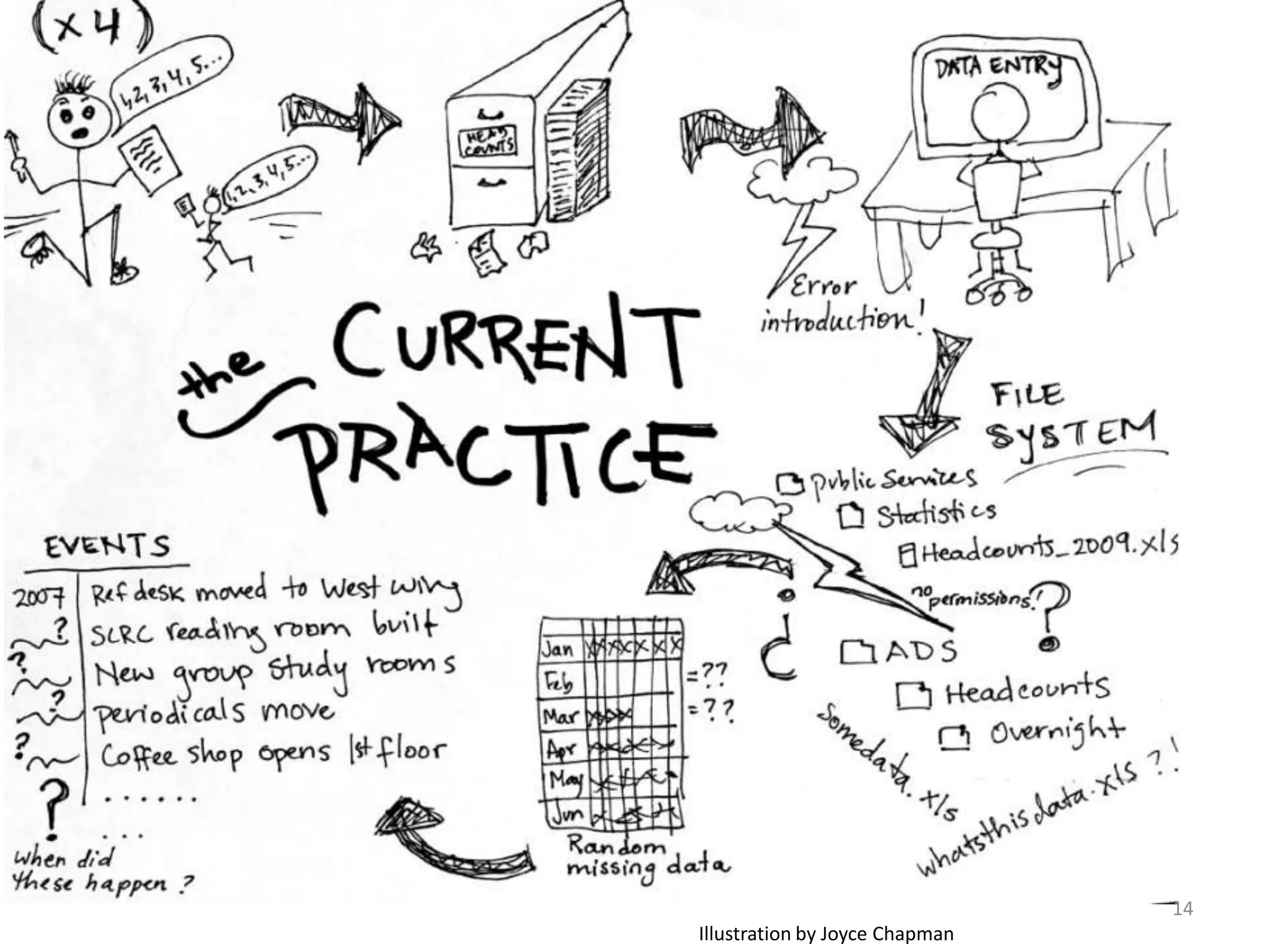
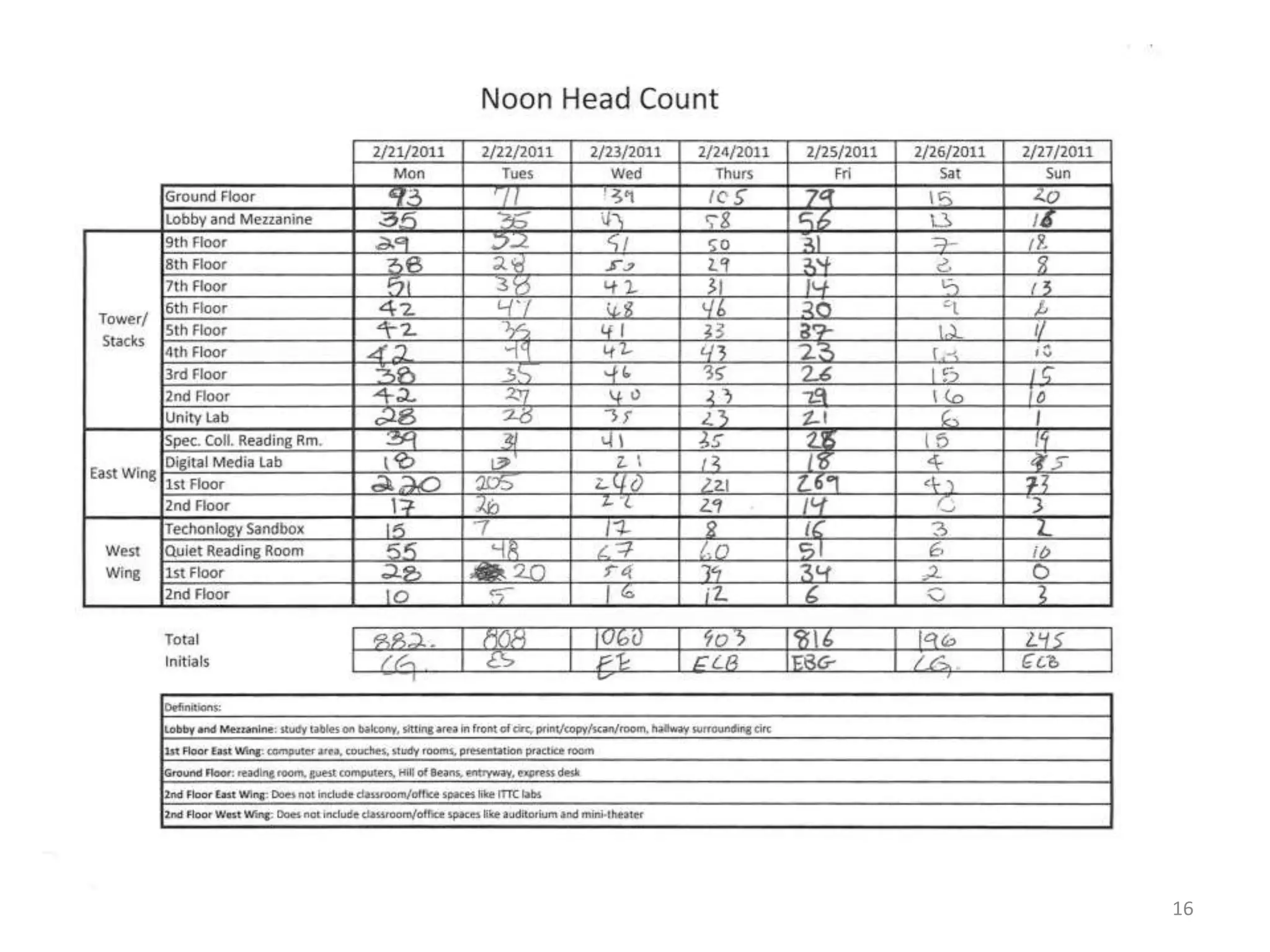
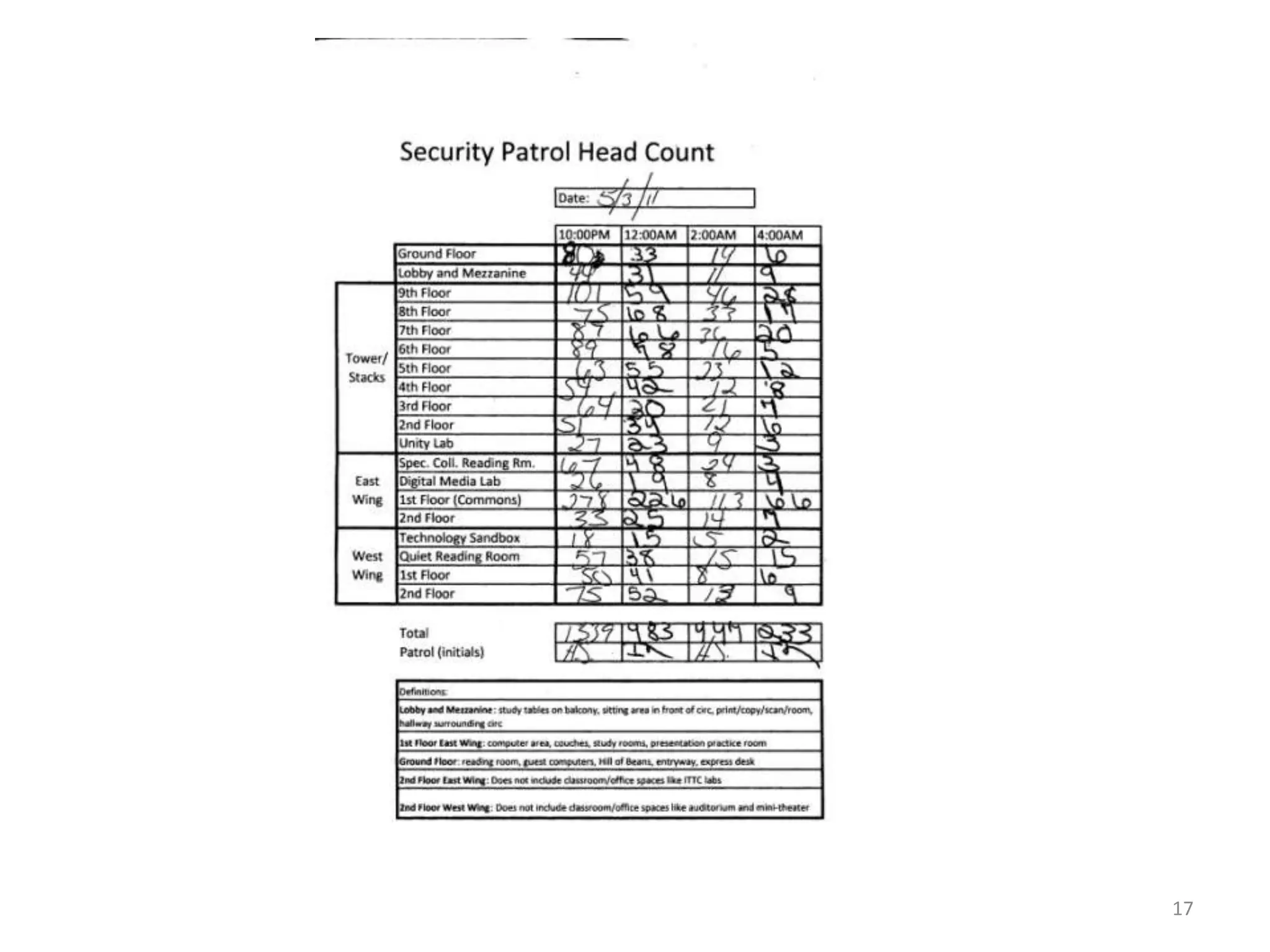
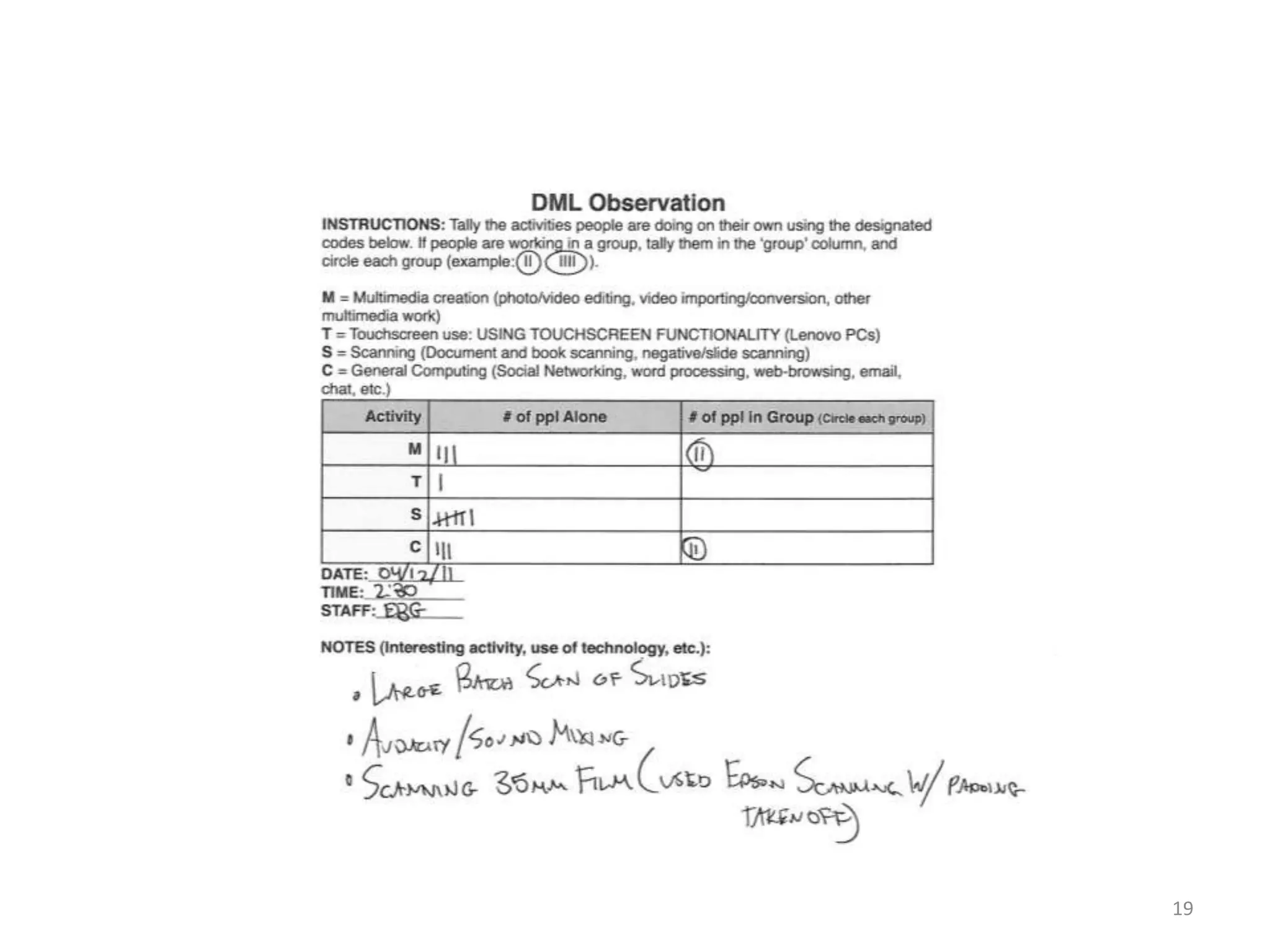
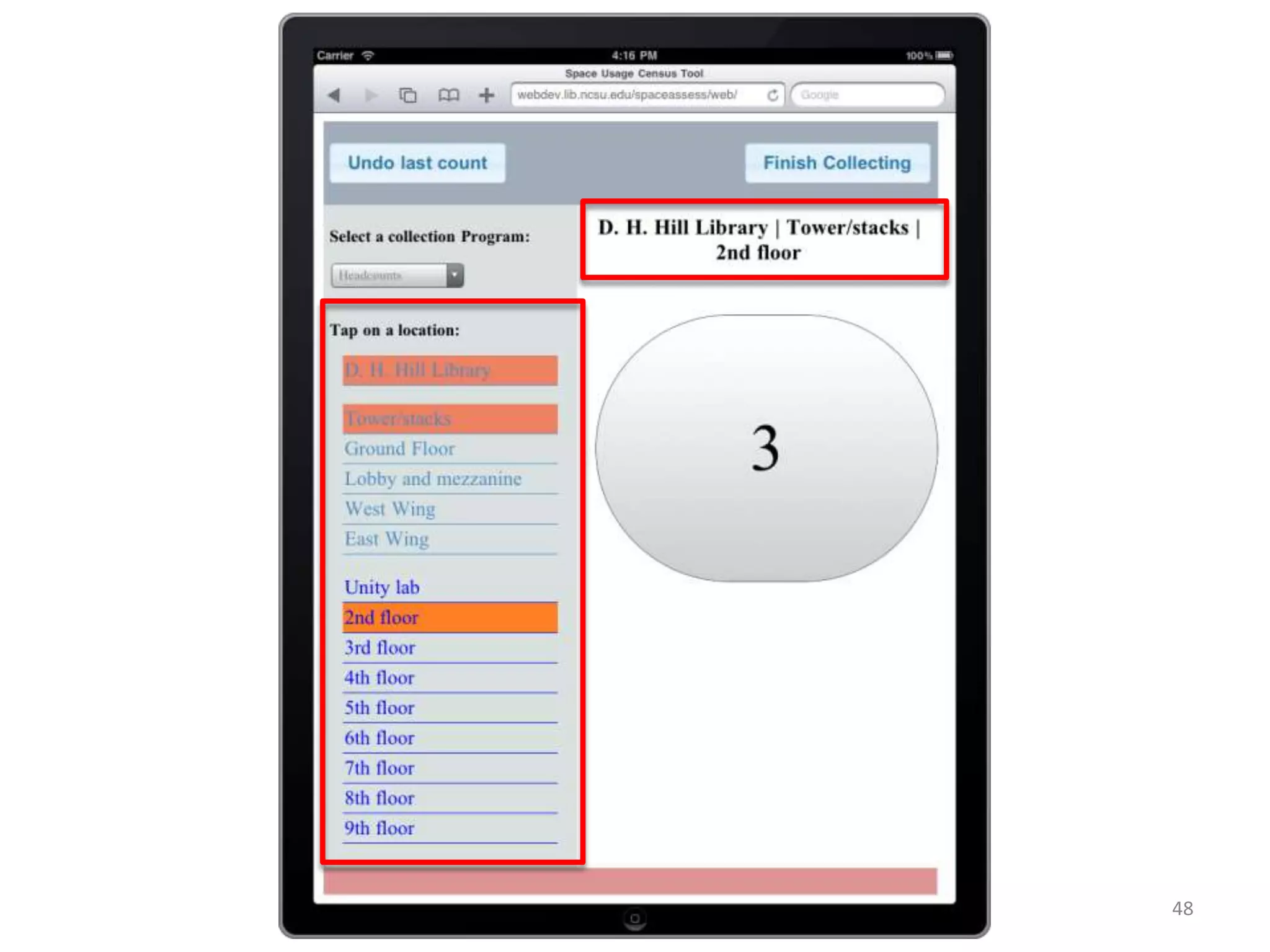
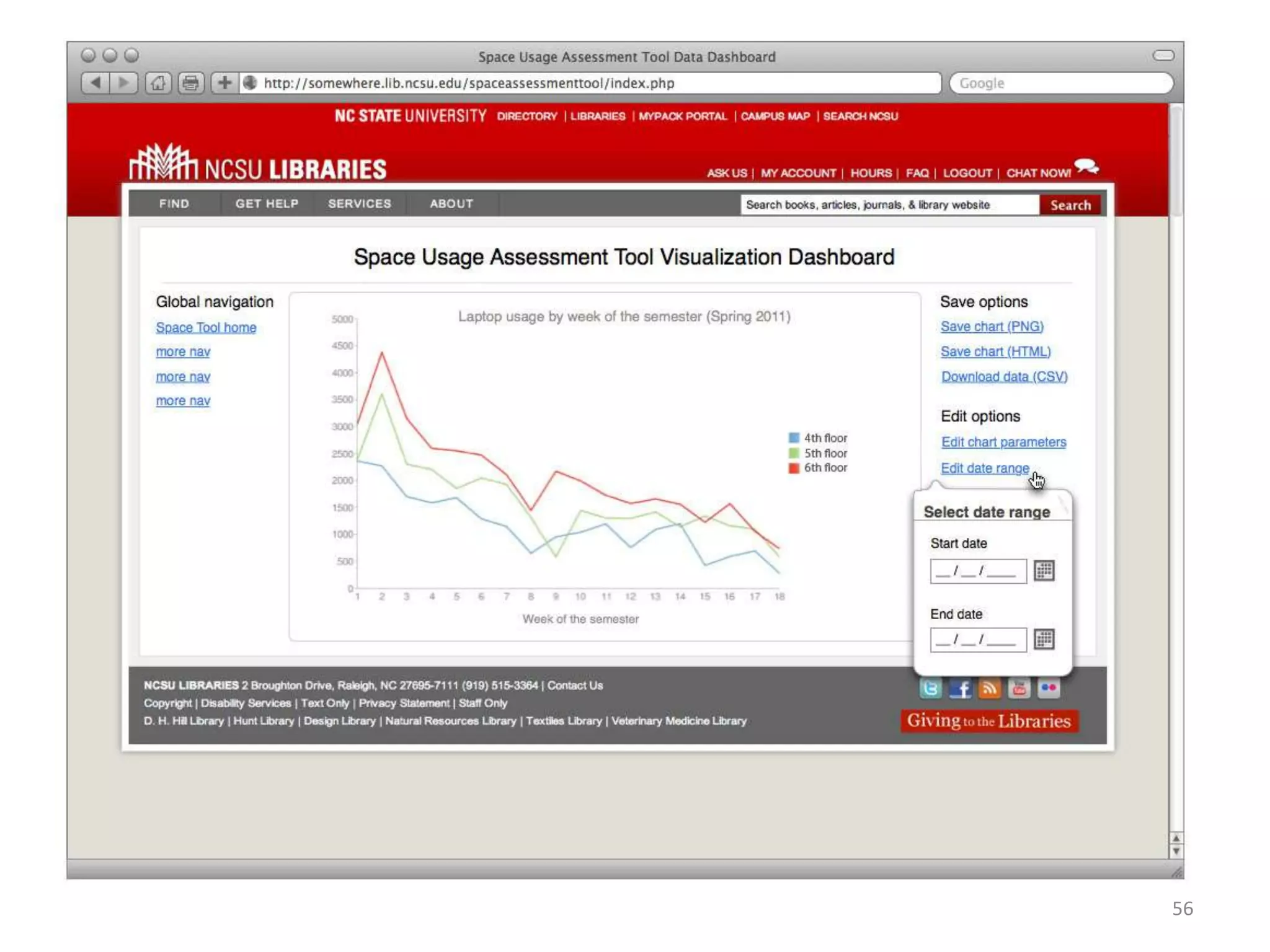
Problem statementMany libraries perform manual counts of people in spaces doing something at some timeThe process involves tedious collection mechanisms, lots of paperwork, and much room for errorThere is no coordinated effort to help departments analyze their data10
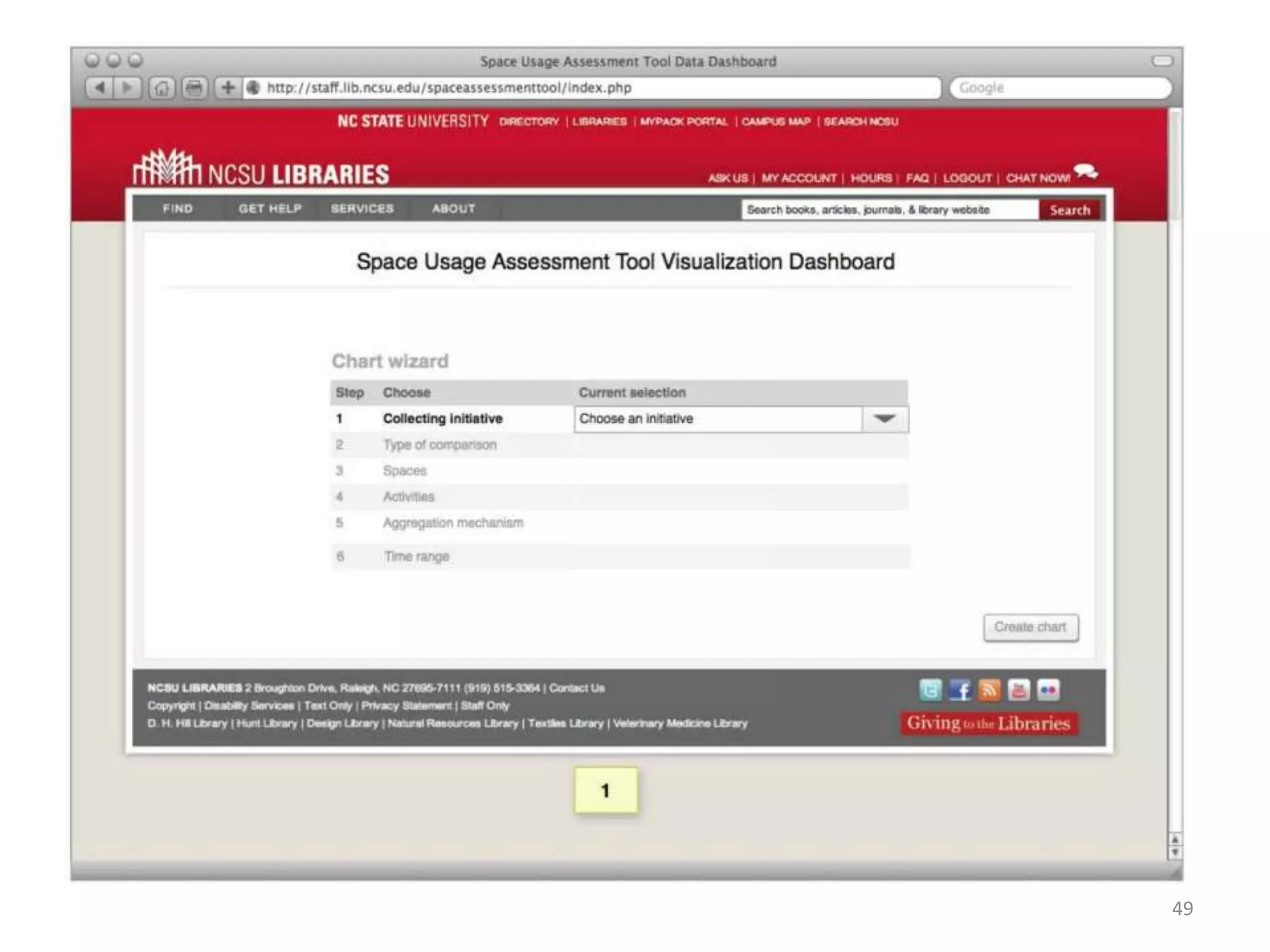
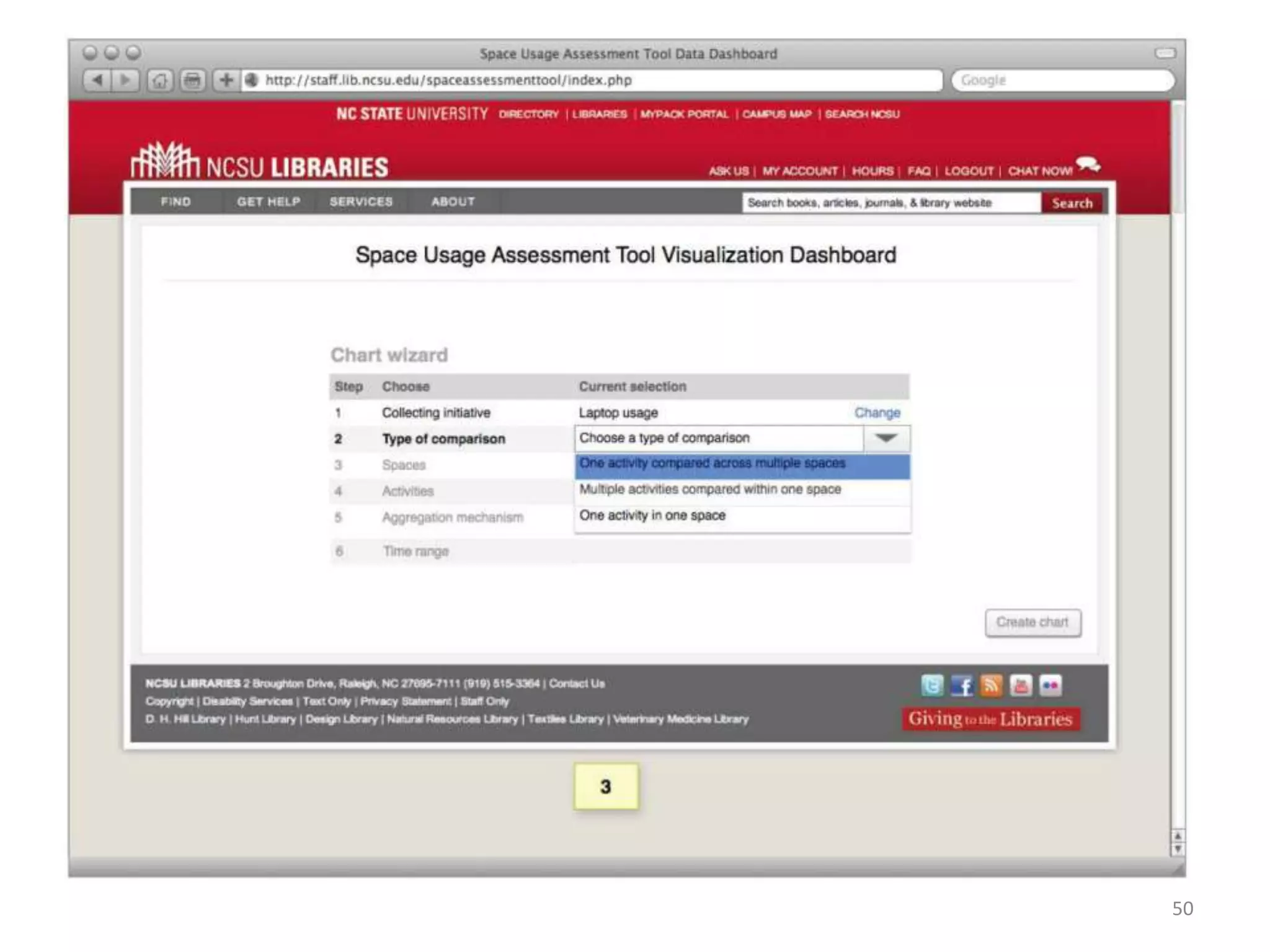
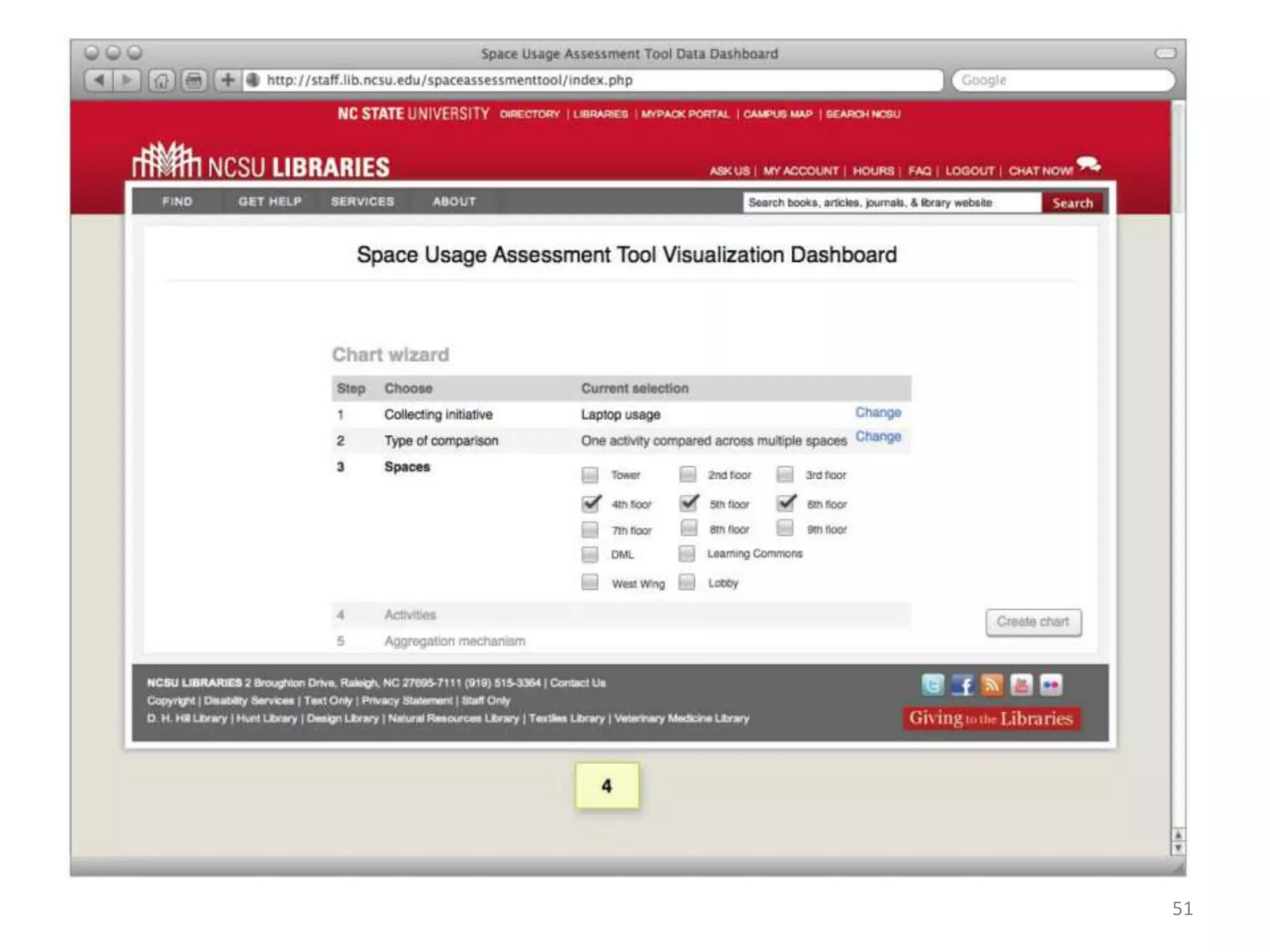
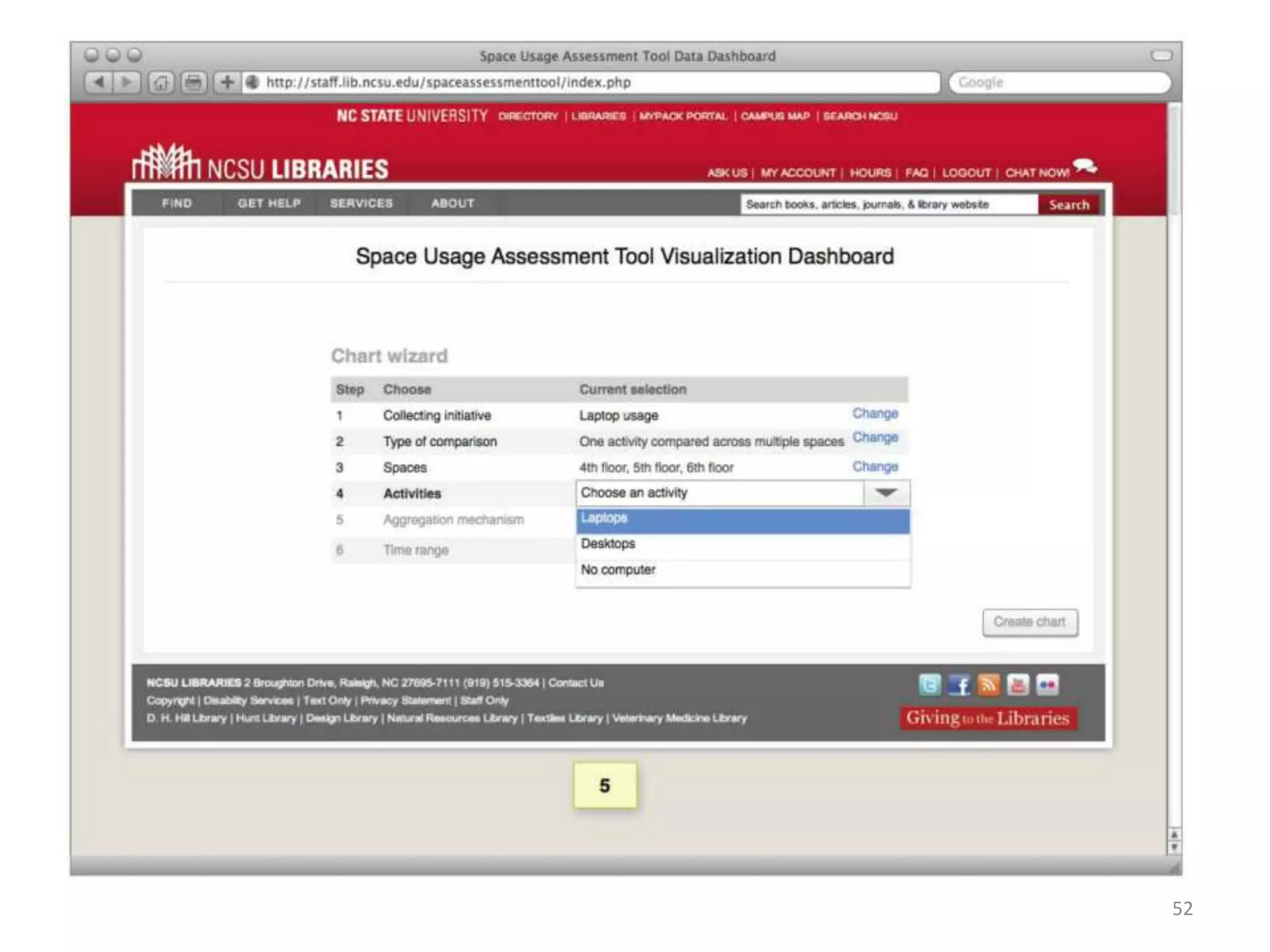
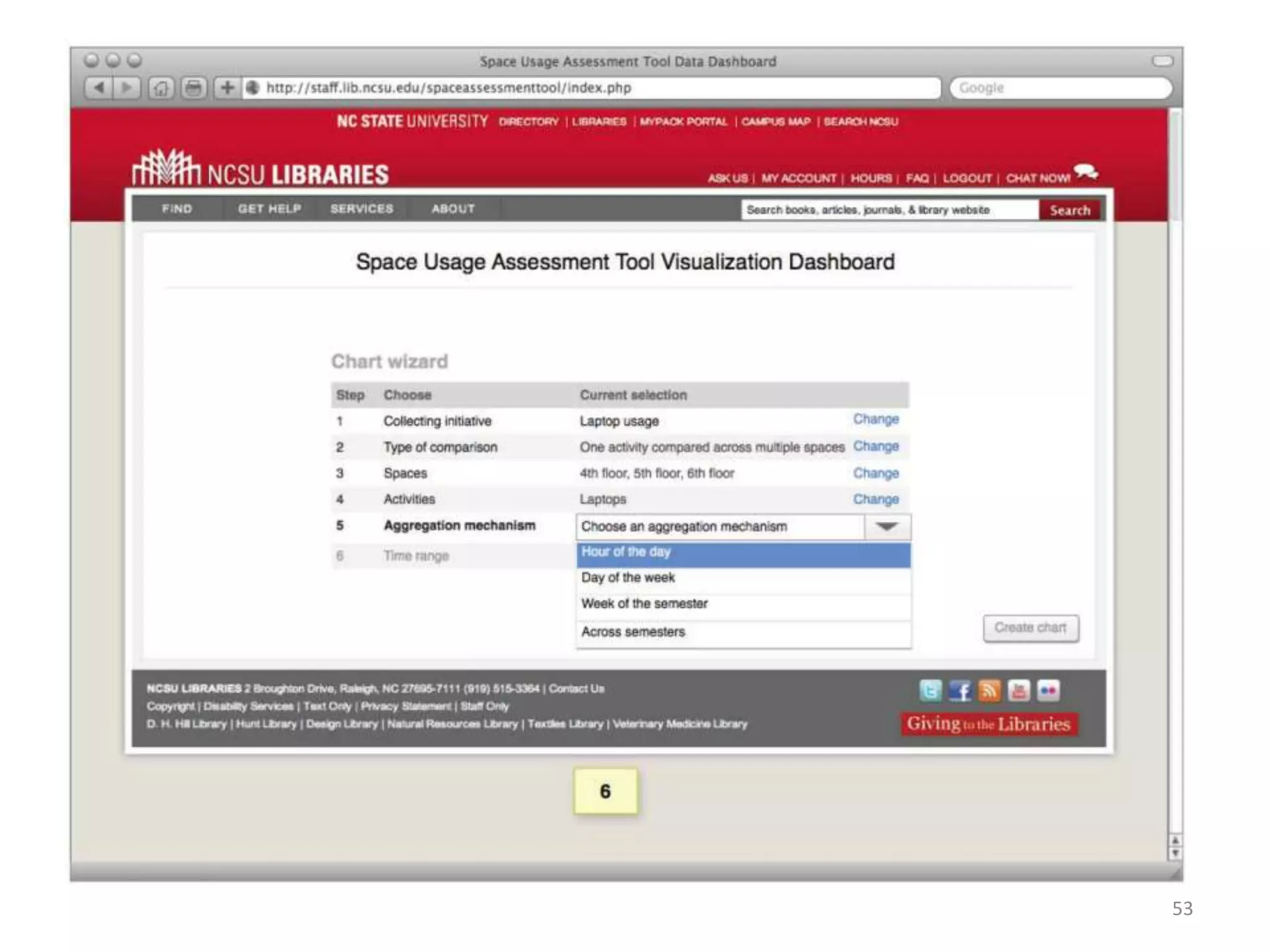
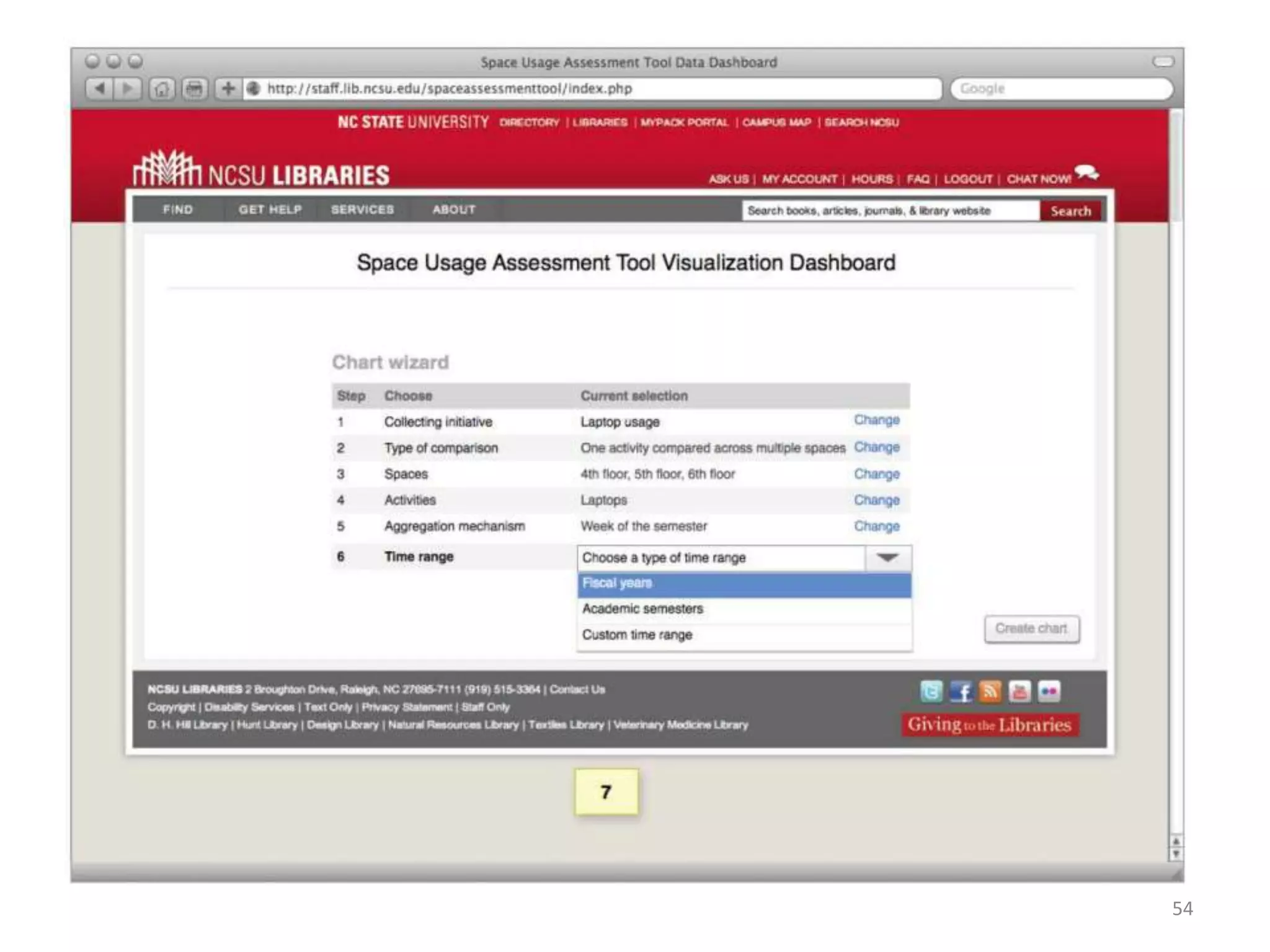
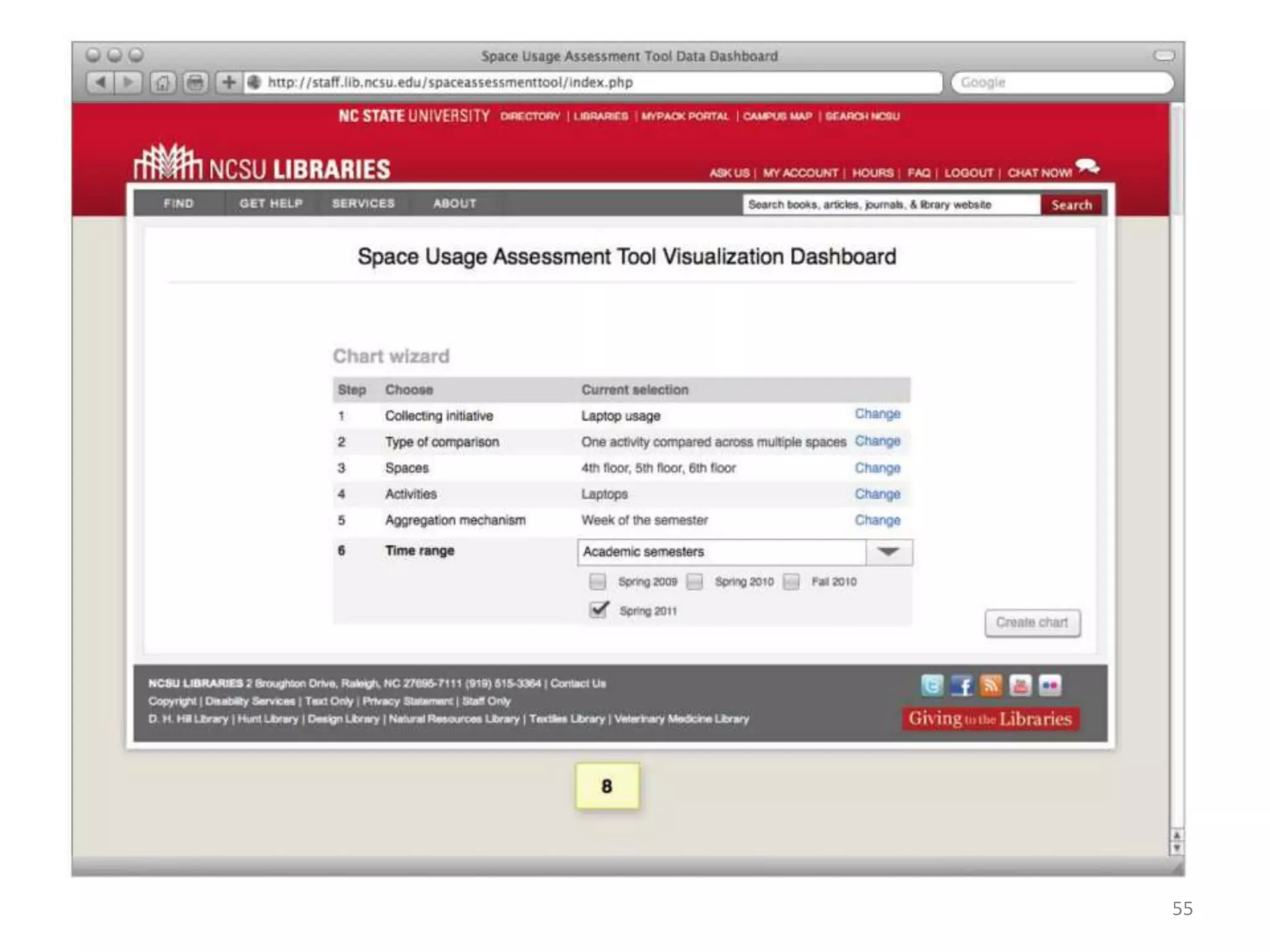
Our solutionAn open source tablet-based app (well, toolkit) to aid library staff in assessment of how patrons are using library spaces.In other words…the gathering, storing, exporting, analyzing, and visualizing of data across spaces/activities/time and around events.11
Why do we care?With data about use/activity patterns in different library spaces we canImprove staffing modelsMake informed purchasing decisions (technology, furniture)Arrange space (quiet study, collaborative)Take an evidence-based approach to planning future library spaces12
Related workJames B. Hunt, Jr. Library planningIMLS Learning Spaces grant13
14Illustration by Joyce Chapman
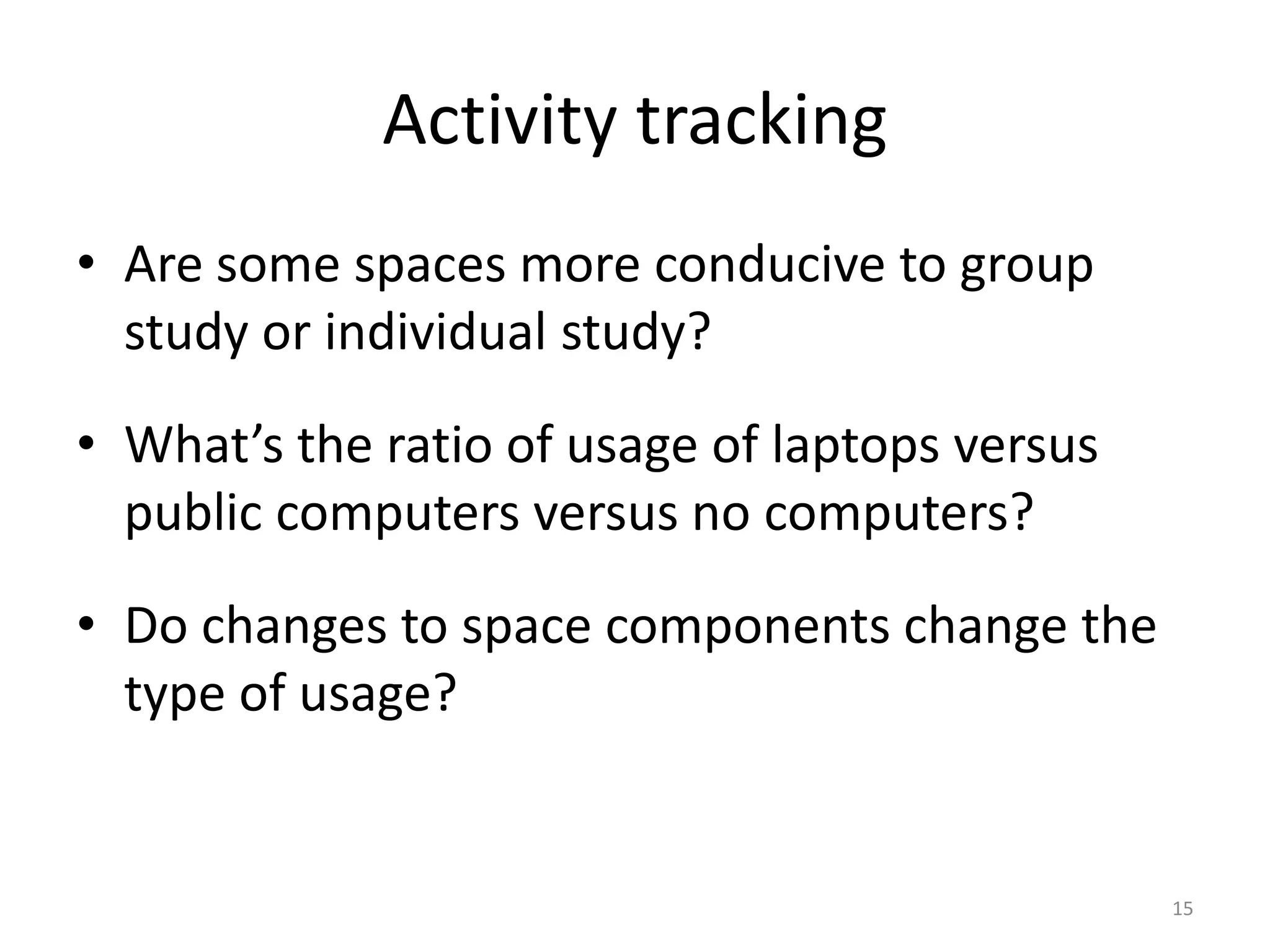
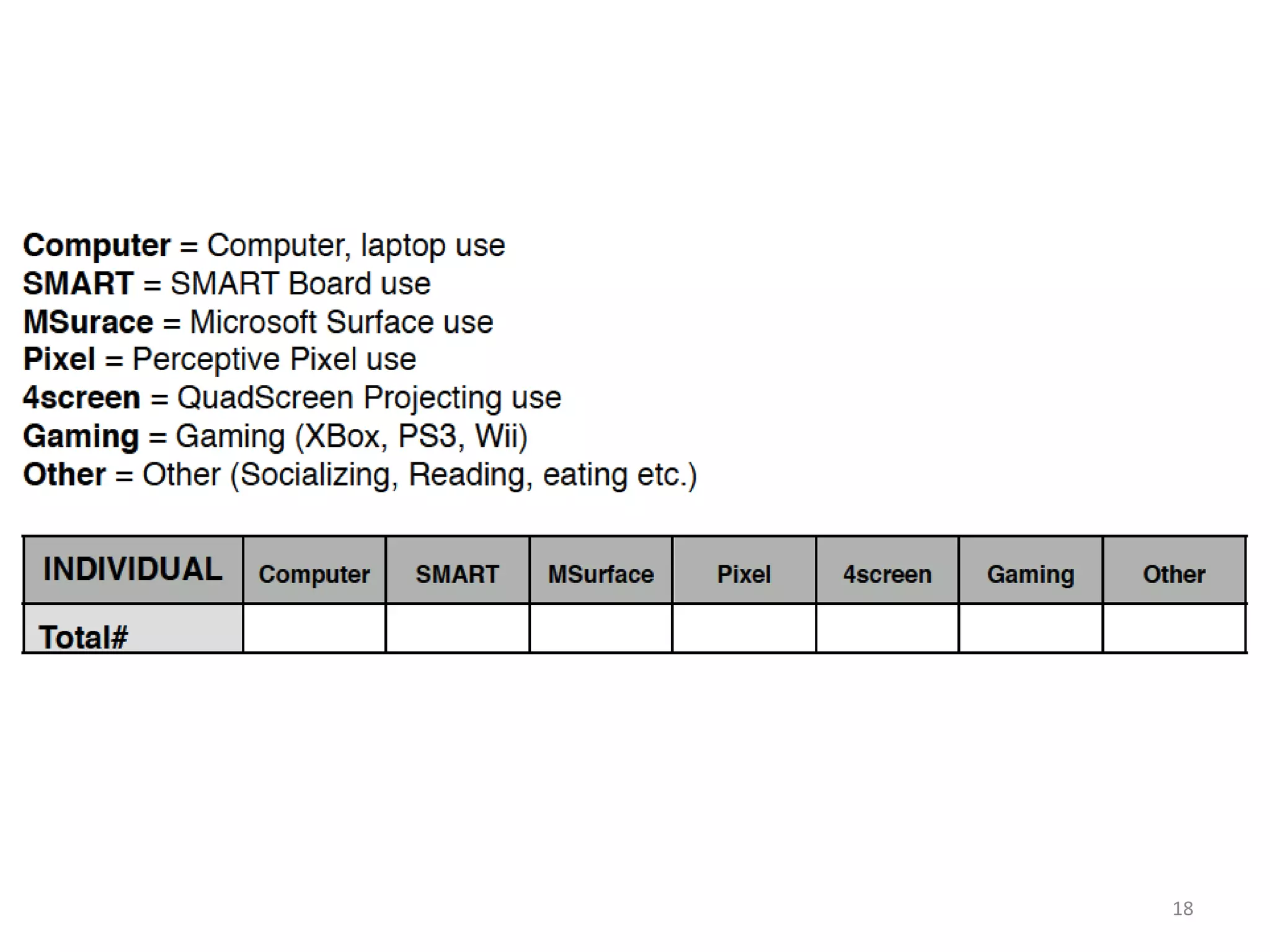
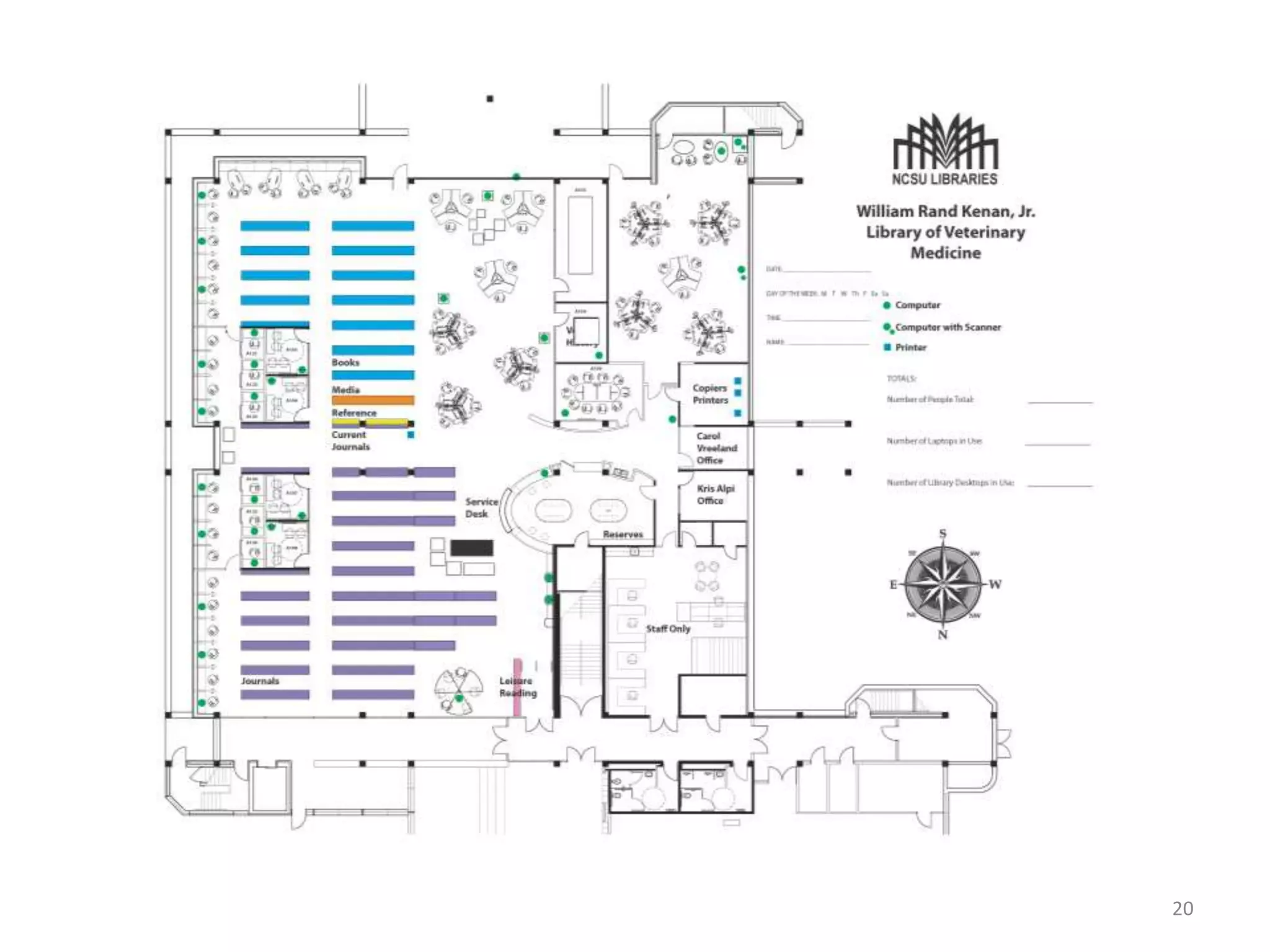
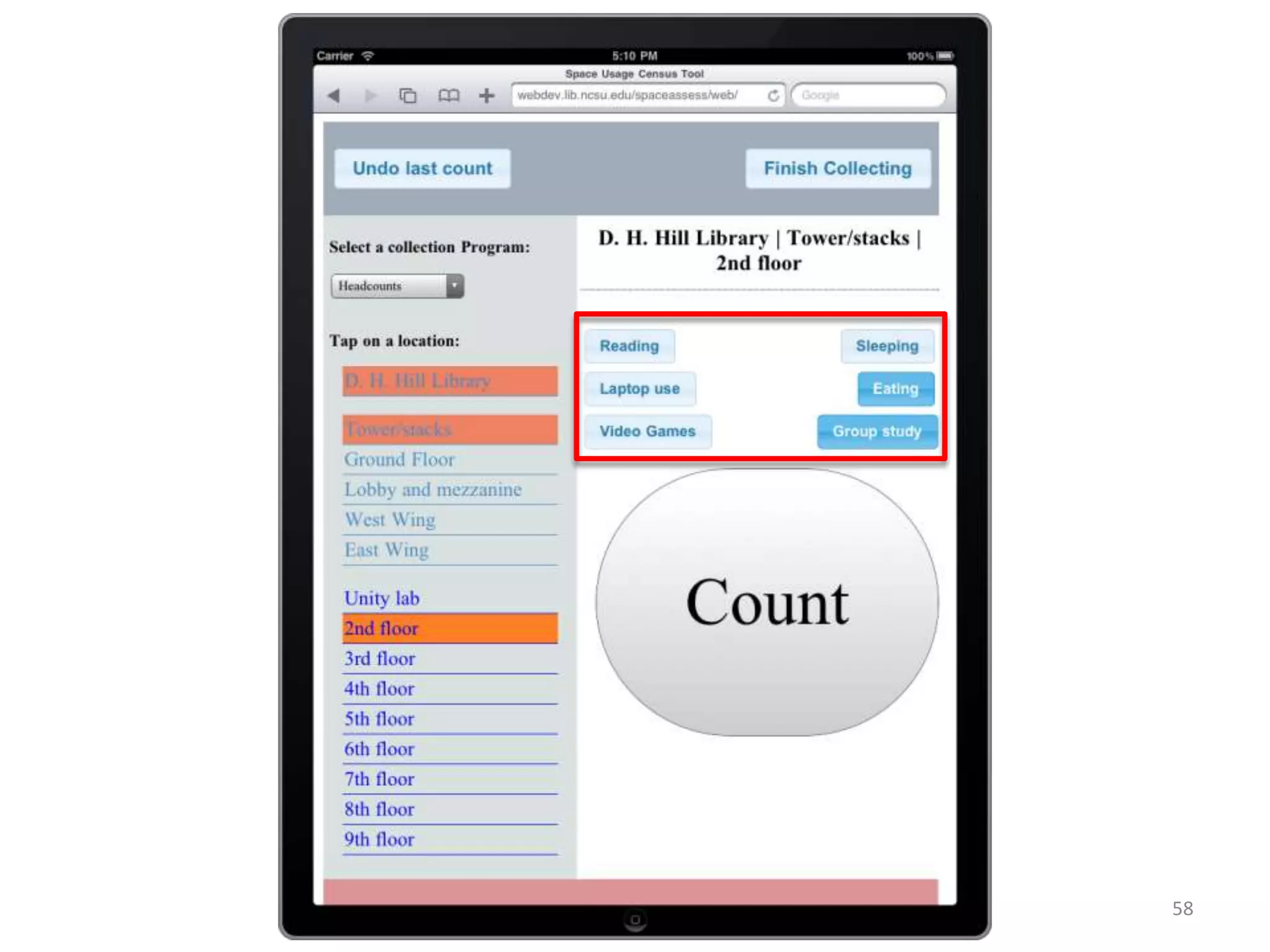
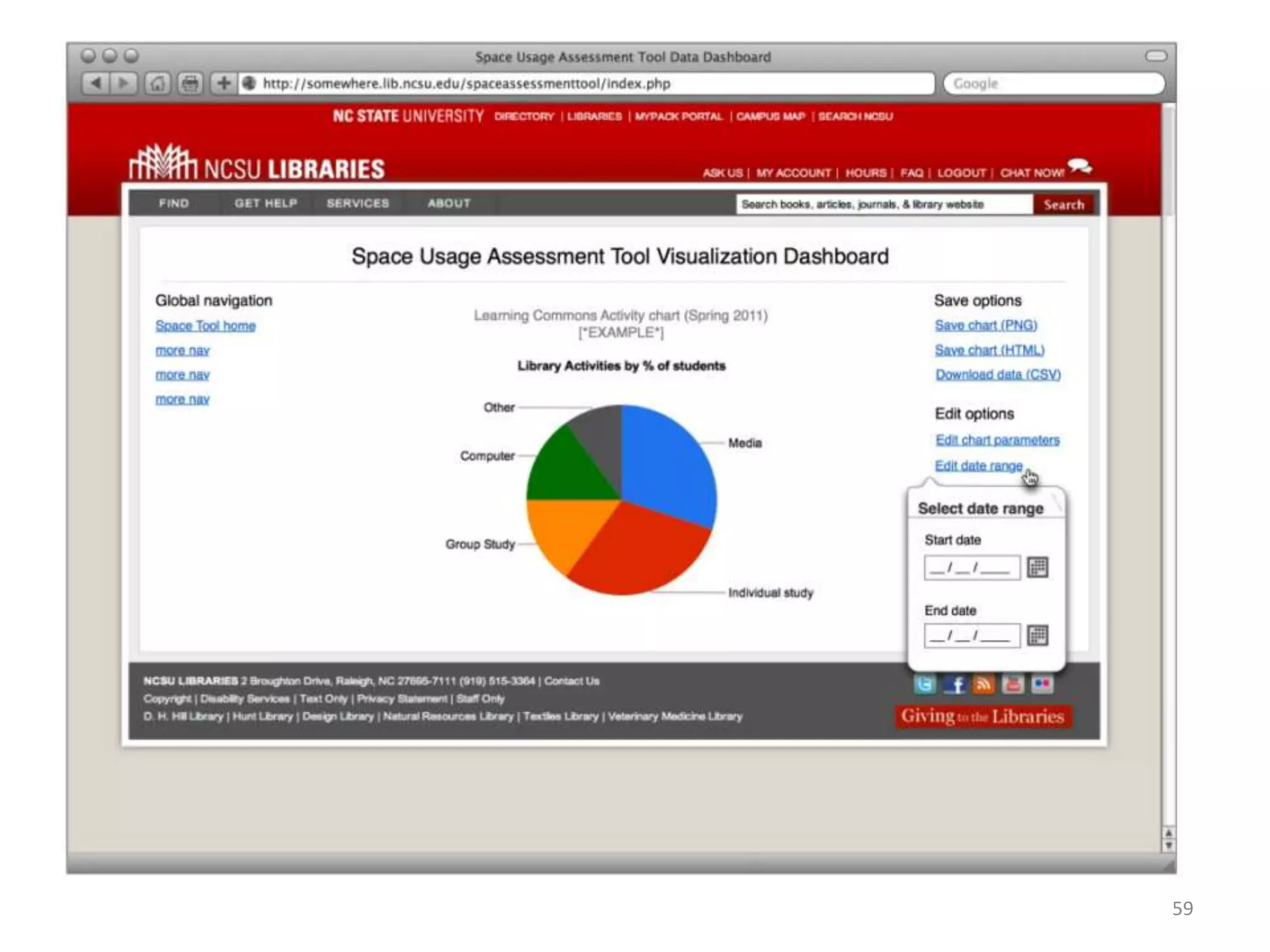
Activity trackingAre some spaces more conducive to group study or individual study?What’s the ratio of usage of laptops versus public computers versus no computers?Do changes to space components change the type of usage?15
16
17
18
19
20
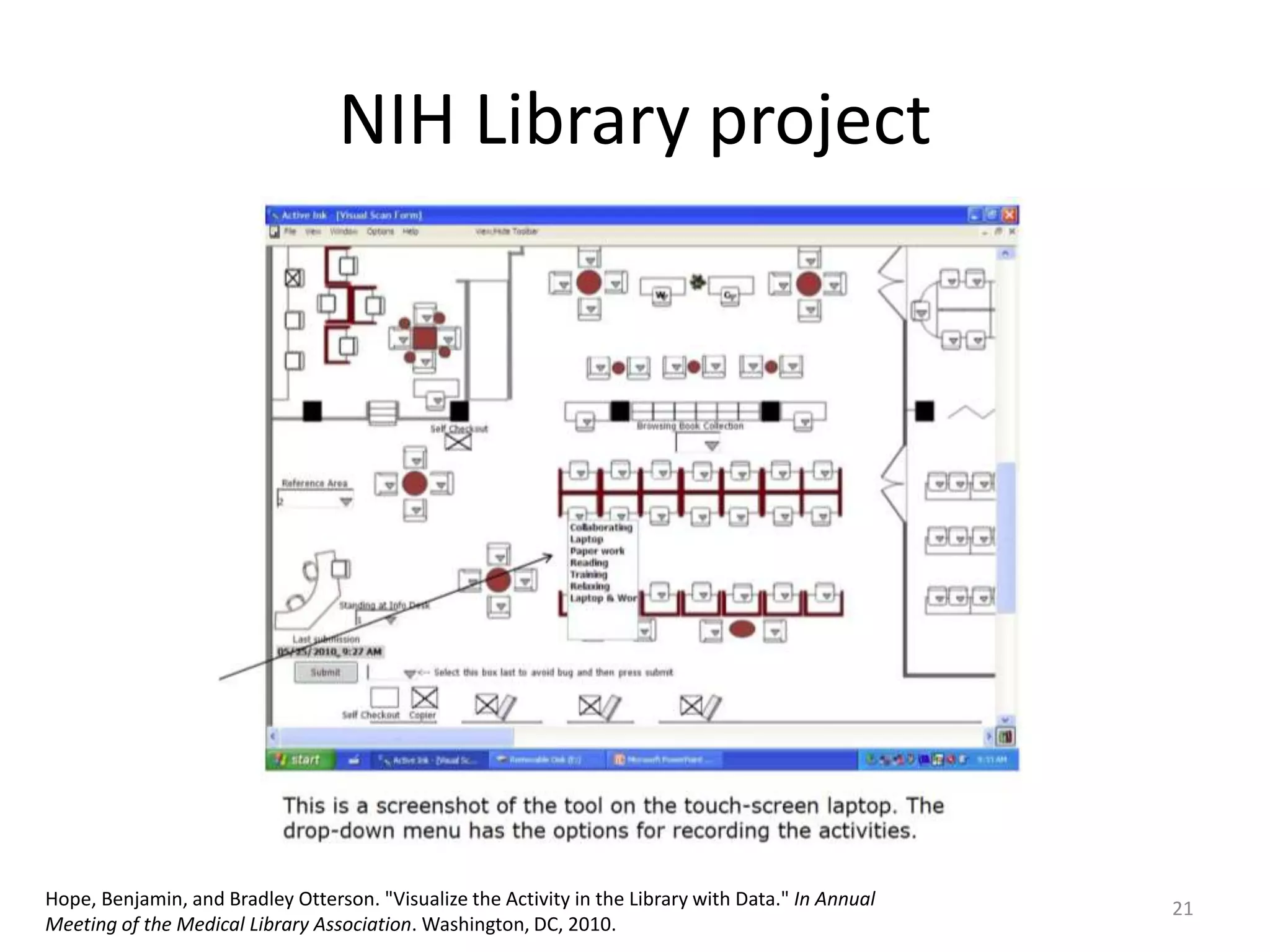
NIH Library project21Hope, Benjamin, and Bradley Otterson. "Visualize the Activity in the Library with Data." In Annual Meeting of the Medical Library Association. Washington, DC, 2010.
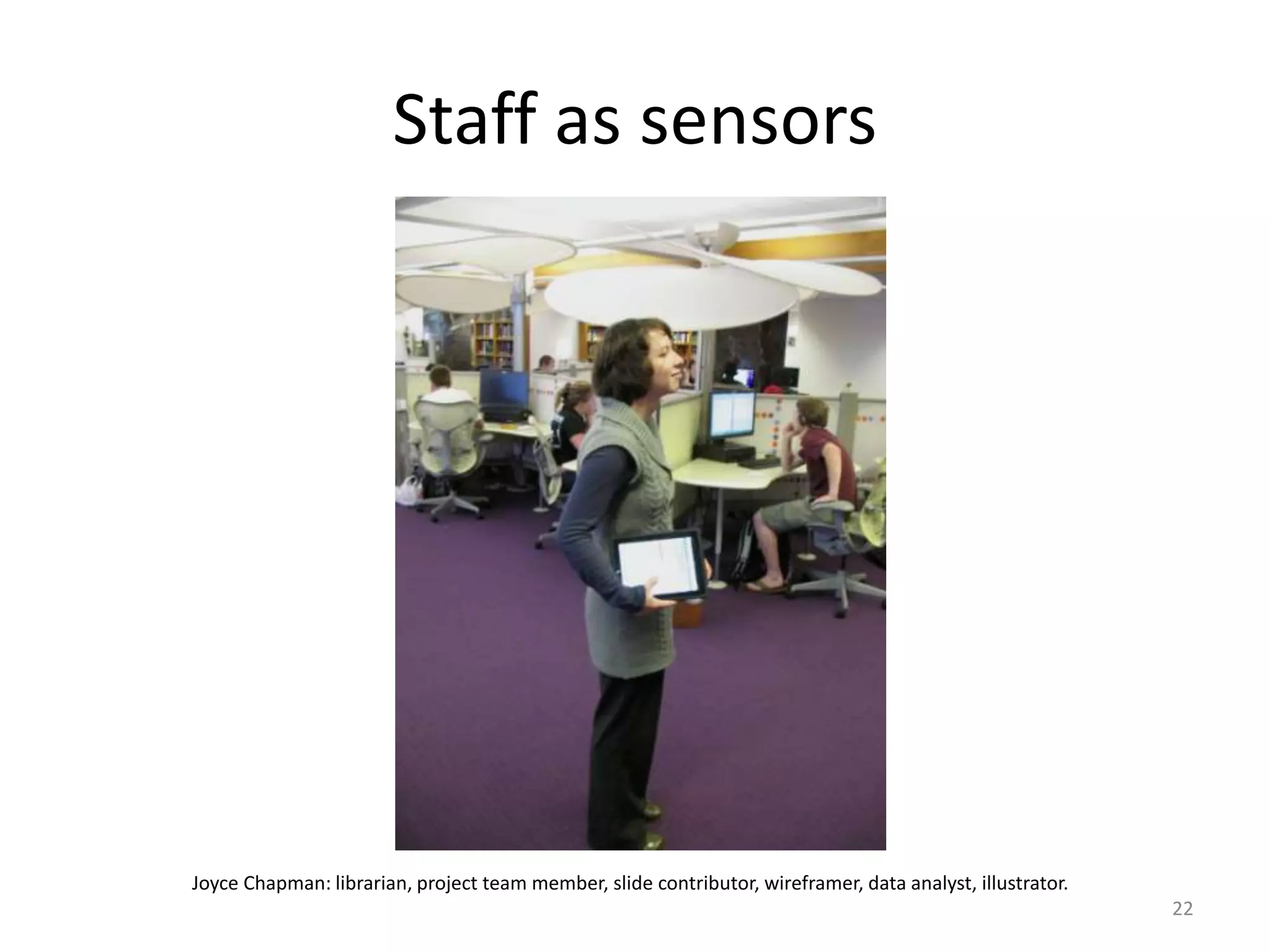
Staff as sensors22Joyce Chapman: librarian, project team member, slide contributor, wireframer, data analyst, illustrator.
Data analysisFragmented dataDecentralized data storage Uncontrolled vocabularies=    High barriers to analysis and data reuse23
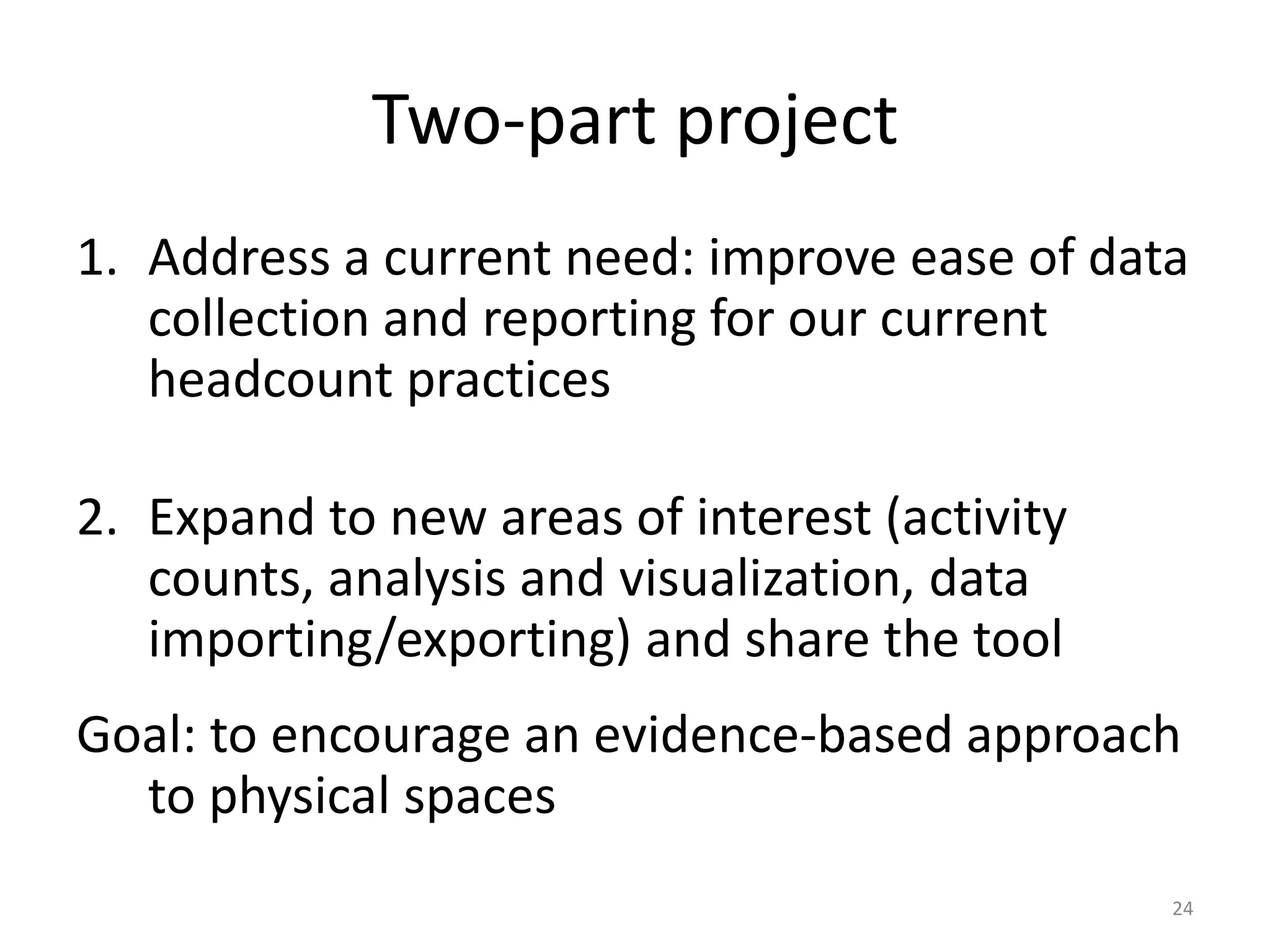
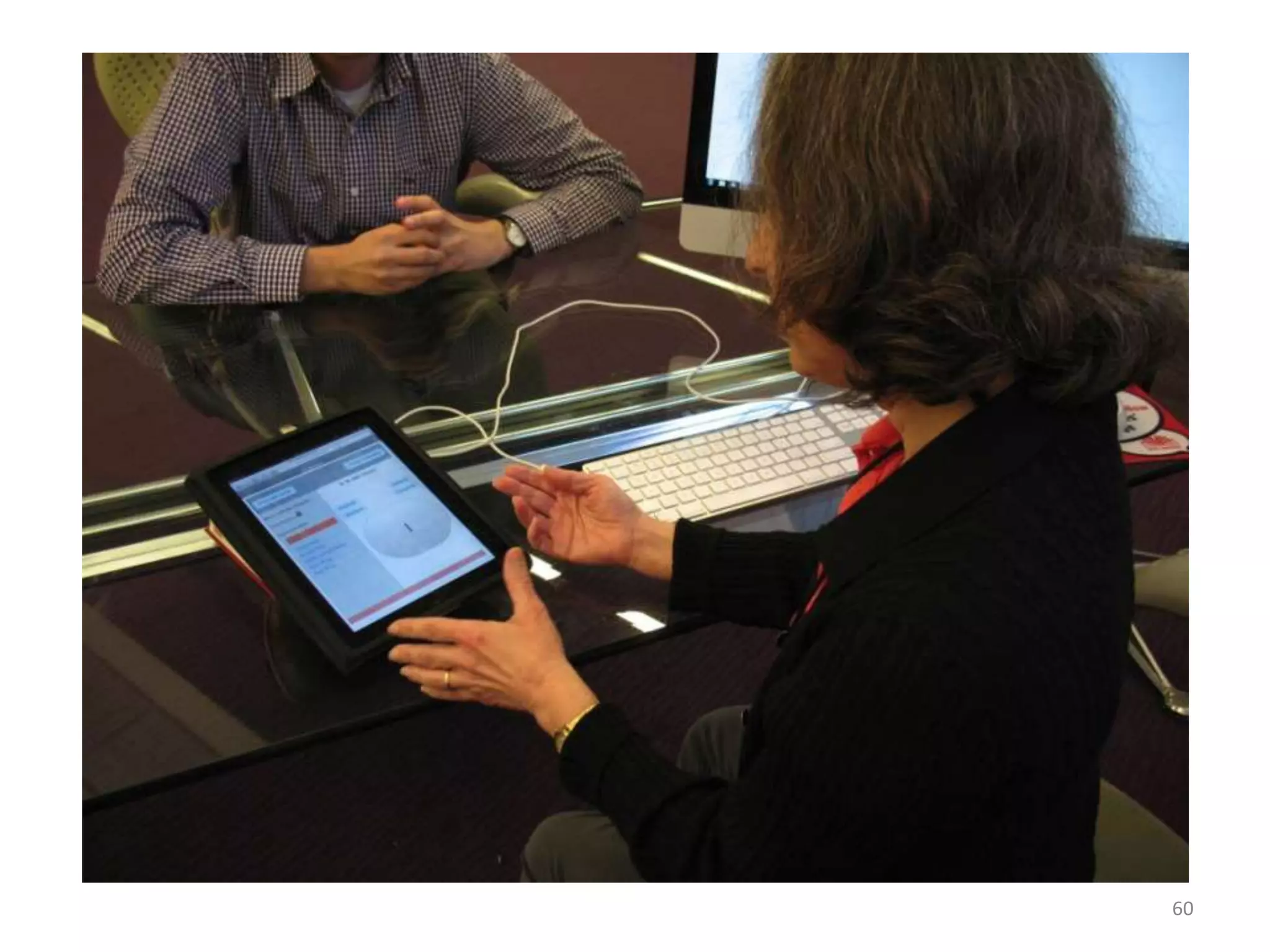
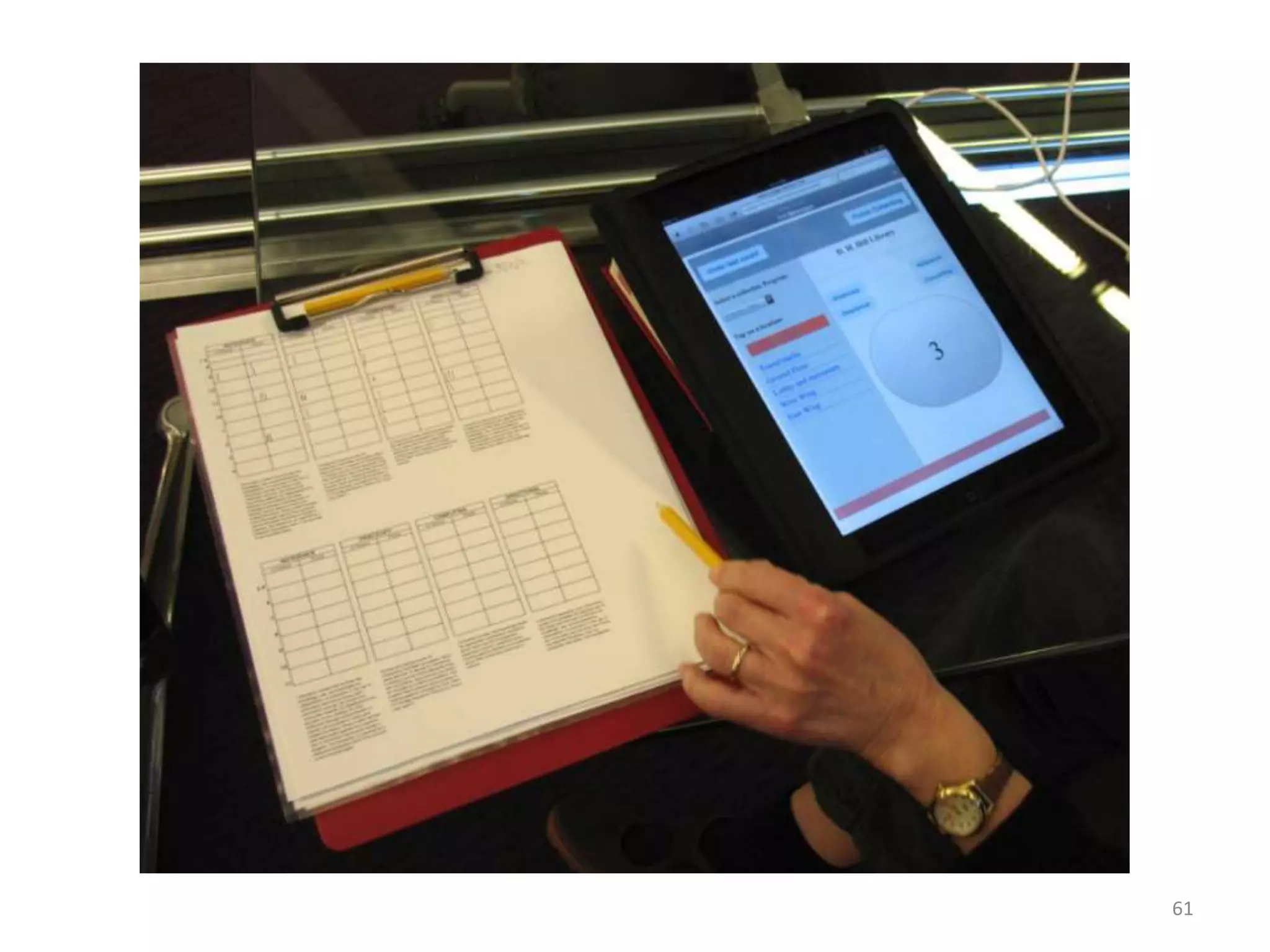
Two-part projectAddress a current need: improve ease of data collection and reporting for our current headcount practicesExpand to new areas of interest (activity counts, analysis and visualization, data importing/exporting) and share the toolGoal: to encourage an evidence-based approach to physical spaces24
Working Title: Suma25
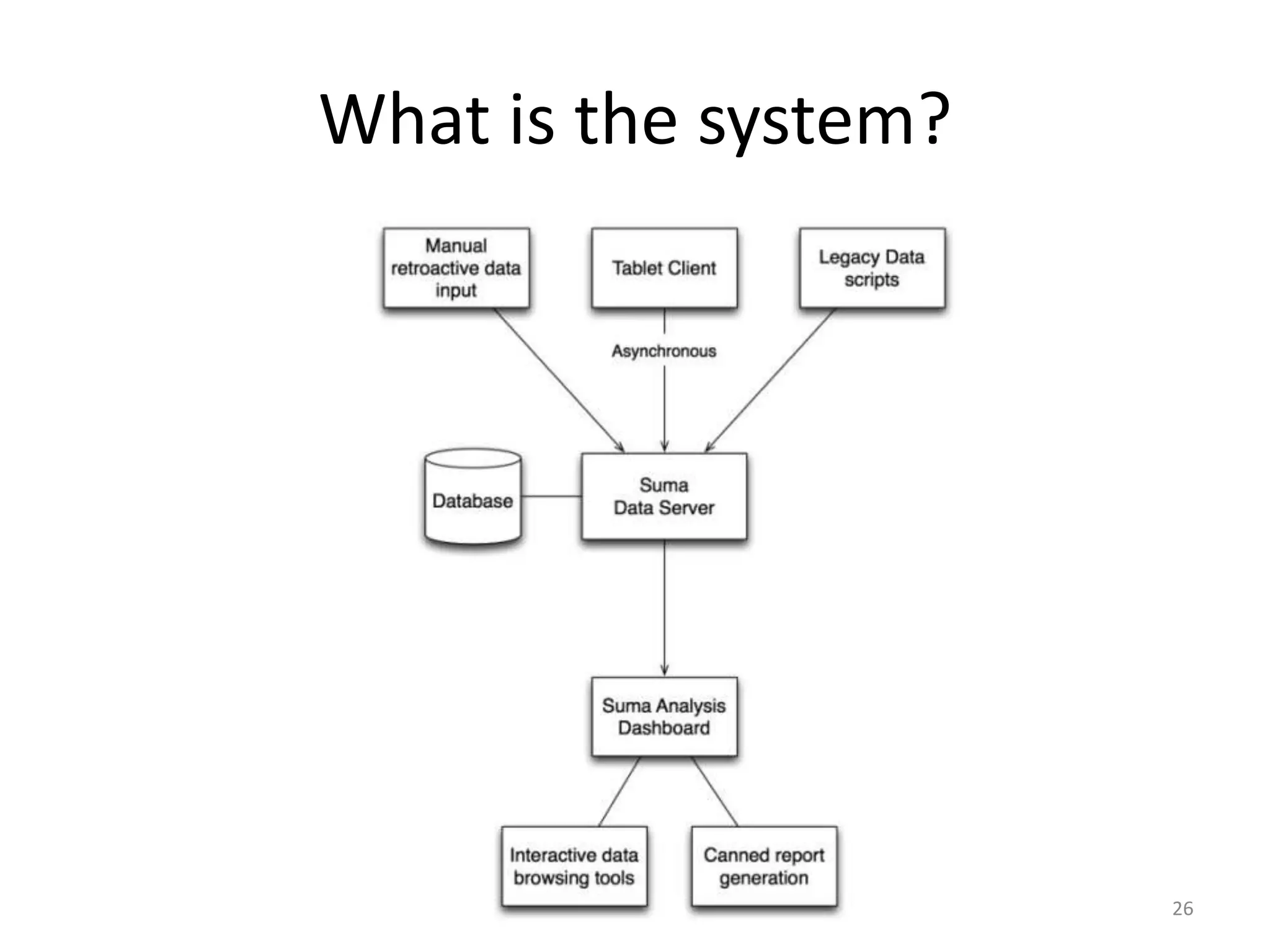
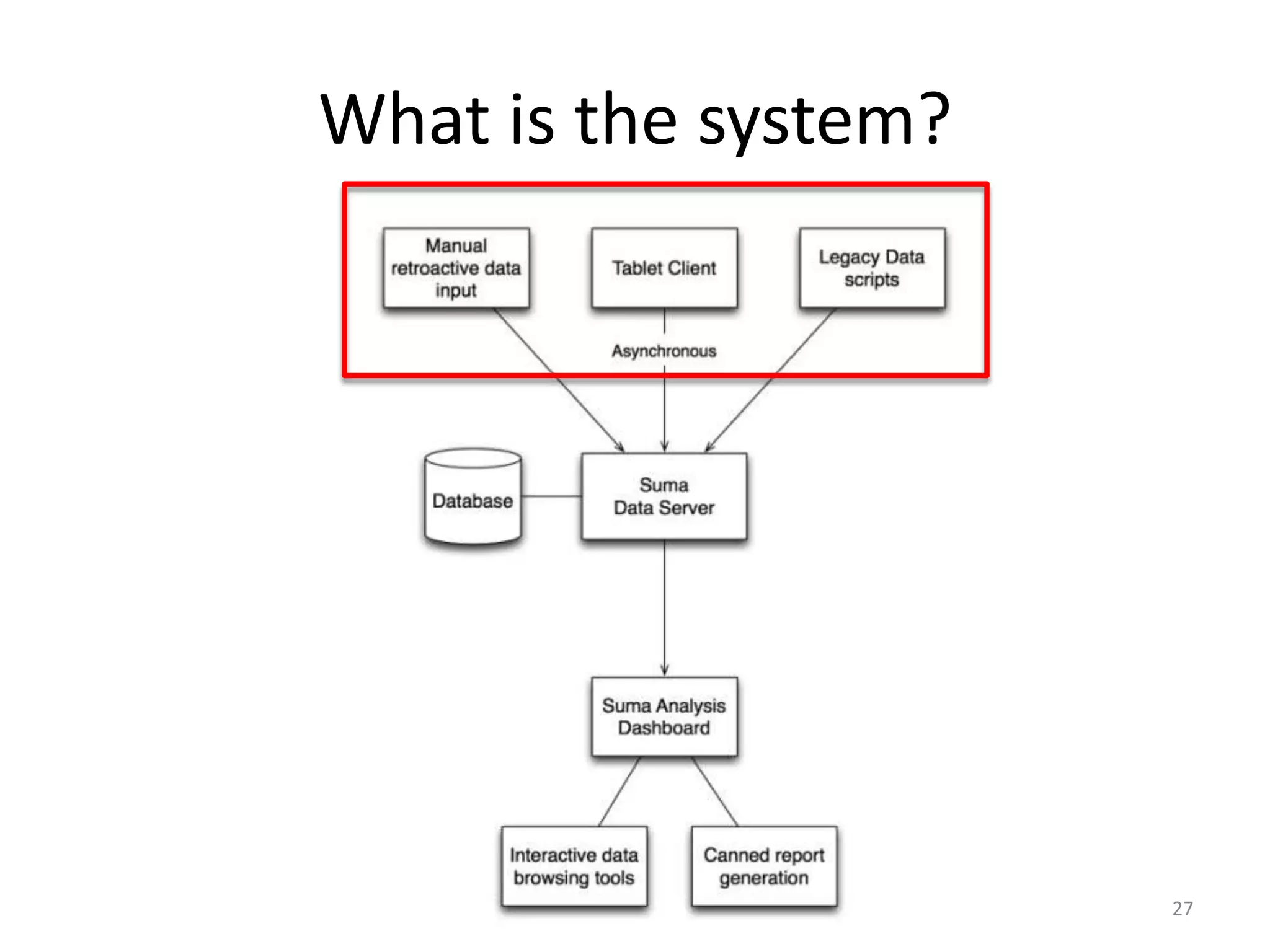
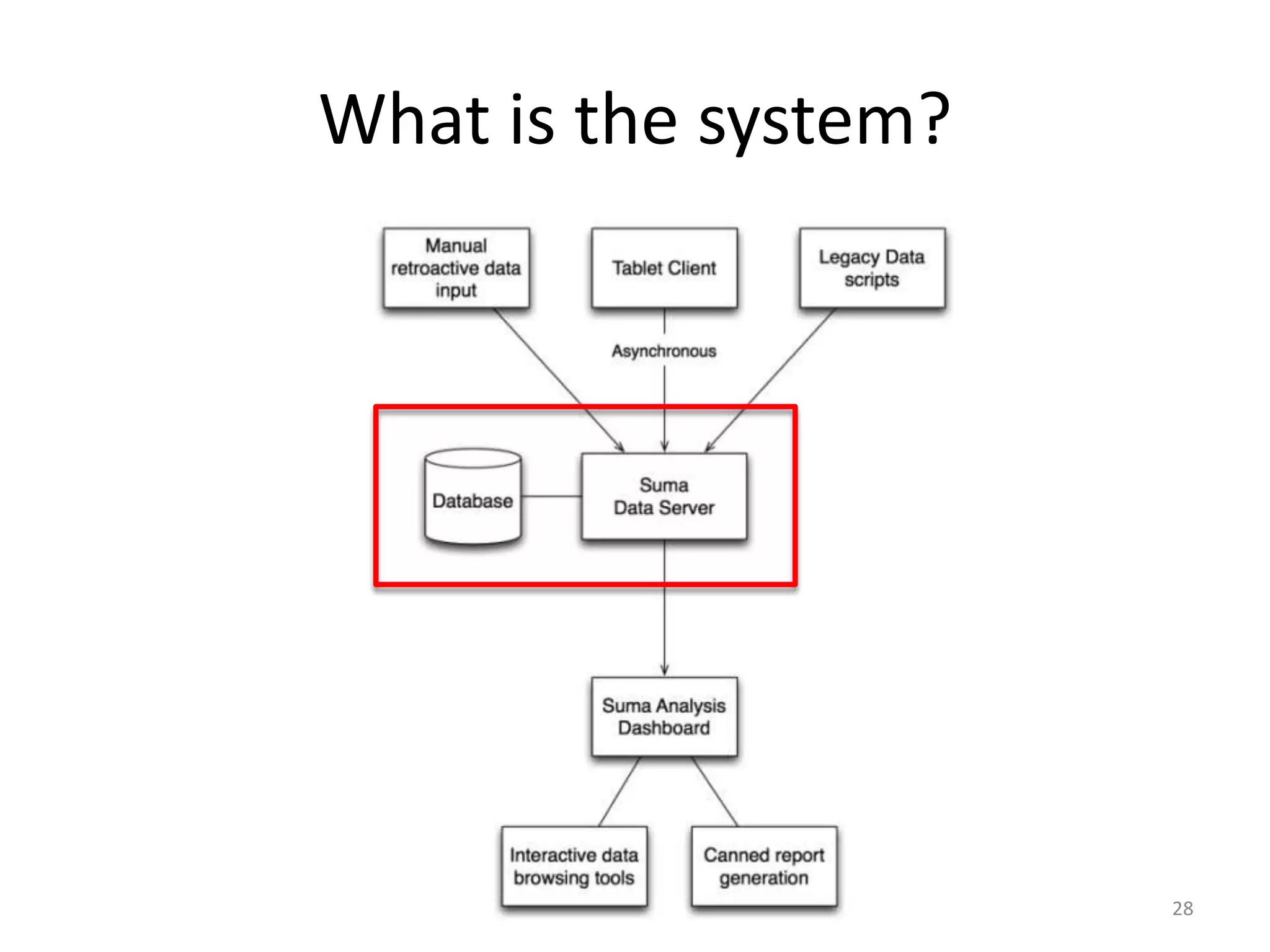
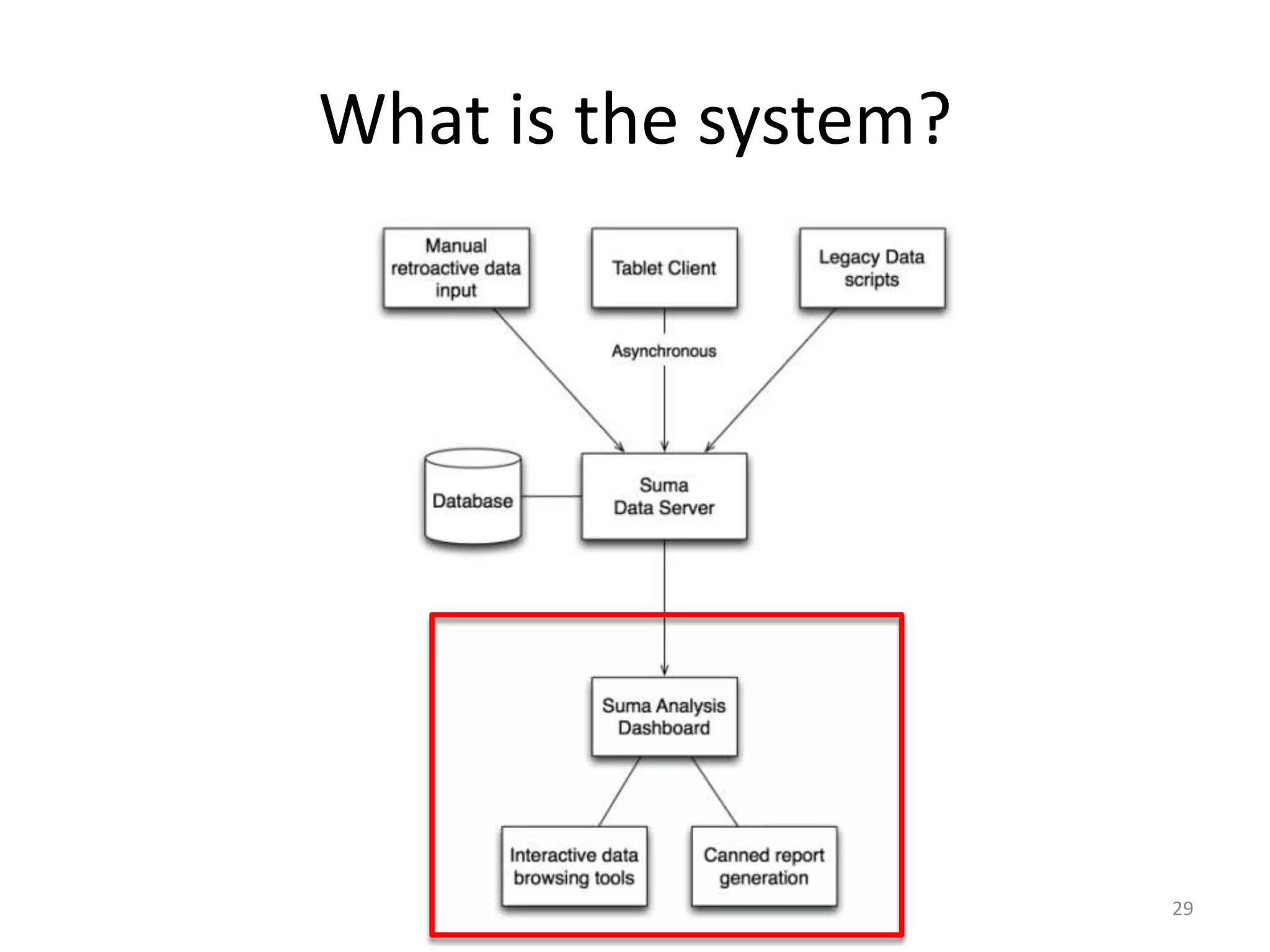
What is the system?26
What is the system?27
What is the system?28
What is the system?29
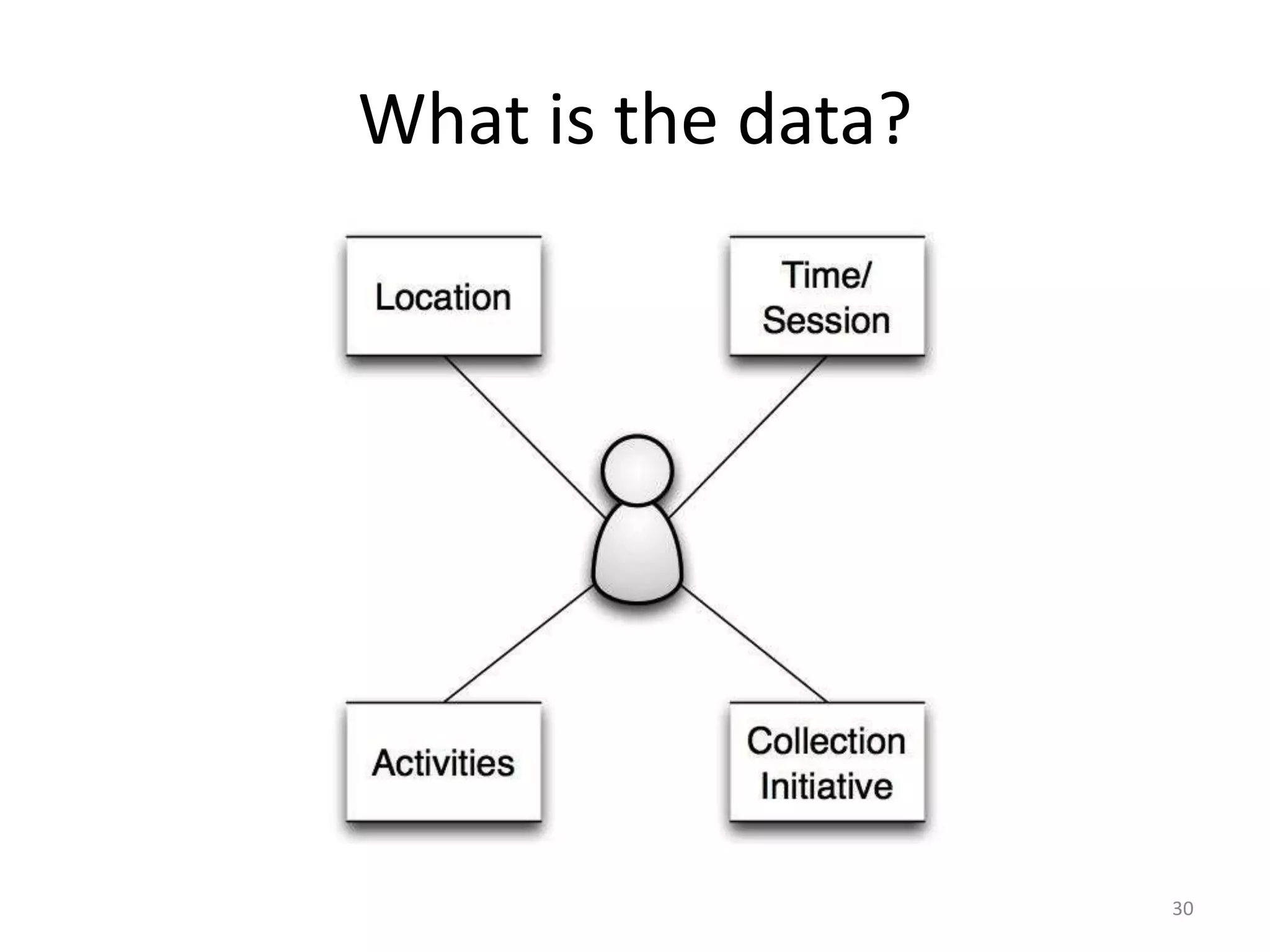
What is the data?30
How are we starting?HeadcountsFocus on improving existing practicesClient-first developmentTo make sure it will workStrict user requirements31
Some requirementsVery high interface responsivenessAccommodate uneven network accessSupport future expansion to activity countsOpen Source release32
Why web-based?Multi-platform supportRapid expansion of tablet marketOpen source releaseDifficulty in deploying native iPad applicationsLicenses, ad-hoc deployment pains, etc.Encourage community use and contributionsDesign doesn’t preclude multiple clients in the future33
Why not web-based?Interface performance/responsiveness is crucialHandling uneven Wi-Fi coverageData stability34
How to resolve this?Browser databaseAsynchronous data aggregationtouchstart/touchmove/touchend events35
Browser storageSQLiteWeb SQL DatabaseGoogle GearsIndexed Database API (Indexed DB)HTML5 Storage (localStorage)36
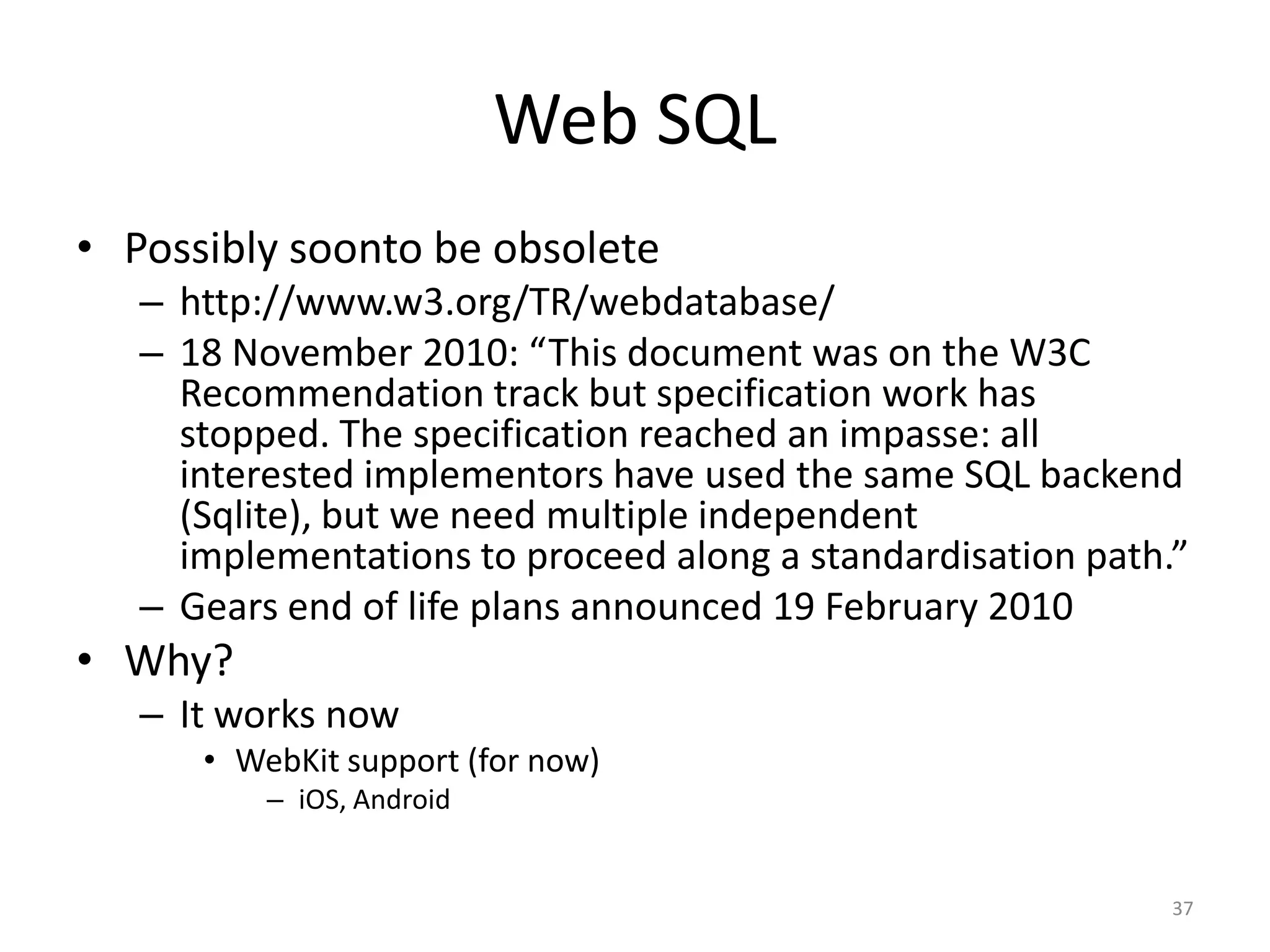
Web SQLPossibly soonto be obsoletehttp://www.w3.org/TR/webdatabase/18 November 2010: “This document was on the W3C Recommendation track but specification work has stopped. The specification reached an impasse: all interested implementors have used the same SQL backend (Sqlite), but we need multiple independent implementations to proceed along a standardisation path.”Gears end of life plans announced 19 February 2010Why?It works nowWebKit support (for now)iOS, Android37
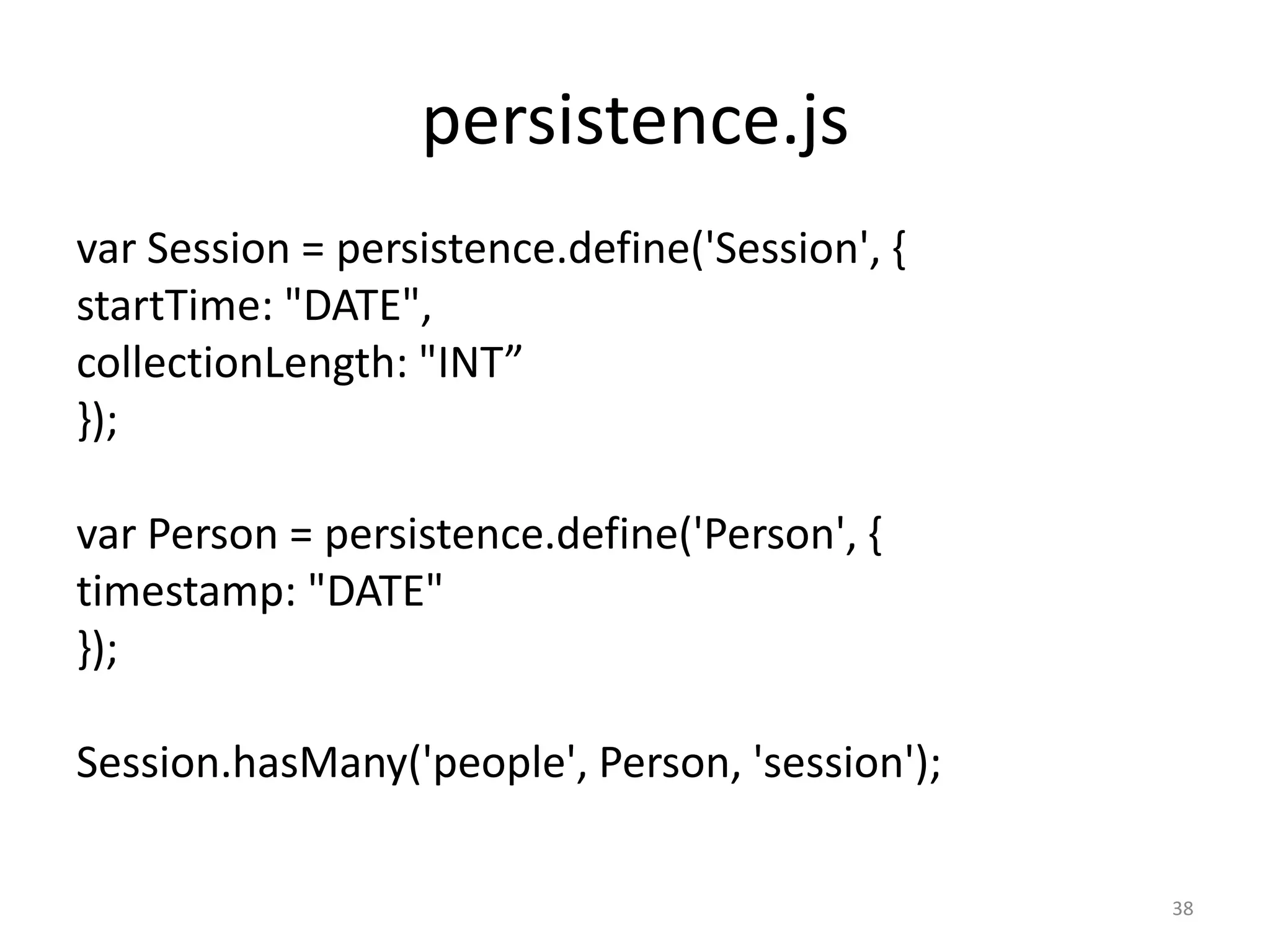
persistence.jsvar Session = persistence.define('Session', { startTime: "DATE", collectionLength: "INT” }); var Person = persistence.define('Person', { timestamp: "DATE" }); Session.hasMany('people', Person, 'session');38
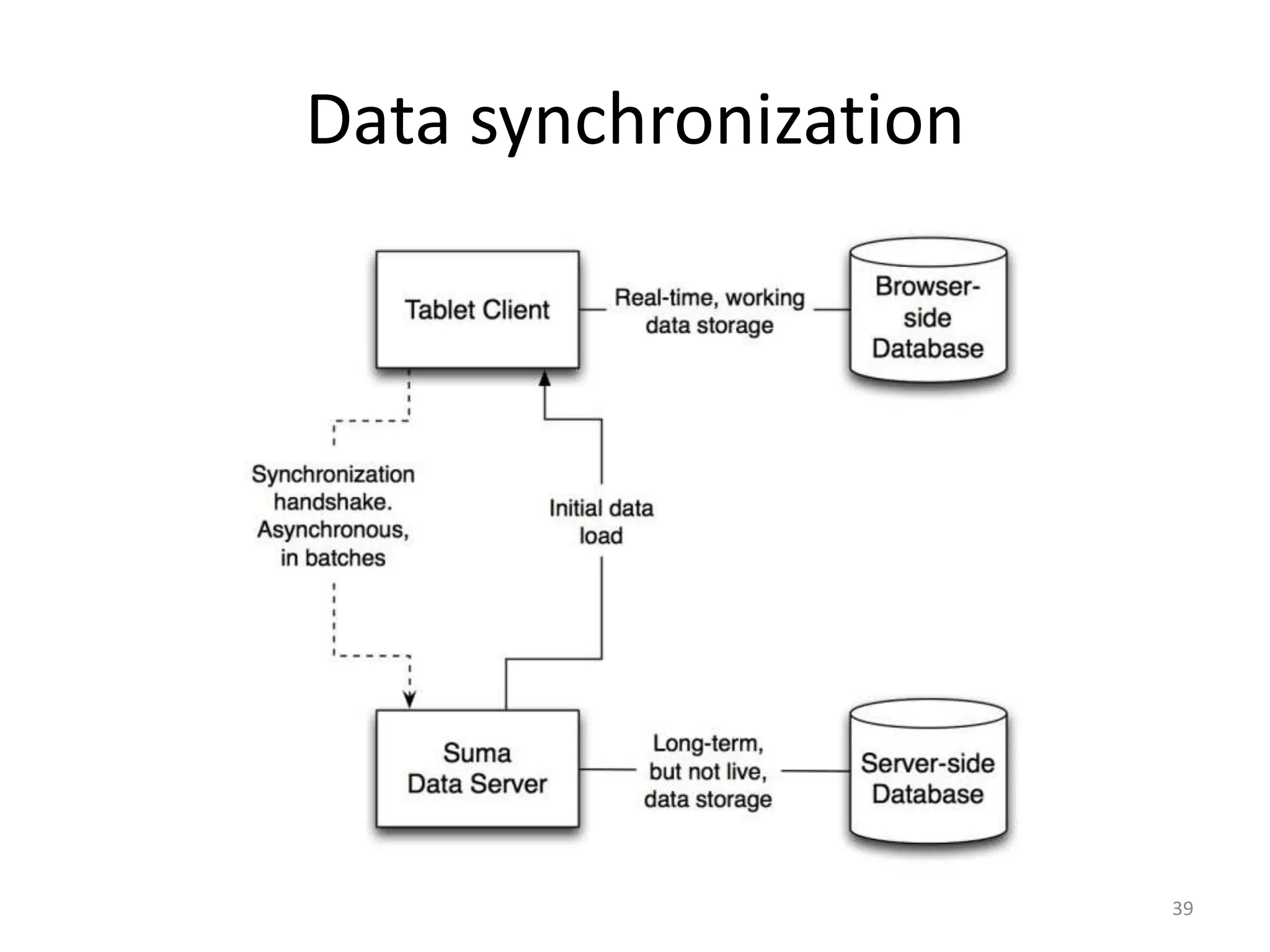
Data synchronization39
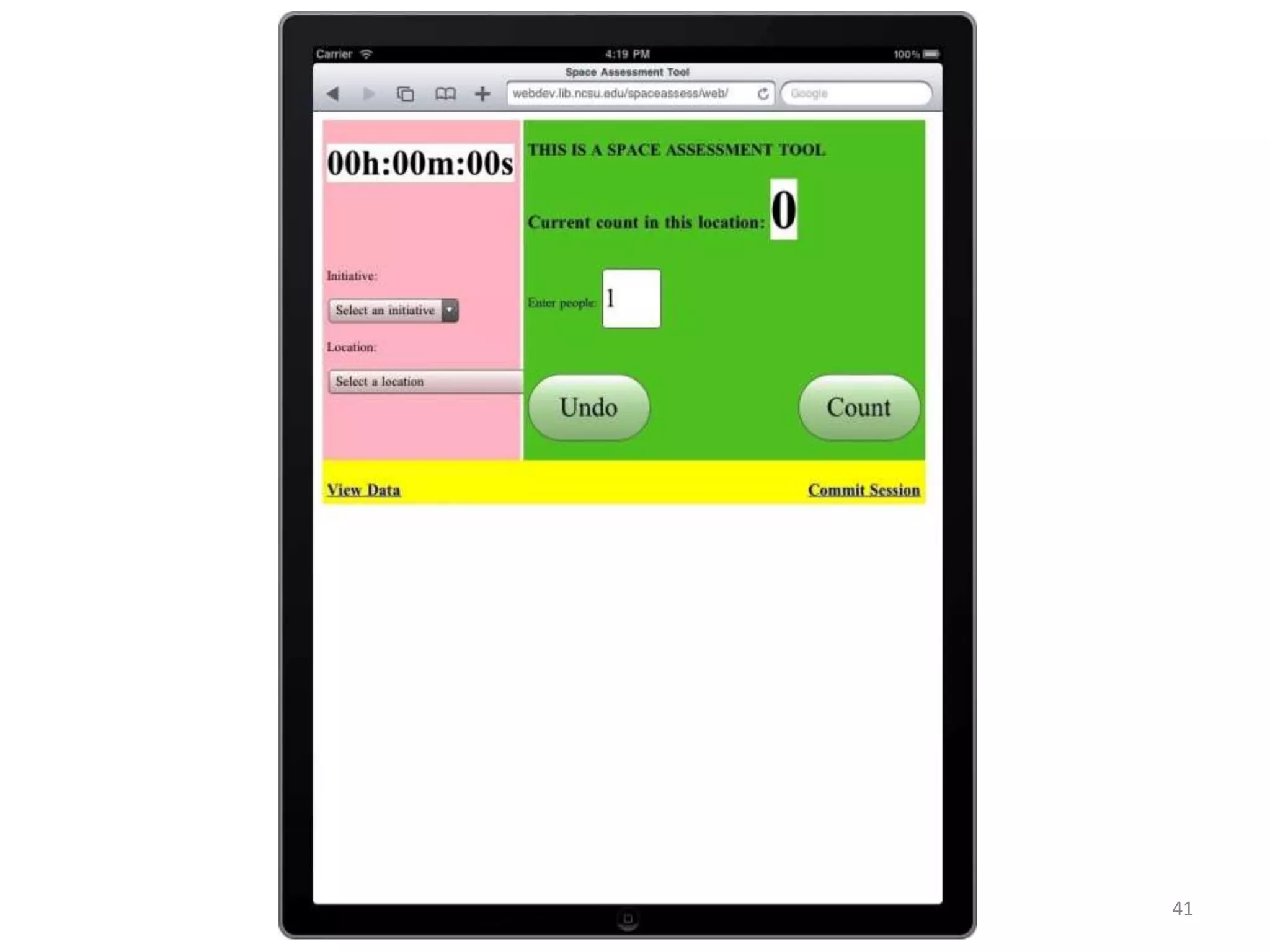
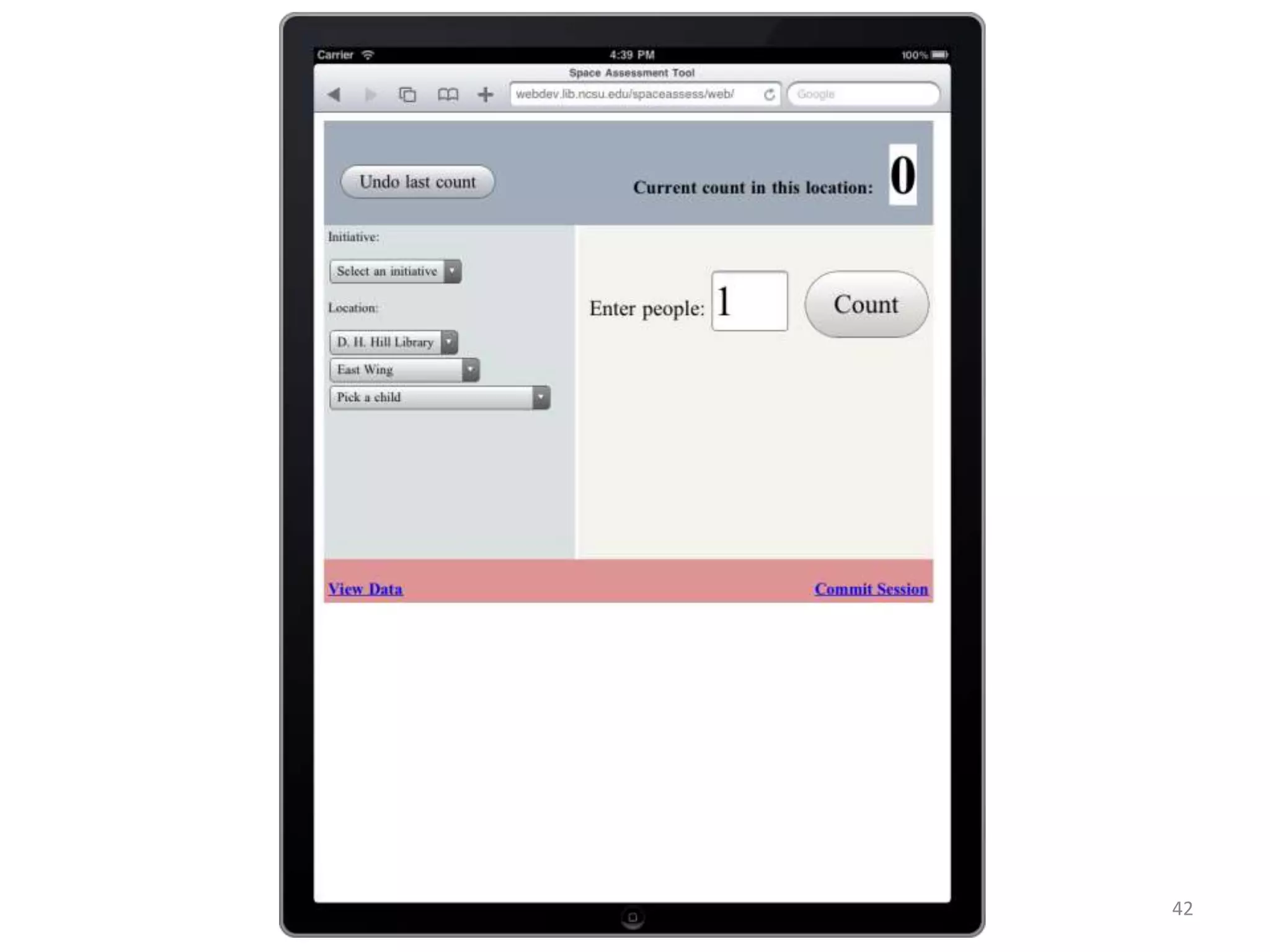
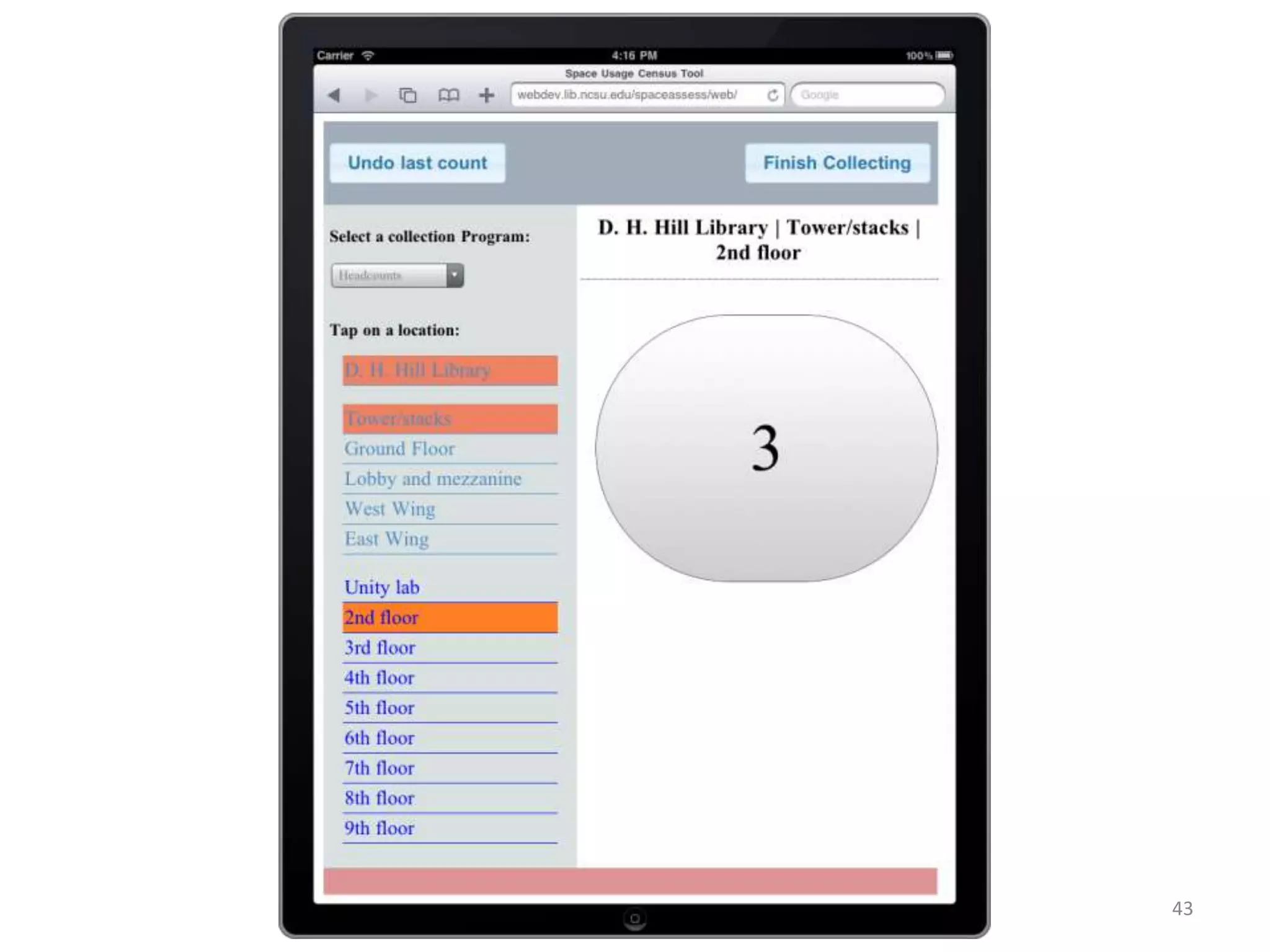
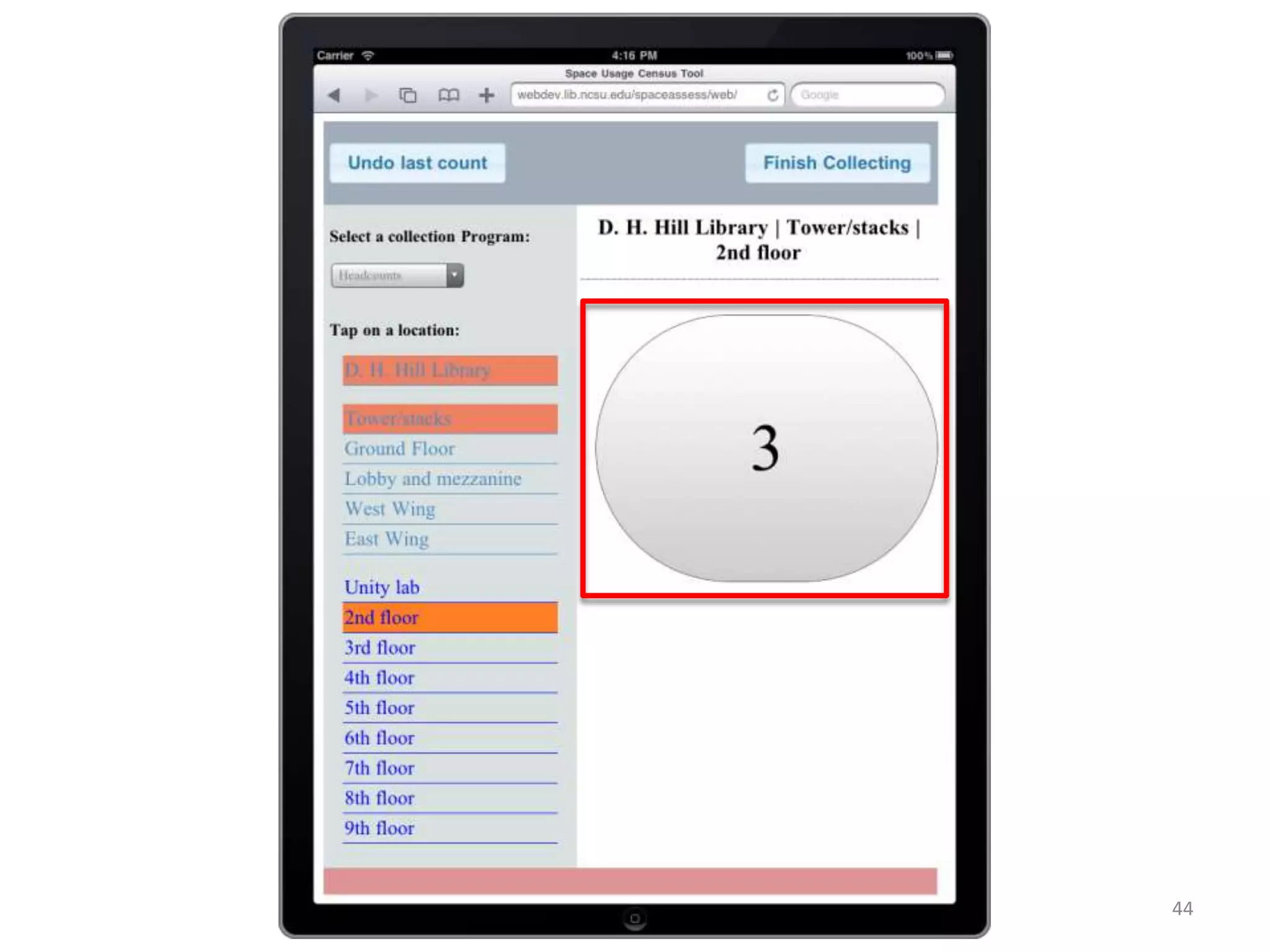
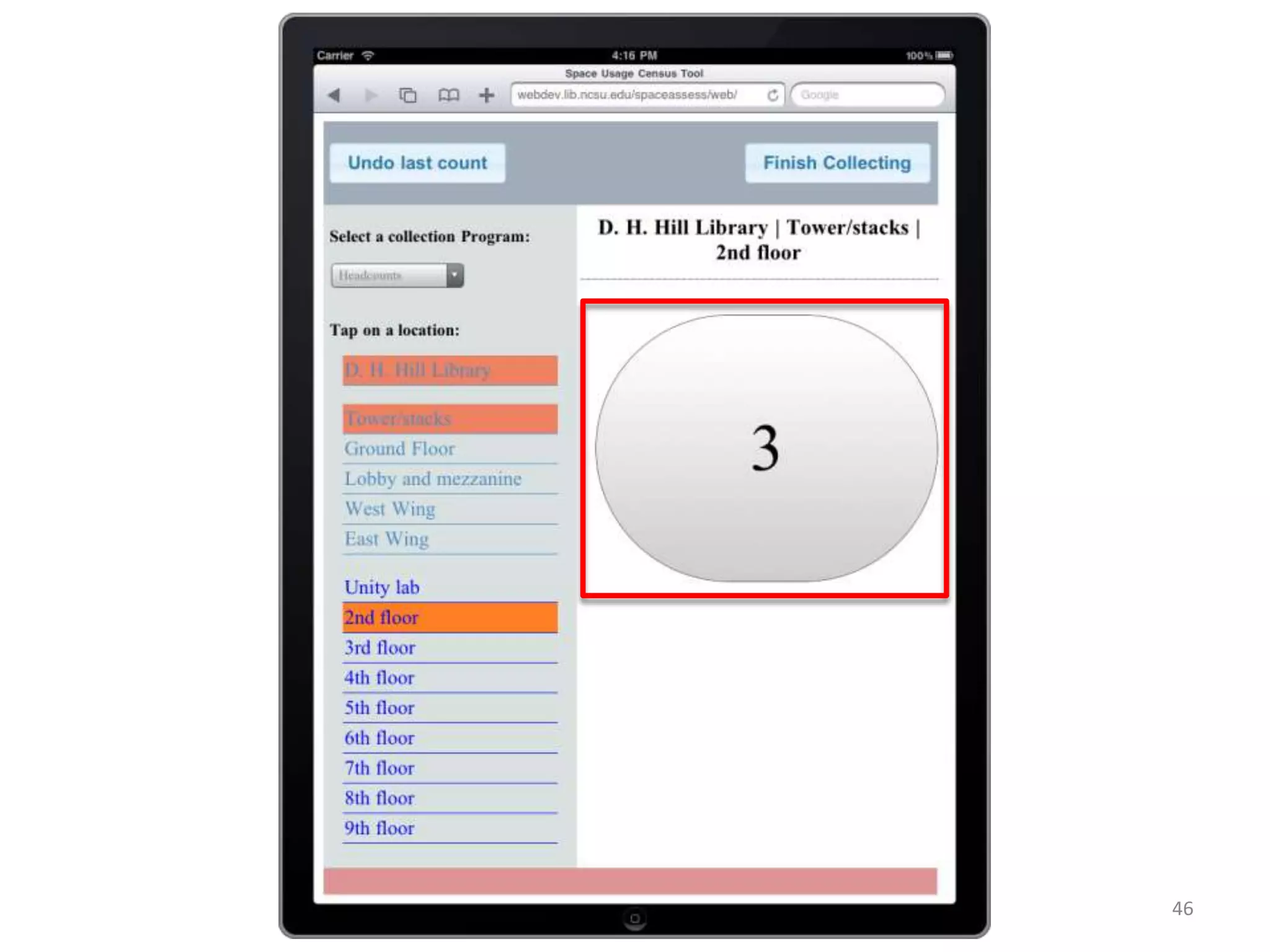
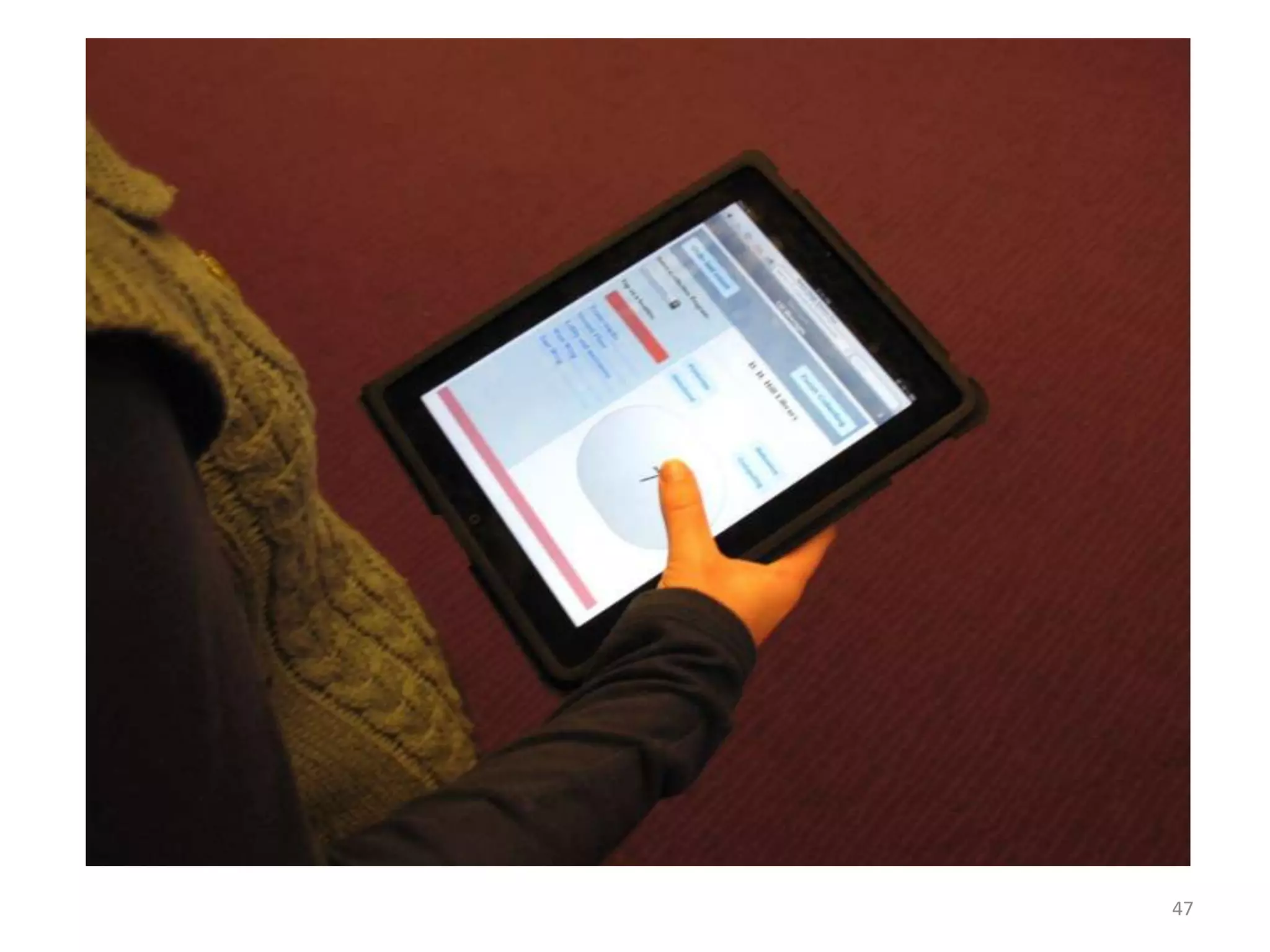
Design iterations40
41
42
43
44
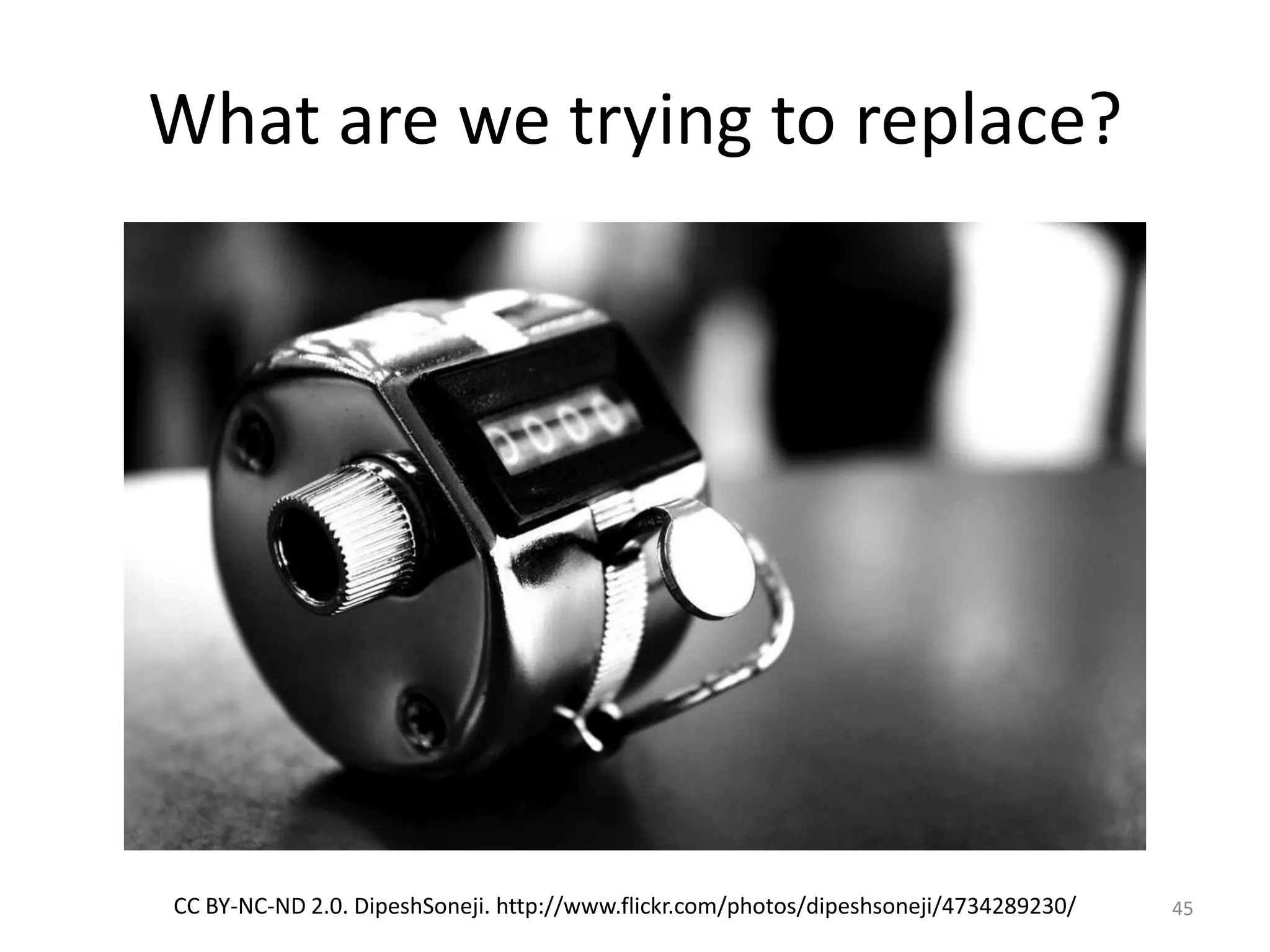
What are we trying to replace?CC BY-NC-ND 2.0. DipeshSoneji. http://www.flickr.com/photos/dipeshsoneji/4734289230/45
46
47
48
49
50
51
52
53
54
55
56
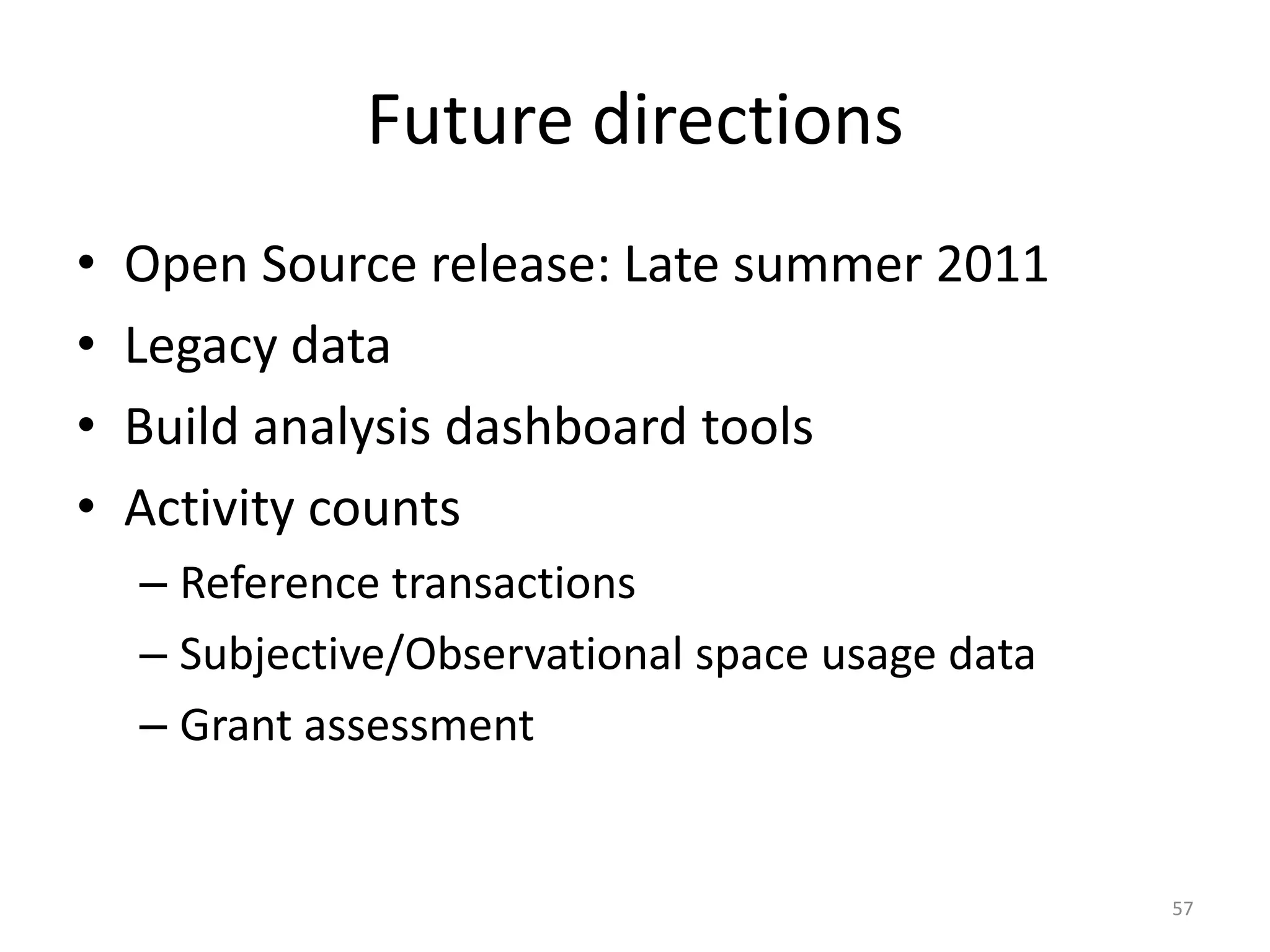
Future directionsOpen Source release: Late summer 2011Legacy dataBuild analysis dashboard toolsActivity countsReference transactionsSubjective/Observational space usage dataGrant assessment57
58
59
60
61
Project team	Jason CasdenJoyce ChapmanRob RuckerHill TaylorEric McEachernRusty Earl62
Thanks!Jason Casdenjason_casden@ncsu.edu@cazzersonhttps://github.com/cazzerson/Sumahttp://www.lib.ncsu.edu/dli/projects/spaceassesstool63

Mobile Sensors: Building a staff-facing tablet application for library assessment