Game Sense 
Learning to play the GAME!
What is Game Sense? 
 Fundamental Movement Skills developed through 
“game-centred activities” (Mandigo, Butler, & Hopper, 2009, p. 1) 
 Throwing, running, jumping, catching, etc. 
The understanding of how to play games is KEY 
 Fosters game play proficiency (Mandigo et al., 2009) 
 Focus on strategic play across range of games 
 Emphasis on tactics and decision making (Light, 
2006)
Principles of Game Sense 
 Questions foster deeper understanding and reflection 
 Answers are discovered through effective prompting 
 Skills directly related to playing a specific game 
 Motivates refinement of skills (Light, 2006) 
 Games can be modified to: 
 reduce focus on technical skills 
 encourage participation regardless of ability or skill 
level (Light, 2006) 
 For example, Capture the Flag can be modified to 
include passing a ball between teammates to 
incorporate locomotor and manipulative skills 
Playing games is 
more FUN!!
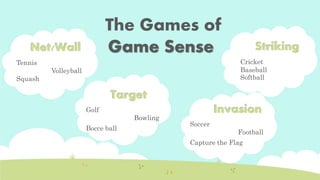
Net/Wall 
Tennis 
Volleyball 
Squash 
Target 
Golf 
Bowling 
Bocce ball 
Invasion 
Soccer 
Football 
Capture the Flag 
Striking 
Cricket 
Baseball 
Softball 
The Games of 
Game Sense
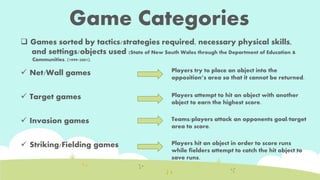
Game Categories 
 Games sorted by tactics/strategies required, necessary physical skills, 
and settings/objects used (State of New South Wales through the Department of Education & 
Communities. (1999-2001). 
 Net/Wall games 
 Target games 
 Invasion games 
 Striking/Fielding games 
Players try to place an object into the 
opposition’s area so that it cannot be returned. 
Players attempt to hit an object with another 
object to earn the highest score. 
Teams/players attack an opponent’s goal/target 
area to score. 
Players hit an object in order to score runs while 
fielders attempt to catch the hit object to save 
runs.
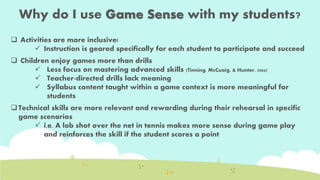
Why do I use Game Sense with my students? 
 Activities are more inclusive! 
 Instruction is geared specifically for each student to participate and succeed 
 Children enjoy games more than drills 
 Less focus on mastering advanced skills (Tinning, McCuaig, & Hunter, 2006) 
 Teacher-directed drills lack meaning 
 Syllabus content taught within a game context is more meaningful for 
students 
 Technical skills are more relevant and rewarding during their rehearsal in specific 
game scenarios 
 i.e. A lob shot over the net in tennis makes more sense during game play 
and reinforces the skill if the student scores a point
I choose Game Sense because: 
I can’t wait to see 
what we’re 
playing in PDHPE 
today! 
 Games can be designed or modified to address all ability 
levels as well as any students needing special 
considerations/accommodations. 
 Focuses on positive interactions among teams and 
competitors. 
 Increased understanding of general game play builds 
confidence when attempting new games . 
 confidence in avoiding defenders, throwing under 
pressure, defending, getting open in space, etc. 
 Combats bullying by reducing attention on individual 
students unable to master technical skills.
I choose Game Sense because: 
It realistically builds 
interest in learning skills 
Is 
by beginning instruction 
Games create 
opportunities for skills and 
understanding to progress 
in varying contexts i.e., 
staying “goalside” of a 
defender in soccer 
progresses to “boxing 
out” in basketball 
It is a student-centred 
approach 
that engages 
students 
Games provide arena for 
PDHPE Skills to be 
integrated in conjunction 
with PDHPE Strands i.e.- 
throwing home when the 
bases are loaded in 
baseball uses 
problem-solving and 
decision-making skills 
with game play 
Students discover and 
build meaning through 
active questioning and 
participation
References 
Light, R. (2006). Game sense: Innovation or just good coaching? Journal of Physical Education 
New Zealand, 39(1), 8-19,3. 
Mandigo, J., Butler, J., & Hopper, T. (2007). What is teaching games for understanding? A Canadian 
perspective. Physical & Health Education Journal, 73(2), 14-20. 
State of New South Wales through the Department of Education & Communities. (1999-2001). 
Rethinking the teaching of games and sports [Website].Retrieved from 
http://www.curriculumsupport.education.nsw.gov.au/secondary/pdhpe/pdhpe7_10/physical 
_activity/games_002.htm 
Tinning, R., McCuaig, L., & Hunter, L. (Eds.). (2006). Teaching health and physical 
education in Australian schools. Frenchs Forest, NSW: Pearson Education 
Australia.

Assessment2

  • 1.
    Game Sense Learningto play the GAME!
  • 2.
    What is GameSense?  Fundamental Movement Skills developed through “game-centred activities” (Mandigo, Butler, & Hopper, 2009, p. 1)  Throwing, running, jumping, catching, etc. The understanding of how to play games is KEY  Fosters game play proficiency (Mandigo et al., 2009)  Focus on strategic play across range of games  Emphasis on tactics and decision making (Light, 2006)
  • 3.
    Principles of GameSense  Questions foster deeper understanding and reflection  Answers are discovered through effective prompting  Skills directly related to playing a specific game  Motivates refinement of skills (Light, 2006)  Games can be modified to:  reduce focus on technical skills  encourage participation regardless of ability or skill level (Light, 2006)  For example, Capture the Flag can be modified to include passing a ball between teammates to incorporate locomotor and manipulative skills Playing games is more FUN!!
  • 4.
    Net/Wall Tennis Volleyball Squash Target Golf Bowling Bocce ball Invasion Soccer Football Capture the Flag Striking Cricket Baseball Softball The Games of Game Sense
  • 5.
    Game Categories Games sorted by tactics/strategies required, necessary physical skills, and settings/objects used (State of New South Wales through the Department of Education & Communities. (1999-2001).  Net/Wall games  Target games  Invasion games  Striking/Fielding games Players try to place an object into the opposition’s area so that it cannot be returned. Players attempt to hit an object with another object to earn the highest score. Teams/players attack an opponent’s goal/target area to score. Players hit an object in order to score runs while fielders attempt to catch the hit object to save runs.
  • 6.
    Why do Iuse Game Sense with my students?  Activities are more inclusive!  Instruction is geared specifically for each student to participate and succeed  Children enjoy games more than drills  Less focus on mastering advanced skills (Tinning, McCuaig, & Hunter, 2006)  Teacher-directed drills lack meaning  Syllabus content taught within a game context is more meaningful for students  Technical skills are more relevant and rewarding during their rehearsal in specific game scenarios  i.e. A lob shot over the net in tennis makes more sense during game play and reinforces the skill if the student scores a point
  • 7.
    I choose GameSense because: I can’t wait to see what we’re playing in PDHPE today!  Games can be designed or modified to address all ability levels as well as any students needing special considerations/accommodations.  Focuses on positive interactions among teams and competitors.  Increased understanding of general game play builds confidence when attempting new games .  confidence in avoiding defenders, throwing under pressure, defending, getting open in space, etc.  Combats bullying by reducing attention on individual students unable to master technical skills.
  • 8.
    I choose GameSense because: It realistically builds interest in learning skills Is by beginning instruction Games create opportunities for skills and understanding to progress in varying contexts i.e., staying “goalside” of a defender in soccer progresses to “boxing out” in basketball It is a student-centred approach that engages students Games provide arena for PDHPE Skills to be integrated in conjunction with PDHPE Strands i.e.- throwing home when the bases are loaded in baseball uses problem-solving and decision-making skills with game play Students discover and build meaning through active questioning and participation
  • 9.
    References Light, R.(2006). Game sense: Innovation or just good coaching? Journal of Physical Education New Zealand, 39(1), 8-19,3. Mandigo, J., Butler, J., & Hopper, T. (2007). What is teaching games for understanding? A Canadian perspective. Physical & Health Education Journal, 73(2), 14-20. State of New South Wales through the Department of Education & Communities. (1999-2001). Rethinking the teaching of games and sports [Website].Retrieved from http://www.curriculumsupport.education.nsw.gov.au/secondary/pdhpe/pdhpe7_10/physical _activity/games_002.htm Tinning, R., McCuaig, L., & Hunter, L. (Eds.). (2006). Teaching health and physical education in Australian schools. Frenchs Forest, NSW: Pearson Education Australia.